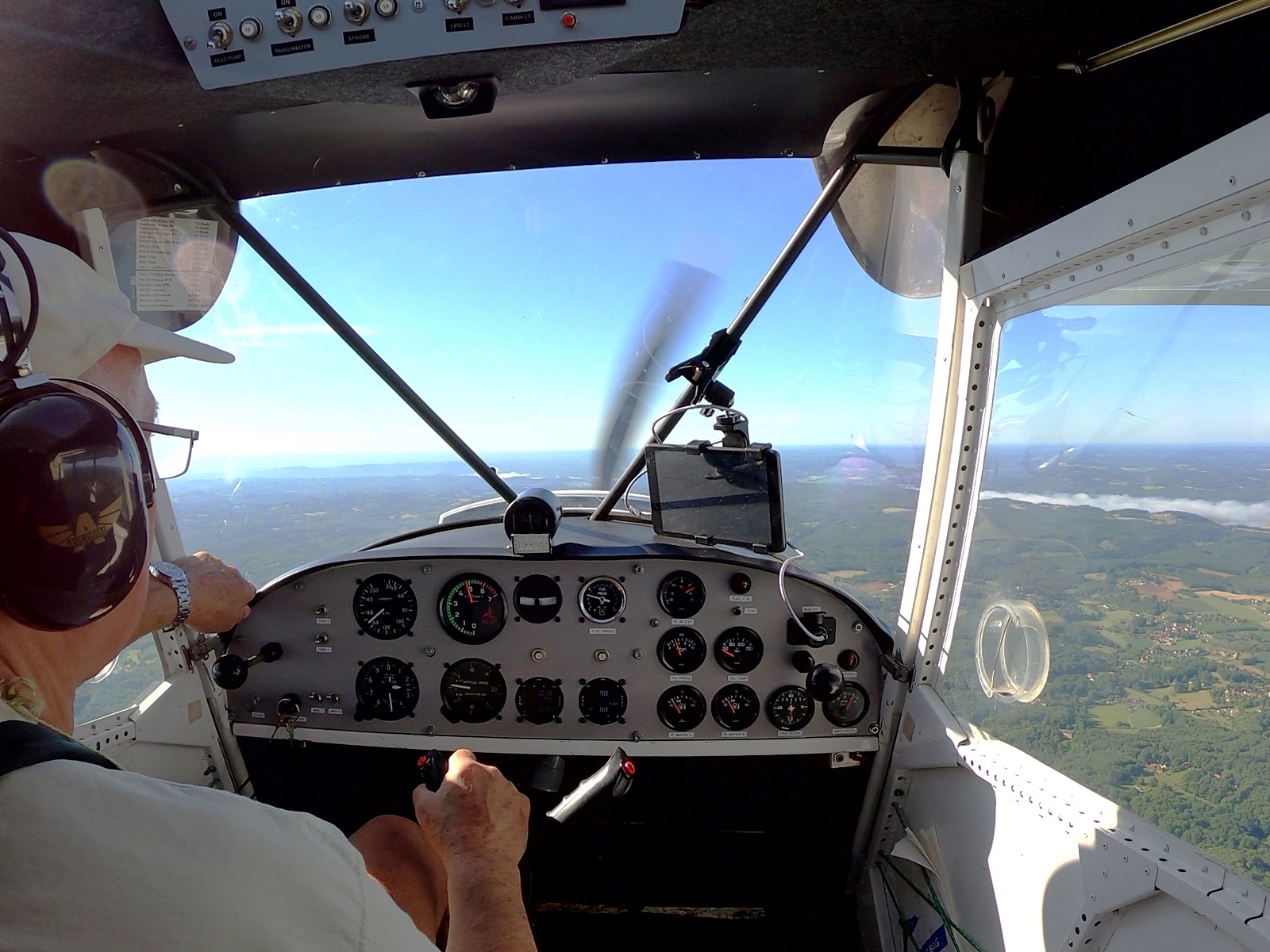
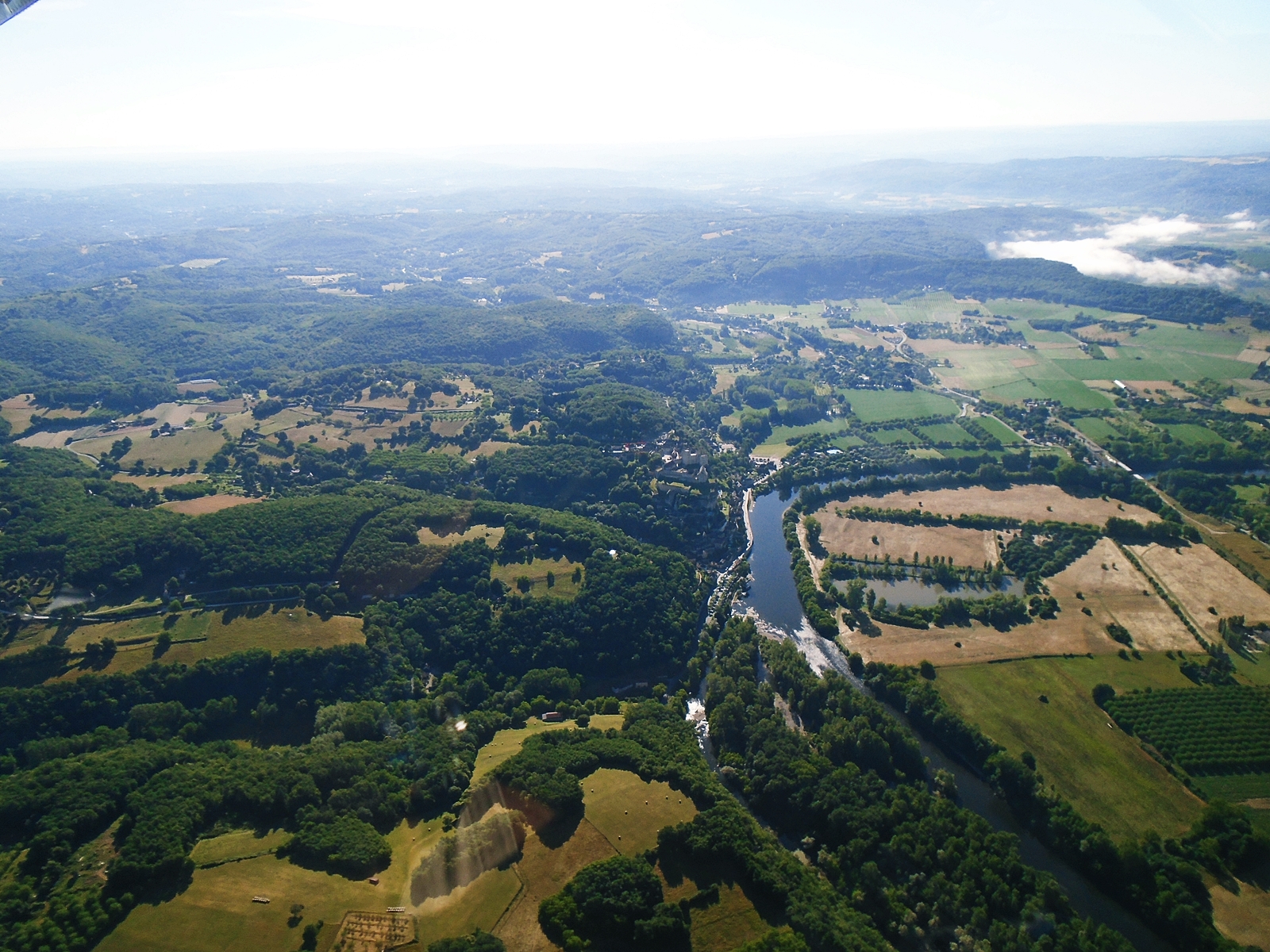
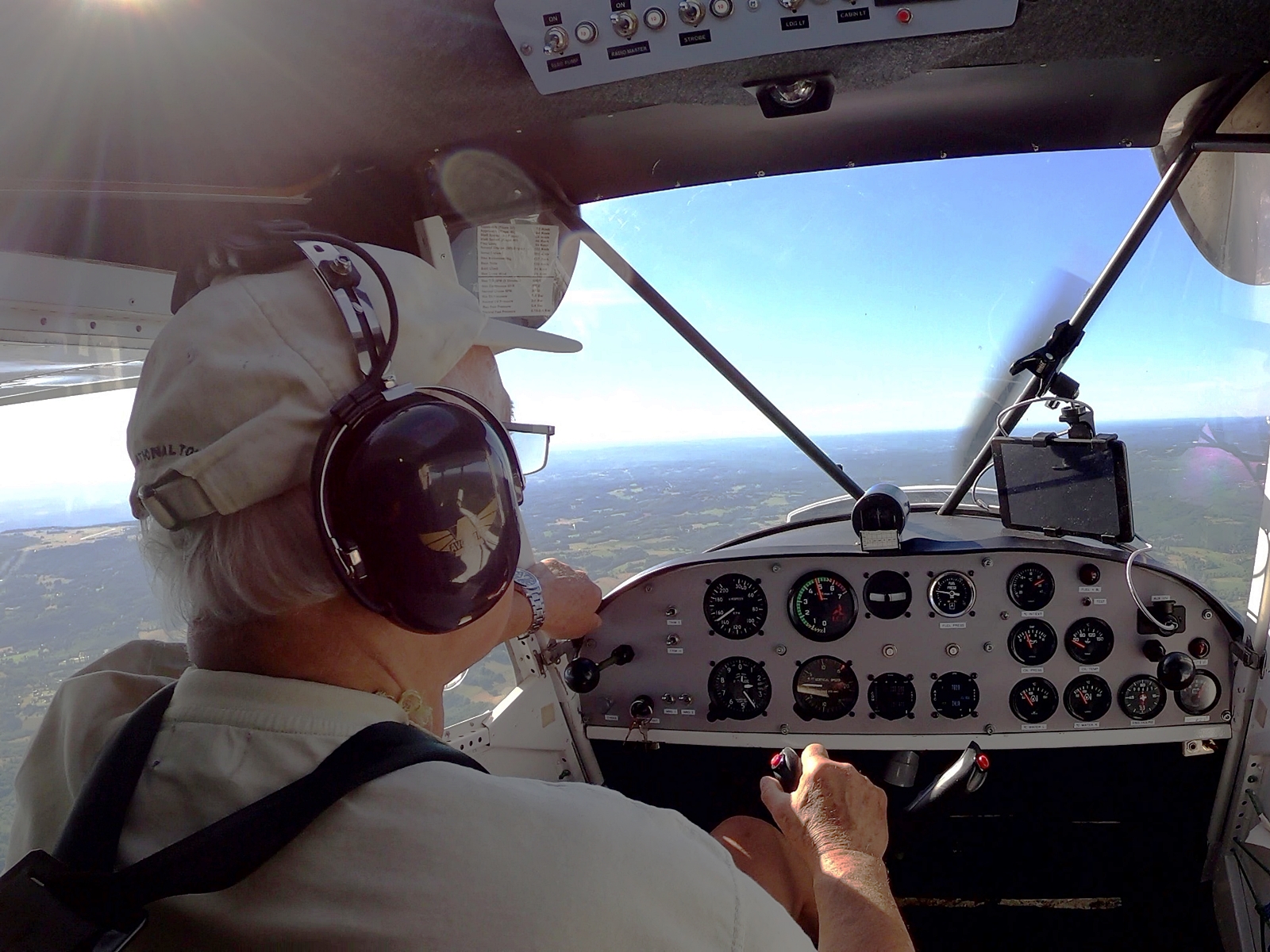
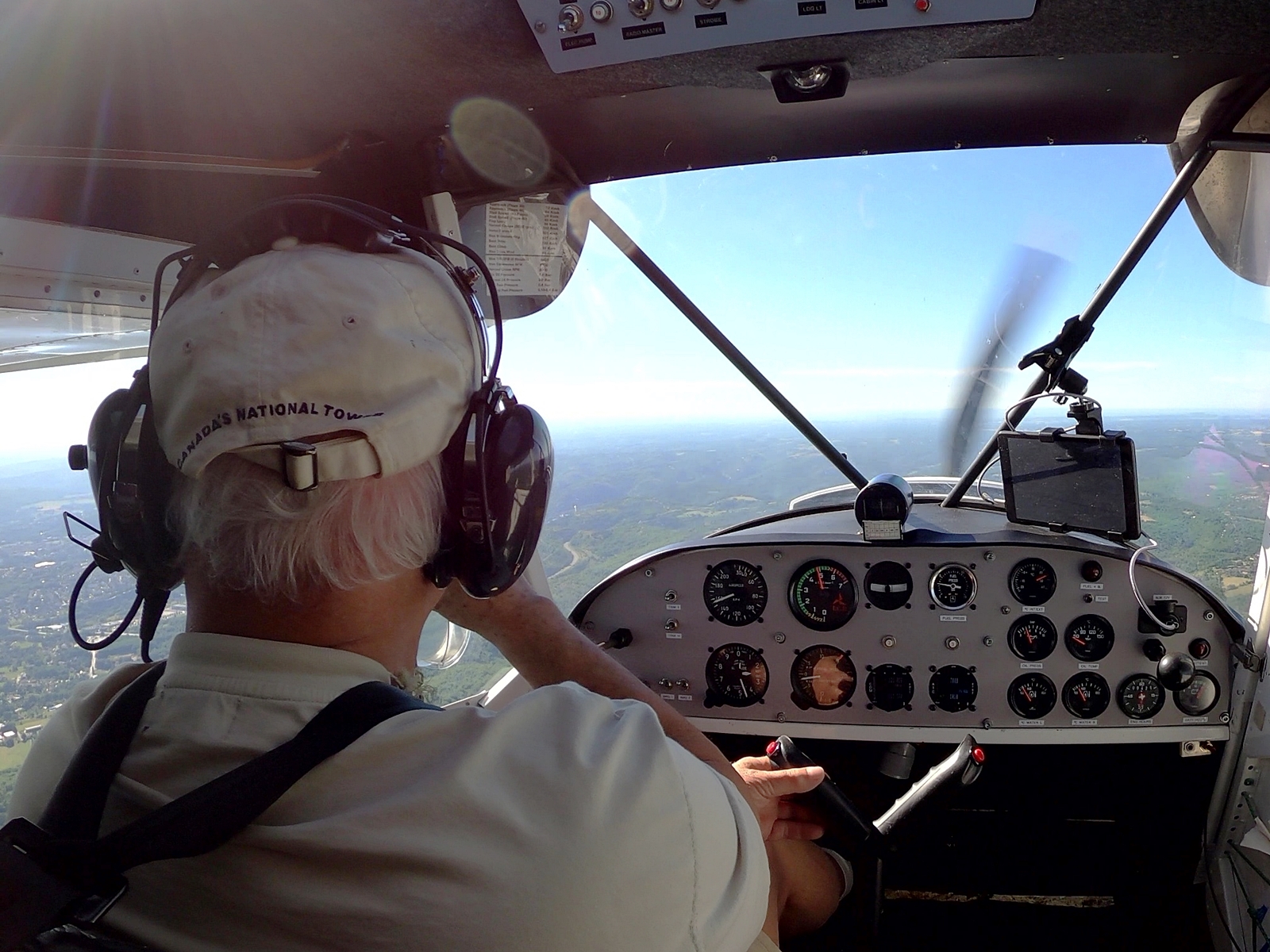
My housebuild project – day 6

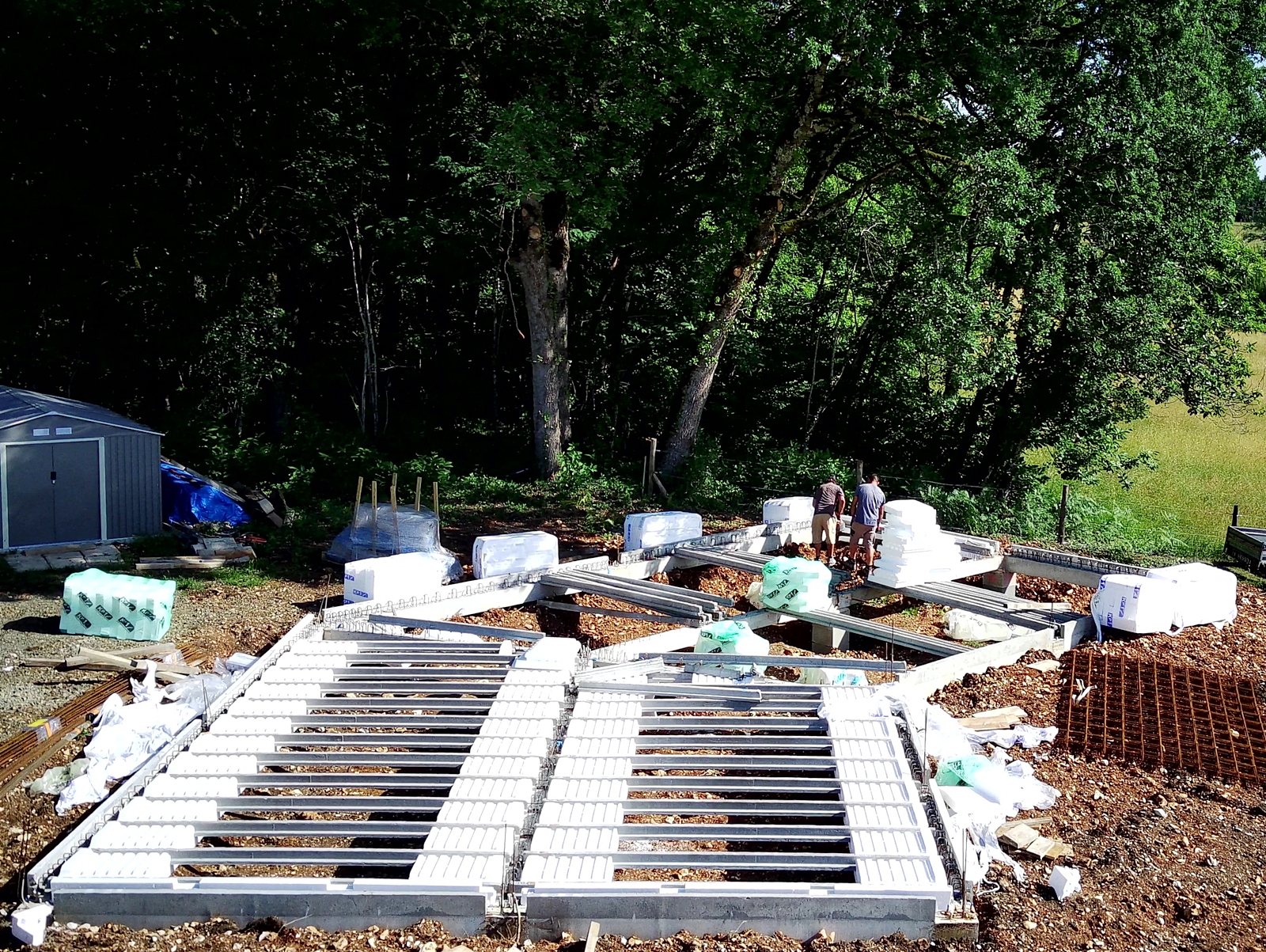
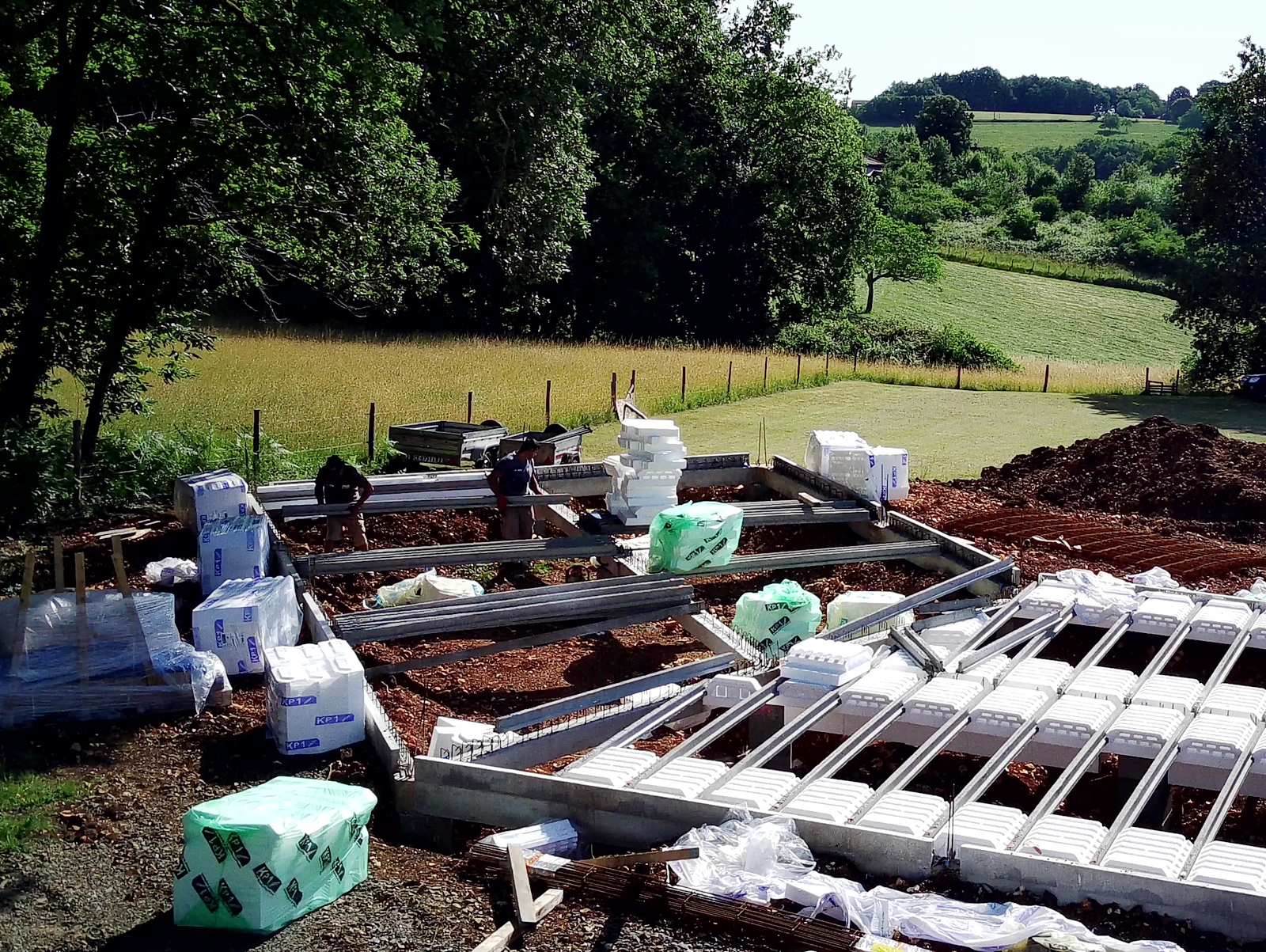
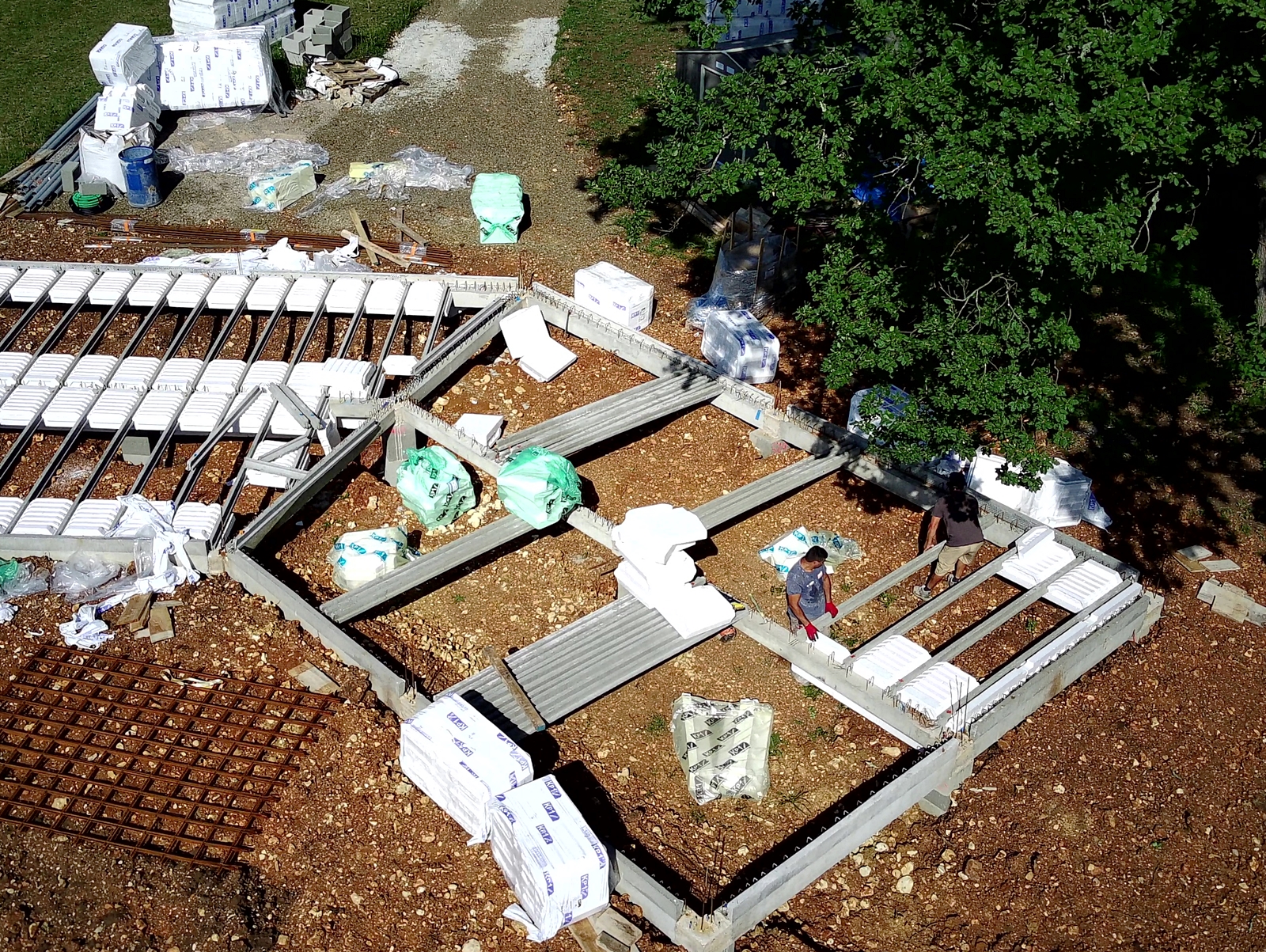
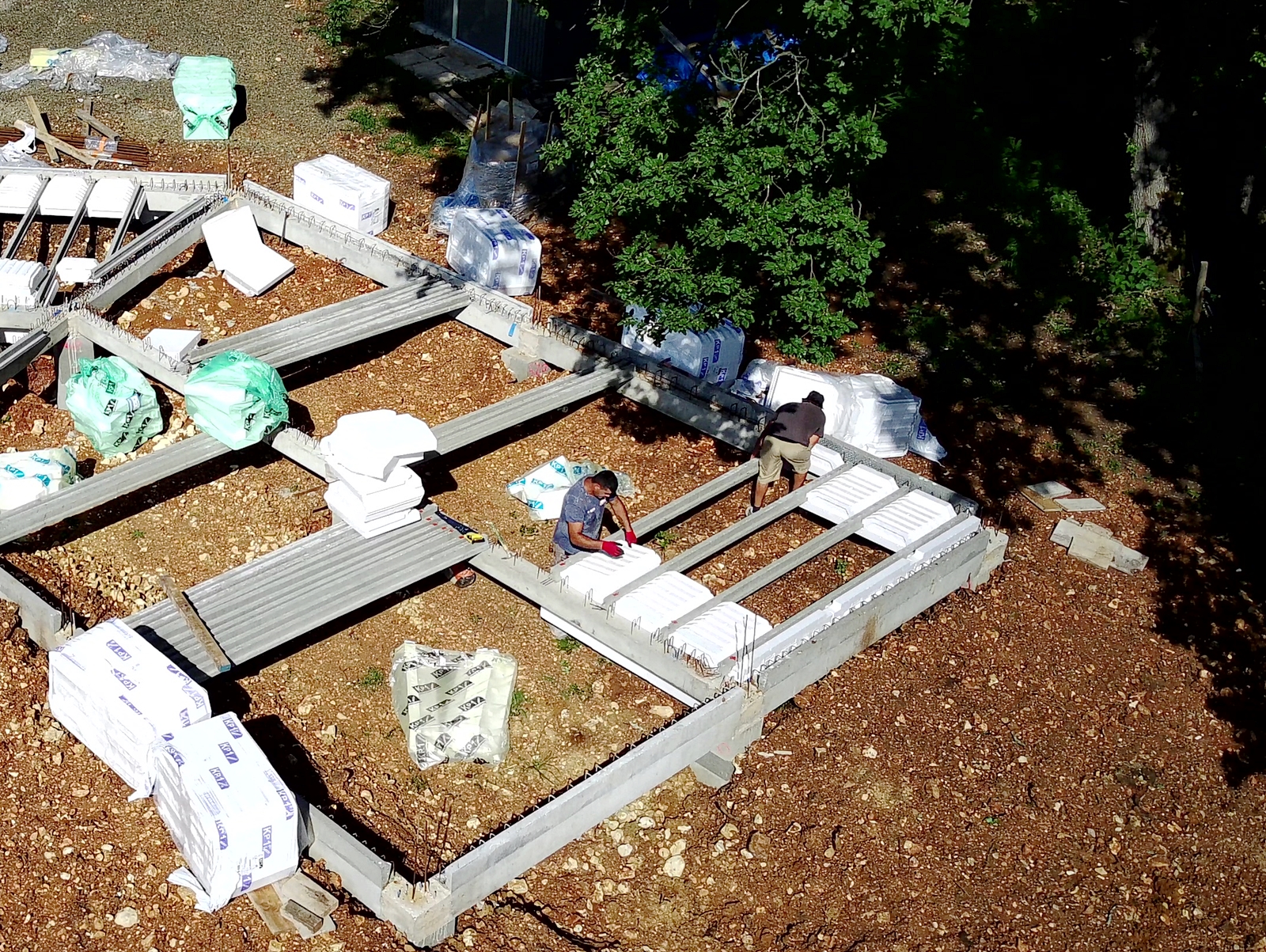
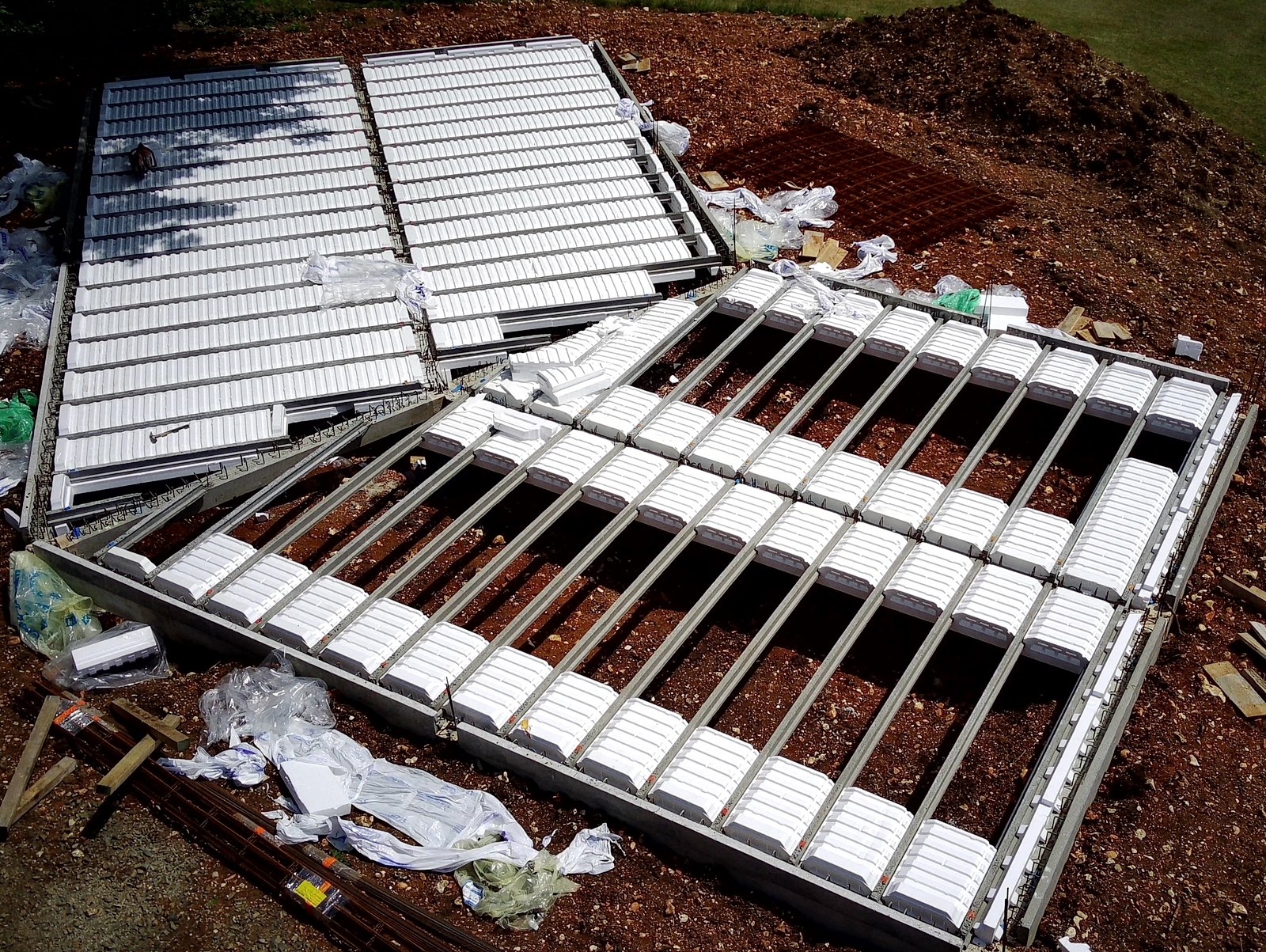
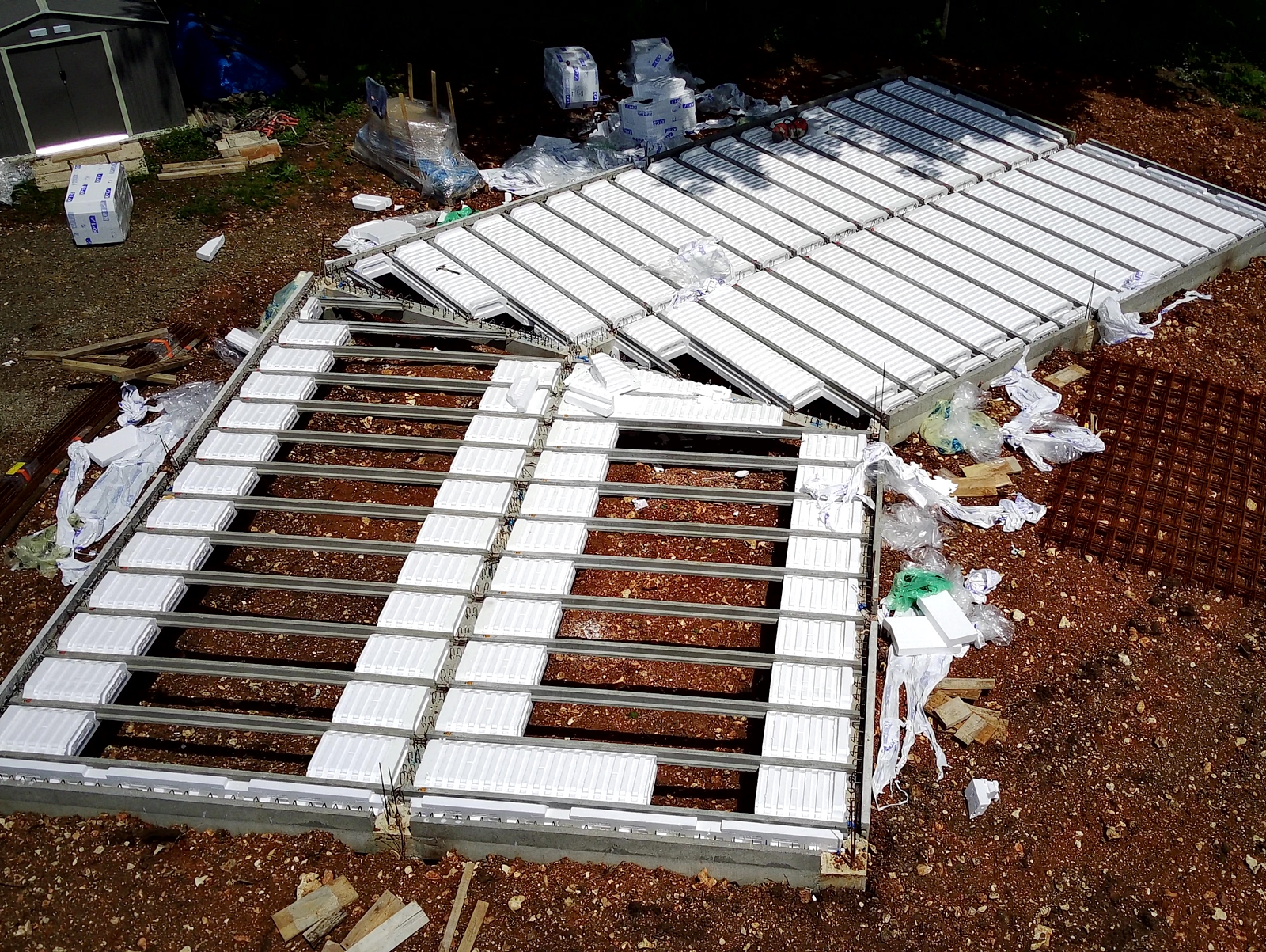
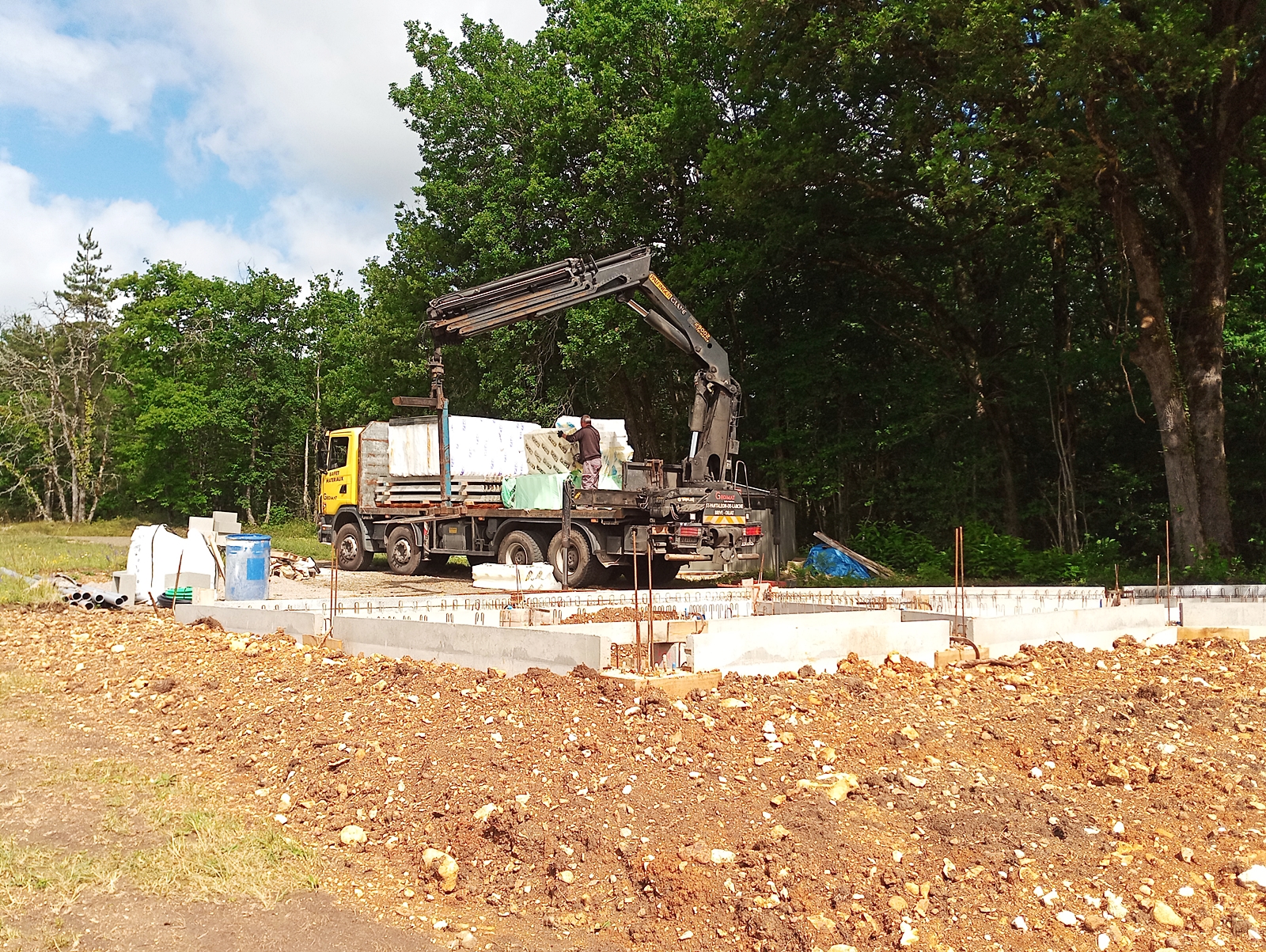
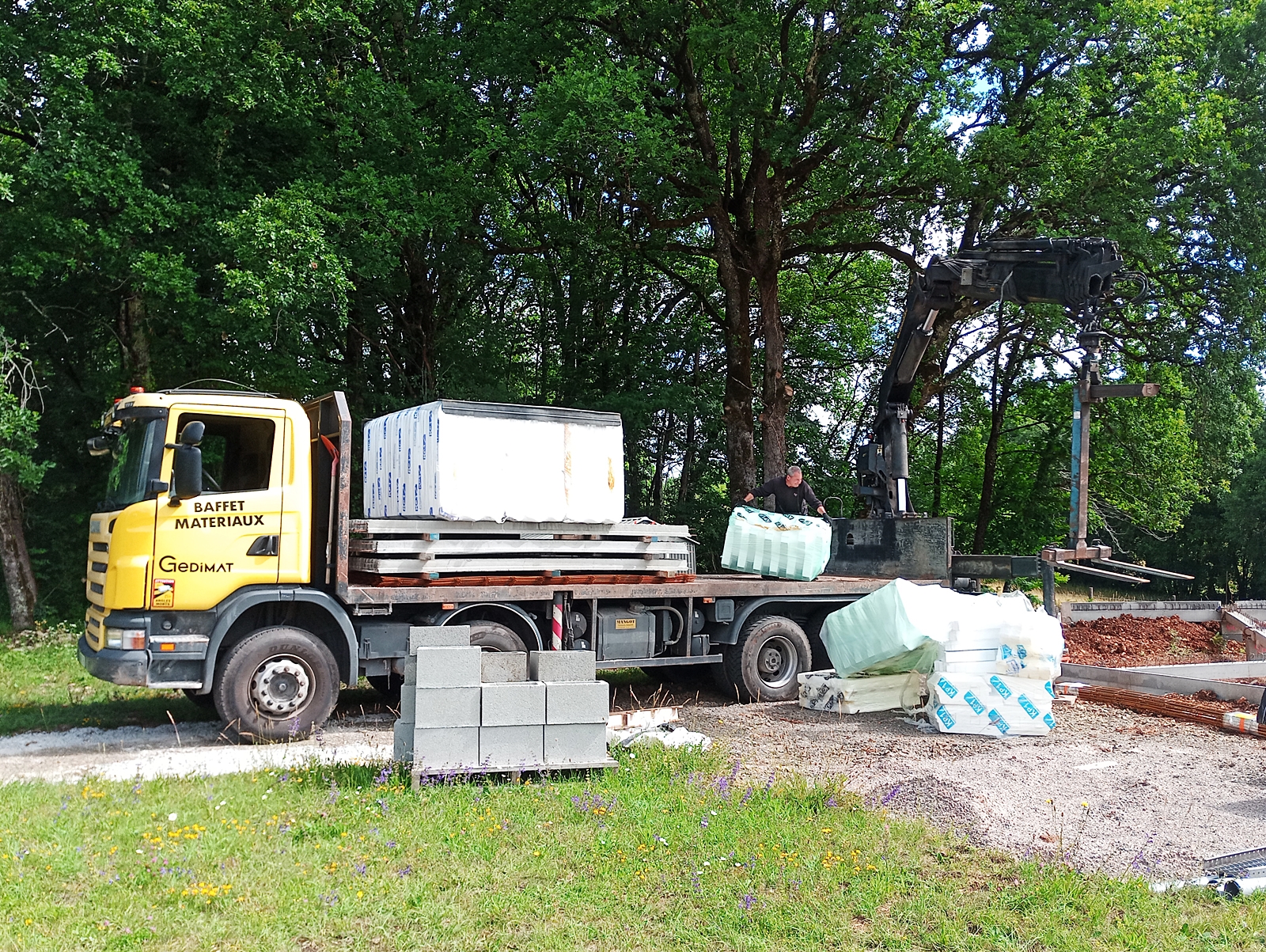
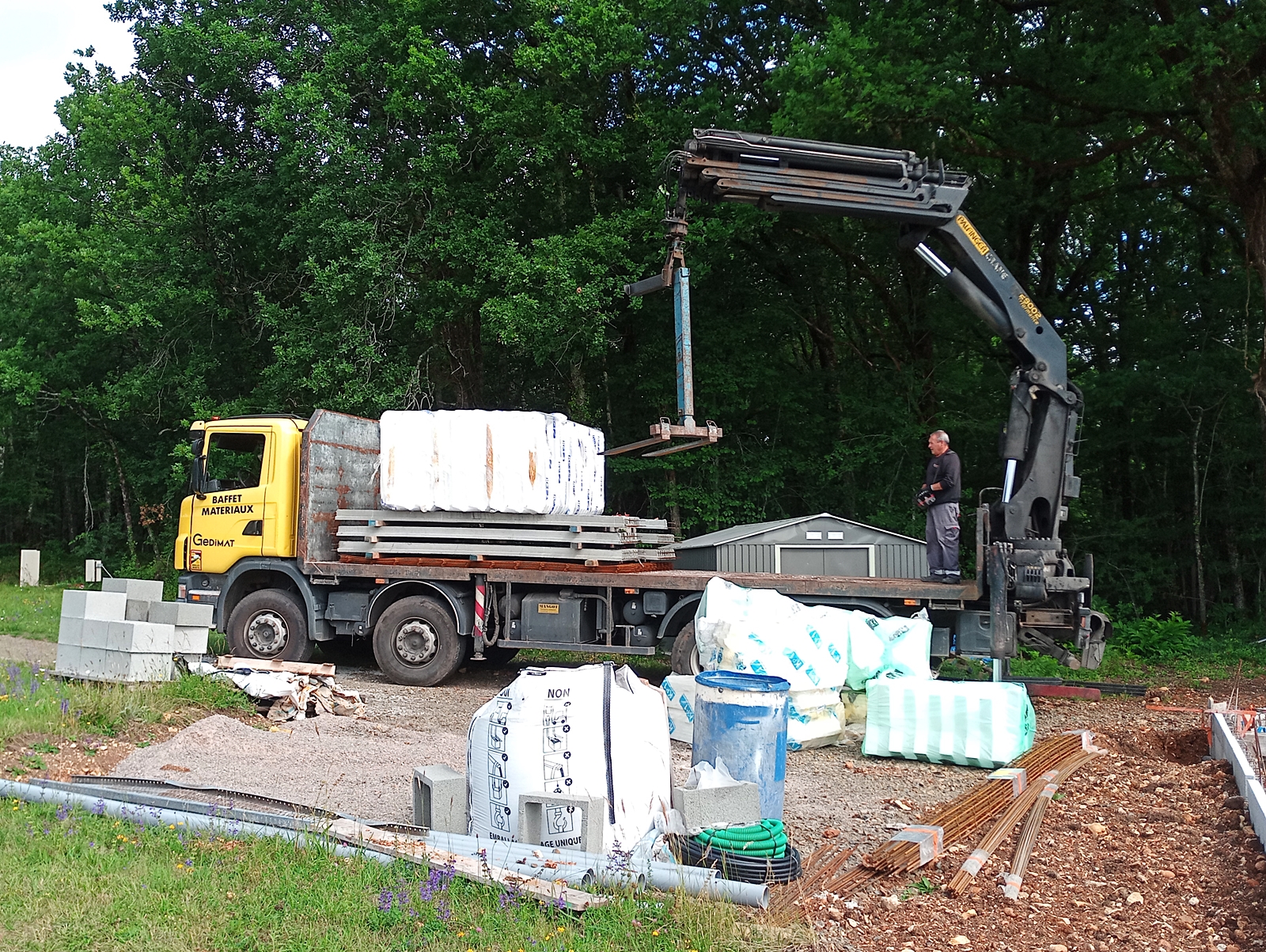
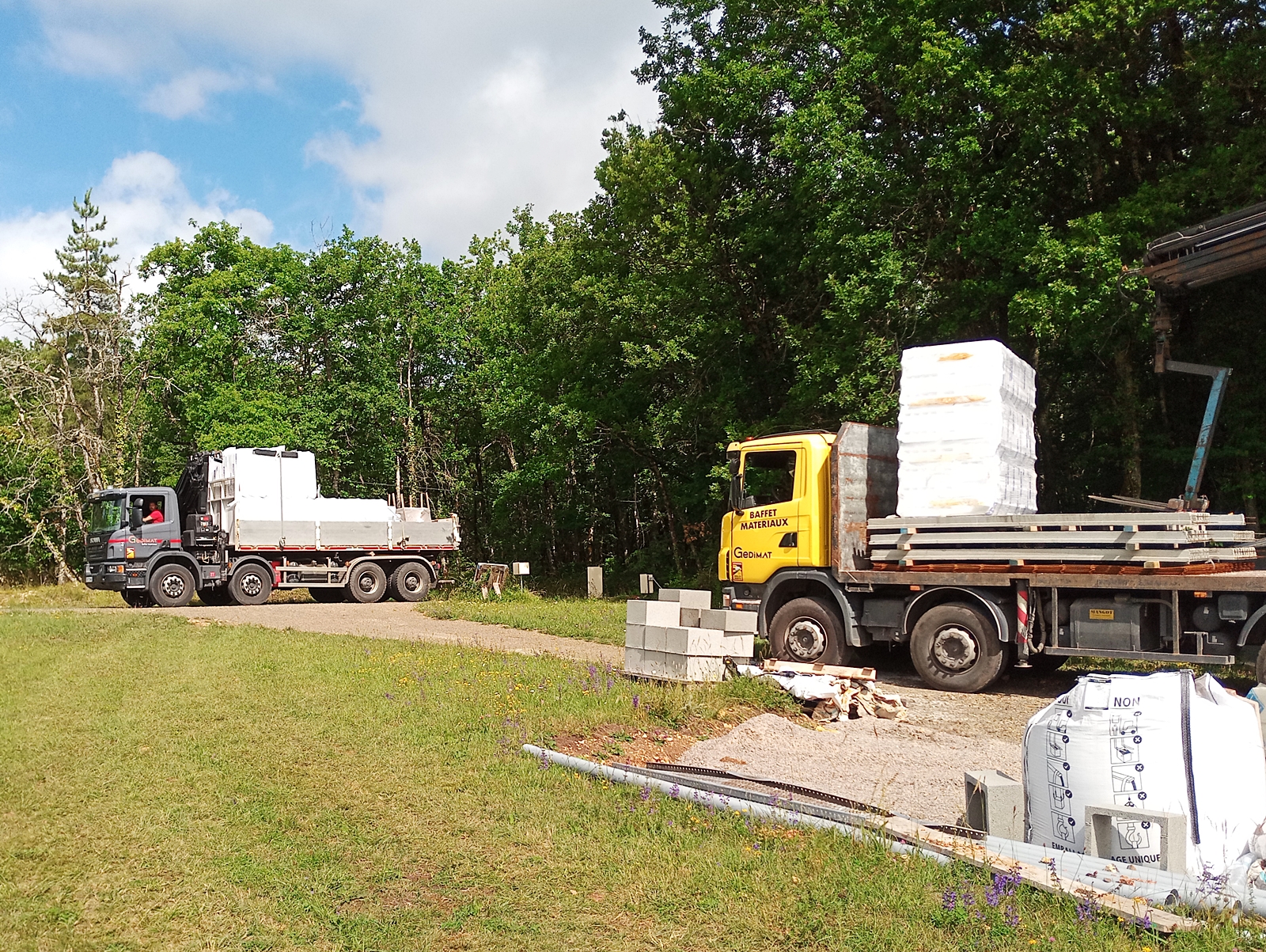
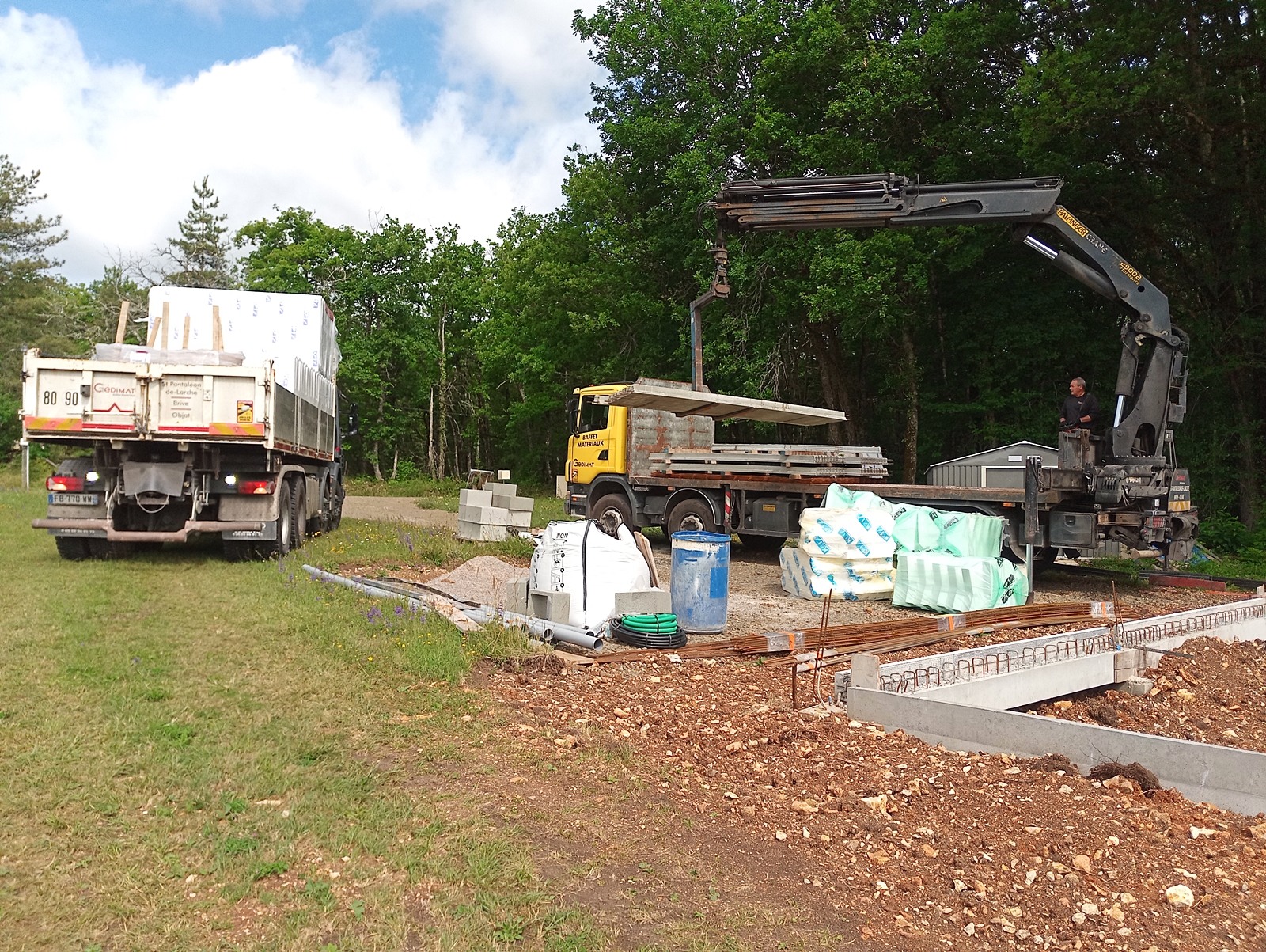
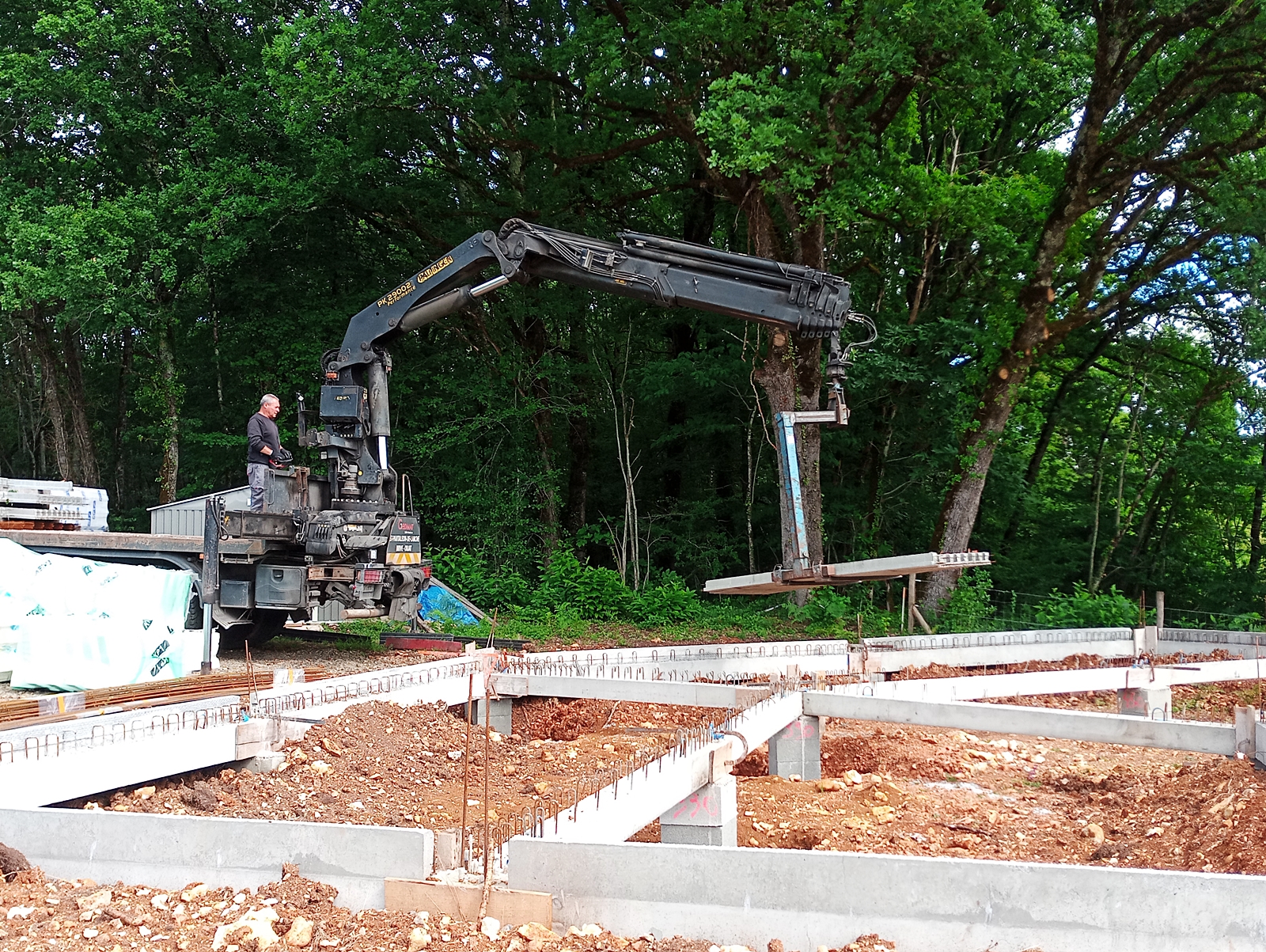
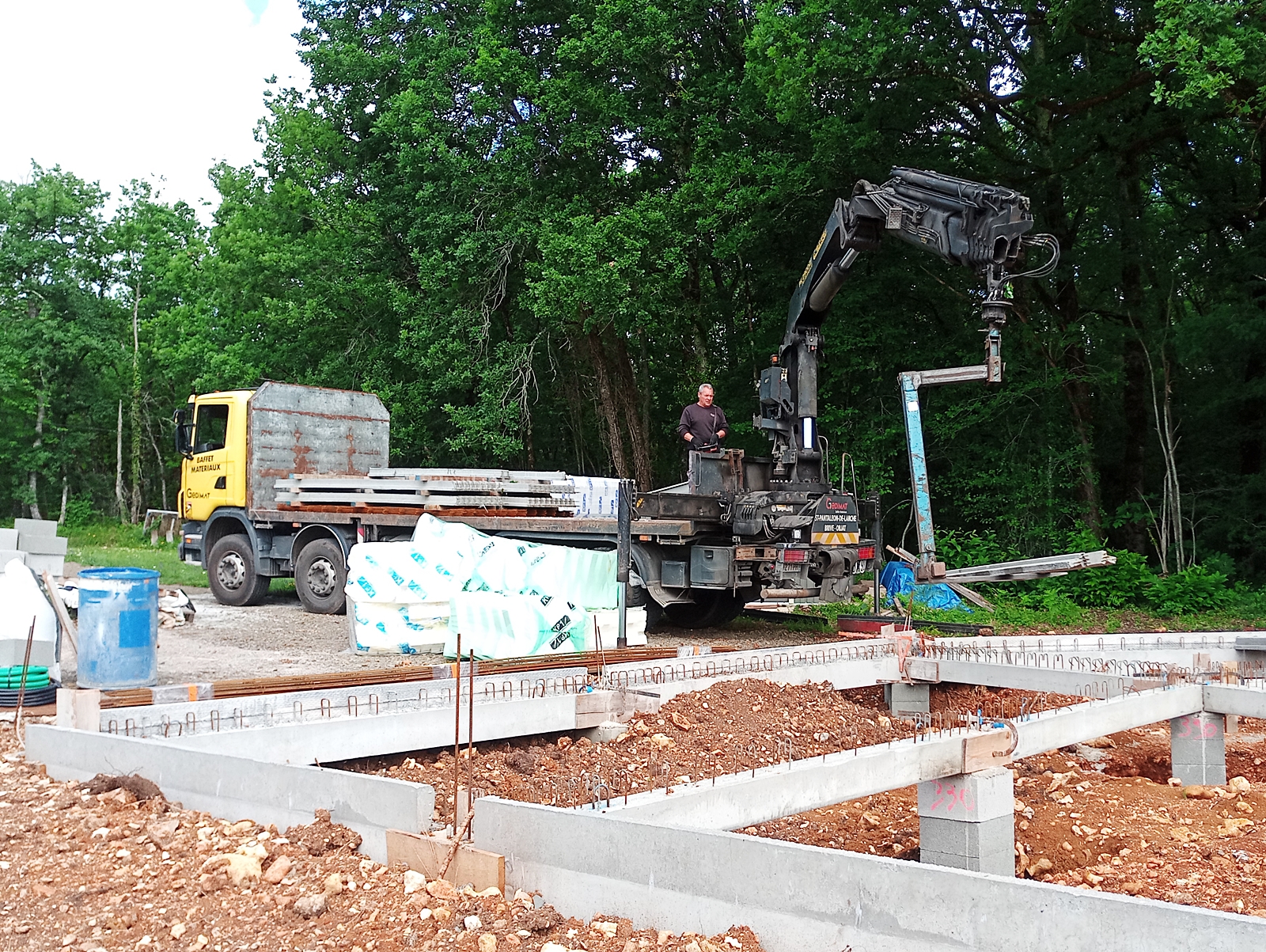
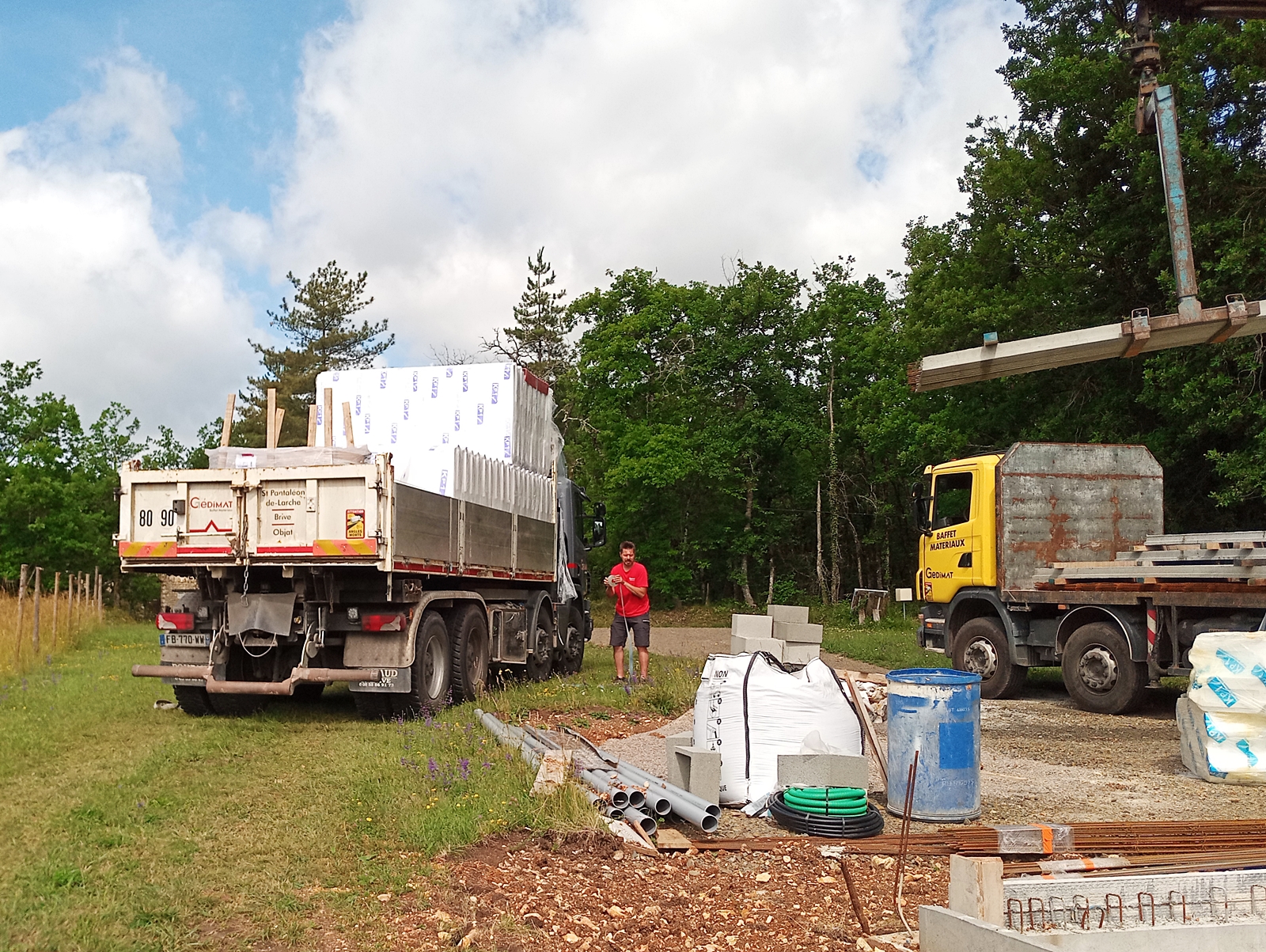
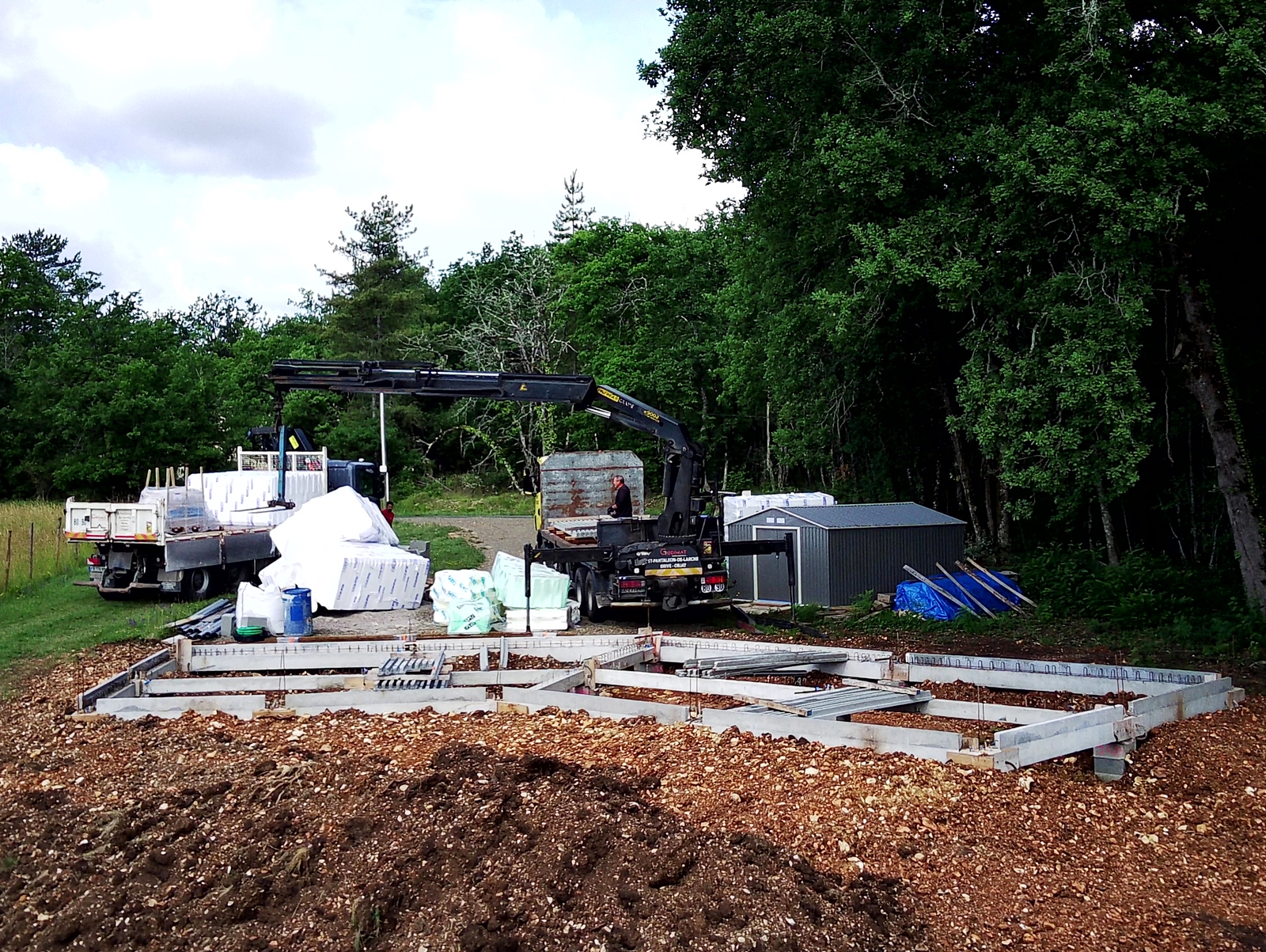
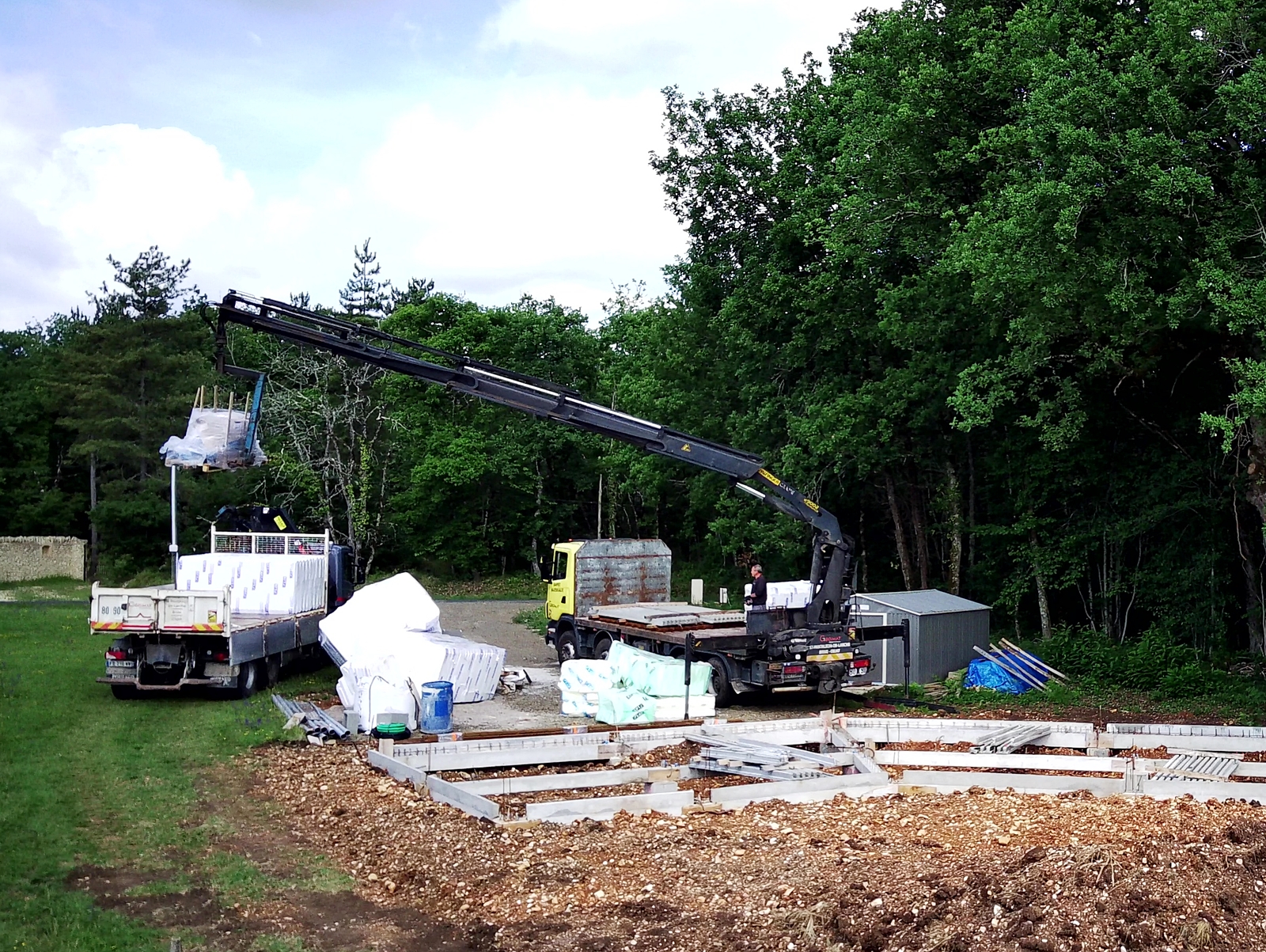
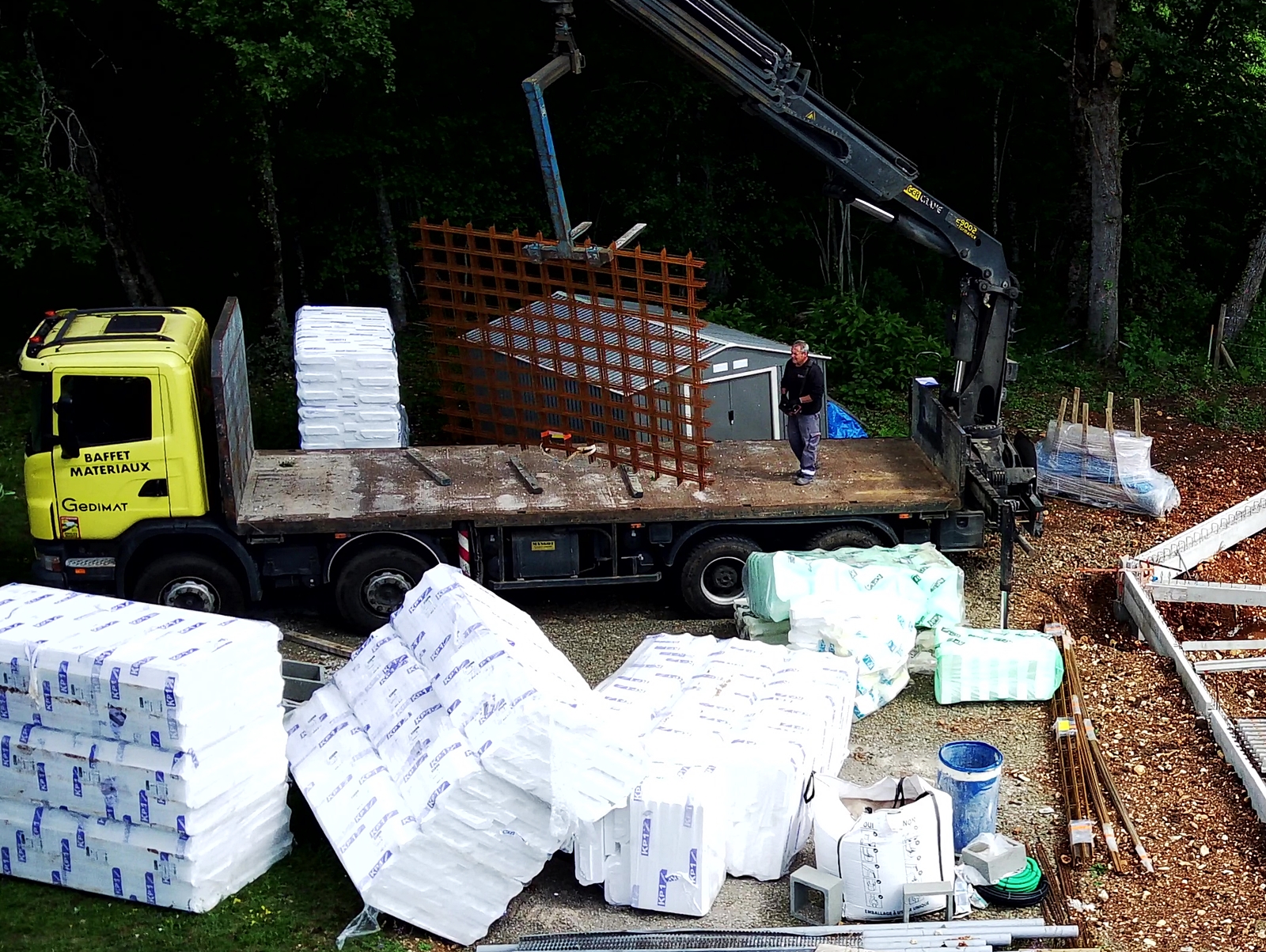
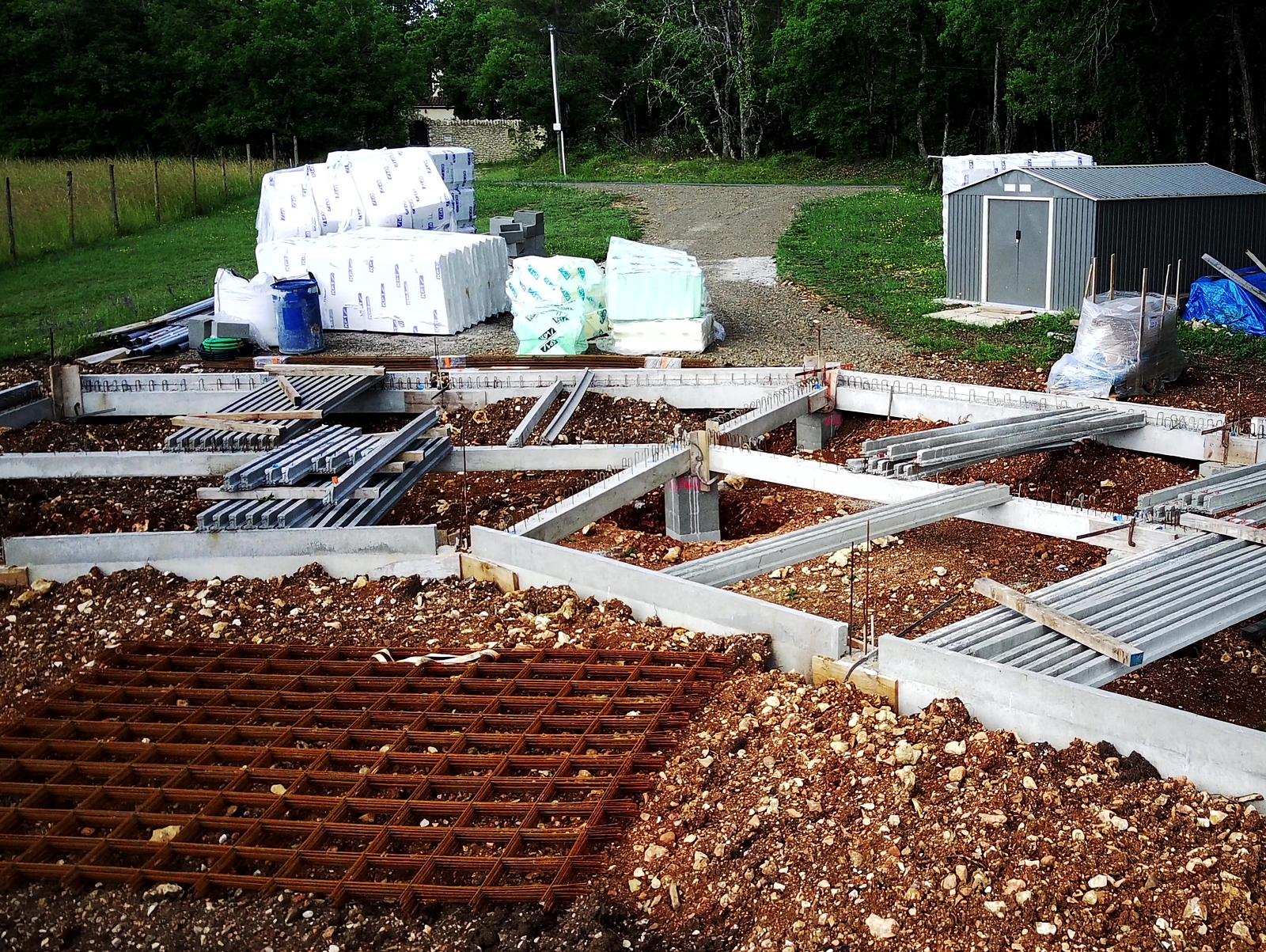
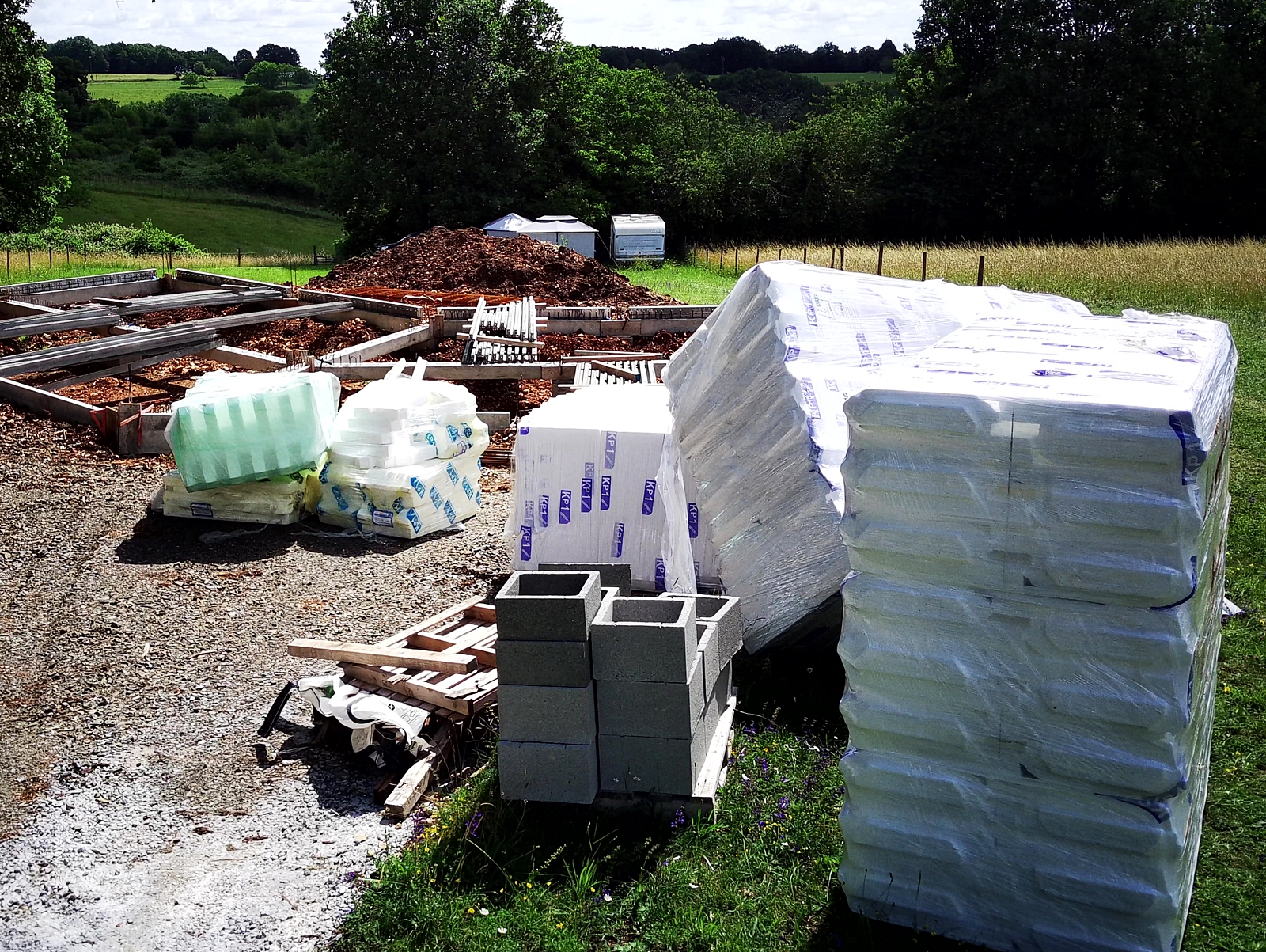
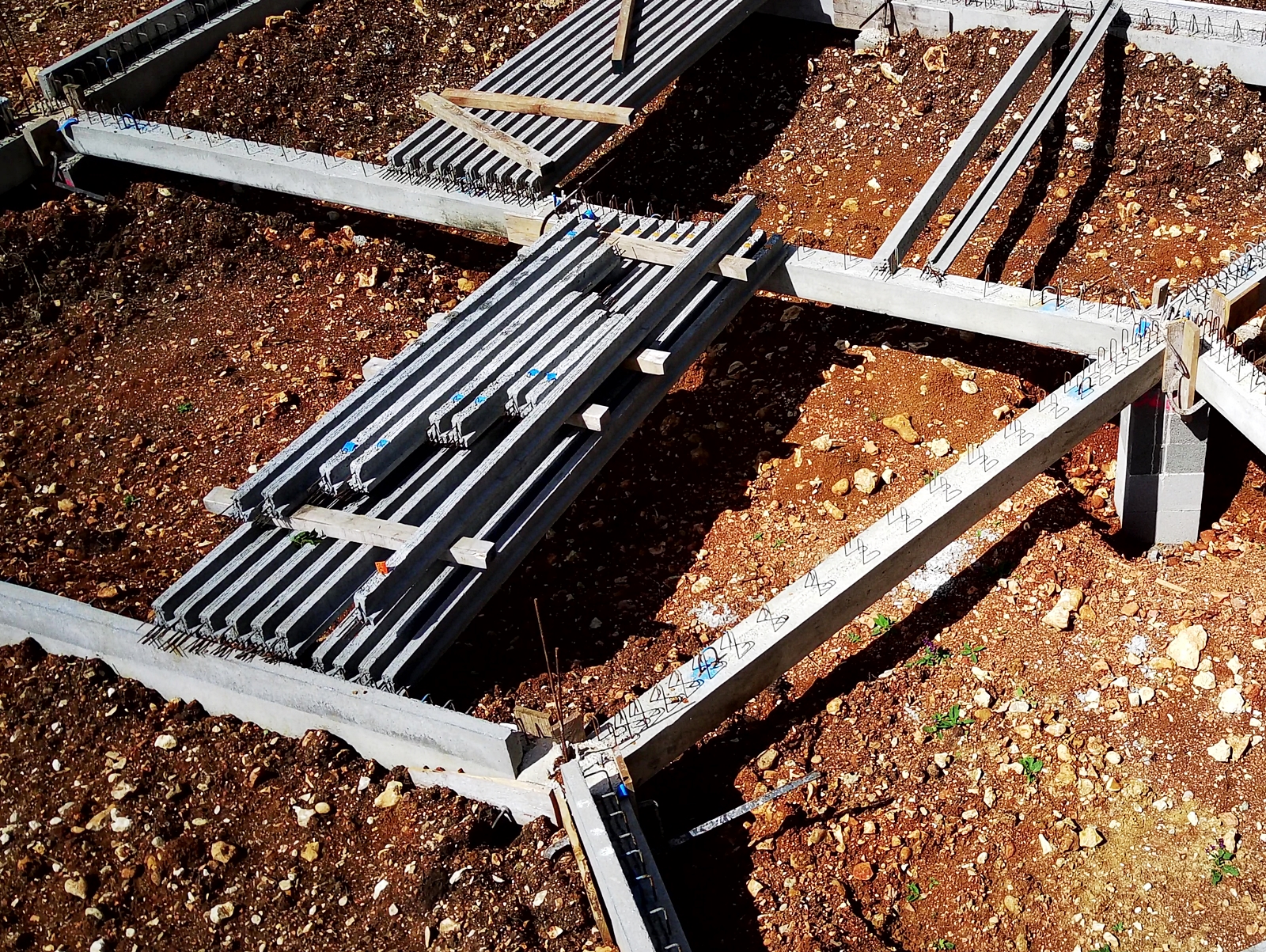
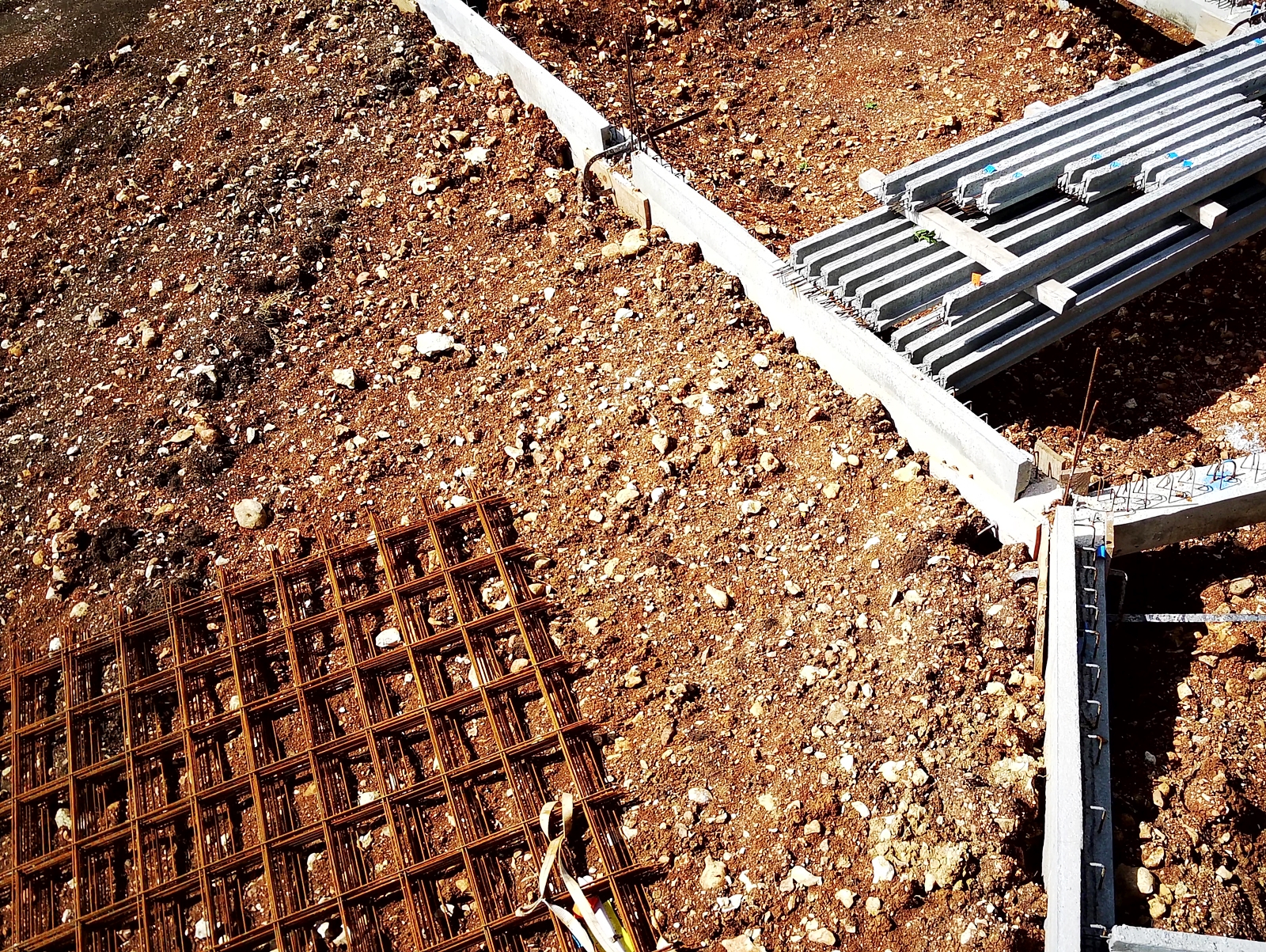
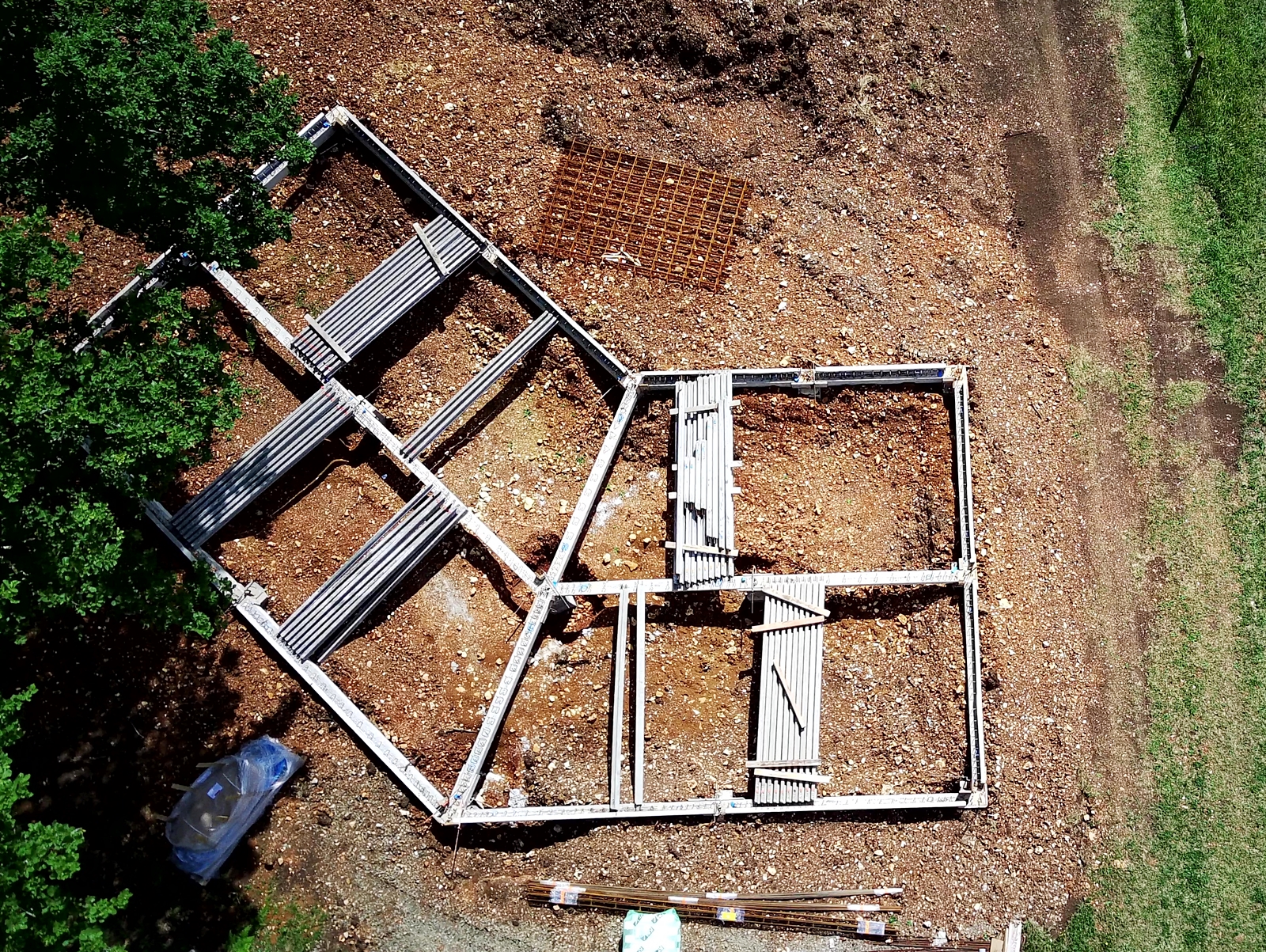
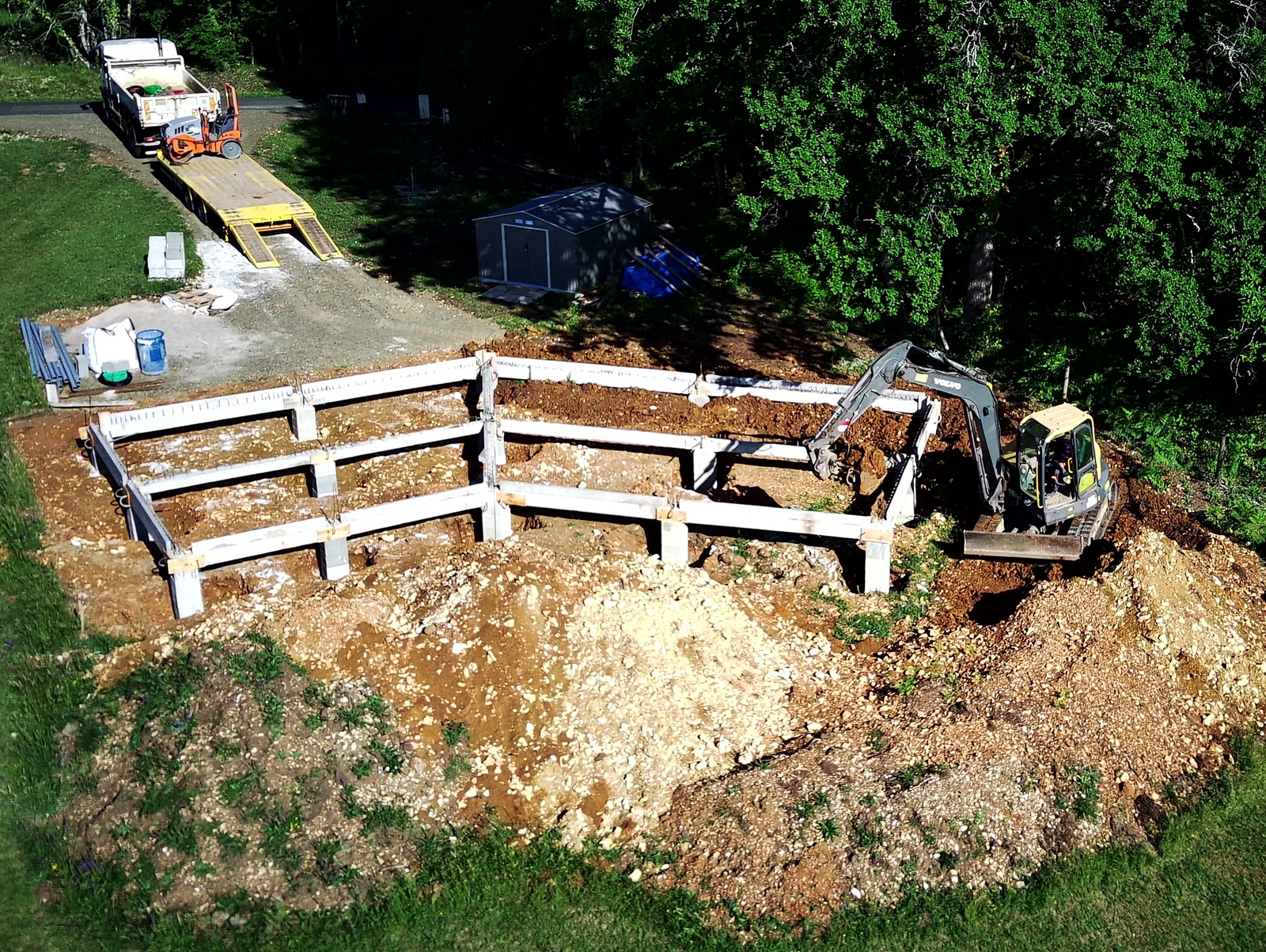
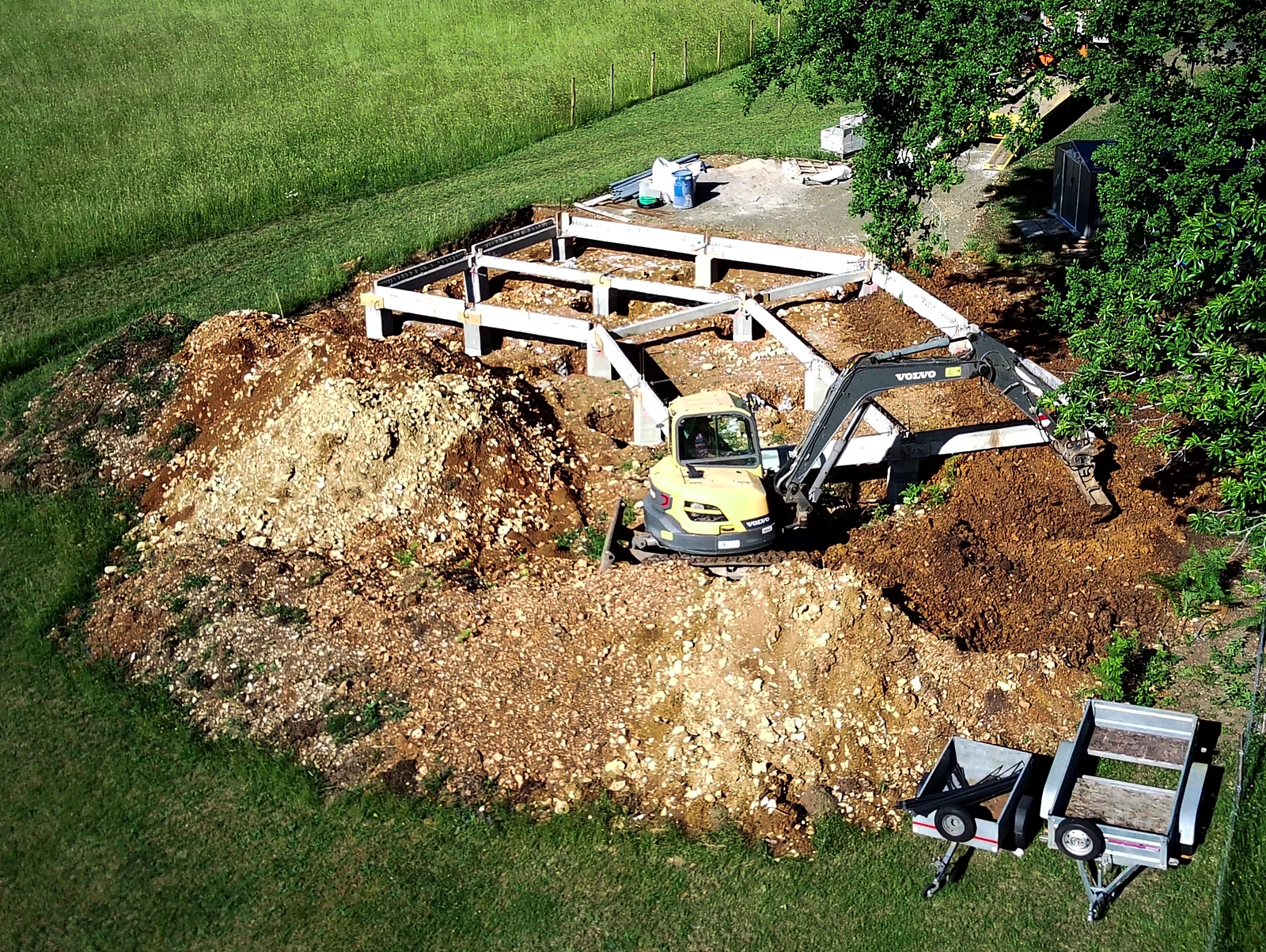
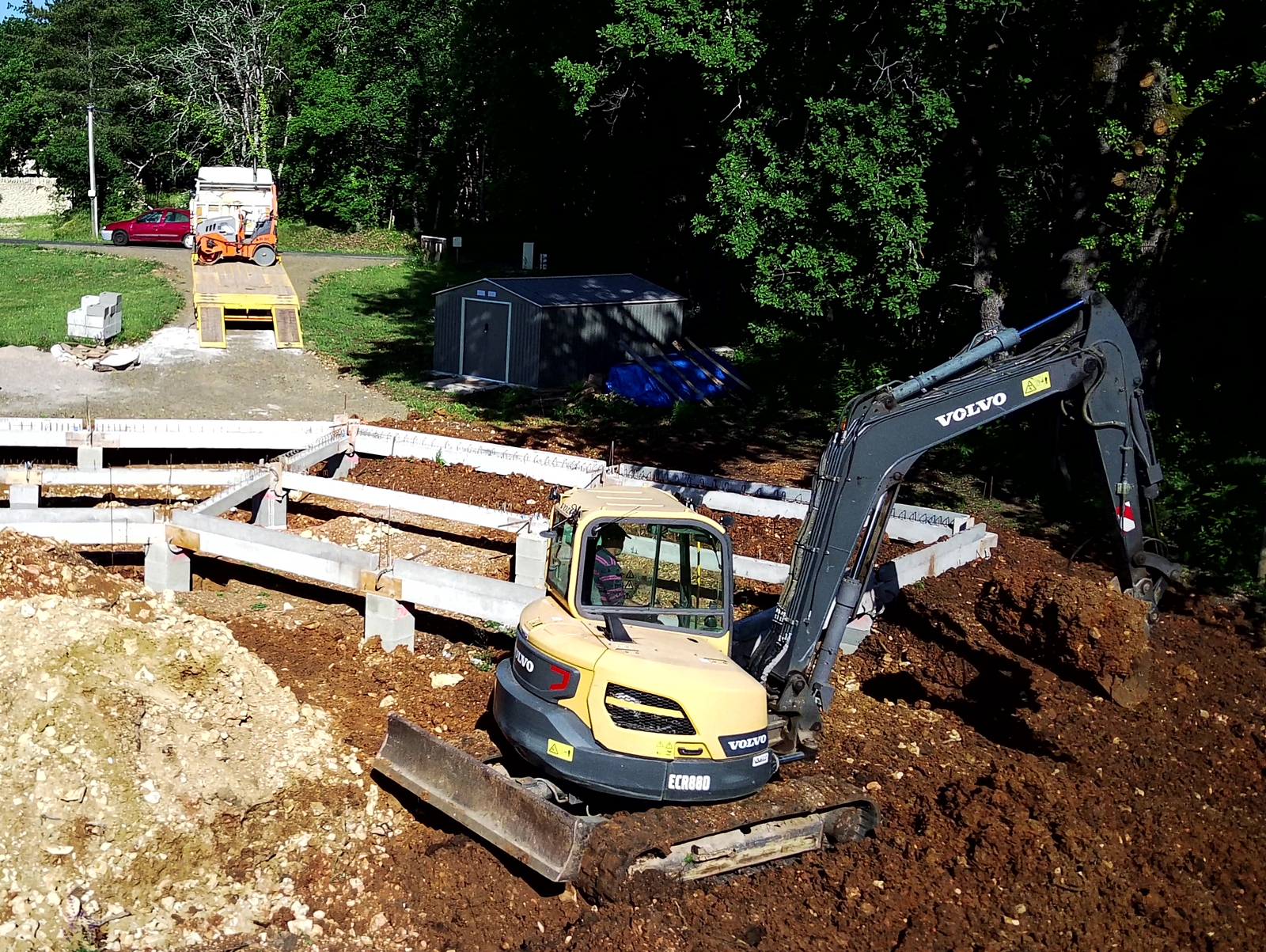
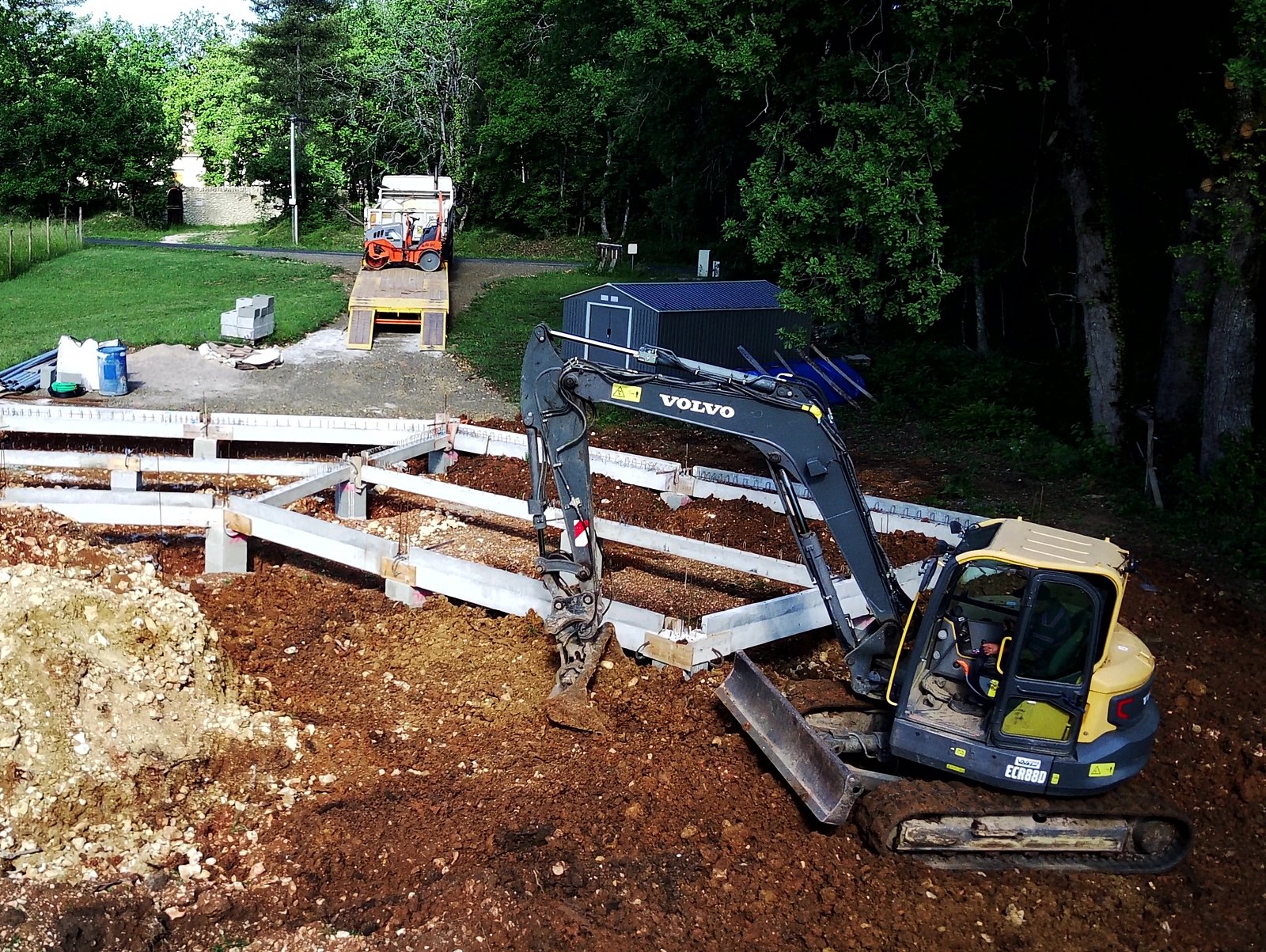
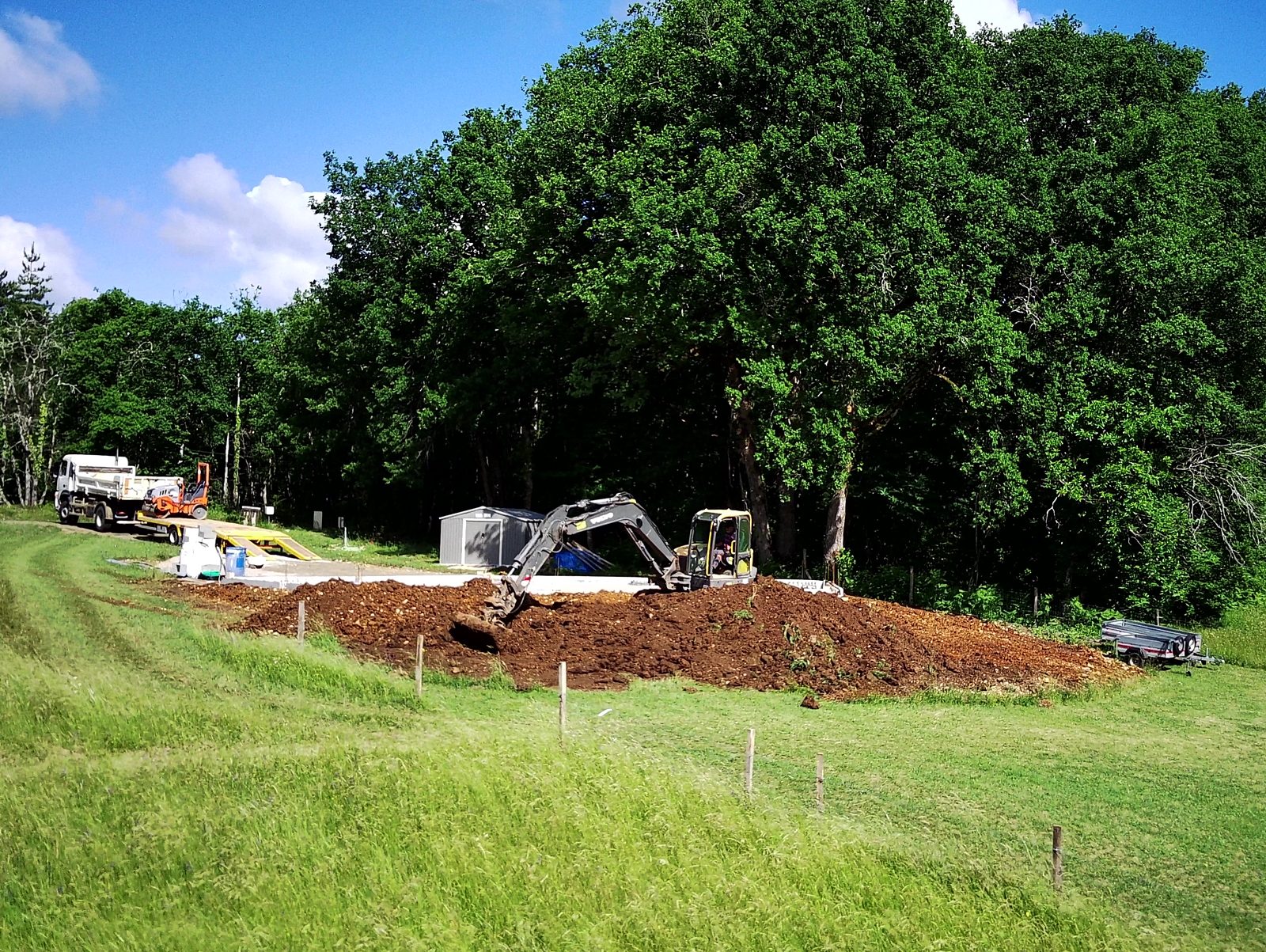
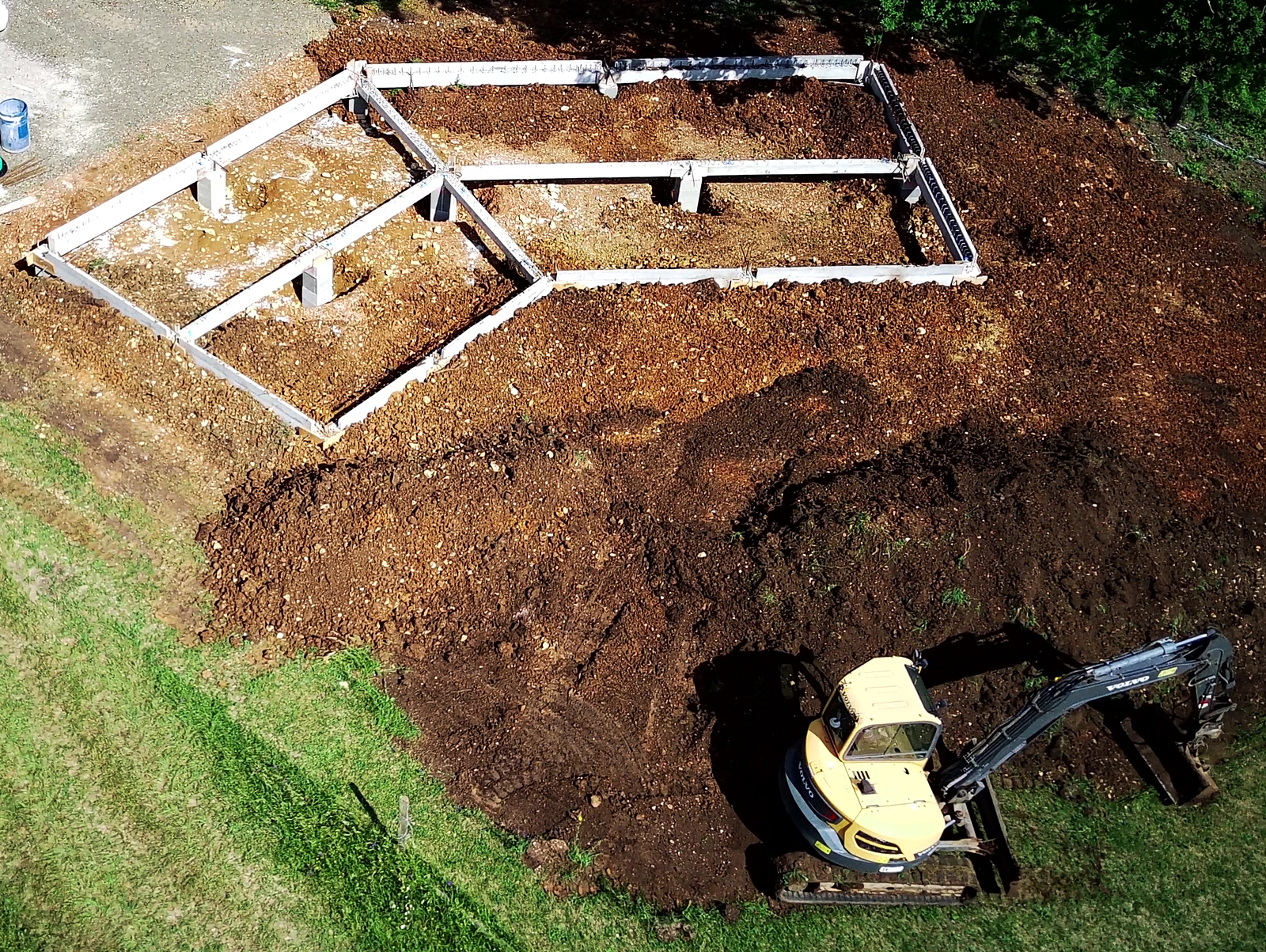
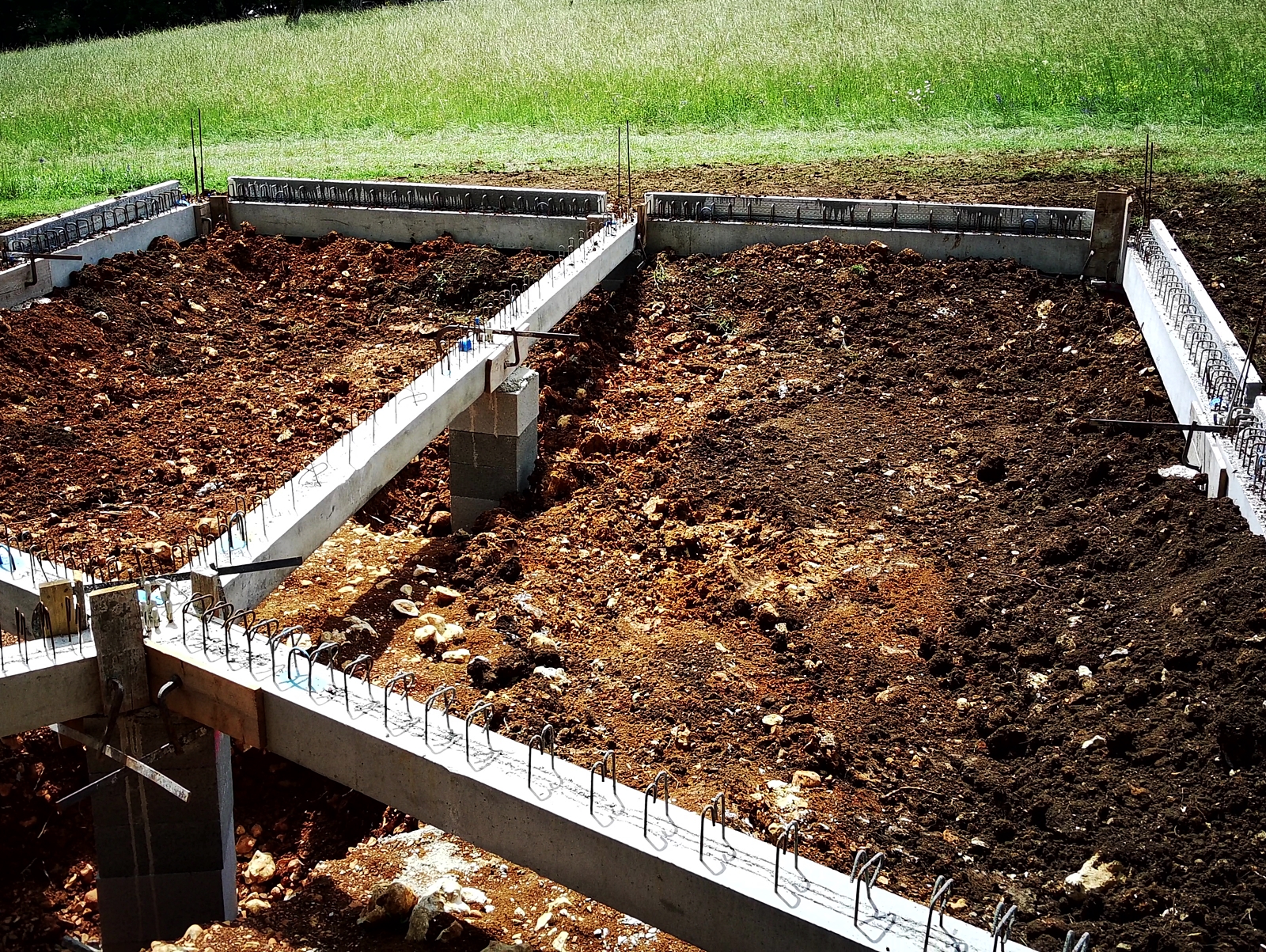
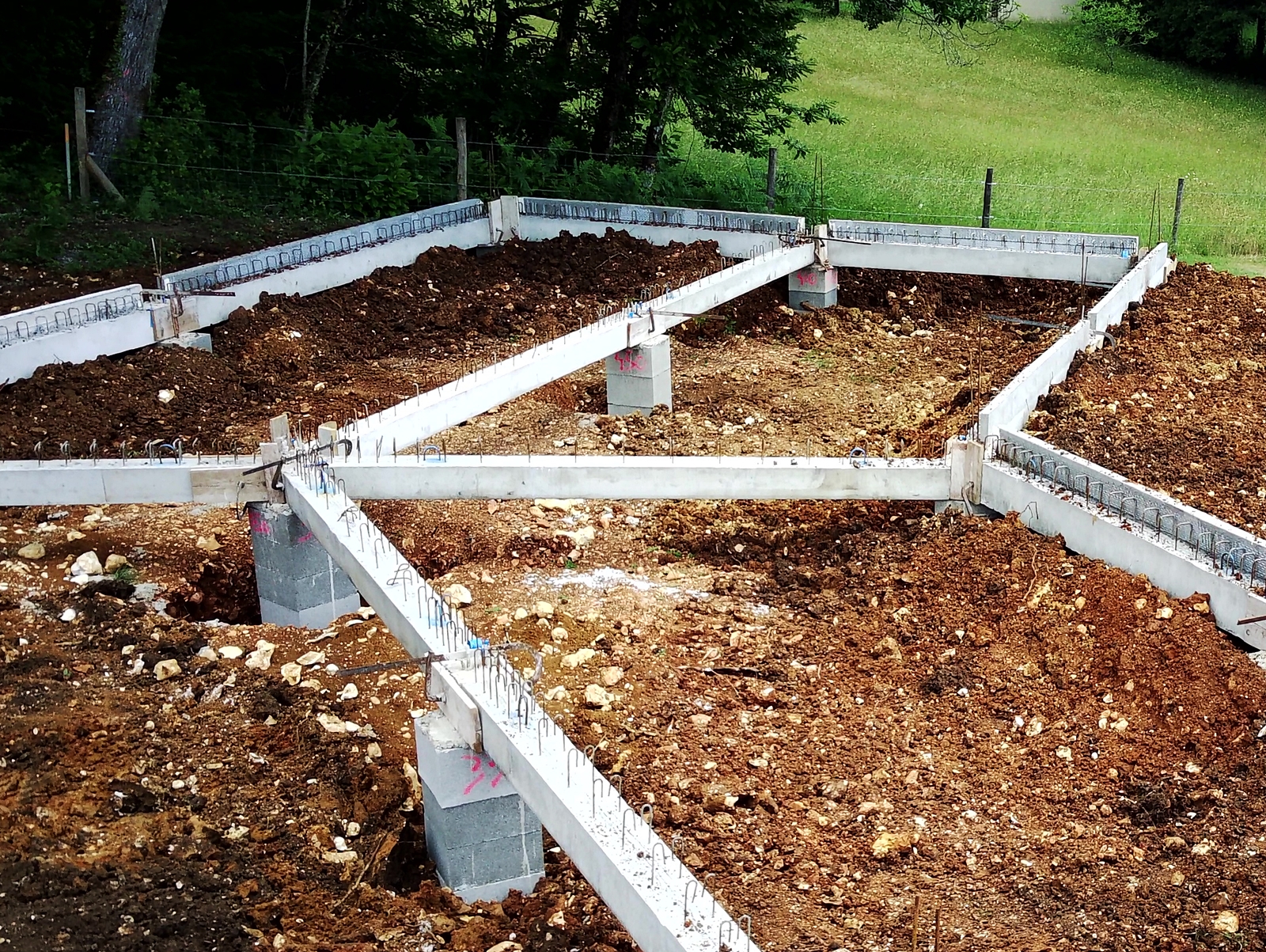
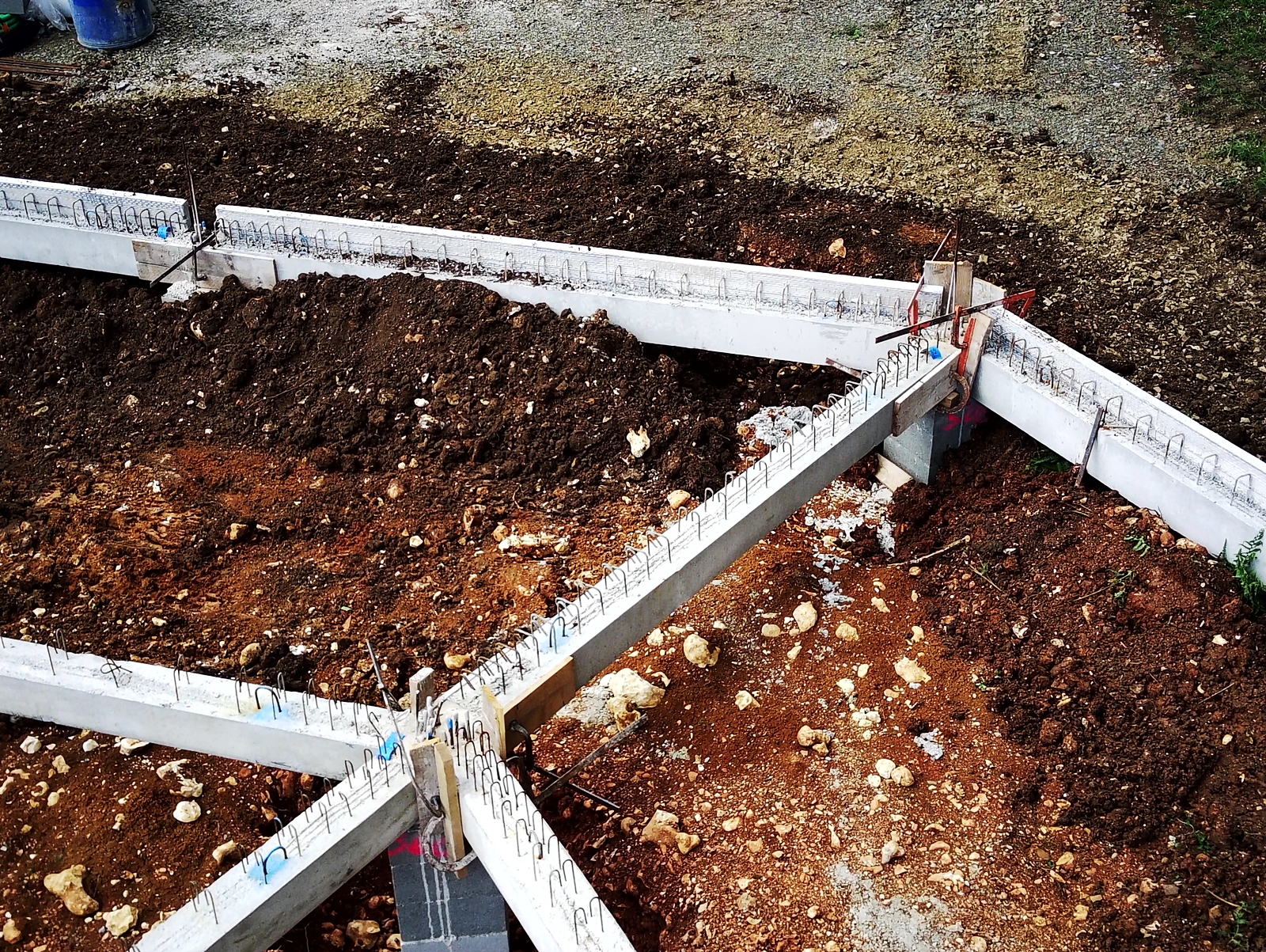
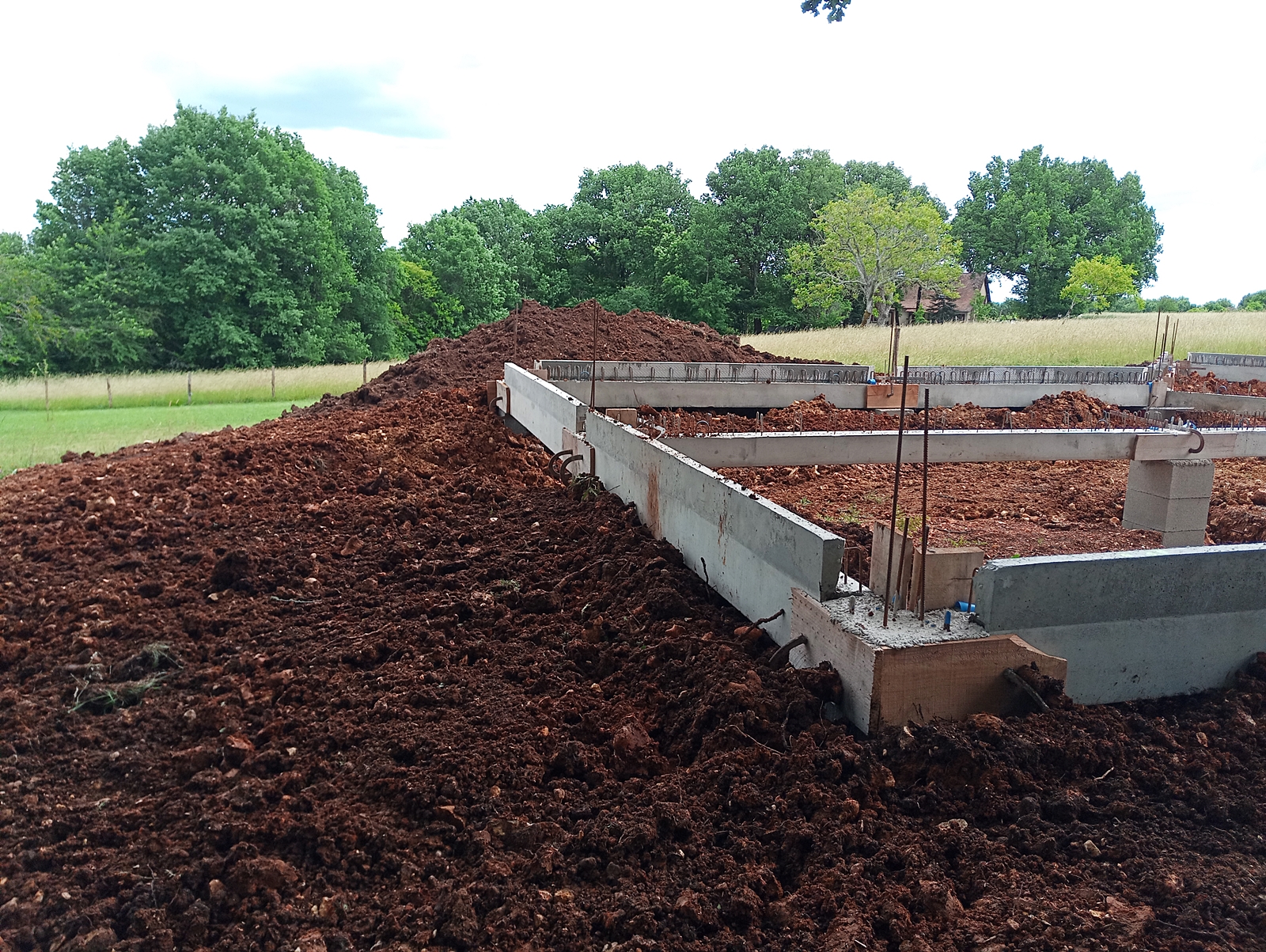
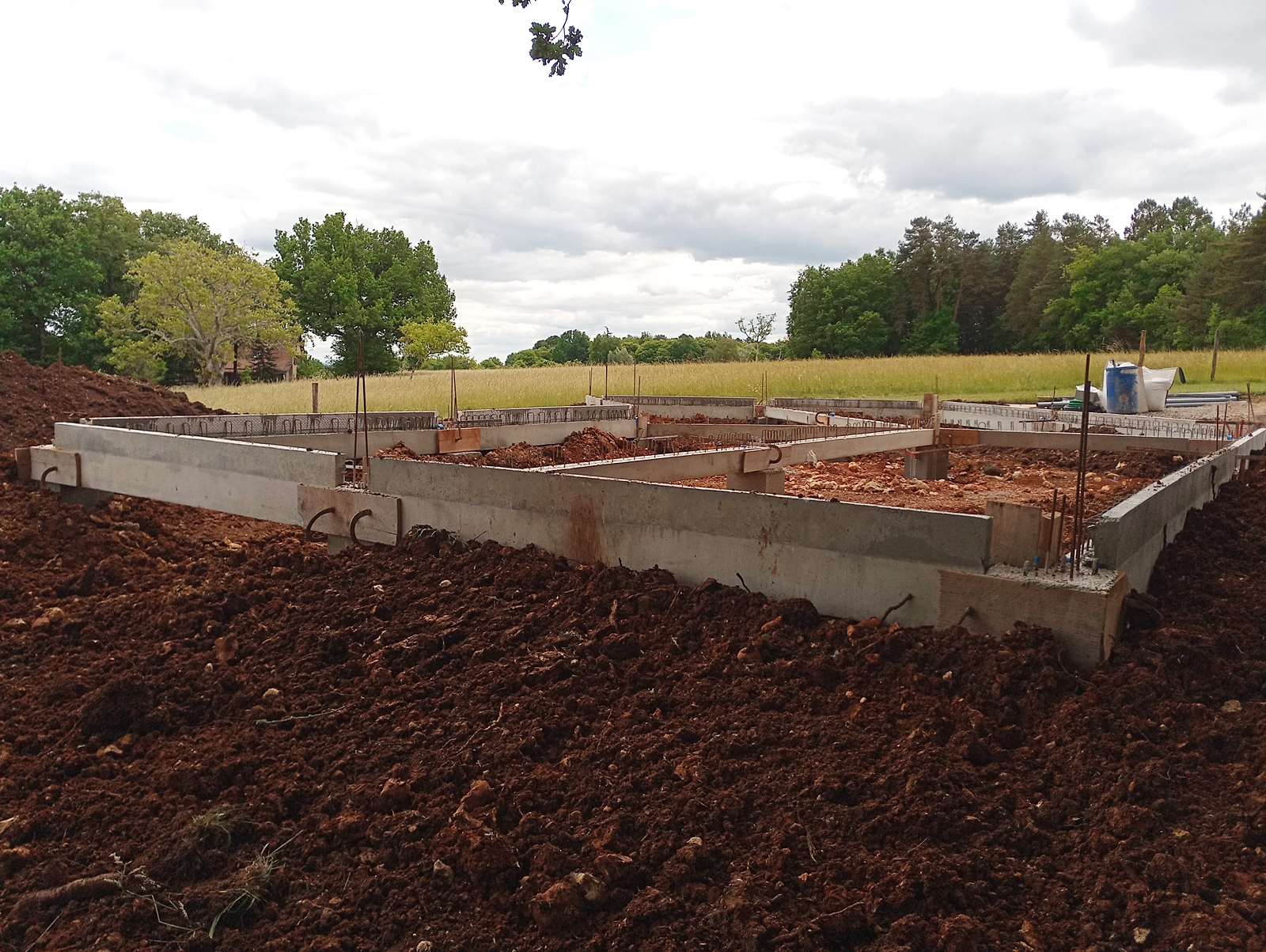
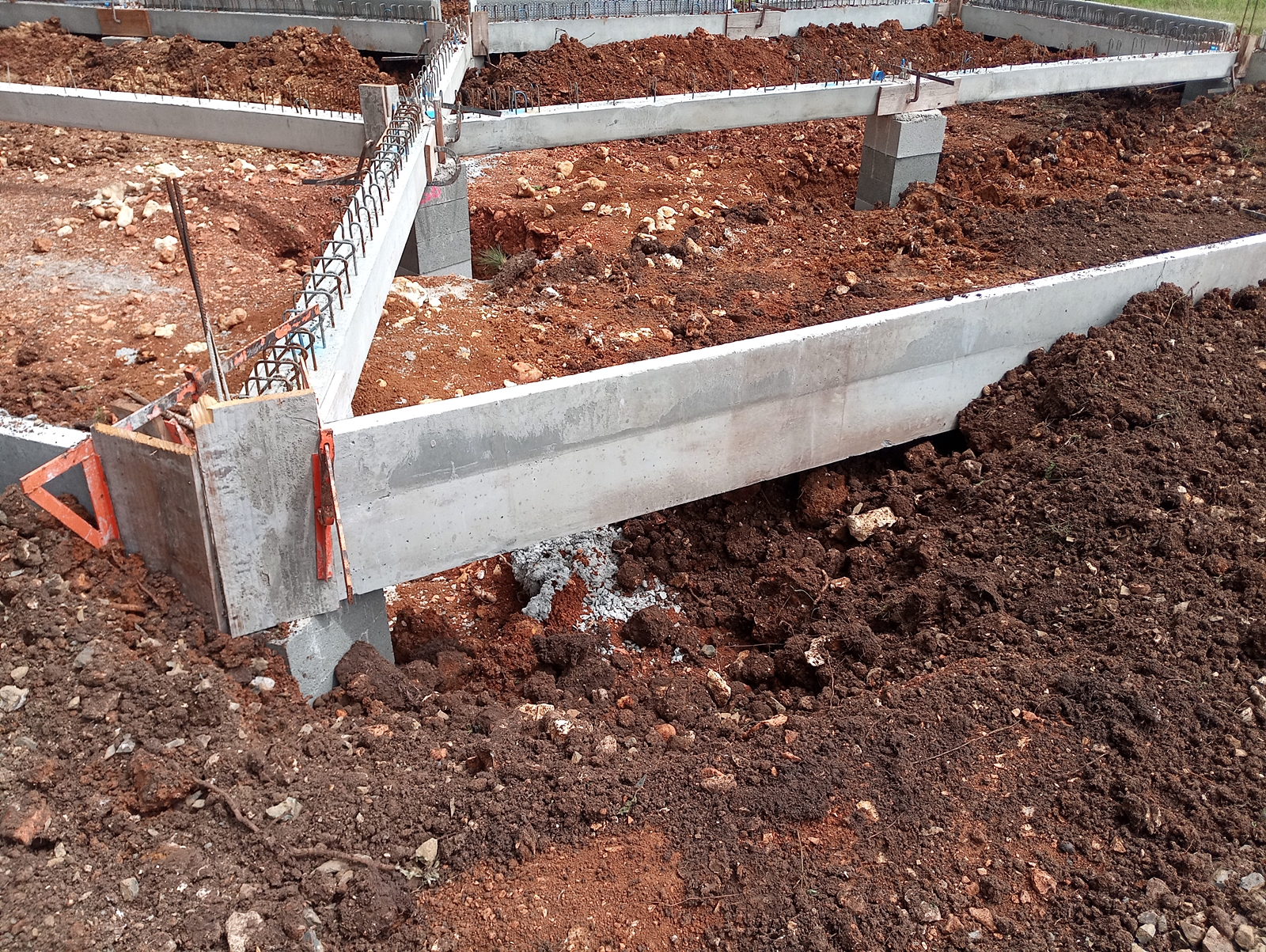
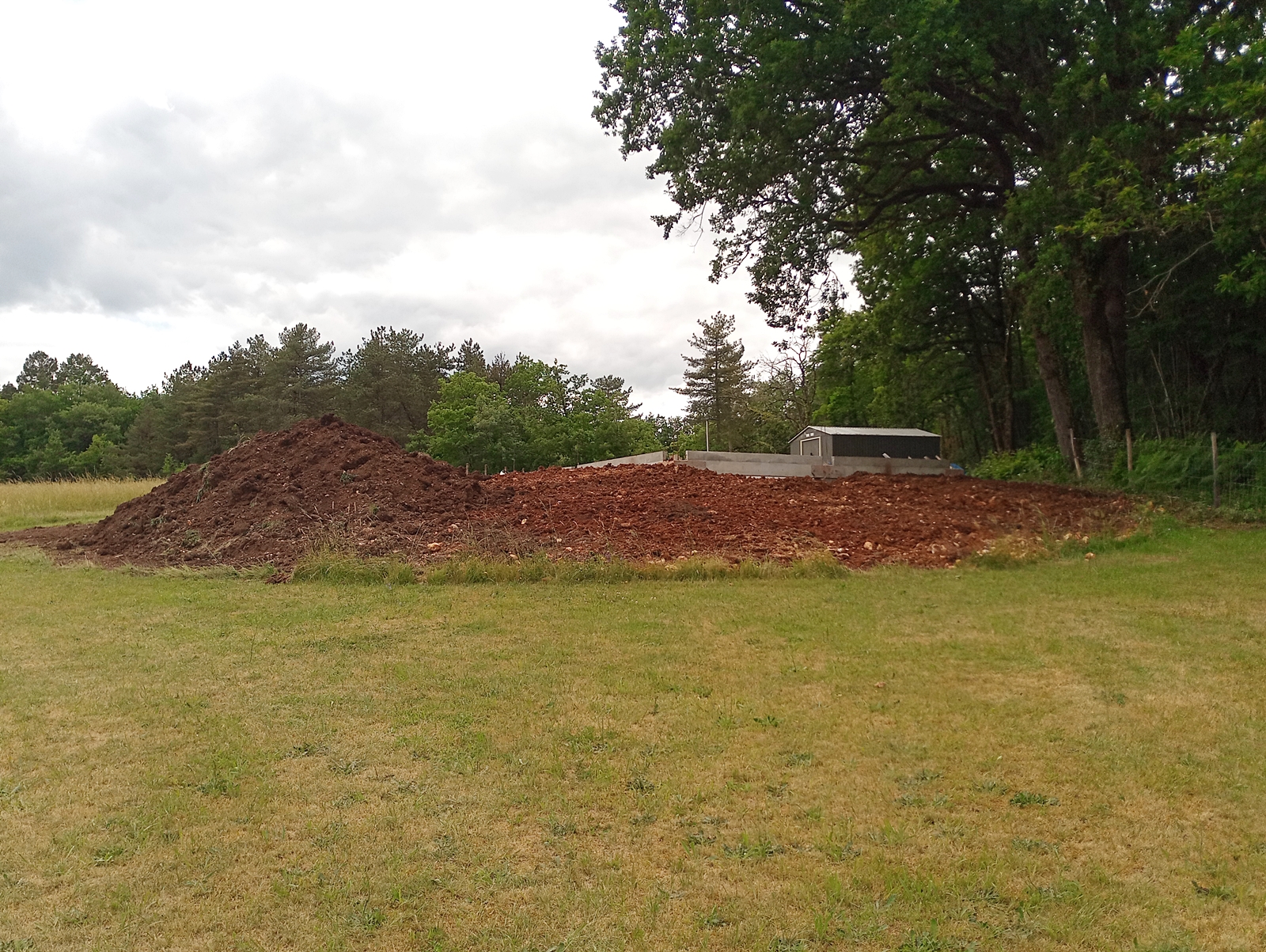
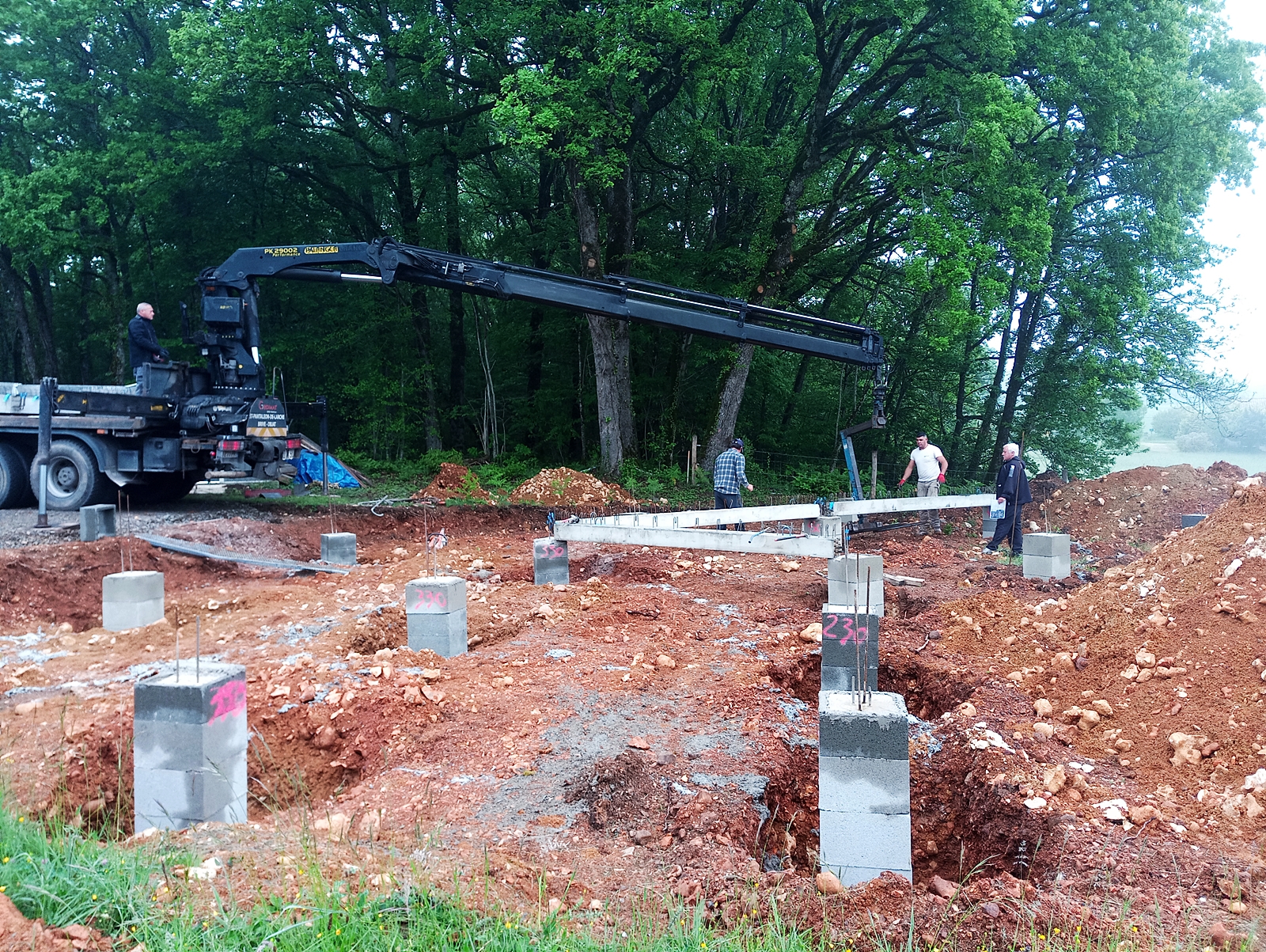
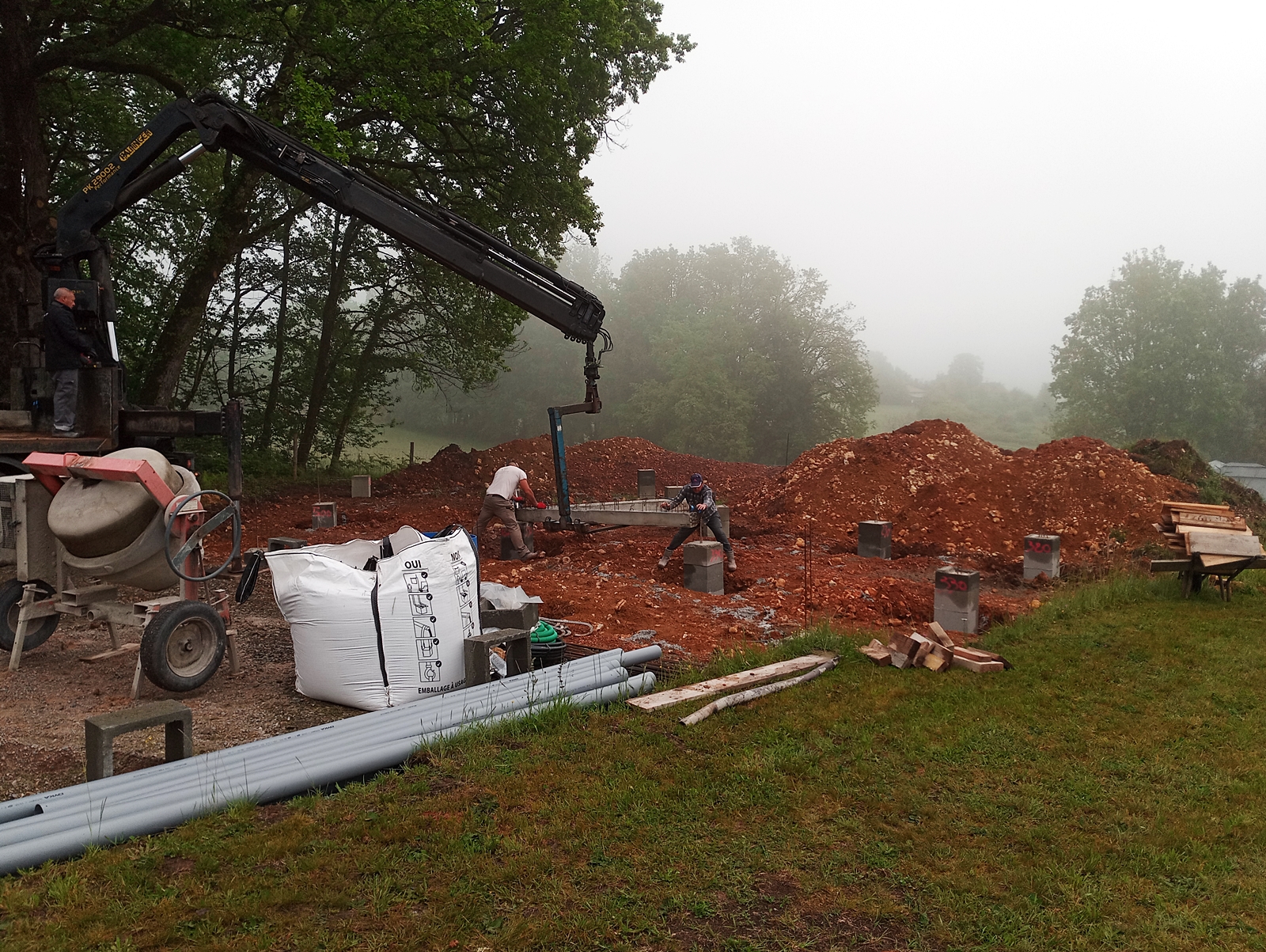
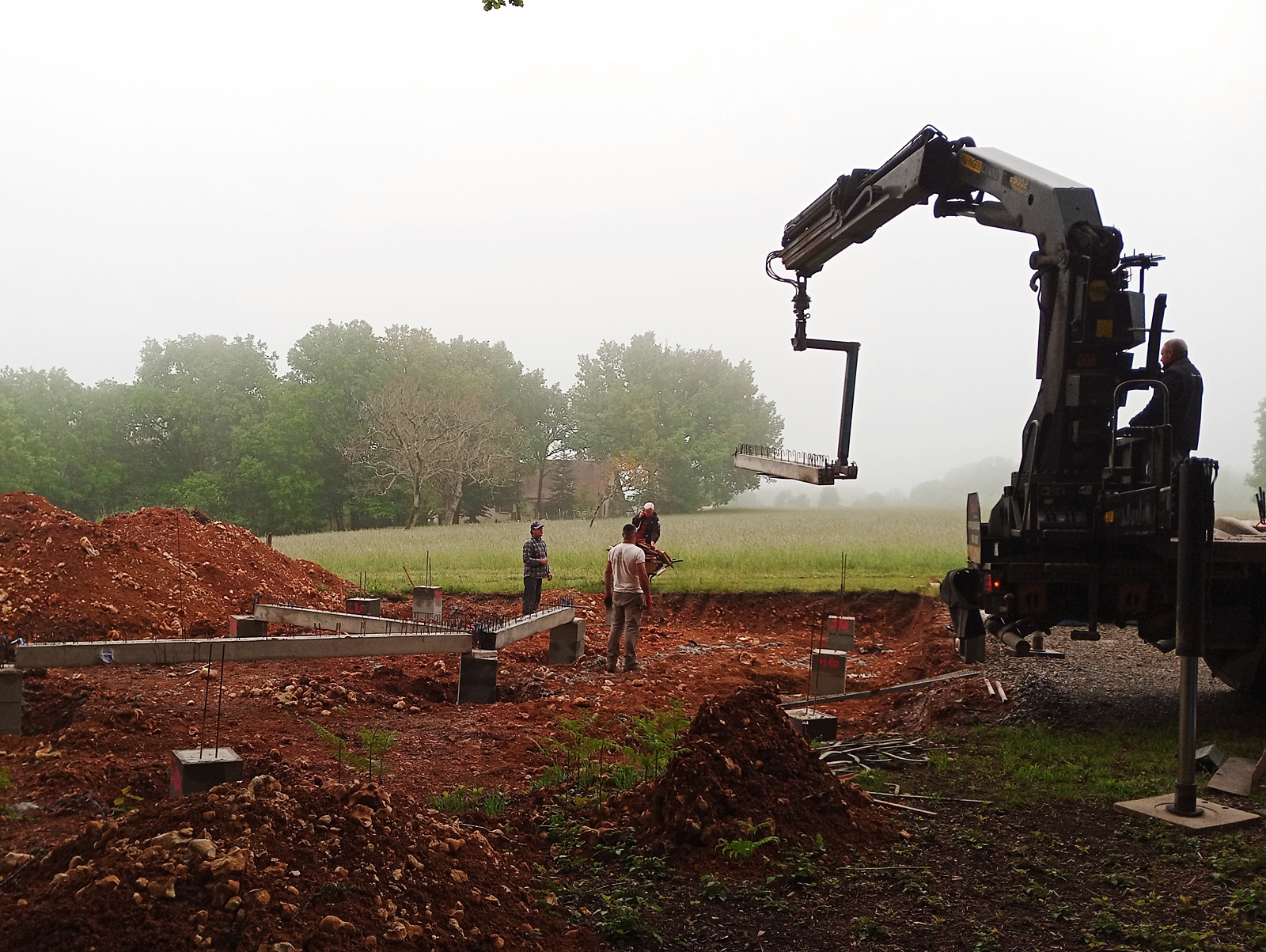
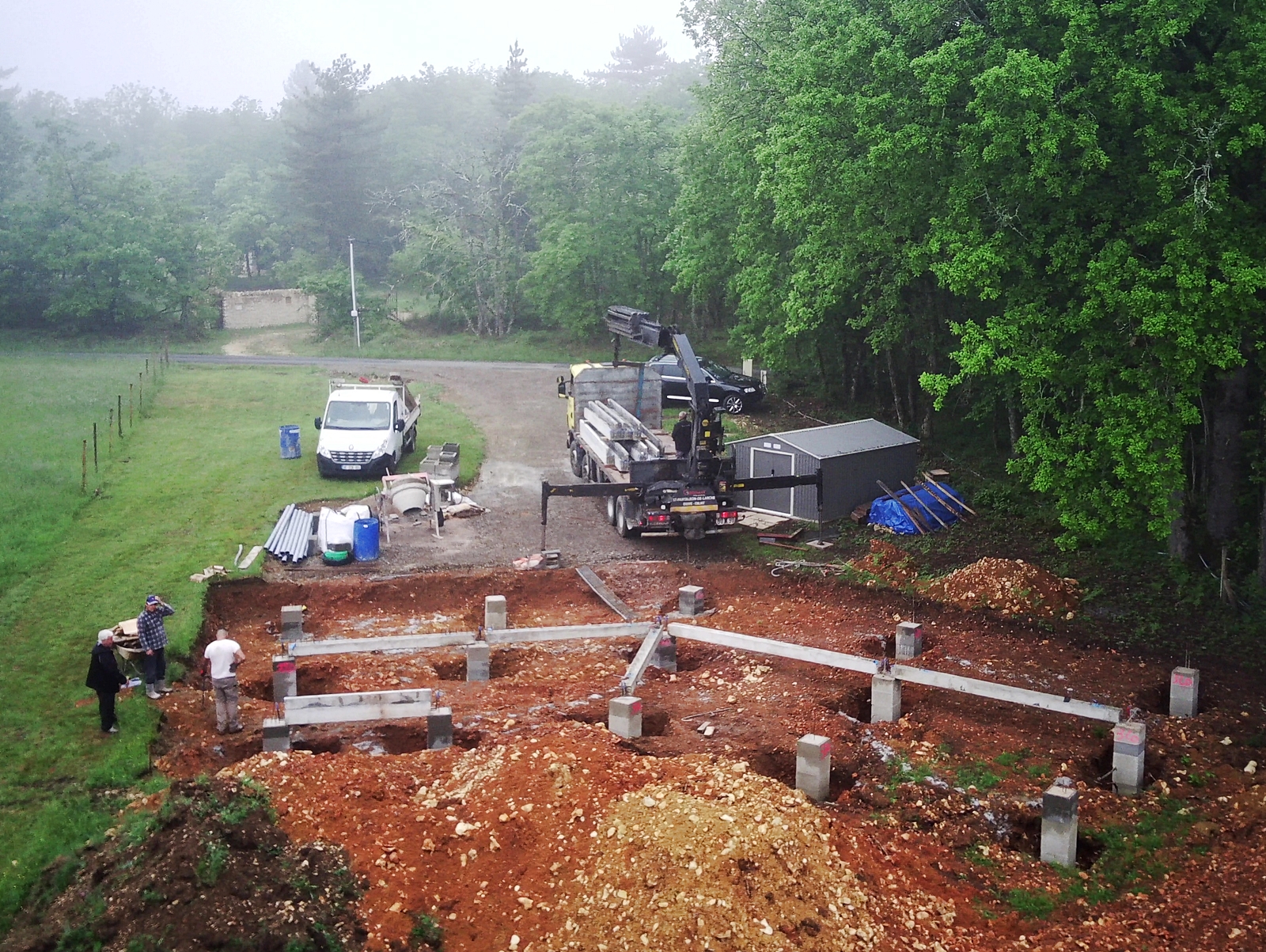
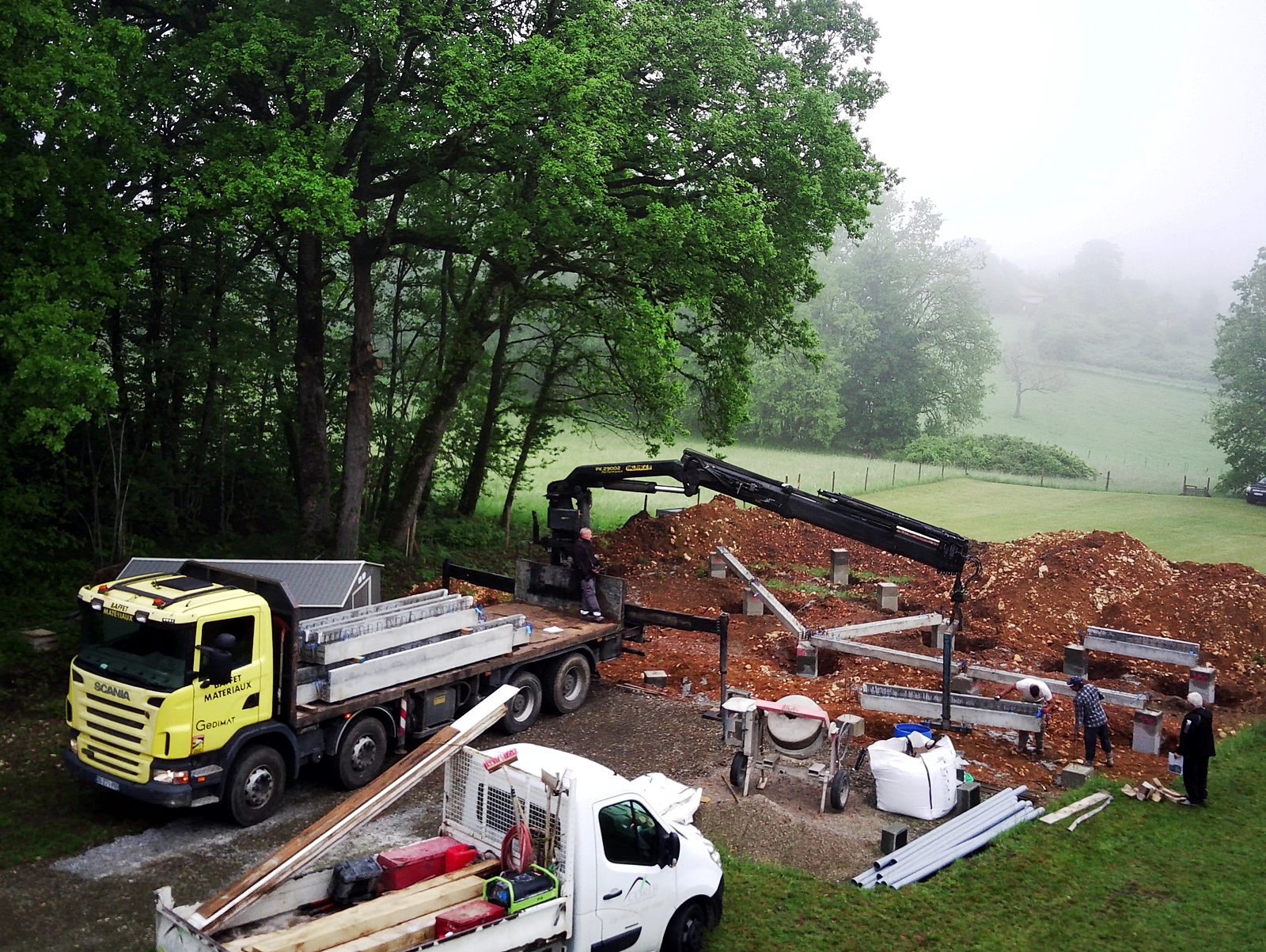
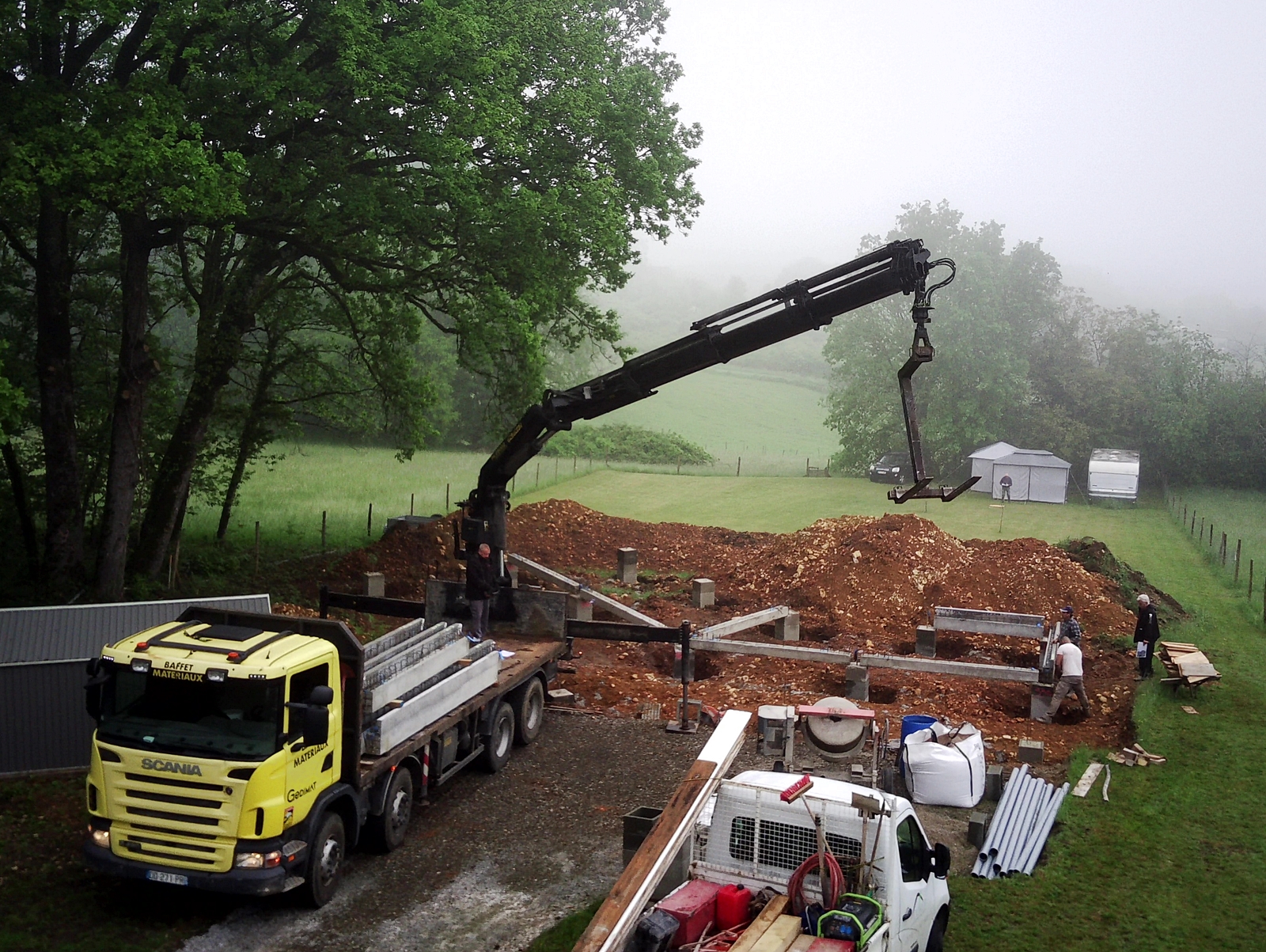
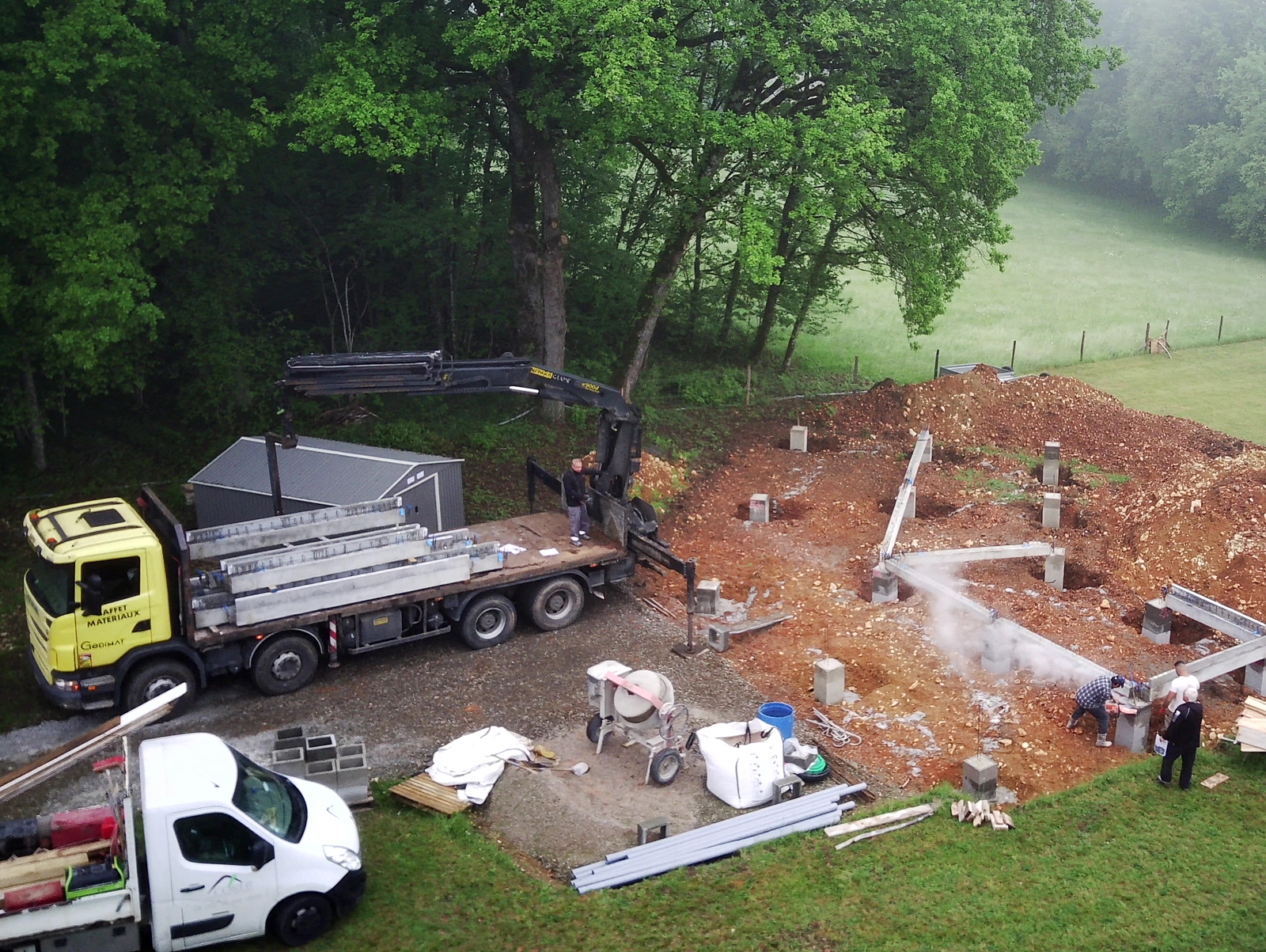
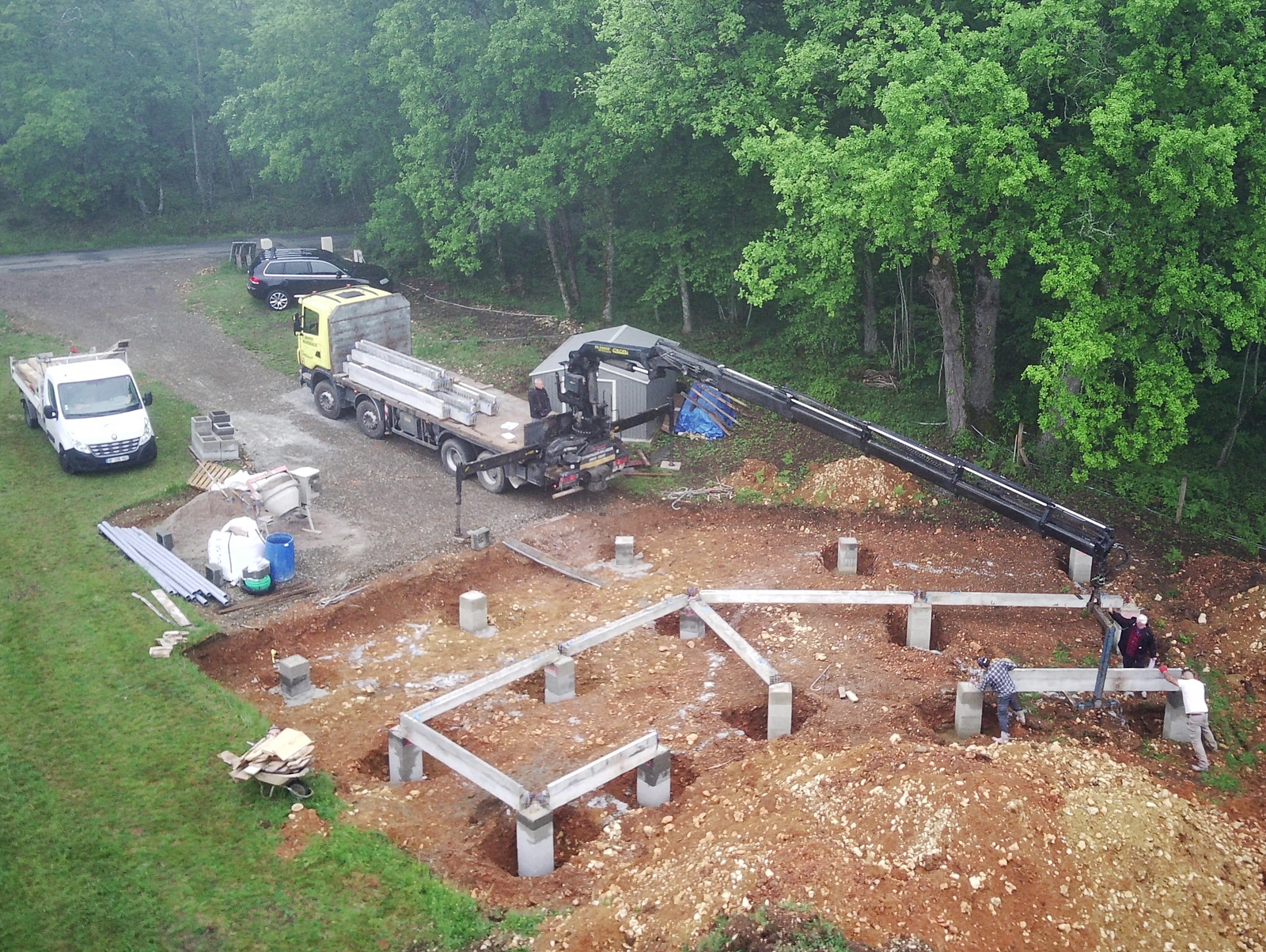
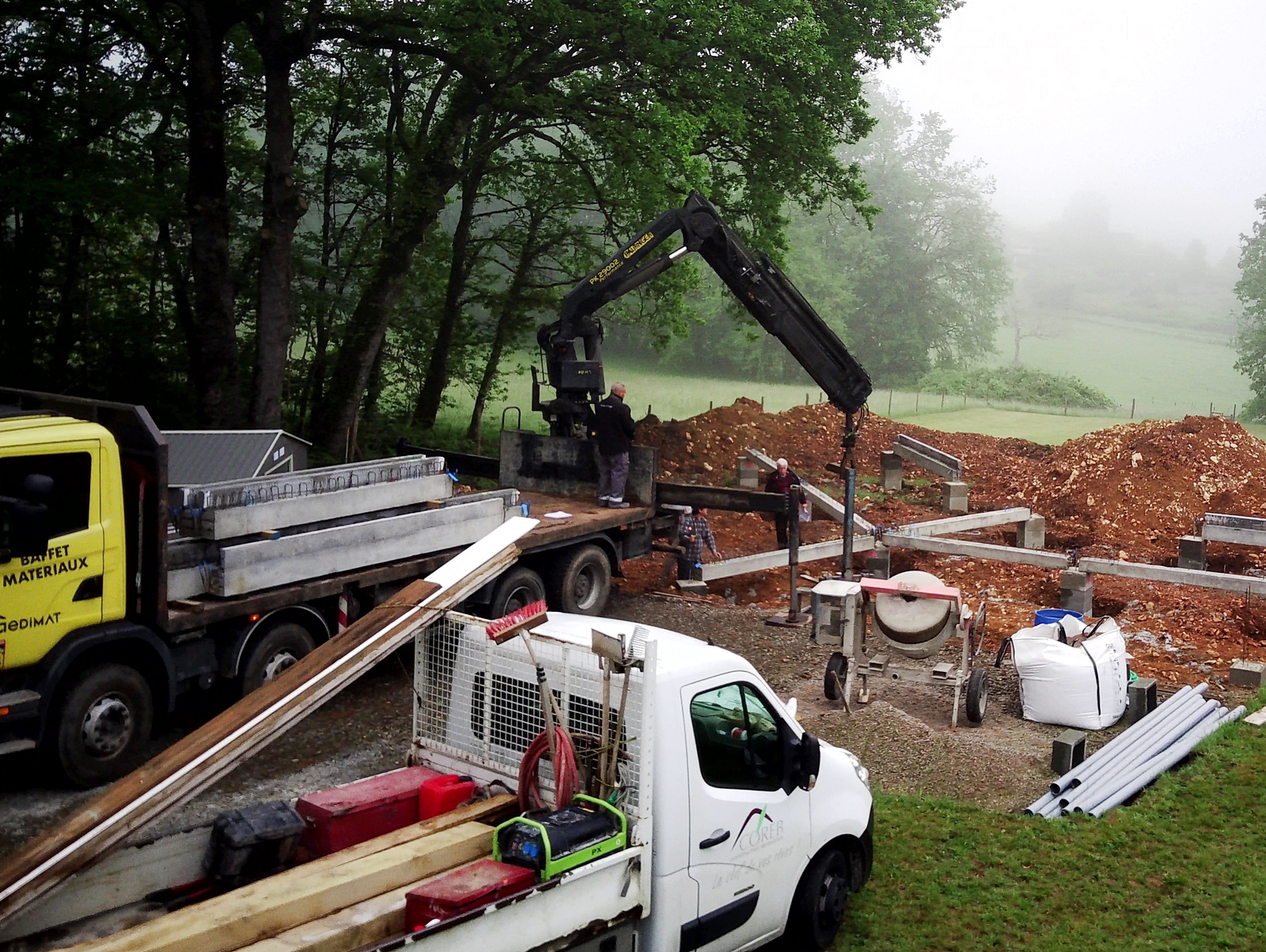
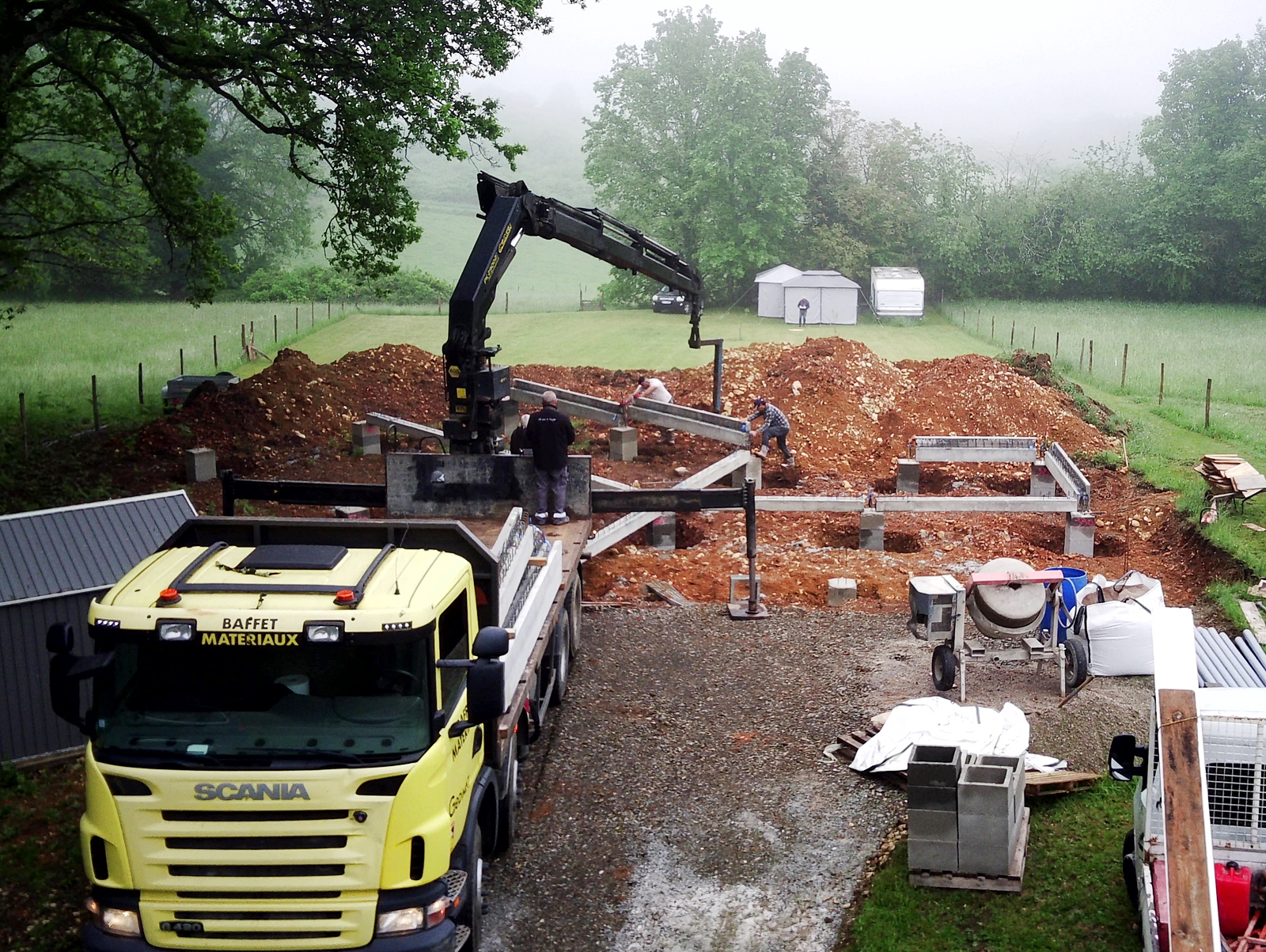
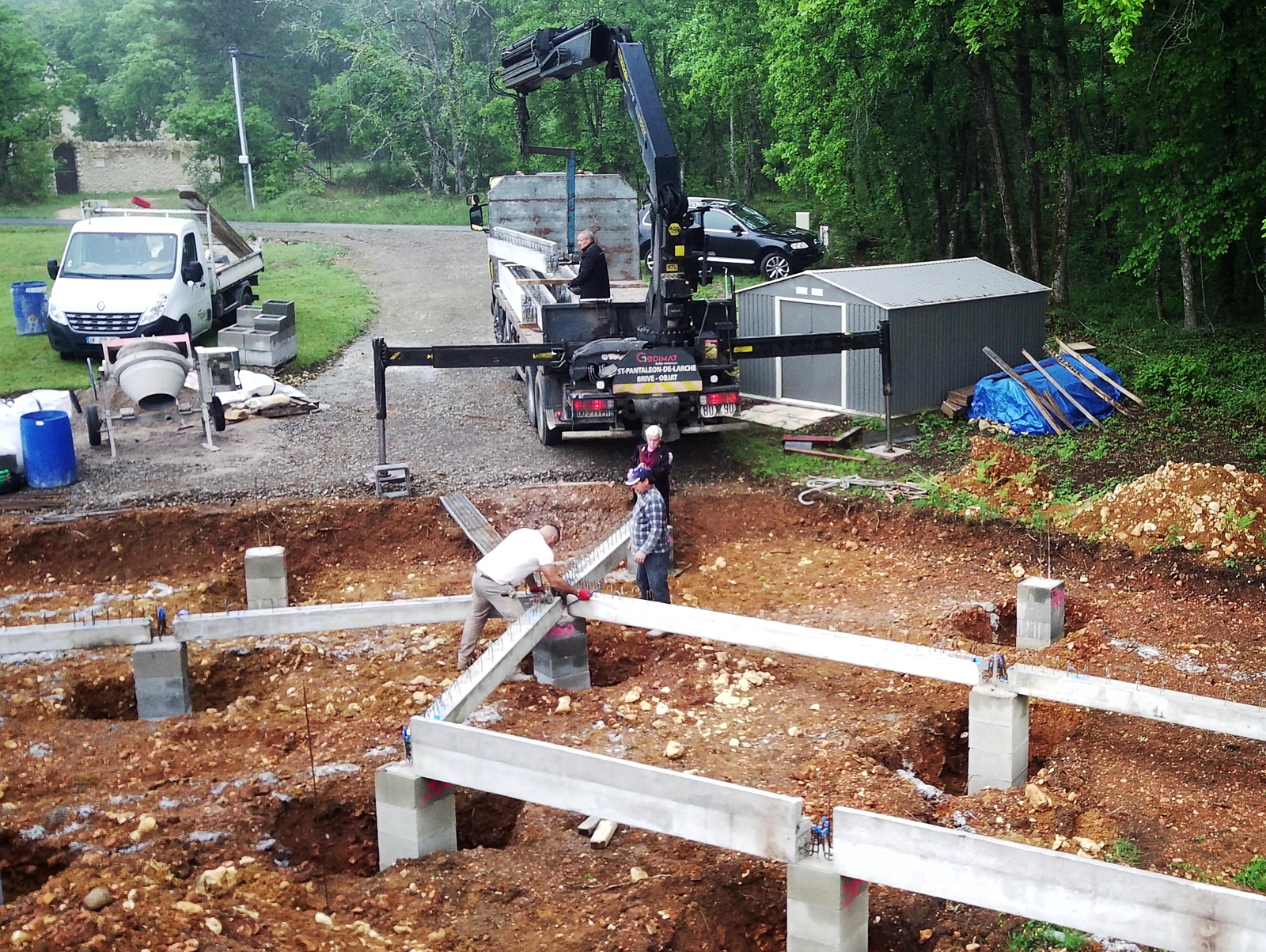
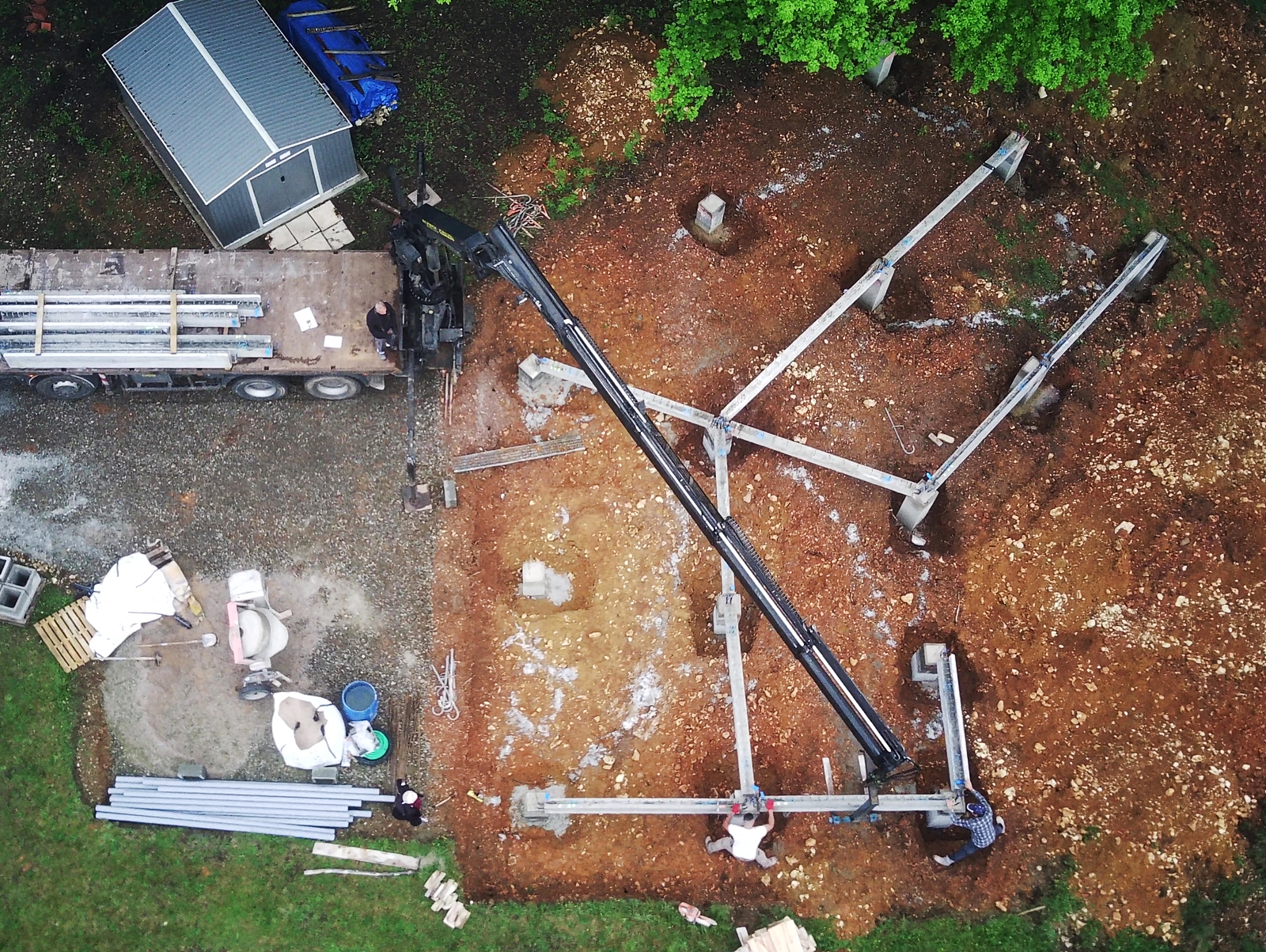
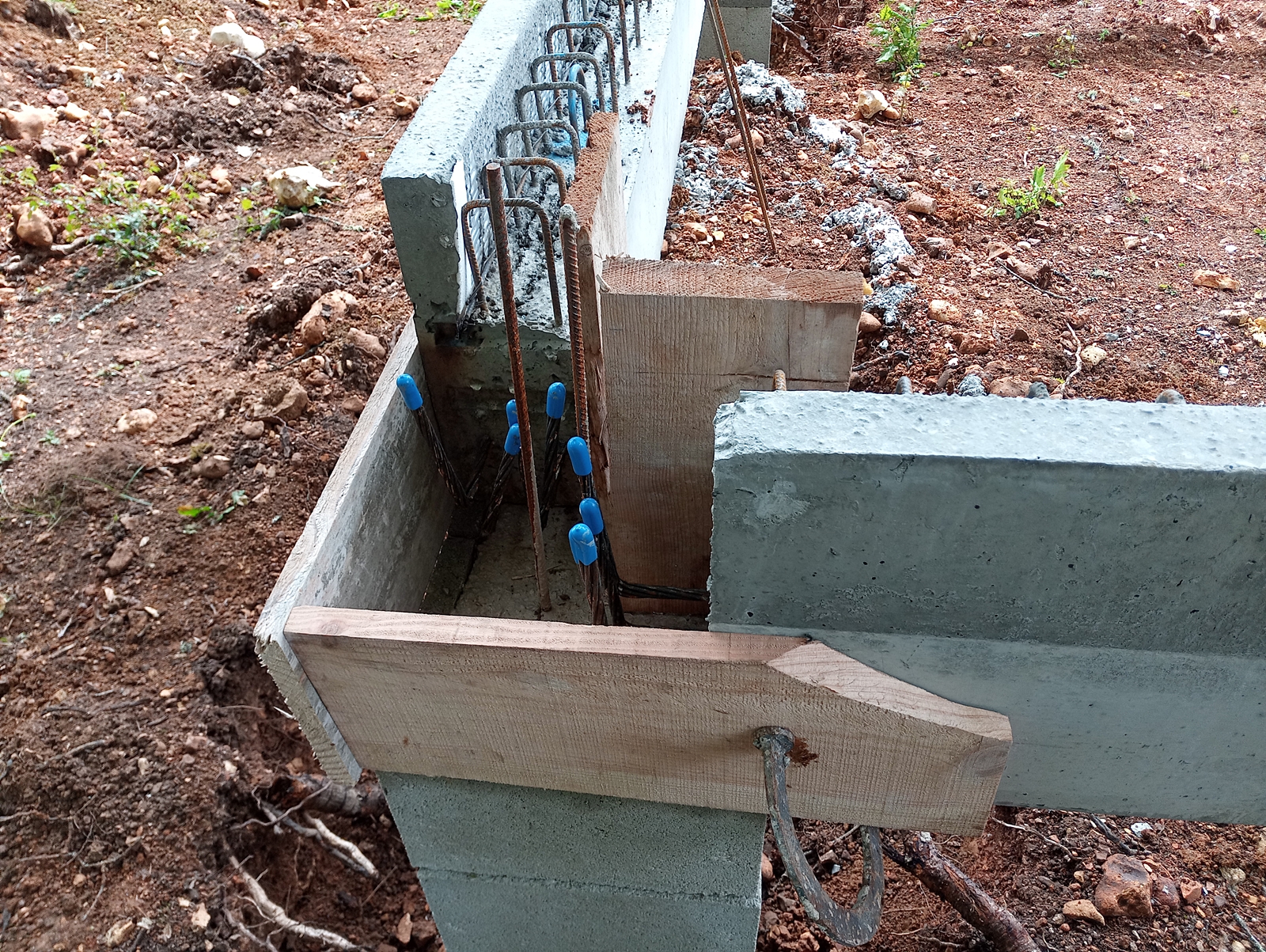
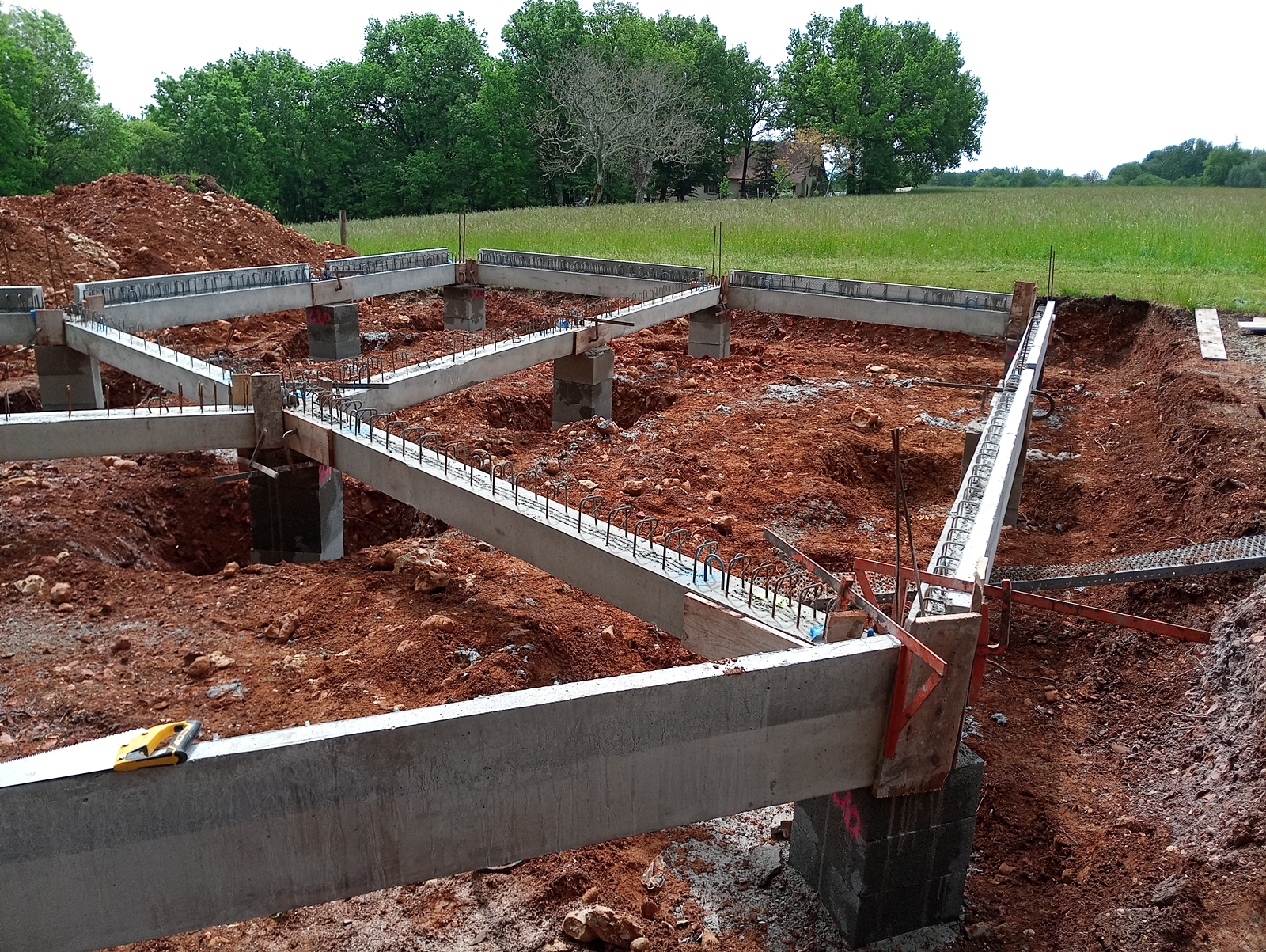
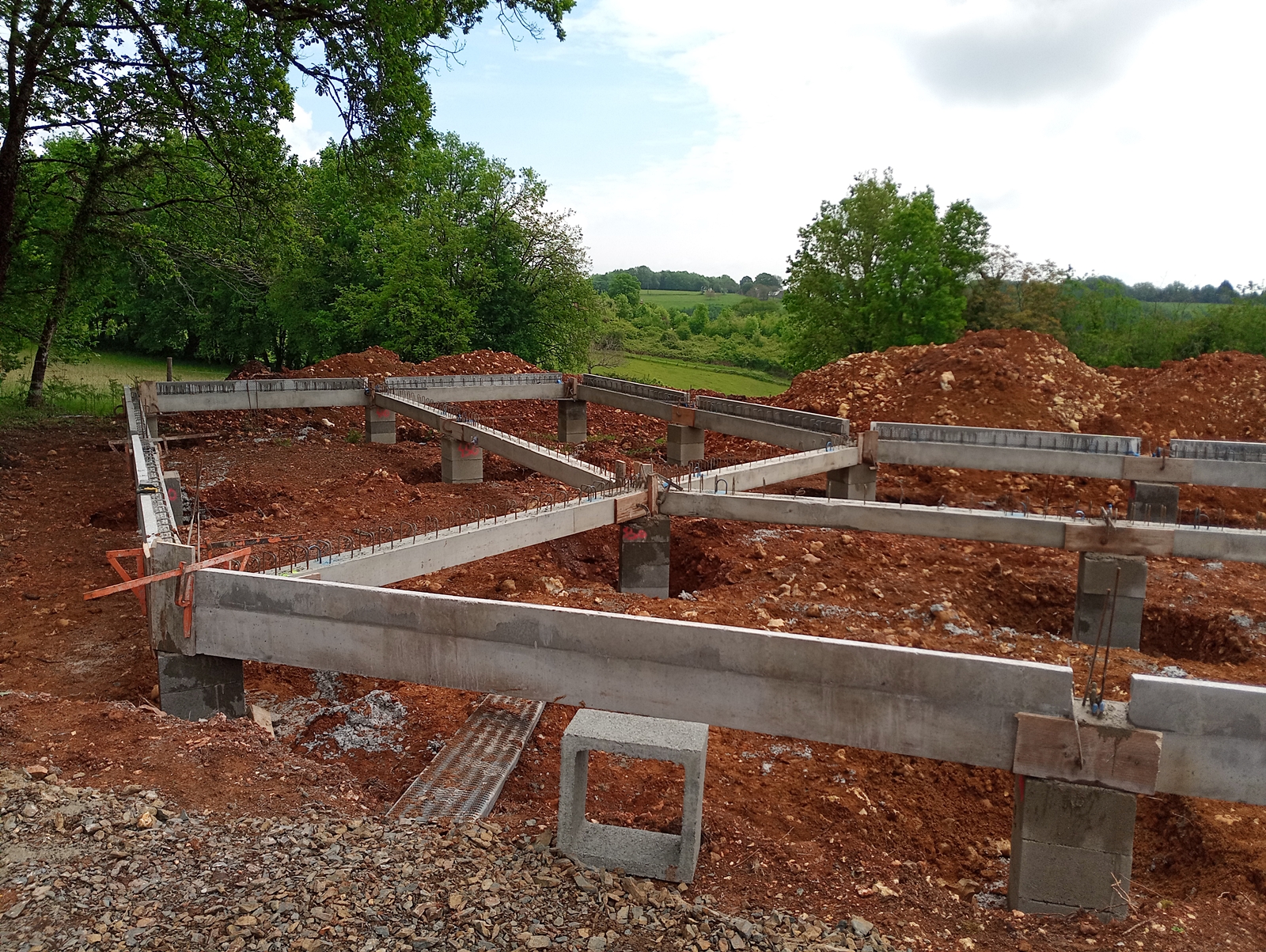
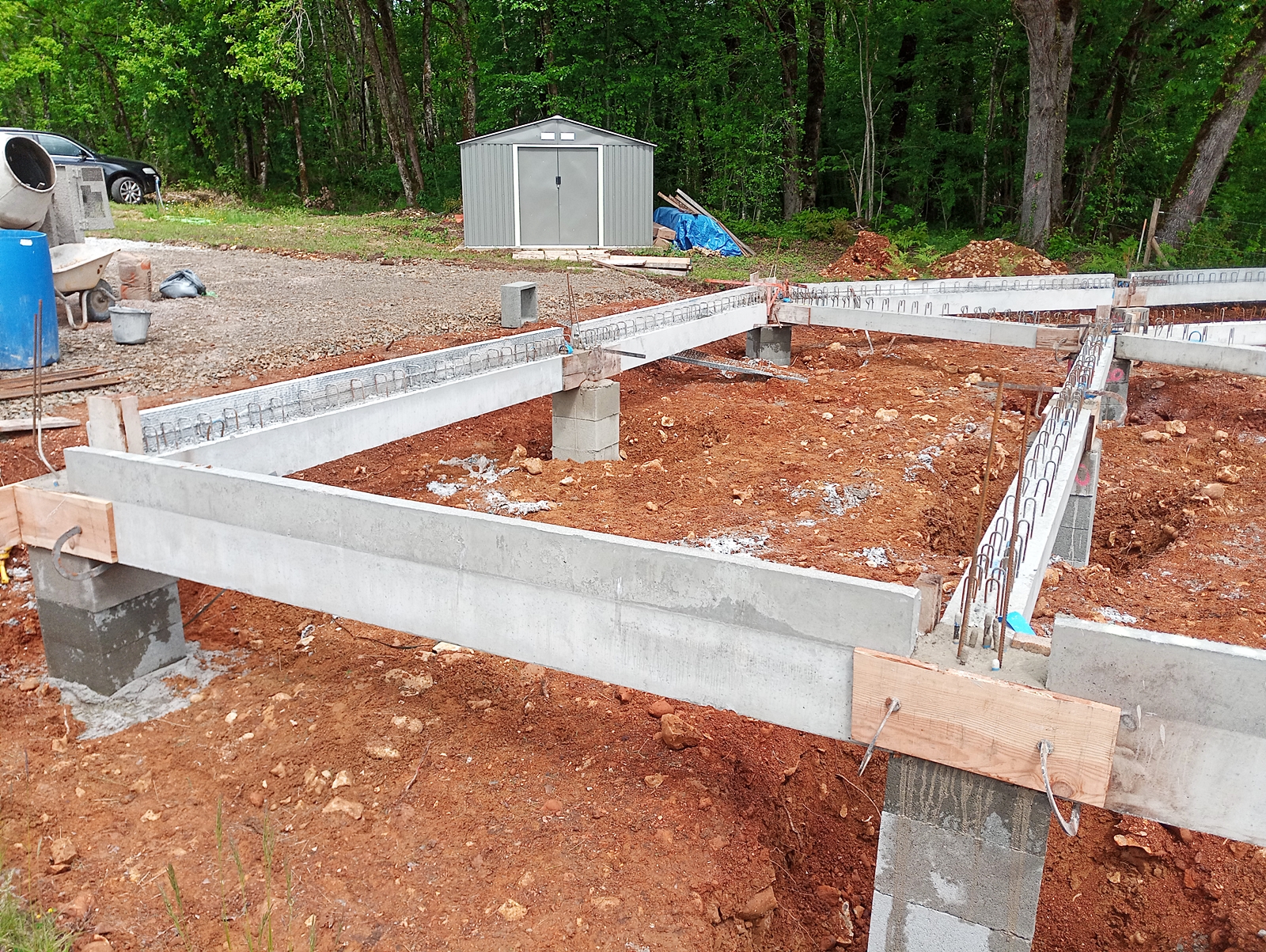
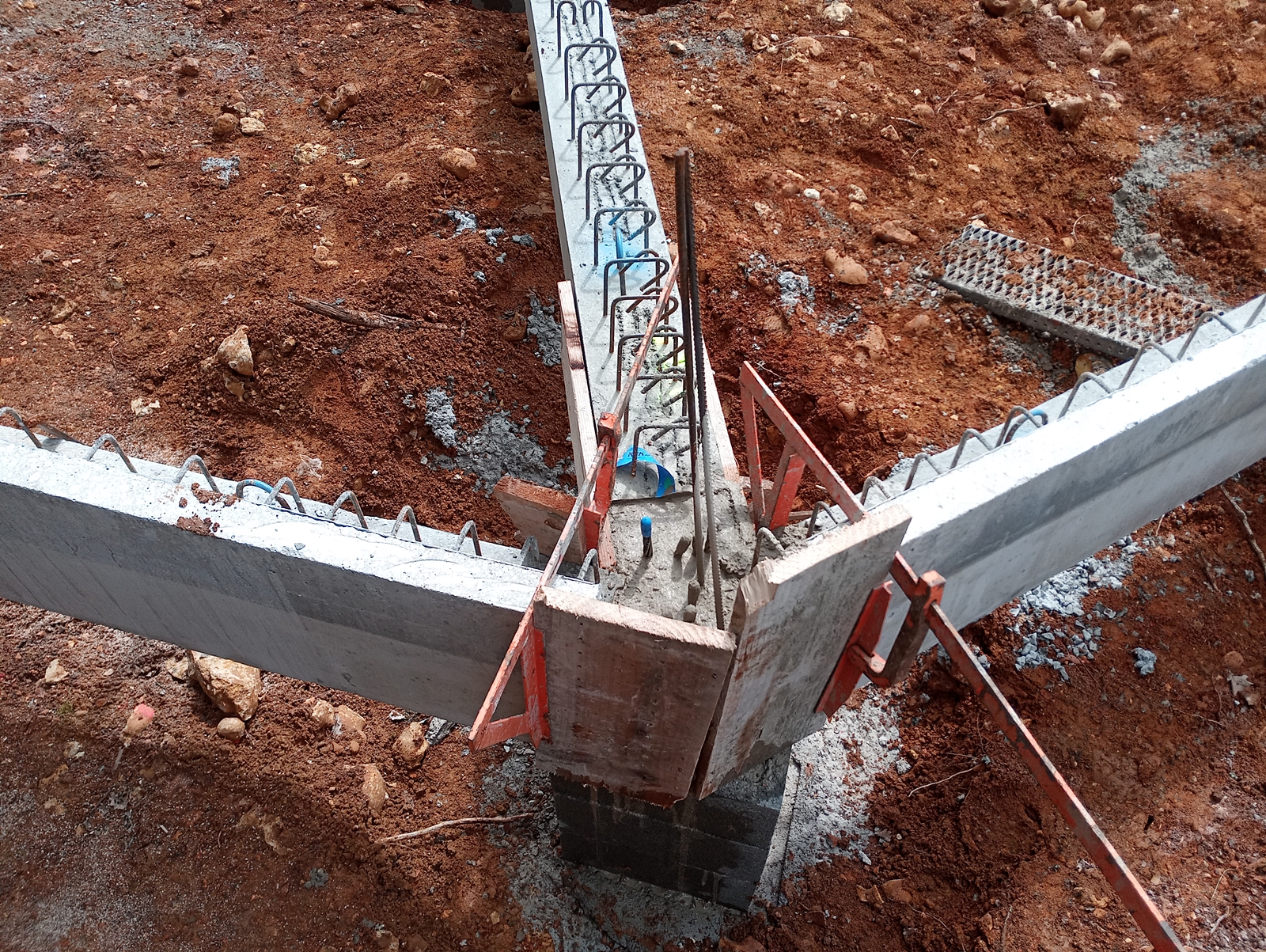
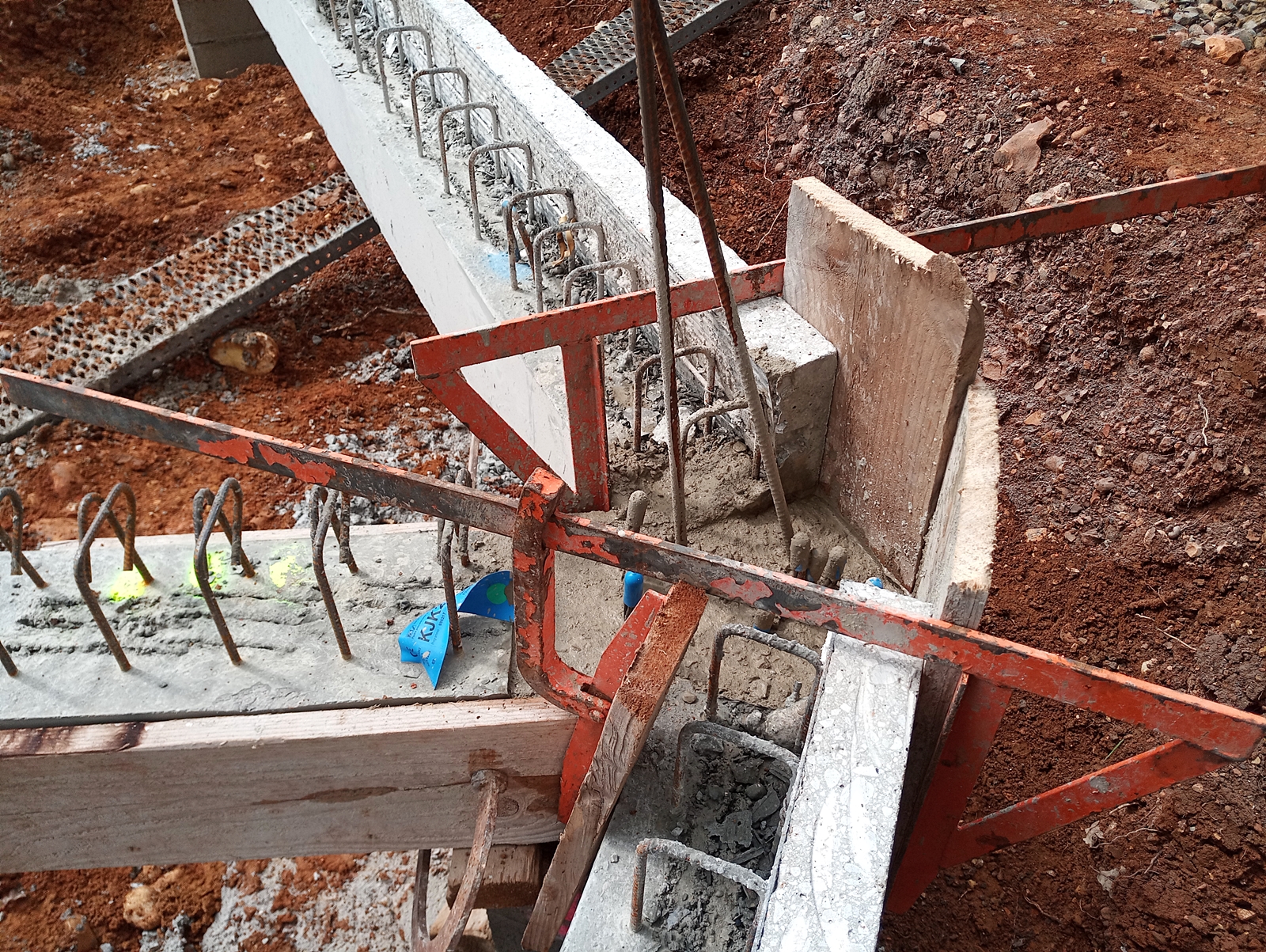
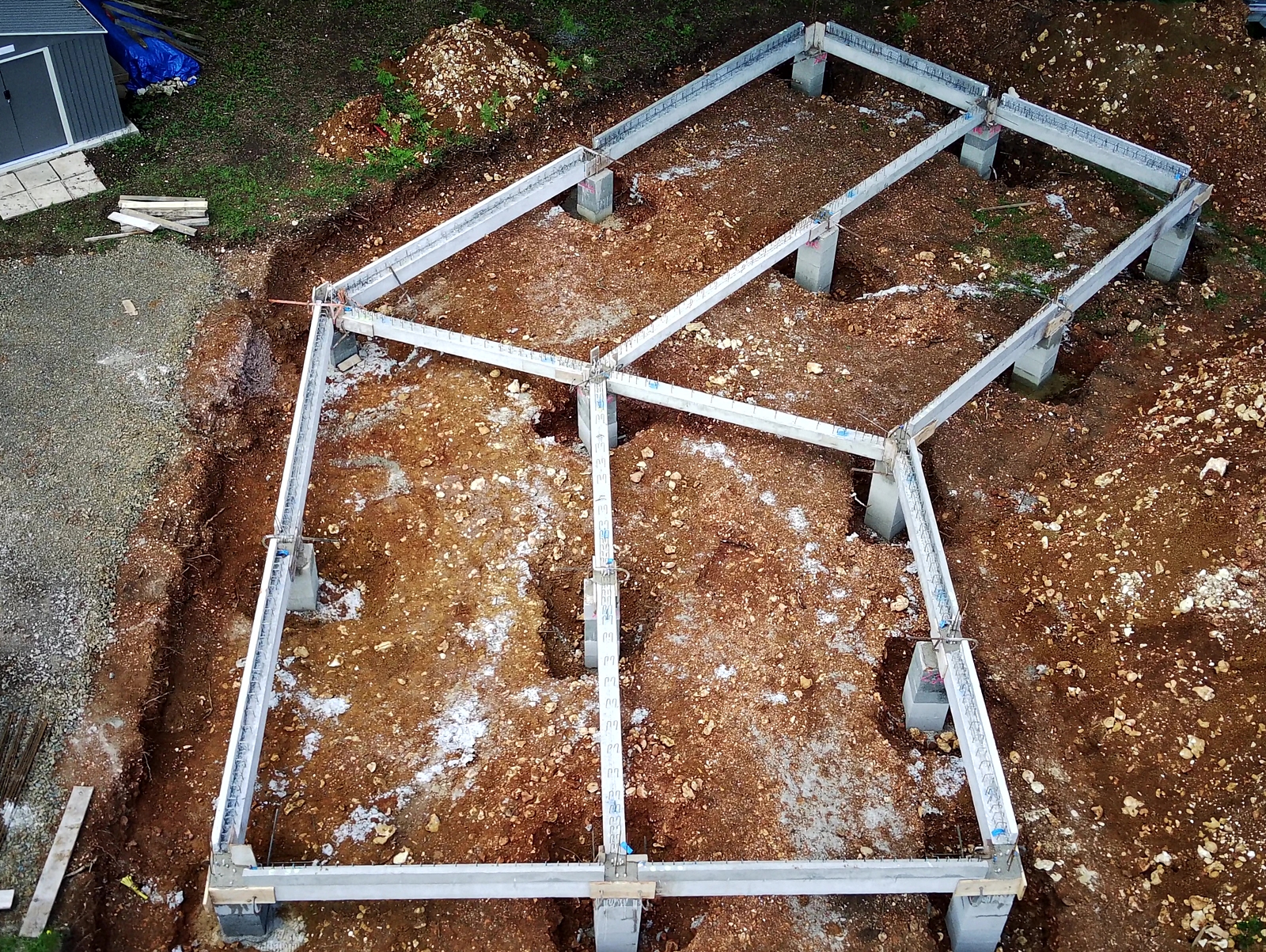
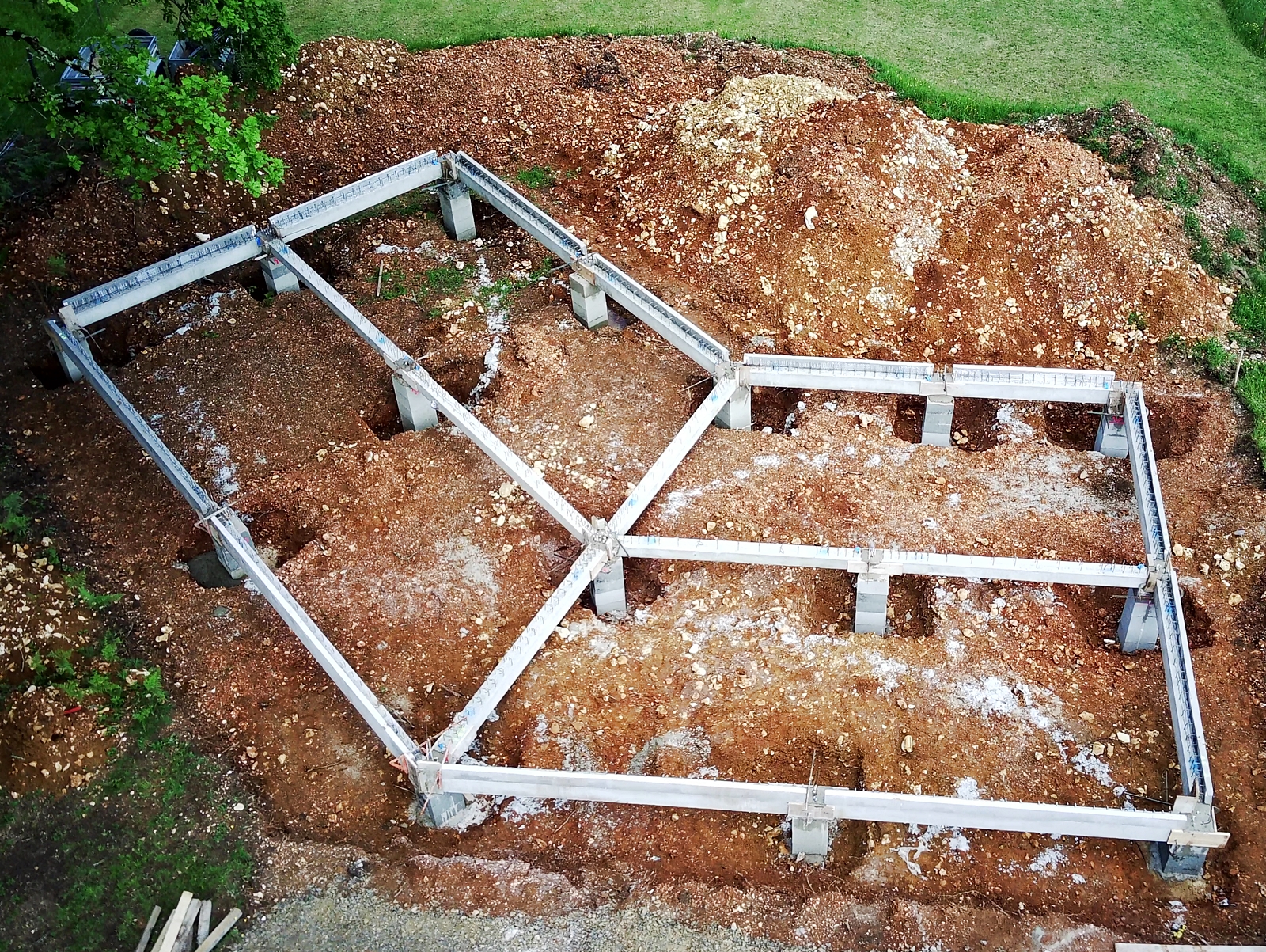
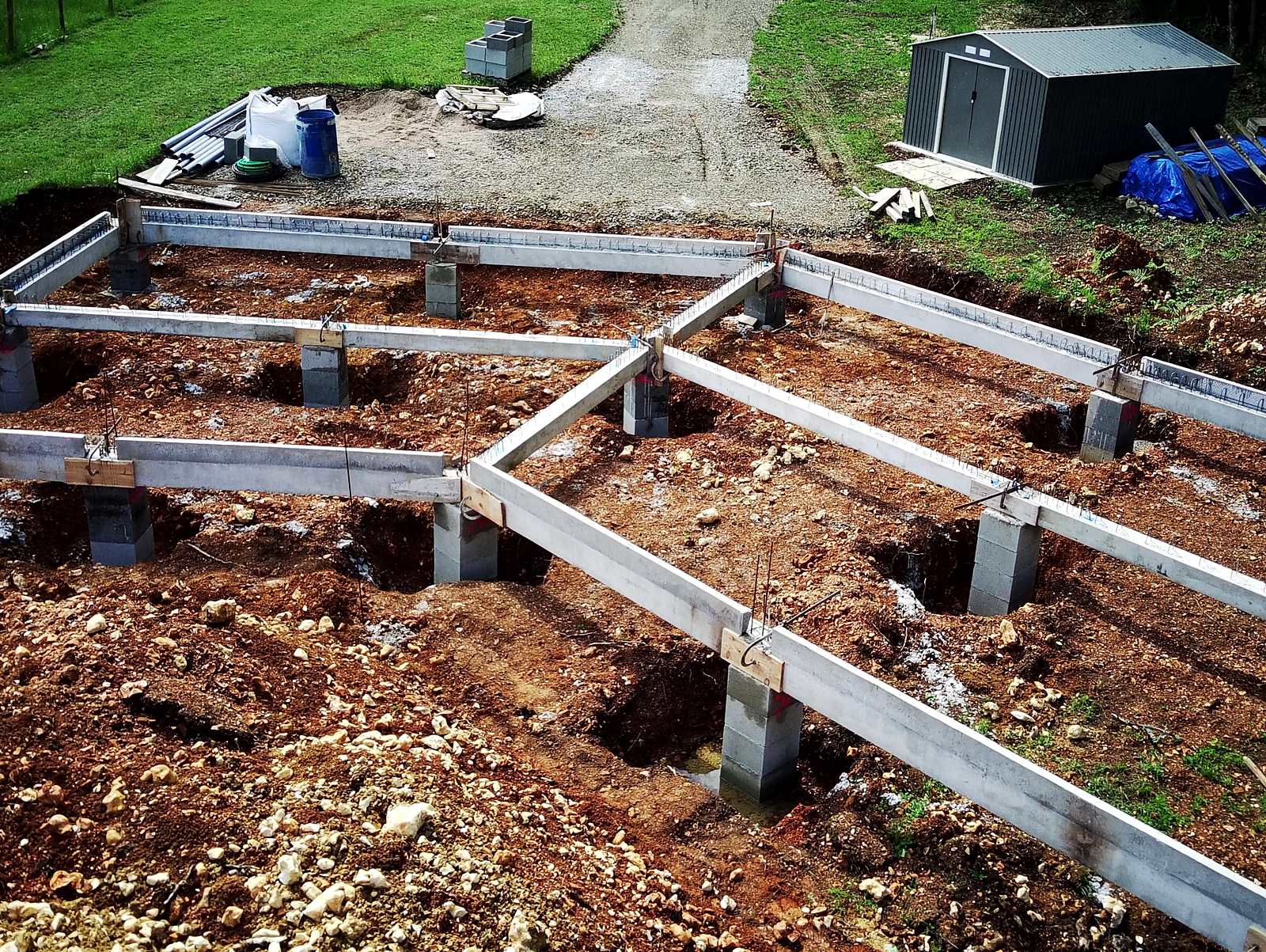
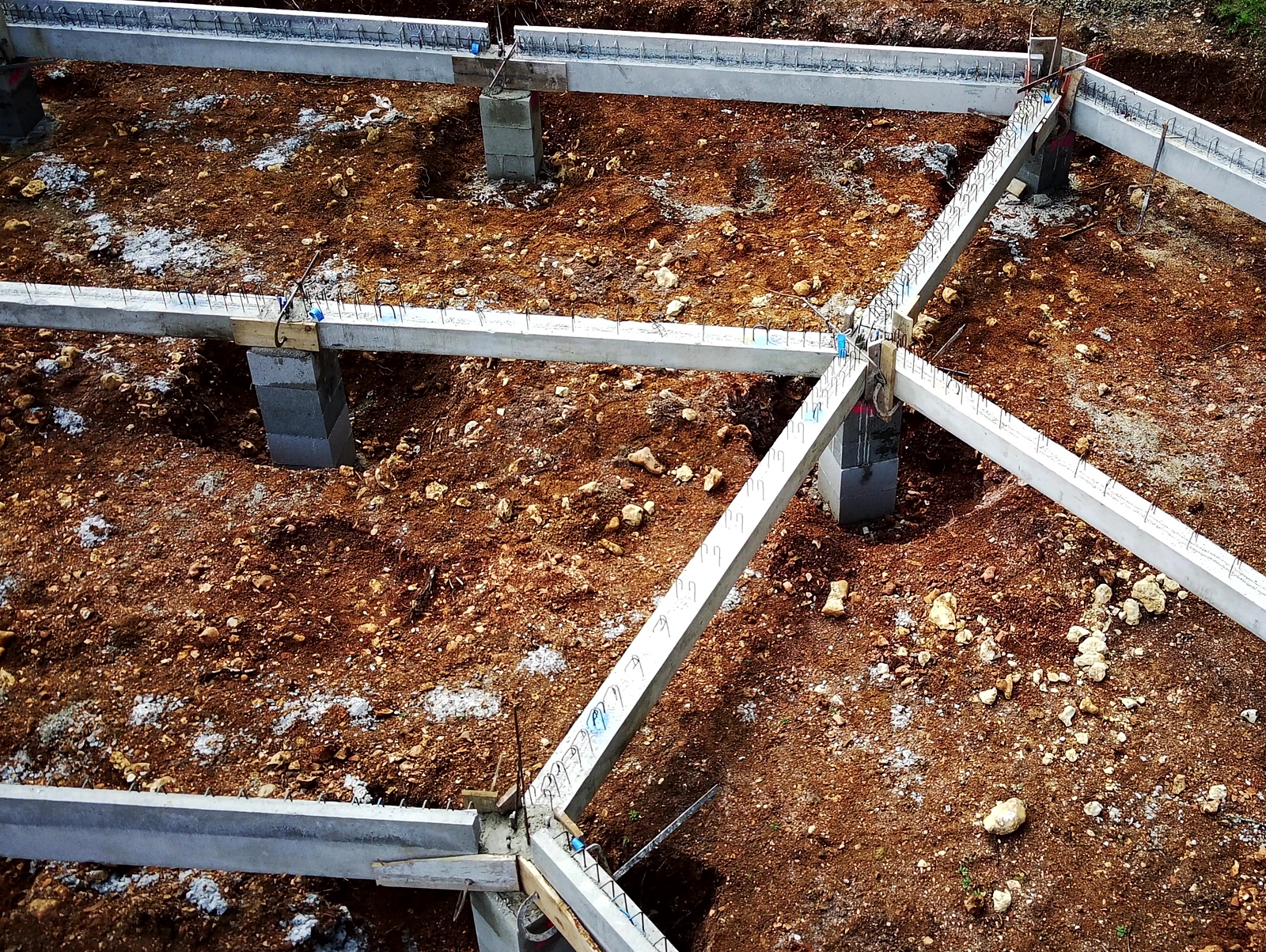
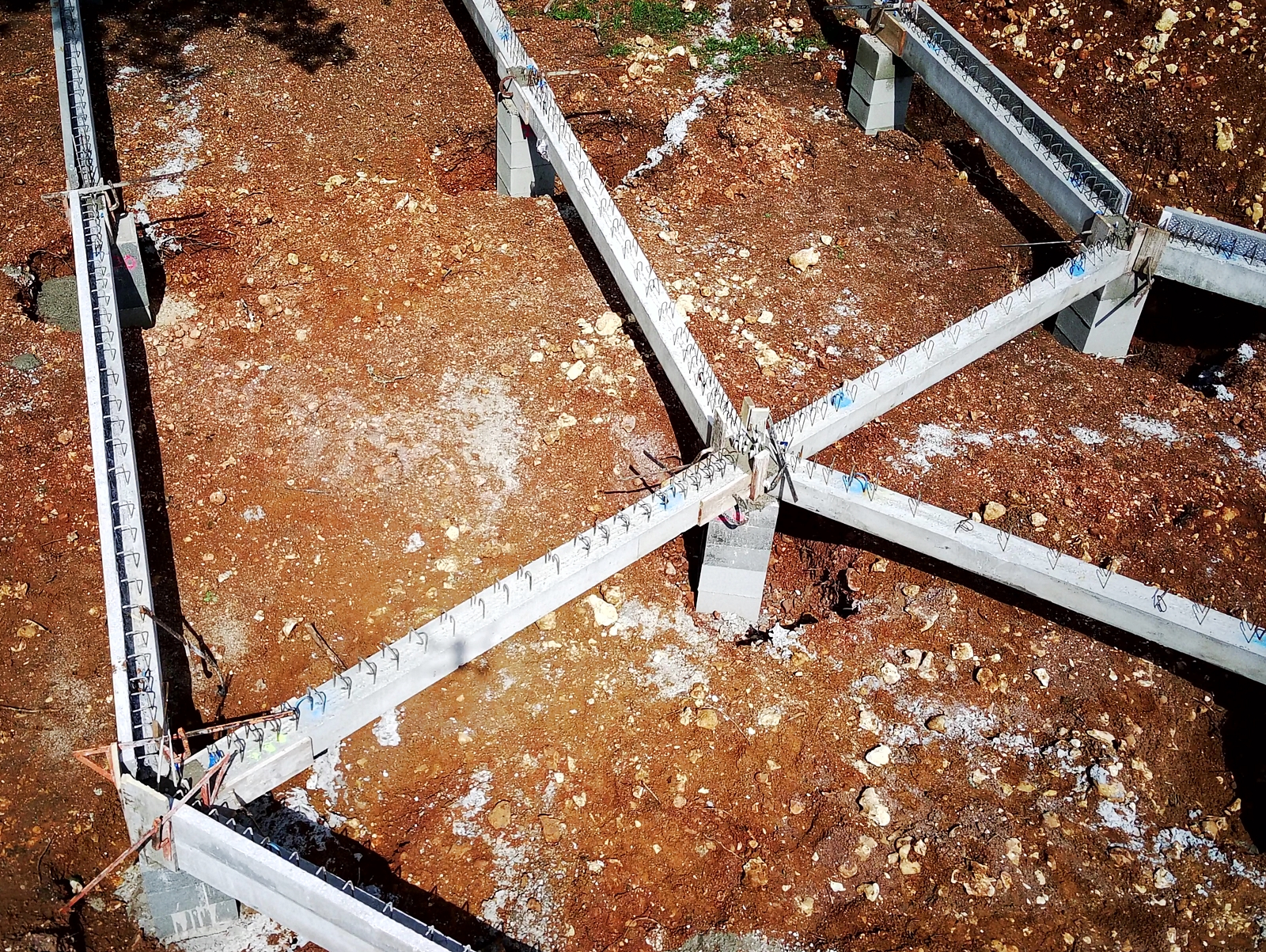
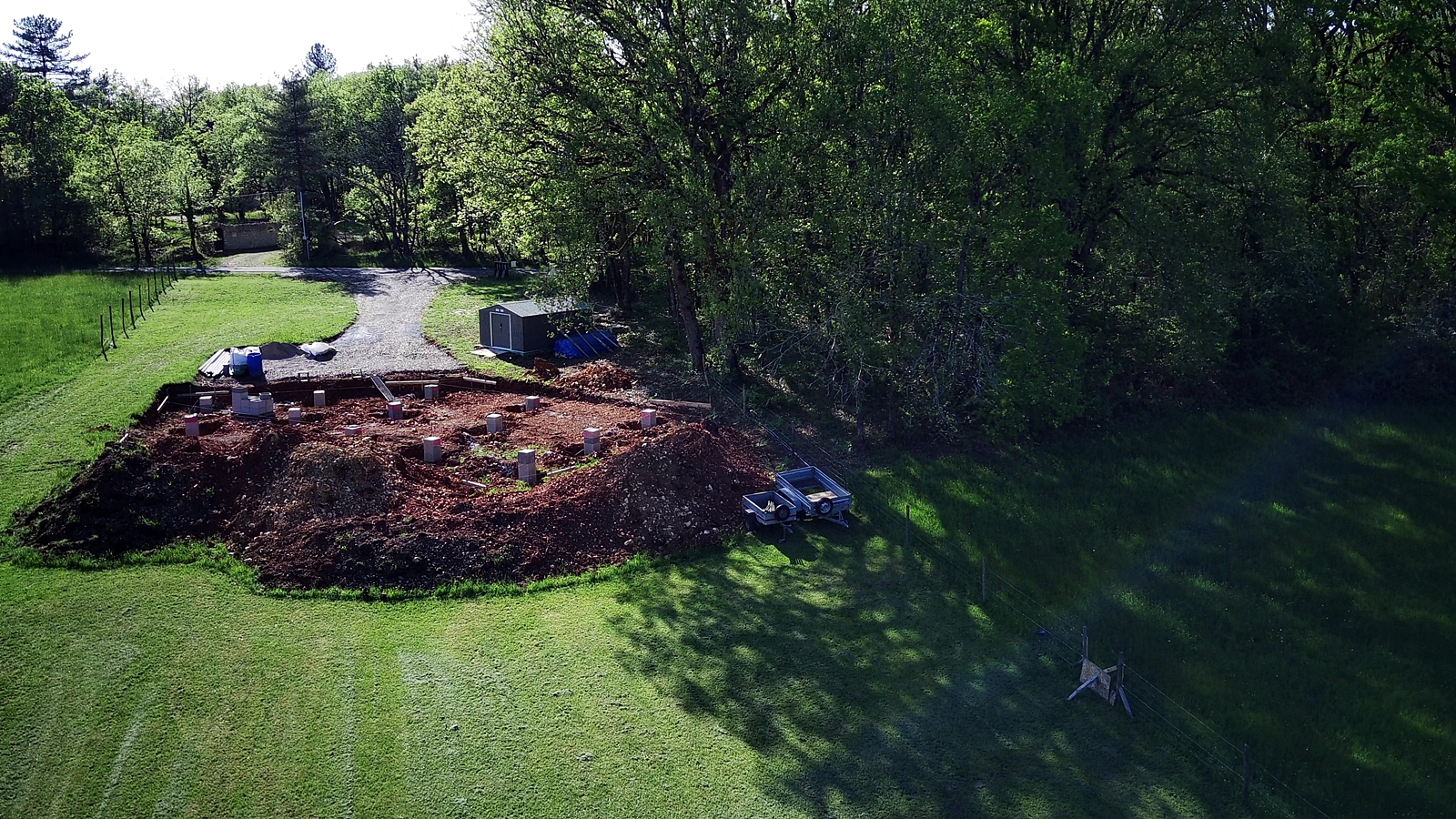
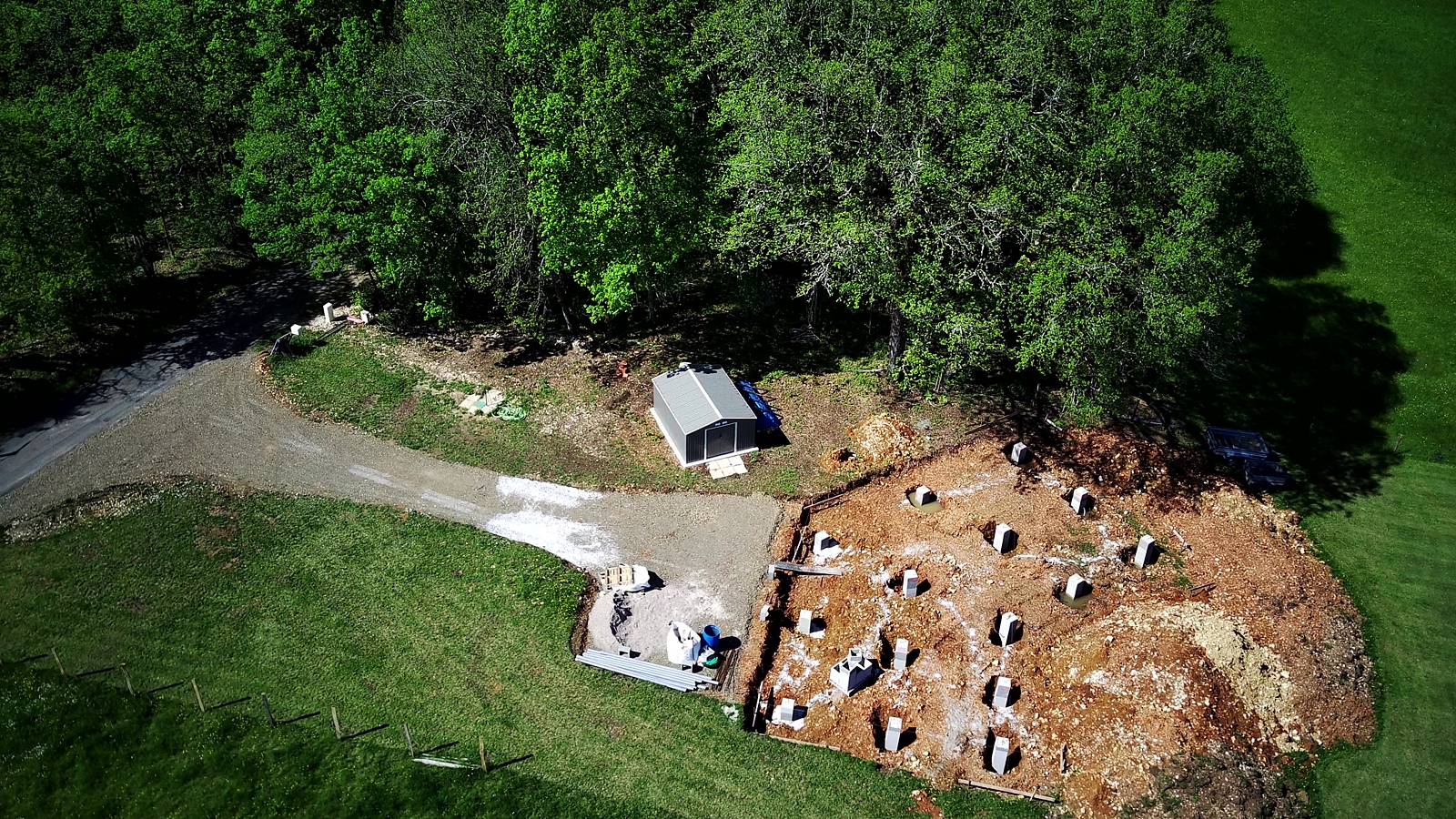
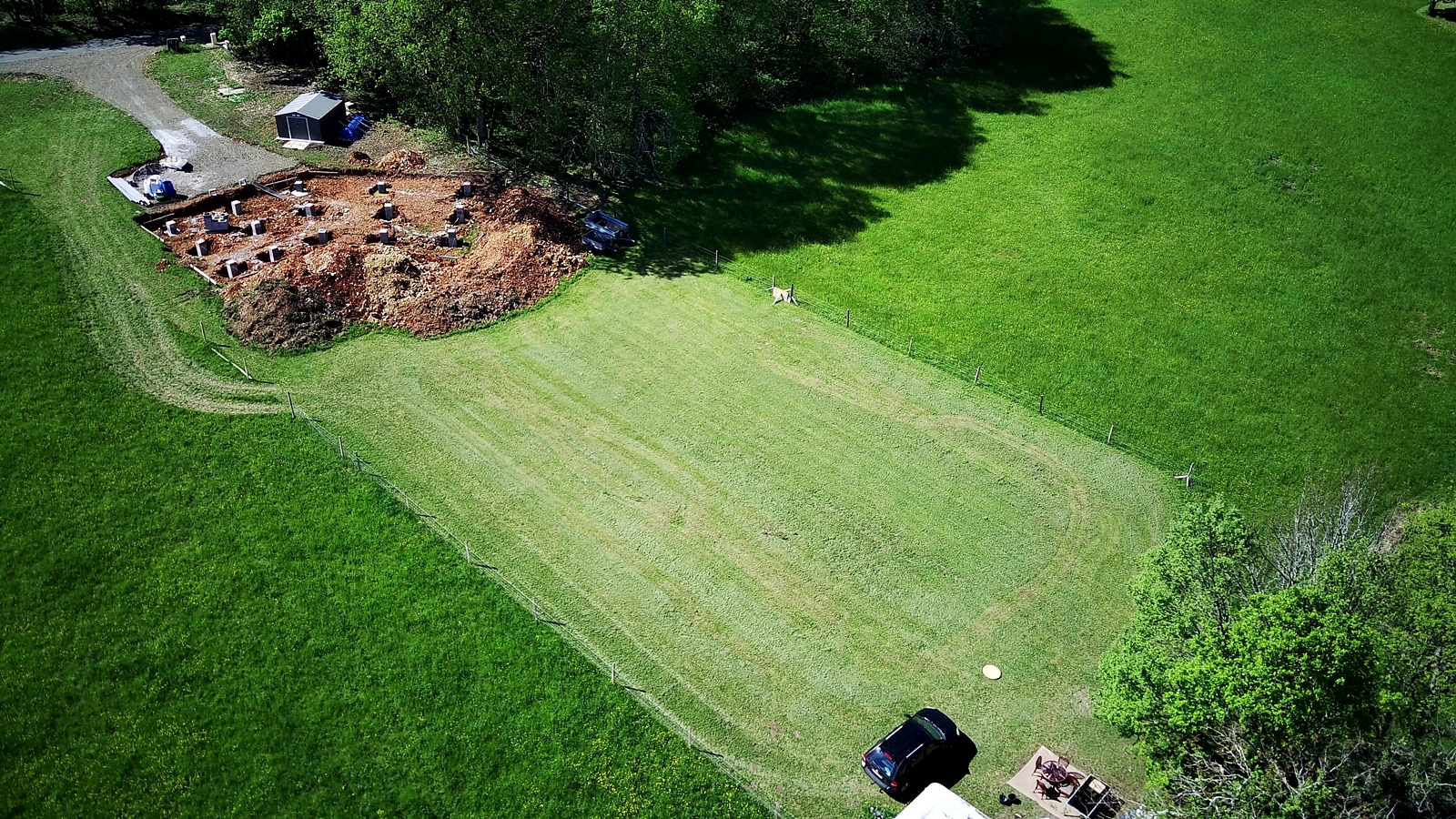
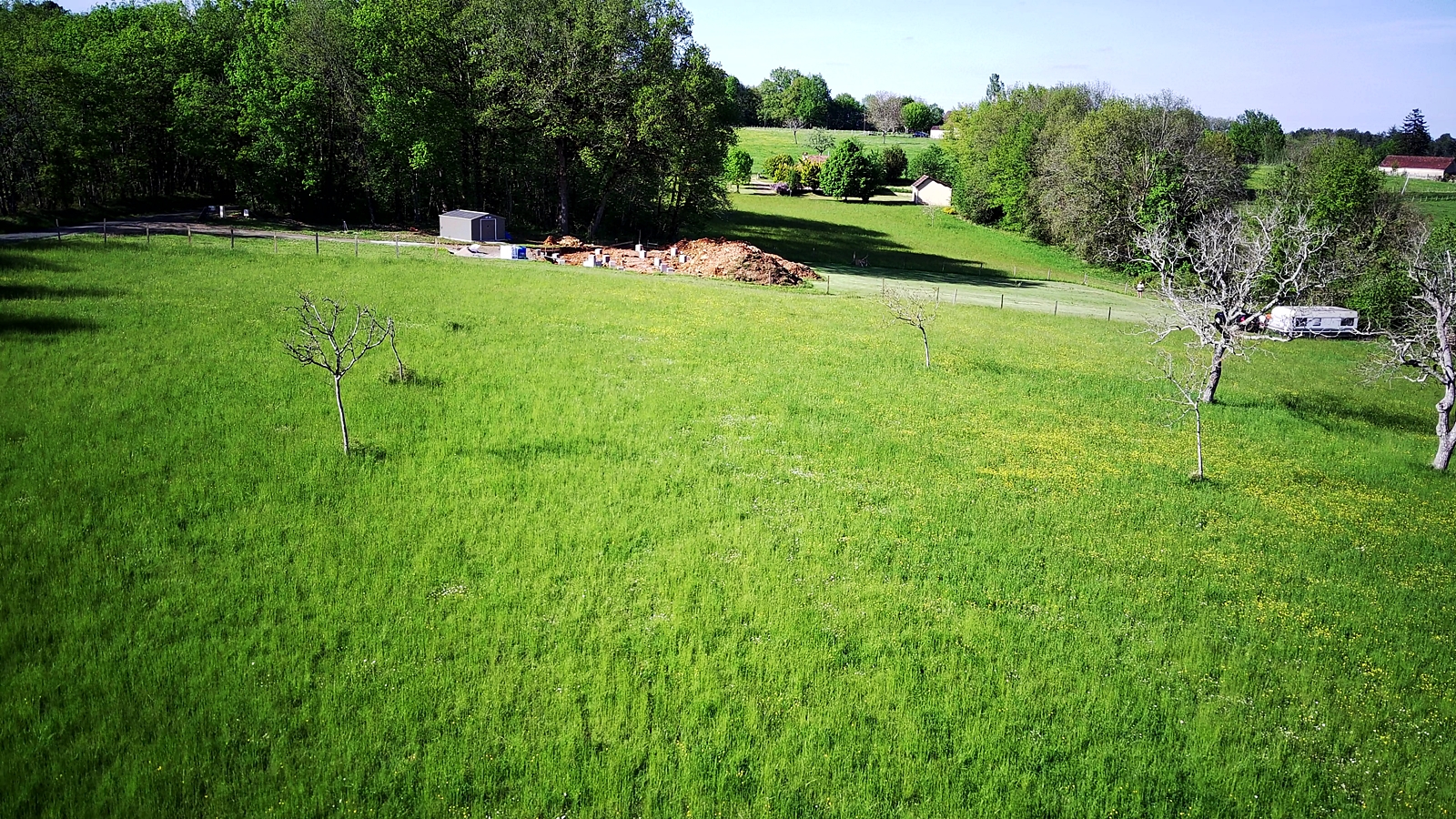
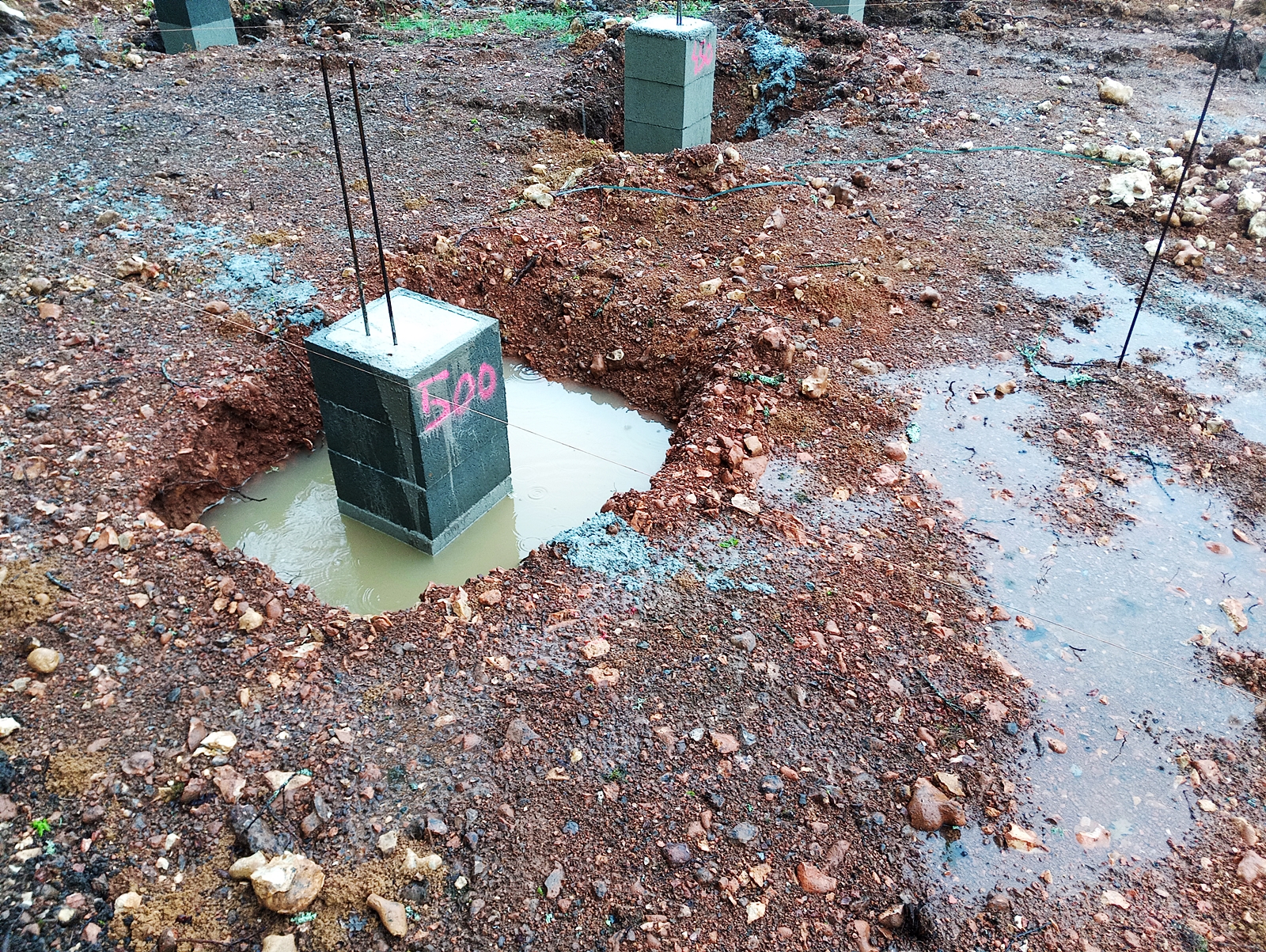
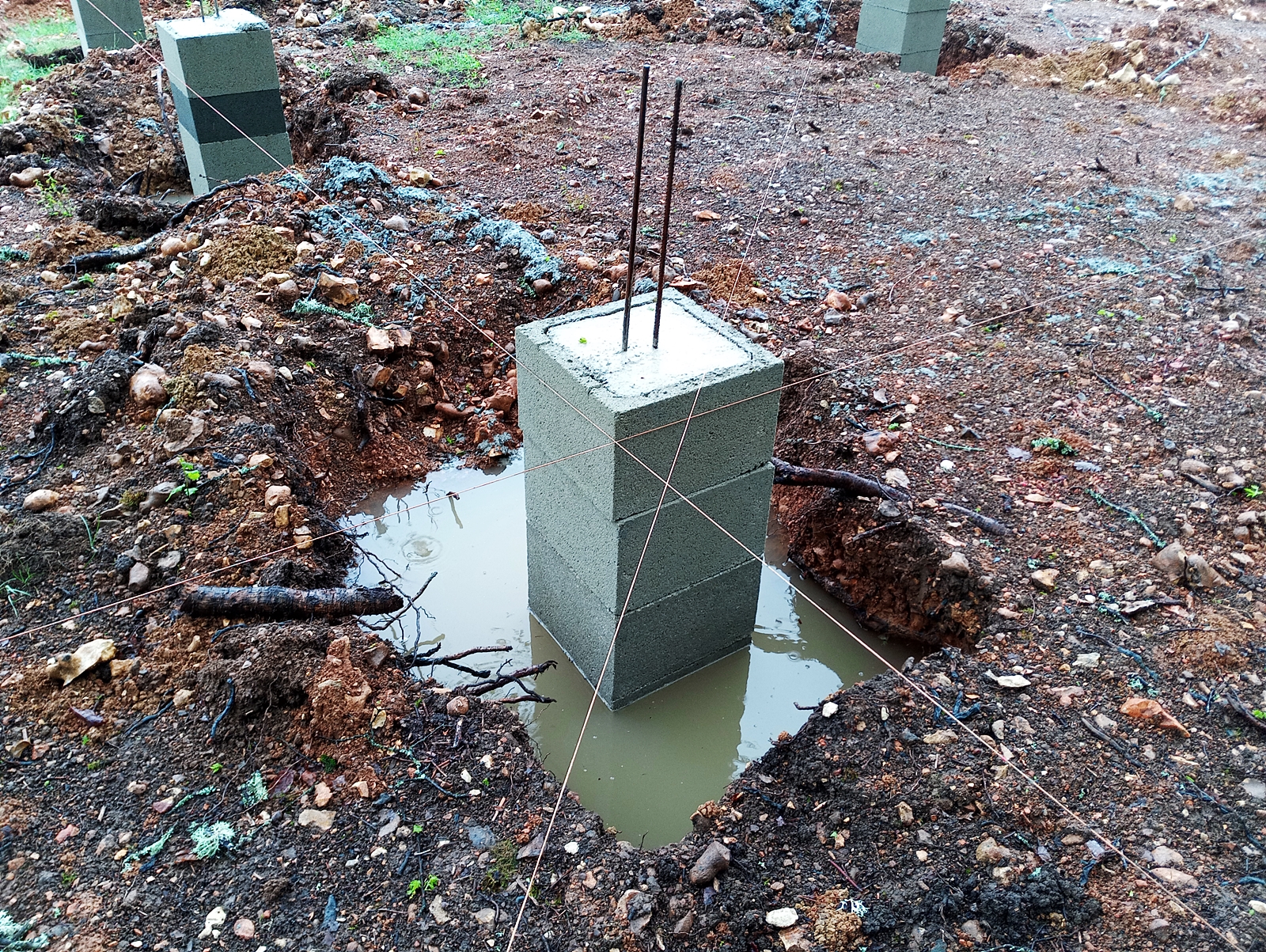
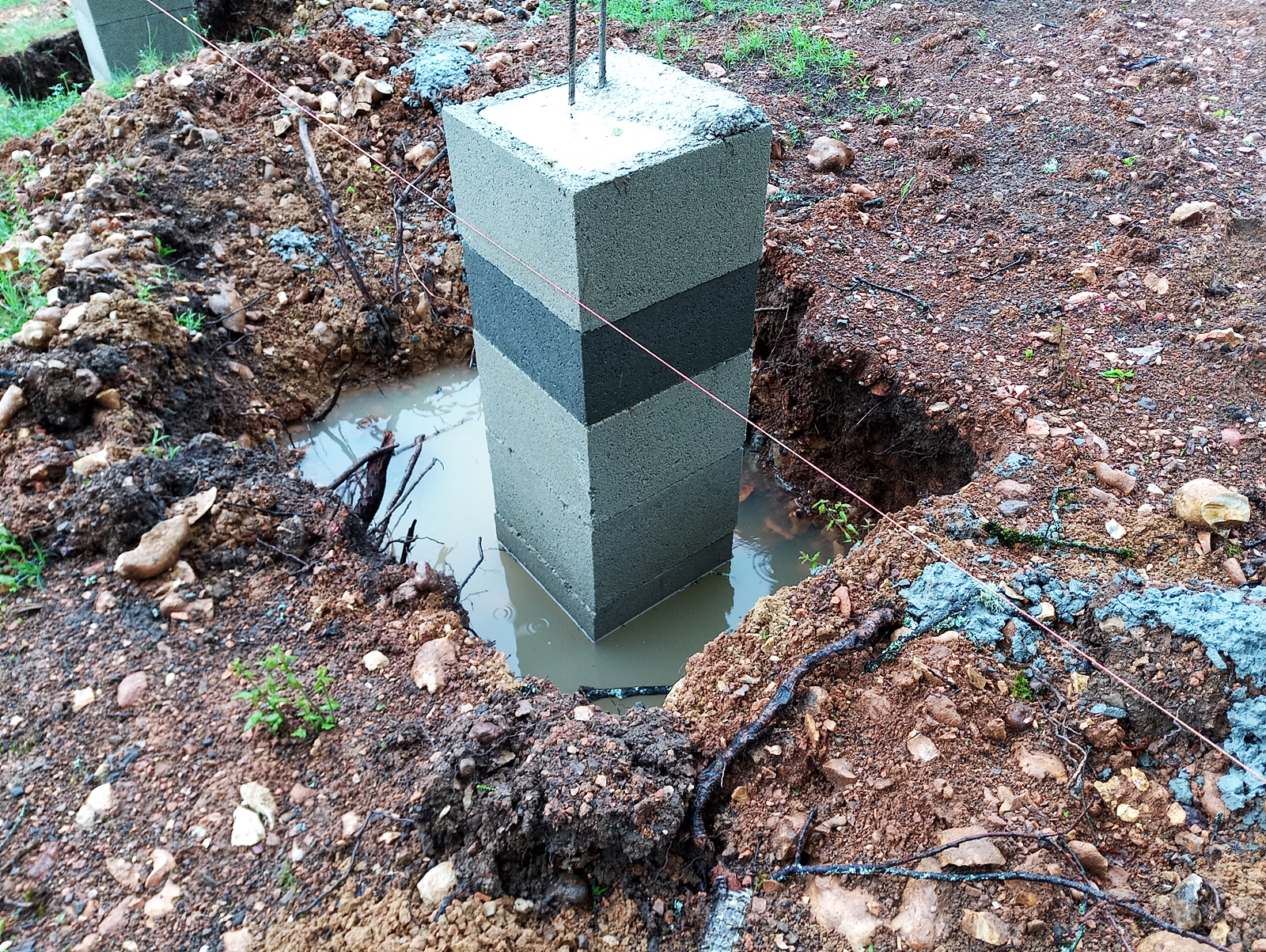
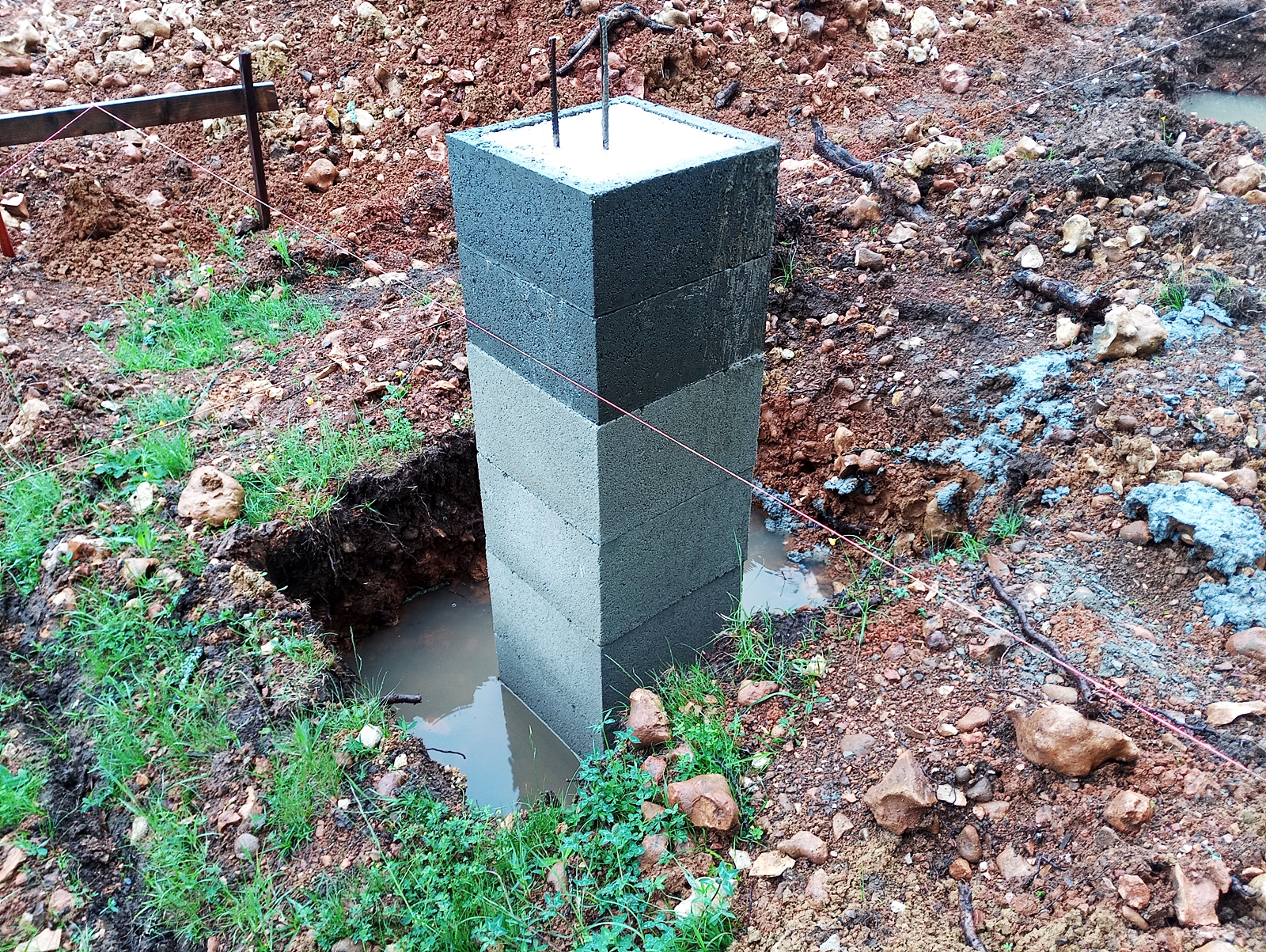
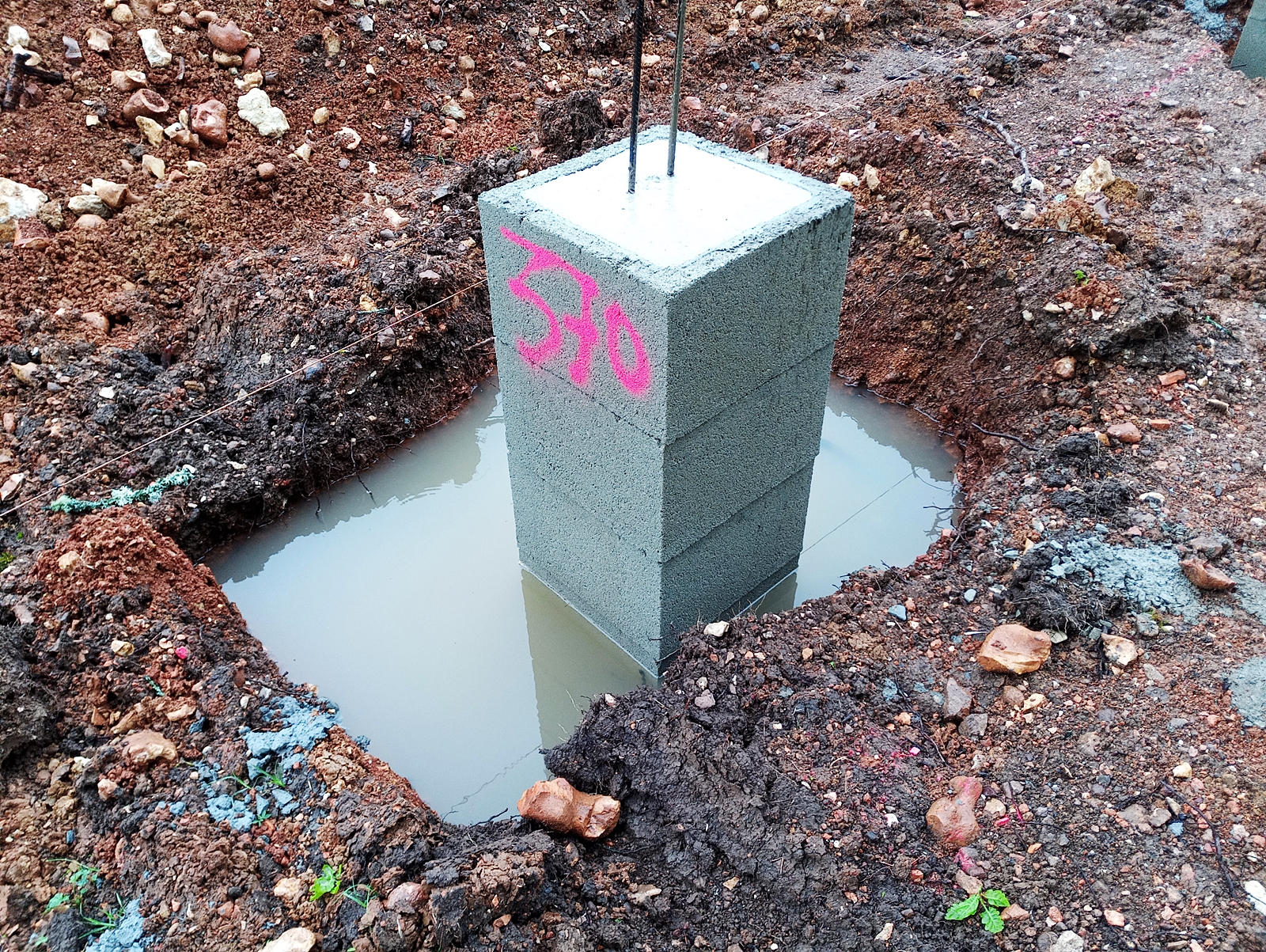
It was over 6 weeks since the builders were last on site and I was becoming very concerned about the delays which were occurring. This day they positioned the main concrete beams onto the columns that they put in place 6 weeks previously, that will eventually take the weight of the whole house.

I know the beams had to be fabricated off-site in a precast concrete factory which required a certain lead-time but the builder had all of the dimensions etc right at the beginning of the project and did all of the stress and weight calculations themselves. So they could have placed the order in early March, and perhaps they did for all I know, so as I am not aware of the lead-time required for items such as these, for now I will give them the benefit of the doubt.

I’ve got another couple of videos in the pipeline but have been in no hurry to publish them precisely because progress has been so slow in the meantime. The fact is that all of the materials to run the services and utilities to and from the property have been on site (and paid for by me) for several weeks but the builders have been dragging their feet to actually do the work to the point that it’s now almost approaching becoming a dispute between us. More details will be provided in future videos.

Wanna see my plums?

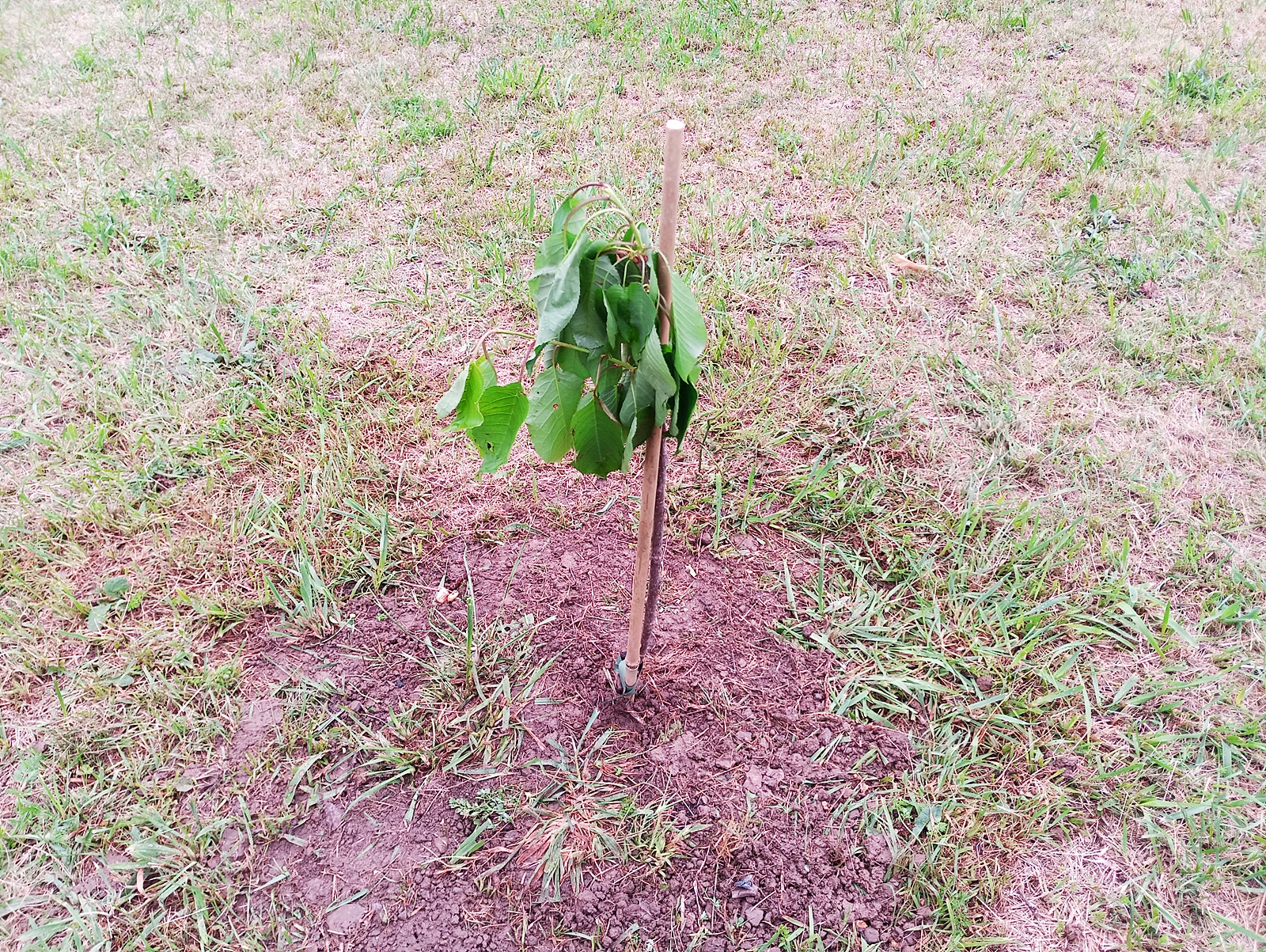
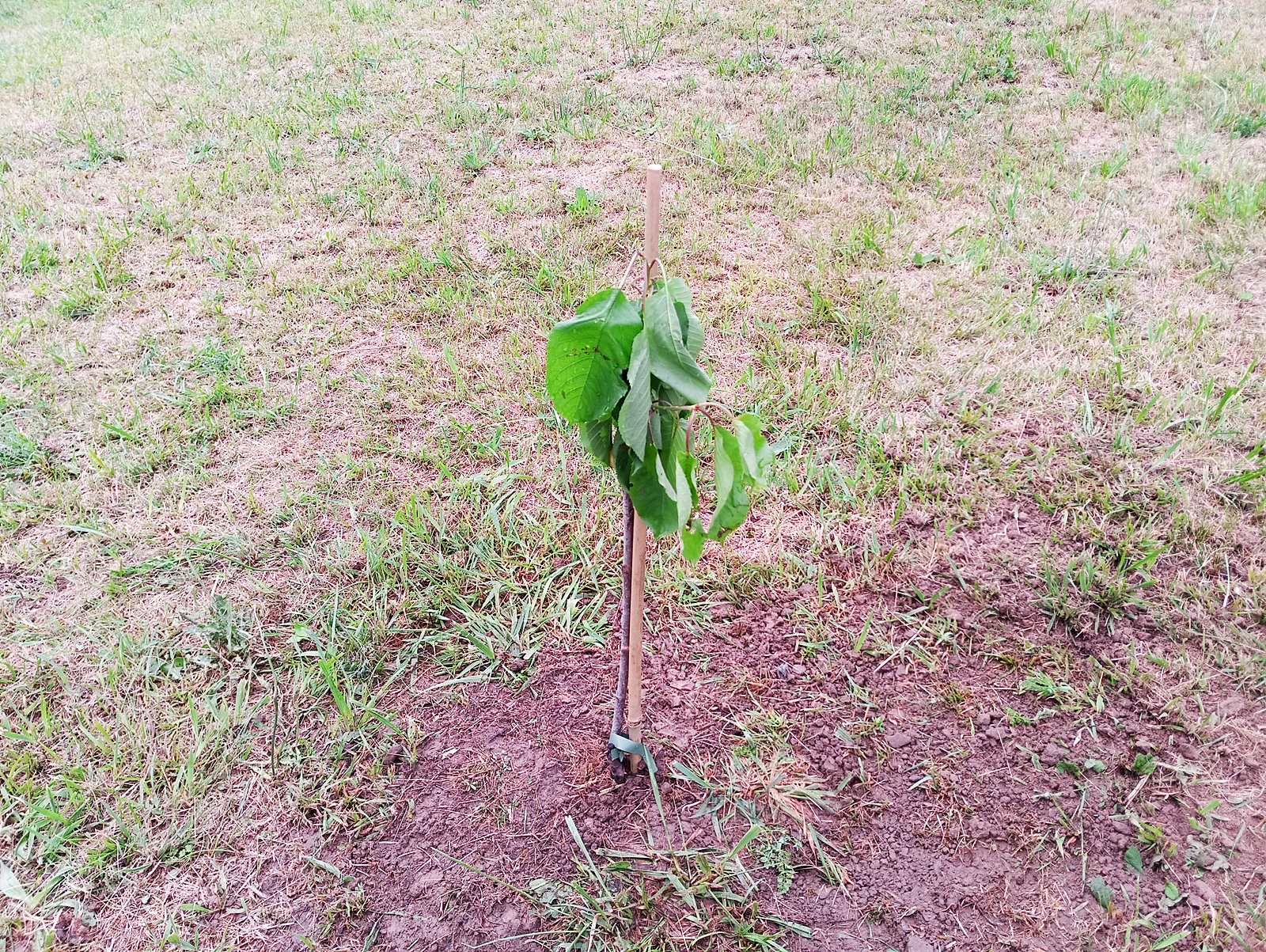
Back in 2021, when they heard that I was buying the land that I now own in Fleurac and was going to build a house on it, my lovely friends presented me with two small fruit trees as birthday gifts. They stayed at my neighbour, Chantal’s, house and she watered and looked after them for me until I eventually brought them over to Labattut and planted them earlier this year.

Both have done well. Both produced blossom in the spring and although the little apple tree succeeded in converting one blossom to a single tiny fruit, that eventually dropped off, so I’ll have to wait to see if it will do better next year.

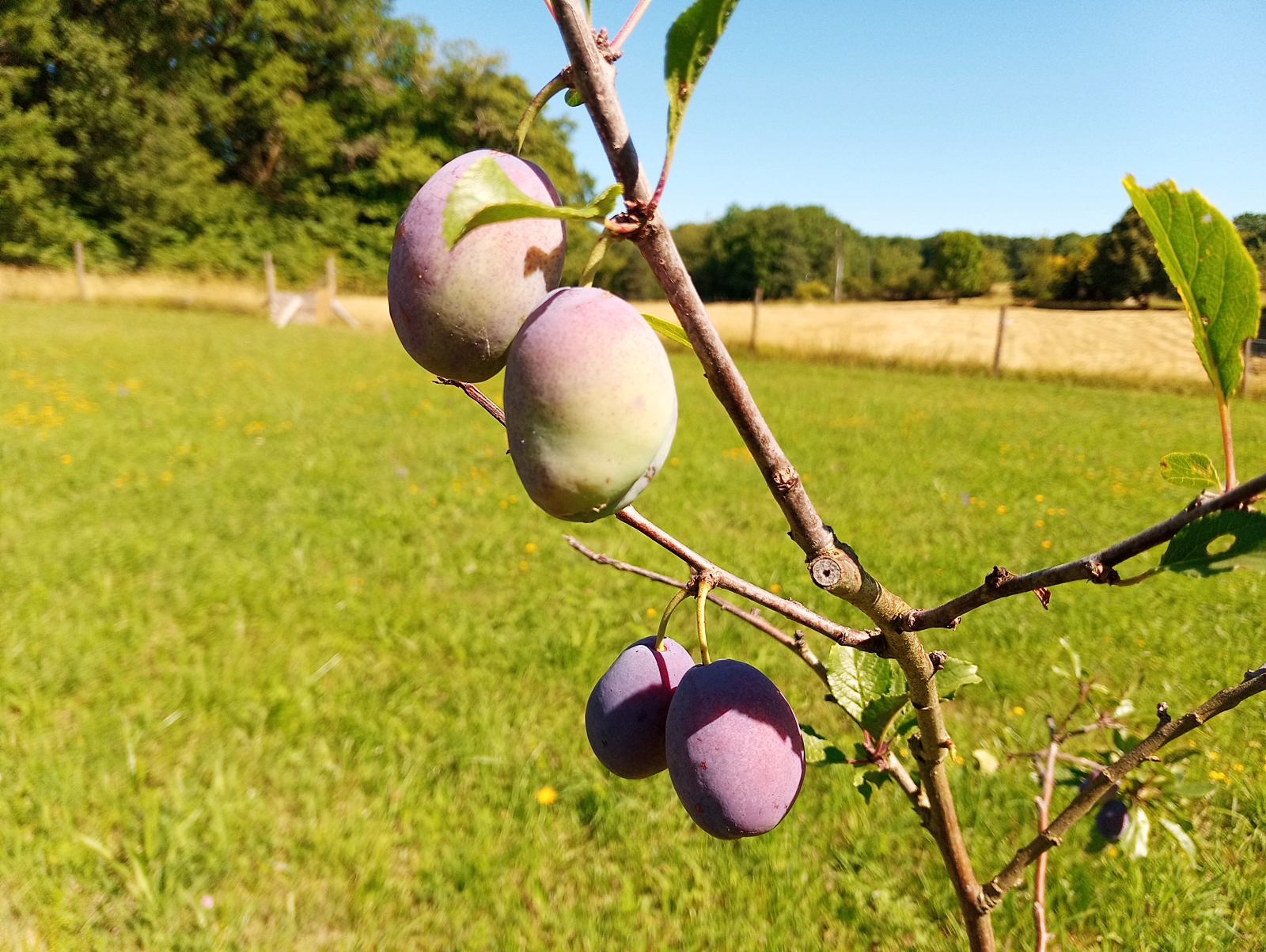
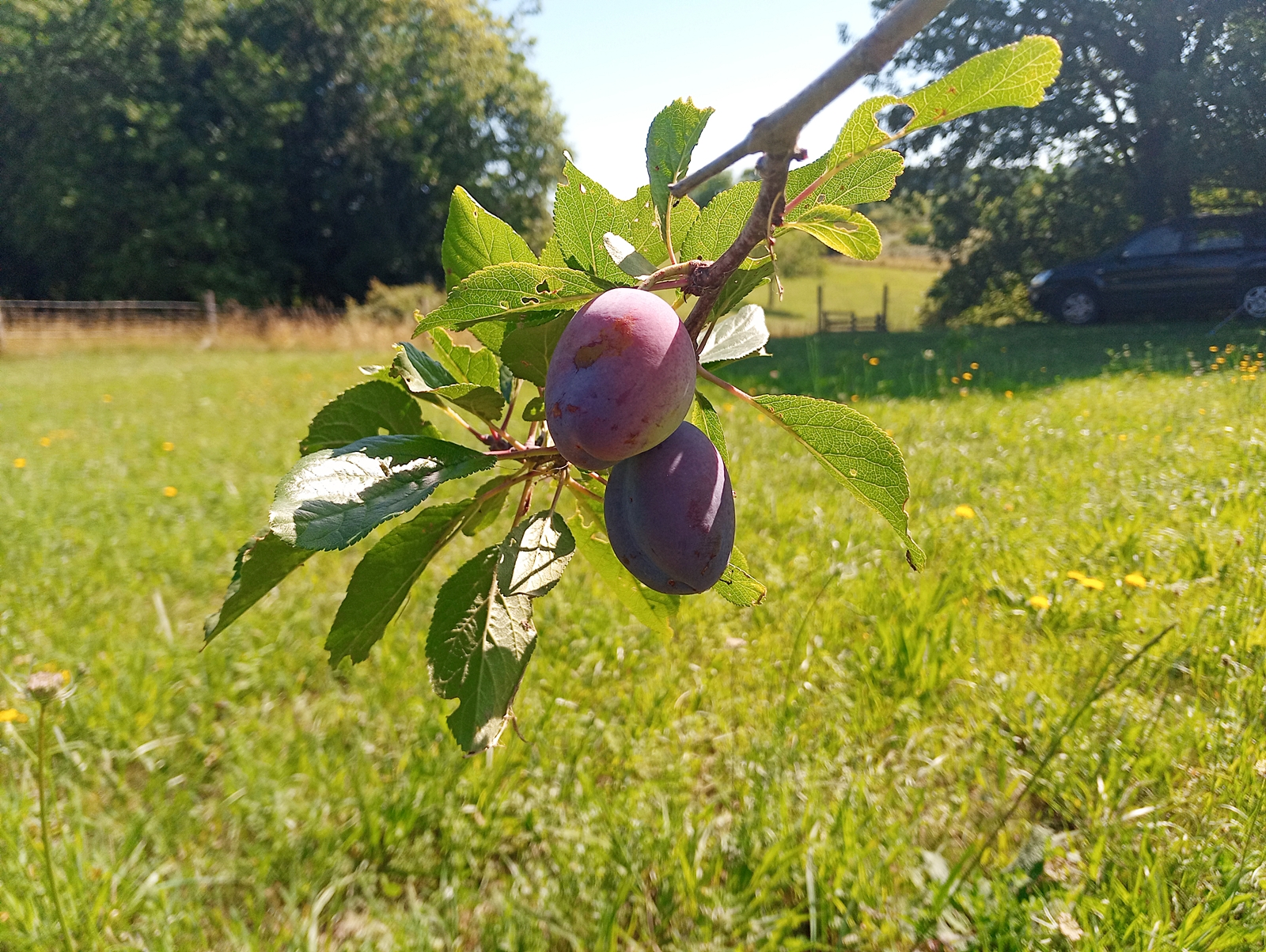
The other tree, a plum, has however proven to be a triumph. It has managed to produce and maintain a total of six small plums all of which are doing well and are now well on the way to becoming fully ripe, as the following two pics show.

null

null

OK, six plums are a bit different to the hundreds (if not thousands) that I got from the trees that I had at my old house, from which I made some lovely jam.

null

Many of them ended up littering my lawn making it difficult to mow. Because of that they were something of a pest, actually, as there were just too many of them for me to use.

I doubt that that will be a problem with my one (so far) little plum tree and I can’t wait to see how it grows and develops over the years to come. I’m also looking forward to seeing how my little cherry trees do and hope that I’m around for long enough to see some bumper harvests 😉

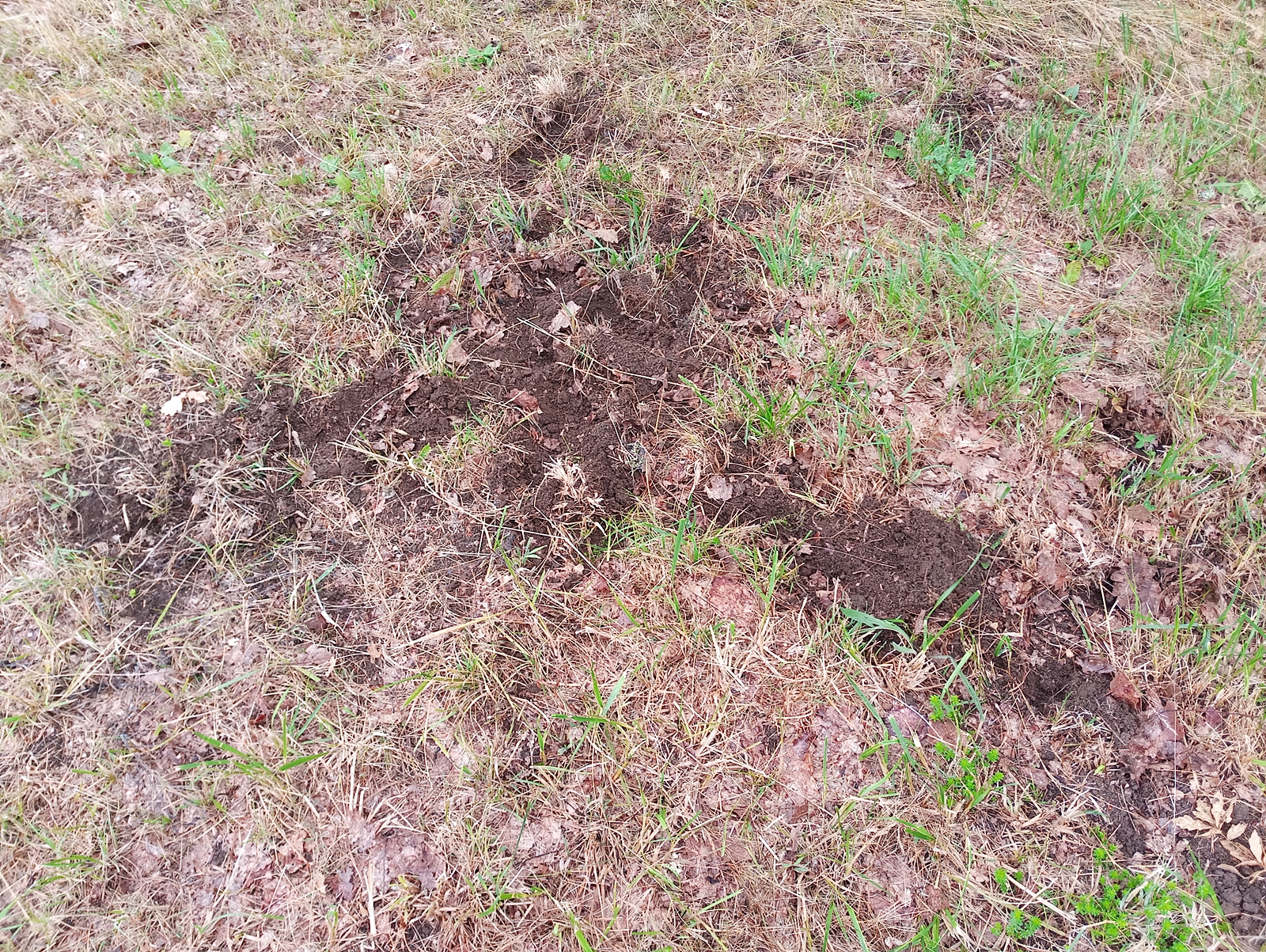
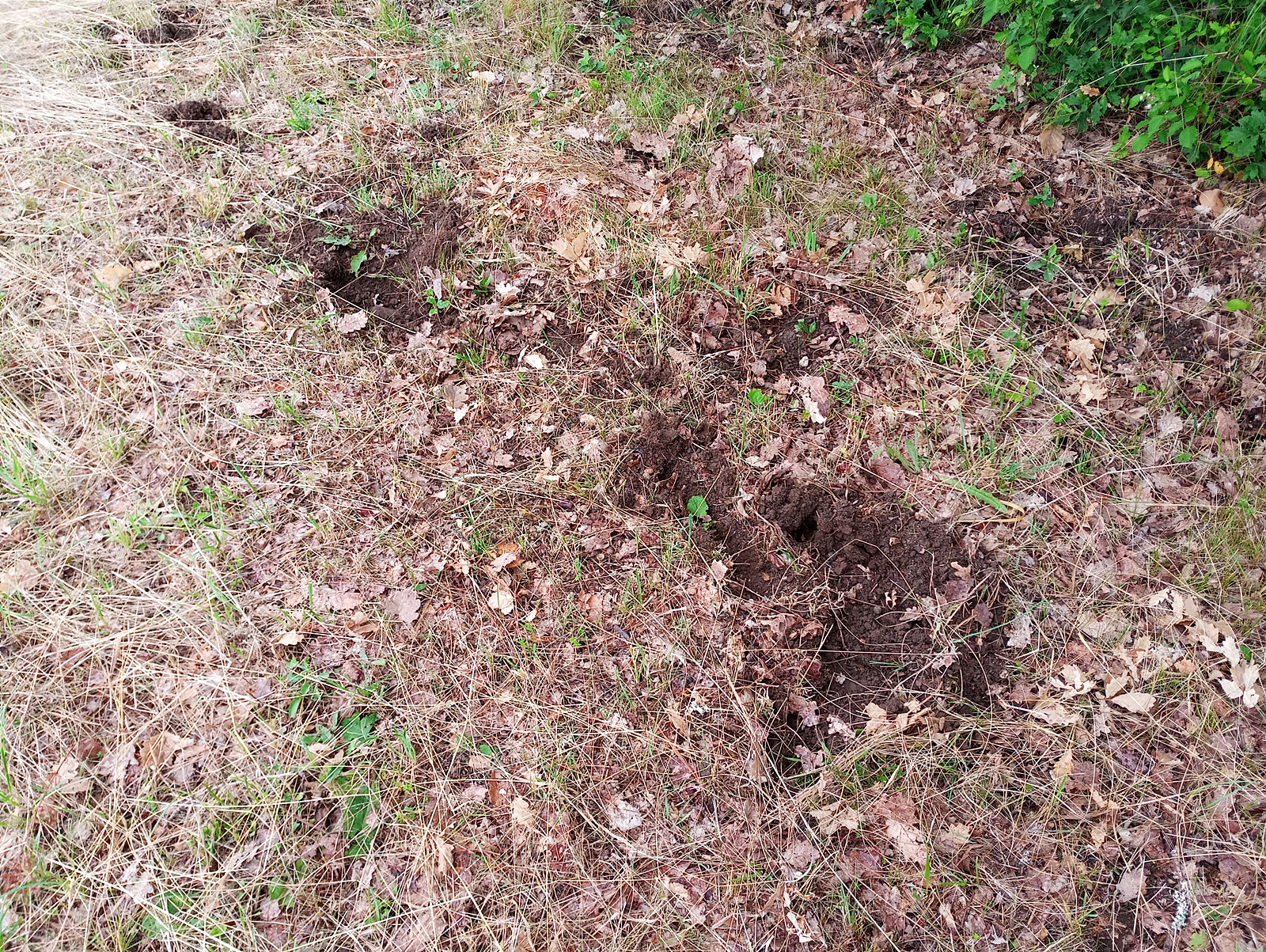
The little devils came back!

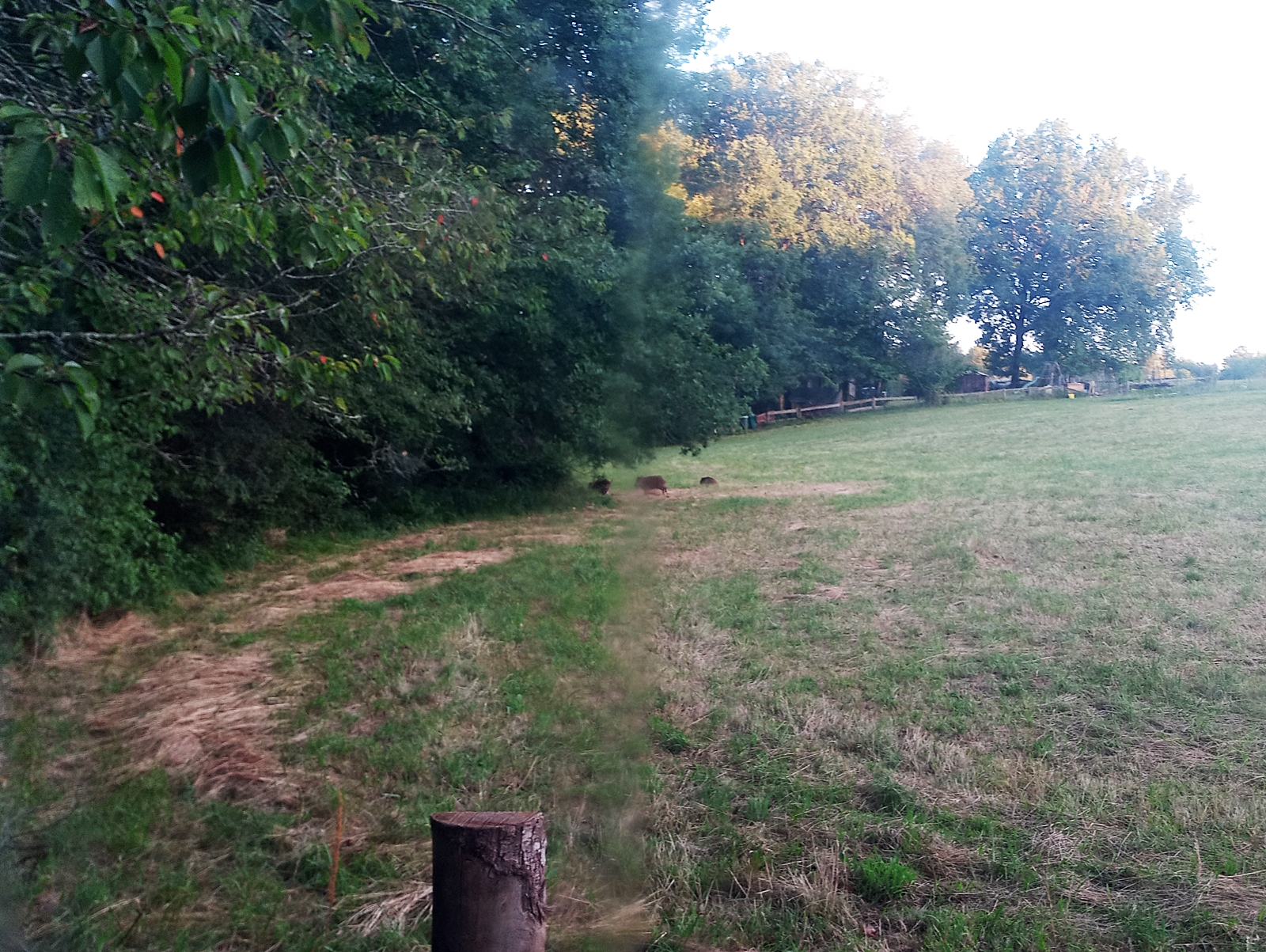
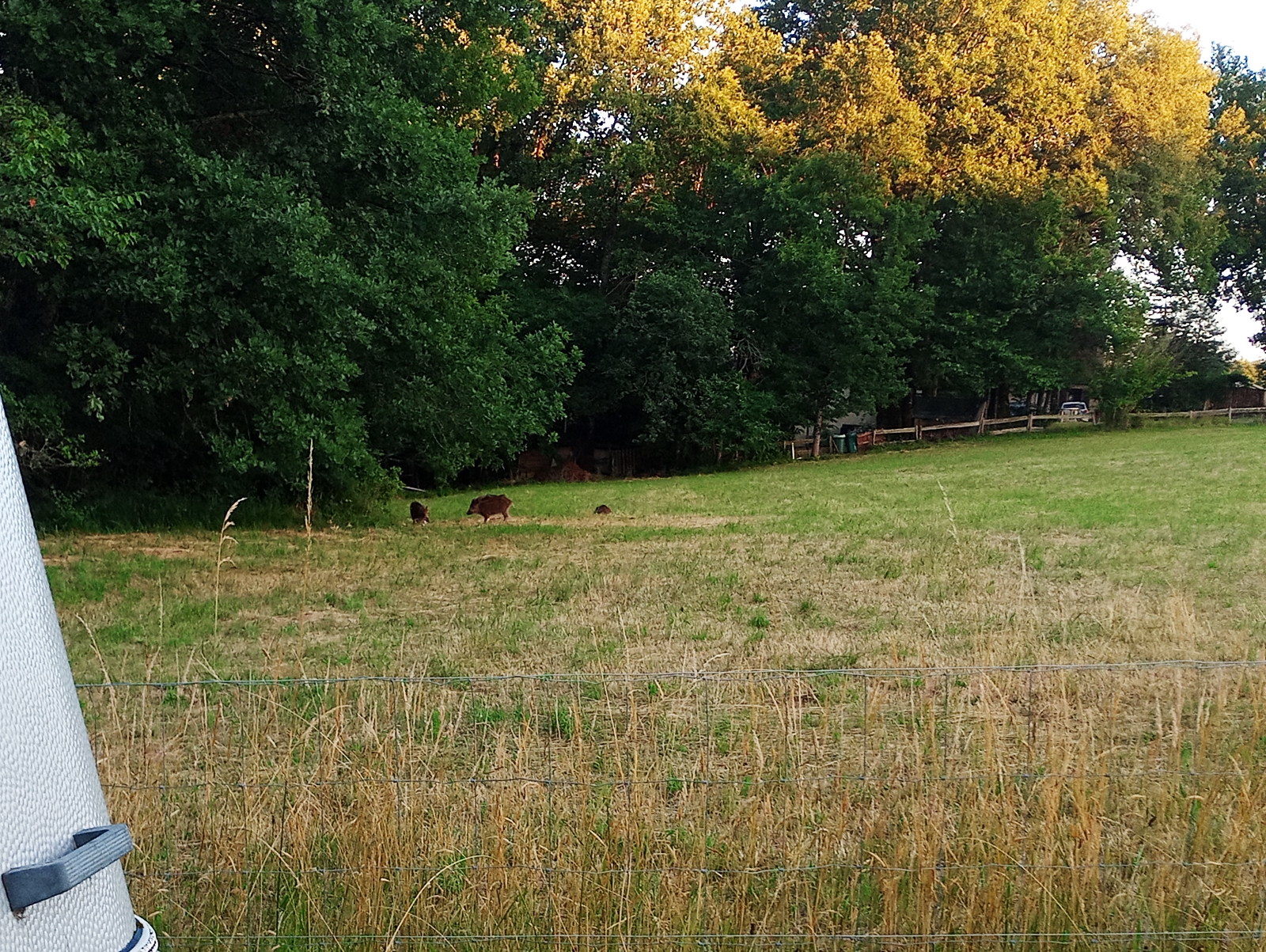
One evening a week or so ago I glanced out of my caravan window as this is what I saw.

null

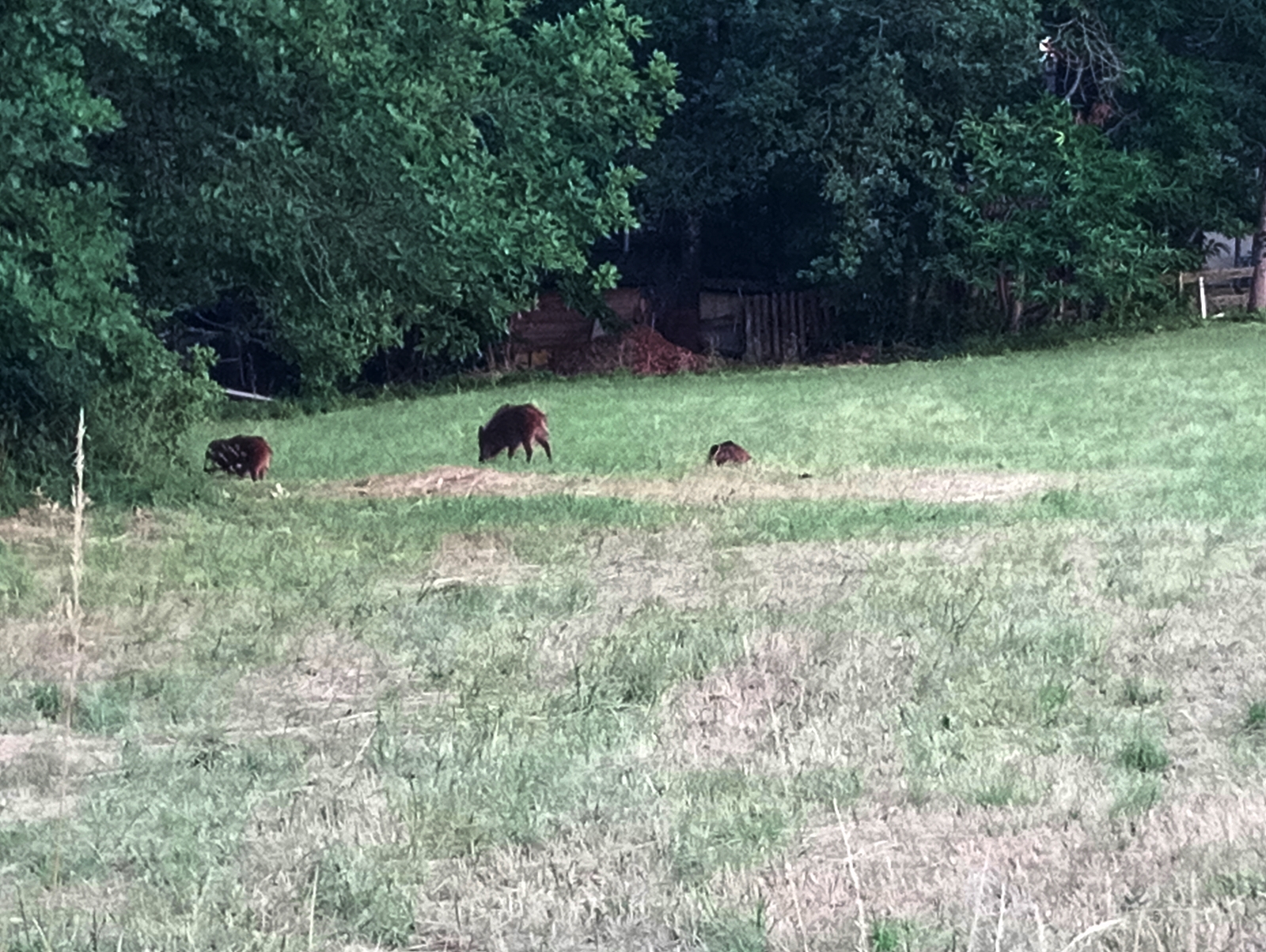
Then I went outside to get some clearer pics and although you can’t see it in the next shots, the little devils stood and watched while I did so.

null

null

Mostly they seemed to be quite small, young pigs and some of them even still had stripes on their backs, so it’s probable that they were from this year’s litters. The problem with that is that as the hunting season finished at the end of March, it’s likely that they haven’t come across hunters before and haven’t heard the sound of guns, so they’re not yet unduly afraid of humans.

I then decided that enough was enough and putting on my best wild-man impression I ran towards them shouting and waving my arms. That initially worked and they scuttled off into the tree line, only to re-emerge a few moments later, so as I couldn’t see any large adult pigs amongst them I repeated the process except this time I continued running closer towards them until they’d all run away.

This did the trick and not long afterwards I spotted them all on the field in the valley below my land. They were too far away to wave my arms at so this time I let out a very loud whistle. And surprisingly, this did the trick as the whole herd belted off into the trees on the other side of the field that they were destroying and this time didn’t come back.

Was it worth the effort? I’d say so, because as the following shots show, even in the short time that they were on the land next to mine they did considerable damage.

null

null

Although I’ve now erected quite a bit of fencing, my land is still not fully enclosed and won’t be until the building work on my house is much further advanced. Having had to repair so much damage caused by these blighters in the past, anything I can do to prevent their returning will be worth it. Even if it means putting my wild-man impression on a few more times in the future.

He who hesitates…

When I opened the packaging containing my two new little cherry trees there was a loose small, dark red cherry in there that had been on the larger tree when it had been despatched but had become detached in transit. I thought about tasting it to get an idea of what the cherries from the tree would be like in the future but thought better of it as I didn’t know its history and threw it away.

There was also a little cherry on the smaller tree but that was redder and less ripe because if the supplier’s photographs can be believed, the cherries from that tree should also be a rich dark red. The smaller tree was more sickly than the other after its journey due to lack of water and although I’ve tried to nurture both of them, I’ve taken special care to look after it and see it through its early stages.

I’ve been out to check both trees every morning after I’ve got up and was especially pleased to see that the smaller tree and its cherry were doing well. Its leaves were growing stronger and more healthy looking and the little cherry was growing larger and darker by the day. I was looking forward to picking it and tasting it straight from the tree but decided that I’d be patient and wait until just the right moment.

This morning when I checked a ruddy bird had beaten me to it… 😐

New video

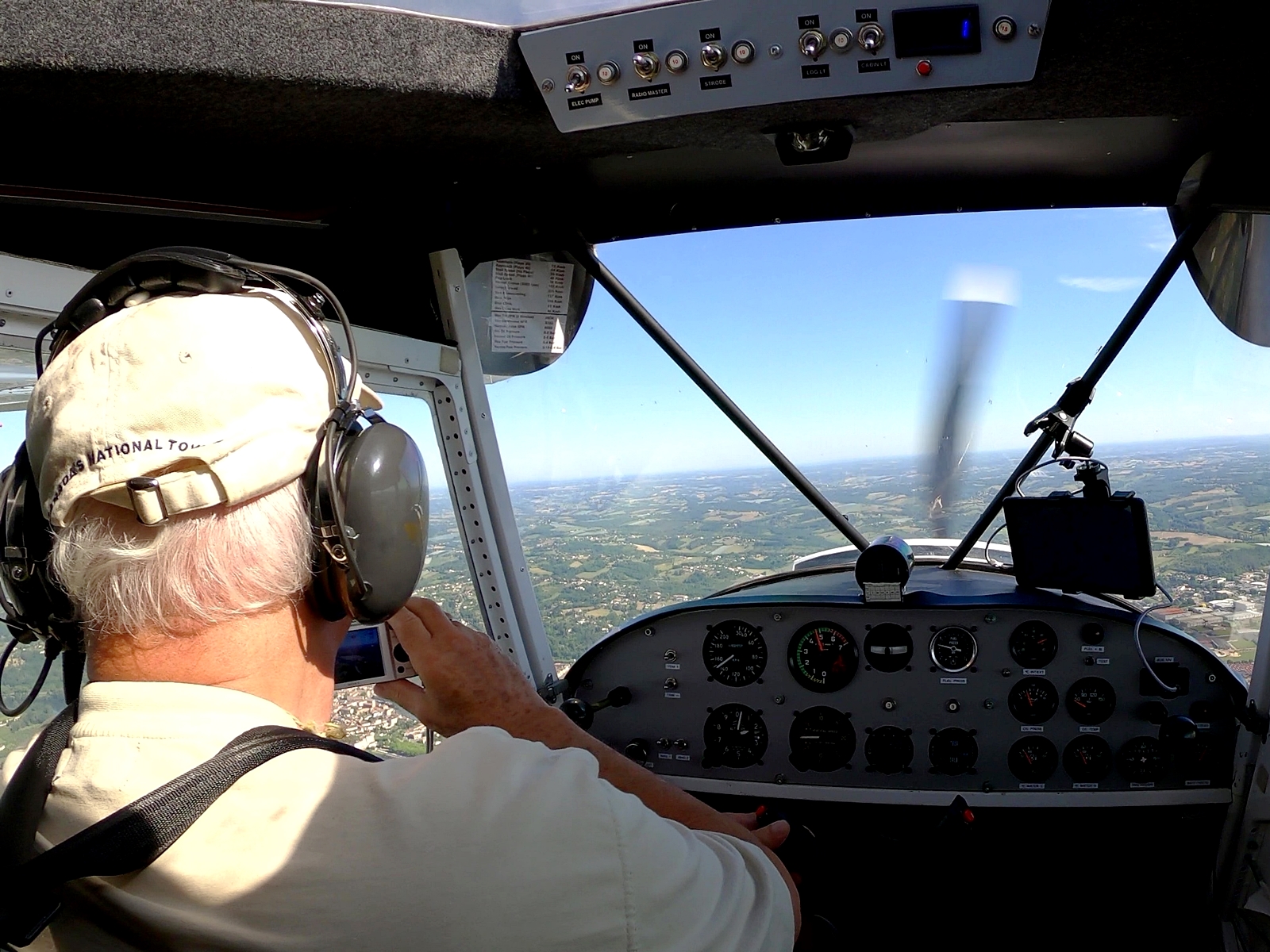
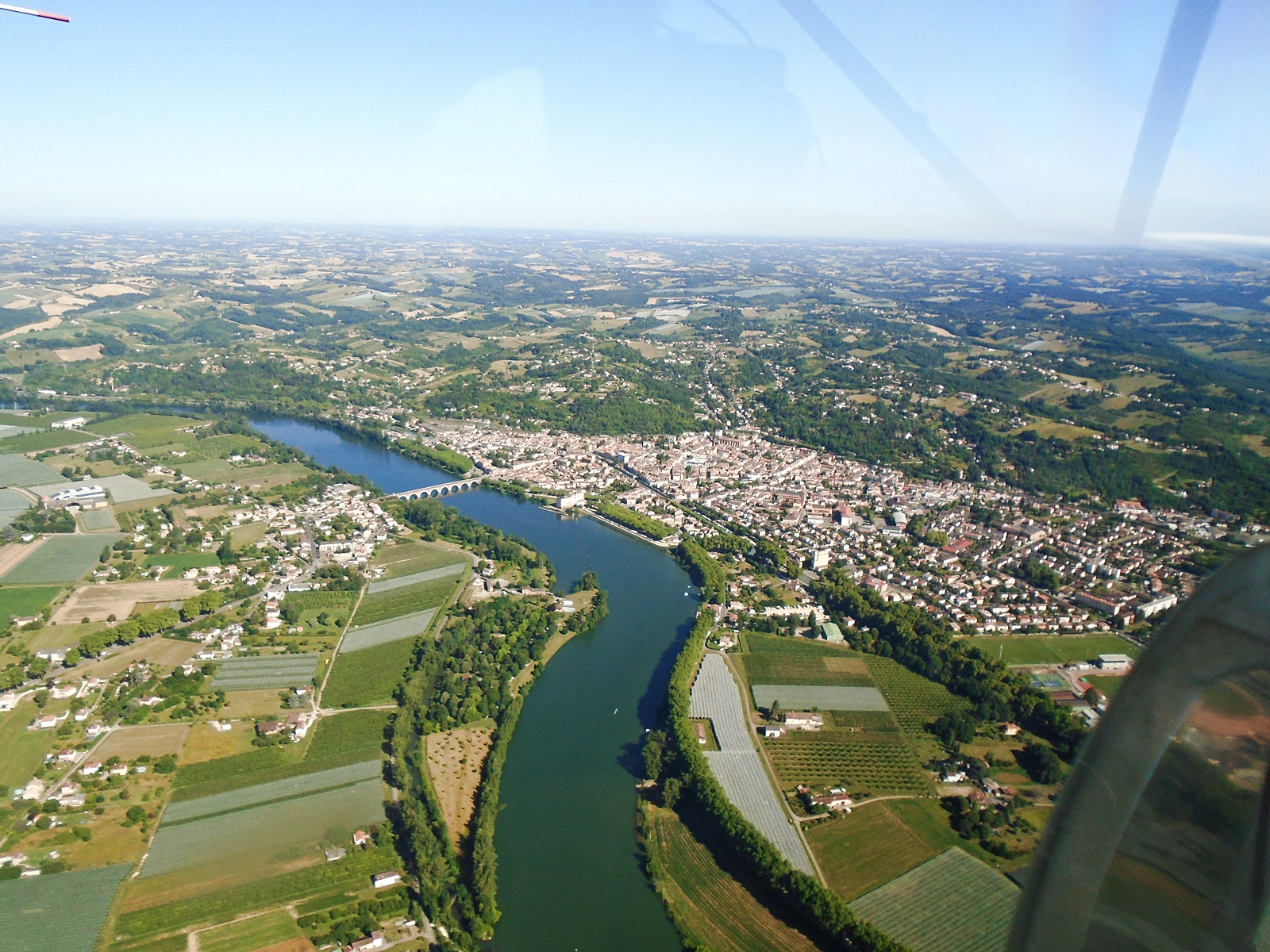
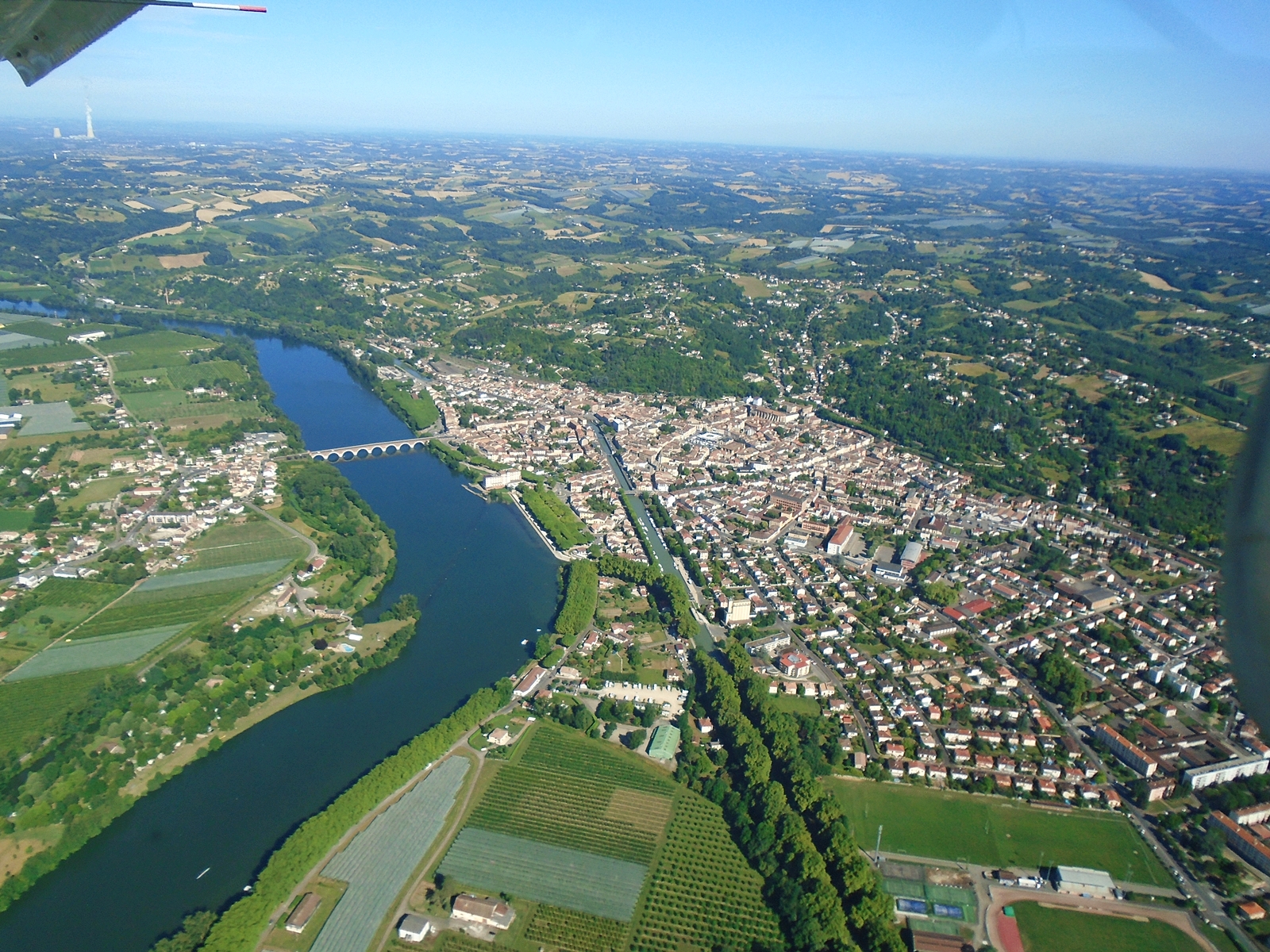
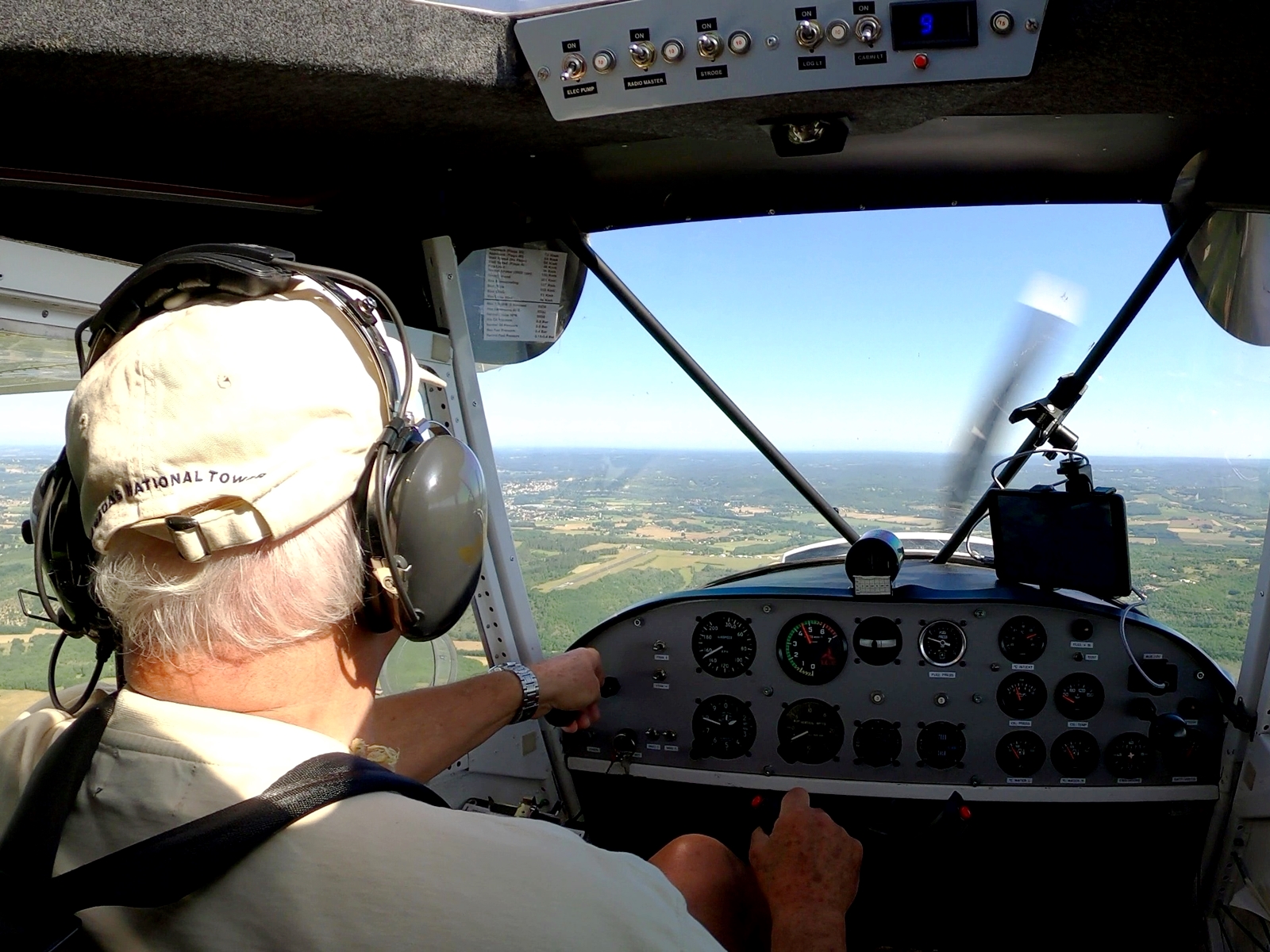
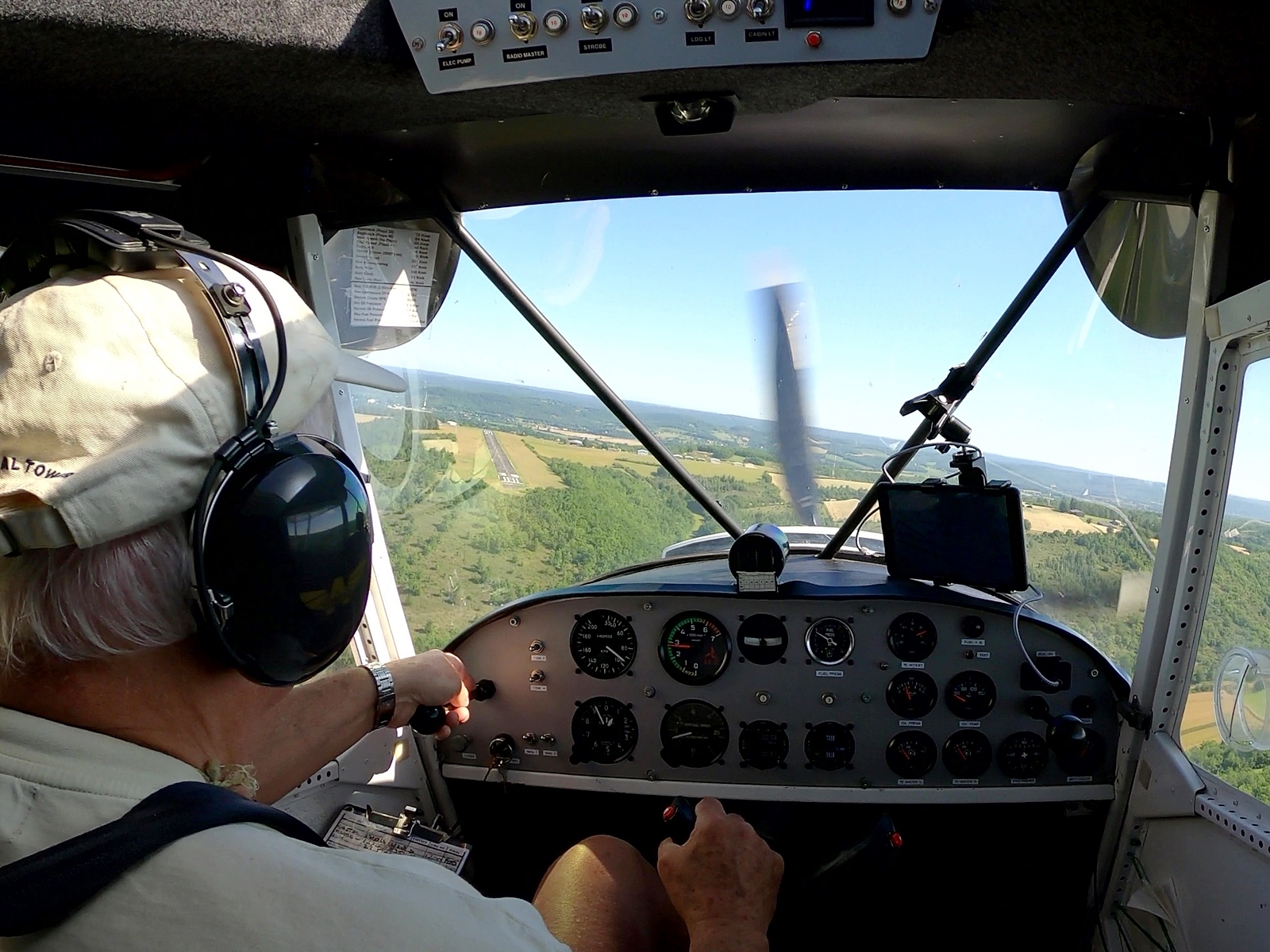
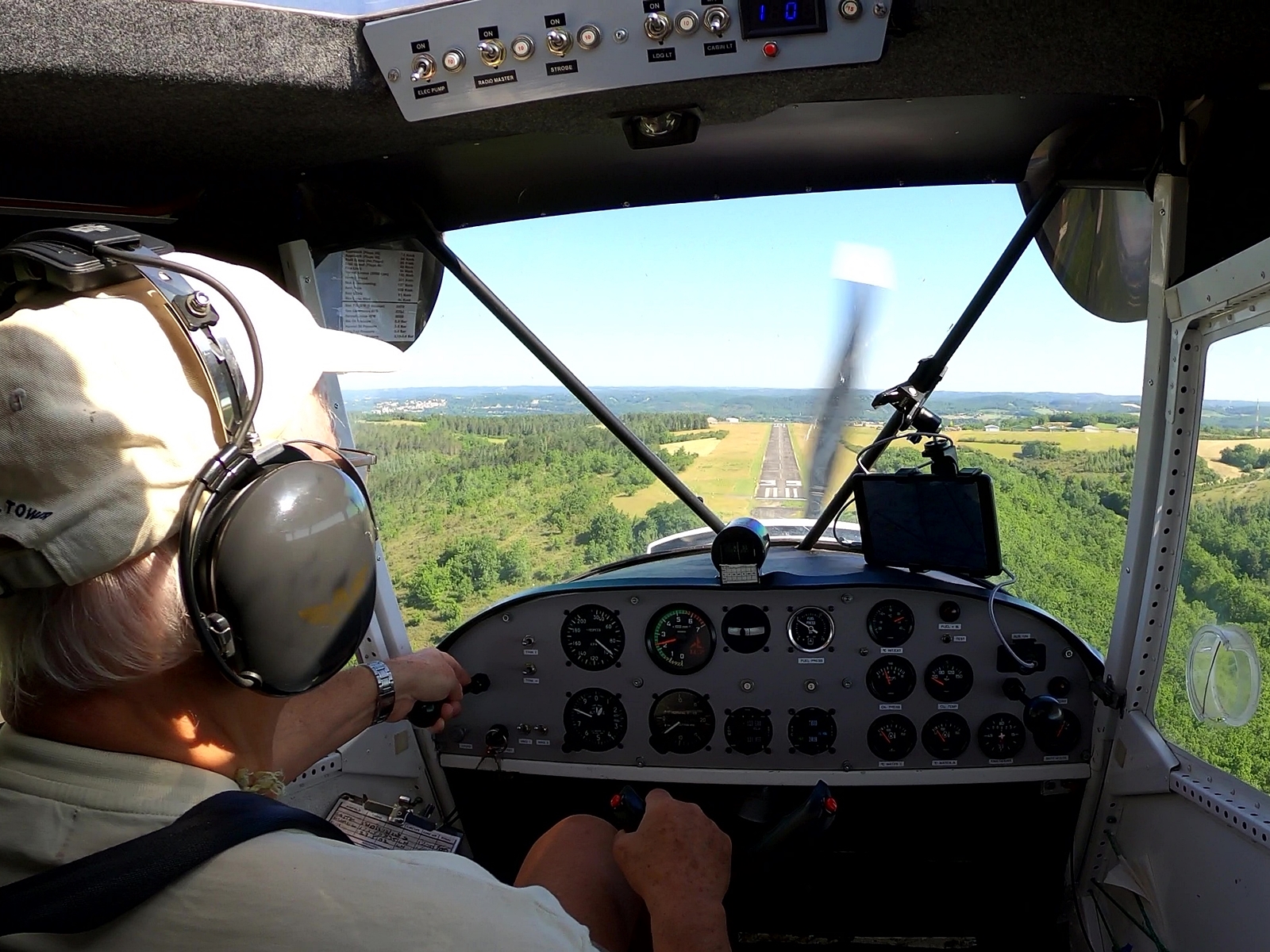
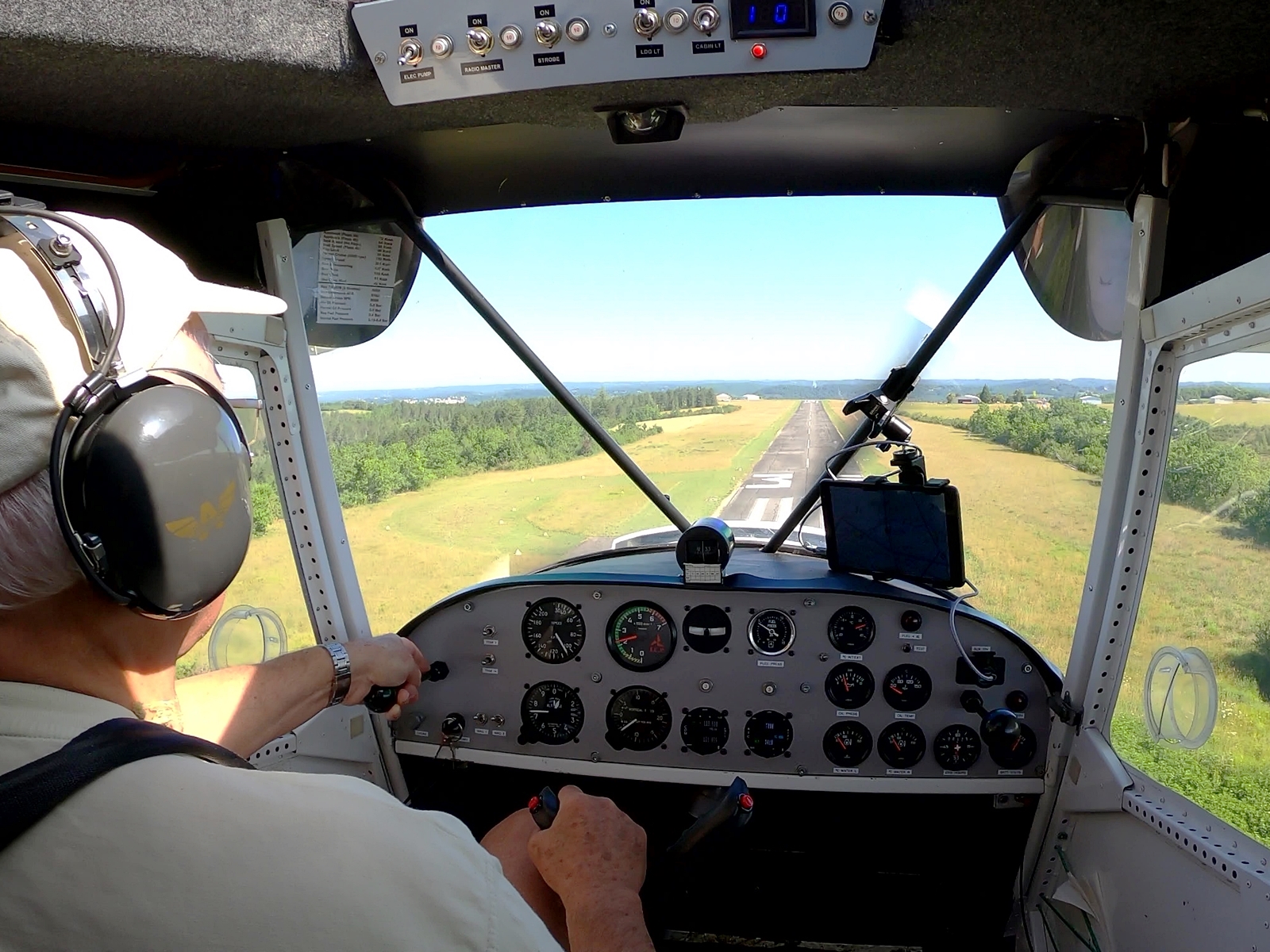
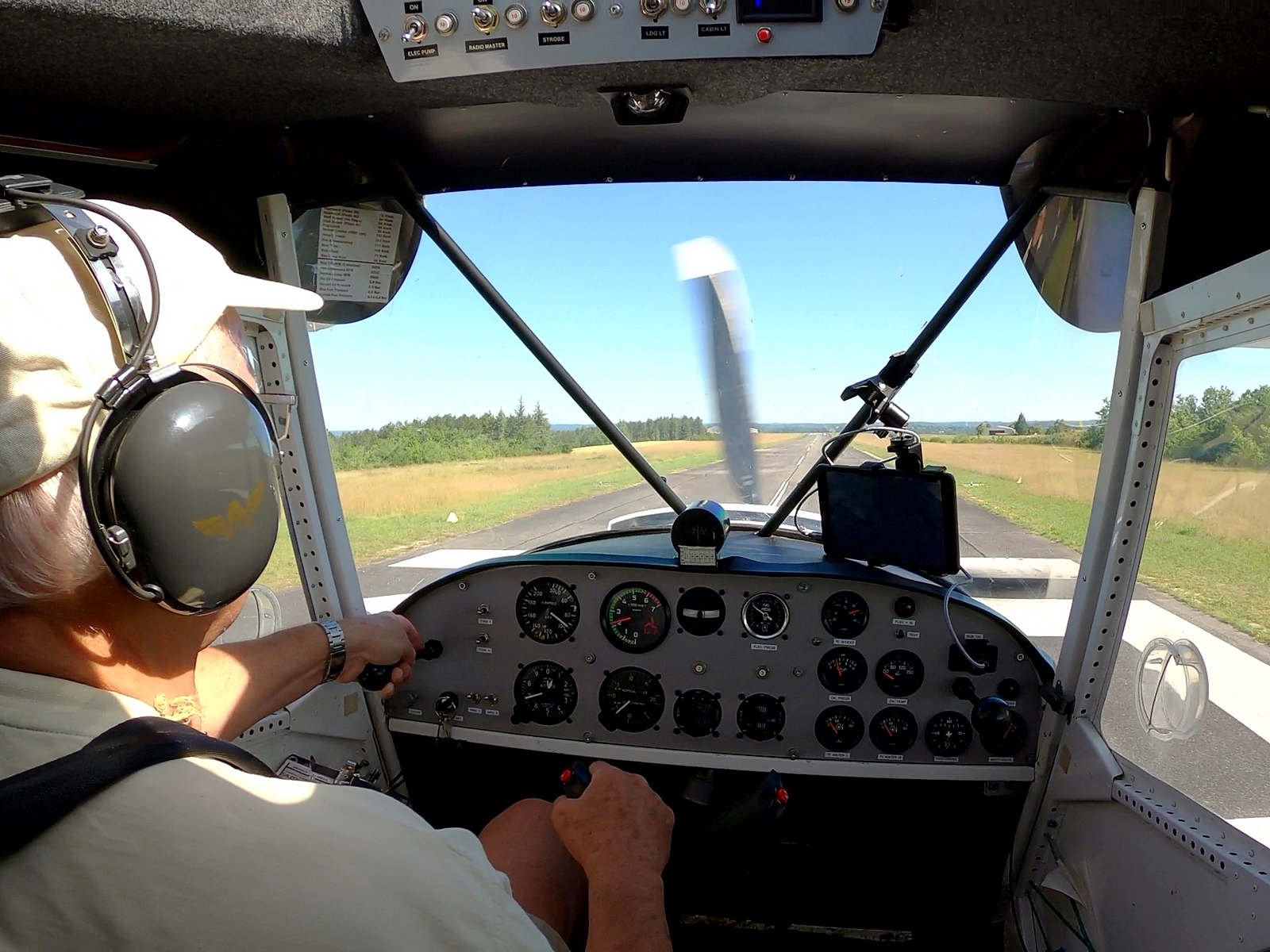
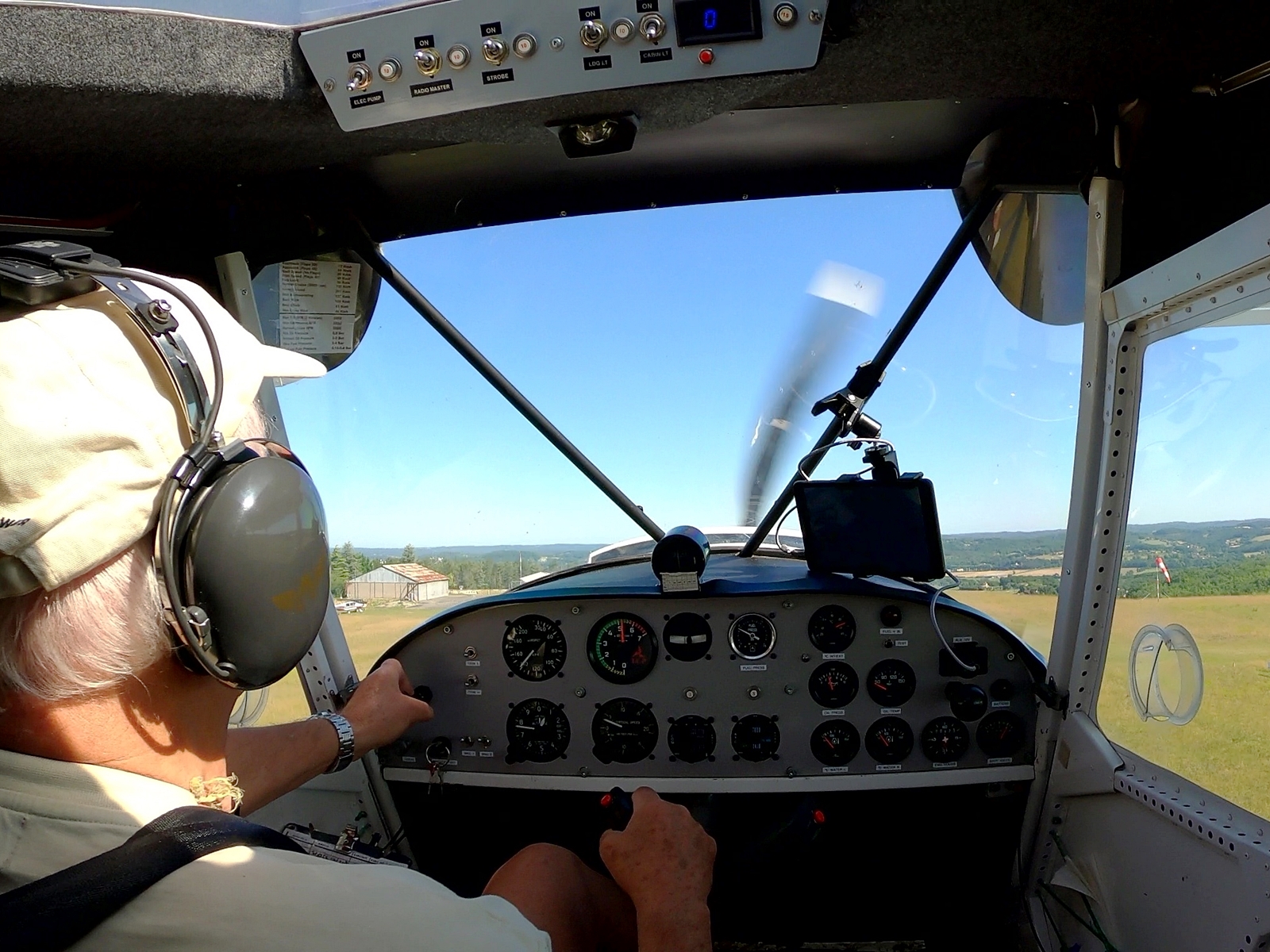
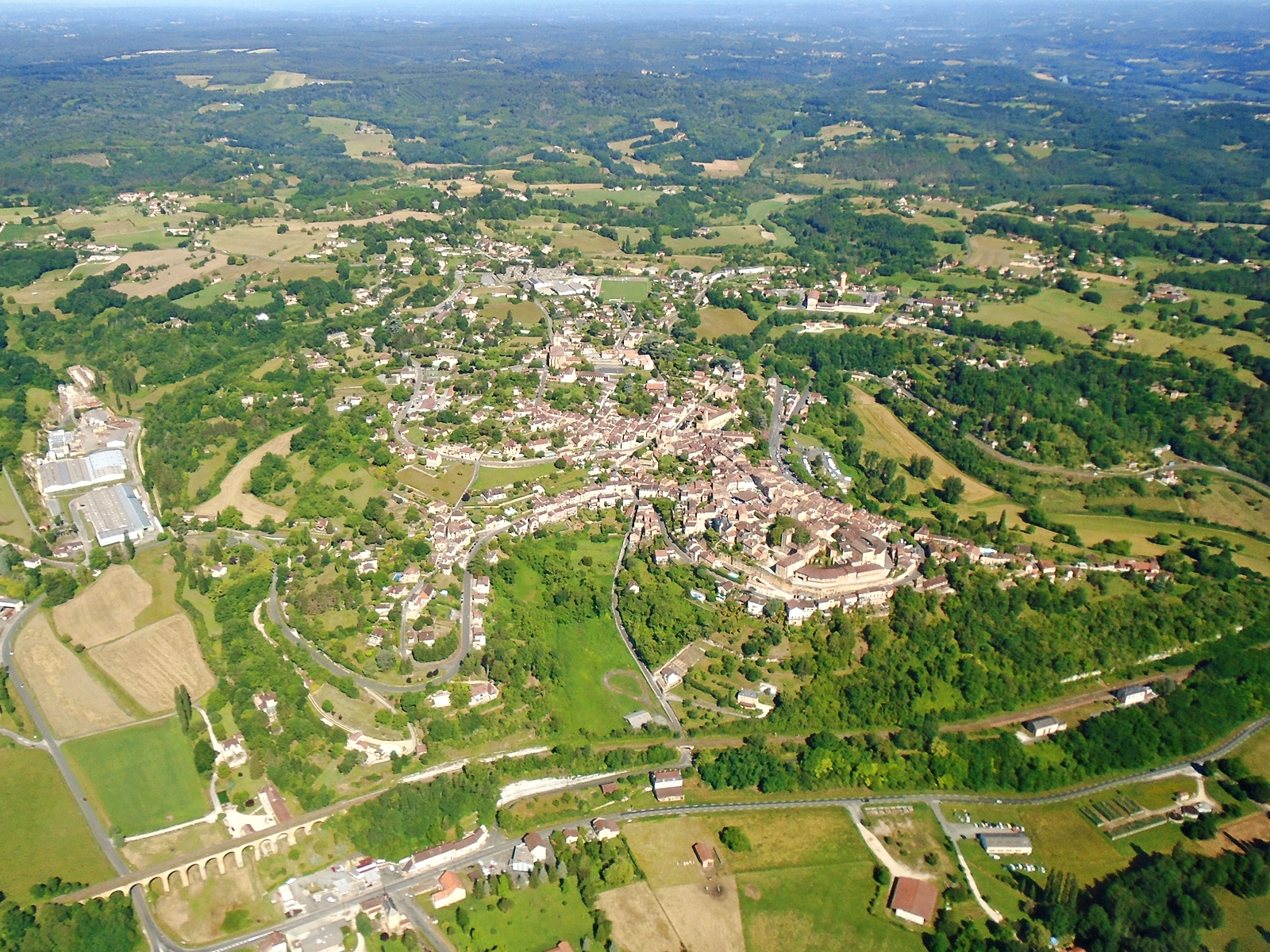
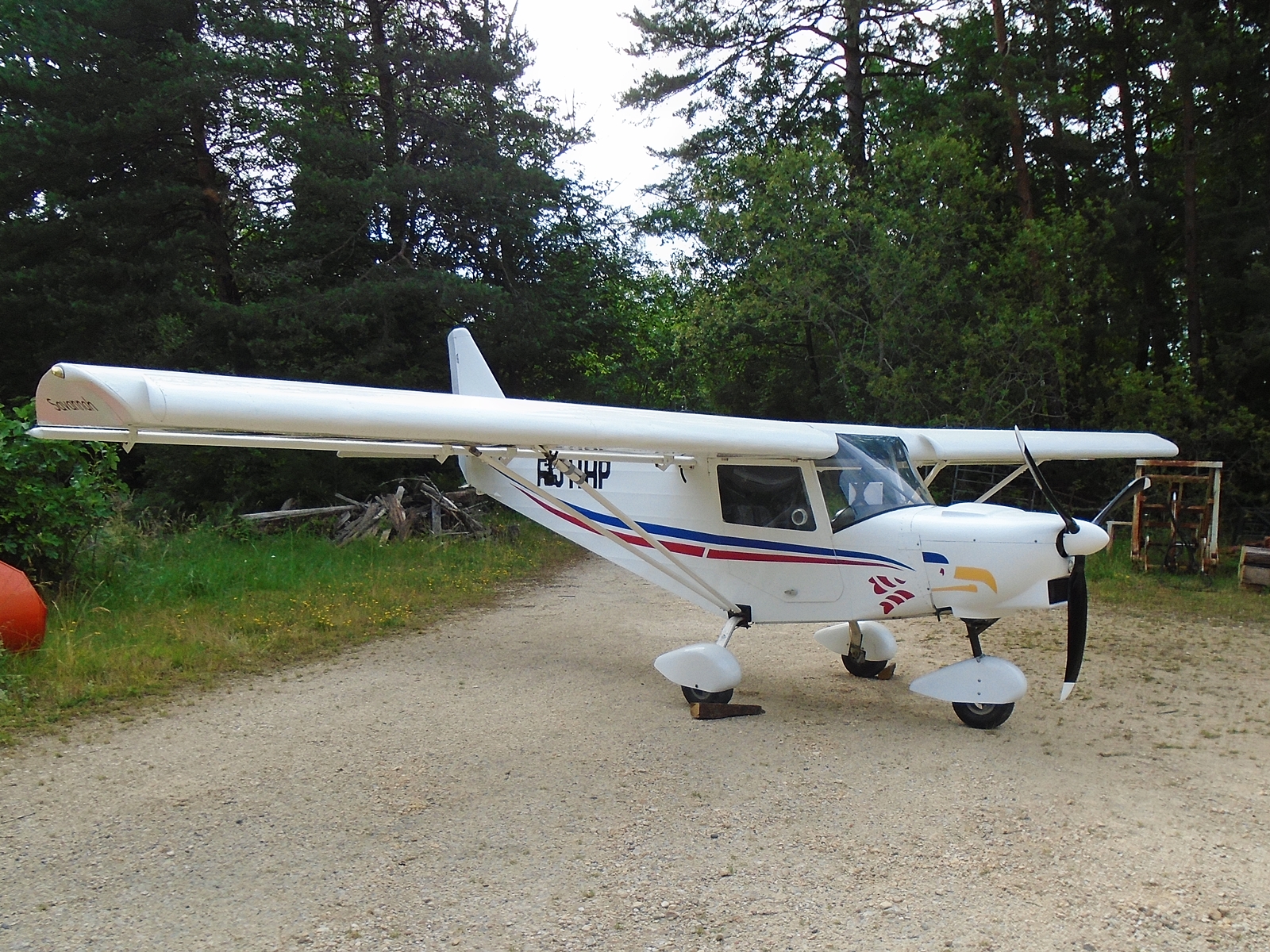
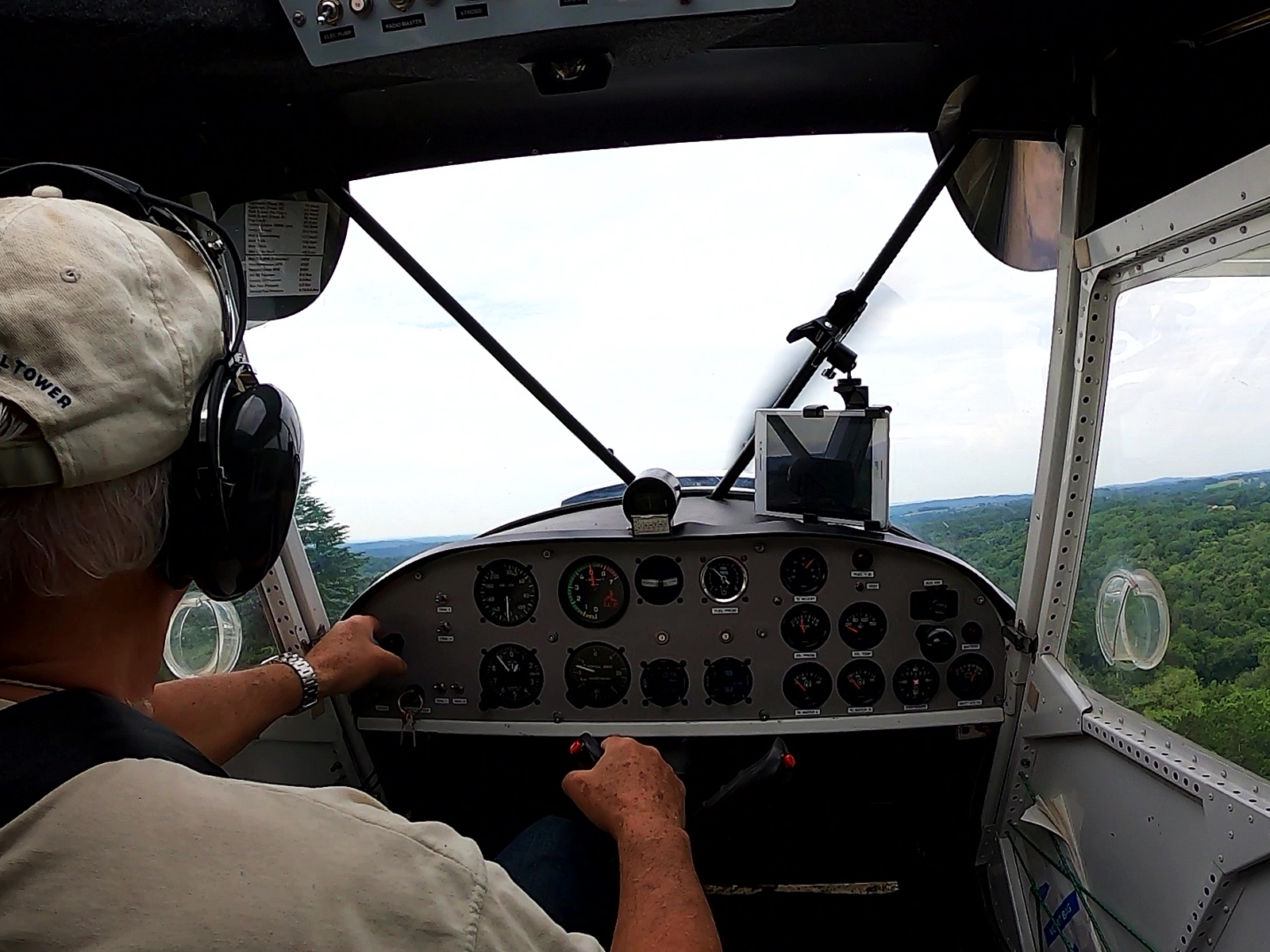
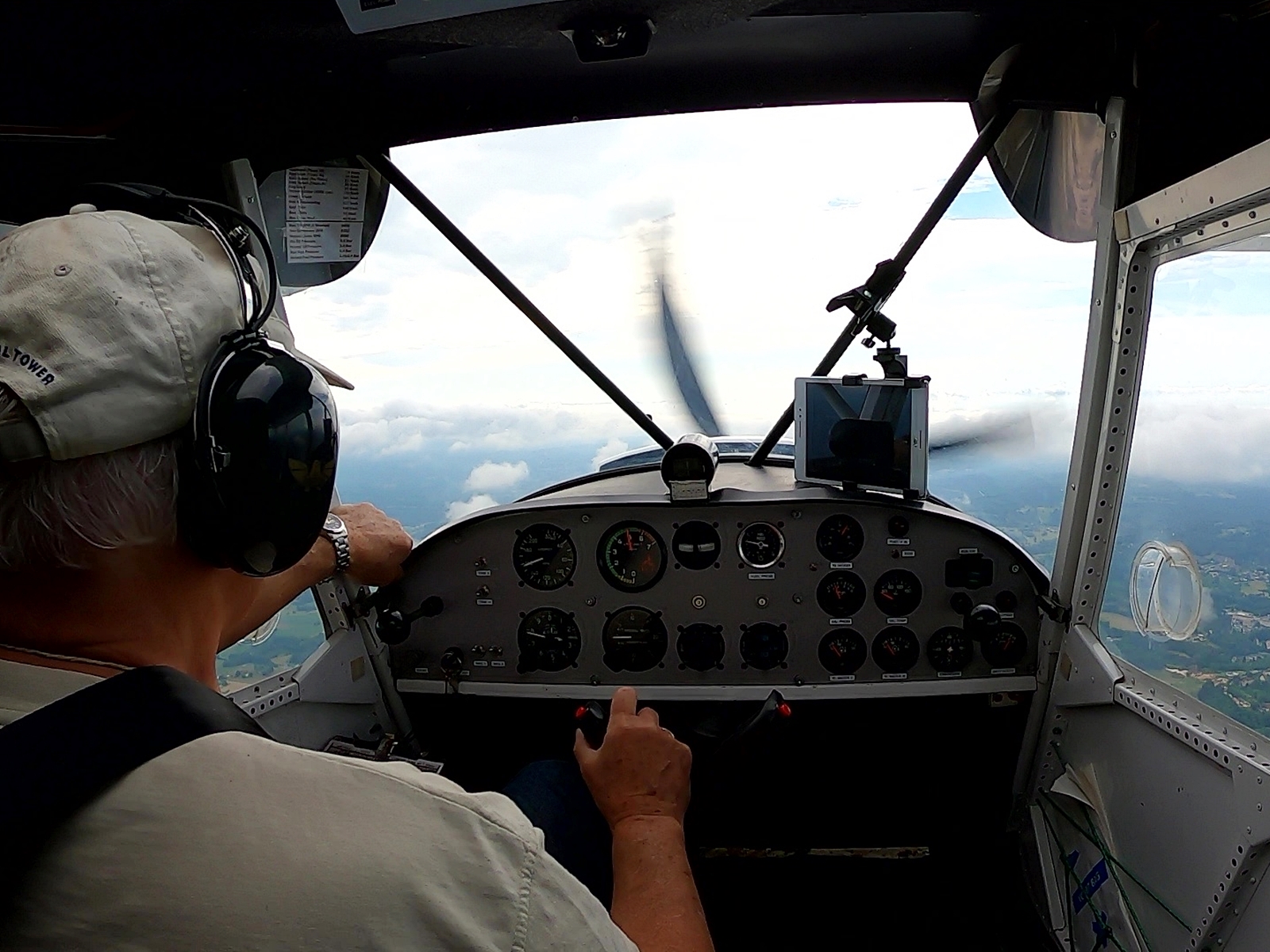
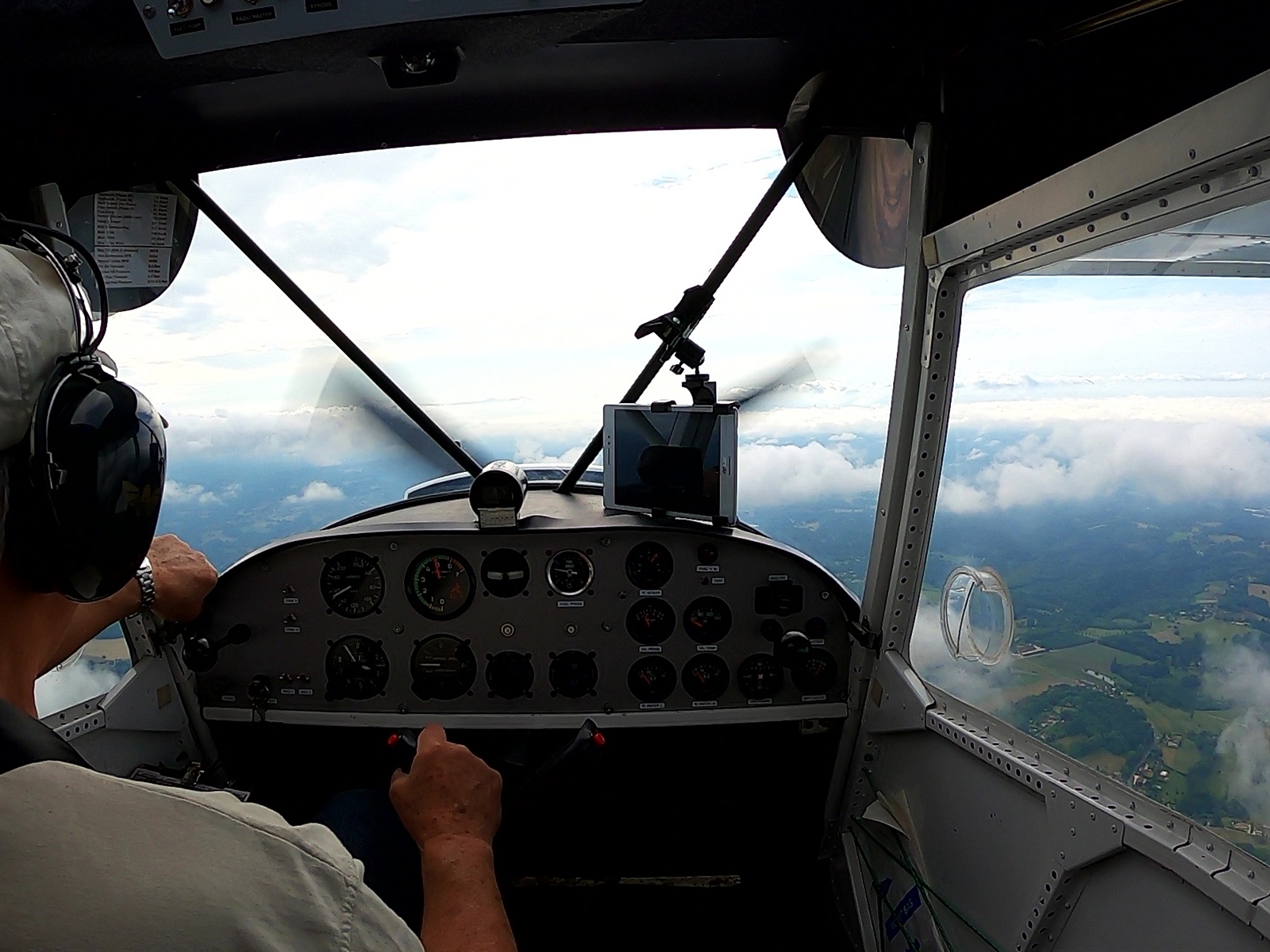
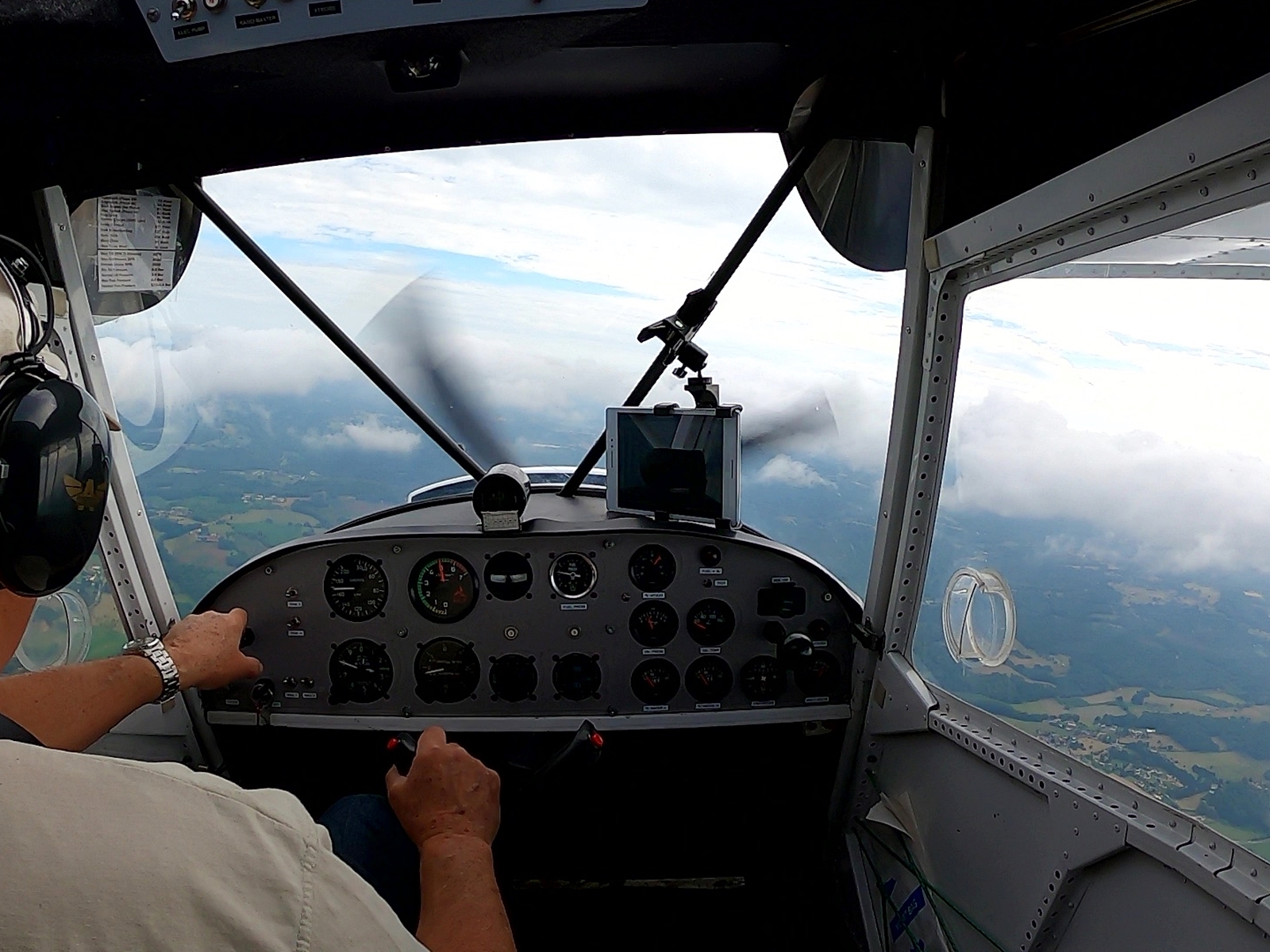
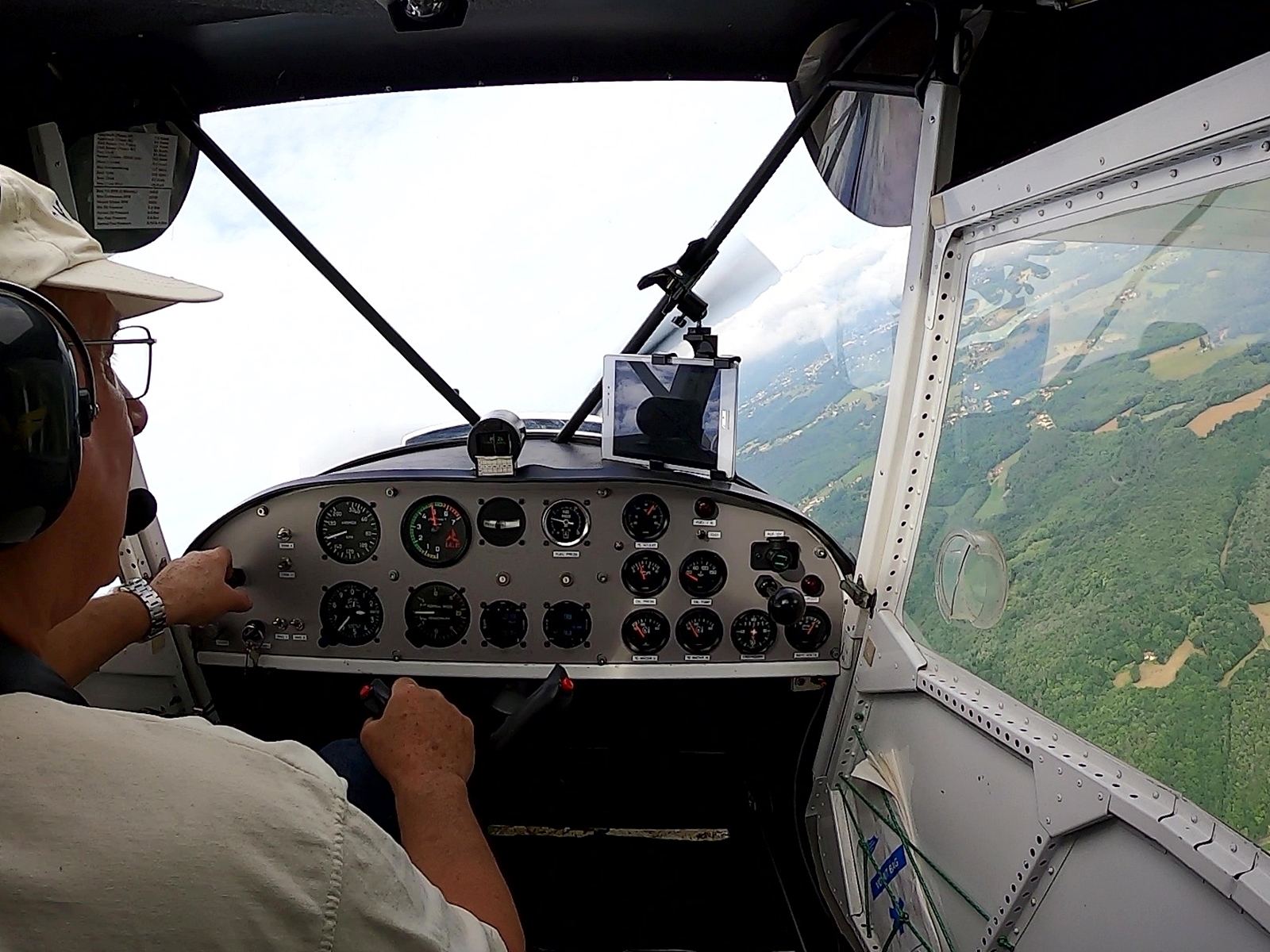
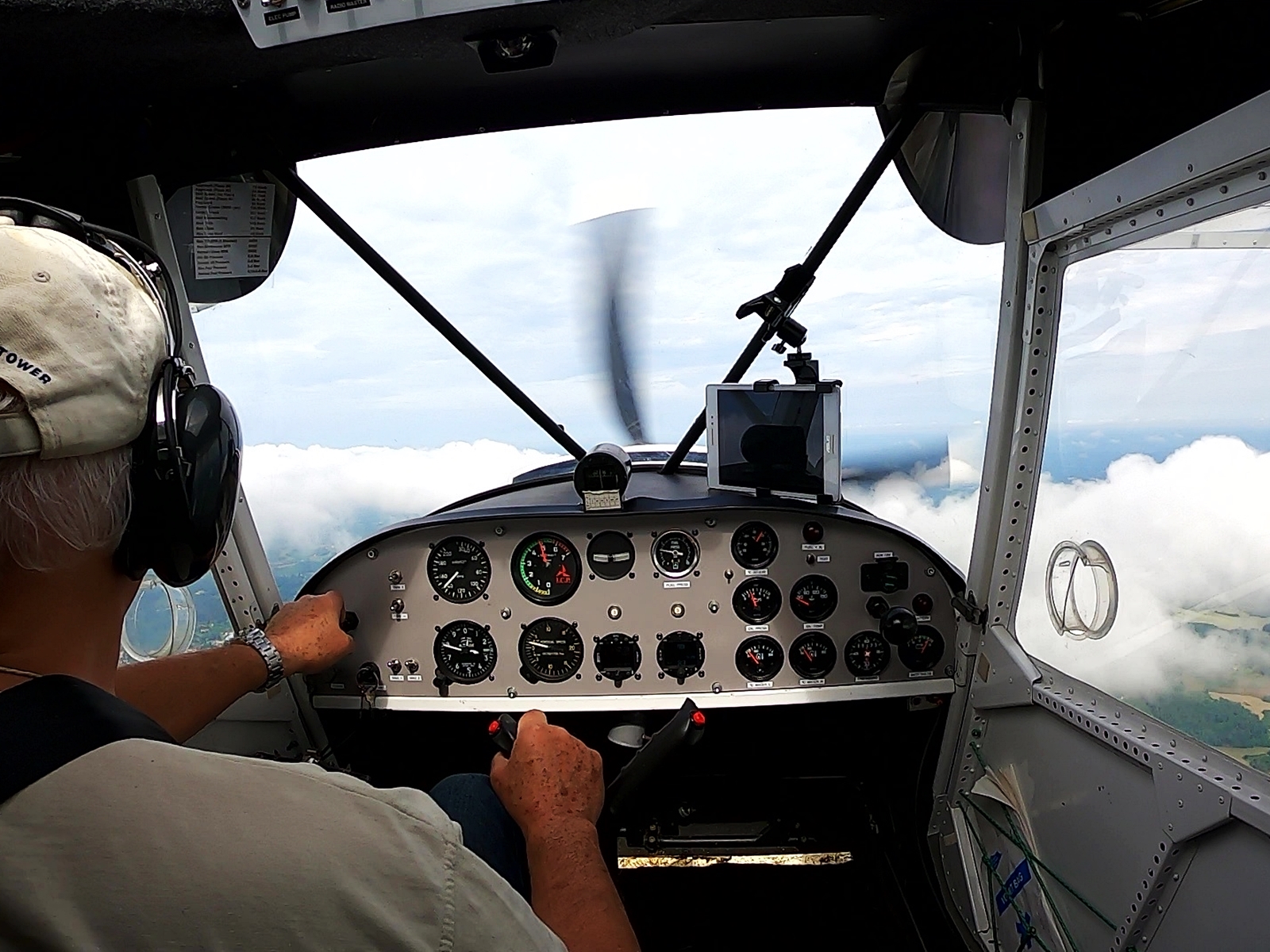
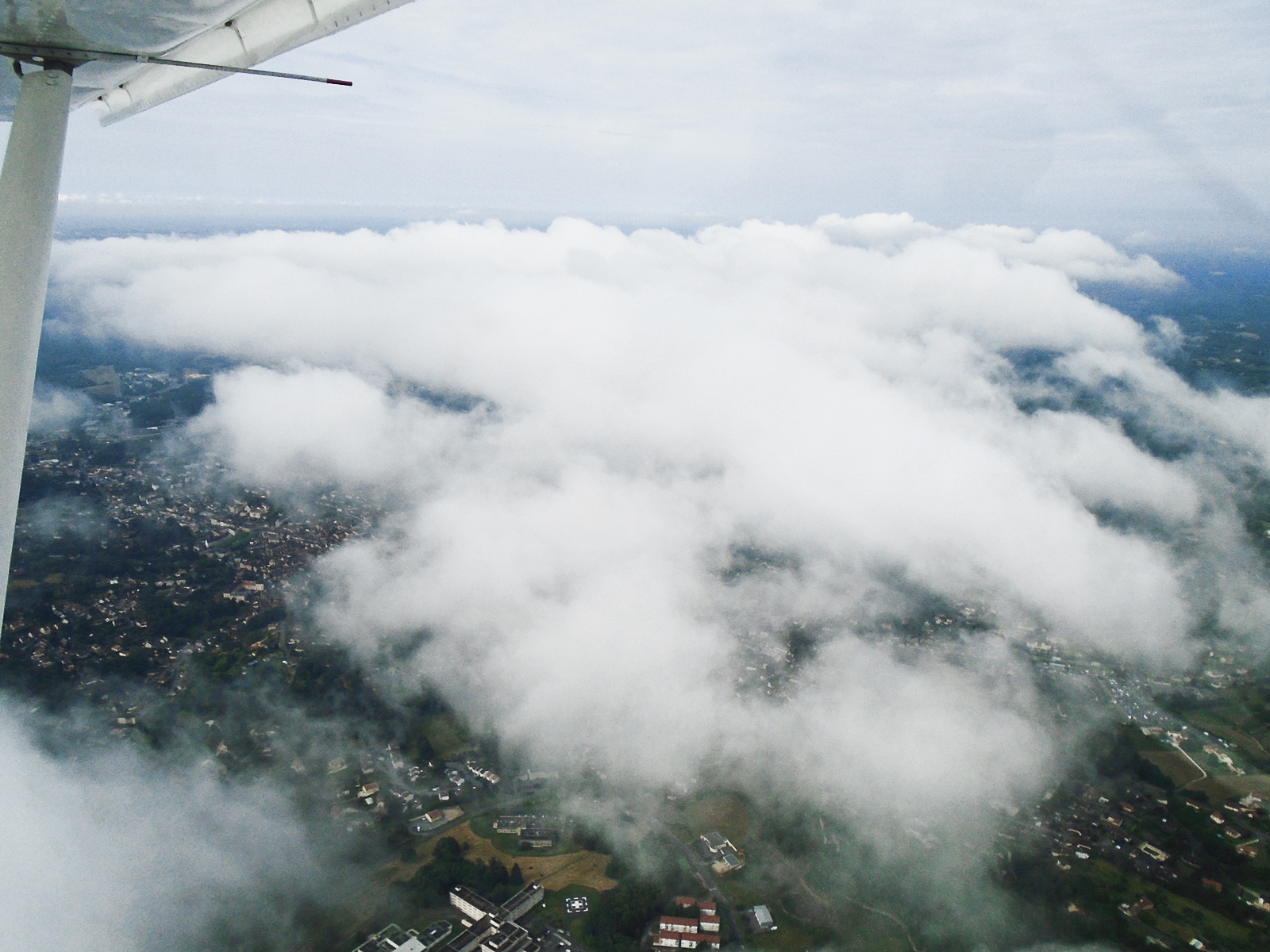
Back on 11 June I did a flight in my Savannah from Malbec to Castelsarrasin and Fumel. I did a post about it at the time and also put up some photos that I took along the way together with some screenshots from the video that I shot at the time. I’ve now had time to edit the video, which was quite a lot of work and took ages, and here’s a link to it below.

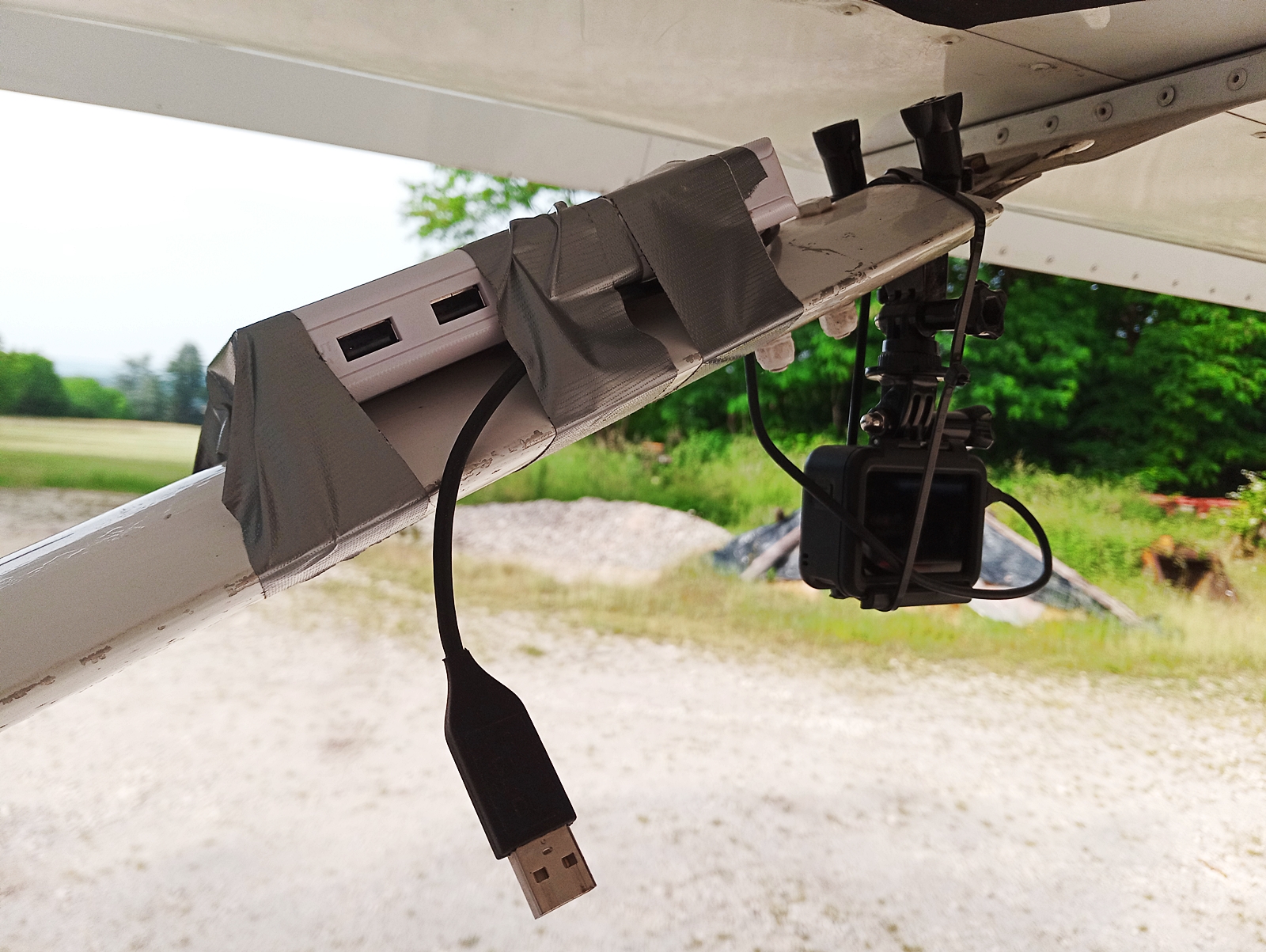
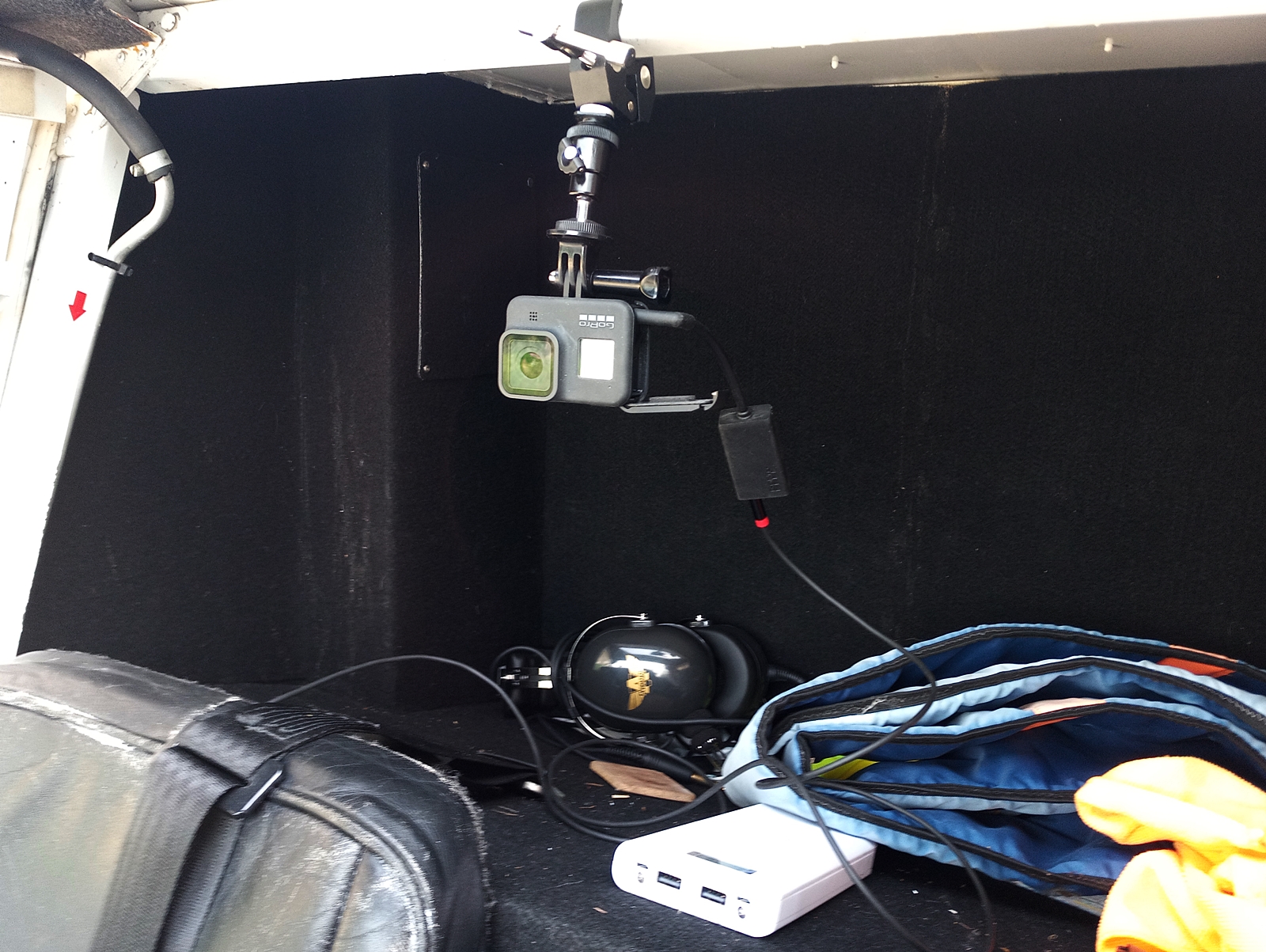
Unfortunately it only has one point of view, a GoPro mounted in the cabin, because the second one that was mounted on the wing stopped working even though it was connected to an external powerpack. Also, the sound that should have been recorded with the video was too distorted to use, so I had to do an external commentary. I’m glad to say that I’ve now managed to overcome both problems, so future ones should hopefully turn out much better.

Nevertheless, I hope viewers who’ve got 15 minutes of their life to waste by watching this one won’t be too disappointed 🙂

The real deal

I mentioned in a previous post how easy it was for me back in the day to record videos when flying MYRO that included two-way radio as well as visual content. The problem back then, though, was that although the sound quality was pretty good, the visual quality was up to nothing like the same standard on account of the capability of the video recorders that I had at the time.

So it’s ironic that having first moved to my little Chinese GoPro rip-off sportscams and now to proper GoPros that can produce superb quality videos, I still haven’t managed to do what I was doing back then, which is record high quality sound to go with them and especially including the two-way radio communication. But as of now that’s all changed.

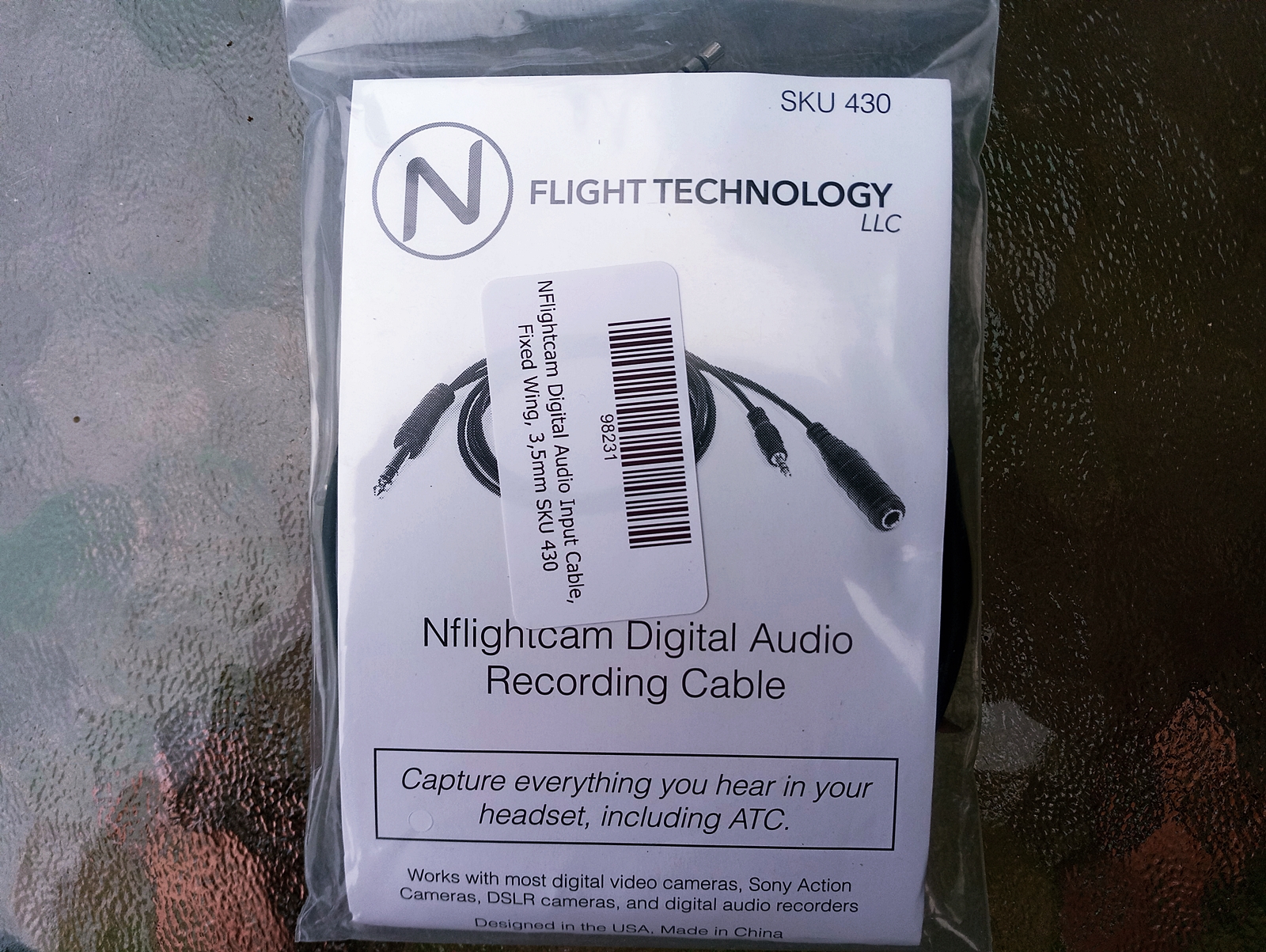
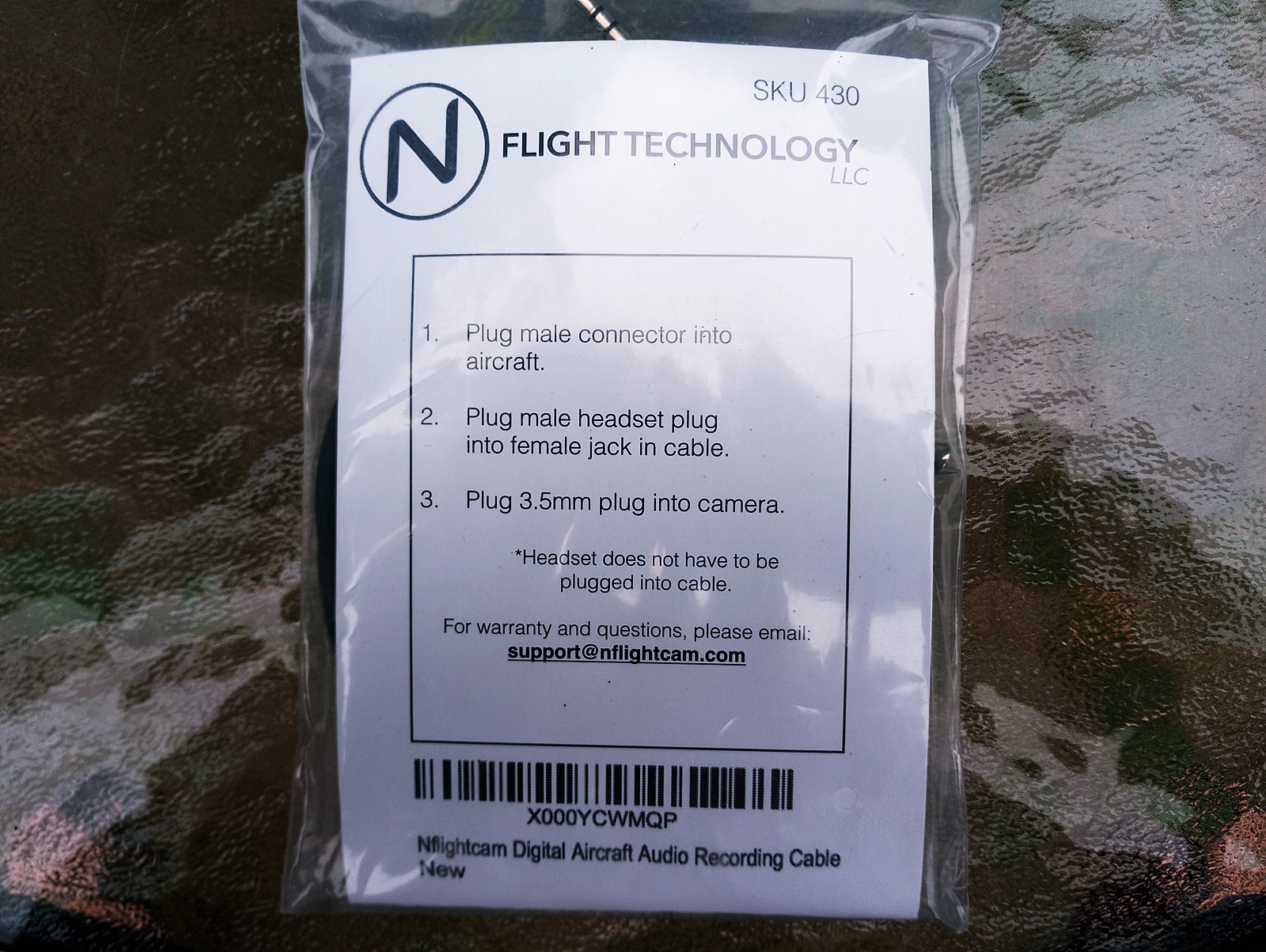
I tried to connect my Savannah’s radio to my on-board GoPro using a cable that I’ve used to connect my Yamaha keyboard to my home computer, but it wasn’t totally successful because although it did record the sound that I wanted it to, it was distorted to an unacceptable degree. So I did a google search and found that other pilots have achieved what I want to do using a cable being sold by Nflight Technology, an American company.

I then located a seller in Europe, in Holland actually, but from what I could see on their web site, the cable to connect a GoPro also included a GoPro special mic adapter which I already have. And it’s expensive. So I contacted them and asked whether I could buy just the cable without the adapter and that’s what I bought, for under half the cost of the full connection set-up. It was delivered a few days ago but I’ve been unable to try it until today. Here are some shots of its packaging.

null

null

It consists of a cable with a small jack plug at one end that plugs into the GoPro mic adapter and larger male and female jack plugs at the other, one of which you plug into the radio socket in place of your headset jack and the other into which the headset jack is then plugged. Then you just power up and away you go. I set the whole system up today with the GoPro plugged into an external power pack that will give an extended recording time and it worked flawlessly. I can’t wait to use it in an actual flight but I’m confident that it will give me exactly the results that I’m looking for 🙂

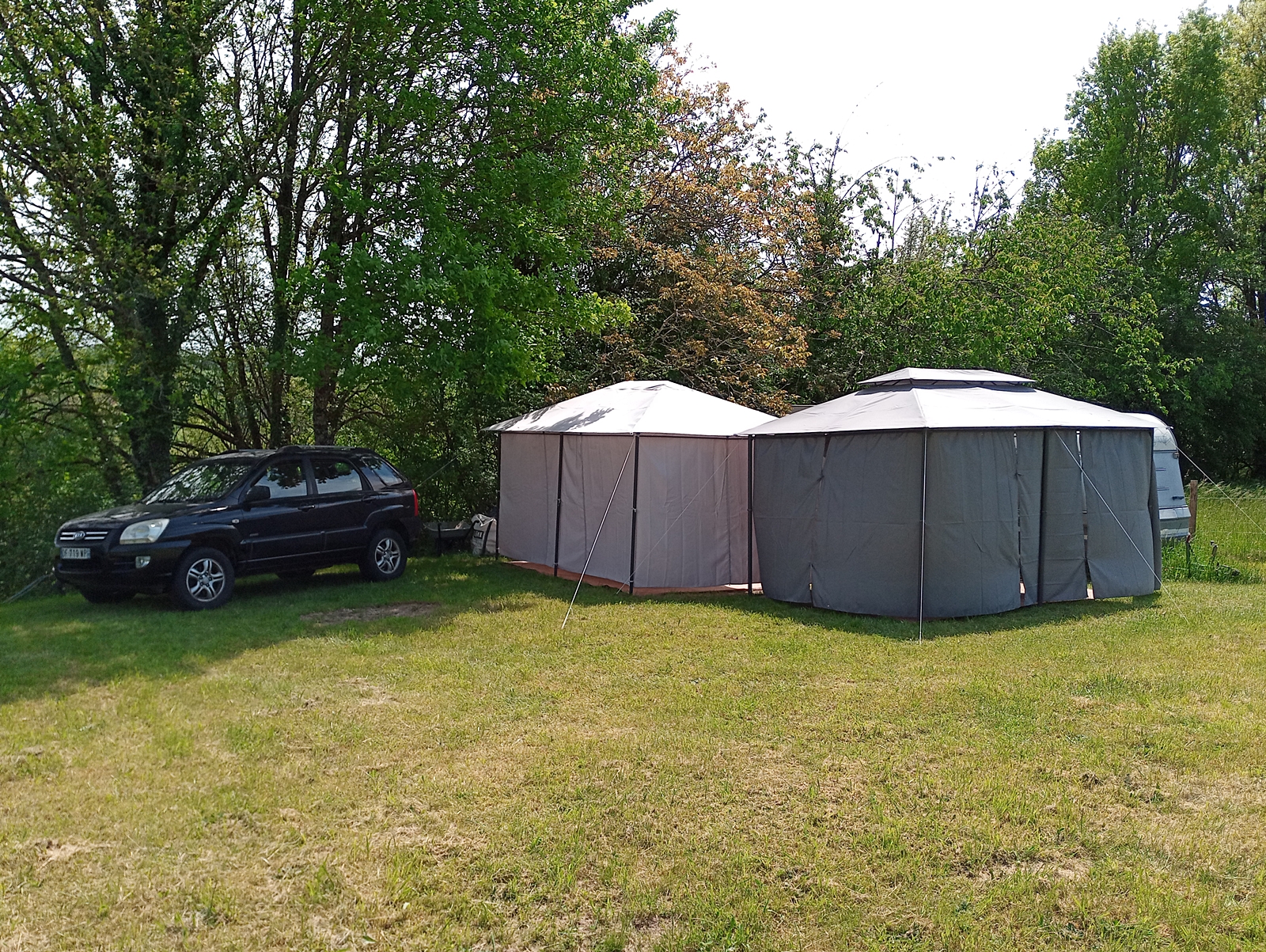
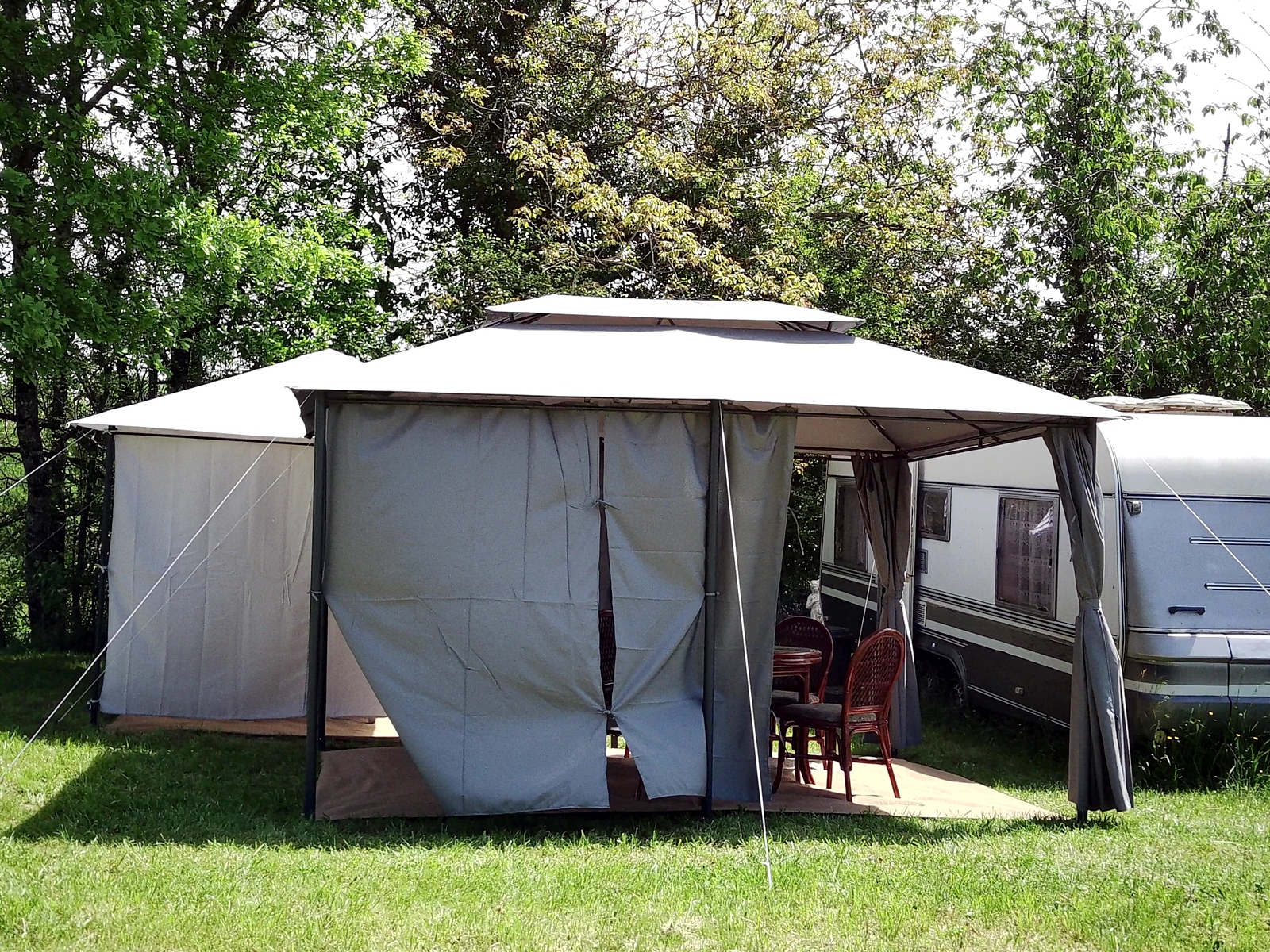
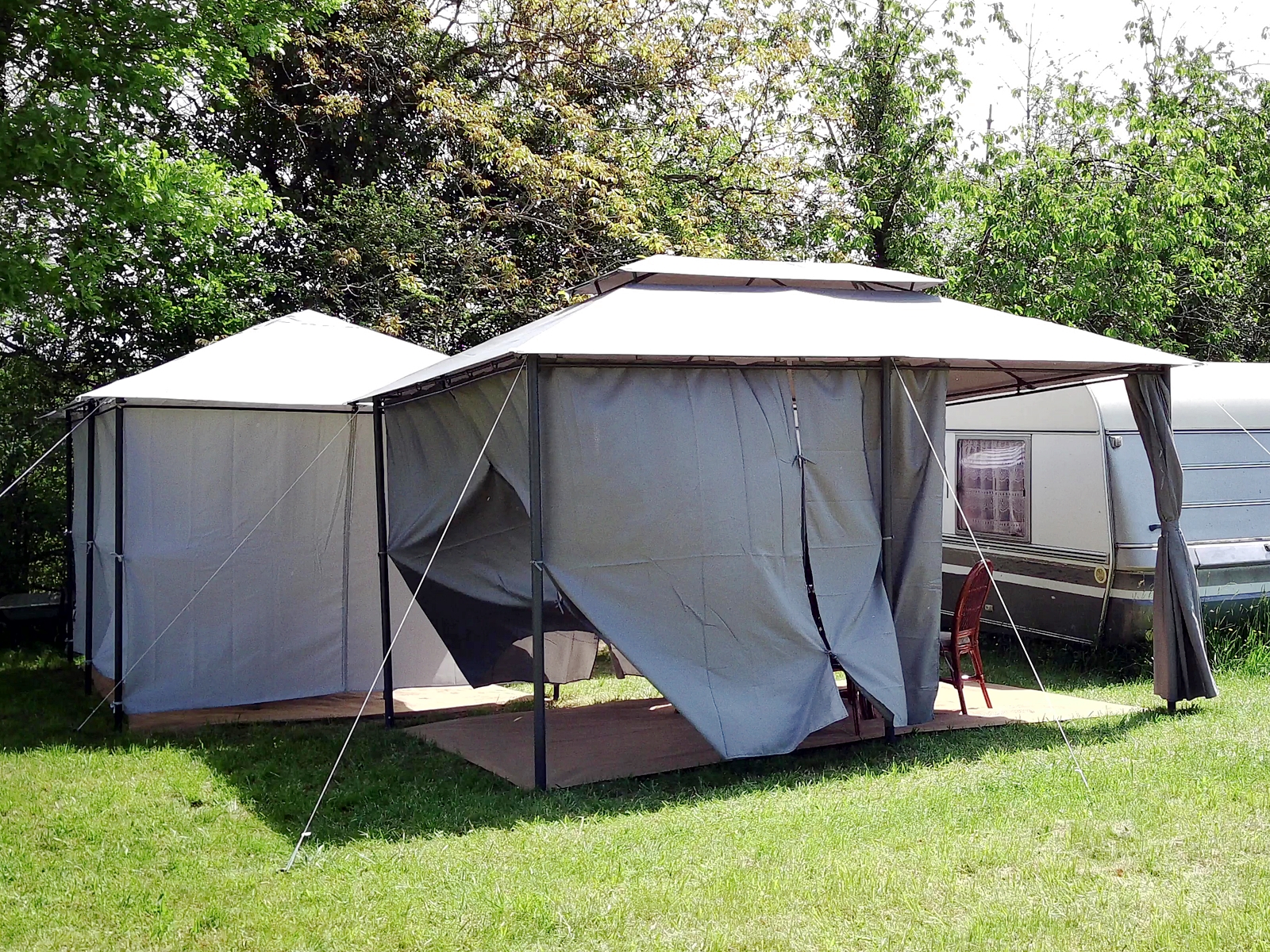
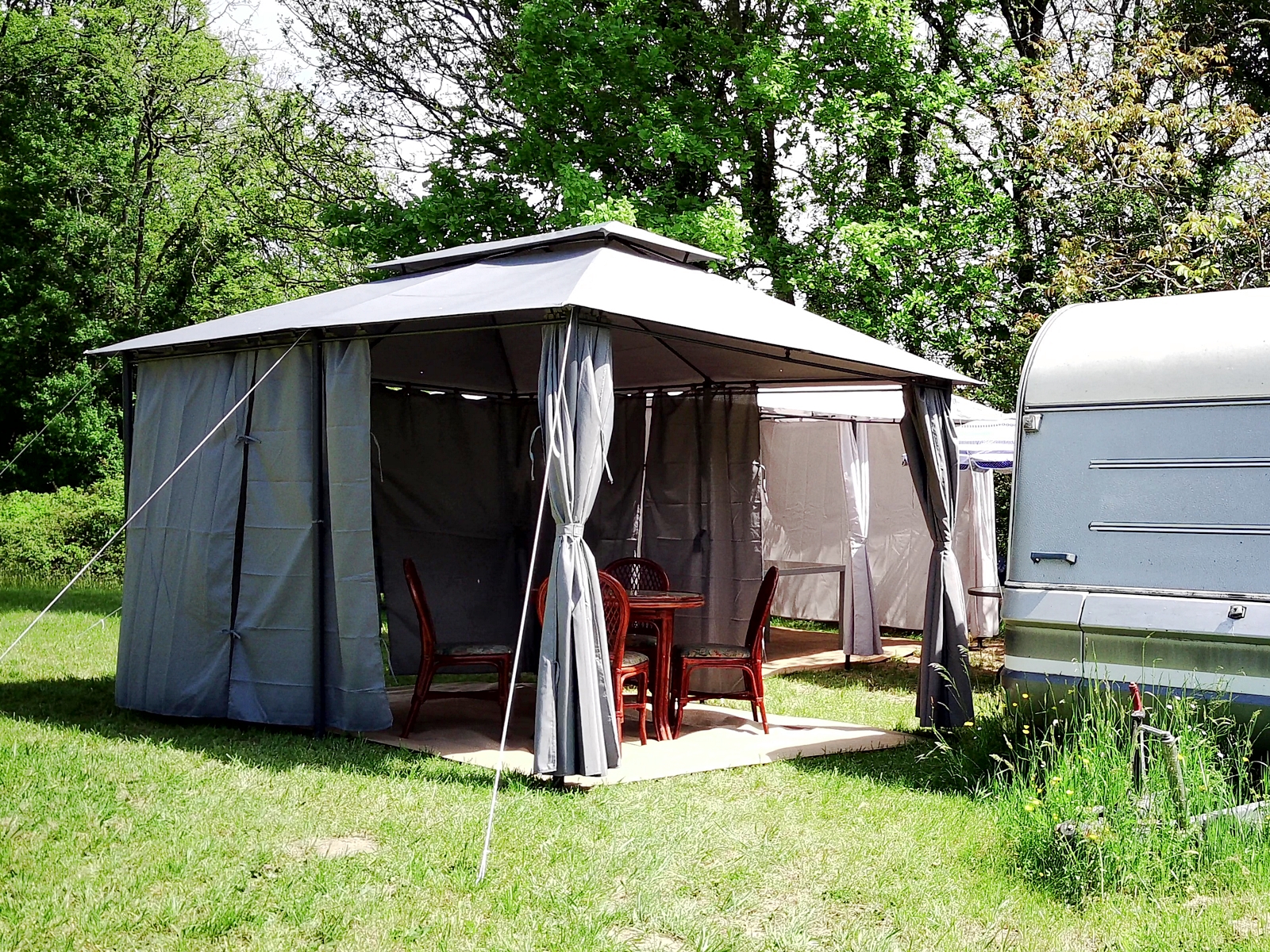
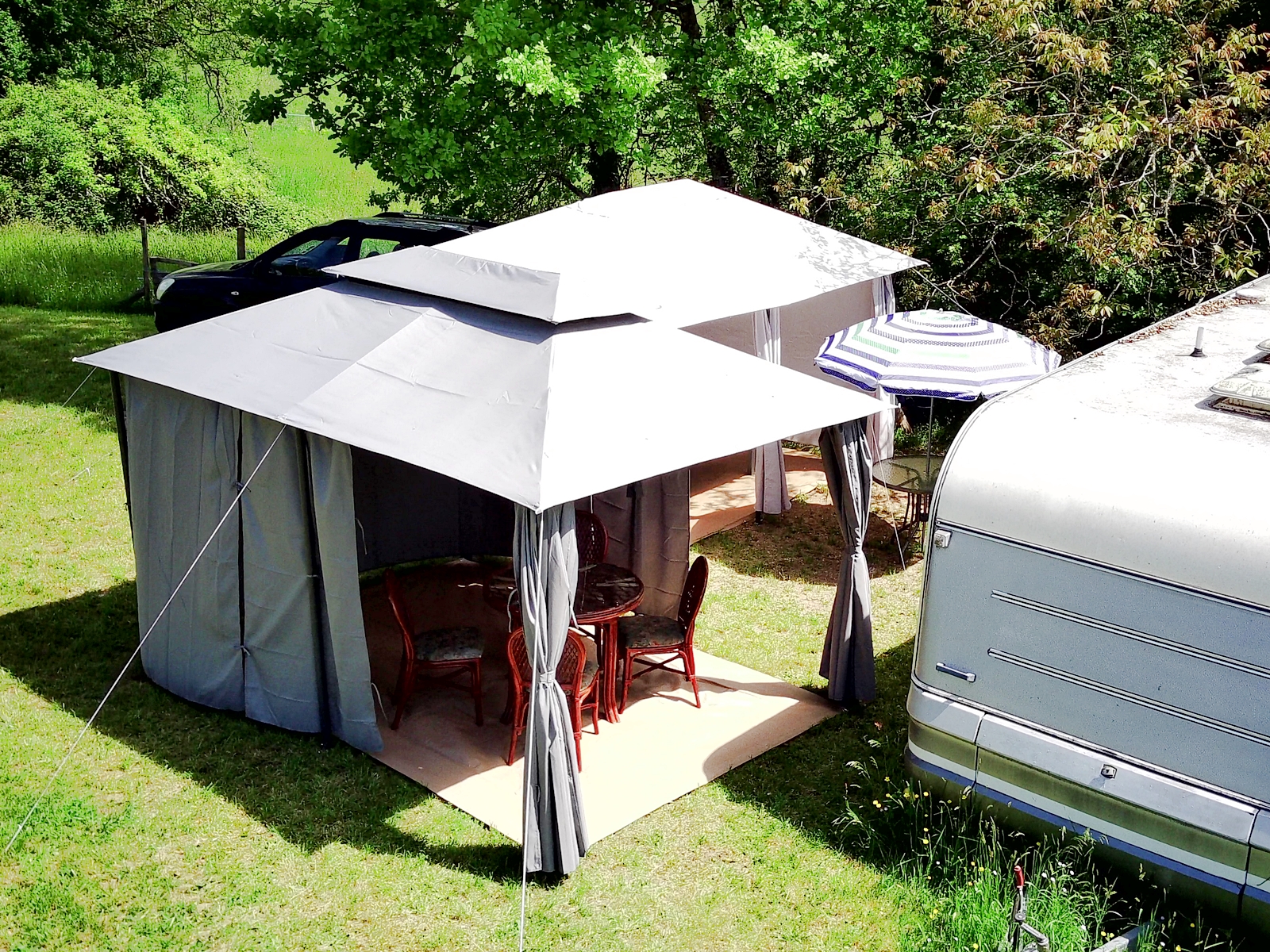
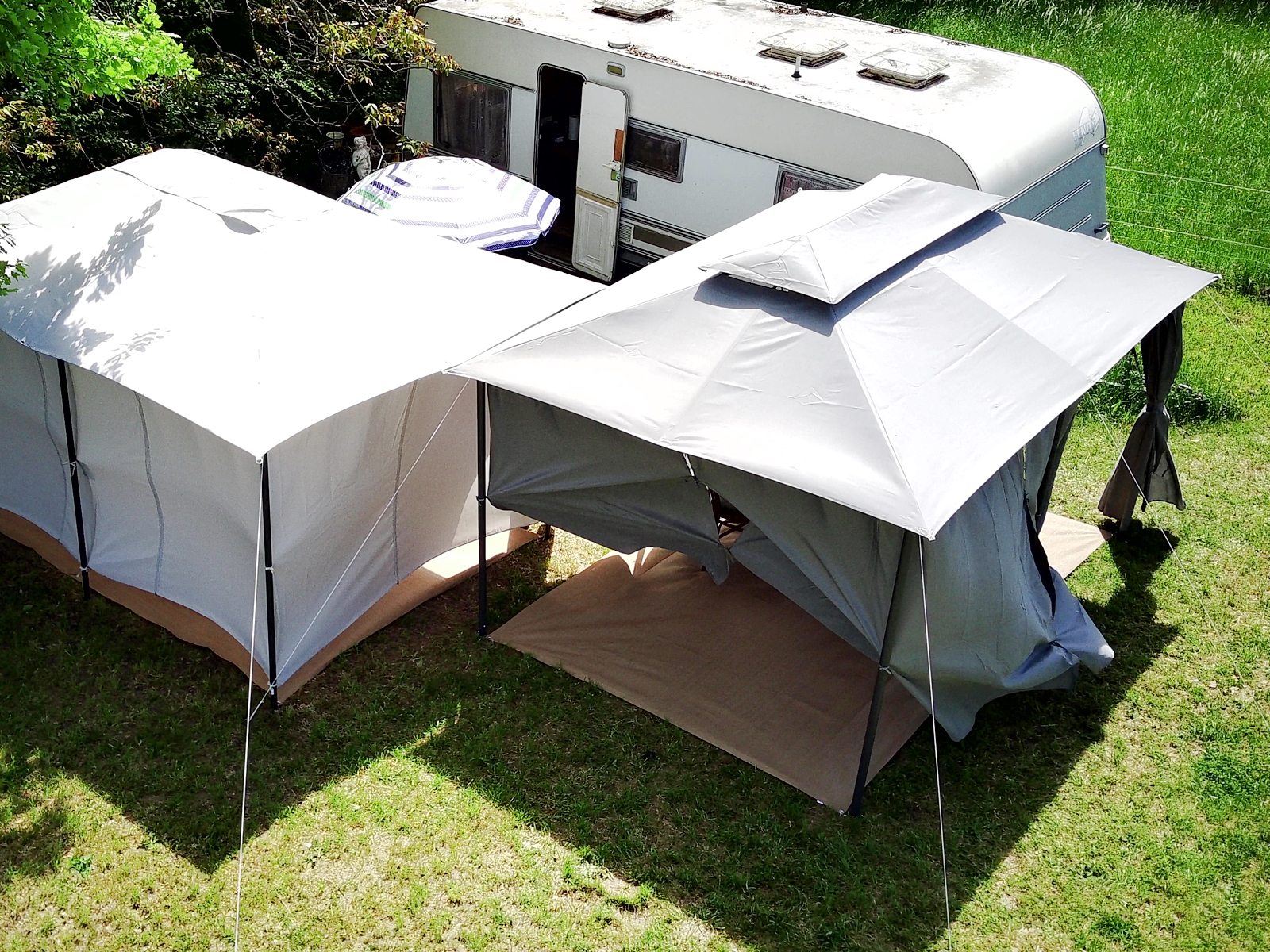
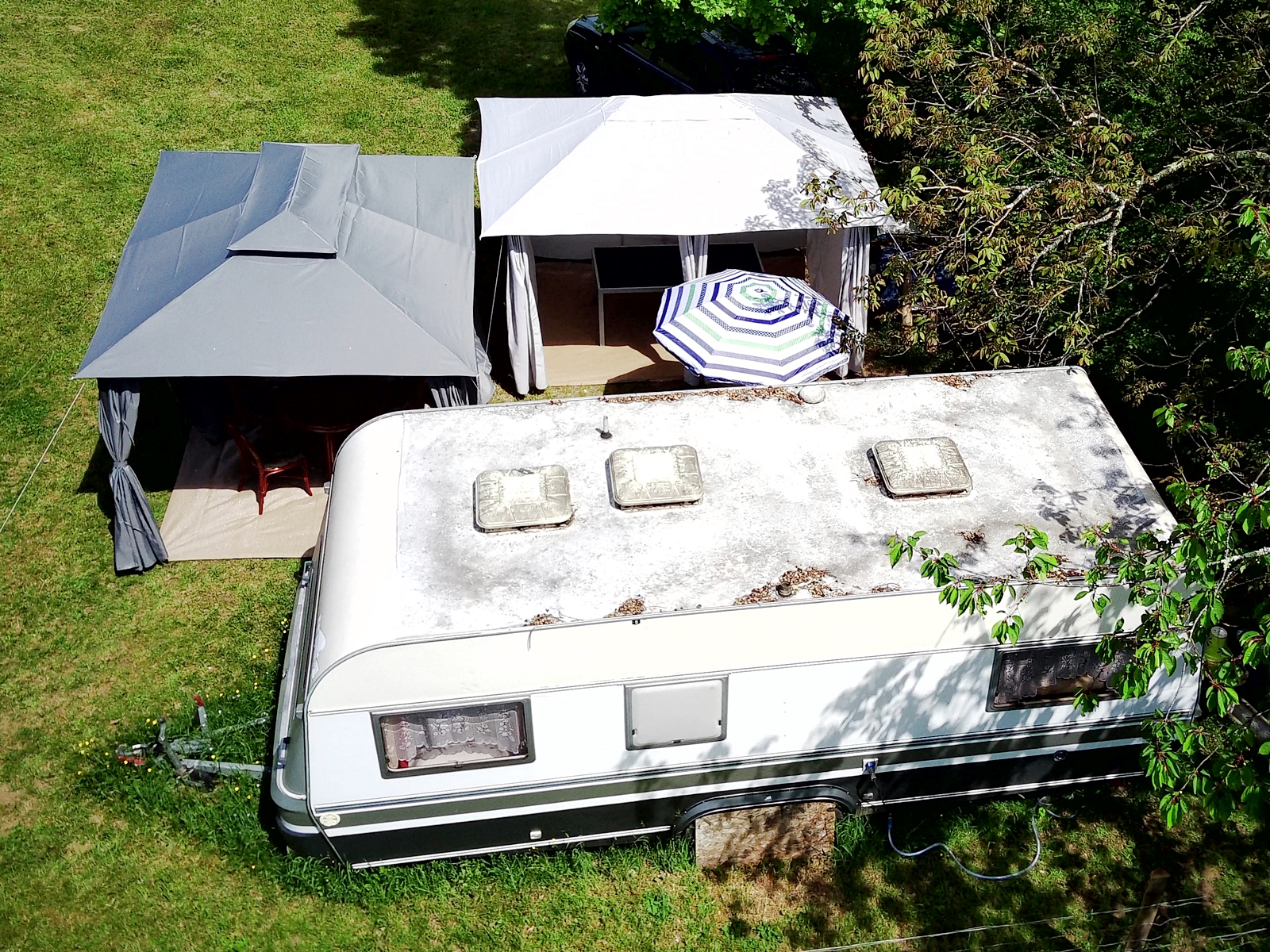
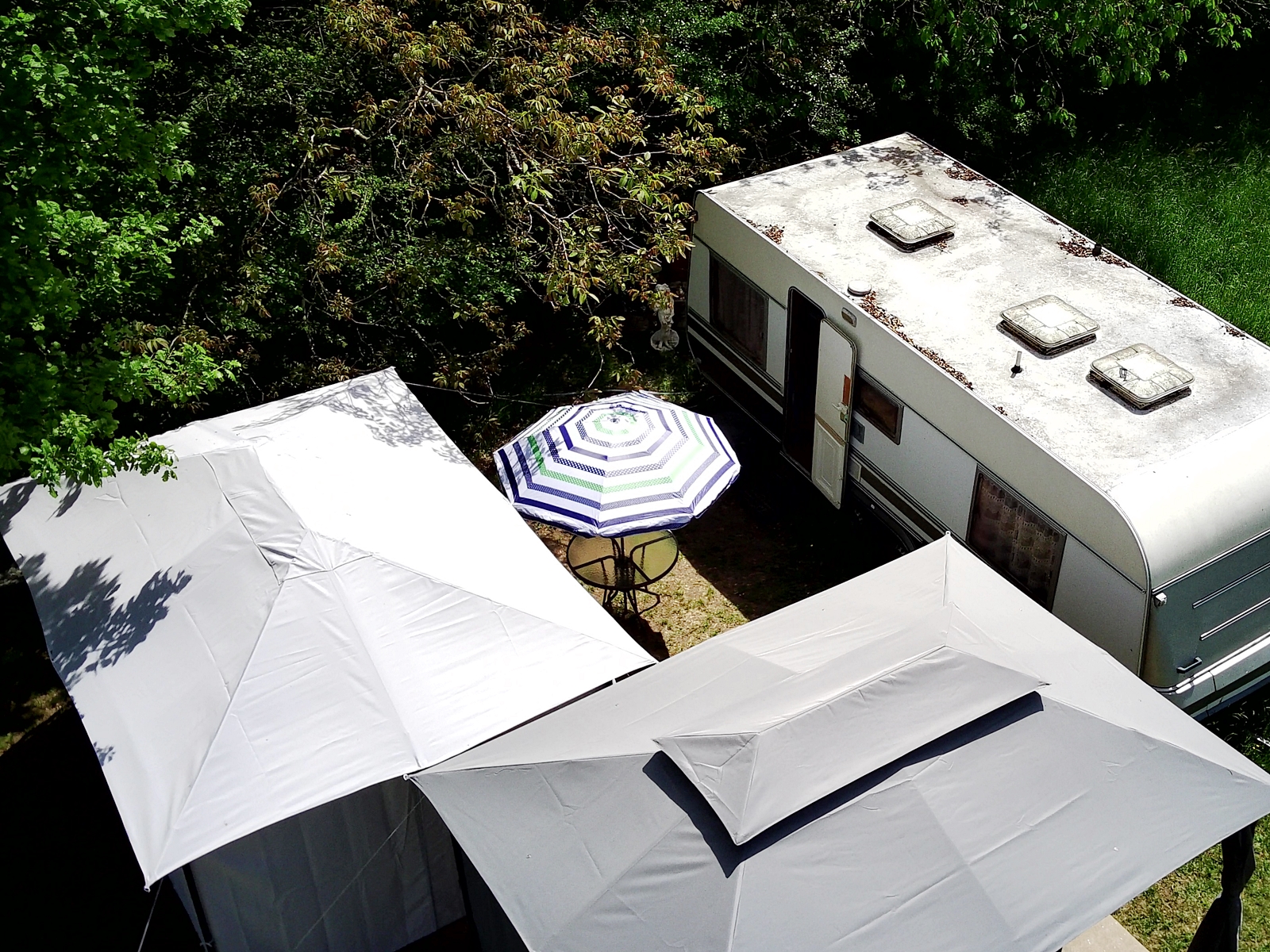
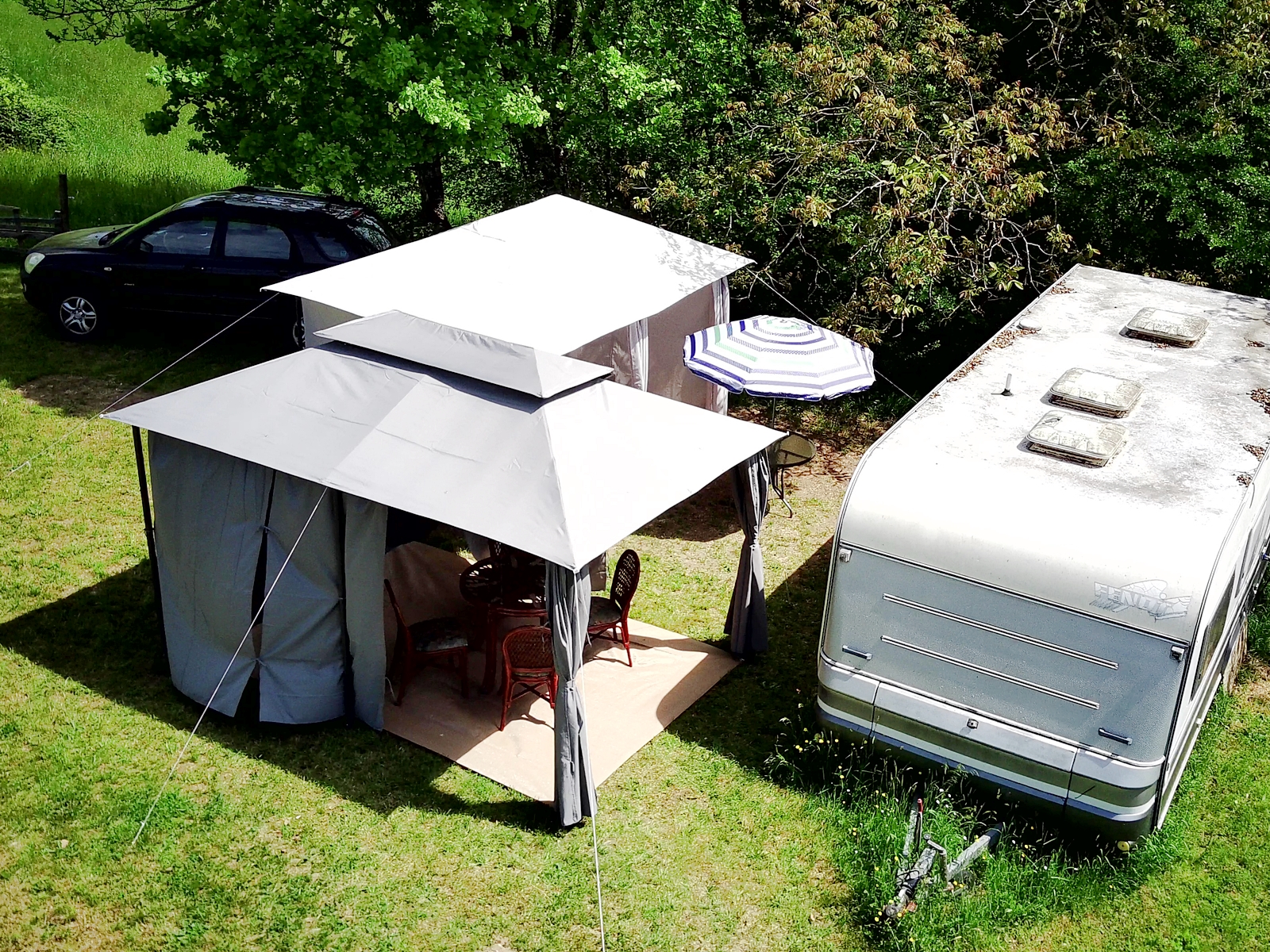
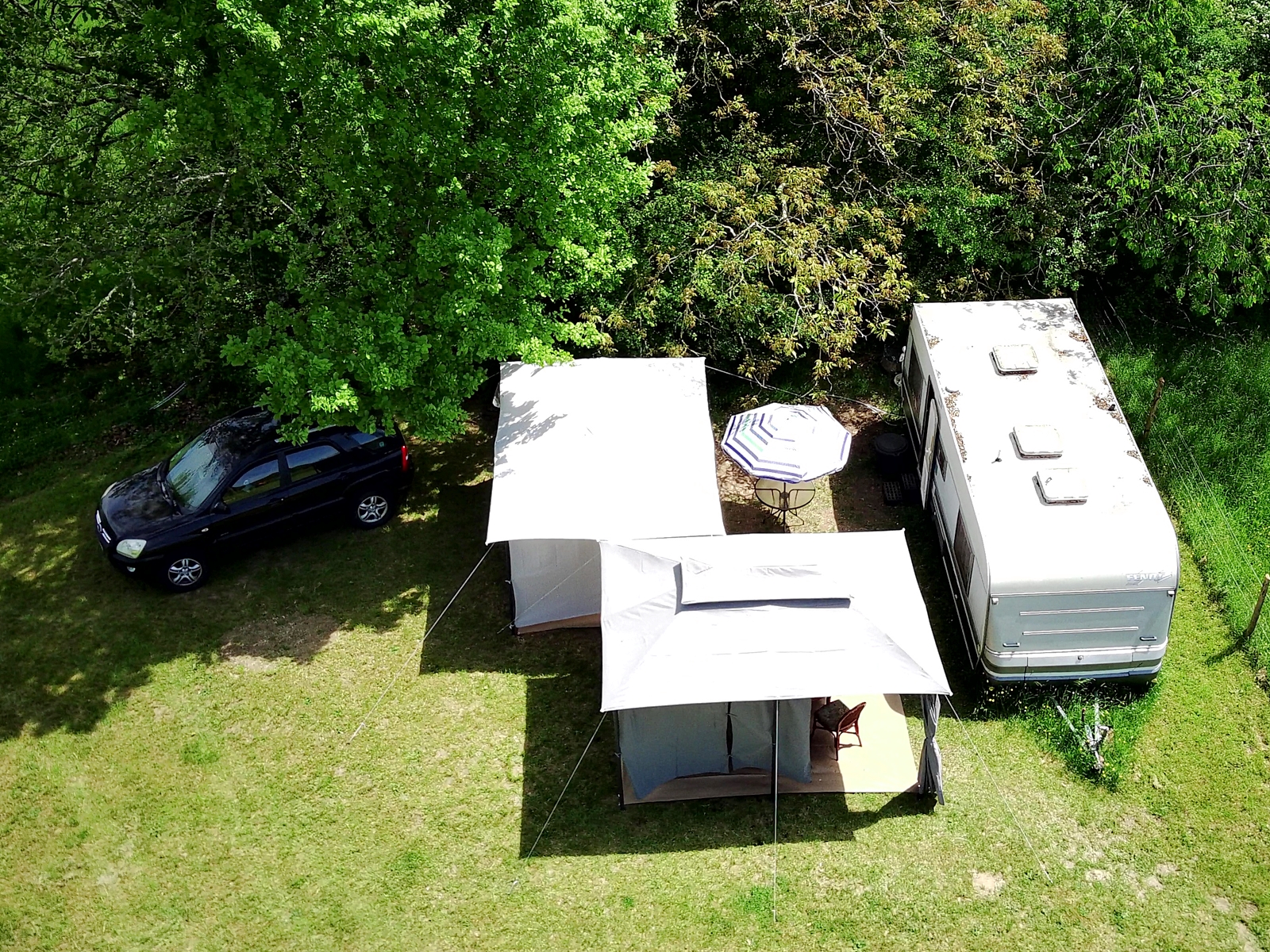
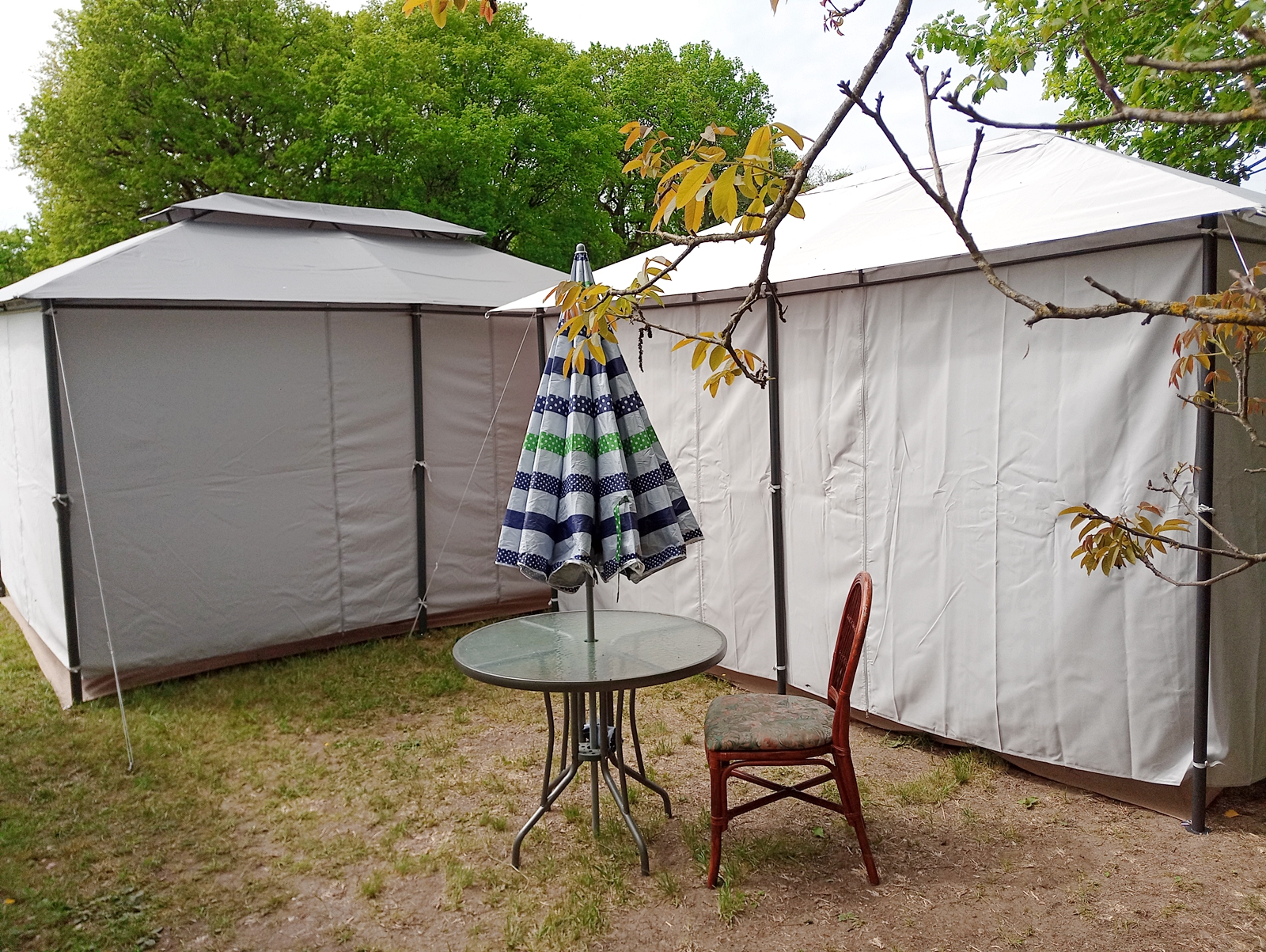
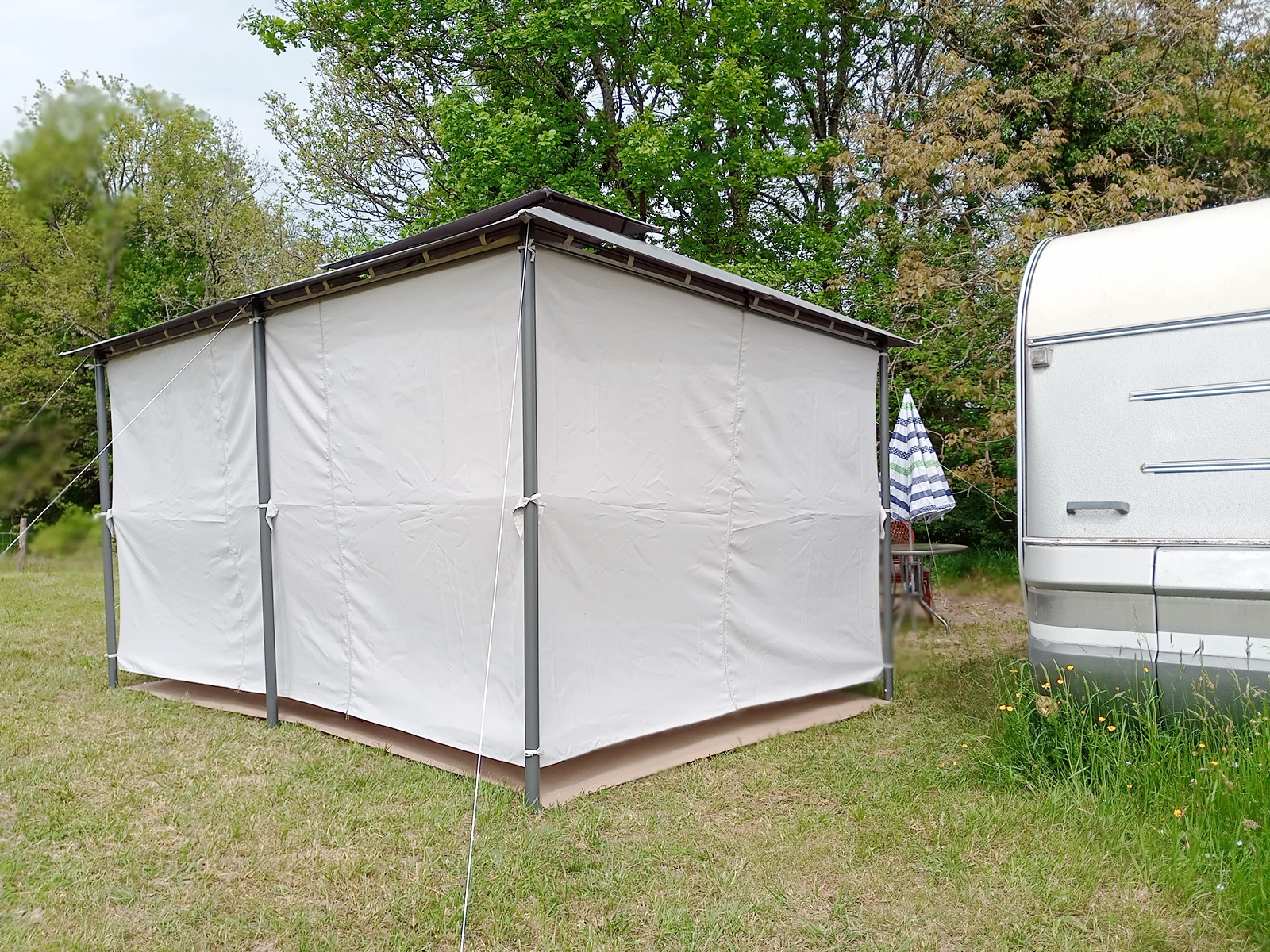
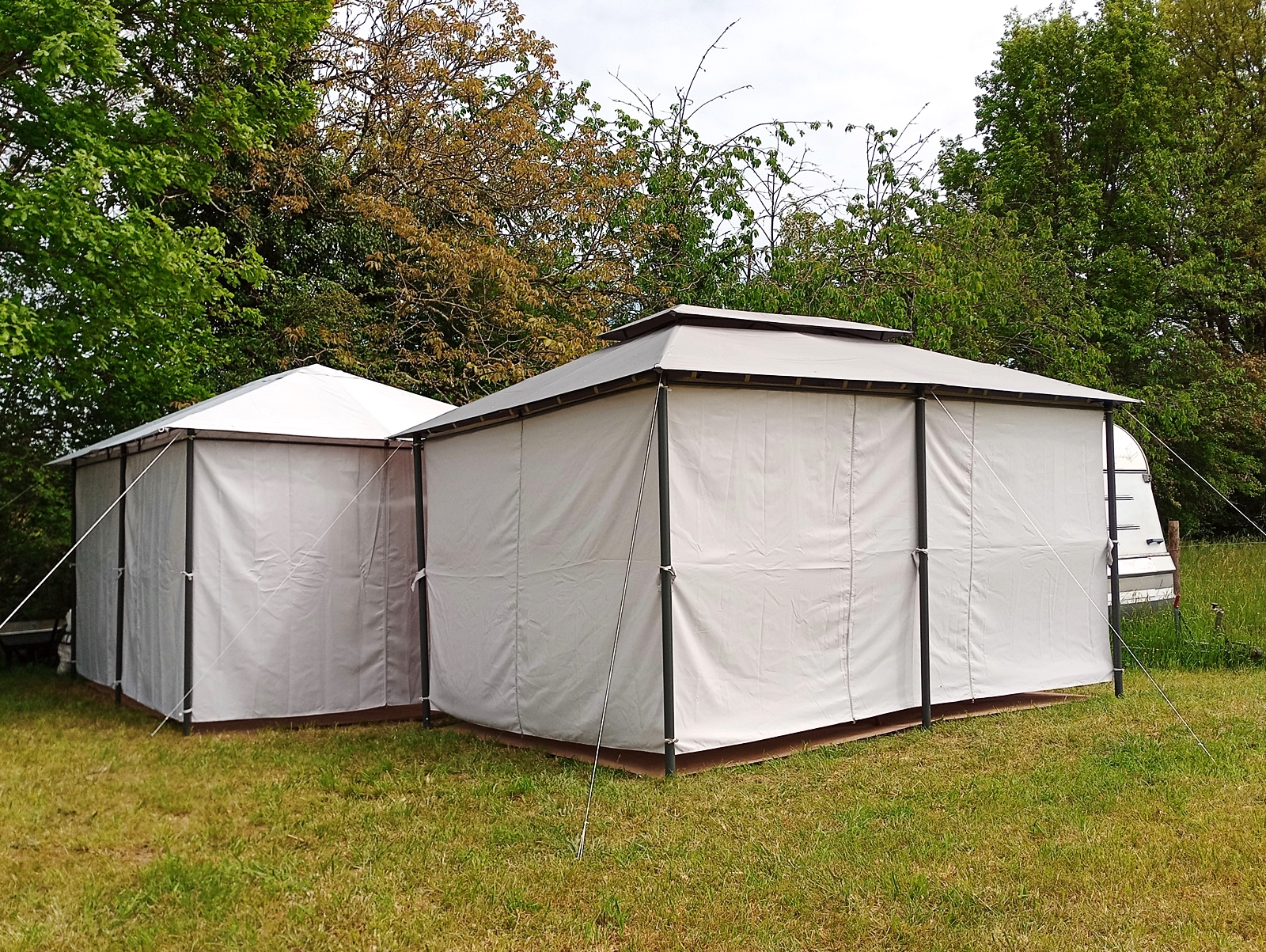
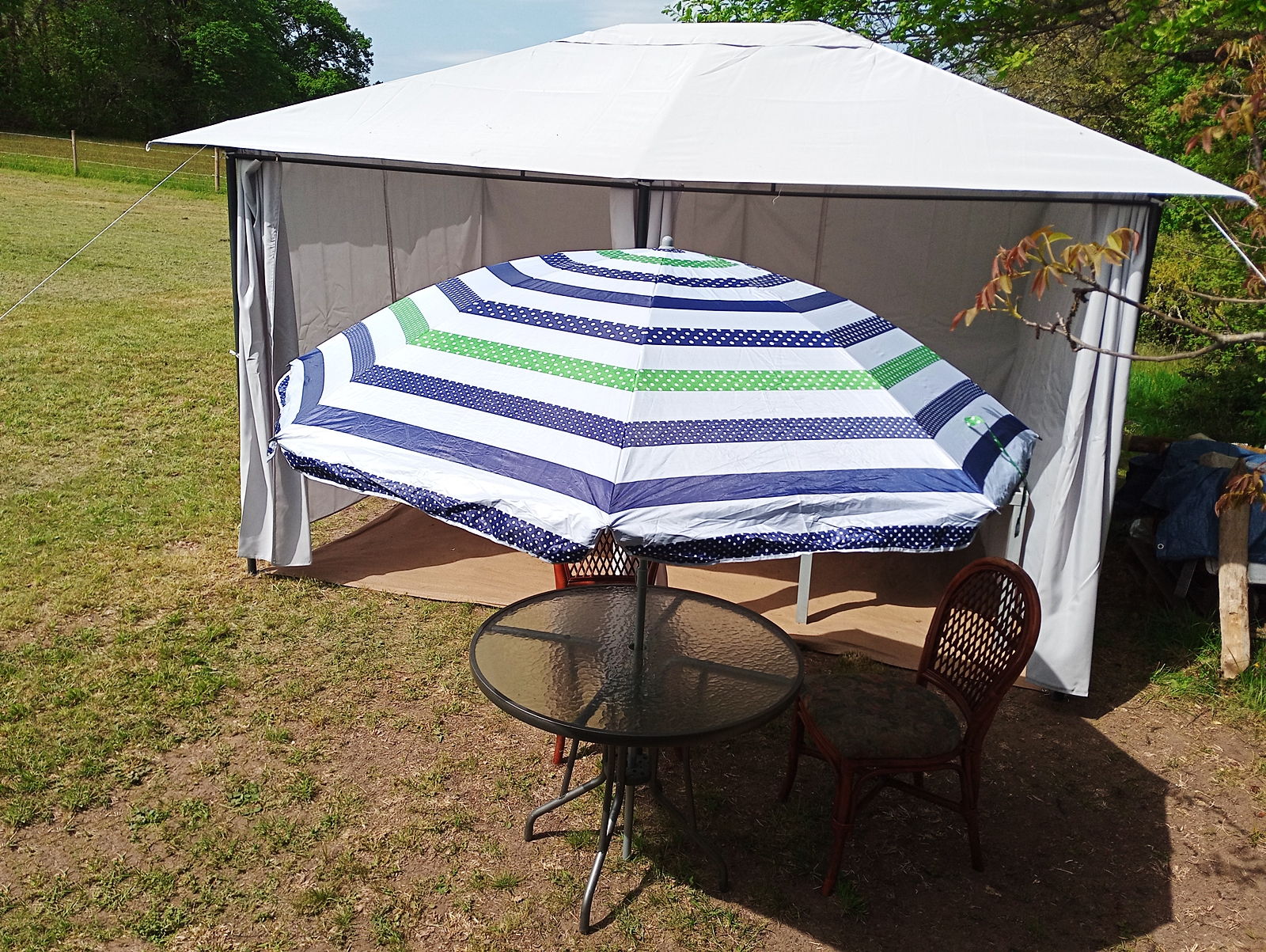
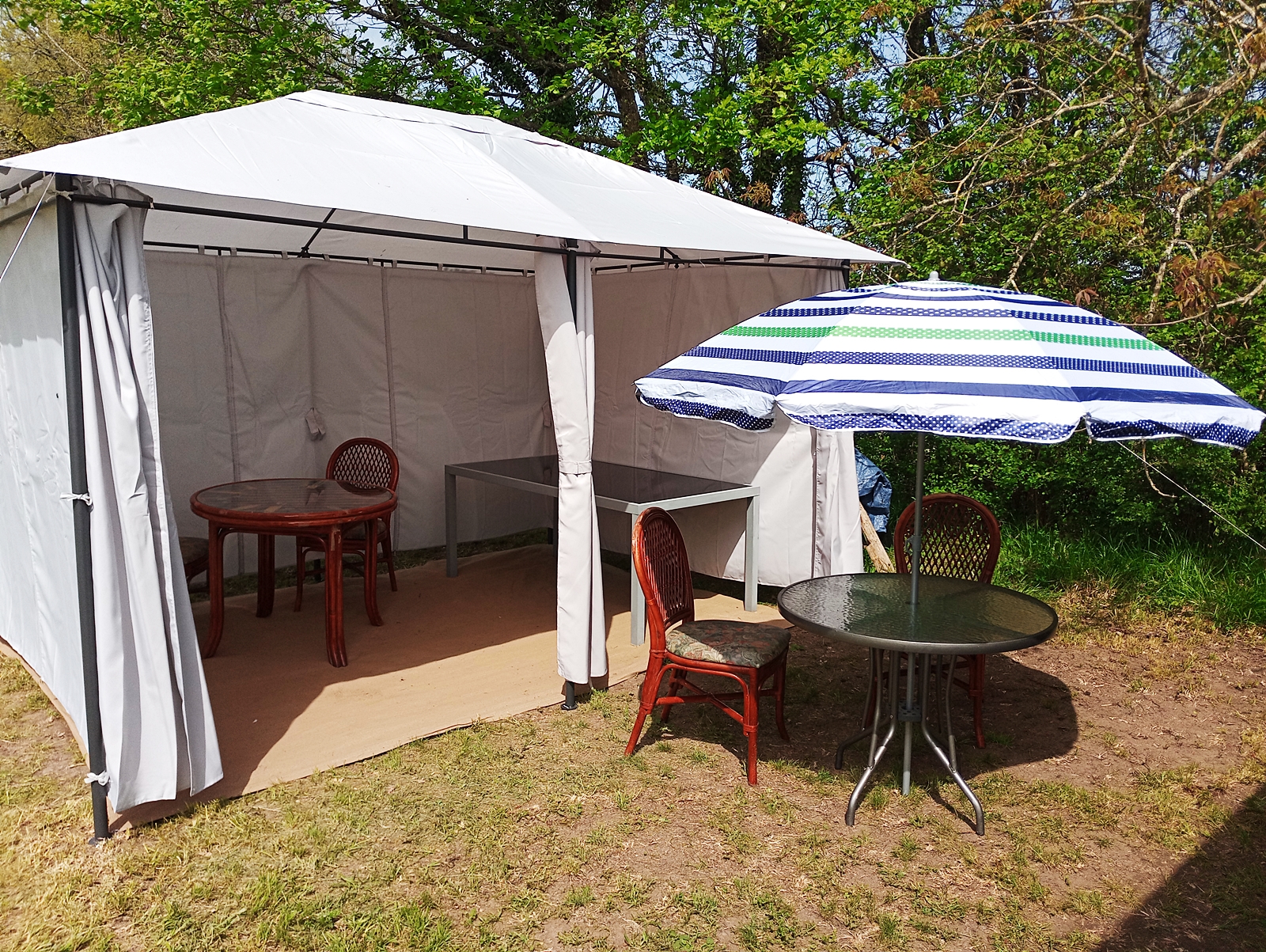
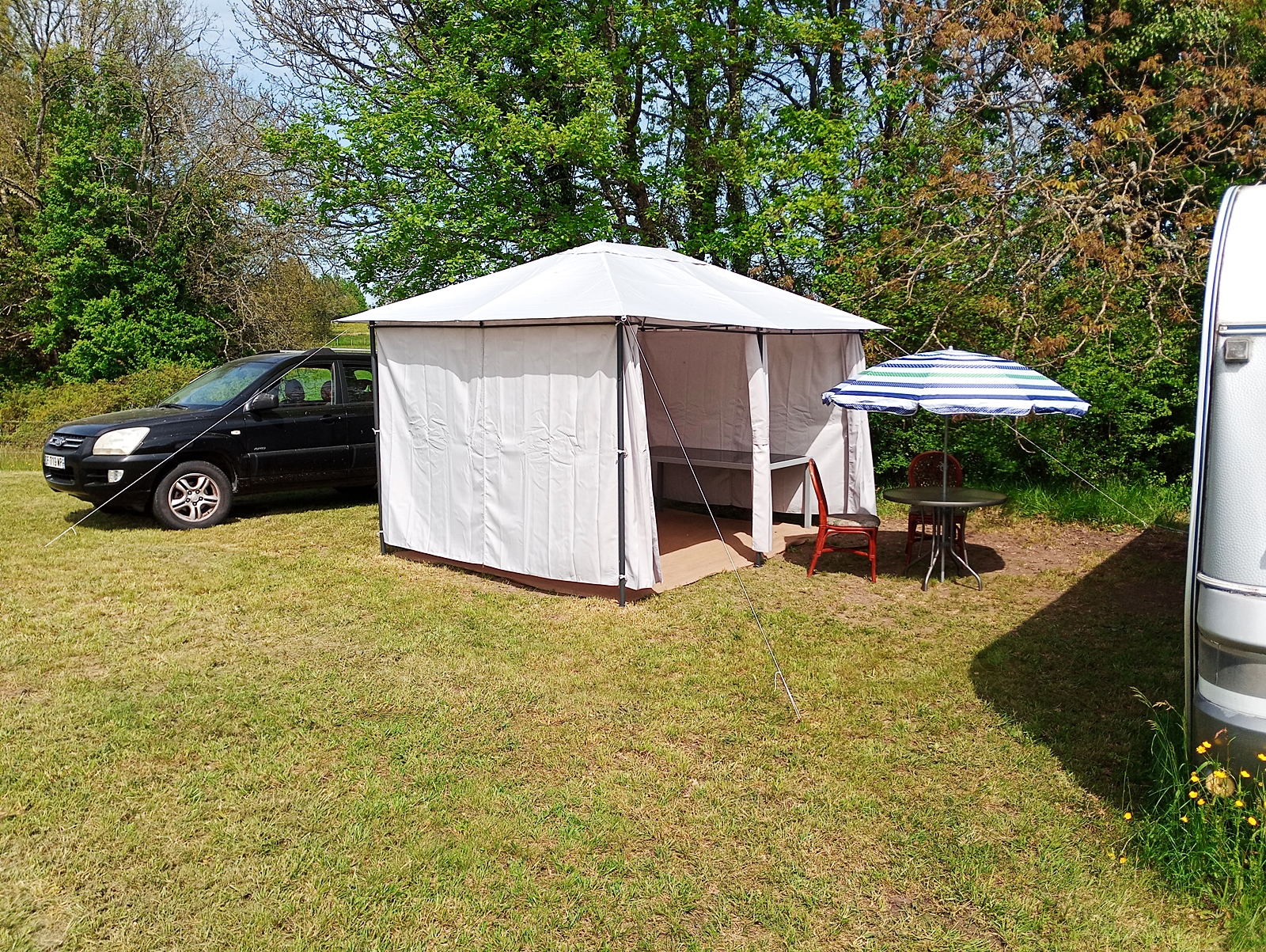
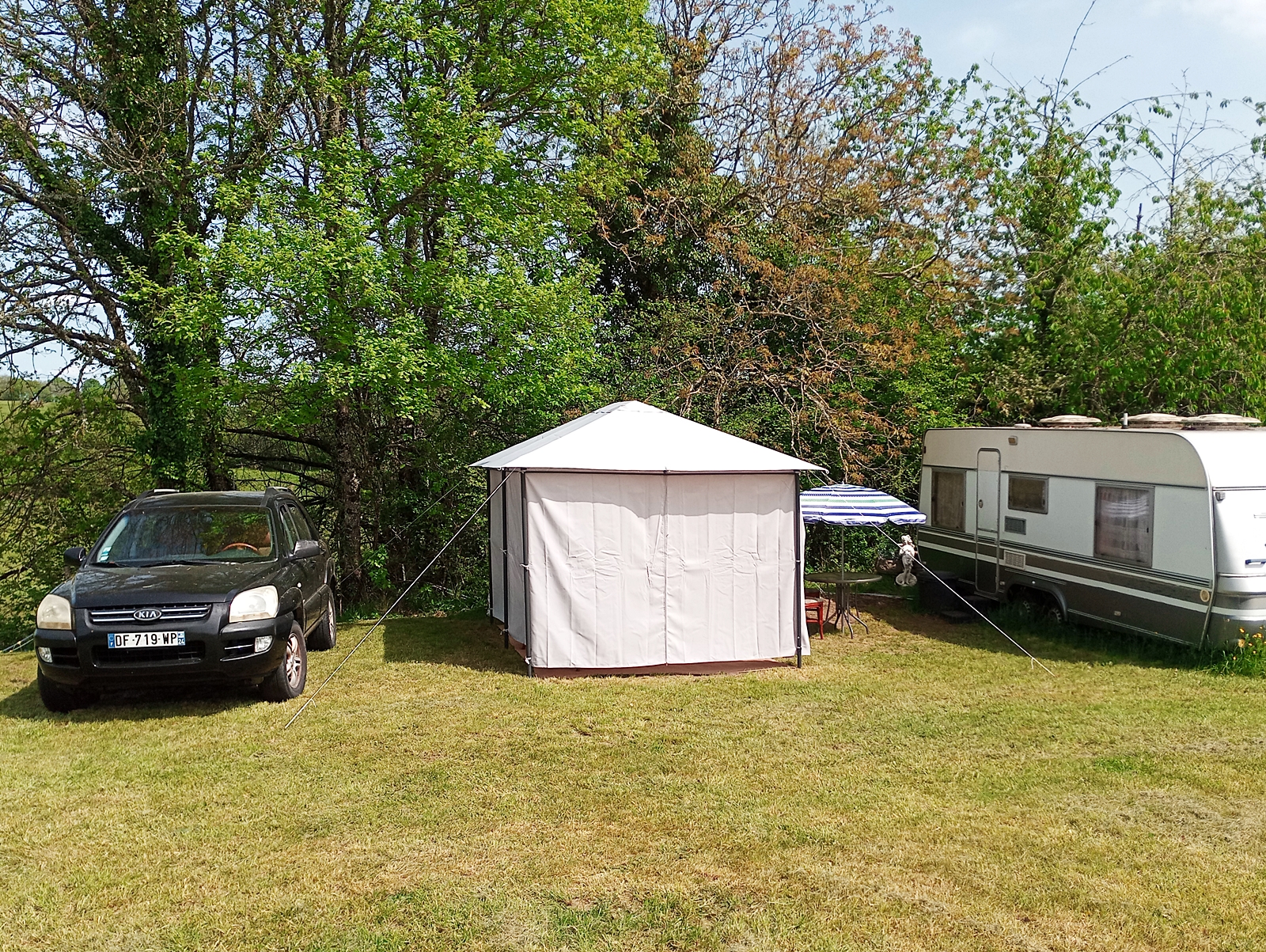
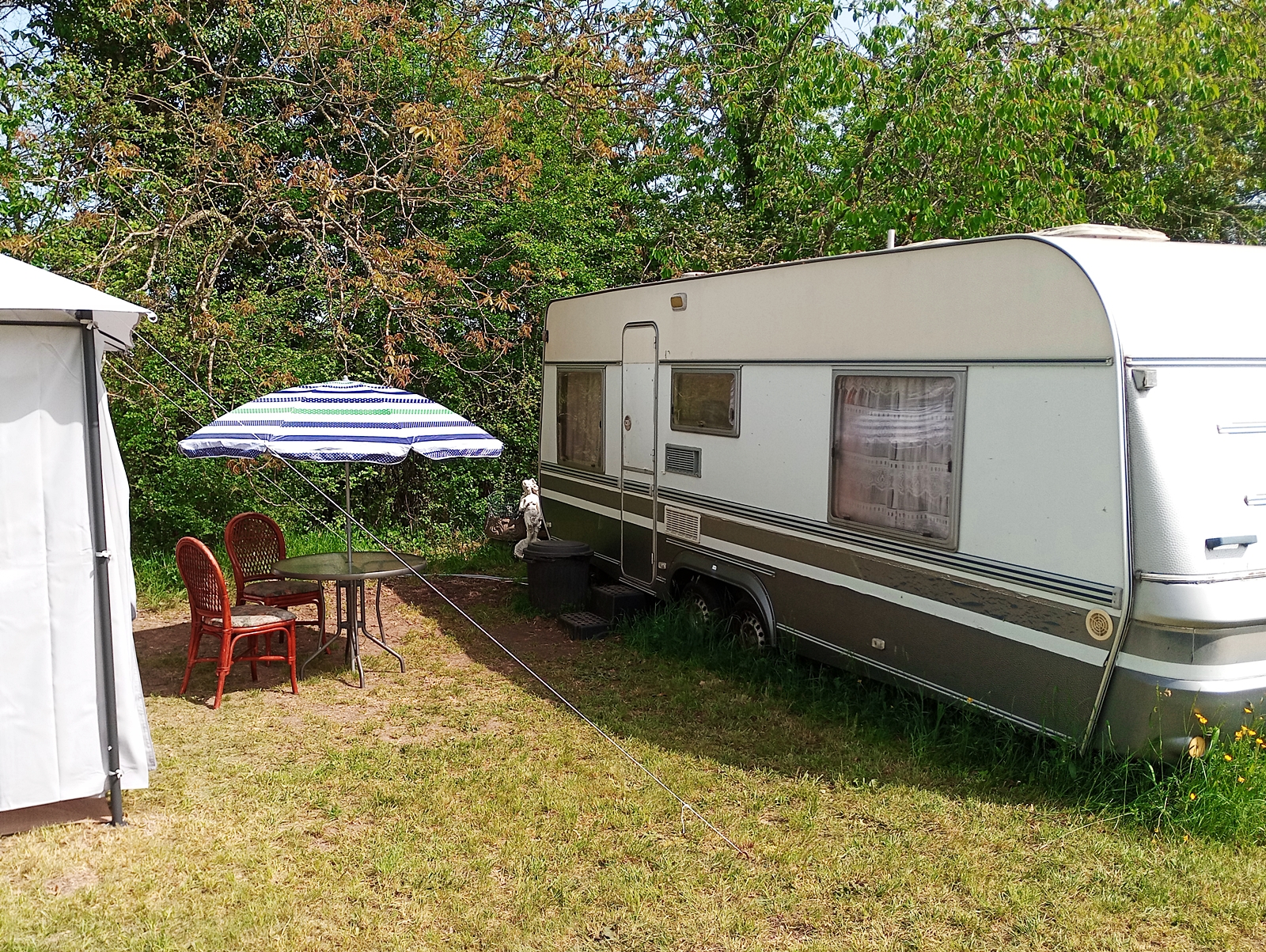
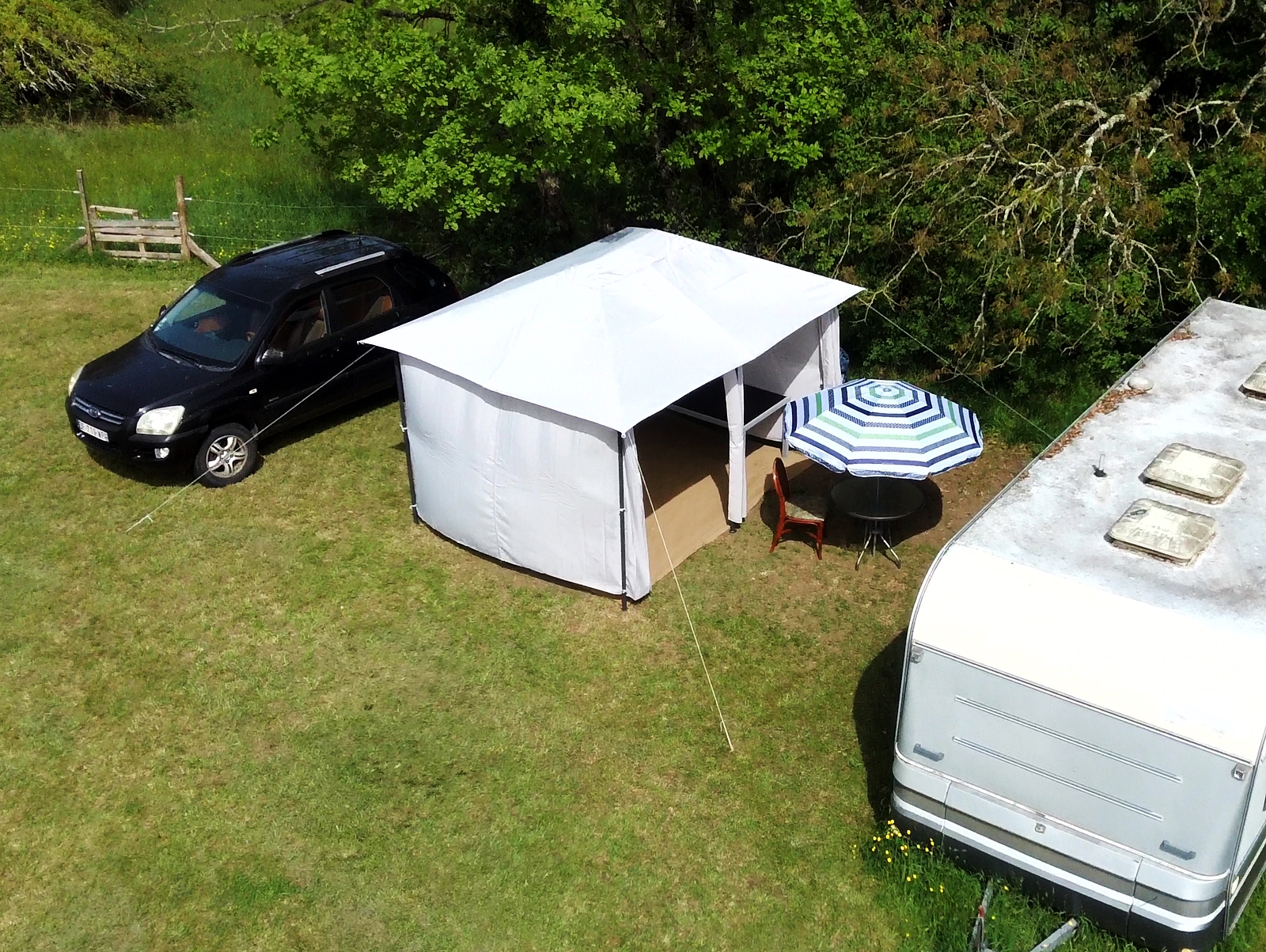
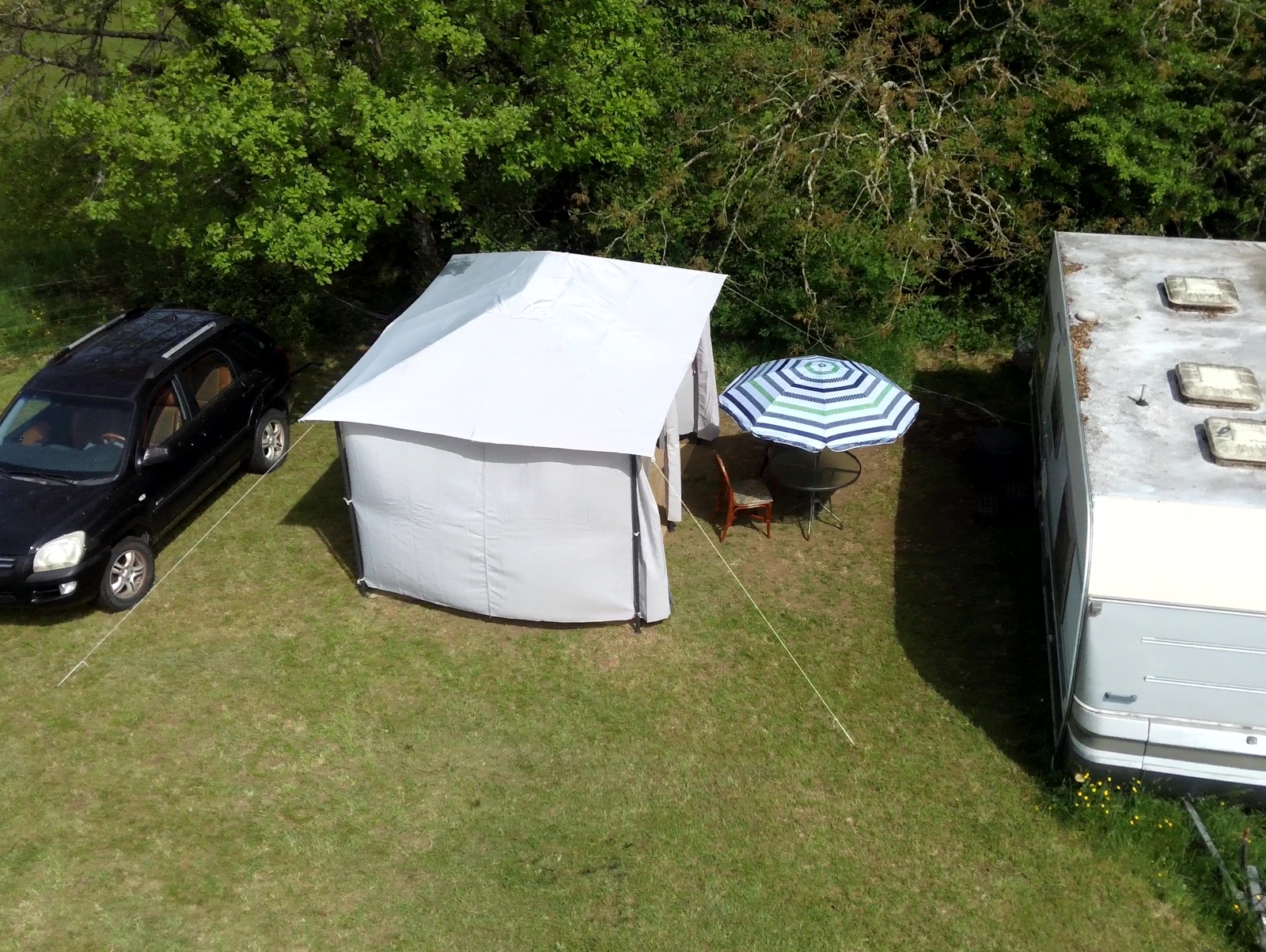
I then turned my attention to repairing the damage done to my ‘tonnelles’ by the destructive wind of a couple of nights ago. I wanted to do the best I could as we’ve got more thunderstorms forecast for later this week and more damage would be done for certain if I just left things flapping around as they were. The first job I did was to reattach all of the tabs that tie the side curtain corners to the metal uprights that had been pulled off, two on the corner of one ‘tonnelle’ and one on the corresponding corner of the other. That didn’t take long – just a few minutes with a needle and thread.

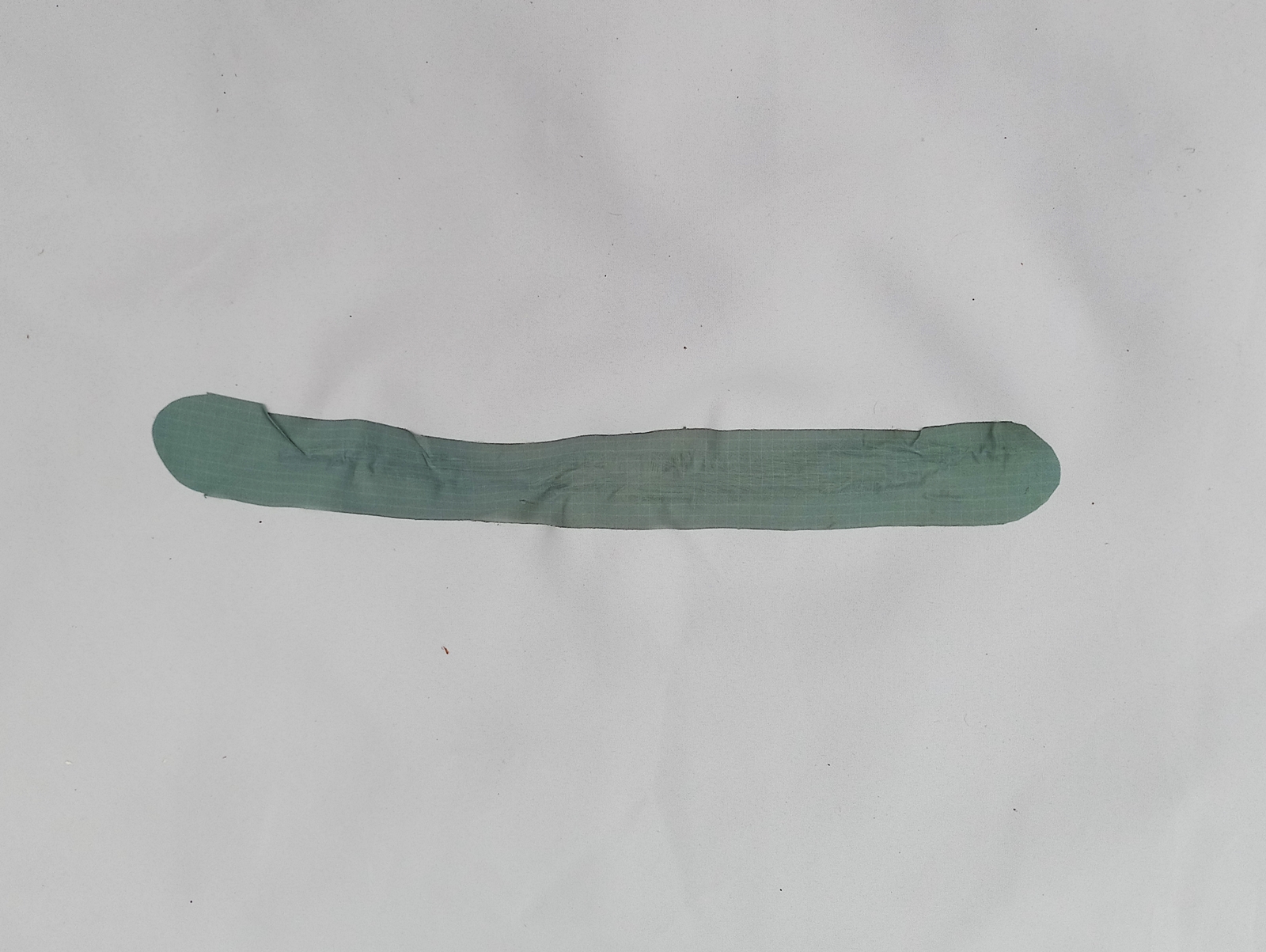
But that still left the problem of the 30 cm rip that had been caused to the roof of one of the ‘tonnelles’. The best that I could do was to dig out the grey sail repair tape from storage that I’d successfully used on sections of my X-Air that had subsequently flown all the way from England and is still in as good shape now as it was then, so pretty effective. It was supposed to be grey but has a distinct green tinge to it and my guess is that it was stored by the supplier with a sales code ‘GR’ and put into stock by someone who was colour-blind! But no matter, it would have to do and would at the very least solve the problem, as it had for the X-Air.

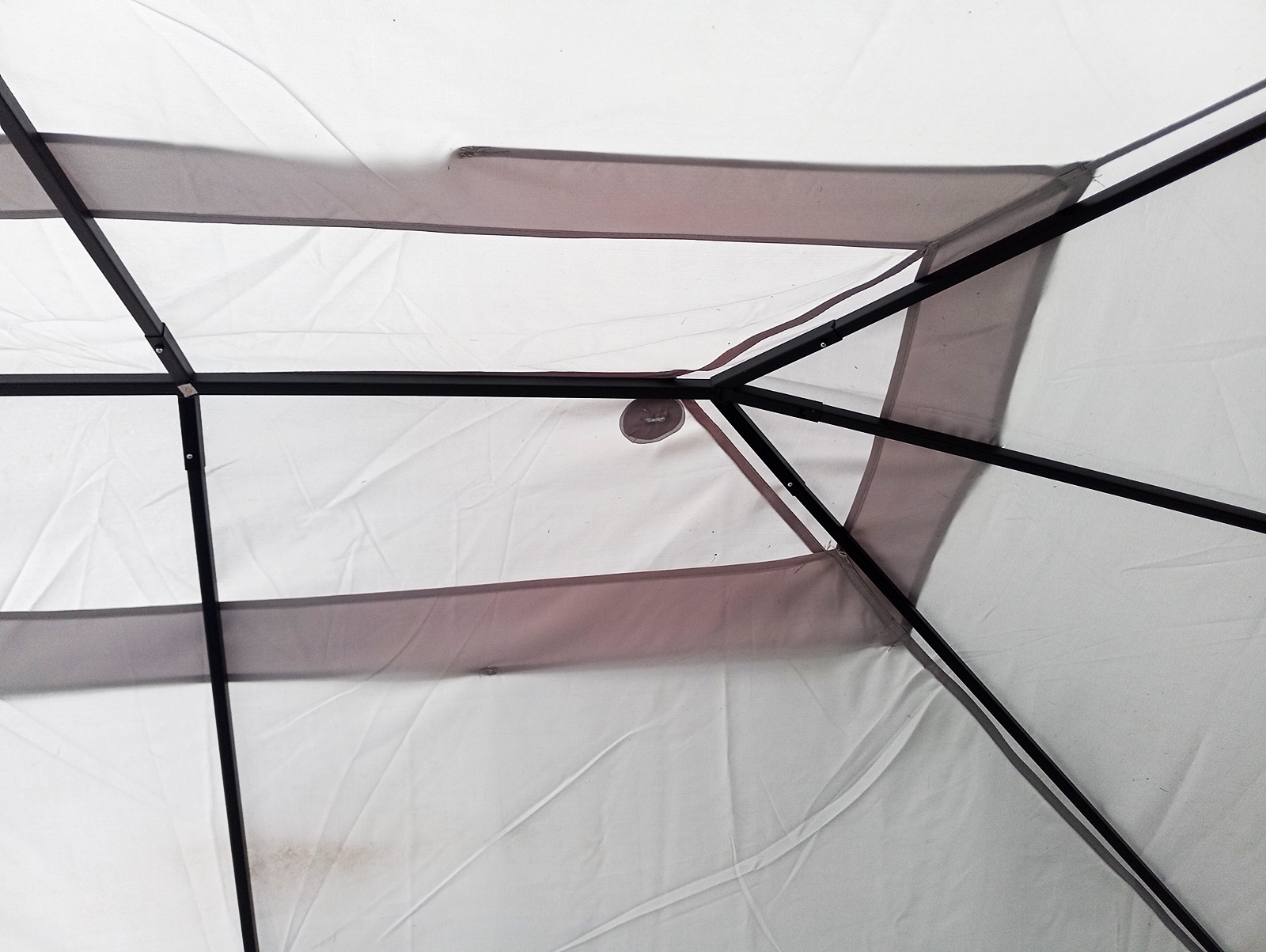
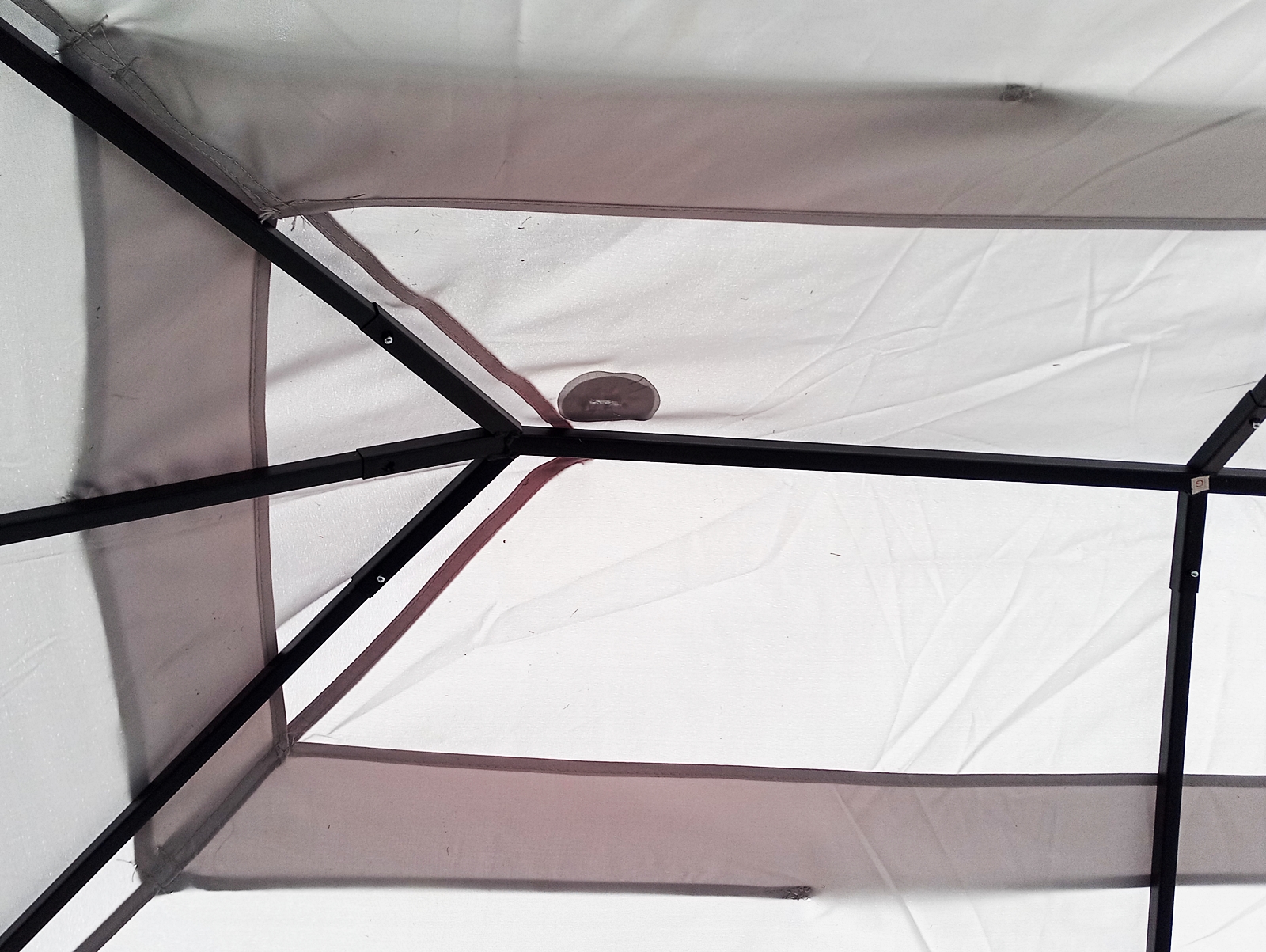
Here’s a shot after I’d repaired the rip. I did it while the roof was in place and wasn’t very happy with it because the wind was blowing a bit and the edges of the rip hadn’t come close enough together for my liking. The shot was taken with the roof removed and lying on the ground.

null

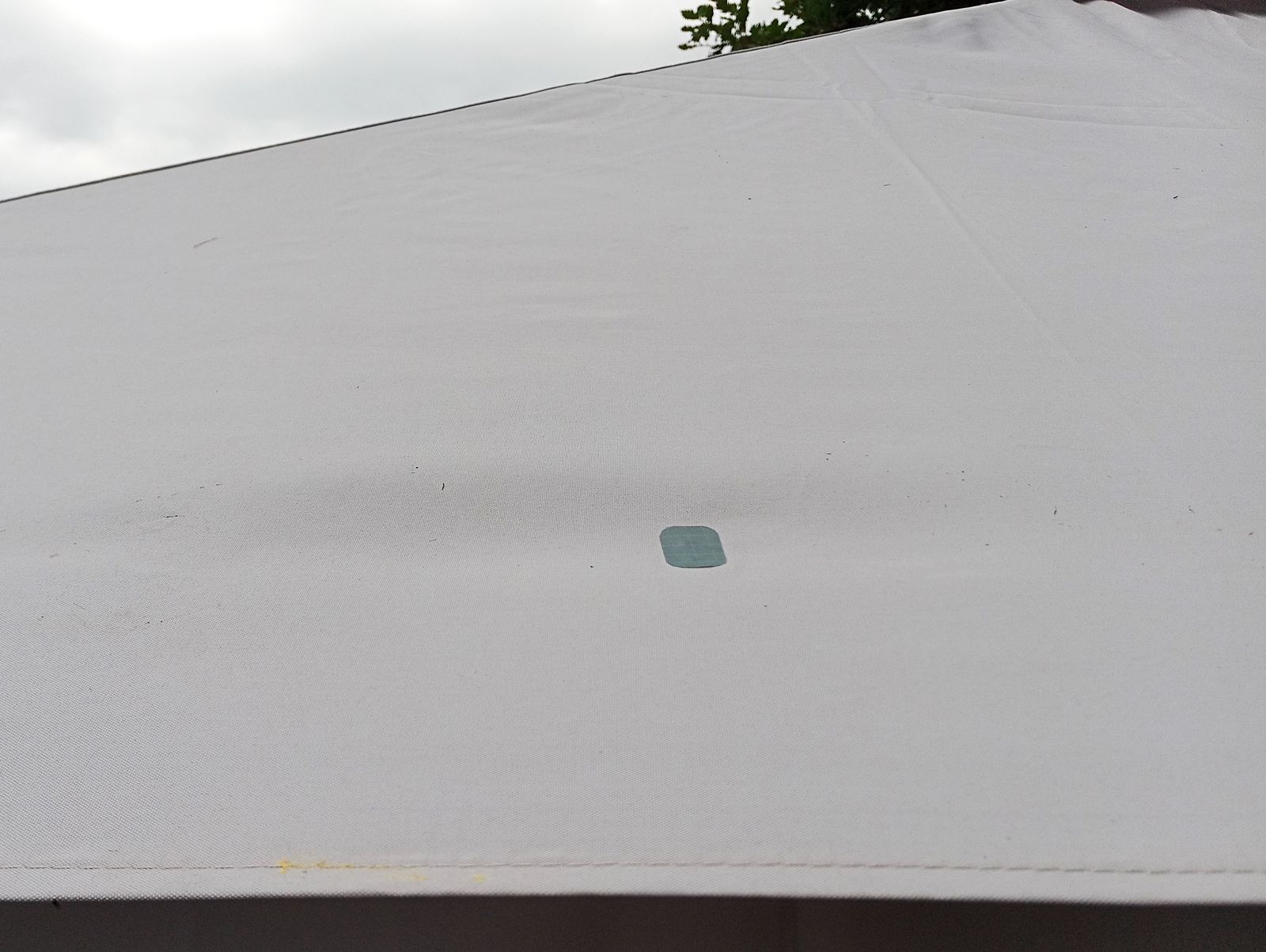
The reason why it was on the ground was because I also decided to repair the damage to the original ‘tonnelle’ roof that was damaged when I was in England the last time, when it had only been up for a week or so. I recalled that it had been pierced by a small section of broken framework and the damage wasn’t that great, and sure enough I was right. So I fixed it with just a small length of repair tape and put that roof cover on in place of the one with the large rip in it, and here are some shots of the result.

null

null

So the effort of swapping the roof covers over was well worth it and the damage is now hardly significant and also hardly noticeable. I also noticed another tiny tear close to one edge and while I was at it put a tiny patch over that as well, just in case.

null

So I’m now back to having two ‘tonnelles’ in reasonable shape again which I hope will see me through the stormy weather that is forecast to come sweeping in again this week. Mind you, as I said in an earlier post, they are not like heavy-weight marquees and are not designed to be subjected to a constant battering, so I really hope that we get some respite pretty soon as otherwise I can’t see them getting through the summer 😐

My two new babies

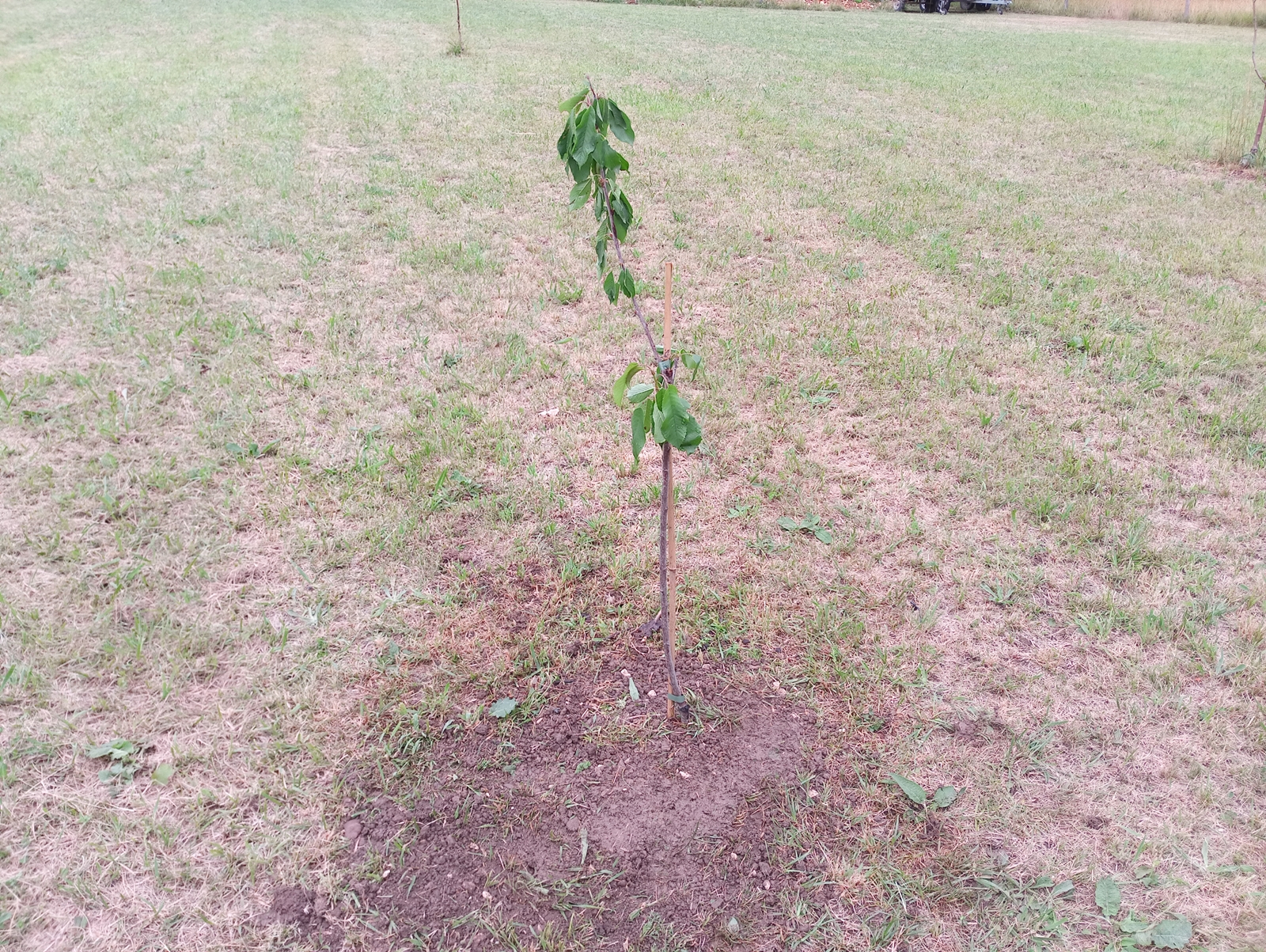
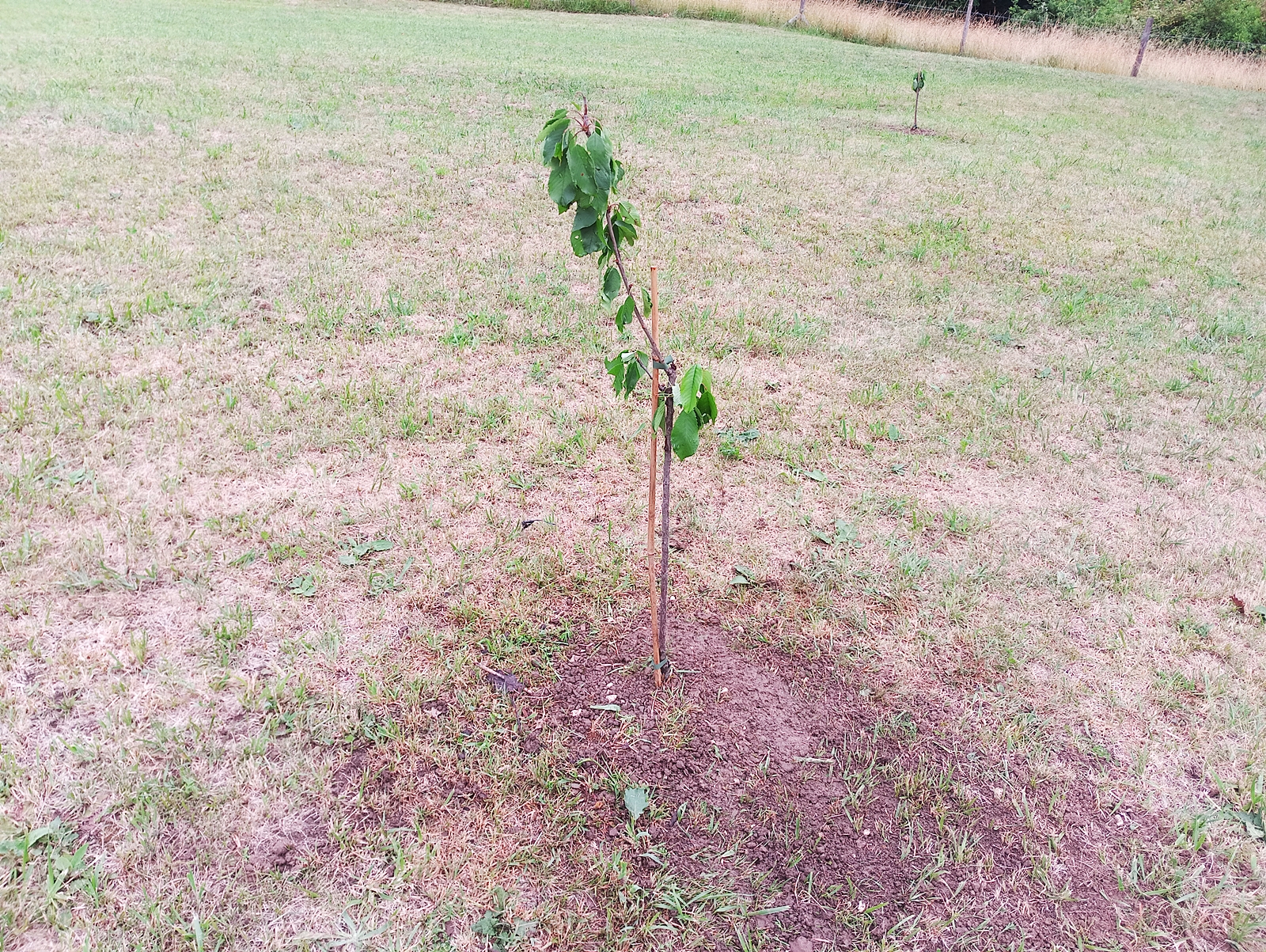
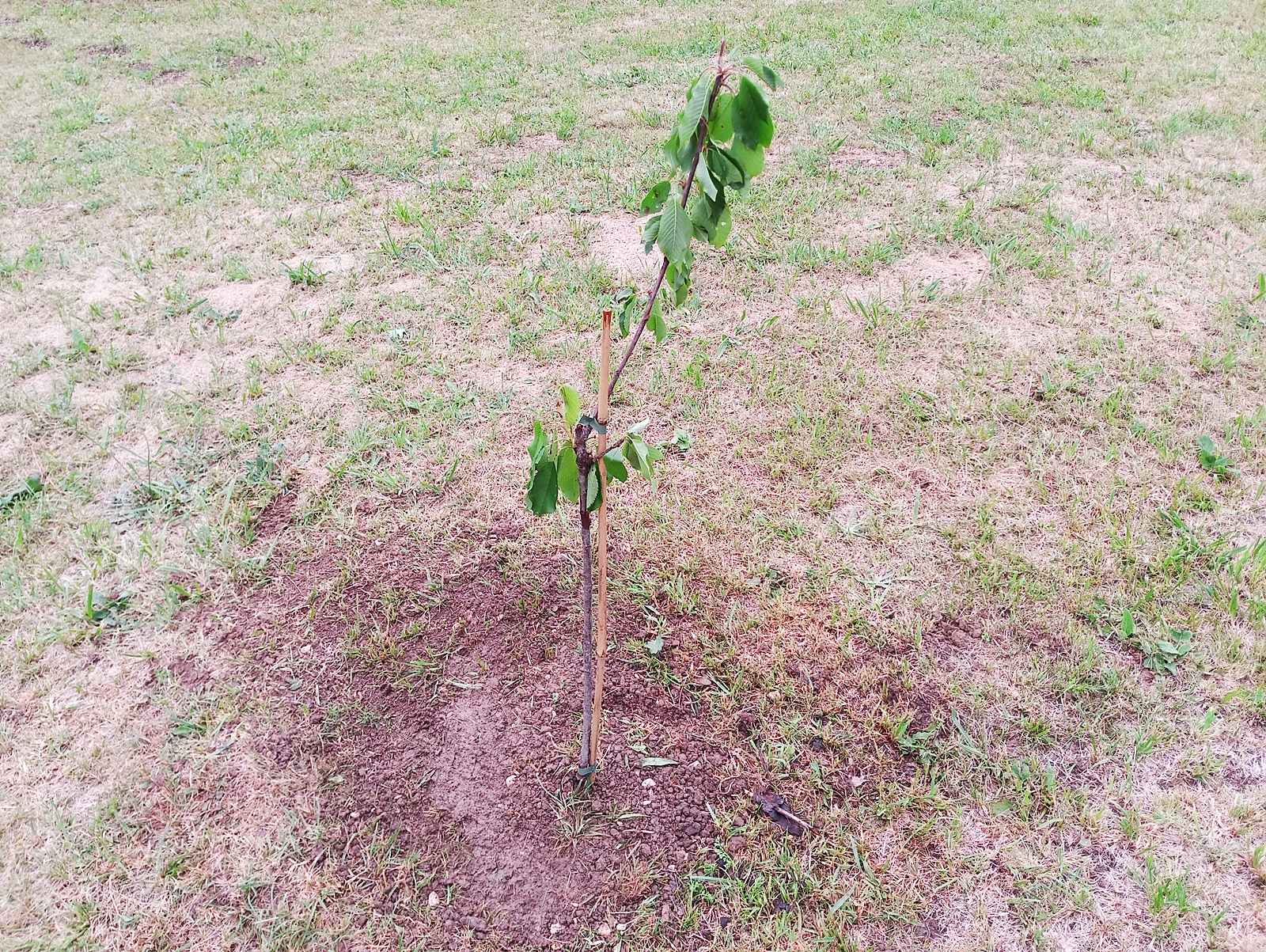
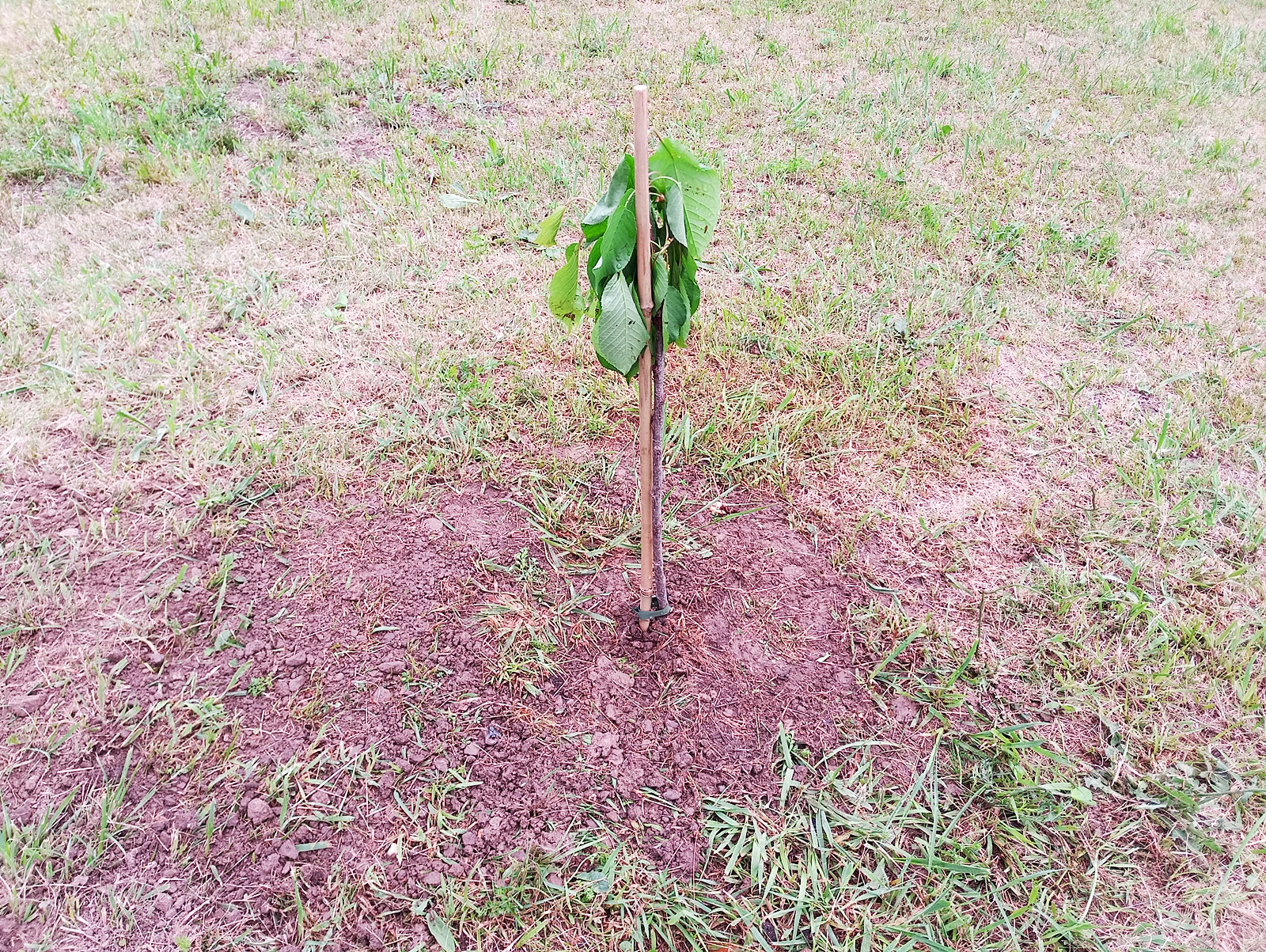
Delivered this morning, by GLS. They are two little cherry trees, one is called ‘Cerisier Bigarreau Hatif Burlat’, and the other ‘Cerisier Summit’. They were delivered without labels so I don’t know which is which, but it doesn’t much matter as they will both yield luscious dark red cherries, one a bit darker than the other if the supplier’s photographs are to be believed.

I’m slightly miffed because they were both supposed to be one metre high but one of them is only half that, as can be seen in the following pics.

Tree 1.

null

null

null

Now tree 2, which is much smaller than the other one.

null

null

null

And not only that, both were in rather poor shape when they arrived due to lack of water. The soil around the larger one’s roots fortunately held together when I planted it in a hole that I’d packed with mulch that I obtained from the old oak leaves that I collected and dumped last year and which is now maturing nicely. The soil around the smaller one’s roots all fell away, though, when I removed it from its pot, so I had to take special care to repack its roots with soil and mulch when I planted it.

I gave both trees a really good watering this morning after I’d planted them and have just given them a repeat soaking a few minutes ago as once again we’ve had a temperature in the region of 34-35 degrees Celsius. So not exactly the best conditions in which to be planting out young trees, but all I can do now is keep a close eye on them.

Our weather was particularly vicious again last night, not surprisingly really as the temperature on both of the past two days went up to 40 degrees Celsius, the highest I’ve experienced it since I’ve been here. The French government has been giving out weather warnings because of it. Because of the extreme temperatures, we had another violent storm last night. It wasn’t forecast to be much but I put waterproof covers over everything in the two ‘tonnelles’ anyway, which were blown off and had to be secured in place.

I was actually out in the dark doing my best to keep everything battened down and dry when there was the most extreme gust that ripped off two tags that secure a side curtain to a metal upright on one of the tonnelles and one in the corresponding corner of the other. I couldn’t get around to repairing them today so I’ll have to do it tomorrow as more extreme weather is forecast for later this week.

But that wasn’t the worst of it. As I’d done previously, I had put a small wooden strut up into the roof of one of the ‘tonnelles’ to encourage the water to run off instead of accumulating like a huge blister and possibly eventually ripping the fabric. Usually, if there has been a large gust, the strut has collapsed, but not on this occasion. It appears that the violent gust was some kind of downdraft because this time it forced the roof fabric down onto the strut and put a 30 cm rip into it.

So so far since erecting my ‘tonnelles’ I’ve had one totally destroyed by violent weather and the other two damaged. I can’t remember early summer weather as violent as this since I came here and at this rate I’ll be lucky to get through the summer with both of my two remaining ‘tonnelles’ intact. And there’s not a lot I can do about it if the weather continues like this because they are just not designed and made to stand up to it.

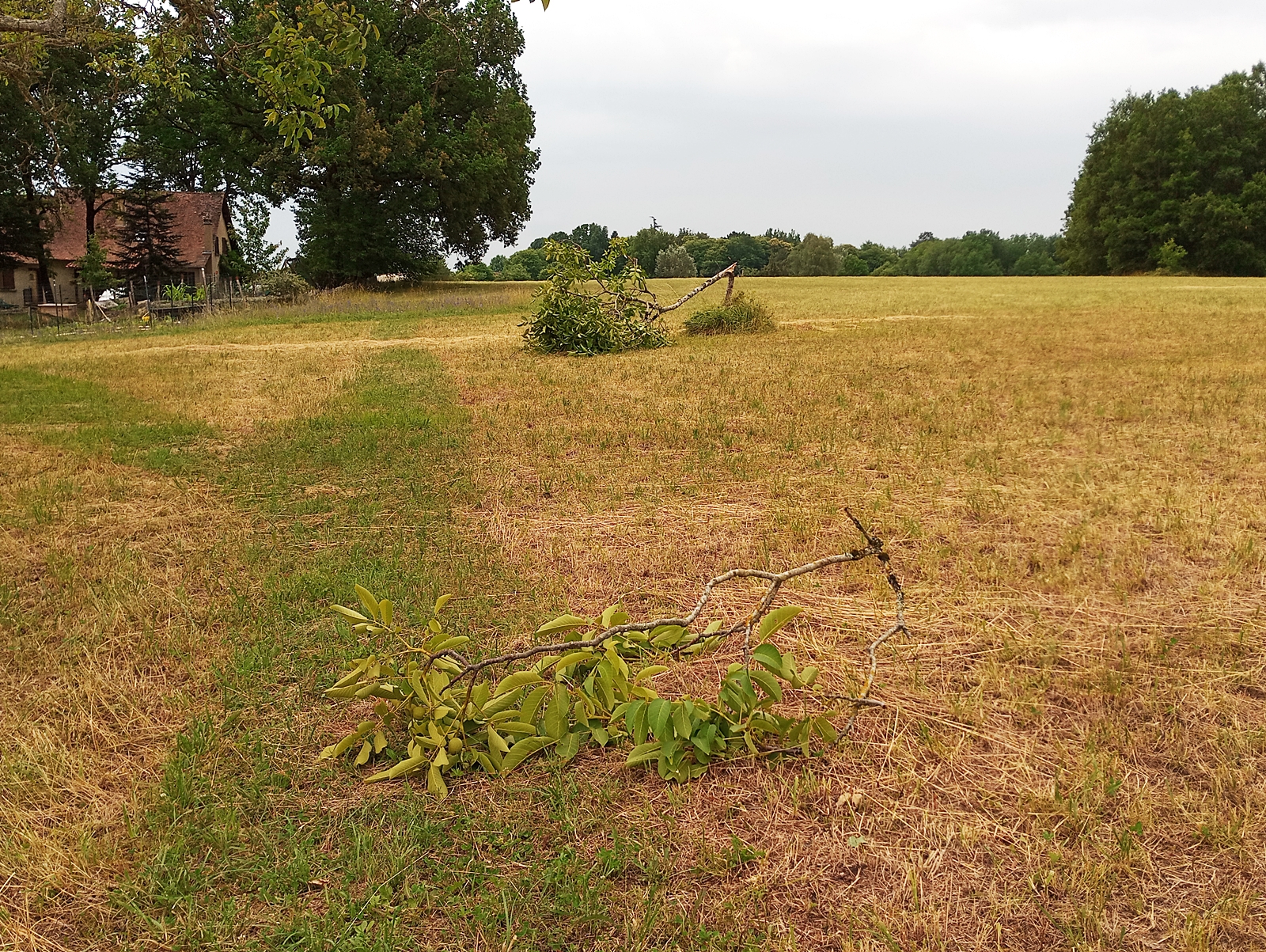
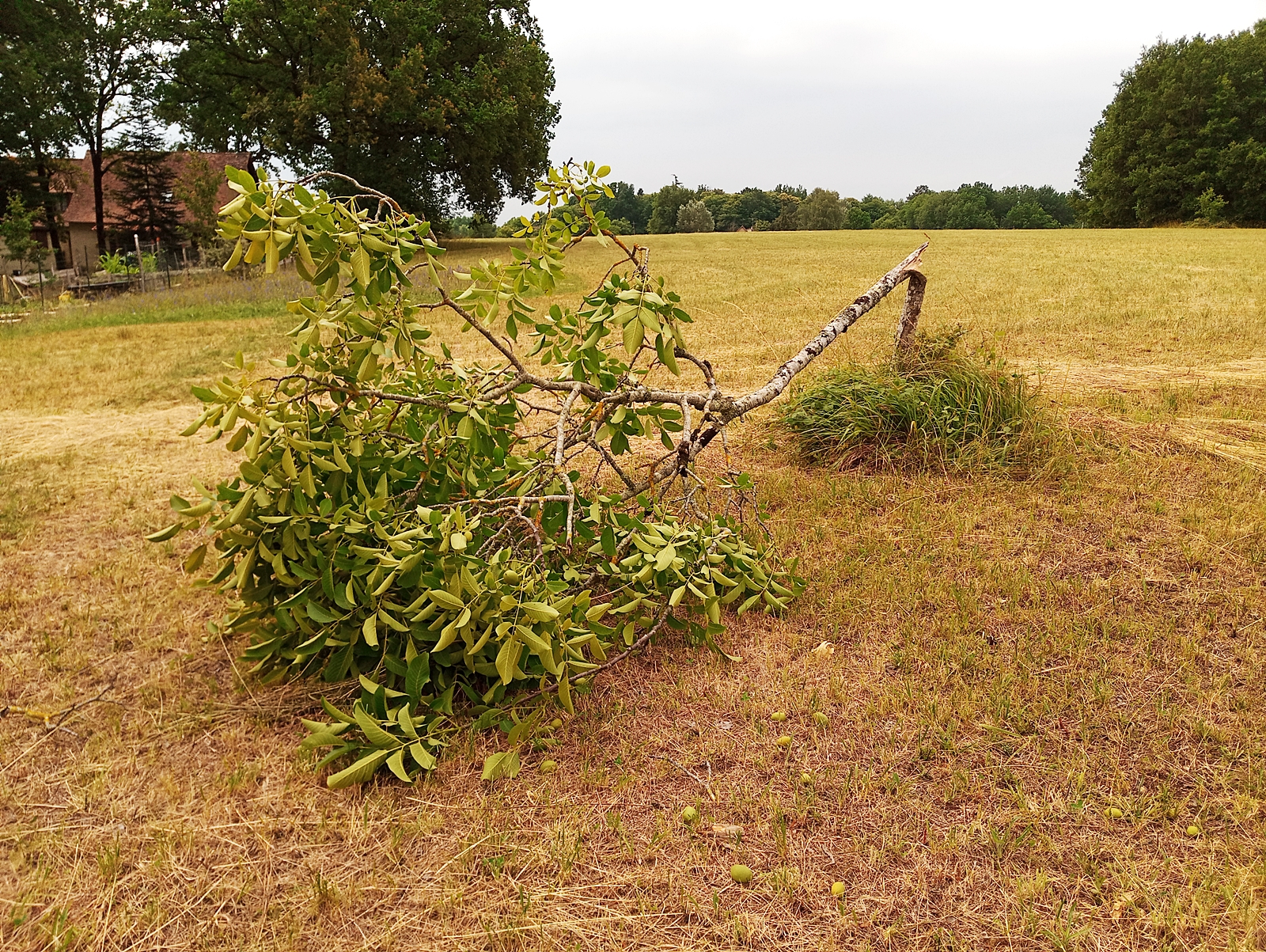
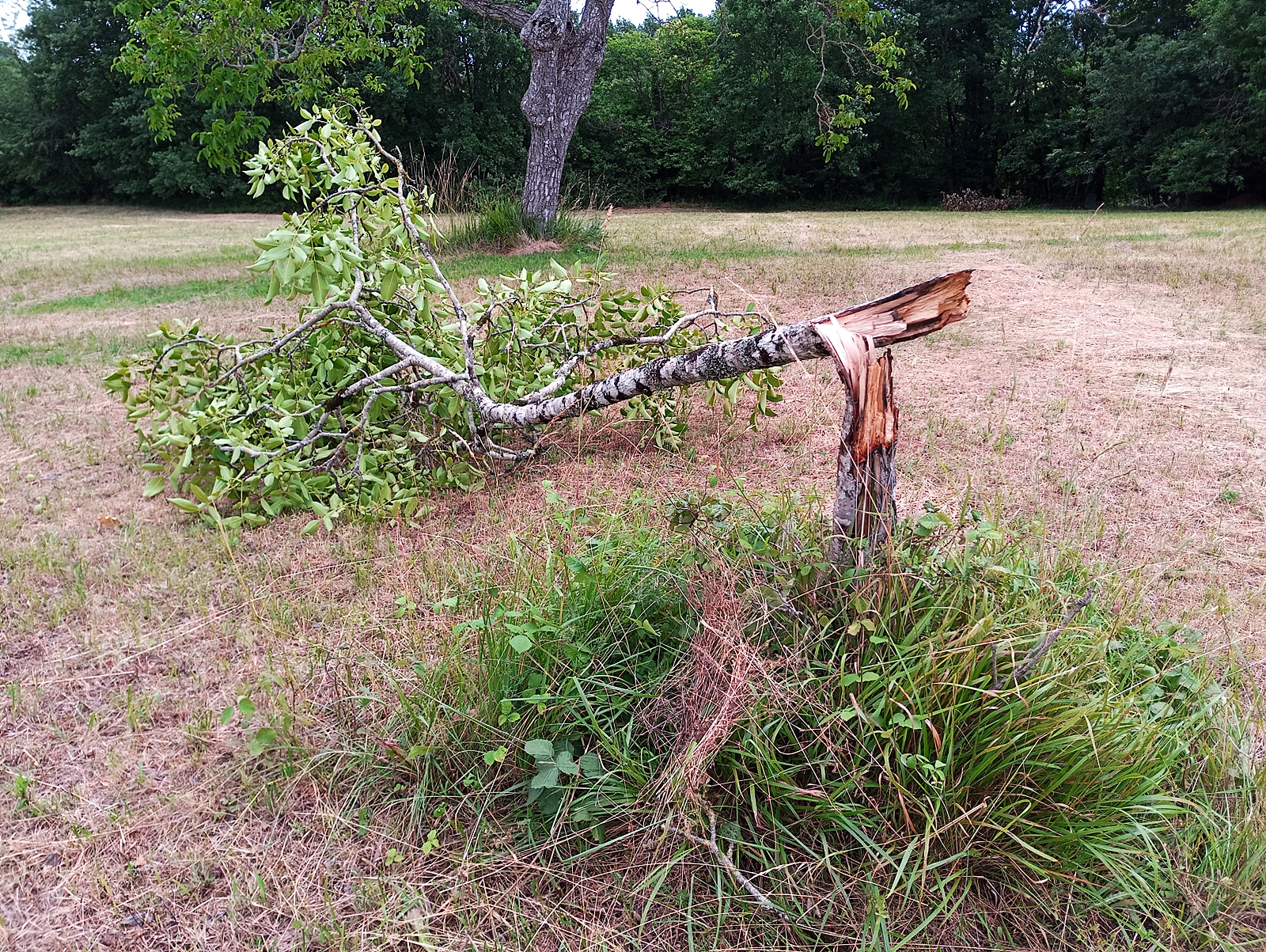
And my ‘tonnelles’ were not the only things to succumb to the violence of the wind. There are several walnut trees on the land next to mine and as you can see below, one of the smaller ones just couldn’t stand up to it either, probably the same gust that did for my ‘tonnelles’. It wasn’t even just blown over – it’s trunk was totally snapped in half. Amazing.

null

null

null

Yet more thunder and light rain are forecast for tonight but with winds less violent than last night. Gusts up to 20 kmh are forecast for around 5.00 am tomorrow morning but I just hope that I get more sleep than I did last night and my little encampment comes through it unscathed 😐

Back to biking

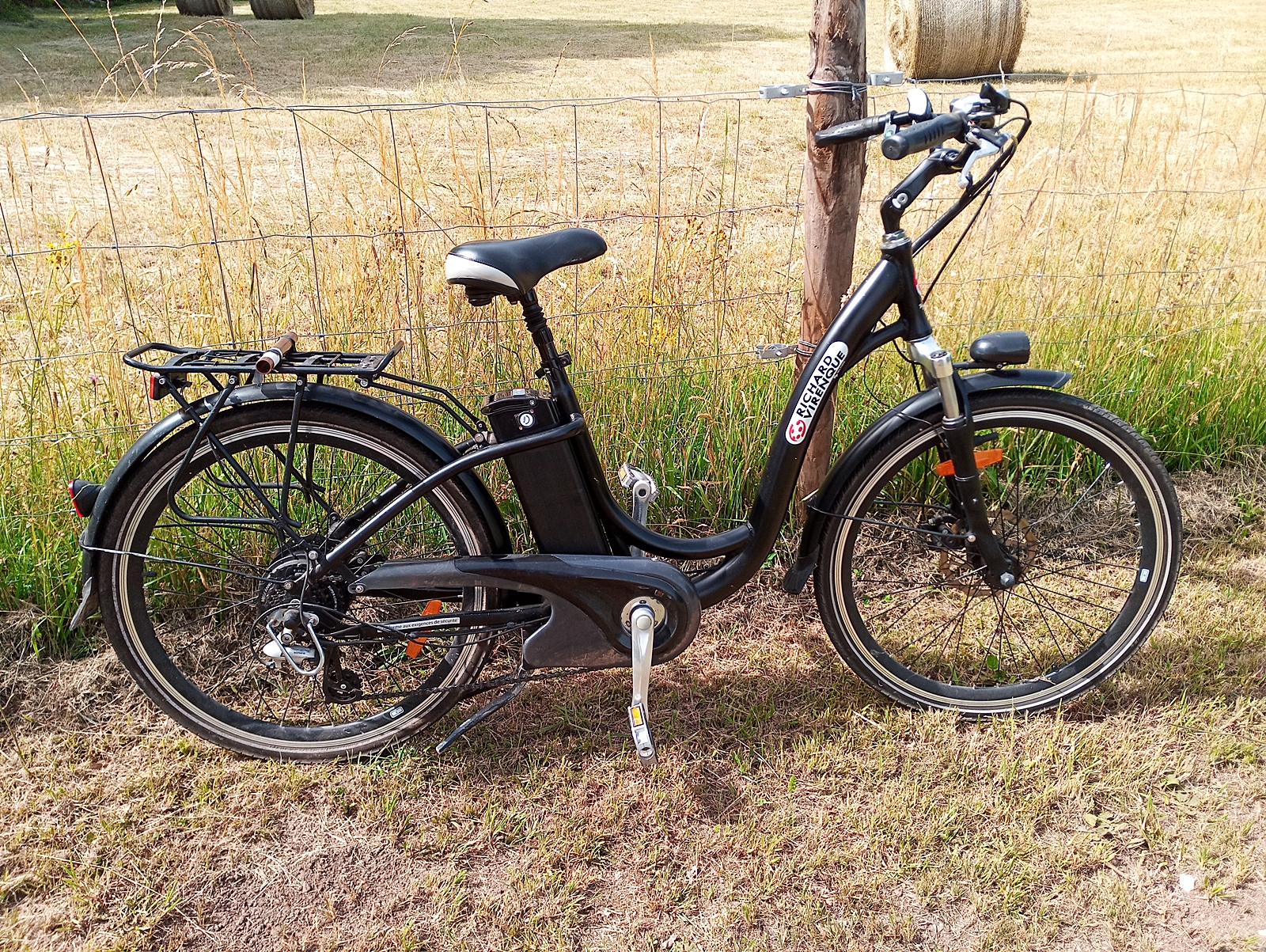
I got a few more things out of storage the other day and after doing so realised that with a bit of pushing and shoving I could get at my electric bike. I originally thought that it would be trapped until I eventually completely cleared the storage at the end of my house build, but after taking out the stuff that I’d come for and a few extra minutes of effort, I did manage to extract it.

Unsurprisingly, its tyres were flat but after loading up the other stuff, I pushed my bike out and pumped up its tyres with the foot pump that I always keep in the back of my car. I then had to leave it tucked away in a hideaway outside the storage until I could get back to ride it home, which was yesterday evening after Wednesday’s usual ‘apero’ at my place.

I’ve been keeping its battery topped up in my caravan for the past few months and I took it with me together with a rag to give my bike a dust down before enjoying quite an exhilarating ride back to Labattut. The last section of road was downhill and it was great to be able to cool off a bit, accelerating without pedalling through the now cooling evening air as the temperature had been up to 33 degrees Celsius during the afternoon and early evening.

This morning while it was still cool, I went for my first Labattut bike ride.

null

Although the route that I took, heading towards Fleurac, is relatively flat I decided not to overdo it, thinking more about my aging joints and muscles that haven’t been used to this sort of activity for many months. So I was only out for half an hour or so, but it was great fun and really enjoyable. It was also a terrific way to take advantage of the amazing weather that we’re currently experiencing, so I think that I’ll start my days in exactly the same way, maybe extending the time and distance that I cover, while it persists over the coming days, or weeks even 😉

Good news and bad news

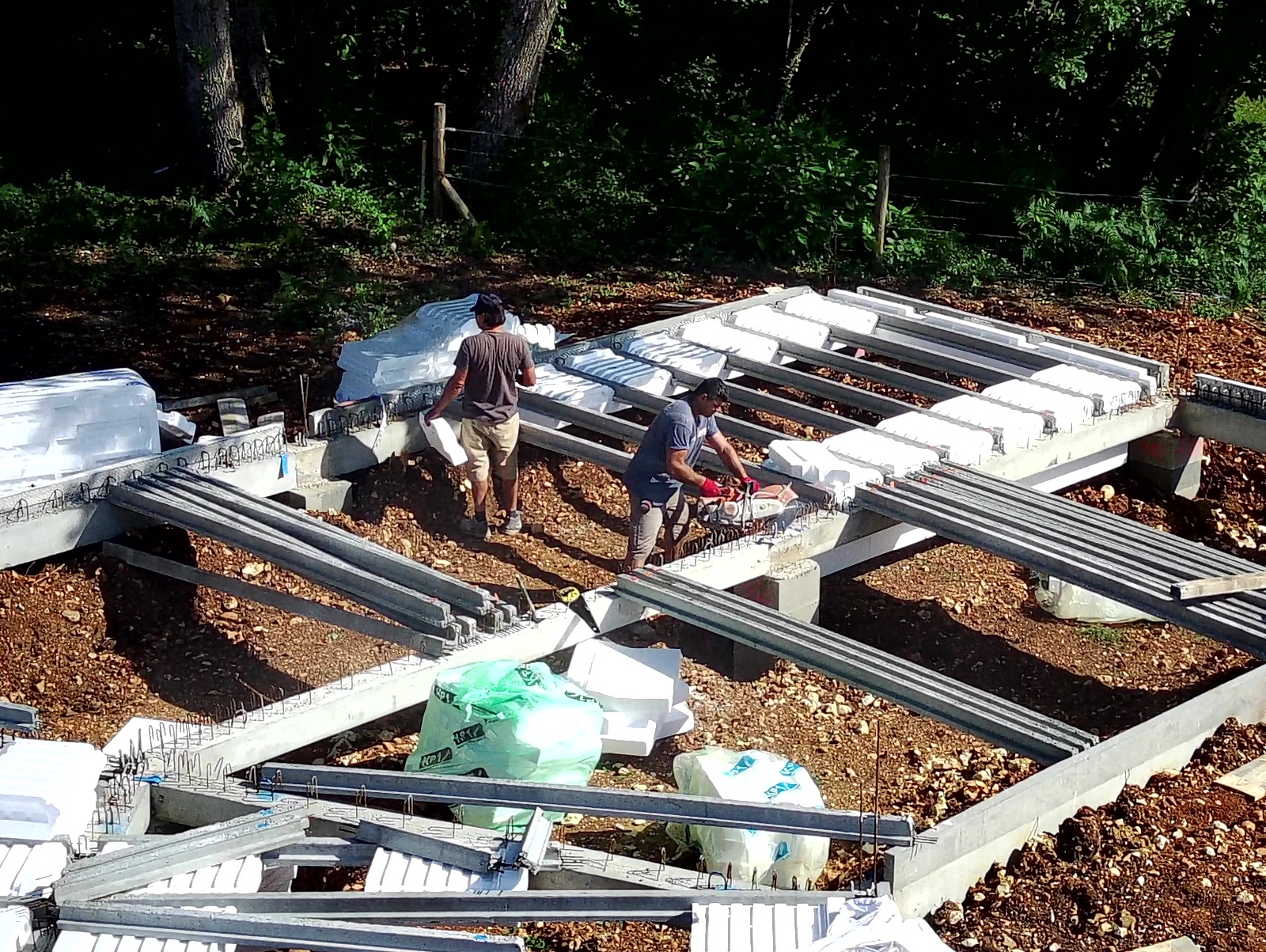
The good news is that at 8.30 am this morning two workmen were on site and ready to crack on with the floor structure of my new house and by the time I went out to greet them and take my first photos, they’d already made a very good start.

null

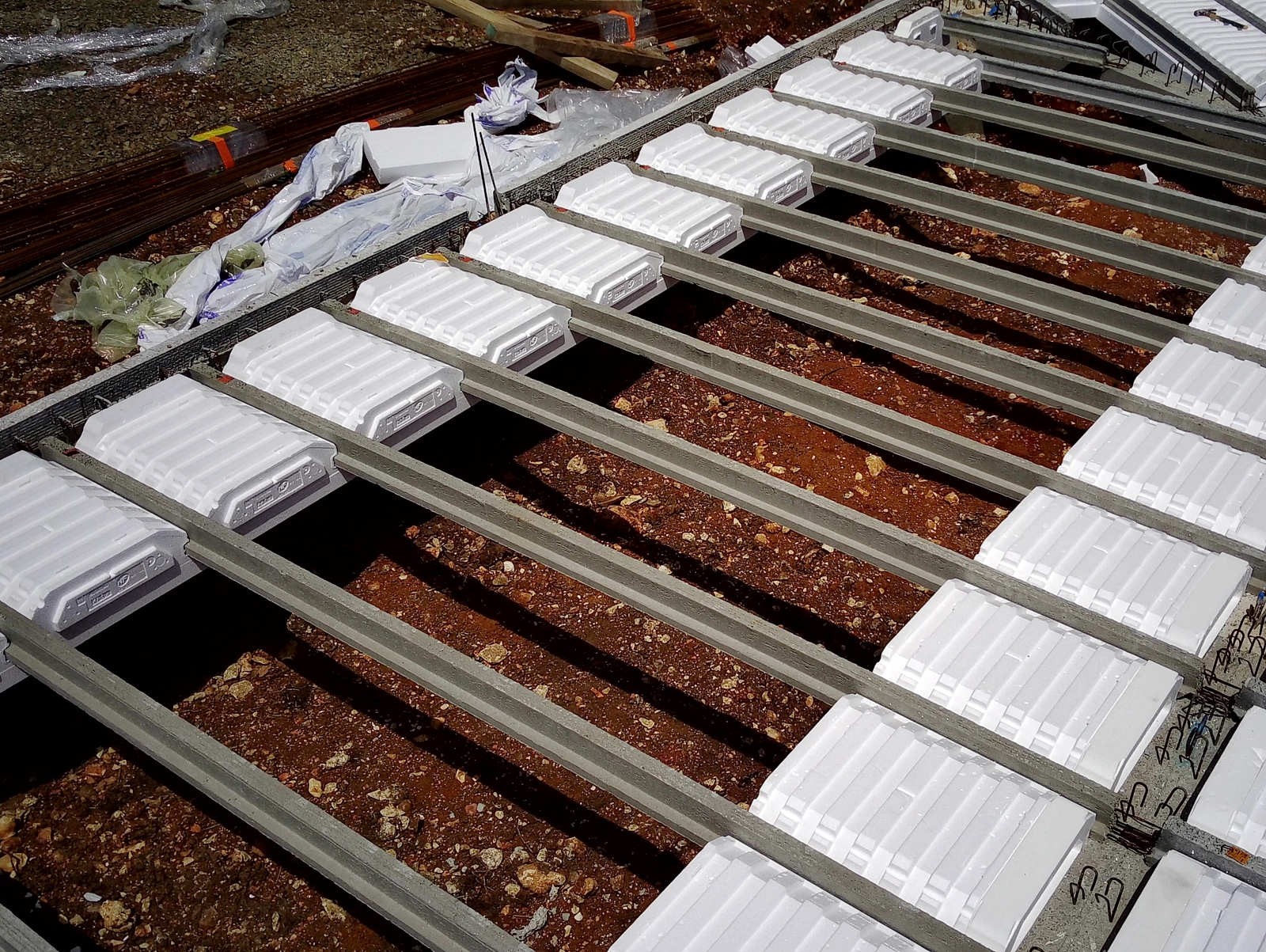
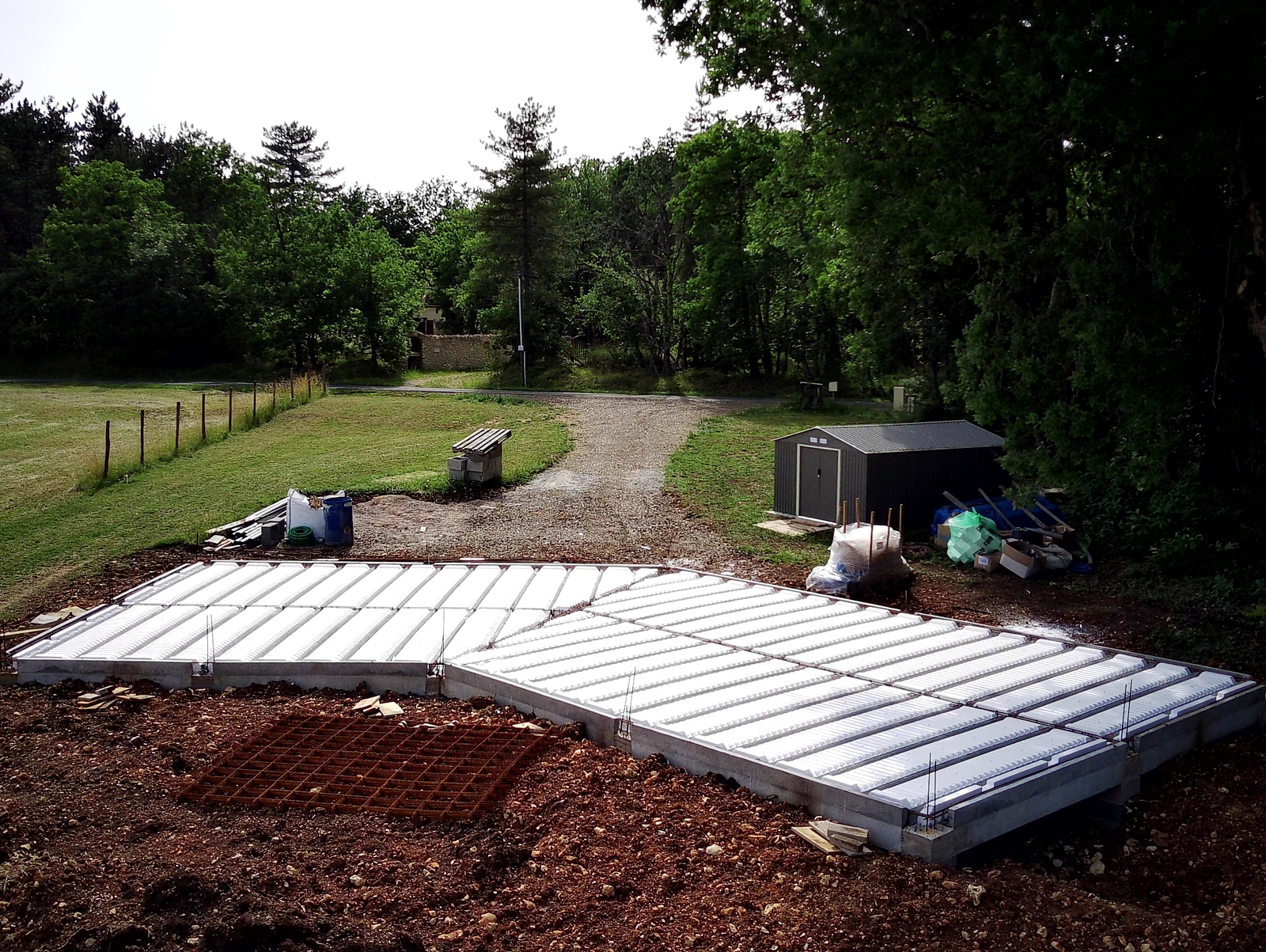
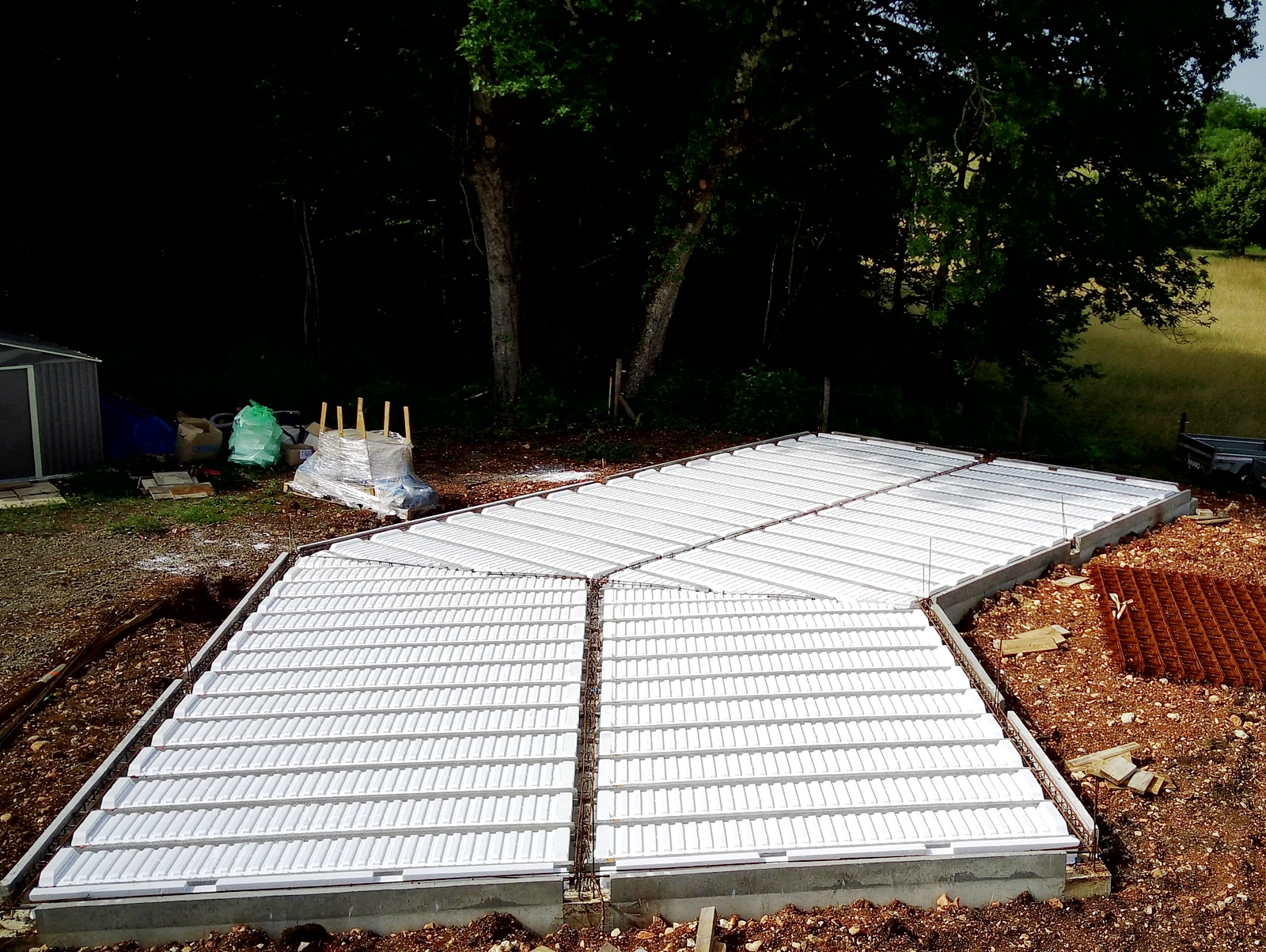
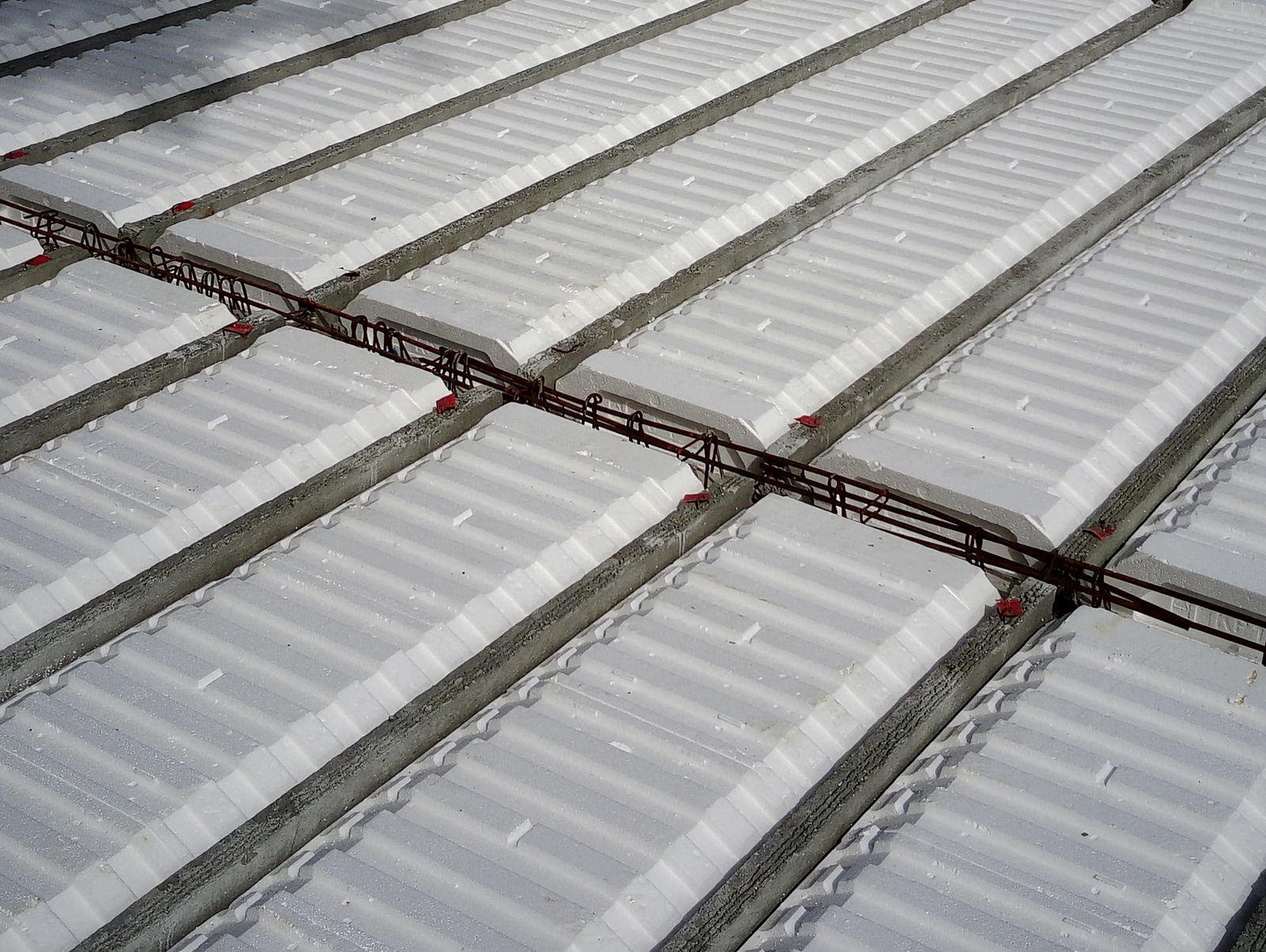
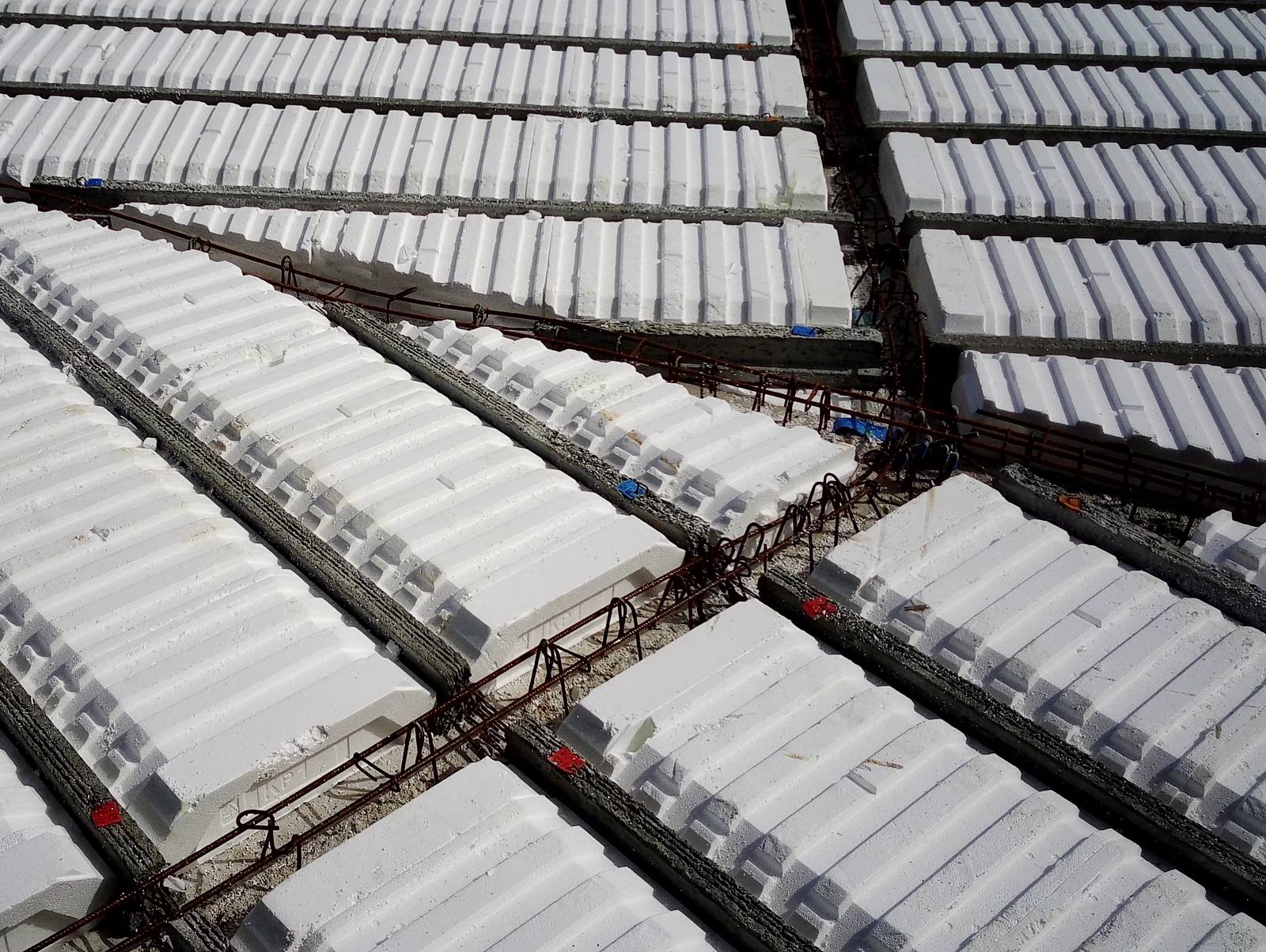
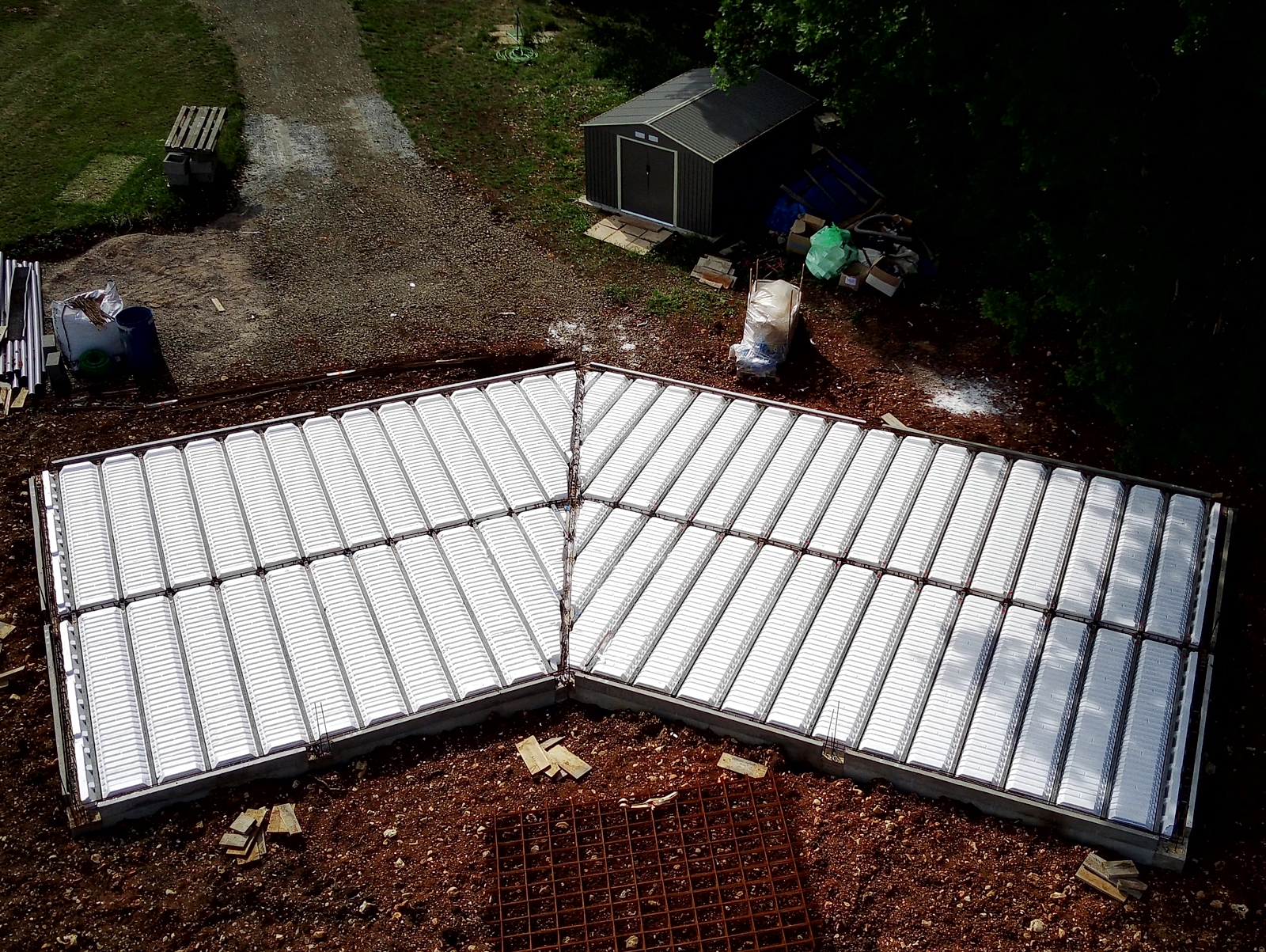
Today’s job was to position all the cross beams (‘poutrelles’) at just the right separation on the main floor beams (‘poutres’) to take the polystyrene bridges (‘hourdis’) that go in between them. The beams and the polystyrene bridges will then support the reinforced concrete floor screed that will be poured on top of them until it cures and can take the floor loading of the house.

null

null

null

Occasionally, and not surprisingly, some small adjustments were needed to the ‘poutrelles’ and ‘poutres’ in order to get everything to seat down snugly and level, sometimes by grinding a bit away with an angle grinder or sometimes just be chipping some stray bits of concrete off the end of a beam with a hammer.

null

null

By lunch time all of the ‘poutrelles’ were in place across the whole of the floor area together with many of the ‘hourdis’ and all that was necessary in the afternoon was to fill in all the gaps to finish the job off.

null

null

null

And this is how things looked at the end of the day. The two guys were working out all day in blazing sunshine and a temperature of 33 degrees Celsius and before they left I took them up a couple of cold beers each. They almost bit my arm off! I was also pleased to see that when they did eventually leave they’d had a good clear up and taken away all of the rubbish that had been created on site to date.

null

null

I was also interested to see that to finish the job off, they’d run lengths of steel reinforcing rod into the metal hoops that had been molded into both the main structural beams (‘poutres’) and the cross beams (‘poutrelles’) some of which can be seen in the next couple of pics. These will further knit together and strengthen the concrete floor slab.

null

null

null

So the floor structure is now ready for the next phase tomorrow. This will involve three jobs – running the tubing for the water and electricity supplies into the house through the hole that’s been left for them in the front and popping them up through the floor at the right locations, running the piping to the septic tank from the required locations in the house (kitchen, bathroom, utility room, separate WC) down through the floor and out of the hole that’s been left for it on the north side and cutting and putting in place the reinforcing steel mesh over the whole of the floor area. Whether they’ll succeed in doing all of that in one day I’ll have to wait and see.

So what’s the bad news, you’re asking? I had a rather sharp interchange of messages with the builder about the slow pace of the project and the delays that have been incurred. The way things are going I can’t see the house being finished even by the end of the year, let alone the autumn, which was my original target. He tells me that all of their projects are affected in the same way and that they’re now having real problems with the availability of materials and when I pressed him on a completion date he apologised and said that things are becoming so bad, he couldn’t give one.

Incidentally, after I’d given my two workmen their beers before they left one asked me what material I’ll be using for the walls. When I told him ‘terracotta blocks’ he told me quite independently that he knew the company was having big problems even getting hold of them in sufficient number, let alone enough for my project, which was very worrying.

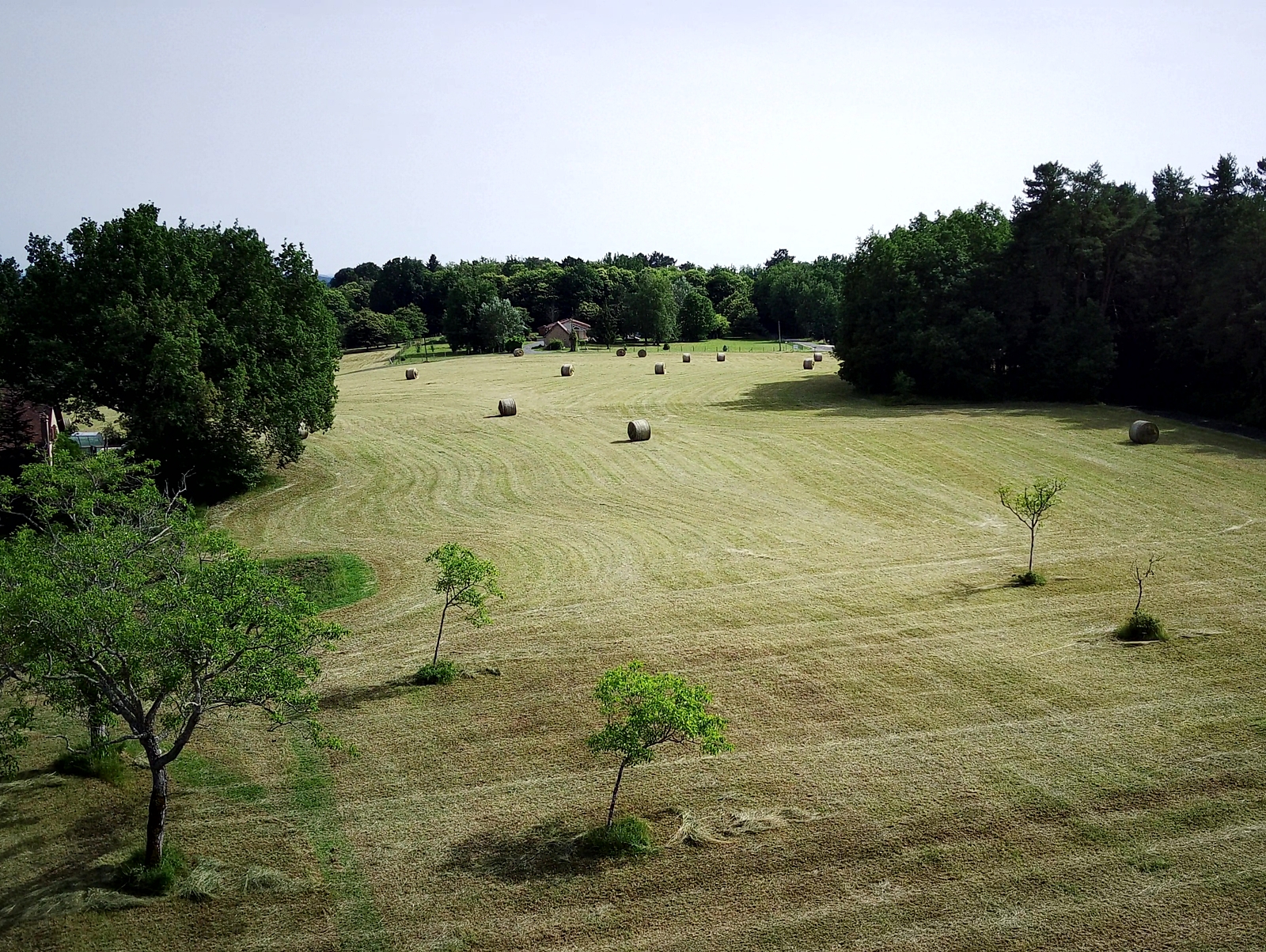
On a brighter note, to finish, the farmers around here have all literally been making hay while the sun shines and here’s a shot of the idyllic rustic view after the farmer had collected and baled up the hay on the land next to mine.

null

So there are still some things left in life to enjoy.

My flying log book

I just made a list of all the French airfields that I’ve flown into.

Le Touquet – March 1980
Abbeville – April 2012
Le Gault St Denis – April 2012
Wanafly France – April 2012
Castillones/Cavarc – June 2013
Ségalas – June 2013
Galinat – August 2013
Sarlat-Domme – June 2014
Belvès – August 2014
Chateau Malbec – March 2015
Milhac – May 2015
Plazac – May 2015
Monpezat – June 2015
Coutin Cracans – June 2015
Le Thou – June 2015
St Brevins les Pins – June 2015
La Bochet – June 2015
Mouchamps – June 2015
La Ferté Gaucher – February 2016
Oussidan – February 2016
Meygnaud Valeuil – June 2016
Argentine – June 2016
Riberac – June 2016
Condat – June 2016
Egletons – July 2016
Aurillac – July 2016
Figeac-Livernon – July 2016
Saumur – August 2016
Ste Foy-la-Grande – February 2017
Terrasson – July 2018
Campsegret – September 2018
Fumel – December 2018
St Aubin – March 2019
Argentat ‘Les Chanseves’ – June 2019
La Rochelle – June 2019
Blois – August 2019
Calais Dunkerque – July 2020
Dreux – July 2020
Le Blanc – July 2020
St Julien d’Eymet – August 2021
Lacave Le Frau – August 2021
Castelsarrasin – June 2022

That’s 42 airfields more or less since I came here in 2012 as although I first flew into Le Touquet back in 1980 when I was a member of a group owning a Piper Cherokee, the next time I went back was after I had moved to France.

I really doubt that I’d have that many new airfield experiences under my belt if I’d stayed in the UK as France is blessed with so many and all but the most major (Saumur, Blois, Le Touquet, La Rochelle) with no landing or other fees. I didn’t even have to pay when I flew into Aurillac which had an Air France ‘Jump’ ATR waiting on the apron for the first flight, to Paris I expect, the following week. Flying in France really is a breath of fresh air!

Success… well, almost

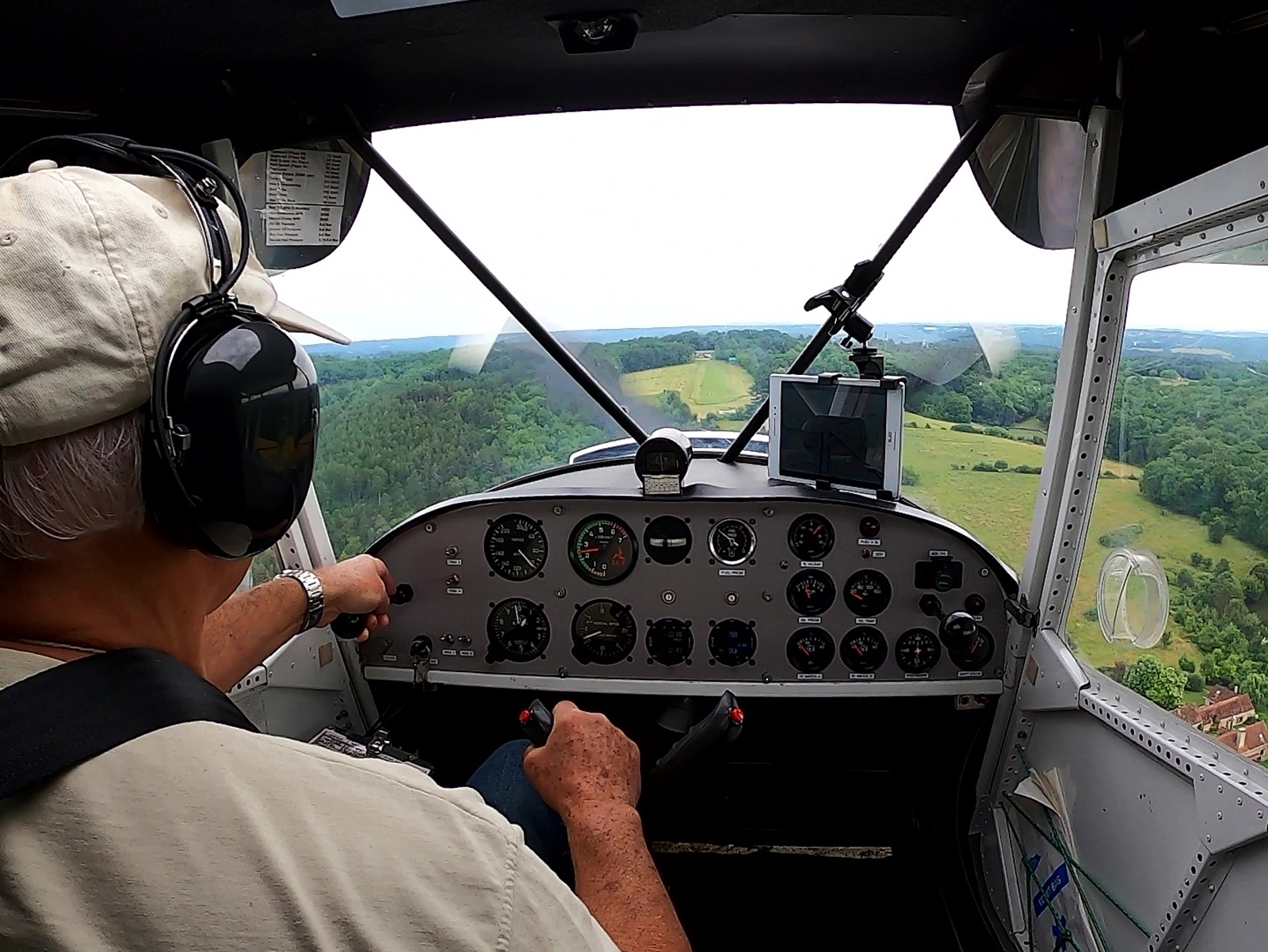
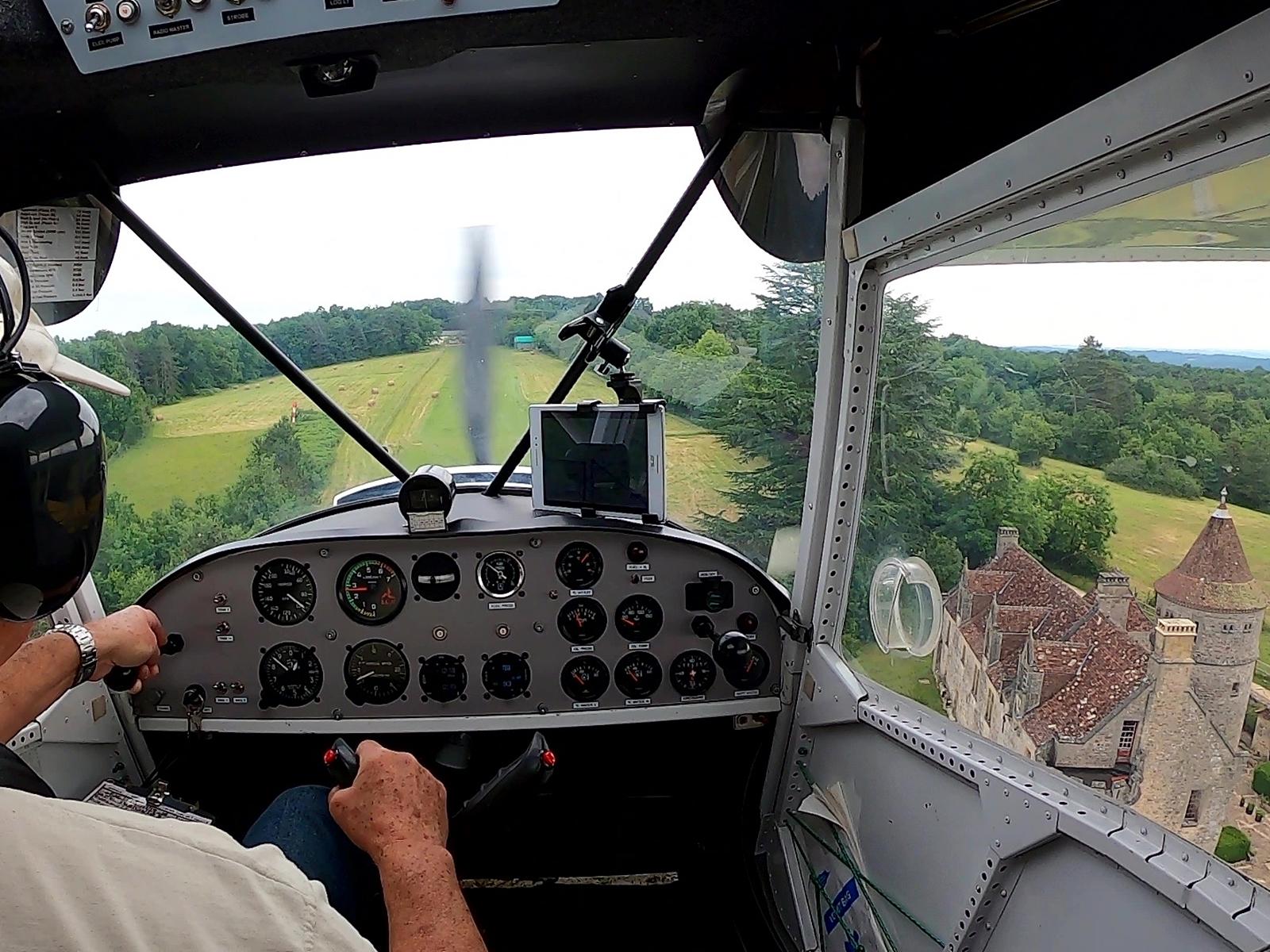
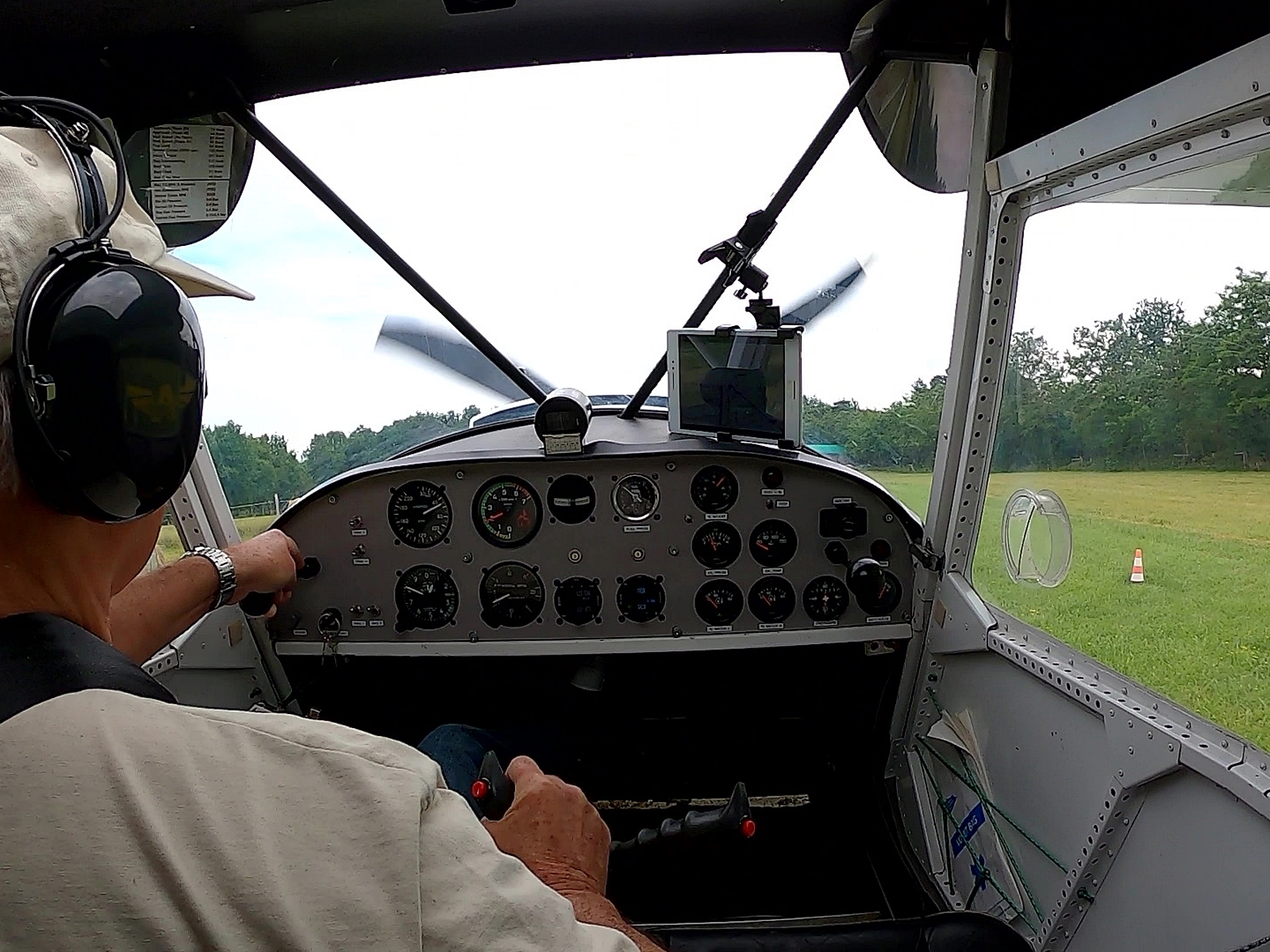
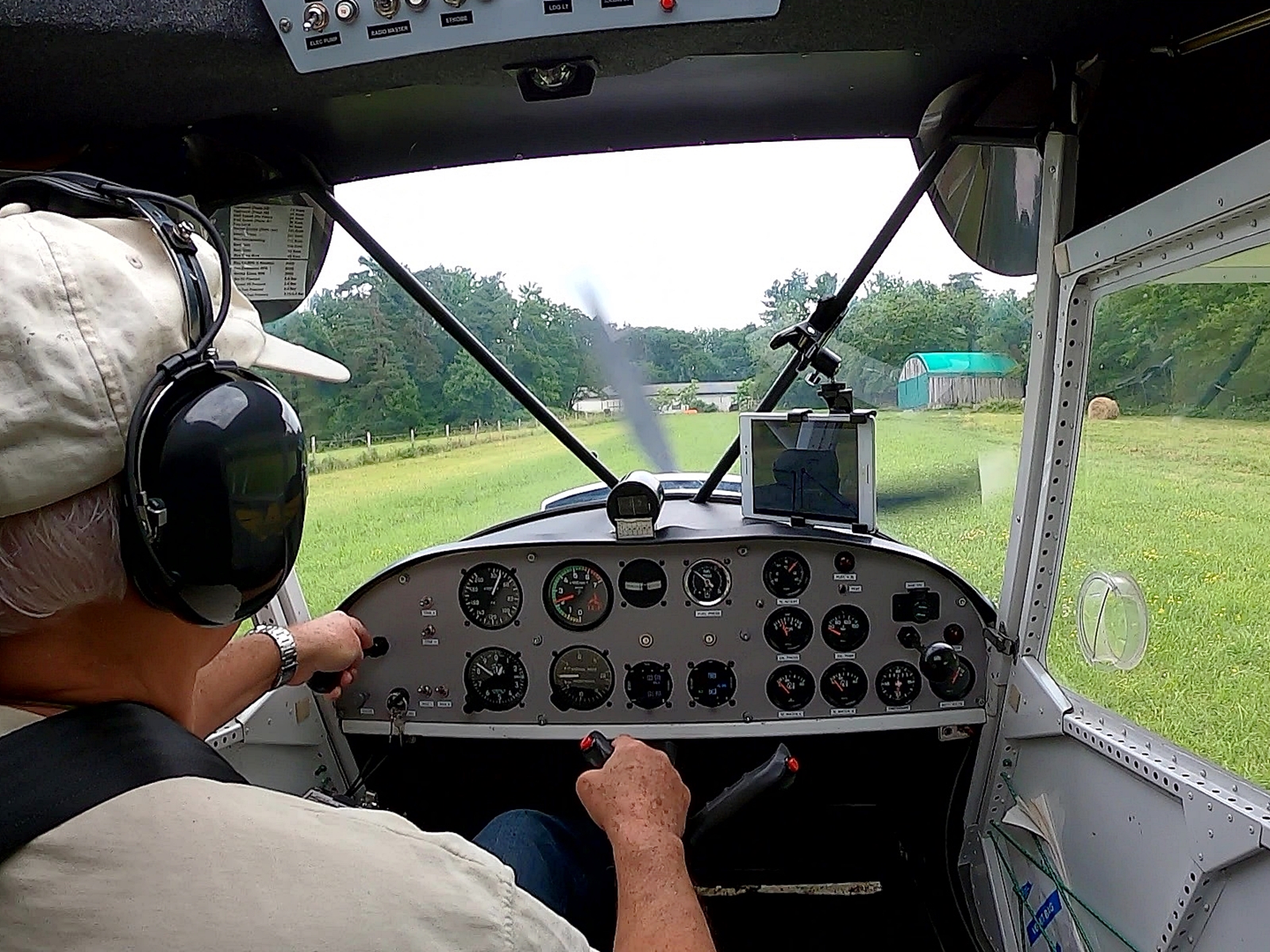
As expected, it was a perfect flying morning this morning so I was over at Malbec bright and early getting things ready for the flight I’ve been trying to do for some time now. Well, not quite the same flight actually. I decided to cut out the leg from Malbec to Figeac as I’ve done it quite a few times before and quite honestly, it’s difficult to justify the additional fuel burn at today’s prices.

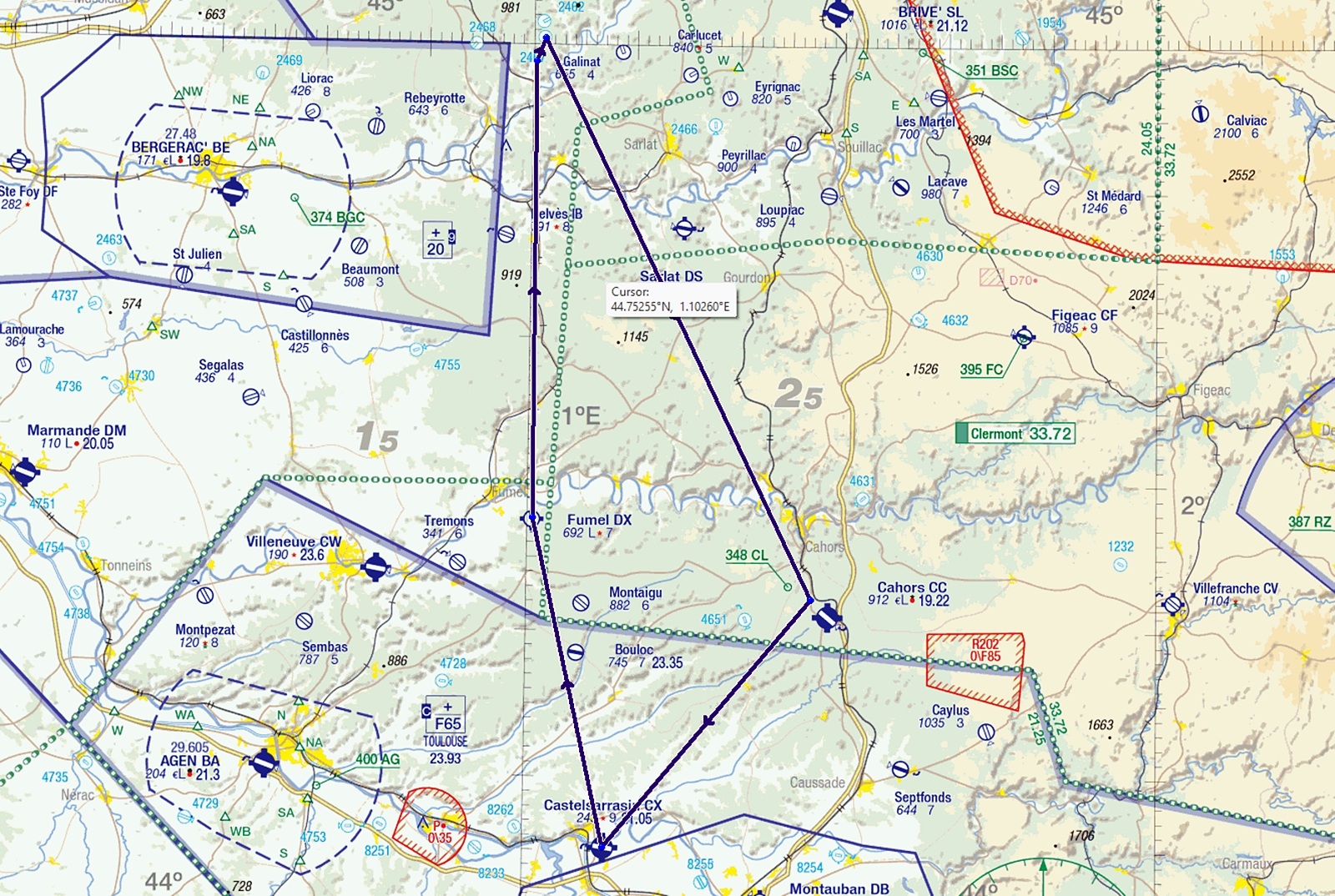
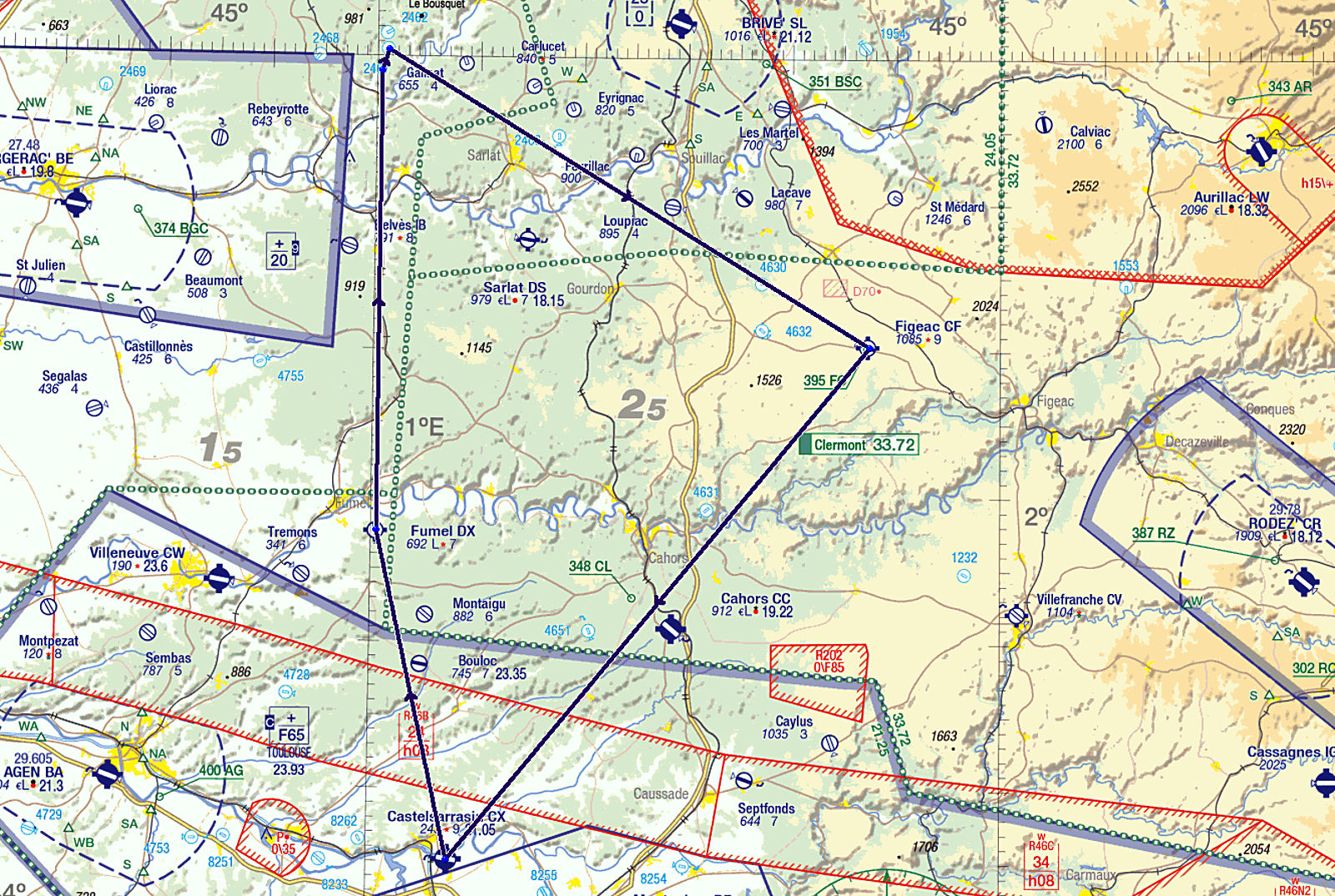
So the total flying time fell from around 2 hours to about 1 1/2 but the main thing was that I was still going to get to LFCX Castelsarrasin in the south, which I’ve not visited before. I still aimed to drop into LFDX Fumel on the way back, which I’ve been to before, but seeing as it lay almost directly on the route back to Malbec that was no hardship. Here’s a pic of the route that I had planned.

null

But things didn’t go exactly to plan. Despite the fact that since my last attempt I’d tested my two GoPros hooked up to external battery packs and they both ran, there was still a problem with the GoPro Hero 7 Black that I attach to the Savannah’s wing. For some reason it started recording when connected but then almost immediately switched itself of and then reverted to standby mode. It eventually seemed to start up OK but I didn’t have much faith that it would continue and sure enough, after the flight I found that it had only run for 5 minutes before switching off and hadn’t even recorded the take off.

But this time I had more luck with the GoPro Hero 8 Black that I mount in the cabin, but even that didn’t continue running for the whole flight as it should have done. But at least I managed to record the touch-and-goes at Castelsarrasin and Fumel before it gave up the ghost. Also, although it recorded the sound of the radio, it was broken and drowned out by the engine noise, so taken all round there’s still a lot more work to be done to get the GoPros working as I want them to. When I think how easy it was to record MYRO’s old radio back in the day, even using my old Canon video tape recorders which I only had to plug straight into the radio’s audio port. Those were the days!

But back to the flight. When I can I’ll make a video using the cabin GoPro recording but until then here are loads of shots that I’ve lifted from it together with more that I shot out of the cabin window, that show how it went.

First, taxying down to the top of Malbec’s runway and taking off.

null

null

null

As I was using my new Chinese Blackview tablet for the first time, I thought it wise to also start my MemoryMap software on my phone just so it would already be running in case anything went wrong. In fact, apart from keep auto-dimming every 5 minutes when it shouldn’t have done, it worked faultlessly.

null

Here’s a general shot that I took after I got the Savannah set up at 2400 feet tripping along nicely at 150 kmh with engine revs of 4900. Conditions were perfect and the aircraft almost flew itself. I chose 2400 feet because as it was Saturday and there would be a few other week end flyers about, I thought it would be a good choice to avoid them and in fact a couple did fly past both lower and higher than that.

null

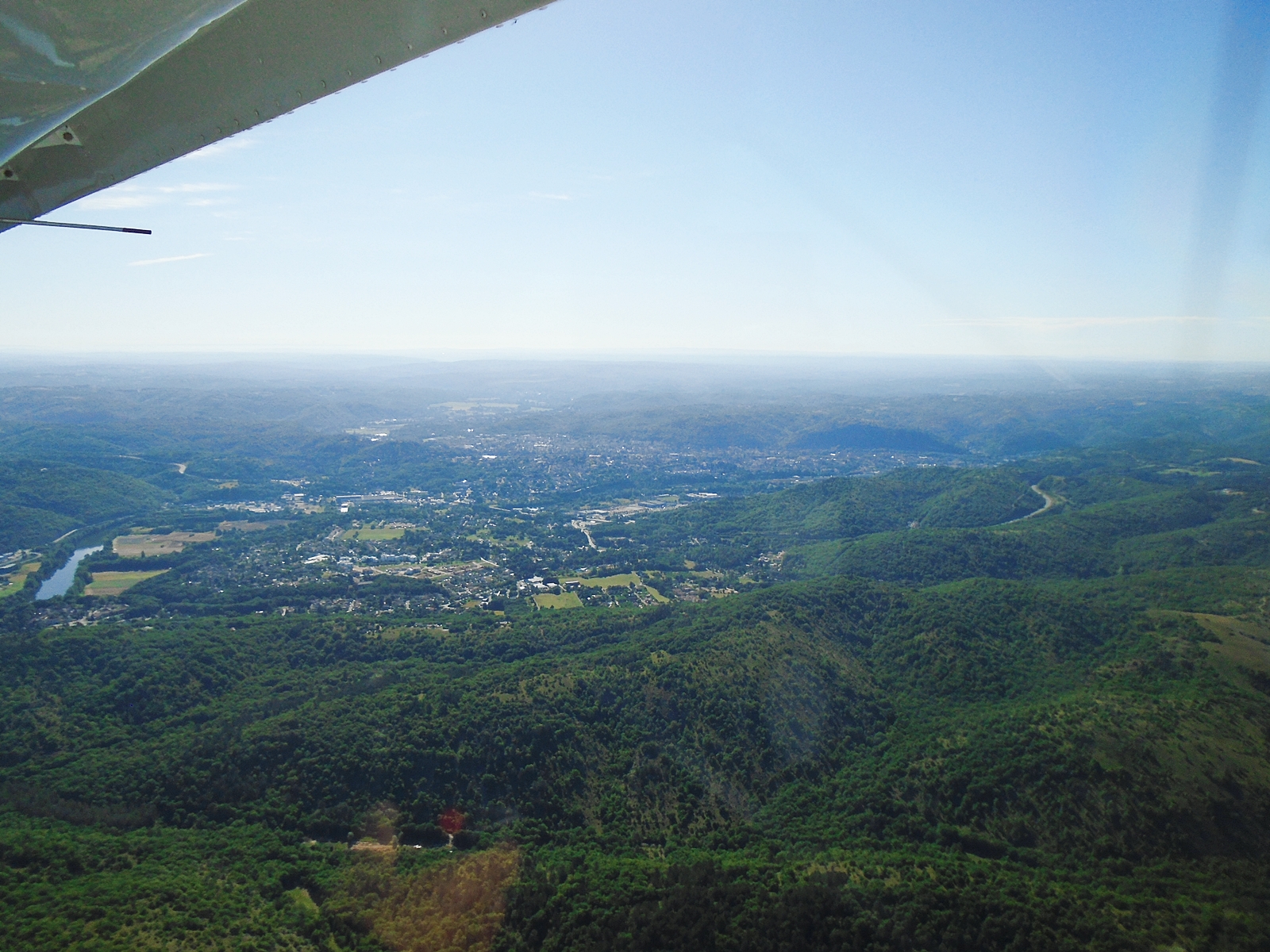
Heading south, here’s a shot of Chateau Beynac on its rock promontory overlooking the river Dordogne.

null

And just a bit further on, there’s Sarlat-Domme aerodrome over to the left in the distance.

null

The next two shots are of me taking some pictures of Cahors and one of the photos that resulted.

null

null

I was heading straight for the airfield at Cahors but I decided that as it’s quite a major regional airfield and I didn’t plan to land there, I’d give it a wide berth today. You can see its runway in the left distance in the next shot as I turned right to head for Castelsarrasin.

null

Almost as soon as I turned towards Castelsarrasin a change in the landscape became apparent with rolling wooded hills giving way to flatter terrain and a multitude of cultivated fields.

null

As I flew towards the south-west I spotted this charming little domed church sitting on the top of a small hill.

null

Not long after I began to descend to join the circuit at Castelsarrasin airfield, which came up on my nose with the town of Moissac off on my right beam.

null

As I joined overhead the field I could see a white aircraft taxying out to take off on runway 10. It was lucky that I did because until then I wasn’t sure which runway would be in use, there being little or no wind. It turned out that the lady pilot was using the grass runway (which only gliders and aircraft based there are allowed to use) for a couple of circuits and I slotted in for my touch-and-go after she’d taken off for her first one.

null

The next few shots are of me turning downwind right-hand for runway 10, then onto base leg and finally turning final to land.

null

null

null

null

The next sequence are all of the final approach into Castelsarrasin, the touch down and the take off after the touch-and-go.

null

null

null

null

null

This is the climb-out that I then initiated. I thought that as the other pilot was flying circuits, I’d get out of the pattern pretty smartly. In the next shot I was already flying at over 150 kmh and shortly after I climbed up to 2000 feet at 1000 feet per minute, which is pretty good going.

null

Here’s a shot of me taking a photo of the town of Moissac.

null

Moissac is in the Tarn-et-Garonne département and sits right on the river Garonne itself.

null

null

The next leg took me to Fumel and here’s a shot of the approach to the airfield from the south.

null

The next sequence shows the turn onto final to land, the final approach and landing and the subsequent climb out. Although there was nobody else there as there never seems to be, I still climbed out pretty smartly to continue the flight north to return to Malbec.

null

null

null

null

null

It was at this point that the GoPro in the cabin finally died. I was still able to take the odd shot with my little camera, however, and here’s a final shot of the ancient town of Belvès that I took as I passed by.

null

So that was it! Although things did not go as smoothly as planned I did at least manage to get away and end up with something to show for it. Actually, the flight was almost effortless in the conditions and I greatly enjoyed it. I’m just hoping that I’ll be able to sort my GoPros out before the next one!

No fly zone – again

This morning at Malbec.

GoPro 1 ready – check

GoPro 2 ready – check

GPS ready… GPS ready… GPS ready… No

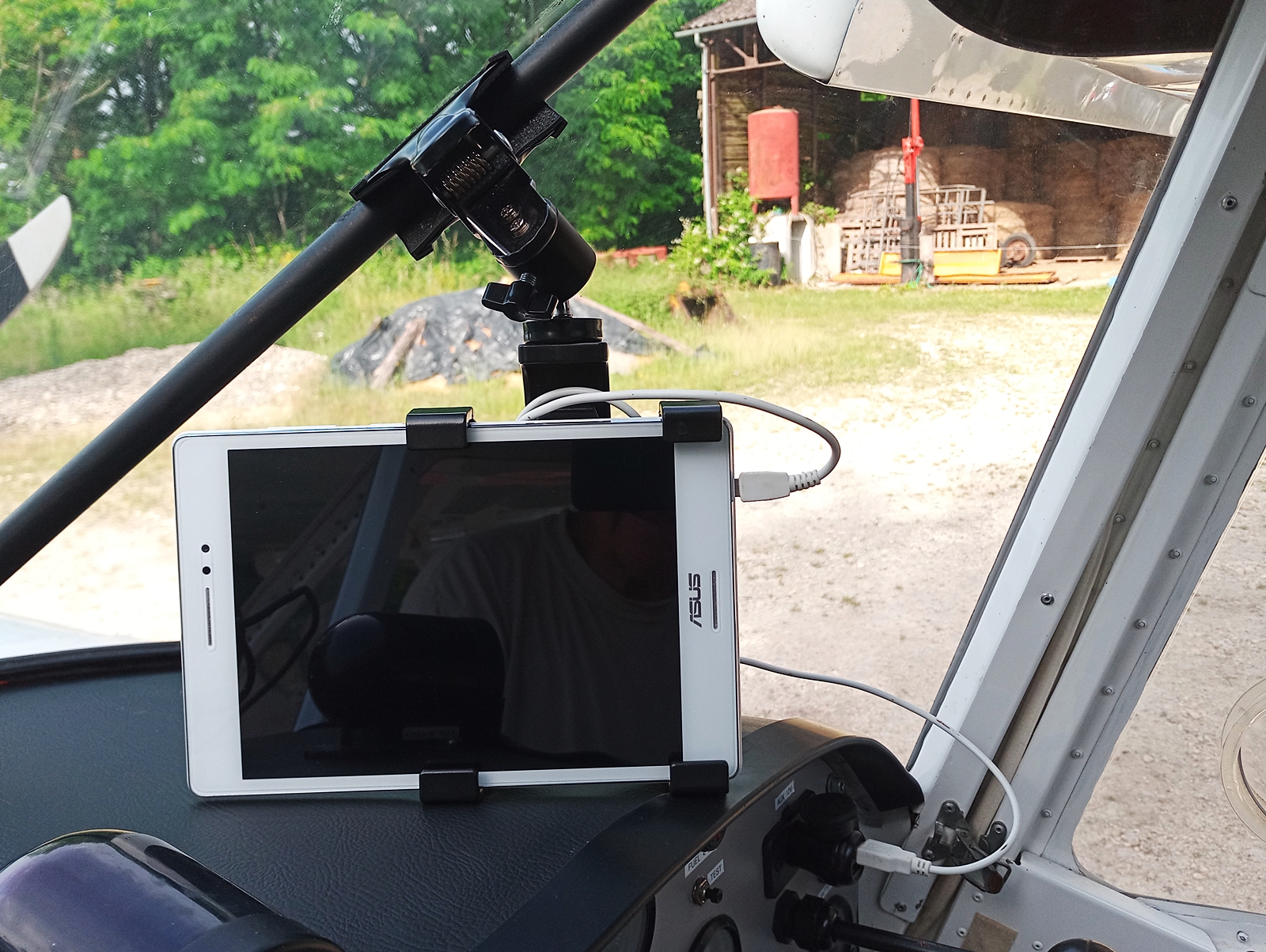
So this time I was let down by my little Asus Zenpad tablet that I’ve been successfully using as my MemoryMap GPS system for what, four years? No matter how many times I rebooted it, no GPS, so no flight possible.

Luckily I have a second, new tablet that I bought a few weeks ago because I thought it would give a brighter image than my phone for drone use. In the event, probably because it was another Chinese ‘cheapie’ it didn’t, and I was thinking whether I should pop it onto LeBonCoin and sell it on. But luckily I didn’t and it goes into MemoryMap GPS mode much quicker than the Asus ever did.

Unfortunately I’d left it back in my caravan and by the time I’d finished messing about with the Asus and also one of my GoPros and returned to get it, it was already well past 11.00 am and getting far too hot to fly. One of the big drawbacks of flying from Malbec is its short runway. It’s demanding at the best of times and with the inevitable thermals that start up on its approach, resulting in lift followed by sink followed by lift again, it can become a shade treacherous when the weather heats up. And by the time I was ready to go it was already about 28 degrees Celsius, meaning that by the time I got back, it would have been 30 + degrees.

So that was it – flight abandoned yet again. I also had a problem again with one of my GoPros. The one I mount on the wing, a GoPro 7 Hero Black, is perfectly happy to work with a powerpack plugged in. However, it now seemed that the one that gave me trouble last time, a GoPro 8 Hero Black that I mount in the cabin, didn’t want to work in the same way, and would only connect to a powerpack if its battery was first removed. It seems weird that it did so last time, but after having switched into Timewarp mode that messed things up anyway.

After arriving home I removed the battery and replaced it with another, when it worked fine with the powerpack and continued doing so with the original battery when I replaced it. I’m really getting fed up with having to keep messing around with technology that seems to be full of gremlins.

The weather should be similar to this morning’s again tomorrow, although it is forecast to become hotter than this afternoon later on. So with a bit of luck if all the ruddy gremlins stay in their boxes I might finally get my planned flight in tomorrow. It’s a bit disappointing because things will be busier tomorrow, and in particular there could be gliders operating at Castelsarrasins where I hope to do a touch-and-go. Mind you, I suppose I’ll have to think myself lucky if I just manage to get away on time…

Rejoice!

They’re back on site! I expected they might be, following the ‘jour férié’ (national holiday) here yesterday, but even so, it was gratifying to see that things are again moving forward with my house-build. To be precise, the builders weren’t back, it was a couple of delivery trucks that appeared this morning, bringing the materials that will be required to construct my house’s concrete floor slab.

Now that I understand just what the construction entails, I’m not surprised at all by the ‘delays’ that have occurred. The reason is that there’s nothing ‘off-the-peg’ about my house, so until we get to the ‘above ground’ work (the walls, roof etc), everything is having to be ‘made-to-measure’. And that, of course involves time.

It wouldn’t be so bad if my house was of conventional ‘rectangular’ design, but it’s not, of course. Its ‘V’ shape complicates matters even more and it’s easy to overlook the calculations that my builder has had to make in order to specify the exact dimensions of the main supporting beams and also the cross-beams (‘poutrelles’) that will support the floor. Any error would turn out to be very expensive for them and would also add to the overall build time and therefore their cost.

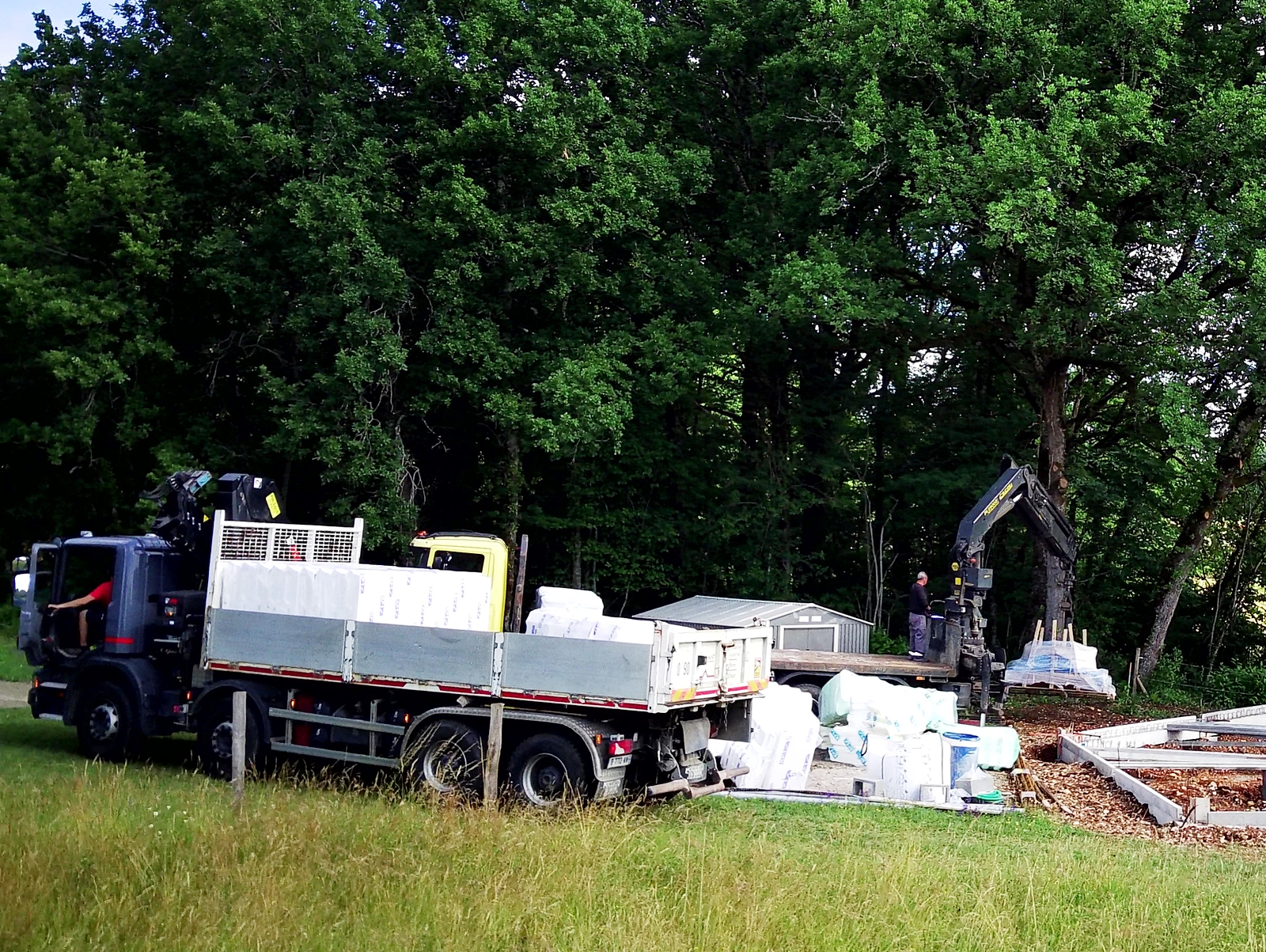
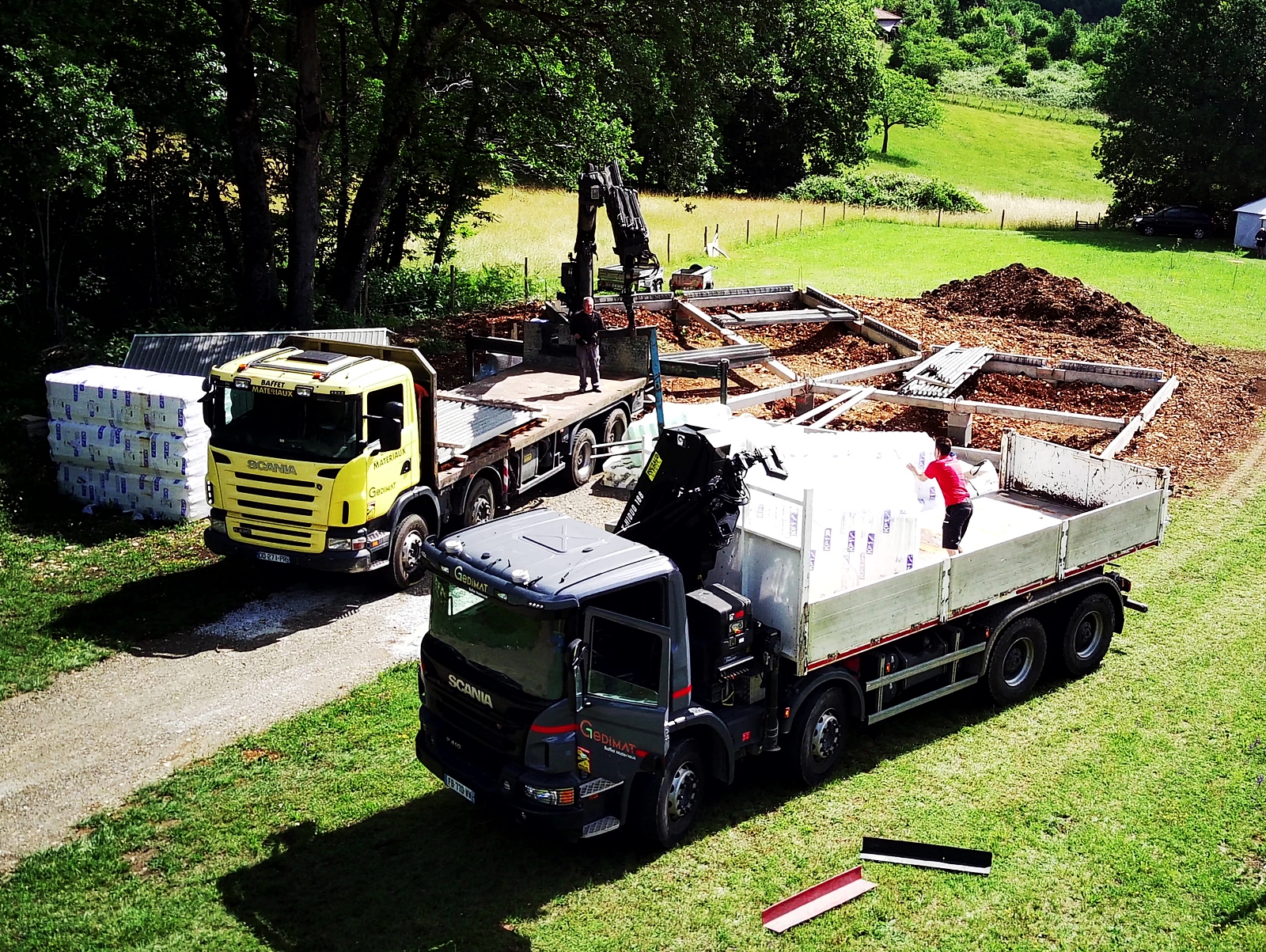
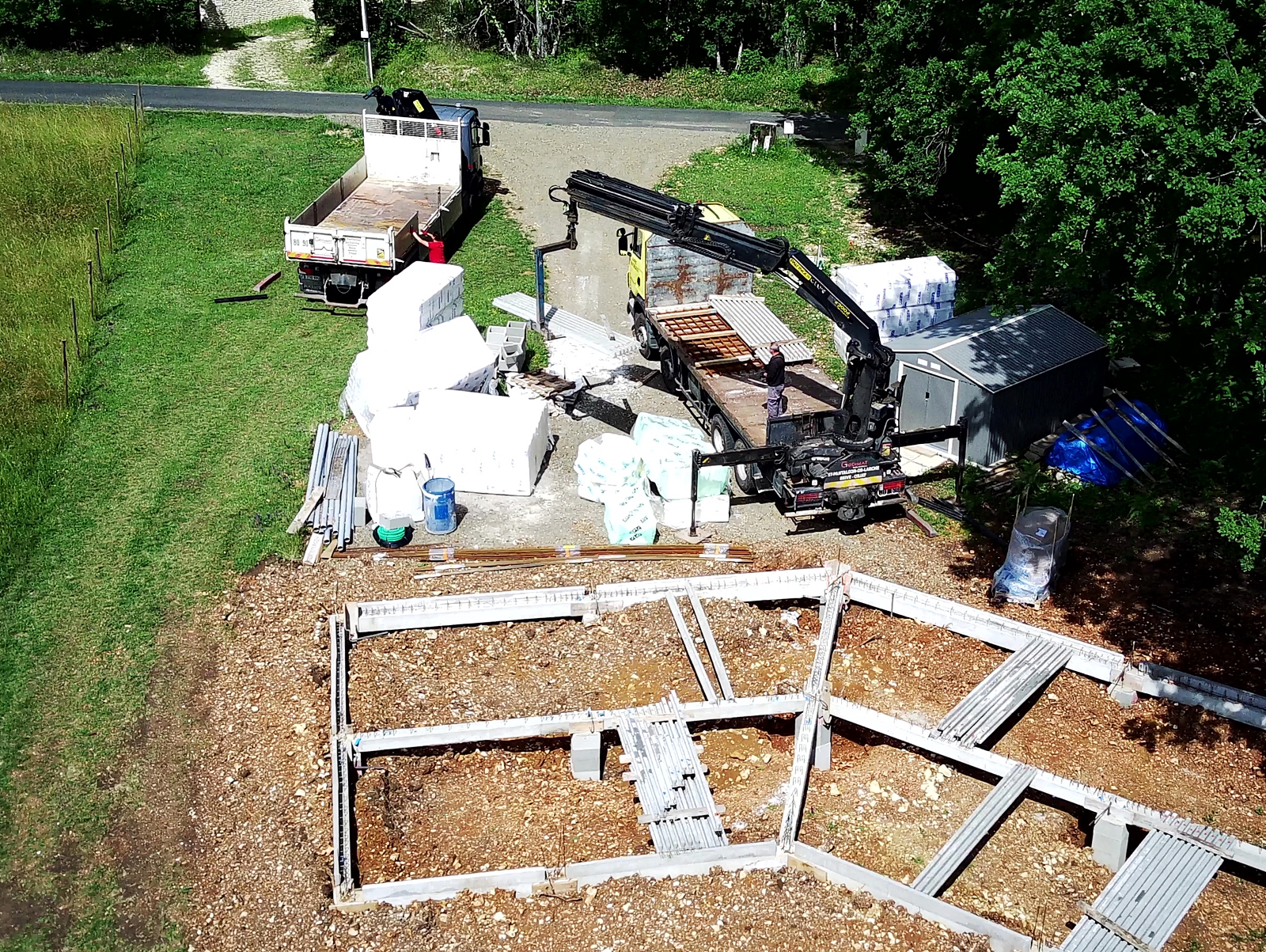
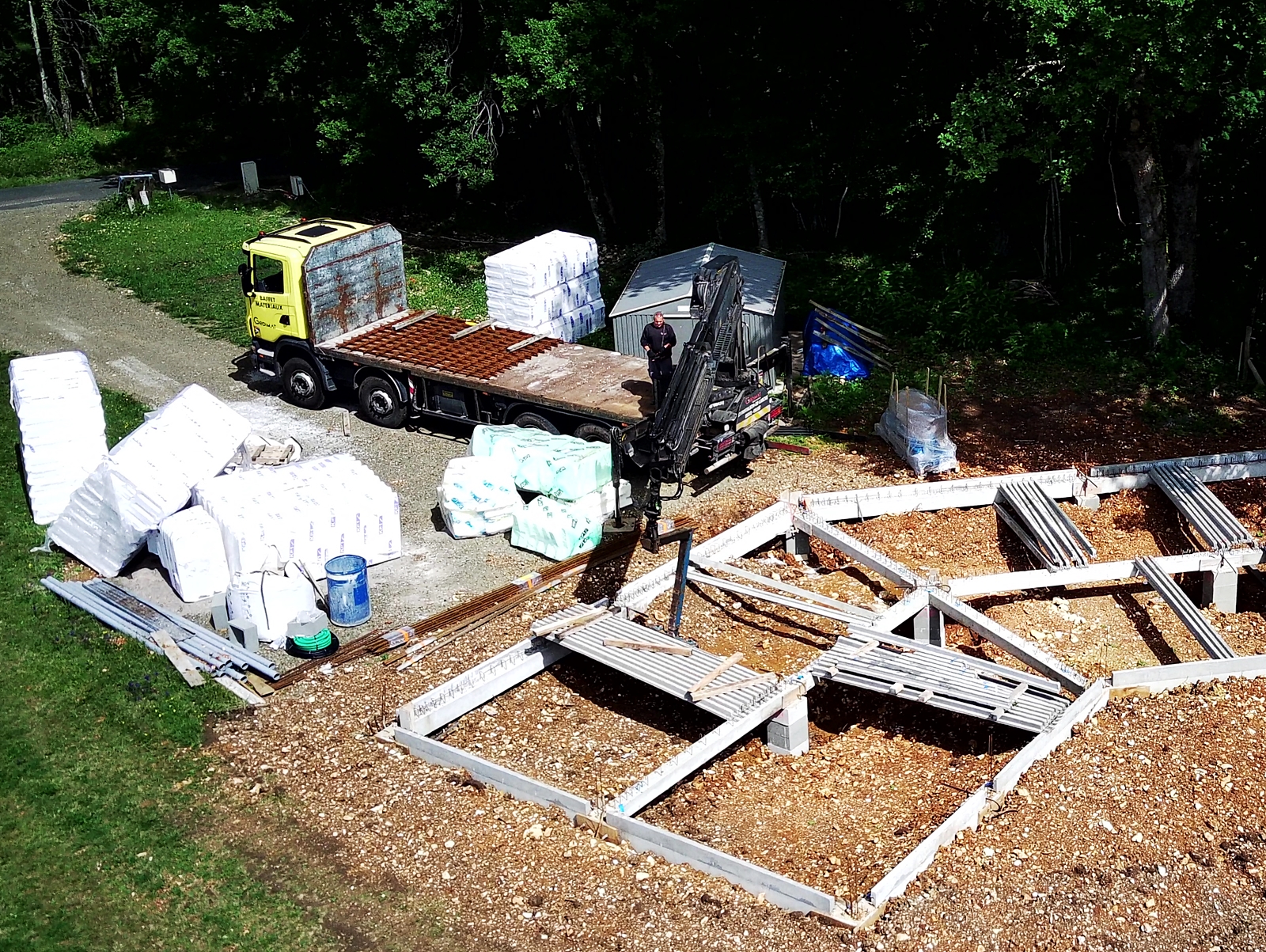
So today saw the delivery of the ‘poutrelles’ and all of the other materials that will be required to construct the floor. The ‘poutrelles’ will bridge the spaces between the outer and inner supporting beams and have had to be specially fabricated to specific measurements. This is because the ‘arms’ of the legs of the ‘V’ are of different widths, meaning that there are therefore two sets of ‘poutrelles’ of different lengths. The images that follow show the delivery man unloading them and he had to take careful account of this when positioning them even though he was only ‘roughly’ placing the ‘poutrelles’ on the main beams so they can be accurately positioned later.

The next step will be to do just that. The ‘poutrelles’ won’t be positioned next to each other, rather there will be a gap of specific width left between them. This gap will be filled by what is called a ‘hourdis’ and the width of the gap will depend on the width of the ‘hourdis’ being used. This method of construction, which I’ve not encountered previously, is referred to as ‘plancher sur poutrelles hourdis’ (‘plancher’ means floor) and is commonly used where the floor is constructed over a void, as with my house. As I mentioned in a previous post, the void is referred to as a ‘vide sanitaire’.

But it’s not quite that simple, of course. A builder won’t just buy in any old ‘hourdis’. Firstly, a ‘hourdis’ can be made out of concrete (‘beton’) or polystyrene, as in my case, and the calculations depend on the dimensions of the floor and the load that it will ultimately be carrying. You get the idea. So first the ‘poutrelles’ will be placed into position, then the ‘hourdis’ pieces will be placed between them to bridge the gaps, then a reinforcing steel mesh will be placed over the top followed by a screed of concrete.

The latter is described as being a ‘dalle de répartition de faible épaisseur’ (thin distribution slab) but until it’s in place and has cured the floor cannot be walked on or take very much weight at all. I’ve found stories on the internet where doing so has cracked the underlying ‘hourdis’ and the affected area of the distribution slab has had to be cut out, including the steel mesh, in order to replace the damaged ‘hourdis’ before continuing with the construction.

All of these materials, together with the accessories that will also be required in the construction of the floor slab, were on show being delivered today. As I’ve already included a lot of boring technical stuff, from here on I’ll let the pictures speak for themselves.

null

null

null

null

null

null

null

null

null

null

null

null

null

null

null

null

null

null

null

null

Whether the builders will turn up tomorrow and crack on with the job I do not know. I hope so, but as always, I’ll have to wait and see 😉

Eh? What? How?

Sometimes I think we just have to admit that there are forces at work about which we know very little and over which we have no control. My experiences today were a case in point.

I’ve had a flight planned for my Savannah, for quite some time actually, and today seemed like an ideal day for it. I’ve tried previously on a couple of occasions to do it but have been thwarted both times because of the weather. But this morning looked as though it was going to be perfect, with very light winds, lowish temperatures and a little bit of cloud that taken together would make for very good, smooth flying conditions.

I arrived at Malbec fairly early and the visibility out to the south wasn’t too bad. There was some low level cloud in the river valley which wasn’t really surprising and wasn’t going to trouble me, so I carried on and prepared 77ASY for flight. I wanted to record the flight so mounted one GoPro under the right wing, as I have previously, and a second in the cabin with a connection into my radio. I tested the arrangement a few weeks ago and was looking forward to trying it out in the air.

I warmed the Savannah’s engines up before starting up the videos and was all set to go by about 09.45 am. Here are some shots that I took before restarting the engine ready for take off.

null

null

null

Then I climbed in and took off confident that all was well and that my two GoPros would be recording events thereafter. But it turned out that I couldn’t have been more wrong.

I became used to my cheap Chinese sportscams regularly letting me down when I tried to make recordings of flights as a result of batteries failing, the cameras switching themselves off unexpectedly for no reason and whatever, but I’ve always been able to rely on my GoPros. But not today apparently. In the event I decided to abort the flight due to low cloud in the direction I was heading and returned to Malbec, only remaining airborne for 35 minutes. But I thought that I’d at least have my recordings to view afterwards.

But not so. The GoPro that I’d installed under the wing recorded… nothing. Nada. No video at all. I do not understand how that could have happened. I switched it on, pressed the ‘record’ button and heard it beep. The two buttons are separate so there can have been no confusion and the GoPro was connected to a power bank to give it plenty of recording time, but after the flight I found that the GoPro itself was switched off and the power bank was still at 100% charge. Go figure.

But it gets even more weird. Not having a video from my first GoPro, I at least thought that I’d have one from my second one, and I did have. But I noticed when I was transferring it onto my PC that it was only two minutes or so long and couldn’t understand what was happening. Until I played it back for the first time that is, and found that it showed the whole flight but at more than 10 times normal speed!

I couldn’t understand how this could have happened – until I checked the GoPro and found that it was set up to record in Timewarp mode – no, me neither. I’d never heard of such a thing previously and when I checked found that it’s a special GoPro slow motion mode with smoothing, but when I tried to switch it back to normal recording, I found that I couldn’t! In fact I had to do a factory reset on the GoPro.

But that wasn’t the end of it. I set both of my GoPros to record in 2.7k video quality rather than 4k to save on file size, my newer GoPro 8 in 2.7k 30 fps and this older GoPro 7 in 2.7k 25 fps. I then found that not only had it been changed to Timewarp mode, it had also been changed to 1080p 60 fps, how I do not know as nobody other than me has any access whatsoever to the two cameras.

So there you are – mysteriouser and mysteriouser, as Alice in Wonderland said. I was able to view the video but as the GoPro doesn’t record frames continuously in Timewarp mode but instead leaves a gap between each one, the results look like a video shot in the 1900’s. However, I could lift still images from it and a few are shown below to show the course of the flight, starting with the take off which, thankfully, was quite normal.

null

Less than 10 minutes into the flight it was already becoming evident that low cloud was becoming a problem that looked like it would get worse the further south I flew.

null

And indeed it did.

null

null

I could see Sarlat-Domme over to my right with low cloud to its south-east and after deciding to abort the flight and return to Malbec, I reconsidered and turned towards Sarlat with the idea of doing a touch-and-go there.

null

However, experience tells you that in aviation, having made a decision it’s best to stick to it, so I dropped the idea and turned onto a heading to return to Malbec. The next shot shows that there was already quite a build-up of cloud between me and it.

null

null

Here are a couple of shots from when I was on final approach for Malbec.

null

null

The next shot was taken during the flare to land.

null

This shot was from just after touch-down.

null

The final shot was from ascending to the top of the runway to the area outside the barn.

null

So all in all, today has been a really weird day. What happened with my GoPros is, and will probably always remain, a complete mystery to me. The flight itself was OK for what it was, a 35 minute local jolly in relatively poor conditions. So yet again I was thwarted in being unable to complete my planned flight, but at least this time I did get into the air – and back again safely. Here’s hoping I get a chance to try again soon – with my GoPros all reset and ready to go as well.

This weather – good grief!

We were due to go to the opening of an art exhibition followed by a concert this evening at a beautiful local chateau near les Eyzies, called the Chateau de Campagne. The artist is one of the neighbours who was at the ‘repas des voisins’ last Sunday and I was really looking forward to it. Unfortunately however, I’ve just received an email to say that it’s had to be cancelled.

The reason? The area has been put under a ‘code orange’ storm alert with rain, high winds and hail forecast so the organisers of the event have been advised to be prudent and not allow it to go ahead, with the chateau itself being closed to visitors at 4.00 pm.

We had another wet night again last night, but mercifully without the crashing thunder that we had to endure on the two or three previous nights leading up to it, so I at least managed to sleep through. But what the heck’s going on with the weather? I can’t remember an early summer like this since I’ve been here as we’re usually enjoying fair weather by now. Personally I can’t wait for the much discussed global warming to kick in…

Catch-up

So what’s been going on? No progress on my house build, obviously, because I’d have been very quick to post about it if there had been. I think the delay this time is due to the construction of the made-to-measure floor beams (‘poutrelles’) that will be placed on the peripheral beams that were mounted on the support columns, to form the floor of the house.

I’m not acquainted with this form of construction so I can only surmise at this time that this is what will happen. The space below will be left largely empty – it’s referred to as a ‘vide sanitaire’ – and the ‘poutrelles’ will support the concrete floor slab.

Before moving onto other more interesting items, I thought I’d give a quick mention concerning my Kia’s new tyres. Having tyres fitted to your car is a bit different here in France compared to the UK. In the latter most people would routinely go to their nearest specialist tyre depot that would usually carry a wide range of tyre brands at all prices and wait while a new set is fitted, with balancing and tracking services being available if required. Here in France it’s not quite so simple.

There are a few national tyre specialists and quite a few independents and from my experience the former are quite a bit more expensive. Alternatively, the independents seem to offer a fairly restricted range selection on a take-it-or-leave-it basis, so getting new tyres can present a bit of a quandary. The last alternative is to find the tyres that you want on line and then get a local garage or tyre station to fit them, and that’s OK so long as you don’t also need a ‘specialist’ service like tracking.

My problem was that when I last had new tyres fitted I followed the latter route and thought that I’d done the right thing. I bought a set of four expensive Michelin Latitude Tour tyres on line and then found what I thought was a capable local fitting station (a respectable garage actually) to fit them and also check the vehicle’s tracking. All seemed to go well but afterwards I did notice that on tight roundabouts, for example, I was getting a bit of tyre squeal and the steering seemed a bit heavier than I thought it should be, which I put down to the model of tyre.

But after driving the vehicle for a few years it was evident that the tracking was not as it should be because the outer edges of the front tyres were worn much more than the rest of the tyres’ surfaces and something obviously needed to be done as my biannual CT (two-year French MOT) was due at the end of May and I had to replace the Kia’s two front tyres at least. To complicate matters, when I checked I found that Michelin have replaced the Latitude Tour with another Latitude model of different tread design and at an even higher price, so I decided that rather than just go to a local tyre depot I’d locate another suitable tyre and find a local fitting station.

Since I last replaced the Kia’s tyres there’s been a change of law in France. In certain ‘alpine’ départements, during the winter months summer tyres have to be removed from your vehicle and replaced with winter ones. You aren’t allowed to drive in those départements during those months on summer tyres, even as a visitor and there’s no snow on the road, but there is an alternative, which is to fit your vehicle with ‘all seasons’ tyres that can be used all the year round.

The Latitude Tour was an ‘all seasons’ tyre so my initial task was to locate an alternative that was also ‘all-seasons’ with a similar tread pattern, and that’s why I didn’t want to go to just any old local tyre depot who would have been more interested in just flogging me any old tyre that they had in stock. I found what I was looking for and had them delivered to my home address and then had to find someone to fit them. In fact that proved to be easier than I thought because the first garage that I phoned said they could do it while I waited.

It was a relatively new garage in Montignac that I’d never used before and when I arrived I was told that usually they didn’t fit other people’s tyres as they supplied their own and was asked why I hadn’t come straight to them in the first place? I told them that it would be a good idea for them to put a sign up out front saying that they sold tyres because there was absolutely no indication that they did. I was also surprised to see that they had two well-appointed and organised service and fitting bays before I left to do a bit of shopping in Intermarché while the work was being done, which with balancing and tracking took about an hour.

The bill I was presented with at the end I thought was a bit on the high side but it wasn’t worth quibbling about, the more so as I’ve found since driving on the new tyres that I don’t now experience any tyre squeal on roundabouts or anything like as much road noise as I did before, plus the steering is lighter and more precise. In fact the Kia feels like a different vehicle. So they did a proper job, unlike the garage that fitted my last set of Michelins. If and when I have to replace the Kia’s two rear tyres I hope that the new place will make an exception for me again and fit them for me 😉

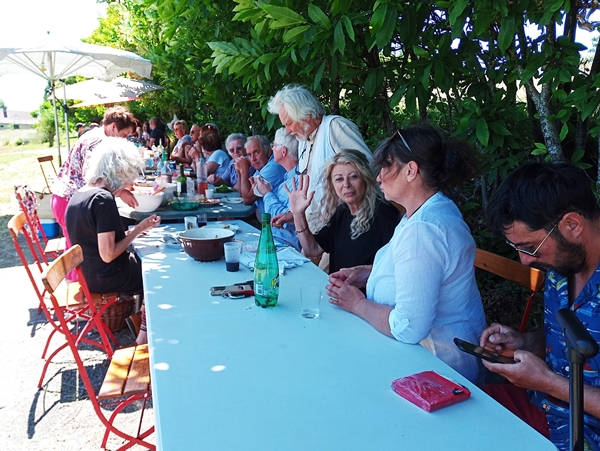
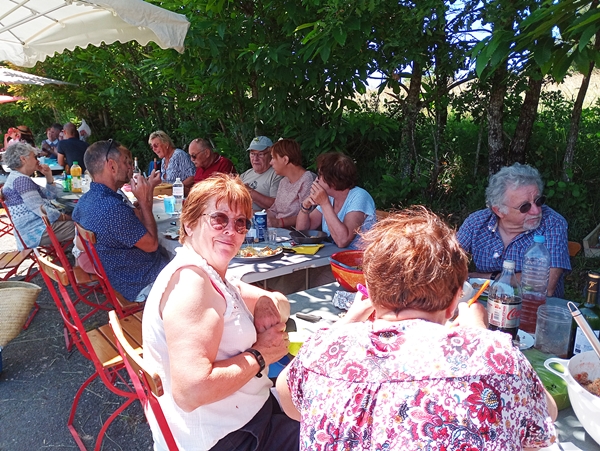
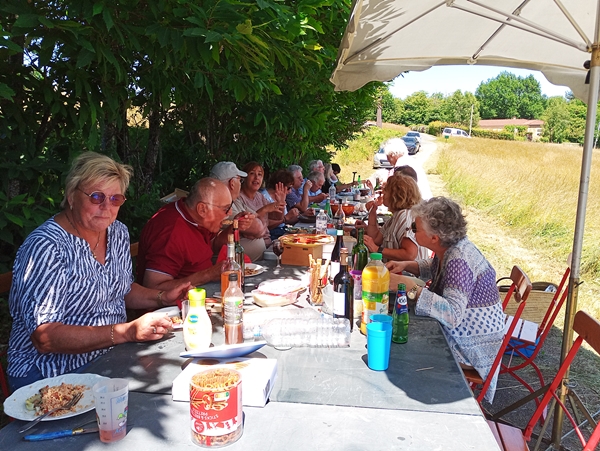
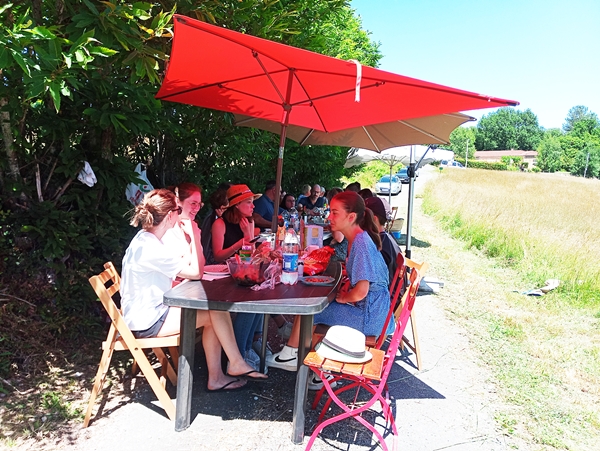
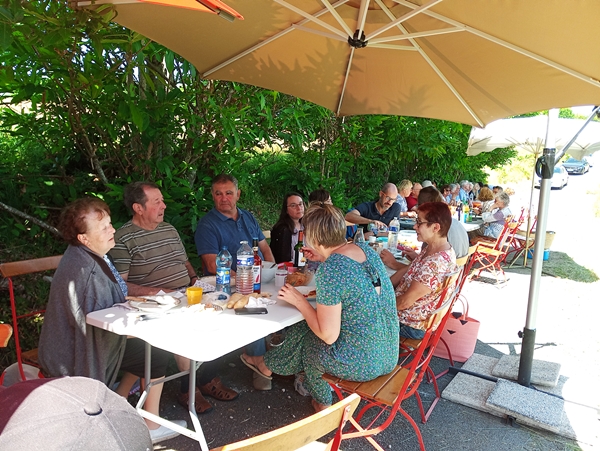
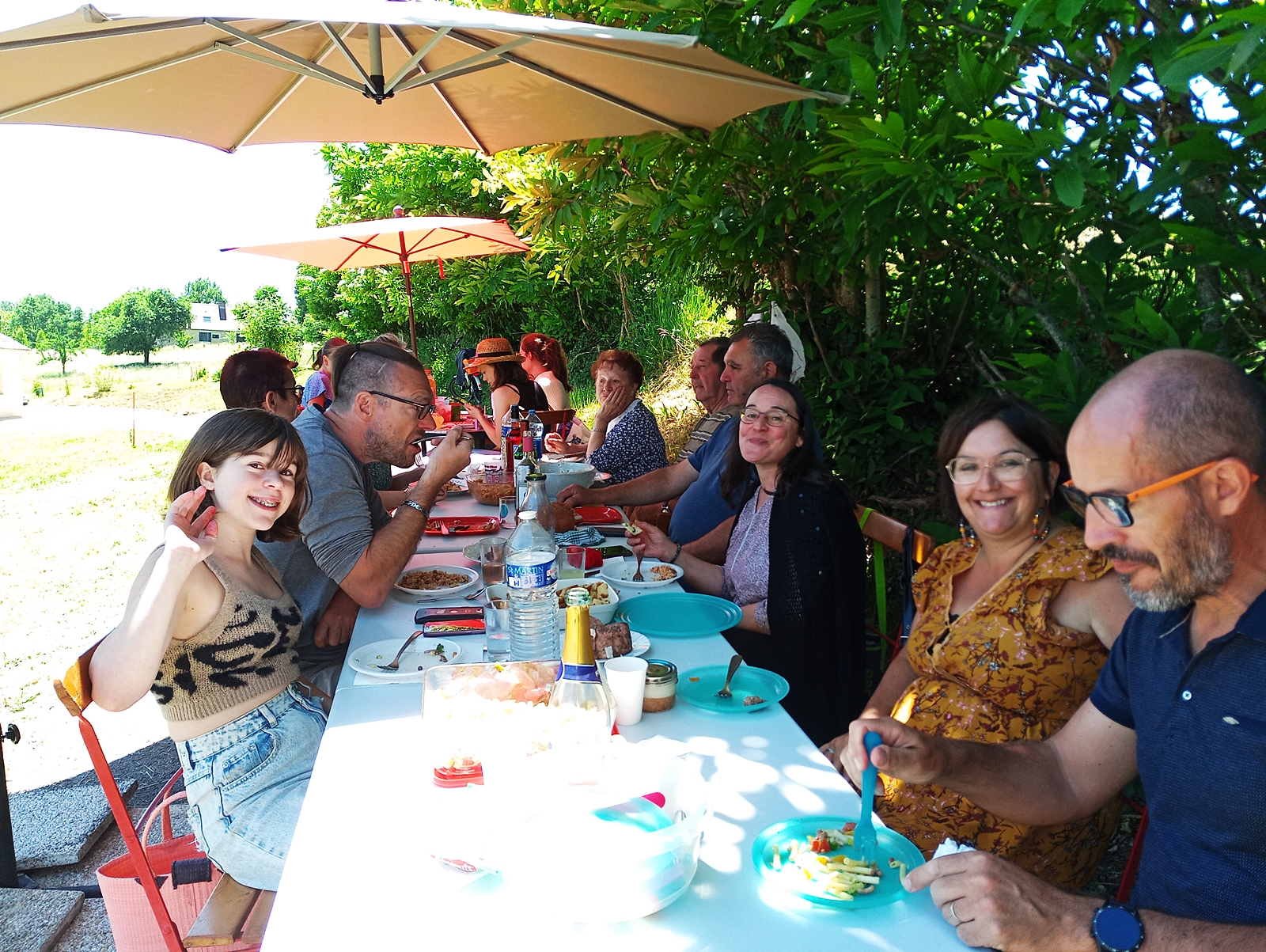
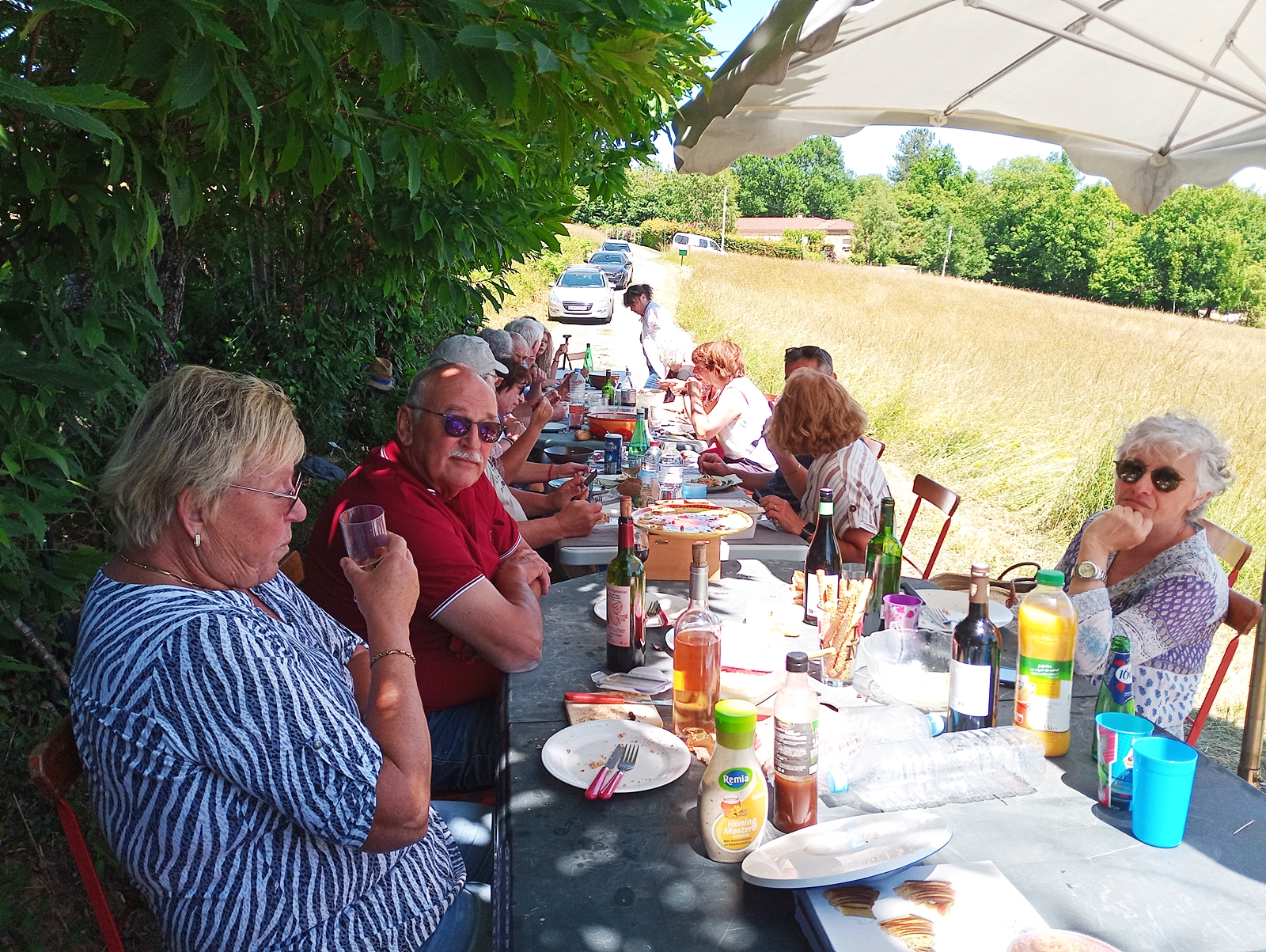
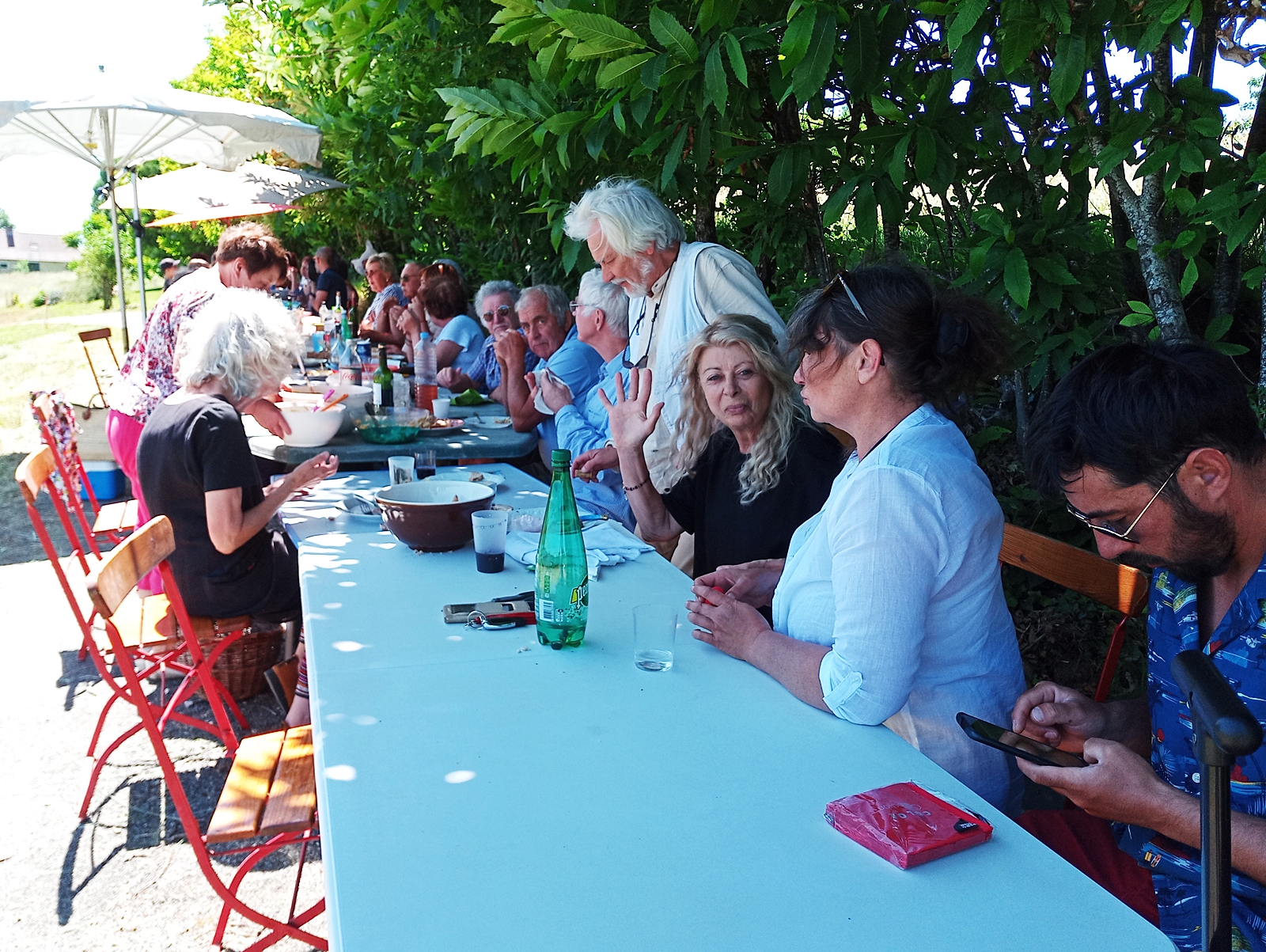
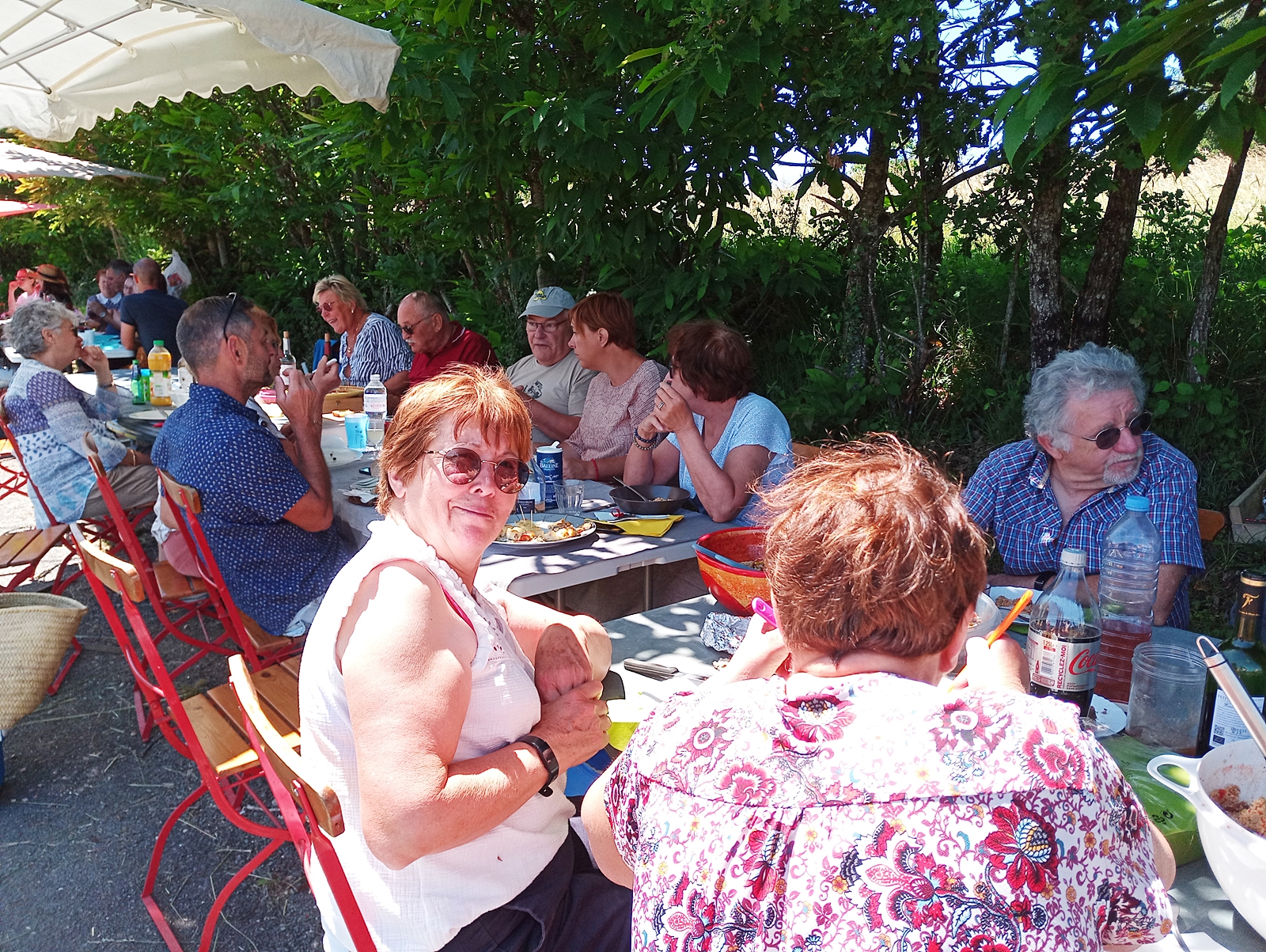
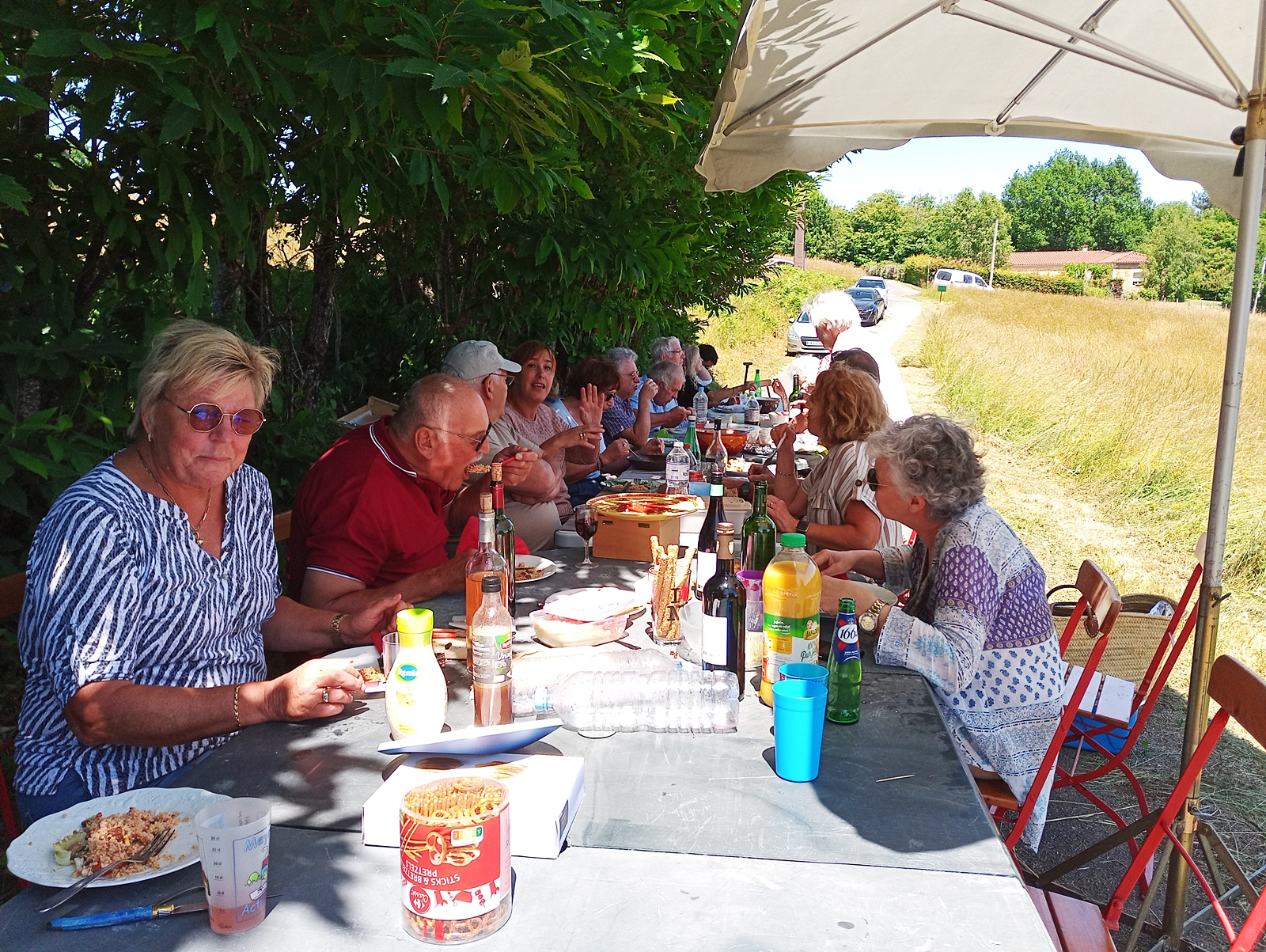
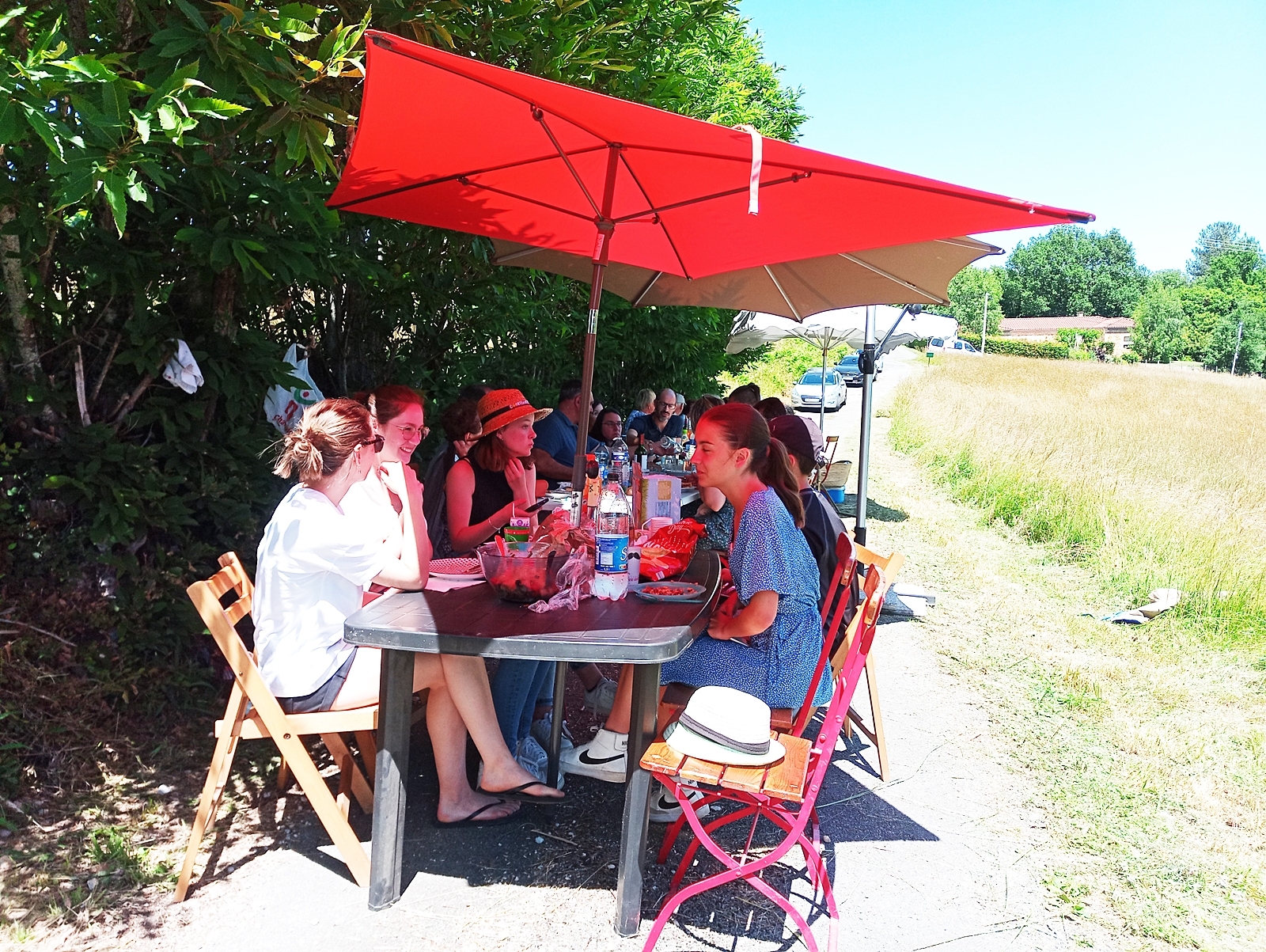
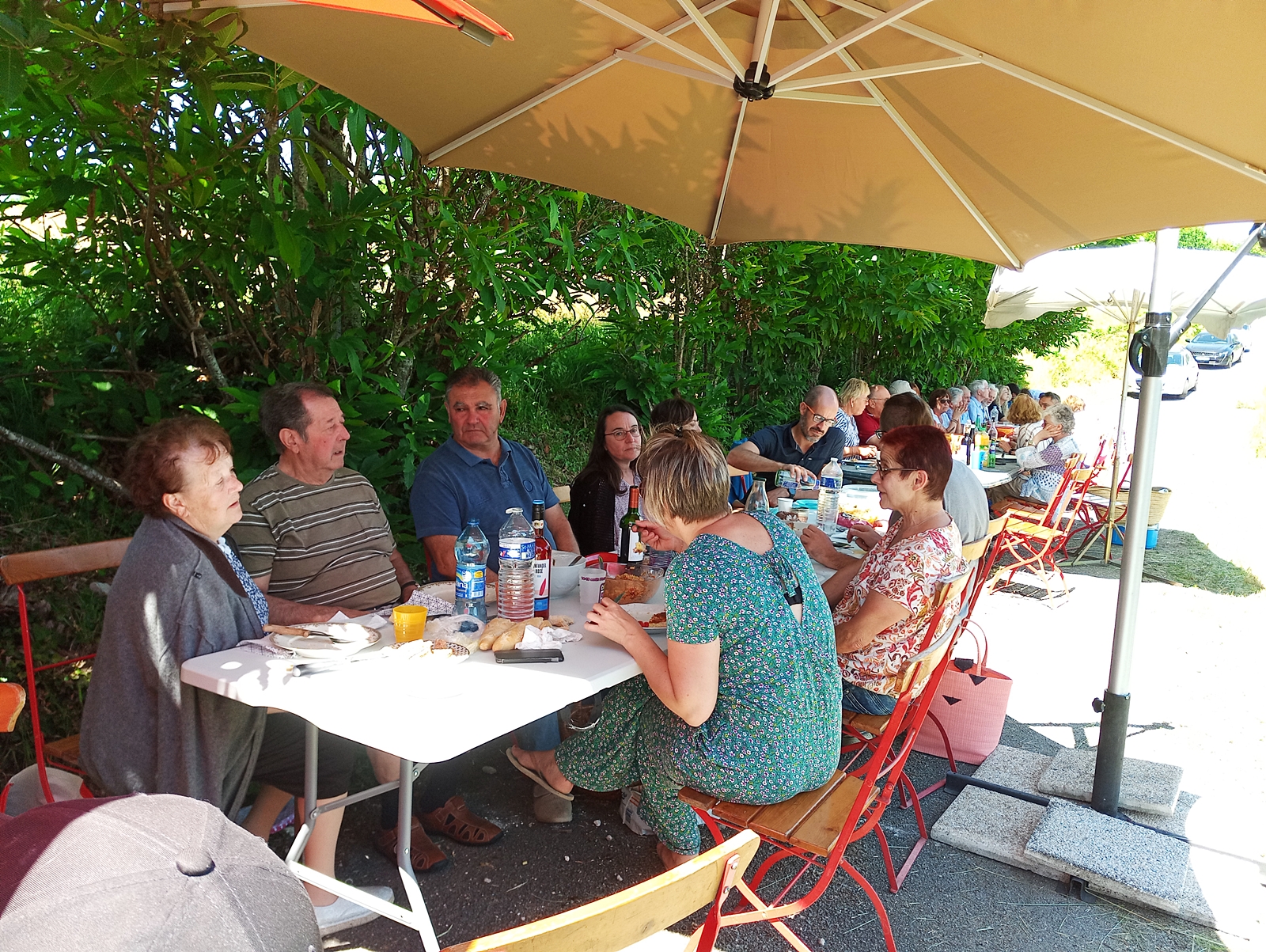
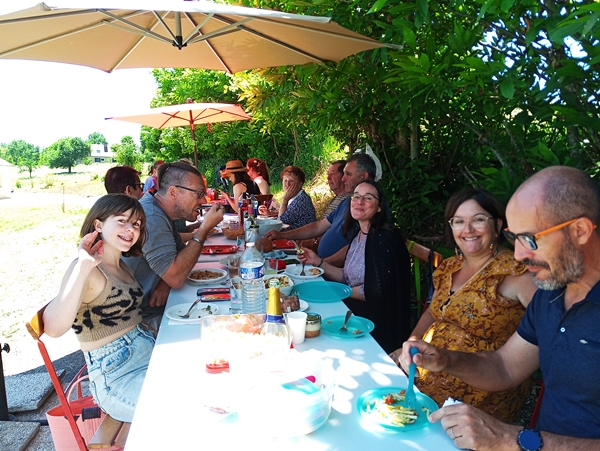
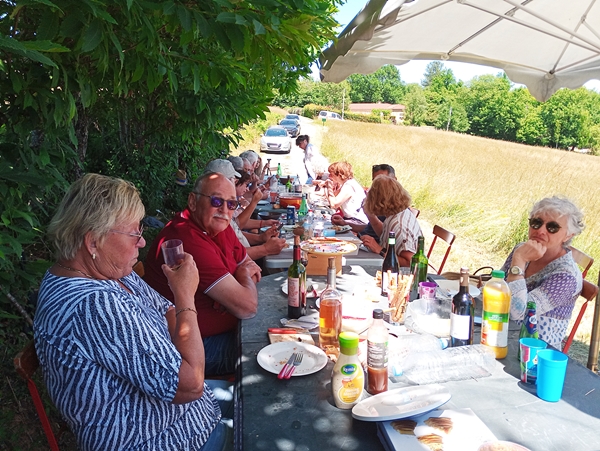
Now to last Sunday. A few days before I’d received an invitation by SMS to a mysterious luncheon. I didn’t know what it referred to so I wanted to find out before replying and before I did a neighbour, Gerald, dropped by to say that I hadn’t replied and should head over to the appointed venue, which was the lane passing by another neighbour’s house, at midday. It turned out that this is actually a regular annual event referred to as ‘le repas des voisins’ (the meal of neighbours) that’s restricted just to the folk who live in our little corner of Fleurac. As a newcomer this was my first time and as the following shots show, it was a very enjoyable, friendly event with a group of lovely people.
null

null

null

null

null

null

null

Now to the week itself. Wednesday was my turn for our weekly ‘apero’ get-together now that we’re into the summer and can use my two ‘tonnelles’ to sit out in and enjoy the fine weather. One of my biggest problems from living in my caravan, as I found last year, is that only having a small fridge I have great difficulty getting and keeping things cold. As last Wednesday was to be our first session outside, I wanted to offer a good chilled rosé wine which most of us like to drink at this time of the year, but only having my small fridge it was going to be impossible.

I therefore decided that I’d solve the problem by finding a suitable small freezer on Le Bon Coin, the French free ads website, that was old enough to keep outside and my plan was to actually get it back to the caravan by Tuesday so I could get everything ready for Wednesday with a wine box inside it for sufficient time to get it down to the required temperature. In fact I had a very lucky break.

I found what I was looking for in a village called Flottes in the Lot, in the Midi-Pyrénées just west of Cahors. The price was right and with a pick-up cost of just 20€ for fuel, it made it about 2/3 of the price of the freezer when new, so I wouldn’t have to worry about leaving it outside.

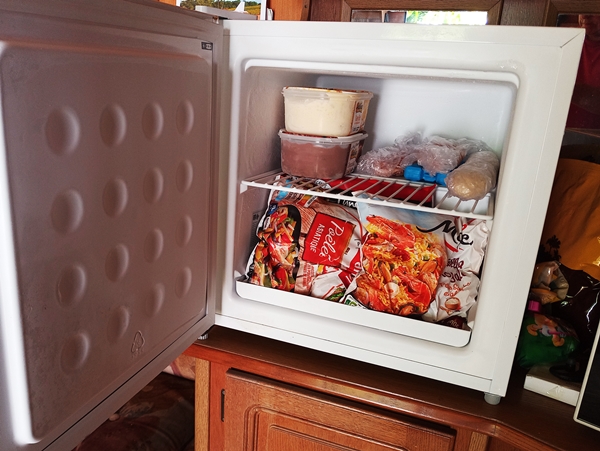
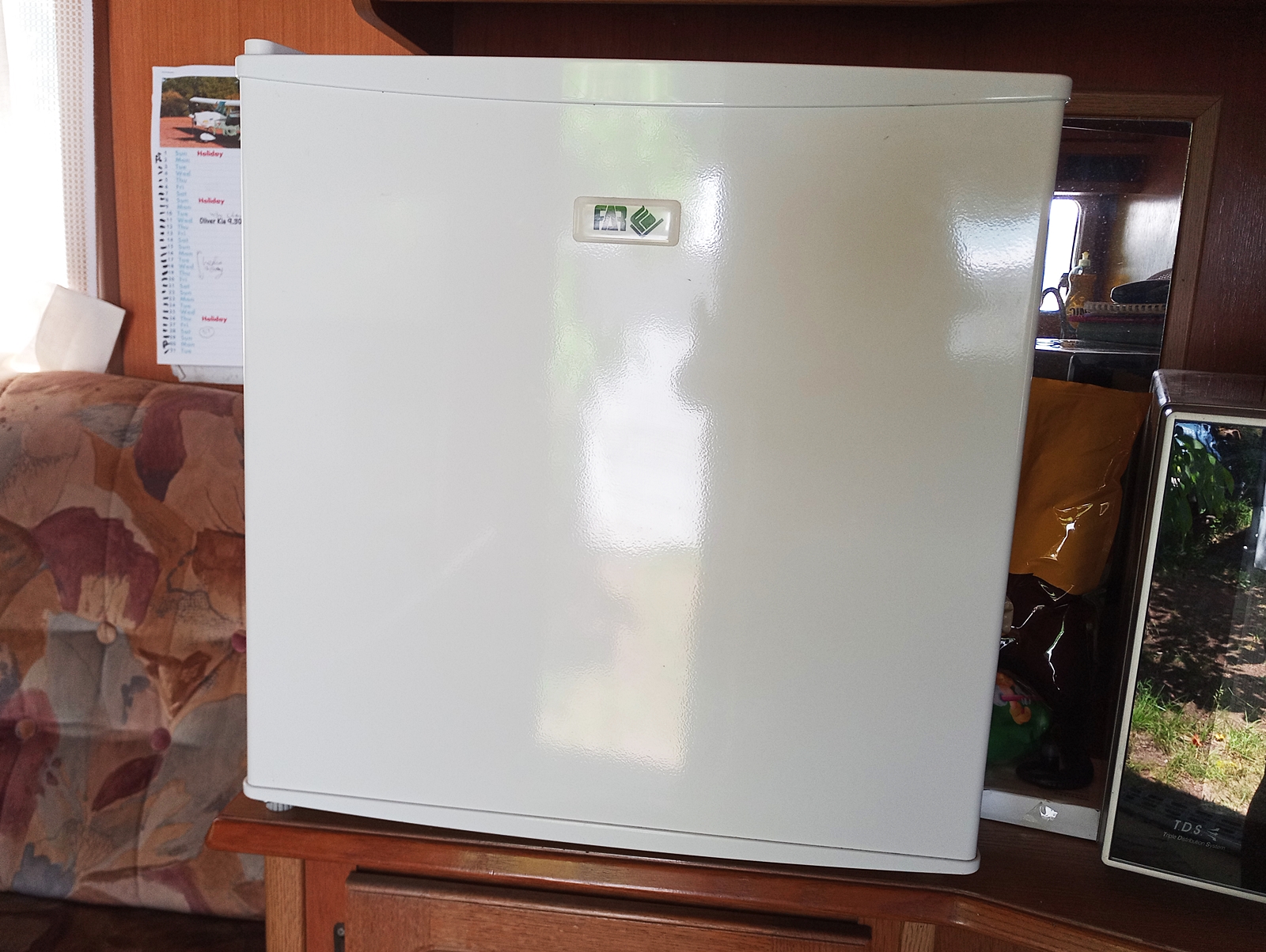
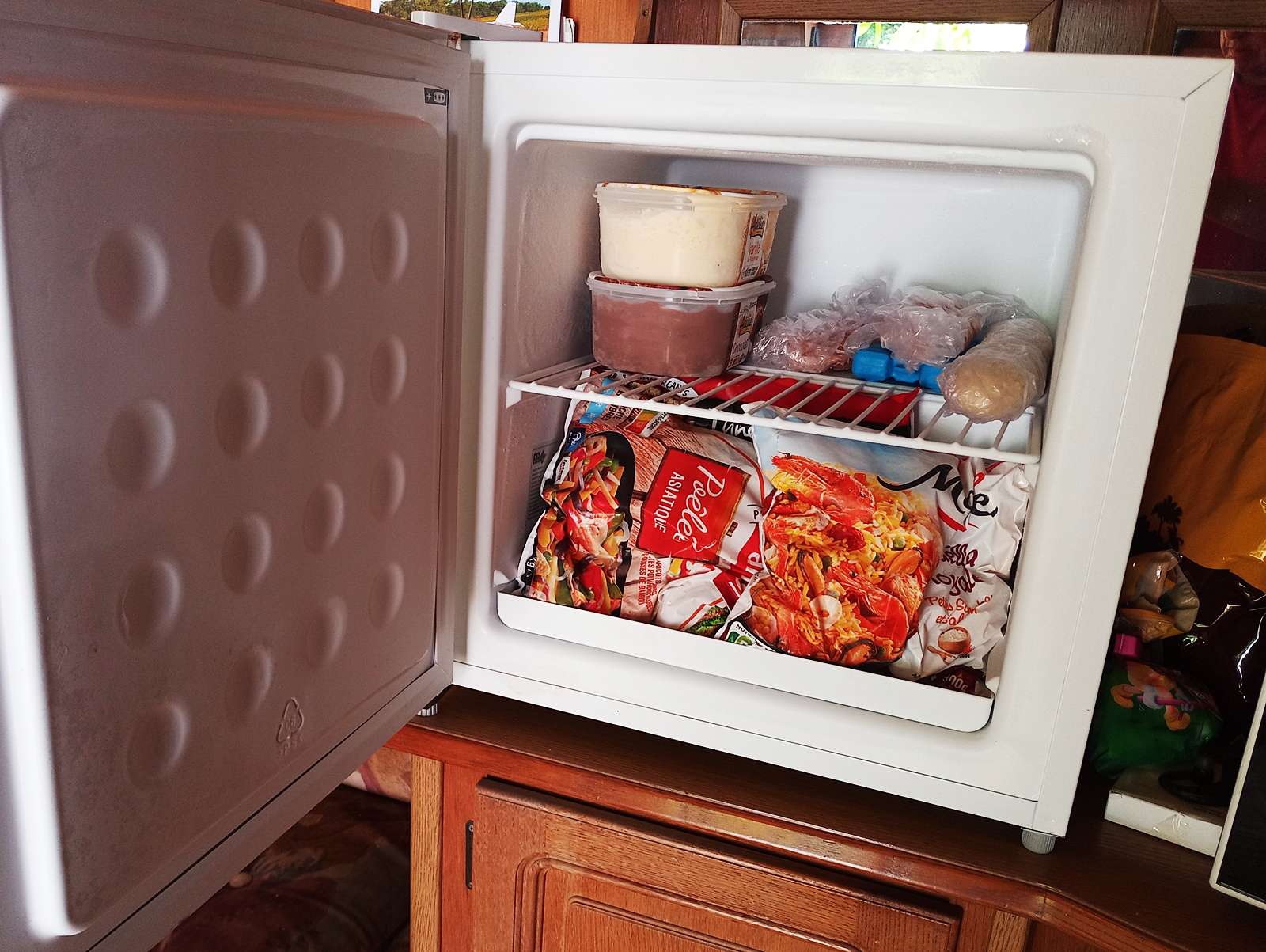
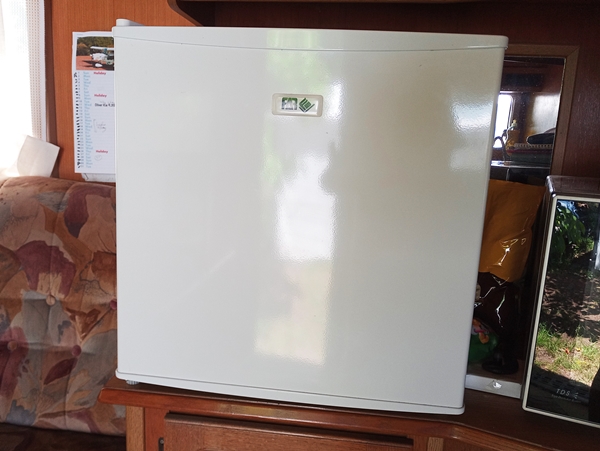
The drive there and back was idyllic, passing through wonderful scenery and some charming villages with narrow streets and I have to say that I think that the Lot is actually more pretty than the Dordogne. But my surprise when I got there was to find that actually the little freezer was almost new and far from being only good enough to leave outside, even under some sort of protective cover. So to cut a long story short, I found that by relegating my air fryer to a place near the window, I could put the little freezer next to my microwave, which is great. So now I can at last store frozen food and stuff, including ice cream for the first time since moving into my caravan. Pure luxury 😀

Here are a couple of shots of it.
null

null

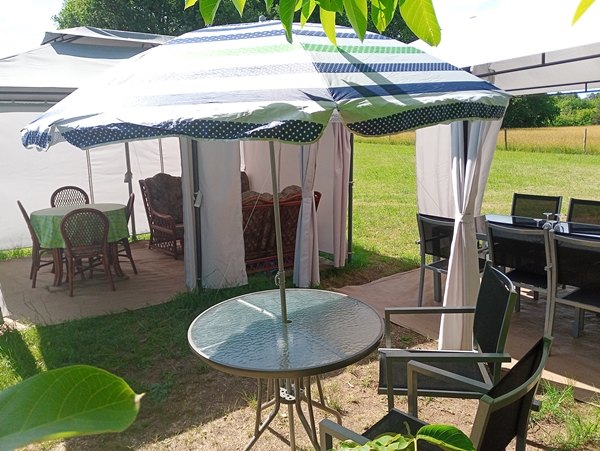
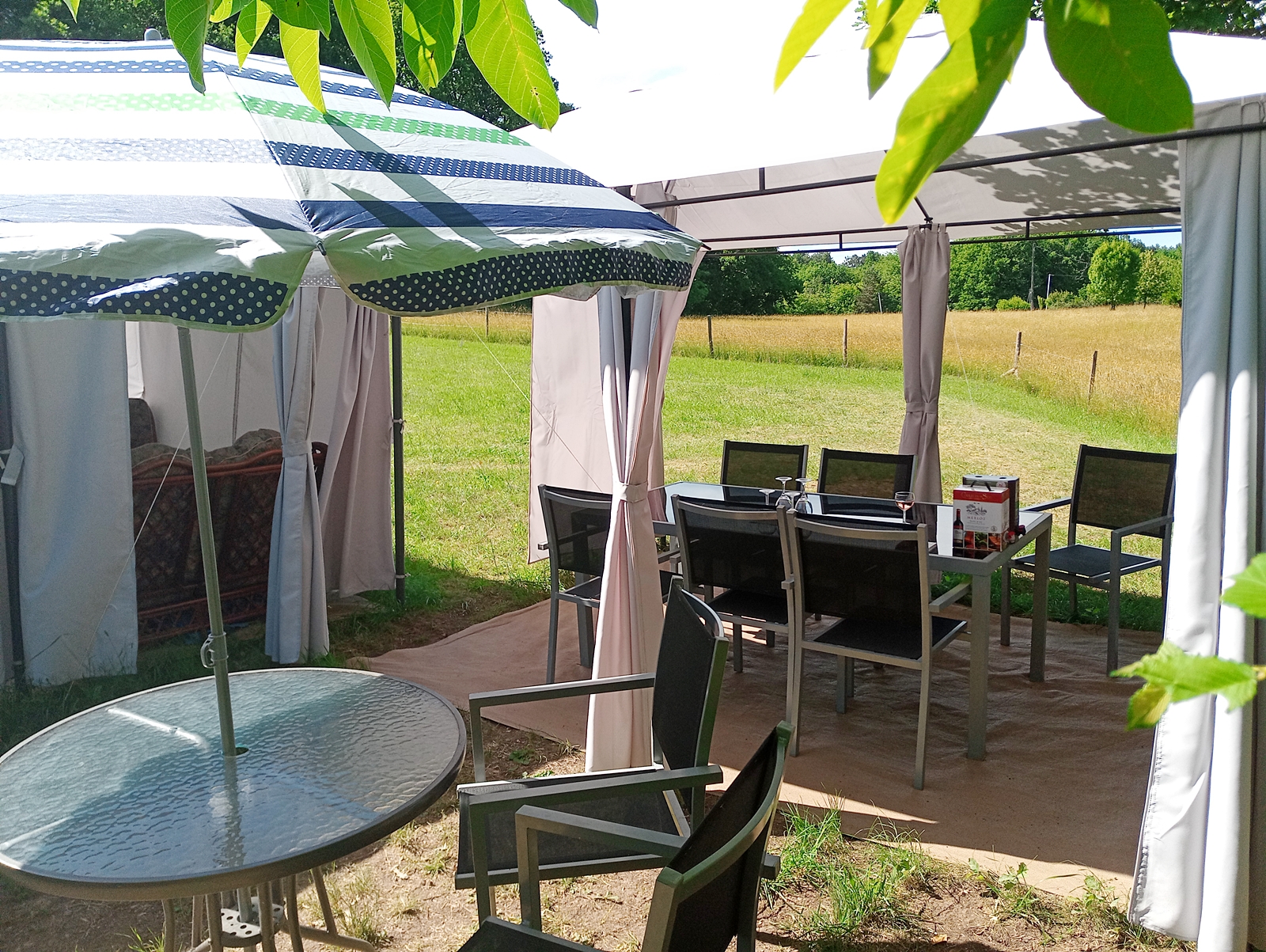
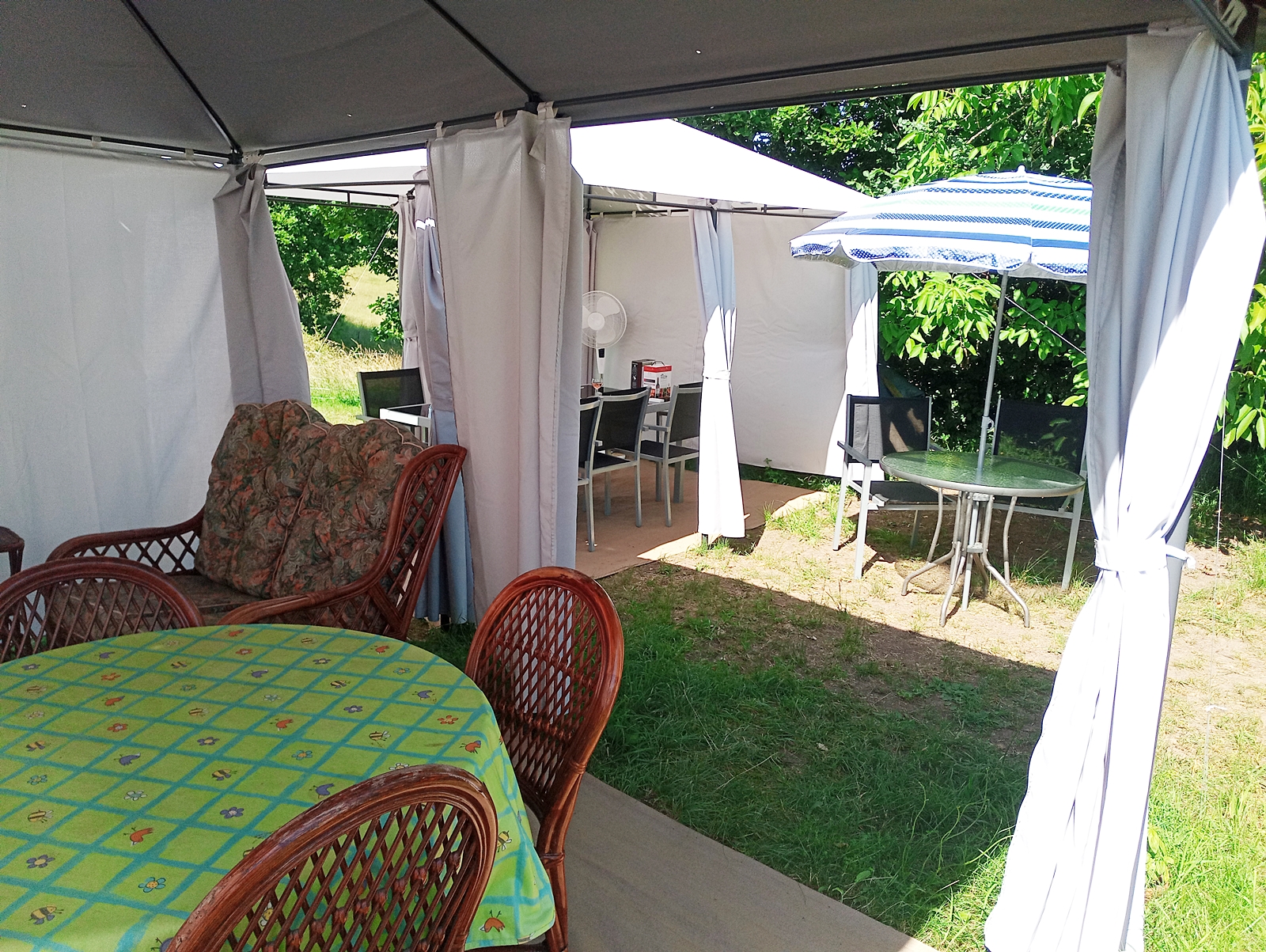
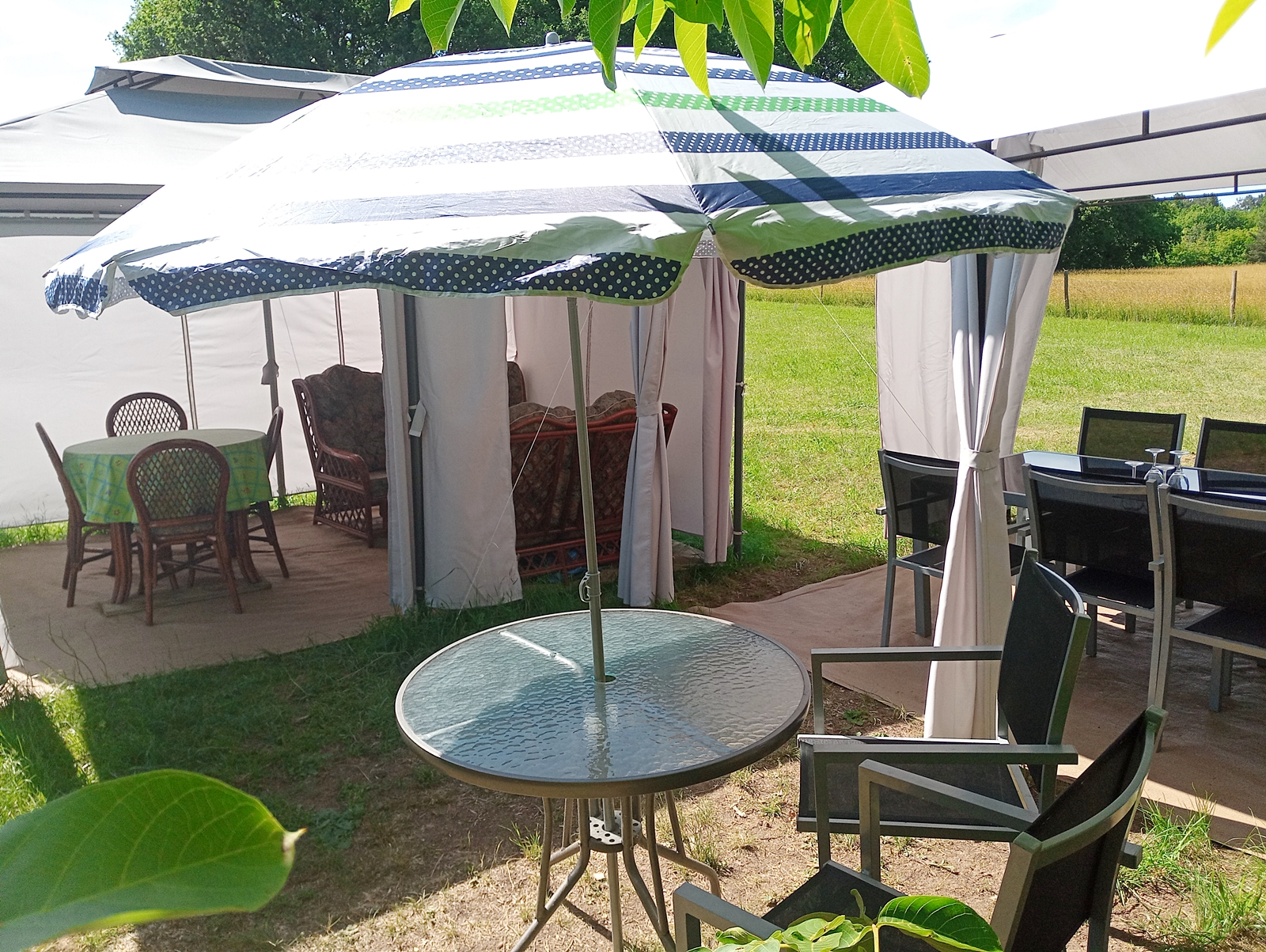
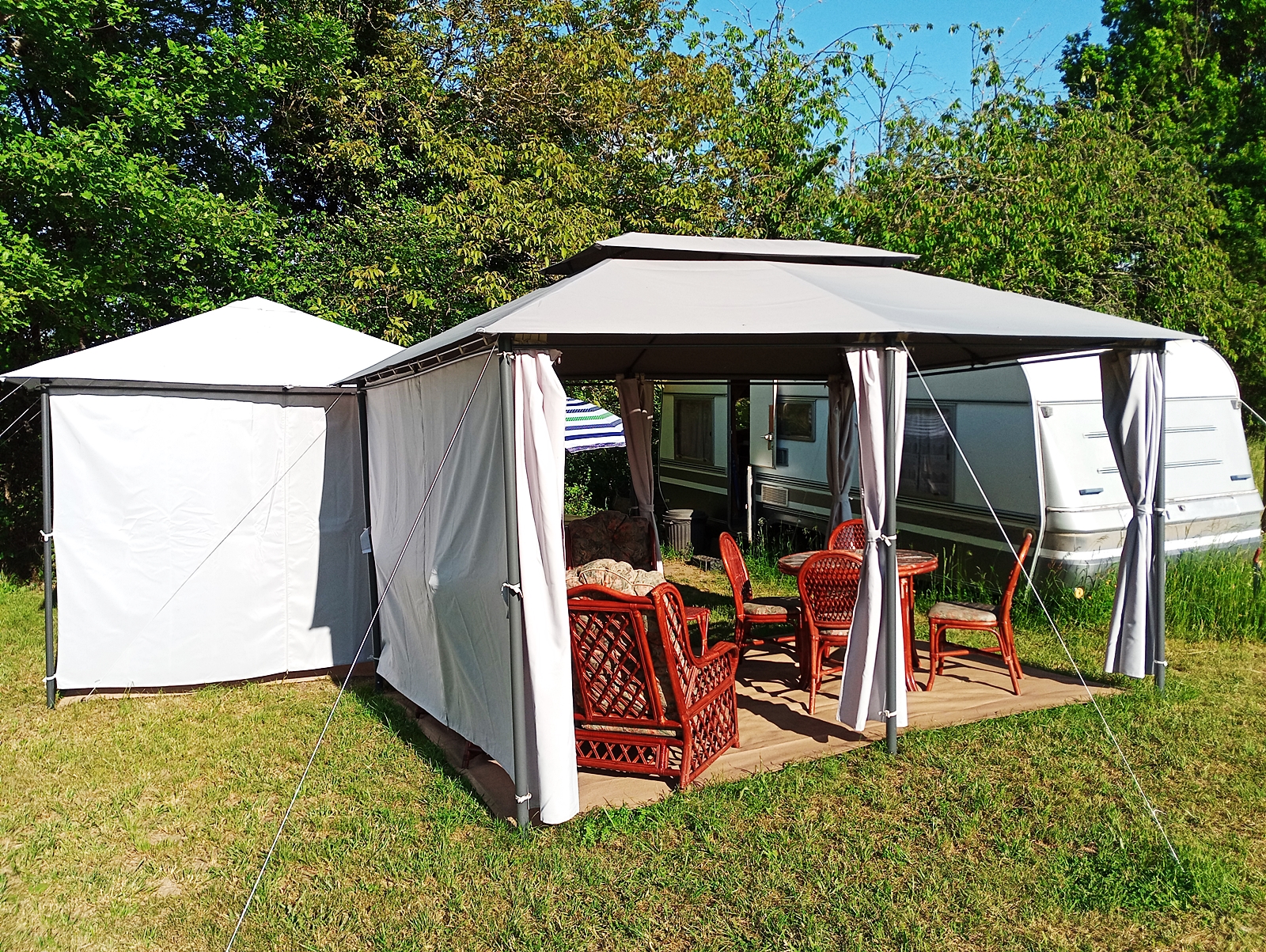
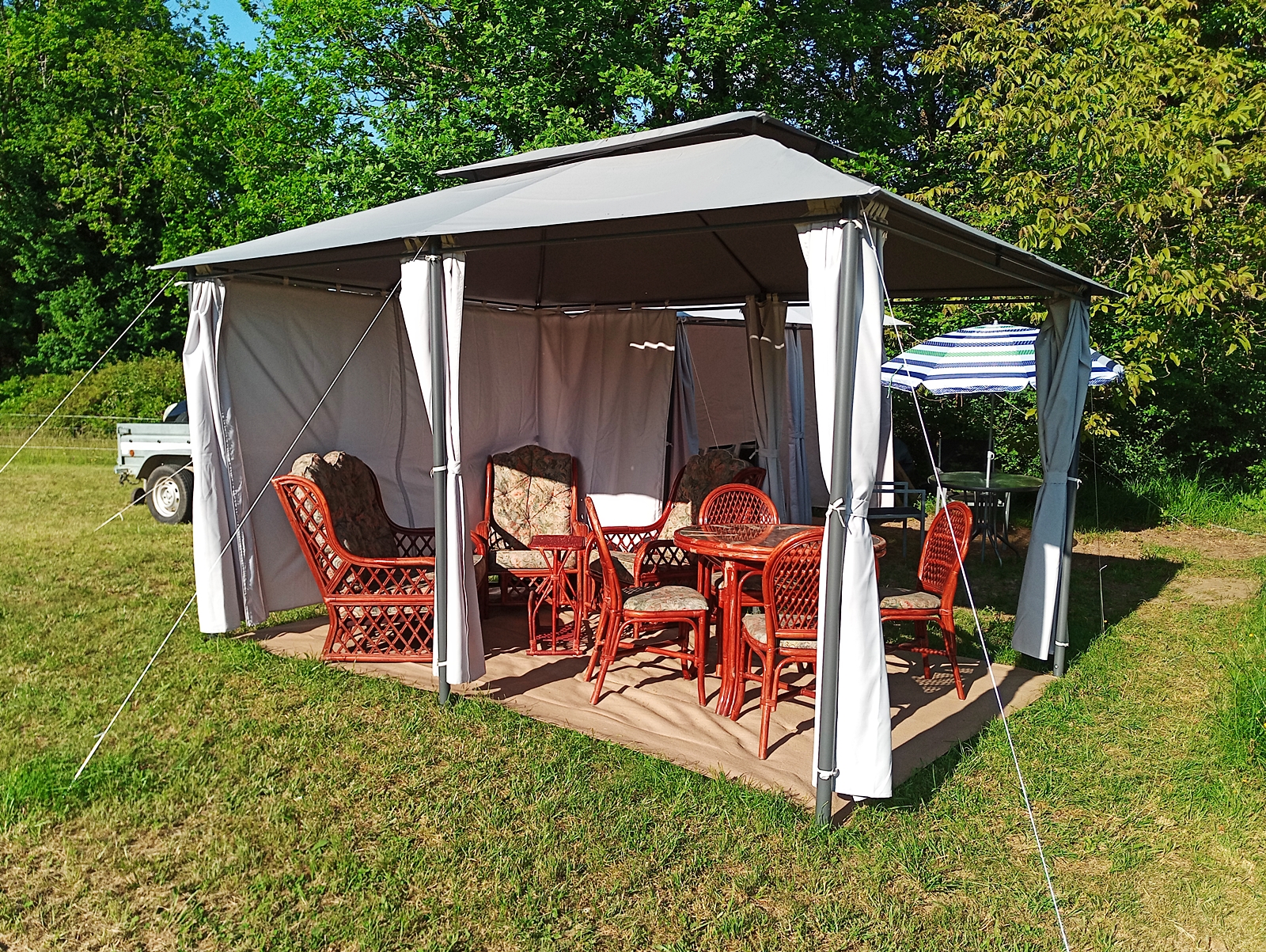
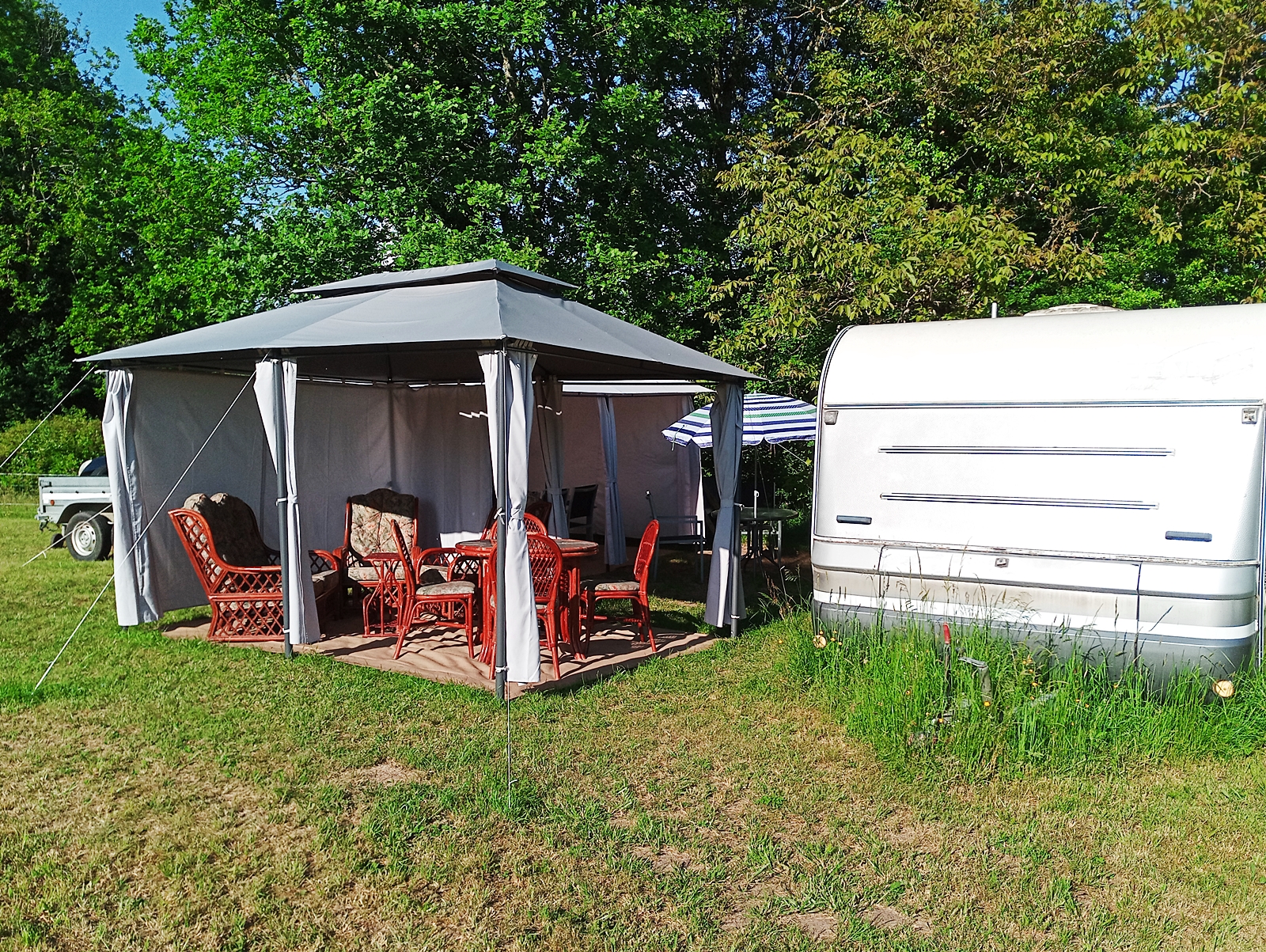
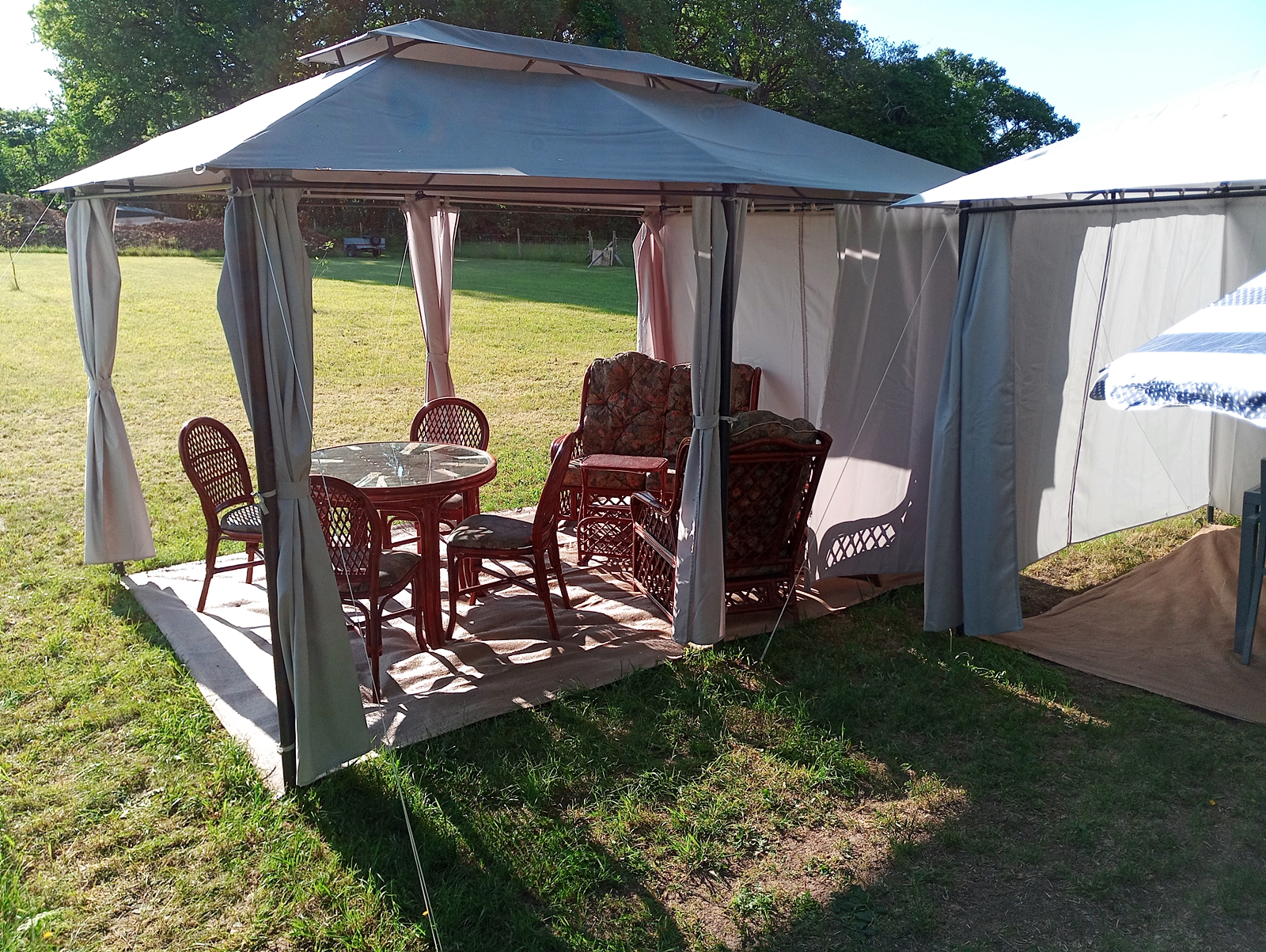
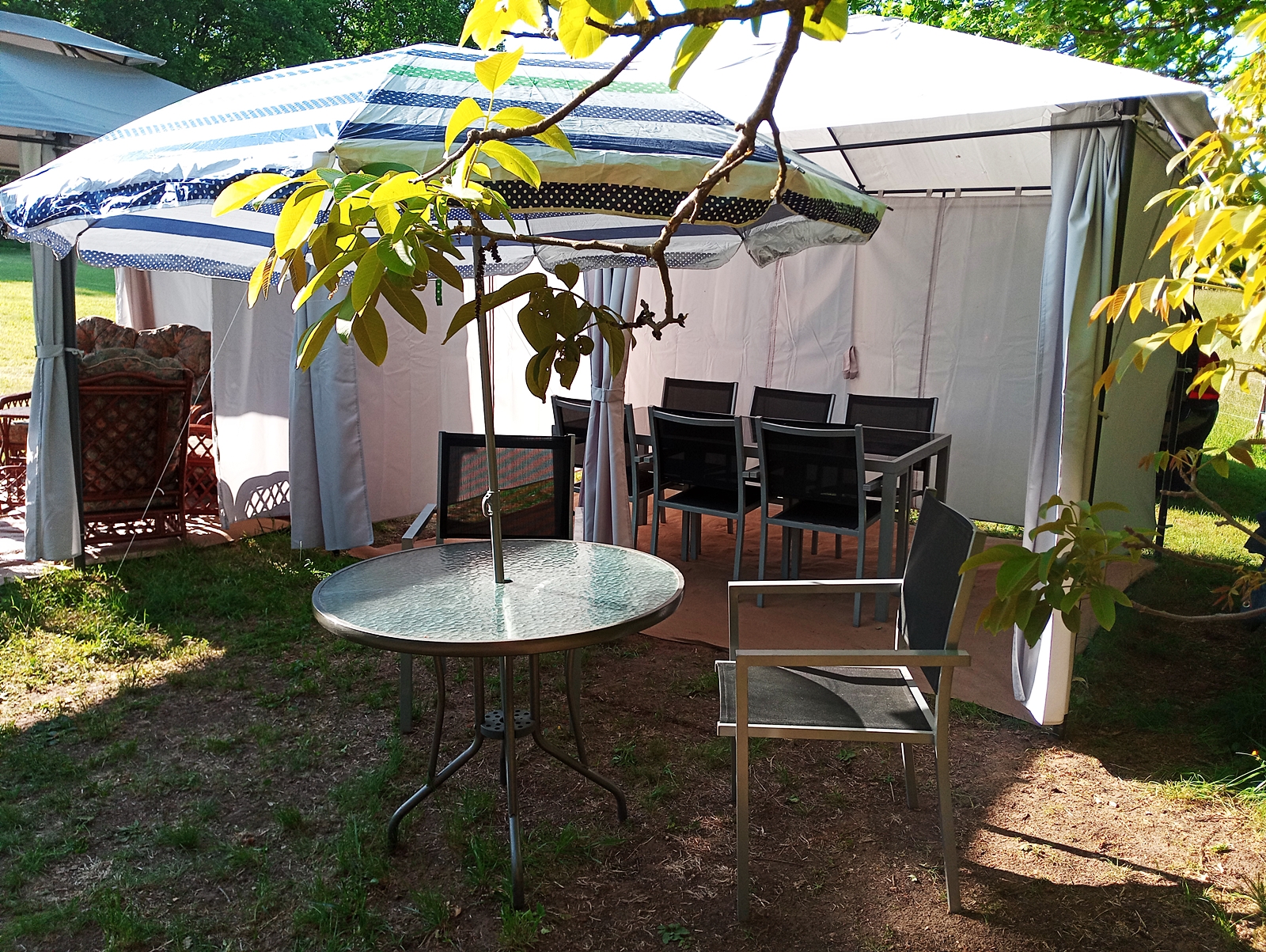
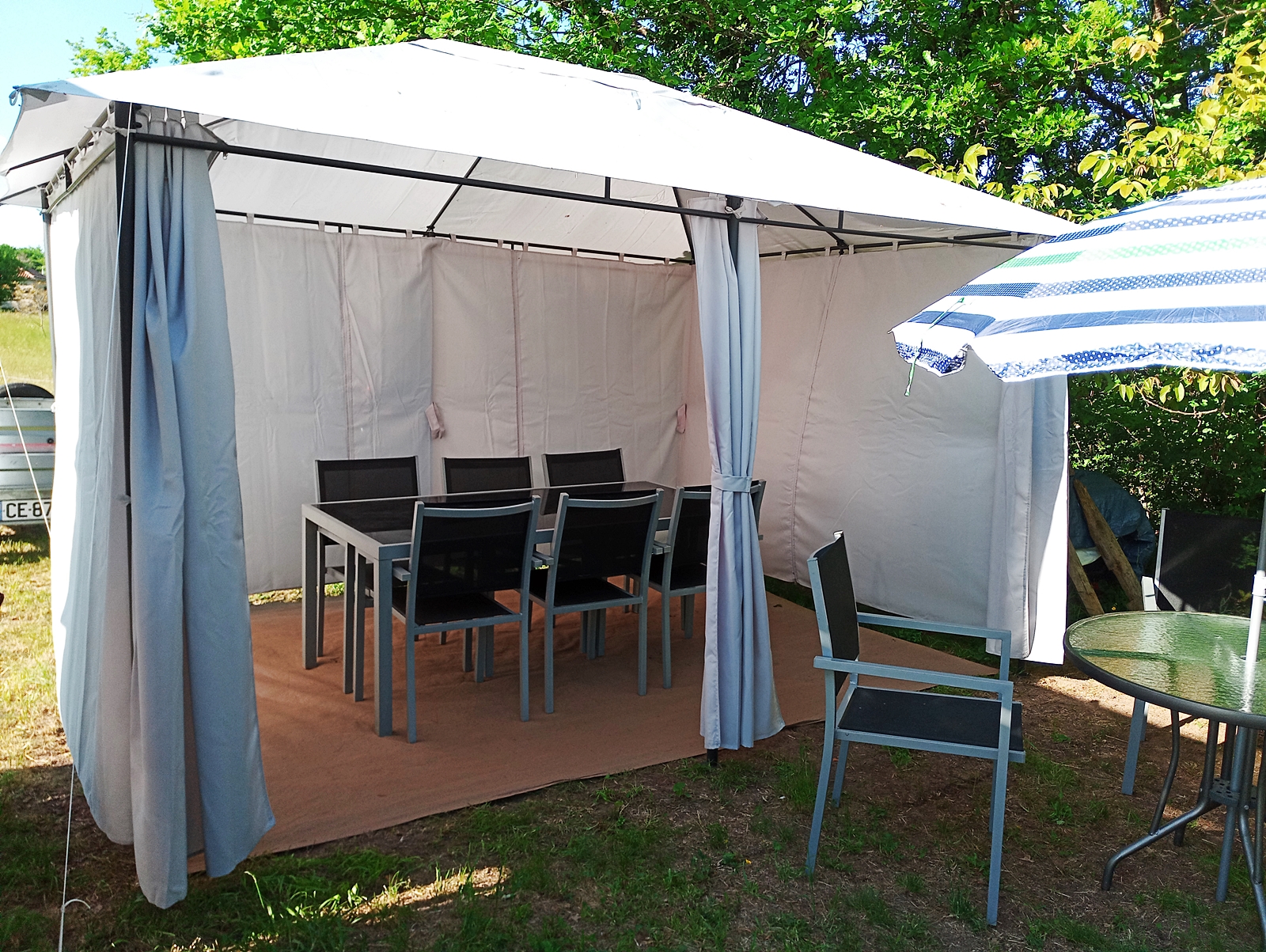
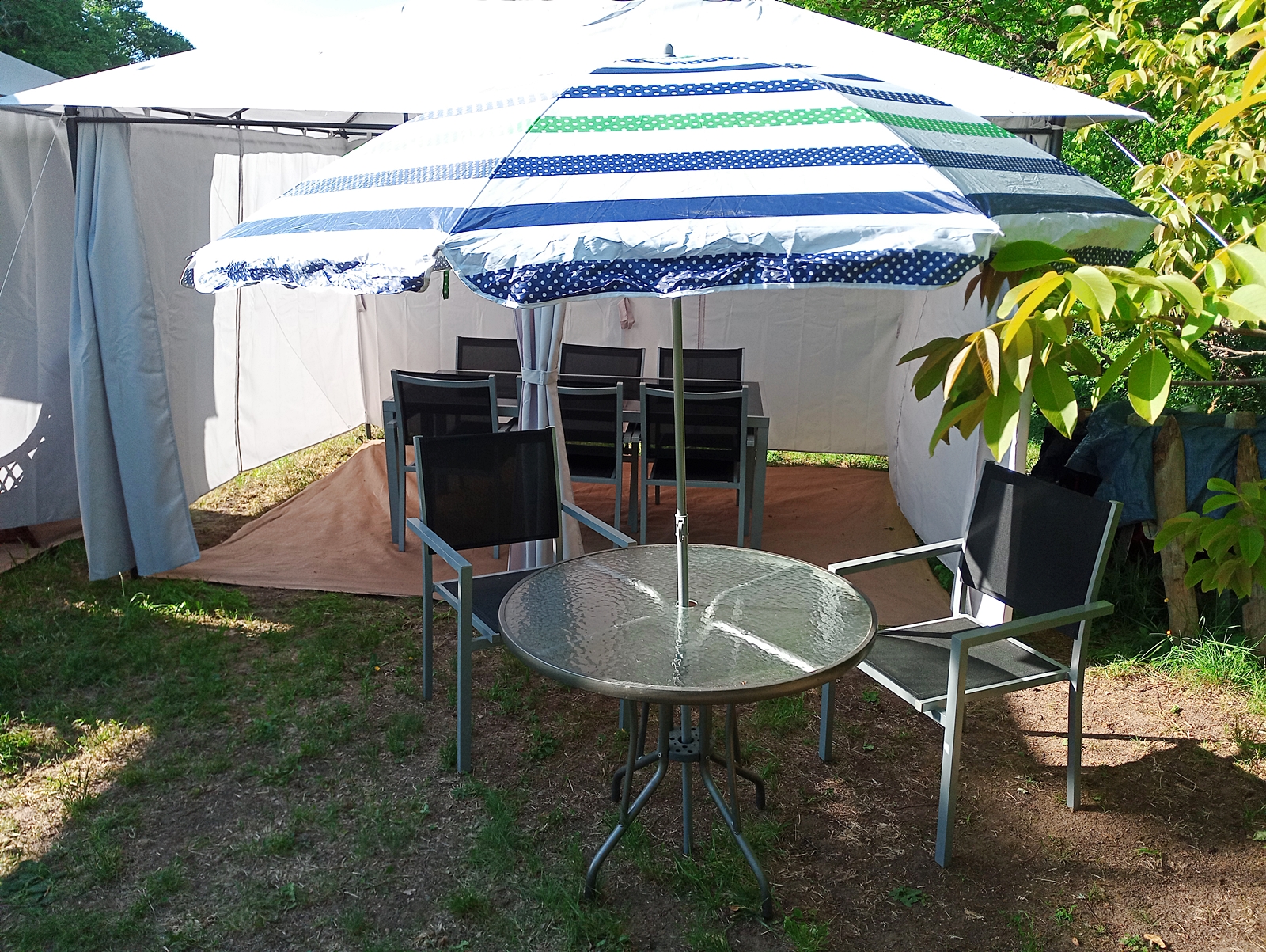
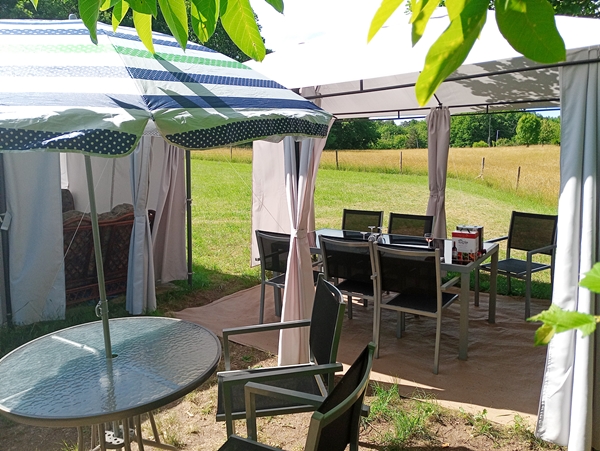
As a result, Wednesday turned out to be a roaring success, at least I didn’t get any complaints anyway (not true actually, as I served marshmallows at the end as a surprise sweet dish to finish off, which Sophie didn’t think much of, bless her). The ‘tonnelles’ worked well and here are some shots that I took of them before I’d laid out the snacks and my guests had arrived.
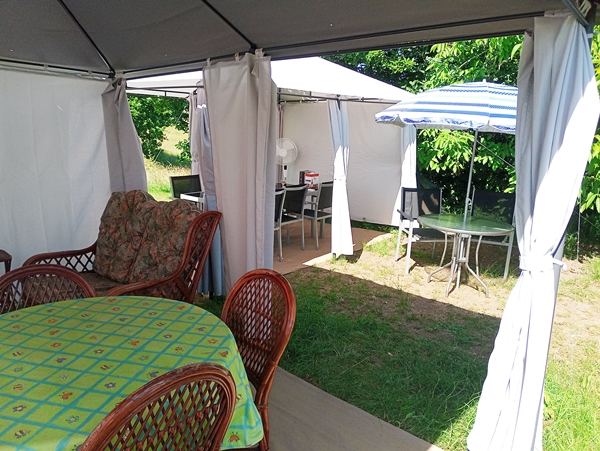
null

null

null

I was very fortunate because the night before, we’d been on the receiving end of yet another monster storm accompanied by a deluge of rain. I’d had to get up a couple of times in the night (easy because with the thunder I couldn’t sleep anyway) to clear the accumulations of rainwater off the rooves of the ‘tonnelles’ in case the weight did any damage but in the event they soon dried out again in the morning and I was able to get everything cleaned up and ready for the evening.

The thunderstorms have persisted for three nights and earlier today I saw a report that ten French départements, mainly in the centre and north are under threat of severe storms today that are forecast to move south-west into our region again tonight. This is getting a bit much now as the ‘tonnelles’ are not made to stand up to continuous severe weather, but hopefully if the weather forecast is correct, the storms will have abated going into next week. I sincerely hope so anyway 😐

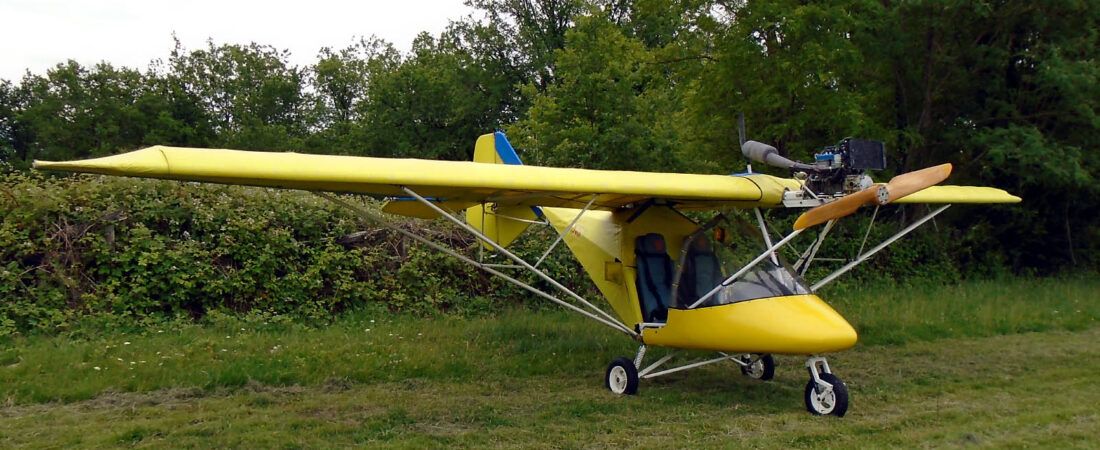
Almost uncanny

For a period of several days, the weather forecast for today was for very light winds, some high level cloud and temperatures somewhat lower than we’ve been having just lately. So almost ideal for flying. And it was largely unchanged even this very morning with definitely no expectation of rain.

So when I looked out of the caravan first thing I wasn’t that surprised to find that the forecast was more or less correct but with the cloud being a bit lower than had been expected. And then it began chucking it down. A veritable deluge, which has let up as I type this but which has left a gloomy sky that threatens more rain at any time.

So yet again my plan to get a flight in in my Savannah has been thwarted. At this rate I’m beginning to wonder if I’ll ever fly again… 🙁

Back on the job

At last, and I hope this presages a period of continuous work on my house-build and wasn’t just another cursory spurt of activity after which I’ll be waiting another few weeks before the next sign of action. But anyway, I was scanning the news on my PC at about 9.00 am when I thought that I heard the sound of an engine and when I looked out of my caravan door there up on the site was the guy who started the whole thing off back at the beginning of March, by digging the first hole in the ground and putting in the site access road, working away with his excavator.

And sure enough, as I’d expected, he had made a start on back-filling the soil that had been dug out in order to construct the house’s foundations.

null

null

null

null

But it soon became clear that he wasn’t intending to do a complete back-fill but rather only on the external area surrounding the concrete columns and beams that will eventually support the structure of the house. On the outside his aim was to shovel earth back up to the level of the bottom of the beams and he only added earth enough inside the structure so as to more or less just bring the outside level inside, if you understand what I’m saying.

null

The largest amount of earth was required at the rear of the house where the terrace will be because at that point the house’s foundations are at their highest above what was the original contour of the land. The difference is well over a metre and as he shifted the earth around it soon became obvious that in order to ‘terrasse’ the area behind the house to create workable contours, a considerable amount of extra soil will need to be shipped in at the end of the project..

null

Here are some general shots that I took of the site after he’d finished his job and left which show what I mean about only replacing a small amount of soil inside the beam structure.

null

He left gaps under the beams in the rear corner, under the bedroom 1 area, and in the front under where the front door will be, which are shown in the next two pics. The latter will be for the services to enter the building (water and electricity) and the former for the waste pipes that will go into the septic tank.

null

null

Having contoured the area behind the house to join the existing slope, he took great care to pile up and leave untouched the topsoil which he dug out back in the first week or so of March. This is because it will be needed at the end of the project in order to reinstate the grass areas as the underlying clay soil will be totally unsuited for that.

null

The next two shots show the gaps he left for the septic tank pipes and the water and electricity services.

null

null

The final shot shows how much the area that will become the house’s terrace has had to be built up. I’ll have to think eventually how to complete it – I’m thinking of a flat paved area with a low ornamental wall around it with steps, possibly on both sides, down to the back garden.

null

So that was it for the day. I’ll be most surprised if activity resumes as soon as tomorrow (oops, can’t because tomorrow’s a holiday here in France) but it would be great if things start to move forward in earnest next week. I’ll have to wait and see…

Foiled yet again

My UK family visitors have come and gone and after going through a bit of unsettled weather, I thought about doing my planned flight in the Savannah yesterday as the weather was just right. I didn’t get myself organised in time, however, so decided to do it today instead as the forecast was for the weather to be similar to yesterday. But it couldn’t have been more wrong. I got everything prepared and ready and was over at Malbec by 8.00 am with the idea of getting away by 09.00 but that was impossible.

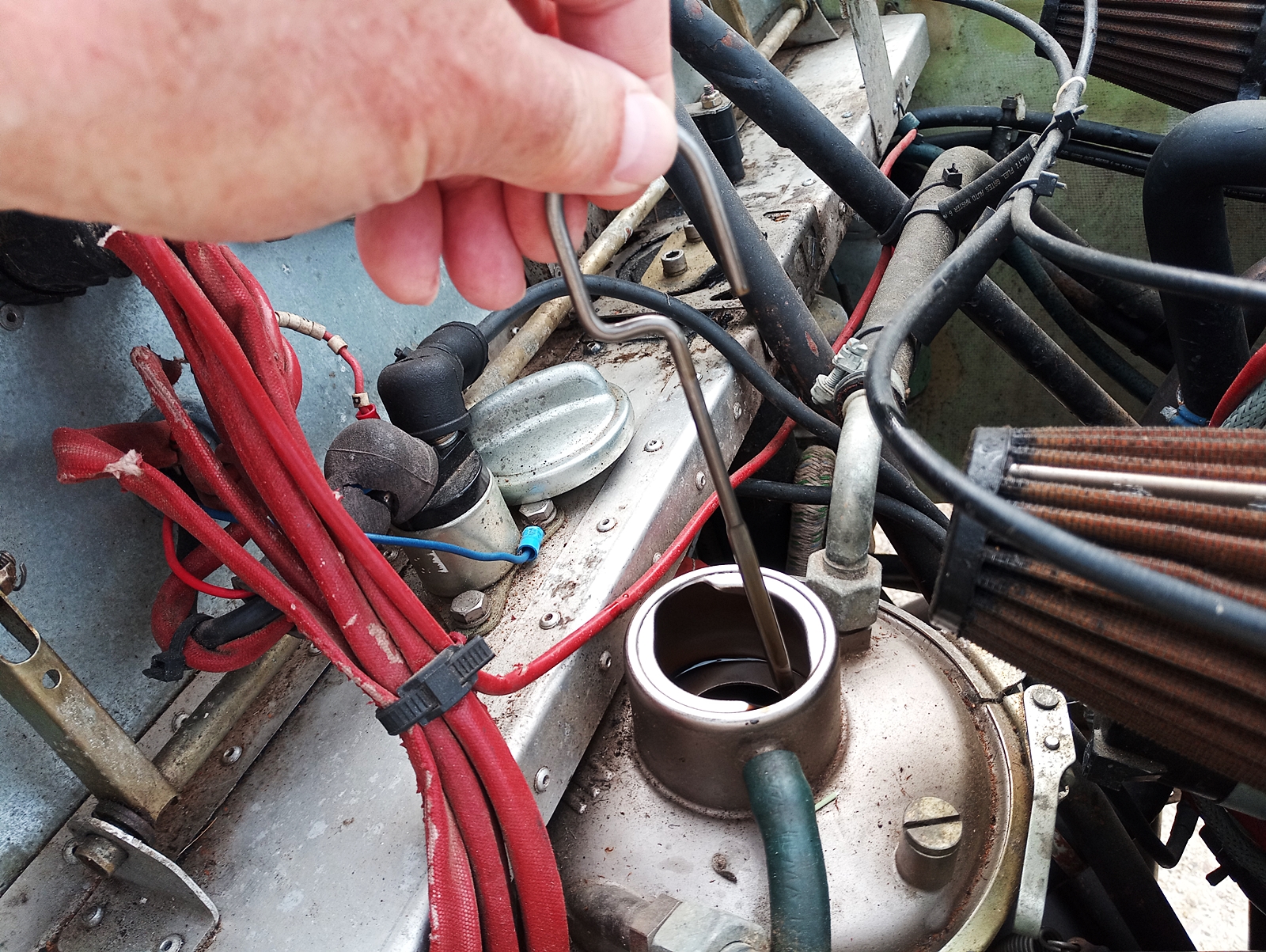
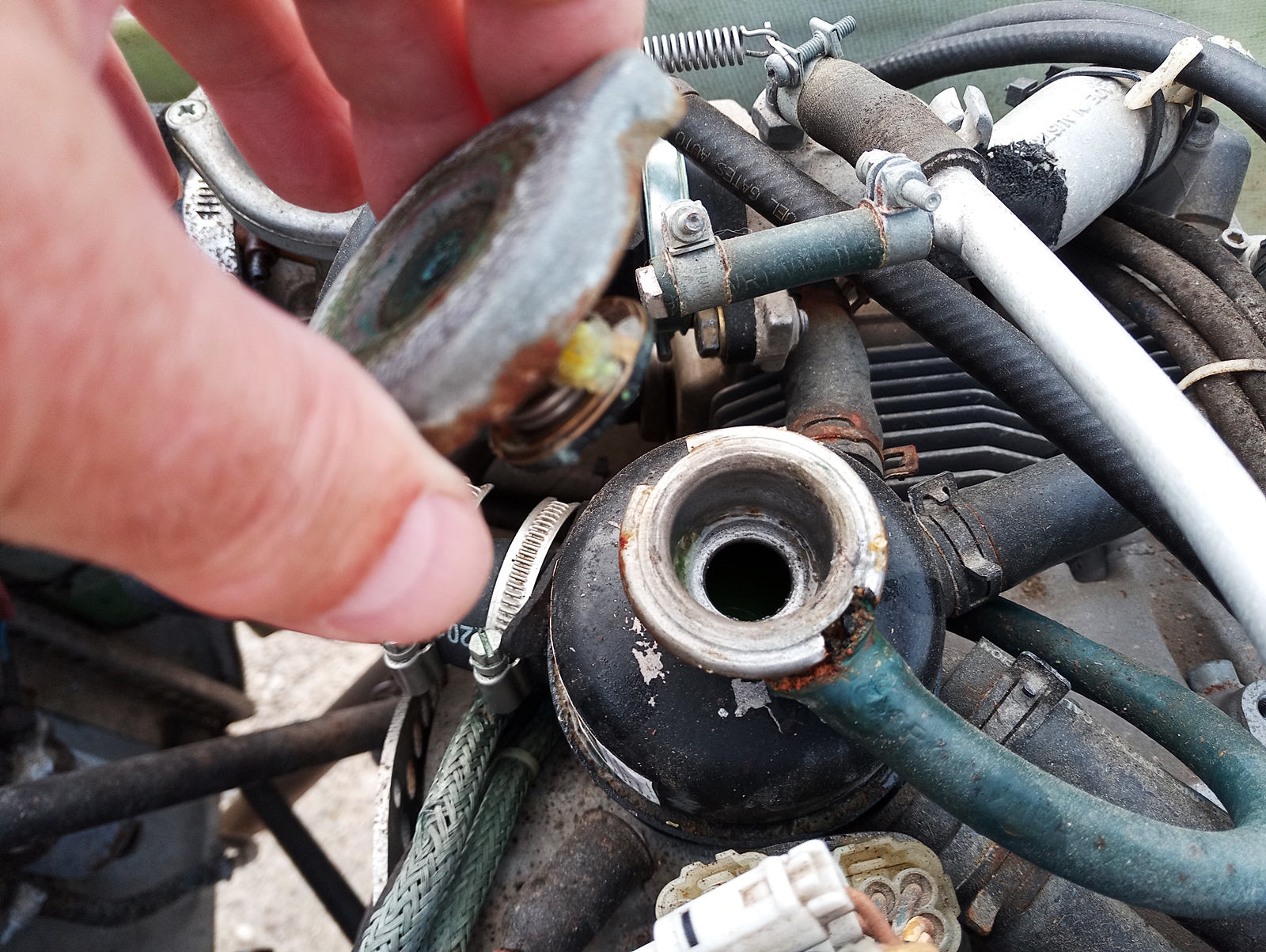
There was very little wind and the humidity level was through the roof, which meant that visibility was extremely poor with the TV mast at Audrix near Le Bugue being almost invisible in the thick haze. In the hope that it might clear up as the sun broke through, I got 77ASY out of the barn though and did a thorough pre-flight inspection with its engine cowling top removed, this being its first flight of the year, so I could inspect amongst other things the oil and water levels, the hoses, all the hose connections, the rubber carb connectors that I fitted a couple of years or so ago, the exhaust fittings and connections and the engine mount.

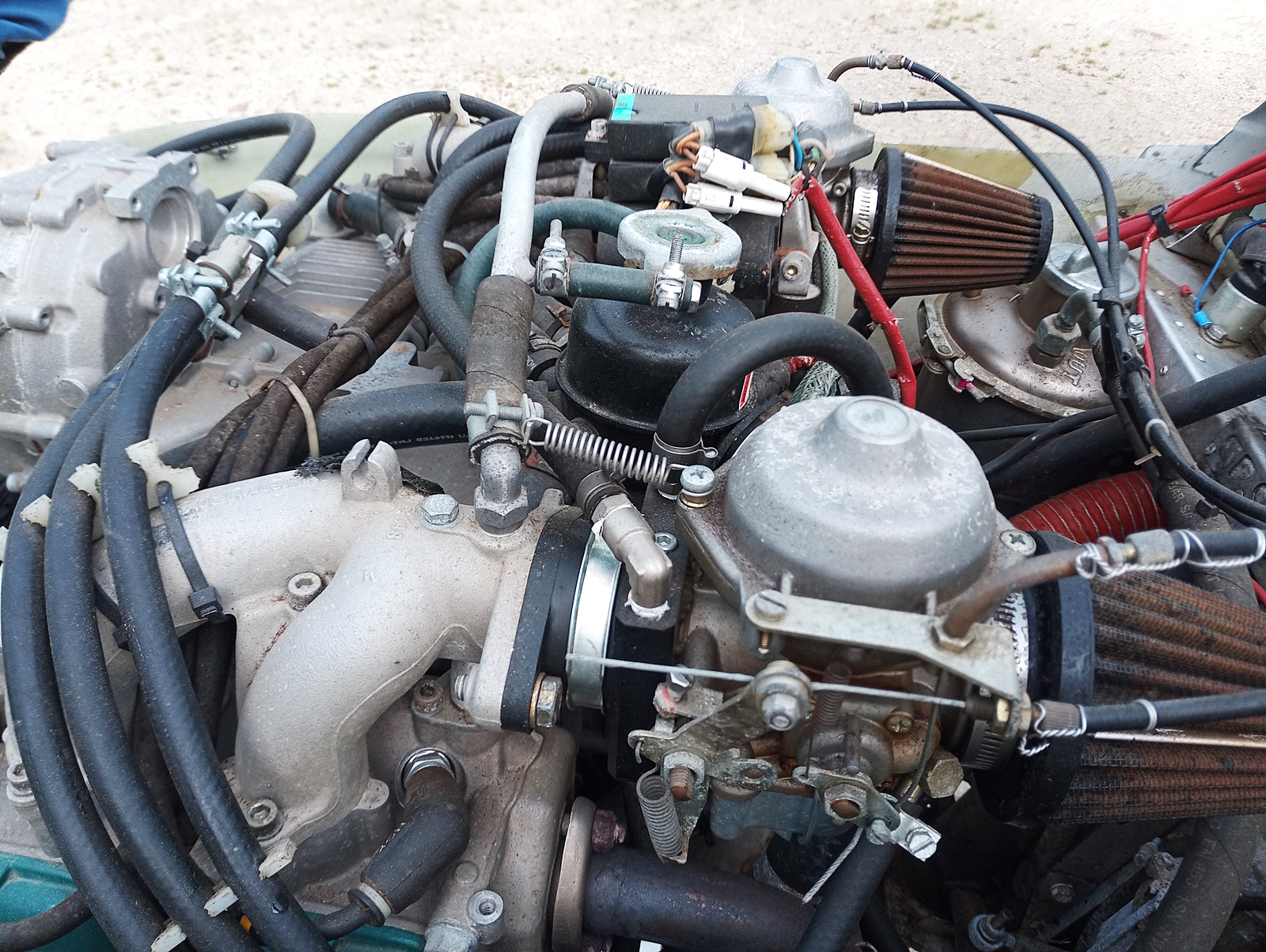
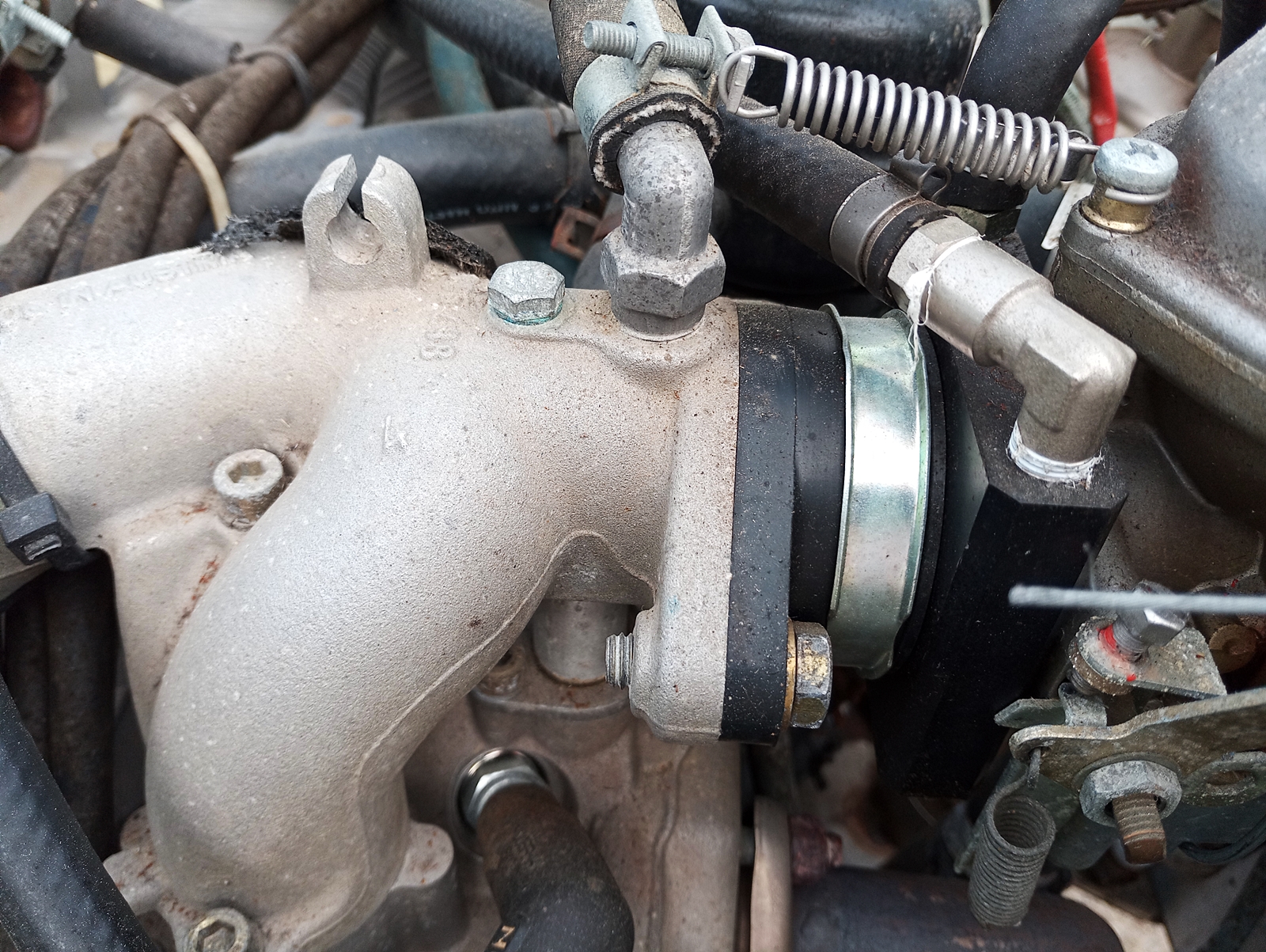
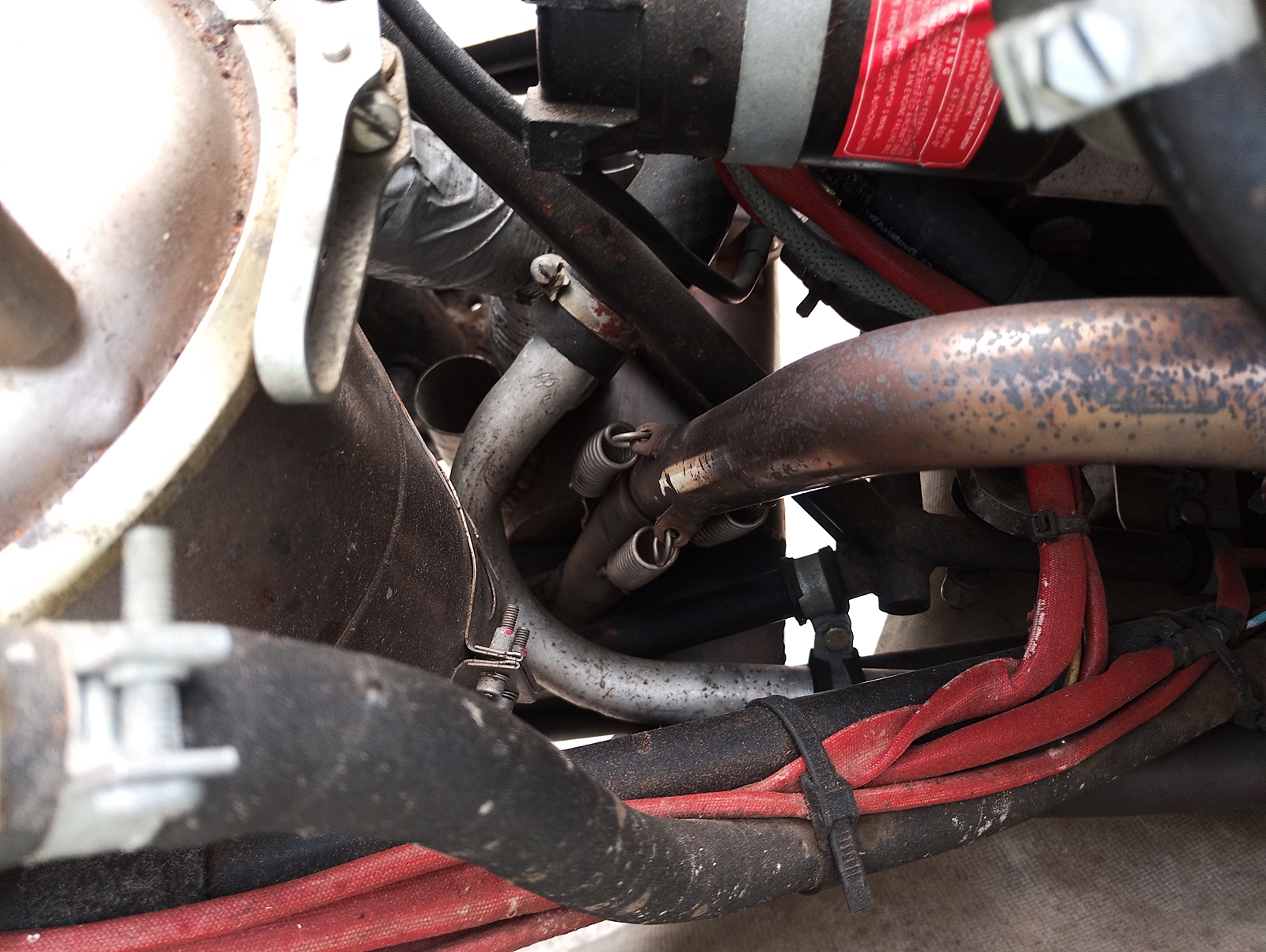
I haven’t done such a thorough inspection for some time, so this was a good opportunity to give the contents of the engine compartment a really good going over – see the pics below.

null

null

null

null

null

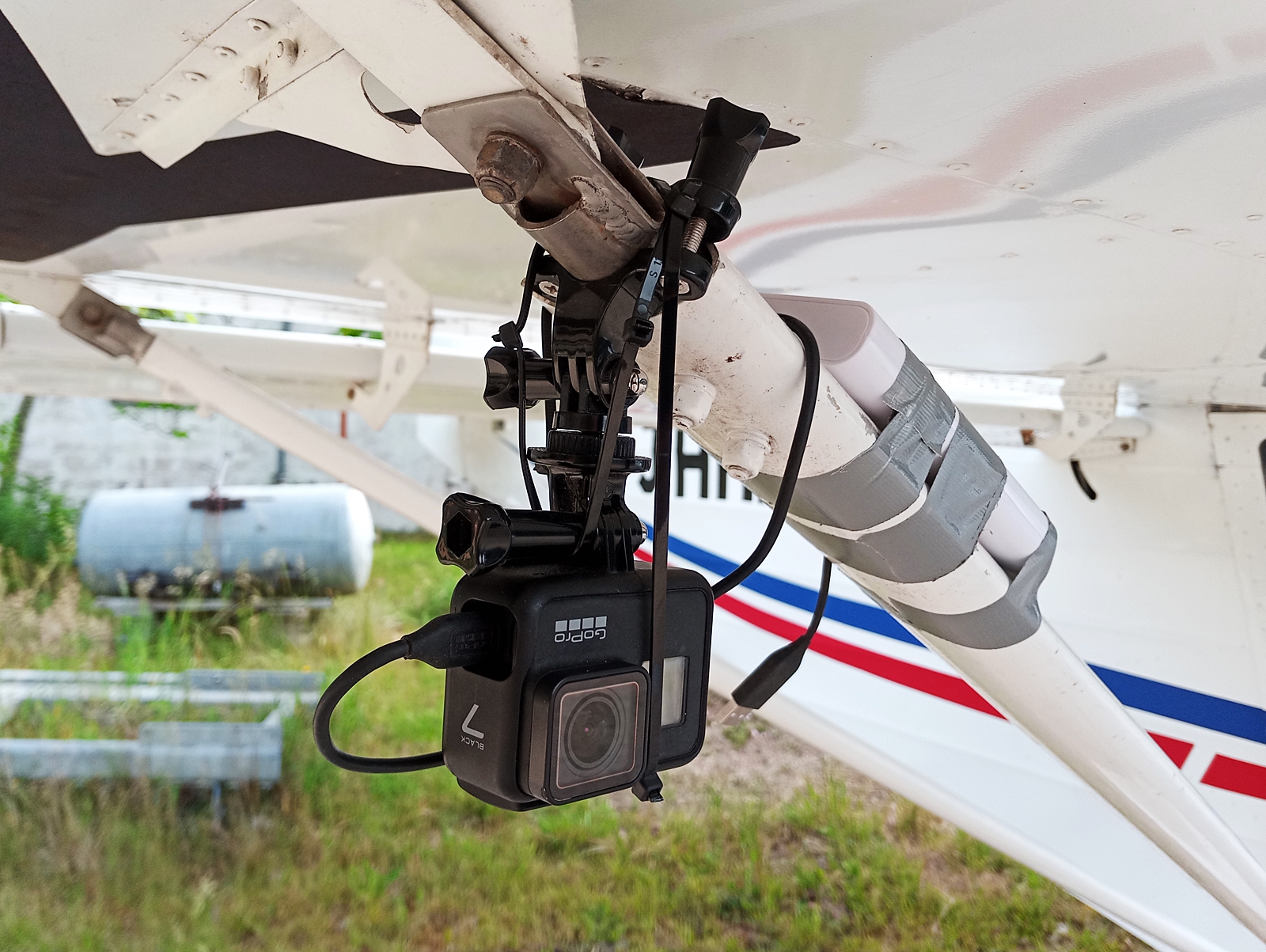
Once I’d finished the engine inspection and done a full walk-round, I then turned my attention to my video equipment. This comprised mounting a Go-Pro under the right wing together with a power box for extended time enough to record the whole 2-hour flight and a second Go-Pro in the cabin behind my head. This also had a power box and a connection into the radio system that I successfully tried out a few days ago using the Go-Pro sound connector that I acquired months ago but have never used.

I finished up mounting my Asus tablet-based GPS system as I always have done and all of this is shown in the final four pics below.

null

null

null

null

But it was all to no avail. The haze failed to burn off and has persisted throughout the whole day until I type this at the end of the afternoon. To make matters worse, we have light rain and a thunderstorm forecast for early this evening and continuing rain on and off throughout the coming week, so goodness knows when I’ll be able to get round to doing this flight. I seem to be fated not to for some reason 😐
Shucks!

As I type this the weather is fine for flying (wind about 6 kmh from the east) and it’ll remain about the same all day. And I’ve got my cameras charged and my route planned and loaded into my GPS. It’s a roughly two hour flight taking in Figeac, Castelsarrasin in the Tarn-et-Garonne, which I’ve not been to before, and Fumel.

null

There’s only one problem. About 11 or 12 years ago I had keyhole surgery on the joint of my right knee which is now beginning to wear off and whenever I over-exert it I pay a price. After having hauled the aircraft around at Malbec a couple of days ago and worked to reorganise my ‘hospitality’ area outside my caravan yesterday, I paid really dearly last night. I suffered agonies and had an awful night’s sleep and the problem is that my knee is still very painful this morning.

So I think that it would be a good idea to leave things this morning, give my knee a couple more days to recover and do the flight later in the week. Thursday looks like a good day and I don’t think a delay of a couple of days or so will make any difference 😉

The comforts of home

We had a really marvellous hot, sunny day today so it wasn’t one to be wasted. It was still a bit too windy to think about flying – that’s for later this coming week – but a perfect day to do a bit more to my little encampment-cum-hospitality area outside my caravan.

The large table that I had outside my old house at Plazac was already in one of the two ‘tonnelles’ but the chairs that go with it were still in my ‘abri’ after I’d moved them from my old neighbour, Chantal’s, garden a few weeks ago. So today was a good time to dig those out.

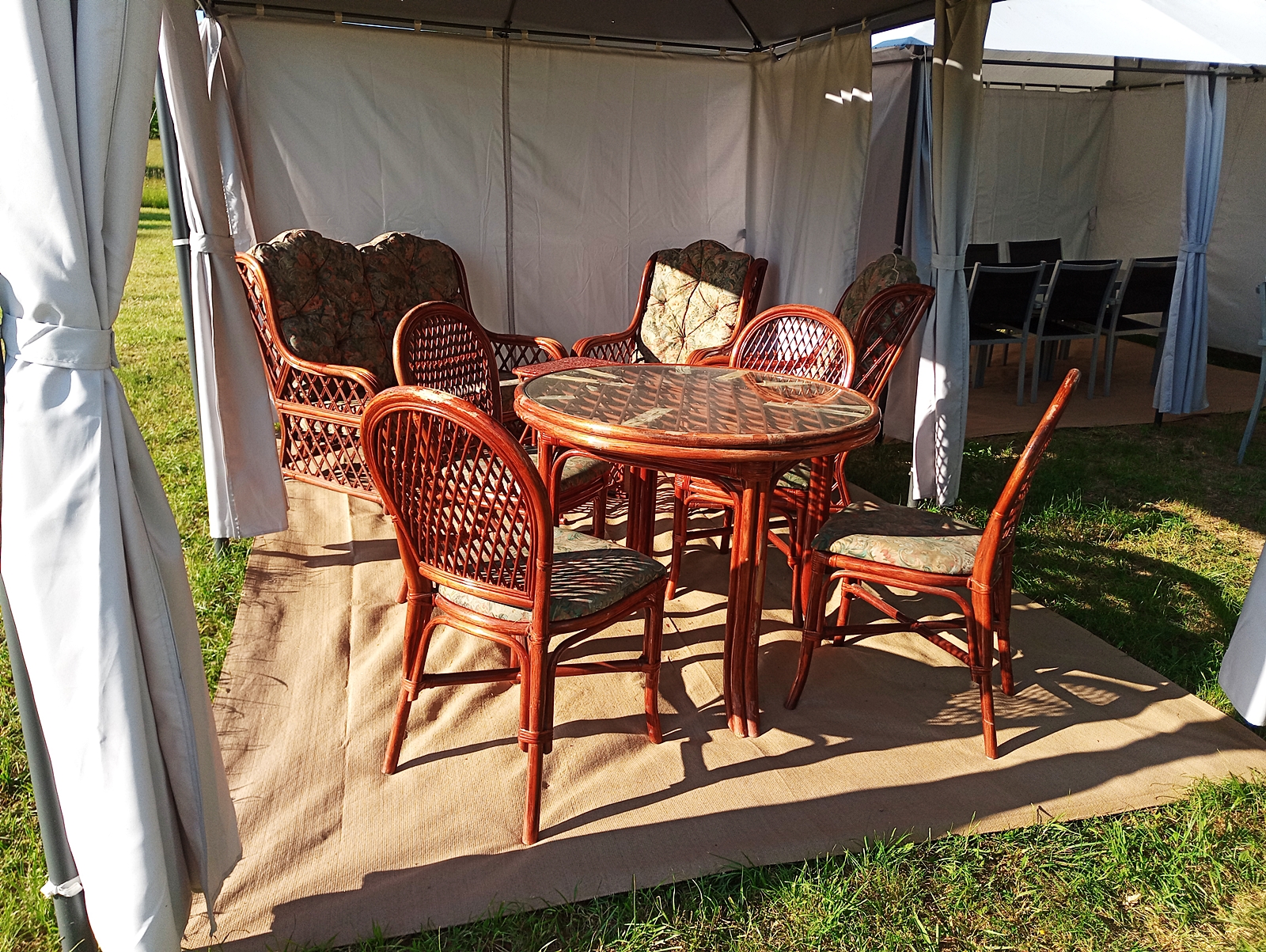
The old cane table and chairs set that I brought with me from England ten years ago now was in the other ‘tonnelle’ but it is only a part of a complete conservatory (‘verandah’) set that also comprised a 2-seater settee and two single armchairs. I’d moved them into the ‘grenier’ (roofspace) of my old house several years ago and placed them under a cover in the barn at Malbec next to my aircraft when I moved out, so today was a good day to bring those over as well, especially as they’d need hosing down to get them clean enough to use again and the sun would make short work of drying them off.

But first I wanted to do one more thing, which was to slightly increase the size of the open area between my caravan and the ‘tonnelles’. I’ve found it to be a bit too cramped to be able to sit at the small round table and still have space to move past and around it, but once I’d done that it was time to bring the wooden furniture over from Malbec and get it cleaned up and installed in the second ‘tonnelle’.

It wasn’t half as dirty as I expected to be and even the seat base and back cushions, which I’d packed in plastic bin bags, were dust-free and clean enough to use straight away. Here are some pics that I took after I’d finished the job off.

null

null

null

null

null

Now the original ‘tonnelle’ after I’d moved it slightly further away from my caravan and dug the chairs out of my ‘abri’ that go with the long table.

null

null

null

I was really happy with the results of my day’s work and that’s another job (several actually) crossed off my to-do list. I shall check first thing tomorrow to see how things look for flying but first I’m looking forward to an early night and a good night’s sleep after today’s efforts 😉

About time!

I drove to Le Bugue yesterday to buy fuel. It was worthwhile driving the extra distance for the cheaper prices there because I bought quite a lot – 50.01€ of diesel to top up my Kia, 47.00€ of SP98 for the Savannah and 34.98€ for 20 litres of SP95 for the Xair. The reason was because I hadn’t even started up the two aircraft since last year, let alone flown them, because of the time I’ve had to spend on my house project, so giving them the attention they needed was well overdue.

I’d left the Xair in the front of the barn as I’d flown that last and also because having outdoor covers, it didn’t matter so much its being near the open front. So I pulled that out, topped up its tanks (it took only about 15 litres) and gave its engine a run for about ten minutes. That was enough time for its water and engine to warm up and as the aircraft has remained clean under its covers, unlike the Savannah whose covers I couldn’t get around to making before I moved out of Plazac and into my caravan, I then turned my attention to the latter.

So it was then time for the Savannah to get the attention it needed, starting with a good wash. Surprisingly, it didn’t need that much because although as usual there were some patches of bird poo on its wings from the tiny little tits that inhabit the barn, the only real problem was the yellow dust that always builds up on its horizontal surfaces. So it was a matter of standing it nose-up on its tail skid to make it easier to get to its wings with my floor mop and giving it a good slosh over with clean water, followed by a leathering.

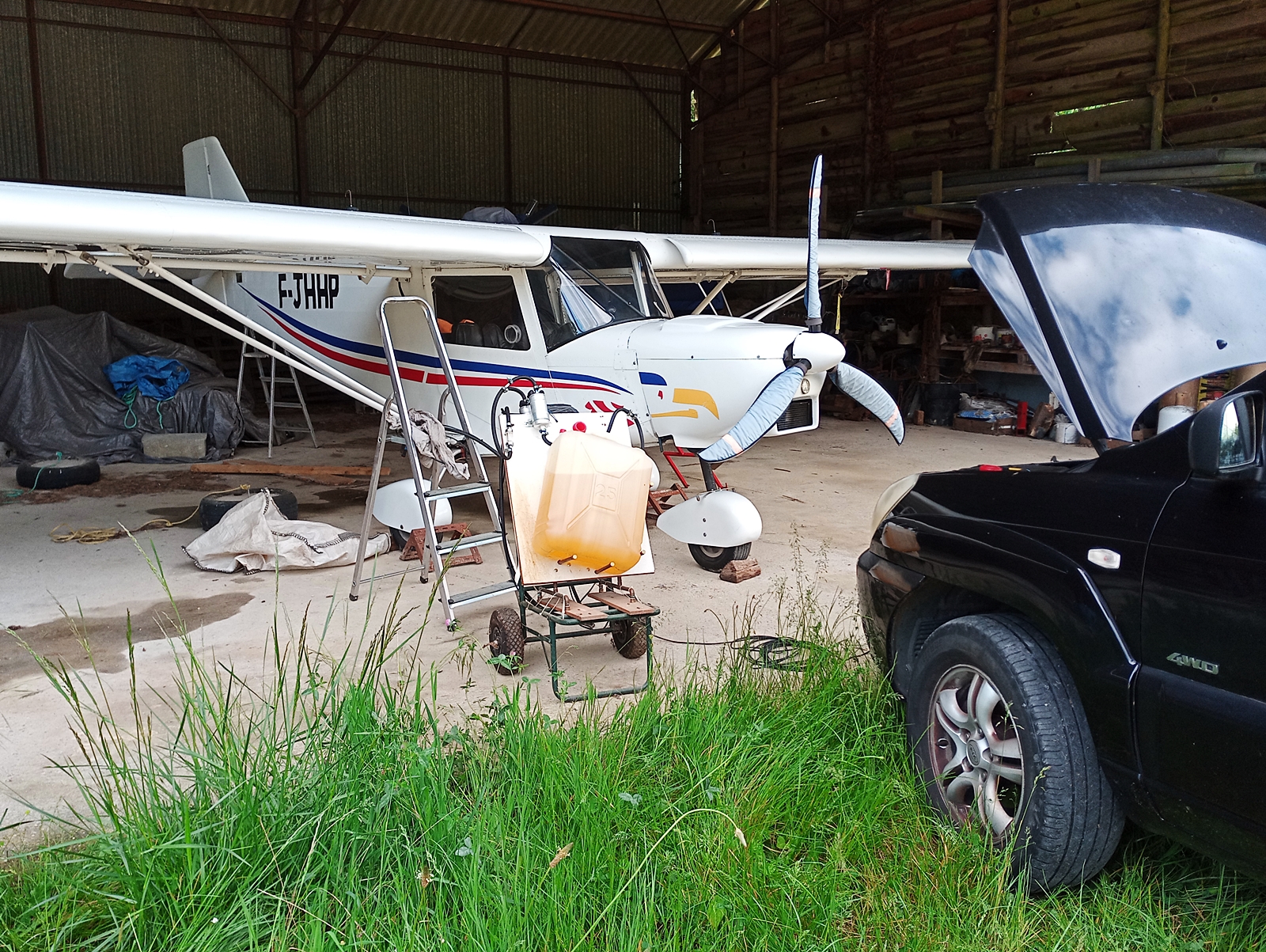
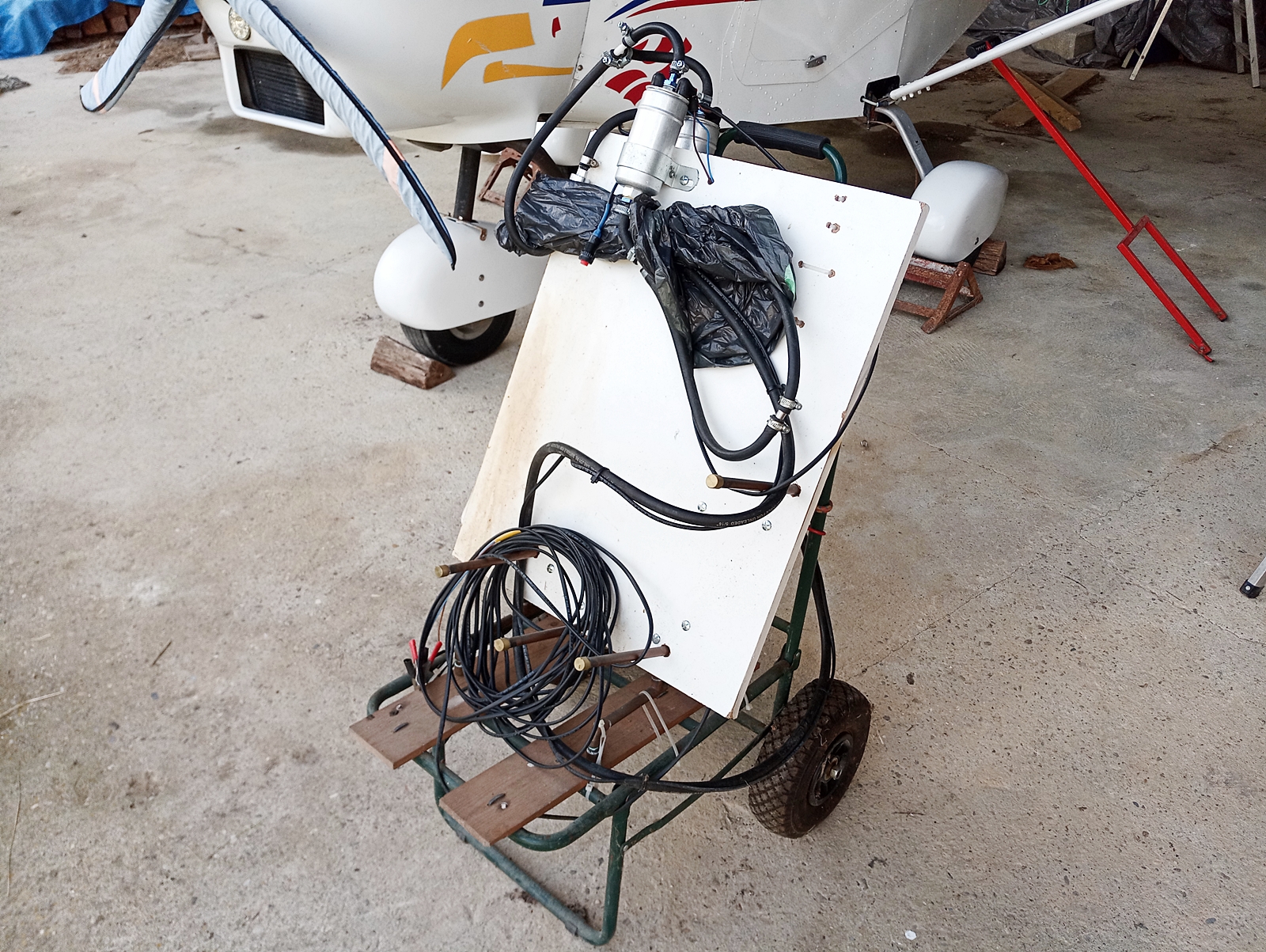
Then it was time to top up its tanks and for that, as usual, I used the electric fuel pump that I put together a few years ago, which is still working well. It’s the only way that I will fill the Savannah’s tanks while at Malbec. Lifting a jerrican up onto its wings is a mugs game and liable to lead to an accident, even if a pump is used to transfer fuel from the jerrican to the tanks.

I paid dearly by doing that when the cheap battery powered pump that I was using split and poured fuel over the wing and windshield, totally destroying the latter because polycarbonate is highly unresistant to motor fuel, so lesson learned the hard way.

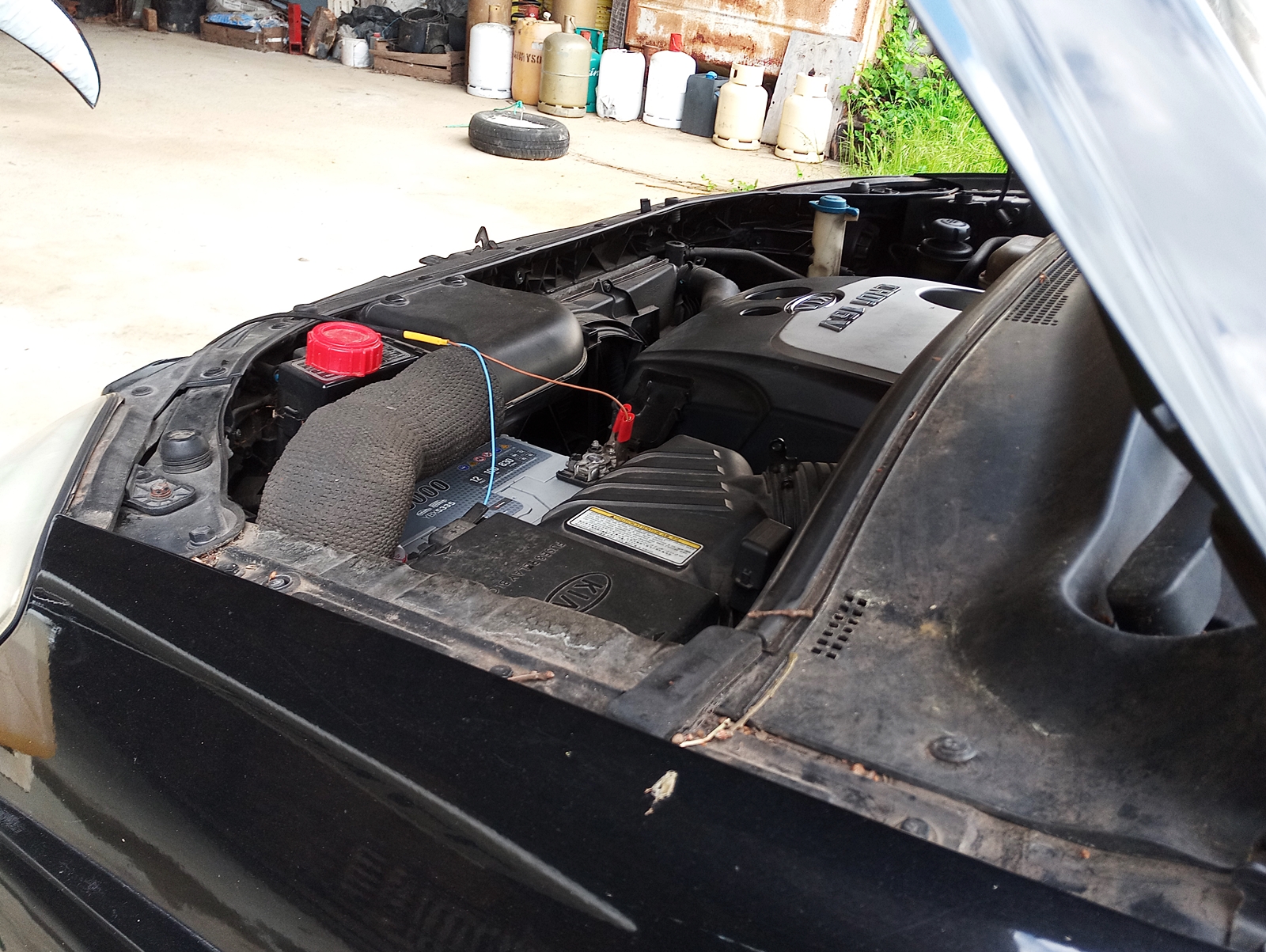
The last time I showed pictures of my pump was several years ago when I built it, so here are some of it in use that I took today. To save having to cart around a charged battery to run it off, I just connect it to the Kia’s battery – quick and easy.

null

null

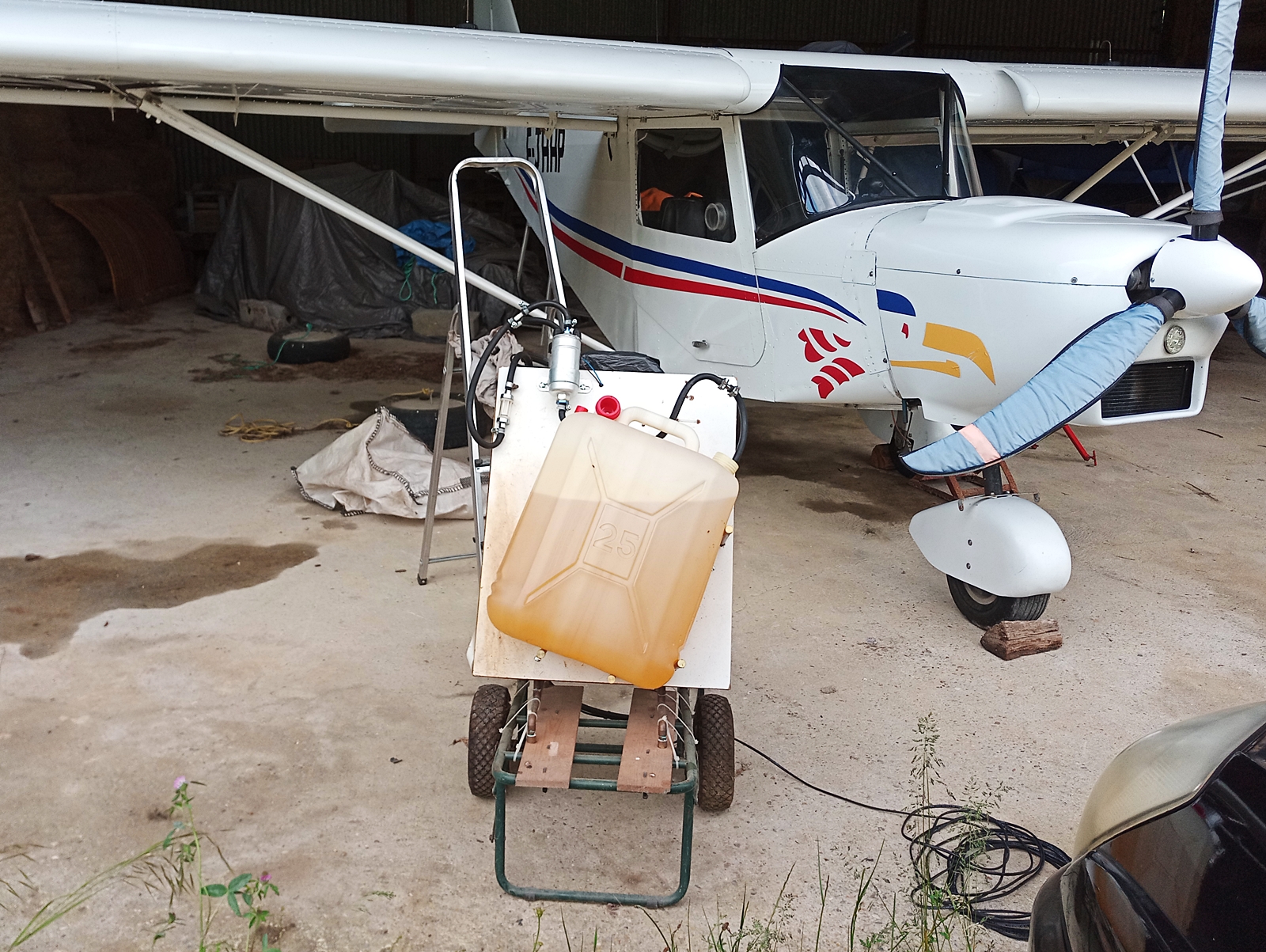
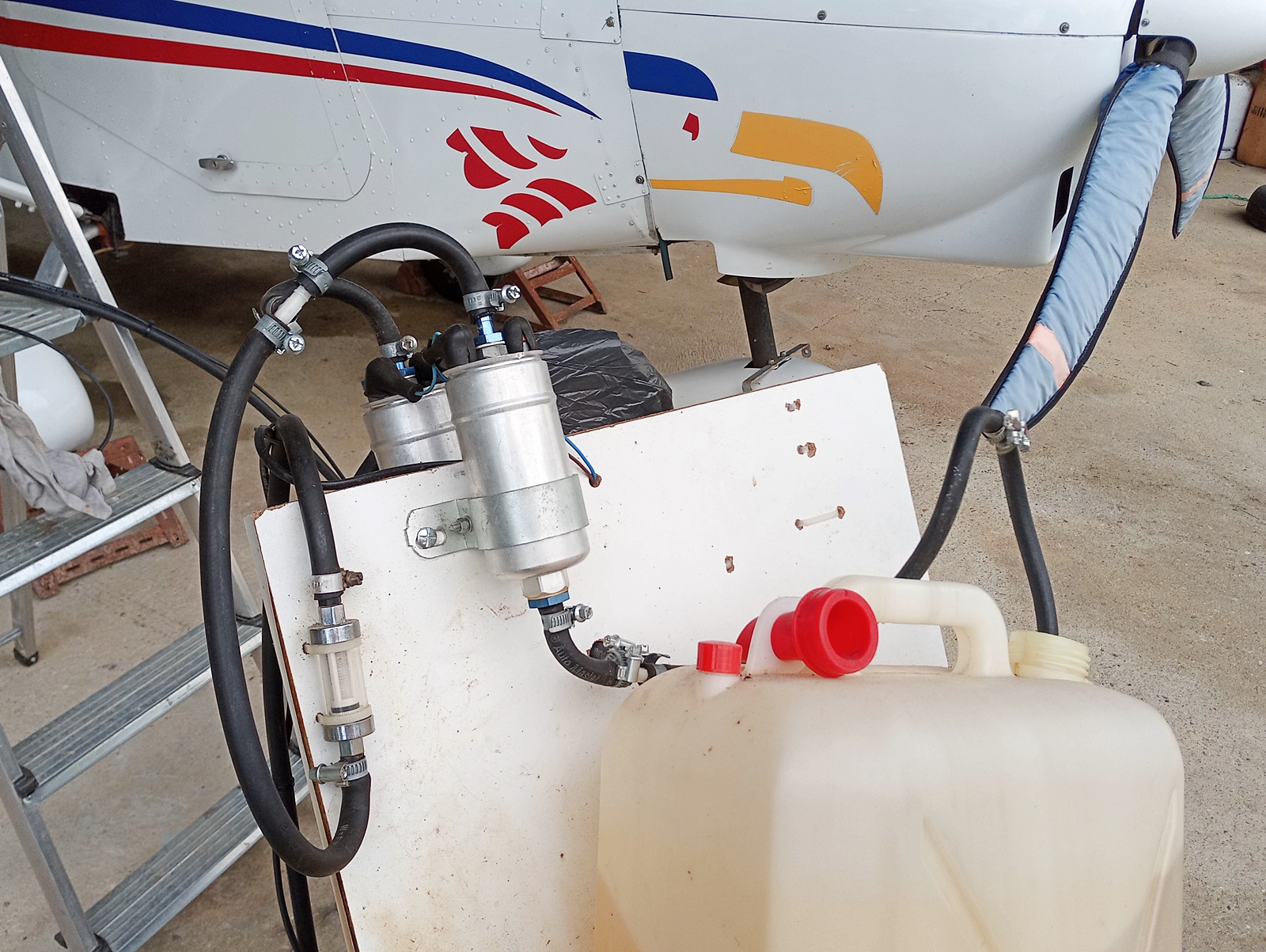
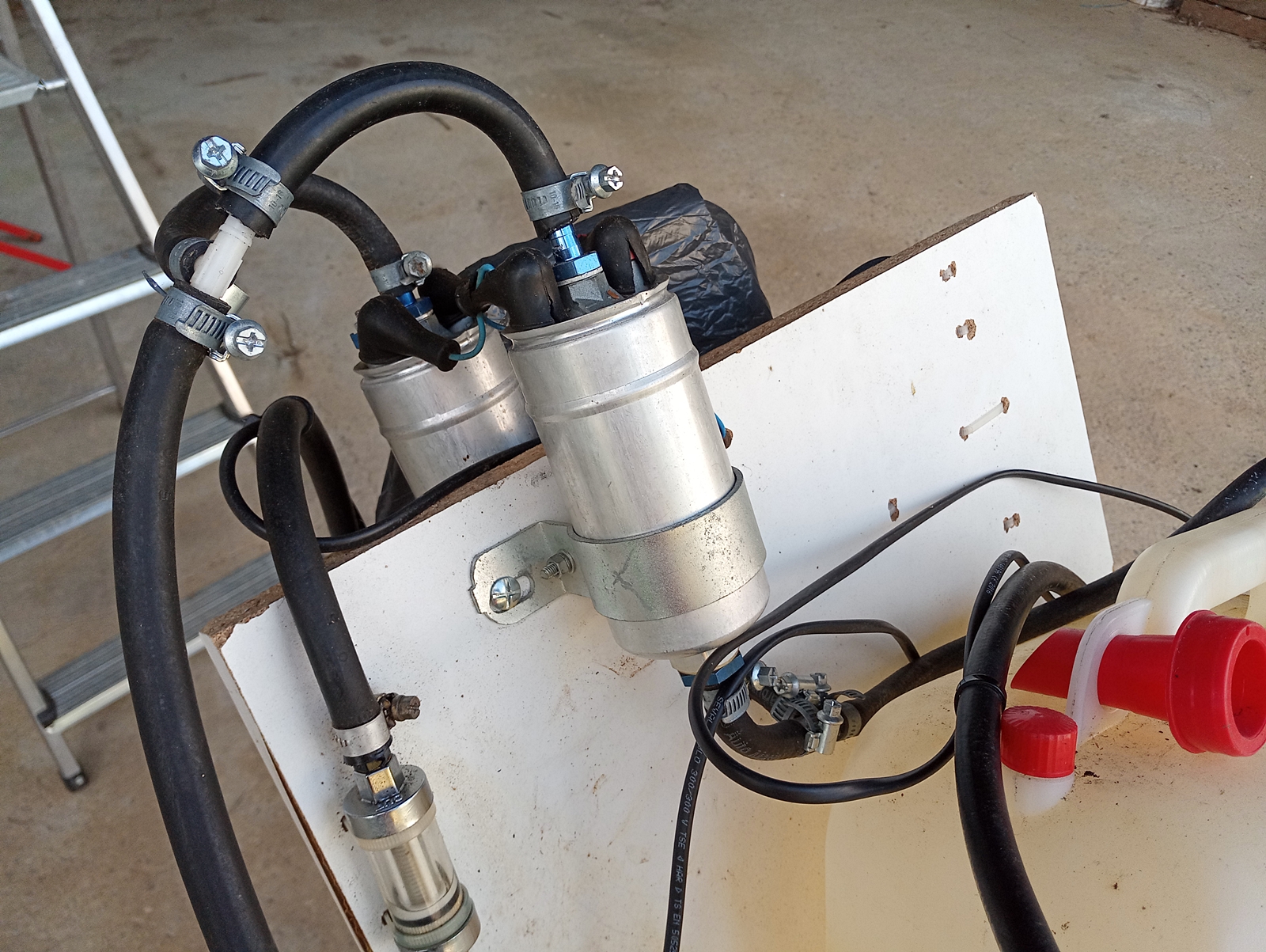
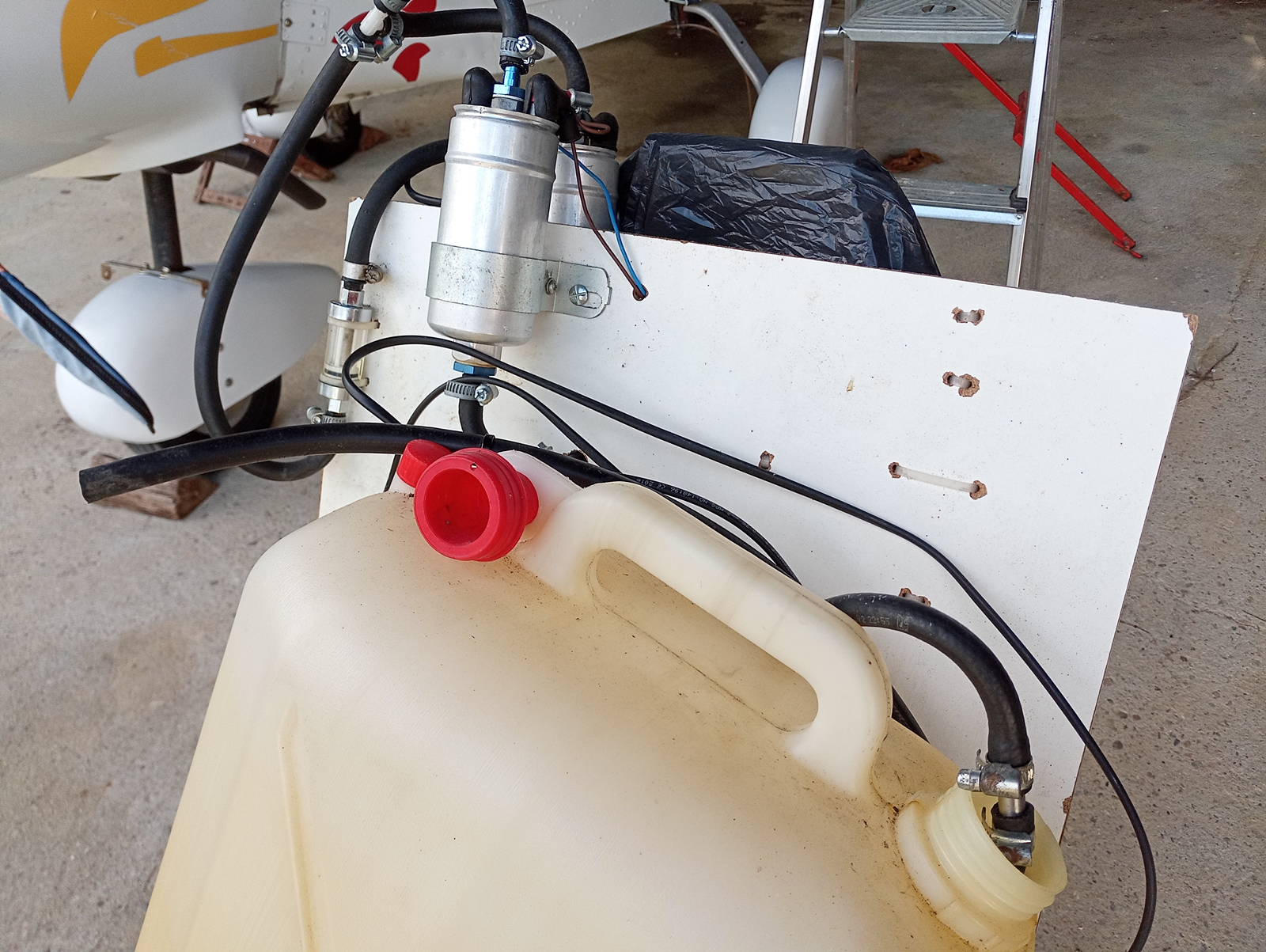
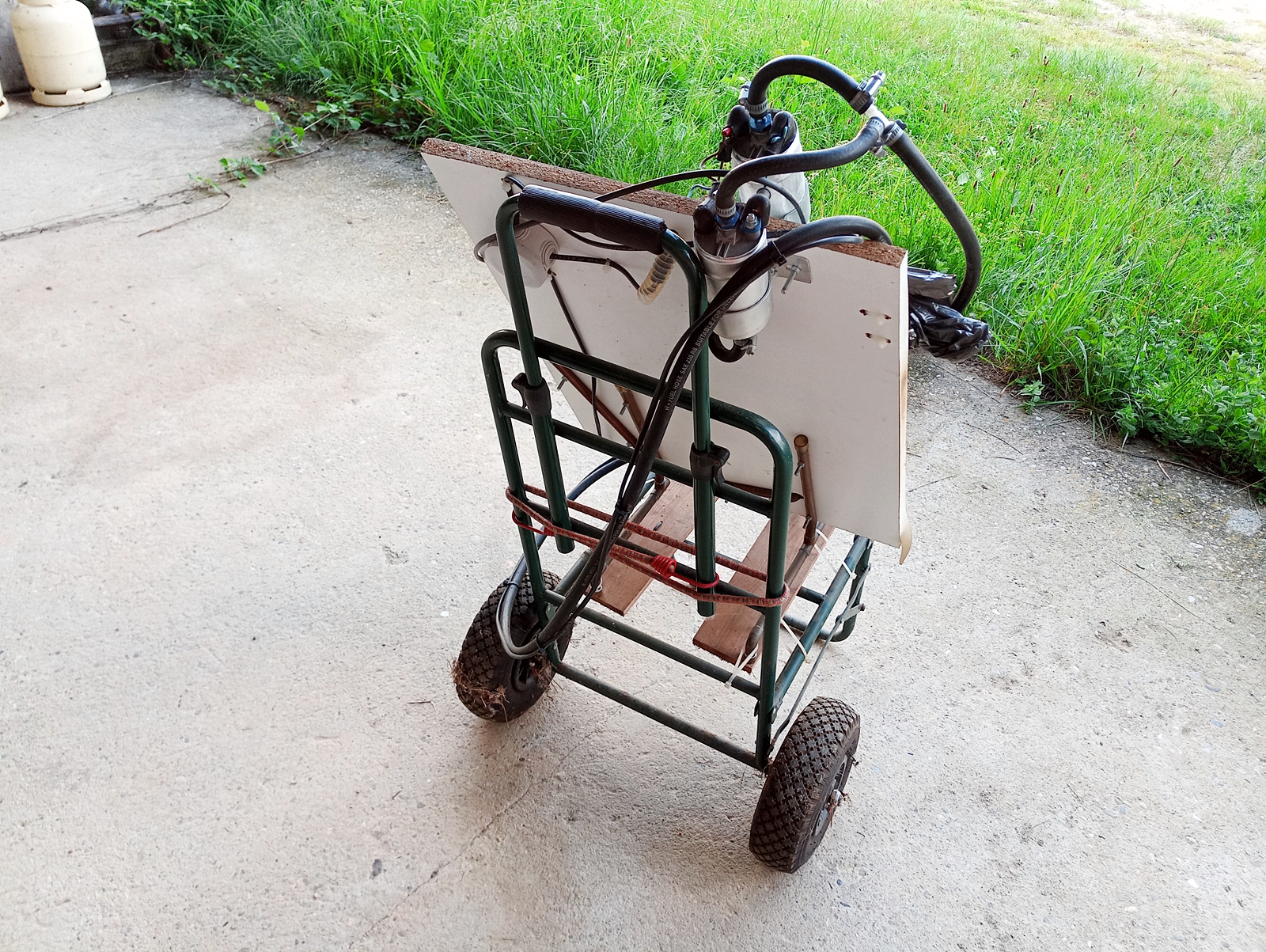
I mount the jerrican at an angle on the pump frame so the discharge tube can be dropped right down into its corner and this is very effective as only a few drops of fuel then remain when pumping is finished. The fuel then passes through an in-line filter before entering the self-charging fuel pumps. I have two in the system and that results in a perfectly acceptable rate of discharge through a tube raised to the height of the Savannah’s wings tanks.

null

null

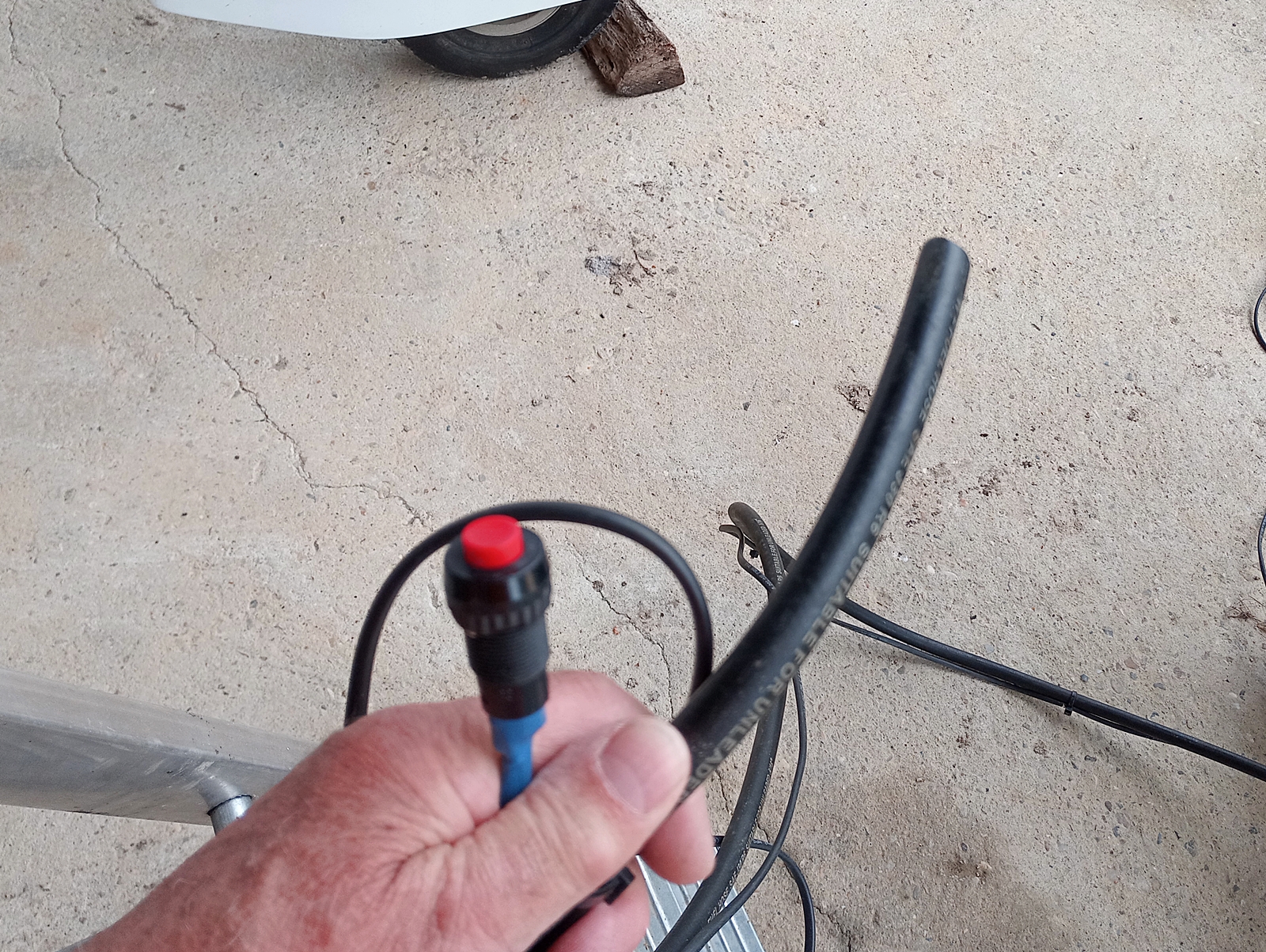
The fuel flow is controlled by a push button on a flying lead that activates the fuel pumps. When I take the rubber outlet tube up to the tank inlets I also take the activation button with me and can control the amount pumped into each tank by extending a finger into the tank while the fuel is being pumped and stopping it when the level approaches the bottom of the tank inlet. The system works really well and I’m very happy with it.

null

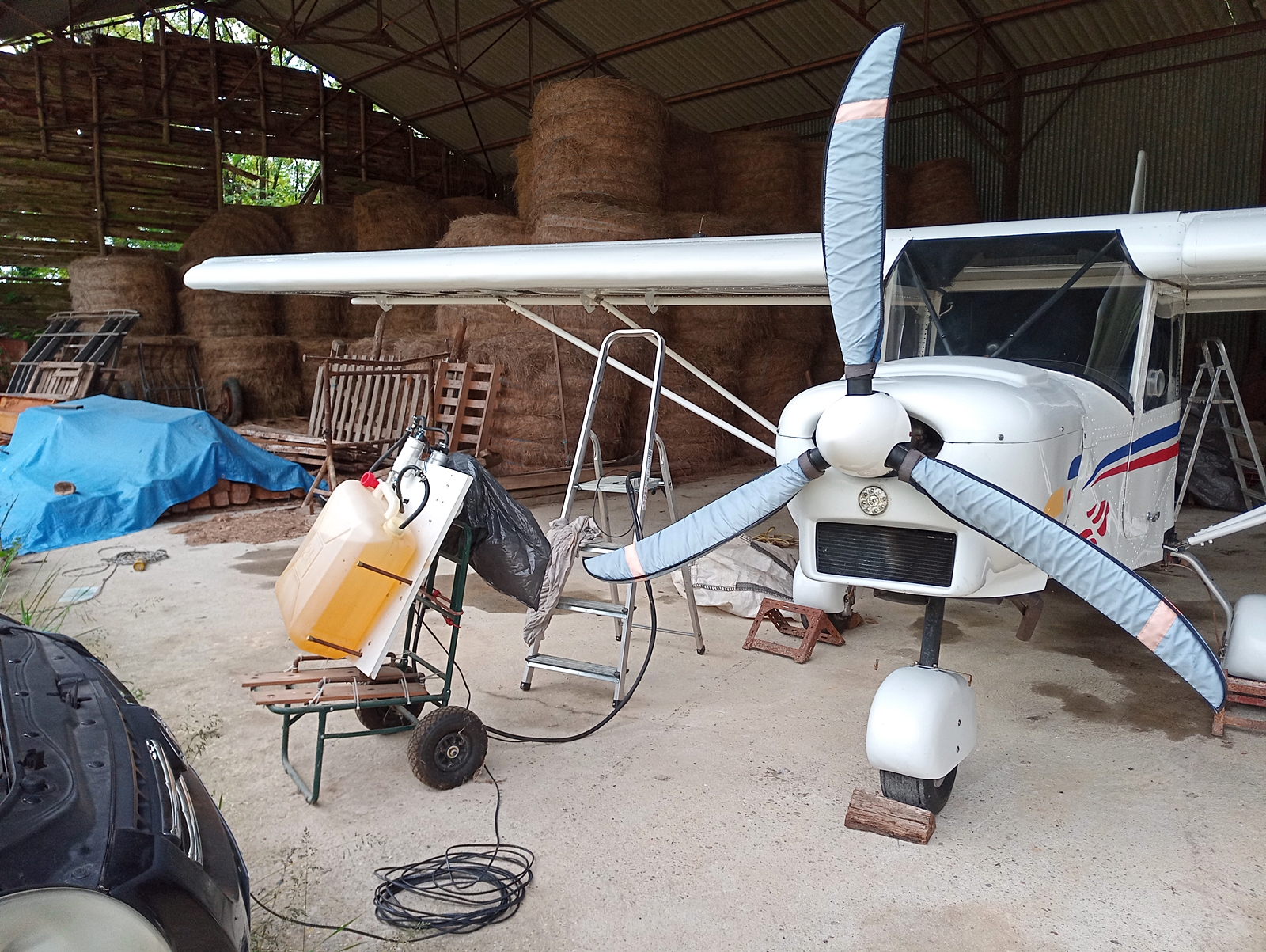
Here’s the setup ready to top up the right wing tank. In case anyone’s interested, the system is built on an old fishing trolley – the best possible use for it in my opinion as I loathe fishing 🙂

null

Here are a couple of close-ups of the pump arrangement that I made.

null

null

When I’ve finished I always wrap the fuel inlet and outlet tubes in plastic and that way I can avoid having any insects or whatever finding their way in and blocking either the tubing or the filter. So far the in-line filter seems to have done an excellent job – I say ‘seems’ because I don’t see any foreign matter in it so assume that I’ve been pretty good at making sure that the fuel I’ve been pumping has been very clean.

null

null

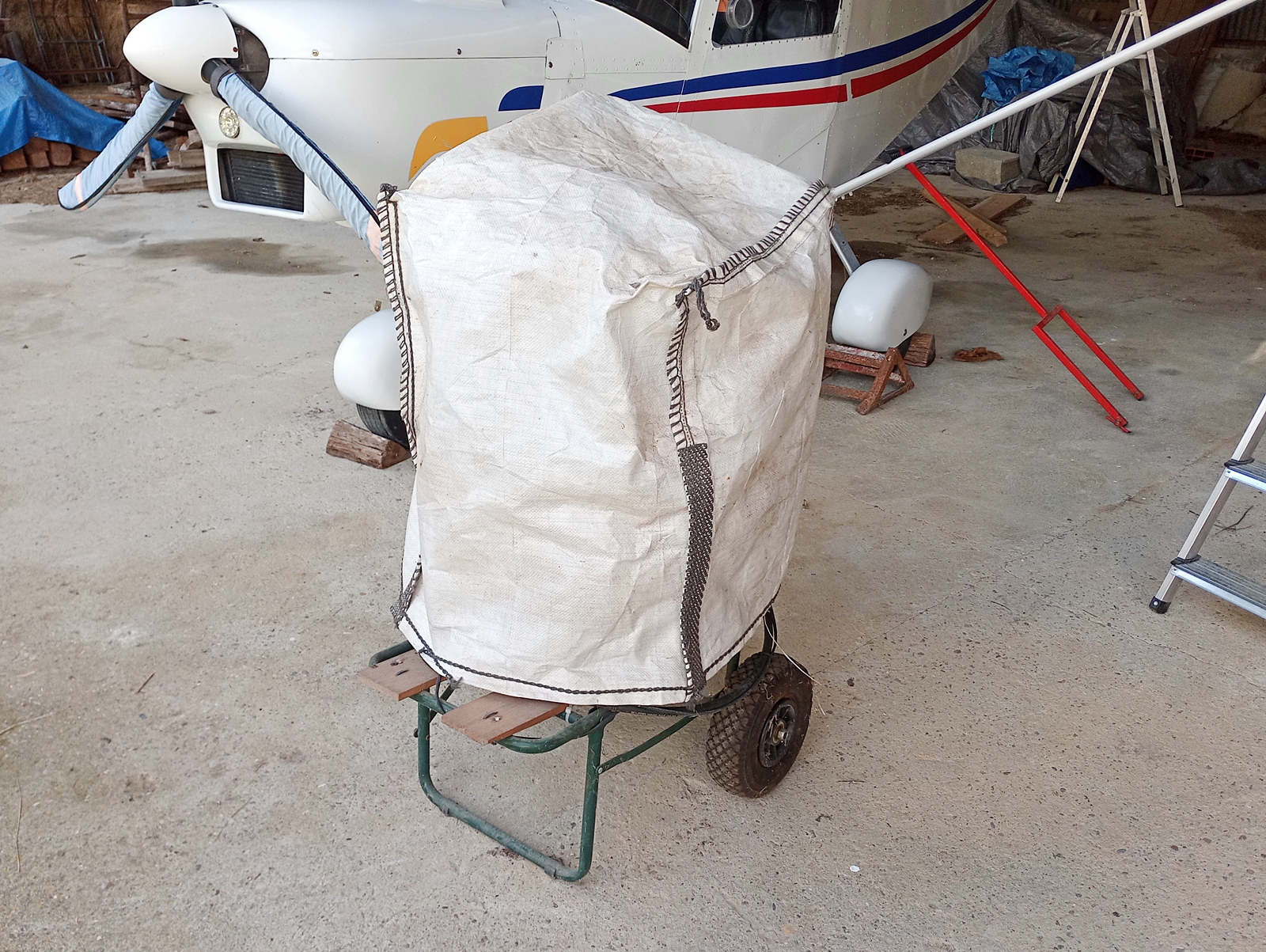
And finally to protect the unit as best I can, I then cover the whole thing with a heavy old plastic bag, which has done an excellent job of keeping dust and other general muck off it.

null

So that was it for today. Both ULMs now have full tanks and are ready to go. Although it had been quite breezy all day, conditions became super calm and ideal for flying at around 8.00 pm. However, I’d done enough for today so didn’t feel like taking advantage. We’ve got some good weather coming up this weekend and even more is forecast for next week with some days with very little wind, so I think I’ll probably wait until then. I’ll see how I feel 😉

Big leap forward

I was enjoying another mug of tea after my breakfast at around 9.30 this morning when I realised that I could hear the sound of a diesel engine and when I looked out of my caravan door I could see that there was activity up at the top of my land. When I walked up to see what was going on it was obvious that the workers had been busy for some time because they had already got three of my new house’s foundation beams in place before I’d arrived.

null

null

null

I watched them as they placed a few more into position and then went off to get my Fimi drone into the air to take some more aerial shots.

null

null

null

They were taking great care to get the beams aligned and every now and again after they’d dropped one into place they made an adjustment to the height of the column on which it was supported to ensure that they were all at exactly the same height and perfectly level.

null

null

null

null

Here’s a shot of a beam being aligned with its neighbour by being nudged with a large crowbar. In order to align some of the longer, heavier beams they had to be slightly lifted up again by the hoist operator on the back of the lorry.

null

null

The next shot shows the next stage in the operation. After all the beams had been put into place, all of the gaps between them were shuttered using short lengths of stout wooden board so that all of the gaps were totally enclosed to exactly the correct height. The following image shows how short lengths of the steel reinforcing cables that have been used to pretension the concrete from which each beam has been manufactured had been left protruding from the ends of the beams and then been bent to point upwards.

Each beam junction is on a column from which two or more reinforcing rods emerge also pointing upwards so within each of the now enclosed gaps there are six or more, depending on the number of beams at the junction, upward pointing reinforcing rods and cables.

null

The idea then is to pour concrete into the shuttering so all of the reinforcing rods and cables are enclosed and when that has cured all of the beams and the column on which they are supported will be knitted together into a single joint which will be immensely strong. And when all of the junctions are cured, all of the columns and all of the beams will in effect become a single, solid framework anchored to the underlying rock on which the house will be supported.

It’s great thinking and a relatively simple solution to what would otherwise be a serious problem, namely how the structure of the house can be protected from the effects of the clay on which it is built expanding and contracting as it dries out in the summer and gets wet again in the winter. But in any case, it’s how it has to be done here in this part of the Dordogne and these workers are very experienced and know exactly what they’re doing.

Now here are a couple of shots that I took when the guys had gone off for some lunch and to end with, some shots that I took of the finished job when they’d left at the end of the day.

null

null

null

null

null

null

null

null

null

null

I’m guessing that before the build can move on the concrete poured into the joints today will have to be left to fully cure, which may take up to another week. What will happen after that is anyone’s guess. I’m thinking that earth will be backfilled into the hole up to the bottoms of the beams. I think that then a thick plastic membrane will be laid in their interior together with some steel reinforcing panels and then concrete will be poured in up to the tops of the beams.

But I may be wrong. We’ll just have to see what comes next and I can’t wait as I’m finding this part of the build very interesting because it’s totally new to anything I’ve had experience of previously. And I’m speaking as someone who in my younger days used to work for Ready Mixed Concrete Limited in the UK.

And I tell you what, once these foundations are completed, I reckon you’d be able to build a block of flats on them 😉

Good news!

At last, the news I’ve ben waiting over a month for, during which time I’ve got a bit twitchy, causing me to fire off a couple of slightly sharp emails to my house builder. But the news is that the beams that need to be positioned on the columns that will anchor my new house’s foundations to the underlying rock have now been specially fabricated at the factory and will be delivered on site this week. I’m hoping that this means they’ll actually be put in place on the columns and not just dropped on the ground, but I’ll have to wait and see.

It’s been over a month since any work was done on site and the builder said that it’s usual for there to be periods of no activity, when concrete and similar materials are drying, times like that. I pointed out that I accept that that’s normal but that as the project manager, which I am, I expect to be kept informed and in the picture. That means that I want to know what the next stage of the project is and when it will happen, so I hope that that message has now got through.

I was then going to spend some time at Malbec running up my aircrafts’ engines but when I checked the weather forecast I found that rain was forecast for this afternoon and possibly also for tomorrow. In that case, as my grass is already getting a bit long I decided that today would be a good time to cut it while it was dry before the rain came in.

It turned out to be a good decision because just as I was finishing some big drops began to fall and I just had time to get the mower back in my ‘abri’ before the rain came on much harder. Here are some shots that I took while getting wet walking back down to my caravan.

null

null

null

The rain actually became quite persistent and there were a few rumblings of thunder, which quite surprised me. Although we have had a bit of a dry spell and probably do need the rain, it was nice enjoying the warm sunshine while we could. Hopefully this damp spell will depart as quickly and unexpectedly as it arrived and we’ll get back to some more pleasant spring weather that will allow me to turn my attention to my ULMs – and get some flying in which is now well overdue.

A tale of two ‘tonnelles’

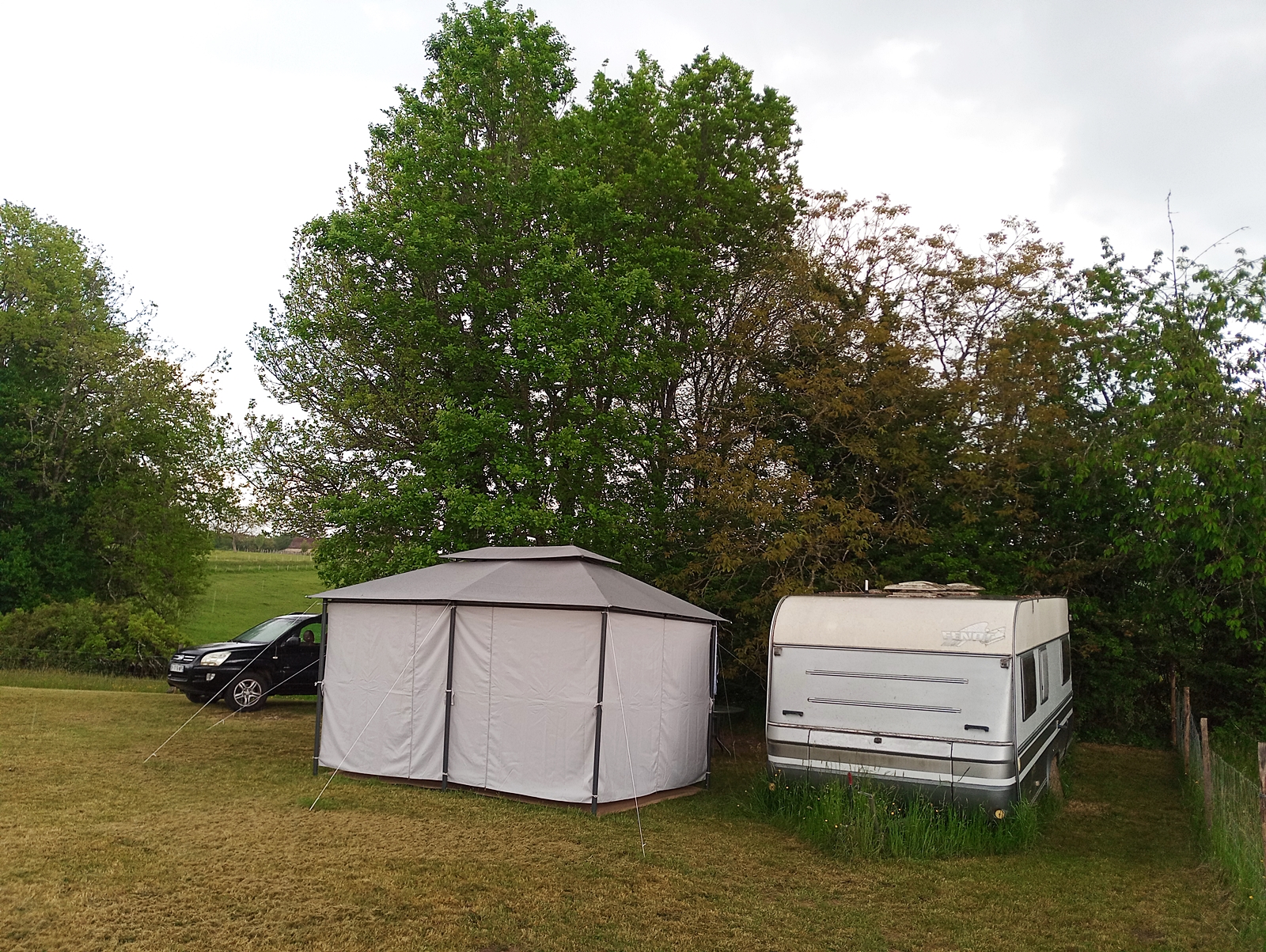
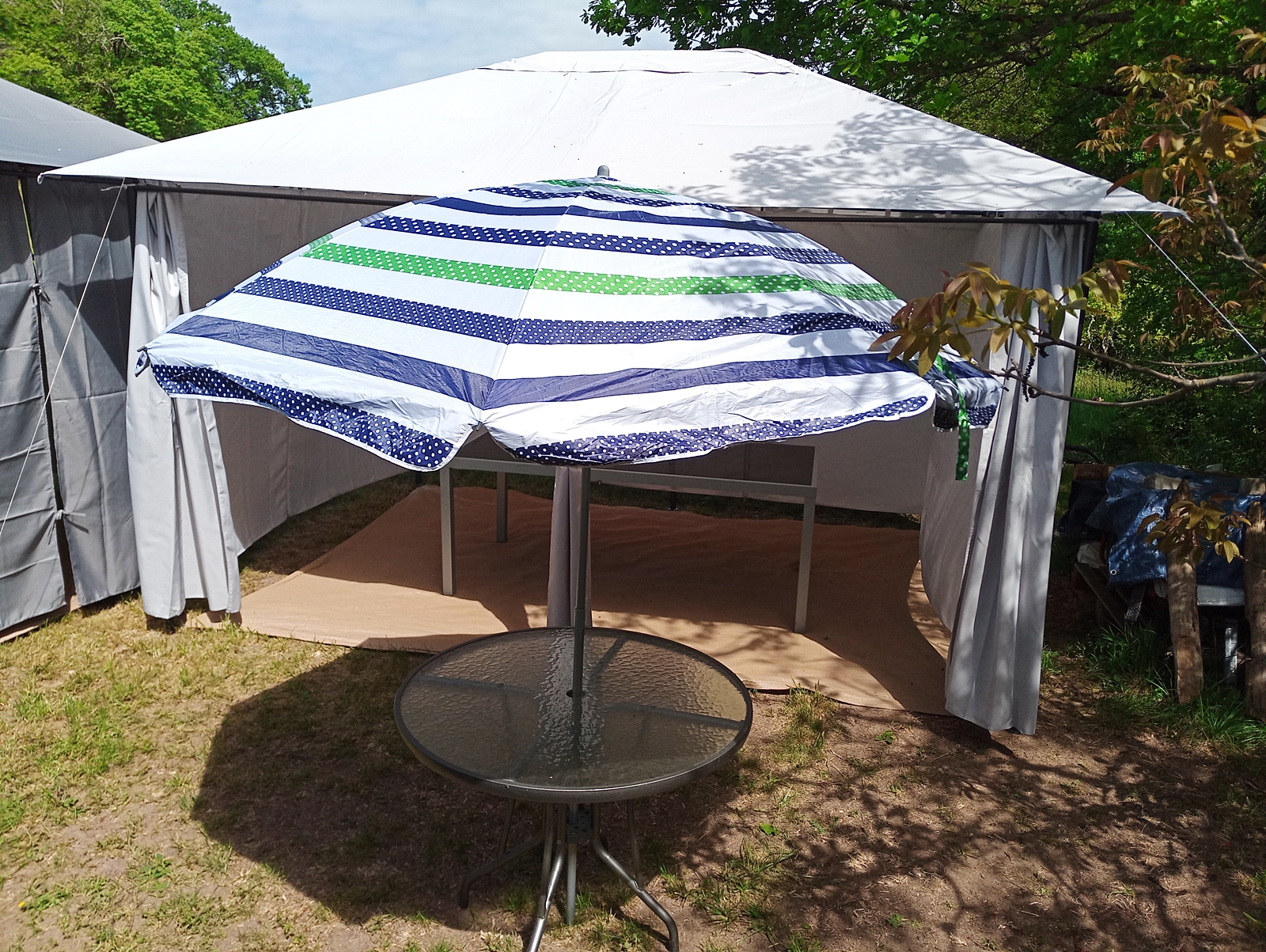
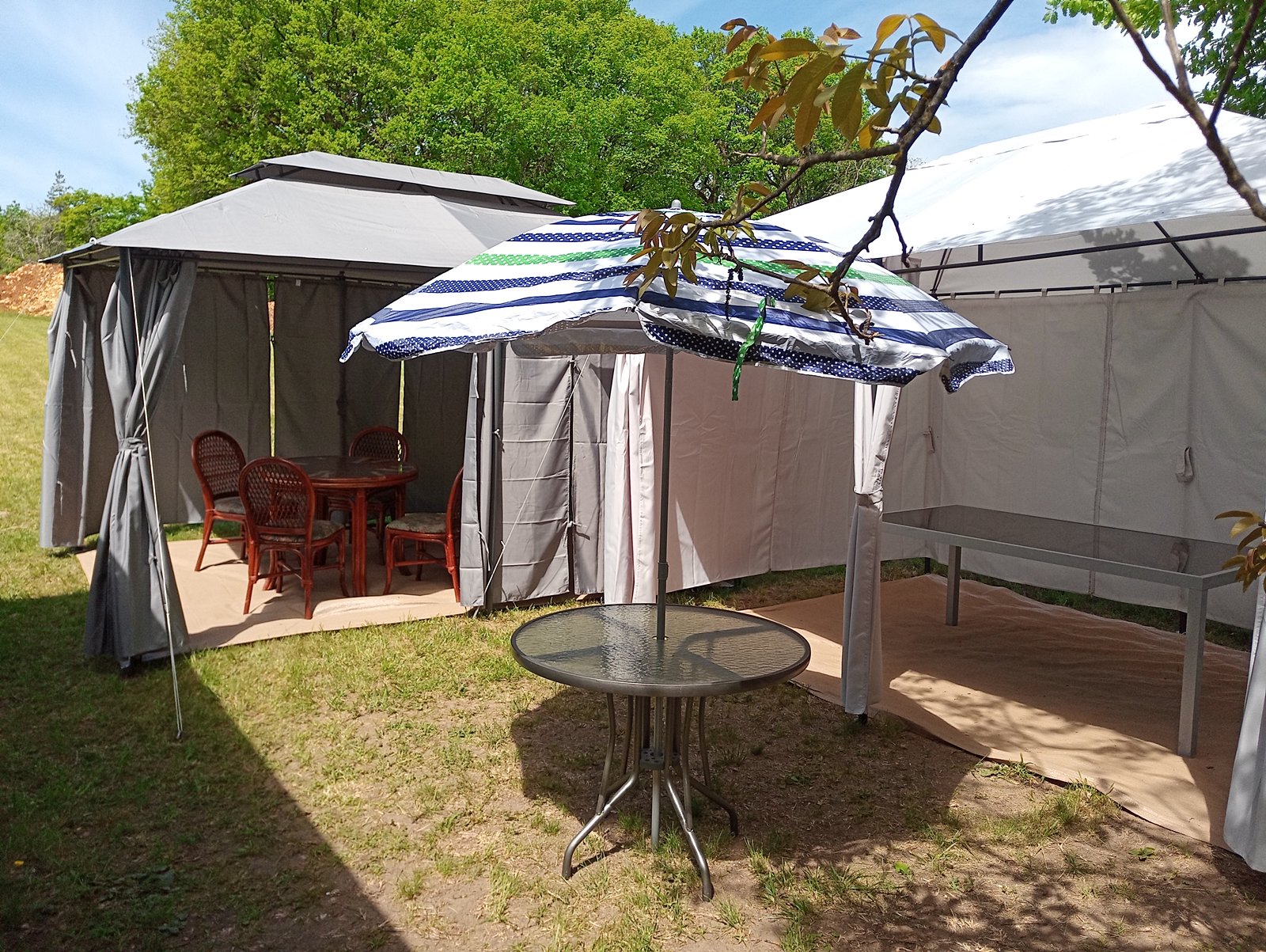
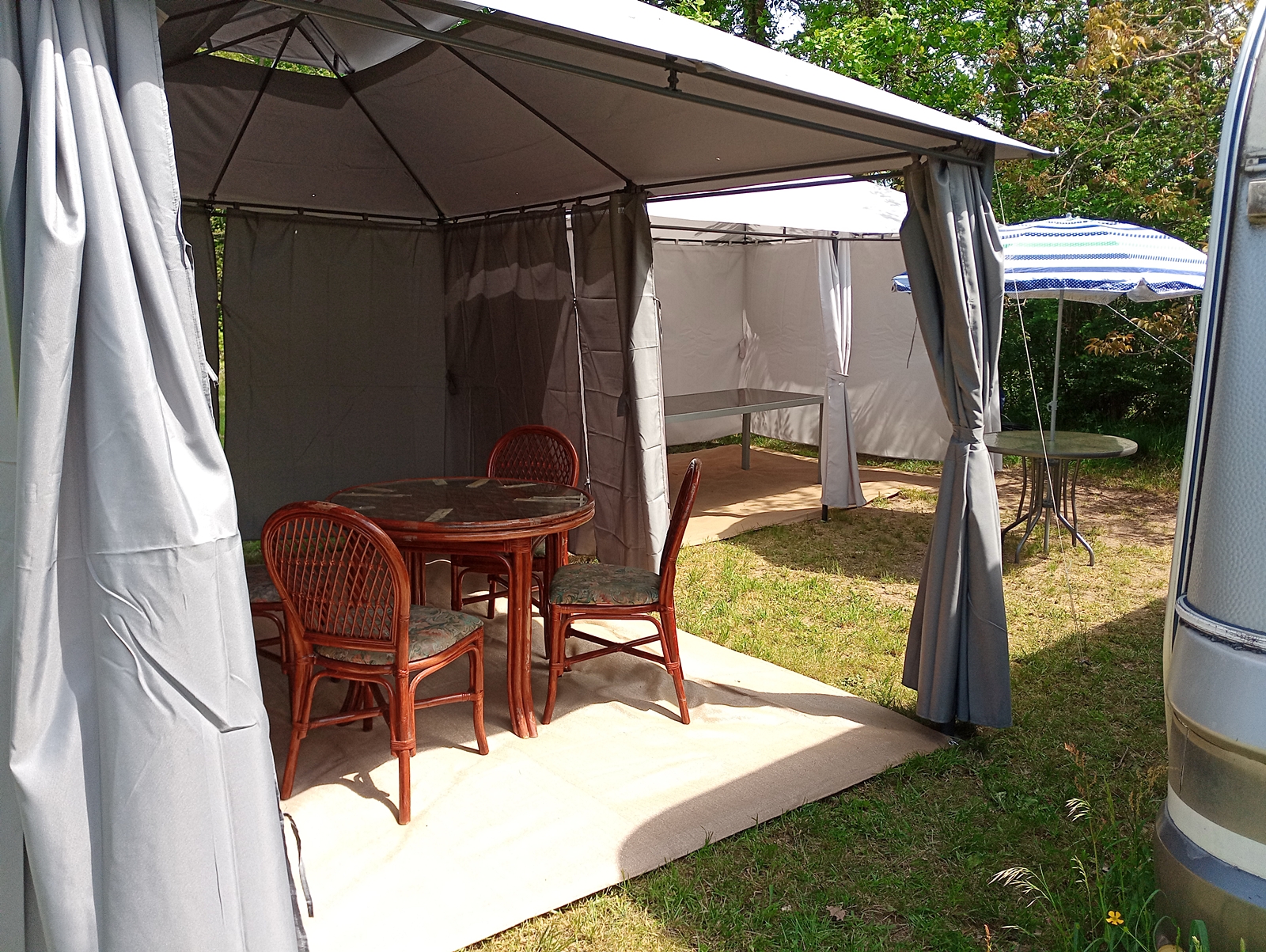
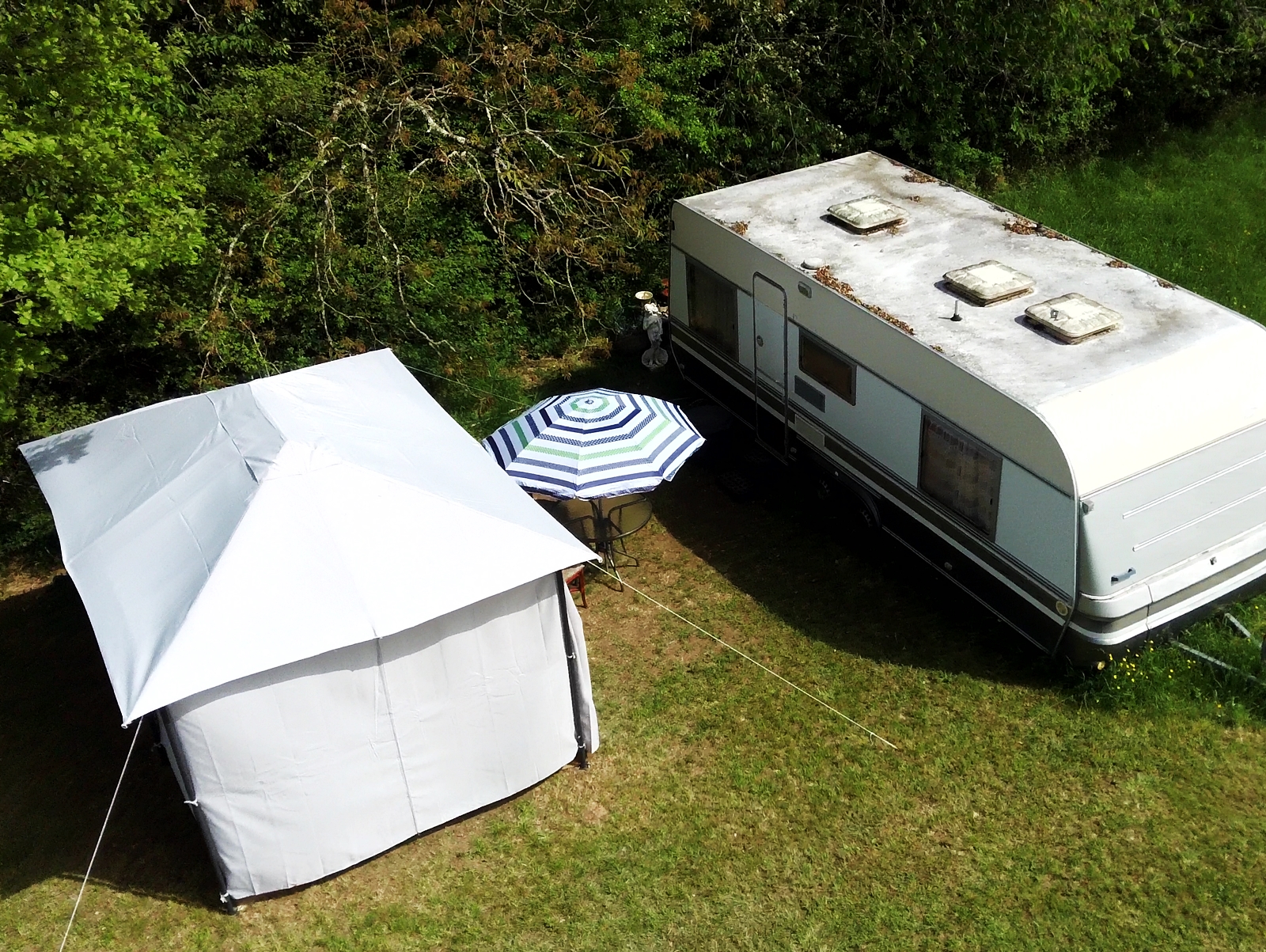
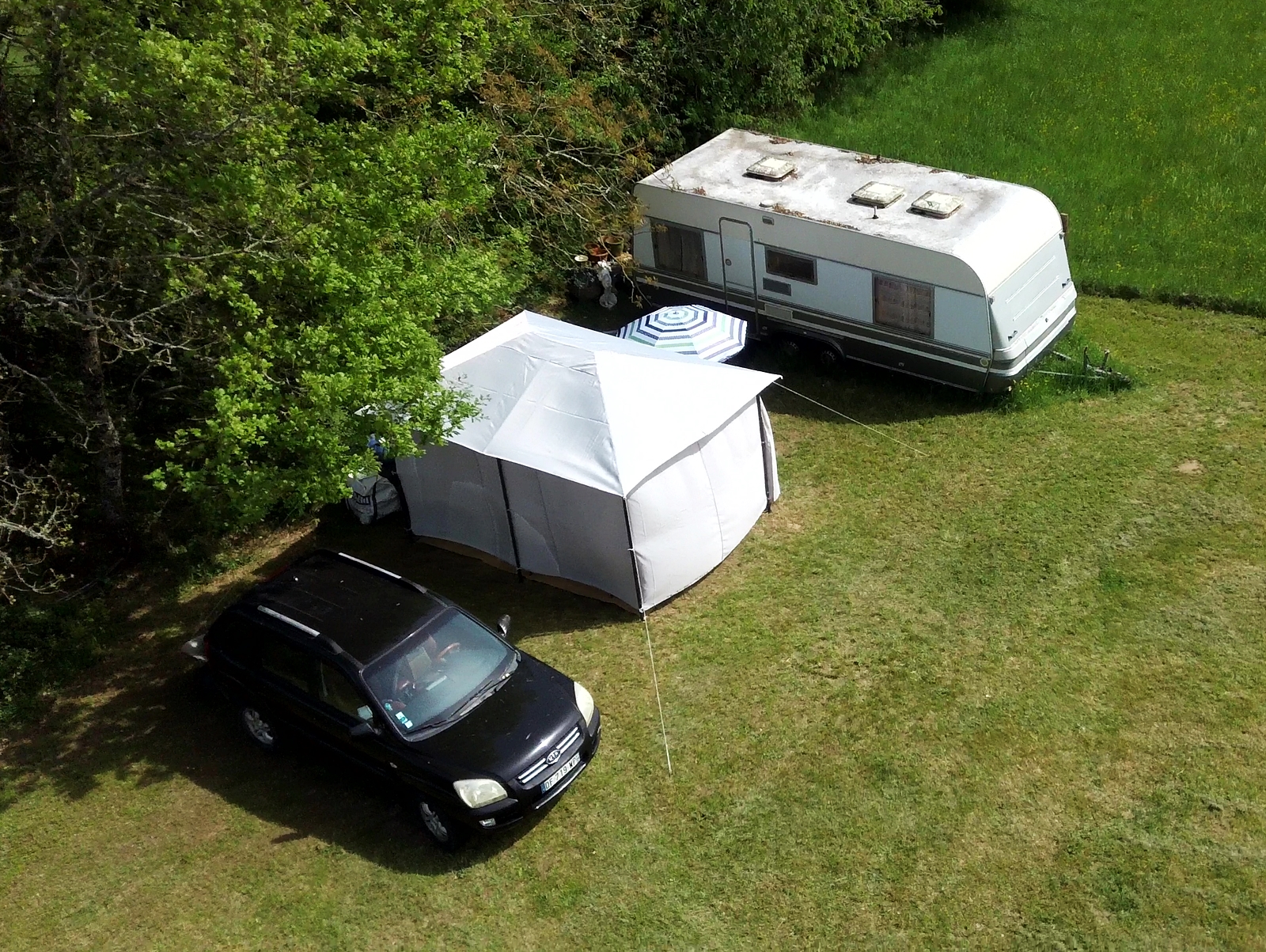
Or three if you like. I was very pleased with my handiwork yesterday having got the new ‘tonnelle’ up without any problems and exactly in the position I wanted it to be, giving me the small open area I wanted between the caravan and the two ‘tonnelles’ and two pleasant enclosed areas where I’ll be able to have friends to eat and drink during what will hopefully be a long, warm summer. It was a bit too late too take pictures last night so that’s what I started by doing today.

The size of the open area is just right. Too small and it would be too cramped to sit or lie out in the sun in, especially with the small round table and a couple of chairs in place, but too large and it would make carrying stuff from the caravan into the ‘tonnelles’ a chore. It’s also nicely private but with plenty of room to get into it by walking between the new ‘tonnelle’ and the caravan.

null

null

null

null

It soon became apparent with the light northerly wind that we had today that my fears about the shortcomings of the new ‘tonnelle’s’ curtain design were well founded as in what was admittedly quite a brisk breeze, the curtains were hopeless in protecting the interior of the ‘tonnelle’ and its contents. Clearly something would have to be done to try to solve the problem.

null

null

null

null

Here’s another example showing how useless the new ‘tonnelle’s’ curtains currently are. You could never sit and enjoy a drink or a meal inside it with any sort of a wind blowing. It would be just like sitting in the open air, which is not what I want at all.

null

null

null

null

null

So that left just the curtain problem to be solved. As I mentioned in my last post, the curtains from the original ‘cheapie tonnelle’ were undamaged even though its metal framework was almost totally destroyed and as far as I could tell, their dimensions were good for the new ‘tonnelle’ as well as the one they came with. So I got them out to check and sure enough they were.

It took the best part of an hour to remove the new curtains and replace them with the ‘old’ ones (they’re not, of course, because they were only in place for a matter of days before the winds blew up) but the final result was very pleasing.

null

null

null

So now the curtains on the new ‘tonnelle’ are the same as on the other one and hardly move in the breeze. A suspension tab had been pulled off one of the curtains and also a tape that secures one of the side curtains to an upright (no fabric damage, just stitching) but I’m a dab hand with a needle and thread and it only took me a few minutes to stitch them back on again, making the curtain set as good as new. And you hardly notice that the new ‘tonnelle’s’ roof is slightly darker.

I will modify the new curtains myself by adding zips and more securing tapes but at least now there’s no urgency to do so. An internet search has already revealed that it could be difficult finding the six 183 cm long grey open ended zips that I’ll need here in France but I think that I’ve located a UK supplier. If so, doing the mods won’t be too hard once I’ve dug out my trusty Singer sewing machine that’s currently in storage. I just hope that when I get it out it hasn’t gone rusty…

I started off very impressed

But ended up rather disappointed as I’ll go on to explain. I went off to Sant Astier this morning to pick up my third new ‘tonnelle’ that I found the other day on Le Bon Coin. I’ve not been to Saint Astier before. It’s to the west of Périgueux and only about 45 minutes or so away and I found that it’s a pleasant little town that’s full of narrow streets that have been made into a one-way system. It confused my satnav (and me) somewhat but I managed to find my way to the seller’s house without too much trouble.

She turned out to be a charming lady who having bought the ‘tonnelle’ for her own garden then had a permanent one built for her out of wood by her children. Consequently it had stayed unused and unopened in its packaging and she had only just opened it before advertising it to make sure that it was all there as it should be. And it was, just as she had described. Unlike the other two ‘cheapies’ that I acquired last year, this one is a branded model – Hespéride’ – and is of much better quality with thicker fabric and an all-round much stronger and better made metal frame, and I couldn’t wait to get it home and start putting it up.

Here’s a shot of the framework going together. Although its design is slightly different to the other two, having a proper vent in its roof to let the heat out, the basic principles of its design are the same and it didn’t take me that long to get the frame together. I’m also pretty skilled now at getting it erected single-handedly without subjecting the framework to any undue bending or strain.

null

Here are a couple of shots with its roof on showing the vent that I mentioned.

null

null

And here’s a view of the roof vent from the inside.

null

The quality of detail is immediately apparent. The metal tubes are much more robust than the ones in the two ‘cheapies’ with good, strong welded joints and care has even been taken with the finishing of the nuts and bolts in the structure with there being one type of plastic cap to cover the bolt heads and another to cover the nuts and the exposed bolt stems.

null

null

But it was when I unpacked the ‘tonnelle’s’ curtains, that my disappointment was immediate. The polyester fabric used for the roof and side curtains is thick and of good quality with a nice appearance. The curtains are also suspended from the high level horizontal rails by velcroed tabs so no difference there, but whereas the curtains of the ‘cheapies’ are closed by full length zips, those of the new ‘tonnelle’ are only secured by tie-together tapes, and then only two per edge at a third and two-thirds distance. And whereas the curtains of the ‘cheapies’ are secured to the frame uprights by three tapes, top, middle and bottom, those of the new ‘tonnelle’ only have tapes at their middle points.

This means that in the gusting winds that we had today while I was erecting it, the curtains of the ‘cheapie tonnelle’ were hardly moving whereas those of the new one were billowing madly in the wind, exposing most of its interior and its contents and also leaving much of its floor uncovered and open to the elements.

null

null

I find this design lapse not only extraordinary given the attention to detail that’s been applied elsewhere, but also incredibly penny-pinching. It occurred to me that I still have the side curtains from the original damaged ‘cheapie tonnelle’ which are of almost identical dimensions and have survived pretty much intact (one suspension tab’s stitching gave way I think and also possibly one upright securing tape) and I’m going to have a go at swapping them tomorrow. They are a slightly lighter grey than the new ‘tonnelle’s’ fabric but that won’t matter.

I moved the wooden furniture into the new ‘tonnelle’ when I’d finished and laid its floor mat and when the wind wasn’t blowing, it looked OK as shown below.

null

I don’t want to leave things as they are whatever happens tomorrow. Even if the old curtains do fit I’ll probably end up getting my sewing machine out and modifying the new curtains myself, by adding full length zips and more upright securing tapes. Hopefully if the old curtains do do the trick though, I won’t be forced into doing it straight away as I have other jobs on my list to attend to. As usual 😉

Here we go again

But better this time. Having yesterday dismantled the original ‘tonnelle’ that I erected on my land, today it was time to dig the second one out of my ‘abris’ and put that up. Having learned the lessons from last time I was able to modify my approach to minimise the strain imposed on its metal framework and I also moved it very slightly to get a flatter area for it to stand on. It took half a day or possibly a bit more, but I was very pleased with the results and here are some shots that I took at the end of the afternoon, starting with the view from the caravan

null

null

null

null

null

null

null

null

null

null

null

I don’t want to get out my ‘Sunday best’ parasols that I had at Plazac until my house is completed and for the time being I have put up a ‘cheapie’ circular parasol over my small round metal table that I got from CDiscount for only 20€ including delivery. I know what I said yesterday about cheap rubbish from China but this is really only intended to be a very temporary arrangement.

The wooden furniture will be staying in this ‘tonnelle’ and my large garden table will be remaining in there also until a get a second one. I actually found a brand new one today on Le Bon Coin and will be going to pick it up on Saturday morning. It is of much better quality than the two I originally acquired so will cost more but hopefully once my house is ready I’ll be able to hang onto it and keep using it in the future. We’ll see…

Stonkingly good day!

Just when we were beginning to give up hope we got a day like today with just a very light north-westerly wind and a high of about 21 degrees Celsius. So just the day to dismantle my damaged ‘tonnelle’ and get it ready to go to the ‘déchetterie’ and then mow my grass to get it back under some kind of control.

While doing the former it soon became very obvious why the ‘tonnelle’ had collapsed – almost all of the horizontal cross-pieces that connected the tops of the vertical tubes and on which the side curtains had been hung had broken. In several cases the metal itself had snapped because it was so flimsy and of such poor quality but in others the welds had broken because they were almost non-existent and consisted of just a couple of dabs of metal to make a ‘joint’. So this was a reminder of what we already know – Chinese ‘cheap’ means that you get rubbish.

I was really pleased to get my grass cut because it was already much higher today than when I returned from England a week ago and I also managed to tidy the areas up a bit at the top close to the road. Here are some shots that I’ve grabbed from a couple of videos that I shot afterwards using my Fimi X8 2020 drone that show how amazingly green everything is following the several days of rain that we’ve had to endure since I got back.

You can also get an idea of how long the grass is now on the land neighbouring mine that hasn’t been cut. The farmers have already started cutting the grass for hay and it won’t be long before the grass either side of mine is cut too.

null

null

null

null

null

null

To finish off, here are a couple of general shots that I’ve included just because they show how amazingly green everything else. The first one was taken with my Fimi out to the east looking towards Plazac and if you look carefully you can see the pointed black tiled roof of Chateau du Peuch nestling in the hollow.

null

The last shot is just a general view with the drone out to the north looking towards the north-west. Spring has at last arrived and the mass of greenery everywhere proves it.

null

We have another day similar to today forecast for tomorrow so it’ll be ideal for me to erect my second ‘tonnelle’ in the same position as the last one as shelter for the furniture that I’ve now just got covered up. Then I’ll be able to think about acquiring another one, of similar colour I hope, in order to move forward again with my plan for a ‘hospitality area’ outside my caravan 😉

Water – surfeit and shortage

First the surfeit. It’s been raining practically non-stop ever since I returned from England last Tuesday. And I’m not kidding, except for one brief slightly sunny afternoon when my hopes of cutting my grass rose and then were dashed again. It was raining earlier today and although it has now stopped and it’s quite bright actually, here’s what the foundations of my house looked like earlier.

null

null

null

null

null

I’m chasing the builder who has not been on site for a month to find out what’s going on. They missed some good weather while I was away and now I bet that they’re excuse will be that they’re unable to do anything until the site has dried out and all of the water around the columns that they put in has drained away. I’m beginning to get annoyed again.

Now the water shortage. Several weeks ago when I moved my caravan from the top to the bottom of my land I had to extend its water supply. I did so by purchasing a 100 metre length of ‘potable water’ grade clear plastic hose pipe that I added to the 15 metres that I’d originally purchased to make the connection to my water standpipe. However, it immediately became clear that the new plastic was not what it seemed. For a start, the water that came out of it had a strong chemical taste and a distinct chemical smell and I soon decided that it was totally unsuitable for either drinking or cooking with.

And when it emerged from the taps in the caravan it foamed almost as though it contained washing up detergent, as the following couple of shots show.

null

null

I tried running (and wasting) vast quantities of water through it in the hope of flushing it clean but that never happened and the water coming out of it continued to remain effectively unusable as even when used for washing of either self or objects, it still continued to leave behind a nasty smell. In the end I complained to the supplier, saying that although the tube was labelled ‘for water’, this didn’t necessarily mean ‘drinking water’ and that I wanted them to take it back and refund my purchase price.

This being France, they ‘ummed and ahhed’ but eventually conceded that if I repacked the roll and provided them with its dimensions and weight, they would arrange for it to be picked up. But then, of course, I had to leave for England which let them off the hook, so naturally I’m still waiting, and I’m getting annoyed about that too.

In the meantime I’ve had to order a replacement hose as I can’t bear to live without a water supply in the caravan for any longer. It’s not much fun trudging up to the top of my land to fill up two 5 litre water bottles in the pouring rain. In case anyone thinks I was imagining the old plastic tubing producing foaming water, here’s a shot for comparison of the water coming out of the new pipe that I connected up today. Case proven I think.

null

And lastly, my damaged ‘tonnelle’ that Victor kindly secured for me while I was away after it had been destroyed by the high winds that hit it the day after I’d left for the UK. As the next shot shows, although much of its metal framework was only flimsy, it wasn’t just bent but was torn apart by the wind.

null

The fabric is also damaged so there’s nothing of the ‘tonnelle’ to be saved. It’s being used to cover, not very effectively I might add, what I put into it before I left for England.

null

With all the rain we’re getting, as soon as I can cut my grass I’ll have to get my second ‘tonnelle’ out and put that up in the same place as the old one to protect the stuff that’s been covered up. It looks as though there might be a window during the coming week and if I can do that I’ll then be able to think about sourcing another to move my plans forward for creating a cosy little ‘hospitality’ area in the area between the two ‘tonnelles’ and my caravan. I must say, I’m getting a bit sick of all the setbacks that I’m receiving lately, seemingly one after the other… 😐
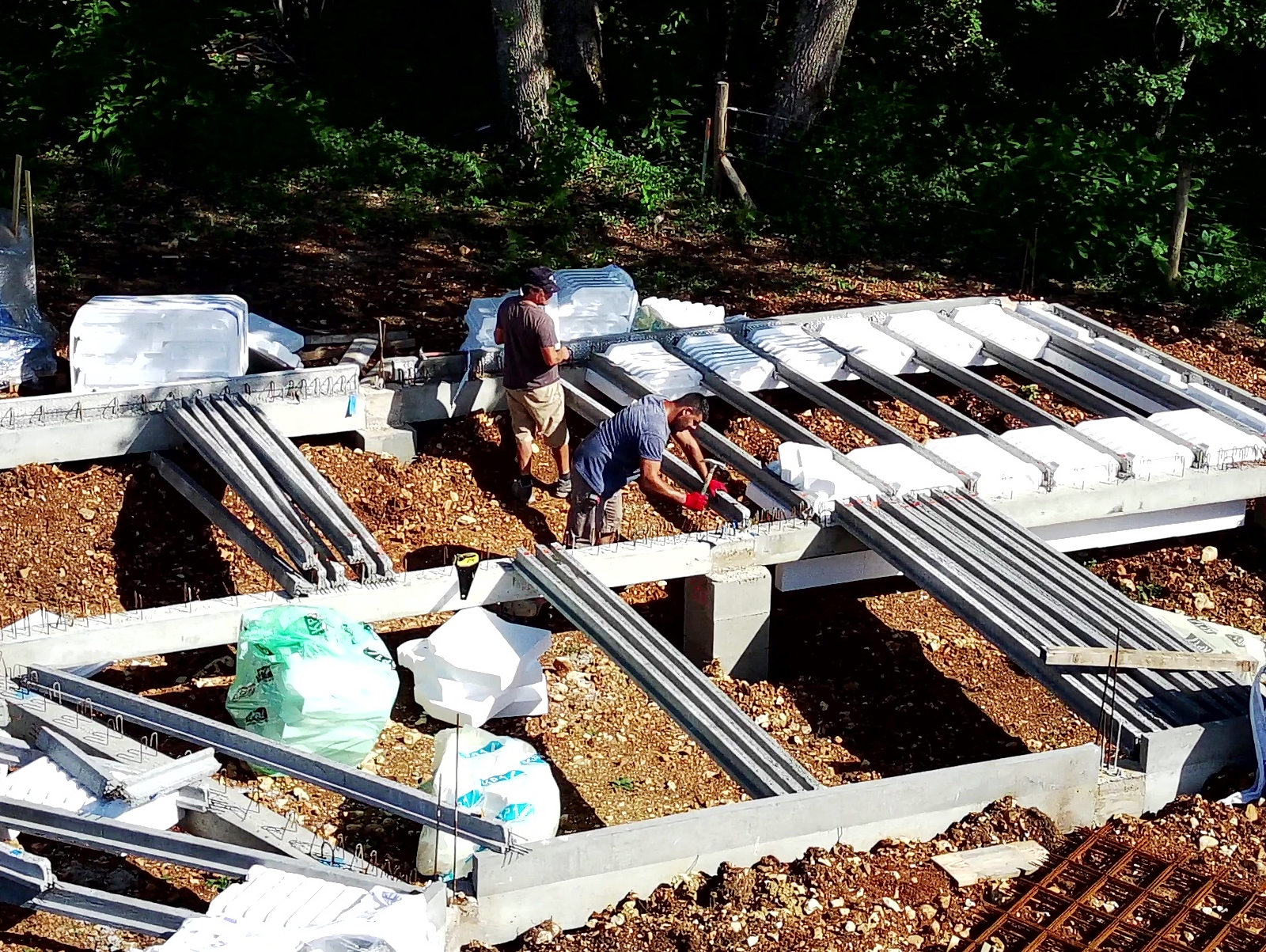
The Foreigner

I’ve just watched this film on Amazon Prime. Absolutely outstanding in every way. Catch it if you can. You won’t be disappointed.

null

Don’t be misled by the above image. It was in English throughout.