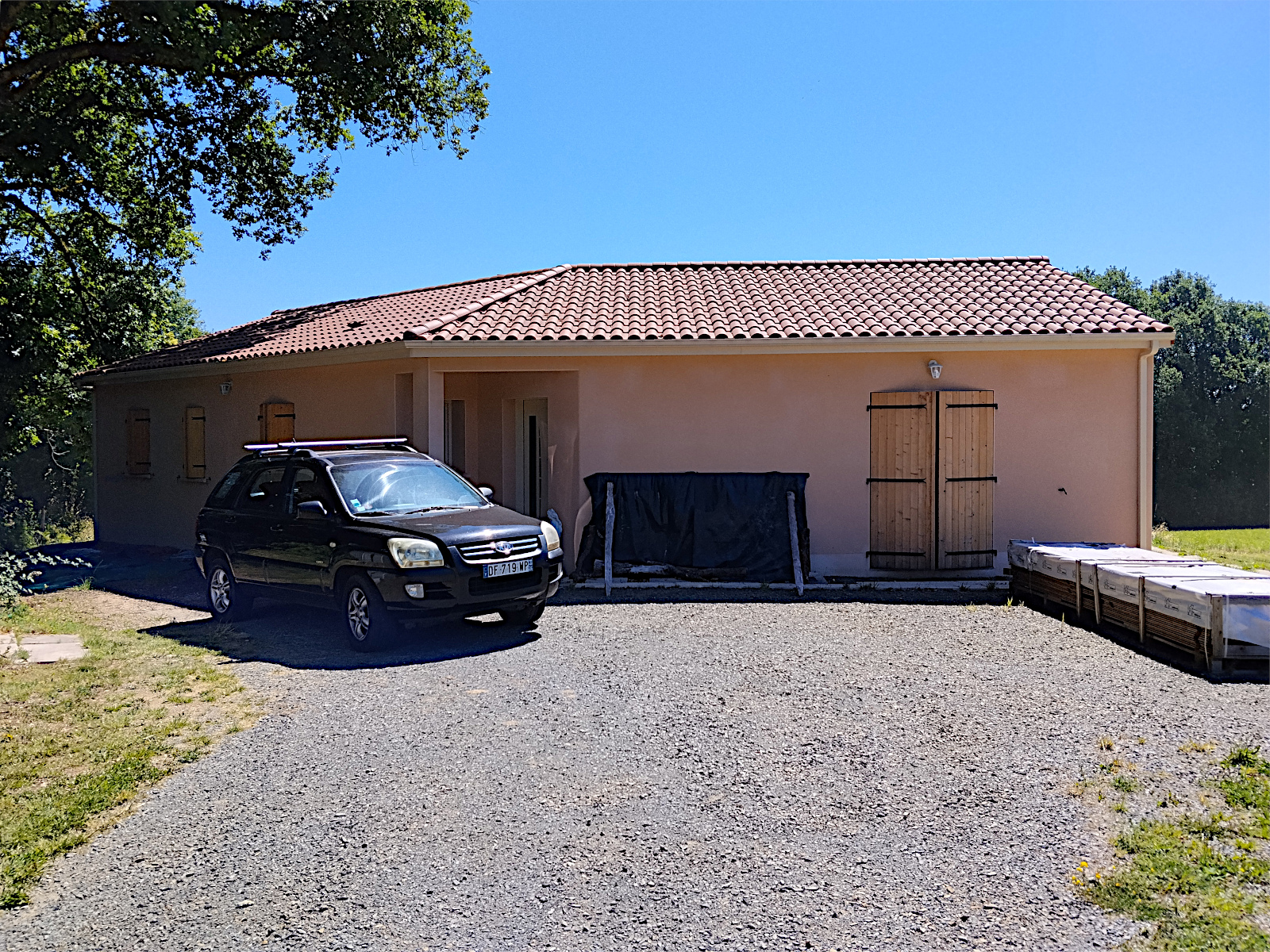
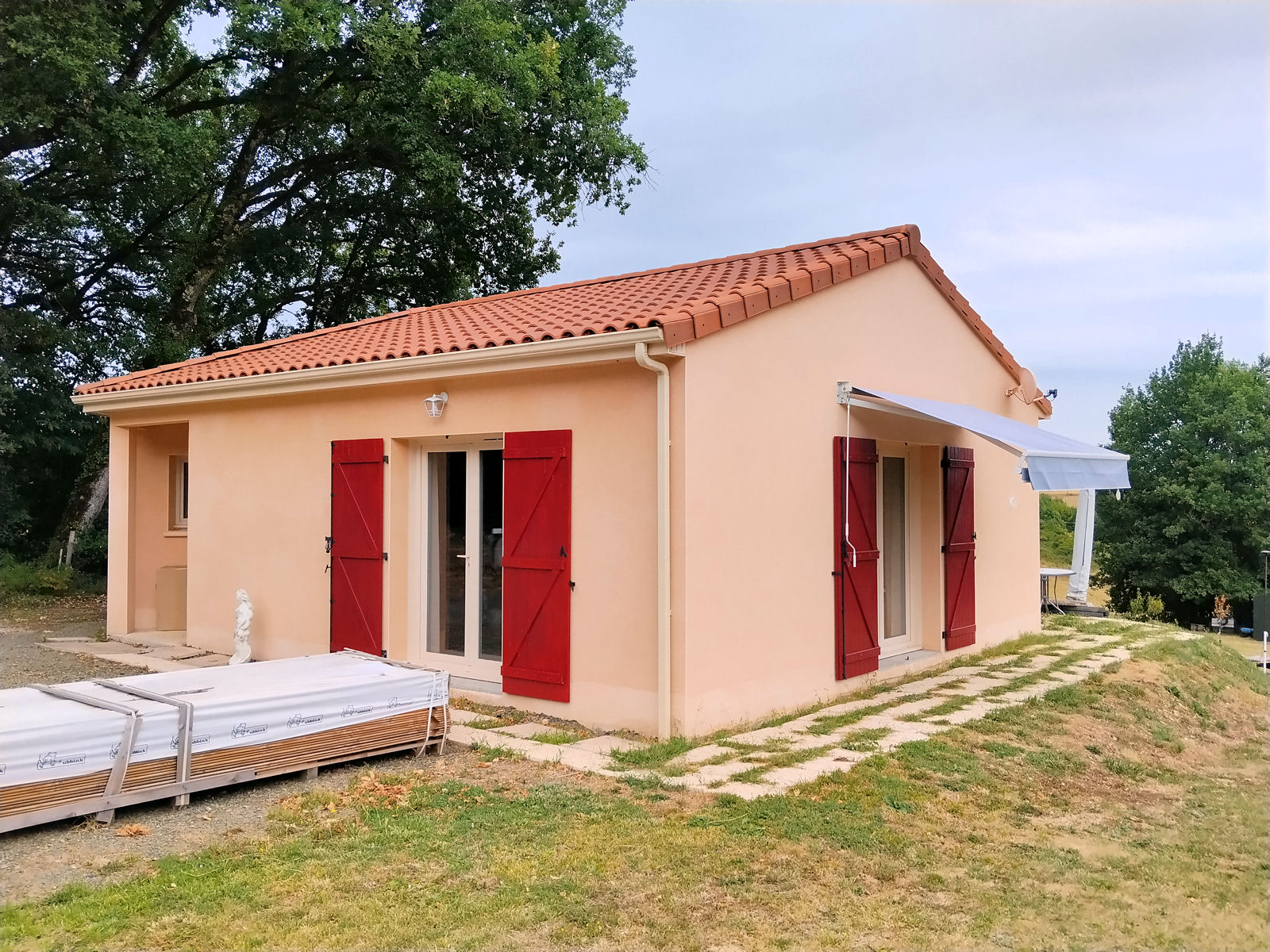
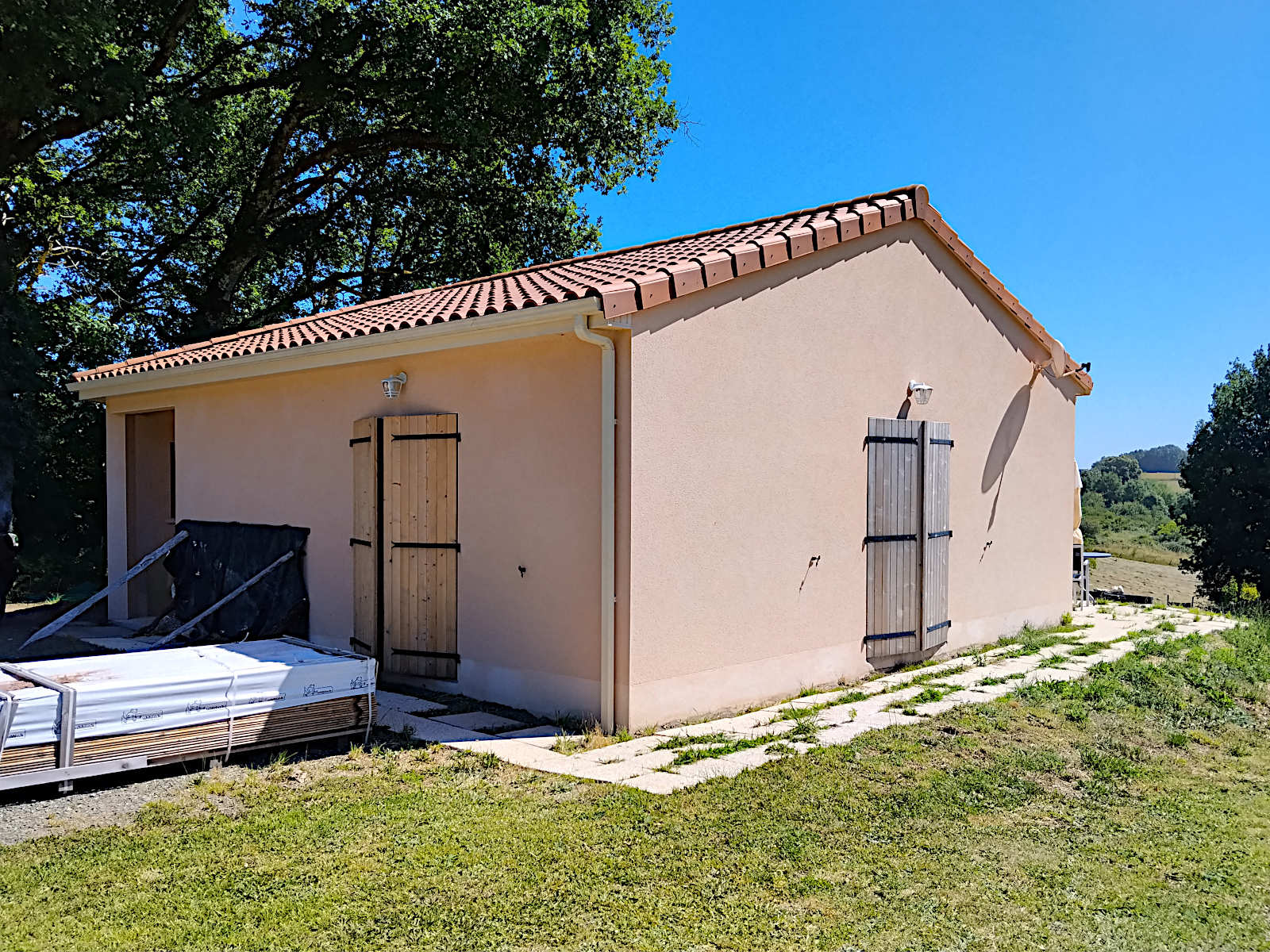
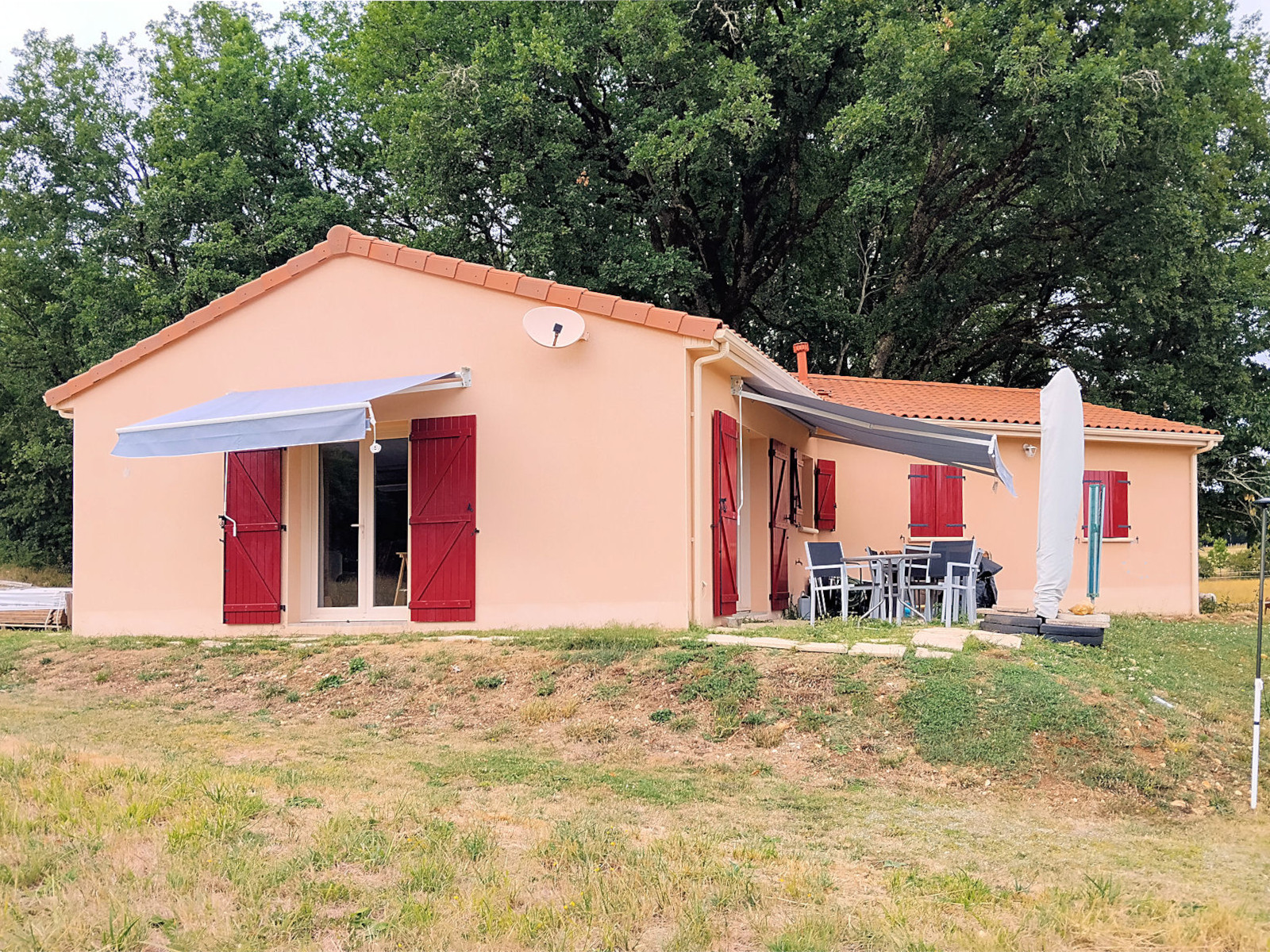
Getting down to business

After waiting indoors this morning for a delivery that needed a signature – batteries for another labour-saving tool that I recently purchased, of which more later – we kept getting intermittent light rain that I didn’t fancy working outside in. So I went shopping instead and after a light lunch managed to get outside later in the afternoon to start on some serious work with my new excavator and dumper.

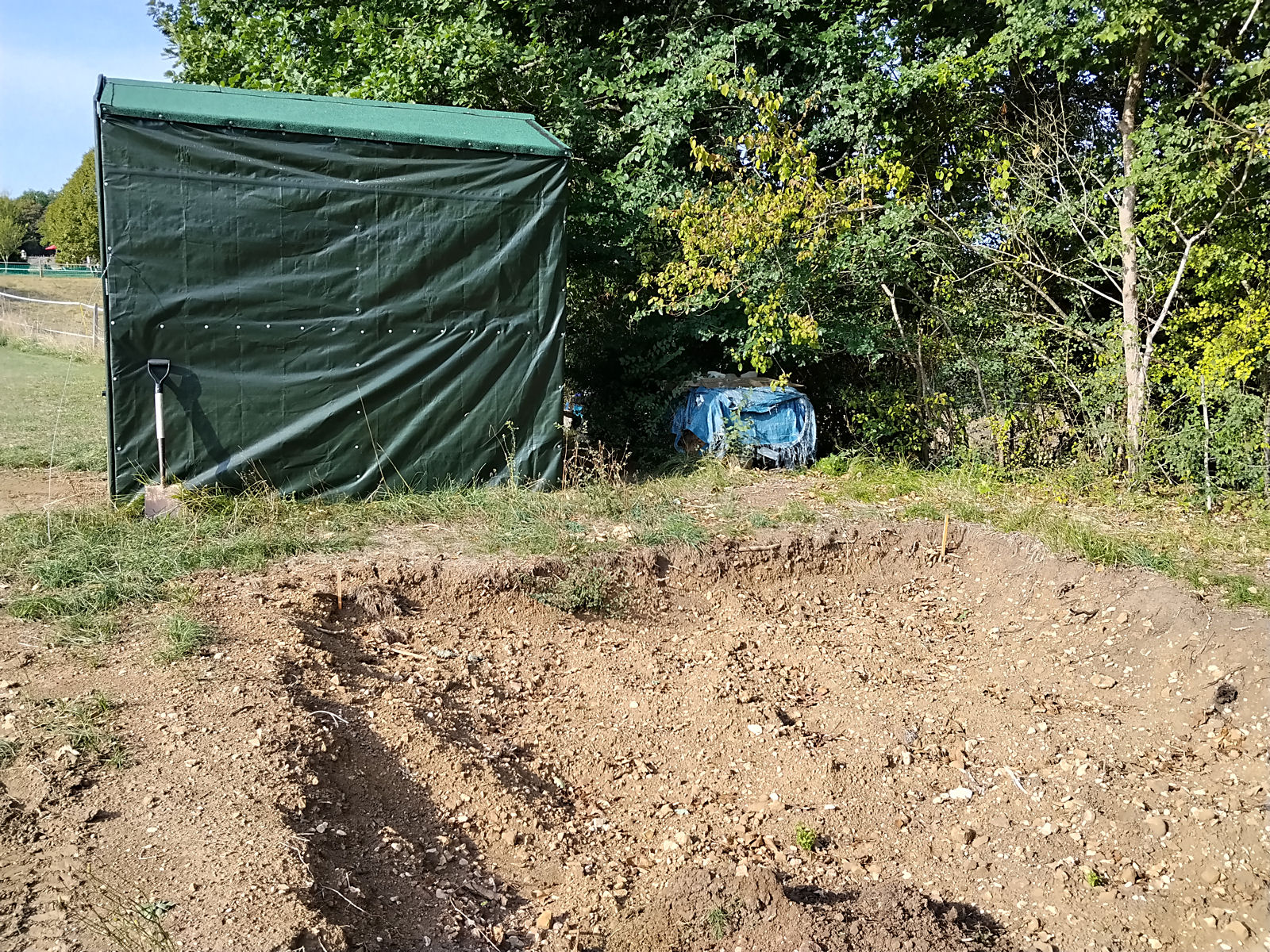
The first job requiring some proper earth moving is the base for my planned garden tool store and workshop. It will measure 4.5 x 3.5 metres and I intend to lay a concrete base 12.5 cm thick which will require about two cubic metres of concrete. I set out the area at the bottom of my garden a week or so ago with red pegs linked by light string and today marked it with fluorescent marker paint as I wanted to remove the pegs and string so I could start work.

null

null

null

It didn’t take me very long to find out how tricky working the excavator actually is and my admiration for the guys who have done work with much larger machines at my old house at Plazac and here grew by the minute. There’s a definite learning curve and it’ll take me some time to become even half-proficient, if I’m lucky. As it was I drove my new dumper into the excavator’s bucket when initially getting into position to tip earth into and whacked the side of the dumper’s bucket a couple of times while dropping earth into it, fortunately without doing any damage.

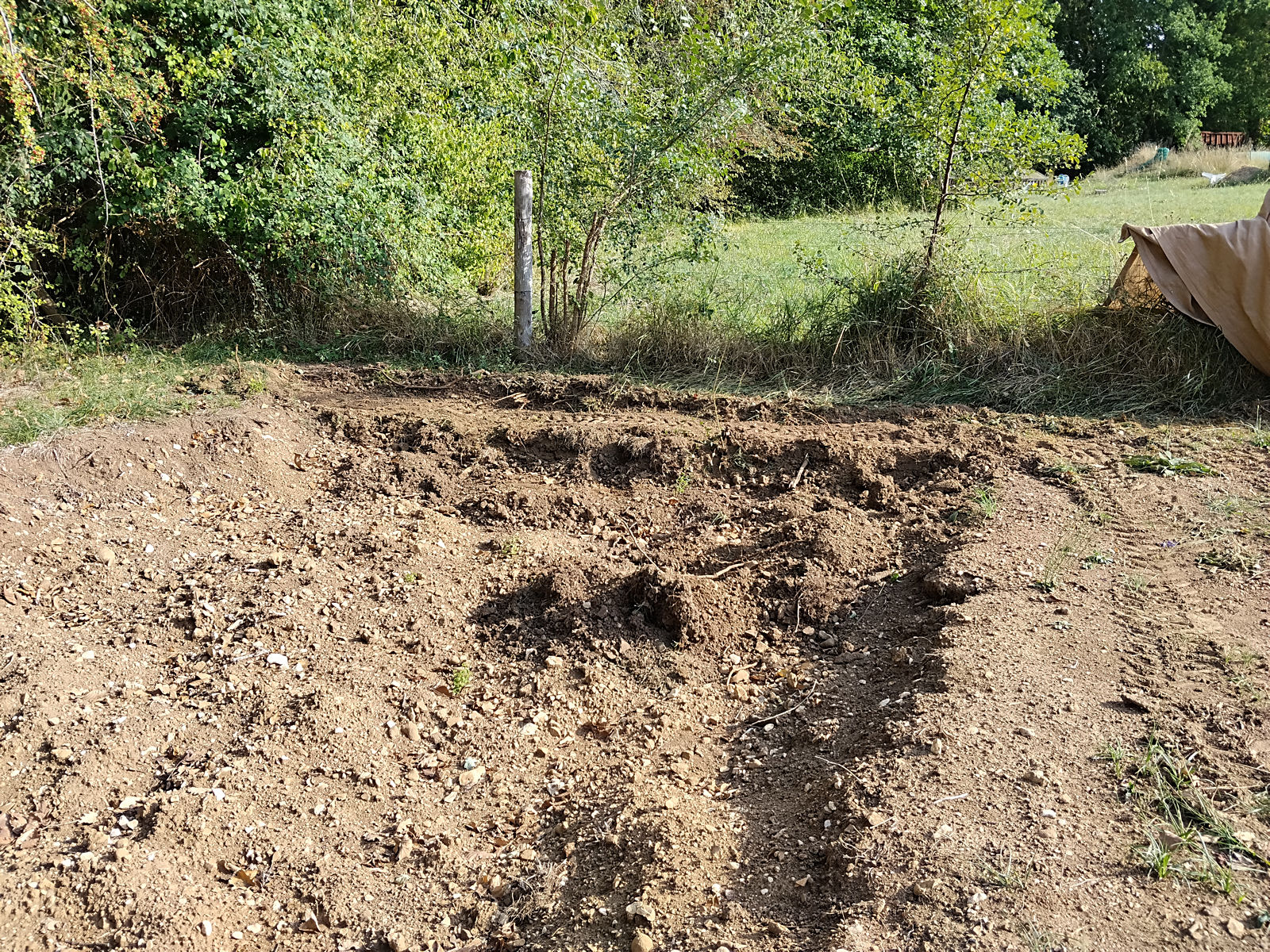
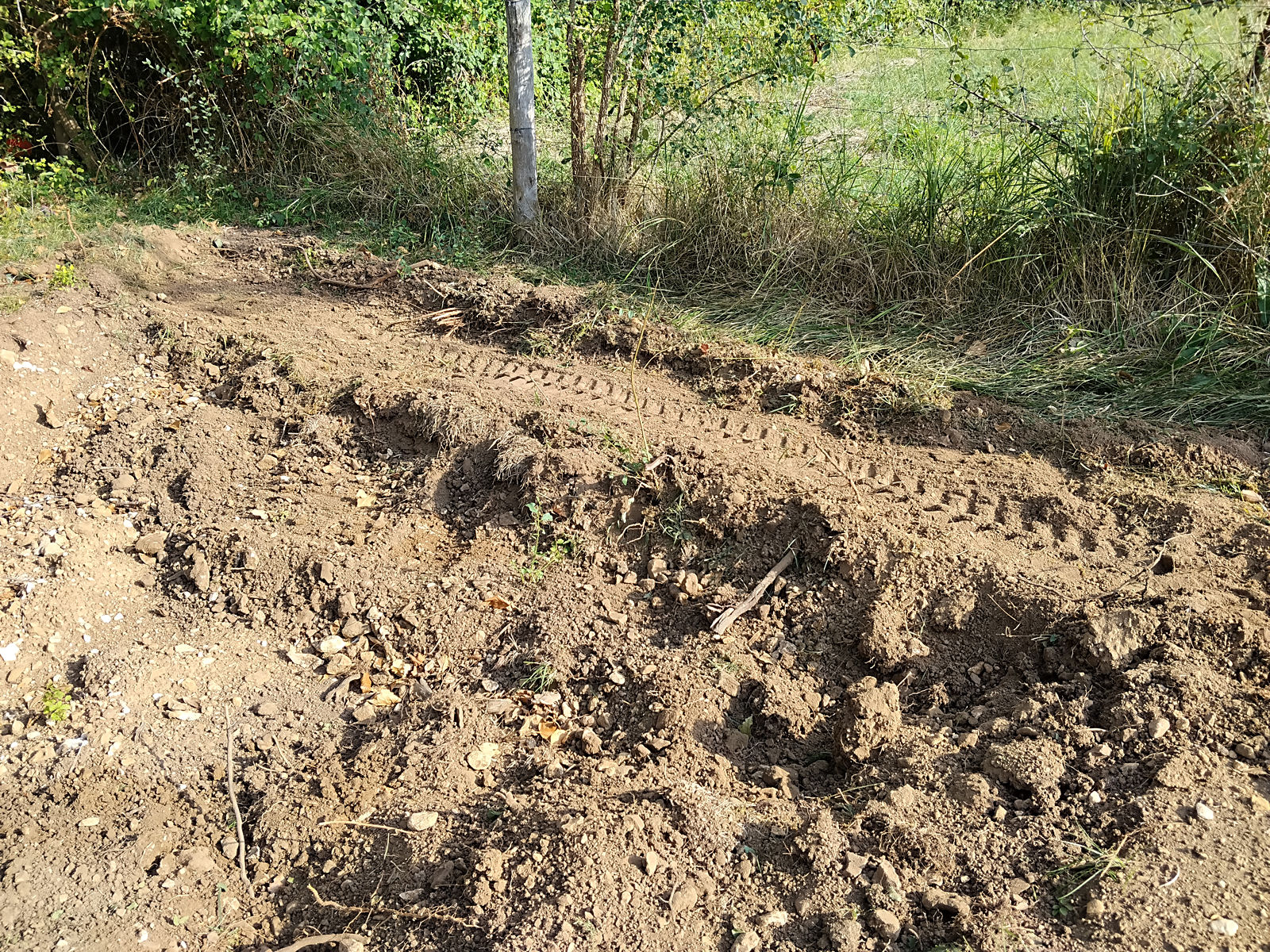
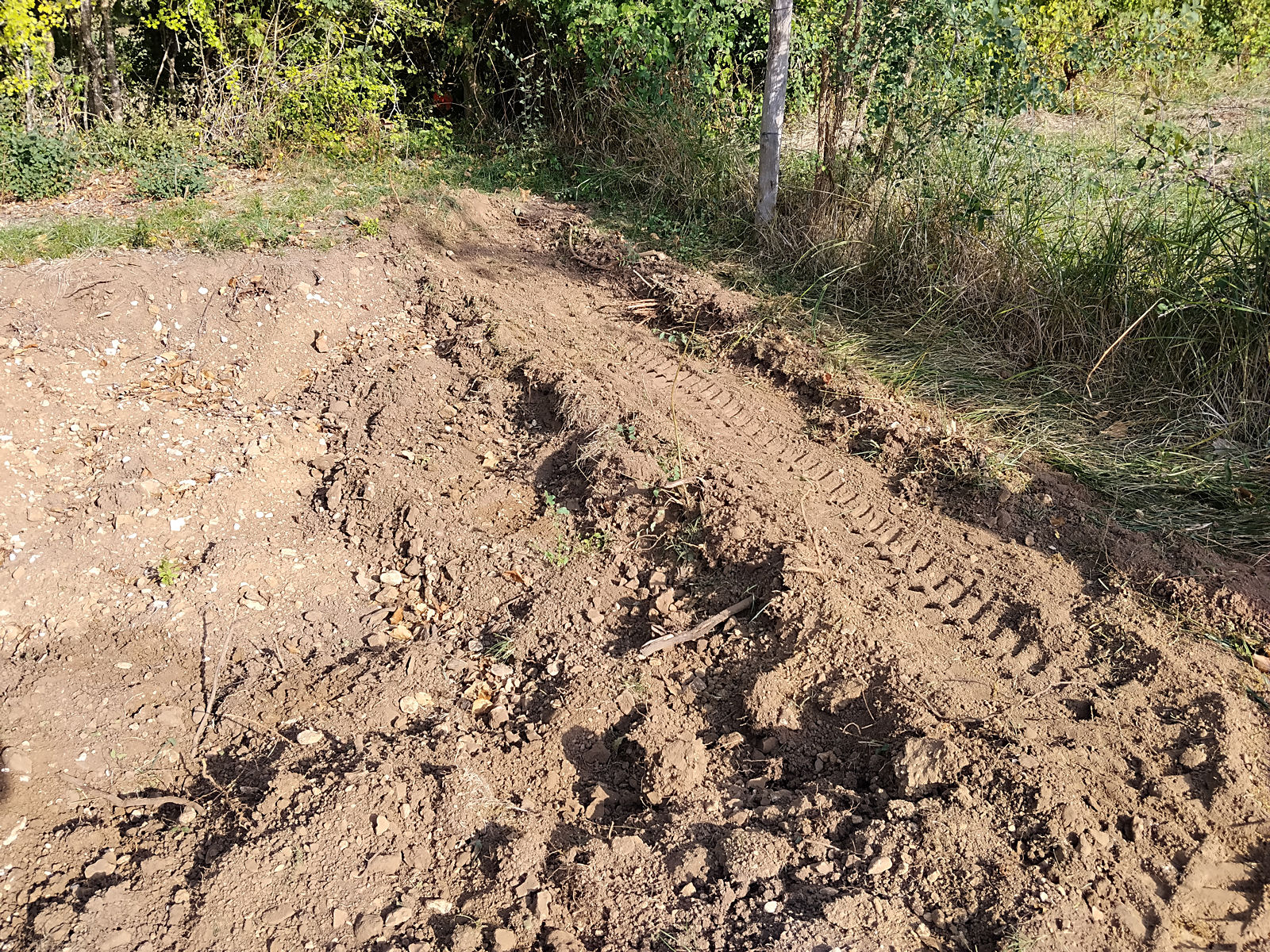
It was slow work compared to how quickly a pro would have done it and I only dug out one strip down one side of the base, but knowing how hard the work had been digging out the two bases I laid at my old house in Plazac by hand, I know that I could never have done the same here. There were a few smallish roots there but here there were both stones and a lot more roots, including one very large one which the excavator ripped through with relative ease.

null

null

I’ll need to cut it with my electric saw before continuing tomorrow but on the whole I was quite happy with what I managed to get done in not much more than a couple of hours or so.

null

I may be digging out a bit deeper than necessary but I’m not too worried about that. The reason is that in the fullness of time I will have to lose all of the black stone put down by the builder in my driveway entrance and all around the house, so putting some in this base and the base for my swimming pool to bring them to the correct levels will be a good way of doing that and freeing up some earth that will be highly usable for modelling my garden. But that’s for later.

null

null

I already started doing that in a small way today by using my new dumper to transport 400kg of earth at a time to the top of the garden to begin reducing the slope from the back of the house down to the garden. Ultimately I intend to do much more of this and may even need to bring some topsoil in to get what I eventually want to achieve.

null

null

So that was it for today. I was very happy with what I managed to do which would have been impossible without my new little excavator and dumper. And this was only the very beginning 😉

Been got, again

Yesterday I spent the day removing the barriers from around my fruit trees that have prevented the deer from attacking them for a couple of years or so, not because the trees no longer need the protection but because the barriers had allowed the grass and weeds within them to grow massively in height and thickness. This was bad news because the weeds and grass starve the trees of water and were now so bad that they needed to be removed.

After strimming away the weeds and grass I laid what turned out to be cheap, poor quality Temu mulch rings around the bases of the trunks of the trees in order to prevent the unwanted growth from coming back again and then replaced the barriers, but for the time being at least, without their supporting thin metal rods. The only exception was the new apple tree but I still have enough barrier material in my garden ‘abris’ from which I also intended to make it a new barrier.

null

null

null

null

I also intended to make a cut-down barrier for the new little Japanese Flowering Cherry that I’d planted nearly two weeks ago in my front garden, but as soon as I saw it this morning my heart sank. It was apparent that just as before, when the deer had attacked a new apple tree one day before I’d planned to put a barrier around it, the same had happened yet again with the Flowering Cherry.

null

I’m assuming that despite the abundance of greenery all around, a deer had taken a fancy to my new, weedy, out of shape Flowering Cherry. And it had done a thorough job, from top to bottom of the bush taking not only almost all of its foliage but also chunks of its stems.

null

null

null

null

The bush was something of a disappointment when it was delivered but I had no intentions of replacing it. Now I’m not so sure and may have to bite the bullet and shell out yet again for a replacement. If I do, I think that next time I’ll go for a tree format rather than a bush, which is what I originally intended, but for the time being I’ll leave what’s left in place and see how it does as I’ve got enough on my plate already to be dealing with in the garden.

What do you make of this?

What do you make of this?

null

I know what I do, and I think we’re going to see more of it if fuel costs stay high.

It’s one of the problems of living in rural France. You’re waiting on a heavy delivery and you’re informed of the delivery date and time so you wait at home especially to receive it.

But it doesn’t arrive. Why not?

Because at the time it’s due to be delivered the delivery company (on this occasion Geodis) doesn’t have any more drop-offs in your area so instead they start playing ping-pong.

As they have to have trucks travelling between their depots, they send it back from whence it came and then when it arrives there, it gets turned round again, in the hope that when it arrives at the depot responsible for delivery, in this case Périgueux, this time there’ll be other drop-offs in the same area.
If not, will it go round again? I wouldn’t bet that it wouldn’t.

So, so far two days late. Let’s wait and see.

Sweet as a nut

As we Brits say when something goes exactly according to plan. I was somewhat fearful this morning because the work I had planned for today needed for me to replace the excavator’s bucket the right way round. This also meant, of course, that I’d need to replace the bucket securing pin that had previously been seized in its joint and given me so much trouble when I was removing it, and that I was not looking forward to.

And sure enough it would not go back in. Each bucket (and the post auger) came with its own pair of pins so I then thought that as a last resort I’d try a pin from another bucket. And what do you know, it went in with almost no difficulty at all. So it appears that the problem isn’t serious after all. It’s just to do with slight variations in securing pin diameters, so I’ve informed the manufacturer and as well as asking for a replacement for the original pin, I’ve asked for a spare or two in case any of the others have also been manufactured on the big side.

Having replaced the bucket I could get on with today’s tasks, starting with planting the new Reine de Reinettes apple tree in the hole that was left after I’d moved the original tree further down the garden. This didn’t need much work by the excavator. All I had to do was tidy up the hole, finishing off by hand with a shovel, and plant the new tree in the usual way. Here’s how it looked after I’d finished. I was very happy as the manual effort required was minimal.

null

Then it was time to move to the front of the house to dig a hole and plant the new Japanese Flowering Cherry. This time I’ve shown a bit more of what’s involved.

null

The main thing I’ve discovered is that as you might expect, the excavator is not designed to dig small diameter deep holes. OK, the minimum width of the hole is the width of the bucket (in this case 400 mm) but due to the action of the bucket, the length of the hole extends the deeper you dig and in this example was about 800mm. Even so, I know from experience that the manual effort involved in digging a hole like this in this soil is considerable.

null

That’s because there was another problem, as I remember too well from when I was digging holes manually in the front of the house (eg when I installed my post box). The ground is so rocky that you hit rocks the moment your shovel (or your excavator bucket) hits the surface. The little excavator had its problems but I more or less got down to the desired depth before I had to start tidying the hole up by hand. And not just by hand. Also by club hammer and chisel in order to smash the large rocks in the bottom of the hole into smaller pieces that could be removed.

null

null

But compared to digging the hole by hand, planting the little flowering cherry was a doddle and the final result was very acceptable. It’s always a good idea to separate the roots of any tree that’s been grown in a pot and when I did so for this one I found that the earth it had been grown in looked awful – almost like dirty sand. I cleaned it up but left enough on the roots before planting the little tree with plenty of special compost and back-filling with original soil with all of its large stones removed.

null

So here’s looking back on the tree planting work of the past couple of days, starting with the original tree that I transplanted two days ago. It looks to be coming along fine in its new position.

null

Now the new Reine de Renettes apple that replaced the tree I’d moved. It looks to be in good condition but I’d say is a year younger and therefore less full than the tree I’d moved and also the other Reine de Reinettes that I bought at the same time, which is doing famously. That’s it behind and to the right of the new tree in the next picture.

null

And now the little flowering cherry. To be honest, I’m a bit disappointed with it. From the pictures on the supplier’s web site, I thought it would be bigger and fuller. It’s also bent to one side and as can be seen in the picture, I’ve tried pulling two branches outwards using sticks banged into the ground and with a bit of luck over time they will give the required results. The problem is that I have to buy on the internet as with all the other things I’m dealing with I don’t have the time to troll around the local nurseries sourcing trees and shrubs, much as I’d like to.

null

The final thing I did today was attach sticky anti-ants and insects bands to the trunks of all of the trees in my garden. Ants can already be seen on the leaves of several trees so it’s not before time.

null

The manufacturer of the sticky bands also recommends attaching bands to any supporting sticks, which I’ve done for the stick supporting the new tree, as the ants are very clever and otherwise use the sticks as ladders and cross over to the trees above the sticky bands on the trunks.

null

I also intend to remove the barriers around the trees and cut the grass surrounding them. Grass voraciously sucks up water that the trees need to survive and prosper but I won’t be doing it for a day or so as I’ve ordered several 60cm mulch rings to place around the tree trunks that will prevent grass and weeds from growing and also feed water down to the tree roots.

In fact there is now going to be a slight lull in activity, possibly save for me acquiring materials with which to construct the concrete base for my planned garden tool shed/workshop. That and the next job I have planned will begin to involve me shifting much more earth, more than I’d ever care to have to move by hand. For that, therefore, I’m waiting for this to be delivered.

null

More later 😉

First job

The first batch of fruit trees that I bought turned out to be weedy and of very poor quality. I ended up losing almost all of them – I think I have just one little cherry tree left that is fighting to survive but is still weedy and will probably never do anything worthwhile, at least in my lifetime.

The next batch I ordered were from another supplier in the Landes in south-west France. These were more expensive but were bigger and of much better quality. I was extremely pleased with my purchase, especially with one of the Reine de Reinettes apple trees that was a lovely shape, and despite the shock of being transplanted bore fruit immediately.

Unfortunately, after putting the trees in, the night before I planned to surround them all with protective netting the deer came into my garden and attacked them. The trees that were the worst affected were the two Reine de Reinettes and the one the most seriously damaged was my favourite.

The damage was extreme. In order to obtain the tiny, immature fruit the deer had ripped off one of the tree’s main branches and by so doing had ruined the shape of the tree. Then, to make things worse, the same tree was attacked the next year by aphids and ants and all of its leaves began to shrivel.

I hit it with vast quantities of Neem Oil spray which had the desired effect. Over several weeks it cleared the aphids and ants but the tiny fruit that had started to grow shrivelled and died and at one time I thought that the tree might have died as well. But it hadn’t!

So now we come to this year. I’ve had to remove a couple of small, dead branches but despite the fact that the tree now appears healthy, there’s no possibility that it will ever now be a thing of beauty as it’s completely lop-sided. And to make matters worse, because it was originally so lovely, I’d planted it the closest to the house.

I therefore had to make a decision. The tree couldn’t stay where it was, but it would have been a shame to lose it completely after all it had been through, and me with it. So my idea was that once I had the excavator I’d order a replacement and move it lower down the garden where it could do the best that it could, and if by doing so I lost it, so be it.

And today was the big day. I ordered a replacement Reine de Reinettes apple tree together with a Japanese Flowering Cherry from a supplier in Paris. They will both be arriving tomorrow courtesy of Geodis so I needed to move the existing apple tree today ready for its replacement to go straight in.

The Flowering Cherry will be going in front of the house and as it will be smaller (apparently they grow pretty quickly) I’ll be able to use what I learnt today and I’m hoping that I’ll be able to get that one in as well before the end of the afternoon.

With all that decided it was time to prep the excavator. Over the last day or so I’ve gone all over it and greased every grease nipple. I’ve also changed its engine oil for a known good quality diesel brand so this morning I needed to change the bucket config.

Usually the bucket digs backwards towards you, the driver, but I wanted to be able to lift the apple tree out of the ground with its roots in order to drop it into a hole in another part of the garden. For this I decided to see if reversing the bucket would do the trick, as I had to get under the tree from the excavator side.

Then my problems began. To remove the bucket you have to remove two large pins in rotating joints that secure the bucket to the boom. You have to remove the bolts that secure the pins and then bang them out, thus releasing the bucket. One came out as intended but the other didn’t. It was effectively seized in the joint.

The following images show that slowly but surely by using brute force the pin did begin to come out and as it did so it was clear that it had been inserted in the factory with what looks like no lubricant whatsoever. I’d pumped grease in but although it had oozed out of the joint ends it hadn’t penetrated into the centre of the joint at all.

null

null

null

The reason for this appears to be that the joint bush into which the pin was inserted was slightly undersize in manufacture. I’ve told the manufacturer about this but there’s very little that they can now do. I’ve asked for a replacement pin which doesn’t now look very pretty with all the bashing I’ve done on it but that will be purely cosmetic.

If the joint bush is undersize, which I suspect it is, it won’t do much to solve the underlying problem and changing the bucket as well as fitting the post auger will be a constant nightmare in the future. The only effective solution will be to slightly ream out the joint bush but I do not have the facilities to do that.

So how did the tree transplant go? Pretty well actually and although some physical effort was needed to tidy up the holes, it was not excessive. With the bucket reversed, the tree lifted out of the ground very quickly and easily with most of its roots and the hole it came out of, after a bit of tidying, will be fine for when the replacement tree arrives tomorrow.

null

null

Digging out the hole in the virgin ground in its new position was actually quite a bit harder and also quite tricky as there’s a learning curve getting to grips with the machine’s controls. If I’m honest I was surprised by the machine’s apparent lack of power digging down into the earth, but to be fair, I was using the bucket the wrong way round and not as it is intended to be used.

Finally, a couple of shots of the transplanted tree in its new position. I’m very happy with the results and there’s no way that I’d have been able to achieve them in the time that it took and with the minimal amount of physical effort that I had to provide.

null

null

Finished at last

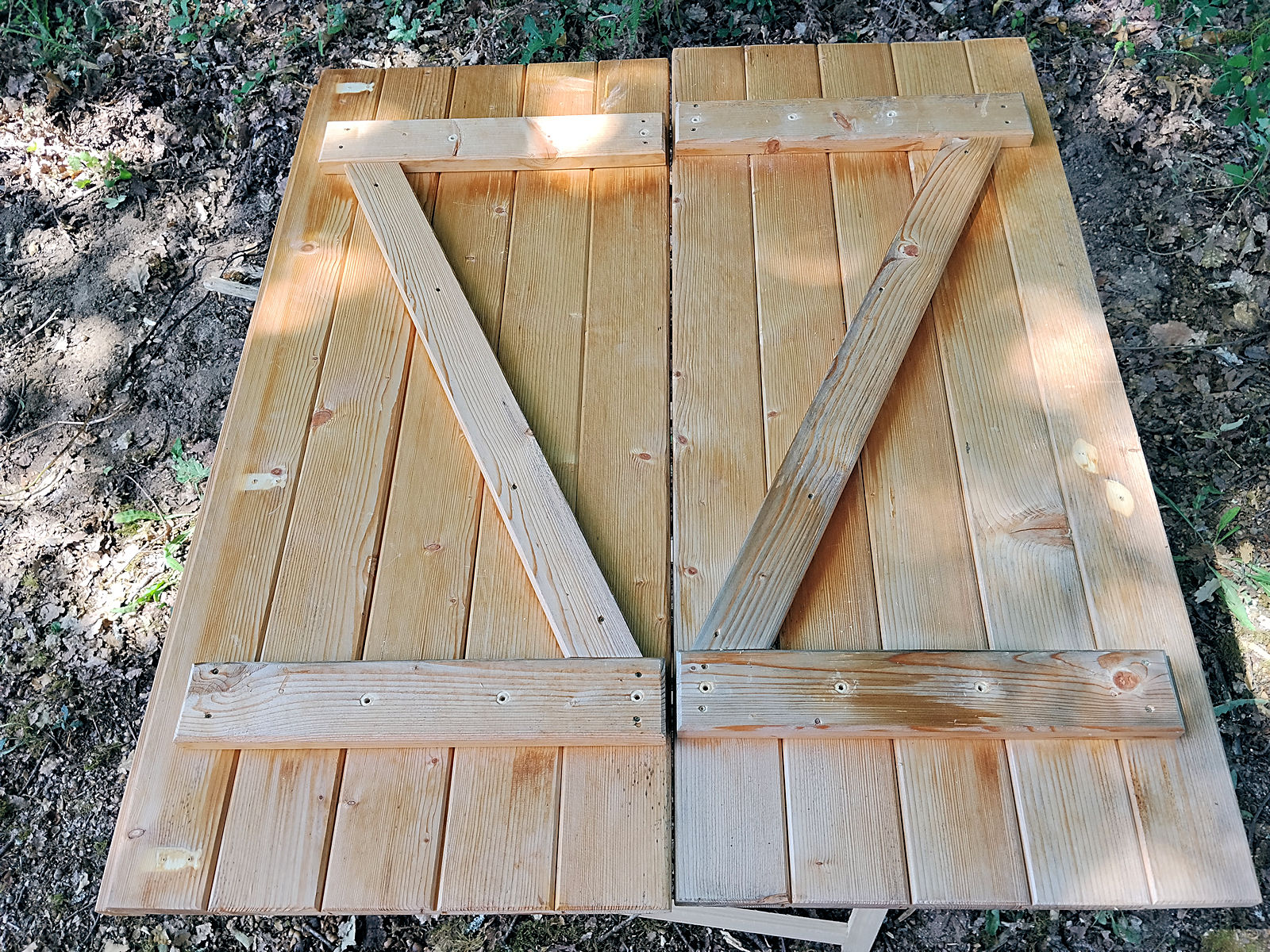
After mulling over the ways of making some sort of curtain for the open front of my mini excavator garage I decided that the best thing to do was make a pair of full height doors. The doors did not have to be totally weather-proof. All they needed to do was stop the wind blowing rain inside and as the wind would not be blowing to force them to open – quite the reverse actually – they did not need to be of overly heavy construction.

I had plenty of tarpaulin left over after covering the walls so I decided to cover the frames with it and then hang each one on three hinges from the front verticals. The wood was very cheap – just under 3€ for each 3m length – and I reinforced the frame joints by gluing each joint and then gluing and screwing plywood reinforcements over each one made from scrap pieces of the crate the excavator came in. I finished off hanging the doors working in blistering heat over a very long day yesterday and the results are shown below.

null

null

null

It was tricky getting the doors to line up as the garage hasn’t been constructed on totally level ground. Nevertheless they didn’t come out too badly. The bolt I bought is far too small and securing it, although not easy, is possible. To make it even easier I’ve ordered a couple of flip-over latches that I’ll place above and below the bolt which will align the door fronts better and make securing the bolt easier. I’ve also got some very short nails which I’ll use to secure the tarp to the outsides of the door frames and that really will be it.

The garage really has turned out out to be a very nice, weatherproof shelter and will, I hope, be worth all the work when the weather deteriorates and the winds blow, as they undoubtedly will. I’ll now be able to finish greasing up the excavator (I’m waiting for some lithium grease to be delivered), change it’s engine oil for what I know is good quality stuff and be able to start using it. And not before time 🙂

Here it is

My mini excavator garage is now more or less finished. I say ‘more or less’ because I’ve used 240 gm/m2 UV resistant tarp for the walls and I’m going to bang more securing nails in all around the bottom of the walls and along the mid-height horizontal beams in order to make the walls as wind-resistant as possible. It was very frustrating fixing them in place today because we had a cold north-westerly wind with strong gusts that kept making the walls billow out and impossible to fix while the wind was blowing so I had to keep stopping and waiting until the gusts had gone through.

I cut and mounted the side walls and back in one piece which made them harder to fix in place but ended up with no gaps through which the wind will enter and try to blow the walls off. It doesn’t look perfect but I’m happy with the result and think I was quite fortunate in that I didn’t level the ground on which the structure now stands and the framework could never be described as precision built. I think it’ll last as long as I need it to… at least I hope it will. But just in case I’ve fitted thick wire guys to the front verticals to prevent the framework swaying in the wind.

I’ve got enough tarp left over to make a curtain for the open front end but I haven’t thought of a design just yet. Ideally I’d like it to be like one of those curtain roller blinds with a string on the side in an endless loop that when you pull one side of the blind rises and the other side it falls. That would need some kind of sprocket arrangement though, which I think is a bit beyond me, but I’m still thinking.

So what did my garage end up costing me? I’ve saved 55€ by not using the two sheets of ‘agglomerée’ that I originally bought for the roof and used ‘free’ plywood from the crate the excavator came in instead. However, I’ve not costed in the roofing felt that was left over from the last garden tool store/shed that I built in the garden of my old house in Plazac. Totting up everything else, for the wood, nails, glue and anything else I’ve bought along the way, the total comes out to about 185€.

I don’t think this is too bad when you consider that the only other alternative I could find that was high enough to take the excavator was a 3m x 4.5m vehicle garage from Vevor with open ends and one open side, costing 880€. This also had the disadvantage of really being a permanent structure. I did find another 3.3m x 4.8m tent-garage costing 695€ but this had a door only 2m in height which was not high enough. Anyway, I hope all my postings about this build might be of help to anyone else considering such a project.

null

null

null

null

null

null

null

null

So what next? After banging in all the extra nails that I mentioned earlier and thinking up a design for a door curtain, my next job will be to go all around the excavator making sure all the nuts etc are tight and greasing all the grease nipples and anything else needing a smear of grease eg the bucket and auger mounting pins. That will make the machine ready for use and the next task will be to mark out the base for my proposed 4.5m x 3.5m garden tool store/workshop.

This will be the excavator’s first big job but before that I might get a bit of practise in by skimming the top off a hump at the bottom of my garden to the left of the new garage which always tilts my ride-on mower to an alarming angle when I cut the grass. It should be fun 🙂

Close, but not quite

This mini excavator garage build project is proving to be bigger and taking longer than I originally thought. Today I’d hoped to finish it off by completing its roof and walls but in fact only managed to get the roof done. And even then I ran out of roofing felt nails so still have a few left to bang in along one edge.

null

null

But at least the plywood roof covering is now totally covered and the roof is waterproof and with some rain expected tomorrow that’s a good thing. It won’t matter too much if the wood of the framework gets a bit wet. I’ll buy some more nails tomorrow as I’ll also need those for the walls.

null

I’ve got some other things I need to do tomorrow so I don’t think I’ll do any more garage work even if it doesn’t rain. But just in case I’ve put a tarp over the excavator to keep it as dry as possible. It’s not that I’ve fallen in love with it but I’m not stupid and although it’ll be a working machine I want to preserve as much of its value as possible for when I do eventually come to sell it. That was the idea of building a garage for it in the first place.

Nearly there

Back on the excavator garage today. Some time was lost as I had to replace the top horizontal beam in the back as due to one of the corner verticals warping its end joint had opened up so wide that it couldn’t be pulled back with longer screws. So having done that I glued and screwed the new length and did the same to the middle horizontal beam as if the joints are only screwed without being glued they’re too flexible and liable to come loose when the winds become heavier.

Although this garage is only intended to be a temporary structure, from the lessons I learnt when my two ‘tonnelles’ were destroyed by high winds over the winter in roughly the same position in the garden, it has to be put together reasonably well if it’s going to survive the course. So today was all about finishing off the roof covering and getting it securely fixed down. To start off with I attached side bars on each side to which to glue and nail the roofing sheets and to which the roofing felt will be attached, hopefully tomorrow.

null

Then I had to attach interior bridges along the joins of the roof sheets on both sides, a tricky job for just one person as they had to be supported while being screwed into from outside.

null

That was a good point to break for lunch to allow the glue I’d used to cure a bit before adjusting the sheets along the ridge line so they laid flat and nailing them down along the ridge on both sides. To do this I had to use a ladder leaning against the sides, climb to the top and lean as far as I could over the roof. Not for the faint-hearted! Here’s how the roof ended up.

null

null

And here’s an end section showing how the joins between the sheets turned out.

null

I’m hoping to finish the whole thing off tomorrow as some rain is forecast for Wednesday. I’ll do the walls first and finish off with the roof and hopefully that will be the end of the project.

Back on the excavator garage

No work on my excavator garage on Friday as it was essential for me to cut the grass. It’s now growing like crazy and if left it would soon get to a height that would defeat my ride-on mower as I’ve found in the past. Just once because once was enough as then I’d had to go all over it with my brush cutter which was both time-consuming and very tiring.

So getting back to the garage, yesterday was time to get started on the roof. I’d made the decision to use the plywood from the crate in which the excavator was delivered but I knew that this would present new problems. For a start it’s quite flimsy so isn’t self-supporting, unlike the heavy ‘aggloméré’ that I originally intended to use. It’s also not of very good quality and neither the sheets themselves nor my garage structure are square, so cutting and fitting them neatly wouldn’t be easy. Nevertheless I’d made my decision.

But first after clearing away the junk in front of it I wanted to try the garage for size by driving the excavator into it for the first time. That meant driving it down almost the whole length of my back garden from where I’d parked it in front of the house. This I had to do very carefully as the tracks cut into the ground even with the very slightest turn as the picture shows of the ground in front of the garage where I had to turn the machine to line it up.

null

The first thing I noticed was that the excavator doesn’t appear to be as high as the manufacturer’s dimensions appeared to suggest. There’s more headroom than I’d calculated when I made the garage’s framework but I’m happy with that because it’ll give me more room to add stiffeners in the top corners of the open end and will also allow me to park the excavator inside well over to one side to make dismounting and mounting easier. The extra length that I added has also worked out very nicely.

null

null

null

null

So yesterday was all about adding the plywood roof covering. This was easier said than done and the final result yesterday was not pretty, albeit adequate for purpose. I took my life in my hands getting the sheets up there by placing a prop inside and climbing up on my ladder leaning on the framework outside and then moving round, but I’ve done worse 🙂

null

null

null

null

Today I’m off to Brico Depot to pick up some strips of timber to screw inside the joins of the plywood sheets and some heavier wood to run along the tops of the walls outside to which to attach the roofing felt. That’ll probably be it for today as we’re not expecting rain and I’ll then take a bit of a break and resume work tomorrow.

Another long day

But worth it. The first job was to fit the excavator’s canopy and rear bumper bar and the second was to clear away all of the waste wood from the crate it came in so it can be taken to the ‘déchèterie’. It doesn’t sound like much but I knew that it would take quite a bit of time and effort.

The weather stayed fine and dry all day but there was a brisk chilly north-easterly wind to start with that continued into the afternoon but was less noticeable as the day became warmer. The first shot is of the excavator when I started.

null

Next is a shot of the canopy after I’d fitted it. It considerably increases the height of the machine but was not too difficult to fit as I first supported it on an angle on its roof, slid in the back two bolts on either side and then swung it vertical to allow the two front bolts to be inserted.

null

And here’s the rear bump bar after I’d also fitted that.

null

null

It was then time to move onto breaking up what was left of the packing case and chucking the bits into my trailer. It was made from quite a strong plywood and it took quite a while to do because after removing the strengthening and joining strips that had been attached in China, several fairly large sheets remained which were worth saving as they were quite usable even though they contained hundreds of nail holes.

Here’s what I finally ended up with to be thrown away.

null

And here are the usable sheets that I retained.

null

null

I originally bought two large sheets of ‘aggloméré’ (a type of chipboard) from which to make the excavator garage’s roof. They’re visible leaning up against the front of my house under black waterproof covers behind the trailer. I’ve now, decided to save those to be eventually used for the roof of my planned garden tool store/workshop and to use some of the plywood instead.

There’s plenty of it and plywood is quite expensive here in France whereas what I have available is almost free and I don’t currently see any other use for it. So tomorrow’s jobs are to dispose of the scrap wood and then to get cracking fitting the excavator garage’s roof. I’ll be pleased to get that done and it looks as though it’ll be another fine day for it.

At last!
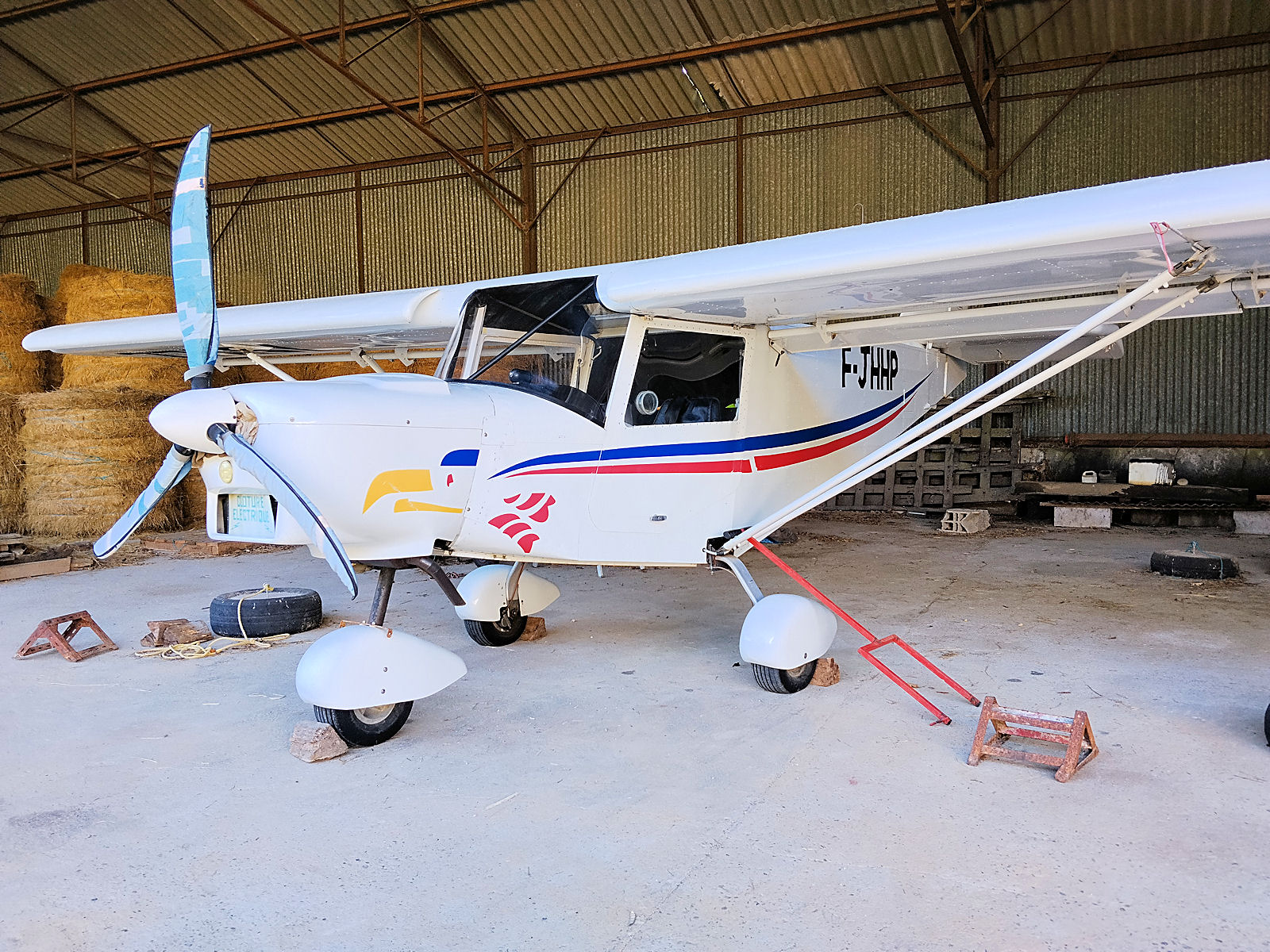
It’s here. My new mini excavator. But not before overcoming yet another problem. The agent I appointed gave me a quote including delivery to my home but I told him that as I intended to pick the machine up myself from Marseille delivery wouldn’t be needed. Then I got the unwelcome news that the vehicle recovery trailer I intended to hire for the purpose was legally too heavy for my Kia to tow so as there was a time limit by which I had to pick up the machine from the logistic company’s warehouse in Marseille before I’d start incurring heavy charges I decided that I probably had no option but to go for delivery.

That however was on last Friday and although I was cursing that yet again the two day week-end would mean that nothing could be got done, it actually worked in my favour. It had taken me some time and effort to find the original trailer that I’d intended to hire, but I decided to look again as although I wasn’t holding out much hope I had the time to do so. And I was surprised to find two more that were suitable, one located to the north of me in St Astier to the west of Périgueux and the other to the south to the west of Agen.

I originally opted for the former because the trailer’s owner responded quite quickly and provided a price, while I received no reply from the owner of the second one. But that was until after the week-end when the second hirer responded and it was cutting things a bit fine because as my time limit from the warehouse for picking up the machine was Wednesday 19 March, I intended to pick up the trailer and go to Marseille yesterday the 17th and return it today.

It then it occurred to me that if I had to go to St Astier to pick up the trailer at 08.00 am before heading off to Marseille, should there be any subsequent delays eg traffic en route, I might be hard pressed to make it to Marseille before the warehouse’s stated closing time of 4.00 pm. However, the one to the south was not far off the route I’d be taking to Marseille, so I could pick it up at 08.00 am and make it to Marseille with time in hand. And actually getting to Marseille and getting the machine loaded on time was the absolute priority.

So that was the decision I made. It meant driving 2 hours each way today to return the trailer but that was a relatively minor consideration compared to knowing that I’d have the excavator safely unloaded in my garden when I did so. And it was on Monday that I realised how fortunate I’d been in finding another trailer and making the necessary arrangements because it was then that I got the news that my agent had been unable to locate any transport company willing to pick up the machine in Marseille and deliver it to Fleurac. If therefore, I’d banked on that happening, I would have ended up in serious trouble with the machine stranded in Marseille and racking up serious storage charges.

Heading south to pick up the trailer early yesterday morning also worked out in my favour because there was a lot of early morning fog in the Dordogne and it would have inevitably cost me a lot of time to go to St Astier before then heading south, making it highly unlikely that I’d have made Marseille in time to pick up the excavator before the warehouse closed for the day. As it was I got to the hirer’s premises to the west of Agen in plenty of time and in glorious weather as the shots I took as I hitched the trailer to my Kia show. The only downside was that on the way a small female deer leapt in front of my car and gave me no chance to avoid her. Sadly although my old Sportage is highly robust and showed no obvious sign of damage she died, but at least it was a very quick end and it would have been terrible if she’d survived and been left in the road with awful injuries.

null

null

For some reason I’m having problems with Waze on my new phone. The voice giving driving instructions isn’t as loud as on my old phone and the screen isn’t as clear for some reason. As a result after picking the trailer up I ended up heading for Bordeaux on the payage instead of Toulouse, which immediately cost me half an hour in time and an extra toll. Nevertheless, I entered Marseille at around 2.30 pm and arrived at the warehouse in good time to pick up the crate containing my excavator.

null

The warehouse yard was full of trucks large and small collecting goods imported for onward shipment. I just poked my Kia and trailer in there among them and went into the reception to deal with the formalities. I noticed that the guys driving the forklifts were not actually treating the goods they were loading with a lot of respect. That included my crate which I saw had been dropped quite heavily and dragged across the ground causing damage to its base as well as several of the feet which had been attached in China. The result of this was that after just a short way into the long journey home the base of the crate collapsed some more and it twisted on the bed of the trailer, which would have implications later when I came to unload the machine.

null

null

null

null

I didn’t realise that after I’d been dealt with and had the machine loaded I’d forgotten that I’d left my proof of identity (French driving licence) in the reception and had to return after I’d left after receiving a number of frantic phone calls which luckily I eventually answered despite being in horrendous Marseille rush-hour traffic. In all of this panic Waze also played another trick on me by sending me into an estate of flats with a dead end and no way to turn around. I managed to do so after several minutes of reversing my car and trailer in minimal space next to parked vehicles but it was an experience that I seriously did not need under those circumstances.

The journey home was somewhat excruciating, taking a full 10 hours with stops for fuel and two brief stops for refreshments. I arrived home at 02.00 am and after a quick shower went straight to bed as I knew I’d have to be up early again today in order to return the trailer at the agreed time. I only had about 6 hours sleep before heading off to Marseille and after a 20 hour day, only had another 5 hours last night before again getting up early to unpack and unload the machine and take the trailer back down south. This was complicated by my not knowing how to get the machine off the trailer and whether or not I’d be able to get it started in order to do so.

I’d parked the trailer with a hump in my front grass behind it in order to minimise the distance from trailer to ground and minimise the slope of the unloading ramps. After removing the rope which I’d used to secure the crate on the trailer it was time to dismantle the crate to get access to the machine inside.

null

null

null

Eventually I’d stripped the crate away and it was time to see how to unload the machine. I didn’t know if there was oil in the engine, fuel in the fuel tank and hydraulic oil in the oil tank as the bucket and small dozer blade both had to be lifted in order to move the machine. But first I had to find out how to start the engine as the machine had come with absolutely no instructions or user manual.

null

When I added fuel to the tank I found at that it did already contain some as it overflowed and made a mess that I had to clean up. I also found the machine’s battery and put a jumper pack on it and eventually got the engine to turn over but could not get it to start, until I found the throttle. Then it jumped into life almost immediately, so all I had to do was drive the machine off the trailer. This was easier said than done, because when the crate shifted on the trailer on the journey home, one of the excavator’s tracks was aimed at the void in the centre of the trailer (remember, the trailer was for vehicle recovery and did not have a full flat bed).

To solve the problem I had to find out how the machine’s controls worked, jiggle it backwards and forwards as much as I could in order to align it on the trailer and build a wooden bridge over the trailer’s centre void for the excavator to drive over hoping all the time that the bridge would take its weight. It did and I was then able to have the pleasure of driving it across the grass onto my stone drive-in and down to the front of my house.

null

null

So that was it for today. The forecast for the next few days is for fine spring weather with no rain, so tomorrow I’ll get rid of all the old crate wood, fit the excavator’s canopy and get cracking on finishing it’s garage. And while doing all of that I’ll also need to fit in cutting the grass before it gets too wild and long. It never ends.

A waiting game

As of now the CMA CGM Cedrus which is bringing my mini excavator to Fos-sur-Mer has been standing off Marseille in the Golf de Lion for the past four or five days. It’s arrival time has kept being pushed back and to cap it all a sister vessel, the CMA CGM Ambition arrived while it was being held up and entered Fos-sur-Mer before it. As I type this the Ambition is leaving the port and the Cedrus is heading in so in the next few hours my mini excavator will at last be unloaded and in France.

But that doesn’t mean I’ll be able to get my hands on it. It won’t be available for collection for something like 5-7 days and in the meantime the agent I’ve appointed will have had to deal with the administrative process of getting it released and I’ll have had to pay the fees involved. During that period I’ll also need to have finished the garage I’m building for it as the weather here is still unpredictable and we’ll undoubtedly have more rain after it has arrived at my house. So that’s what I’ve been concentrating on.

After getting the basic framework for the garage up the next job was to build the structure for its pitched roof. This proved to be far more challenging than I expected as although I’ve managed it by myself it was really a job for two people. Initially I tried yesterday to build it ‘in situ’ but without success. It was almost impossible getting the various components lined up in the correct positions and then fix them together while standing on top of a pair of steps. I had a couple of minor accidents which caused minor damage so I therefore decided to build the roof structure on the ground and then lift it into place to complete the whole structure.

This was much easier said than done because of its weight and also because of how awkward it was to manhandle. It took me a while to figure out how to do it and a while longer to actually get it done but I finally managed it and it was then just a matter of going all around and drilling and screwing all of the joints as tightly as possible. In anticipation of this and also in readiness for when I start on the build for my much more ambitious garden tool shed/workshop I recently treated myself to a new high power Makita cordless drill.

My old Black and Decker is still working well having been used to build two wooden ‘abris’ at my old house and for much other work but having two drills means that you save an awful lot of time with not having to keep swapping from drill to screwdriver all the time. It came with a small battery so I’ve bought a new larger one for it as well and I also bought two large batteries for the Makita together with a double battery charger, so when I come onto my new, bigger tool shed/workshop build I hopefully won’t have to keep stopping due to running out of batteries.

As we keep having rain forecast which often does not turn up, I decided I couldn’t take the risk of leaving all the new woodwork uncovered. I had several old plastic tarps mostly in quite poor shape going back to when I had the caravan and the two ‘tonelle’ marquee type tents that were destroyed by the wind, so I used them to cover the wooden framework at the end of the afternoon, as shown in the images below.

null

null

The interior shot shows the basic roof structure.

null

I’ve attached strengthening fillets at the roof end apexes but although the rear of the garage is quite rigid the open front end is much less so. I’m hoping that this will be resolved when I attach the roof sheets but if not I’ll have to consider other measures as I don’t want the structure to be blown down by the first strong wind that occurs.

null

This may include adding corner braces in the front as I have done in the rear, as shown in the image.

null

null

The apex strengthening fillets appear quite effective but may not be sufficient to provide the rigidity needed at the open front end, but I’ll need to see how rigidity improves when the roof sheets have been added.

null

It appears that even at this early stage an uninvited guest has already taken up residence in the unfinished mini excavator garage. The old tarps and some other junk were in a heap under my inverted wheelbarrow for many months and in that time I’ve seen two lizards, one large and one small, living in it together with some mice at one time. The large lizard has been out in the sunshine while I’ve been working keeping an eye on what I’ve been up to and when I came to take the photographs today there he was behind a roof beam looking back at me. It seems that he’s already trying to claim it as his own!
null

Clearing up the mess

I purchased my new mini-excavator via the Alibaba Chinese internet platform because having been scammed once when I paid the supplier direct for the first machine I ordered, it was worth paying the additional small premium demanded by Alibaba to insure the payment I made for the second. However, now there’s a snag. At the time of making the payment Alibaba said that by law, as I am not VAT/TVA registered in France (I was while in business in the UK), it had to charge 20% VAT on behalf of France on top of the purchase price including the CIF delivery cost.

As mentioned previously, I originally wanted to handle the customs clearance of the excavator myself but for reasons I explained in my previous post it hasn’t been possible. So I’ve had to appoint an agent. I made contact with several and have been working with four before making a decision about which one to go ahead with. The problem I have is that one quoted me a figure for clearing the goods ready for me to collect in Marseille while the other three have been reluctant to do so as they say that they have not yet been provided with all of the relevant charges, notably from the logistics company who will be responsible for removing the container containing my machine from the port and unloading it for me to collect.

But there’s also the question of the VAT/TVA. The other three agents have all said that Alibaba should NOT have charged VAT/TVA in China as the French authorities have no interest in collecting it from them and have no system for doing so. They are saying that I will have to pay the 20% TVA again for the excavator to enter France and I’ll have to recover the amount I paid in China from Alibaba.

So now I have a dilemma. If I do not appoint an agent today further problems and potential costs will arise because the goods will have arrived in Marseille with no means for them to be processed. One of the agents, whose honesty and communication I respect, has told me roughly what their fee is (and it’s not a lot) and that all of the other charges that arise will just be passed on to me in the total bill in due course as and when they know them, which seems fair enough.

So I’ve had to make a decision. If the agent who has already given me a quote is confused over the VAT/TVA position (although they say they’re not but are maybe covering themself by quoting high) and causes delay, the whole thing could become very messy. So in the end I’ve decided to go with the ‘honest’ agent even though it may involve me double-paying the TVA and then having to recover what I paid previously from Alibaba because at least I know things will then run smoothly in France and customs clearance will be quick and trouble-free.

Did I make the right choice? Only time will tell.

Breathing space

I now know that I don’t need to go to the port. The logistics company handling the shipping at this end will take the 40 ft container in which there is the crate containing my excavator plus over 400 other items to their bonded warehouse in Marseille and empty the container out. They charge a fee for doing that. As I also now have to use the services of an agent their fee will go on top of that. When I’ve paid the total amount I will be able to go and pick the excavator up from the logistic company’s warehouse.

The CMA CGM Cedrus is still moored up this morning in Barcelona Port and its ETA in Marseille is now Saturday 07 March at 04.00 am, four days later than originally planned. So although I didn’t think in the beginning that I’d be grateful for it, I’ve got a little bit of breathing space in which to arrange for customs clearance and release for pick-up of my new excavator.

The first quote I’ve received is more than I’d hoped to pay but not out of the ballpark and still makes it worthwhile importing the excavator myself rather than just buying one locally which would have been of inferior spec as mine is ‘top of the range’ and is coming with a large range of extra tools and accessories. I’m hoping to receive at least two more today so I can make a final decision and then relax and get back to building the excavator’s garage which is half-complete.

I’ve already contacted the person who has the large trailer for hire which I wish to use to bring the excavator up from Marseille and all he needs is confirmation of the dates. I can tell you that I’ll now be very relieved when the crate in which it’s contained is standing in the driveway outside my house. 😕

Becoming very fraught

The CMA CGM Cedrus is still moored in port at Barcelona but is due to arrive in Marseille tomorrow bringing with it my new excavator. And at the time of typing this I still don’t have the means to clear it through French customs or get it out of the port as so far it hasn’t been confirmed to me that I can enter as a private person with my own transport.

To be honest, with the way things are going I’m not optimistic and at the very least I might have to try to arrange what my old friend Wim has suggested, which is to just get it out of the port and into a local transport depot in Marseille from where I can collect it. It’s most frustrating that after weeks of trying to get the information I needed I’m faced with these problems right at the last minute. 🙁

Catch 22

I have at last received what I think must be a definitive reply concerning my filing an import customs declaration for my soon-to-be-arriving mini excavator…

———————————————–

Since the Fos Port St Louis office does not have a payment terminal and therefore cannot collect duties, we cannot process your customs declaration as an individual.

Furthermore, port storage fees (demurrage) are very high.

I therefore advise you to contact a customs agent to complete the necessary procedures as soon as possible.

Here are the agents located in the building that houses our office, who are trusted brokers:

{List of agents}

———————————————

So that appears to be it. Yes, you can file a declaration as a private individual I was told back last year, but the mechanism to do so isn’t available at the port of entry (Fos-su-Mer).

Highly frustrating and very disappointing after all this time having been passed from pillar to post. And potentially quite expensive but I won’t know until I’ve obtained the numbers from the agents.

Basic structure assembled

The CMA CGM Cedrus made it into Barcelona at 03.50 pm today so should be able to get into Marseille on 04 March with my new mini-excavator.

null

So despite the other problems I have to deal with I’ve got to press on with building its garage so it’s ready for when it arrives. Today started chilly with quite thick fog and I thought that I’d get little or no work done but around lunch time the fog cleared in about 10 seconds flat and it turned into a lovely spring day. So with no time to waste I got cracking and by the end of the day I got the basic structure of the garage up.

null

null

null

The beam down the centre of the roof is only there temporarily as the garage will have a pitched roof to drain rainwater away. I’ll be working on that tomorrow and when it’s done the ridge beam will be higher. Also the timber across the front is only there to hold the frame in place and won’t be there when the garage is finished.

I was going to bang lengths of angle-iron into the ground at each corner and screw the frame to them but I’ve now dropped that idea. As shown in the next pic, I already had four long tent pegs made out of 12 mm reinforcing iron so I drilled the bottom frame rails in each corner and secured them to the ground through the holes using the tent pegs. I think that’ll stop the garage blowing away in the wind.

null

After thinking about the problem, I’ve decided to use what is referred to here as ‘Panneau Agglomeré’ for the walls. It’s a kind of chip board made out of compressed wood shavings and is usually used for under-tile roofing and internal flooring. There are two types, internal and external but both are quite inexpensive with the internal being the cheaper of the two.

Shown below is an image of a very old sheet that I originally used to patch the floor in my large trailer. That was about 4 or more years ago and it’s been out in the weather the whole time since then. As the garage is only intended to be a temporary structure for a year or so the material should be more than good enough for the job.

null

I’ll also cover the roof with it and then put some roofing felt on top of that which I’ve hung onto since I built my last ‘abri’ in the garden of my old house in Plazac. I always knew it would eventually come in handy 😀

Problems, problems

As I type this on Sunday morning, the CMA CGM Cedrus that’s bringing my excavator to Marseille is standing off Barcelona, its last port of call before arriving in Marseille.

null

It left Valencia yesterday at 11.23 am and was scheduled to dock in Barcelona at 06.00 am this morning. I think the reason why it’s still waiting offshore is because as shown below, the area of the port at Barcelona that handles containers appears to be quite small and it’s possibly a bit too congested at the moment to allow the CMA CGM Cedrus to enter.

null

But that’s the least of my concerns. My main problem at the moment is French Customs. Before I even ordered my excavator I made enquiries as long ago as last summer about the formalities and procedures of bringing in an excavator from China. I was assured that I could handle everything myself without the need for an agent and was advised what duty and tax would be involved. All that was left, therefore, was to discover the mechanics of actually making the customs declaration itself, which as the owner of the goods I am entitled to do.

And that’s what I’ve been trying to do. I have an account on the French Customs’ web site and have searched all over it to find a link allowing me to make an on line customs declaration but without success. I can find lots of links telling me all about the relevant legislation in which I have absolutely no interest. All I want to do is actually make an actual declaration but a link for that I cannot find.

So I re-contacted French Customs with the relevant information about my purchase but instead of someone just providing me with a link I’ve got more irrelevant general information, mainly about the legislation. I’ve then been fobbed off and told to contact another office, only to get the same treatment all over again on doing so. And so it has gone on. For weeks.

It’s almost as though they’re trying to prevent me making the declaration myself. The most useless and rubbish reply I’ve received was a curt instruction to ‘get an agent who would arrange for all of the duties and taxes to be paid’. And this after I’d explained that (a) the customs reference under which the excavator has been shipped is non-dutiable ie no import duty is payable and (b) as a private buyer I have already paid 20% VAT at time of purchase, as required under the French tax regulations ie no TVA is payable either.

So no further payments should be due on importation of my excavator, meaning that the filing of a customs declaration for it should be relatively simple and straightforward. I’ll continue grappling with customs this week but time is now becoming much more pressing as the excavator will arrive in Marseille on 04 March and be available for ‘de-porting’ on around 07 March.

I’ve been given another office to contact which I will do tomorrow and this time I’ll just demand the necessary forms so I can file a paper declaration. And if I get nowhere with that I’ll find out where the closest French Customs office is and go there in person during the week. And that still leaves the logistics of picking up the machine from the port to be resolved.

I was wrong…

I thought that the container ship bringing my mini excavator from China would probably not arrive in Valencia on time, but I was wrong. Its ETA was 6.30 pm today but by 5.30 pm it was standing off Valencia waiting for a pilot to take it in and by 6.19 pm it was docked and ready to start unloading the containers destined for this, its first port of call in Spain.

null

So I need to press on getting the garage I’m building for the excavator finished ready for when it arrives. Here’s a shot of the corner where it will be sited taken last summer. It needs to be cleared and ready for the build to commence now I’ve completed the frames for its side panels.

null

The first thing to go had to be the old damaged ‘tonnelle’ tubular metal frame and here it is cut up, dismantled and in my small trailer ready to go to the dump.

null

It’s going to be fine again tomorrow so with a bit of luck I should have erected the complete wooden frame for the garage by the end of the day.

Excellent day

Unlike yesterday, which started out cool, damp and misty, only brightening up after lunch, today started sunny and bright and stayed that way, hitting nearly 20 degrees C in the afternoon. So it was an excellent day to get back working on my mini-excavator garage and I made the most of it. I didn’t do anything on it yesterday – I just bought the plywood I needed for the joint stiffeners (which is what I’ve decided to call them) and some more screws, small and large.

I marked out the plywood yesterday and started today by cutting all the separate shaped pieces that I’d require and then got back to working on the garage side frames themselves. I’d left the one I’d already screwed together lying on the ground and my first job was to disassemble each joint, glue them, reassemble them and tighten their securing screws as tightly as possible. Then I had to make sure that the frame was square and glue and screw a joint stiffener over each joint.

Having completed one frame I was then able to leave it lying on the ground and use it as a template for the second. This saved having to take measurements all over again and helped to speed the process up, but even so, having started just before lunch time (I did another job beforehand, removing a broken handle from the shaft of my spade and fitting a new one) I didn’t finish up until past 6.00 pm this evening.

Shown below are some shots of the finished frames showing the completed second frame on top of the first one and images of each type of joint stiffener which had been glued and screwed over the frame joints. I was very pleased to find that even though I’d only used 3mm plywood the frames turned out to be very rigid and stiff. The final shot showing the frames leaning against the front of my house give a good idea of how large they are and when the garage is completed it should nicely accommodate the excavator and protect it from the weather.

null

null

null

null

null

null

In other news, the excavator itself is now getting much closer and at the time of writing this post the CMA CGM Cedrus, the container ship bringing it to Marseille, is approaching Casablanca. However, I think that it will be touch-and-go as to whether it will make Valencia by 06.00 pm on 26 February, its scheduled ETA, but we’ll have to wait and see.

Mini excavator garage

My new mini excavator is due to arrive at Marseille Fos on either 3 or 4 March and will be available to be picked up from around 6 March. Now we have a few days of fine weather I therefore need to get cracking on building a garage for it so when it’s delivered to my house it doesn’t have to stand out in the open. As I mentioned previously, I intend to build a wooden framed structure covered in either plastic tarpaulin or wood of approximate dimensions shown below.

null

I purchased eleven 4m lengths of ‘demi-chevron’ wood (roughly 60mm x 40mm) from Leroy Merlin the other day from which to build the framework. Unfortunately it was stored in the open in their yard and it’s very wet which doesn’t make it any easier to work – quite the opposite. I’ve actually increased the height of the garage to just over 2.2 metres and it’s length to 2.7 metres which will give a bit more height clearance and a bit more length to cover the excavator’s boom when it has been lowered and this morning I measured and cut all of the components of the framework.

null

One left-over length of 1300mm and a few pieces of waste are on the left of the image.

null

The 1300mm length will be usable when I come to build my proposed new garden shed/workshop after the excavator has arrived and as shown below, the amount of real waste, the small pieces, is negligible.

null

I’ve put together one side frame but I’ve stopped work on it until tomorrow and left it on the ground in front of my house because with the wood being so wet the joints aren’t strong enough.

null

I’ve only screwed it together whereas I’d usually glue and screw framework like this. I intend to glue and screw it tomorrow and will also stiffen the structure even more by gluing and screwing thin plywood cover plates over the joints. I thought I still had some suitable plywood (about 3mm thick) but I don’t so will have to buy some tomorrow.

Committed

As expected, the CMA CGM CEDRUS, the container ship bringing my mini excavator from China, is now fully committed to routing to Valencia, its next port of call, via the Cape of Good Hope.

null

This means that it will not arrive in Marseille until at least 03 March which gives me two or three weeks to find out how I get it through French customs and delivered to my house and also to make preparations for when it arrives. The logistics and transport are the most difficult bits but while I’m resolving those I also want to make a ‘garage’ for it so when its unpacked it won’t need to stand out in the open.

I’ve scoured the internet for a ready-made solution but I can’t find anything that’s quite high enough. The closest I can find is a ‘tente garage voiture’, as shown below, which is larger all round than I ideally want, fairly expensive at 425€ and also has a cross-bar at what appears to be just below the height required to clear the excavator’s boom.

null

As shown below, the excavator’s dimensions with its boom folded are height 2250 cm, length 1893 cm and width 960 cm.

null

I want to be able to get it into a waterproof temporary structure at the bottom of my garden which will not be too obtrusive, will stand directly on the grass and will be easily removable when I’ve finished with it. I’ve decided to go with a wooden framed structure which I will build myself that will be anchored into the ground with angle-iron at its four corners and have a roof and sides covered with green plastic tarpaulin sheet.

null

I should be able to build it for not much more than 100€. I’ll acquire the wood in the next day or so and all I’ll then need is for it to stop raining long enough so I can go ahead, clear the space for it that I have earmarked and go ahead and build it. So at the time of writing that’s what I’m committed to but I have no idea when exactly I’ll be able to start building with the weather forecast as it is 🙁

That’s it then

I’ve been following the progress of the CMA CGM CEDRUS, the ship bringing my mini excavator from China, for the past few days and it has been maintaining a steady course of 249/250 degrees at a speed of about 20 knots for the whole of the time. This has taken it further and further away from the direct course from Singapore to the Suez Canal and I’ve become more convinced as time has passed that although it hasn’t been on the direct course to the Cape of Good Hope on the tip of South Africa it will end up taking that route to Valencia.

And so it has been confirmed this evening as the latest route forecast for the vessel now shows.

null

I think there may be two reasons for this. The first is that this route will avoid any complications that might arise in the Middle East due to the unstable situation in Iran. However, as previous images have shown, although I have no experience to judge whether this is so or not, the volume of traffic heading up to the Suez Canal looks to me to be pretty heavy and if so, this could lead to possible congestion and delay.

On balance, therefore, the owners of the CMA CGM CEDRUS may have decided that as the costs of taking ‘the long way round’ were factored in when the voyage was commenced it would be prudent to stick to the original route plan. What this might mean for the arrival date of my machine in Marseille remains to be seen as to date there has been one day of slippage in the schedule.

Will she, won’t she?

The container ship CMA CGM CEDRUS that is bringing my mini-excavator to Marseille was scheduled to arrive in Singapore on 30 January but as it did not leave Cai Mep in Vietnam until 29 January at 13.28 hrs local time that was impossible. Instead it arrived in Singapore one day late on 31 January at 0844 hrs.

null

It was originally scheduled to depart Singapore on 30 January (revised from 29 January) but actually left on 01 February at 06.41 hrs local. When I checked to see what was happening it had just cast off and was being tugged away from the port area.

null

So there has been one day’s slippage compared to the ship’s original schedule although at the time of typing this its ETA in Valencia, Spain remains unchanged as 26 February 15.00 hrs local. This is where it looks as though things are becoming a bit more complicated though.

As I understood it, the CMA CGM CEDRUS’s route from Singapore to Valencia was originally planned to be via the Cape of Good Hope. However, since the vessel left China, on 26 January the shipping companies began to again route traffic bound for southern Europe via the Suez Canal and it now looks as though this is the route that the CMA CGM CEDRUS will take.

null

However, it looks as though things are not as simple as that. The wild card is the political situation in Iran and whether that will lead to an invasion by the United States and an upsurge in armed conflict in the Middle East. I’m wondering whether the management at CMA CGM (the French owners of the CMA CGM CEDRUS) are still considering their options because for the past several hours the vessel seems to be on a bearing that’s between the direct routes to the Suez Canal and the Cape of Good Hope.

null

This could give the possibility of switching to either one within the next few hours so I’ll be checking again in the morning. On the other hand, the ship might just be heading for another unscheduled stop at Nacala, a city on the northern coast of Mozambique, the deepest natural port on the east coast of Africa, before continuing on around the Cape of Good Hope and thus avoiding the uncertainties arising from the Iranian situation.

This I cannot believe

I’ve now been in France for 14 years and I’ve just found that I’ve got a mouse in my car. How could it possibly have got in? It’s already nibbled a bit on the back seat. I’ve never come across such a thing… 🙁

I’ve come back to add a comment. As soon as I saw the mouse poop in the boot of the car I dashed up and bought 2 mouse traps before posting the above. I’ve just checked and BOTH have caught a mouse, so there were at least 2 mice in there. It’s late and raining now but I’ve cleared and reset them and I’ll check them again tomorrow but if they’ve bred… I daren’t think about it 🙁

Excavator update

Like most people, I think, when I ordered something on the internet from China through web sites such as Amazon, Aliexpress and Temu I had no idea of the intricacies of the logistics involved in getting the goods from wherever they were manufactured and into my post box. Watching the progress of my new mini excavator while it wends its way from China to Marseille has been a complete eye-opener for me and made me appreciate the complexities of what’s actually involved.

My excavator has been packed in a wooden crate which has been loaded into a 40 foot container which has itself then been loaded onto a container ship, the CMA CGM Cedrus. The complexities start from that moment on. The CMA CGM Cedrus will be calling at several ports between China and France at which containers will be offloaded and new ones taken on. My excavator’s container will remain on board to the ship’s final destination so it won’t matter if it’s on the bottom of a stack but there will be many others that will need to be accessible for offloading as required at intermediate destinations. And given that a ship like the CMA CGM Cedrus carries several thousand containers at any one time, merely loading them in the necessary order must represent quite a logistical challenge.

There’s also the problem of scheduling. Huge container ships like the CMA CGM Cedrus can’t just turn up at a port and expect to moor up to unload and take on containers. From what I’ve seen all the ports it has visited so far have been full and another vessel has not long departed vacating a berth before the CMA CGM Cedrus has arrived. This is probably not surprising given the need to maximise the usage of the huge investments in port infrastructure and ship arrivals have to be scheduled well ahead not only because of the need to ensure a berth is available but also to minimise port charges by avoiding delays. And has also been pointed out to me, arrangements also have to be made well in advance for a pilot and tugs to be on hand.

So what came as some surprise to me is that as I mentioned in an earlier post, although the route schedule of the CMA CGM Cedrus has not been formally amended, a change has actually been made. After departing Shekou in China it was then scheduled to route directly to Singapore with an ETA of 30 January. That ETA remains unchanged but instead of routing directly, its schedule was amended to include a stopover in the port of Vung Tau, one of the areas of Saigon Port, the rapidly expanding port area of Ho Chi Minh City in Vietnam with an ETA of 08.00 am local today, 28 January.

null

null

The CMA CGM Cedrus departed Shekou at 02.26pm local on 24 January so it had plenty of time to get to Vung Tau and indeed at one time it appeared that it could arrive a day early. However, from what I’ve said above, this wouldn’t be feasible so when I checked yesterday I found that it had come to a halt with engine stopped and probably anchored for the best part of a day off Vung Tau in the South China Sea.

When I checked again later today I expected to find the ship moored up in Vung Tau as indicated by its revised schedule.

null

However, to my great surprise, this was not so. Instead it was moored in Cai Mep, one of the other areas of Saigon Port slightly further inland.

null

null

It arrived today 28 January at 09.03 pm local time. I have no idea, of course, what is going on, whether containers are being loaded, offloaded or both, but what I do know is that for now, anyway, its scheduled ETA at Singapore is still 30 January. I would imagine that to meet this timing it will need to leave Cai Mep either in the early hours tonight or some time tomorrow, so I’ll be interested to see if that is so when I check tomorrow. But I’m finding it interesting looking a bit behind the scenes and am a bit gobsmacked by the probability that what is happening with the CMA CGM Cedrus is happening with thousands and thousands of similar vessels shipping goods all over the world.

Baguetted

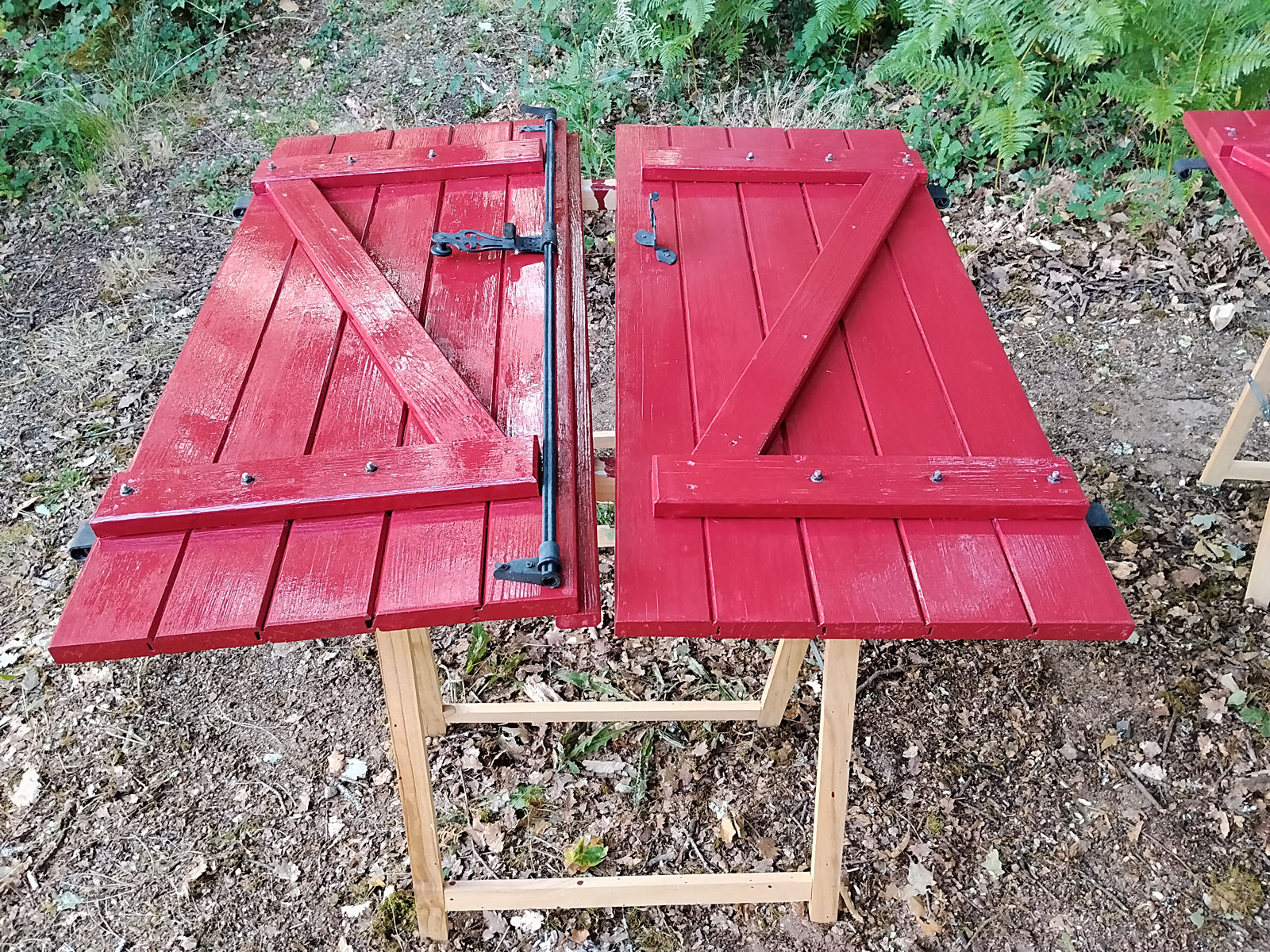
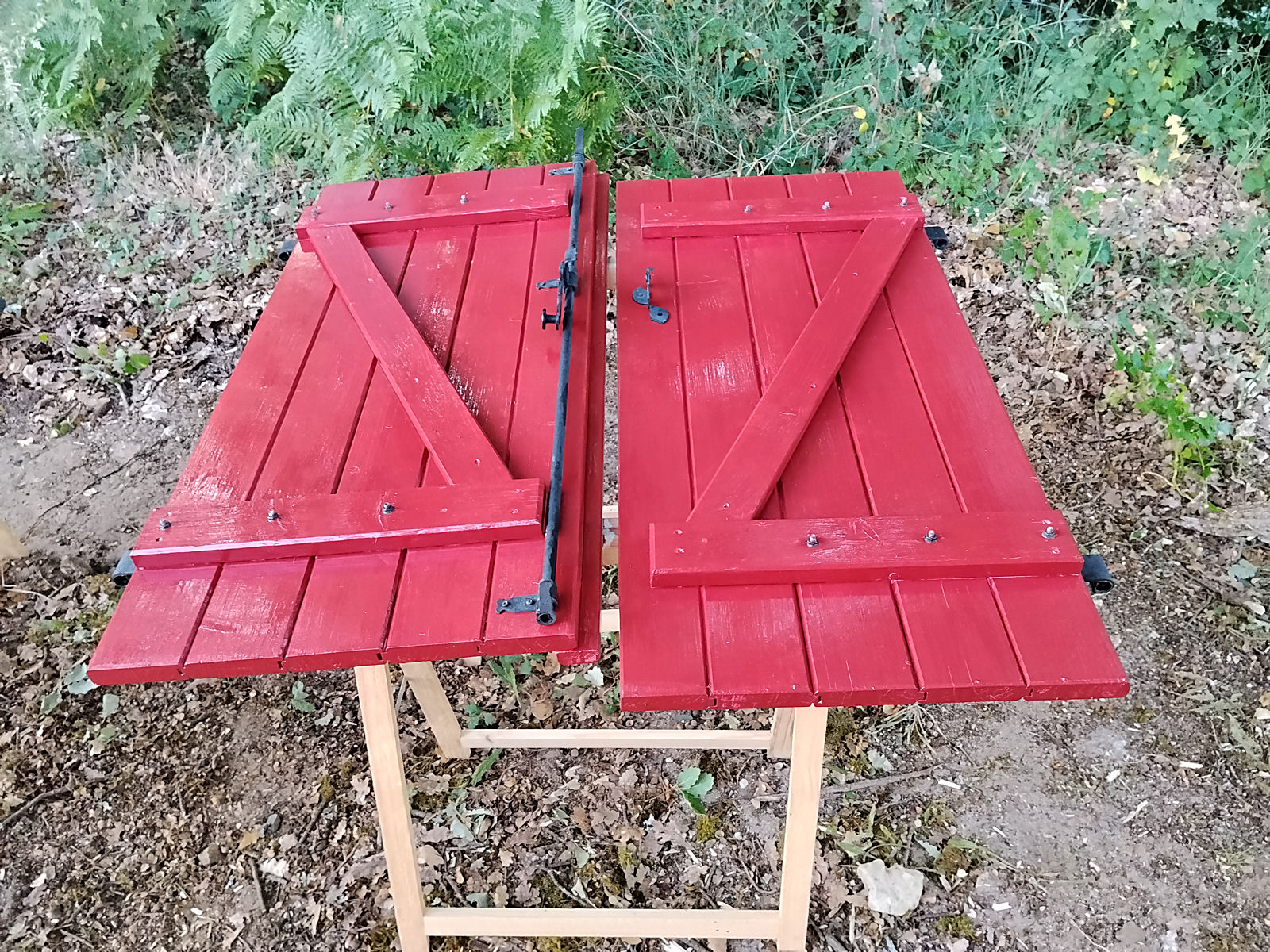
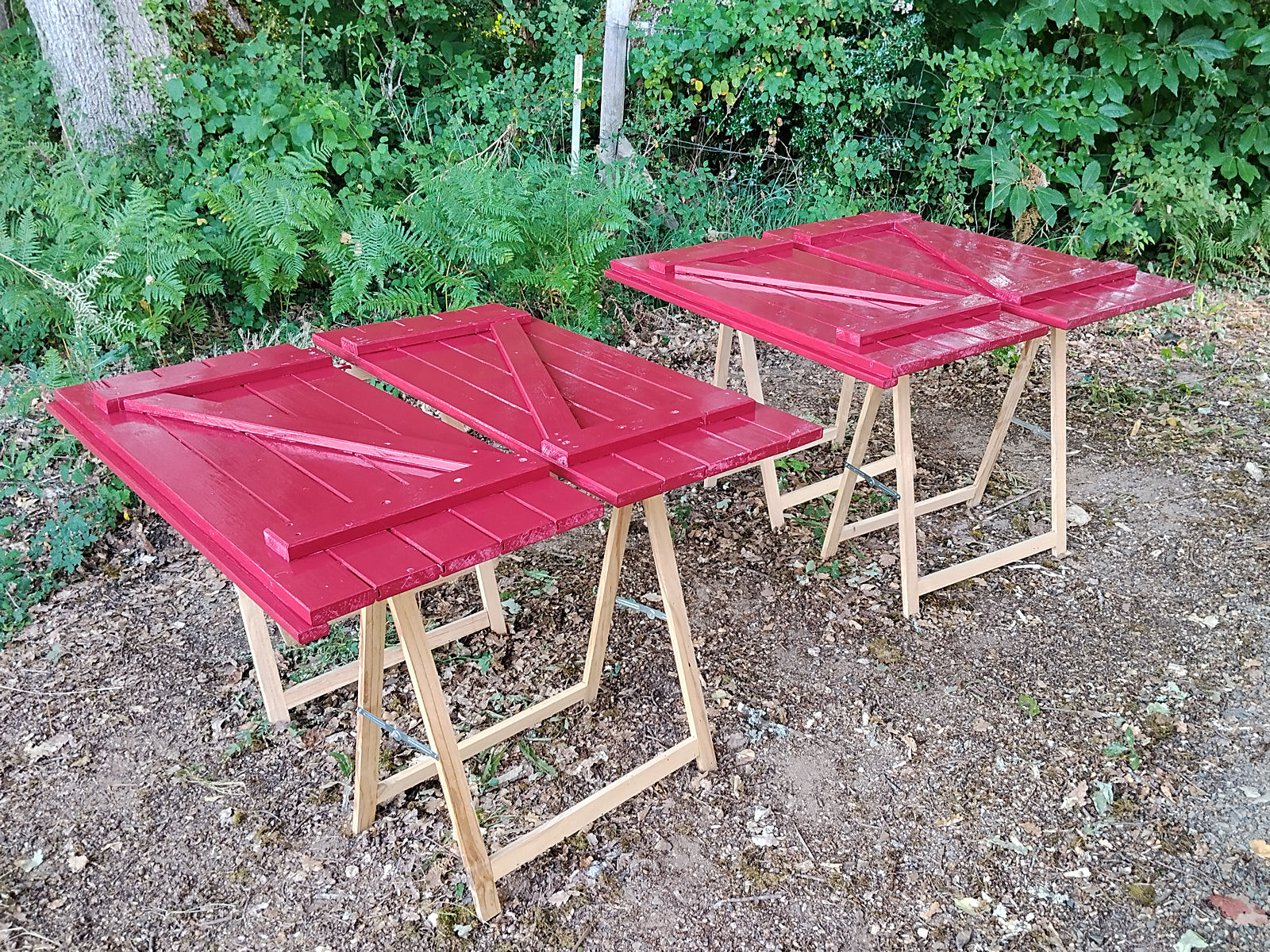
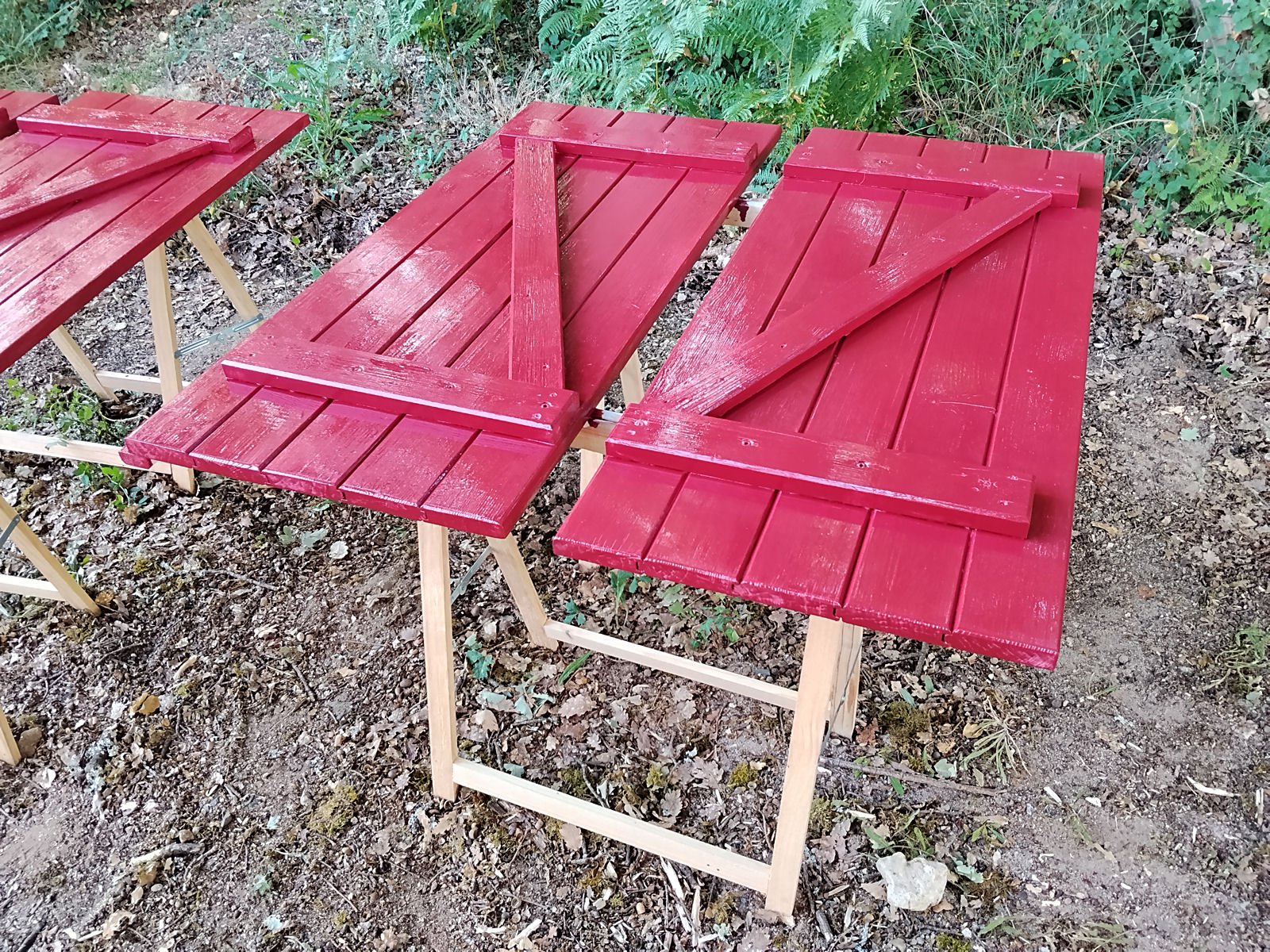
I finished all the internal door frame trims, ‘baguettes’, in my house last week and got them and all of the doors varnished by Sunday afternoon, including a trip back to Leroy Merlin on Sunday to buy another can of varnish. I ran out just before completing the job, which was rather annoying, but I not only managed to do all of the room doors but also the louvre doors of the cloaks cupboard. And I’m very pleased with the results.

null

However, the doors got their own back on me – you could say I’ve been baguetted. The reason is that I’ve managed to injure my shoulder along the way which makes staying in one position, typing on my PC and sleeping become increasingly painful. That’s why I’m typing this at 5.00 am having got up at around 3.30. I think I know how it happened.

null

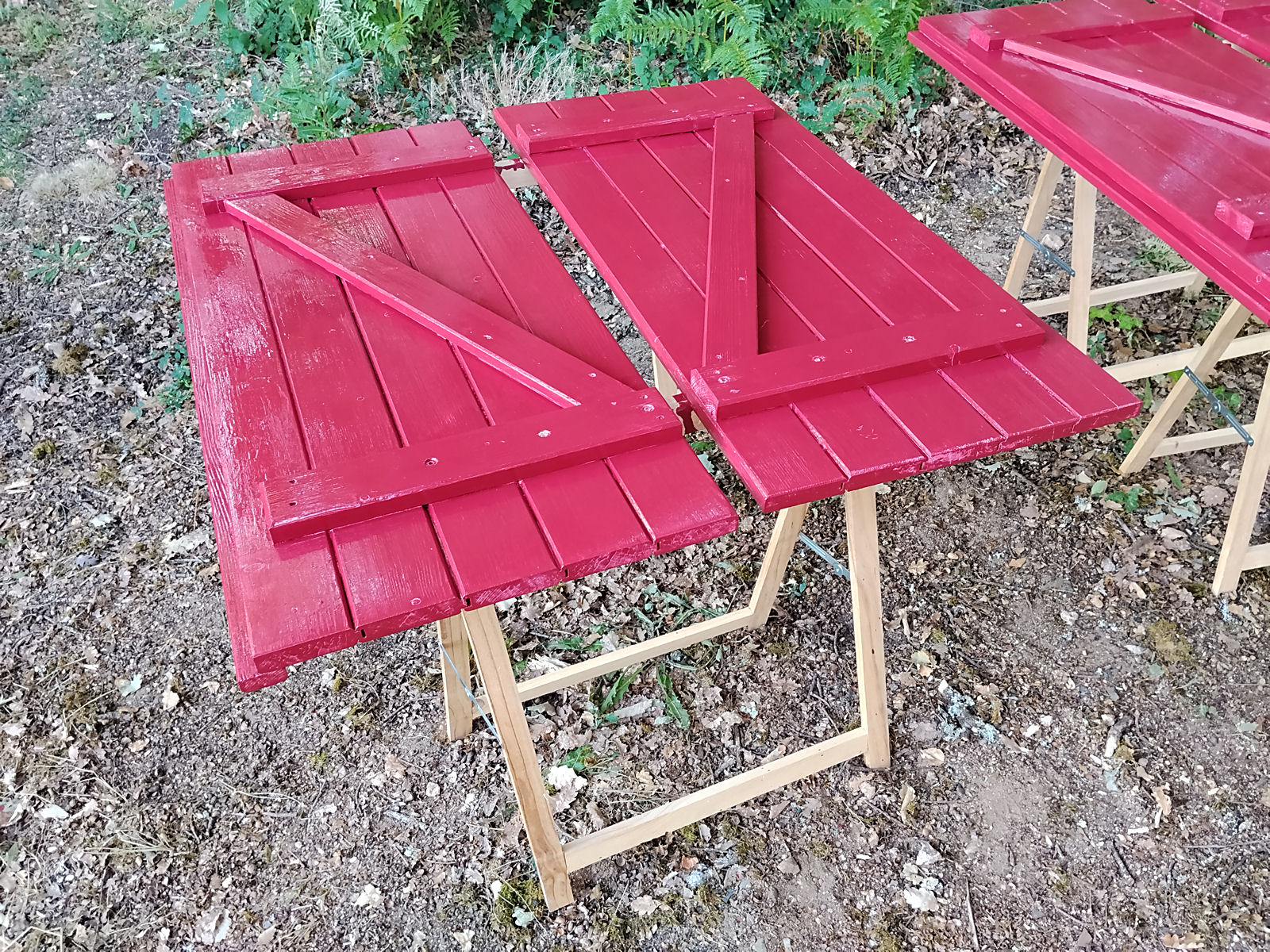
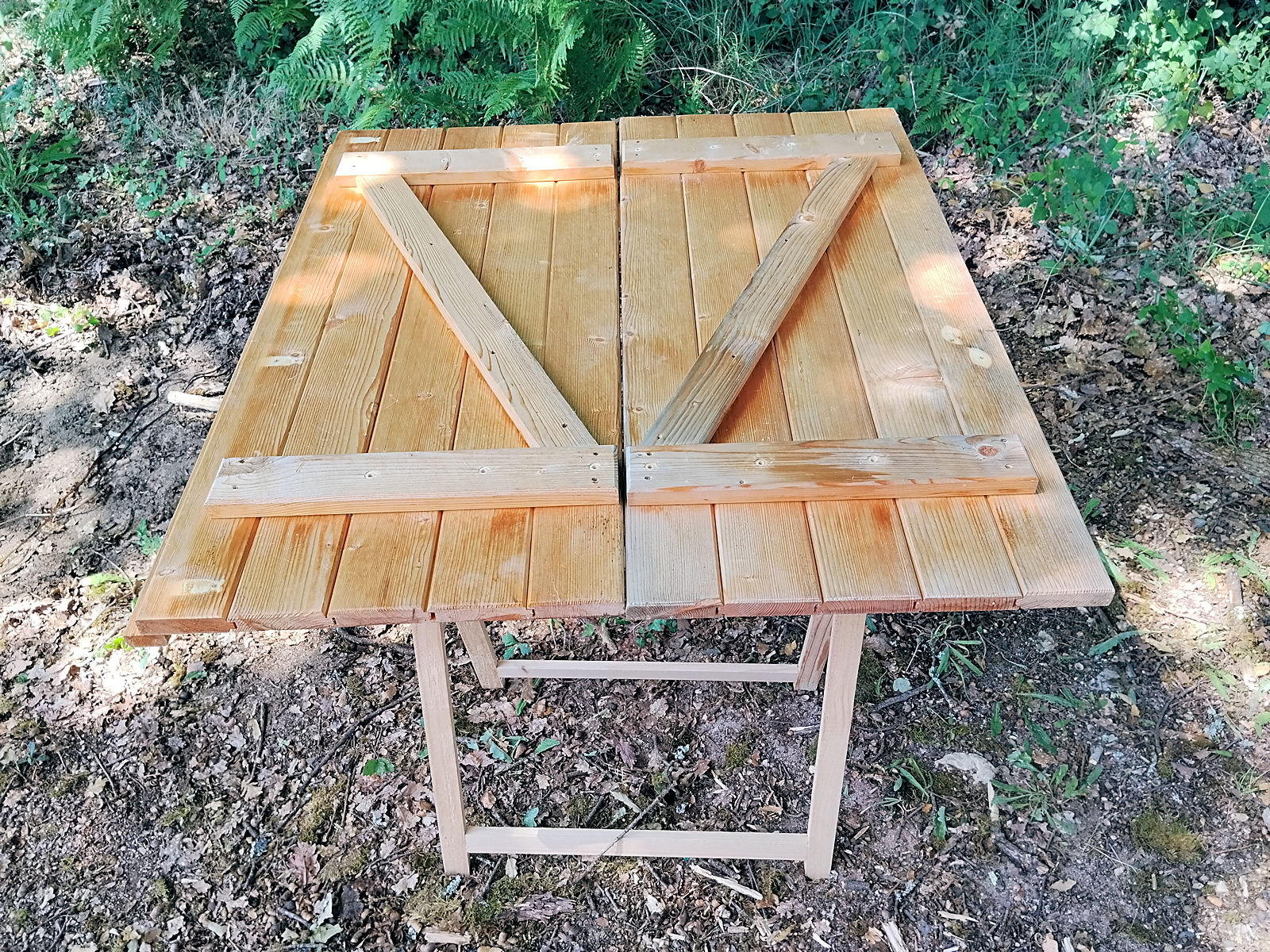
I varnished the doors two at a time by removing them from their hinges, carrying them into my living room and laying them flat on trestles. After I’d varnished one side I then had to flip them over to do the other and when that had dried flip them back upright, carry them back to the rooms they’d come from and remount them on their hinges. With all the flipping and carrying I think I may have slightly torn a muscle in my left shoulder.

It’s slowly getting better but I can’t sleep for more than 2 or 3 hours at a time especially when I lie flat in bed, so I’ve been grabbing the odd hour or two when I can during the day while sitting in a comfortable upright chair. I don’t know, maybe I’m getting a bit too old for this stuff after all… 🙁

Kai Tak

At the time of writing this post, the CMA CGM CEDRUS, the container ship bringing my mini excavator from China to France, has already left Shekou on its way to its next port of call. But this isn’t Singapore as I’d anticipated but somewhere completely different which I’ll explain in my next post. Instead I want to mention some things to do with its previous stop at Shekou.

Shekou is the main port of Shenzhen which is on the Chinese mainland facing Hong Kong. I have some attachments to Hong Kong, not direct ones because I’ve never been there. However, back in the late 80s or early 90s, I can’t remember now, I had the privilege of flying a full motion flight simulator operated by the then British airline, British Caledonian. The simulator was a McDonnell Douglas DC10 and it was used to train and maintain proficiency of pilots employed by the airline.

Because I already had a Private Pilot’s Licence I was allowed to do more than just ‘play’ on the simulator and in fact the instructor set me up for a night approach into the old Hong Kong Kai Tak airport which has now gone having been replaced by a huge new, modern one at Chek Lap Kok. The landing procedure for runway 13 which all pilots had to follow involved an indirect approach with an initial descent towards an illuminated red and white checkerboard mounted on a hillside.

This involved the use of what was called the IGS (Instrument Guidance System). The IGS operated in a similar way to a normal ILS (Instrument Landing System) except it did not point towards the runway. Instead if you continued to fly the IGS beam you’d crash the aircraft into Checkerboard Hill so at the correct moment the pilot flying had to disconnect the aircraft’s autopilot and manually fly a descending 47 degree right hand turn to land on runway 13.

I was successful in completing the landing which pleased me greatly. The procedure was both exciting and demanding and it must have been a great privilege to have been qualified to actually perform it with the lives of hundreds of passengers seated in the cabin behind you. But pilots did so on thousands of occasions with very few mishaps ever occurring. But it all came to an end in 1978 after the United Kingdom handed Hong Kong back to China and Kai Tak was closed.

As I’ve mentioned many times on My Trike, I have a great interest in PC based flight simulation and although I have recently started to again do a bit of scenery design (ie digital models of airports and their surroundings which are placed in the sims) I was much more heavily involved a few years back. As a result I created highly detailed sceneries of Kai Tak for Microsoft Flight Simulators 2002 and 2004 which I uploaded onto the internet in 2003. Yup, where did 22 years go!
The scenery included all of the avionics systems together with full instructions to allow simulator pilots to fly the Checkerboard Approach to runway 13 on their PCs and also included many of the iconic buildings around the airport perimeter together with their famous advertisements that were known worldwide at the time and all with full night lighting.

It also included systems for what are described as AI (artificial intelligence) controlled aircraft to land at and take off from Kai Tak including ‘heavies’ such as Qantas and Air France Boeing 747s, light general aviation aircraft and also Concorde, although the latter only did one visit in 1976. The scenery took me quite a few months to create and in fact I never managed to fully complete it as it used the ‘default’ terminal buildings that were already in the sims and I never got around to creating replacements.

So I was very interested when I saw that CMA CGM CEDRUS’s arrival at Sheckou would take it quite close to what had been the old Kai Tak airport site.

null

When I looked more closely I saw that although the airport is gone, Checkerboard Hill is still there and apparently it was recently restored back to its former glory as a memorial to the historic airport. However, closer viewing still revealed that in the intervening years since I uploaded my scenery the whole area of Kowloon that was Kai Tak and its surroundings has been totally redeveloped.

null

null

Nothing is left of the old airport. Only the spit of land on which the runway was built now remains and what was the runway has now been built on with high rise flats and commercial premises. All of those iconic buildings with their advertising boards and hoardings that once surrounded the airport are no more and their like will probably never be seen again given the style and pace of the modern world.

So it was with an air of nostalgia that I managed to locate an old copy of Microsoft Flight Simulator on my PC drive which I was able to fire up for a trip down memory lane back onto the apron at Kai Tak where I took the following shots of parts of my old scenery.

null

null

null

null

While I waited an AI Government Flying Service helicopter took off from the GFS apron over on the other side of the airport and two Boeing 747s of Qantas and Air France taxied down from the main apron over the bridge to runway 31. Then a moment of pure nostalgia as the Air France 747 began its take off roll, then lifted and soared into the sky.

null

Flight simulation has come on a long way since 2003, a very long way. I’ve not flown into or out of Hong Kong in the latest versions but spending a few minutes in the heady days of pre 1978 Kai Tak certainly brought back a lot of old memories.