Almost uncanny

For a period of several days, the weather forecast for today was for very light winds, some high level cloud and temperatures somewhat lower than we’ve been having just lately. So almost ideal for flying. And it was largely unchanged even this very morning with definitely no expectation of rain.

So when I looked out of the caravan first thing I wasn’t that surprised to find that the forecast was more or less correct but with the cloud being a bit lower than had been expected. And then it began chucking it down. A veritable deluge, which has let up as I type this but which has left a gloomy sky that threatens more rain at any time.

So yet again my plan to get a flight in in my Savannah has been thwarted. At this rate I’m beginning to wonder if I’ll ever fly again… 🙁

Back on the job

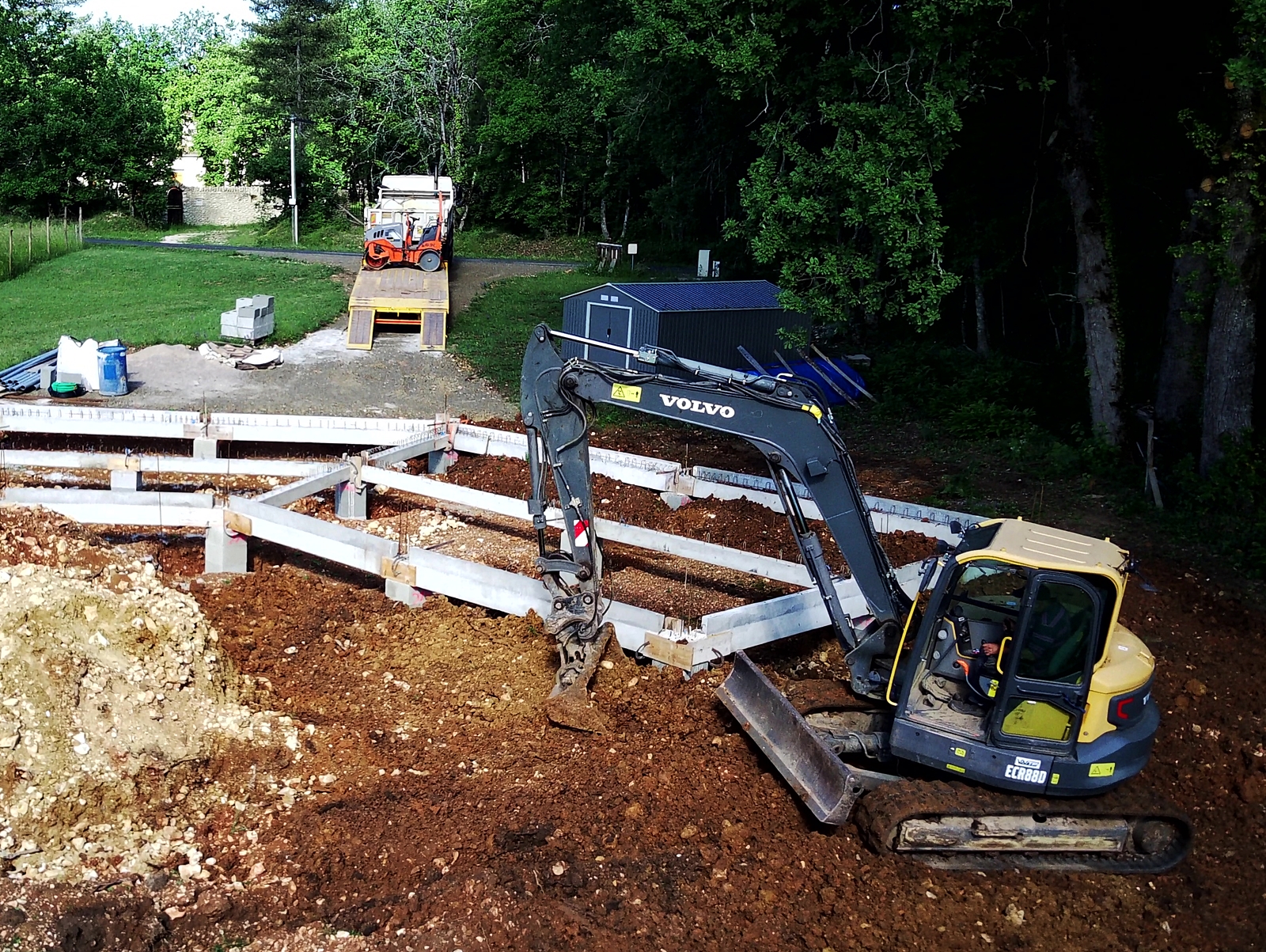
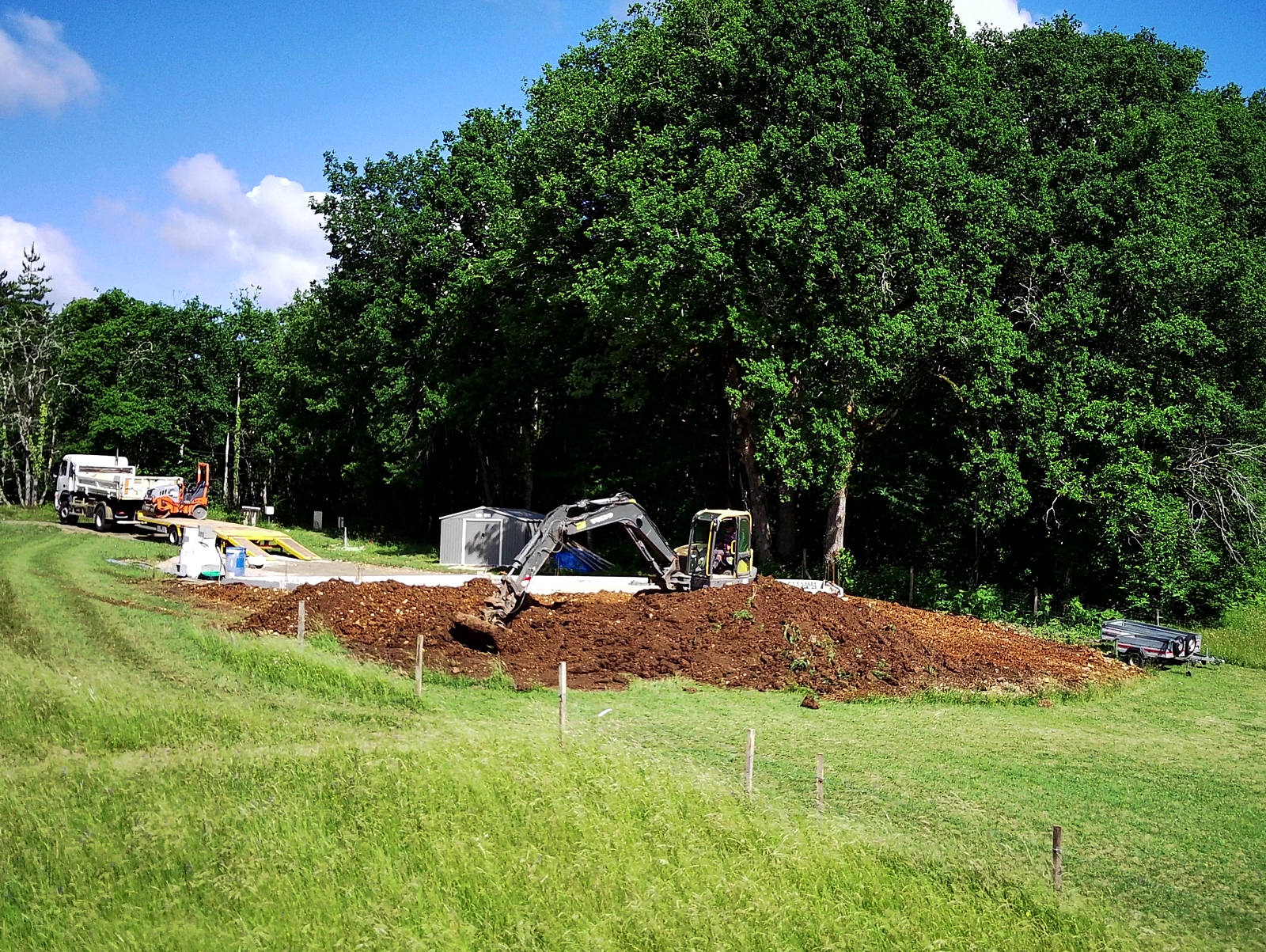
At last, and I hope this presages a period of continuous work on my house-build and wasn’t just another cursory spurt of activity after which I’ll be waiting another few weeks before the next sign of action. But anyway, I was scanning the news on my PC at about 9.00 am when I thought that I heard the sound of an engine and when I looked out of my caravan door there up on the site was the guy who started the whole thing off back at the beginning of March, by digging the first hole in the ground and putting in the site access road, working away with his excavator.

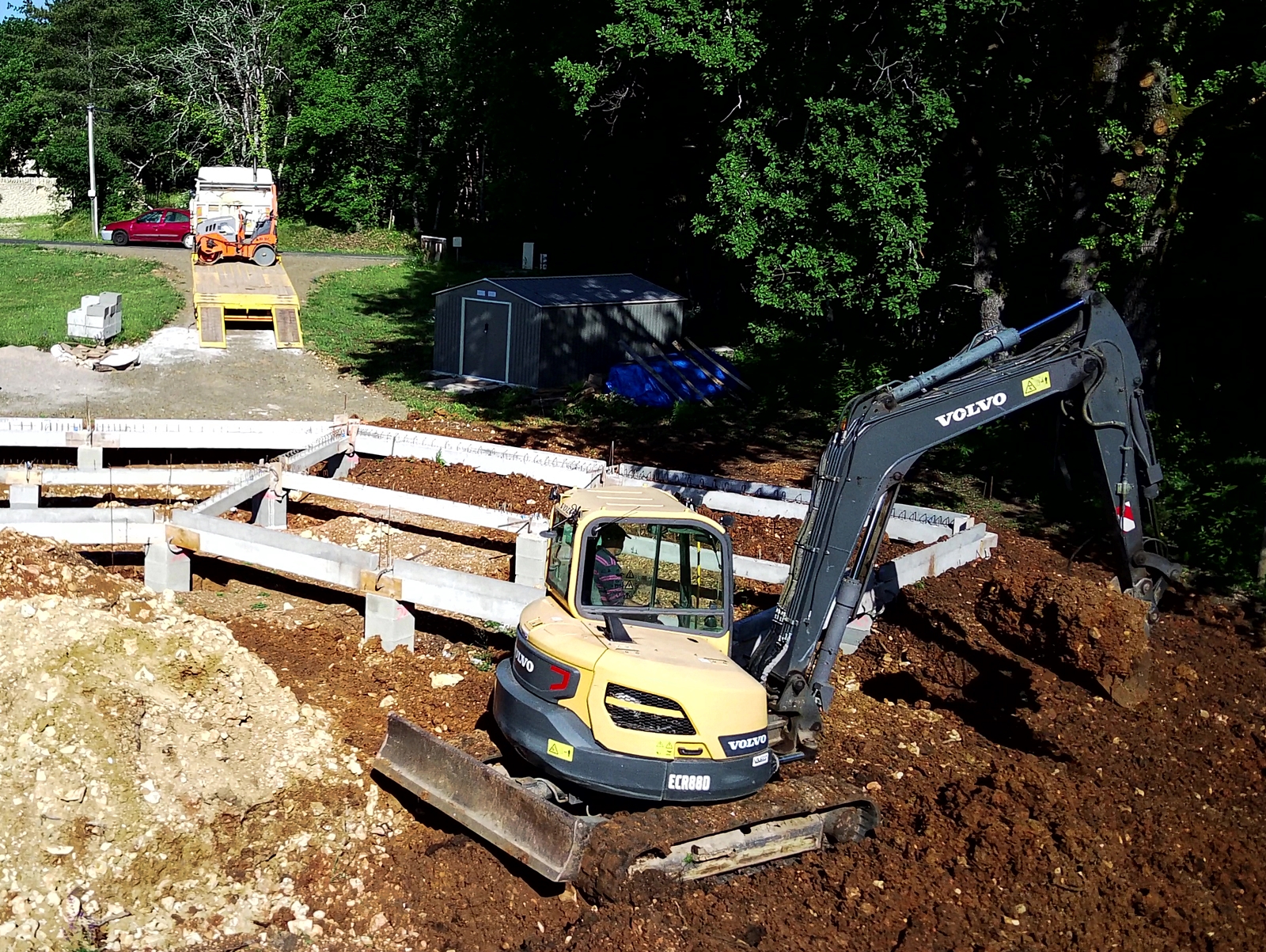
And sure enough, as I’d expected, he had made a start on back-filling the soil that had been dug out in order to construct the house’s foundations.

null

null

null

null

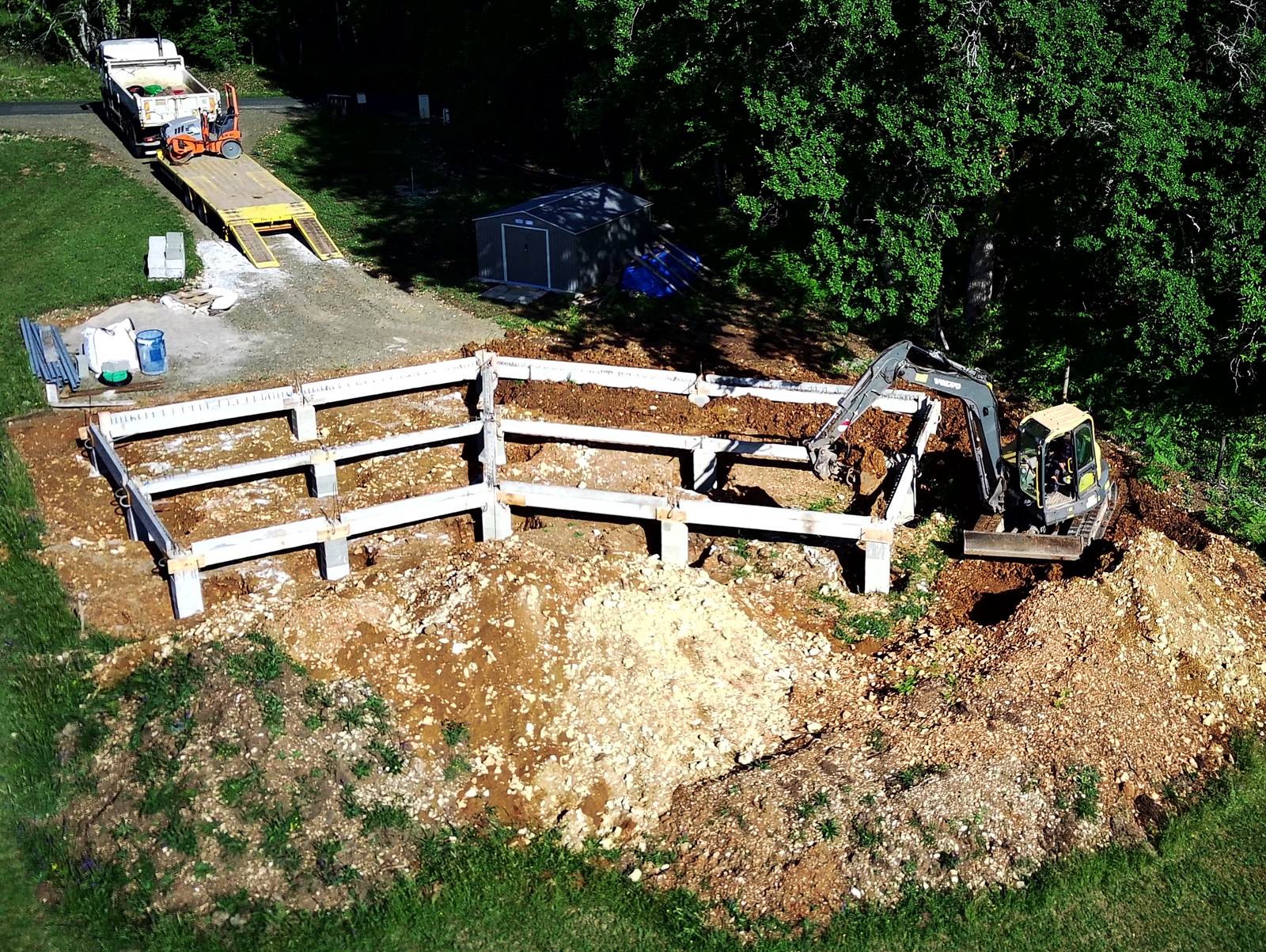
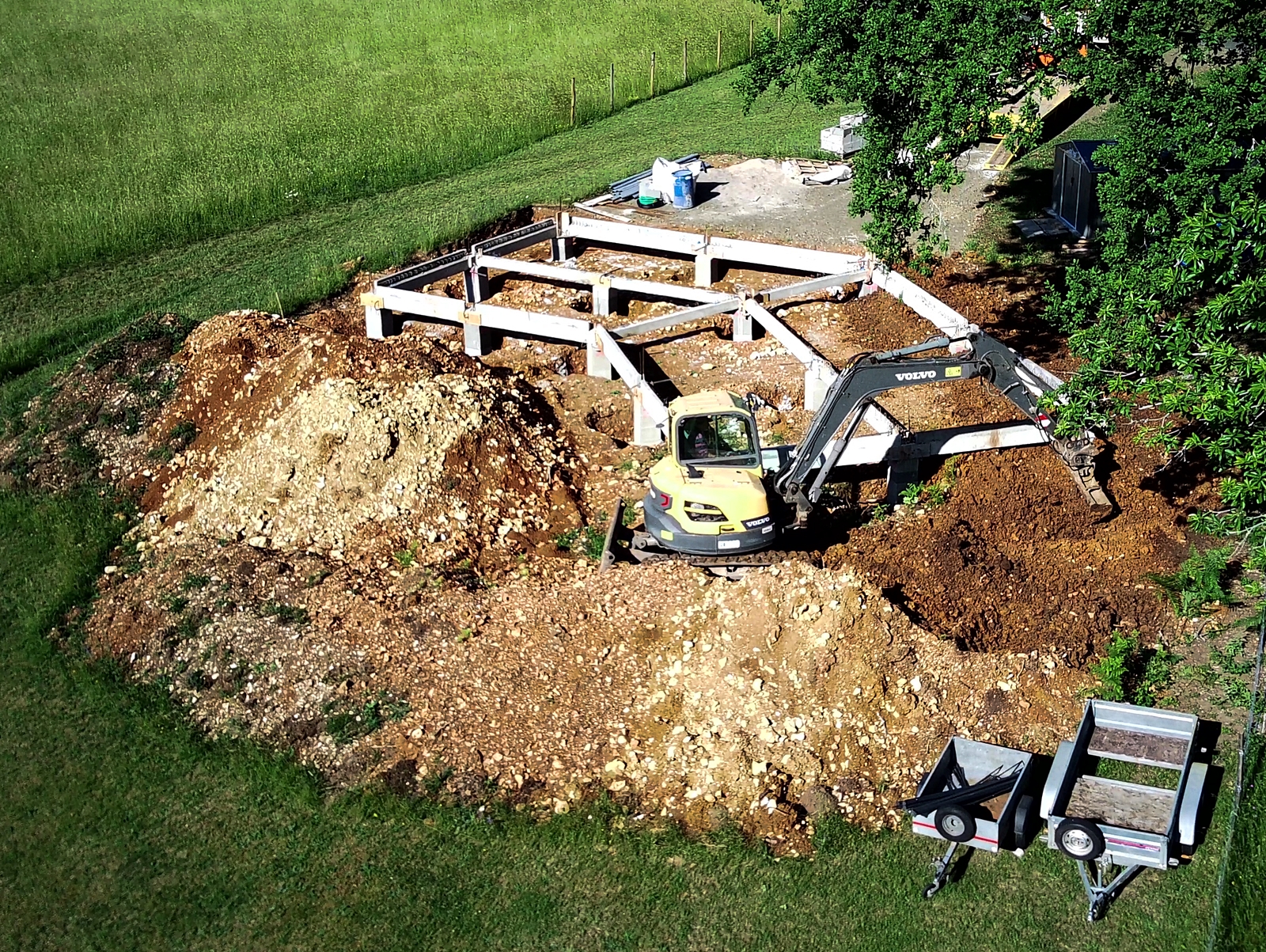
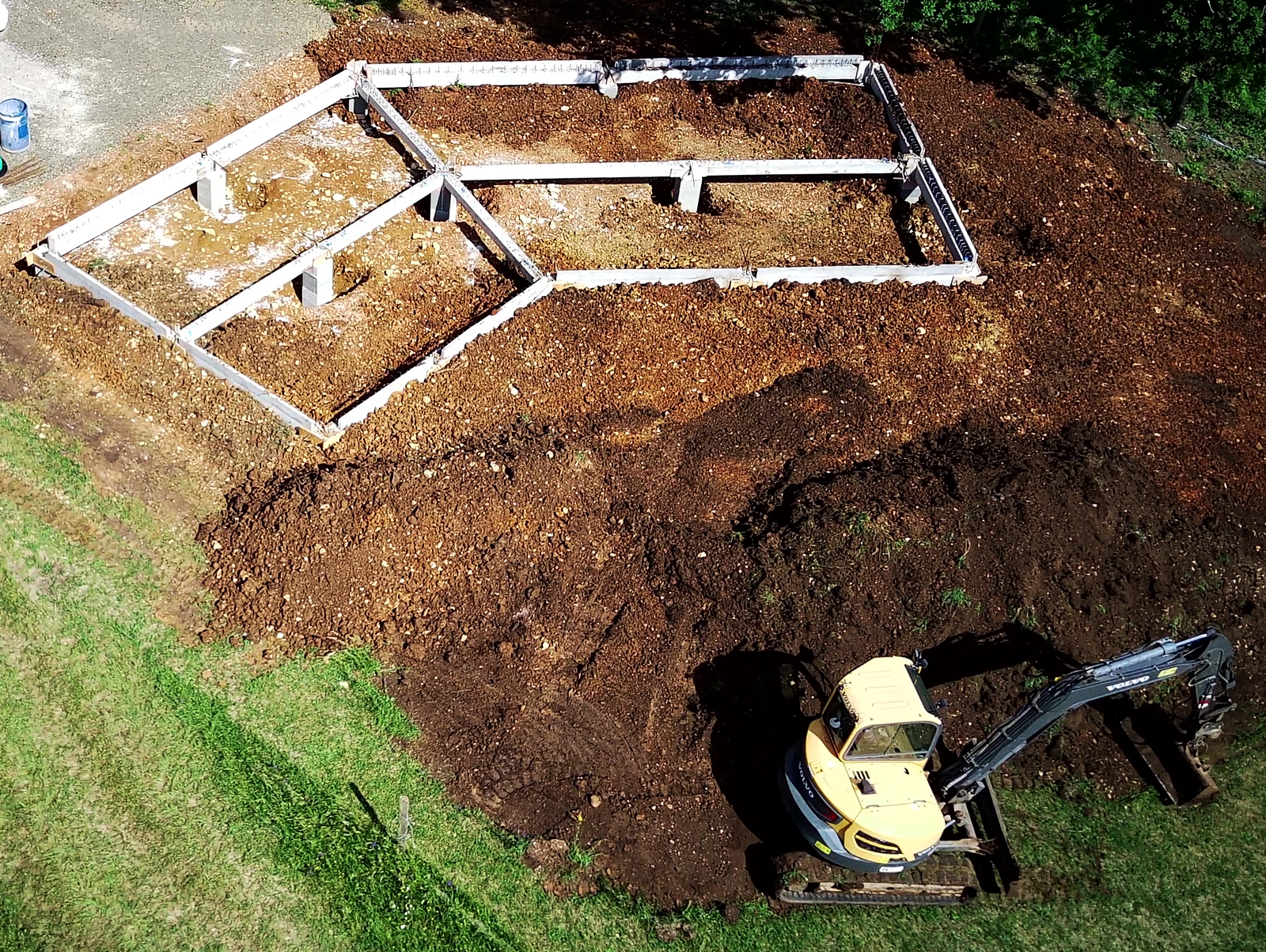
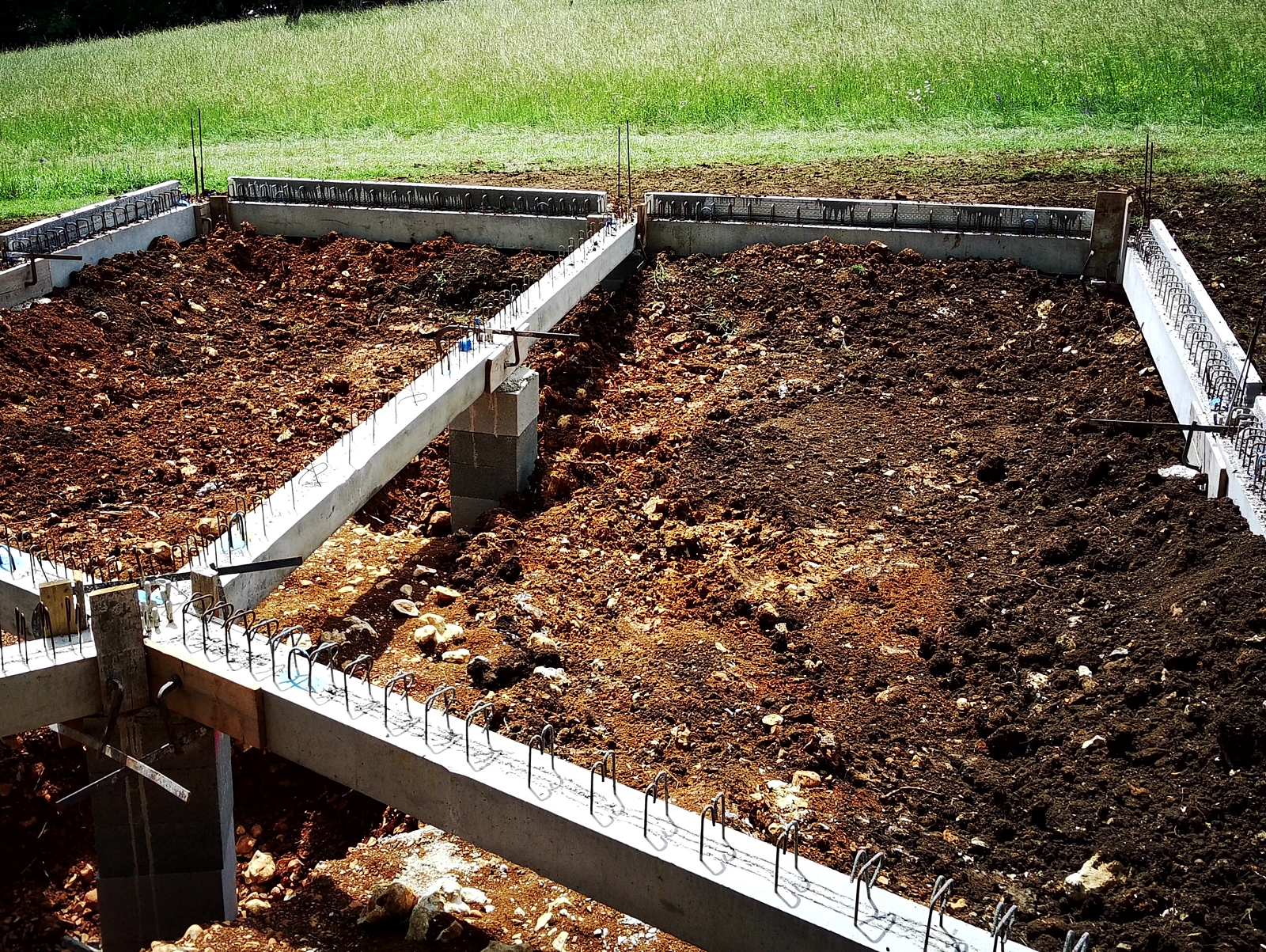
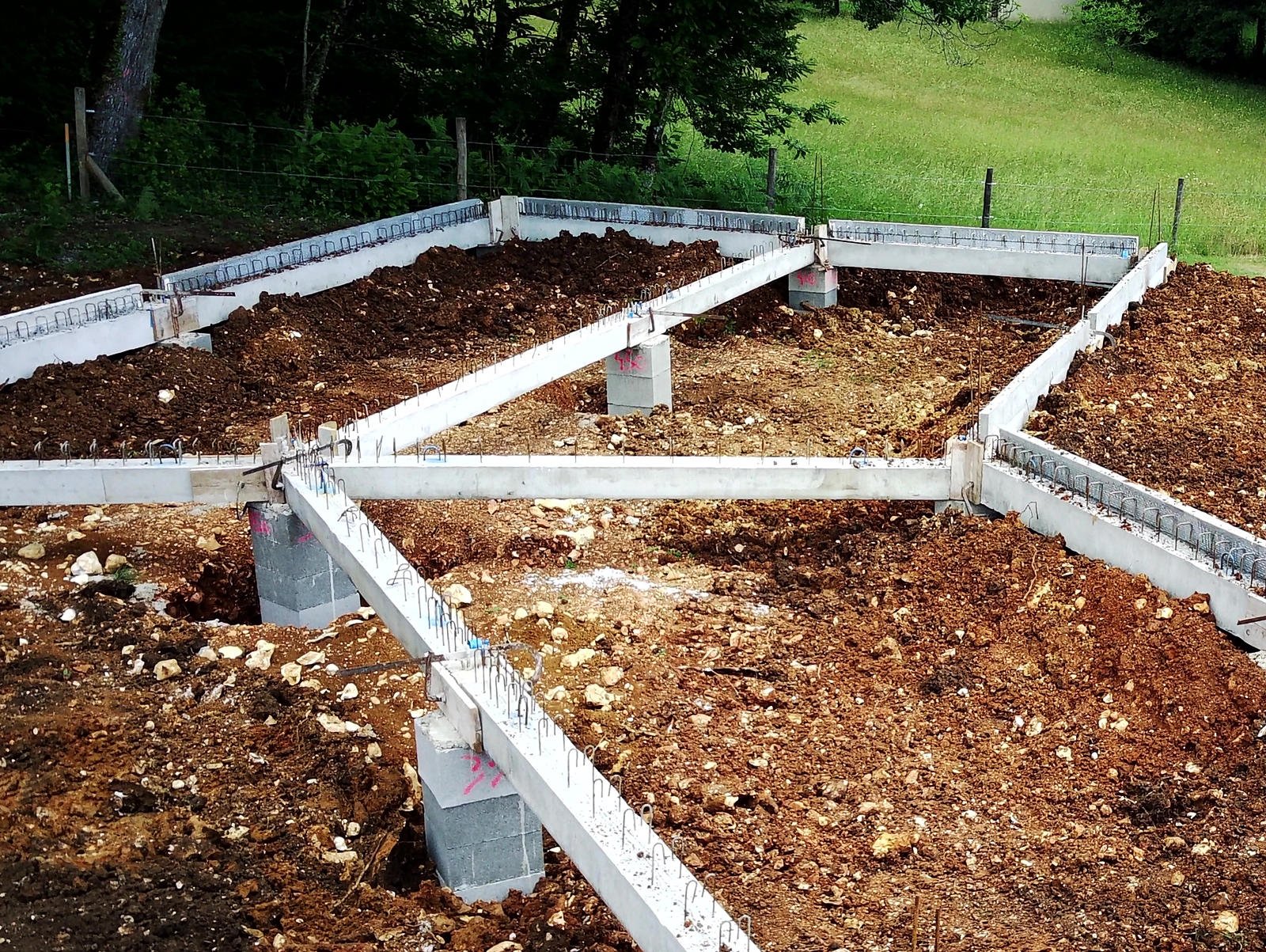
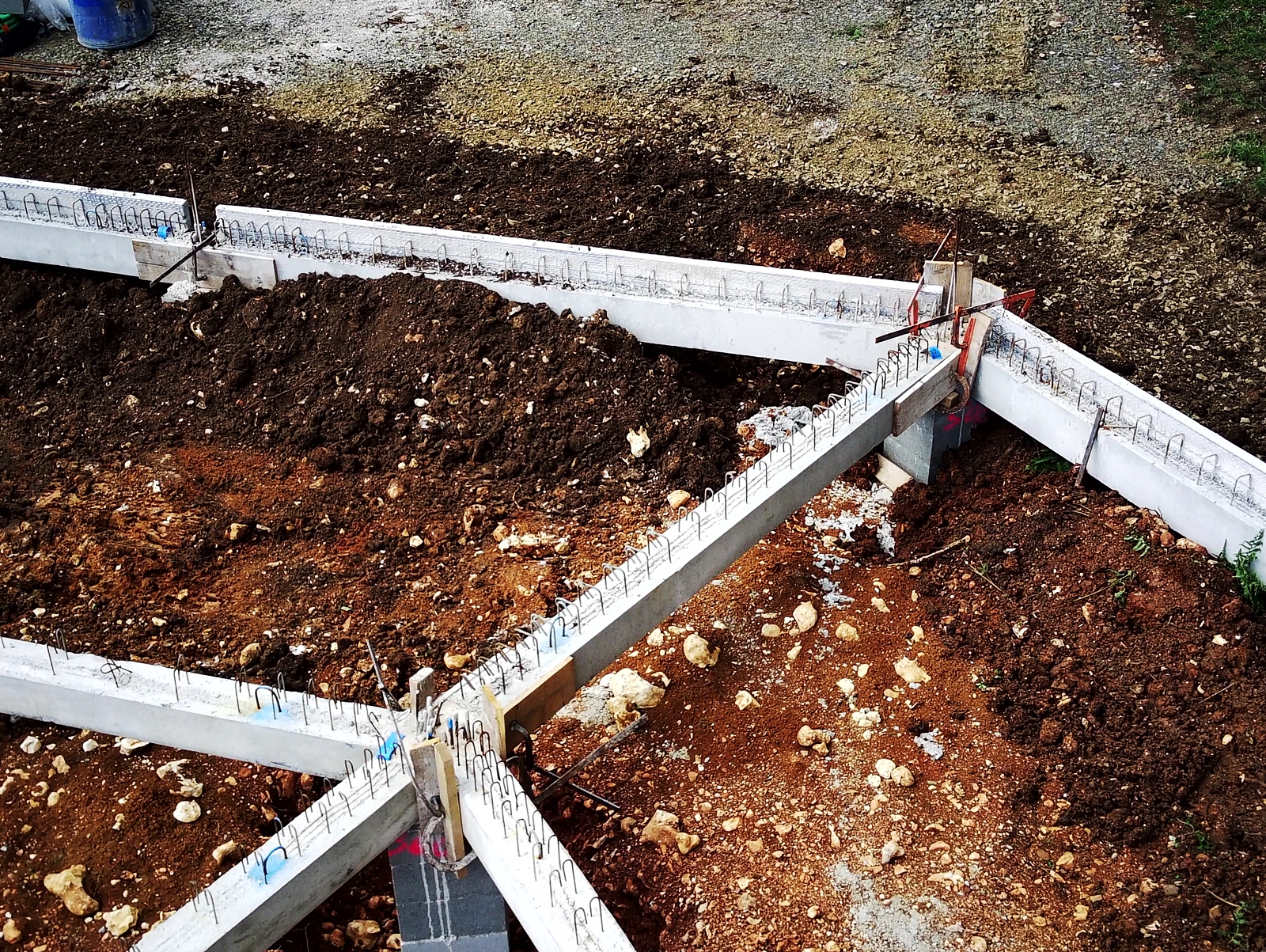
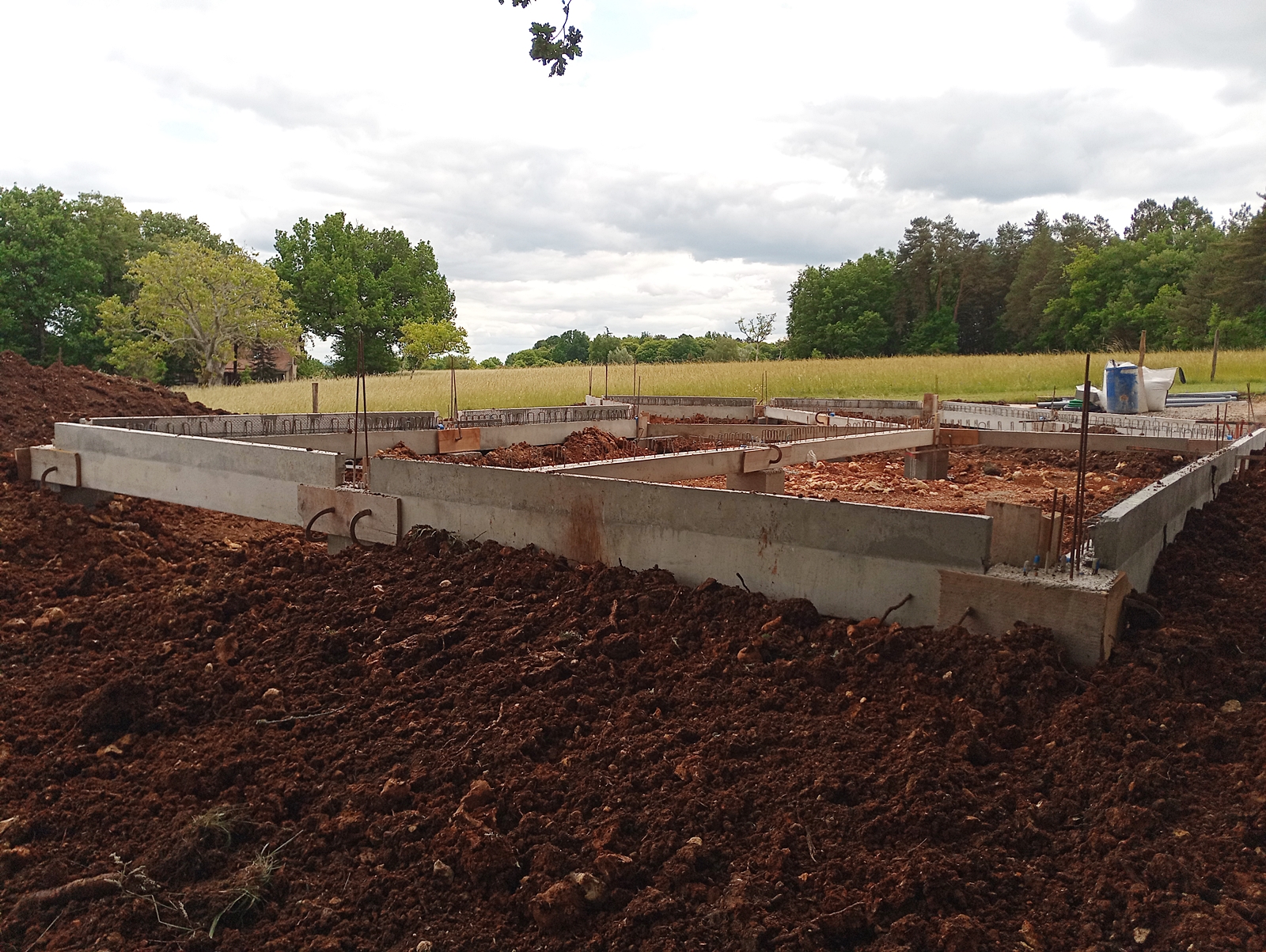
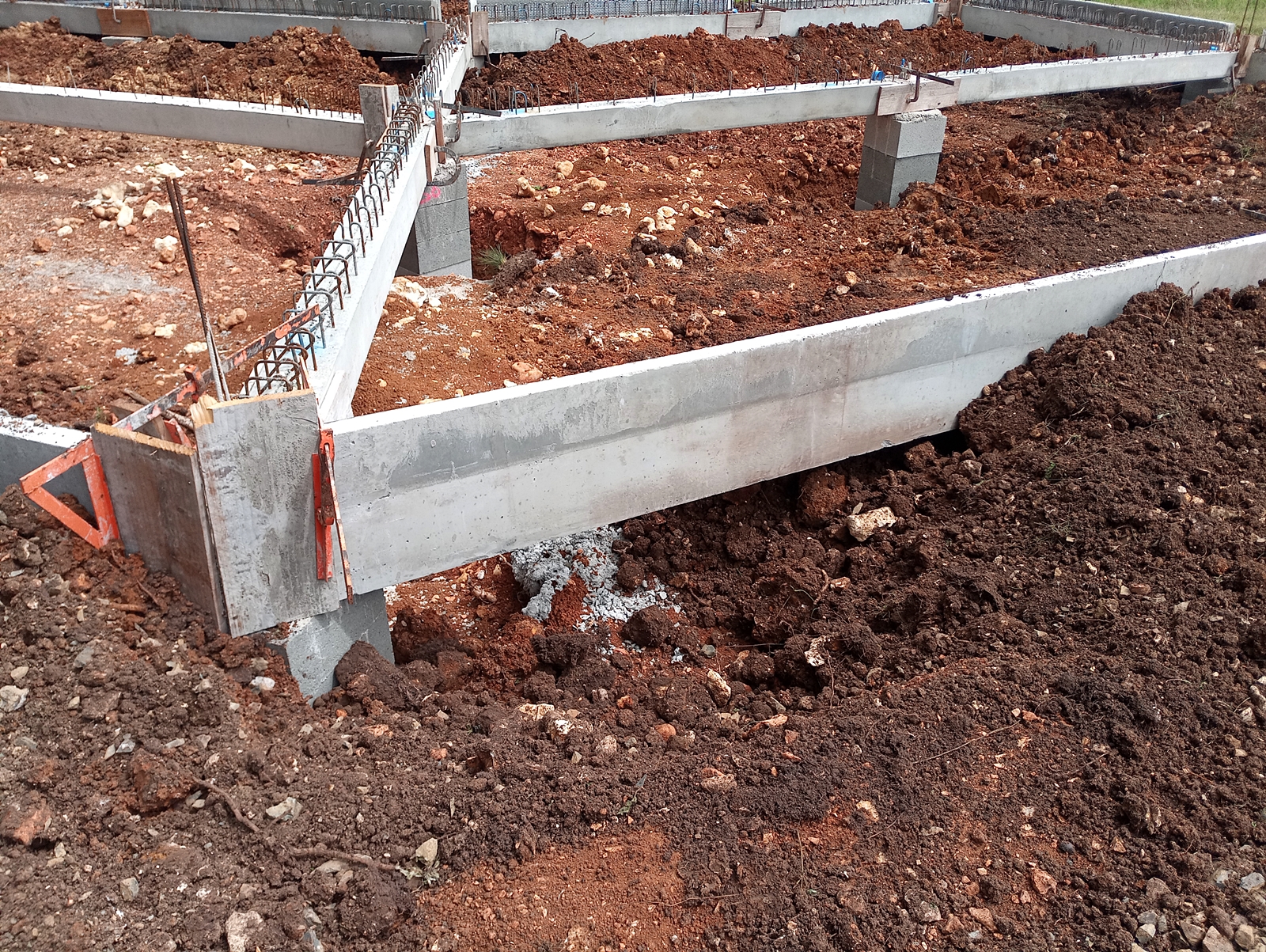
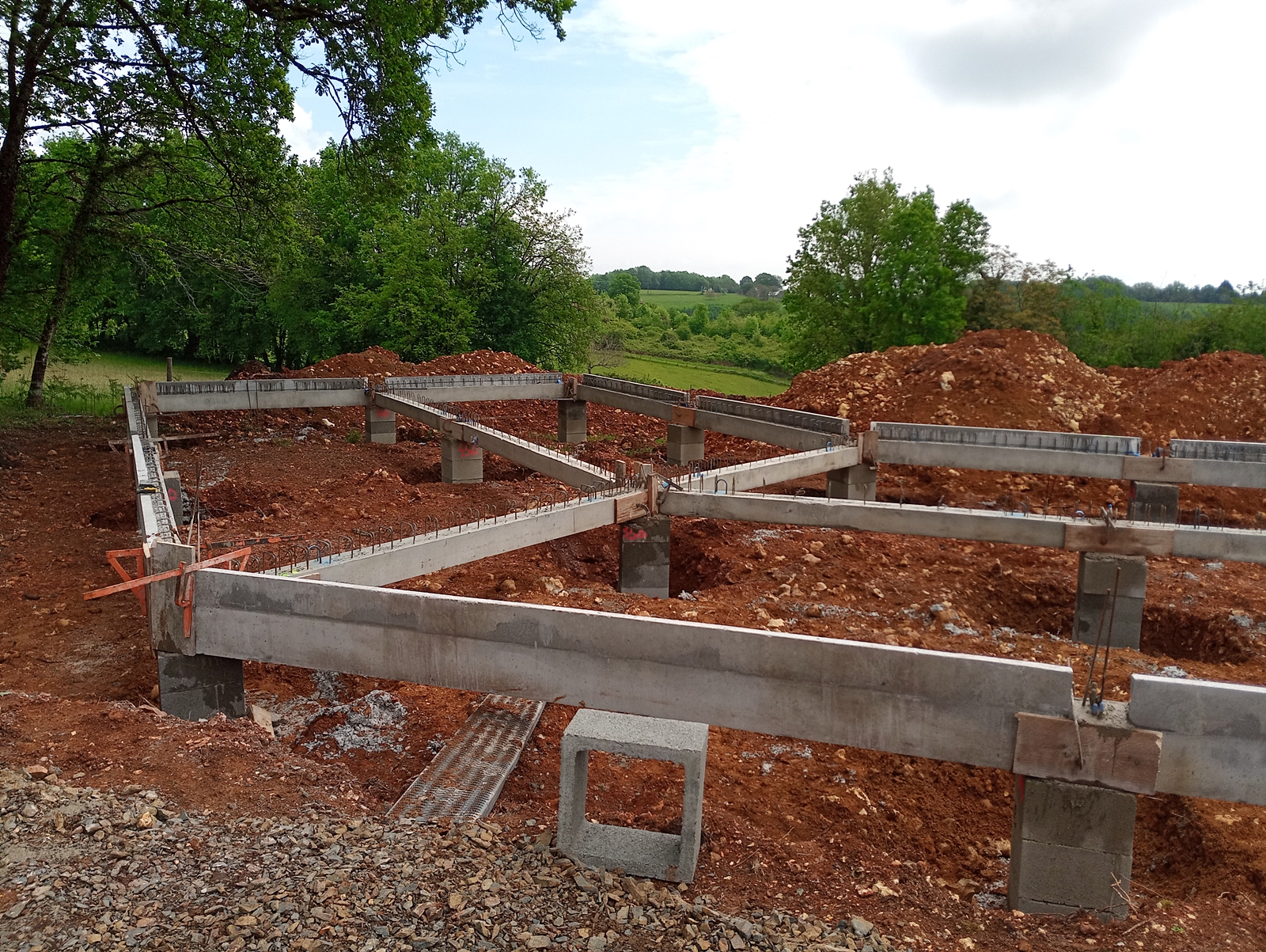
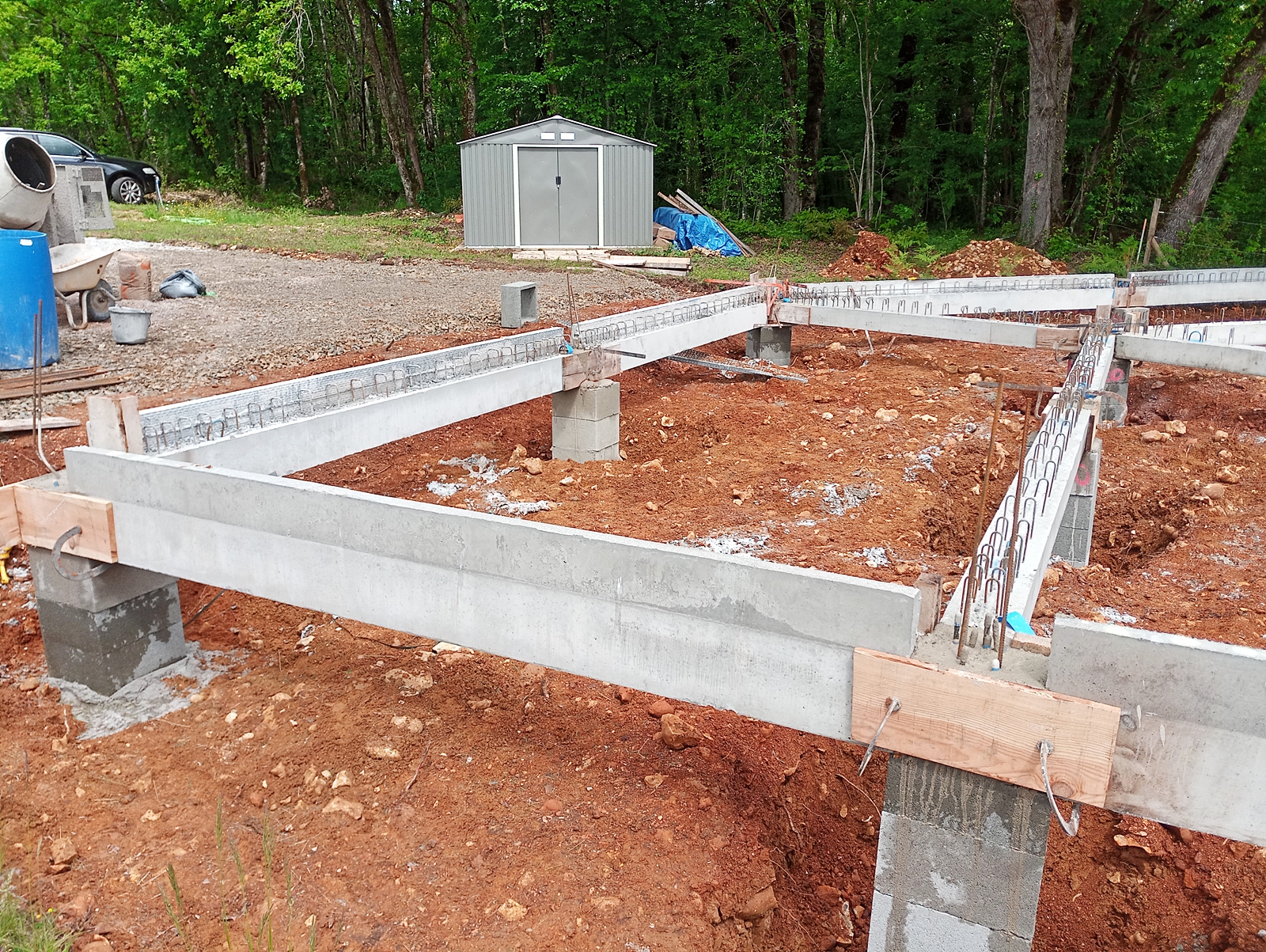
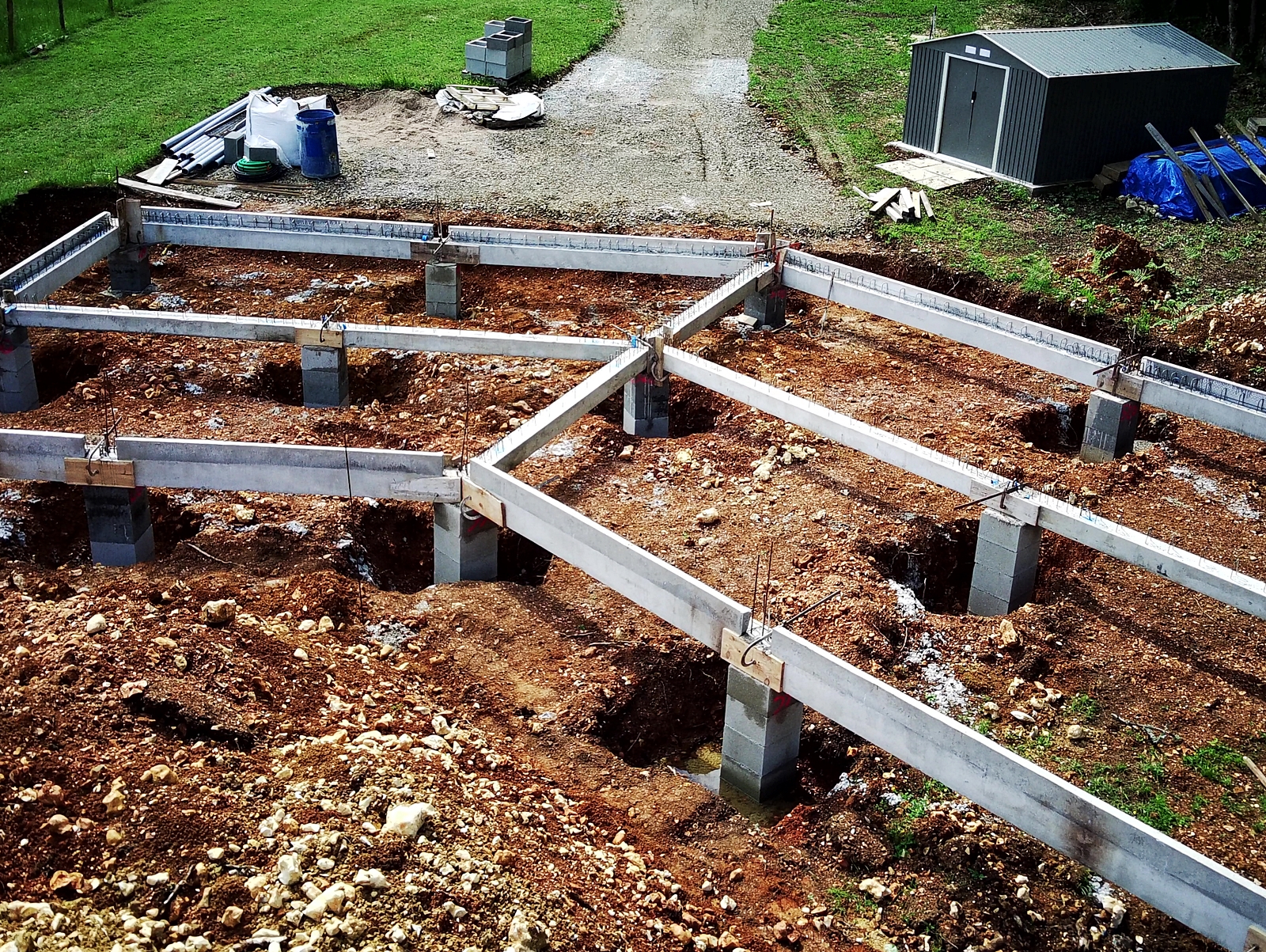
But it soon became clear that he wasn’t intending to do a complete back-fill but rather only on the external area surrounding the concrete columns and beams that will eventually support the structure of the house. On the outside his aim was to shovel earth back up to the level of the bottom of the beams and he only added earth enough inside the structure so as to more or less just bring the outside level inside, if you understand what I’m saying.

null

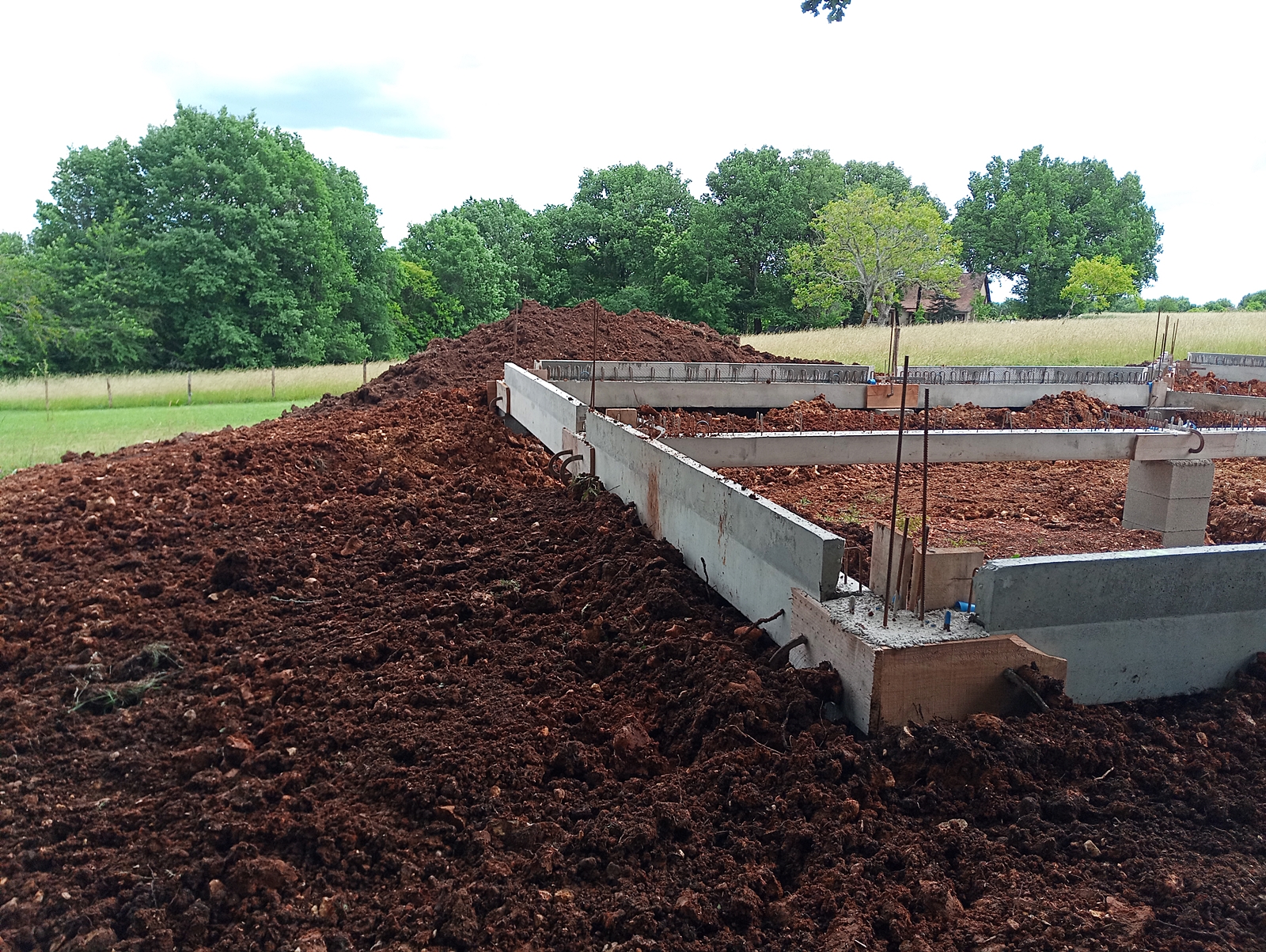
The largest amount of earth was required at the rear of the house where the terrace will be because at that point the house’s foundations are at their highest above what was the original contour of the land. The difference is well over a metre and as he shifted the earth around it soon became obvious that in order to ‘terrasse’ the area behind the house to create workable contours, a considerable amount of extra soil will need to be shipped in at the end of the project..

null

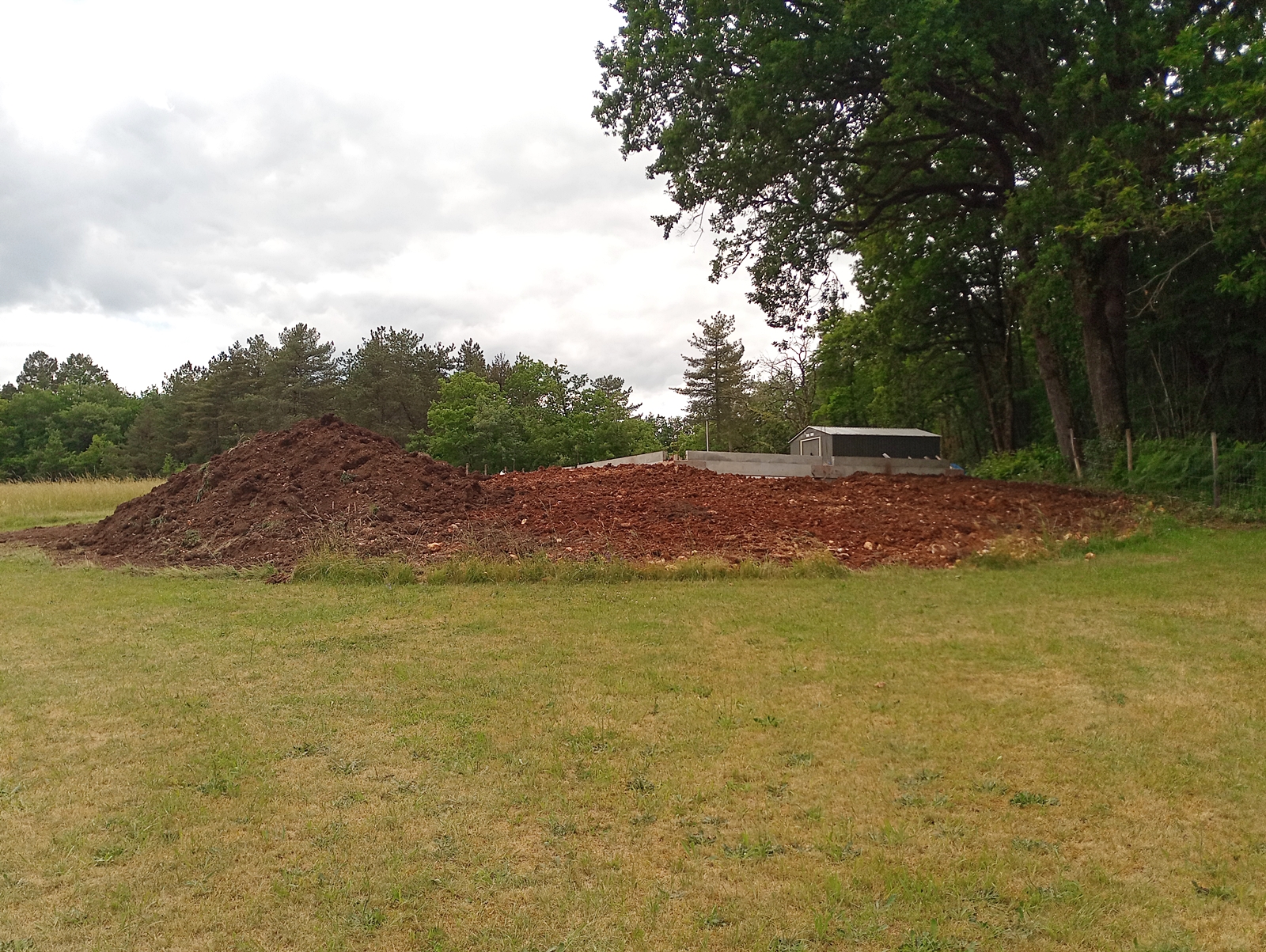
Here are some general shots that I took of the site after he’d finished his job and left which show what I mean about only replacing a small amount of soil inside the beam structure.

null

He left gaps under the beams in the rear corner, under the bedroom 1 area, and in the front under where the front door will be, which are shown in the next two pics. The latter will be for the services to enter the building (water and electricity) and the former for the waste pipes that will go into the septic tank.

null

null

Having contoured the area behind the house to join the existing slope, he took great care to pile up and leave untouched the topsoil which he dug out back in the first week or so of March. This is because it will be needed at the end of the project in order to reinstate the grass areas as the underlying clay soil will be totally unsuited for that.

null

The next two shots show the gaps he left for the septic tank pipes and the water and electricity services.

null

null

The final shot shows how much the area that will become the house’s terrace has had to be built up. I’ll have to think eventually how to complete it – I’m thinking of a flat paved area with a low ornamental wall around it with steps, possibly on both sides, down to the back garden.

null

So that was it for the day. I’ll be most surprised if activity resumes as soon as tomorrow (oops, can’t because tomorrow’s a holiday here in France) but it would be great if things start to move forward in earnest next week. I’ll have to wait and see…

Foiled yet again

My UK family visitors have come and gone and after going through a bit of unsettled weather, I thought about doing my planned flight in the Savannah yesterday as the weather was just right. I didn’t get myself organised in time, however, so decided to do it today instead as the forecast was for the weather to be similar to yesterday. But it couldn’t have been more wrong. I got everything prepared and ready and was over at Malbec by 8.00 am with the idea of getting away by 09.00 but that was impossible.

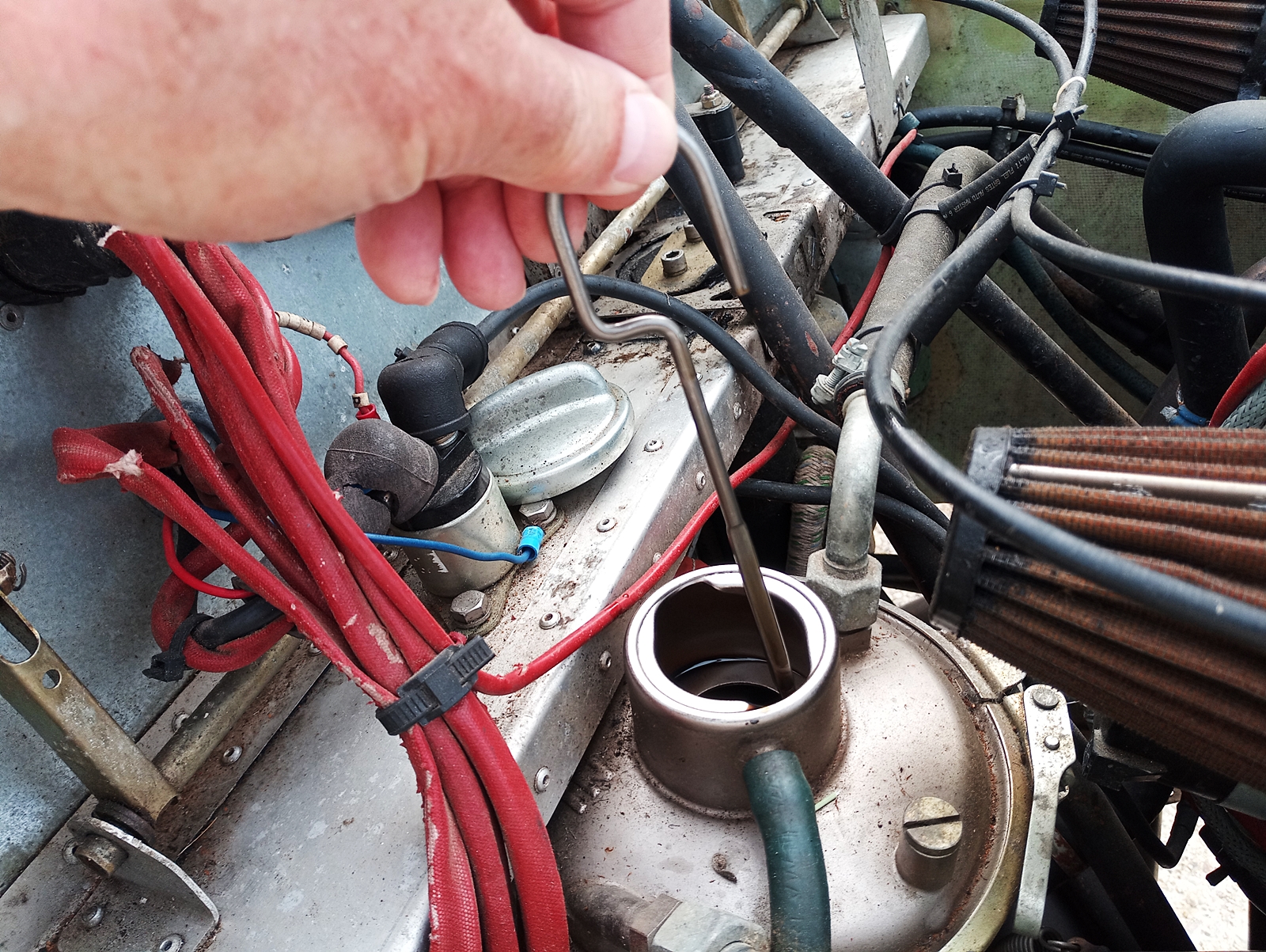
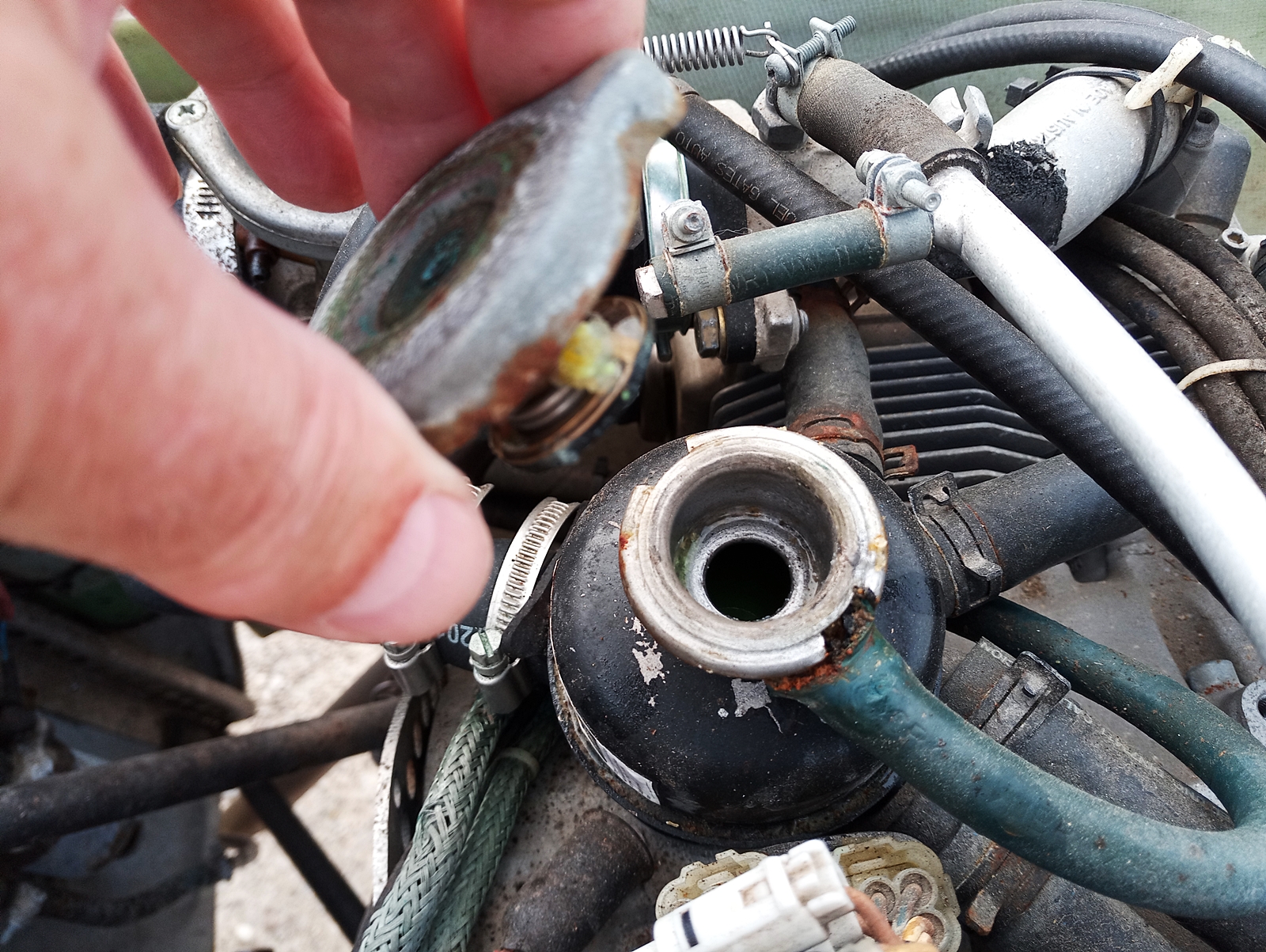
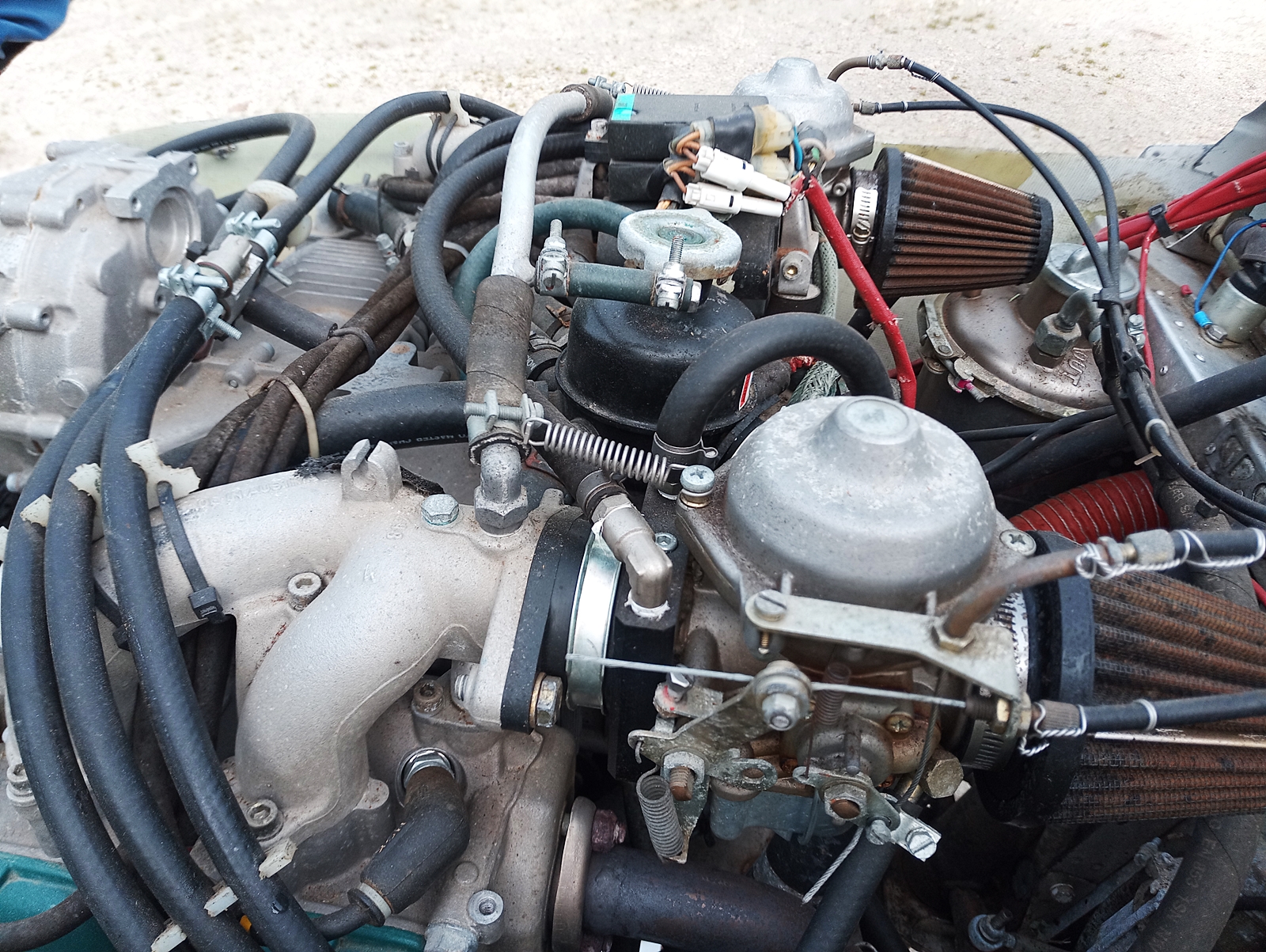
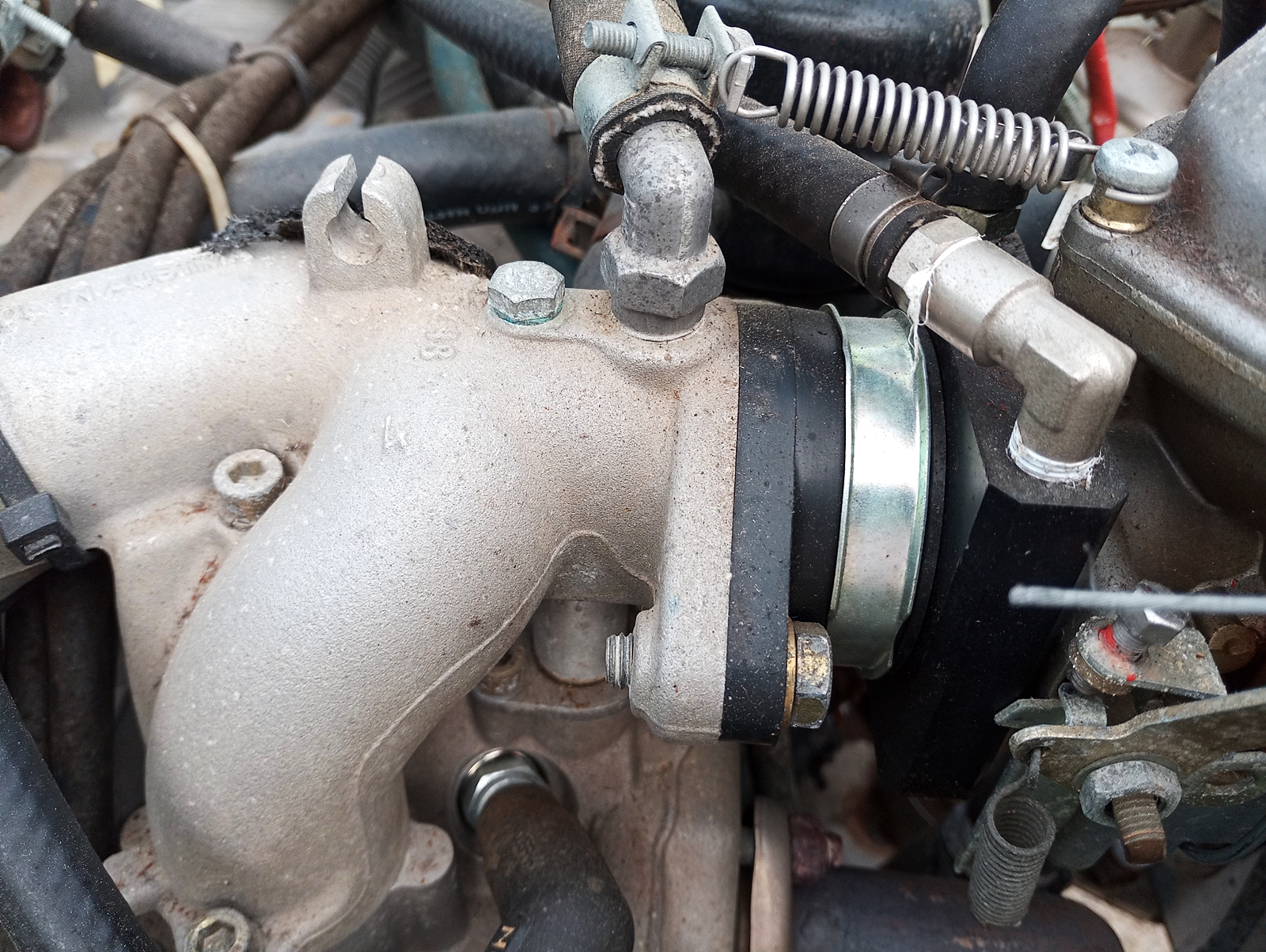
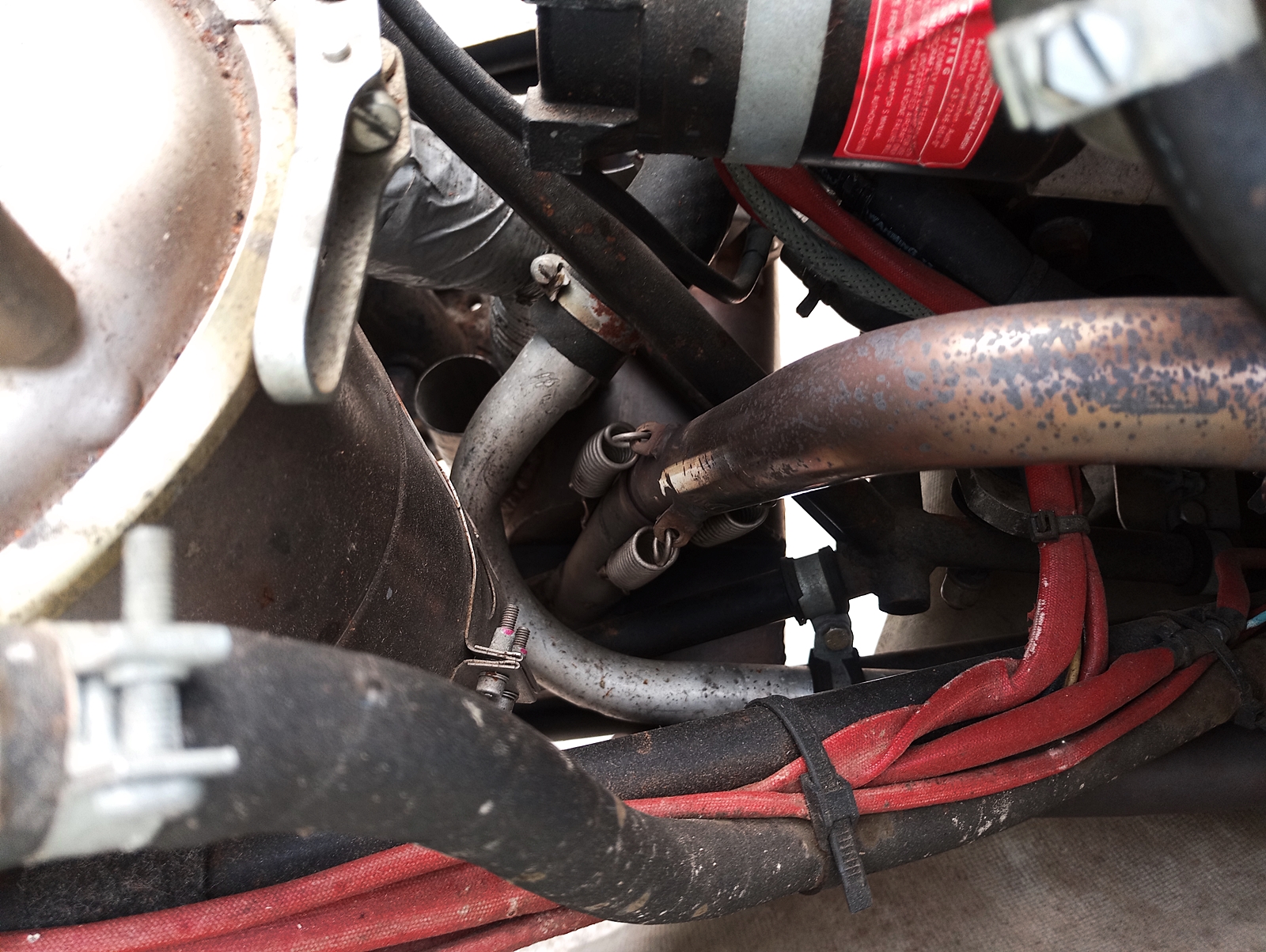
There was very little wind and the humidity level was through the roof, which meant that visibility was extremely poor with the TV mast at Audrix near Le Bugue being almost invisible in the thick haze. In the hope that it might clear up as the sun broke through, I got 77ASY out of the barn though and did a thorough pre-flight inspection with its engine cowling top removed, this being its first flight of the year, so I could inspect amongst other things the oil and water levels, the hoses, all the hose connections, the rubber carb connectors that I fitted a couple of years or so ago, the exhaust fittings and connections and the engine mount.

I haven’t done such a thorough inspection for some time, so this was a good opportunity to give the contents of the engine compartment a really good going over – see the pics below.

null

null

null

null

null

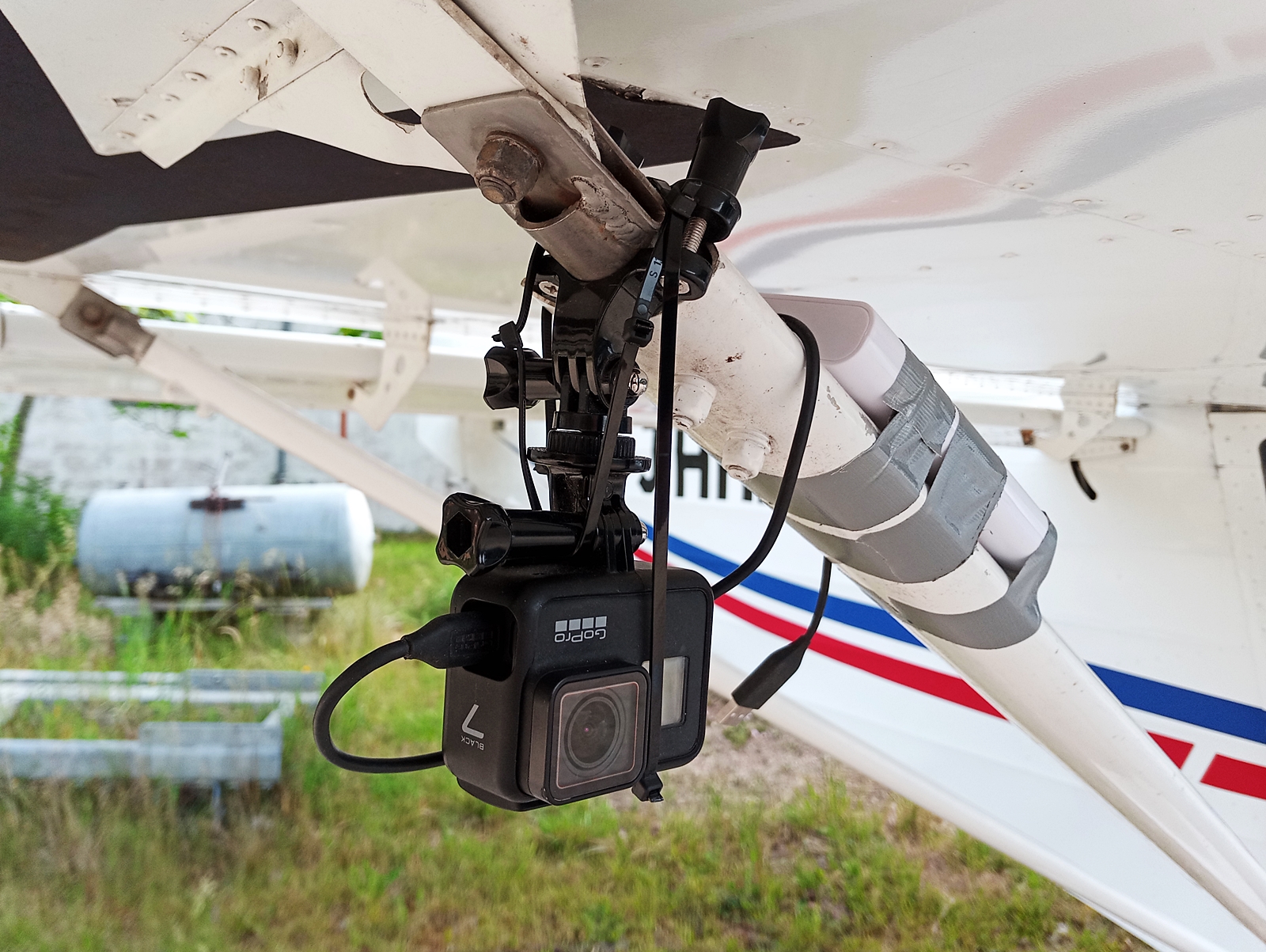
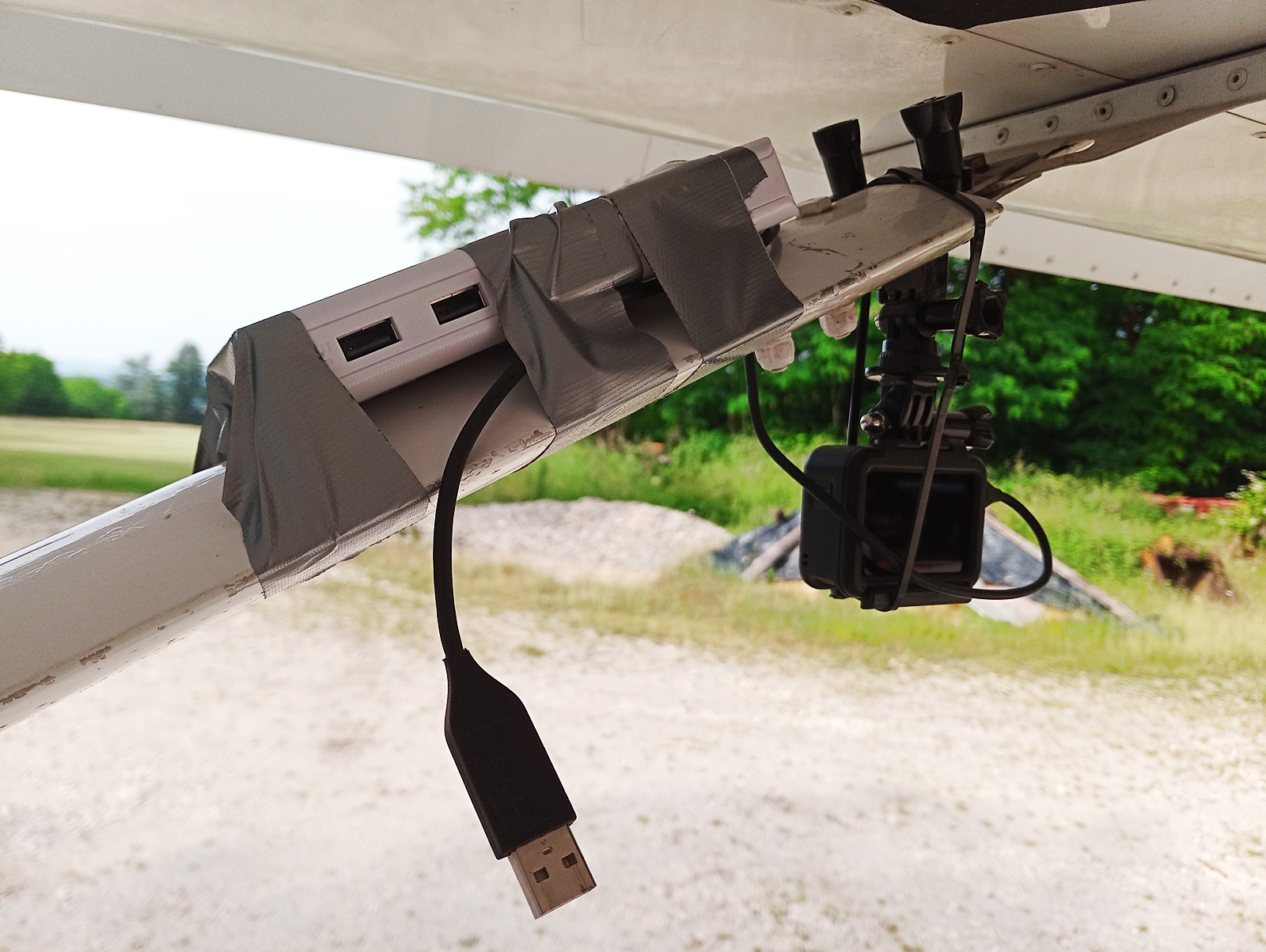
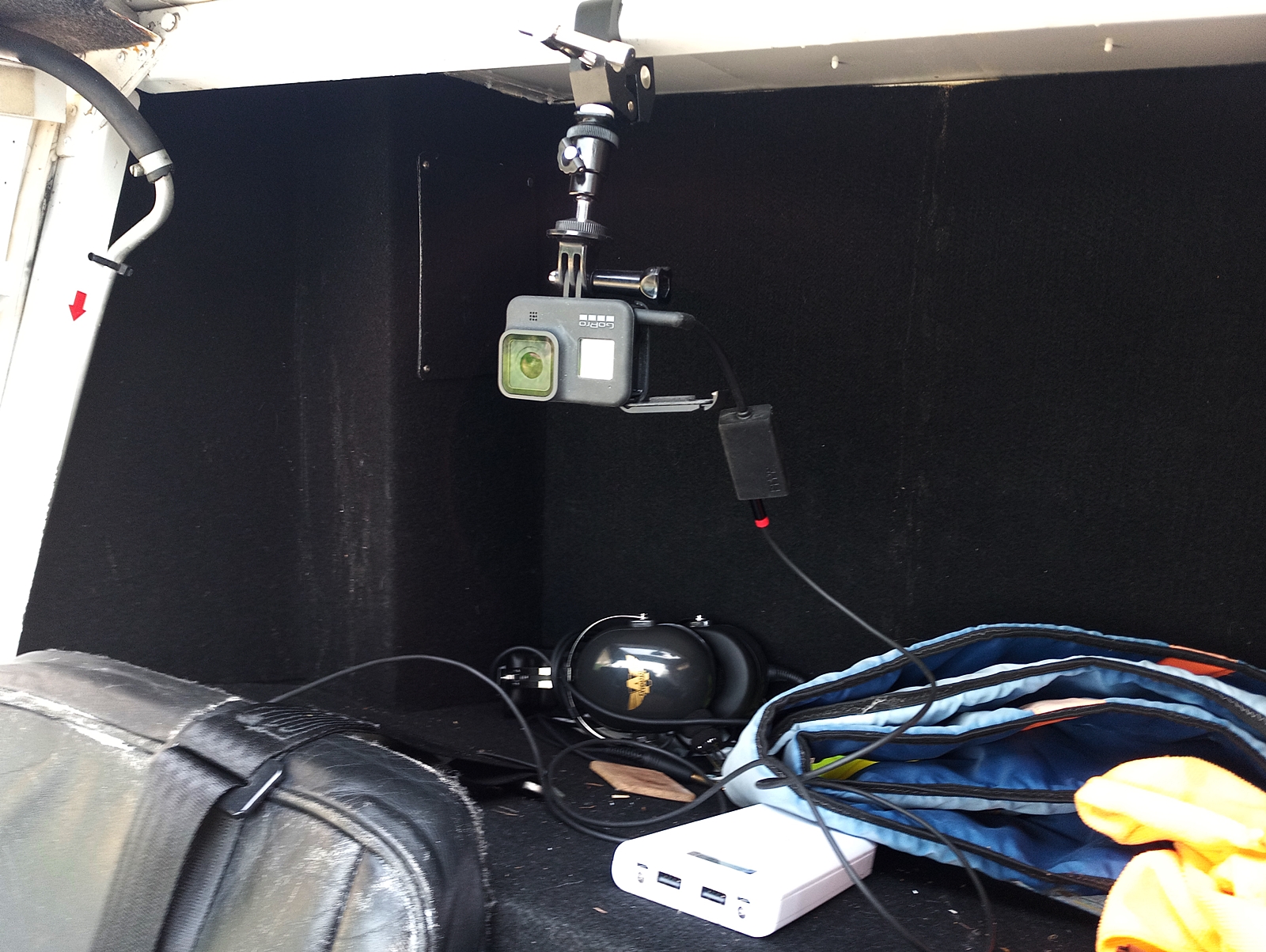
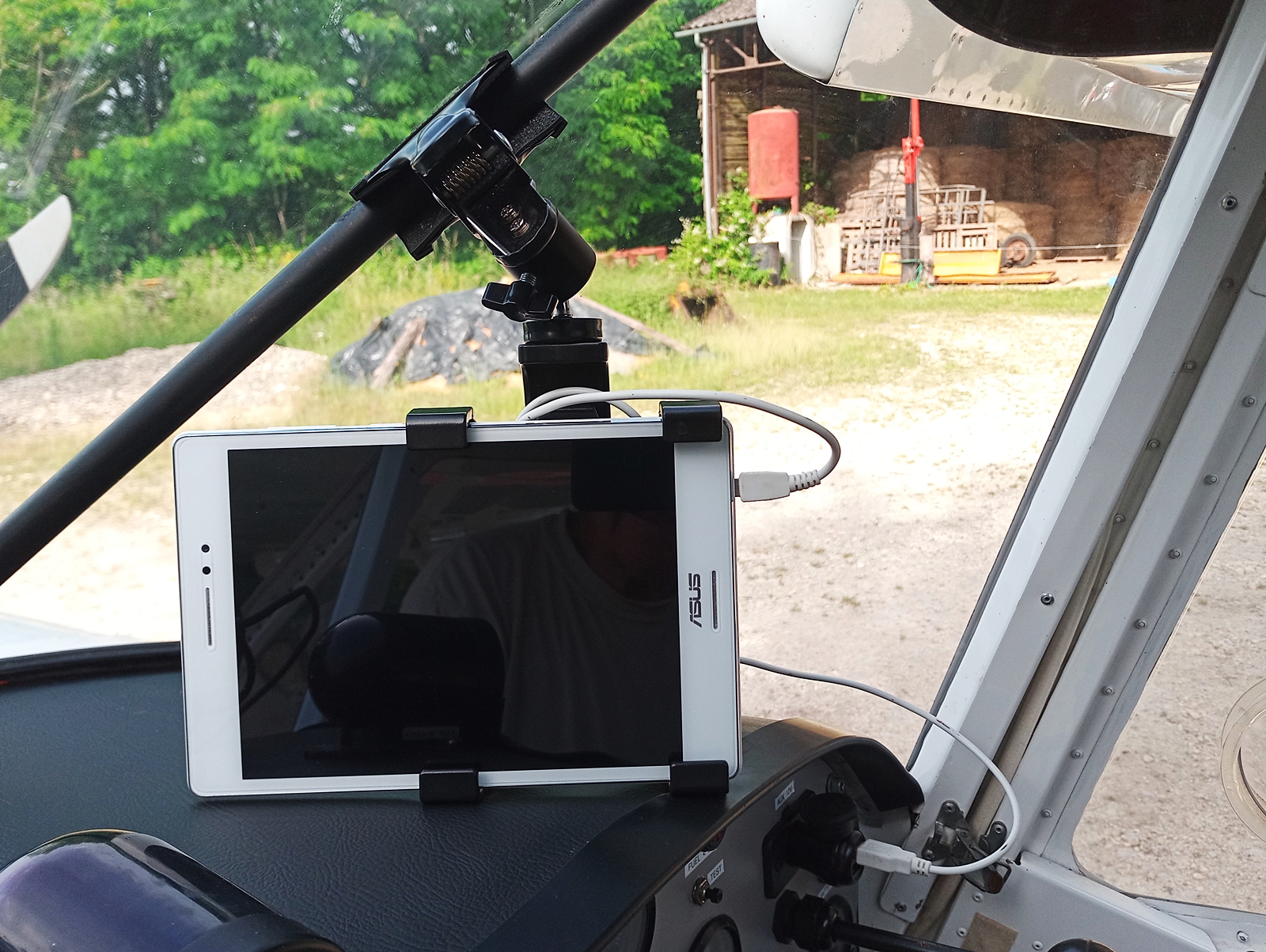
Once I’d finished the engine inspection and done a full walk-round, I then turned my attention to my video equipment. This comprised mounting a Go-Pro under the right wing together with a power box for extended time enough to record the whole 2-hour flight and a second Go-Pro in the cabin behind my head. This also had a power box and a connection into the radio system that I successfully tried out a few days ago using the Go-Pro sound connector that I acquired months ago but have never used.

I finished up mounting my Asus tablet-based GPS system as I always have done and all of this is shown in the final four pics below.

null

null

null

null

But it was all to no avail. The haze failed to burn off and has persisted throughout the whole day until I type this at the end of the afternoon. To make matters worse, we have light rain and a thunderstorm forecast for early this evening and continuing rain on and off throughout the coming week, so goodness knows when I’ll be able to get round to doing this flight. I seem to be fated not to for some reason 😐

Shucks!

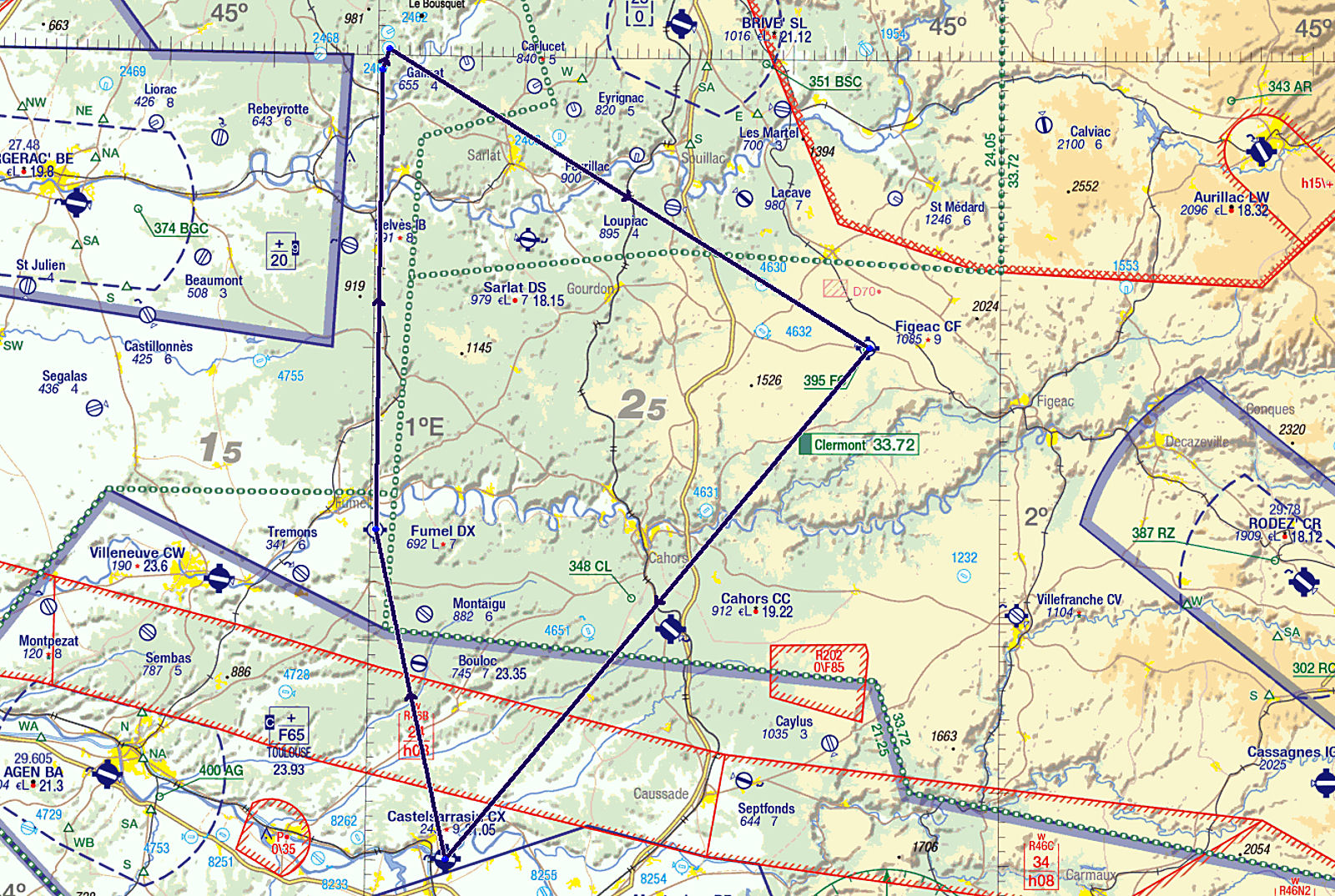
As I type this the weather is fine for flying (wind about 6 kmh from the east) and it’ll remain about the same all day. And I’ve got my cameras charged and my route planned and loaded into my GPS. It’s a roughly two hour flight taking in Figeac, Castelsarrasin in the Tarn-et-Garonne, which I’ve not been to before, and Fumel.

null

There’s only one problem. About 11 or 12 years ago I had keyhole surgery on the joint of my right knee which is now beginning to wear off and whenever I over-exert it I pay a price. After having hauled the aircraft around at Malbec a couple of days ago and worked to reorganise my ‘hospitality’ area outside my caravan yesterday, I paid really dearly last night. I suffered agonies and had an awful night’s sleep and the problem is that my knee is still very painful this morning.

So I think that it would be a good idea to leave things this morning, give my knee a couple more days to recover and do the flight later in the week. Thursday looks like a good day and I don’t think a delay of a couple of days or so will make any difference 😉

The comforts of home

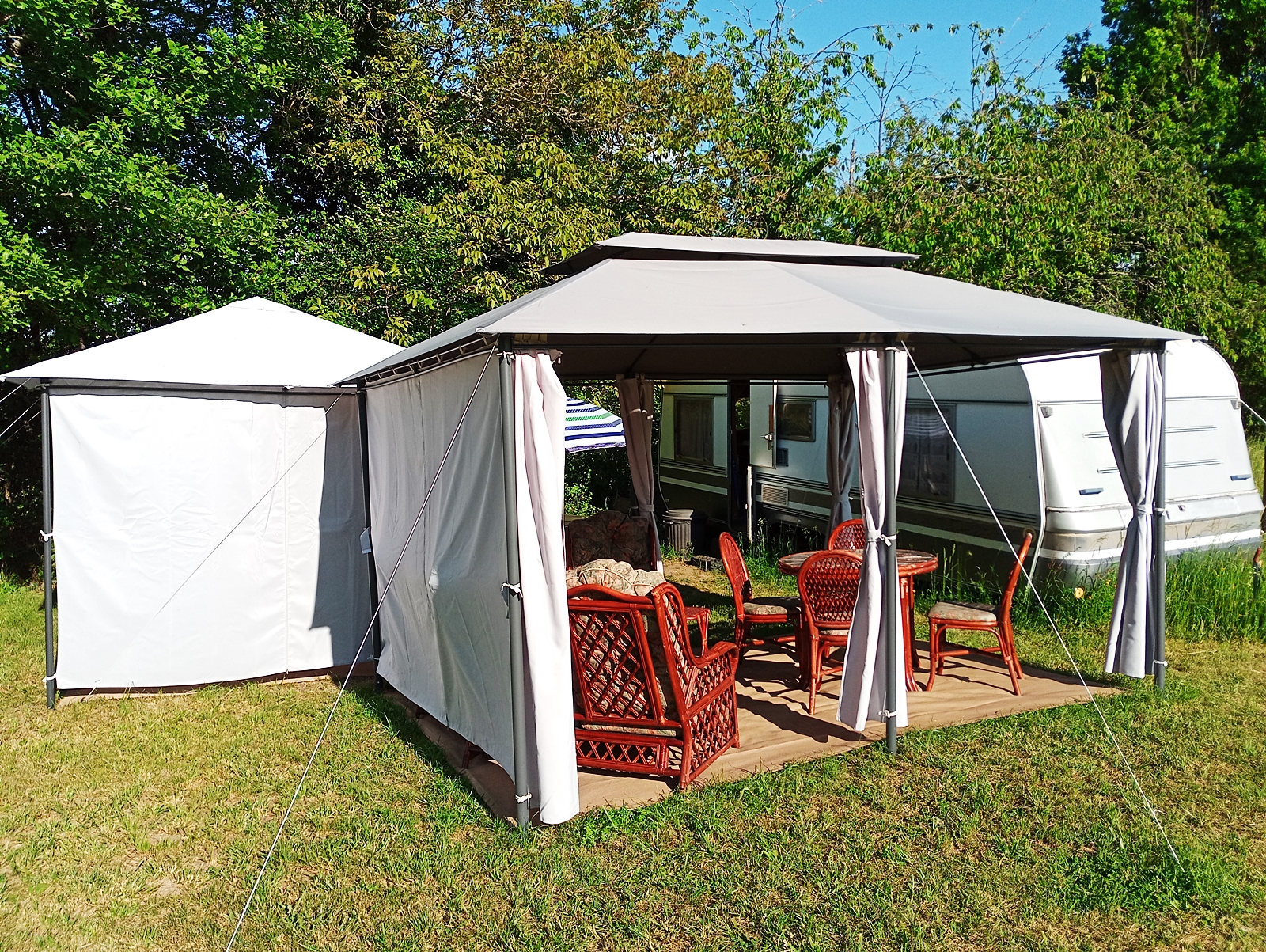
We had a really marvellous hot, sunny day today so it wasn’t one to be wasted. It was still a bit too windy to think about flying – that’s for later this coming week – but a perfect day to do a bit more to my little encampment-cum-hospitality area outside my caravan.

The large table that I had outside my old house at Plazac was already in one of the two ‘tonnelles’ but the chairs that go with it were still in my ‘abri’ after I’d moved them from my old neighbour, Chantal’s, garden a few weeks ago. So today was a good time to dig those out.

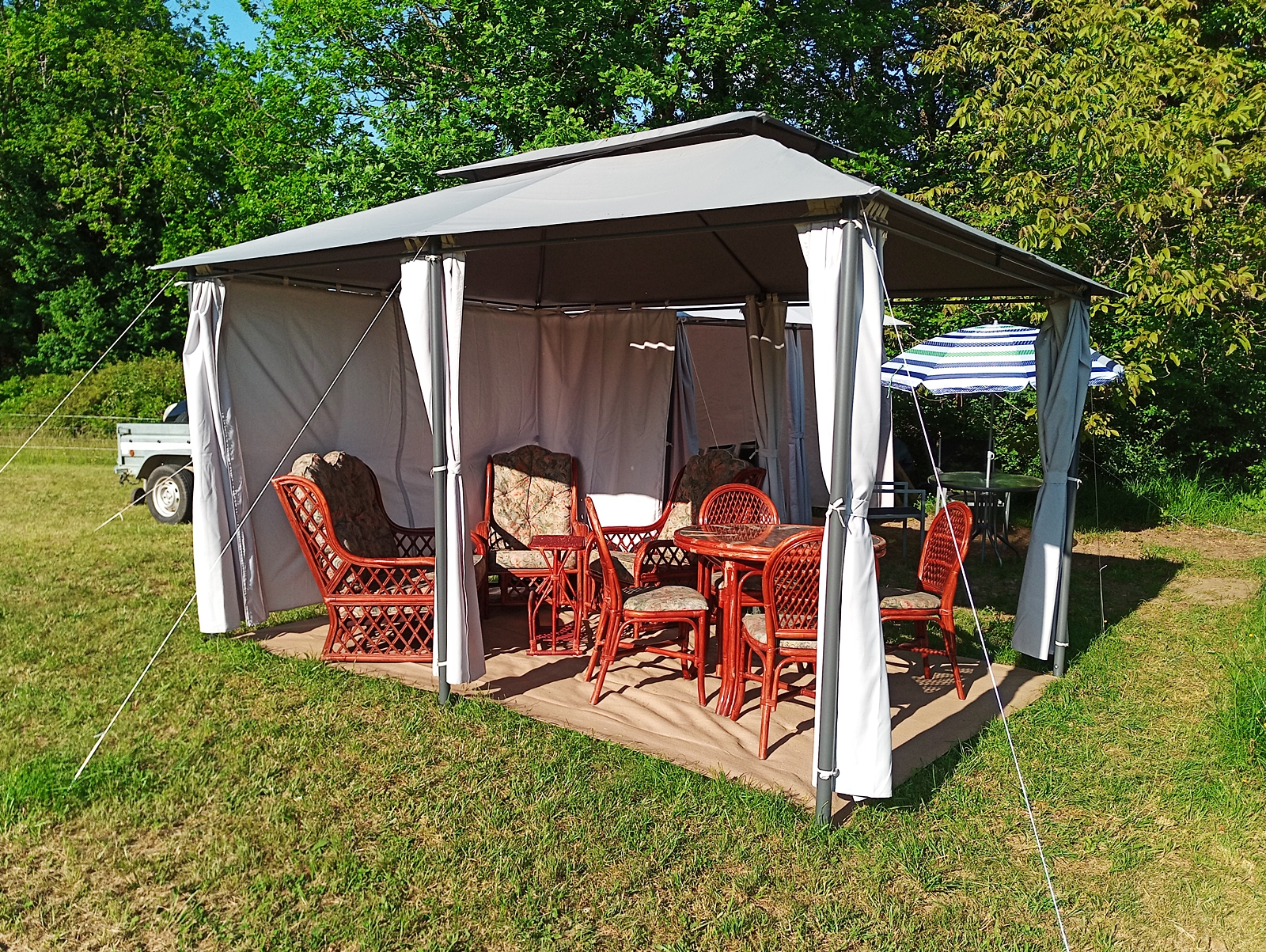
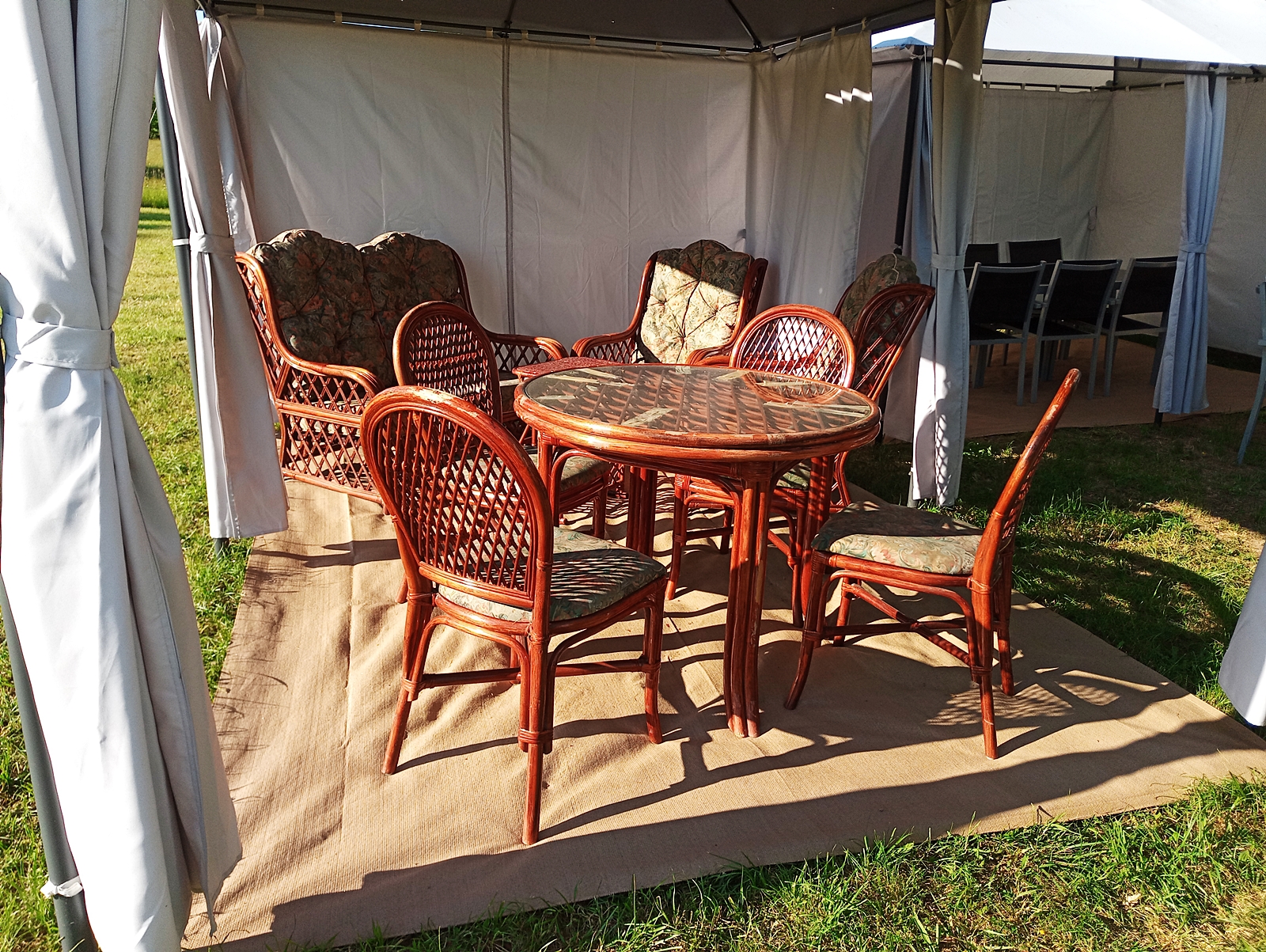
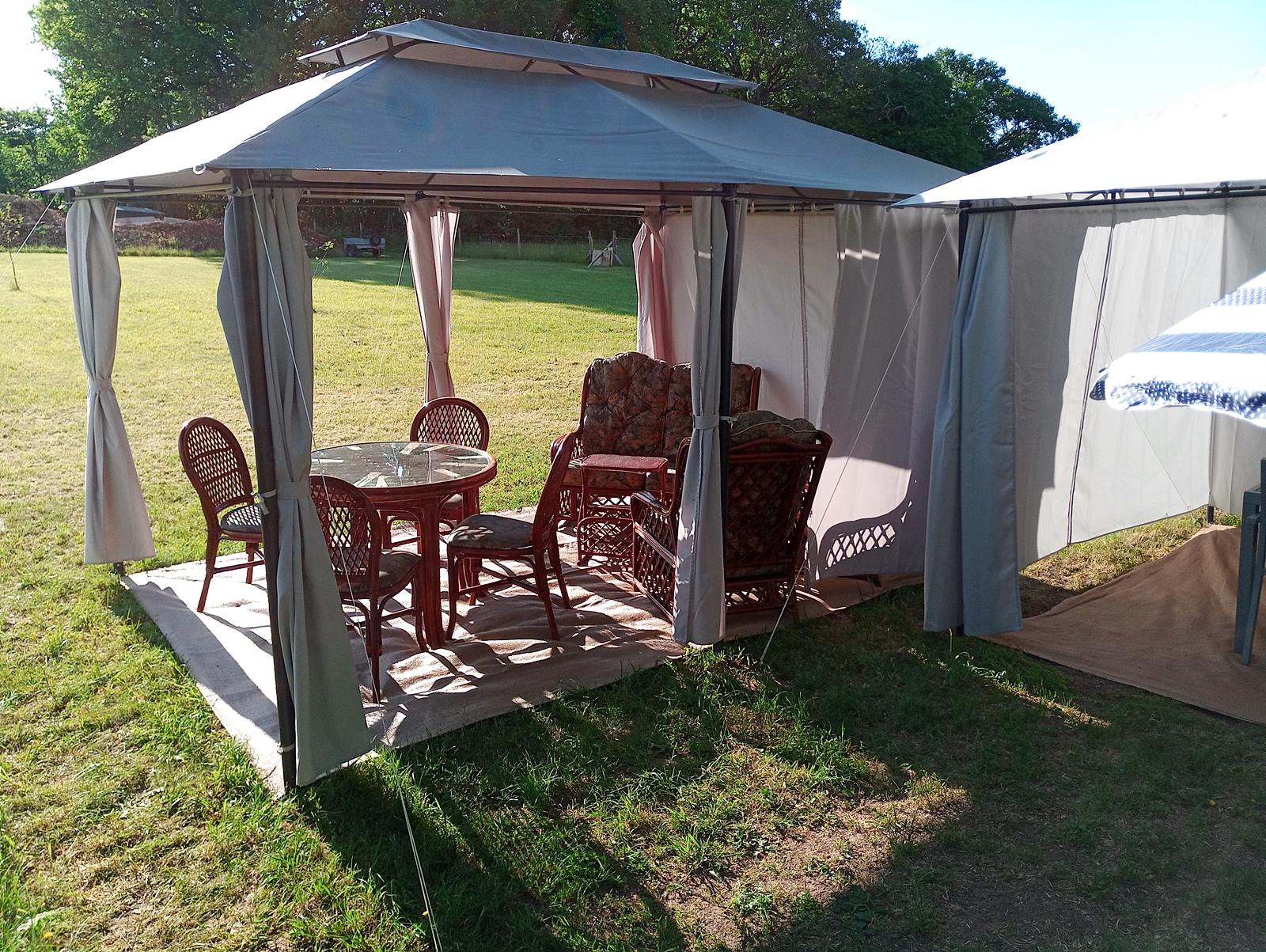
The old cane table and chairs set that I brought with me from England ten years ago now was in the other ‘tonnelle’ but it is only a part of a complete conservatory (‘verandah’) set that also comprised a 2-seater settee and two single armchairs. I’d moved them into the ‘grenier’ (roofspace) of my old house several years ago and placed them under a cover in the barn at Malbec next to my aircraft when I moved out, so today was a good day to bring those over as well, especially as they’d need hosing down to get them clean enough to use again and the sun would make short work of drying them off.

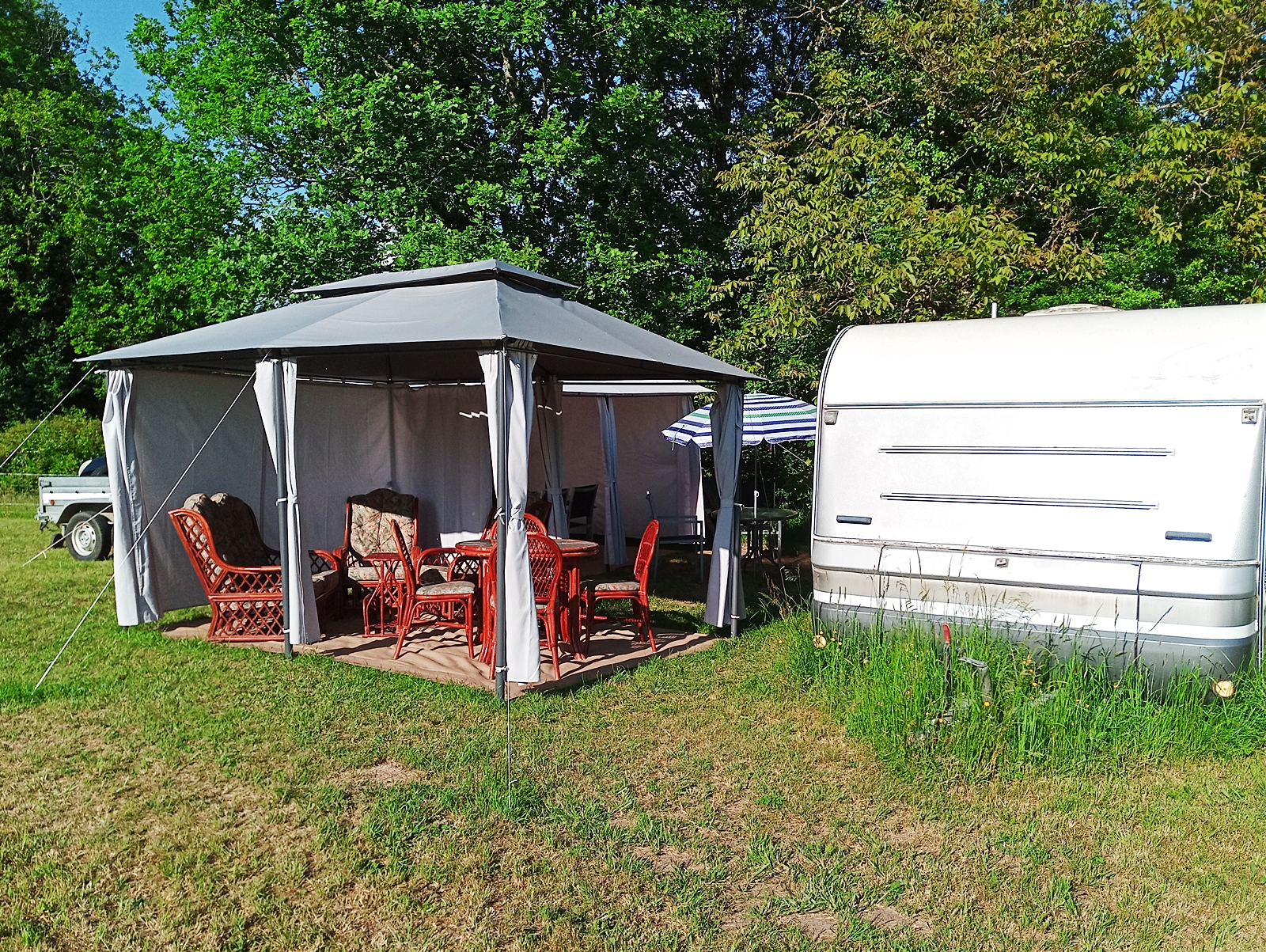
But first I wanted to do one more thing, which was to slightly increase the size of the open area between my caravan and the ‘tonnelles’. I’ve found it to be a bit too cramped to be able to sit at the small round table and still have space to move past and around it, but once I’d done that it was time to bring the wooden furniture over from Malbec and get it cleaned up and installed in the second ‘tonnelle’.

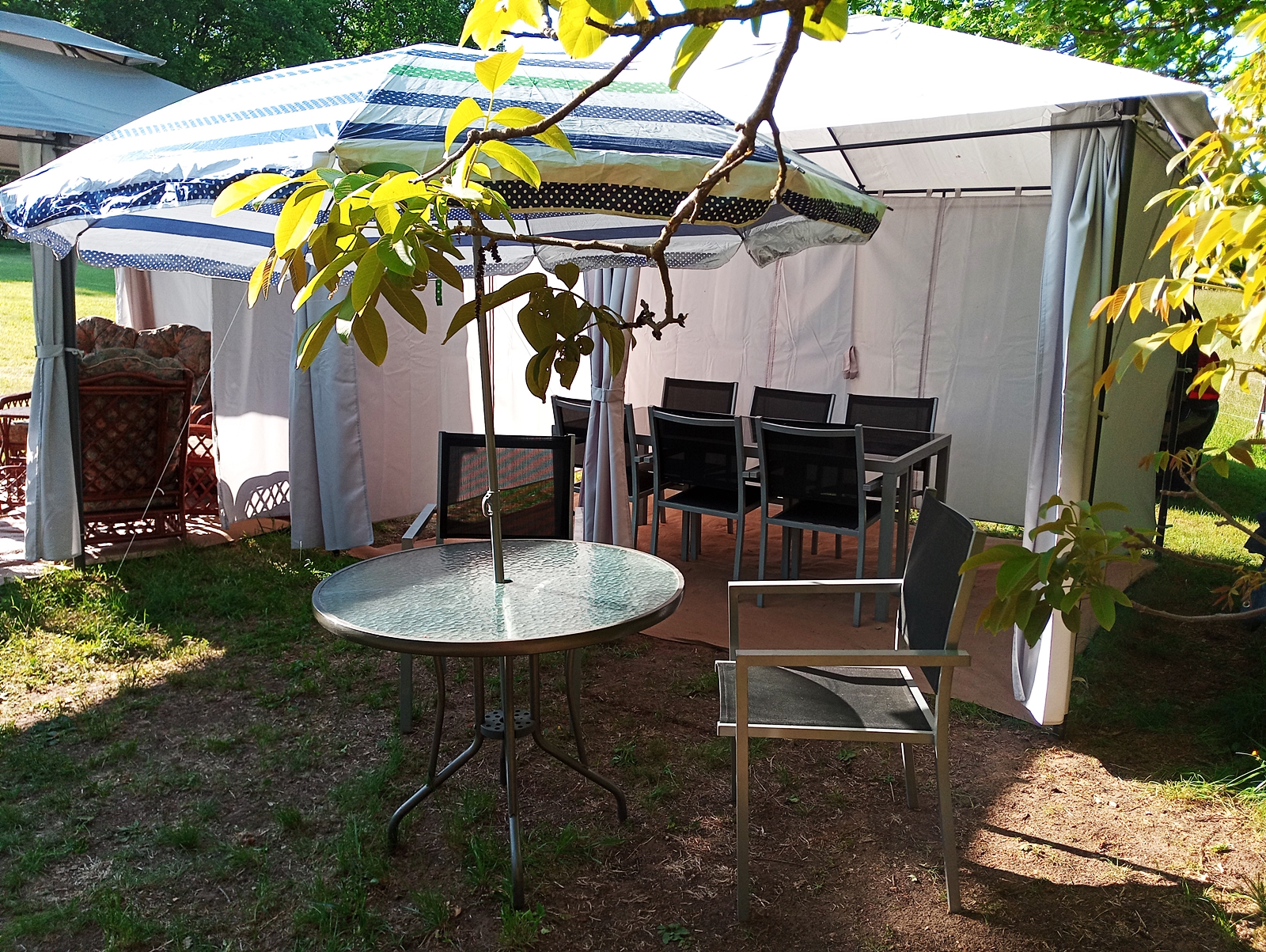
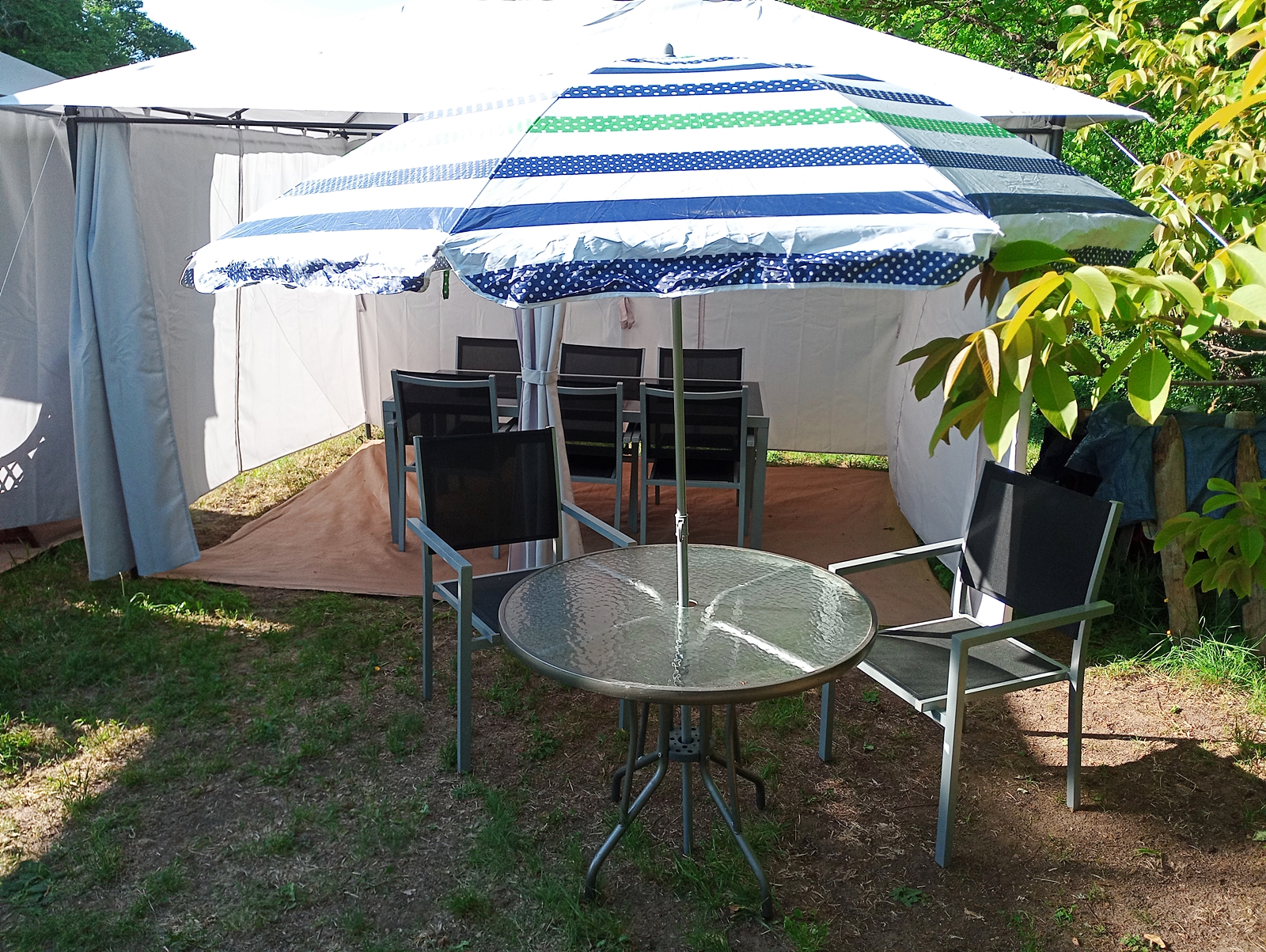
It wasn’t half as dirty as I expected to be and even the seat base and back cushions, which I’d packed in plastic bin bags, were dust-free and clean enough to use straight away. Here are some pics that I took after I’d finished the job off.

null

null

null

null

null

Now the original ‘tonnelle’ after I’d moved it slightly further away from my caravan and dug the chairs out of my ‘abri’ that go with the long table.

null

null

null

I was really happy with the results of my day’s work and that’s another job (several actually) crossed off my to-do list. I shall check first thing tomorrow to see how things look for flying but first I’m looking forward to an early night and a good night’s sleep after today’s efforts 😉

About time!

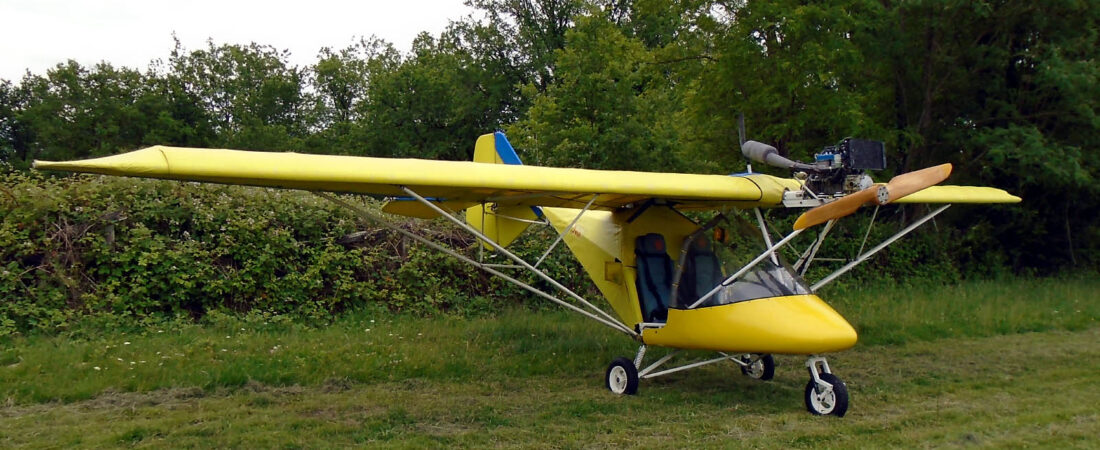
I drove to Le Bugue yesterday to buy fuel. It was worthwhile driving the extra distance for the cheaper prices there because I bought quite a lot – 50.01€ of diesel to top up my Kia, 47.00€ of SP98 for the Savannah and 34.98€ for 20 litres of SP95 for the Xair. The reason was because I hadn’t even started up the two aircraft since last year, let alone flown them, because of the time I’ve had to spend on my house project, so giving them the attention they needed was well overdue.

I’d left the Xair in the front of the barn as I’d flown that last and also because having outdoor covers, it didn’t matter so much its being near the open front. So I pulled that out, topped up its tanks (it took only about 15 litres) and gave its engine a run for about ten minutes. That was enough time for its water and engine to warm up and as the aircraft has remained clean under its covers, unlike the Savannah whose covers I couldn’t get around to making before I moved out of Plazac and into my caravan, I then turned my attention to the latter.

So it was then time for the Savannah to get the attention it needed, starting with a good wash. Surprisingly, it didn’t need that much because although as usual there were some patches of bird poo on its wings from the tiny little tits that inhabit the barn, the only real problem was the yellow dust that always builds up on its horizontal surfaces. So it was a matter of standing it nose-up on its tail skid to make it easier to get to its wings with my floor mop and giving it a good slosh over with clean water, followed by a leathering.

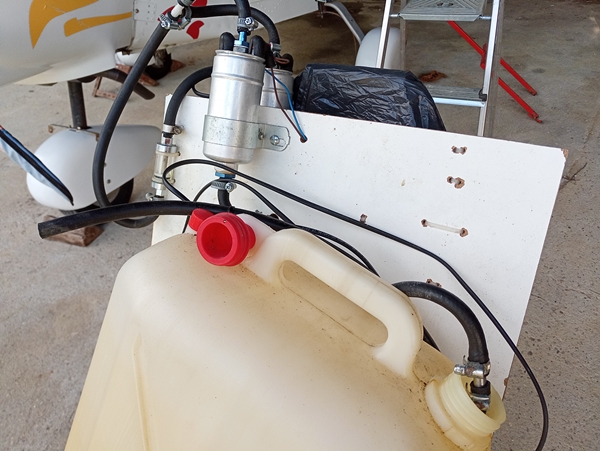
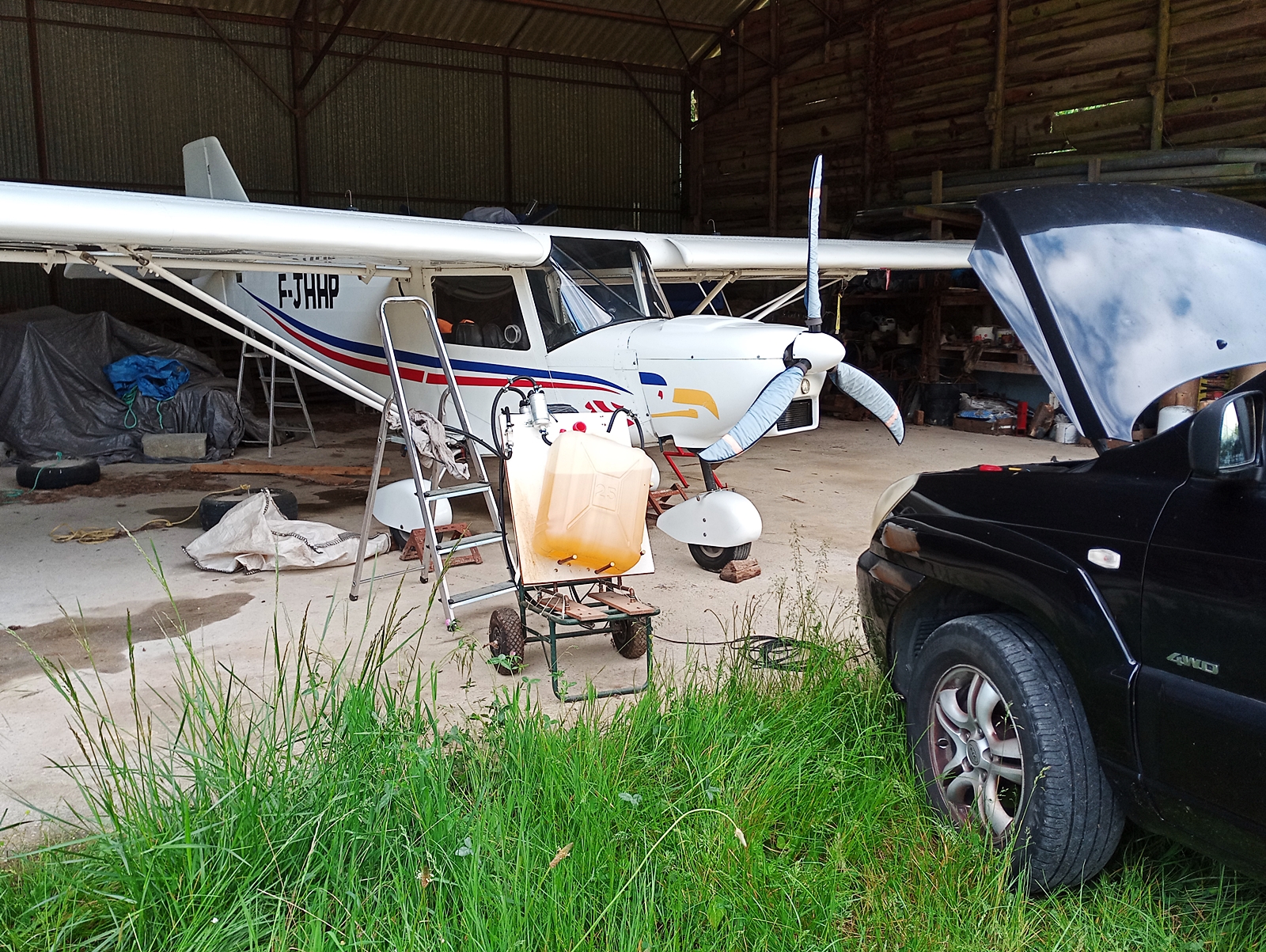
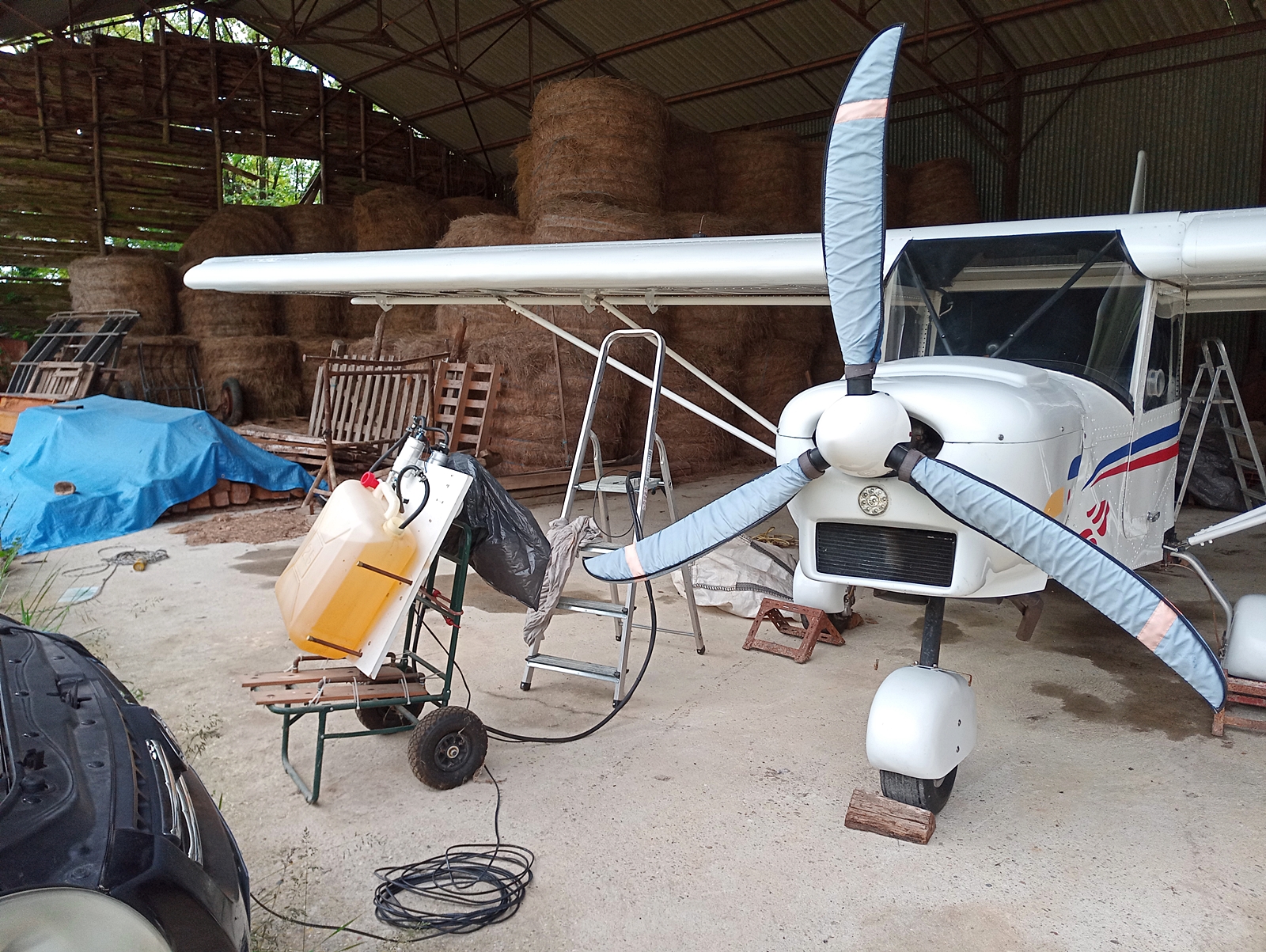
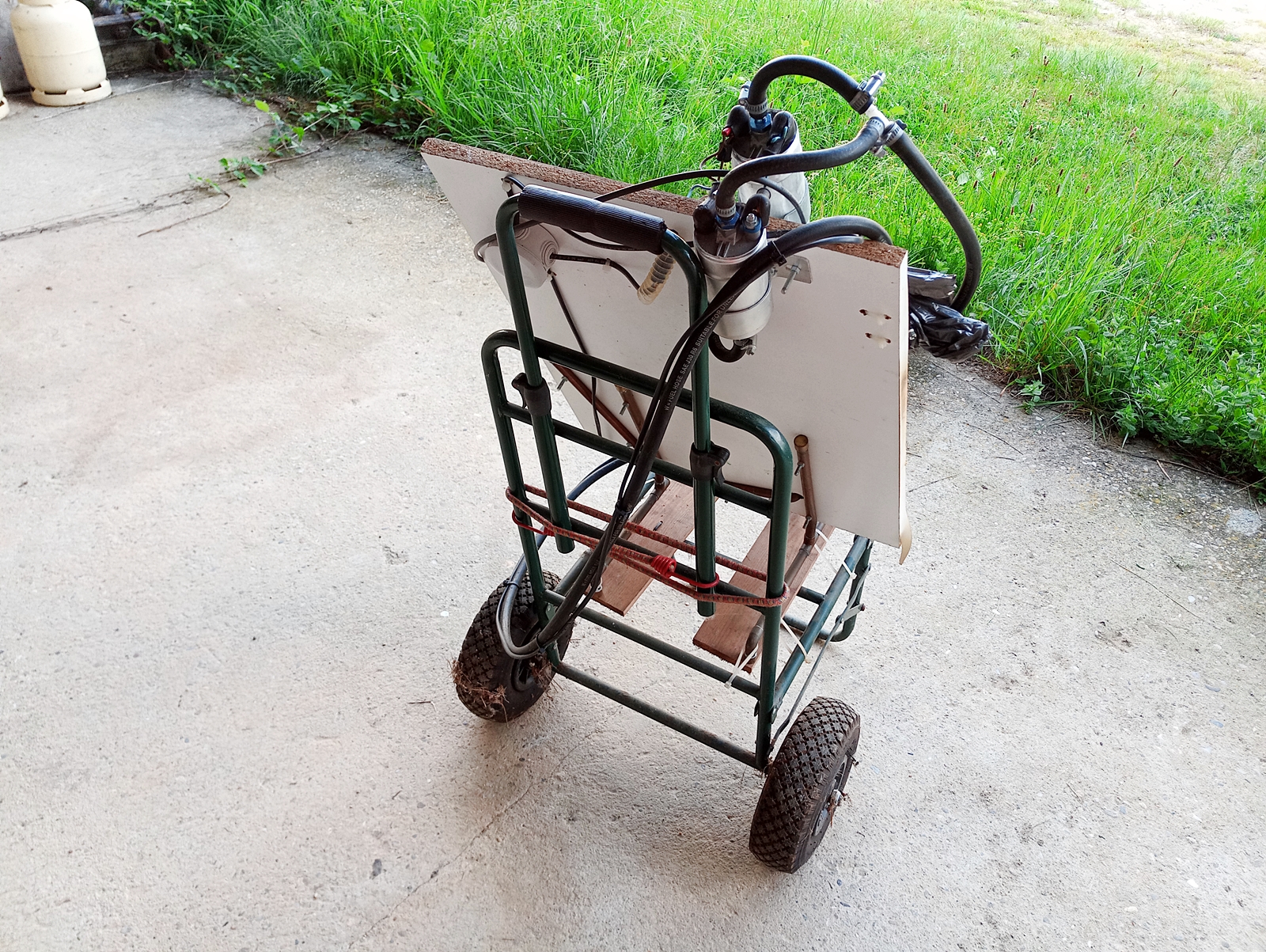
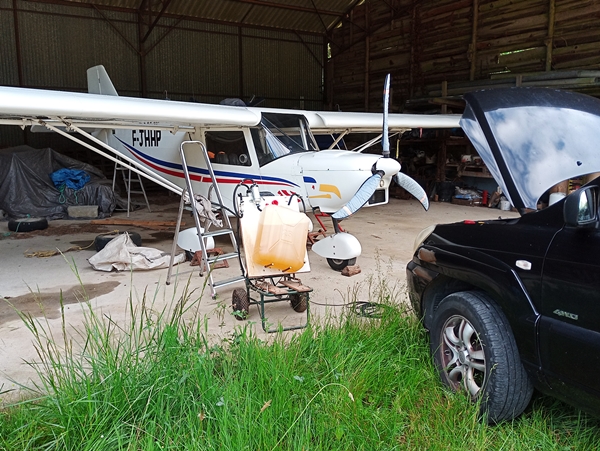
Then it was time to top up its tanks and for that, as usual, I used the electric fuel pump that I put together a few years ago, which is still working well. It’s the only way that I will fill the Savannah’s tanks while at Malbec. Lifting a jerrican up onto its wings is a mugs game and liable to lead to an accident, even if a pump is used to transfer fuel from the jerrican to the tanks.

I paid dearly by doing that when the cheap battery powered pump that I was using split and poured fuel over the wing and windshield, totally destroying the latter because polycarbonate is highly unresistant to motor fuel, so lesson learned the hard way.

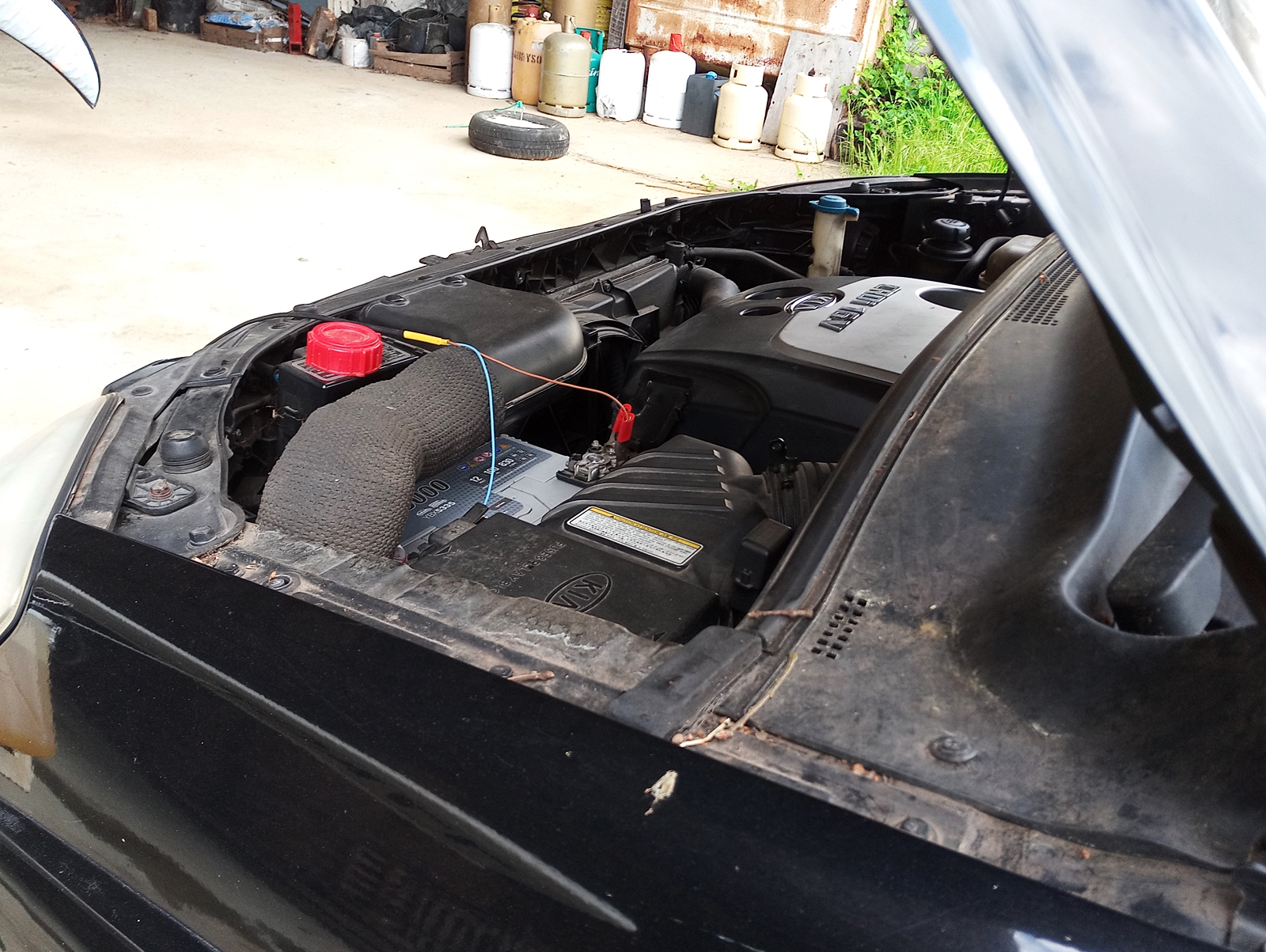
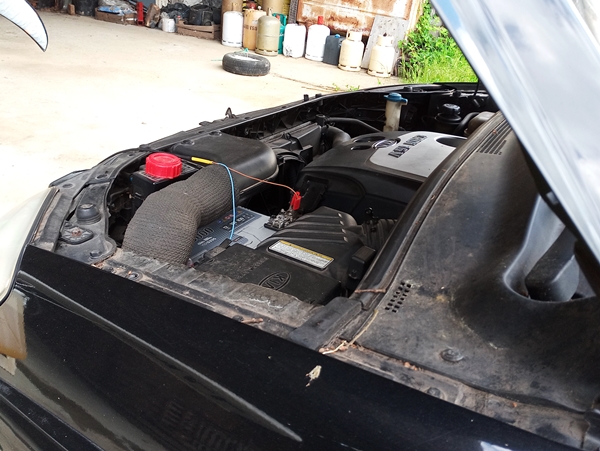
The last time I showed pictures of my pump was several years ago when I built it, so here are some of it in use that I took today. To save having to cart around a charged battery to run it off, I just connect it to the Kia’s battery – quick and easy.
null

null

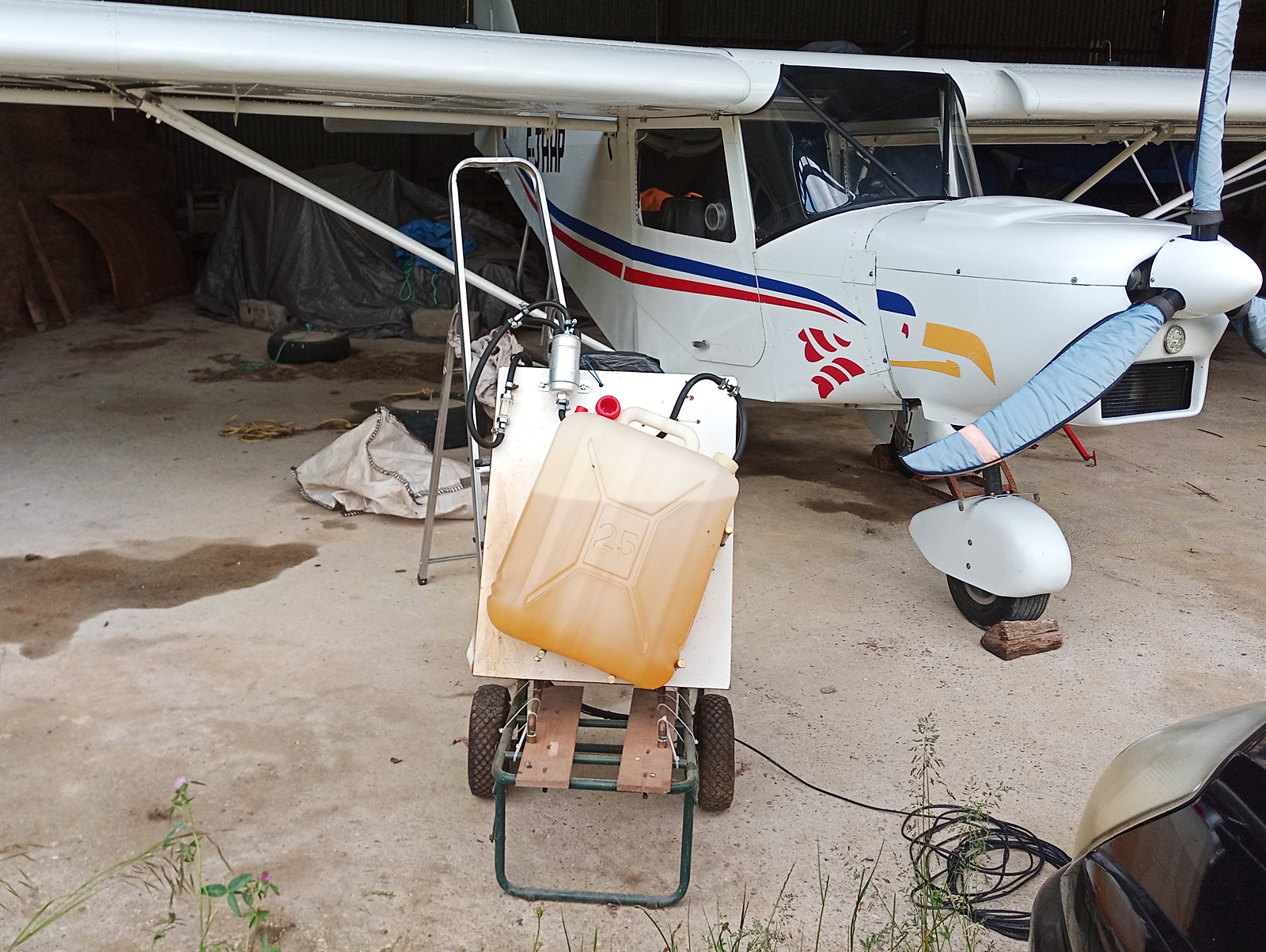
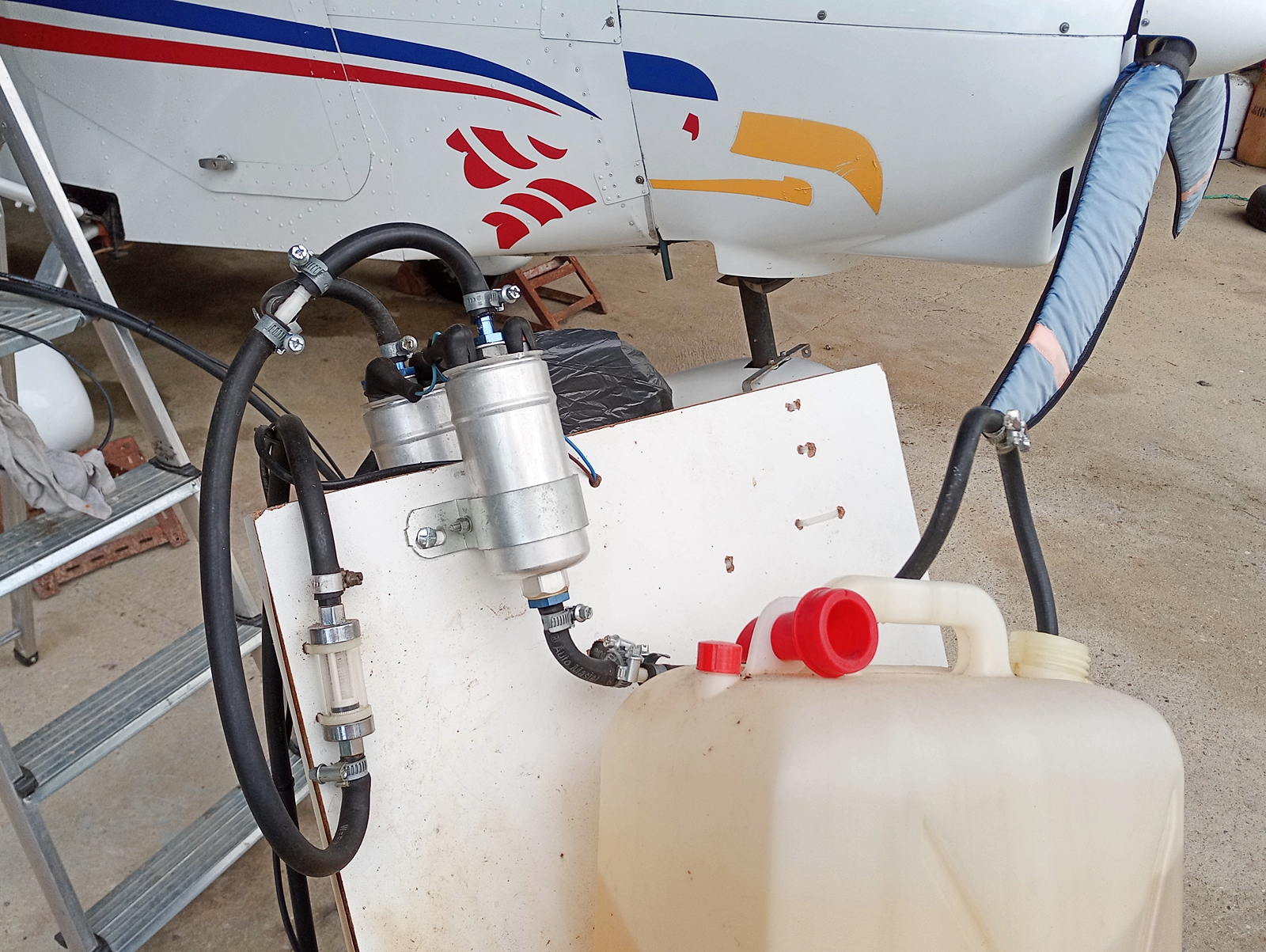
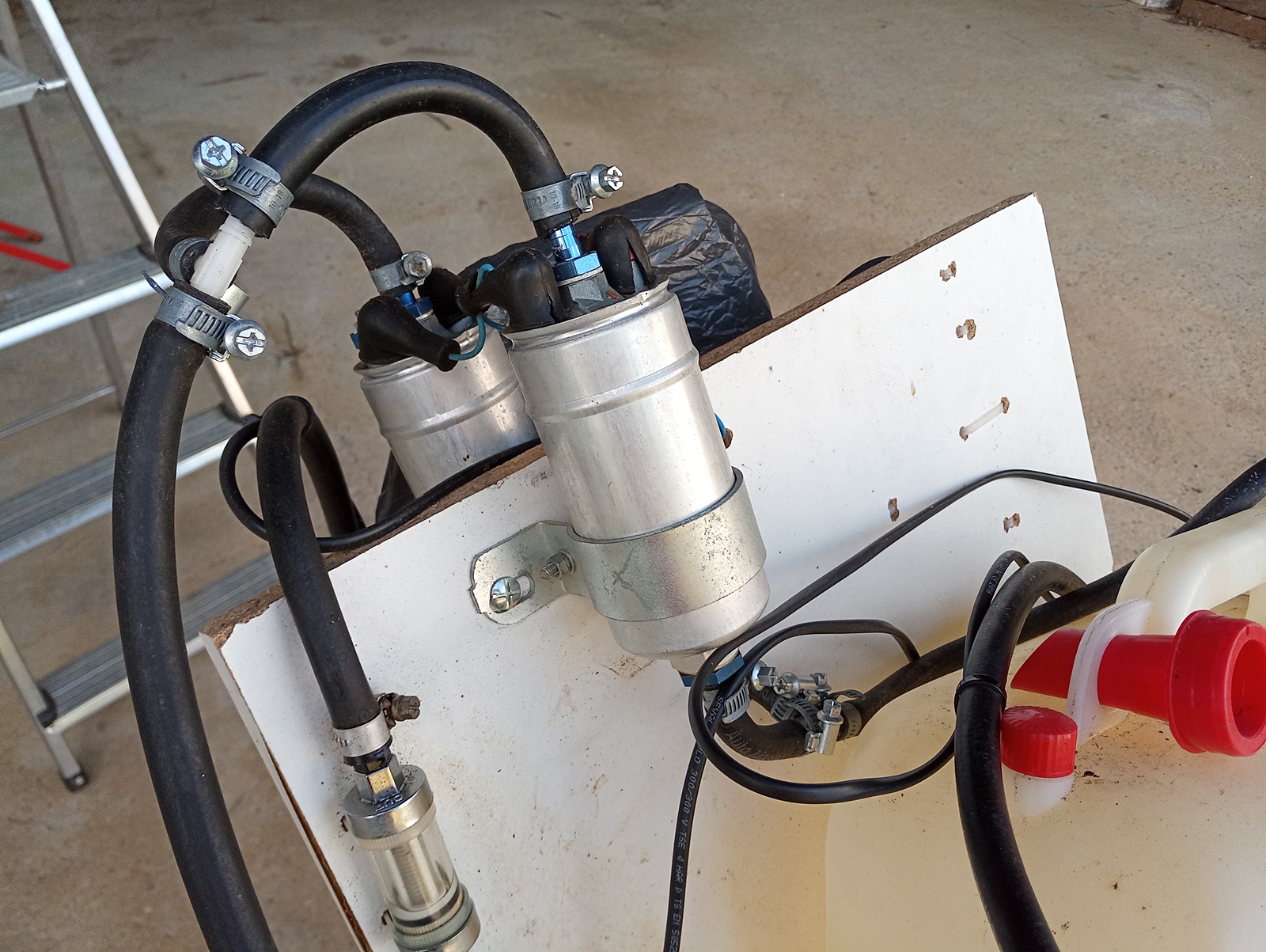
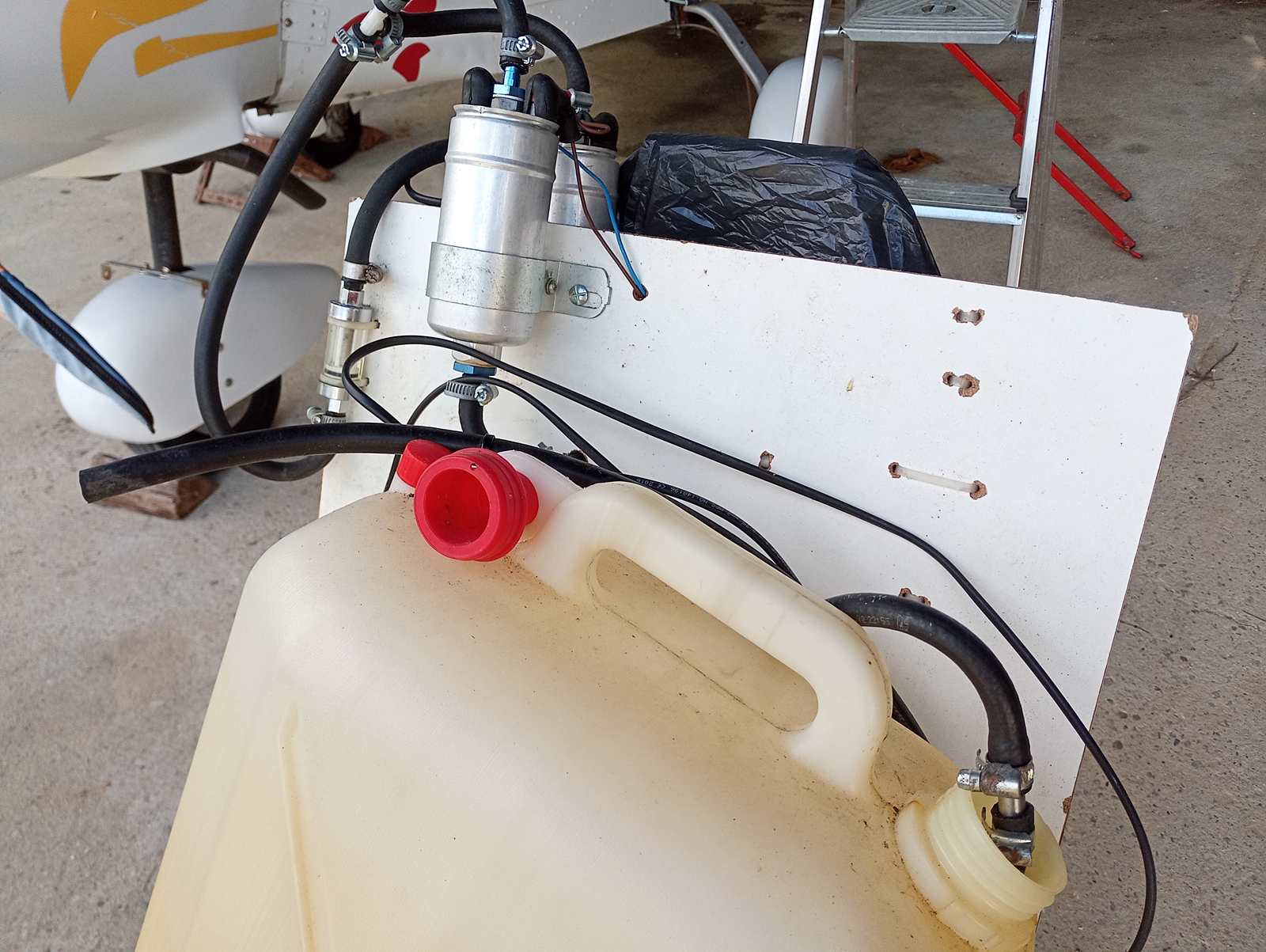
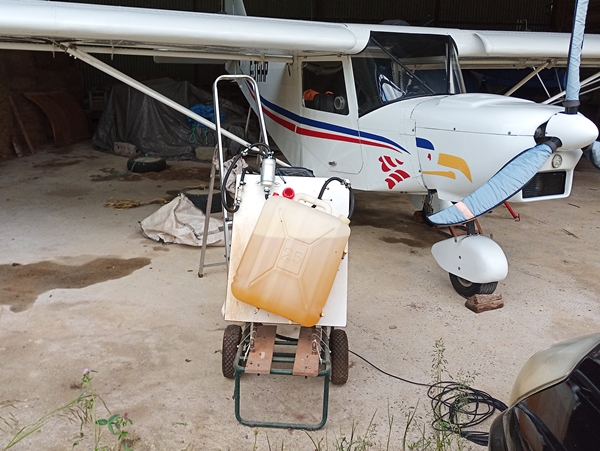
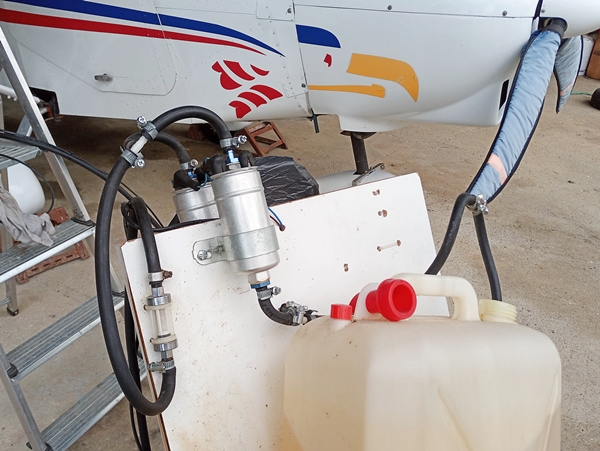
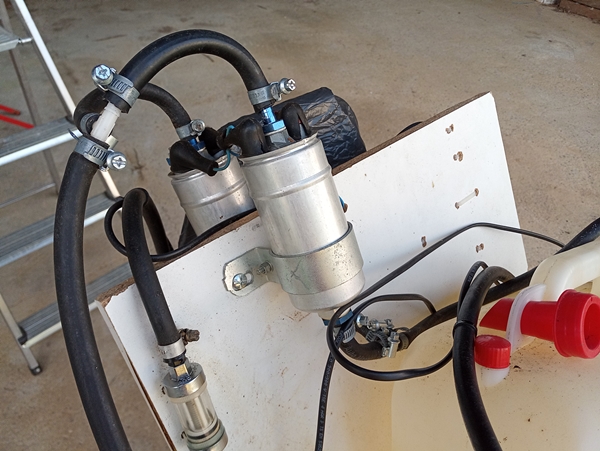
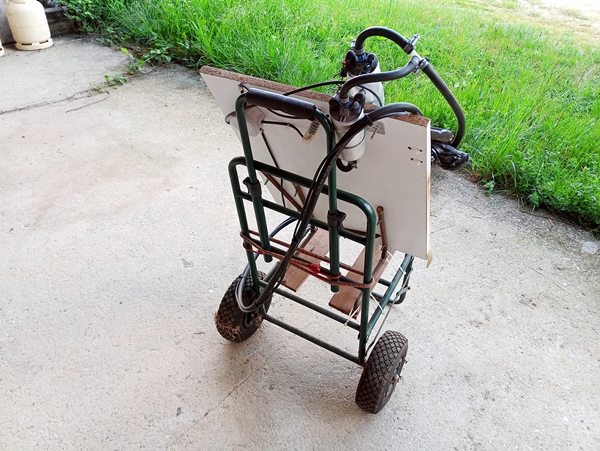
I mount the jerrican at an angle on the pump frame so the discharge tube can be dropped right down into its corner and this is very effective as only a few drops of fuel then remain when pumping is finished. The fuel then passes through an in-line filter before entering the self-charging fuel pumps. I have two in the system and that results in a perfectly acceptable rate of discharge through a tube raised to the height of the Savannah’s wings tanks.
null

null

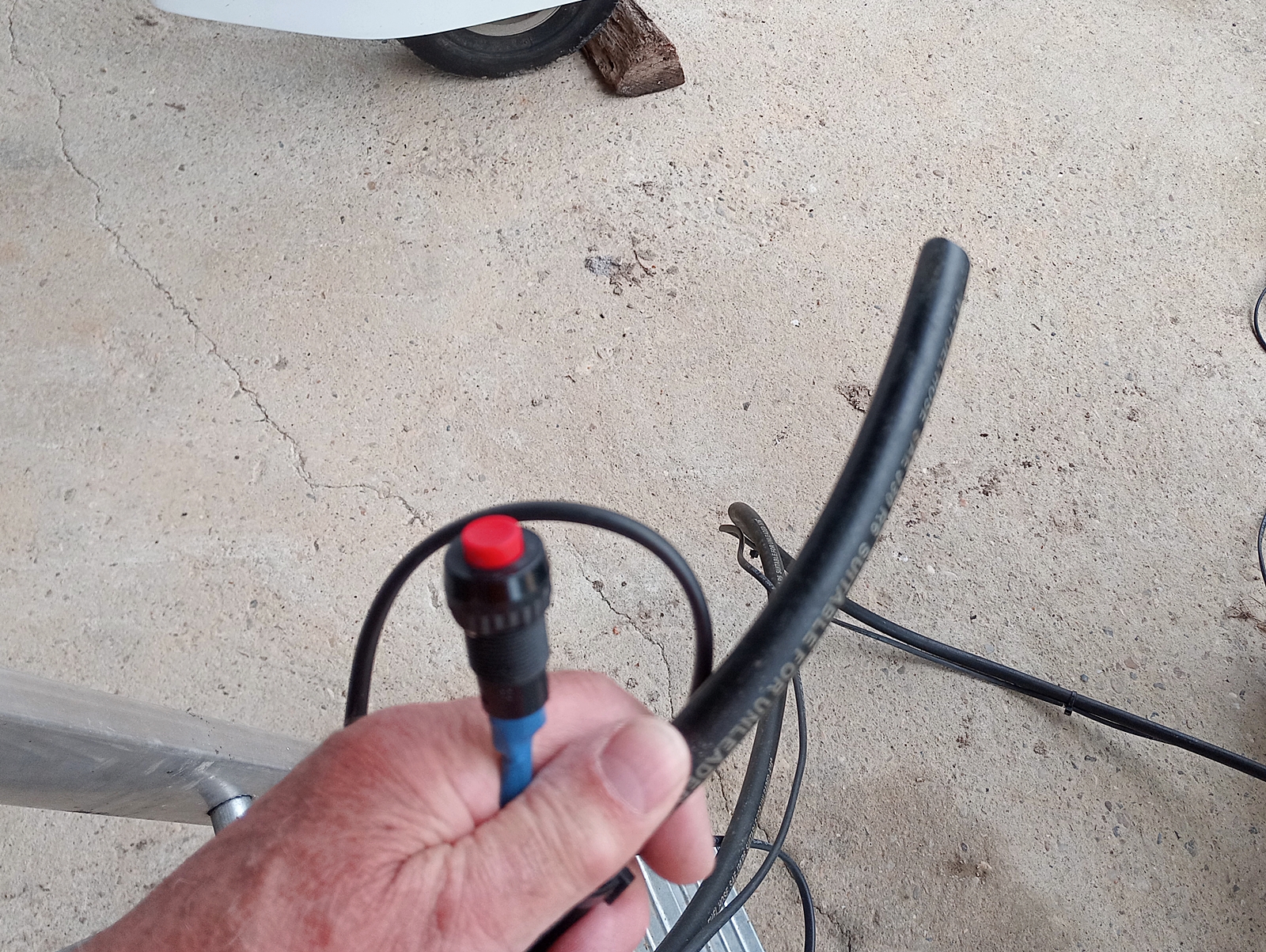
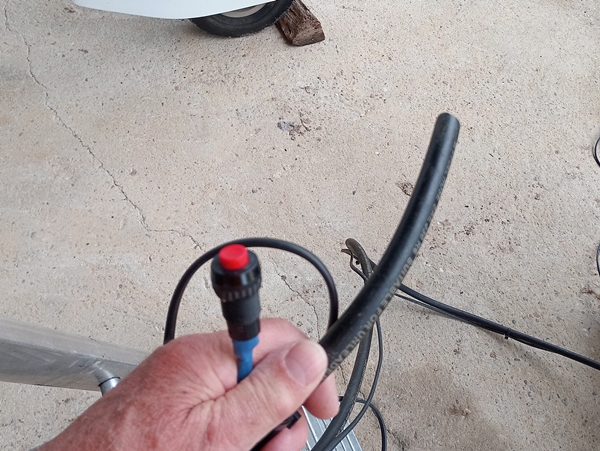
The fuel flow is controlled by a push button on a flying lead that activates the fuel pumps. When I take the rubber outlet tube up to the tank inlets I also take the activation button with me and can control the amount pumped into each tank by extending a finger into the tank while the fuel is being pumped and stopping it when the level approaches the bottom of the tank inlet. The system works really well and I’m very happy with it.
null

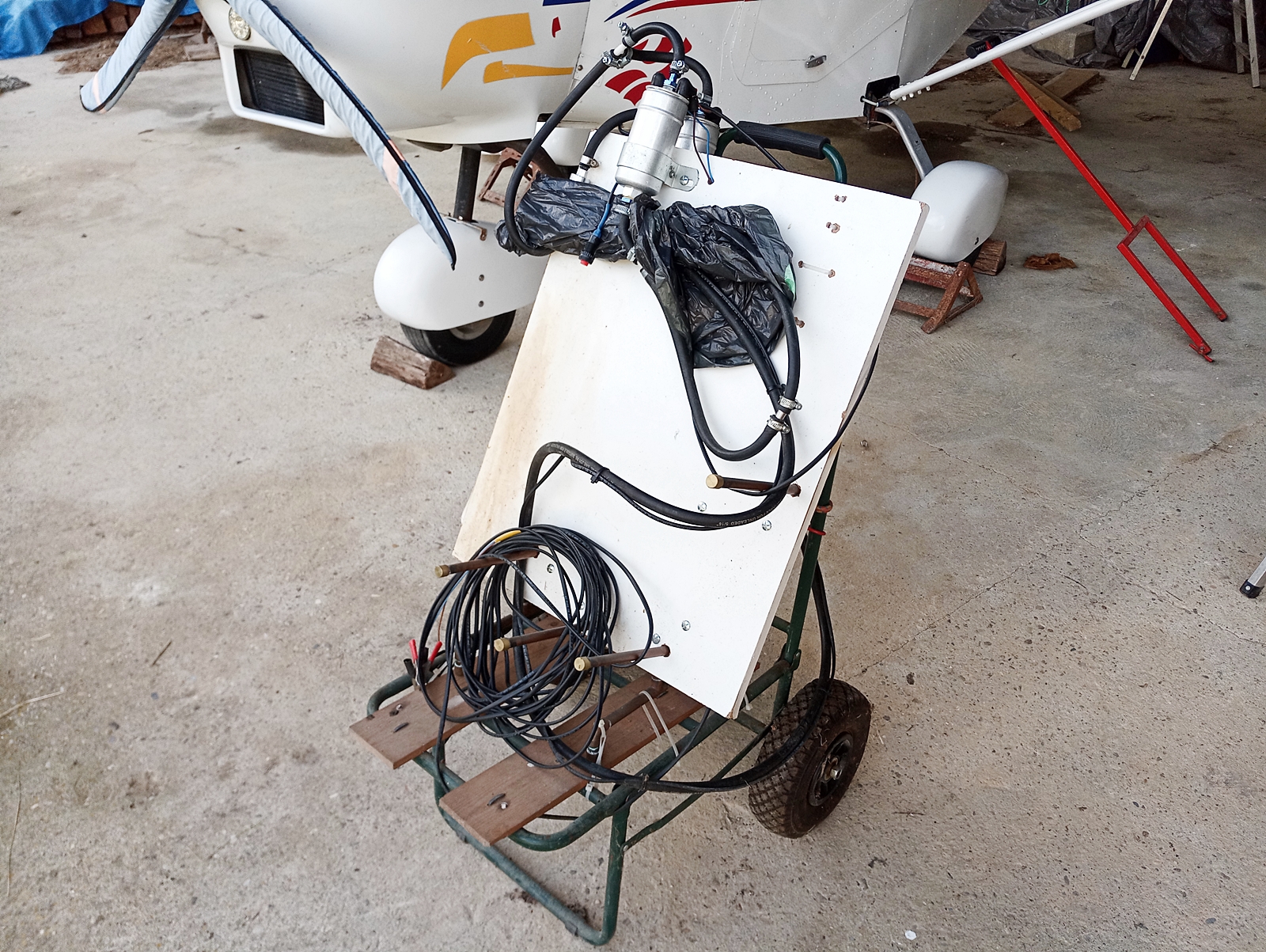
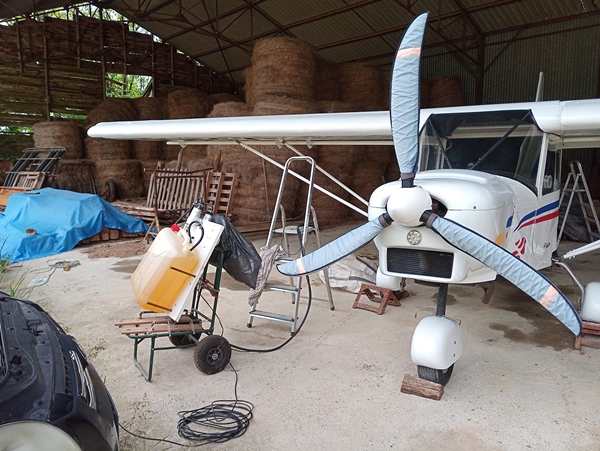
Here’s the setup ready to top up the right wing tank. In case anyone’s interested, the system is built on an old fishing trolley – the best possible use for it in my opinion as I loathe fishing 🙂
null

Here are a couple of close-ups of the pump arrangement that I made.
null

null

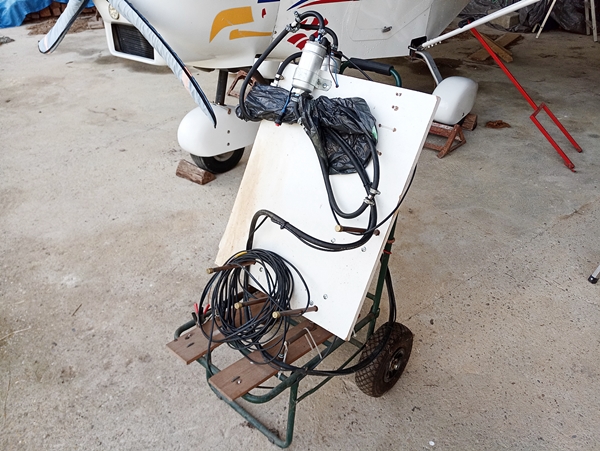
When I’ve finished I always wrap the fuel inlet and outlet tubes in plastic and that way I can avoid having any insects or whatever finding their way in and blocking either the tubing or the filter. So far the in-line filter seems to have done an excellent job – I say ‘seems’ because I don’t see any foreign matter in it so assume that I’ve been pretty good at making sure that the fuel I’ve been pumping has been very clean.
null

null

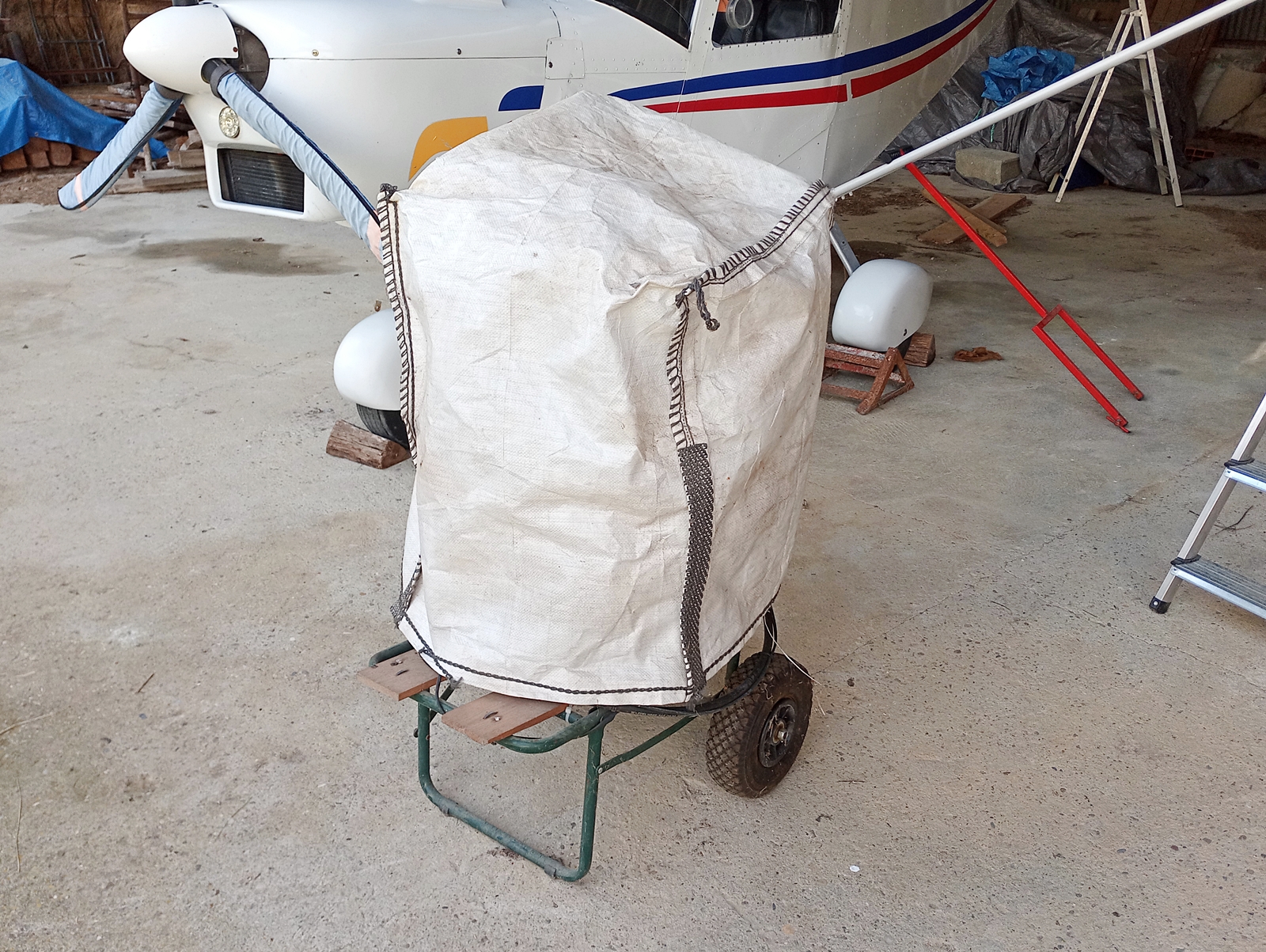
And finally to protect the unit as best I can, I then cover the whole thing with a heavy old plastic bag, which has done an excellent job of keeping dust and other general muck off it.

null

So that was it for today. Both ULMs now have full tanks and are ready to go. Although it had been quite breezy all day, conditions became super calm and ideal for flying at around 8.00 pm. However, I’d done enough for today so didn’t feel like taking advantage. We’ve got some good weather coming up this weekend and even more is forecast for next week with some days with very little wind, so I think I’ll probably wait until then. I’ll see how I feel 😉

Big leap forward

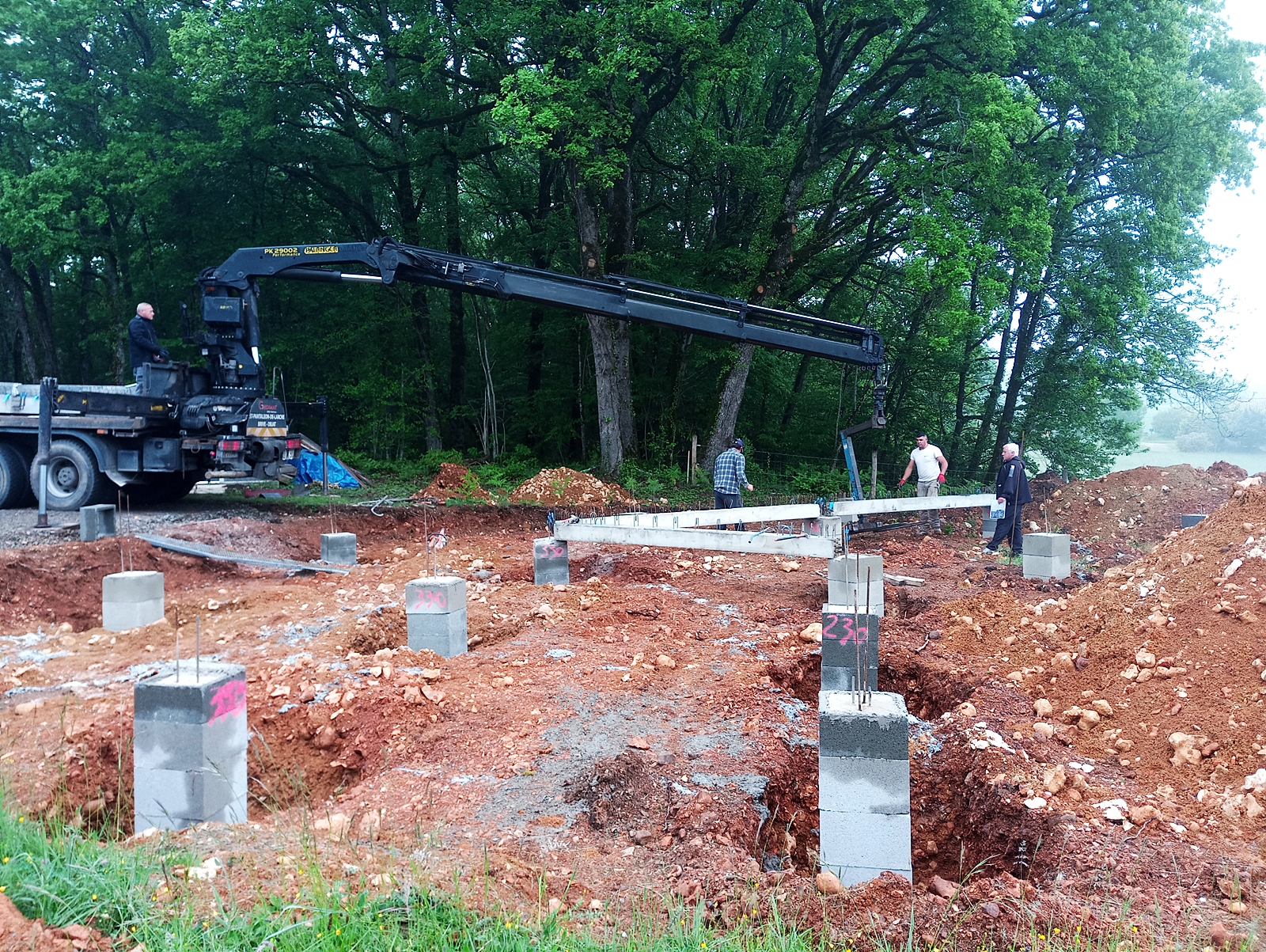
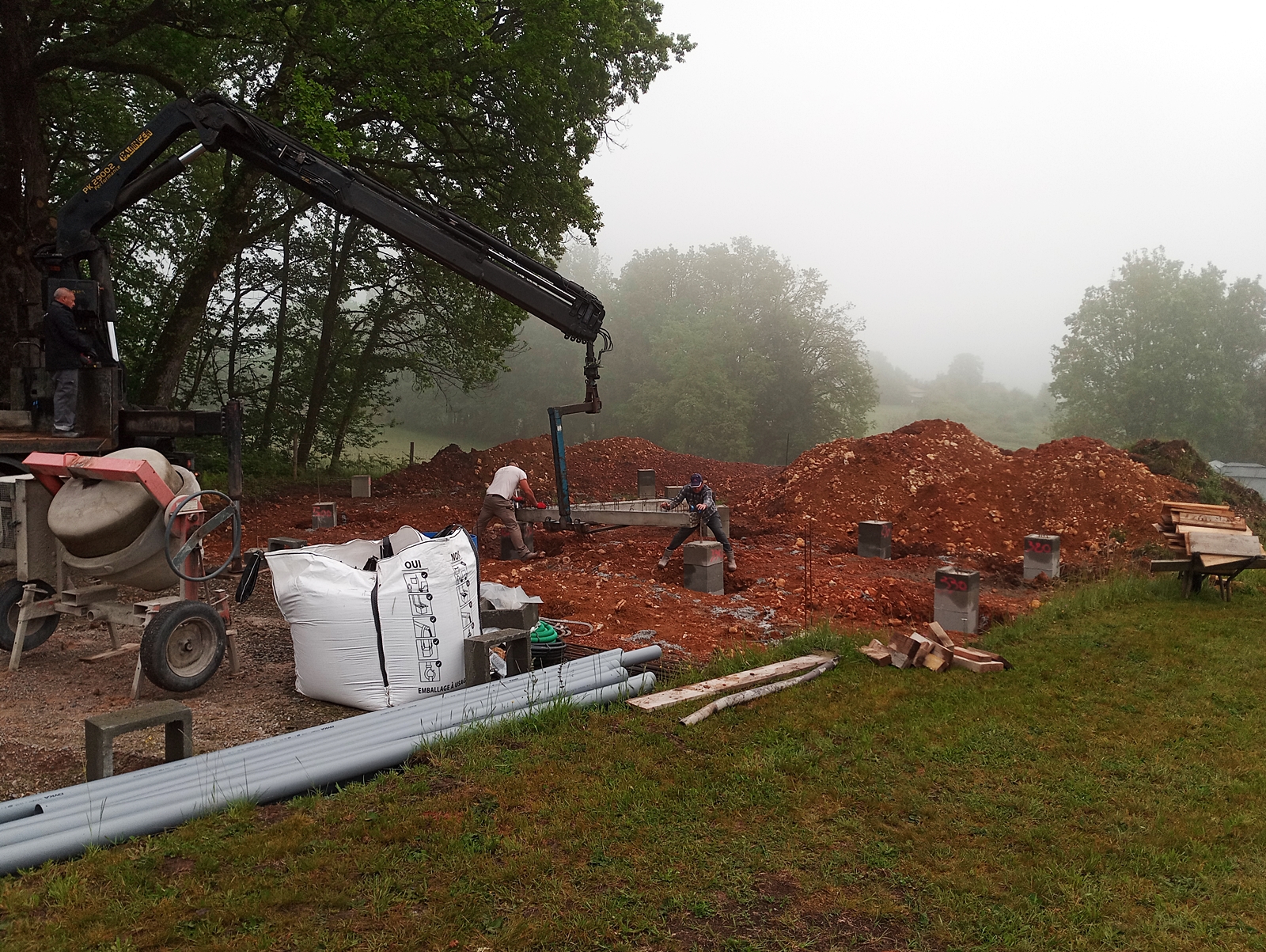
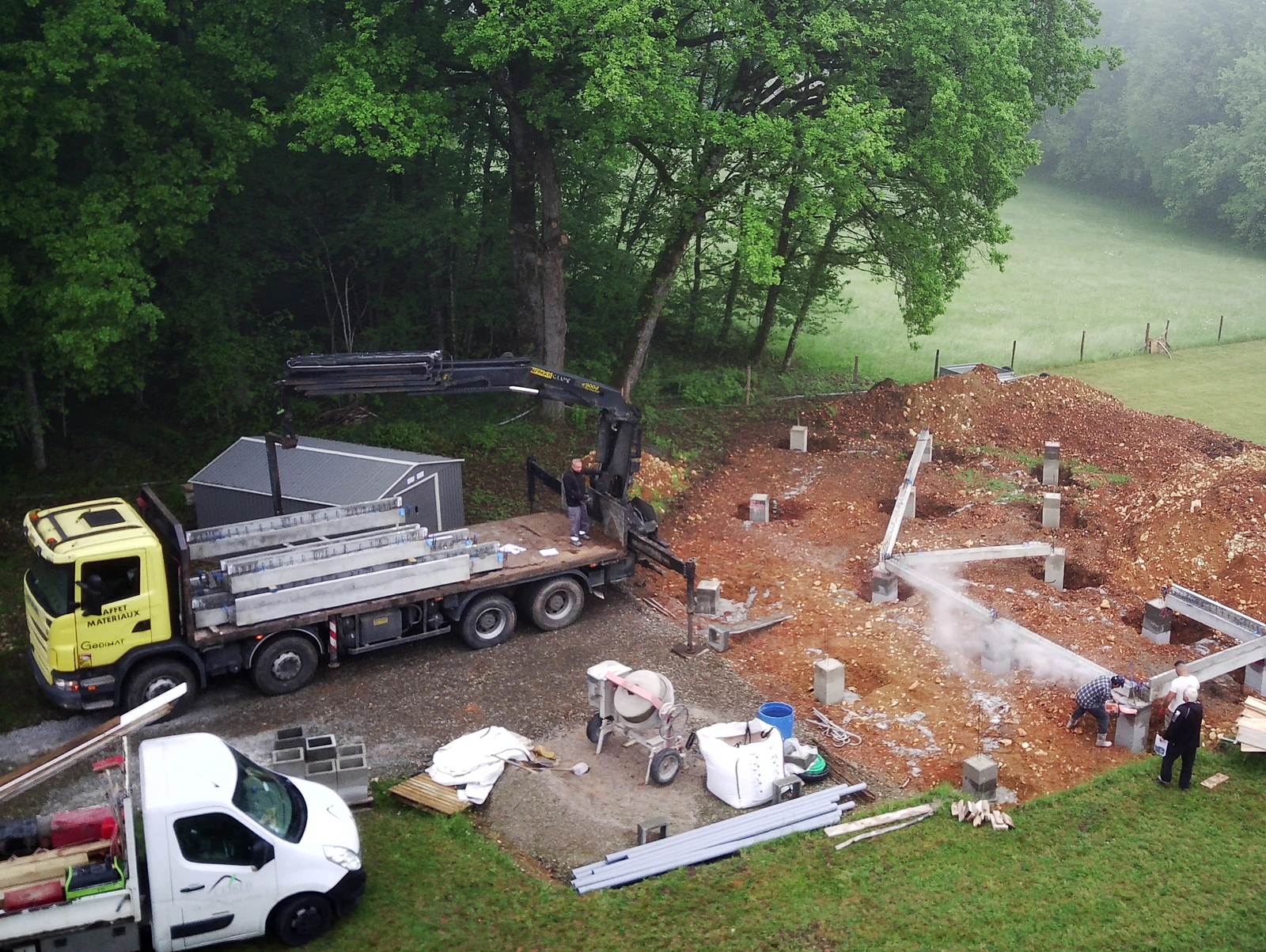
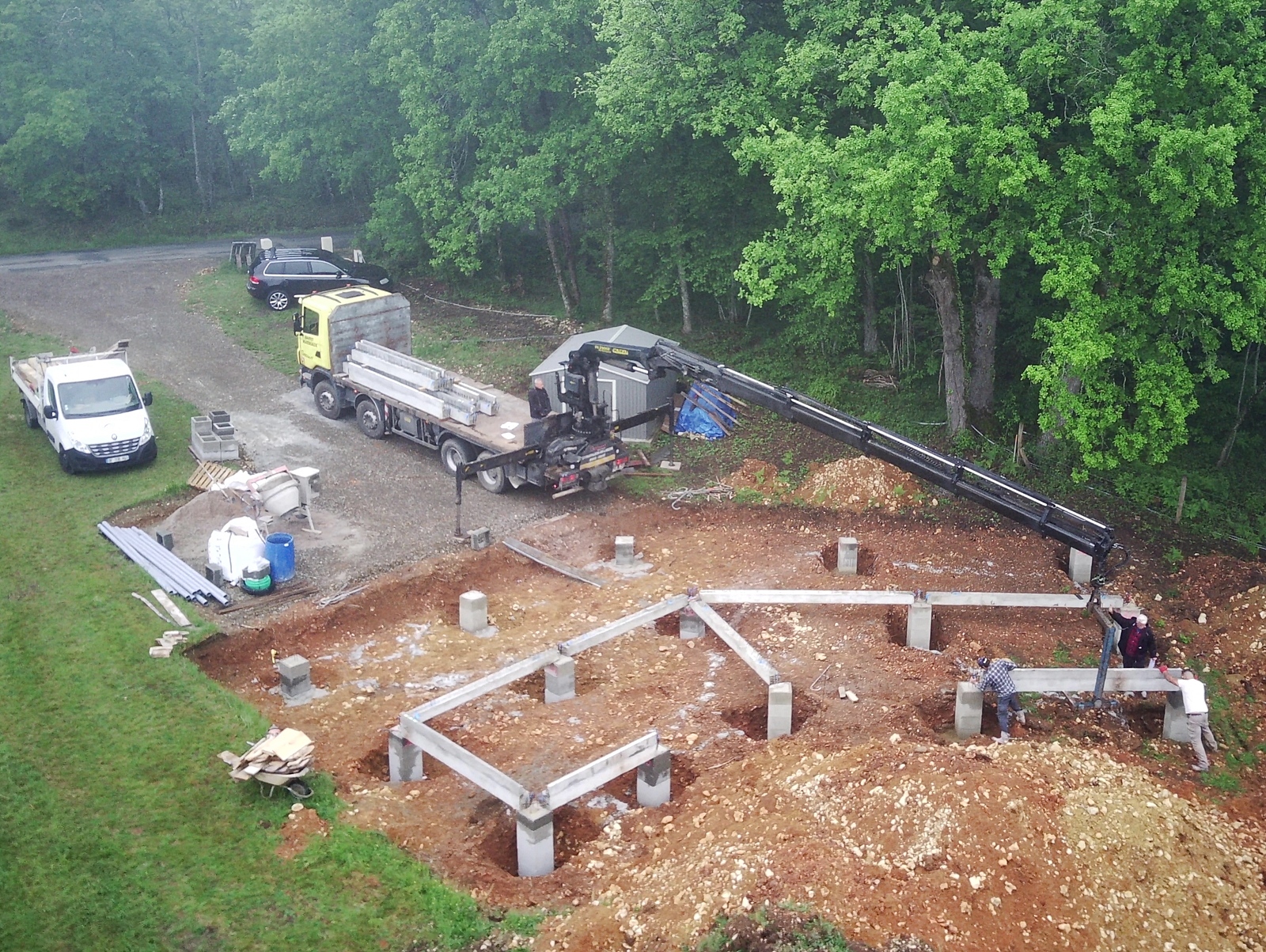
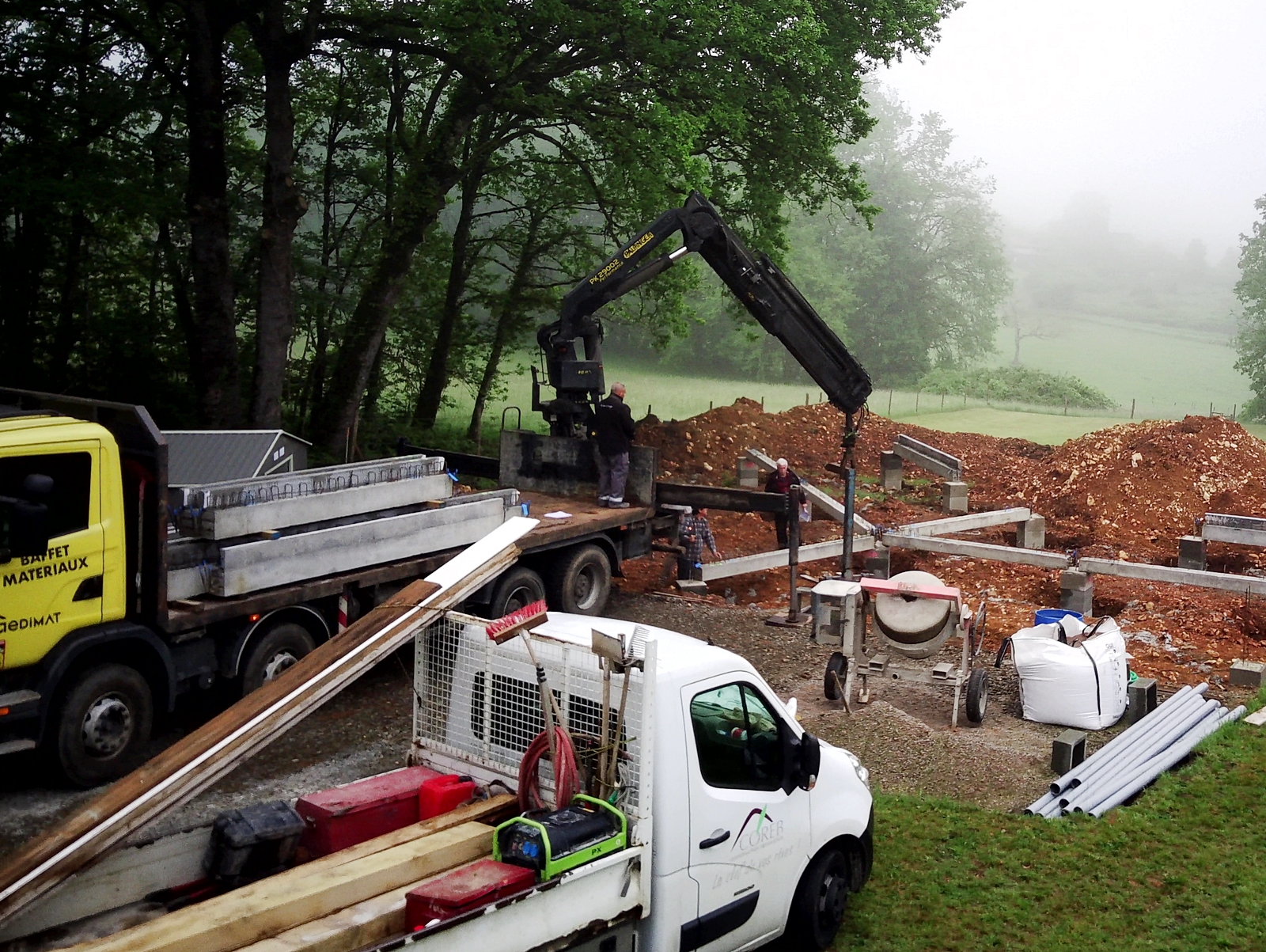
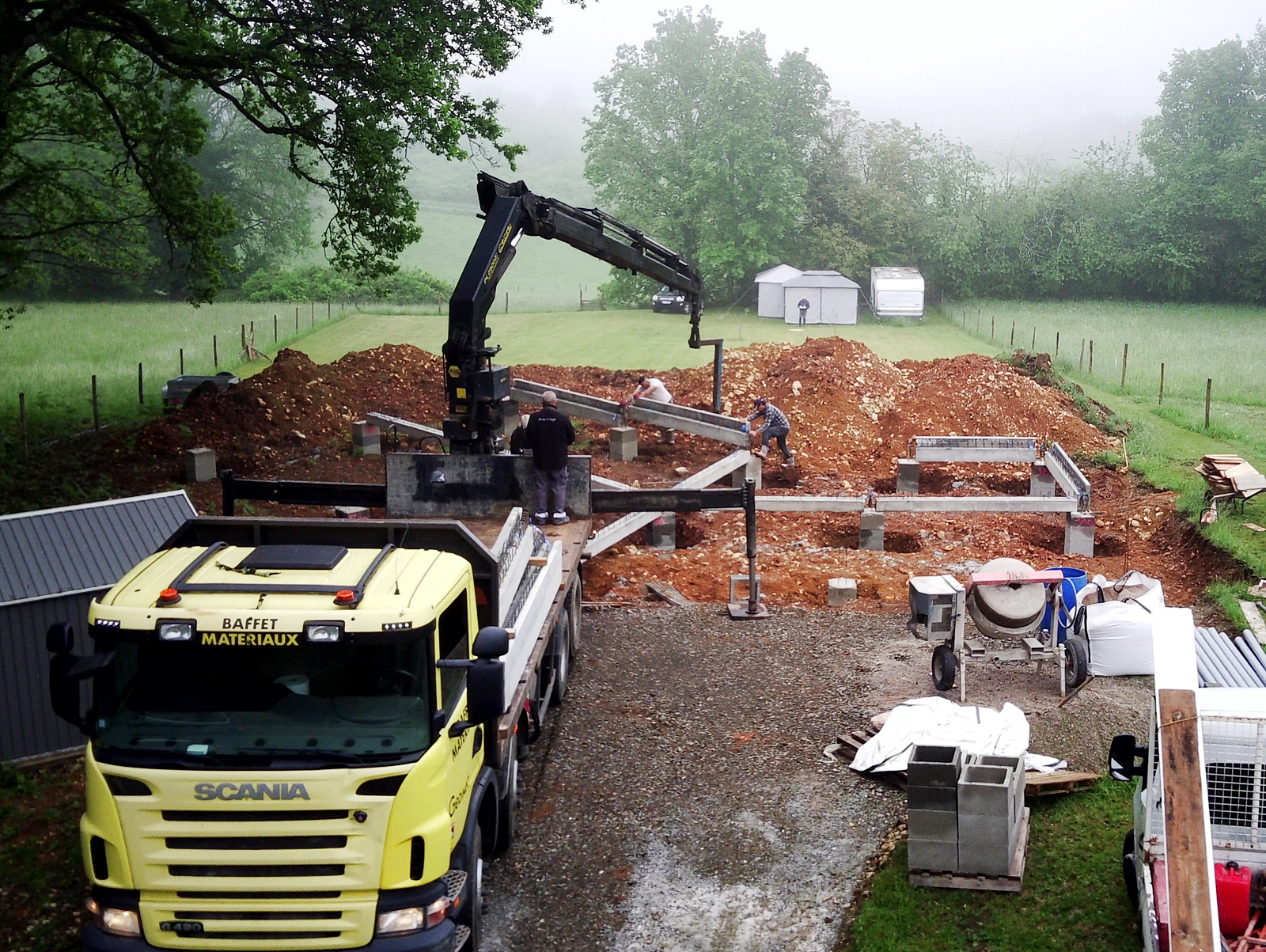
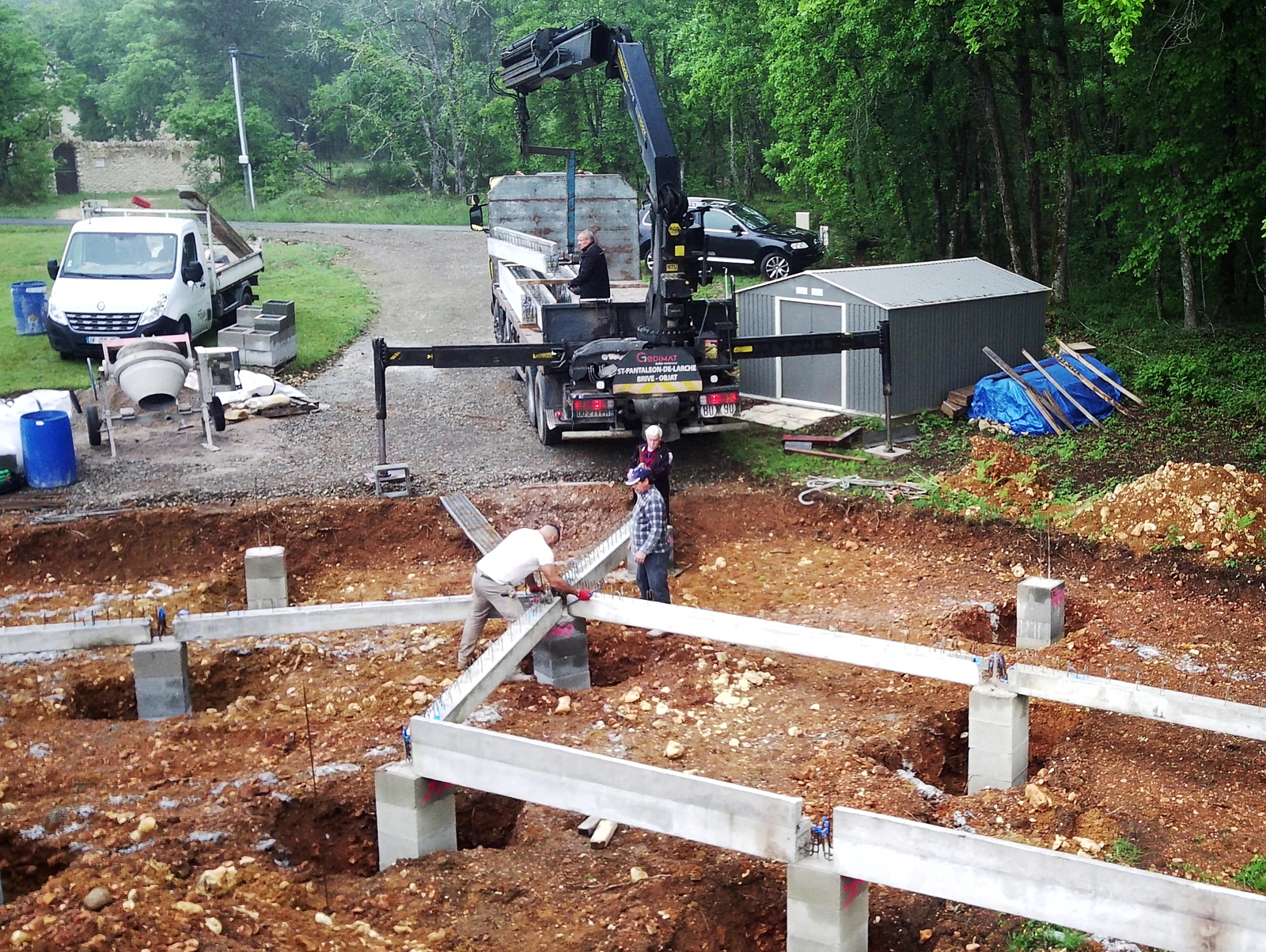
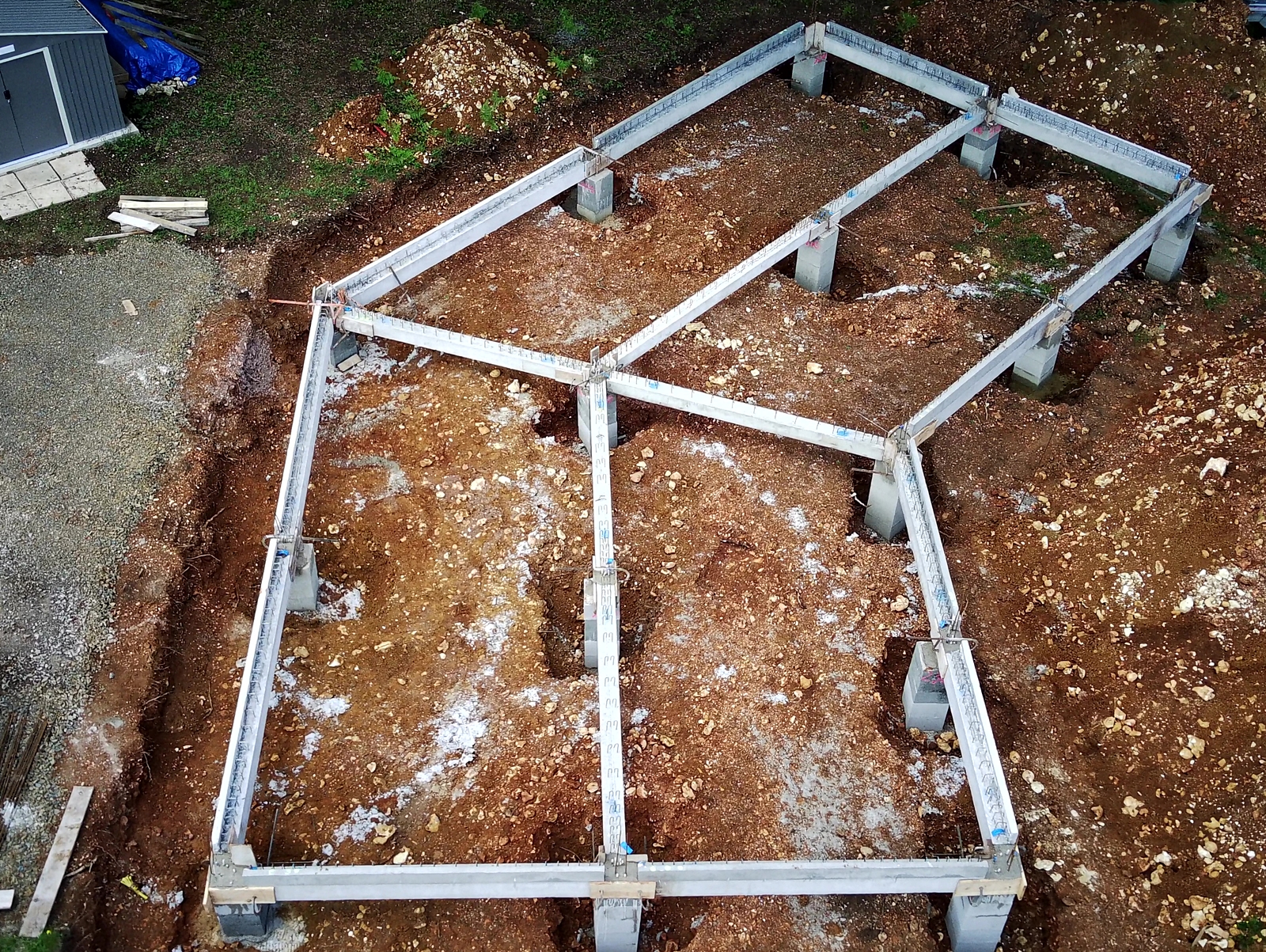
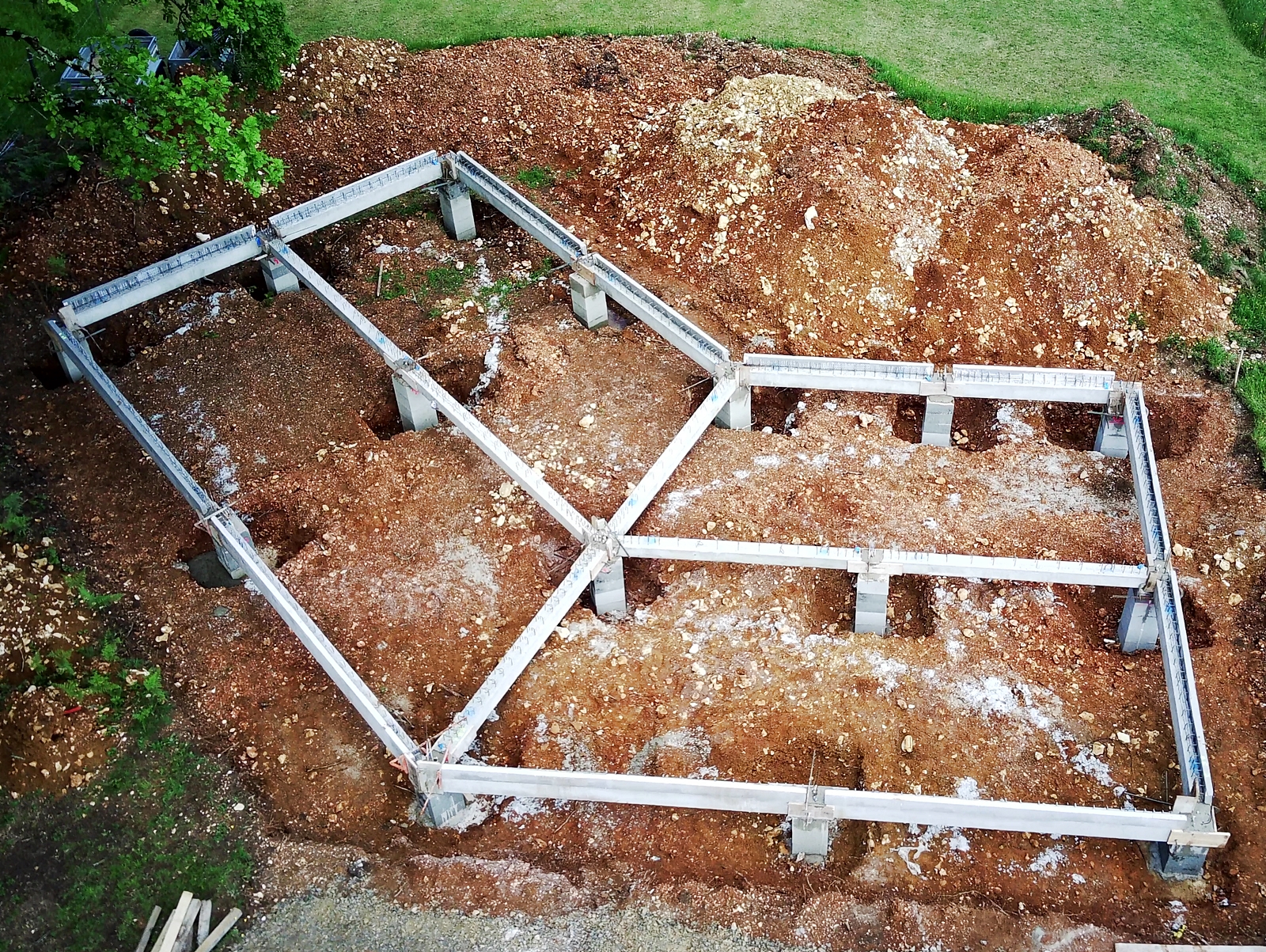
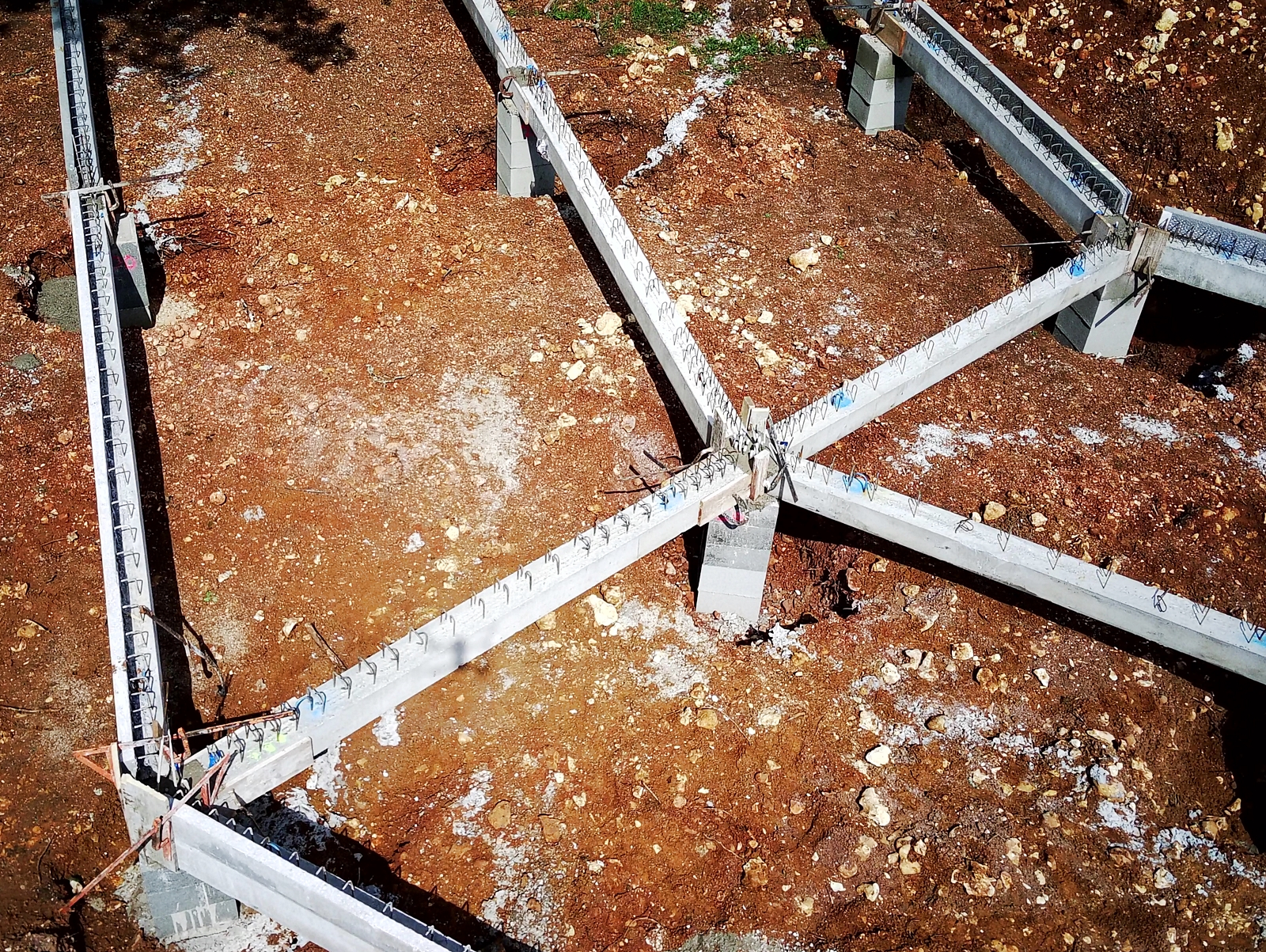
I was enjoying another mug of tea after my breakfast at around 9.30 this morning when I realised that I could hear the sound of a diesel engine and when I looked out of my caravan door I could see that there was activity up at the top of my land. When I walked up to see what was going on it was obvious that the workers had been busy for some time because they had already got three of my new house’s foundation beams in place before I’d arrived.

null

null

null

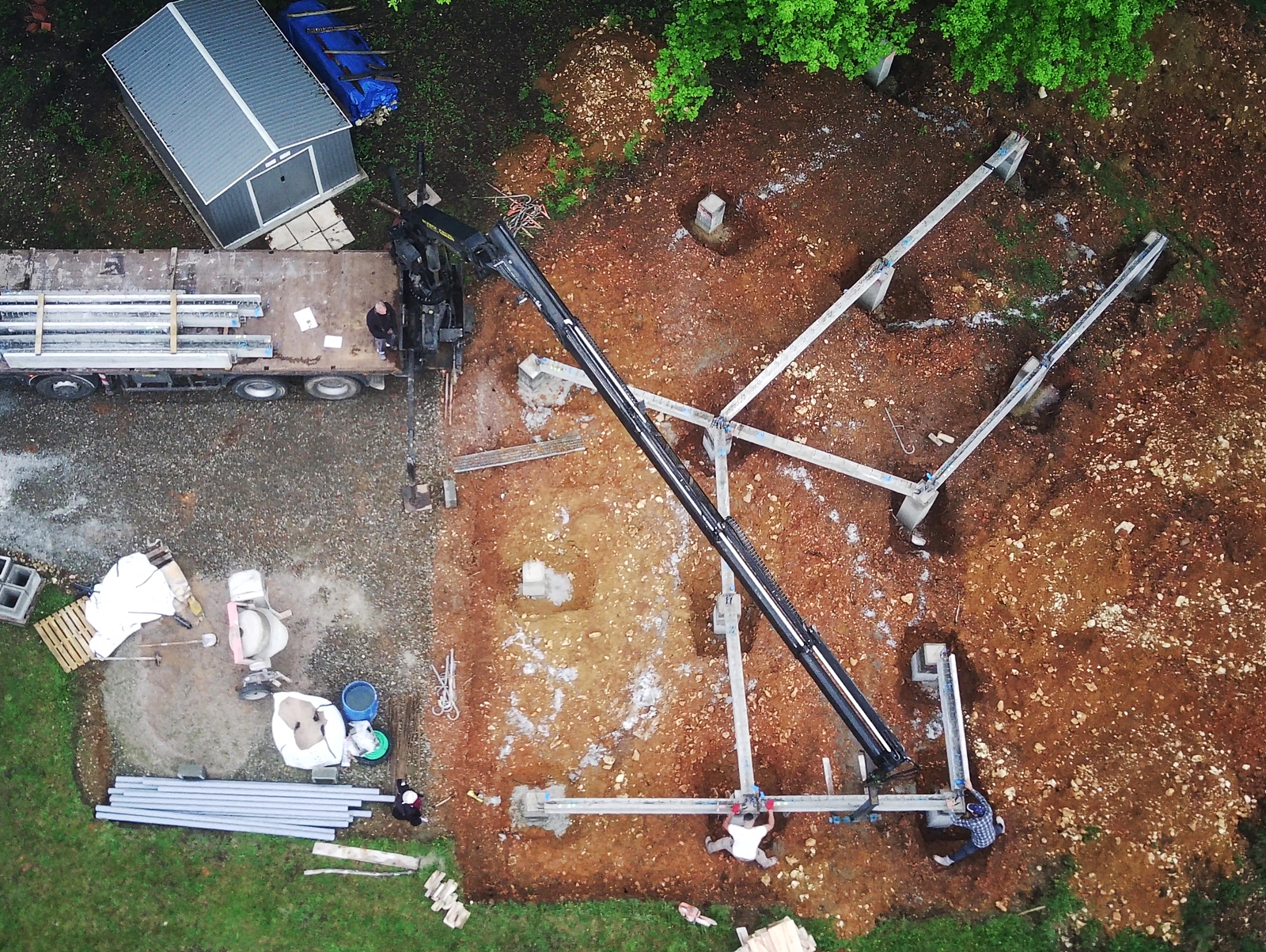
I watched them as they placed a few more into position and then went off to get my Fimi drone into the air to take some more aerial shots.

null

null

null

They were taking great care to get the beams aligned and every now and again after they’d dropped one into place they made an adjustment to the height of the column on which it was supported to ensure that they were all at exactly the same height and perfectly level.

null

null

null

null

Here’s a shot of a beam being aligned with its neighbour by being nudged with a large crowbar. In order to align some of the longer, heavier beams they had to be slightly lifted up again by the hoist operator on the back of the lorry.

null

null

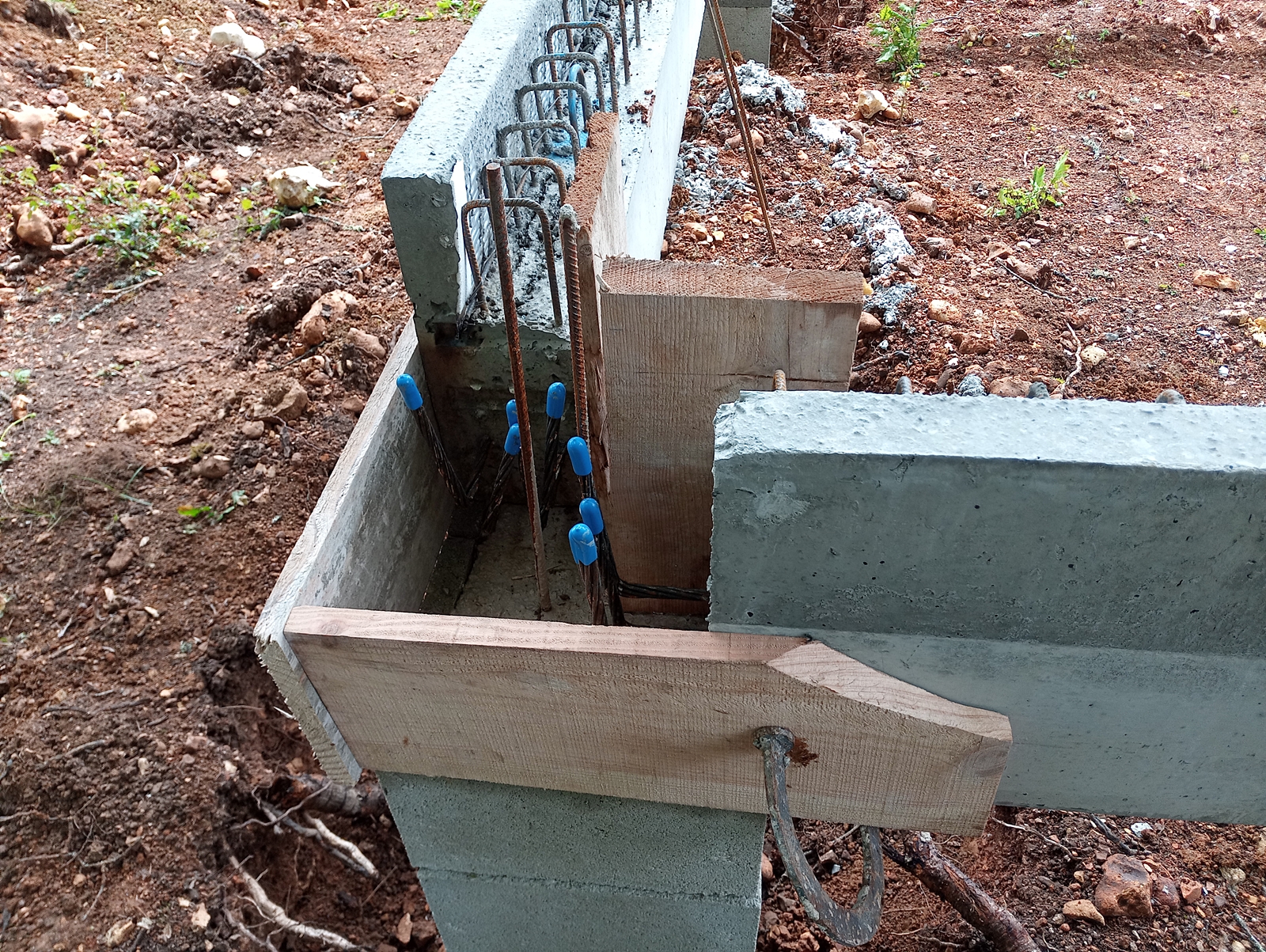
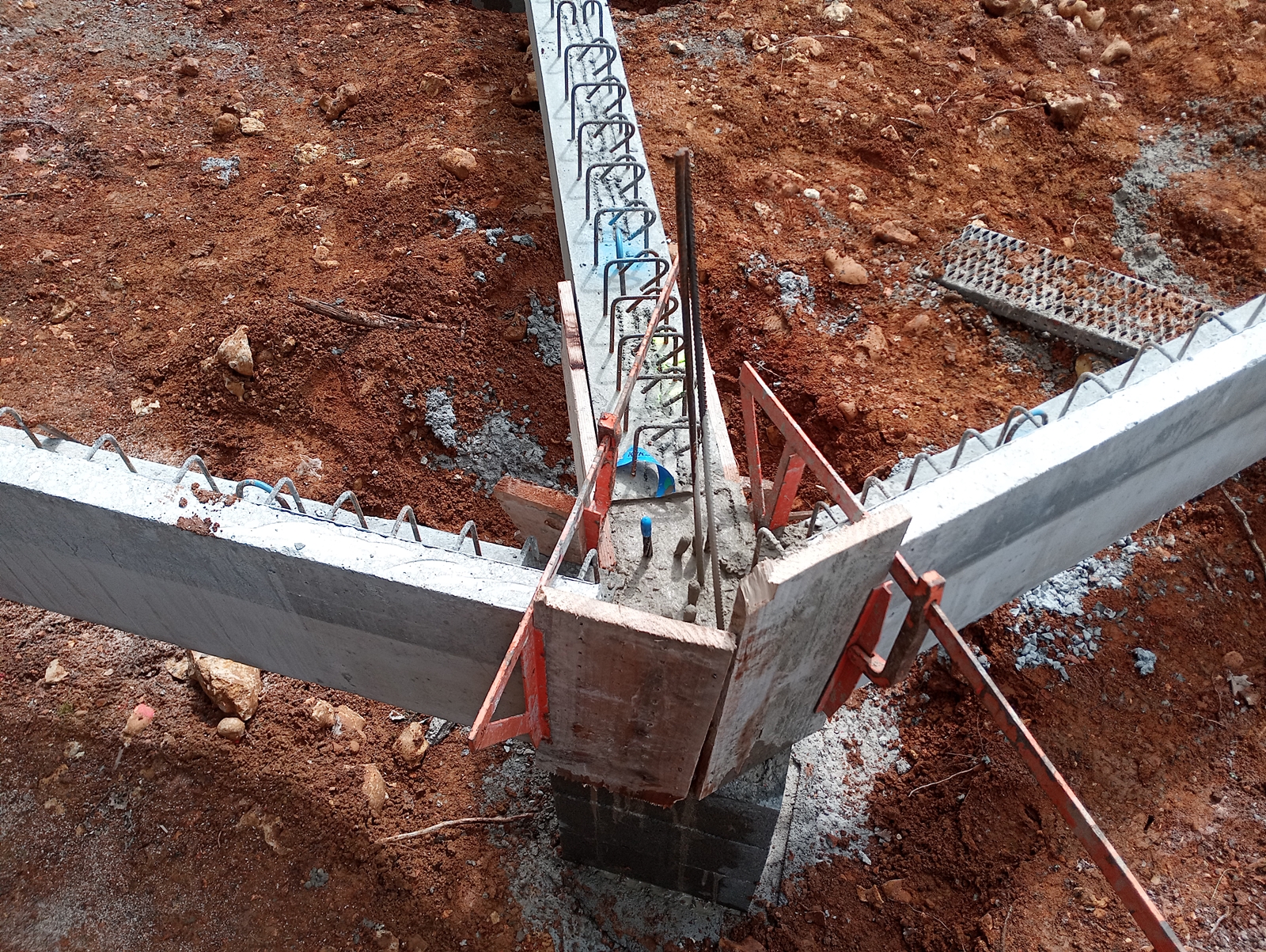
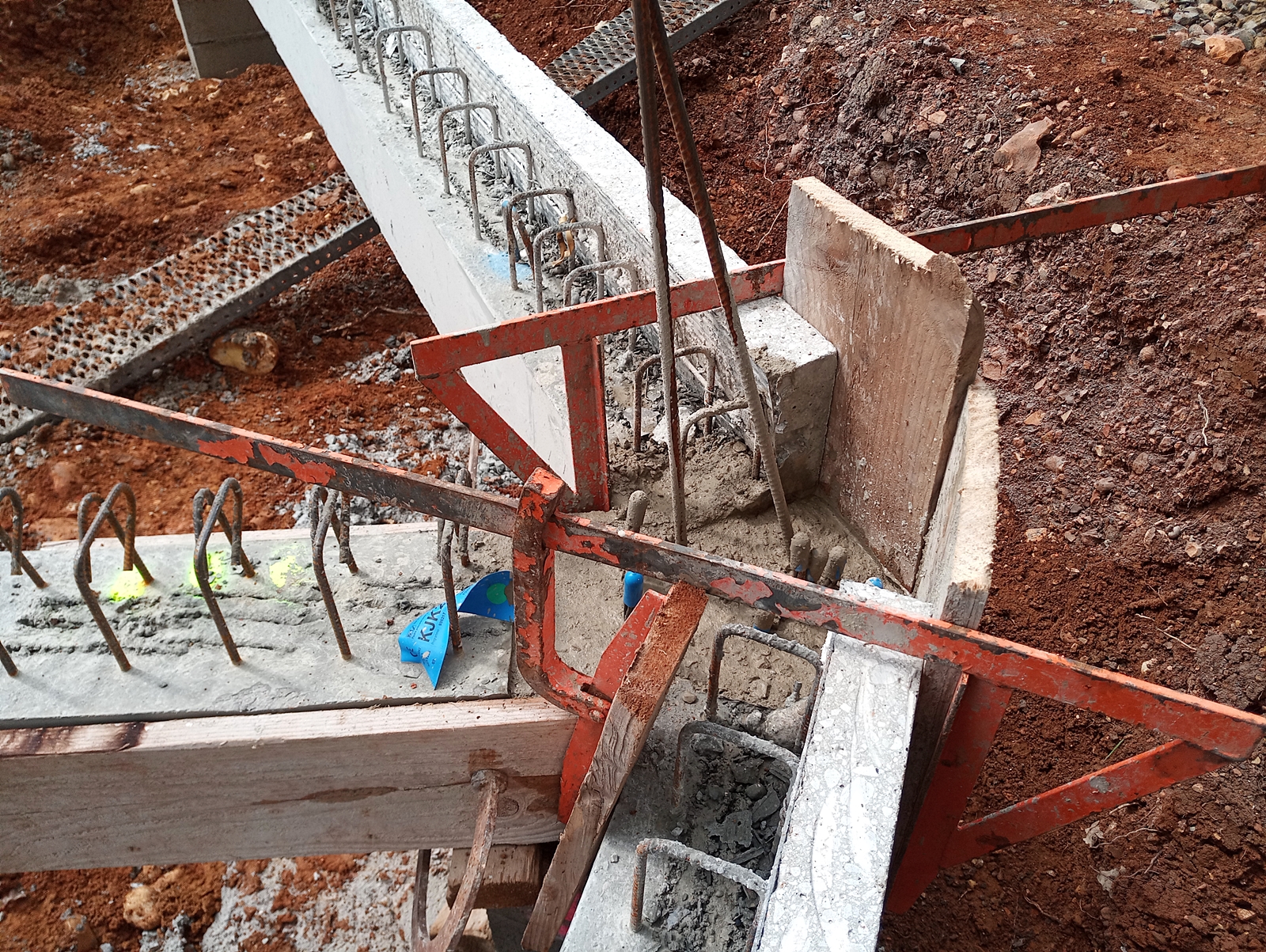
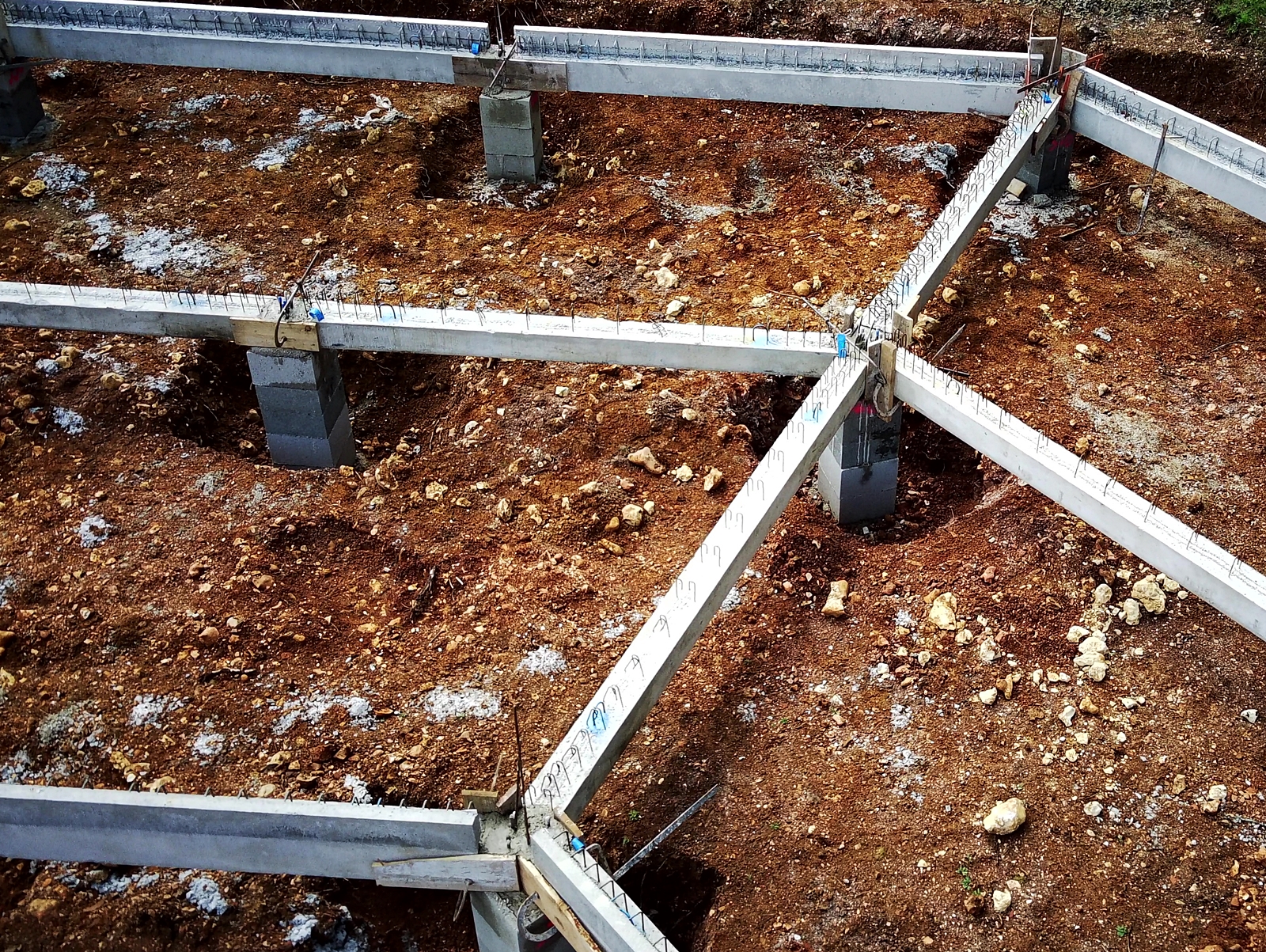
The next shot shows the next stage in the operation. After all the beams had been put into place, all of the gaps between them were shuttered using short lengths of stout wooden board so that all of the gaps were totally enclosed to exactly the correct height. The following image shows how short lengths of the steel reinforcing cables that have been used to pretension the concrete from which each beam has been manufactured had been left protruding from the ends of the beams and then been bent to point upwards.

Each beam junction is on a column from which two or more reinforcing rods emerge also pointing upwards so within each of the now enclosed gaps there are six or more, depending on the number of beams at the junction, upward pointing reinforcing rods and cables.

null

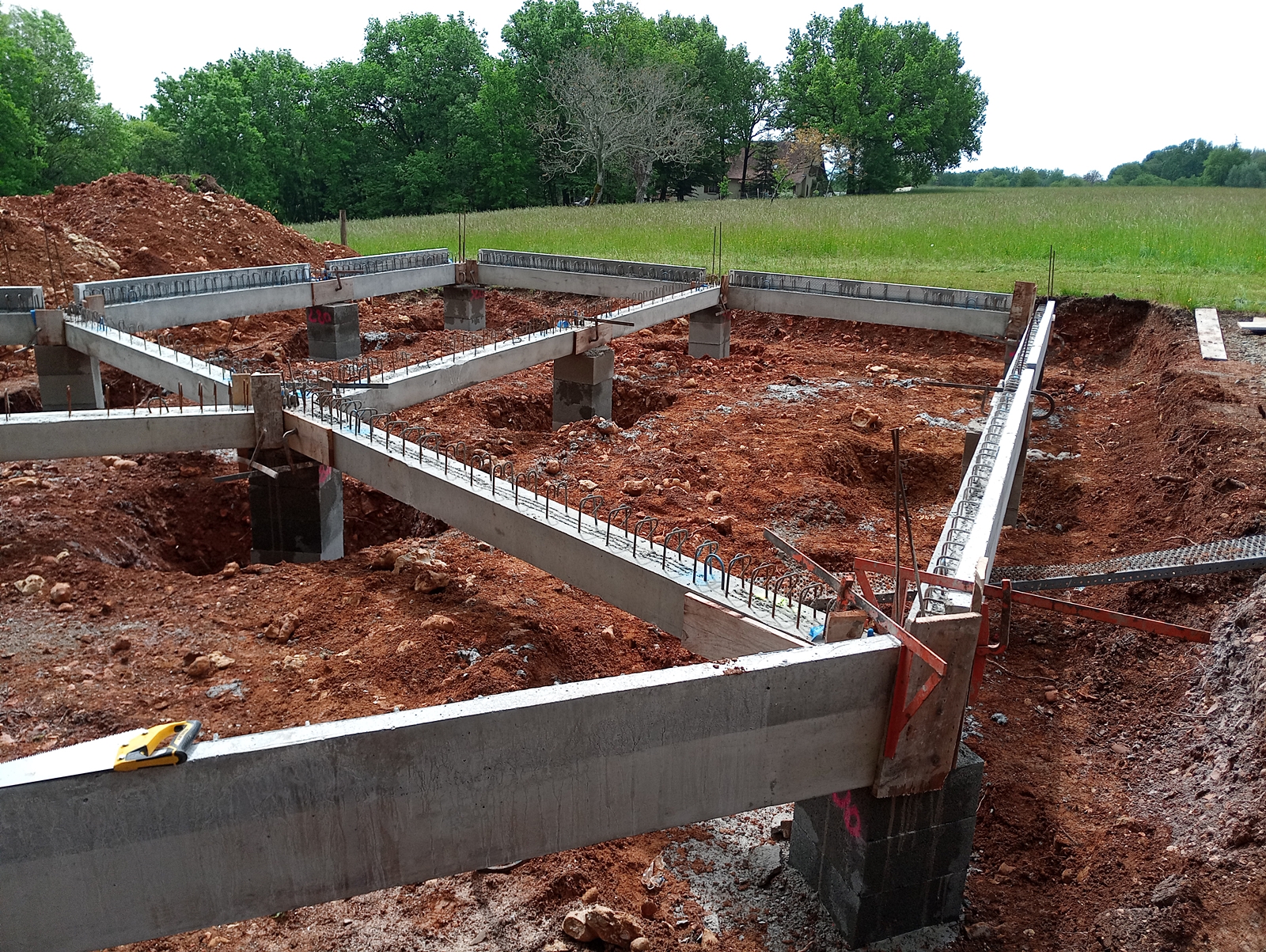
The idea then is to pour concrete into the shuttering so all of the reinforcing rods and cables are enclosed and when that has cured all of the beams and the column on which they are supported will be knitted together into a single joint which will be immensely strong. And when all of the junctions are cured, all of the columns and all of the beams will in effect become a single, solid framework anchored to the underlying rock on which the house will be supported.

It’s great thinking and a relatively simple solution to what would otherwise be a serious problem, namely how the structure of the house can be protected from the effects of the clay on which it is built expanding and contracting as it dries out in the summer and gets wet again in the winter. But in any case, it’s how it has to be done here in this part of the Dordogne and these workers are very experienced and know exactly what they’re doing.

Now here are a couple of shots that I took when the guys had gone off for some lunch and to end with, some shots that I took of the finished job when they’d left at the end of the day.

null

null

null

null

null

null

null

null

null

null

I’m guessing that before the build can move on the concrete poured into the joints today will have to be left to fully cure, which may take up to another week. What will happen after that is anyone’s guess. I’m thinking that earth will be backfilled into the hole up to the bottoms of the beams. I think that then a thick plastic membrane will be laid in their interior together with some steel reinforcing panels and then concrete will be poured in up to the tops of the beams.

But I may be wrong. We’ll just have to see what comes next and I can’t wait as I’m finding this part of the build very interesting because it’s totally new to anything I’ve had experience of previously. And I’m speaking as someone who in my younger days used to work for Ready Mixed Concrete Limited in the UK.

And I tell you what, once these foundations are completed, I reckon you’d be able to build a block of flats on them 😉
Good news!

At last, the news I’ve ben waiting over a month for, during which time I’ve got a bit twitchy, causing me to fire off a couple of slightly sharp emails to my house builder. But the news is that the beams that need to be positioned on the columns that will anchor my new house’s foundations to the underlying rock have now been specially fabricated at the factory and will be delivered on site this week. I’m hoping that this means they’ll actually be put in place on the columns and not just dropped on the ground, but I’ll have to wait and see.

It’s been over a month since any work was done on site and the builder said that it’s usual for there to be periods of no activity, when concrete and similar materials are drying, times like that. I pointed out that I accept that that’s normal but that as the project manager, which I am, I expect to be kept informed and in the picture. That means that I want to know what the next stage of the project is and when it will happen, so I hope that that message has now got through.

I was then going to spend some time at Malbec running up my aircrafts’ engines but when I checked the weather forecast I found that rain was forecast for this afternoon and possibly also for tomorrow. In that case, as my grass is already getting a bit long I decided that today would be a good time to cut it while it was dry before the rain came in.

It turned out to be a good decision because just as I was finishing some big drops began to fall and I just had time to get the mower back in my ‘abri’ before the rain came on much harder. Here are some shots that I took while getting wet walking back down to my caravan.

null

null

null

The rain actually became quite persistent and there were a few rumblings of thunder, which quite surprised me. Although we have had a bit of a dry spell and probably do need the rain, it was nice enjoying the warm sunshine while we could. Hopefully this damp spell will depart as quickly and unexpectedly as it arrived and we’ll get back to some more pleasant spring weather that will allow me to turn my attention to my ULMs – and get some flying in which is now well overdue.

A tale of two ‘tonnelles’

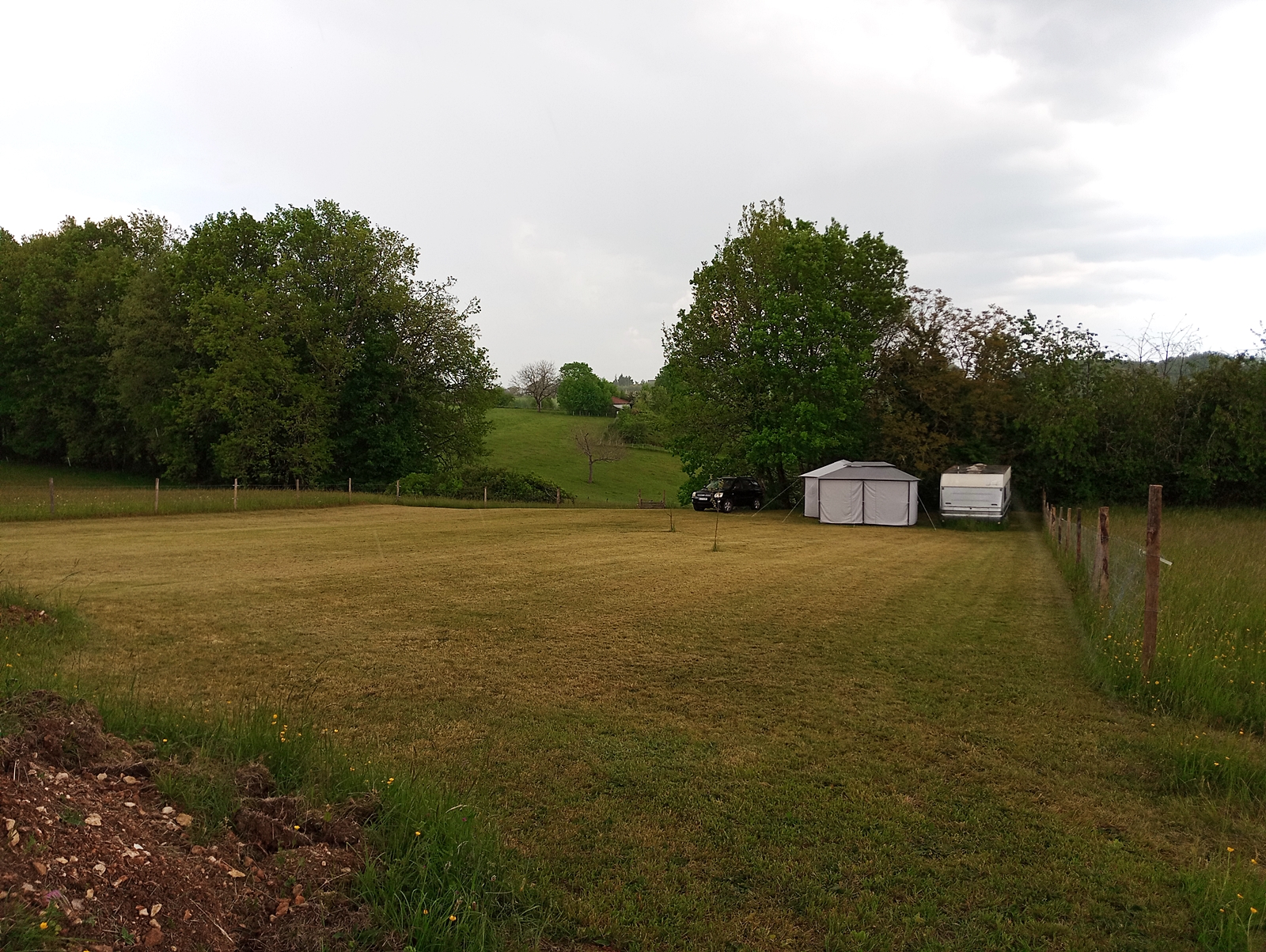
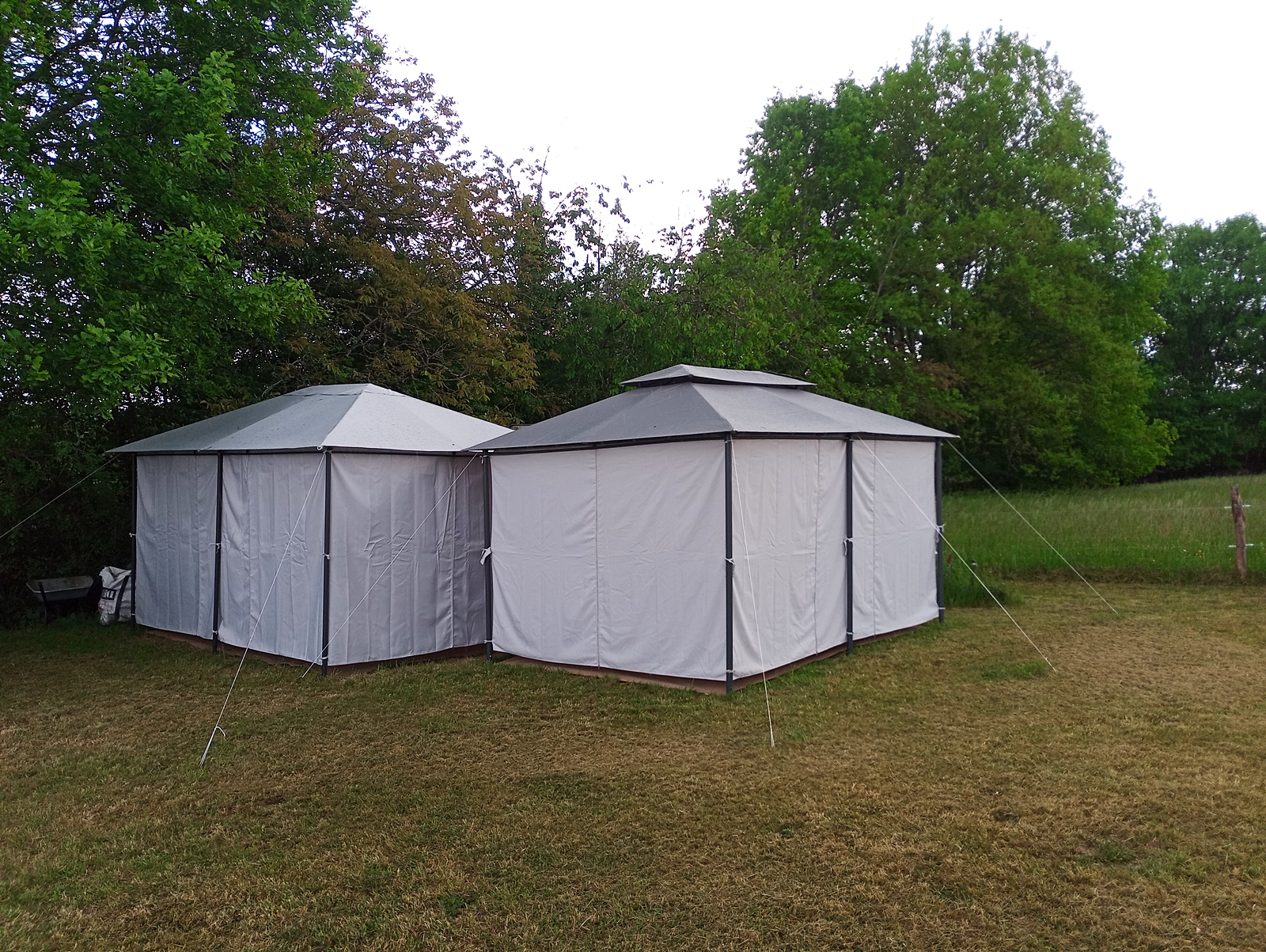
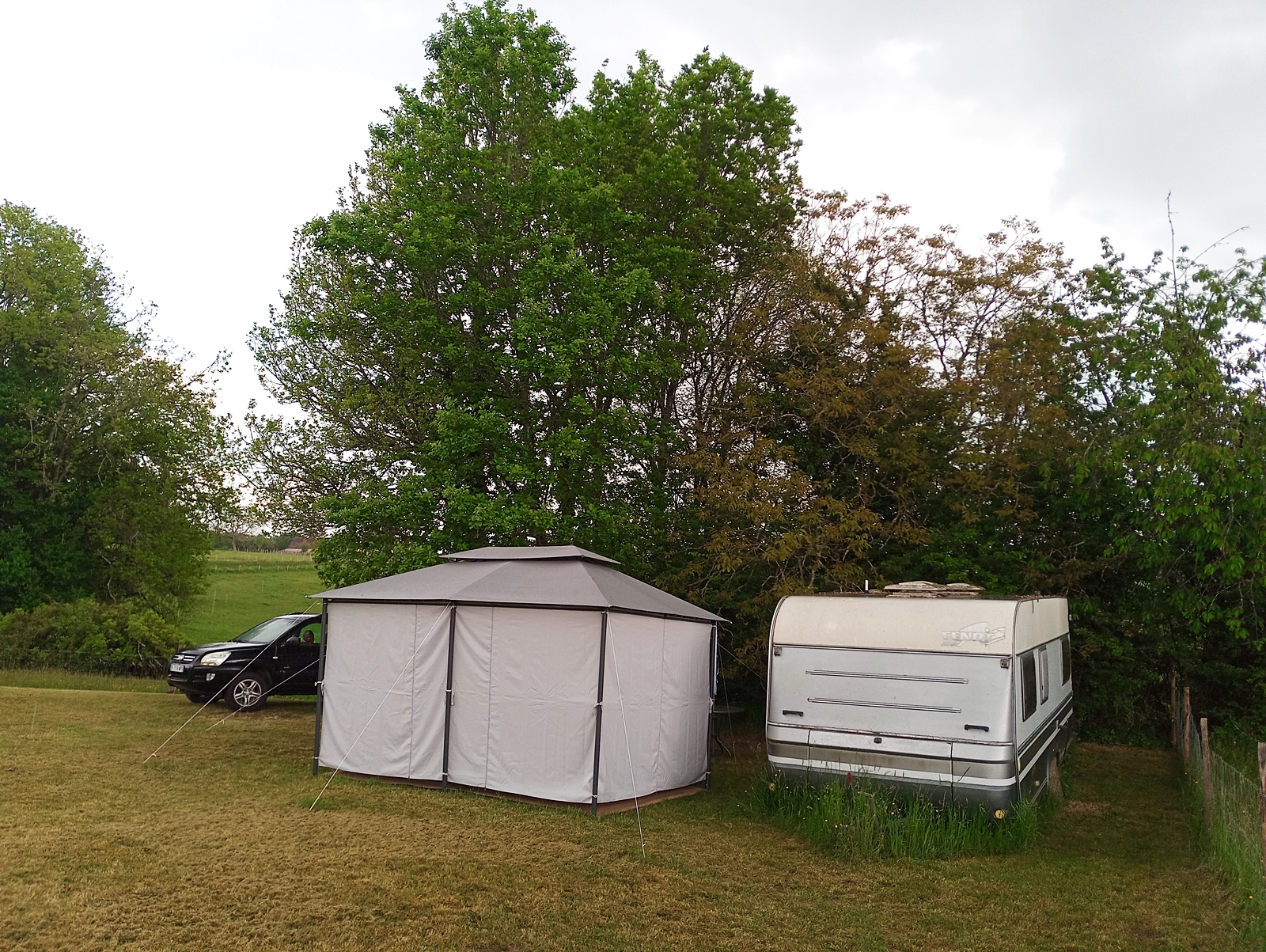
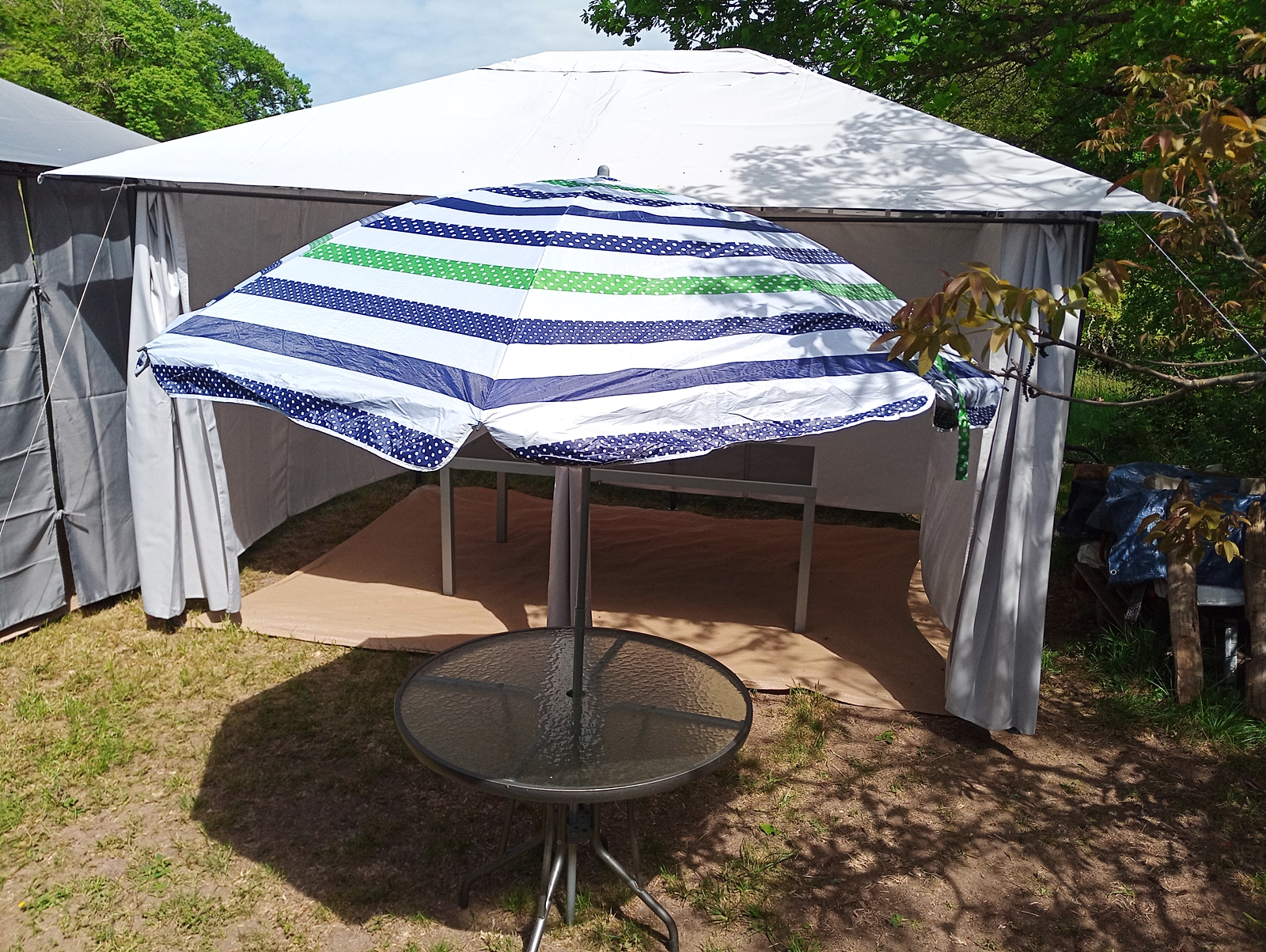
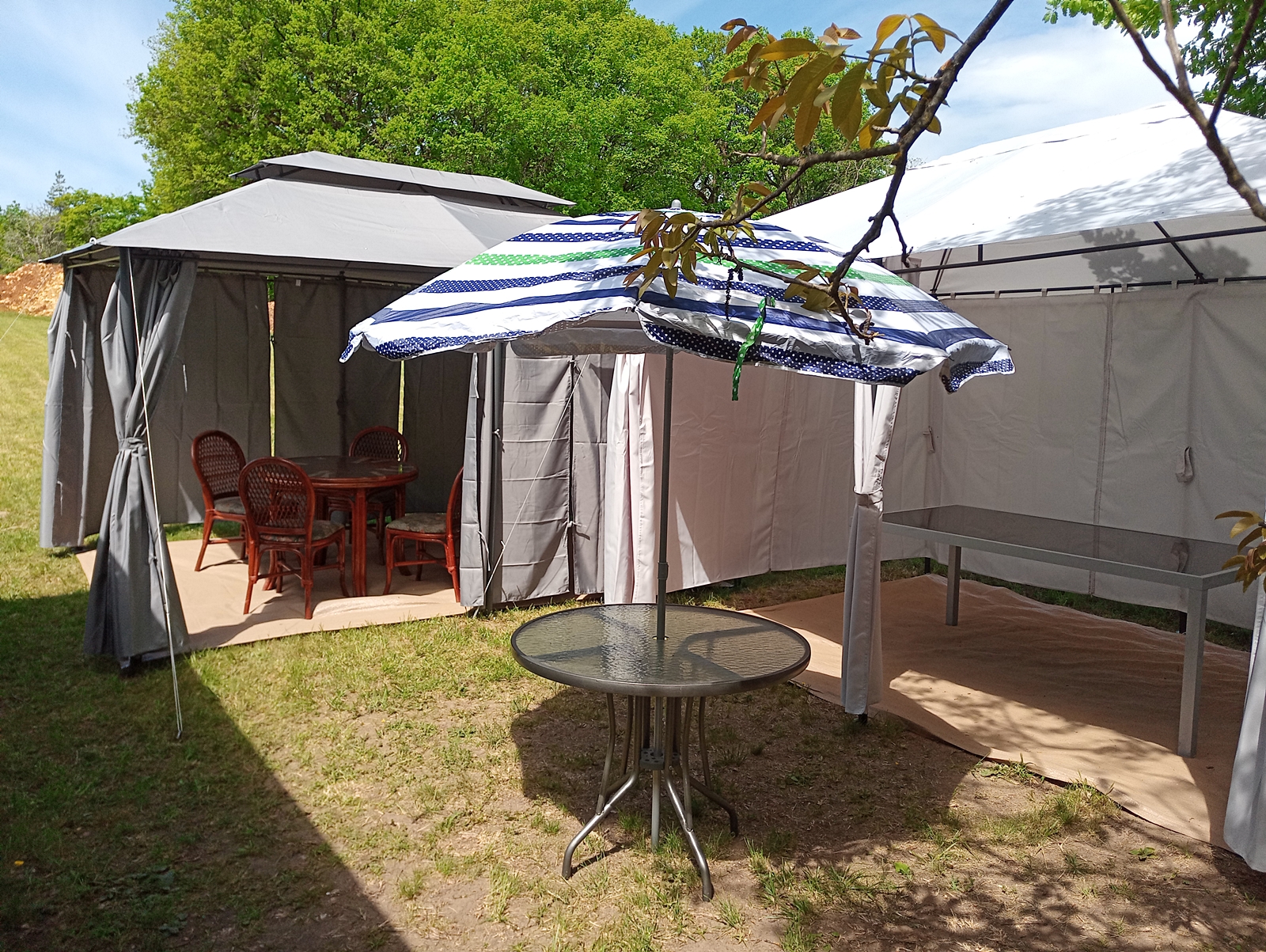
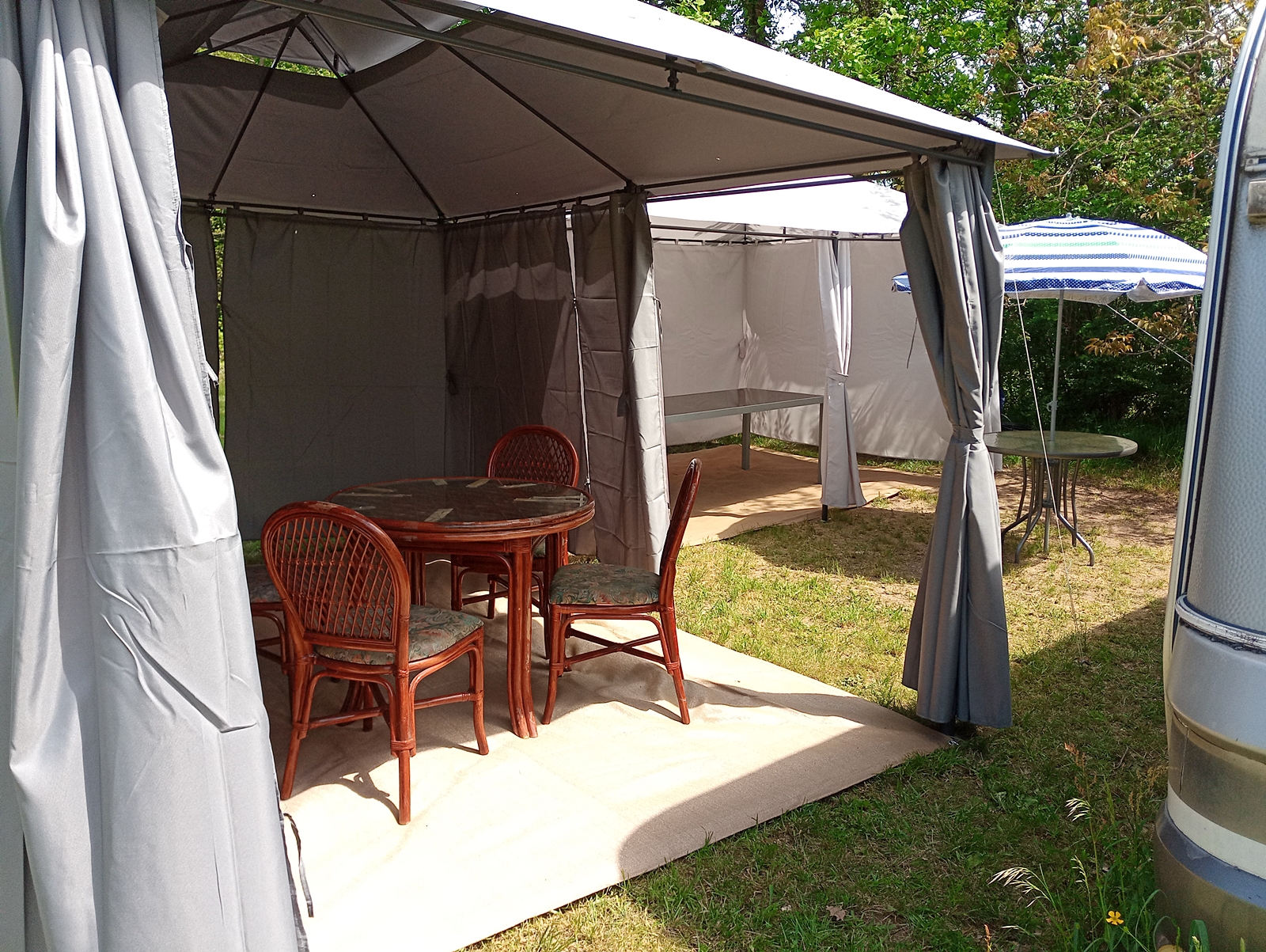
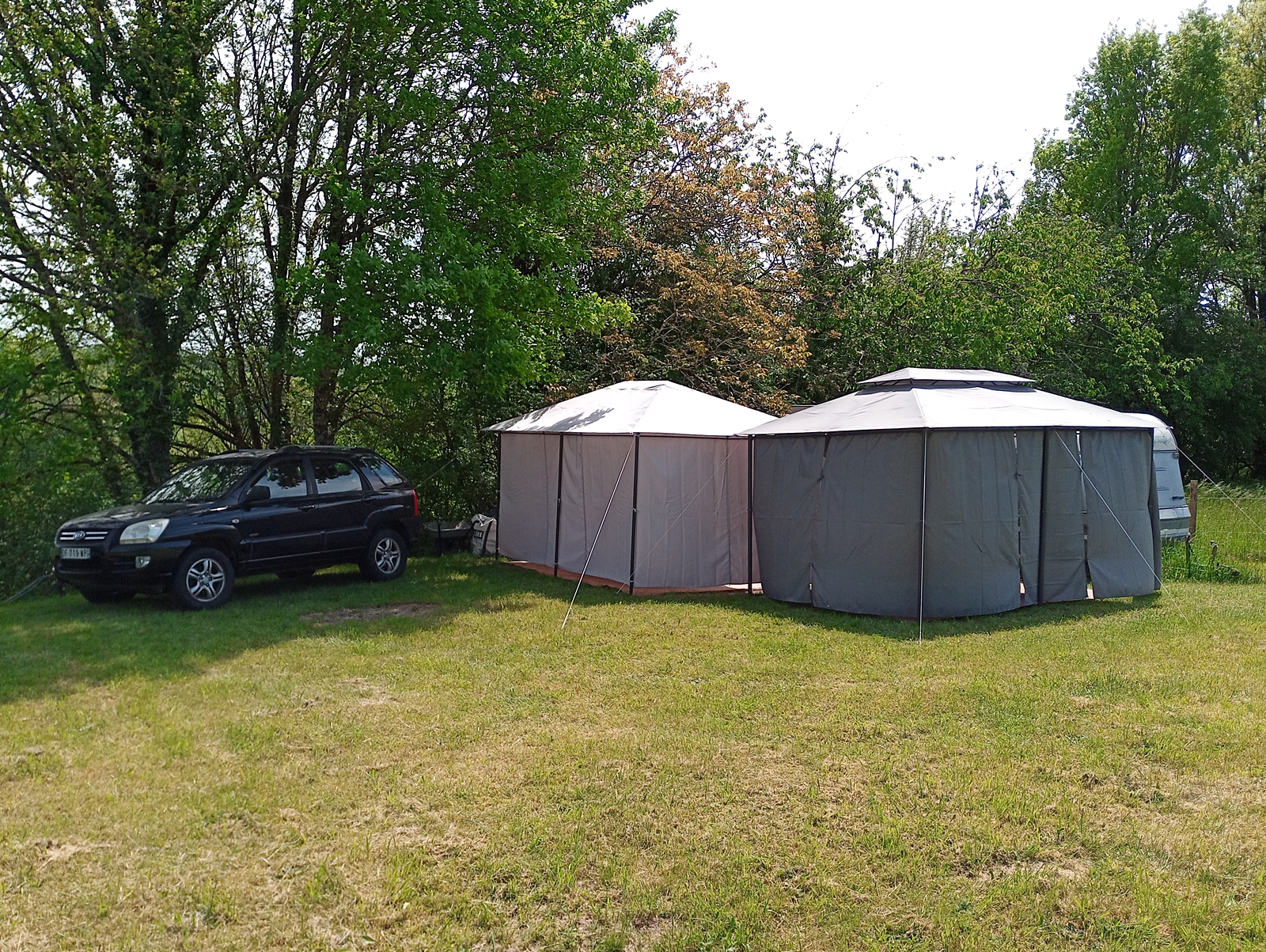
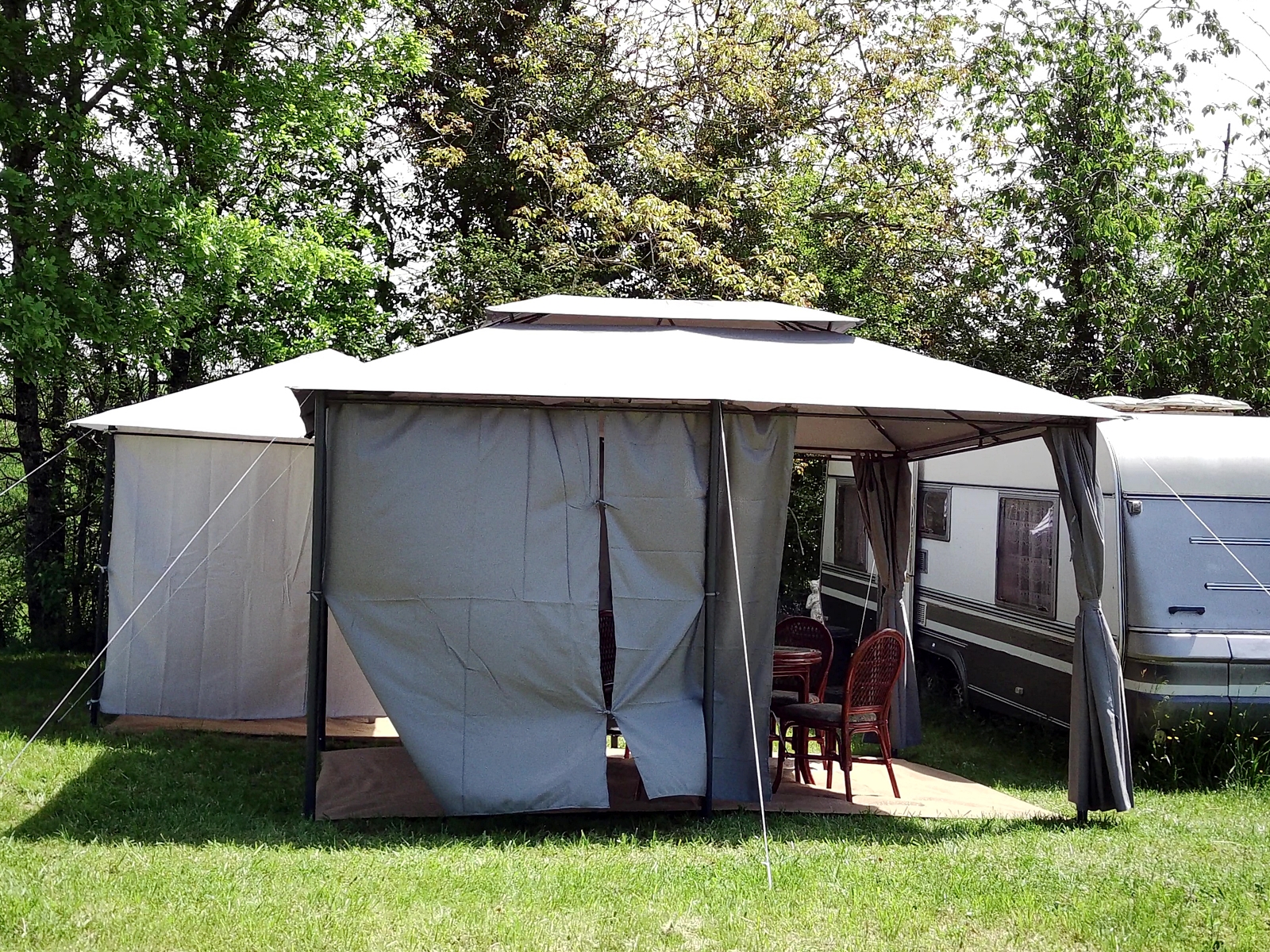
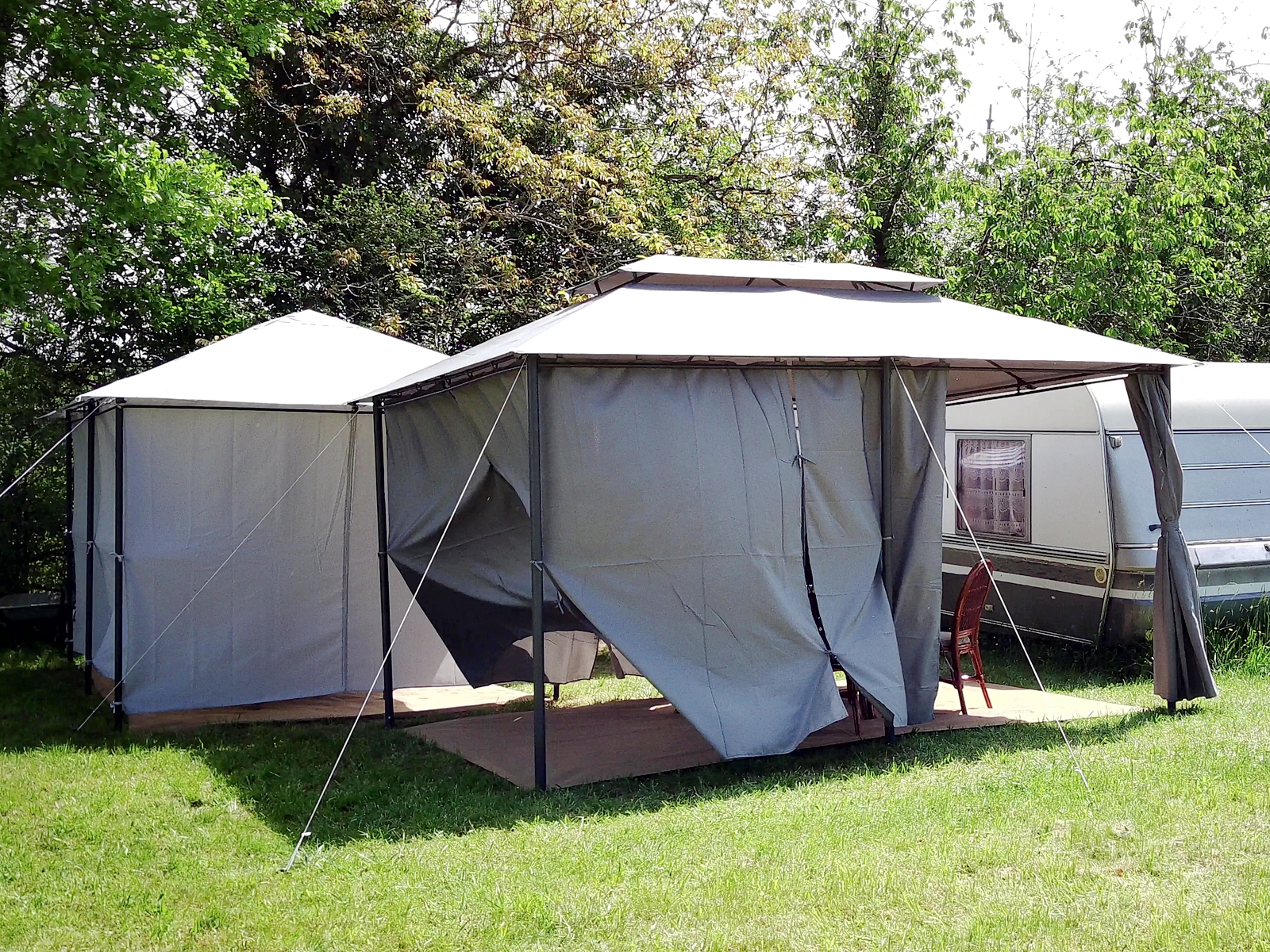
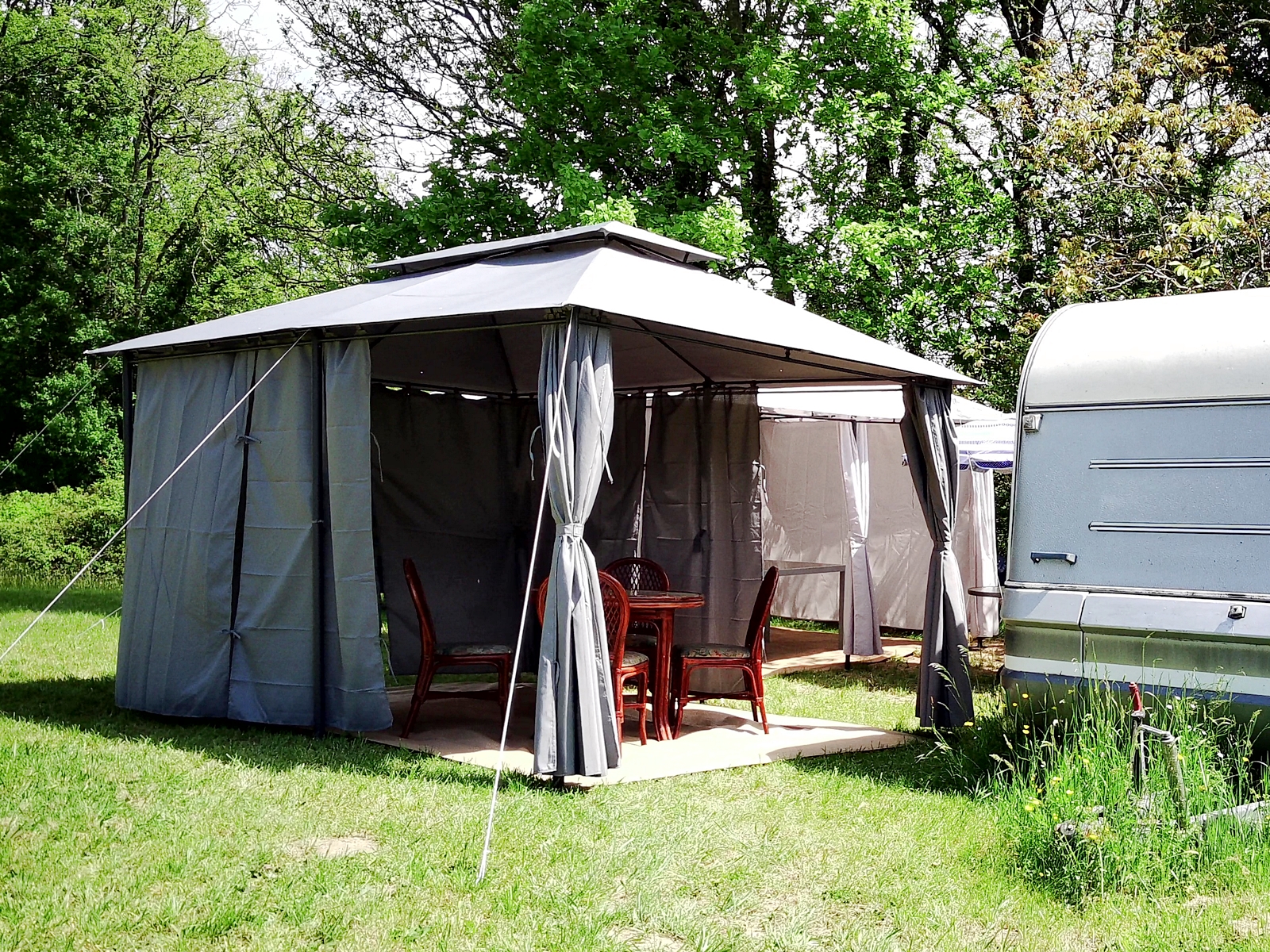
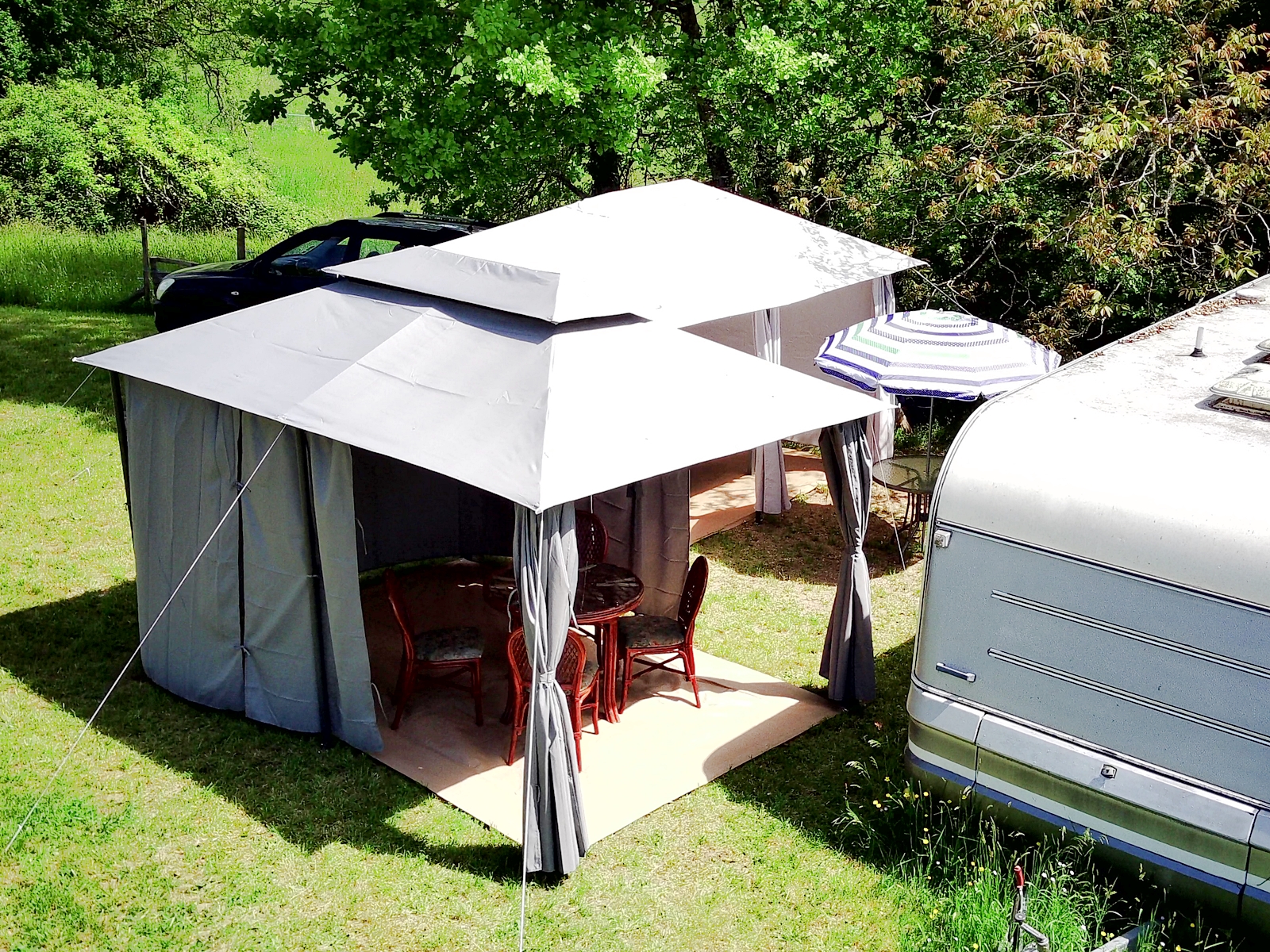
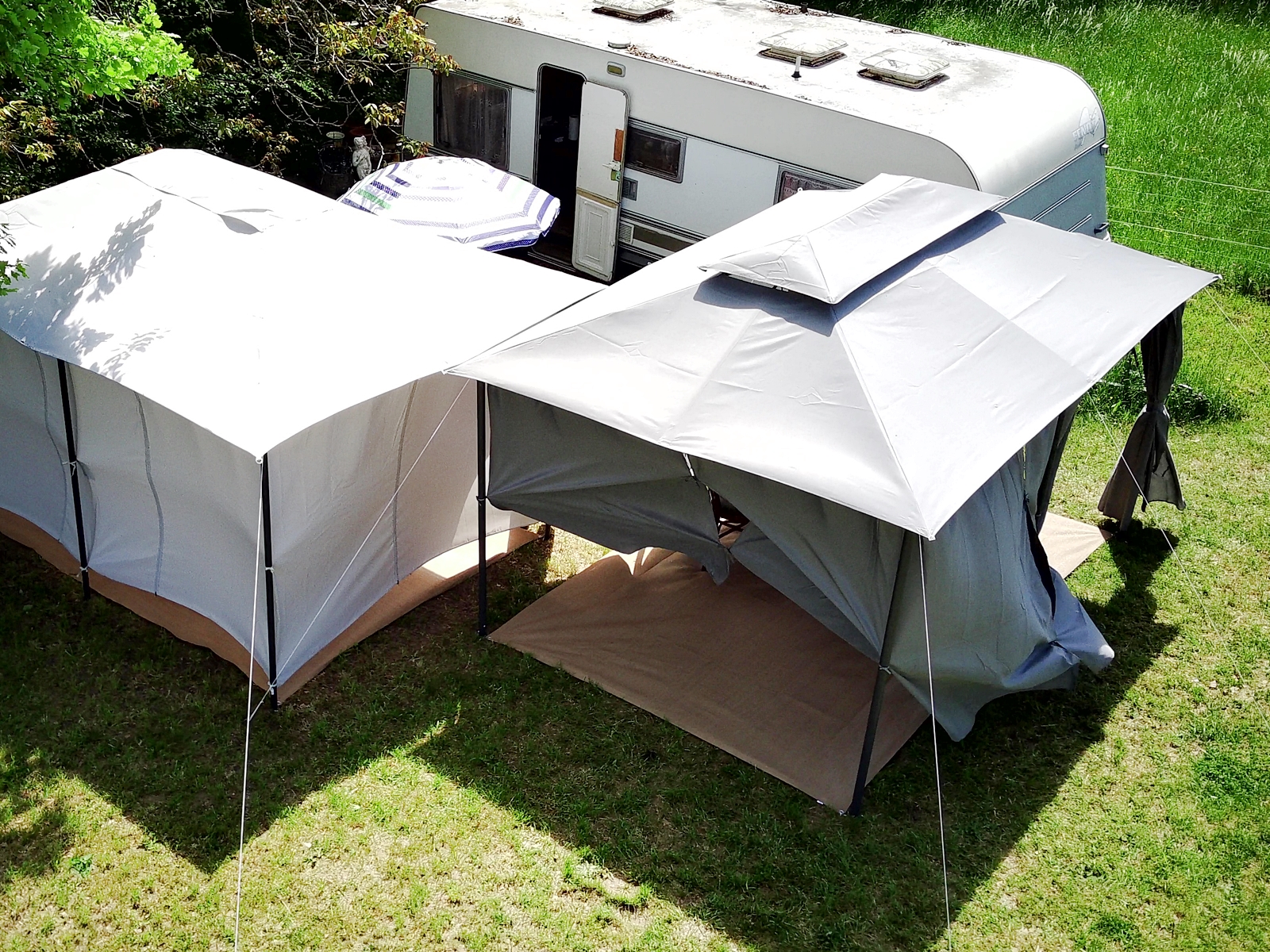
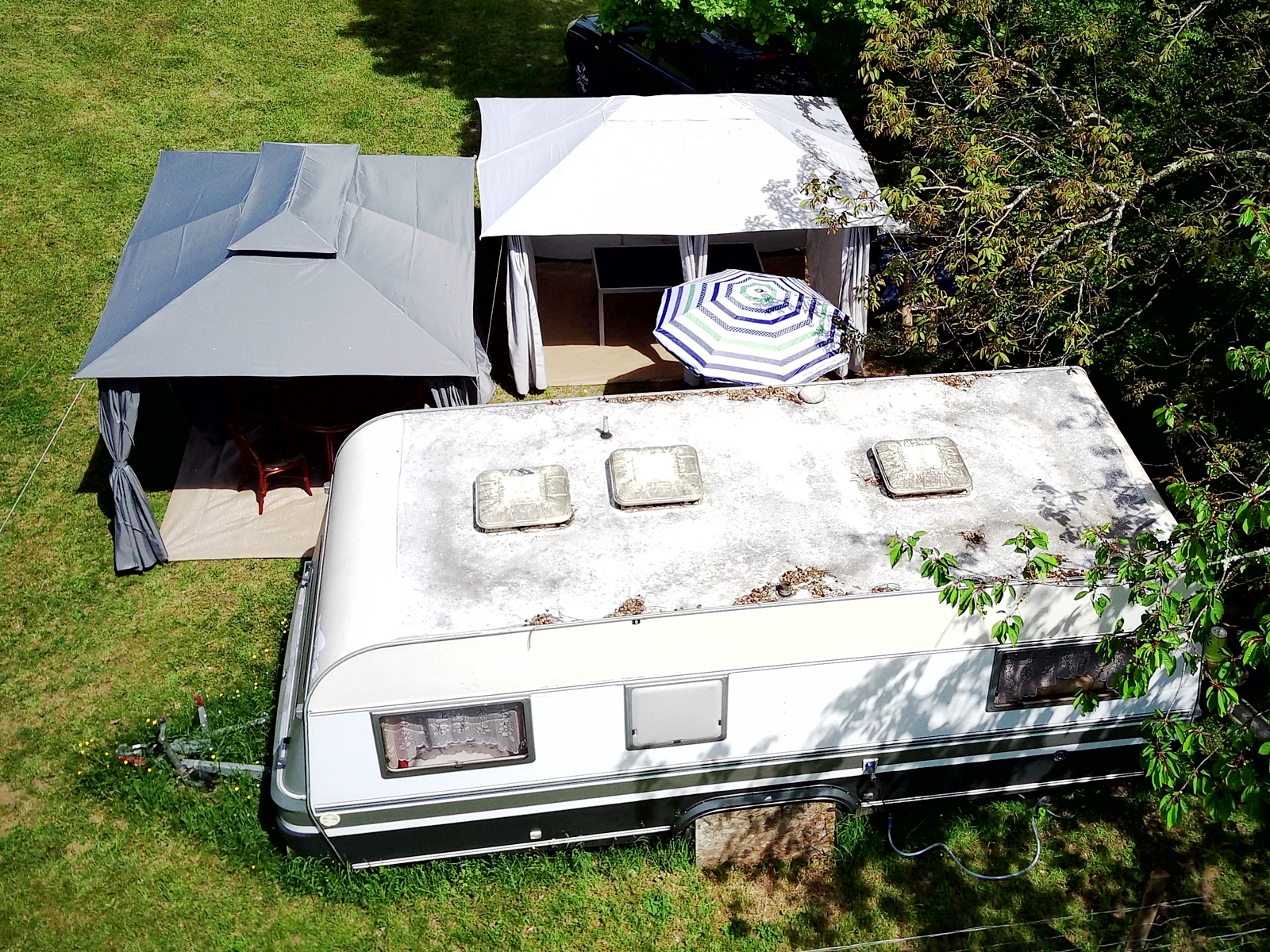
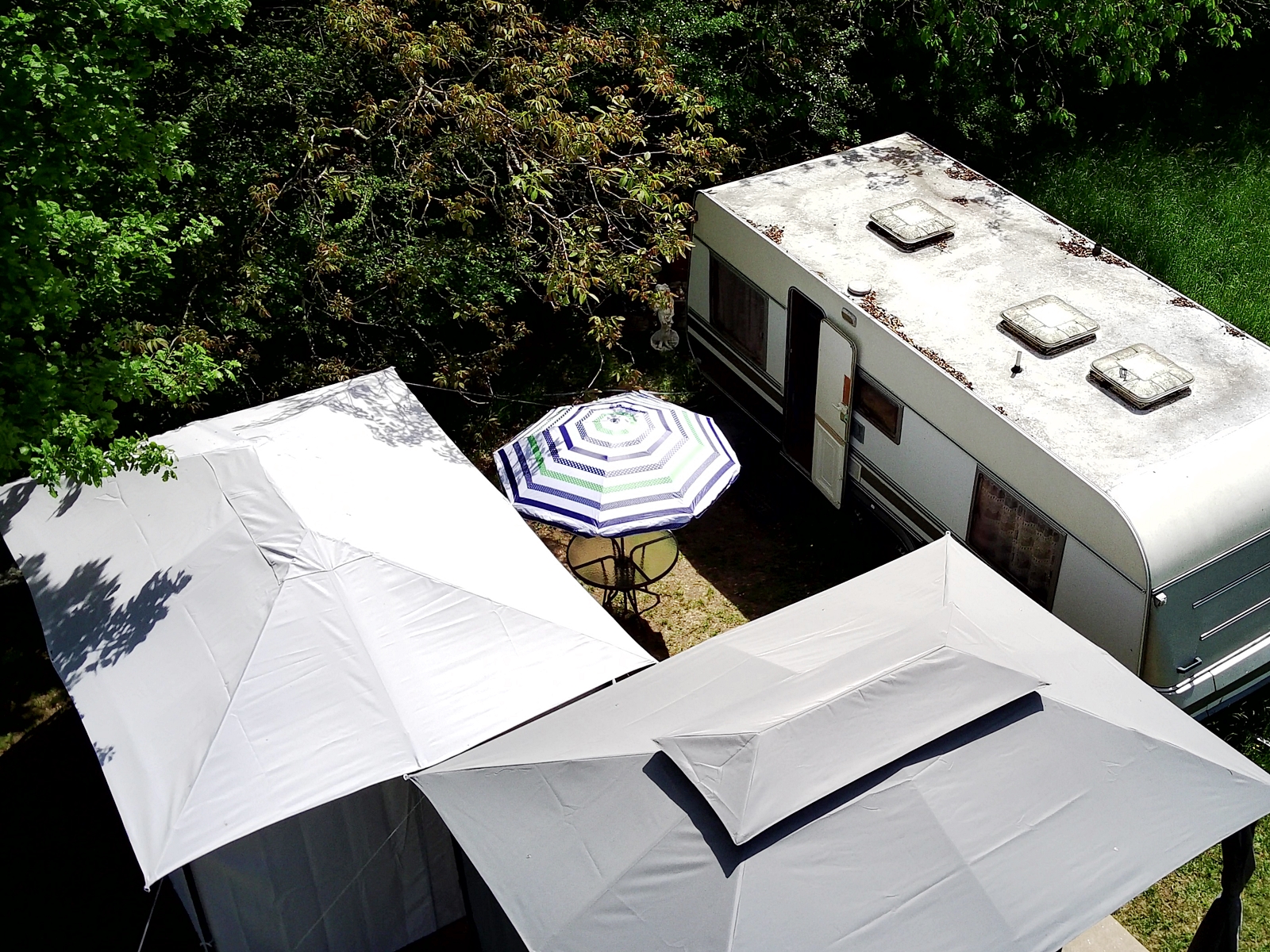
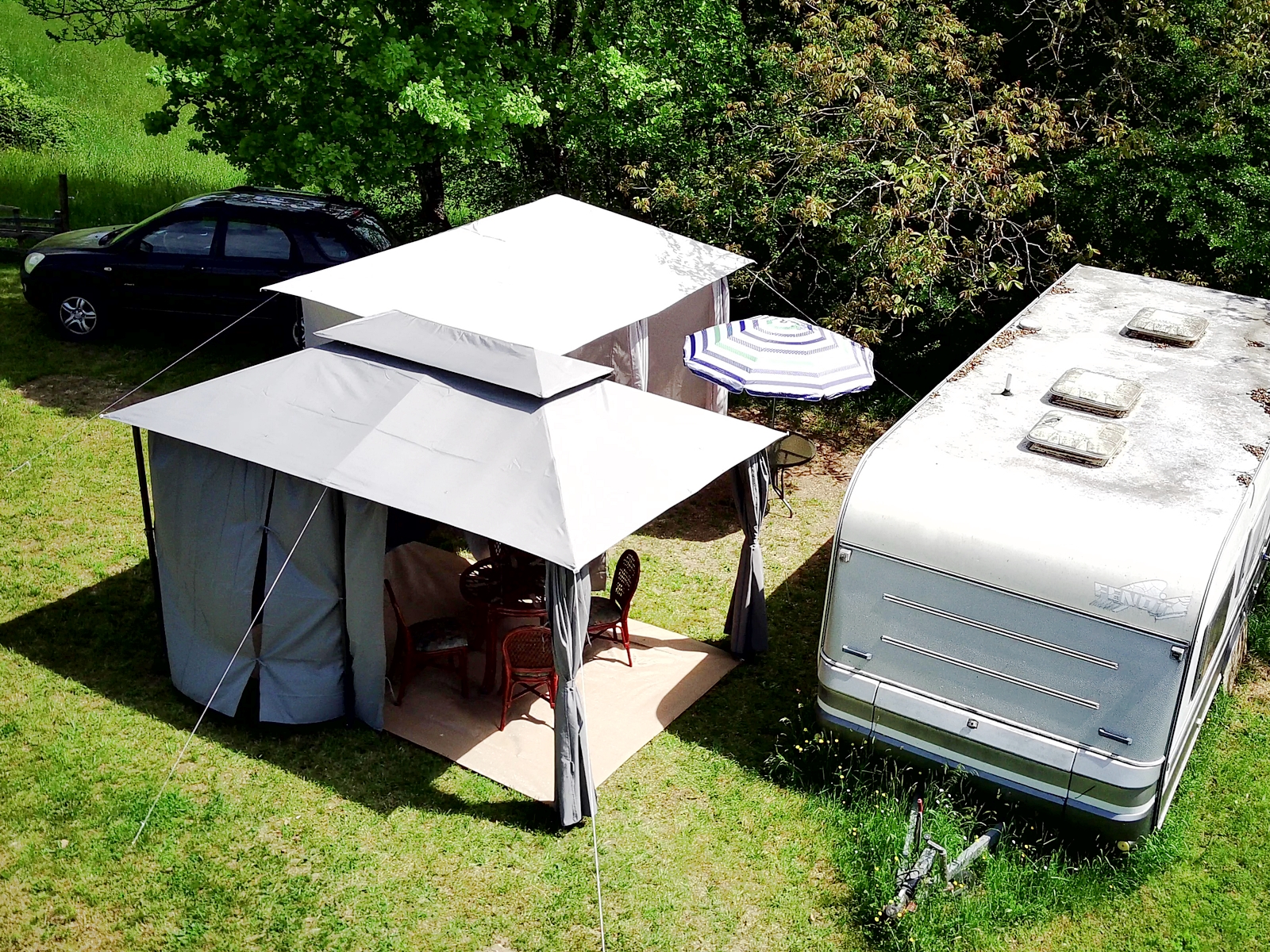
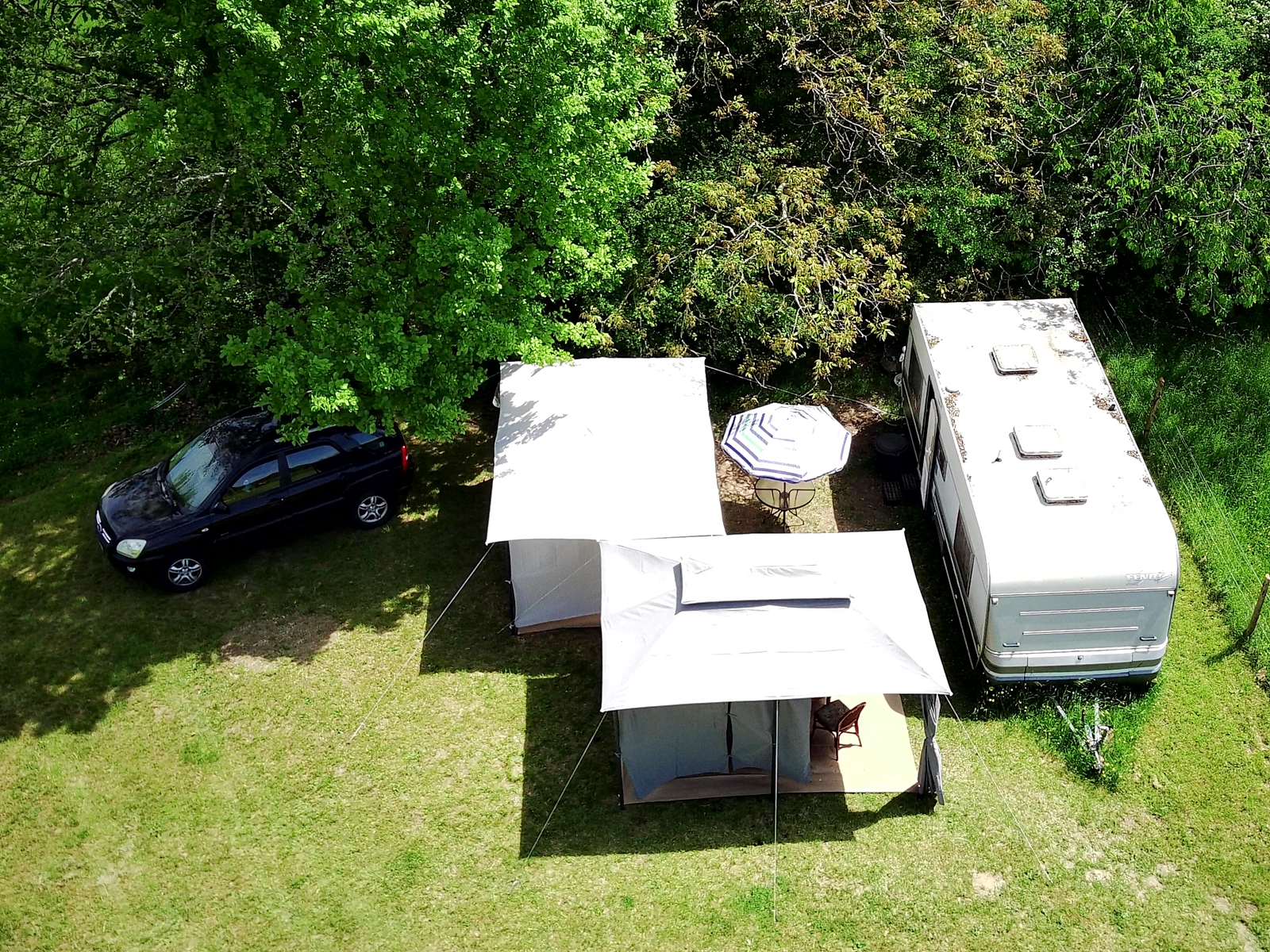
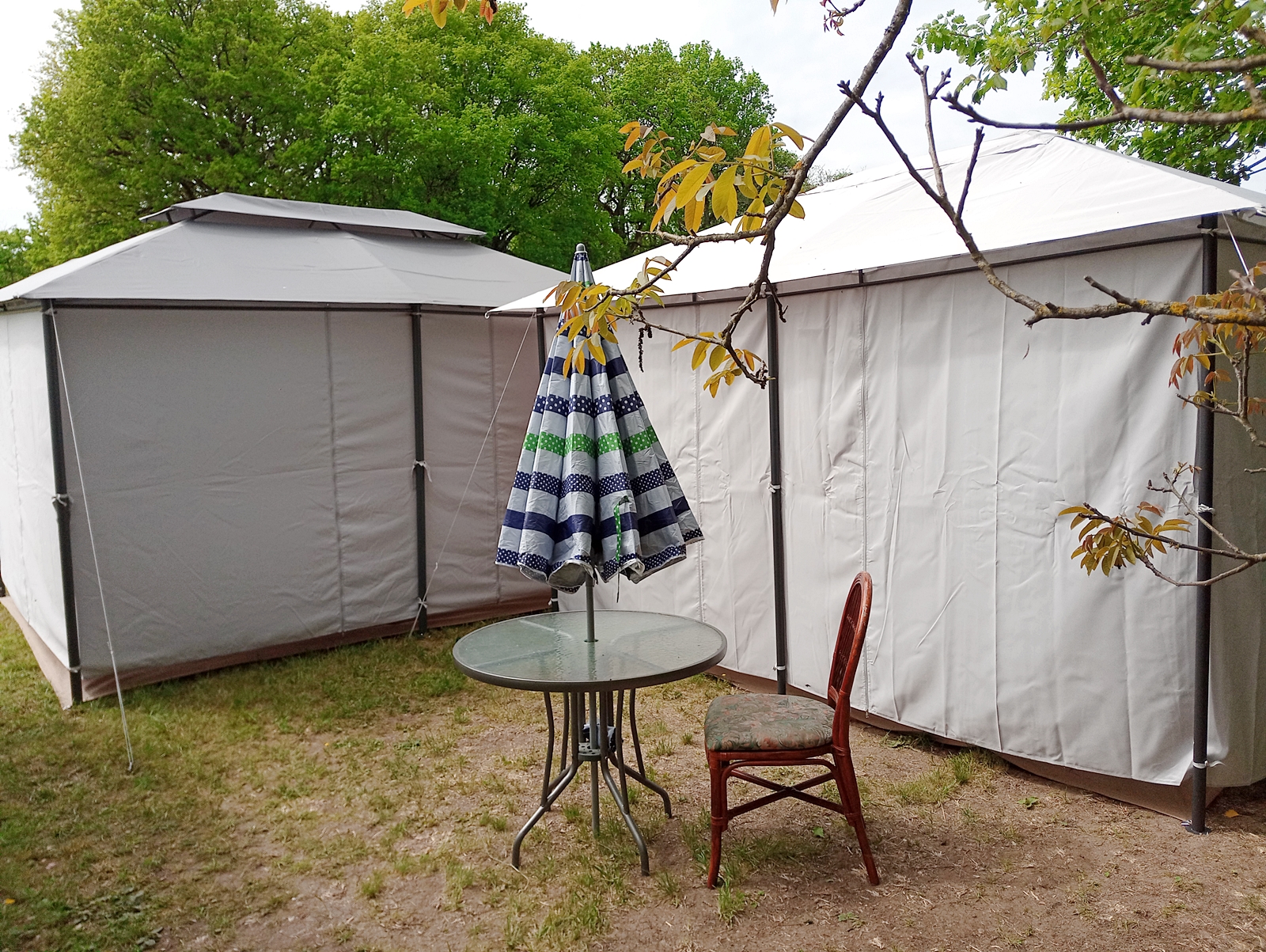
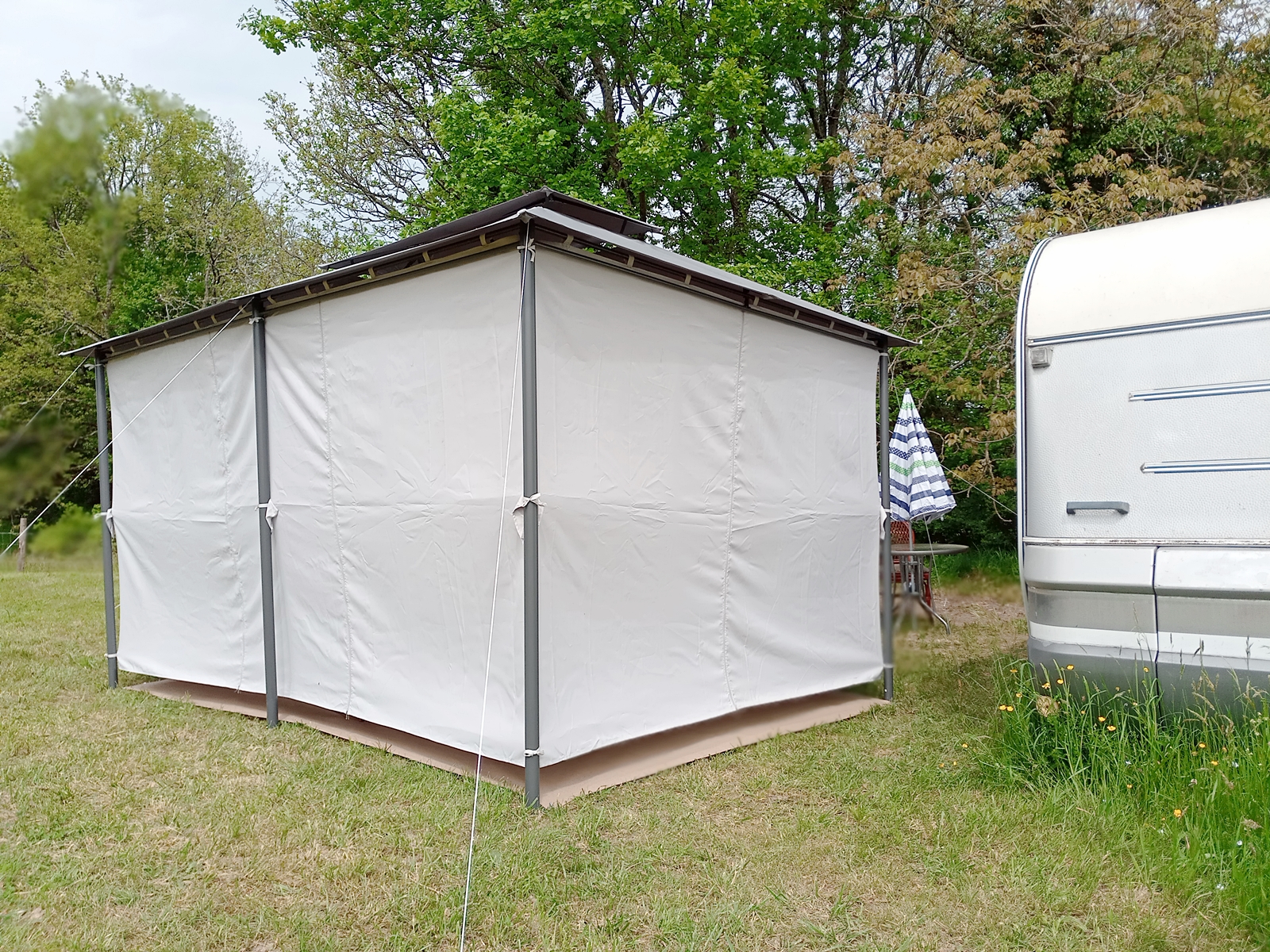
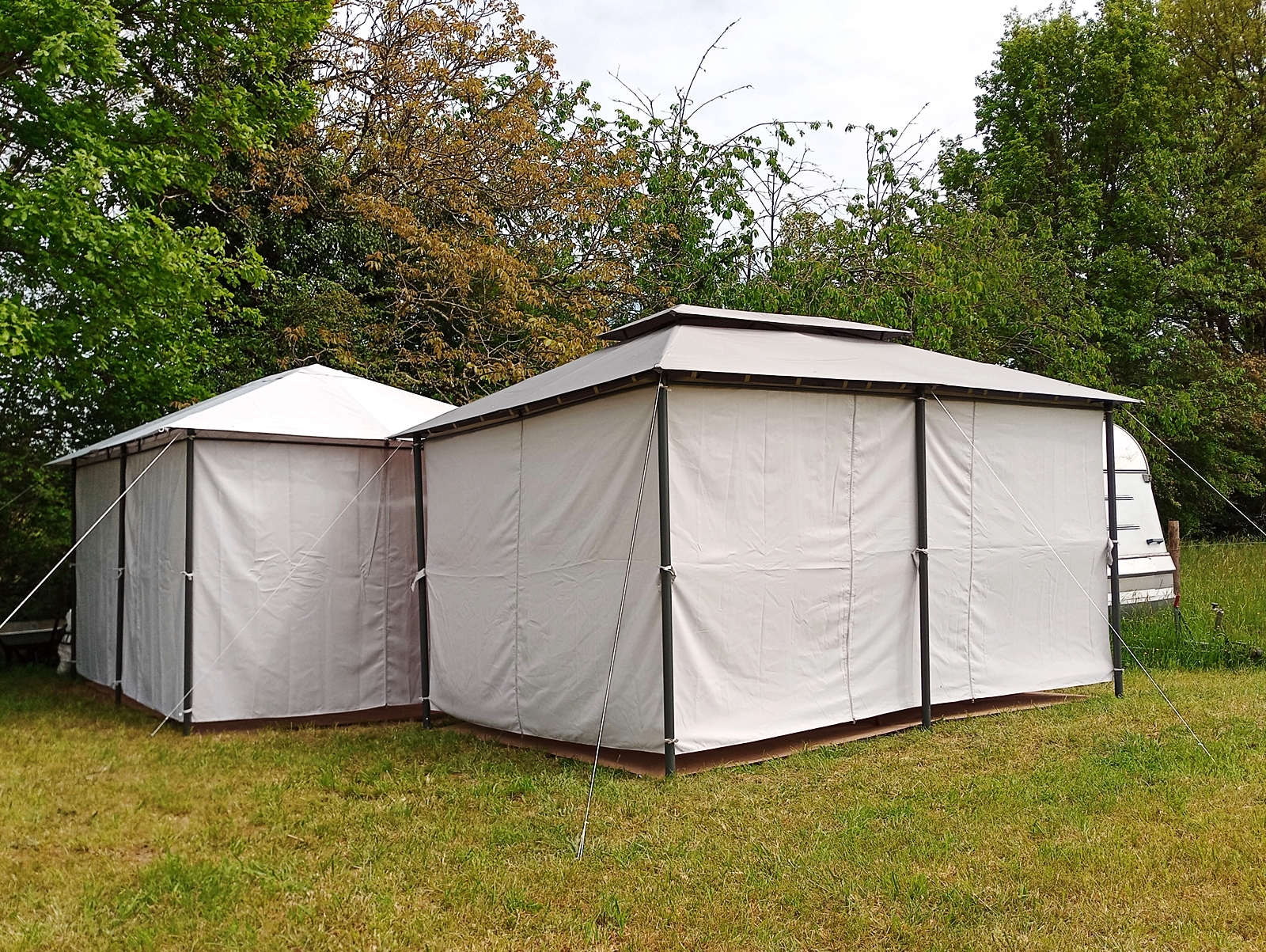
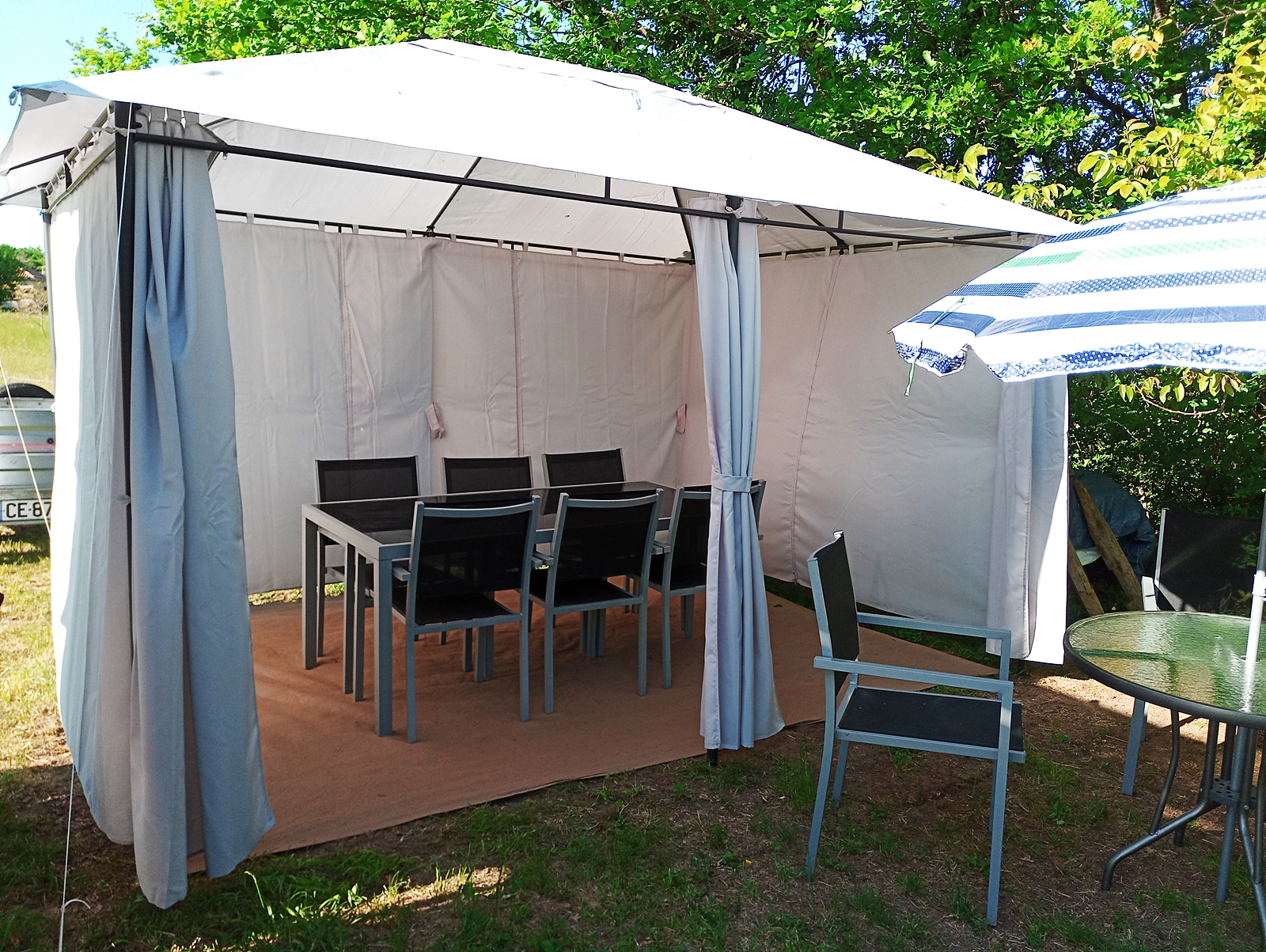
Or three if you like. I was very pleased with my handiwork yesterday having got the new ‘tonnelle’ up without any problems and exactly in the position I wanted it to be, giving me the small open area I wanted between the caravan and the two ‘tonnelles’ and two pleasant enclosed areas where I’ll be able to have friends to eat and drink during what will hopefully be a long, warm summer. It was a bit too late too take pictures last night so that’s what I started by doing today.

The size of the open area is just right. Too small and it would be too cramped to sit or lie out in the sun in, especially with the small round table and a couple of chairs in place, but too large and it would make carrying stuff from the caravan into the ‘tonnelles’ a chore. It’s also nicely private but with plenty of room to get into it by walking between the new ‘tonnelle’ and the caravan.

null

null

null

null

It soon became apparent with the light northerly wind that we had today that my fears about the shortcomings of the new ‘tonnelle’s’ curtain design were well founded as in what was admittedly quite a brisk breeze, the curtains were hopeless in protecting the interior of the ‘tonnelle’ and its contents. Clearly something would have to be done to try to solve the problem.

null

null

null

null

Here’s another example showing how useless the new ‘tonnelle’s’ curtains currently are. You could never sit and enjoy a drink or a meal inside it with any sort of a wind blowing. It would be just like sitting in the open air, which is not what I want at all.

null

null

null

null

null

So that left just the curtain problem to be solved. As I mentioned in my last post, the curtains from the original ‘cheapie tonnelle’ were undamaged even though its metal framework was almost totally destroyed and as far as I could tell, their dimensions were good for the new ‘tonnelle’ as well as the one they came with. So I got them out to check and sure enough they were.

It took the best part of an hour to remove the new curtains and replace them with the ‘old’ ones (they’re not, of course, because they were only in place for a matter of days before the winds blew up) but the final result was very pleasing.

null

null

null

So now the curtains on the new ‘tonnelle’ are the same as on the other one and hardly move in the breeze. A suspension tab had been pulled off one of the curtains and also a tape that secures one of the side curtains to an upright (no fabric damage, just stitching) but I’m a dab hand with a needle and thread and it only took me a few minutes to stitch them back on again, making the curtain set as good as new. And you hardly notice that the new ‘tonnelle’s’ roof is slightly darker.

I will modify the new curtains myself by adding zips and more securing tapes but at least now there’s no urgency to do so. An internet search has already revealed that it could be difficult finding the six 183 cm long grey open ended zips that I’ll need here in France but I think that I’ve located a UK supplier. If so, doing the mods won’t be too hard once I’ve dug out my trusty Singer sewing machine that’s currently in storage. I just hope that when I get it out it hasn’t gone rusty…