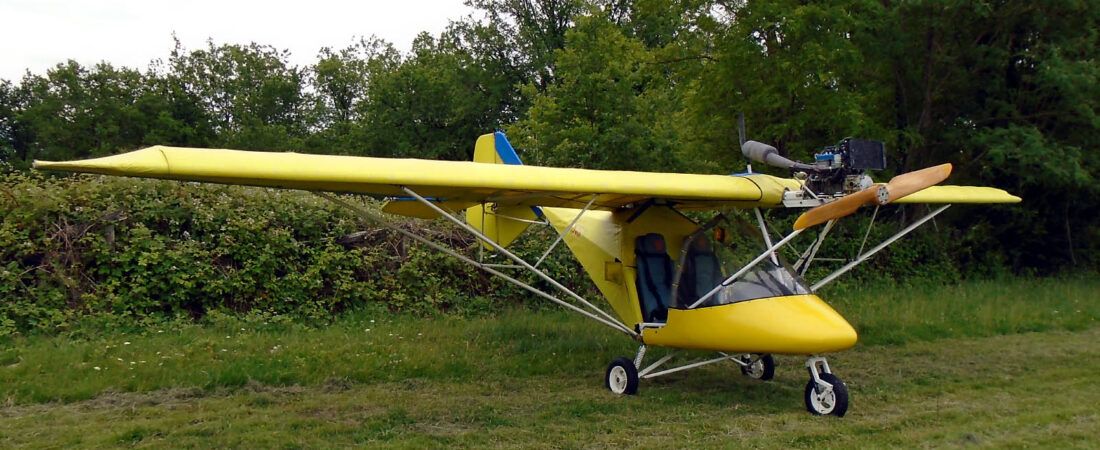
You won’t believe this

I made it up to La Rochelle in my Savannah yesterday but it didn’t turn out to be the flight I’d hoped it would be. It started off really well. I left at 8.30 am and as I’d prepared the aircraft the day before I left myself plenty of time and, unusually for me, there was no pressure. The sky at Malbec was bright and almost bereft of cloud and with it still being cool, I was looking forward to a calm, very pleasant flight for a change.

I’d also checked both of my GoPros, one in the cabin and the other under the right wing, had left both running while I did my pre-take off walk round and it looked as though this time I might end up getting material from both of them for a video of the flight. The take off went well and after climbing out quite steeply and avoiding Fleurac I was soon thinking to myself what a pleasure it was flying in such cool, calm conditions. Until, that is, I came to my first waypoint to the south-west of Périgueux.

null

null

It was at this point when I last did the trip that I spotted low cloud up ahead and I think something, or someone must have it in for me, because after making the right turn over the waypoint I could again see a band of low cloud dead ahead of me topping a powerful inversion.

null

As I approached the cloud it was soon clear that I would be flying right into it and so it was time to make a decision – over or under. The last time I’d done the trip I could see that for some way ahead there were breaks in the cloud through which the sun was shining, so I’d decided to climb over it. This time however, I didn’t like the look of it.

null

So this time I decided to go under. I couldn’t see any evidence of any gaps in the layer and I had no idea how far it would extend or how thick it might become. Ahead of me was Cognac airspace in which I’d have to descend to under 1500 feet to stay legal without contacting Cognac and getting clearance which I didn’t really want to do. And what if I did and the cloud extended as far as La Rochelle? Then I’d have to descend through IMC in order to land which itself would be illegal, so I made a quick but what I thought was a reasoned decision to go under this time.

And what a wise decision that turned out to be because the cloud layer extended way past Cognac airspace and it was evident as it became darker as I flew along my route that it also became a lot thicker. I never had to fly below 1200 feet, so I was always legal as the terrain, buildings etc below were never at much more than sea level, and although it did become a bit more bumpy as I was below the cloud base, it wasn’t much of a problem.

Eventually as I got closer to La Rochelle I did emerge into bright sunshine with just a few clouds so my decision proved to be the right one. I then called up La Rochelle Approach, received a squawk code to go into my transponder and was cleared as requested to reporting point Echo (E) which is to the east of the airport and visible in the chart, below, which shows my track in red superimposed over my planned route in blue.

null

And then came my next surprise. I was told by Approach that I should next report at reporting point Echo Alpha (EA), to the west of Echo and also shown in the above chart. This was no great hardship as although it would take me slightly right of my direct course from Echo to the runway, the distance was not overly excessive. The VFR Approach Chart from Echo for runway 27 at La Rochelle does have a bit of a kink in it taking you along the main road to avoid flying over a conglomeration of residential buildings and an approach from Echo Alpha would exaggerate that kink, but not by too much.

But it didn’t end there and you have to be ready to deal with unexpected surprises. The next thing Approach advised me that due to a departing commercial (Ryanair) there would be a 5-10 minute delay and what would I prefer to do? I suggested orbiting between Echo Alpha and Echo to which the reply came back, ‘Perfect’ (as an international airport the controllers speak good English). I only had to do so once and my track is shown as a red loop in the above chart to the east of the airport.

My clearance to land Number 1 came through shortly after so I was then able to continue my right hand turn towards the runway down the main road. The two images below give an idea of the offset that has to be flown.

null

null

And here we are on short final to land.

null

After landing as I approached the main turn-off I was asked to hold position to allow an ‘autogire’ to taxy out and take off. Good thinking by the controller.

null

As I turned off the next two shots show the route down to the main apron. The large painted yellow numbers show the direction commercials have to take for their parking gates. If they are not familiar and go the wrong way they’d end up in a real pickle among the General Aviation with few chances to turn around.

null

null

I’d wondered why I couldn’t understood the taxiway chart while doing my flight planning but it turned out that I could because Star Atlantique, who I was going to, have moved since I was last there. The following shots were taken as I taxied round to their new location.

null

null

null

And here’s Hotel Papa parked outside ready for its check-up.

null

null

Sadly, this was the point when things began to go downhill. First I found out that the GoPro in the cabin had stopped working half way. It was my own fault because I’d reached around to get something and had touched it. Then some time later the young engineer who was conducting the checks came in and to my great shock was clutching my transponder which he’d removed from my panel. He said that it wasn’t working and was lighting up but throwing a ‘transmit’ error code.

I said how could that be? It has been used in both France and the UK and has shown no faults in La Rochelle, Limoges and Le Touquet and with Lille Approach to name a few, so how come it’s suddenly not working? He more or less shrugged his shoulders and then the office manager came in. Had I bought it new, had it been repaired, the answers to which were yes and no.

I said it was working when I arrived so why didn’t he phone the Control Tower to confirm, which he did. No, there were no problems they replied, so that took the wind out of their sails. The outcome after some delay was that they said it would need to go off for repair at their cost, as I understood it as the whole conversation was, of course, conducted in French. Plus, of course, I’d need to get a clearance to depart from La Rochelle VFR without a transponder.

So this is why in the next image there’s a hole in my Savannah’s panel.

null

I’m very annoyed because I put the panel together myself and installed everything including all of the instruments plus the radio and transponder. If you want my opinion, I think the young engineer either shorted the unit out or maybe blew its output stage, possibly by powering it up without its antenna being connected. Either way, I think the problem was avoidable.

That then presented me with two further problems, one immediate and one not so. The first was departing La Rochelle and the second was that I’d need to do the whole trip again when my transponder was repaired and ready to be refitted. But first things first. I’d originally planned not to take on any fuel at La Rochelle because if everything had gone as planned I’d have got back to Malbec with about an hour’s-worth left in the Savannah’s tanks. But I’d had the hold delay and quite a bit of climbing and descending en route so I thought it would be prudent to take 20 litres of Avgas on board.

The next few pics are of taxying around to the fuel station at the other side of the main apron near where Star used to be. On the way a Pilatus turboprop pulled out in front of me heading for the runway from the main apron so I had to hold for a minute or so to give it some space.

null

null

The fuel point is on the right in the next image. You have to follow the blue line.

null

null

This is me clambering back in after taking fuel on board.

null

After starting up at the fuel point I requested a VFR departure without transponder with a left turn out departing along the coastline. The controller was already aware and the next few shots are of the take off and turn out including a quite spectacular view of the bridge over to the Ile de Ré.

null

null

null

La Rochelle itself.

null

The next shots were taken as I flew along the coastline. I couldn’t take many with my hand-held camera because by now the flight was already becoming pretty bumpy.

null

null

null

I’d originally planned to arrive at Star at around 10.30 am (which I did, exactly) and get away by mid-day at the latest to avoid the main heat of the day. But with the delay due to the transponder problem this was impossible and as I flew on flying conditions became quite brutal due to the increasing heat causing a great deal of thermic activity and turbulence. The problem was exacerbated by my need to remain below 1500 feet while again passing through Cognac airspace but was not diminished much by climbing to 3000 feet and it was with great relief that I eventually came in sight of Malbec.

I of course knew that in that heat the approach would be challenging and indeed it was, probably more challenging than I’ve ever flown it with its characteristic lift, sink and lift again on final. I can’t say that my landing was as tidy as I would have liked because I ended up a bit low and for the first time ever touched down a little bit early just on the tip of the second arrow, resulting in a little bounce. But only pride was dented and no harm was done.

null

null

null

So that brought to an end my somewhat disastrous trip to La Rochelle. 1 hour 50 minutes up and 1 hour 45 minutes back. And soon I’ll have to do it all over again. I can hardly wait 😕

One down…

And two to go!

For once it looks as though the weather will cooperate and I’ll be able to fly up to La Rochelle to get my Savannah’s transponder and radio re-certified this coming Friday 27 June. The winds and weather generally look favourable and if I get away by 08.00 am, current calculations show that I should arrive at La Rochelle in about 1 hour 40 minutes. I plan to fly a counter-clockwise route from Malbec heading to La Rochelle via the north of Cognac and back to Malbec via the south.

null

With today’s weather forecast the return flight should only take about 1 hour 20 minutes so with the Savannah’s endurance of over 4 1/2 hours and a total flying time of about 3 hours there should be no need for me to take on fuel at La Rochelle. As I remember, I didn’t when I visited to have the avionics checked the first time.

The flight north should be fairly routine – all I will need to be sure of will be to remain under 1500 feet when passing through Cognac airspace. The return flight will be a bit more interesting as I will need to remain clear of Rochefort airspace and also the restricted area at Saintes, which is an Armée de l’Air flying school.

The latter only extends to a height of 1500 feet but to be sure of avoiding any problems I intend to avoid it completely, which is no big deal. I’ll then turn onto a route that passes between the airfields of Pons and Jonzac while neatly avoiding the two of them and with a bit of luck, depending on how long things take at La Rochelle, I should be back at Malbec by mid-afternoon.

So after Friday that will only leave the tasks that I have to complete for my Australian tourist visa. I’ve booked a rail ticket to go to Paris for my biometrics on 2 July and arranged for a medical in Bordeaux on 8 July so that should wrap those up. All I’ll then need to do is wait for my visa to come through.

That will still leave one more thing though – arranging the installation of my new swimming pool the components of which have been standing out in front of my house for the past several weeks. It would have been lovely to have had it during the recent period of very hot weather – over 40 degrees C on some days – but quite honestly I think I’ll be lucky to see it in and ready to use by the end of the summer. Oh well, there’s always next year…

Can you believe this?

I’ve been very busy lately. The certification of my Savannah’s radio and transponder expires this month and I need to fly the aircraft up to the testing station at La Rochelle airport in the Charente in order to have the equipment recertified. If I don’t I can still legally use the aircraft but not the equipment and especially in controlled airspace, so it’s essential to get the job done.

As I haven’t flown my Savannah since I flew it to the UK and back last August I’ve had to give it a thorough clean, do a small repair to its windshield and give it a thorough check-over, all of which I completed as of yesterday. Indeed, I topped up its tanks yesterday evening so it’s ready to fly and ran the engine for several minutes to check that all will be well for the La Rochelle flight when I can eventually get around to doing it. But that may not be for another week or two.

One of the reasons for that is that we’re having visibility problems here with lots of thick haze, but the other is that having been to Istanbul twice since the beginning of this year and once to the UK, I’ve also been spending lots of time making plans to visit Australia in the autumn. The reason is that I have a cousin living in Victoria who’s about the same age as me but who I haven’t seen since we were little children of about five or six years of age. She returned once to the UK several years ago but I missed her at the time and a few months ago I had a sudden urge to try to get in touch with her again.

The parents of both of us have gone now and we are almost the last of our generation in our two families. I thought it would be difficult but I managed through what was almost a miracle to speak to her on the phone within 48 hours. We’ve kept in touch over the months and as she would have difficulty travelling we decided that I’d go out to Australia to stay with her for a few weeks. Compared to a short break in Europe, planning for the trip has been very detailed. As of now I’ve booked just about everything – air fare, travel insurance, hotel, car hire – you name it, and all being well everything should go off without a hitch

I say ‘all being well’ because I’ve booked and paid for all the above before obtaining my visa, which I applied for on-line yesterday. And I’ve been totally gobsmacked by how difficult it is to get into Aus and I’m just hoping it’ll be forthcoming. The visa application alone cost just under $200 Aus which I understand is non-refundable. It was the best part of 30 pages in which I had to reveal almost my whole life and family history including telling about my son who has no plans whatsoever to travel to Aus, mentioning my ex-wife from whom I’ve been divorced for over 13 years, my finances, health, travel plans, who I’m visiting including her details and DOB for goodness sake, proof that I’ve travelled elsewhere and returned home again, proof I can return to the country I’m coming from ie France and lots more beside. To be honest I found it highly intrusive and much of it bloody impertinent but if you don’t comply you don’t get in.

But that’s not all of it. I’ve been told I have to provide biometric data ie finger prints and a certified photograph. If the Aus authorities knew their stuff they’d know that the French authorities already have those and could easily send copies, presumably at my cost. But no. As there’s no Aus authority in France who can collect the data – the nearest is Australia House in London – I’ve got to go all the way to Paris for an approved agent to do the job. This will take a full day as it means travelling from south-west to north-east France and will cost me in excess of 100€ in train and Metro fares (pensioner reduced cost) and 45€ for the service. Plus although I thought it’d be a good idea to apply early for the visa I’ve only got 14 days to provide the biometric data otherwise my application will be automatically rejected. Scandalous. Common sense says the time limit should be linked to the planned travel date, not the date of visa application.

But it gets even worse than that. I’ve also got to have a medical by an approved doctor. The closest one is in Bordeaux which is in completely the opposite direction to Paris, will incur me a further cost and will again take the best part of a day to get done. However, very ‘generously’, this time I’ve been given 28 days to comply. So in order to meet these conditions I’ll end up having to travel the whole length of France at substantial additional cost and inconvenience and have less than a month in order to do so! So no wonder my flight up to La Rochelle has had to go on the back burner!

I said to my cousin that if I hadn’t already booked and paid for everything already I wouldn’t bother but I’m committed now. It seems to me that Aus wants to make it as difficult as possible for people to visit so only those who really need to will do so. But I have to admit that it’s taken the edge off my visit which I was really looking forward to 🙁

Oh yes!

I reinstalled the seats in my Savannah this afternoon and I’m really impressed. The black dye did an excellent job and they more than came up to my expectations.

null

null

null

The next shot is of the arrangement I’ve used to secure the Savannah’s screen to the two internal sloping tubes which I think will be a big improvement on how I did it previously and will prevent any more flexing damage to the polycarbonate.

null

It consists of a sandwich arrangement with the polycarbonate sheeting of the screen being sandwiched either side by rubber washers of approx. thickness 2.5 mm which then have a metal washer above and below them. So from the outside the order is metal washer, rubber washer, screen plastic, rubber washer, metal washer and the whole is then pop riveted from the outside to the metal tube inside the cabin.

The metal and rubber washers are all of diameter 14mm with a 3.5 mm hole through their centres to take the pop rivets. I’m hoping that the supports being of such a diameter will offer much better support for the plastic of the screen and will obviate any further problems, but only time will tell. I certainly hope that I’ll be able to avoid replacing the Savannah’s screen which was a pig of a job when I did it a few years ago after an accidental fuel spill destroyed the previous one.

What a difference!

I gave my Savannah’s seats a second coat of black dye this morning as on close inspection I could see a few white patches that were still faintly visible beneath the dye. After they’d dried I gave them a spray and buff with beeswax based furniture polish and what a difference compared to before I started work on them. Well worth the effort!

null

Here’s a shot of the two products I’ve just been using on the Savannah’s seats and polycarbonate screen, both of which I’m very pleased with.

null

A word to the unwary. You can’t use just any old plastic polish on polycarbonate as almost all will result in blooming and fogging of the surface that is then difficult, even impossible, to remove. You must ONLY use products that have been specially developed for polycarbonate such as the one I’ve shown above.

This one is for slightly more extreme polishing, to remove the beginnings of oxidation as was the case for my Savannah’s screen. If all you want to do is lightly polish the screen, after normal cleaning or washing, I’d recommend Plexus which is also specially for polycarbonate.

Back to black

My Savannah has black leather seats which I was told were quite an expensive option back in the day. They were certainly quite eye-catching when I first acquired the aircraft (if not the most comfortable on long flights 😕 ) but over the years they’ve become, let’s say, a bit tired looking. Don’t get me wrong, the leather hasn’t split at all or become particularly worn and the seat interiors haven’t collapsed or begun to sag even, but what has happened is that the leather has begun progressively to lose its colour.

This has manifested itself in the form of white patches that have grown in size and number over the years to the point where they’ve become a real eyesore, as shown in the following image.

null

I’ve been meaning to do something about it for a long time but what with the house and garden, the X-Air and whatever I’ve never got around to it. However, with the X-Air now gone and a lull in my house and garden work I decided that with the Savannah now needing some other attention, as mentioned in my previous post, now was the time to do something about the seats.

So with this in mind I bought a small bottle of black leather dye. I had two choices – a glossy version or one called US Army Black which was described as matt and I decided to go for the former. We had over 35 degrees C today so this afternoon I brought the seat backs and bases home for me to treat this evening when it was cooler because although the dye dries quickly, I didn’t want it to flash off too quickly possibly leaving a streaky finish.

I donned a pair of disposable gloves and applied the dye as you do French polish to a wood surface, using a small cheese-cloth pad, gently wiping it on in the direction of the ‘grain’ of the leather on the sides, verticals and horizontals. To say I’m delighted with the results is an understatement considering it only took a few minutes to do the lot, considerably less than half an hour. Here’s how the pieces came out.

null

Ignore the ‘brownish’ tinge in the next two shots. It was just a trick of the light and the leather is actually a nice deep black.

null

null

null

Here’s a shot of the dye that I used, which I’d thoroughly recommend.

null

I was thinking that I might have to apply a second coat but I don’t think it’ll be necessary except for touching up one or two tiny patches near stitching where I’ve missed a few bits of white. Apart from that I can’t wait to see how the seats come out with a bit of wax polish on them and I think they’ll now become a real asset for the Savannah 😀

Getting stuck in

I haven’t flown my Savannah since my last trip to the UK in it back in August of last year. The main reason is that it suffered slight damage to its screen as a result of the brutal headwinds to which it was subjected which I think were much stronger than most ULMs are designed to resist. The damage was not so severe as to need the screen to be be replaced but it was bad enough for it to need repairing before the Savannah could take to the air again.

There are two pop rivets that secure the front of the screen to two sloping uprights inside the cabin and in order to minimise the stress on the polycarbonate (or so I’d thought) I’d placed a rubber washer between the screen and each metal upright before pop riveting the screen to them. I thought that these would be enough to protect the screen from damage due to the pressure of the air while in flight but I was wrong, mainly because the winds I’d encountered were far greater than what I’d ever anticipated.

As a result one of the pop rivets had failed completely leaving a hole in the screen and although the other had stayed in, spider web cracks were beginning to extend from its hole. I therefore had to remove the rivet, stop-drill the latter and resecure the screen to the sloping uprights with a much better (larger) metal washer/rubber washer sandwich arrangement, which I did a couple of days or so ago.

So so far, so good. That left the job of giving the aircraft a really good wash because as it had been standing in the barn for so long, it had a good coating of dust and also poo from the little finch-like birds that have made the barn their home. And the problem was exacerbated because when I sold my old X-Air I’d moved the Savannah into the centre of the floor and hadn’t realised that its wings were exactly under a roof beam on which the little birds perch, in order to do their toilet apparently.

It doesn’t take much to remove the dust and poo – all that’s needed is a good soaking with clean water using a large floor mop – so that’s what I got stuck into and did this evening after the day had cooled down from its high of over 35 degrees C. The dust washed off easily and probably also helped to remove the bird poo in the process because 99% of the latter is dry before it hits the Savannah’s paintwork. Think mice poop, which is what I originally thought it was until the truth hit me.

The first few shots show ‘before and after’ with one wing still as all of the Savannah’s horizontal surfaces had started out. The others show the dust and poo closer up.

null

null

null

null

null

I also noticed that the screen was showing some slight stress crazing around both rivet holes bit it’s not significant and there’s nothing I can do about it other than replacing the screen which isn’t justified. However, the polycarbonate low down in the middle of the screen was also showing some signs of oxidation, rather like car headlamps, and this evening I used some special polish that I received the other day to deal with it.

It seems to have worked really well. I also bought some black leather dye for the Savannah’s seats which I’ll probably apply tomorrow so after that I’ll give more details on it and the special polish I used on the screen.