
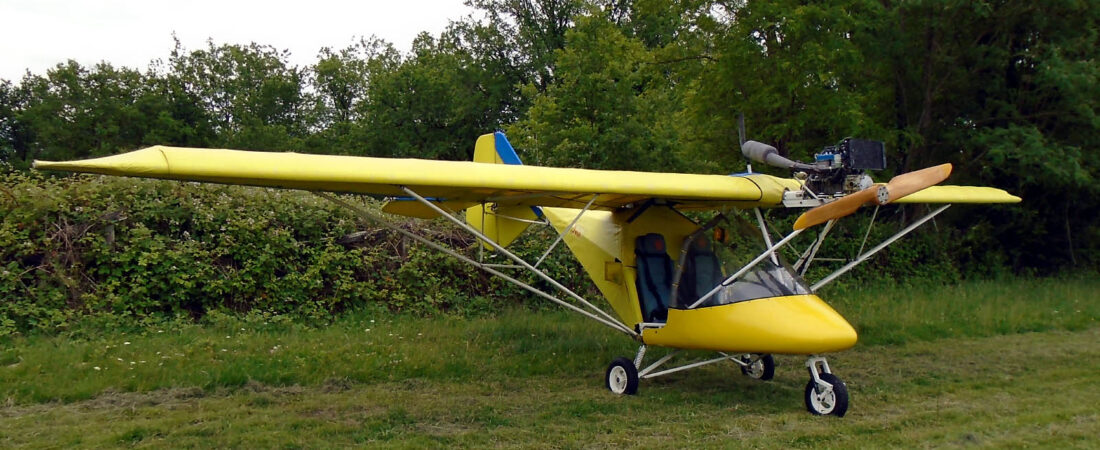


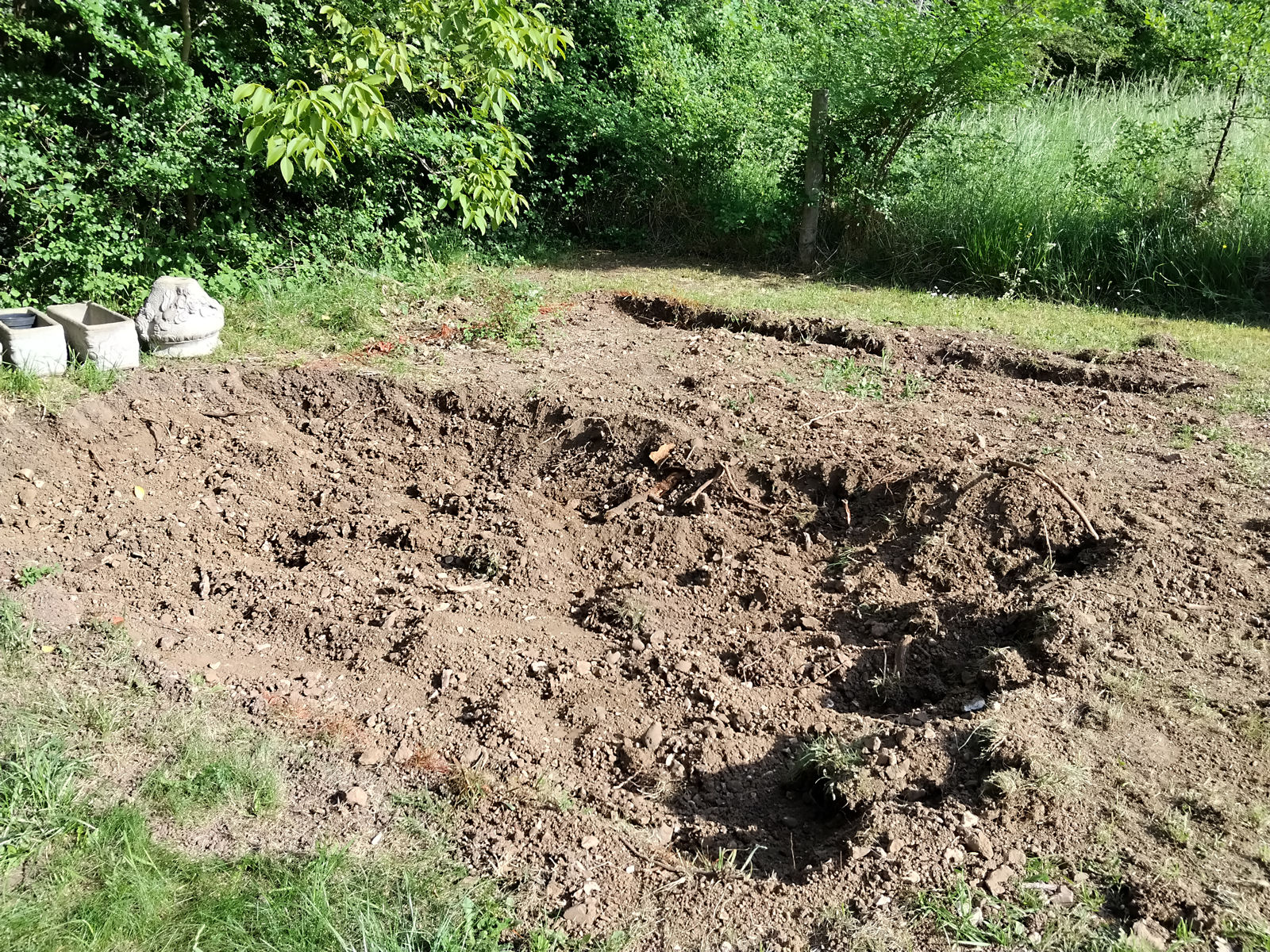
I’ve got a huge amount of work to do in my garden over the next few months so I’ve got to make the best possible use of my time. We’ve had almost constant rain over the last week or so and in all that time I’ve only managed to do two or three hours of work digging out the base for my planned garden tool store/workshop because I don’t want to work in the rain digging out wet earth and I don’t want to cut up my garden with my machines.
I also have another problem. I have quite a lot of grass to cut here and while I’ve been unable to work outside it has been steadily growing. When the weather does dry up I’ll need to get that back under control first and will be unable to get back to my excavation and building work until I’ve done so. And then, for all I know, it’ll start raining again and I’ll be back to square one.
This conflict of priorities is a problem that I really need to solve and I can only do so by having the tools for the job. I’m not the sort of person who likes to buy toys just for the sake of it and never have been but I will seriously consider anything that is of real value. And I think I have found something that fits that bill in the form of a lawn robot.
A lawn robot cuts your grass for you so you don’t have to and therefore has the potential to free up a lot of time for you to use doing other, potentially more productive things. Once set up it works automatically, day and night if you wish, keeping your grass neat and tidy and also weeds under control without any effort from you. Well a bit, maybe, with a strimmer going around from time to time tidying up some edges and areas which it’s unable to get into. It’ll work on wet grass and even in the rain when you wouldn’t want to be outside mowing the grass, so long as it’s not too heavy.
And the weed thing is quite important for me. Because my garden was up until quite recently just a farmer’s field weeds are still a problem as they grow faster than the grass and some are difficult to cut down even with my ride-on mower (possibly I need to sharpen or replace the blades). However, because the robot is constantly cutting the grass down to a low level, the weeds can’t grow either and can even die back as the grass thickens.
The machines come in all shapes, sizes and prices from a couple of hundred euros to several thousands depending on the features you want but the main consideration is the area of grass that you want to cut. A Lidl Parkside robot at 230€ wouldn’t be much use for me as it’s only suitable for small lawns of up to 250 m2 and I have something like 2000 m2 to keep under control. Even a machine suitable for an area of 1000 m2 probably wouldn’t be suitable because its speed and battery life would mean that it would need to be running for many hours with lots of recharges to cover the whole area and keep my grass in trim.
The low cost machines are also predominantly ‘old’ technology. Without going into detail, lawn robots have to be set up to remain inside and mow specific areas. The ‘old’ way of doing that was to lay a wire around the whole periphery of the area in question which the machine could detect and when it did so it turned automatically and went off in another direction, eventually covering the whole lawn by ‘bouncing’ off the wire. The technology was never perfect and still isn’t, and some cheaper machines have been known to drive over the wire and cut it.
This problem was overcome by using GPS which doesn’t need to have a ‘hard’ periphery around the area needing to be cut. Instead you ‘drive’ the machine around the edges of the area so the machine ‘learns’ where they are and stores them in its memory so it never exceeds them, and if you have a more complex garden, like mine, you can store details for several areas which the machine then deals with separately as and when ordered to.
The latest machines don’t even use GPS. Instead they use a system of laser radar called Lidar. Its main advantage is that machines with Lidar can operate where a GPS signal is weak or where it can be lost, under dense trees for example. However, it’s more expensive and offers little more than cheaper GPS machines where there is a good GPS signal. Also, current GPS machines are now incorporating AI that allows them to continue working should they lose their GPS signal for a short period.
The machine I’ve gone for is the Isward GX 2026 model, as shown in the images below. It’s Chinese, of course, and I’ve ordered it from Aliexpress. It uses what is referred to as GPS RTK technology which involves setting up a small GPS receiver in your garden to which the machine links wirelessly and it also incorporates AI obstacle avoidance so it doesn’t chew up your guinea pig or any object in its path in or on your lawn. A machine of the size I need with Lidar costs a bit more than I want to spend and as my garden is very open with a good GPS signal I don’t think I need it.
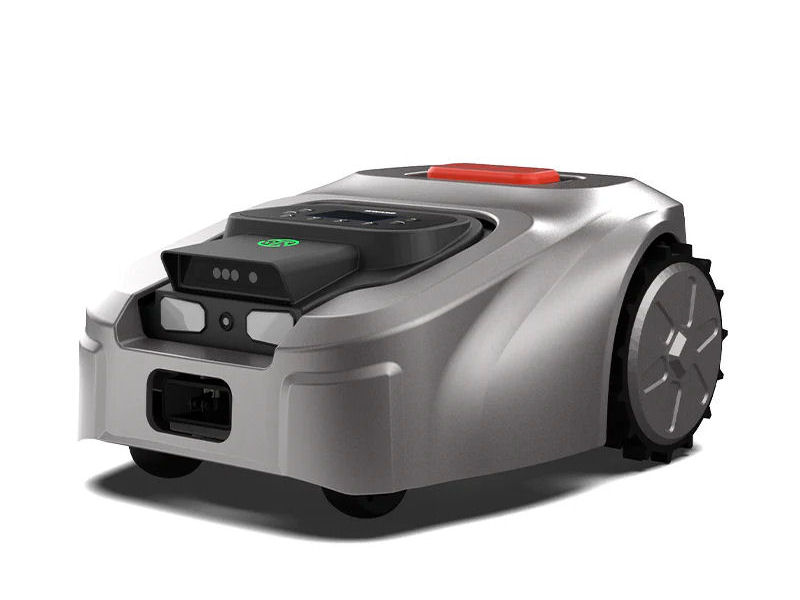
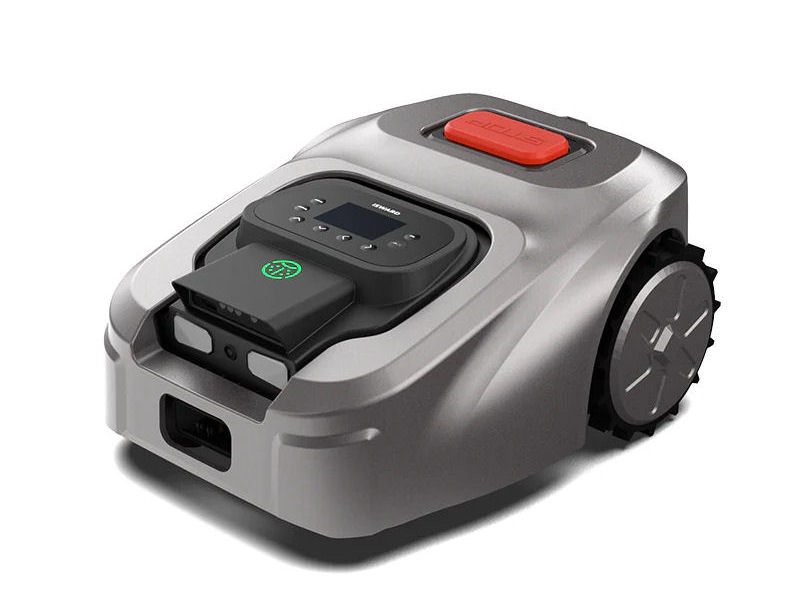
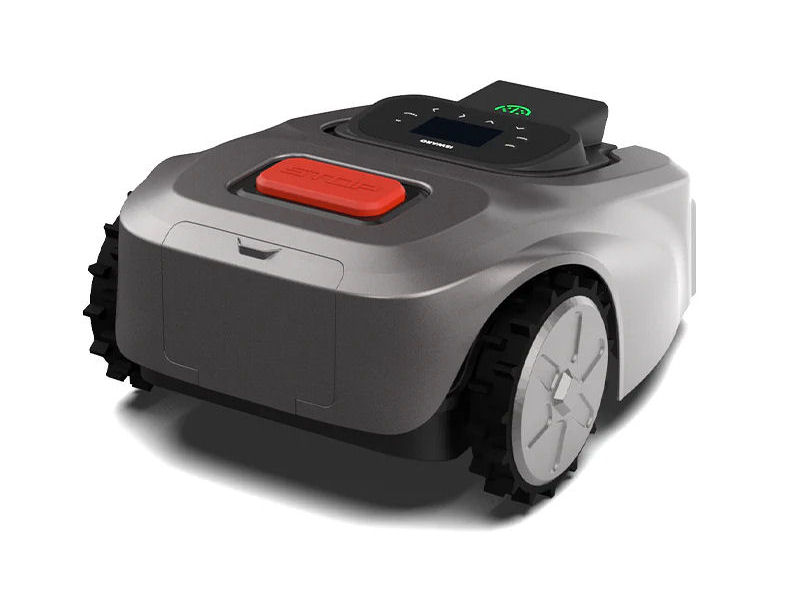
I won’t say any more about it for now. Instead I’ll wait until it arrives and I can set it up and use it. Like all lawn robots, it’ll need the grass to be cut with a standard mower before starting work but then I hope it’ll do the job I want it to and free my time up so I can get back onto my excavation and building work. Like all lawn robots, it comes with a charging station that the robot automatically returns to without supervision when necessary. It needs to be placed on flat ground and my first problem will be finding a suitable area that’s flat enough. However, I’m sure I’ll be able to overcome that.
 English
 Nederlands
 Français
 Deutsch
 Italiano
 Latviešu valoda
 Português
 Español