


I’m nowhere near the speed of a real pro but slowly but surely I’m getting quicker with my new mini excavator as my skill level improves. I’m making fewer mistakes and managing to pick up full bucket loads of earth to transfer to my new dumper much more frequently now. One problem I’m having is that the excavator can occasionally be very jerky.
Other people have complained about this problem with small excavators that they’ve bought from China so I’m not alone. The result unfortunately is that you can scoop up a full bucket of earth only to lose most of it if, while you’re lifting the boom and spinning the excavator round towards the dumper, it jerks so violently that it throws all of the bucket contents into the air.
This is annoying but not so bad if the earth just falls onto the ground, but several times it’s been tipped onto the dumper itself with a quantity going onto its engine. You also have to be careful to ensure that a jerk does not cause the excavator bucket to hit the dumper by making sure every time that the bucket has been raised high enough so it can’t hit the dumper bin if a jerk does occur. However, it makes emptying the bucket into the dumper a lot slower than it need be.
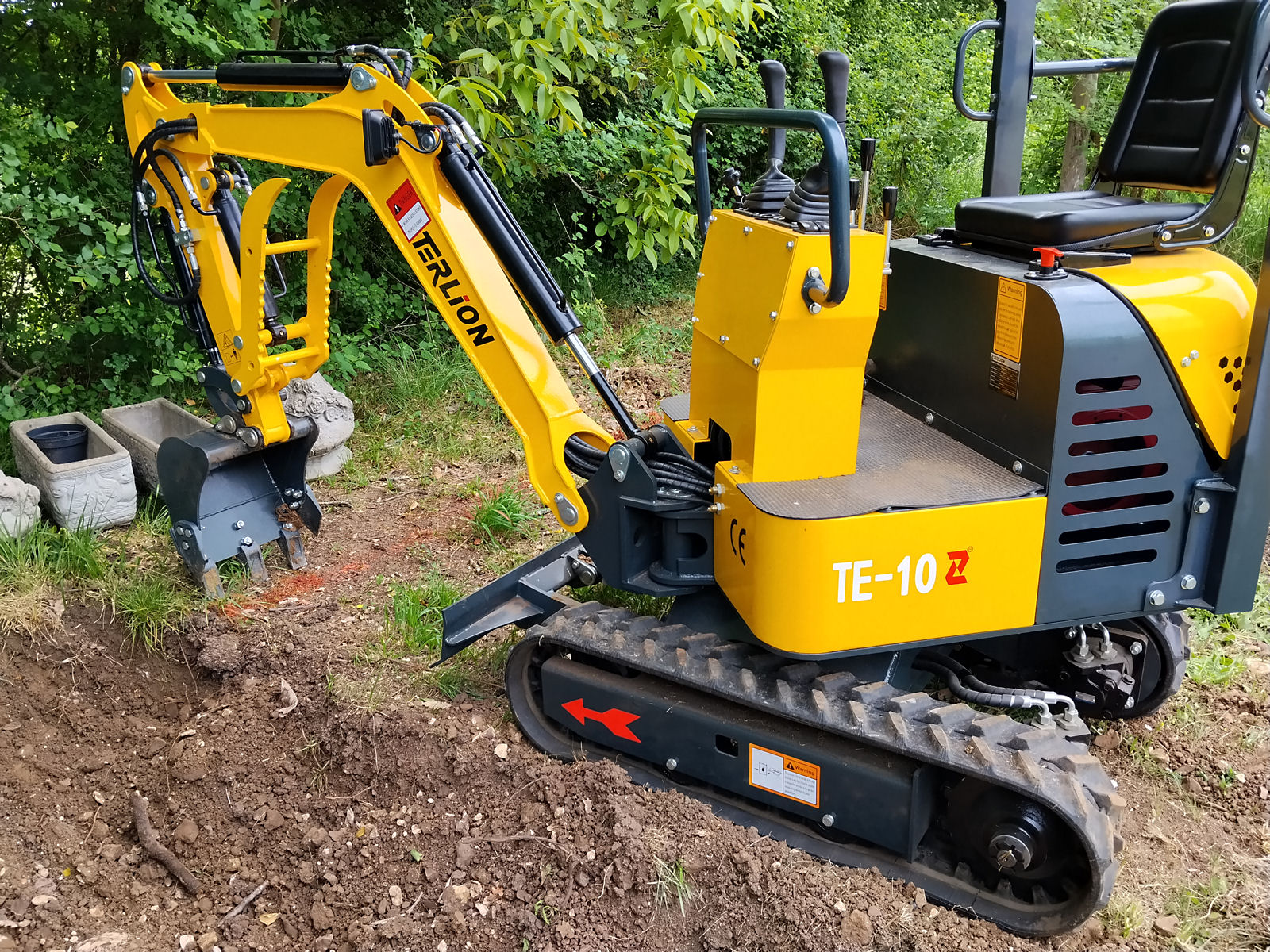
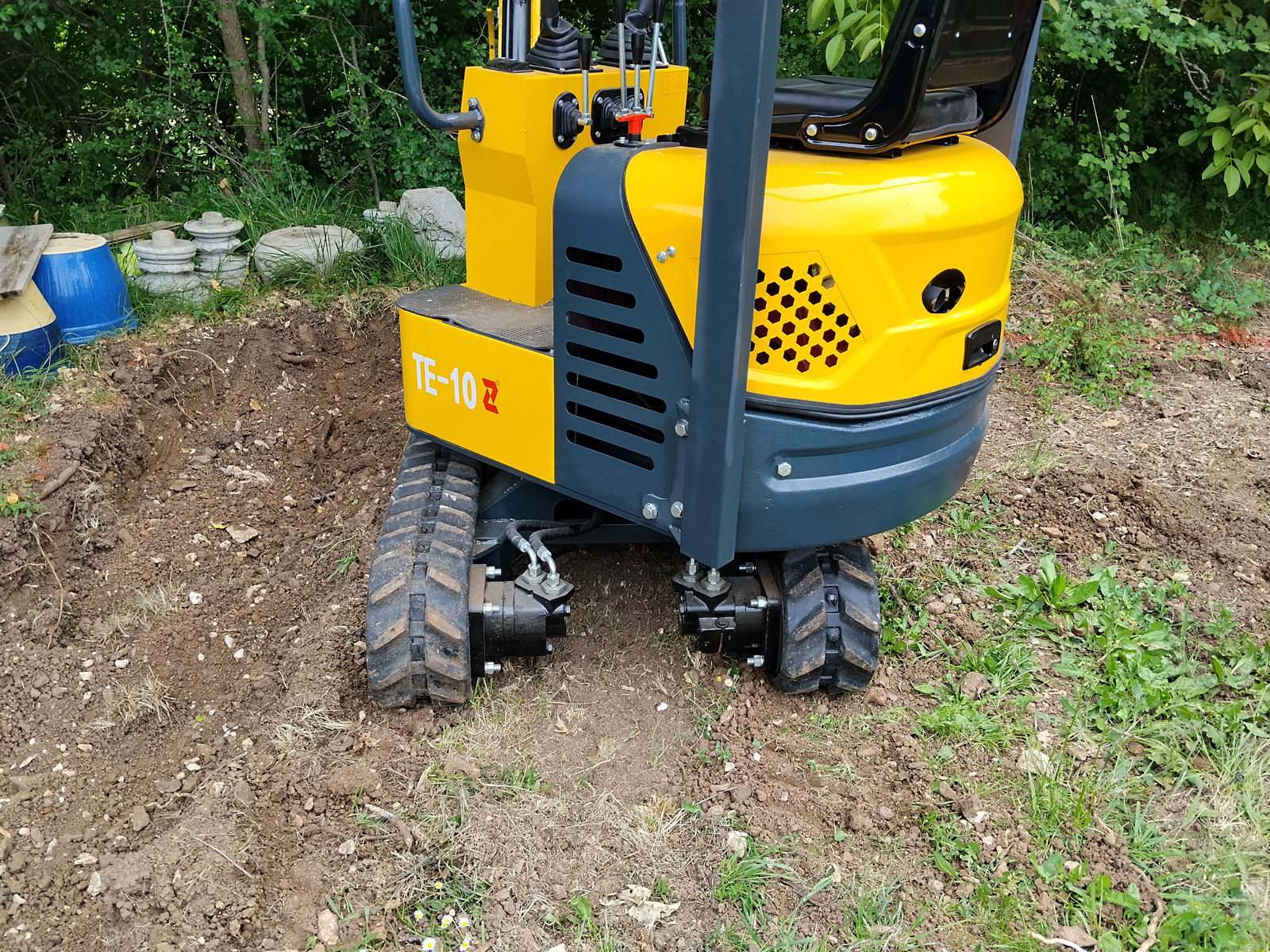
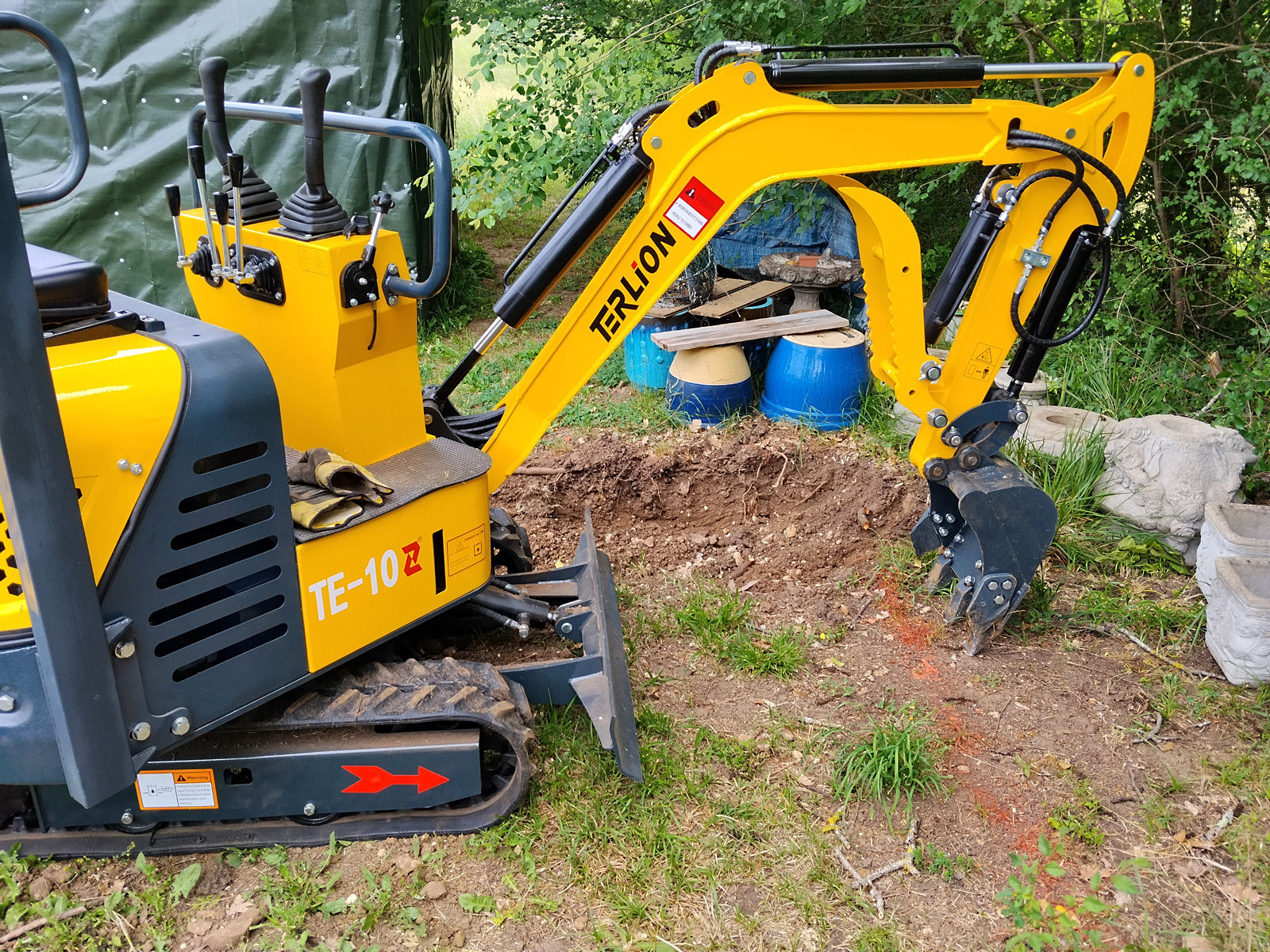
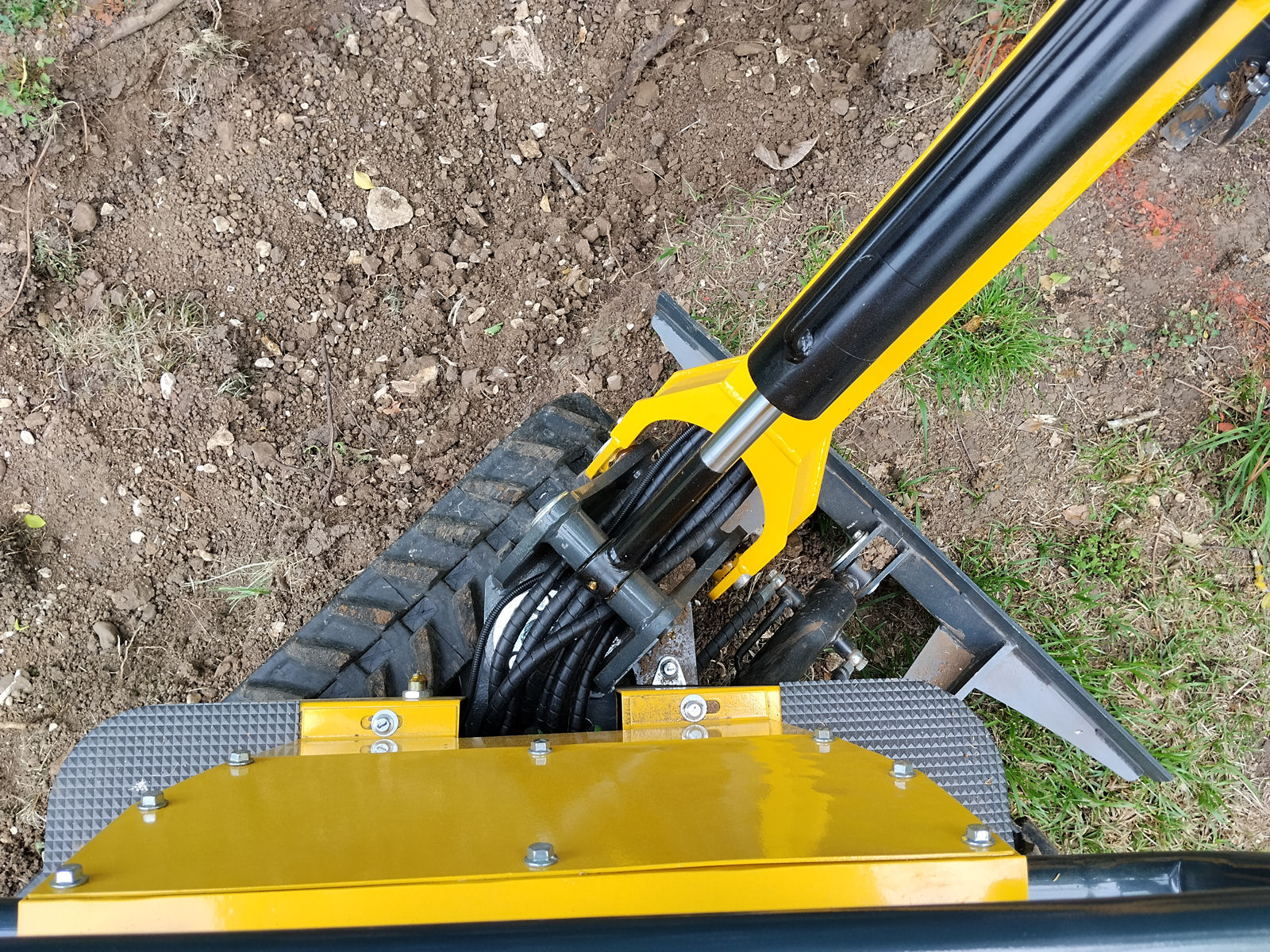
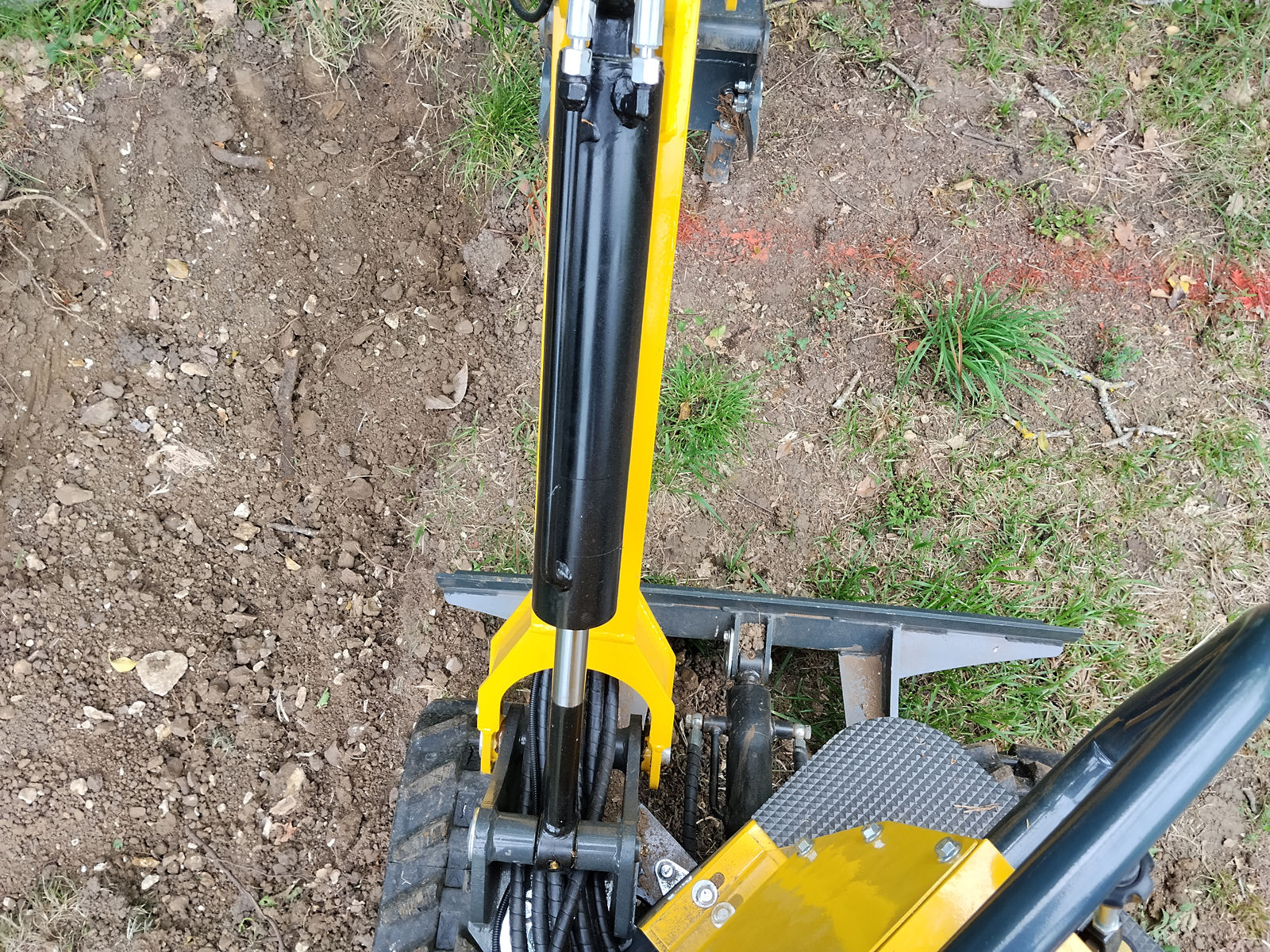
In my last post I said that I’d show how the excavator swing beam works and the first few images below do that. Without a swing beam the excavator bucket can only move in a direction perpendicular to the excavator’s cab which can be very restricting. For example, later on I will need to dig a trench down to the bottom of my garden for the electricity cable for the new garden tool store/workshop that I’m currently working on. I’ll want that trench to be as close to the boundary fence as possible but without a swing beam the minimum distance will be half the width of the excavator itself.
With a swing beam the distance can be reduced to near zero because the swing beam allows the excavator bucket to move in a direction perpendicular to the excavator’s chassis but to one side of the excavator itself. In the images the excavator’s chassis is parallel to the direction of the trench, the cab has been turned to the left and swing beam to the right effectively allowing the trench to be dug on a line perpendicular to the excavator’s track or further even to one side. This is necessary because the reach of the excavator’s beam is less than the distance from the back to the front of the area being excavated.
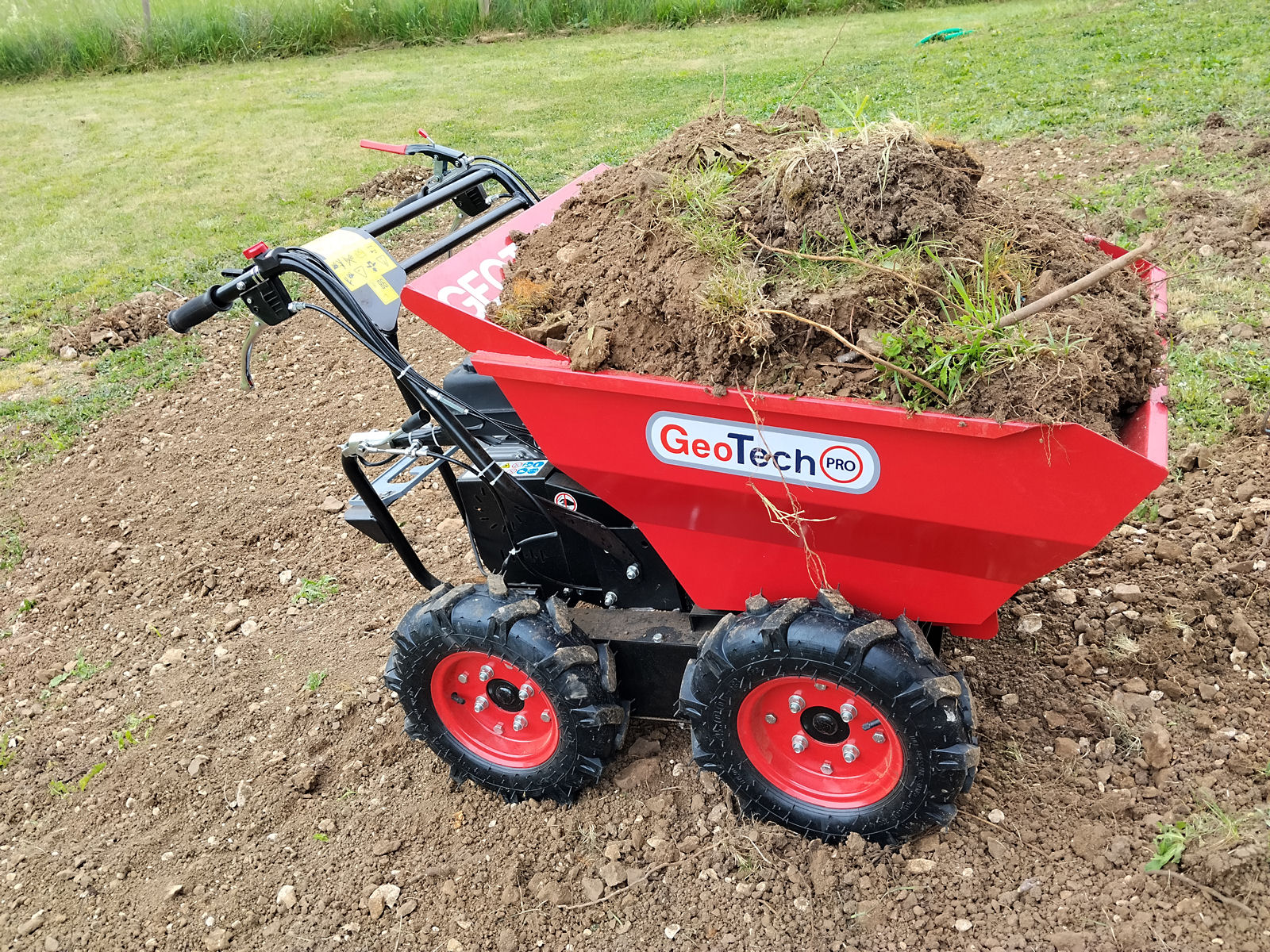
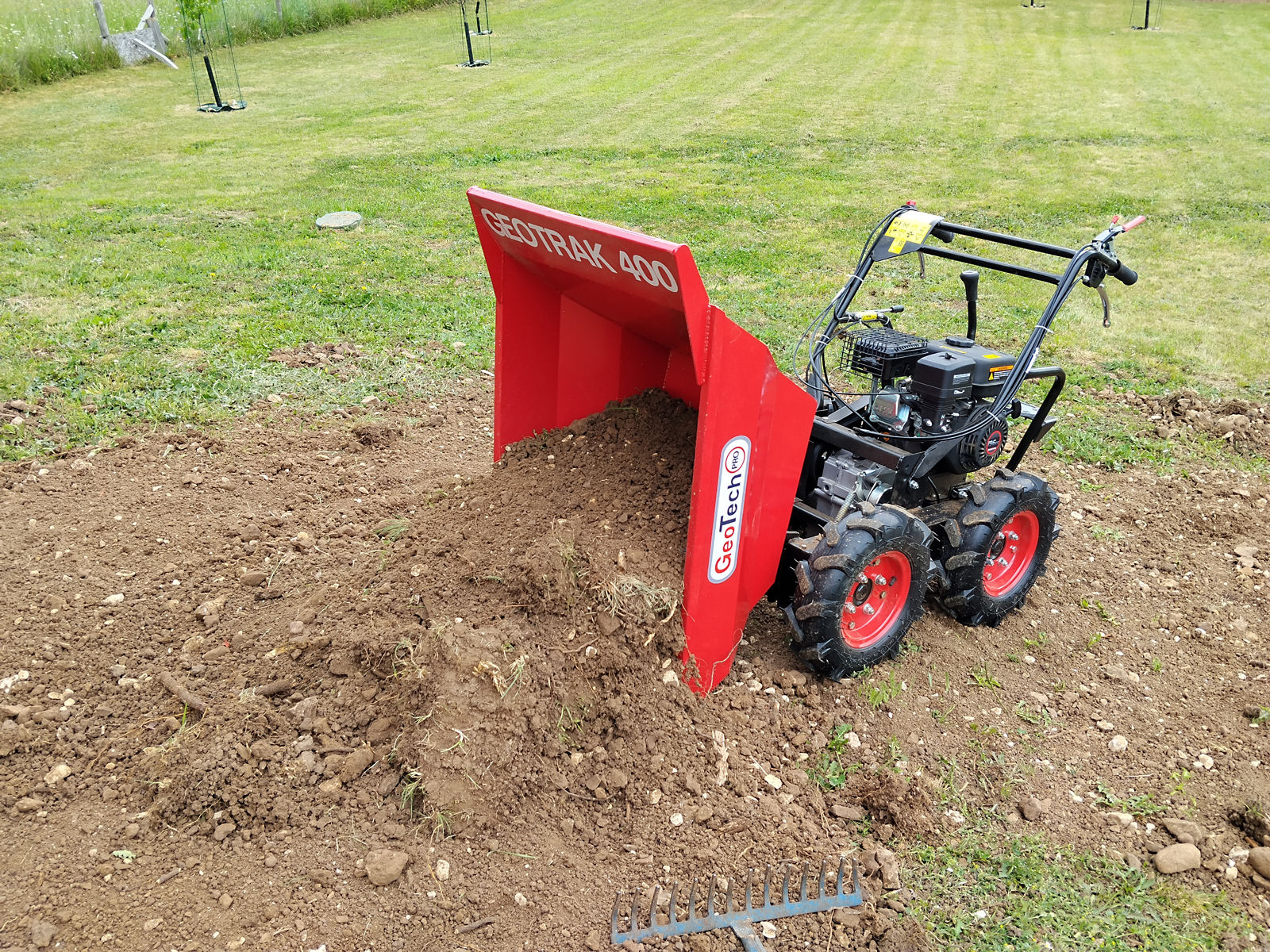
What about my new dumper? It has been a godsend as the images of it with a full load show. Imagine digging out the amount of earth that it can carry by hand, let alone then pushing the load up the slope of the garden, then up an even steeper slope and then tipping it out by hand. The dumper makes this easy, if not exactly effortless. Its bin has been designed to be delicately balanced so it can be easily tipped out by hand on the level. However, I’m driving the machine up a slope and tipping the bin while the machine is still on an upslope, which still requires quite a bit of effort.
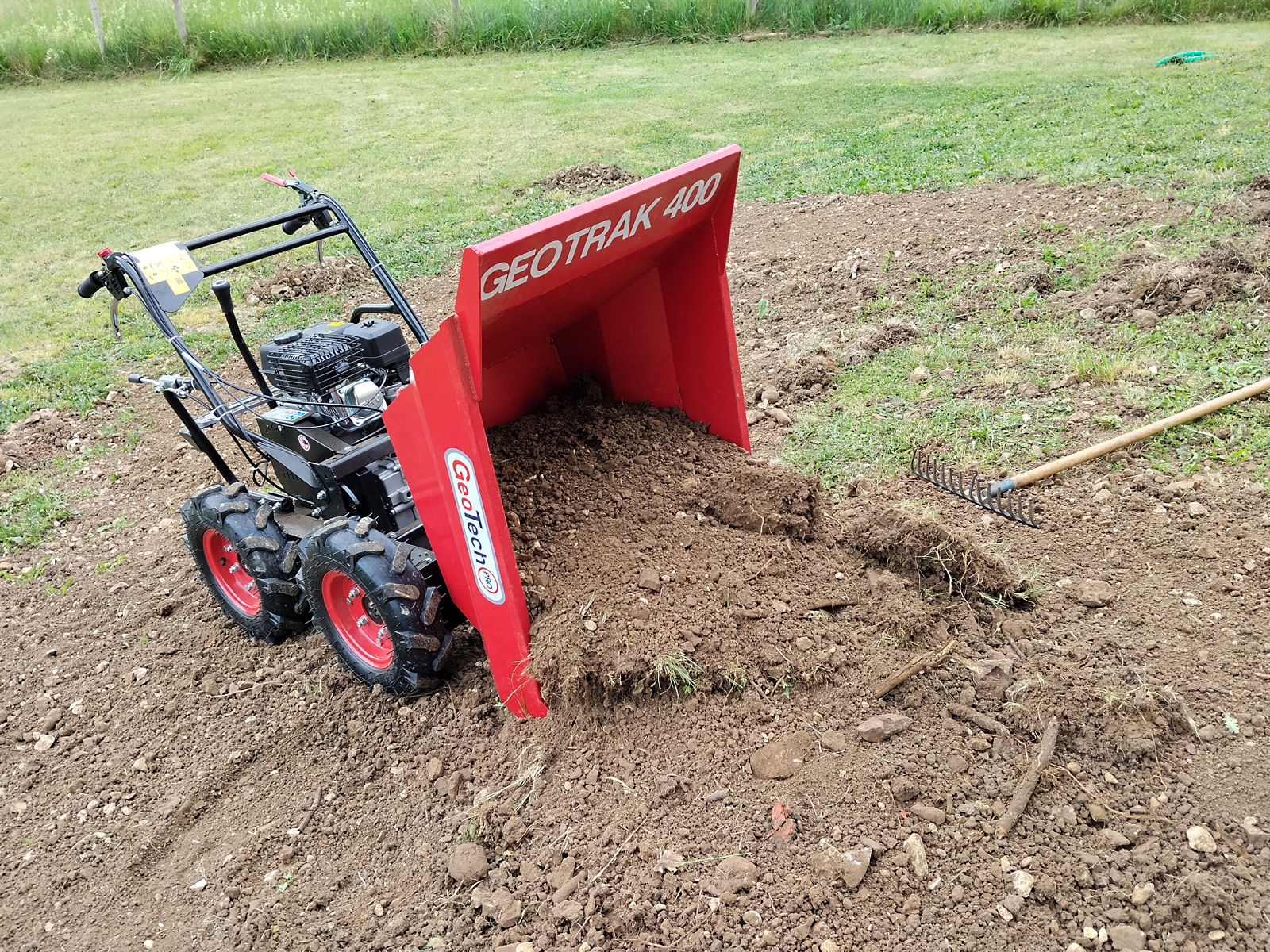
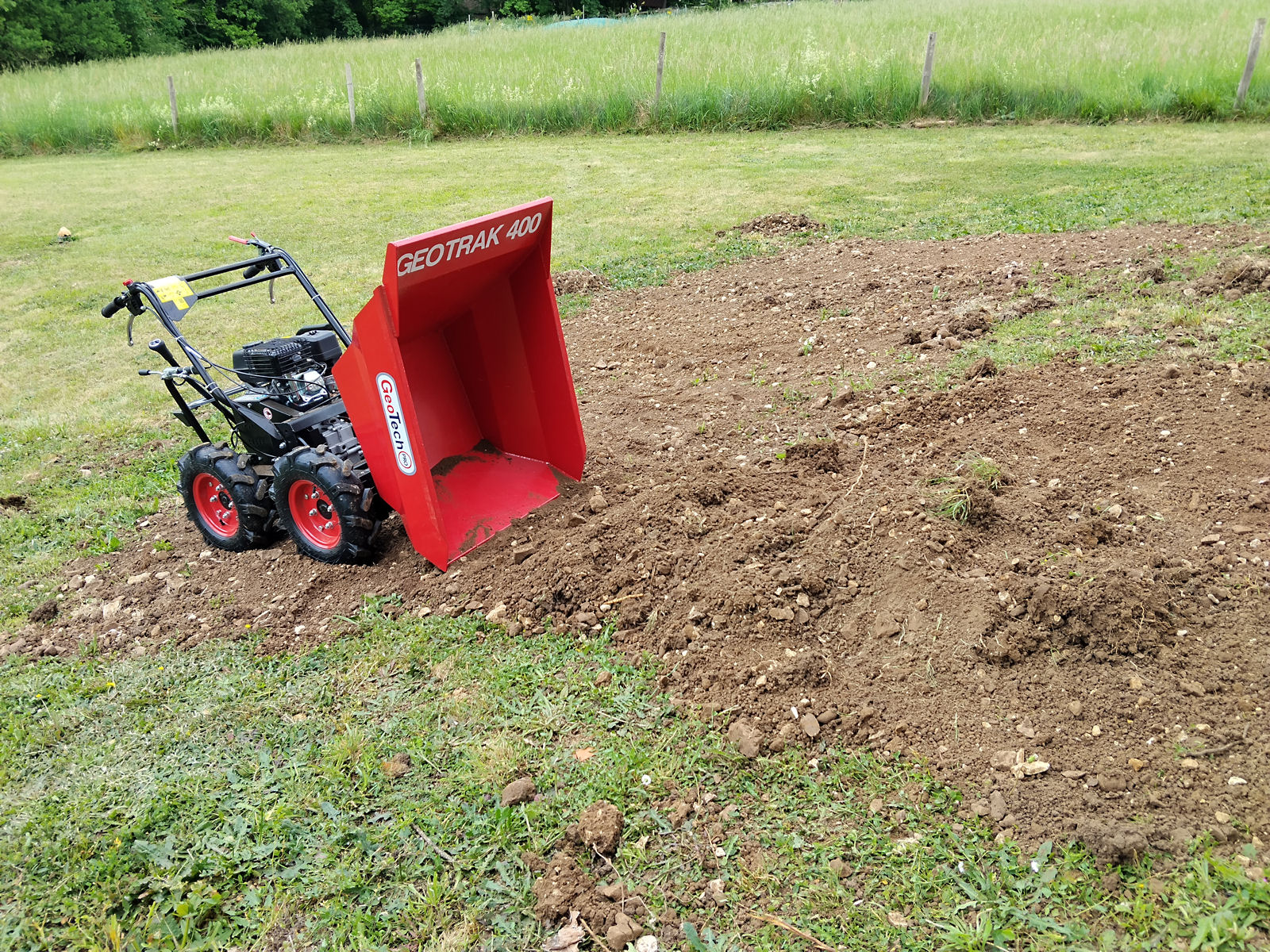
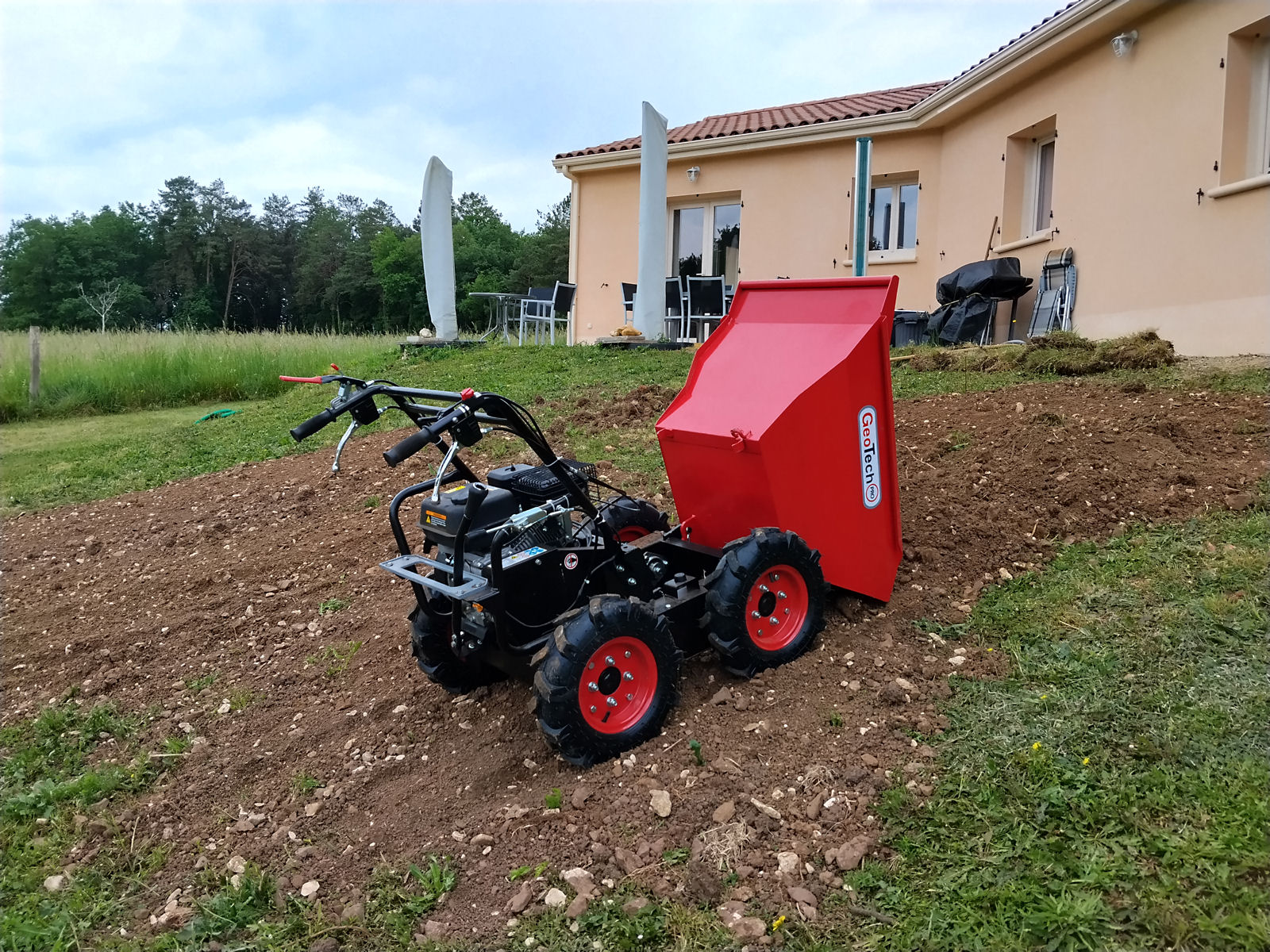
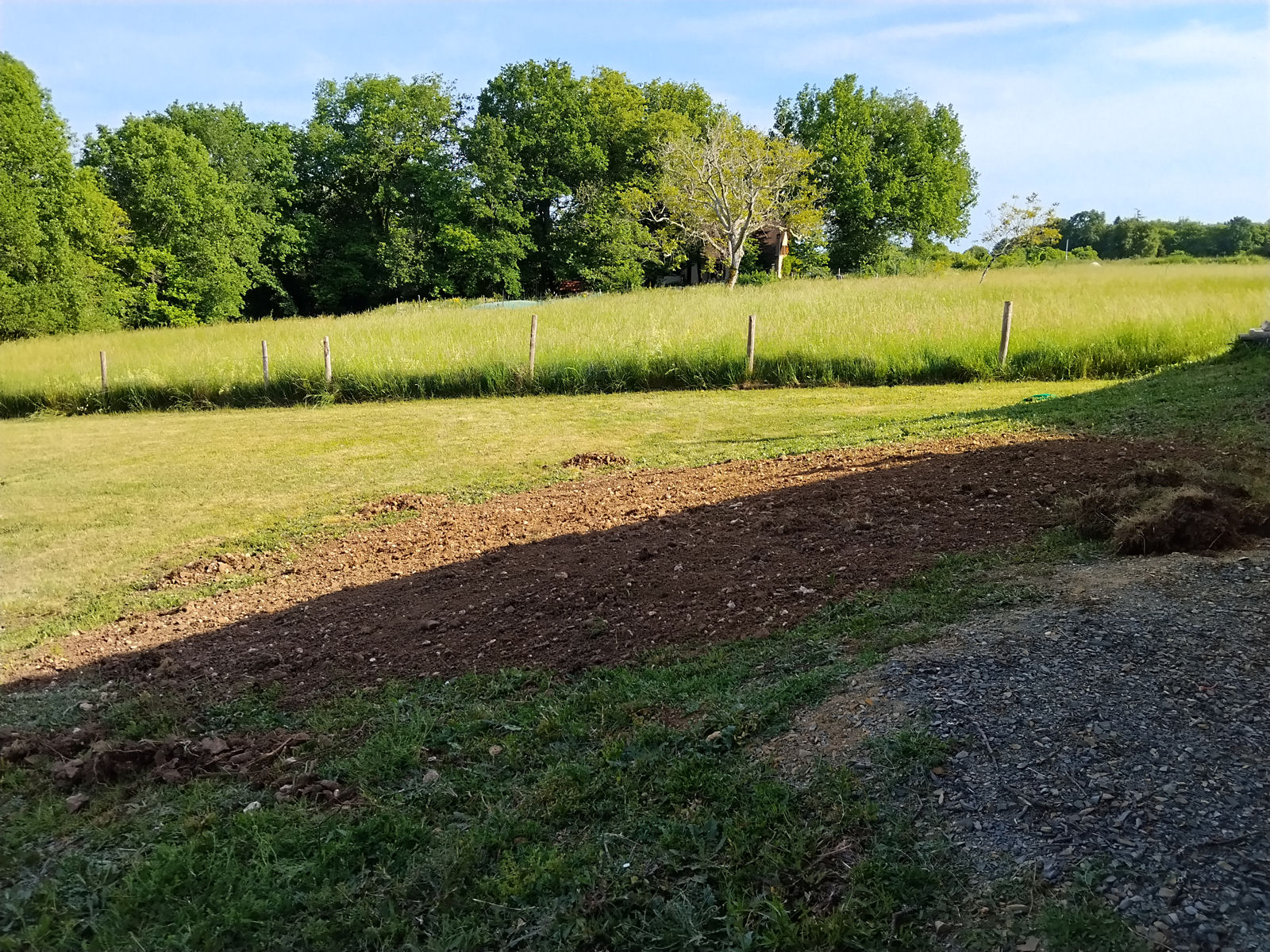
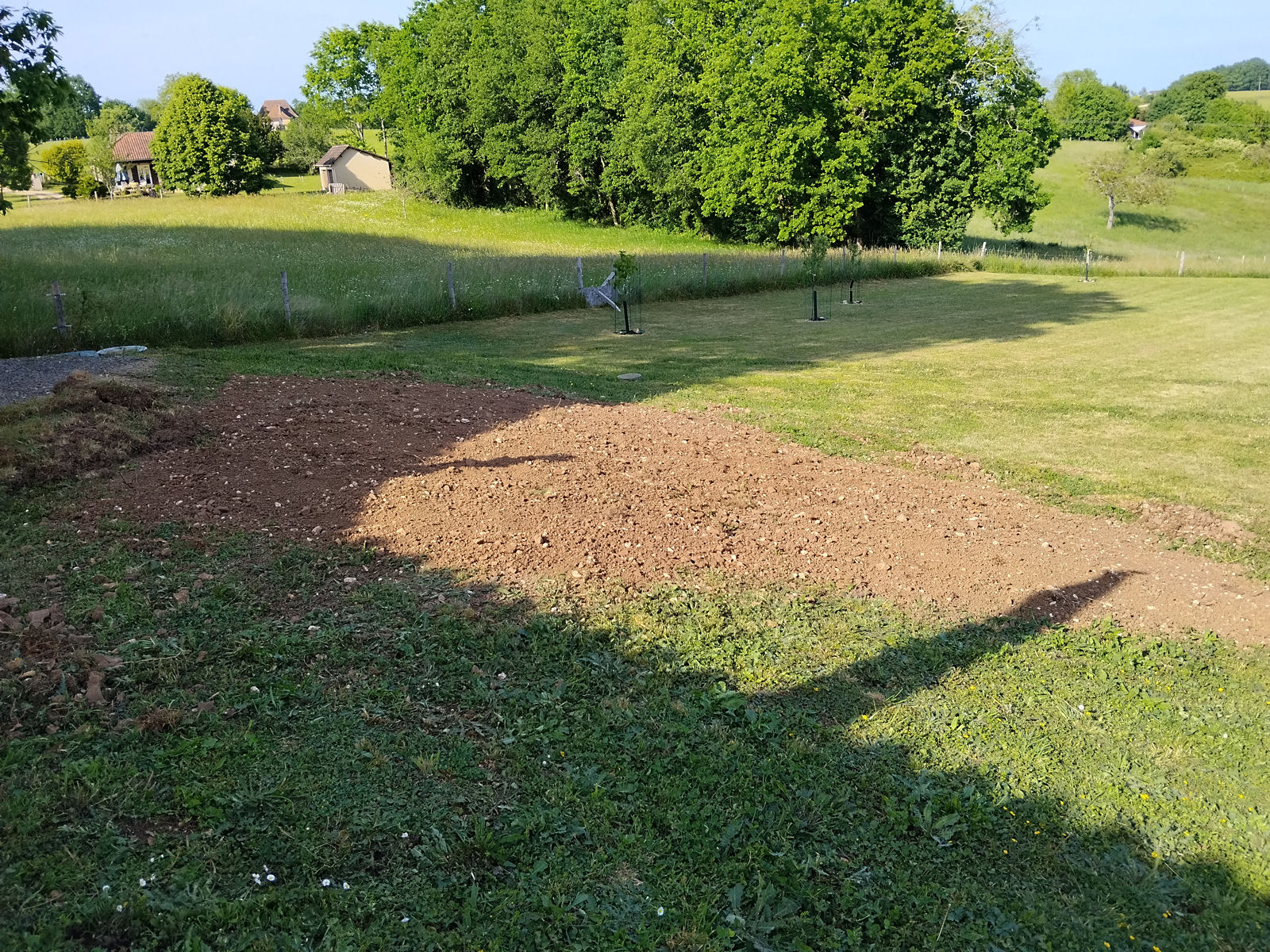
I’ve managed to shift quite a lot more earth today. Once again it has been slower than it might have been because as well as digging the earth out of what will be the base of my new garden tool store I’ve then been using it to transform the slope at the rear of my house. I don’t know whether I’ll have enough earth but I’m trying not just to reduce the steepness of the slope but also to extend it away from the rear of the house and create a flat area of grass before it falls away from the terrace, as shown in three photos that I took at the end of the day.
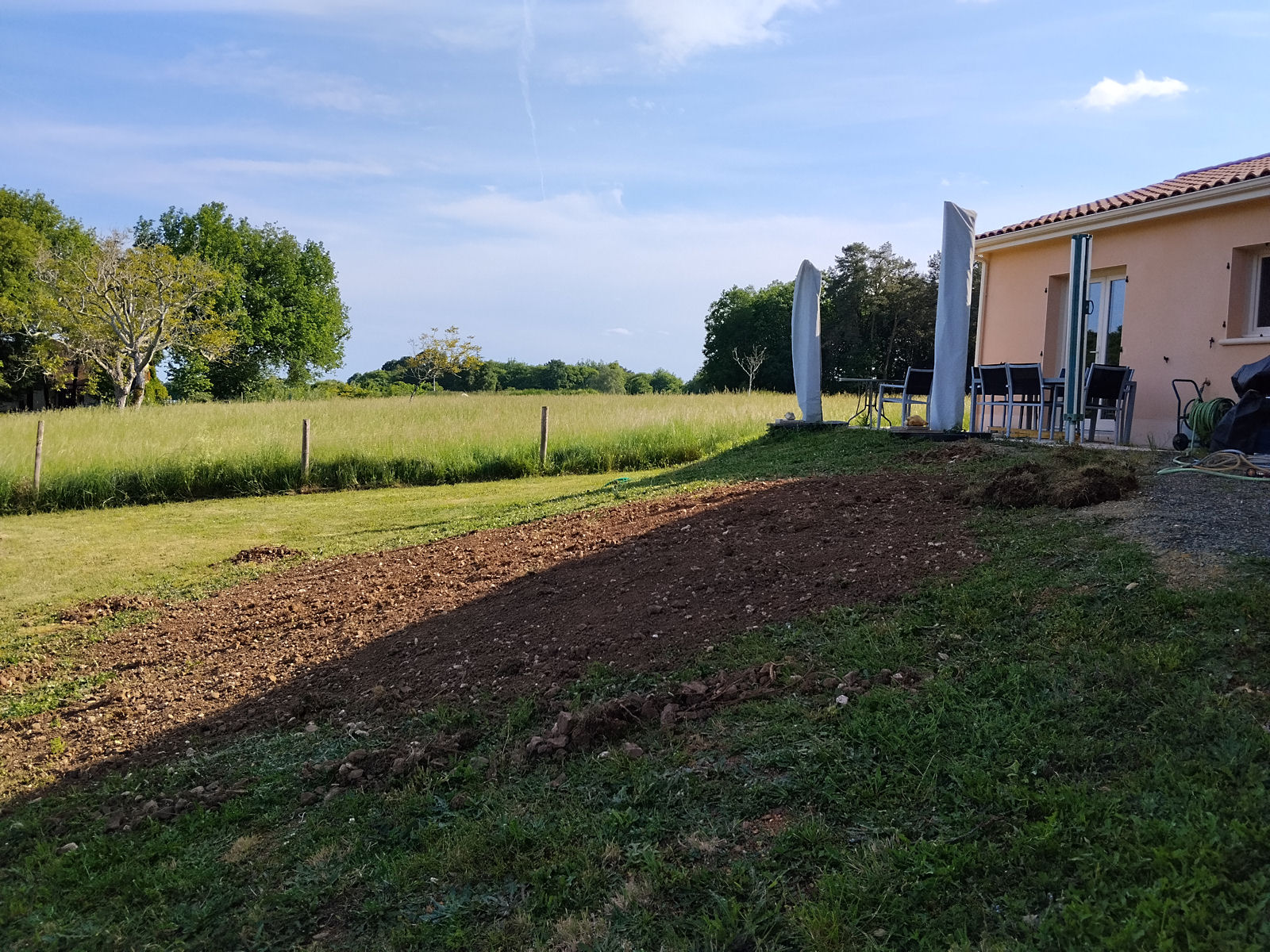
I’m now about half way through digging out the base for the garden tool store.
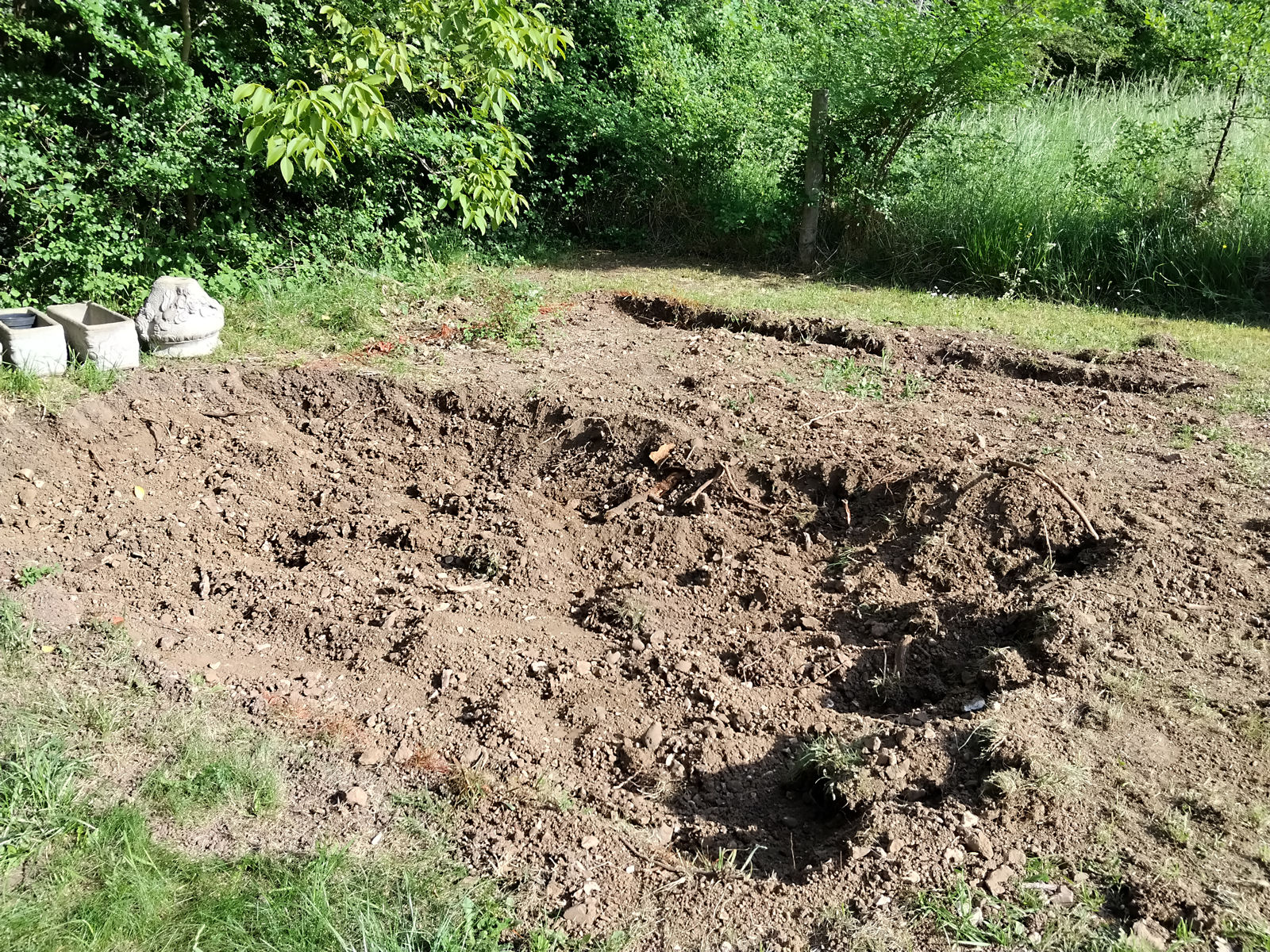
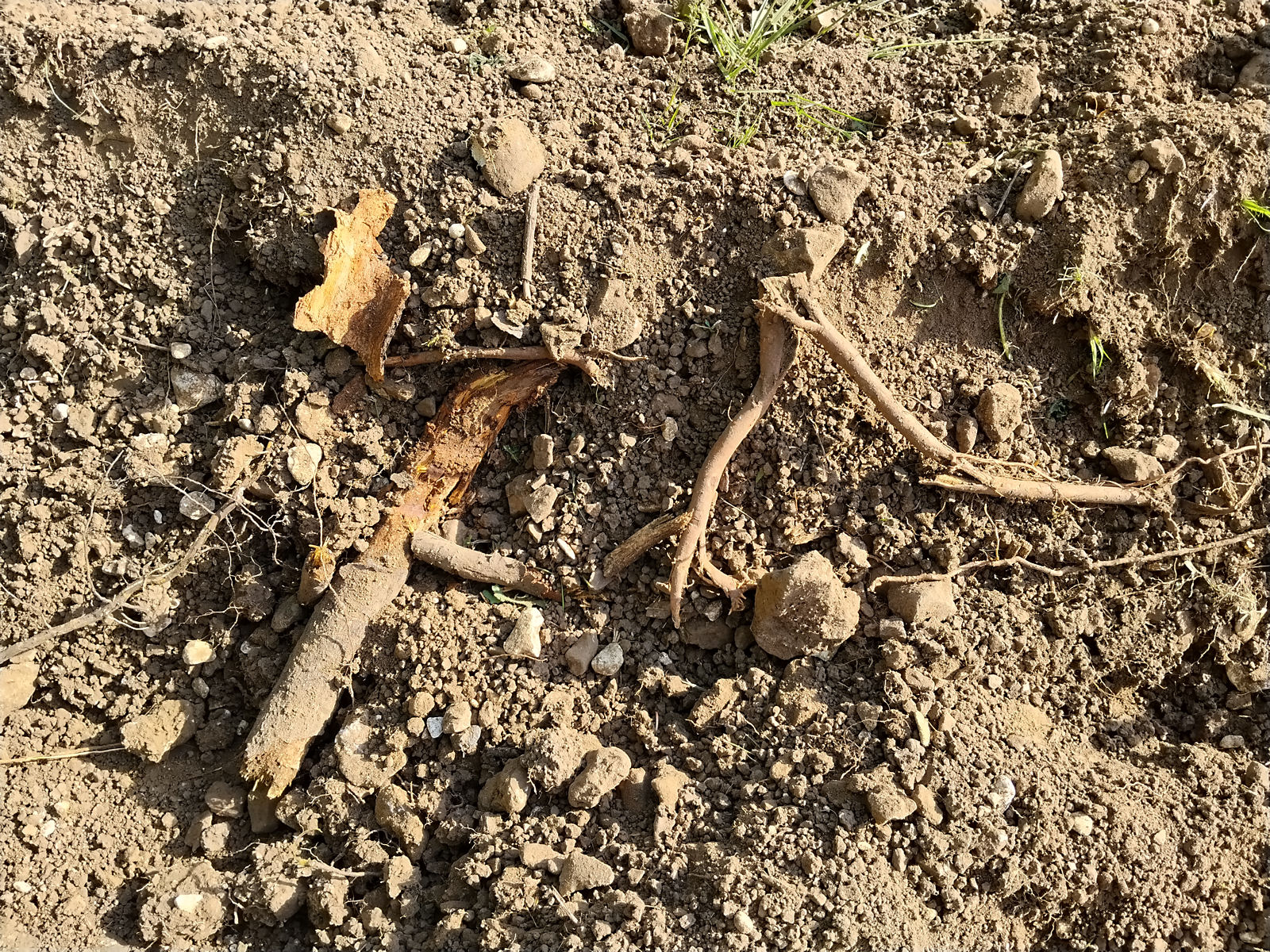
The job hasn’t been as straightforward as it might have been because of the number of tree roots that the excavator is having to rip out. Doing the job by hand would have been totally impossible and I am so relieved that I made the decision to acquire my own equipment which is allowing me to work without stress at my own pace. Difficult to put a price on that 🙂
 English
 Nederlands
 Français
 Deutsch
 Italiano
 Latviešu valoda
 Português
 Español