Hooray, at last

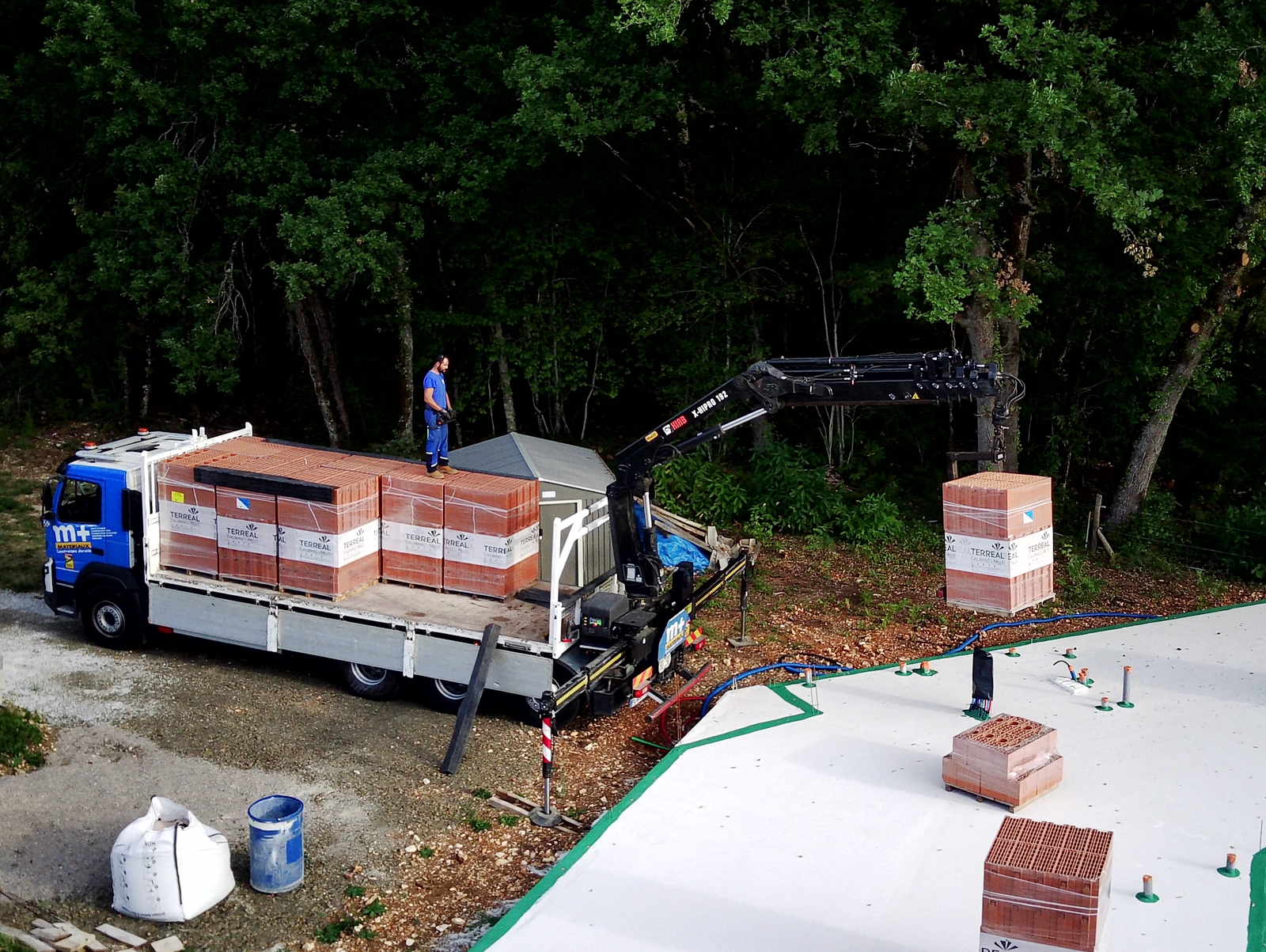
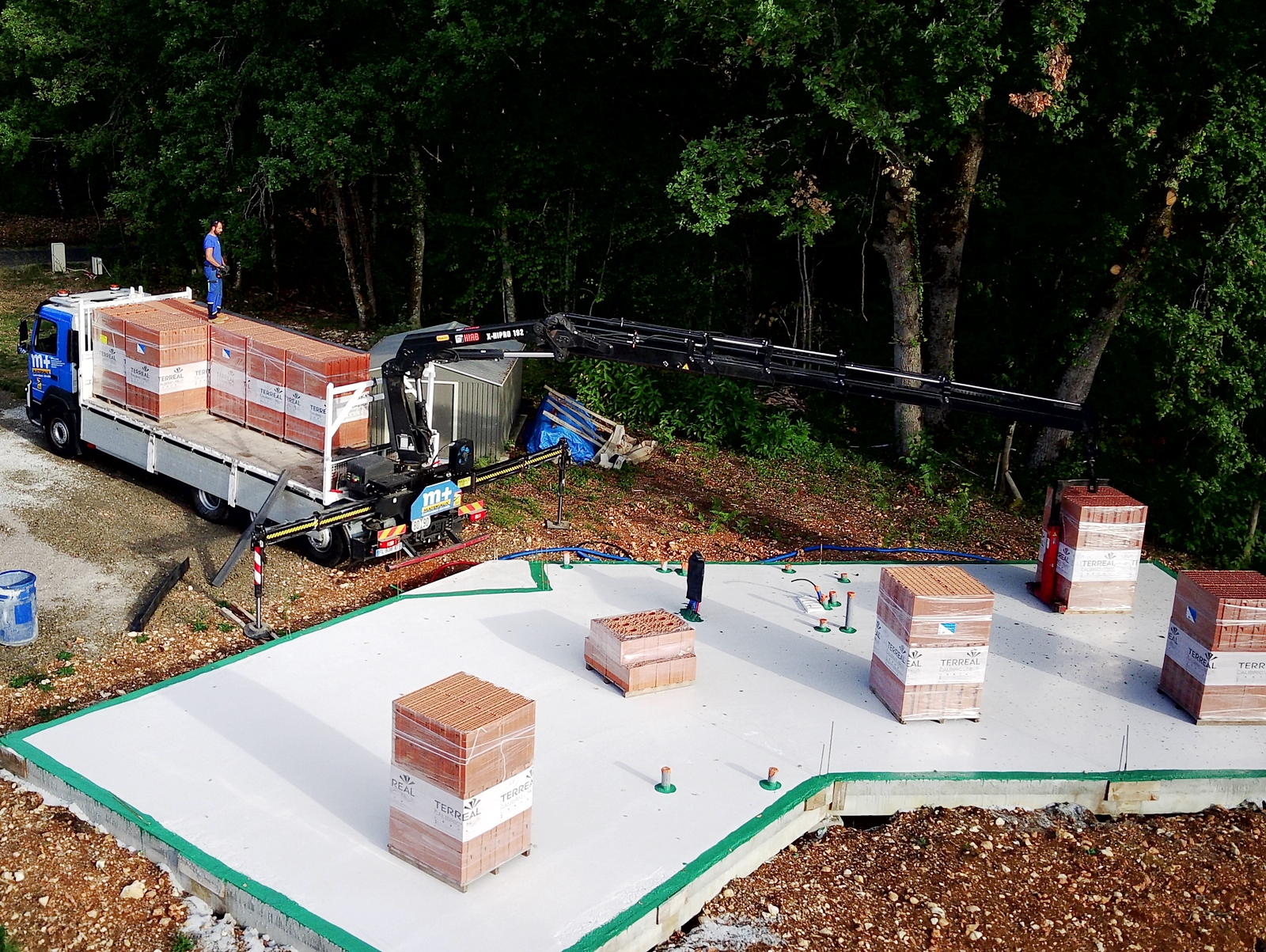
At around about 8.30 am this morning I thought that I heard a ‘mechanical’ sound coming from the top of my land and sure enough, to my pleasant surprise there was a smart blue delivery truck with its driver just about to start unloading materials that will be needed in the next phase of my house-build project.

null

null

The truck was heavily loaded with terra-cotta building blocks, which are used in most of the constructions down here, and first off was a small pallet of small blocks with holes in them that when stacked up will form some kind of flue. As my new house won’t have a flue I’ll be interested to see what they will be used for – some sort of conduit for electrical cables perhaps?

null

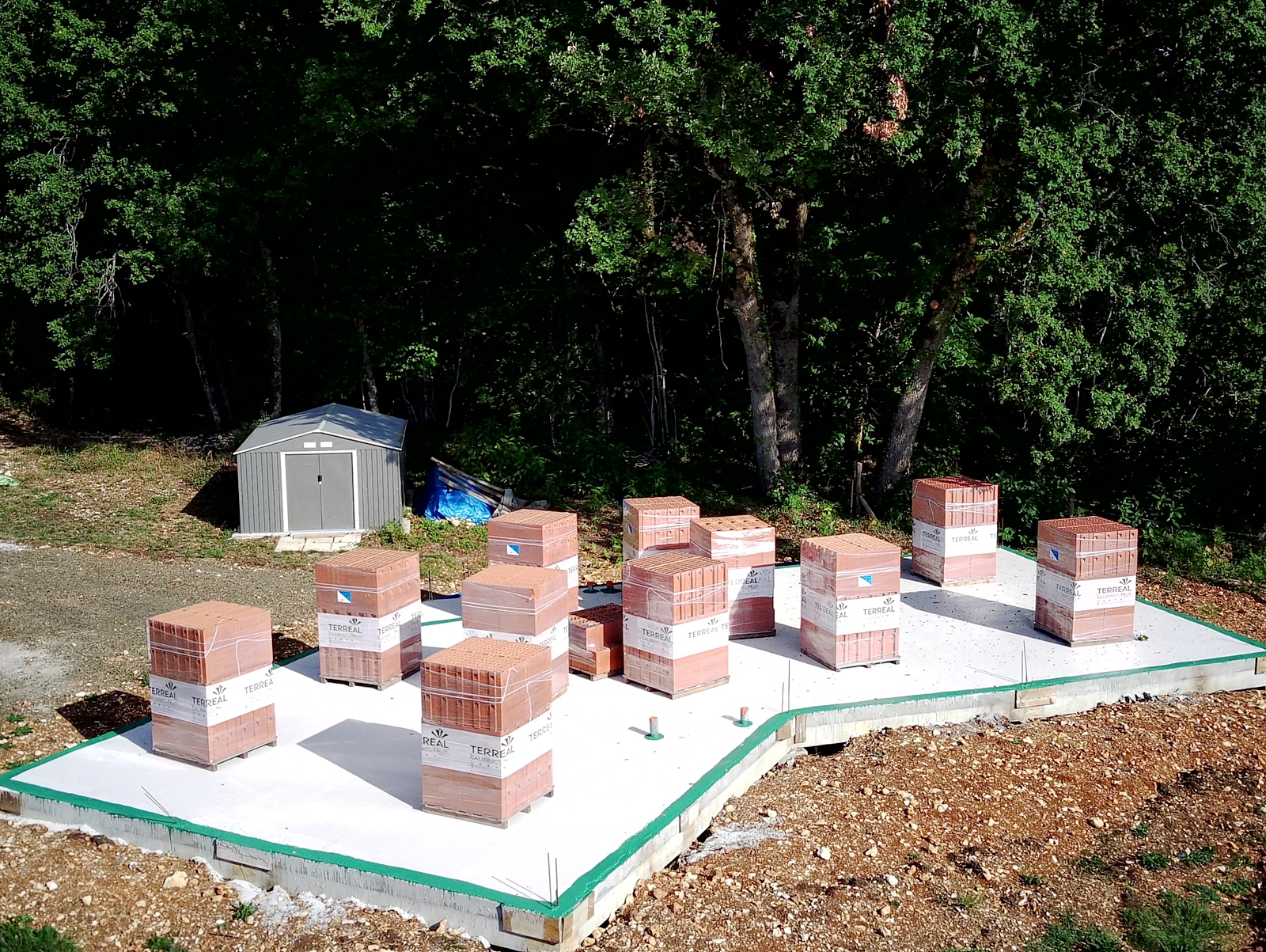
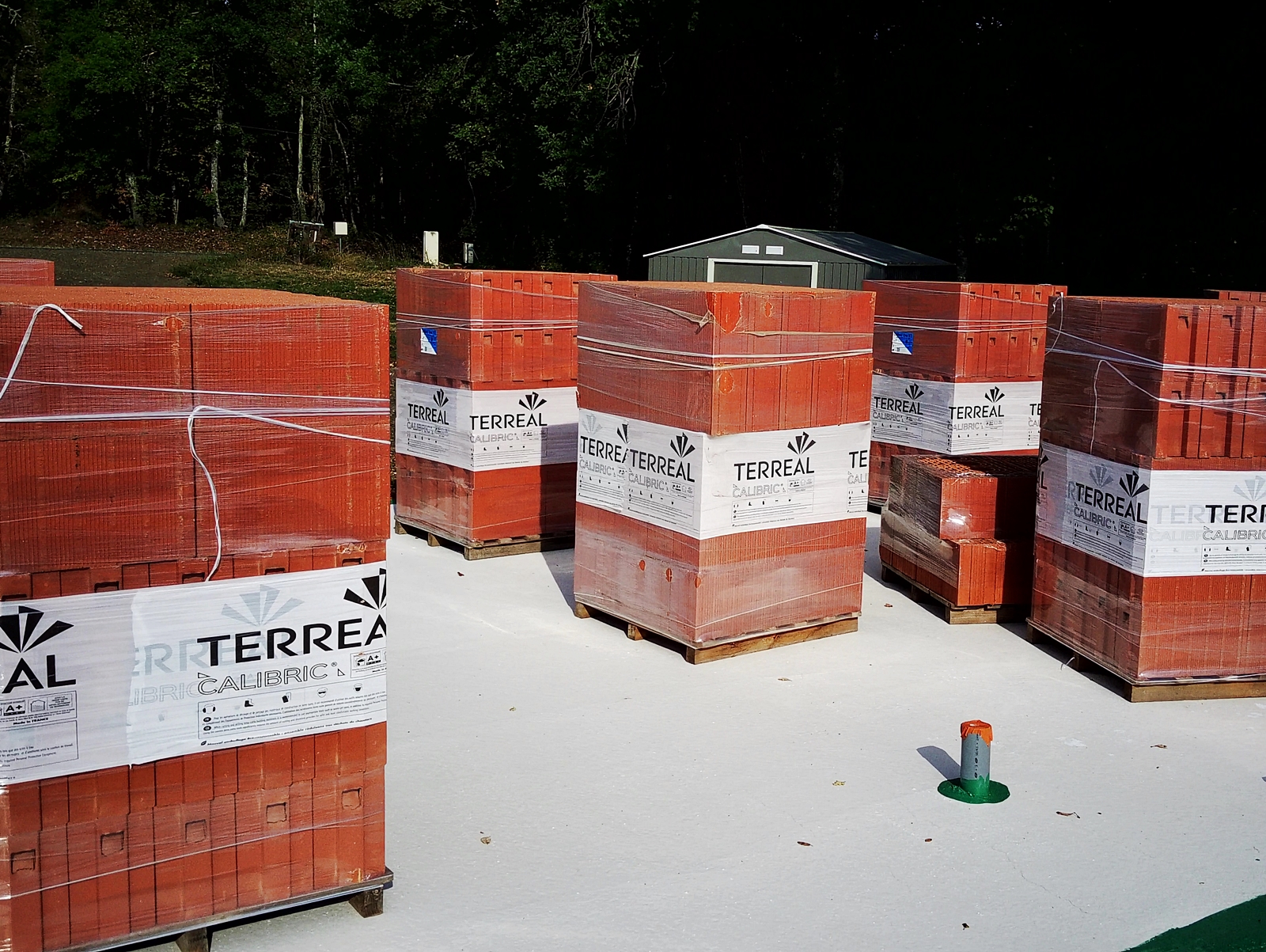
Over the next hour or so all of the blocks were unloaded using a very powerful Hiab hoist with an amazingly long arm that was fitted on the tail of the truck. To give an idea of what I’m talking about, each pallet weighed 1000 kgs (I think) and the hoist arm was extended to great lengths, as shown in some of the following images, until the full weight of the blocks was distributed over the complete floor area of the house and the blocks themselves will be conveniently placed for when the mason(s) come to set them in place to build the walls.

null

null

null

null

null

With its delivery completed, the truck departed after just over an hour leaving the blocks ready for use. I guess that the next delivery will be of the special sealant that will be used to join them together to construct the walls.

null

null

So what great news this was! A delivery of material that is really meaningful in terms of the build as a whole – you can’t get more meaningful than the stuff that the walls will be made out of. And hopefully this signals that the project is ready for a big leap forward, because once the builders start on the blockwork they don’t normally stop until the walls are all up. I’m keeping my fingers crossed that that will be so in my build 😉

And finally…

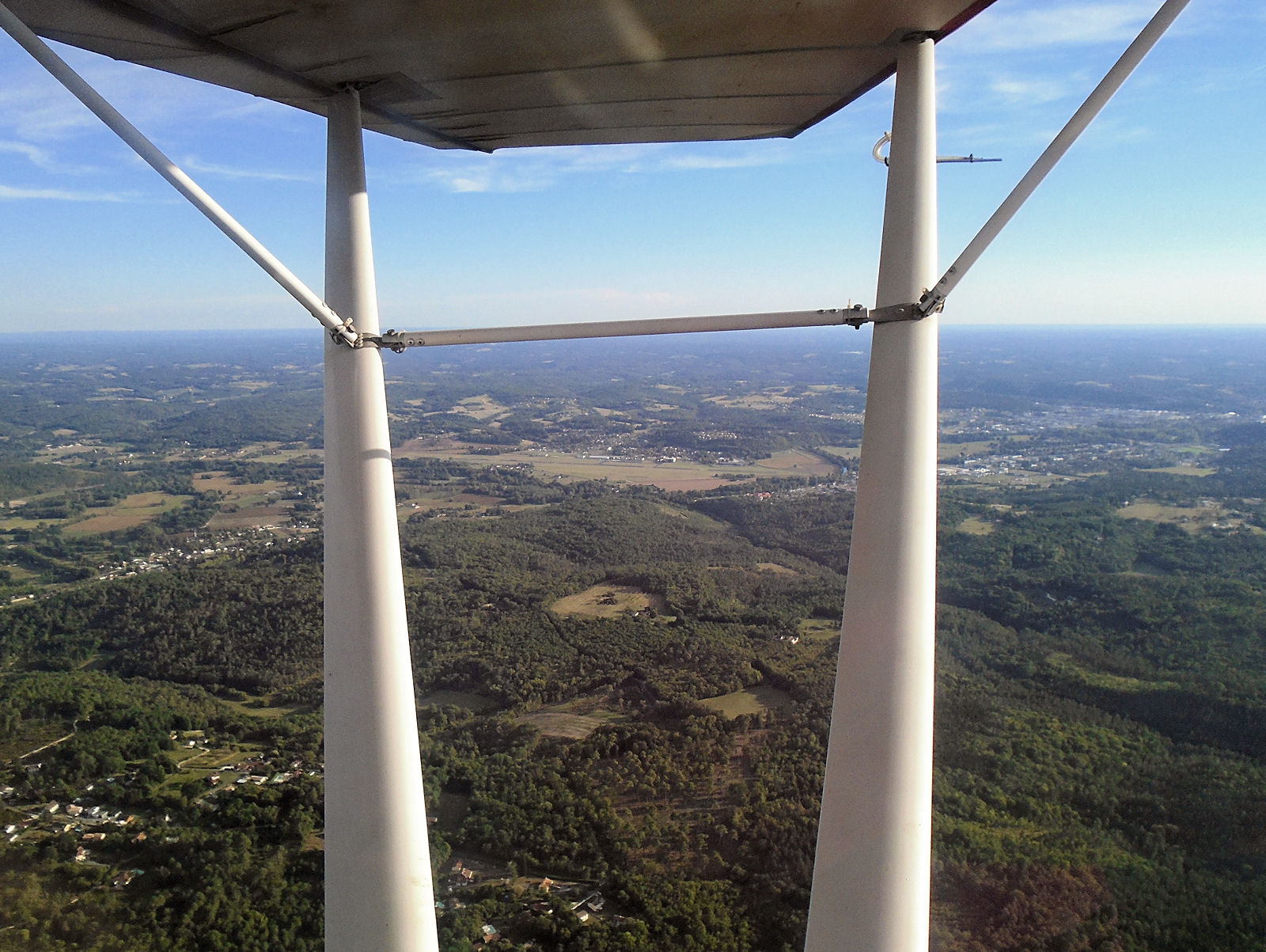
Well, I got the flight in today, early this evening actually, in 24ZN, my X-air, that I’d had planned for weeks, before all of the problems arose with its fuel system and starter motor. Things went pretty well but the old girl still decided to play a trick on me to test my nerves half-way round, to the north of Périgueux, in the form of a few seconds of rev drops even though the fuel pressure and the engine temperatures were fine at the time. The route I flew is shown in the image below.

null

Having tested the system pretty thoroughly by doing extended high rev engine runs and although as a result I didn’t anticipate that there would be any more problems with the fuel system, I thought that it would be prudent to do an extended climbing turn up to my initial route height of 1500 feet after taking off from Malbec and then to depart from the overhead. This would have given me the opportunity to land back should there have been any problems, but there weren’t.

Nevertheless, I decided to take a few shortcuts by cutting the corners a bit, especially after the few seconds during which the engine ran slightly rough and the revs played tricks. However, it was for only a few seconds, the revs recovered and the flight was otherwise uneventful for the whole 1 hour 20 minutes that it took to complete.

The next shot is of the airfield of Périguex Bassillac where I don’t think there was any activity. The same could not be said for Figeac in the Lot and Egletons in the Corrèze where there was plenty of the usual undisciplined radio chatter, much of it from radios with lots of buzzing and interference that was a real pain in the ears.

null

The next shot shows the city of Périguex viewed from the north, not that very much detail can be seen in the photograph.

null

I think that the following shot is of Saint Astier, but I don’t know for sure. If it is, it’s where I went to buy one of my ‘tonnelles’.

null

I then turned left a couple of times to scoot in a south-easterly direction back to Malbec. The vis had been very poor up to that point as I was flying mainly into the sun and the X-air’s screen is rather old with quite a few abrasions and scratches, which don’t help of course. Even so, it was still quite hazy and the vis didn’t improve very much. The next shot is of the turn onto final at Malbec.

null

The following shot was taken half-way down the final approach.

null

This final image was taken passing the chateau just before the landing.

null

Taken all round, I was very happy with 24ZN’s overall performance but I have to say that this kind of ‘low and slow’ flying doesn’t appeal to me very much nowadays. So I think my X-air’s days are numbered. I achieved what I wanted to, which was to save it from a sorry fate in the UK and now I think that it’s time to give it a good clean and tidy up and move it on to a new owner who will be able to give it the love that I’m not able to.

It’s still a very flyable aircraft and as I’ve mentioned many times previously on My Trike, it’s a mug’s game, for me anyway, having two aircraft. As recent experience has shown yet again, two aircraft just means two headaches and two sets of problems and with my house-build and all, I really don’t need any of that right now 🙁

Half -way there

This morning I stripped 24ZN’s starter motor and thoroughly cleaned its internals including its brushes and commutators. There was some play in its outer bearing but it must have been like that for some time, including the many months when it was starting the engine without any problem because it must have taken years to get as worn as that.

What was noticeable, however, was the lack of bearing lubrication at both ends of the shaft. It’s easy to lubricate the bearing where the brushes are because its fully accessible, but not the outer end where the pinion is that meshes with the flywheel to start the engine, because that’s fully sealed. All I could do for that was lubricate the pinion mechanism itself and pack grease on the inside and outside of the bearing in the hope that some would find its way inside it.

Then it was time to refit the starter motor and go for an engine start and the result was the quickest start up that I’ve ever experienced with this engine. It also ticked over and ran beautifully with good fuel pressure at both low and high revs, so after running the engine at take off power for about a minute with no diminution in fuel pressure, it was time to go for an actual take off.

I stopped and restarted the engine before doing so and for once the engine restarted when warm without any hesitation, so hopefully the starter maintenance will have improved that aspect as well. When I took off the first time I made sure to turn right towards the open land on that side as soon as possible after take off, but it wasn’t necessary because the fuel pressure reading remained stable. So I then landed, turned around and did another, again without any problem whatsoever, so now I’m regarding the X-air as fixed and flyable again, which I hope to do tomorrow.

Then I turned my attention to 77ASY, my Savannah, which currently doesn’t have any brakes. This time, however, I wasn’t so lucky because the bleed nipples on both of the brake calipers were firmly corroded in. Attempts at removing them merely resulted in their snapping off, so there will now be no choice but to replace them, probably not a bad thing under the circumstances. But not to worry, at least in the meantime I’ll have the X-air to fly while I’m waiting for the parts to arrive 😉

One of those days

My plan was to start the day by going to Malbec, installing the new battery that I received yesterday in 24ZN, my X-air, starting its engine to check whether its fuel system problems have now been resolved and possibly even doing a take off and landing. But it wasn’t to happen, right from the word ‘go’.

My caravan’s electrical and water supplies have been in place with only a few minor problems for over a year and I expect things to stay that way. However, quite by chance I was checking the cable and hose pipe which run just outside my fence (so I don’t damage them with my mower) on the north side of my land when I found that one of the cable reels that I’d put inside a plastic bag to protect it from the elements had been exposed.

So it seemed to be a simple matter just to replace the plastic bag but what was on the face of it a quick and easy task turned into a job that took a couple of hours, because in the process of relocating the cable drum the connection was lost. The problem was that I didn’t know where the problem was so I ended up doing an end-to-end check from the main box next to the road down to the caravan before I could satisfy myself that I’d identified the problem and that it wouldn’t happen again, because the last thing I want right now is to lose power when I’m not there, for example, to my fridge and freezer.

So, so much for nipping over to Malbec first thing to sort the X-air out and I didn’t manage to get there in fact until after lunch, by which time the temperature was climbing towards the mid-30s degrees Celsius. But I was confident that the new battery would solve all of my problems, so it was worth struggling in the heat to pull out the Savannah, then the X-air and to remove all of the latter’s covers.

So what happened? It was a fiddly job fitting the new battery, but I knew that it would be, and eventually I was ready to go for an engine start. The engine cranked as usual and then… just as with the old battery, the engine began to turn over more and more slowly until there wasn’t enough power left for it to turn over any more. So what’s going on?

I suspect that the old battery wasn’t the problem – in fact I charged both the old and the new batteries up beforehand and when I checked their voltages, I found that the old battery was showing just over 13 volts, and the new one just under. I heard a weird noise coming from the starter motor when I’d been trying to start the engine previously which I’d put down to the battery not having enough power to spin it properly, but I think I was wrong.

I think that there’s a problem with the starter itself which is most likely dead shorting the battery while it’s spinning and thus causing the battery to discharge so quickly. I’ve removed the starter and disassembled it but won’t be able to do any more with it until at least tomorrow. However, my thinking is that it’s time to put the X-air on the back burner until I’ve sorted out the Savannah’s brakes and I’ve just left the X-air’s new battery on charge overnight for now and will decide what to do in the morning.

There was then nothing more that I could do, so after achieving practically nothing, I ended up just covering the X-air up again, pushing it into the back of the barn and replacing the Savannah in front of it. I think that I probably spent more time moving the aircraft around and uncovering and re-covering the X-air than I did actually doing any productive work, not that what I did achieve could in any way be described as ‘productive’.

So what a frustrating day, but unfortunately it was not yet over. When I returned from Malbec firstly I was incredibly thirsty because I hadn’t taken anything to drink with me and secondly the inside of the caravan was very hot. While I was waiting for the ice cubes that I’d put into a long glass of fruit-flavoured drink to melt I opened the caravan’s windows, and lo and behold, one of the supports on the main window at the rear snapped off, meaning that the window could not be held open.

Luckily, I still have some spare parts left over from when I did previous work on the window supports, but after all of the trials and tribulations that I’d been faced with during the day, this was just about the last thing that I needed. But anyway, out had to come the tool box once again and the window had to be fixed there and then as otherwise it would mess up the beginning of the day tomorrow. Since then, so far there haven’t been any more disasters, but I’m keeping my fingers crossed and may have an early night so nothing else can go wrong through my touching it… 🙁

Surprise surprise!

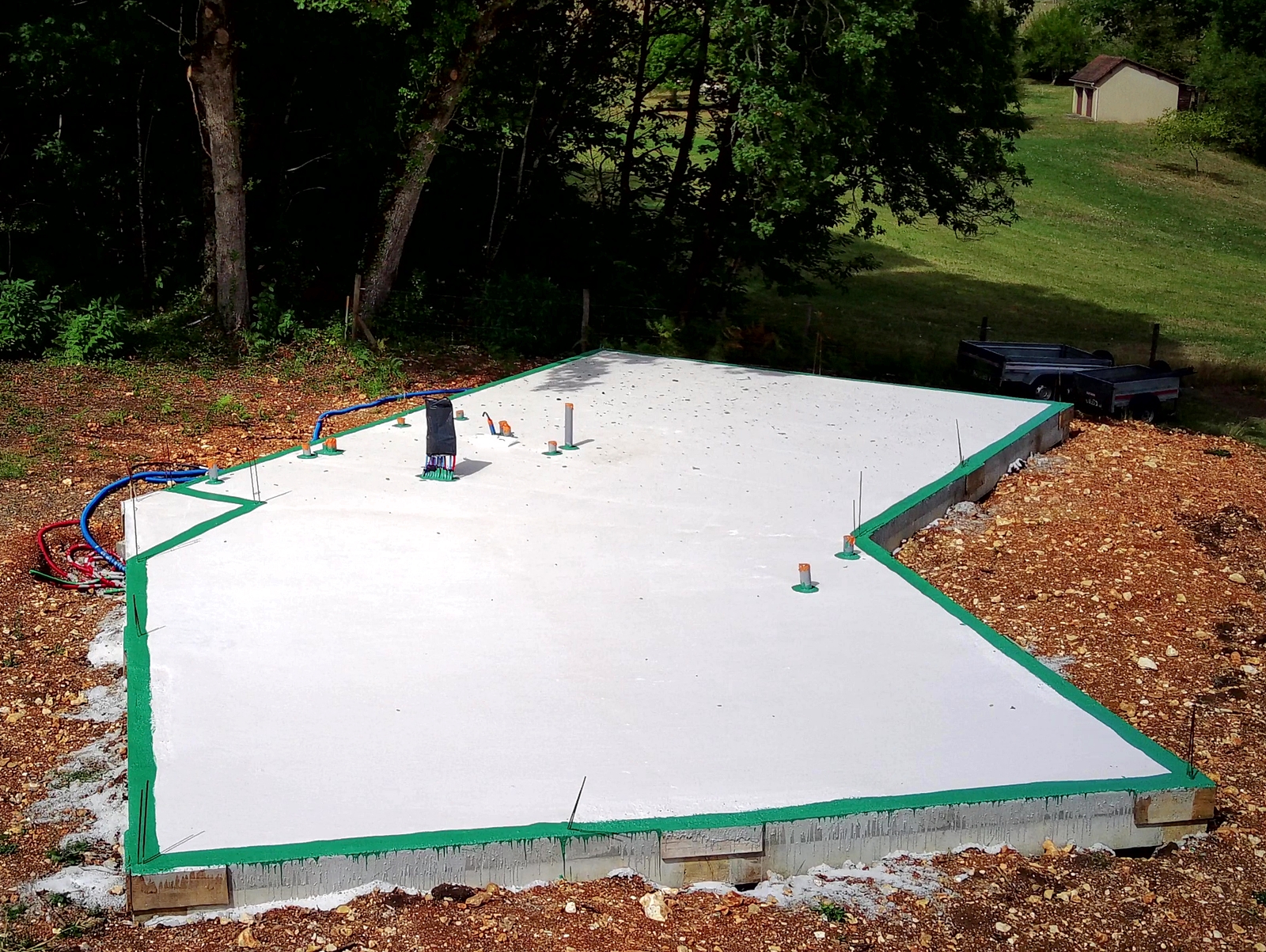
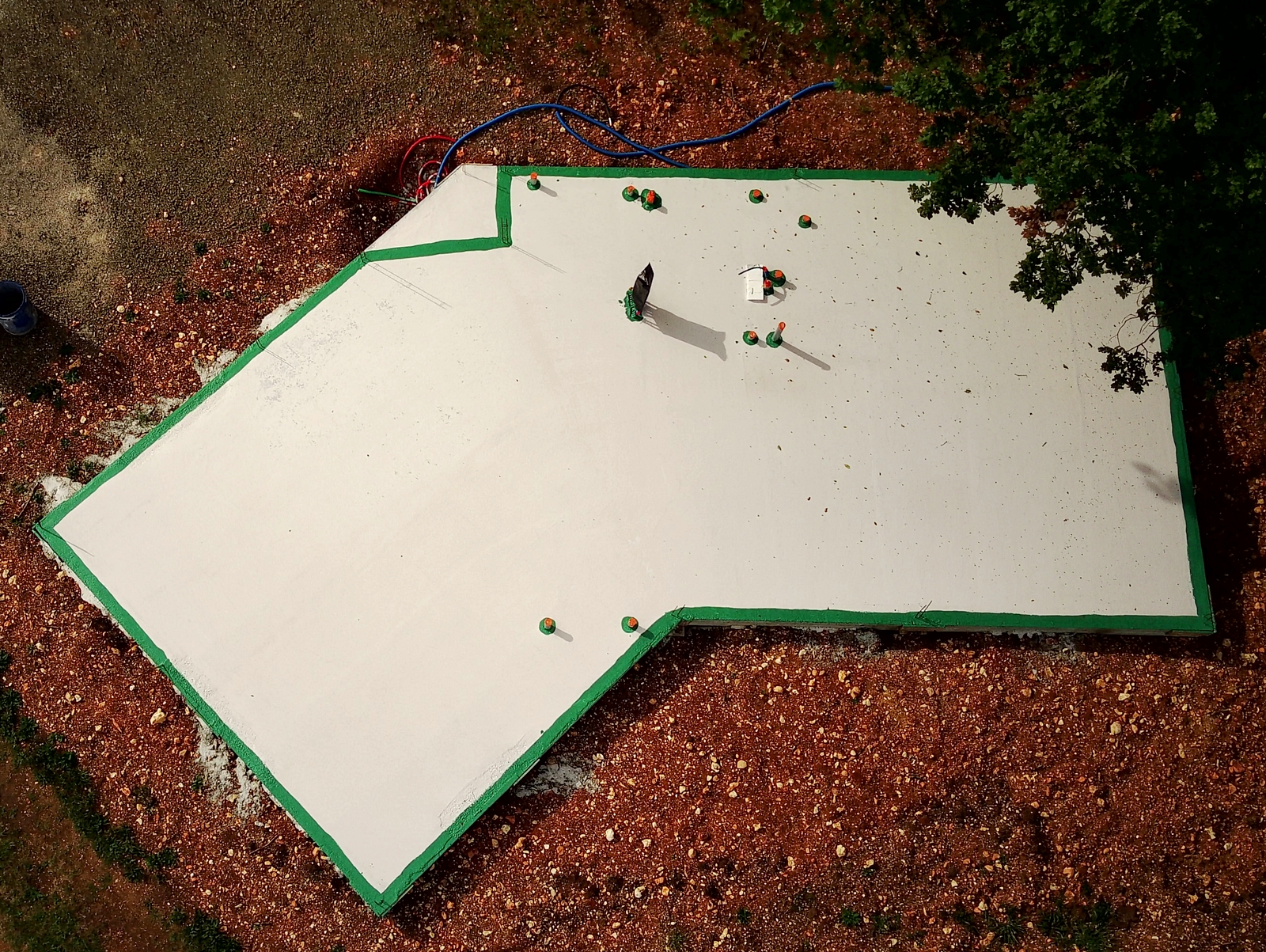
Totally out of the blue this afternoon, I suddenly noticed that something was going on ‘up top’ on my house-build. When I went to investigate, I found that a young guy was going around the recently laid concrete floor slab with a large brush and a bucket of thick green sealer of some sort. For some reason he was painting a line the thickness of the walls all around the outline of the house and when he had done that he then sealed around where each plastic pipe or tube had been brought up through the surface of the slab from the ‘vide sanitaire’ below.

null

null

null

null

null

null

I don’t have the faintest idea what the purpose of this was. Clearly the green goo, which has since cured, is some kind of special sealant and could even be a type of DPC (damp proof course) that I’ve never encountered before. This is a strong possibility as I understand that the blocks that are used to construct the walls are not bonded by cement mortar in the ‘normal’ way but rather by a special adhesive that is applied (squirted) out of a gun and as this green sealant has been applied direct to the floor slab it will be beneath the first layer of blocks which is where a traditional DPC would have been.

But whatever, the builders know what they are doing and this construction method suits this environment. The house will also come with a fully insured 10 year guarantee, which will be reassuring, so I’ll be very interested to see where things go from here. I asked the young chap who didn’t turn up in a van with the builder’s name on it but rather in one of an independent contractor, whether this meant that work would be resuming next week. He didn’t know for sure but he thought that it will more likely be in early September, after the August holiday break.

On another topic, I ordered a replacement battery for 24ZN, my X-air, over the week-end, which was due to arrive today by Chronopost between 11.10 am and 12.10 pm. It hadn’t arrived by the latter time and I was standing up at the road waiting for the delivery when I saw a white van draw up 100 metres away at the entrance to the little lane that leads down to Labattut (I live a bit further on at Labattut Basse). My phone rang and when I answered it the line cut immediately.

When I tried to phone back the number would not allow incoming calls but I knew that it was my delivery because my call was answered by Chronopost. The driver made no attempt to contact me again or to look for my house but having arrived late, merely turned around and drove off. There is no way to contact Chronopost other than by chatbot or a premium rate number so I’m very, very annoyed.

I used to have this problem a lot when I was at Plazac because my house there was even more difficult to find than my present location and as the deliveries come from Brive and this is about the farthest limit of the delivery area, the drivers used any old excuse to high-tail it back to their depot as quickly as possible. If my battery gets sent back to Clermont Ferrand where it came from the merde really will hit the ventilateur, I can tell you 😐

Double trouble

I’ve been trying for what seems like weeks now, because it actually is, to resolve the problem with 24ZN’s, my X-air’s, fuel system. Readers might recall that a few weeks ago I took off to make a flight to the north around Périgueux and was dismayed that shortly after take off its engine coughed, spluttered and threatened to cut out before I was able to make it back to Malbec.

The problem was due to fuel starvation caused by low fuel pressure and since then I’ve taken several measures that I think should have solved it. I’ve not been able to confirm this, however, because although I’ve done several long high power engine runs since then, I’ve only managed one take off and landing which was before I’d completed all of the changes that I wanted to and that was not long enough to confirm that all is as it should be.

With an issue like this, you always hope that you’ll find a ‘smoking gun’, a single problem or fault that explains everything. That was the case when I had to deal with a similar issue before I flew 24ZN to France from the UK when I found that someone had fitted fuel tubing of too small a diameter to feed two carburettors at full power, but as I’d replaced most of the old tubing at that time, overhauled the fuel pump and thoroughly cleaned the carbs, I didn’t think that that would happen again this time.

And so it has proven, or at least I think so until I can do a proper test, but until then I’ll go through and explain the steps that I’ve taken. The first thing I found was a length of ‘new’ in 2019 tubing that demonstrated a large amount of cracking that I thought might have been able to allow air to enter the system, causing the drop in fuel pressure. However, after replacing it I cut it open and found that the cracking did not go right through, so in fact it was still fuel and airtight.

Later I found a second length of ‘new’ tubing and the same applied to that, but it convinced me that although I’d only replaced the ‘bad’ tubing three years ago, I should go ahead and replace all of the tubing in the system while at the same time replacing both of the in-line filters that I also only replaced three years ago, even though the aircraft had been very little flown in between. In doing so, I came across a couple of factors that undoubtedly contributed to the low fuel pressure problem.

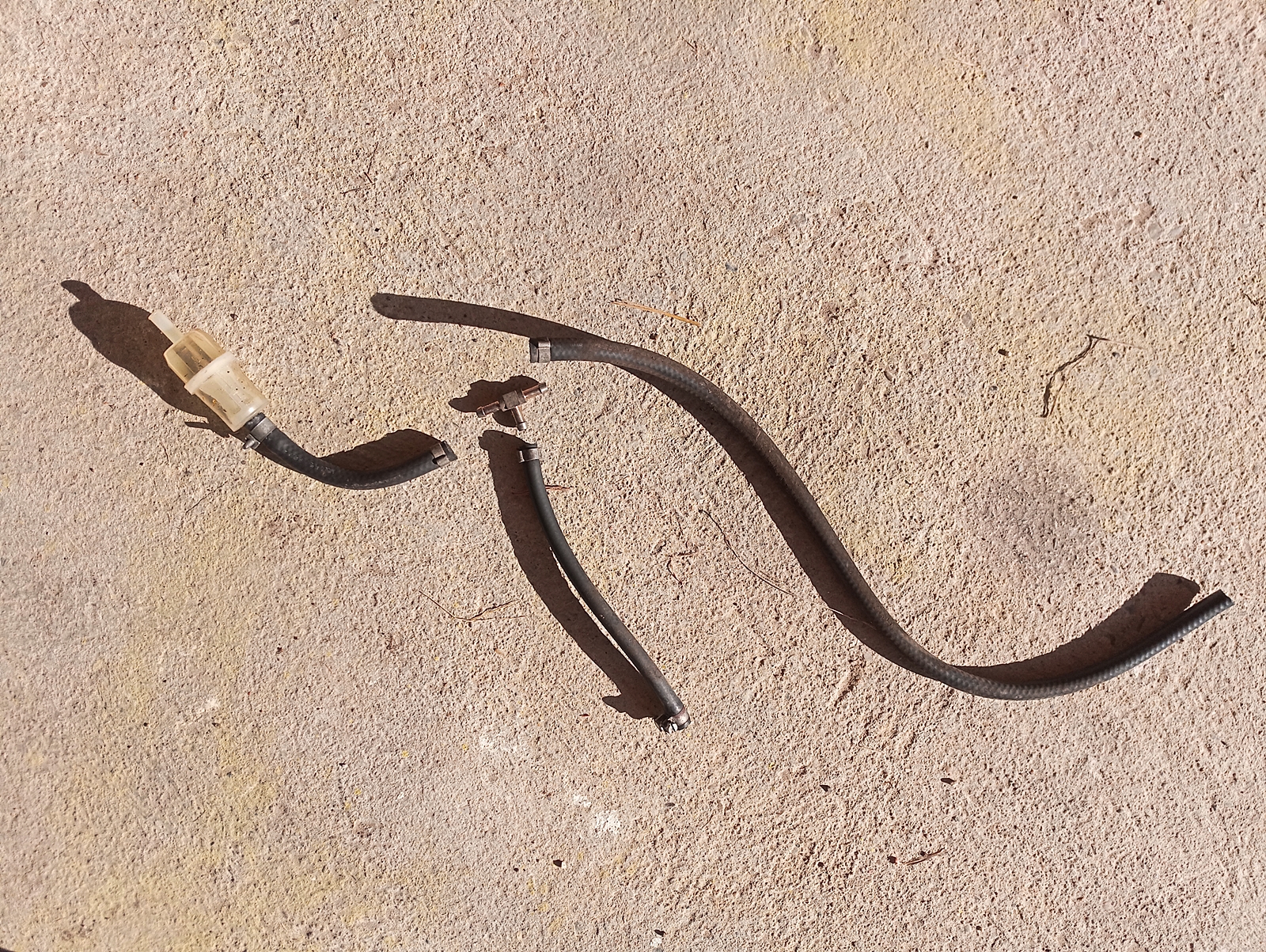
The outlet from the fuel tanks connects to the first in-line fuel filter, a large plastic one, which in turn connects to a ‘T’ piece connecting the filter to the electric fuel pump and the hand primer bulb. I didn’t touch that ‘T’ piece in the UK while preparing 24ZN for its flight over and when I examined it I found that (a) the tubing connected to it was all very old and (b) the clips securing the tubing to the ‘T’ were also all old style crimp type.

null

null

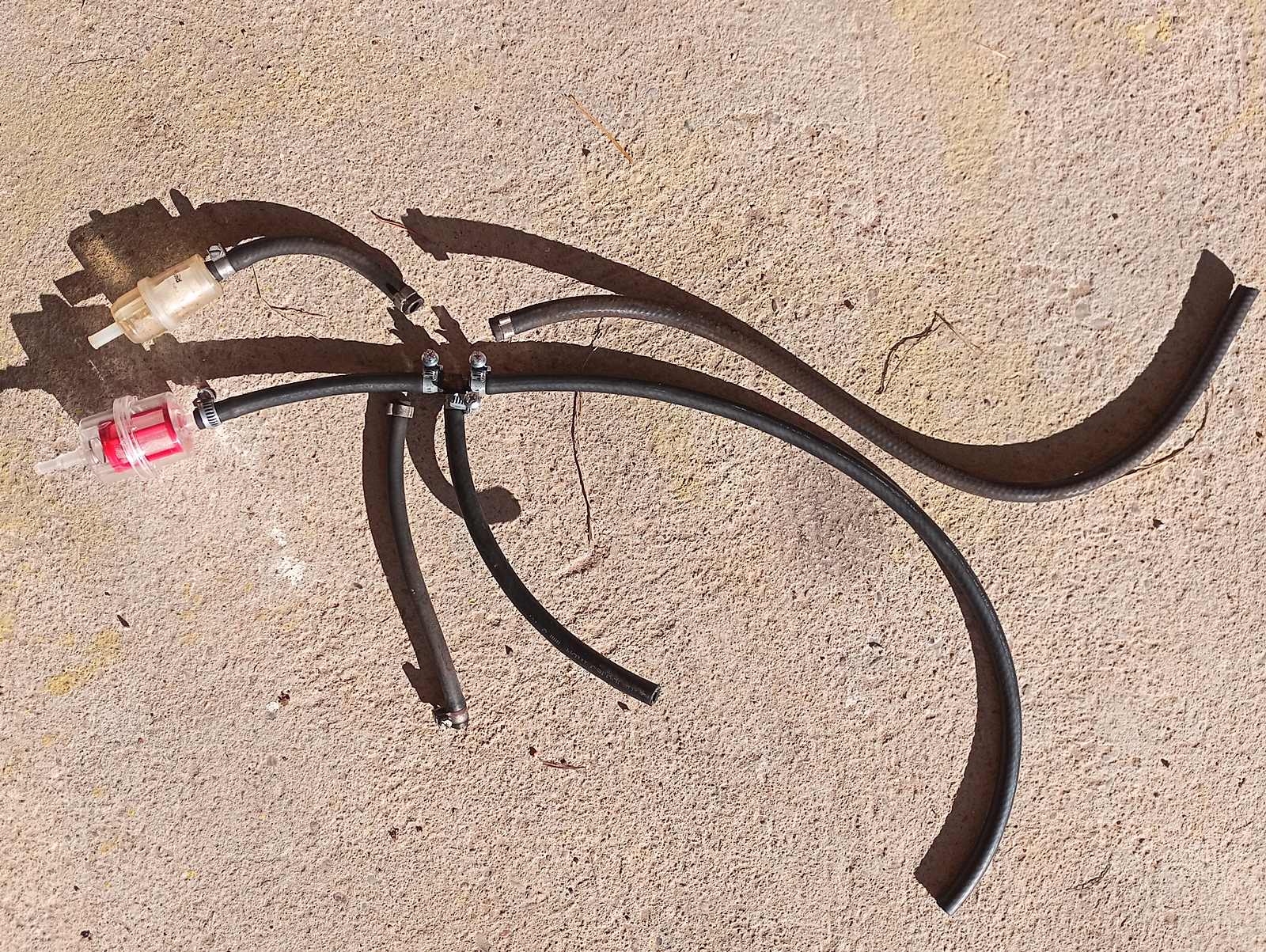
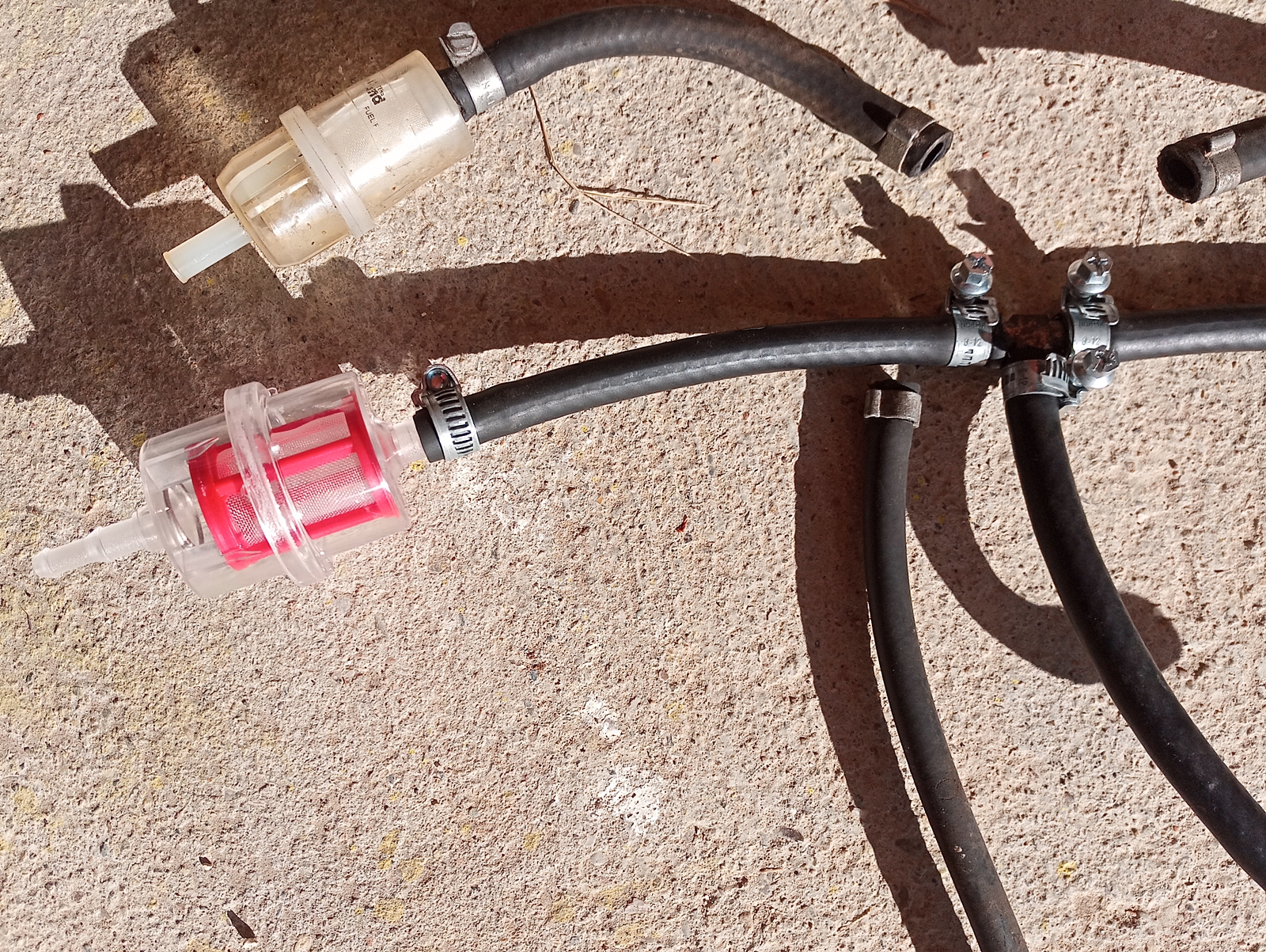
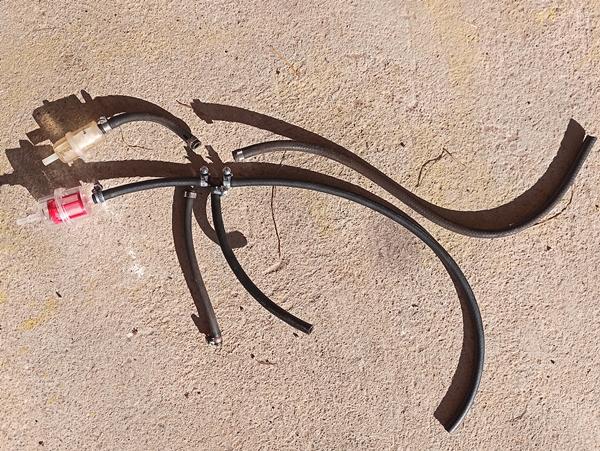
This indicated to me that most likely that ‘T’ piece and the tubing had been in place since 24ZN was built some 20 years ago and further examination revealed that it was wet with fuel, meaning that one or more of the joints were leaking. So here was the first candidate contributing to the reduced fuel pressure problem. I’d already bought the tubing to replace all of the old stuff , although this still left the length from the tank outlet to the filter to be replaced as soon as possible, when the fuel in the tanks has been reduced to a low enough level, and here are the results.
null

null

I then went on to the hand primer bulb. When I pumped that I found that it was no longer effective in pressurising the system and in fact it was blowing bubbles back into the fuel filter, indicating that its internal non-return valve was no longer working, probably because it had been damaged by alcohol in the fuel. As I hadn’t replaced that while in the UK, because at that time it was still effective, I thought that both it and the length of tubing connected to its outlet should be renewed.

I then turned my attention to the electric fuel pump. This pressurises the system as it should, but I found that as well as allowing fuel to pass through it when static to feed the engine, its seals also allow fuel to blow backwards towards the tanks. This shouldn’t be a problem however, since as long as the pump can pressurise the system in an emergency, it’s otherwise only used to prime the engine before starting. I did replace the tubing running from its outlet, however, and this brings me to the next issue I found.

The outlets from both the electric pump and the manual primer bulb connect to a second ‘T’ piece which in turn connects to the fuel shut-off valve and the main fuel line. Lo and behold, when I checked this ‘T’ piece, although I’d checked it previously when in the UK, it was also leaking fuel. However, as I already had new tubing and hose clips ready to replace the old kit, this wasn’t a problem and with the new parts in place, that issue too was resolved.

So hopefully, the two leaking ‘T’ pieces that I found will turn out to be the source of the engine’s fuel problems this time around. The engine runs that I’ve since done seem to indicate as much but more testing is necessary before putting the problem to bed. But unfortunately this hasn’t so far been possible because it appears that the new battery that I fitted to 24ZN back in 2019 has given up the ghost.

Starting has been a constant problem and the battery has been losing cranking power surprisingly quickly. Things came to a head today when after having charged the battery overnight, not only couldn’t I get the engine to start, but after only a short while cranking it, the battery’s power collapsed to a level that wouldn’t even turn the engine over. So that’s it until I can get a new battery delivered.

But no problem, I thought. I topped F-JHHP’s tanks up only just the other evening, so while the weather was on the cool side and still calm, why not pull it out and do the flight in that instead? As my Savannah has rather sadly been relegated to the back of the barn while I’ve been trying to resolve 24ZN’s problems, it has become very dusty as I was unable to make the new covers for it that I’d bought the fabric for, before leaving my old house. But after tipping it onto its tail and cleaning its horizontal surfaces with a soft broom, it was ready to be checked and got ready to go. I even returned to the caravan and picked up my Go-Pros that I also mounted ready for the flight.

Eventually it was time to start the engine, which it did after a few turns even though the Savannah’s battery is considerably older than the one in 24ZN. But then, horror of horrors, the aircraft began to roll forward and when I hit the brakes, they had no effect. Luckily I’d started on the flattish area in front of the barn and although I killed the mags immediately and F-JHHP continued to roll unchecked on what was now a slight down-slope, there was enough room to swing around to the right and come to a halt before anything untoward happened.

So the extremely hot weather that we had while the Savannah was in the barn has turned out yet again to be totally unforgiving and has resulted in its brake fluid being expelled from the hydraulic brake system. This happened after extremely hot weather once before, when I flew back to the UK and only found that I had no brakes when I landed at Blois and found that I couldn’t slow down to take the first runway exit. Luckily the runway was long enough to allow me to be slow enough to exit at the far end and coast up to the fuel pump by turning the engine off as I approached it.

I ended up replacing the brake fluid at Headcorn in the UK and had to devise a system using a hand-pressurised oil can to do the job. I never thought that some six years or so later I’d be repeating the process and I’ll have to dig out the oil can and tubing, which I still have and came across again in my storage just the other day.

So there you have it – double trouble, two ULMs and once again, neither of them flyable. It looks as though I’ve got a busy week ahead of me because as well as these two problems, I also have to arrange for an ‘élagage-grimpeur’ (a climbing tree pruner) to come in and remove the branches overhanging the floor slab of my house and deal with a UK family problem. Isn’t retirement wonderful. So restful…

My new house-build, day 8

At the time of posting this it’s pretty quiet for most businesses in France that are not involved in tourism because they’re shut down for the whole of August while everyone goes off on holiday. This includes my builder so it’s a good time to do a bit of catch-up before they get back in September and, hopefully, resume work on my house.

Day 8 was actually on June 7th and although no work as such was done, it was nevertheless a big day because some important deliveries were made of materials that will be required, and for which I’d already paid I might add, for subsequent work on the house’s foundations. The following video tells the story of the morning.

The deliveries took little more than an hour but after the trucks had left, everything that would be required for the builder to complete the house’s foundations was on site ready for when they return. I also need to take the opportunity to get an expert in (what is called an ‘élagueur grimpeur’) who can climb up the large oak tree that’s closest to the north side of the house and remove the low overhanging branches that will impede construction of the walls on that side so there is no excuse for any delay in resuming the building work.

Phew!

While the Brits at home have been complaining about a heatwave, drought and hosepipe bans with temperatures of 30 degrees Celsius, we over here have been having to endure something far more extreme. Since just before the end of July, with only one or two exceptions, we’ve had daytime temperatures of on average 40 degrees, sometimes a degree or so lower, sometimes slightly higher.

It’s been exceptional, record breaking and I haven’t experienced anything like it in the ten years since I came here. The water levels of the Dordogne and the Vézère are at all-time lows and the locals are saying that the tourists, who are again here in their droves as usual, are having to be issued with boots if they want to go canoeing on them. It must be a terrible summer for the good people who are providing services like that – their earnings will be way, way down this year after two bad years with Covid.

There have been massive wildfires in the south-west of France – the Landes and the Gironde – and they were got under control and extinguished a couple of weeks ago. Since then new fires have flared up in the Gironde destroying thousands more hectares and threatening homes and livelihoods.

Apart from yesterday when I was working on my X-Air 24ZN, I’ve been helping my friend Wim put together a shower in his and Sophie’s new little house that they’ll be moving into in a few weeks time. We’ve been starting fairly early in the morning, but even indoors it’s impossible to work much beyond 2.00 pm because of the heat. I now understand why most of France shuts down for August and the Spanish and Italians, who are far more used to temperatures such as these, take siestas in the afternoon and resume business in the early evening.

Life in my caravan has been barely tolerable. If I had kept it at the top of my land I doubt that I’d have been able to stay in it because it’s been pretty hard going down at the bottom where it’s perceptibly cooler. If I stay indoors, I have to run a floor-mounted fan from about 10.00 or 11.00 am and as the outside temperature rises the air it shifts become warmer and warmer. Without, it however, by later afternoon it would be become intolerable in there.

If I’m in or around the caravan, for most of the time I wear the bare minimum, which, if I’m not expecting visitors, is nothing, as I can’t see the point if it’s that hot. Several people I’ve spoken to, most of whom are Dutch admittedly, agree and say that they do the same. So far, I’ve still not had the chance to nip over to the camp site at Rouffignac, Camping Coteau de l’Herme, run my Manja, Victor’s daughter, and her husband Aschwin. It’s a superb naturist venue and at least if I went over there in the heat of the afternoon I’d be able to take a dip in their swimming pool!

One of my joys is that I’ve been able to take showers outside my caravan using the hosepipe that connects my water supply. However, that’s been impossible by the end of each afternoon as by that time the water has become scalding hot. It has also meant that I’ve had no cold water by then in the caravan as the water coming out of the cold taps is at the same temperature. If I’m quick, I can have a quick sloosh using the water in the pipe that’s been in the shade, but I do mean that I have to be quick – maybe 30 seconds or so, certainly less than a minute before the hot water starts coming through! But it’s bliss having a cooling outdoor shower at around 8.00 pm every evening.

Earlier in the year I acquired a small freezer that I managed to make space for in my caravan. I didn’t have it last year and it has transformed my life, especially during this very hot period, by allowing me to make ice cubes, have ice cream and store a small amount of frozen food and bread. And it’s been an absolute boon being able to freeze small pieces of meat, which I was totally unable to do last year. Small things can make such a difference and it’s possible that without it, I wouldn’t have been able to stay in the caravan while it’s been so hot.

It hasn’t even been cooling down that much in the evenings and overnight. Every evening I spray the interior of my caravan against mossies and other biting insects and take a walk around my land while it does its work. While I’m walking I can feel the heat rising around me from the ground. When I go to bed I have to set my floor-mounted fan on timer. When I first started, I found that I was waking up almost as soon as the timer switched the fan off because it was still so hot so now I set it the maximum period of 3 hours because at least then I get that much unbroken sleep before I awaken and have to reset it.

I’ve also been very concerned about the two little cherry trees that I put in just before the start of the hot weather. I pierced the ground around their bases and have been regularly pouring water onto their roots and so far it looks as though it’s working as although their leaves shrivel a bit during the heat of the day, they seem to recover by the next morning after they’ve been watered. As for walking into my tool store during the day, it’s like walking into an oven. The other day I touched the cement mixer that’s in there and it was too hot to keep my hand on it.

On the odd couple of days when it’s been slightly cooler, we’ve seen temperatures being forecast in the low to mid-30 degrees and saying thank goodness for that. It just shows you how your perceptions change – before now, a few days at 35 degrees Celsius was regarded as a heatwave down here. But no matter how you look at it, this year isn’t and will not be the new norm no matter what the climate cranks try to say. It’s just an event in the cycle of solar cyclical events – it isn’t, and won’t be, the end of the world as we know it.

But it looks as though this hot period will soon be coming to an end. Depending on how you look at it, fortunately or unfortunately, the weather looks as though it’ll be getting back to some kind of normality by this week-end with much cooler weather forecast going into the coming week. And rather untypically, for here, the transition won’t be marked by massive, violent thunderstorms, as usually happens.

There may be some light rain and my goodness, we can do with that, but not it would appear the extreme kind of weather that we usually get when things begin to cool down after a hot period. I have to say, I hope that that is the case as I need to finish the work on the X-Air’s fuel system (of which more later) and I’d definitely like to get some flying in when the air becomes cooler and calmer 😉

Second thoughts

I’ve now got the new fuel filters and tubing that I hope will solve 24ZN’s fuel starvation problem and hope to be fitting them over this week-end if it doesn’t get too hot. It looks as though it might do though, with the temperature climbing again to over 40 degrees Celsius during this coming week.

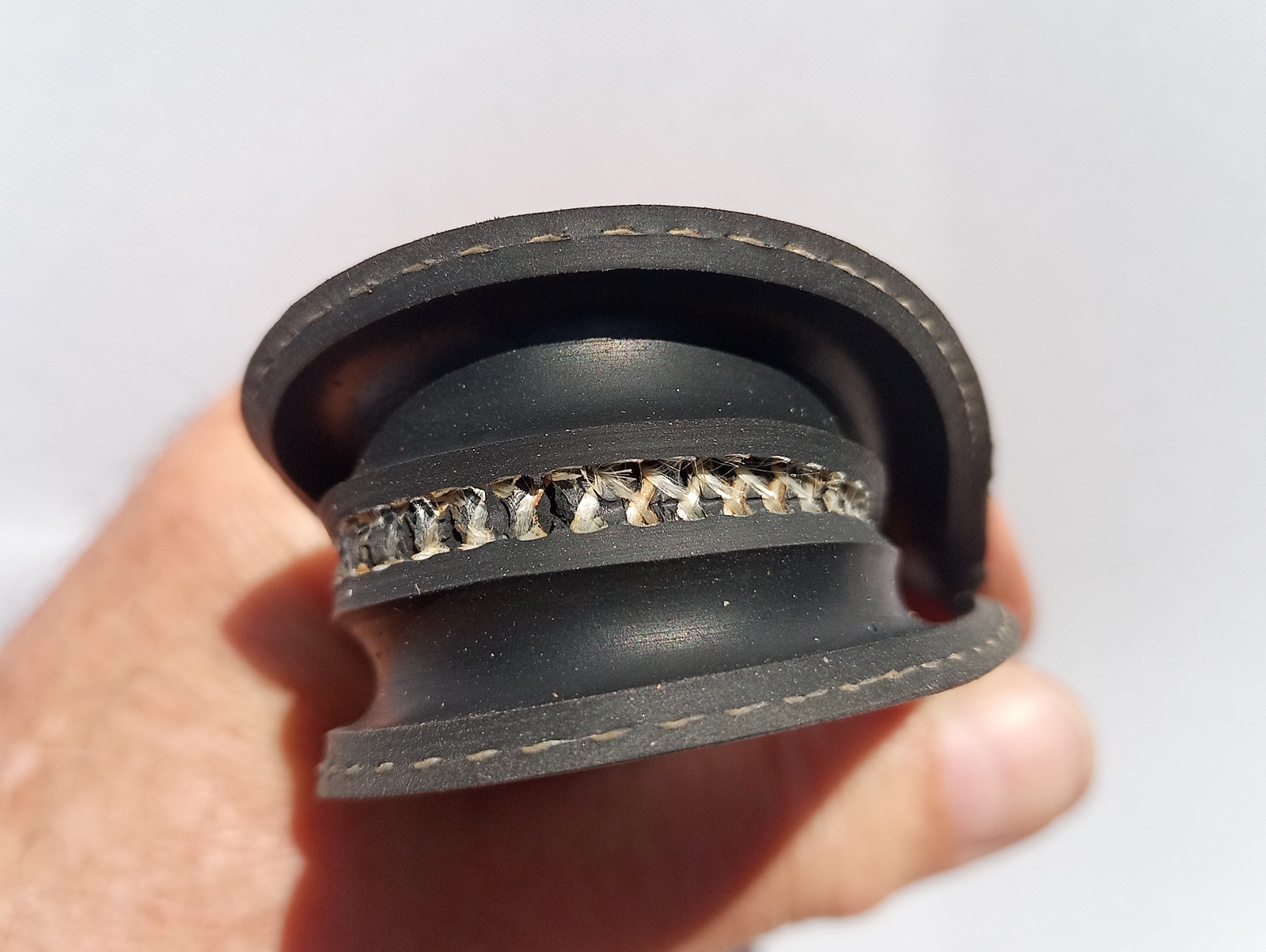
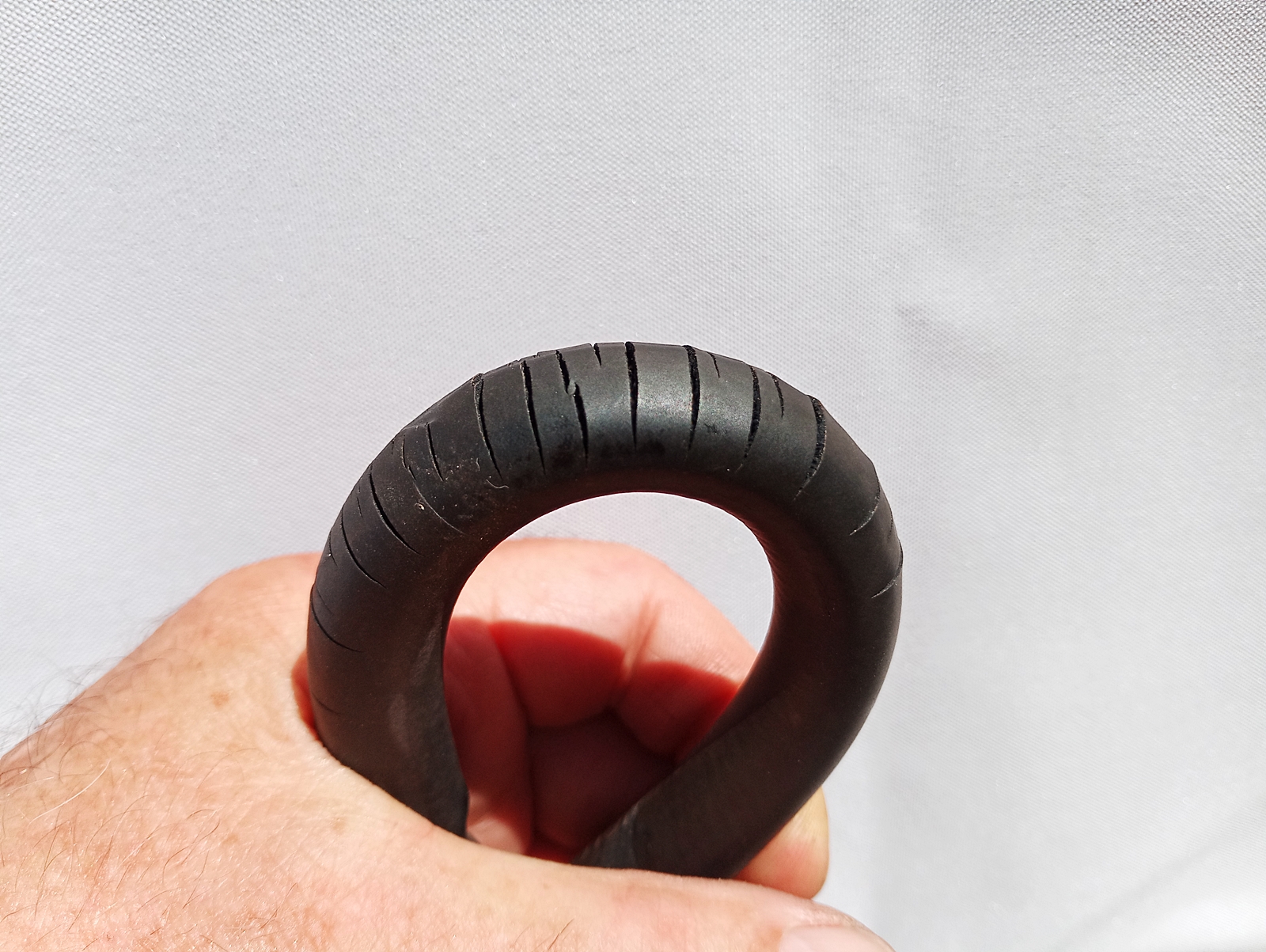
But before I do I decided to take a closer look at the cracked length of tubing that I removed that I thought was allowing air to enter the system and the image below shows what I found.

null

The cracking is to the back of what is visible and the image shows clearly from the discolouration that it penetrated to the fabric band that runs length-wise down the centre of the tubing. However, the cut shows that the cracking did not penetrate any further than that, indicating that although compromised, the tubing was still intact and fuel and air-tight in the damaged area.

So this apparently obvious reason for the X-Air’s fuel starvation problem does not appear to be valid, indicating that I’ll have to look elsewhere for the solution. My guess is that it was down to either vapour lock or a semi-blockage of a fuel filter as the engine runs as it should when fuel is delivered at the correct pressure meaning that both the pump and the carbs are doing their jobs.

It’ll be impossible to prove the vapour lock theory but I’m looking forward to checking on the condition of the filters and their contents as soon as I’ve replaced them.

X-Air engine power loss – follow up

Here’s the follow-up to my ‘loss of power after take off’ video, two days after the event itself.

It was already very hot this morning – pushing 30 degrees C – when I started work. First I removed and re-gapped the plugs. The Rotax manual is very confusing as far as the NGK BR8ES plugs that are used in my X-Air’s engine. On one page it implies that they should be set to a tiny gap – 16-20 thou” – and on the next 24-28 thou”. I’ve always had mine gapped to 25 thou” and have had no problems up to now with this engine or the 582 blue top that I had in my previous X-Air, so I re-gapped them to 24 thou”.

Then I went to start the engine. For the first time I had problems getting it running with choke but just got it started without, I guess because of the high ambient temperature. My X-Air engine has a grey top and suffers from the universal 582 grey top problem of not starting when warm. Nobody knows why and it seems that all (or nearly all) grey top owners are plagued by it. More of that later.

When it got going it showed an initial fuel pressure of 0.2 bar at 2000 RPM that Rotax suggests should be the warm-up revs. I disagree, I think the figure should be 2500-3000. At 3000 rpm the fuel pressure rose to 0.3 bar, mid-way between Rotax’s minimum and maximum figures of 0.2 and 0.4 bar. I kept the revs at around 2800 rpm until the engine was up to temperature at which time I intended to run it up to full power for around 60 seconds a couple of times.

A mag check at 4000 rpm was perfect – I’d fitted a new stator in 2019 when I was preparing the X-Air to fly it over to France. At that figure I began to notice bubbles rising in the fuel filter and initially thought that this must be the reason for the previous fuel starvation problem. However, although the stream momentarily became worse, after a while it became minimal again before stopping entirely during my high power trials.

The first time I ran the engine up to what was a maximum static figure of around 6200 rpm, the fuel pressure initially rose to a high of 0.4 bar but then fell back a bit without dropping, I think, below 0.3 bar. While those revs were maintained, it slowly increased again to between 0.3 and 0.4 bar.

The next time that I ran the engine up the fuel pressure rose to 0.4 bar and hardly dropped below that figure and even when I reduced the revs slowly to around 2800 rpm, it stayed just north of 0.3 bar. I wonder if this indicated that there might have been some kind of blockage as a result of fuel evaporation in the Mikuni fuel pump?

At this point I was quite confident that the engine could maintain take off and climb revs for a safe period of time and decided to go for a take off and return for a normal landing (at Malbec we have to take off down the slope and land up it and there’s no go-around on landing). When I did so I watched the fuel pressure gauge very carefully. Initially it held 0.4 bar but then began to fall back during the climb out, passing what I regard as normal at 0.3 bar right down until it reached what Rotax says is the minimum for the engine of 0.2 bar. I was ready at that point to switch on the electric fuel pump but the engine was running normally and then the fuel pressure began to recover to around 0.3 bar which allowed me to make a normal landing.

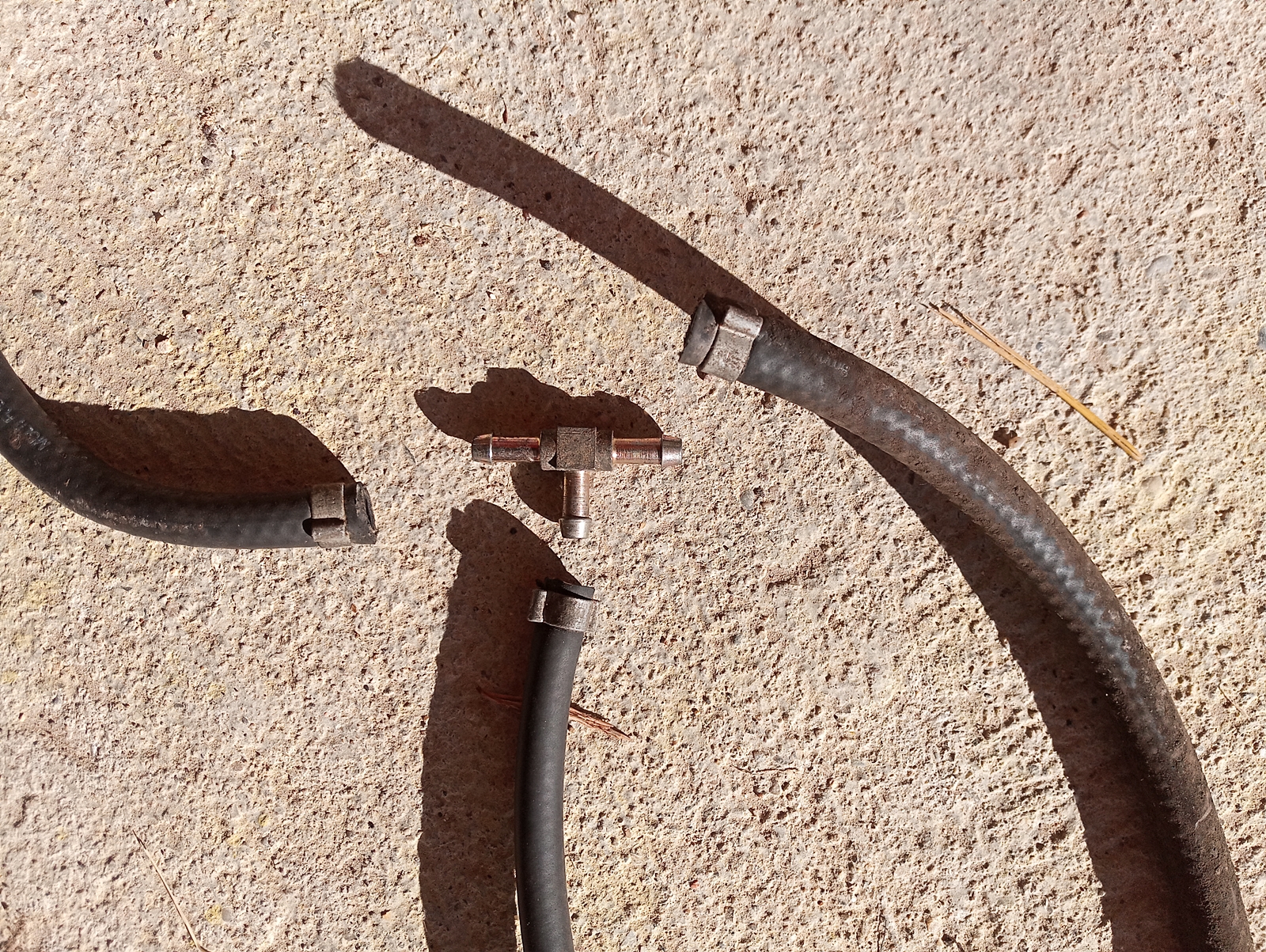
After landing I did an inspection of the fuel system and found that there was a small amount of muck visible in the fuel filter. More ominously, on closer inspection I found that one of the fuel lines from the pump to the rear carb was externally cracked on a bend (see image below). This was especially alarming because this was a piece that I’d replaced with brand new tubing in only 2019 and I think that this amount of degradation is unexpected and unacceptable in such a short time in what was supposed to be good quality tubing.

null

This piece of tubing could not be responsible for the bubbles that I saw rising earlier in the fuel filter, though, as it was on the wrong side of the pump. I think that the bubbles were more likely to be trapped fuel vapour and this could have been a contributory factor in my opinion to the previous fuel starvation problem that led to the power loss. I also think that the tubing, even in its present state, did not contribute to the previous power loss as it wasn’t leaking.

I still think that there’s more to it on account of the fluctuating fuel pressure. It can’t be right for the pressure to be showing 0.4 bar at full power during take off and climb out, falling to 0.2 bar and then recovering almost to the earlier high figure. Something has to be causing that and the most likely culprits in my view are the fuel filter and the pump.

I refurbed the pump in 2019 and the aircraft has not flown many hours since then, mainly because of Covid. It could be that the pump’s internals have been damaged eg by an excess of alcohol in the fuel or the pump had become slightly blocked as a result of fuel evaporation. I’ll be removing and stripping the pump to see if there are any causes for concern but will not be looking to replace it, unless there are, at this stage.

The filter is a different kettle of fish. That I will be replacing in any case as it does contain some visible muck and may for all I know be partially blocked by the dreaded alcohol/water sludge growth as the aicraft has been standing since the end of last year and would therefore be a good candidate for it. My bet is that this is at the heart of the problem, but only time will tell when it’s been replaced.

By the way, I couldn’t run the engine after I’d replaced the bad fuel tubing. I tried to but as I mentioned previously, it wouldn’t start in what had become the quite intense heat. Eventually cranking the engine flattened the battery which also happened the night before. I’m very disappointed about this because the battery was brand new in 2019 when I was preparing the X-Air to be flown to France. Unfortunately though, mainly because of Covid, it has been standing without being charged much for excessively long periods and I think that that has almost killed it 🙁

Good news and bad news

Which do you want first? OK, here’s the bad news.

I forgot to mention that yesterday I lost half of the crop of plums on my little plum tree that I planted earlier this year. A bird obviously recognized that the plums represented a source of moisture and pecked one so badly that it was detached from the tree and fell to the ground and two more to the point that they were badly damaged. I have what I think is a Jay that seems to spend most of its time tramping around on the roof of my caravan wearing hob-nailed boots and I think it was the culprit.

I tasted the two damaged ones before throwing them away and although they were far from ripe, it was clear that they would have ended up quite full and tasty. As it is now, I have just three left and I hope that the ruddy bird will leave them alone so I get to find out how they end up.

Now the good news.

A short time ago I was asked by Enedis to send in the reading from my electricity meter, which I did a few days ago. Today I received my bill from EDF, which as I’ve now got an air fryer as well as a fridge and a freezer and have been running my electric fan almost non-stop, I expected to be in three figures. But no! It consisted of a 49€ refund that I’ll receive in the form of a cheque within the next two weeks.

Quelle Surprise! With the energy crisis, inflation and God only knows what else that’s going on, I can hardly believe it. I have consumed electricity, of course, but for some reason that I can’t decipher the ‘bill’ includes a large refund. Oh well, mustn’t look a gift-horse in the mouth. I’ll just accept my refund graciously and carry on 😉