Countdown to Christmas – Day 4

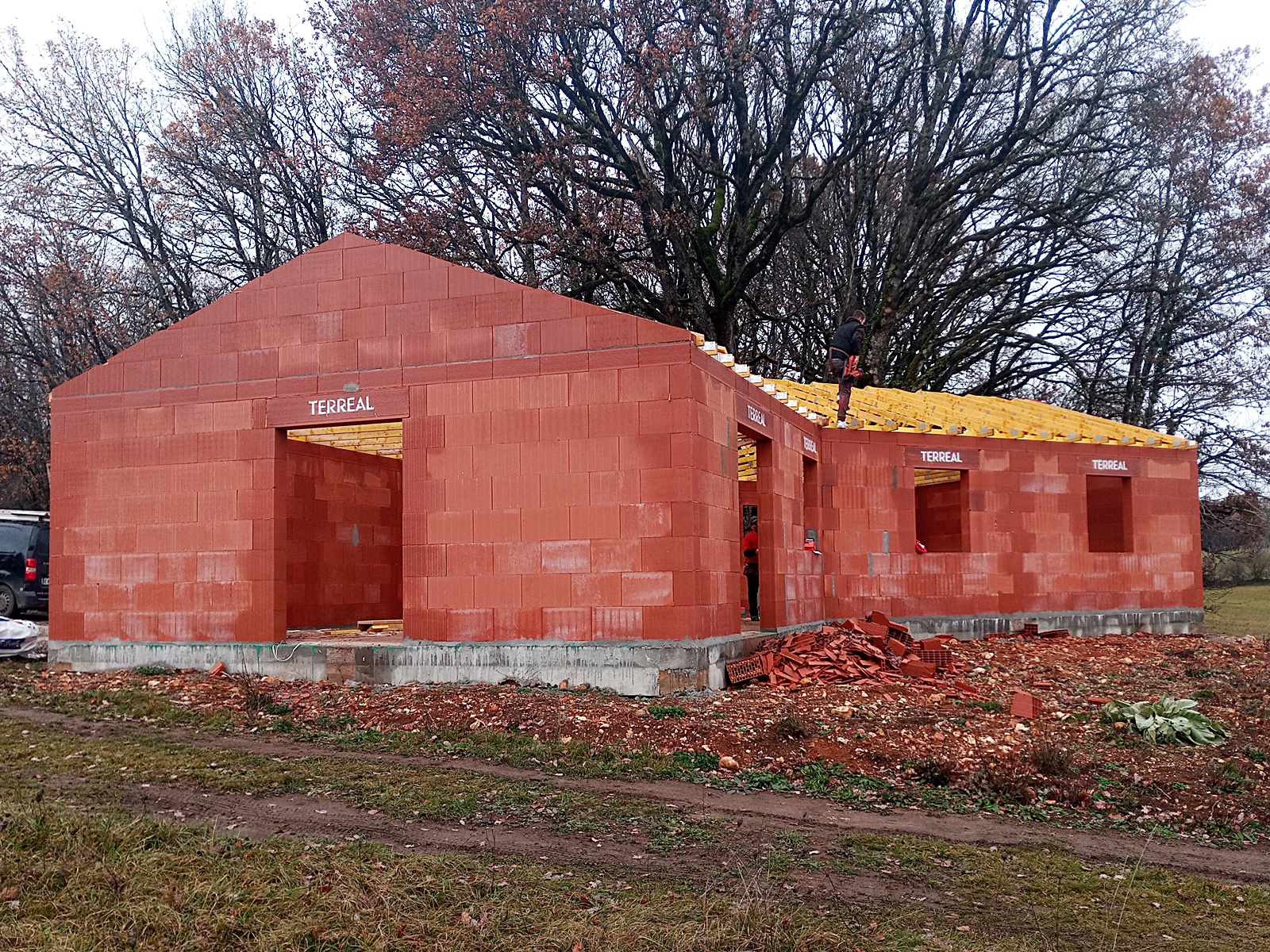
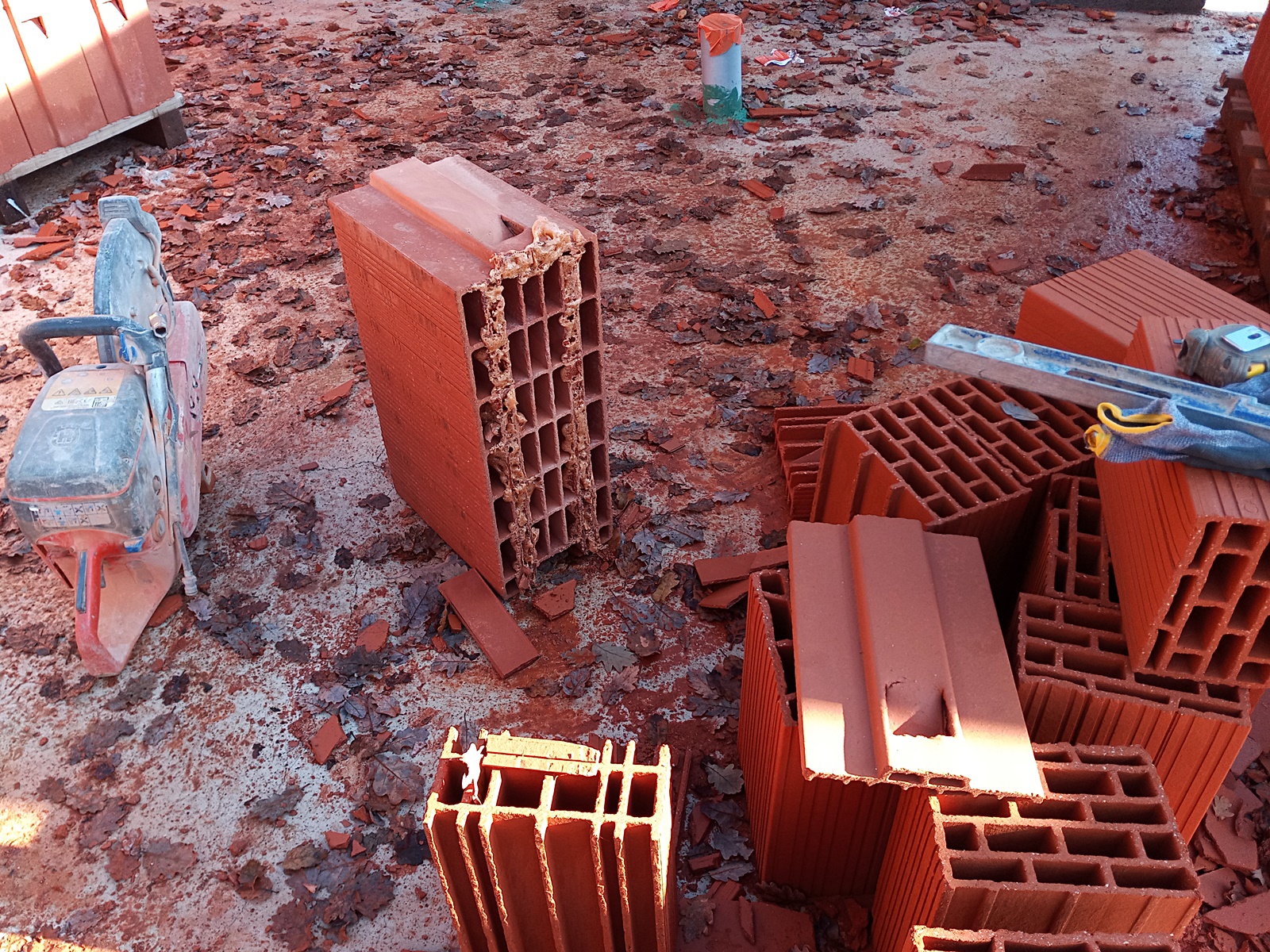
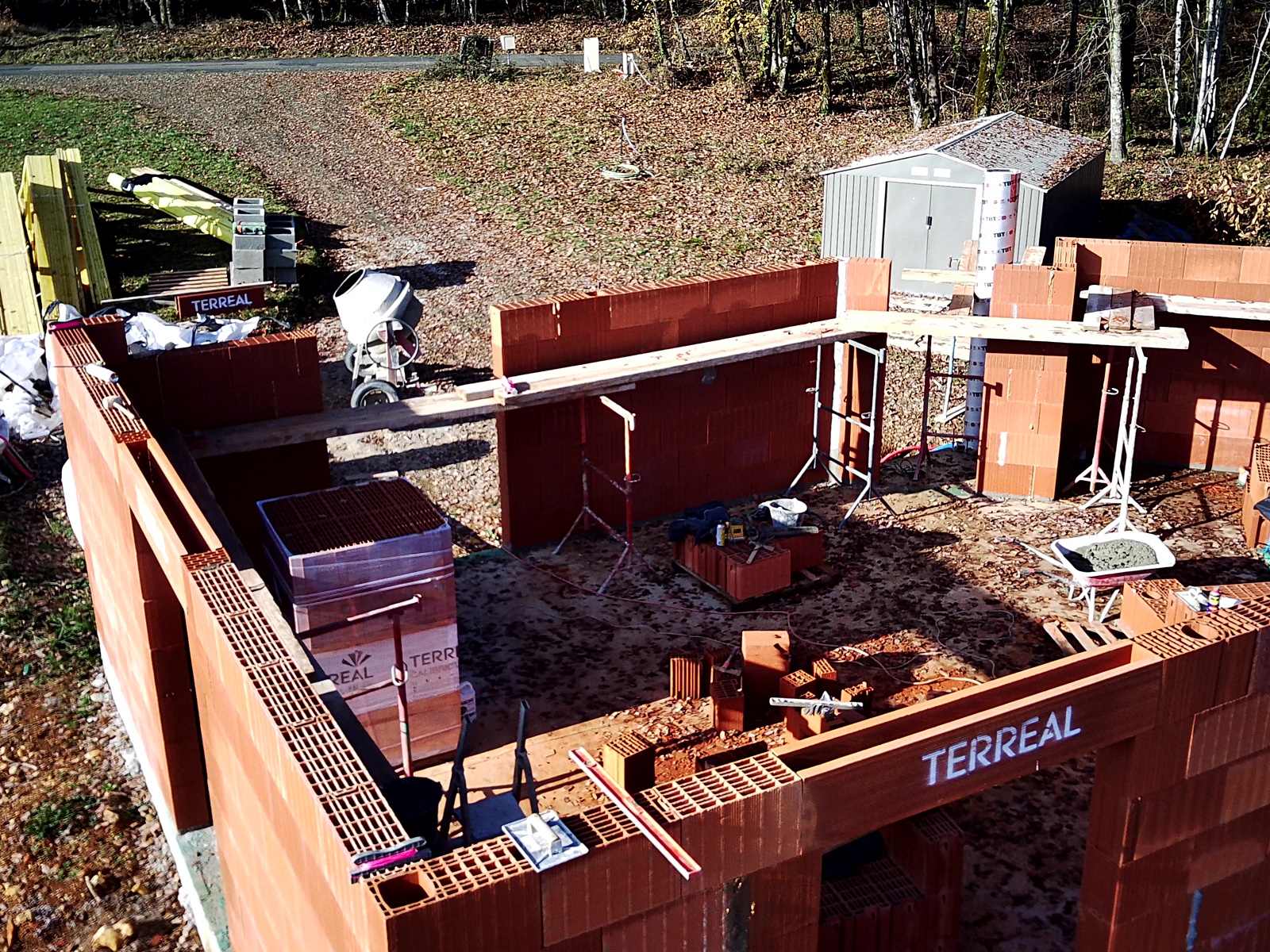
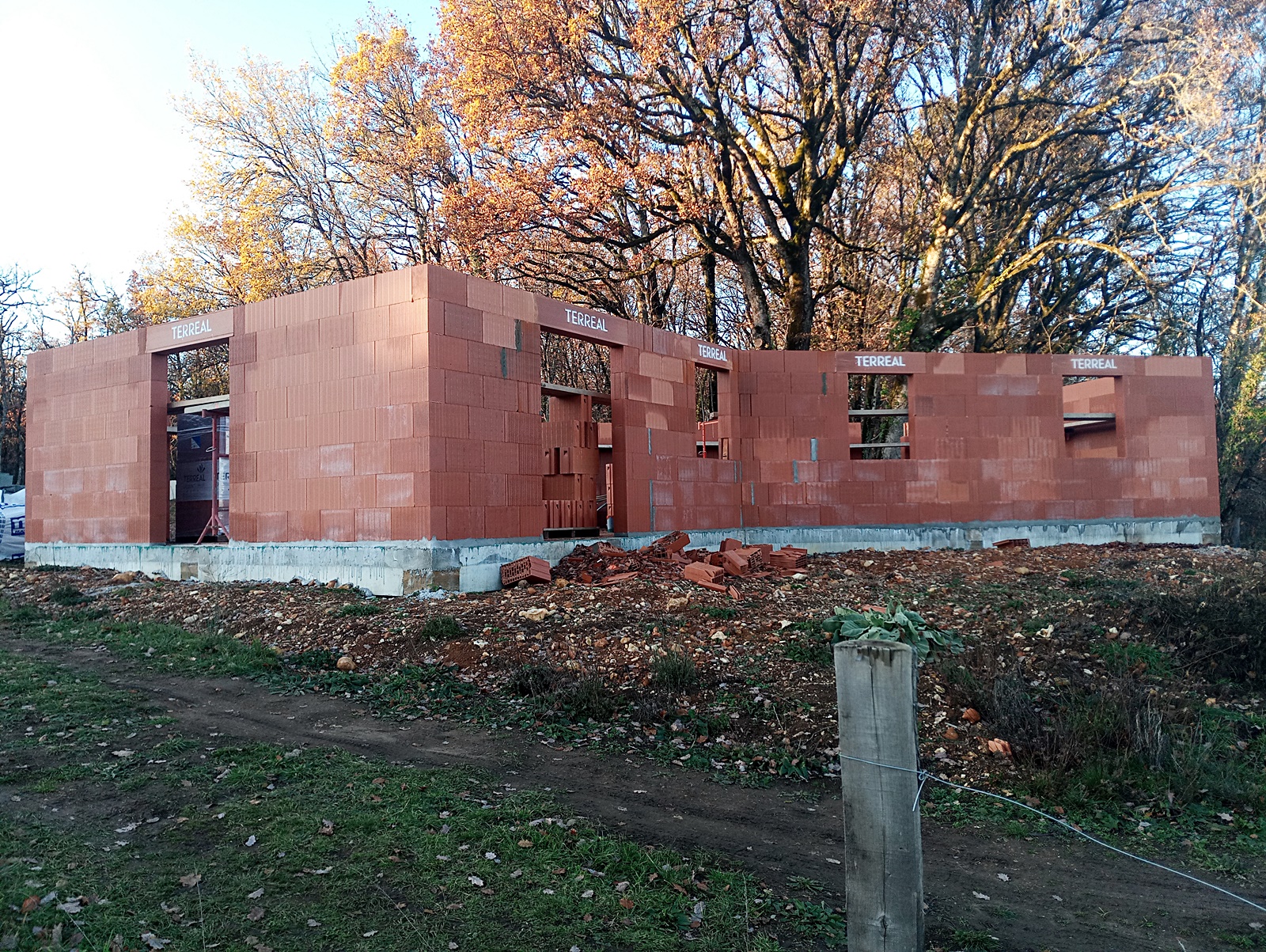
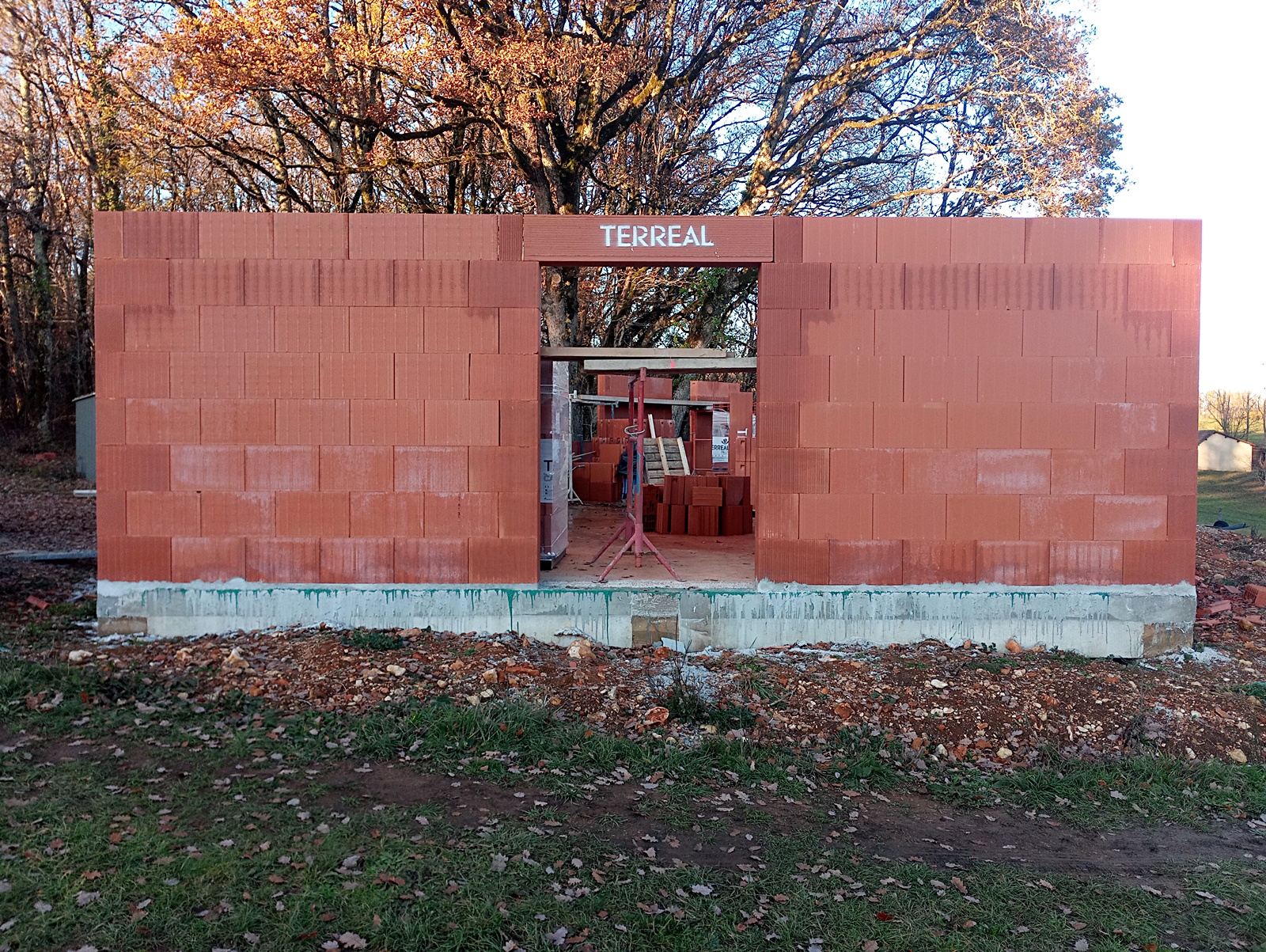
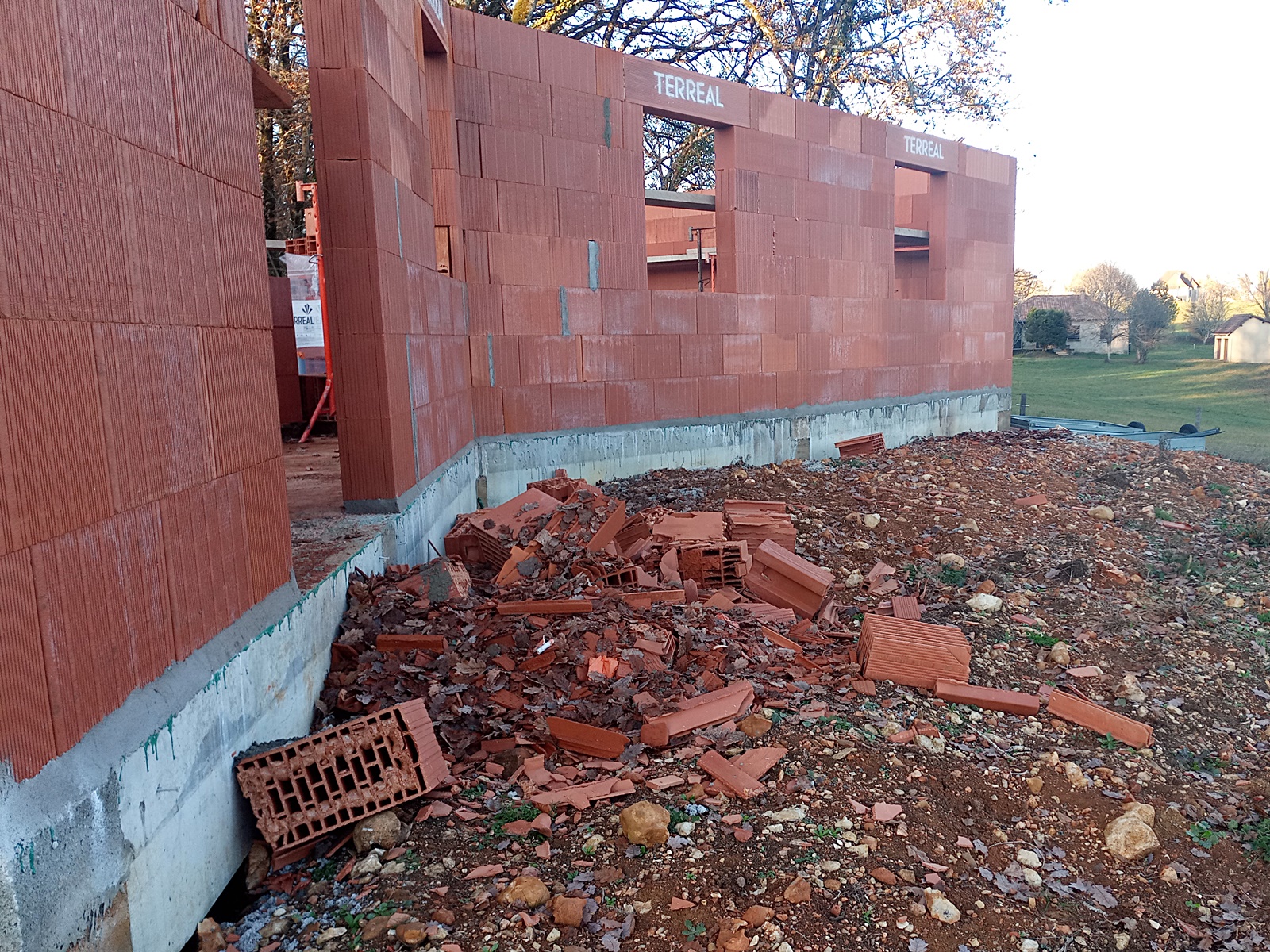
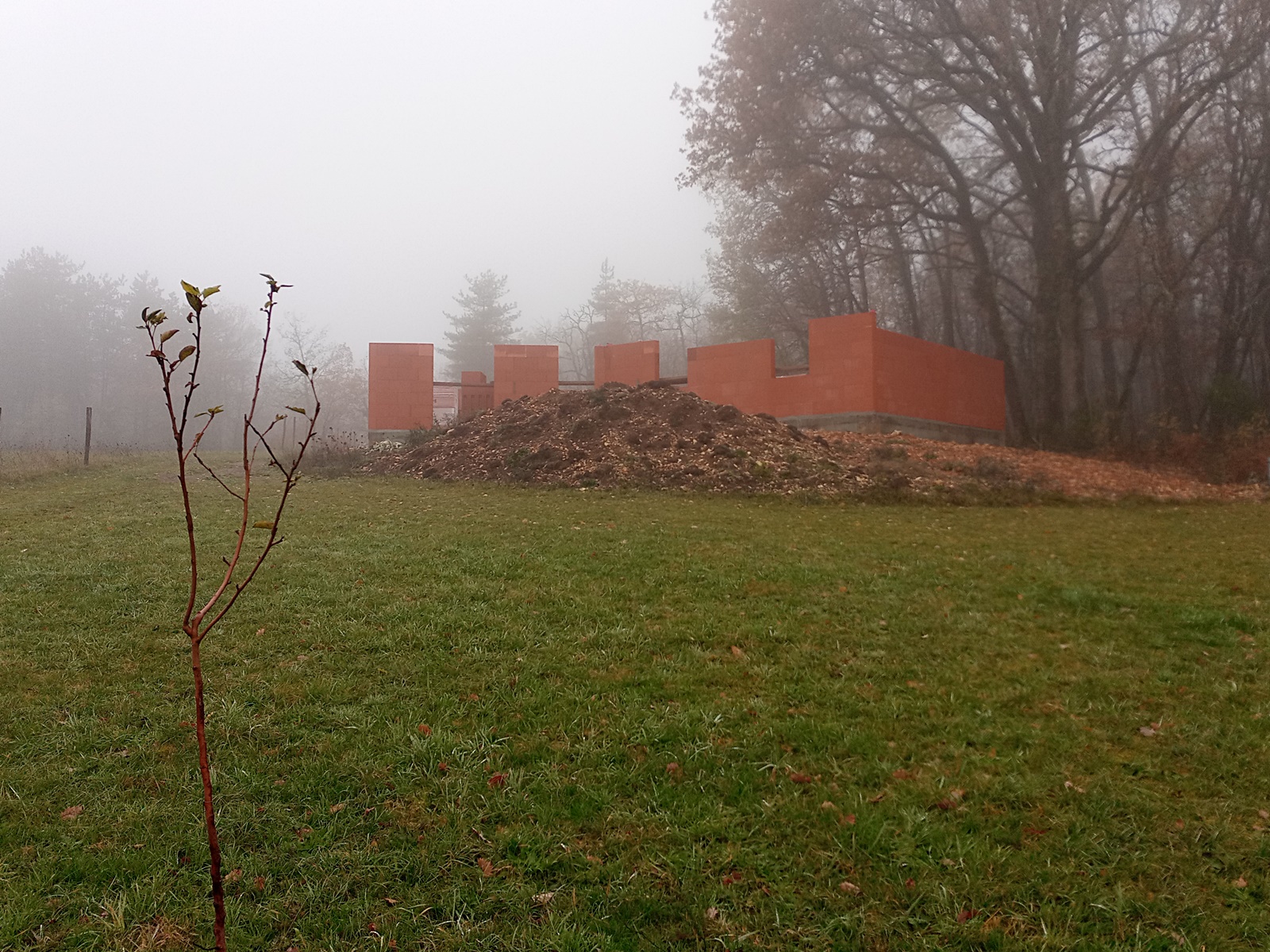
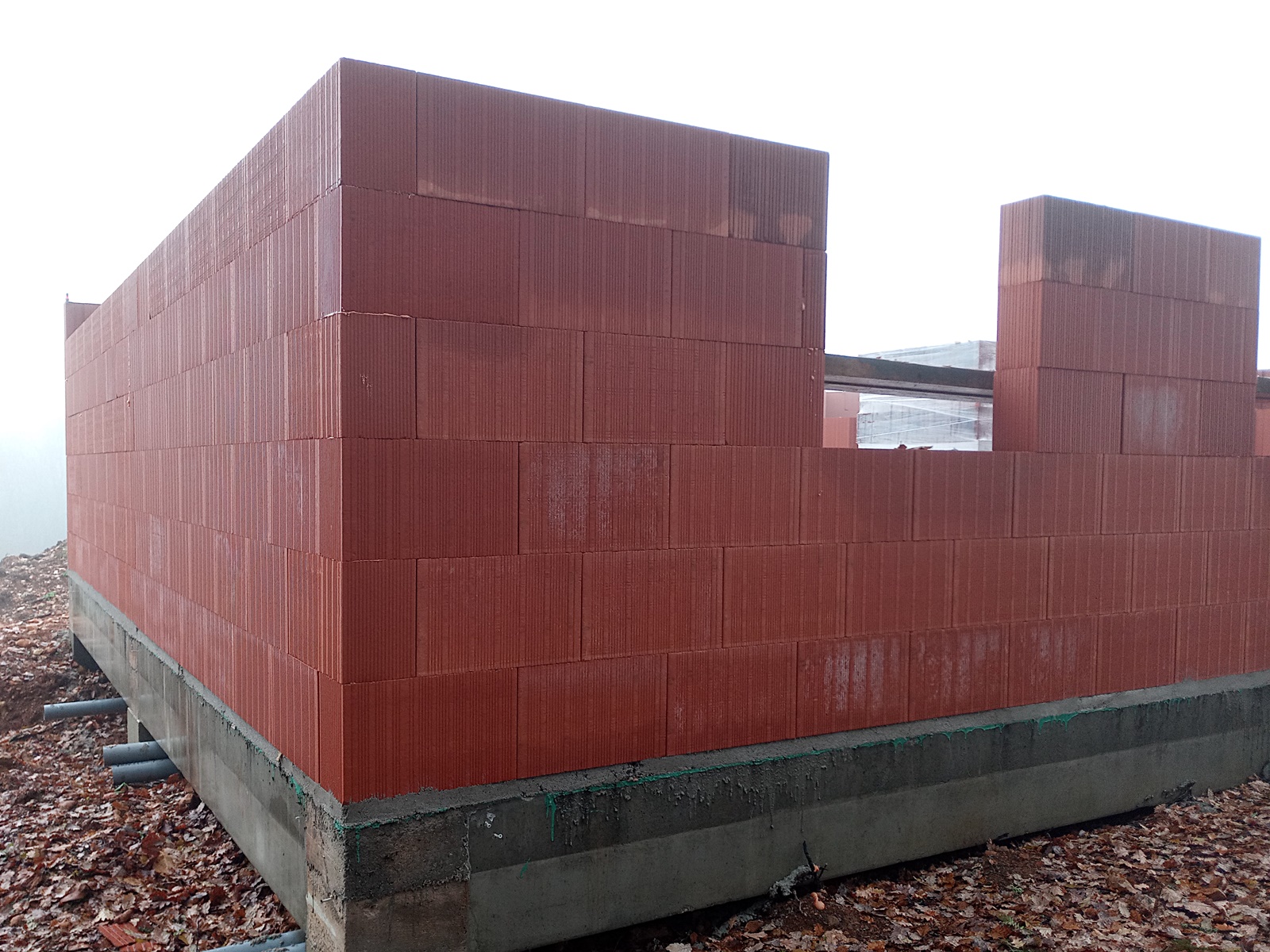
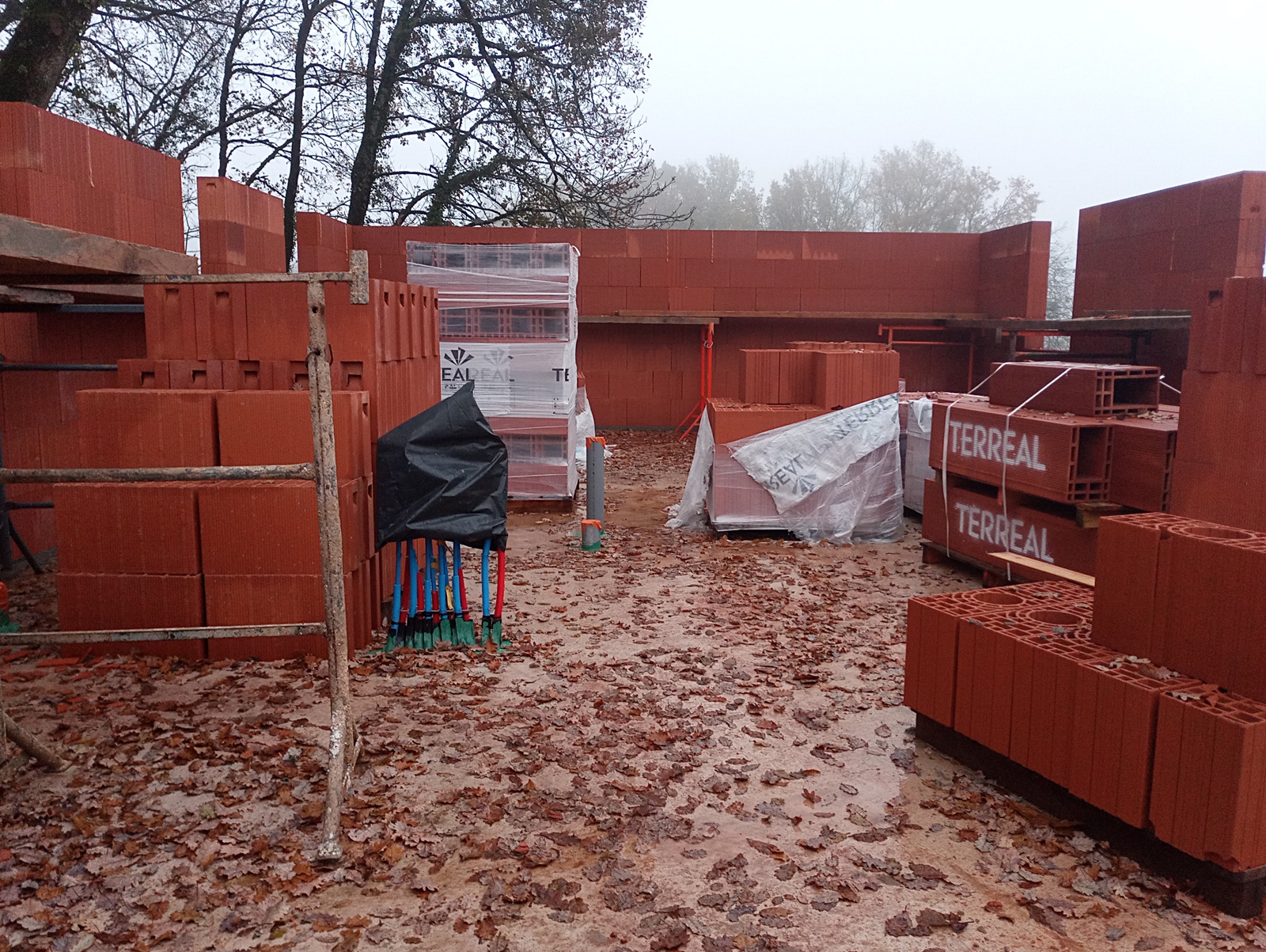
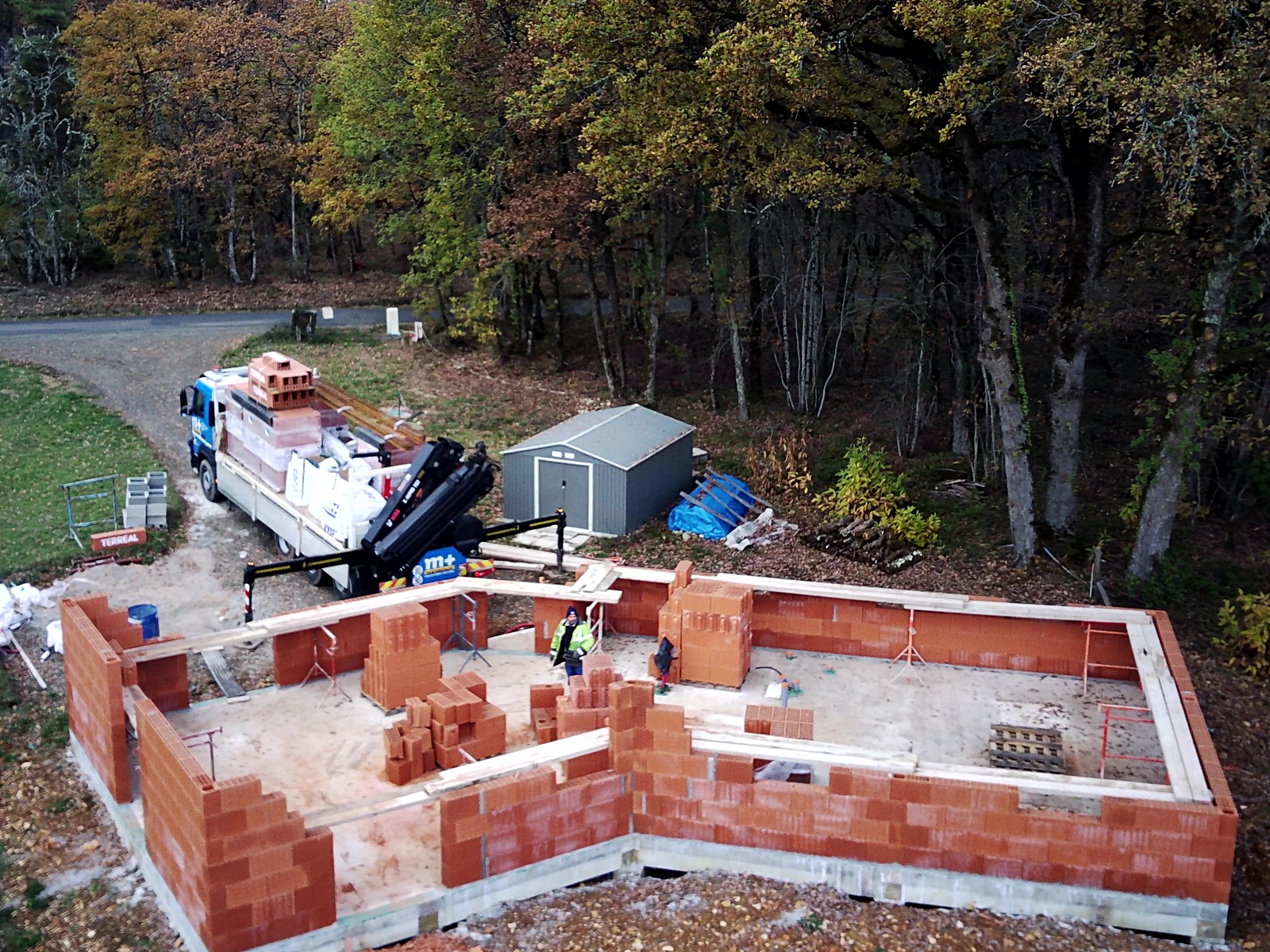
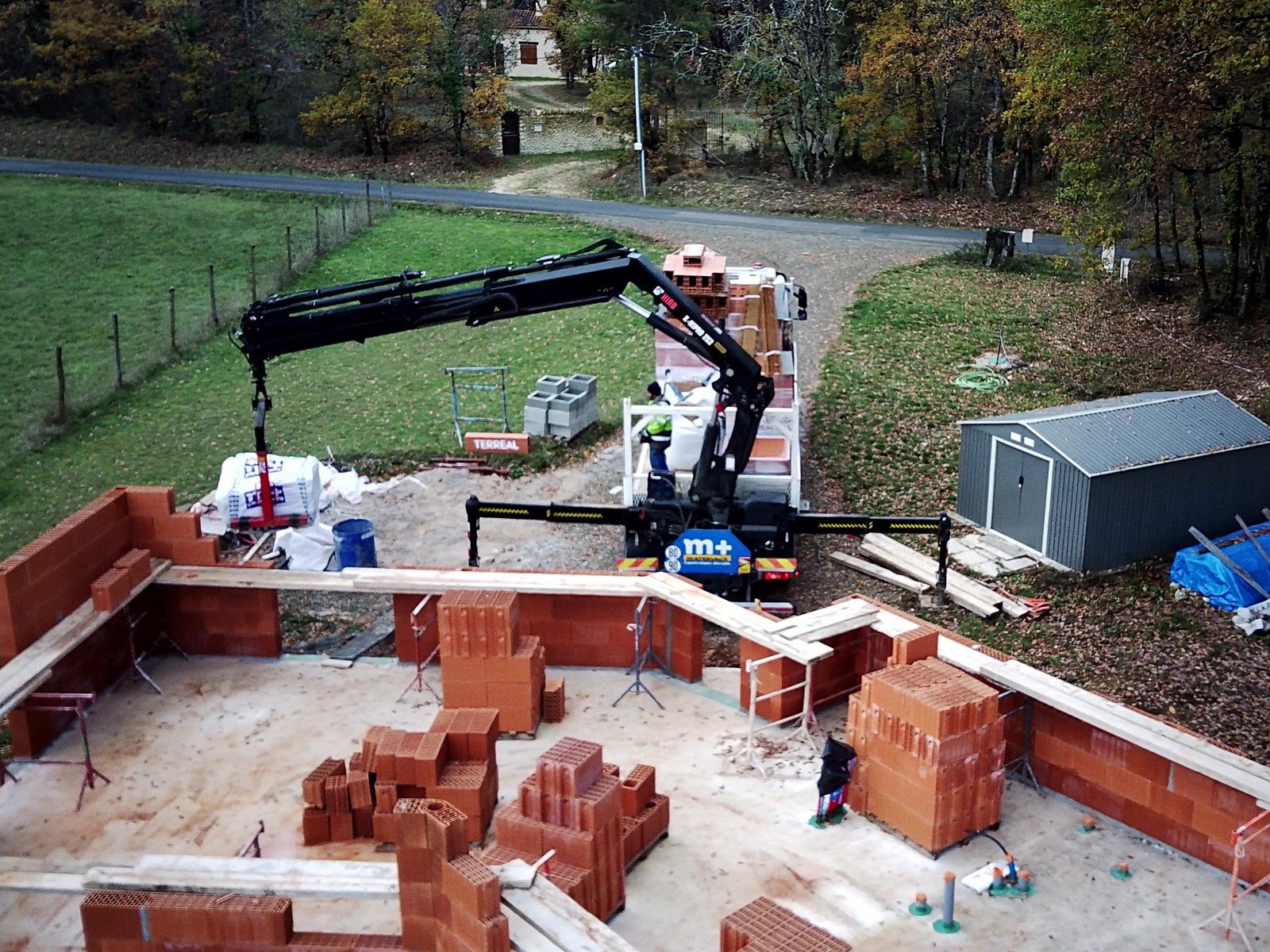
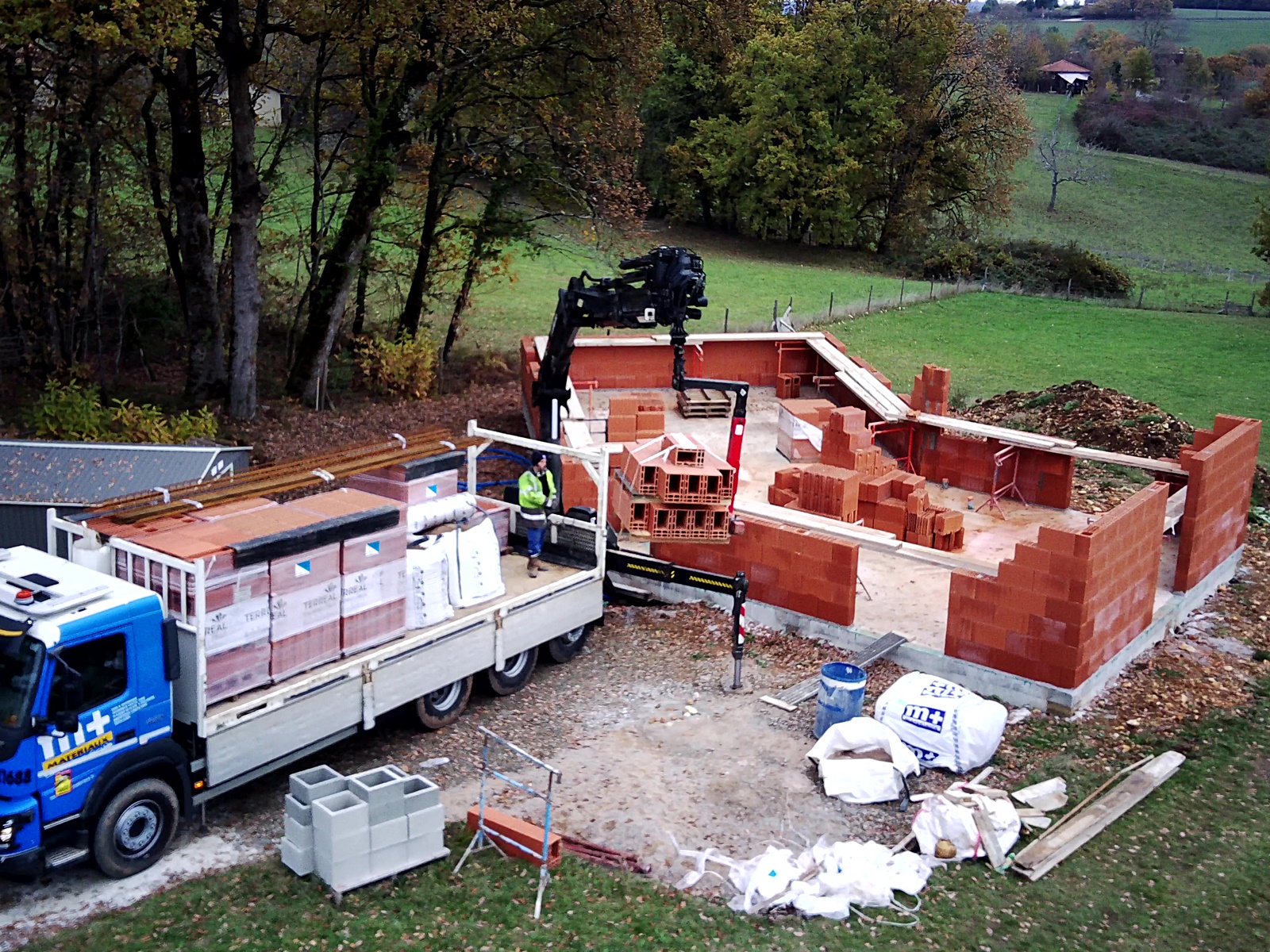
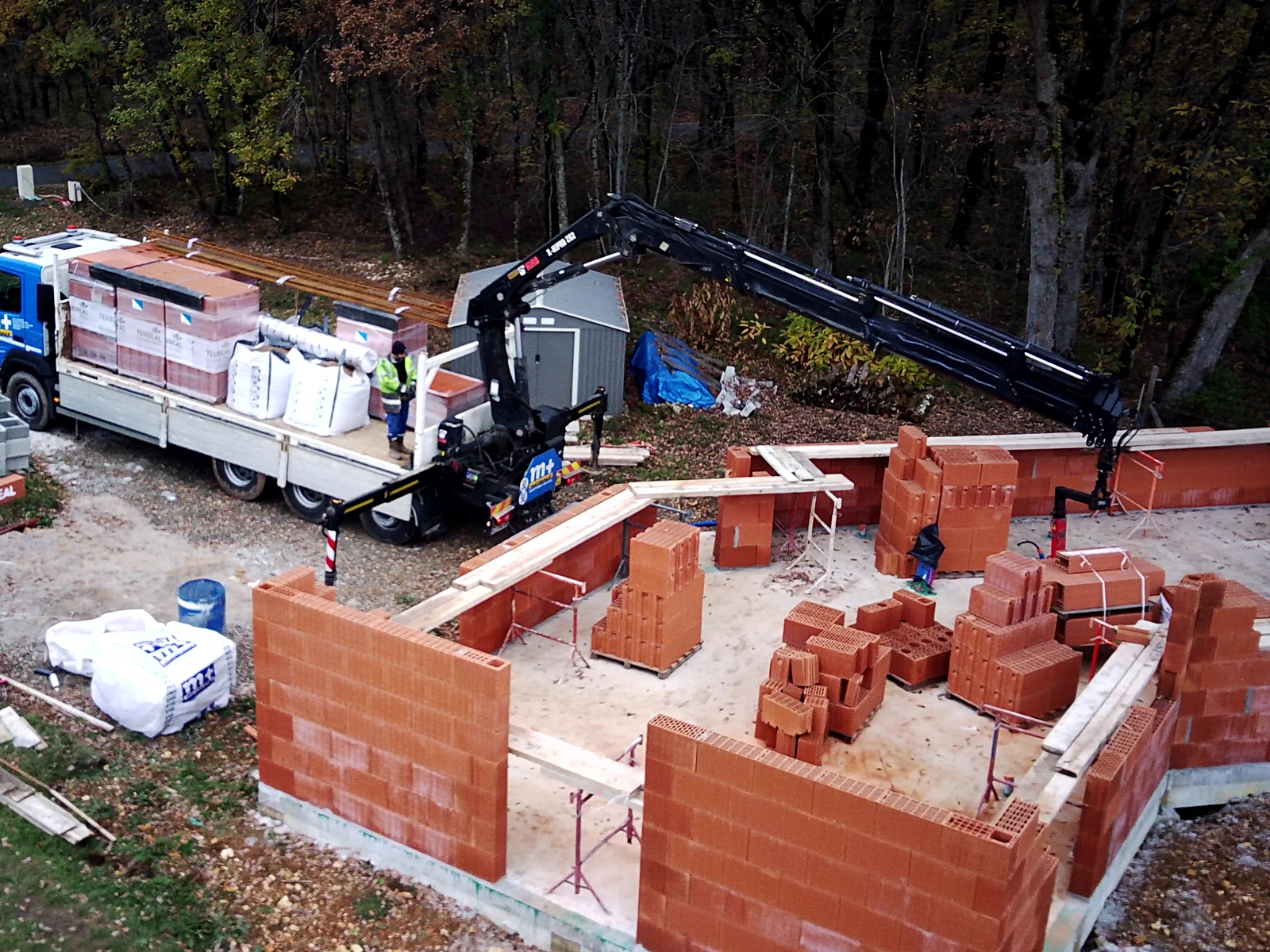
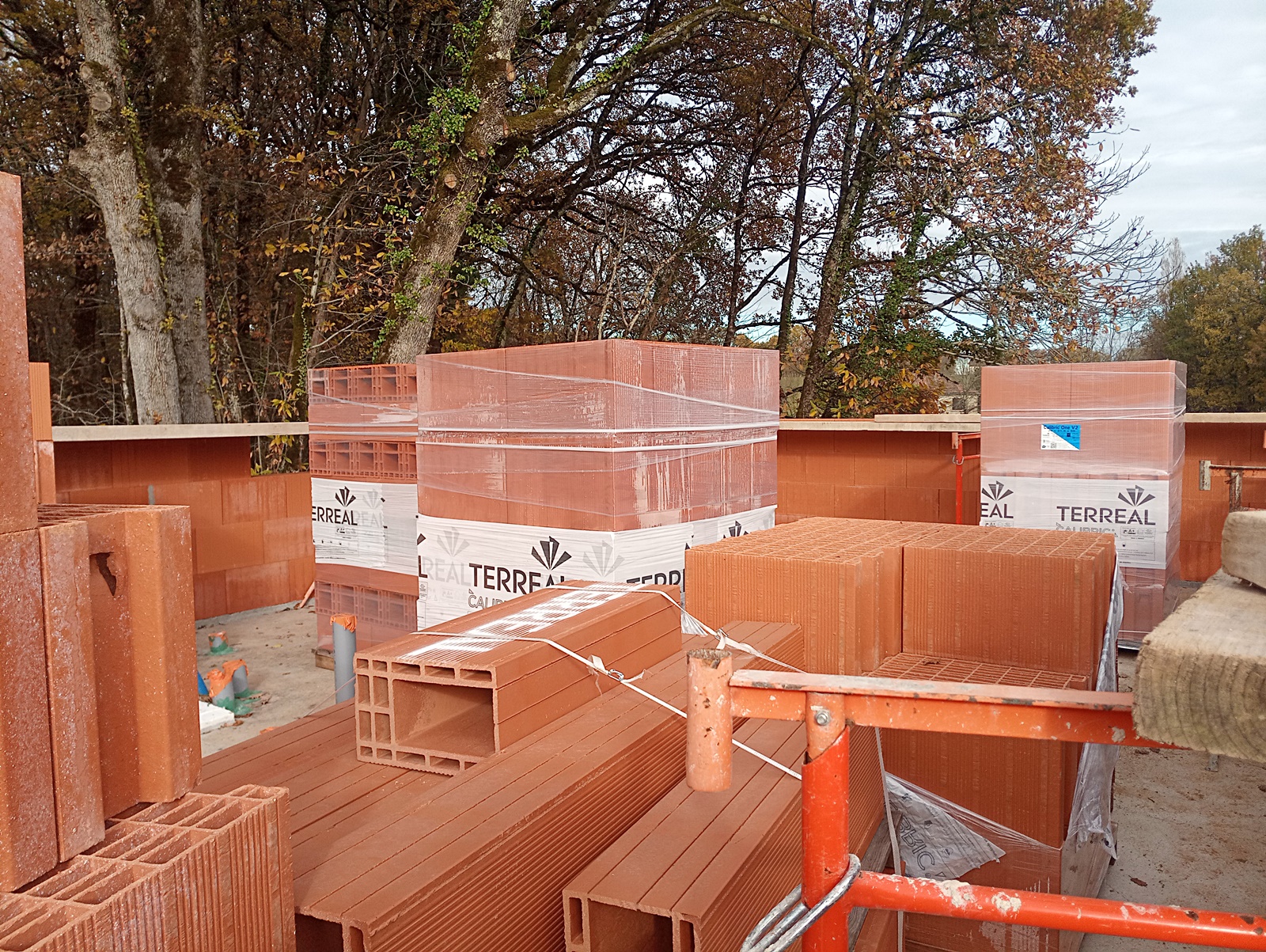
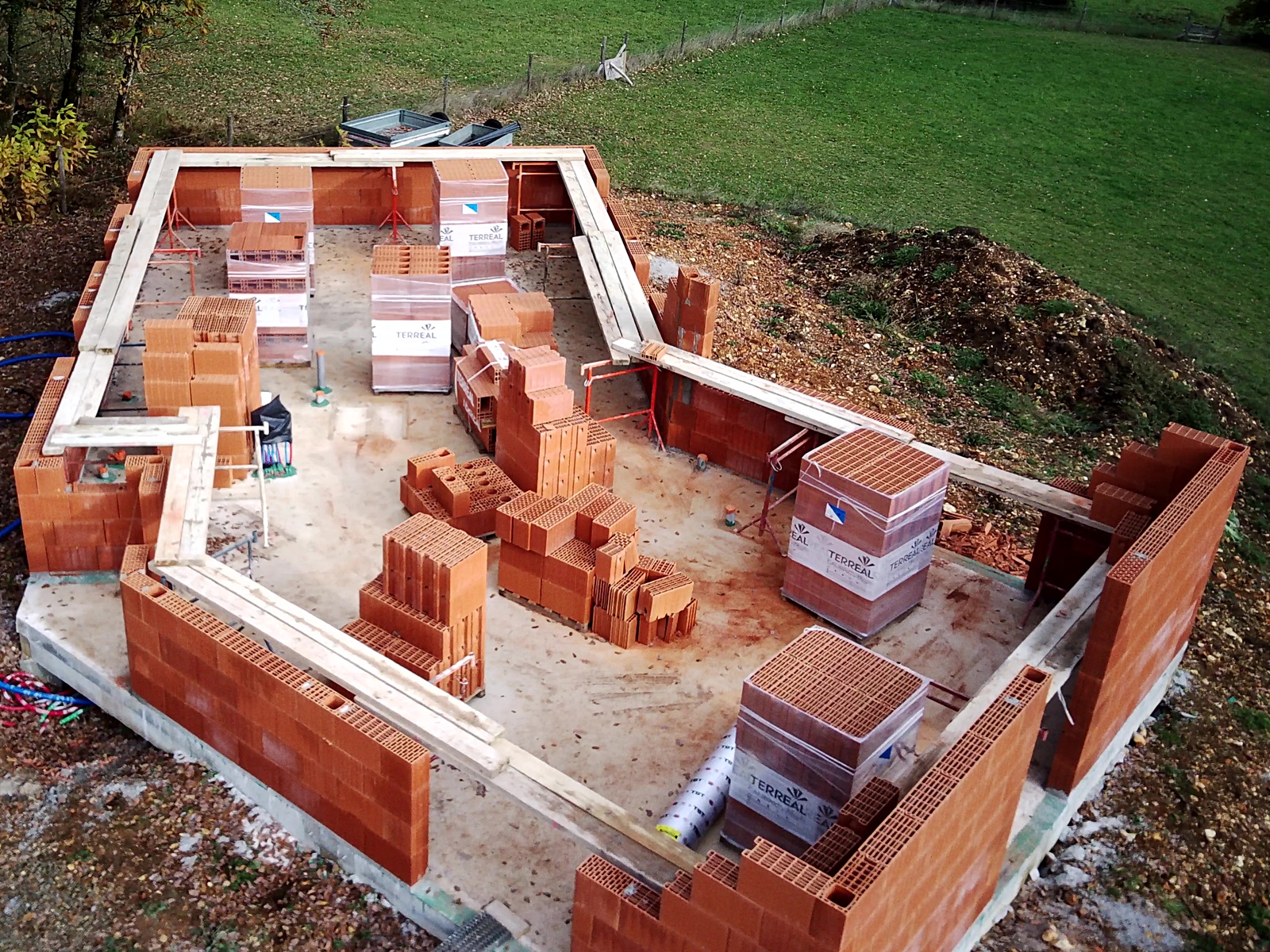
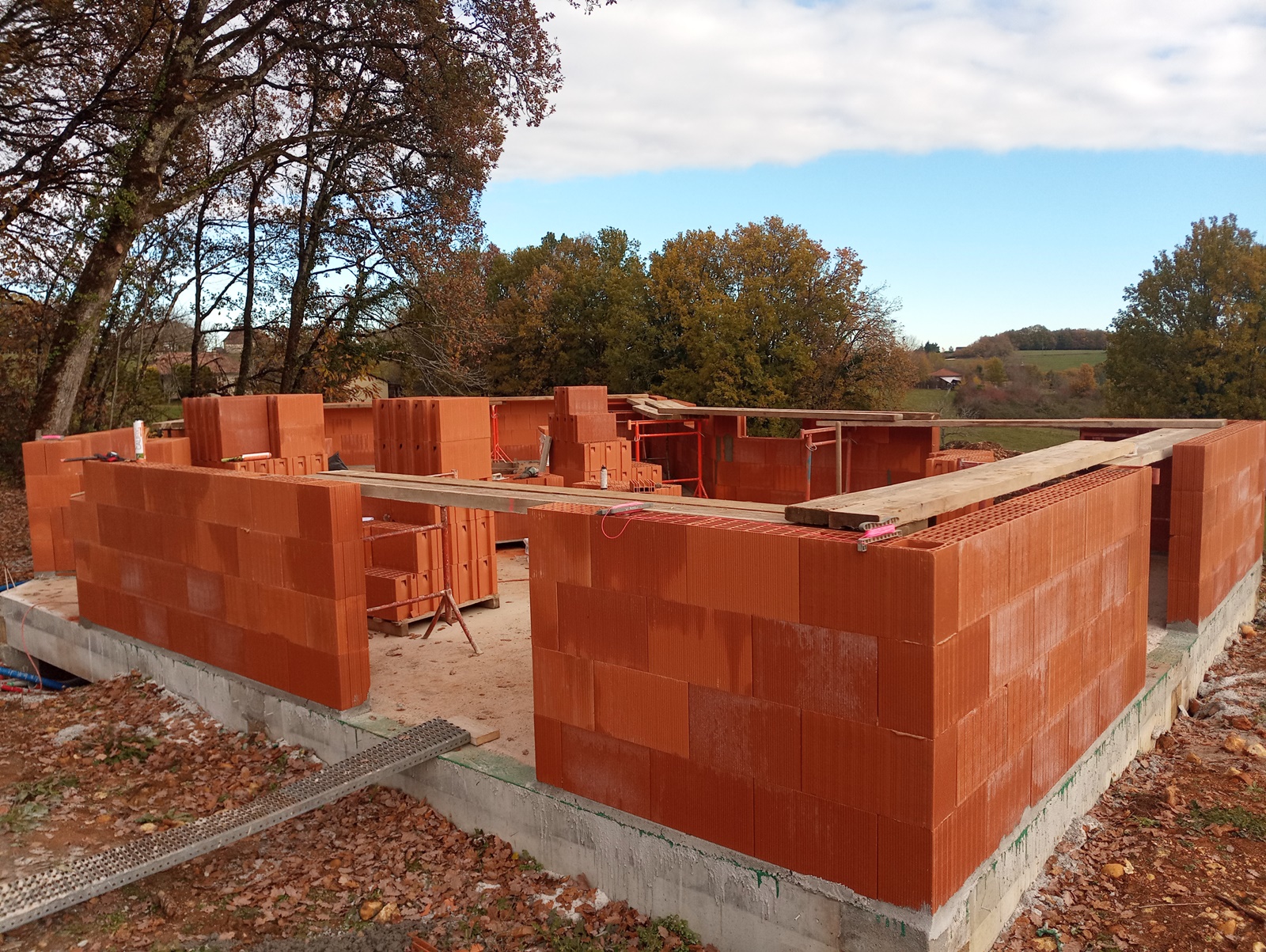
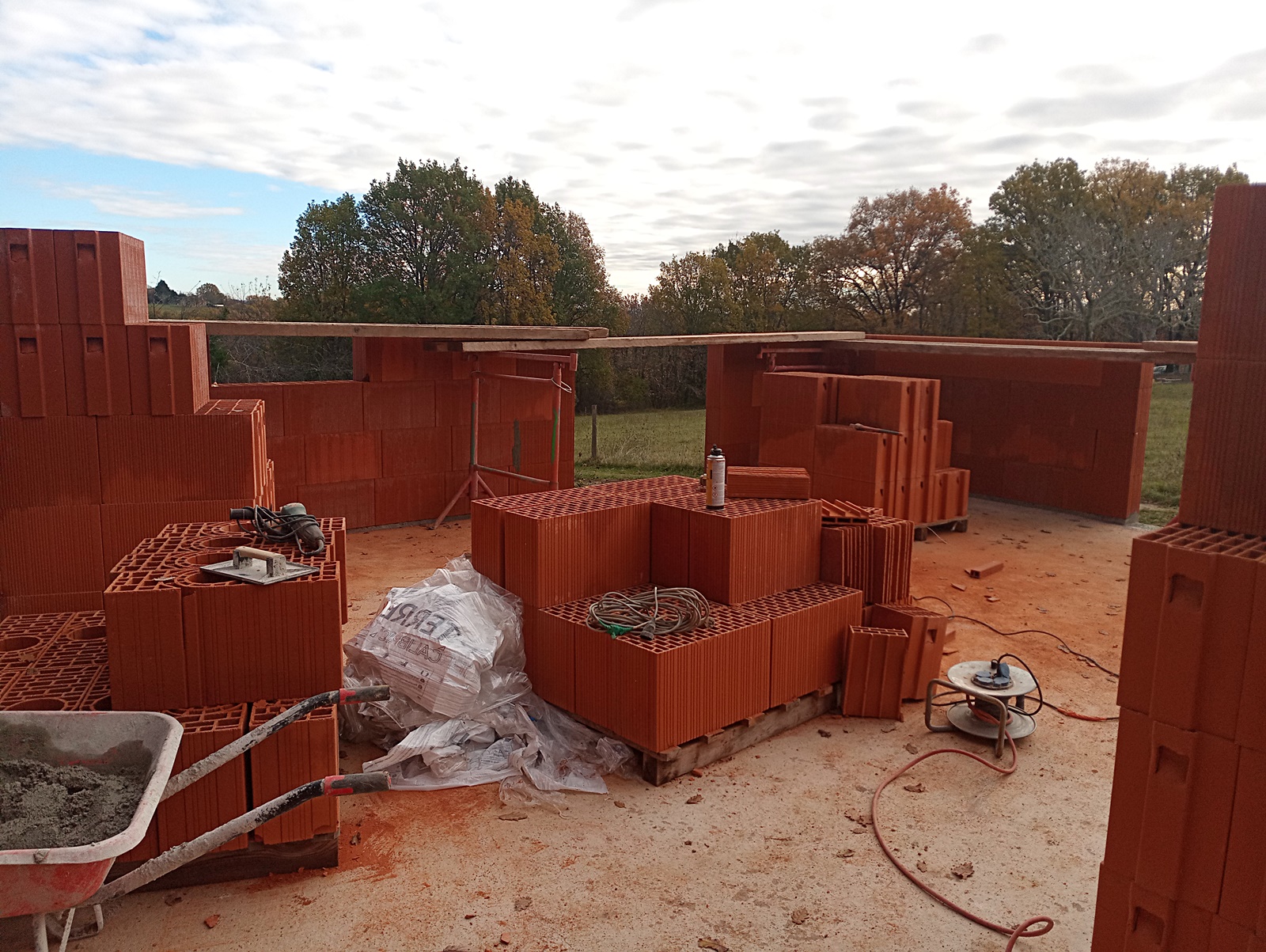
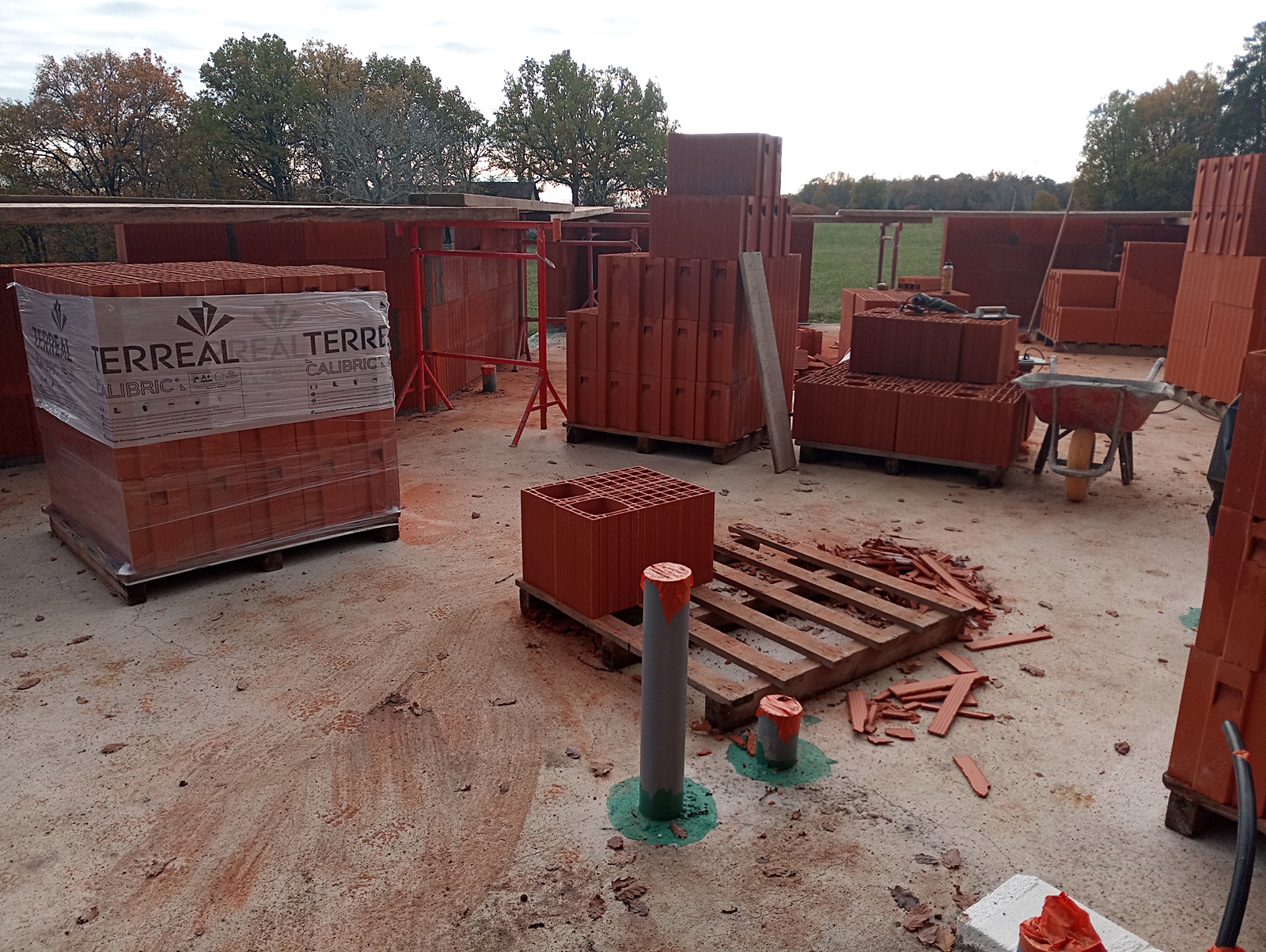
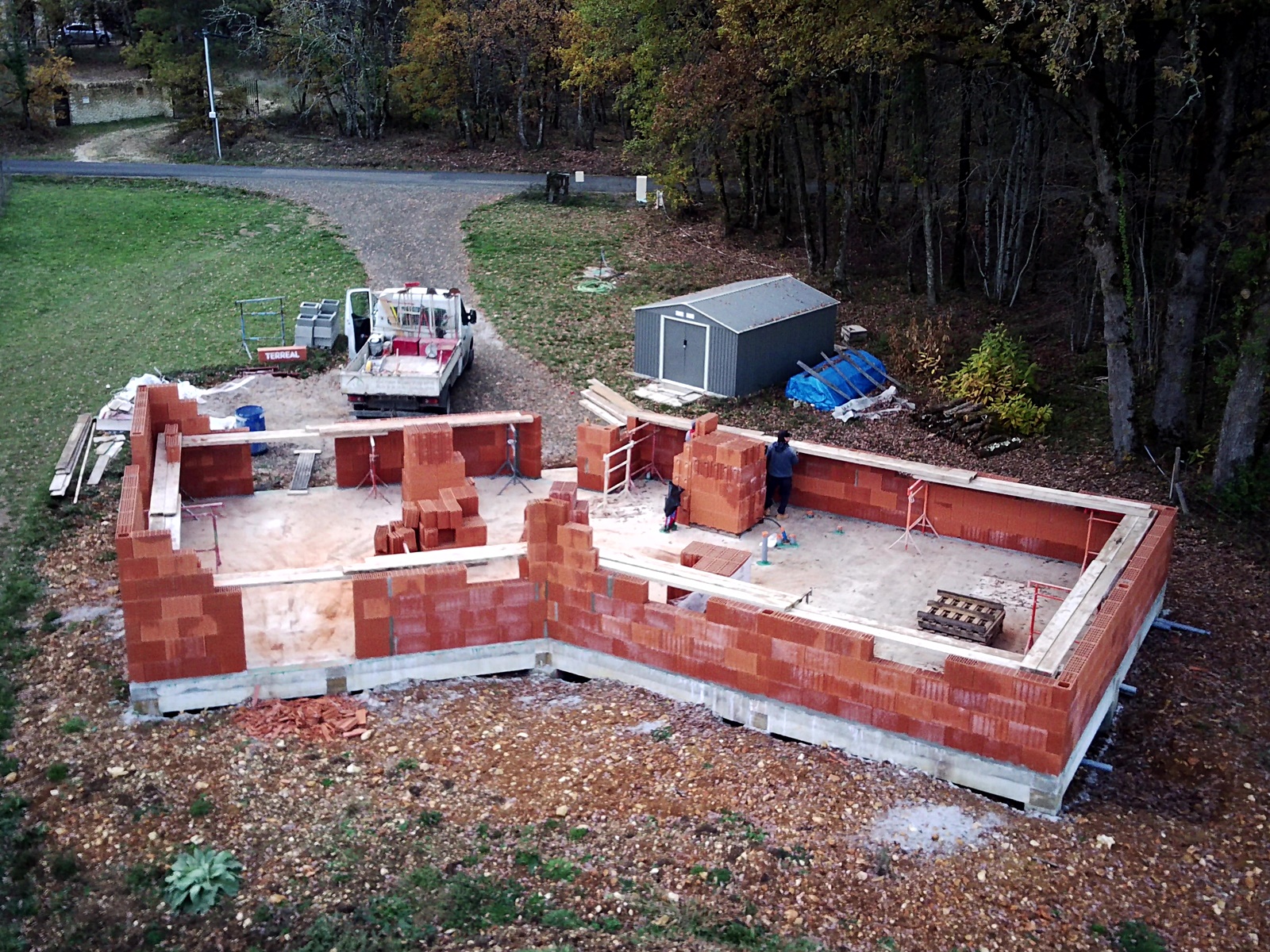
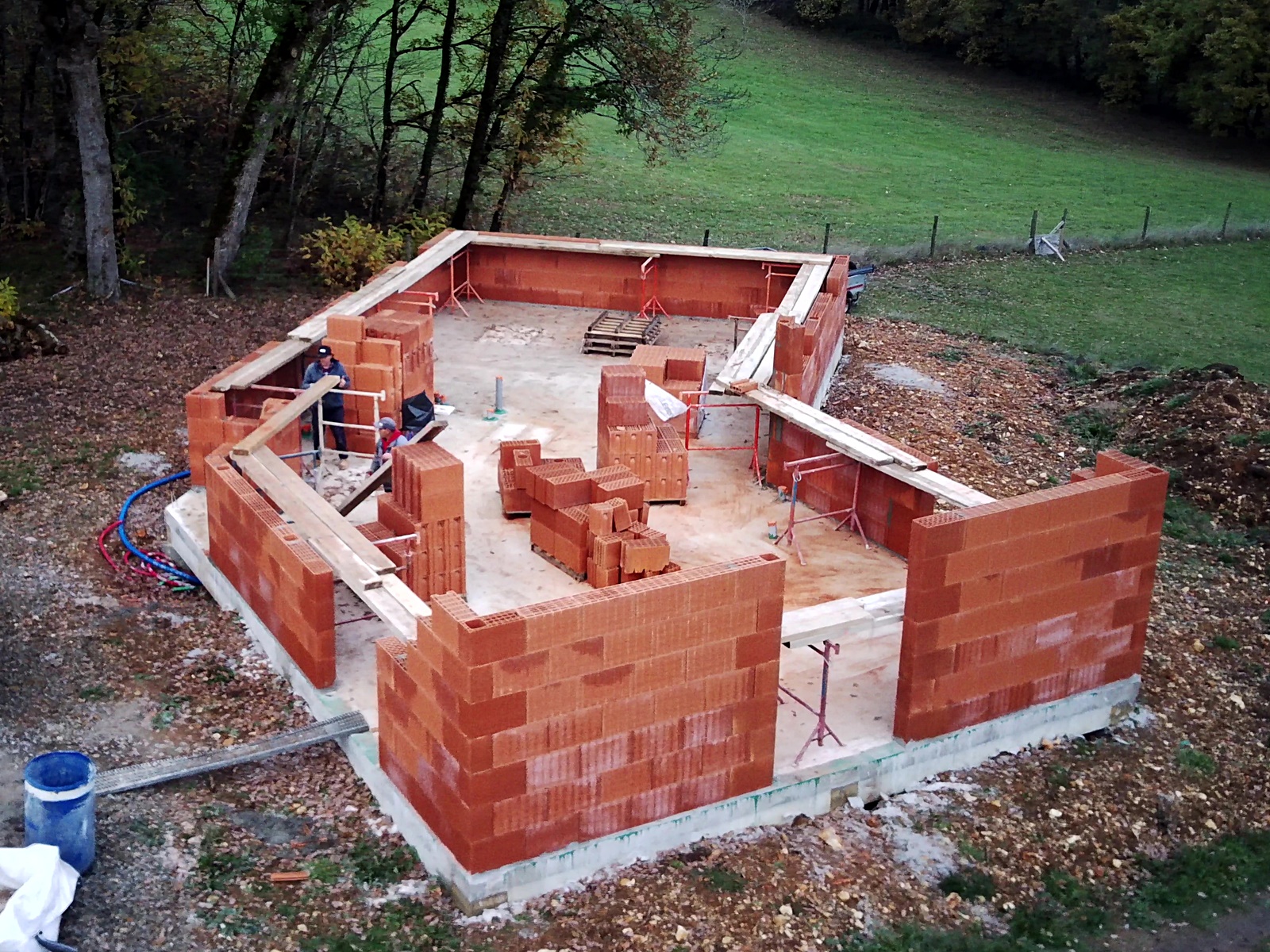
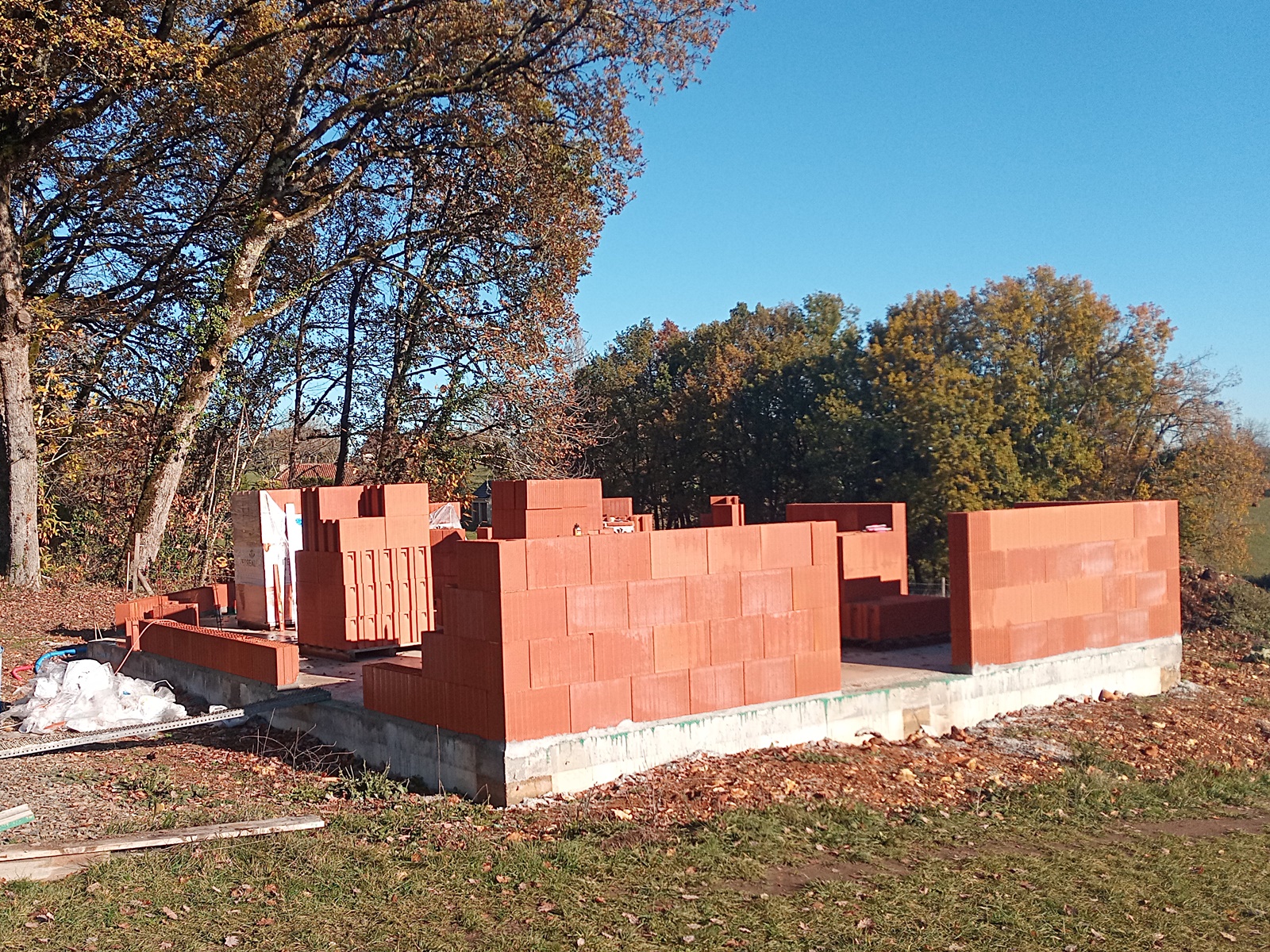
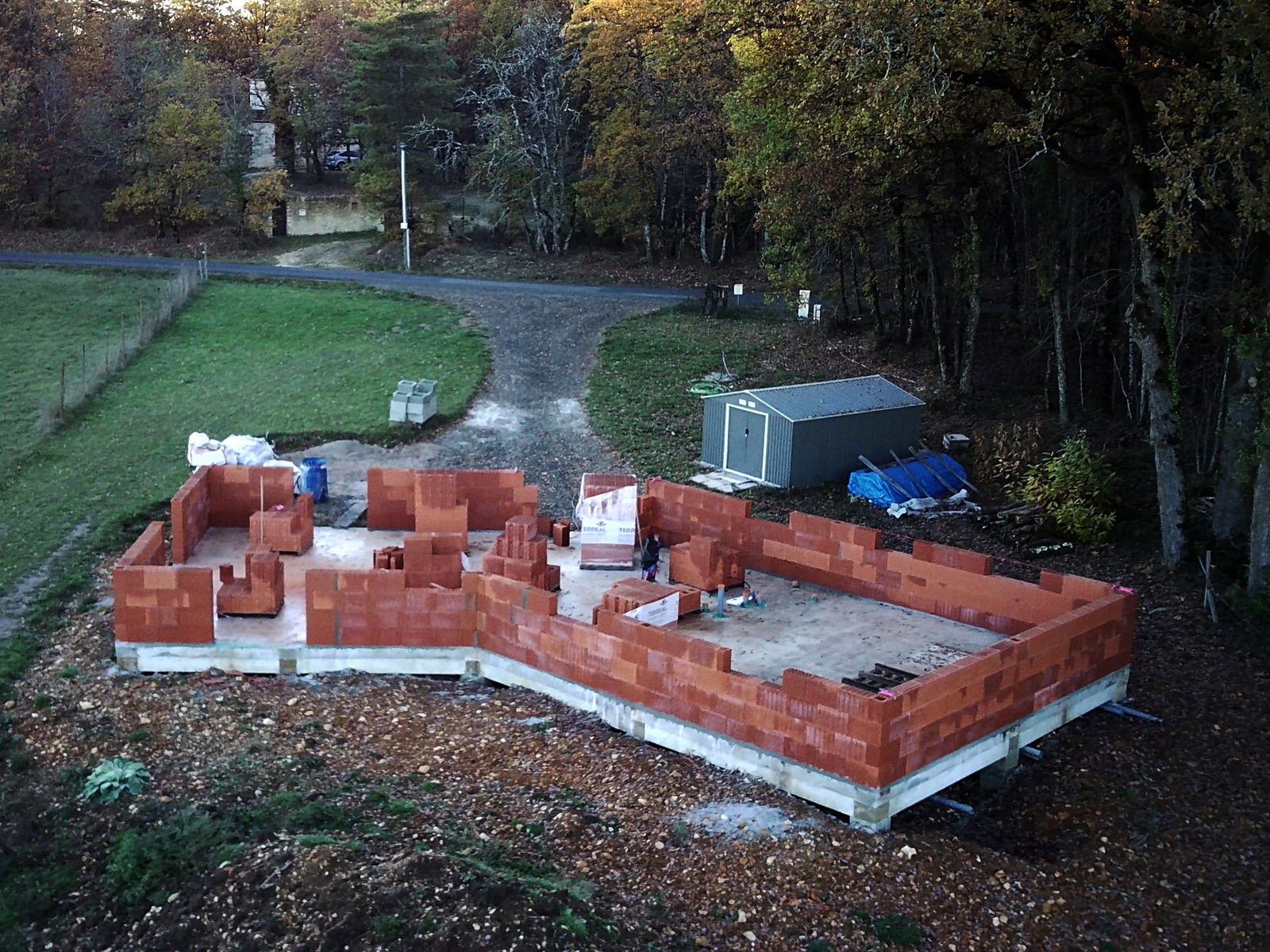
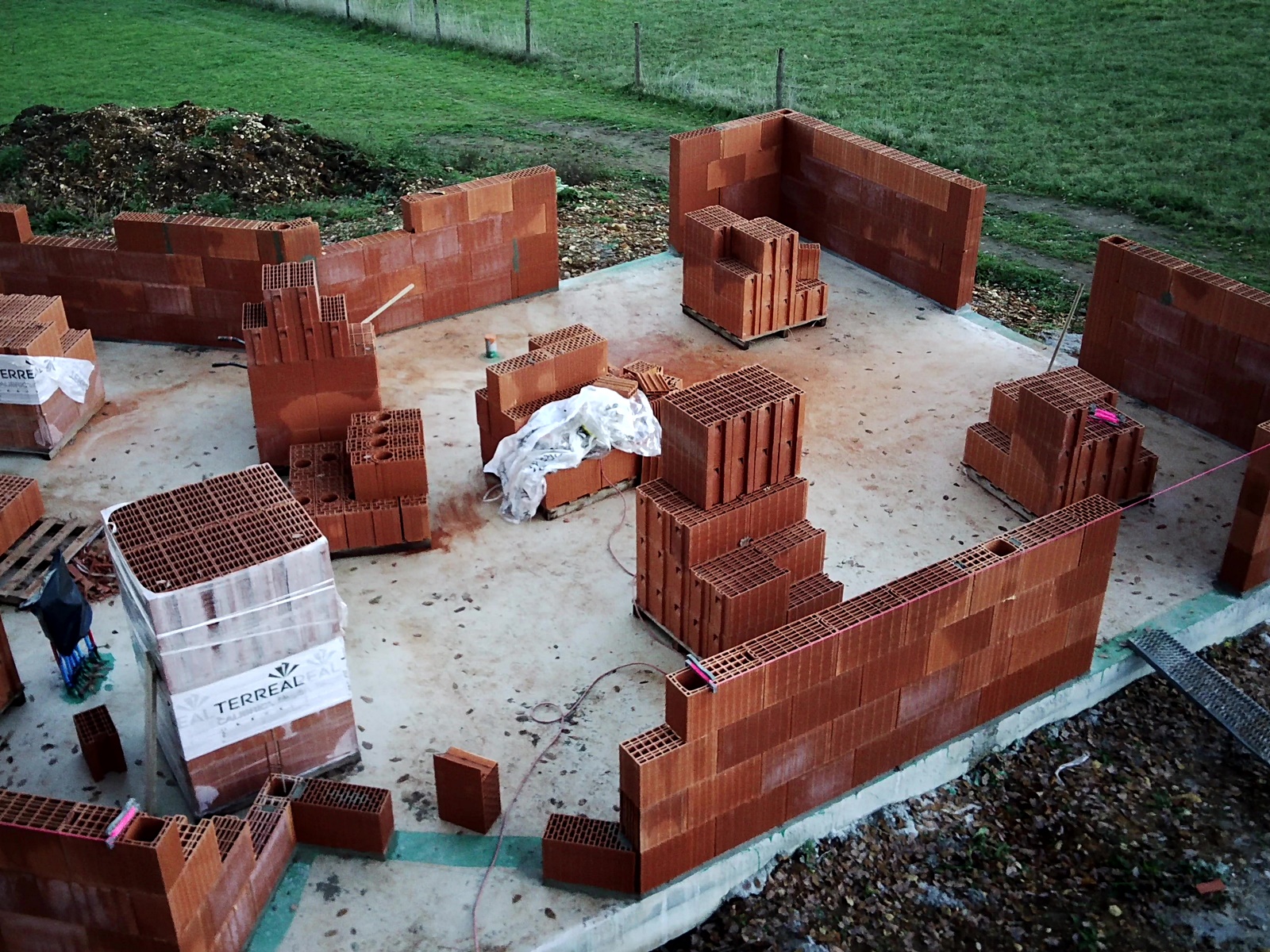
We always knew that today was going to be a bad day to work outside, the weather forecast had made that quite clear. Nevertheless the small team of roofers arrived at 8.30am, two in a small black van that made way for a large red truck fitted with a Hiab hoist to come on site first. It didn’t take them long to get themselves organised and while the two guys from the van prepared their equipment and readied materials for use the older man set up the Hiab and began to remove the left-over terra-cotta blocks from inside the building.

null

null

null

null

null

null

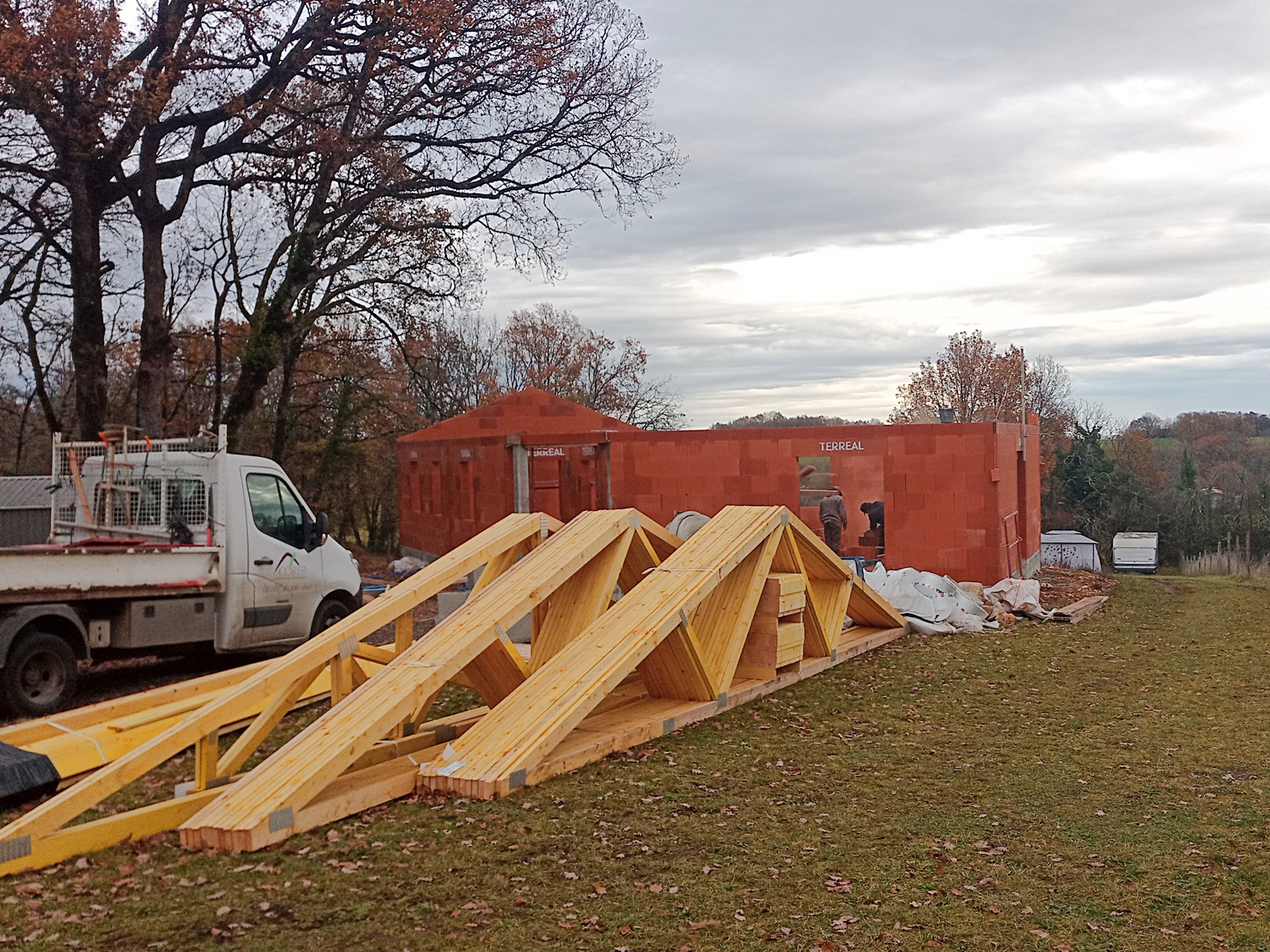
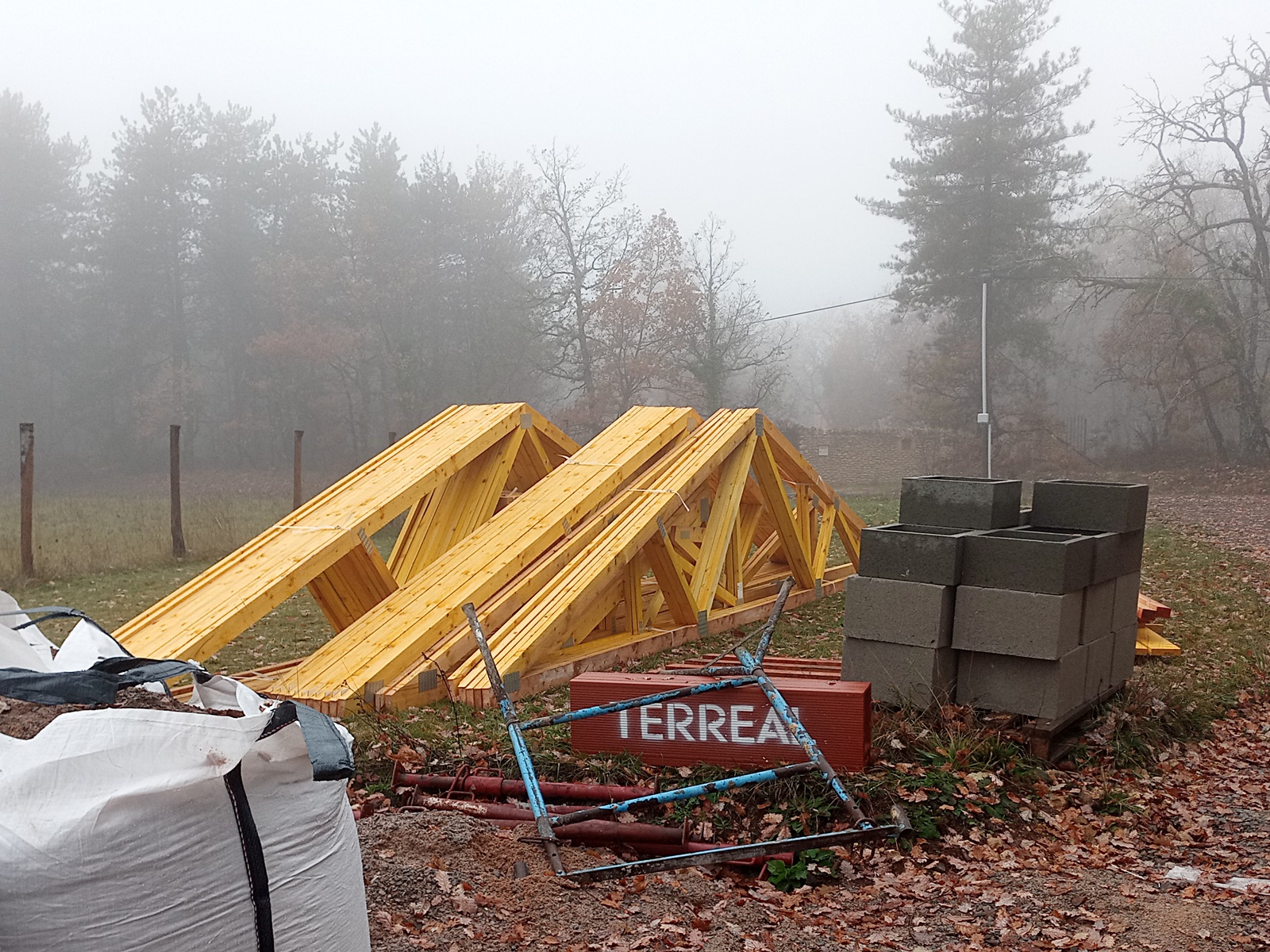
While the blocks were being removed the two other workmen began to move timber trusses inside ready to be lifted up and put into place.

null

null

null

They got cracking and after working at a brisk pace, the basic roof structure was almost up within three hours. Gone are the days when roofers cut and joined everything on site.

The back-breaking work is now done by machine off-site with the roof timbers all being designed by computers, each piece cut, coded and joined to create the structure and pitch of the roof and all of the components then transported to site.

As Didier said this morning, that’s why things can be done so quickly nowadays – all (yes ‘all’!) the roofers have to do is assemble all the components in situ and fix them using power tools (no hammering nails through 4″ x 2″ timbers nowadays). That’s why the basic structure was in place by 11.30am.

null

null

null

null

null

null

null

null

null

null

null

null

null

null

null

The sun showed its face for a short while but things then went rapidly south and it began to rain. It has hardly stopped since but the two workers carried on and must have become soaked right through. I went out later in the afternoon during a slight lull in the rain and they’d completed all of the woodwork, everything including the fascia-boards on which the gutters will be mounted.

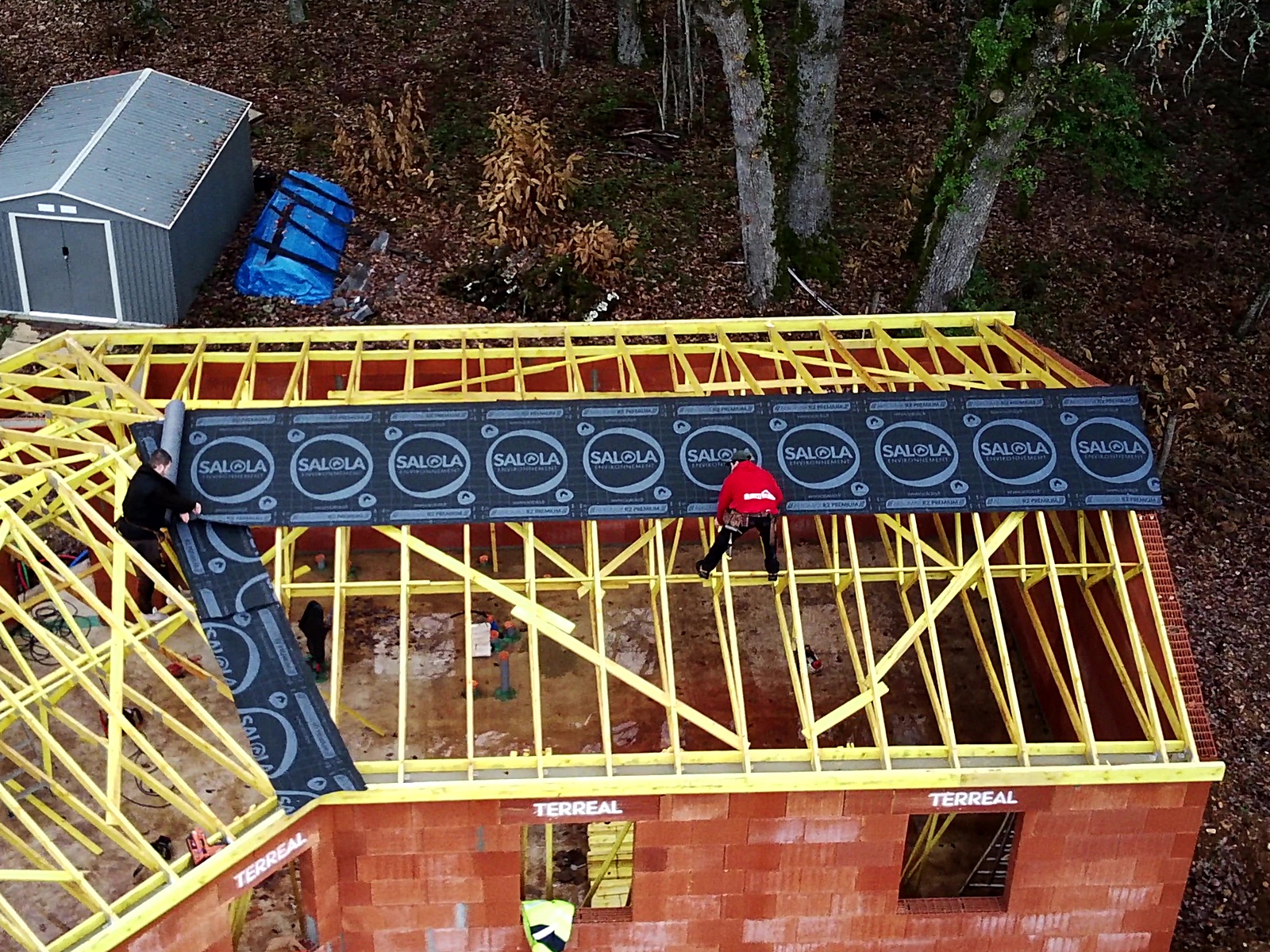
They’d therefore started to fit the waterproof plastic membrane that in the future will provide additional weather-proofing and protection under the roof tiles but which for now will just encourage the wet wood to stay wetter for longer by trapping in the moisture. There’s not much that can be done about that and that was always one of my major fears about having a winter build.

null

null

null

I was pleased to see how even though they’d started at the top of the roof they were overlapping the bottom of the top layer of plastic over the top of the layer being placed beneath it.

null

Then the rain resumed and continued without stopping, making working conditions impossible. When I went up to check on progress just after 4.00pm they’d wisely decided to call it a day and left. They’d made good progress with the plastic sheeting but the following shots show just how bad the conditions had become.

null

null

null

null

null

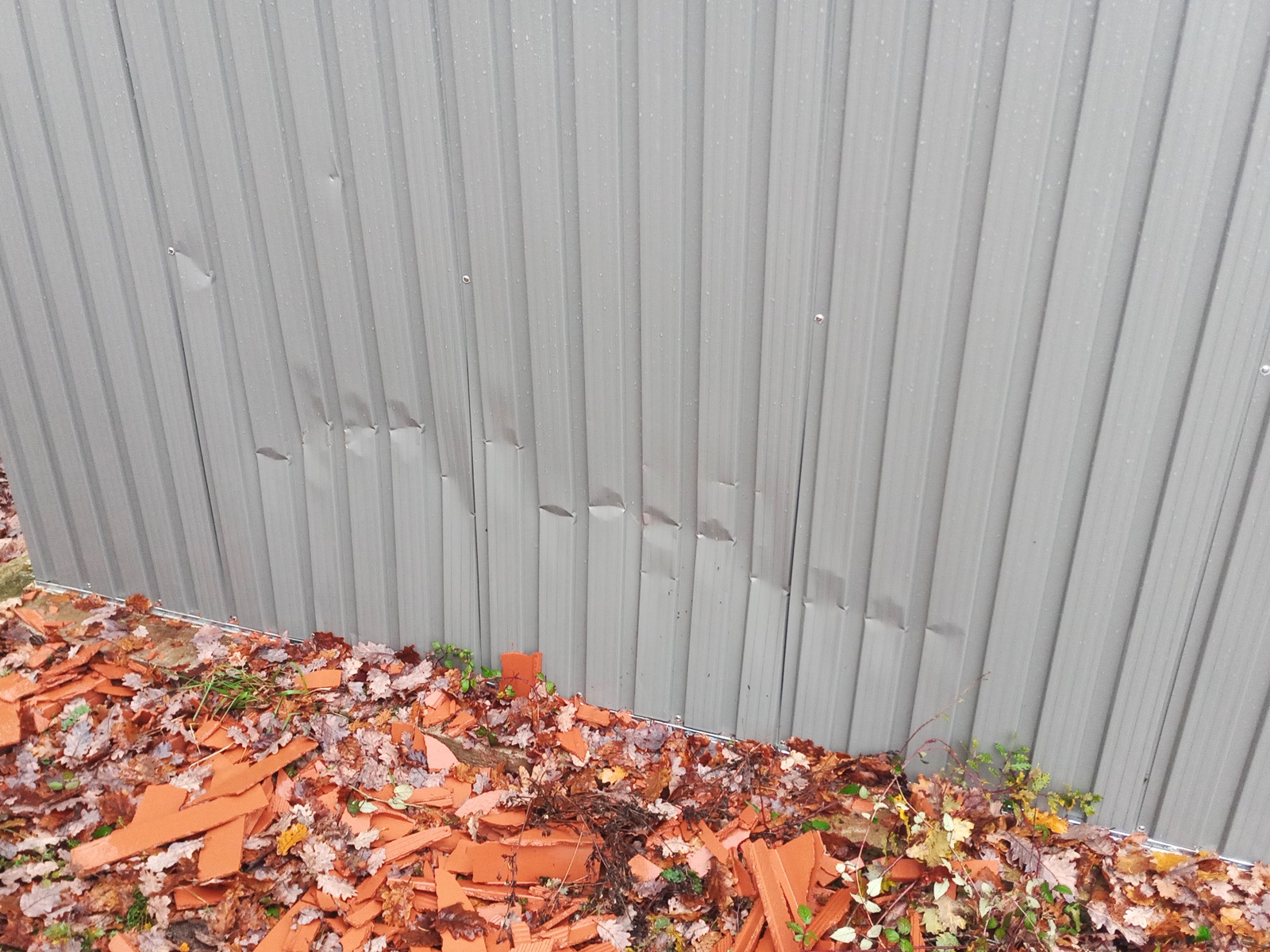
Sadly, there was one casualty on the day. When the driver of the big red truck had removed one of the stacks of blocks from inside the house and placed it on the ground outside, because the ground was so soft it had toppled over against the side wall of my tool store.

null

Never mind, these things happen and Didier said that it would be covered under the site insurance. But at least although unsightly, it’s still waterproof so I won’t mind living with it until the job’s completed. Best to leave it anyway, just in case anything else falls over onto it 😉

Nothing to report

No work done today on my house, presumably because the blockwork and mortar that have only just been put in place need to cure for a day or so.

But wait, nothing to report? Yes there is! Today is the Winter Solstice, the shortest day in the northern hemisphere and from today the days start drawing out again. I welcome it every year because it means that soon the trees will start to turn green again and a new cycle will begin all over again.

We need something to rejoice about just now with all of the negative things that are going on and this is something we should all treasure as we begin to turn the corner towards Spring. Halleluiah!

Excellent, but…

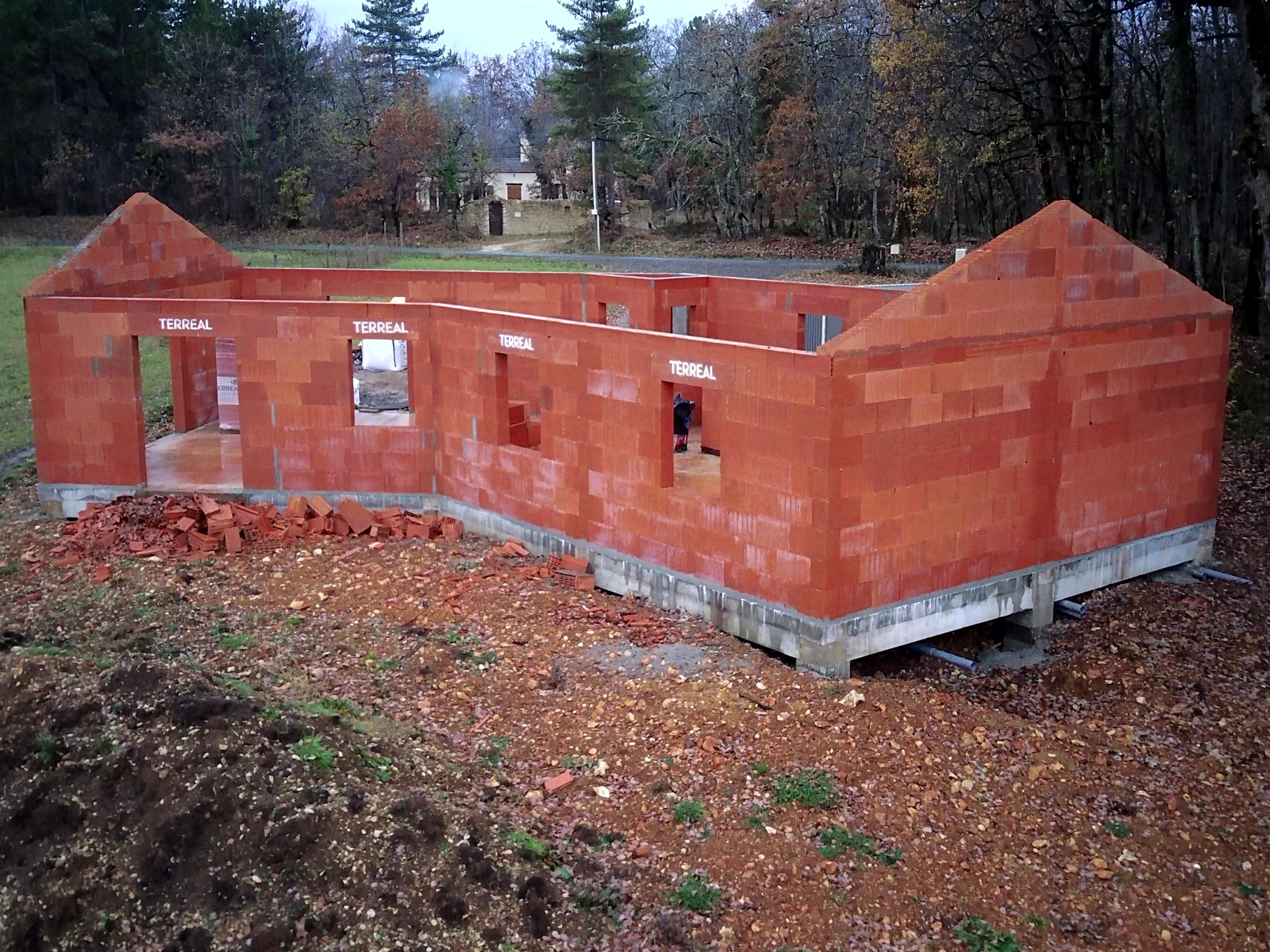
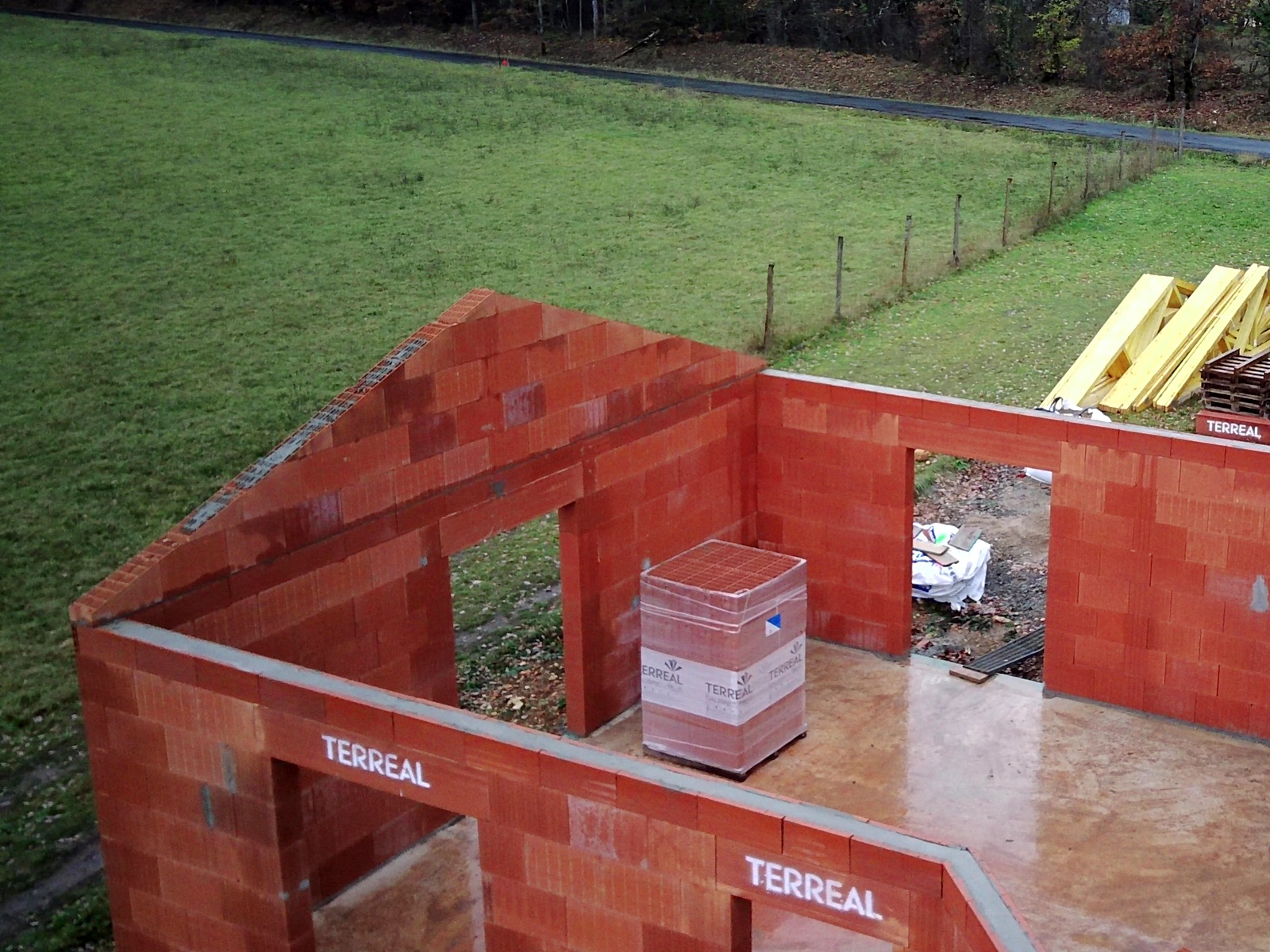
As expected, the morning started off dull but at least it was dry and reasonably warm. The two workmen, ‘maçon’ number one and his labourer, turned up on site before 9.00 am and soon got underway. Today’s task was to build the gable ends as the next step towards getting the timbers in place that will eventually hold the roof structure in place.

These two guys are great workers and now I know that I could leave them to it and didn’t go to see how they were doing until almost lunchtime. By then they’d got one gable end up and had just started on the other, but unfortunately the rain that had been forecast for later in the afternoon had already started.

null

null

null

null

null

null

I left them to it until the end of the day by which time they’d finished both gable ends, cleared the whole site of equipment that will no longer be required and cleaned up the site ready for tomorrow.

null

null

null

null

null

null

null

null

With the site cleared and cleaned it’s now possible to get a proper idea of measurements and proportions.

null

null

null

null

null

null

My guess is that tomorrow a roofing team will be coming on site and I doubt that that will include the two blockwork guys who’ve been working for the past few days and whose work I think has been brilliant. I also think that the way they’ve left the site spick and span this evening does them credit.

So what’s the ‘but’ in the title of this post? From lunchtime, it rained all day until the middle of this evening. Previously the forecast was for more rain all day tomorrow but it now looks as though we may get a reprieve. If so this will be very welcome because the timber for the roof, which had dried out over the week-end, is now soaking wet again.

If it stays dry tomorrow there may well be at least a chance that the roofing men will be able to get it up for it to dry and be covered before it starts raining again for the whole of the day on Thursday. Friday is again forecast to be dull but dry and if that’s how it turns out there’s a good chance that the roof timber will be well protected after having had a chance to dry out. But it’ll probably be touch and go… 😐

Countdown to Christmas – Day 1

Here’s the first bulletin of the day at lunchtime. Super pleased with the results so far. As I’d hoped, the builders got off to a brisk start this morning aided by excellent weather. When I went out just before lunchtime, 16 degrees C was showing on my car temperature gauge.

I’m delighted to say that all of the faults have been rectified and the team is now racing ahead towards the target of having the roof on by the end of the week. Here are a couple of general shots from the front showing that all of the lintels are now in place and the level has been brought up to top-of-windows all round.

null

null

The formwork has now been removed from the pillar that will support the porch roof overhang and it’s looking good. It won’t be left as bare concrete, though, as it’ll have a coloured ‘crépi’ finish to match the rest of the house. Behind it you can see the separate WC window that was the start of all the trouble and which has now been now fixed.

null

Here are a couple of shots that show how the rough blockwork that was in both sides of the window verticals has now been removed and replaced to give good, straight sides that will look right when finished and take fixings.

null

null

Now a shot of the front wall showing how all of the faults have been rectified and the whole wall brought up to top-of-window level.

null

In fact I was wrong when I said that the lintels and blocks above the windows were the final level. I’d forgotten that there were also some half-height blocks that still hadn’t been used and these will actually form the topmost course and bring the walls up to their full height,

null

And to finish off this bulletin, here’s a sight for sore eyes.

null

Whereas previously when they’d chopped the blocks down to size they’d left all the fragments and broken pieces under their feet on the floor screed, now they’re collecting them as they go and putting them in a barrow. I’m sure that secretly they must be thinking that this creates a much better working environment and is a better way to go on than the way they were 😉

I’ll be back again with more news at the end of the day.

End of day roundup

It was a brilliant afternoon during which Didier, the new clerk of works, turned up, rolled up his sleeves and also lent a hand to the team. So then there were four working on it and it was clear that serious efforts were being made to get the project back on the rails after the recent fault rectification problems. And they were successful as the images below show.

The building firm is a family-owned company that has been in business for forty years or so and from what I can tell most (all?) of its key roles are taken by family members. At the end of the afternoon the light was beginning to fail as the sun dipped below the tree-line and as the team were finishing and clearing up I was even more pleased to see that the family member who I’ve been dealing with in the office and who counter-signed the contract with me also arrived on site. To my knowledge he hasn’t been on site since we pegged out the marker stakes all those months ago and I’m pleased to see that he’s also getting behind the project.

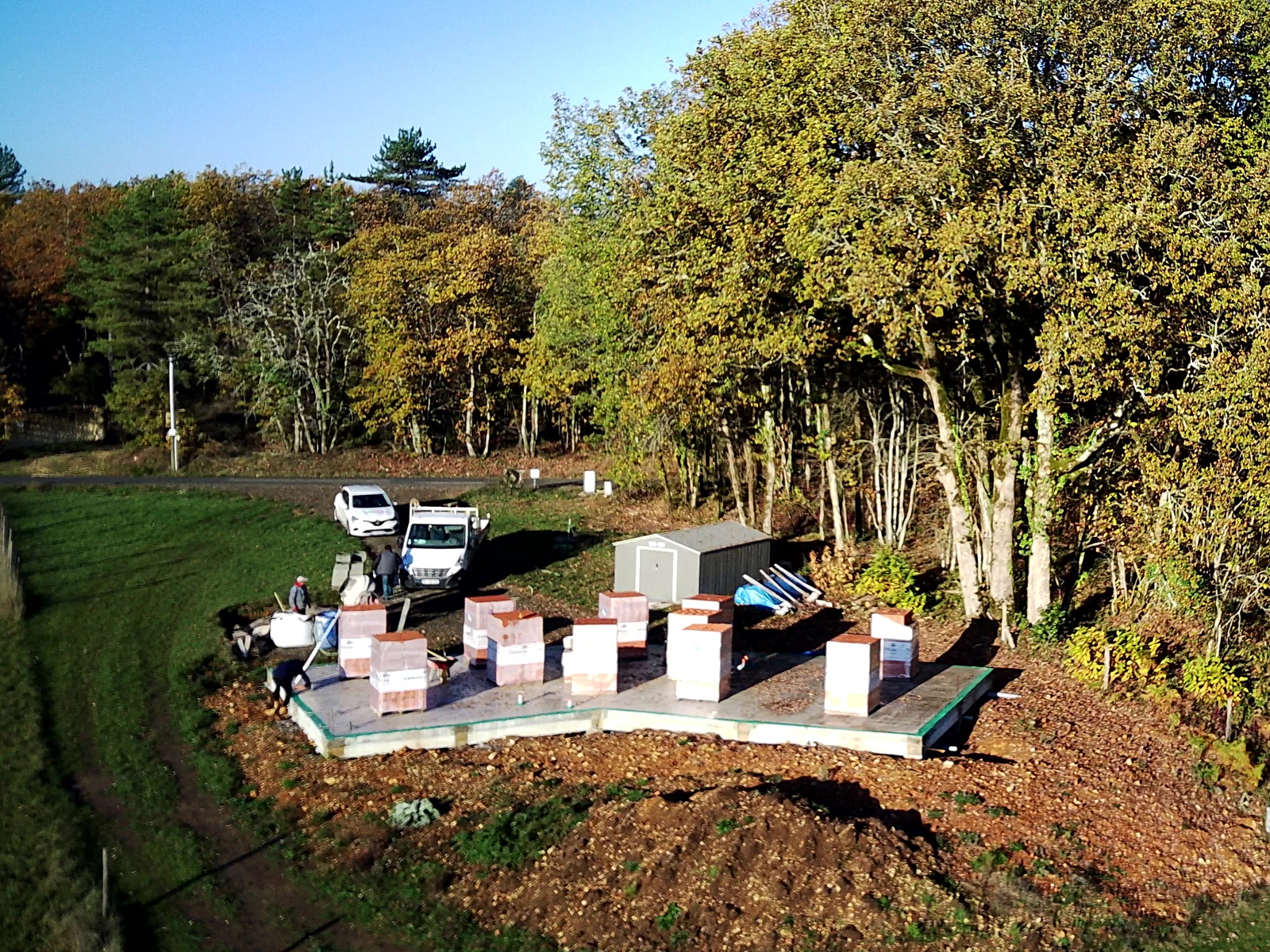
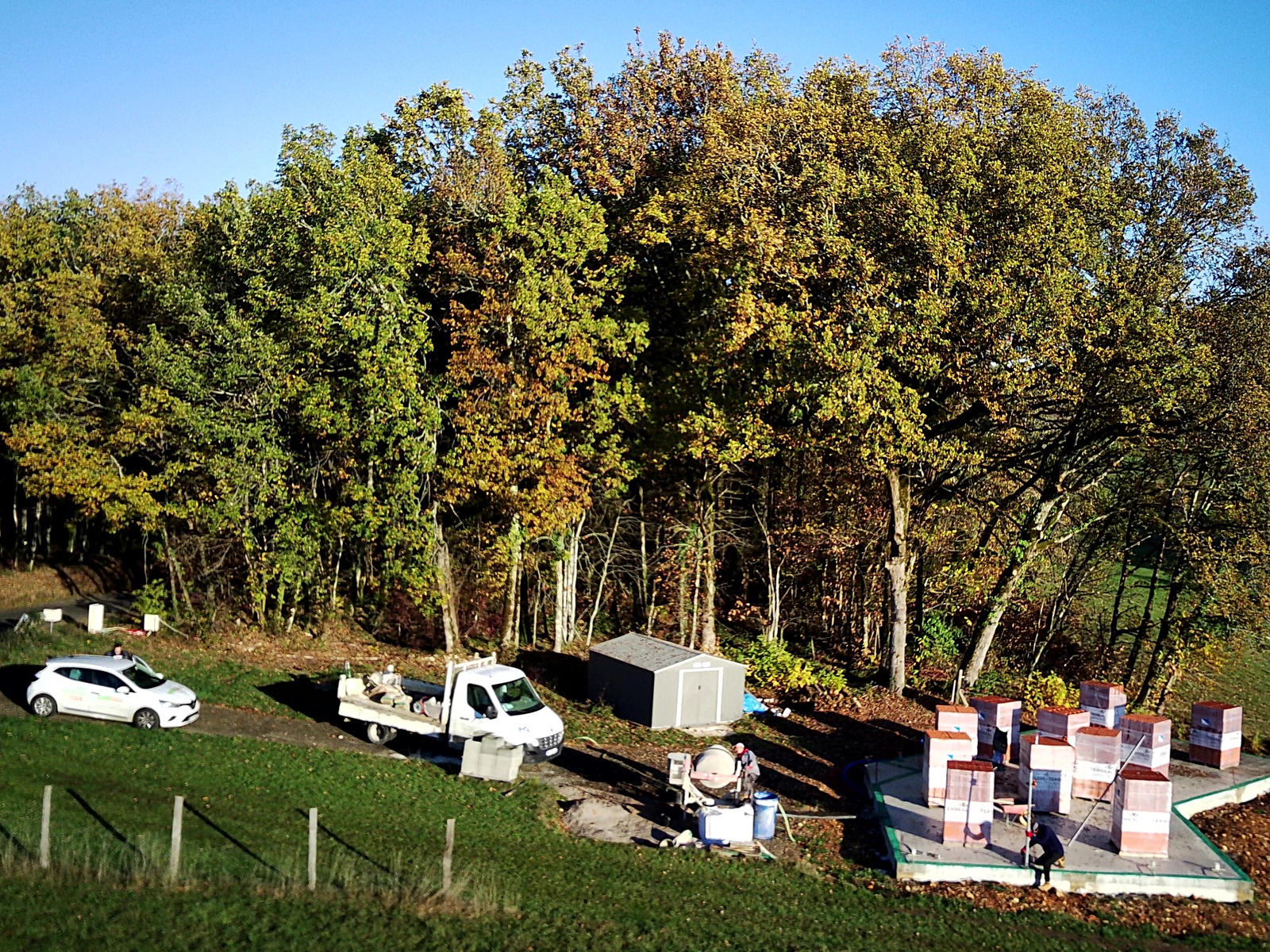
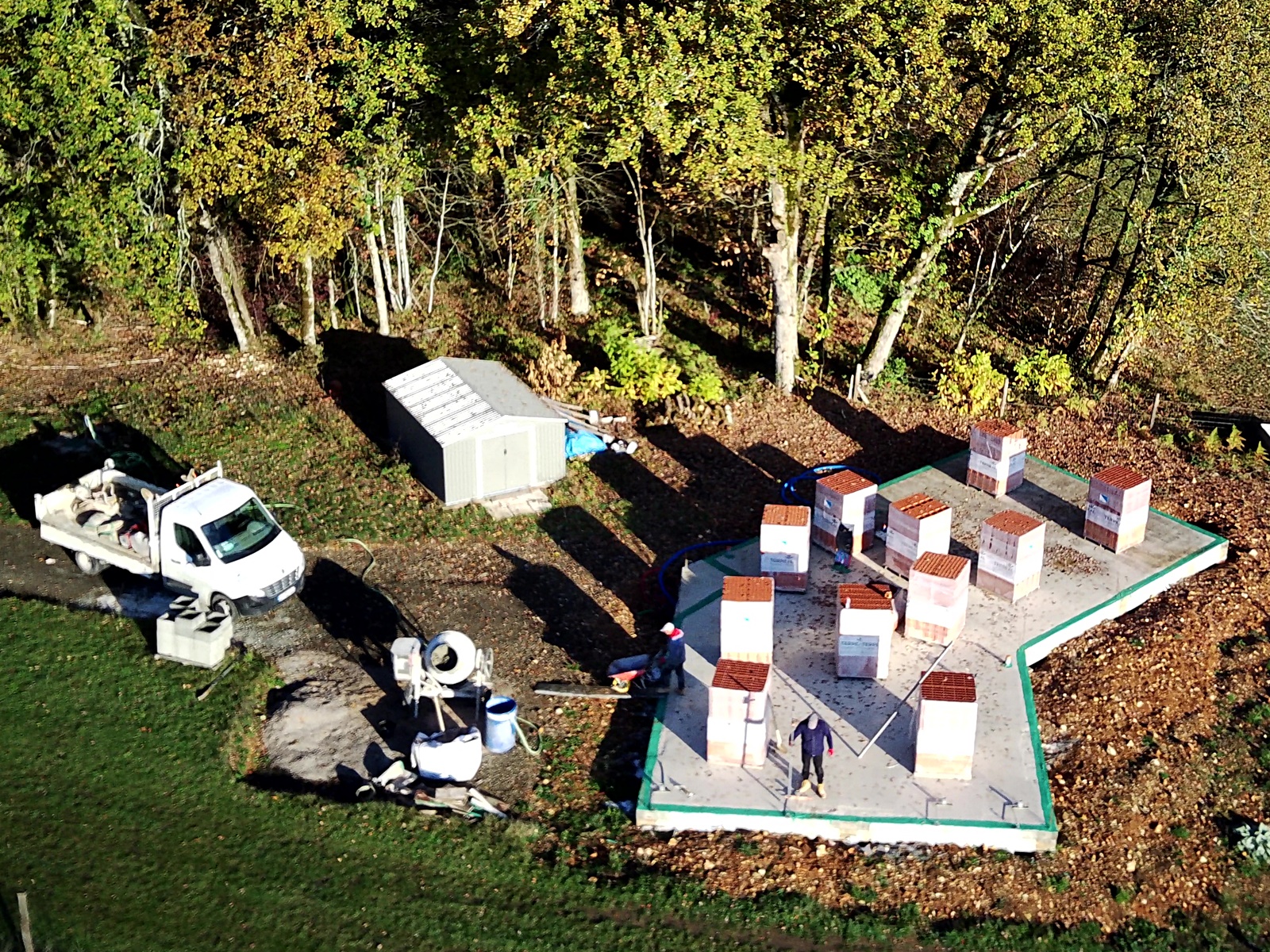
Here are the end-of-day shots that I took with my drone. They show how the blocks used in the final half-height course were hollow and what the team was doing was racing to get them strengthened with reinforcing metal and filled with concrete. So as well as the lintels over the doors and windows, which have been strengthened in the same way, they will also be responsible for supporting the roof structure.

null

null

They also placed lintels onto the top of the column that will support the porch roof overhang.

null

null

null

With the final blocks added to its walls, the house is now standing prominently in its position.

null

Here are the final general shots to show the work that was completed today, which I think was considerable and the team are to be commended.

null

null

null

null

null

null

null

null

I’ve just taken a look at the weather forecast and we’re expecting rain tomorrow afternoon through Wednesday and Thursday and I think that probably that’s why they were so keen to push things on today. I think they’ll start getting the roof on tomorrow and despite the rain, with Friday looking to be fair, I think that they should get the job done before Christmas, as they said they would.

Transition – The Full Movie

Here’s where we are with my house-build pre-Christmas 2022, warts and all. After calling a halt to work due to a number of faults that needed rectifying, I’m pleased with the response of the builders. The faults will be rectified, the roof should be on and watertight before the holiday and the project should be completed by March of next year. I, however, have yet to be convinced of the latter.

Everything on the up

I’ve just taken a look at our weather forecast for the rest of today and the coming week. We had another cold night last night and the water system in my caravan froze again. However, the temperature is forecast to reach 10 degrees C a bit later today and not fall below 7 degrees overnight, but with some strong south-easterly gusts. This should see the end of the (freezing) cold snap.

Tomorrow the forecast is for a top temperature of 15 degrees C with strong gusts that will continue into Tuesday, but that’s excellent news because the weather will be perfect for the time of year for work to continue on my house. On Tuesday there could be some light rain, but with a top temperature of 13 degrees C, there shouldn’t be anything to interfere too much with progress.

They’re forecasting periods of light rain during most of the working day on Wednesday with low cloud and a temperature of 12 degrees C but as the woodwork for the roof will by then have to be in the open to allow it to be installed, there’s nothing that can be done about it and I think that it won’t be enough to disrupt proceedings. Unfortunately however, there will be more of the same and a temperature of 10 degrees C on Thursday.

Friday is forecast to be dry with a temperature yet again of 15 degrees C and I think that by then all of the roof trusses should be in position. If it’s left uncovered, the woodwork could become damp if the light showers forecast for Christmas Eve materialise, but it should dry out again on Christmas Day which is forecast to be dry and sunny with a top temperature yet again of 15 degrees C.

I don’t know what will happen after that, either weather or work-wise. It’s traditional in France only to take Christmas Day as holiday, but I guess that my workmen will be off for at least Monday 26th in lieu of Christmas Day falling on a Sunday. What weather will greet them when they do return nobody knows for sure, but hopefully the roof tiles will be delivered during the coming week and the waterproof plastic membrane that will cover the woodwork, installed with the woodwork fairly dry before they go on.

Who knows, if work goes well, they might even be able to get the membrane fitted by Friday before they go off for a few days break, which would be nice as it would mean that the house would no longer be subject to the extremes of weather that we can undoubtedly expect after Christmas and going into the new year. Yet again, we’ll have to wait and see…

And tell you what… if it stays warm I’ll even be able to get on to fixing my Savannah’s brakes, so I can get that back up in the air as well. It’s been too cold to do the job in the open barn but at around 15 degrees C it’ll be a pleasure. Well, almost 😉

Now we’re talking!

It’s been a funny old day. It started shortly after 9.00 am when three workmen arrived on site, started up their cement mixer and prepared to start work. So I then went up and stopped them and told them that following my meeting with Didier yesterday there was to be no further new work on the house until all of the faults that we had discussed had been rectified.

One of the workmen who I didn’t recognise but who I don’t think was ‘maçon’ number 2 who’d been at the root of all of the current problems, suggested that he could repair the worst of the issues. I told him that there was no way that that was going to happen and that the section of blockwork in question was going to be removed and rebuilt, which he took a dim view of. However, I think possibly he got the message from my body-language and the concrete mixer was then switched off.

I then gave Didier a call and suggested that it might be a good idea if he dropped over which he did shortly afterwards and I reinforced what I had told him previously. This was that I wanted all of the faults that I’d pointed out and we’d discussed rectified before we moved any further forward even if that meant we lost a day or two’s time. His reply was that if they didn’t, there would be a problem with getting the roof on next week.

I reminded him that that was his problem, not mine, and that I hadn’t been the one who’d created the current crisis, but in the nicest possible way, of course. I think we understood each other perfectly by the time I left him and his men to it and went back to my caravan and I was aware that shortly afterwards the concrete mixer was started up again and work began to resume on the project.

It wasn’t up to me to then watch what was going on and it would have been wrong for me to do so, I think, as that might have been seen as undermining Didier’s authority. I know that I’m the one who’s paying these workmen’s wages but Didier needs to retain the authority to manage them.

However, watching occasionally from a distance I could see that ‘maçon’ number 1 was by now assiduously knocking out large chunks of blockwork from areas where I’d complained that the verticals of the openings were unacceptable and replacing them with new material that he carefully bedded into position just as he had done previously. If only he’d not taken time off and had been allowed to continue what he’d been doing.

As usual, I took the opportunity to make an inspection of what had been done after they’d left for their lunch. Evidently they’d decided to work around the walls of the house systematically starting at the southern end and after knocking out and replacing the faulty blockwork they had then proceeded to put the lintels in place over the windows together with the rest of the final course of blockwork on top of the walls. Despite what I’d said about no new work going ahead, I think this was a good decision since it kept the project moving forward while still resolving the faults.

Here are some of the photos that I took.

null

As you can see from the amount of blockwork outside on the ground, quite a lot of material had been removed. In fact, ‘maçon’ number 1 who was doing the blockwork was removing at least the top blocks, sometimes more, from all of the window openings before replacing them with new material and straightening up the sides. I think the photos show that he was doing an excellent job.

null

null

Here are some shots of some of the material that he’d removed.

null

null

I also shot some video with my drone and these pics that I’ve lifted from it show the good progress that had been made by lunch time.

null

null

You can see from the next shot how straight the edges of the openings that he’d worked on now looked after he’d fixed them.

null

It stayed dry and sunny all day and was still bright at the end of the afternoon. As the sun began to go down I took my usual end-of-day photographs and this one shows the walls on the back of the house and the bedroom end finished and up to full height.

null

The next three are closer views of the walls at the back of the house and the southern end, now fully complete and looking much better than they had previously.

null

null

null

I noticed that there was now a lot more broken block rubble on the ground outside than might have been expected just from the number of blocks that had been removed.

null

It was when I took my first look inside that I realised why. When I met Didier yesterday I’d asked him what he thought about the site in general. I suggested that with the rubbish and rubble that had been left everywhere underfoot it looked more like a demolition site than a building site and that perhaps that was one of the reasons why the work had been so slap-dash. His reply was undemonstrative and I wasn’t sure that my remark had made an impression, but evidently it had.

null

Before they’d left, they’d swept the whole of the oversite and thrown all of the rubbish and rubble out. I’d also pointed out how they’d patched the interior blockwork with mortar in several places, which is normal, but where the excess had fallen down onto the oversite it had been left and had now hardened. Even that had been cleared up and the site now looked like a new pin.

null

‘Maçon’ number 1 had only just started on the first window in the back wall before they’d left and the next shot shows how he’d removed the top block on one side of the opening ready to put a new one in to straighten the edge. I’m very impressed because although I’d made a fuss of course, this wasn’t one of the worst by a long chalk.

null

Here are some more general shots finishing off with what will eventually be the view (without the gazebos and caravan) from my kitchen window.

null

null

null

And to finish off with, some more shots taken using my drone. I’m pleased to say that the next one looks just like a view taken from my plan.

null

null

null

The silver vertical column in front of the house’s main entrance is the special former containing concrete with reinforcing metal that was also erected today. This when the former is cut away next time will leave behind the column that will support the roof overhang over the entrance porch.

They didn’t get around today to resolving the biggest issue which will involve taking down and replacing a fairly large section of blockwork. They know that I am insisting on it so whether they’ve left it until last to cock a snook at me I don’t know. I don’t care, and especially if by doing so it allows them to assert their independence, that’s fine. But just so long as they know that when it is done, it’s done properly.

So after a bit of a dodgy start, the day ended on something of a high note. I’m very pleased with the amount and quality of the work done today and really hope that this will be the only time that we’ll have to deal with such issues. I think it will be because I’m pretty sure that the message has got across 😉

The down side

Starting a house-build project and signing a contract with a builder, especially in a foreign country, is definitely an exciting event, an event of a lifetime actually. It’s tempting to think that when you’ve reached that stage, surely it’s just a matter of sitting back and enjoying watching things happen, until the big day arrives and you move into your new home.

Well, no, as readers who’ve been following my project may already have begun to understand. Things are not that straightforward. For one thing, as has become quite apparent, just getting the builder to start work is a challenge in itself, as their main priority is to have a bank of projects in hand that will ensure them a regular stream of work and income and they don’t worry about actually completing them until there’s a threat of missing the legally enforceable twelve month term that is written into projects like mine that would mean their then having to pay daily penalties to buyers like me.

Only then when the reality hits them do they start to get wheels in motion to grind the project out and one suspects that in that event, there might be a real temptation on their part to cut corners and take shortcuts to get to the finish line. With this in mind it’s worth staying really observant to watch what’s going on and checking on the quality of what’s being turned out, which is helped in my own case by being permanently on site by virtue of living in my caravan.

Now, I’ve tried to emphasise to the builders that my purpose is not to spy on them but on the other hand, I’ve made no secret that I’d be keeping a permanent eye on progress and that’s why, as well as wanting to have a visual record, I’ve been going up onto site once or twice a day to see what’s been going on. It’s also why, when I’ve been able to, I’ve taken my own tools and measuring equipment and physically checked to make sure that what’s been done not only meets my plans to the letter but also comes completely up to scratch.

You might therefore be thinking, what would happen if it didn’t – come up to scratch that is. Well now I can tell you, because that’s precisely what has happened, and bear in mind that as stressful as this might be dealing with contractor problems in one’s own country in one’s own language, here in France there’s also the potential added complication of the ‘language barrier’ increasing the stress level quite significantly. If you let it.

First, what has happened, you might be wondering. I’ve dropped clues in my previous posts about various things that I haven’t been totally happy with, like my having to go around and correct some work after the workmen had left for the day, the concrete oversite not being properly level, the contractor delaying the project start for so long that it means the house will be built at the most unfavourable, coldest, wettest time of the year, things like that that wouldn’t necessarily impinge on the form and quality of the house in the long run. However, the red line is anything that does the opposite, and that’s what has just occurred.

Work on putting up the exterior walls started last week and I did a post at the time showing when I went around with a level to check the first course of blocks that had been laid, I found it to be perfectly level all around. This allayed my fears about the oversite because that meant that if I had to I could insist on a second screed of concrete being laid on the oversite to make it perfectly level throughout the whole house, which I will do if it isn’t offered automatically when the time comes.

The first course of blocks is critical to the accuracy and integrity of the final wall structure, and after it had been allowed to cure for a couple of days, the ‘maçon’ returned to continue working. I watched from a distance and was impressed to see that he was carefully checking his lines horizontally and vertically and concluded that I could confidently leave him to his own devices without any unnecessary interruptions from me.

But then fate took a hand. After the second day, the original ‘maçon’ was replaced by another. I wasn’t too concerned at the time as I concluded that the building company evidently hire workmen all to the same high standard and that the second workman would be as discriminating as the first. But I couldn’t have been more wrong.

Whereas the first ‘maçon’ took care to ensure that all of his vertical and horizontal lines were true, the second appears to have assumed that his eye would be perfectly adequate. And whereas the former maçon ensured that blocks were all cut and placed accurately, the second apparently thought that just sticking them up would be good enough.

Well it’s not. After considering my position I thought that rather than escalating matters directly with the office, a call to Didier, the new clerk of works, would be in order and a site meeting between us was agreed for 9.00 am this morning. At 9.05 am I got a call from Didier telling me that he couldn’t make it because of an ‘urgent matter’ and I made it clear that when I arrange a meeting with someone I expect them to show up. He said that he’d come tomorrow and I ‘suggested’ that he might like to come this afternoon, which he did.

Before getting involved in the detail with him I explained that my father was in the building industry as a surveyor and senior clerk of works for the whole of his working life and I’d been in and around building projects from an early age. I told him that from senior school through university I’d worked for a building company for three years and a plumbing company for almost the same amount of time and had worked on site with both together with other workers and on my own account.

I explained that I’d also worked for Ready Mixed Concrete Limited during the project planning and on-site phases of projects with its clients, that I’d bought and sold six houses, the last one in France, all of which I’d carried out projects on, some quite extensive, and this house in Fleurac is my seventh. I think that by the end of it he understood that I’ve been around the block a bit construction-wise and I then went on to show Didier all of the problems that had led up to our meeting.

My description of the second ‘maçon’ was not very flattering and I said that on no account would he be permitted to come back on site. Didier said that the first workman would be returning to see what could be done to correct the more minor faults left by the second man but he accepted that part of the structure would have to be taken down and rebuilt. He said that he’d also like to bring the second man back to show him the problems that he’d created, which I agreed to.

I won’t go into things in any more detail but instead I’ll report on what happens next. I also pointed out that the site was in such a mess that it looked more like a demolition site than a construction site. I’m sure Didier got the message and I’m betting that under the circumstances the office will also have been made aware of what’s going on because there are cost implications for the company, of course.

However, I will mention one thing. The separate WC has a floor-mounted toilet positioned in the middle of its shorter wall, the waste outlet for which was put in place months ago in the form of a fairly large diameter plastic pipe before they laid the concrete floor screed. Now that the house’s front wall is in place it’s apparent that it is totally incorrectly placed some way off-centre towards the wall itself.

I said to Didier that that’s a big problem because there’s no way that I will accept having the waste pipe visible out to one side of the toilet as it was supposed to be hidden behind it. Poor Didier’s face fell, because as a new employee he had nothing to do with the positioning of the pipe in the first place. However, regrettably he’s inherited the problem along with all the others and it’ll be in his hands to resolve it.

Going up…

After the two men had finished work yesterday we had rain, rain and more rain. It was still raining when I went to bed and although it had stopped by the time I got up this morning, everything was wringing wet. The two workmen turned up shortly after 9.00 am and it wasn’t a very nice morning to be working outside as although it wasn’t cold, it was dull with a heavy mist.

I left them to it as I had things to do in the caravan all morning so didn’t go up to see how things were doing until after they’d left for lunch and here are some shots of what I found. They’d made some progress on the walls at the bedroom end but there was still another course of blocks to go for the most part until they were fully up to top-of-window level.

null

null

null

However, my biggest surprise came when I arrived at the top where they were working and found this.

null

I knew that as soon as the walls were fully up with the lintels in place on the tops of the windows and doors and the rest of the walls brought up to the same level, it would be time to fit the roof. However, I didn’t know that the roof trusses would be arriving today, but there they were, all ready for the next phase of the build.

null

null

null

My main disappointment was that with all the rain we’d had yesterday, the trusses were outside either ready to be loaded or already loaded on the truck for delivery, with the result that like everything else, they were saturated. I’ve been telling people that this was my biggest fear of a winter build and now my fears had been realised and I just hope that before the trusses are covered by the waterproof membrane that’s going to be installed and the tiles fitted there will be a sufficient dry spell for them to dry out.

Other than that I was pleased to see that the walls were going up although between you and me, I don’t think that the work being done by the current pair is as of such a high quality as that of the two workmen who’d started on the job last week.

null

null

null

The other thing that disappoints me is that with all of the rain we’ve been getting and with the concrete oversite not being completely level, there are now some large pools of standing water. This won’t do any harm for the time being but I hope that they’ll have dispersed by the time the roof goes on and the house is sealed.

null

null

I didn’t go up again to check on things until after the workmen had left for the day at the end of the afternoon, by which time the light was beginning to fail and the mist was beginning to thicken again. I was very pleased to find that despite the conditions today, they’d completed the build all round up to top-of-window level.

null

null

null

null

null

null

null

null

null

null

null

null

So the day ended with good news. Now that the walls are so much higher and the blocks are being removed from its inside, the house is beginning to appear more spacious than it has done up to now. Tomorrow, hopefully, they’ll be able to put the lintels in place over the windows and doors and block out the rest of the walls to the same level. The exterior walls will then be complete (in less than a week!) and it’ll be time to move onto fitting the roof. If the weather holds out, I think that there’s a good chance that might be completed by the end of next week, but as usual, we’ll have to wait and see.

The pits?

I’m hoping that today will be the low point for this week, for two reasons. Firstly, we had another cold night last night and when I got up the water supply in my caravan was still frozen after yesterday. And that included both of the taps, in the washbasin and the sink, neither of which could be turned on as they were frozen solid. The same was true, of course, for the tap on the standpipe at the top of my land.

Secondly, two workmen turned up this morning to continue work on my house’s walls. Although it stayed cold at the bottom of my land, and my caravan water supply stayed frozen, it did brighten up and become a bit warmer up at the top where they were working. But even so, conditions were not good and it was soon evident that I wasn’t going to see much progress today.

When the builders finished last time, they’d got pretty high at the south end of the house but had reached only one course of blocks above windowsill level elsewhere. The guys today concentrated on building up the front of the house at the bedroom end and also the wall at that end of the building. Here are some shots of how far they’d got by lunchtime.

null

null

null

null

After they’d resumed work conditions unfortunately began to deteriorate and it began to rain very gently. I don’t know if the special adhesive that’s used for the blocks is affected by water or even if the blocks need to be dry for it to be effective, but they continued working. For as long as they could, anyway, because although the temperature remained above freezing, it then began to snow.

I’d have to look back on My Trike to see when it last snowed this early in the winter but let’s just say that it’s uncommon. It’s just a pity that it should be happening while they’re still building the house’s walls and we haven’t yet got a waterproof structure with the roof on. They carried on working for as long as they could but by late afternoon it was snowing too hard and also becoming a bit dark, so they then cleared up and left.

Here’s where they’d got to – not too bad under the circumstances with the main wall at the bedroom end considerably higher and now a couple of courses above the windowsill level all round.

null

null

null

null

As I type this the snow has stopped and very little managed to settle. It has now started to rain, as was forecast, and that is expected to continue through the evening with some pretty strong gusts from the east. When I get a forecast like that I’ve learnt my lesson and unzip the curtains of my two ‘tonnelles’ so the wind blows straight through them. It then can’t do much damage as their contents are covered with waterproof plastic tarps and I’ve just been outside to do that.

We’re expecting more rain on and off during the coming week but not too hard hopefully, and also not too much during the days when the guys will be working. And there also shouldn’t be any more problems with freezing, which should help me in the caravan and also the workmen outside on the job. So, as I said at the very beginning, with a bit of luck today will be the low point of this week 😉

Brrrr!

I went out to lock the car yesterday evening and found that it was a bit cold. I thought it might be a good idea to run some water in case it froze but it turned out I was just too late! When I went back into the caravan and turned the tap on water only came out in a reduced trickle.

But anyway, I topped up my kettle, Brita jug and another pot before leaving it running into both my main sink and my washbasin and went off to watch an Amazon movie. Before it stopped completely I had enough to see me through until the system thaws again, which it should do later today at around midday. Anyway, we’ll see.

It’s forecast to freeze again from early evening today and after it thaws tomorrow that should be it for a while. I can’t use my water carrier this time as I’ve nowhere to put it and if my system stays frozen for too long tomorrow I’ll nip up to Carrefour and buy one of their big water containers.

I know how to manage things after last winter and won’t be too worried unless we have a long period during which it stays frozen the whole time. Even then it won’t be a problem apart from the inconvenience of washing up and things like that. It’s chilly in the caravan even with my convector heater on and my fan heater running.

The problem is that if I then turn other things on, like the kettle, microwave or air fryer, the system is overloaded and it shuts off, so I have to juggle switching things off and on depending on what I want to do. I didn’t know that, of course, when I bought the caravan and fitting a higher rated fuse would be complicated. Ah, the joys of winter caravan life 😐

A project resumé

The builders didn’t turn up again yesterday, which was no surprise really. Presumably they’d been transferred to work on another project for a short time and having them there for just a day wouldn’t have been of great use. So I expect them to return on Monday and to see them crack on and almost finish the walls of my house next week, weather permitting.

So I thought this would be a good opportunity now that the project is moving along to review what it’s all about and what I’m trying to achieve at the end of the day. My plans were completed many months ago and haven’t been altered since, except for details like where plugs, lights and light switches will be located and where I want external taps for hose-pipes, things like that.

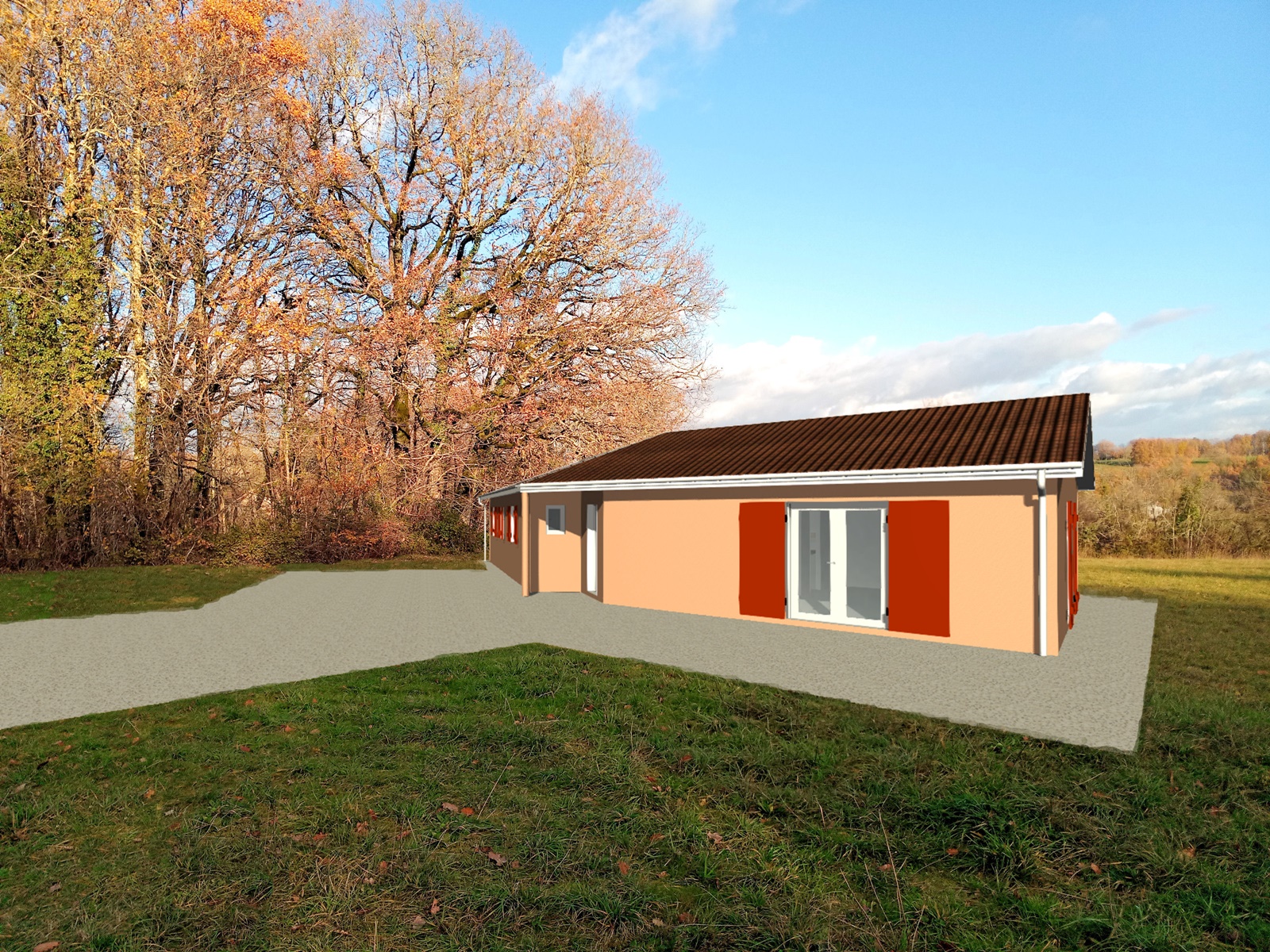
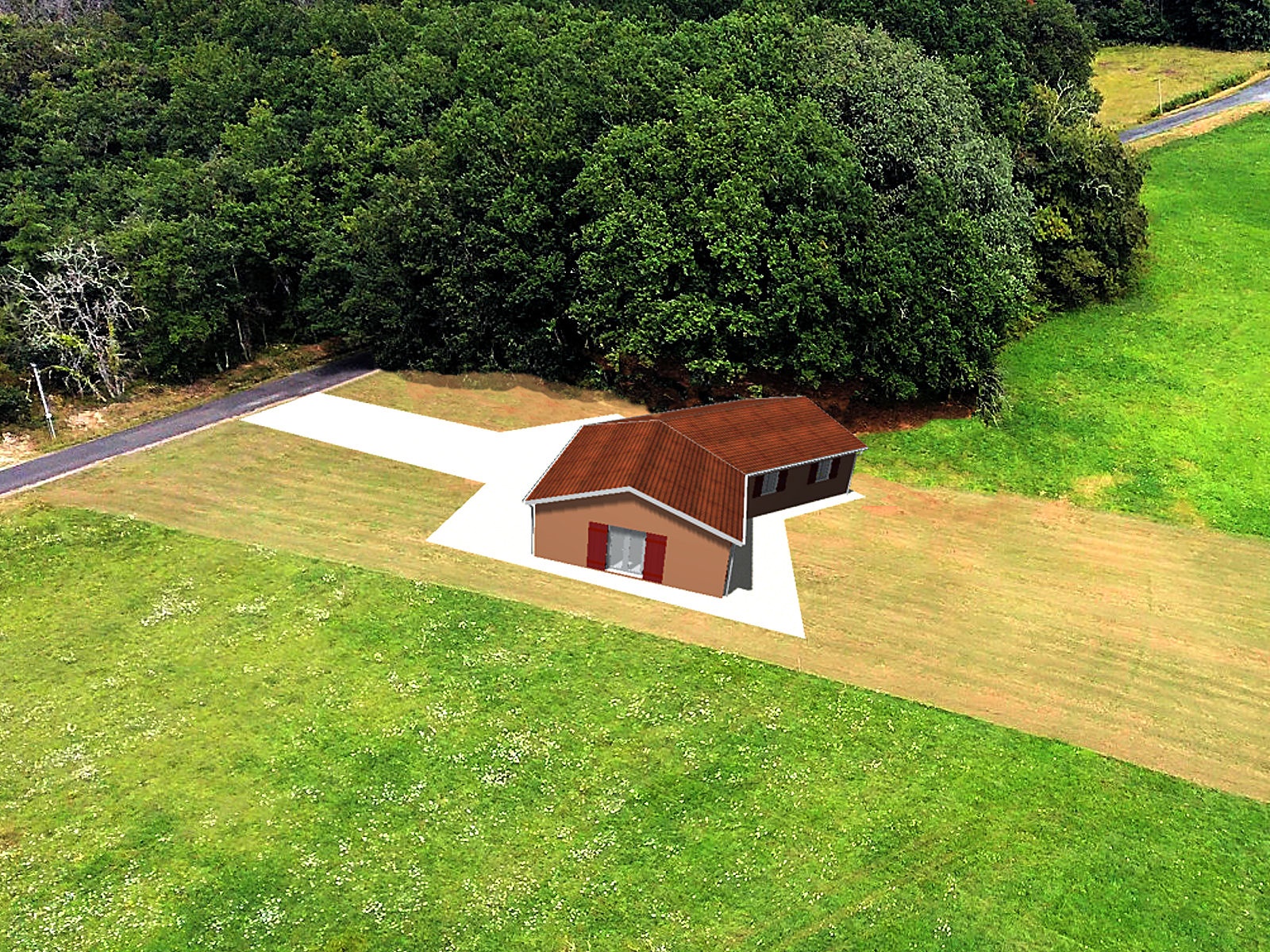
So what I’ve done is to get together some screen shots taken from the planning software that I used to design the house, starting with a few from the outside. The first is a view of the front, as the house will be seen from the road.

null

Next a shot taken from a bit to the right of the last one (from the south-west).

null

Now a view from above taken from the east. It really only shows the location of the house on the land and can’t replicate the land’s contours and slope.

null

And finally a view from above taken from the south, and again it can’t replicate the actual contours and slope of the land.

null

Now moving to the interior. Don’t worry about some of the dark colours shown in the following images. It’s just what the software has to do to differentiate between the various surfaces and I intend the house to be very bright and airy.

First, here’s a shot taken from the southern doors in the living room looking back into the house with the kitchen on the right, the front door on the left with the door to the separate WC just beyond it and the cloak cupboard to its right. It’ll be up to me to fit full-height, bi-folding doors to the latter which will just be an open-fronted alcove when I move in.

null

Here’s another similar shot but angled round more towards the kitchen.

null

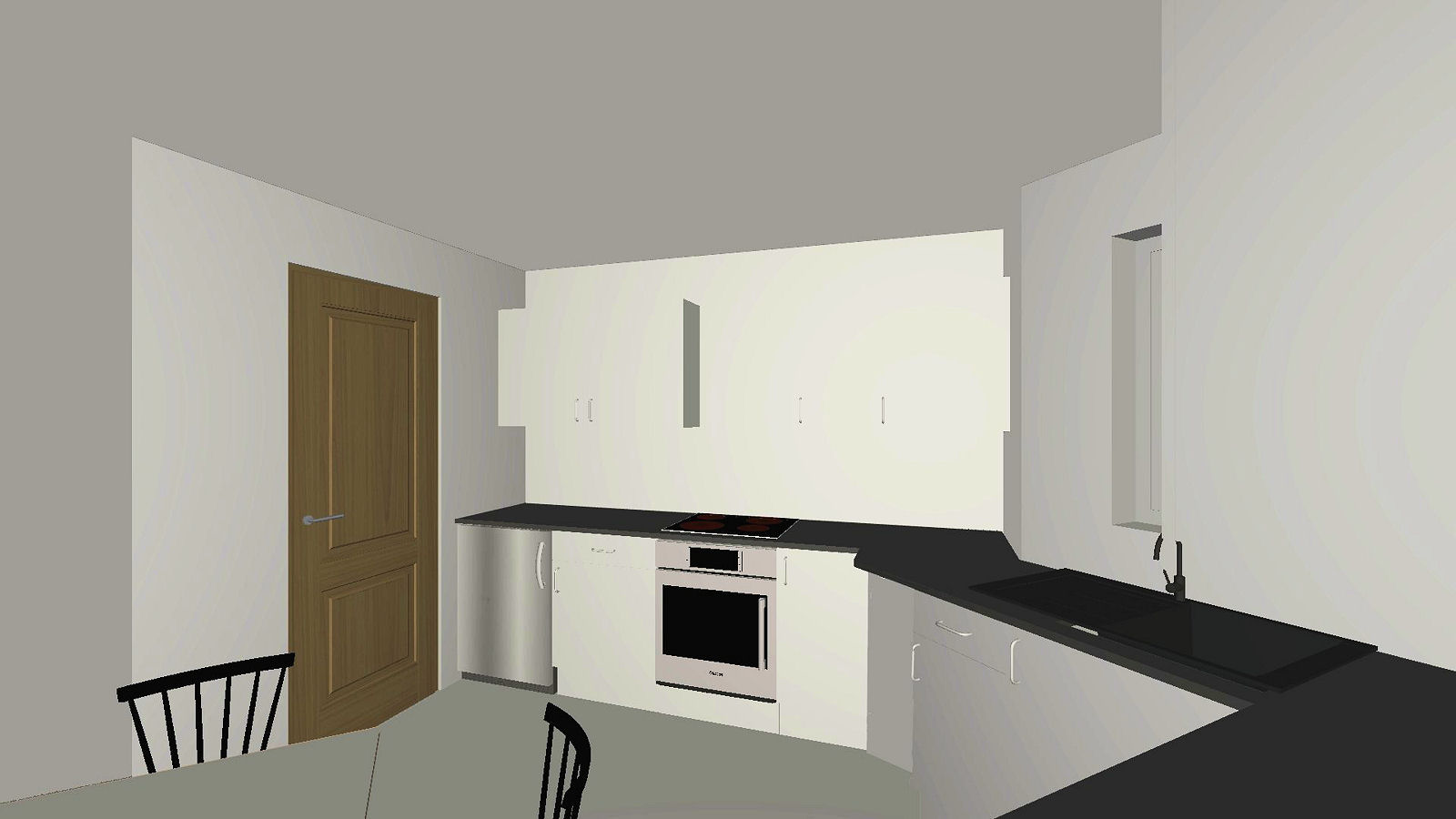
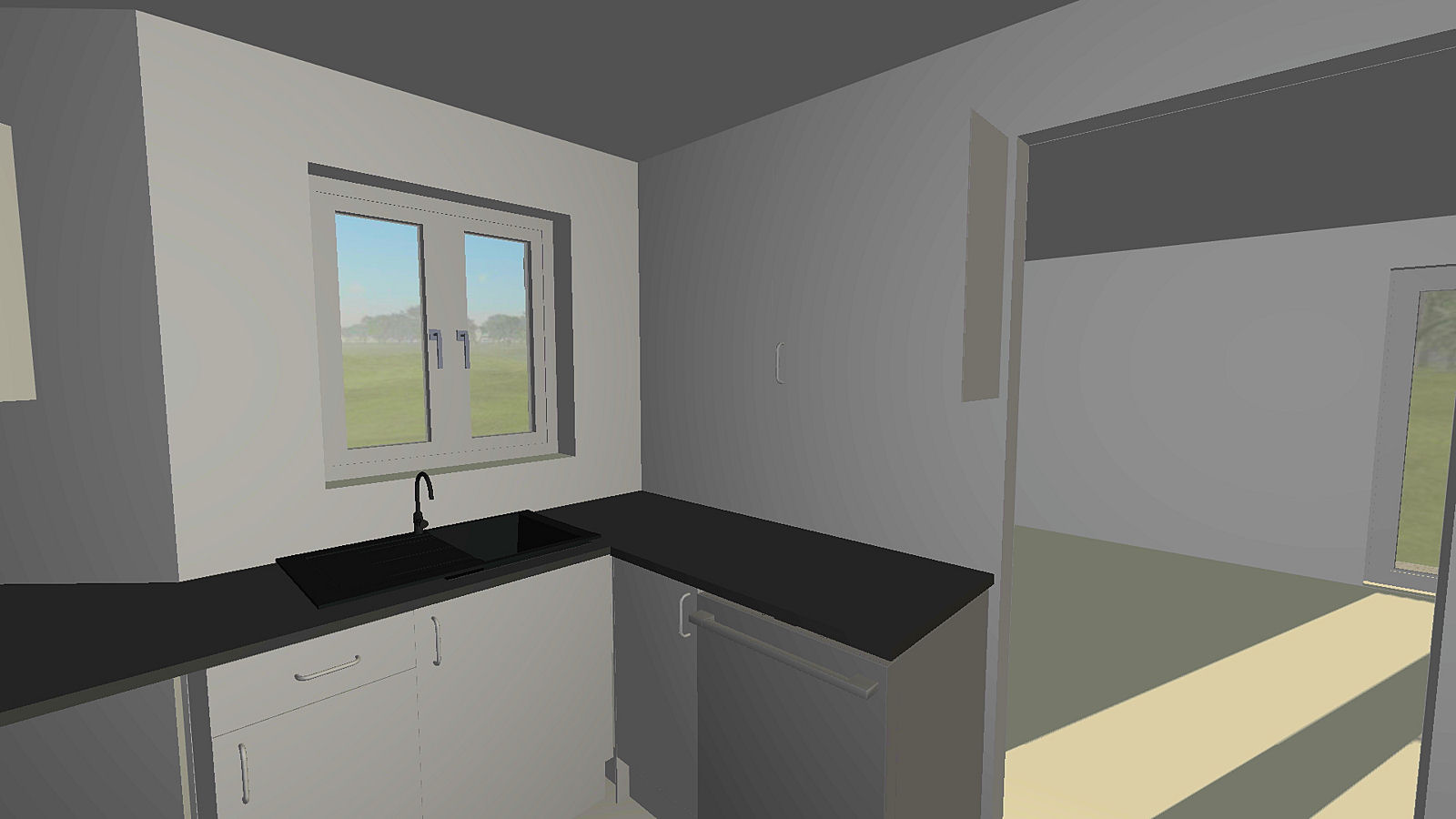
Now some shots of the kitchen itself. It’s not very large but I’ve designed it to be highly functional with its dimensions based on standard size kitchen units to make installation relatively simple. It will have a fitted oven below worktop level with a high-power ceramic hob above it together with an extraction hood to the outdoors over that which is not shown in the pictures.

null

There will also be spaces for an under-worktop fridge and dishwasher with more than adequate floor and wall-mounted storage. My idea will be to have my main freezer in the utility room just across the corridor from the kitchen with probably the small freezer that I have in the caravan in the kitchen on the worktop over the fridge for items that I need more frequent access to – like ice-cream! I’ll also probably have a second fridge in the utility room for things that I want to keep cool in bulk without freezing them.

null

null

Now a shot taken from the middle of the living room looking towards the corridor to the utility room and bedrooms and showing the door to the separate WC and the cloak cupboard.

null

The next shot was taken from the same position but angled round to the right.

null

And now a shot taken from a few steps back towards the south-west corner of the living room showing a general view of the interior.

null

The next image is of the corridor itself leading to the utility room on the left, the bathroom beyond it and the bedrooms. The kitchen door is on the right.

null

Now a couple of shots of the utility room. It’s not that big but big enough for a washing machine against the far wall and a freezer, possibly a tall fridge-freezer either next to it or against the opposite wall.

null

Ideally I’d like the washing machine to be under a worktop running along the wall with cupboards under and more on the wall over it, with a small sink in the worktop. I’ll only know what I can actually do once I’ve moved in.

Looking back towards the utility room door, the heat pump unit will occupy the corner space to the left of the door as viewed.

null

Turning left out of the utility room you come to the bathroom. I’ve kept this very simple comprising just the shower, a column-mounted washbasin and the WC. I’ll mount a mirror over the washbasin and a mirror glazed cupboard on the opposite wall. I wish now that I hadn’t been so generous leaving behind the two that I had in my bathroom at Plazac but it’ll be nice to have all-new in this house.

null

The shower shown in the picture is not representative of what will actually be present. First, it won’t have a base. Instead it’ll have mosaic tiles at the same level as and matching the floor tiles so it’ll be genuine ‘walk-in’ in character. Also the shower head and fitments will be external, column mounted on the other wall. I think it’ll turn out very well.

Now onto the bedrooms. The third bedroom, the first door on the right, is the smallest but will still be of adequate size. I don’t plan to have any fitted furniture in there but instead probably just a free-standing wardrobe and chest of drawers cum dressing table. The reason for that is so the room can be used as an office if a third bedroom is not required in which case I don’t think that fitted bedroom furniture would be appropriate.

null

Bedrooms two and one are similar, but opposite, in design. First bedroom two which is on the road side of the house, the same as the utility room and bathroom. It’ll be very reasonable in size with space for a double bed with bedside units, a good size chest of drawers and a separate dressing table (I think).

null

This second view of bedroom two shows an empty alcove to the right of the door as you enter. This I intend to fit out with full height cupboards, preferably mirror-fronted depending on how they work out for cost. This will not only make the room appear more spacious but will also increase the ambient light level. One of the planning constraints that I had to work to was that all windows had to be taller than they were wide which, given the height of the rooms, limited their dimensions and therefore the amount of light they allowed to enter the interior.

null

Finally, to finish, two views of bedroom one, which is on the east side of the house, the same as bedroom three. It is slightly larger than bedroom two and I would also like to have full height, mirror fronted cupboards in the alcove for the same reasons as I said above for bedroom two.

null

null

In conclusion, a couple of things that I’ve agreed with the builder. He quoted to supply his ‘standard’ light fittings throughout the house. These comprise a somewhat bizarre pendant fitting with a hook that only the French could love and I rejected them right from the outset. Instead I’m having ceiling-mounted orientable LED spots throughout the whole house, a total of 41 of them.

As I will be supplying them I’ll have to fit them myself and they are already on order and expected to arrive early next week. It has been agreed however, that at extra cost to me, the electrician will drill all the ceiling holes and run the wiring ready for me to connect the fittings to.

Finally, the interior doors. Again, the builder quoted for his ‘standard’ white preformed units which I’ve never liked the idea of. I’ve always envisaged the house having plain wood panelled doors as in all of the above images. I’ve finally agreed with the builder that he should delete and credit for his doors and that I will supply all seven myself, which again I’ll have to fit or have fitted.

The builder has made a reasonable allowance, including fitting, so I’m not complaining and already know which model I’ll be buying instead. The builder has asked what size apertures he needs to leave in all the walls and I’m just now waiting for the supplier to provide the information that I need.

So there we are, that’s the state of play up to the present day. We had a very cold night last night and I forgot to turn my space heater on so woke up to a cold caravan. It’s now lovely and bright but still cold and the wind is beginning to pick up. It’ll be nice when I finally have a house to move into 🙁

Now we’re talking

Just as Didier said it would, the new delivery of materials arrived today, just at the end of the morning. I was outside when the truck arrived and initially, before I could attract the driver’s attention, he drove into the adjacent lane leading to Labattut. He soon realised his mistake, though, as there’s no building going on down there, but as the lane is very narrow he had to reverse all the way back out again.

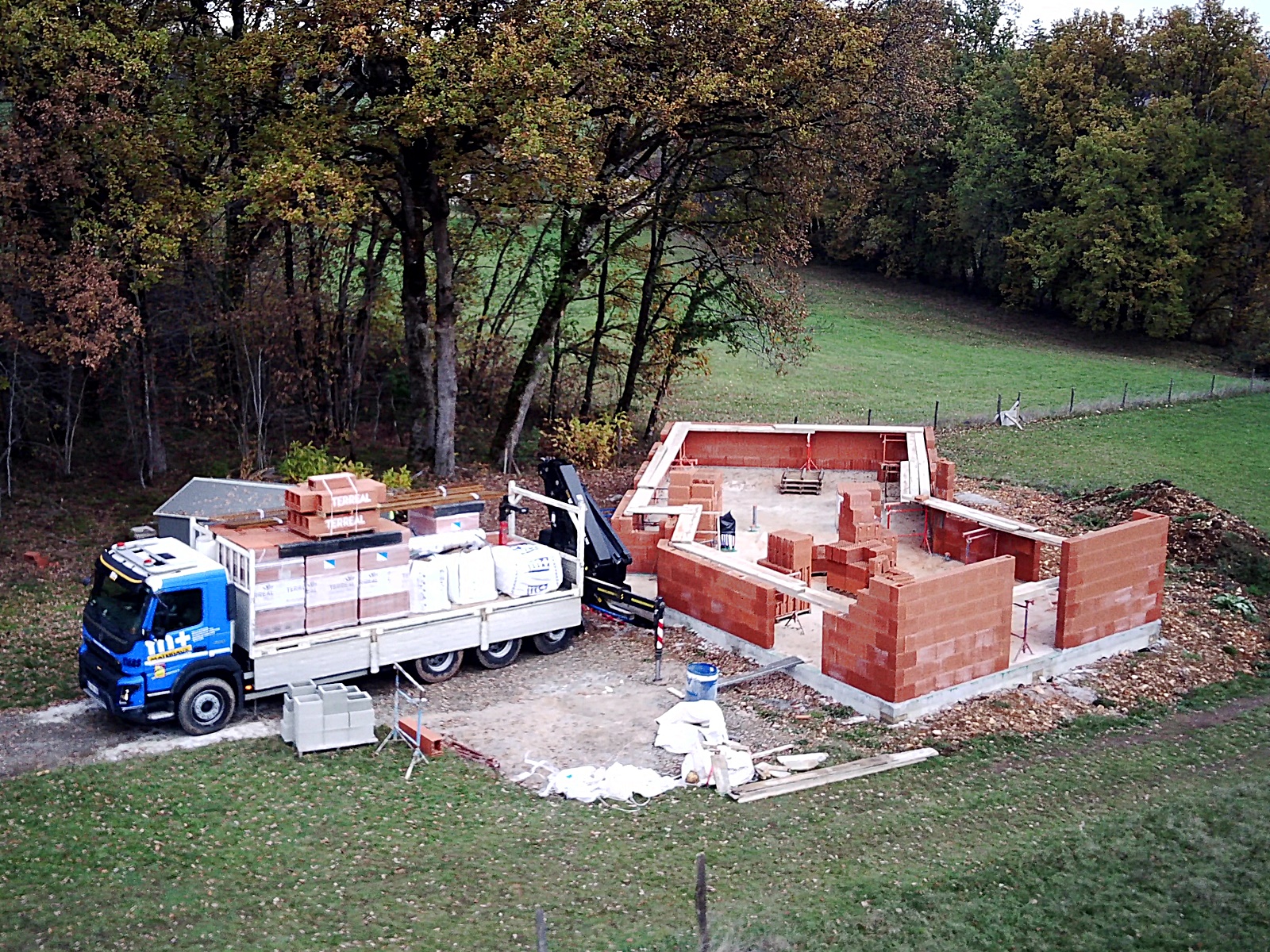
Here’s the truck with its legs out all ready for the delivery to commence.

null

First the driver had to check where there were spaces for him to drop his load onto.

null

His next task was to get the hook of the Hiab attached to its boom.

null

Then he could unload the first item, a big bag of sand.

null

The next item to be dropped was a pallet of Terreal beams that will be used as lintels over the tops of the doors and windows.

null

For reasons best known to himself he decided to find the tightest spot possible to drop them onto.

null

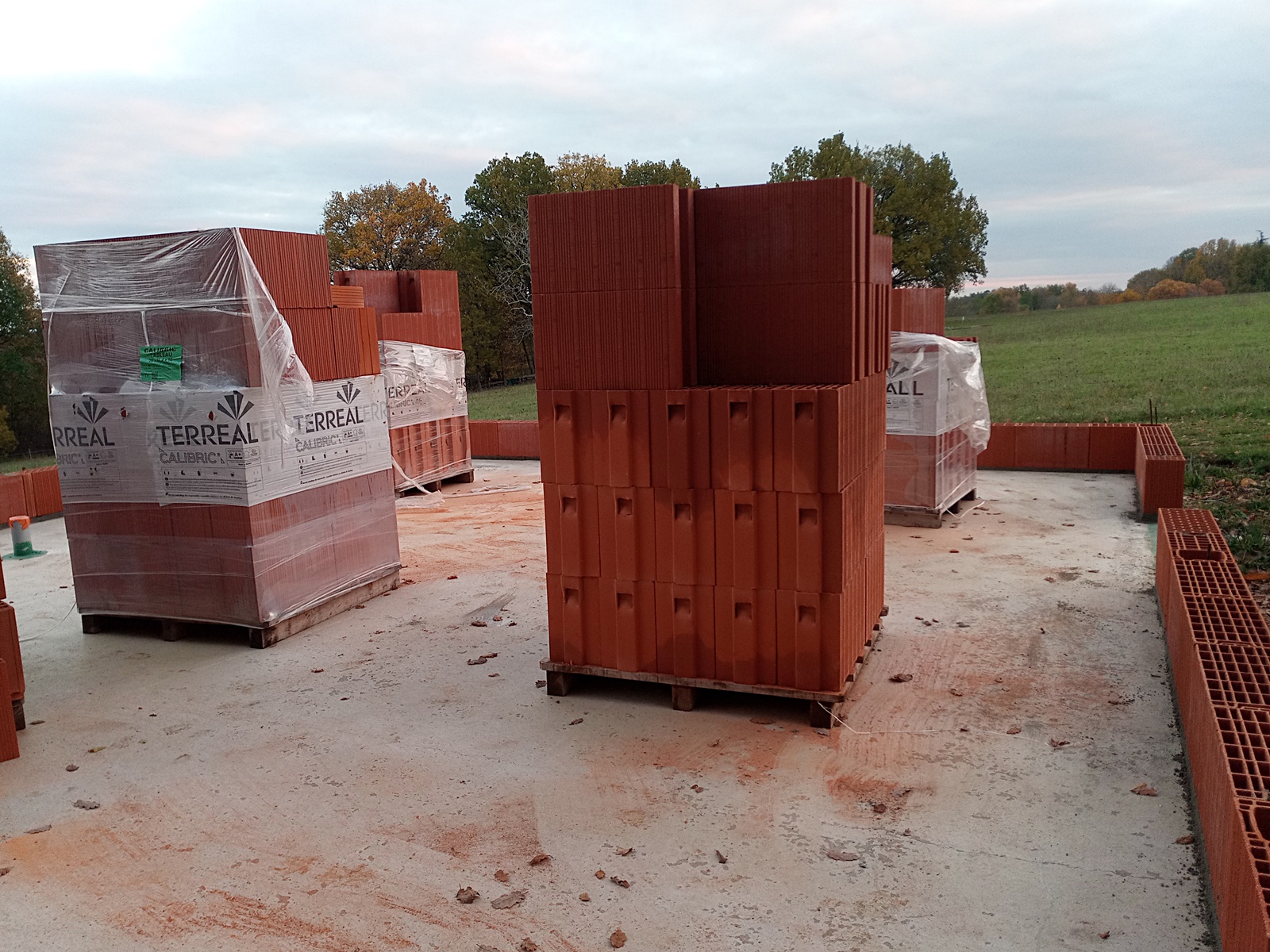
After he’d finished the delivery and gone I went up to see what the driver had left. It turned out to be just about everything that will be needed to complete the external walls.

null

null

null

null

null

null

I was very pleased to find this roll of special plastic material. There’s a pillar opposite the front door that supports the porch roof overhang which I showed as round on my plan. I noticed that the builder had changed this to rectangular and it didn’t bother me too much.

null

This material will be used to form the pillar that will be constructed in concrete with reinforcing steel up its centre. The material is special because it creates a pillar with a perfect shiny finish and I can’t wait to see the result.

null

null

null

null

null

Here’s a shot of the last item he dropped off, reinforcing steel. There are two types – one is in the form of baskets of four rods that can be cut to length and these will be placed inside the Terreal lintels and concrete poured into give them structural strength. I couldn’t work out what the pairs of rods were for and then it hit me.

null

When they poured the house’s concrete support columns that connect to the underlying rock all those months ago, they left rods sticking up for about a metre or so in the corners and various other positions around the walls. As they’ve progressed with building the walls, they’ve left those lengths of rod sticking up and placed special blocks with holes in over them so the rods are enclosed in the holes.

What they obviously intend to do when the walls have been brought up to their full height is drop concrete into the holes up to the full height of the walls and stick more rods in right down to the bottom. Then when the concrete has cured, the walls themselves will be anchored to the rock on which the house will be constructed. I think that is very clever.

So that’s it! Everything’s now ready for the builders to crack on with the walls which at the current rate of progress should only take a few days. The downside is that we’ve got some dismal days coming up with some daytime temperatures below freezing and occasional rain. On top of that there could be some snow towards the end of next week. The weather gods’ timing could hardly be worse 🙁

Nothing to report

It was very cold overnight with a heavy ground frost this morning and even the bird-bath that I put out in the summer was frozen solid. Luckily the water in my caravan was still running, though, but there were no signs of the two intrepid builders who have been turning up like clockwork for the last few days.

When I went up to the site I wasn’t surprised. For the last few days they’ve always left a few things behind when they’ve departed for the evening but today there was nothing, so obviously they knew that they wouldn’t be returning today. I’m not too concerned as I understand the builder’s problems with having to keep several sites ticking over. However, it has turned into a beautiful day again and it’s unfortunate that it will be lost when, if the forecast is to be believed, we have several more grim ones coming our way with low temperatures and rain.

I’m occupied working on other things but I hope that this won’t become a regular occurrence now that building work proper has started. At this time of the year if too many good days are missed, there will be a real prospect of missing the target 12-month completion data. When I look back to when the builders were last on site, at the end of July, if they had continued on from that date there would have been enough time to have completed the house by now. That thought does make me rather annoyed 😐

Really moving along now

We had a pretty cold start this morning. I left at about 7.30 am for a dental appointment in Brive and the temperature then was just on freezing. As I descended and drove through Montignac and beyond it fell to -1 degrees C and didn’t budge from there until later in the morning when I returned and began to climb again and was approaching Fleurac.

When I arrived back it was already above freezing and the same two guys from yesterday had already made a good start. From then on the conditions only got better and it became a fine winter’s day for doing building work. They again made excellent progress and here are some shots that I took after they’d left for lunch.

null

null

null

null

null

null

Now you could see the positions of all the windows. I think some kind of slab or block has to be placed in the bottom of each opening on which to support the window frames because the bottoms of the apertures as they are are lower than the planned heights of the windows above floor level. It makes sense because as they are, the blocks are full of holes. Later on I spotted a Terreal beam on the ground that they’d brought with them and I wonder if that’s what they’ll be using, but we’ll have to wait and see.

I didn’t go out to see how they’d done until the end of the afternoon when they were clearing up and preparing the site for tomorrow by placing boards all around so they will be able to reach the top level. Here are some more pics that I lifted from today’s videos that I shot as they were finishing off.

null

null

null

null

null

null

null

And to finish off, some shots that I did at ground level which give the proper impression of the height that the walls at the southern end have now reached.

null

null

null

null

null

Didier dropped by at the end of the day as I think will become his routine. Given the rate of progress, I queried how long the blocks will last as I think that there may not even be enough for the two guys to do a full day’s work tomorrow. I think he said that a new delivery has been ordered but it probably won’t arrive until Thursday afternoon.

If so, this will be a pity because my guess is that if they were able to work non-stop, the two guys would have all of the external walls up in a week. I think that’s amazing and it shows what can be done with modern materials and building techniques. I can’t understand why we still persist in the UK with building almost all new houses brick by brick from the ground up. No wonder British houses take so long to complete and are also so expensive.

Got a smile on my face

We had our first heavy frost last night (yes, it was chilly in the caravan) but the two builders were back on site bright and early this morning to resume work on the house’s walls. In fact it turned into a beautiful day with bright sunshine and cloudless blue skies the whole of the day and pleasantly warm considering we’re now into December.

I didn’t take any photographs or videos while the two guys were working because I didn’t want to upset them by making them think I was spying over their shoulders but I did go up later after they’d left for lunch to take a few shots showing the progress they’d made.

The first shot shows a view of the walls beginning to rise from lower down the land.

null

Now some pics of the work they did this morning. I’m amazed how much they achieved in what I thought was a relatively short time.

null

null

There have been some questions about how they build with blocks that are full of holes and why the mortar doesn’t all fall down inside. The answer is that they don’t use mortar – they use a special adhesive that squirts out of cans in the same way that spray foam does. Here’s a shot of some of it that oozed out of a vertical joint.

null

And here’s one of the cans that it comes in. The picture on the can shows how it’s applied to two of the long internal surfaces. The next block is then placed on top and the joint between them cures until it’s very strong and rigid.

null

Once a course of blocks is marked out with string to keep them straight, a whole row of them can have joint compound sprayed on them and the next course then dropped on making sure that the exposed faces are vertical compared to the course below. This makes building very fast and a wall can be seen going up in hardly any time at all.

Here’s a shot looking up towards bedroom one from the living room.

null

And here’s a shot of a joint compound spray can that had recently been used.

null

The following are some general shots showing the progress that had been made up to lunchtime.

null

null

null

null

null

null

null

null

I didn’t take any more pictures until the end of the day after the workmen had left. By that time it was getting a bit darker as the sun was going down and also quite a bit cooler as we headed towards another cold night with clear skies.

I think that they’d done incredibly well and compared to what I’m used to seeing, the progress they’d made was fantastic, more or less up to the height of the window sills. Here’s a view of how much higher the walls had grown, from further down the land.

null

And now some more general shots of the project.

null

null

null

The next shot is of the main doorway. You can see that compared to when the young chap came back in August to lay down the green damp-proof course, these guys have measured it out more exactly and as a result, the blocks they’ve laid do not fully overlap the compound. I don’t think that that will be important because firstly there is still a barrier there and it’ll be under the porch anyway.

null

null

null

null

Here’s another shot of the main doorway but this time from the outside.

null

null

null

null

null

null

null

null

So that brought us to the end of what I think was an incredibly successful day. At this rate the main walls could more or less be up within a week but I foresee only one problem with that. After today there’s hardly a days-worth of blocks left for them to continue with tomorrow and for them to be able to carry on after that, more would already need to be either on-site or on-the-way ready to be dropped within the next two days.

The question is, will they be and are there even enough readily available supplies? I guess that I’ll find out the answer to that shortly… But not first thing tomorrow, though, as I have an unwelcome dental appointment to have some broken roots extracted 🙁

Very impressed!

No workmen here today. Didier said yesterday that work proper would resume as from next week so I’m not surprised. Obviously the idea was to set the first course of blocks in place yesterday to give them time to cure over the week-end as it’s critical that they cannot be unseated or disturbed in any way.

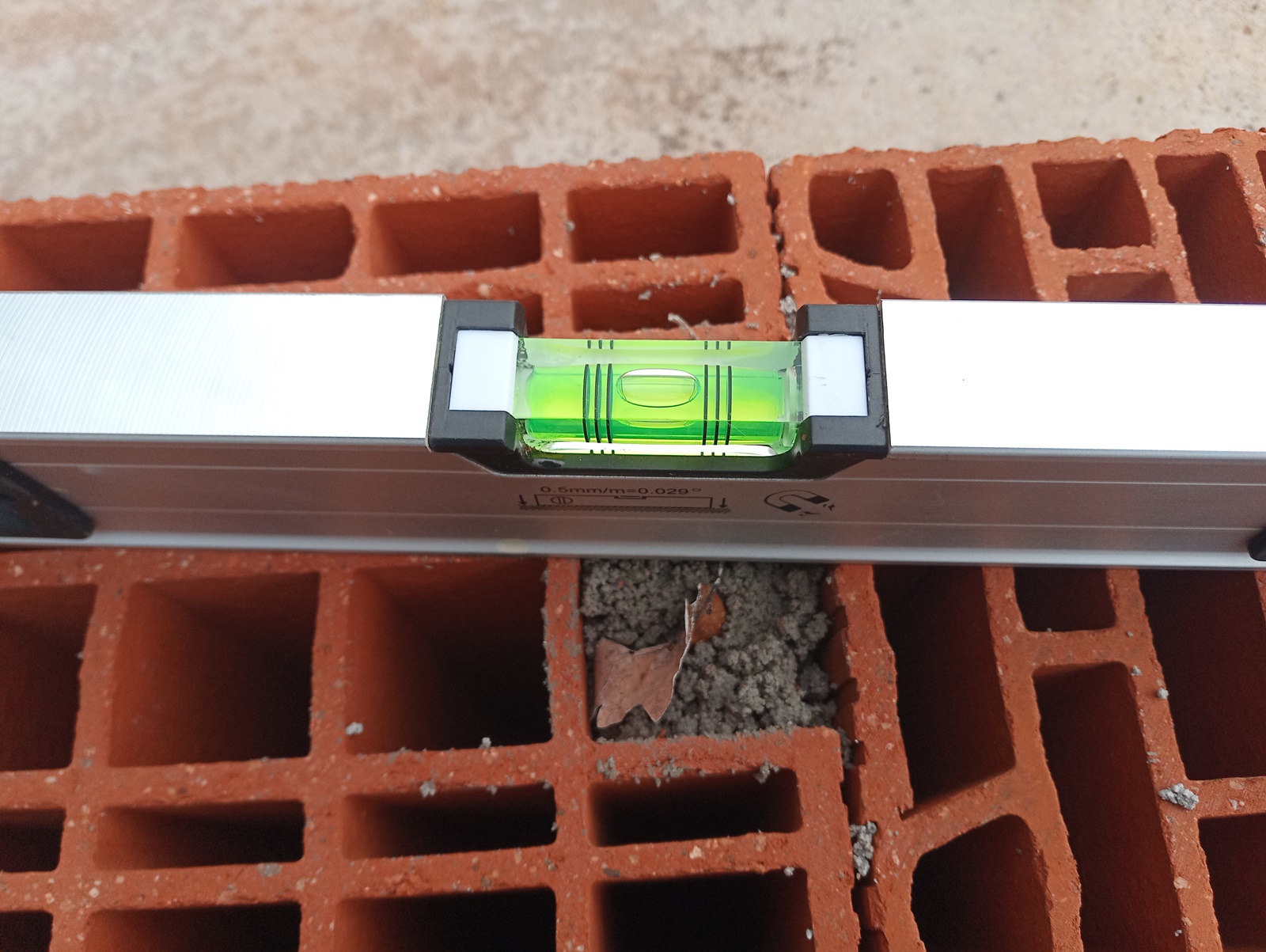
Because of the importance of the first course of blocks being level and vertical I thought that I’d check all around myself this morning with my own level. And I was impressed – very impressed as the following shots show.

null

null

null

I went all around the walls and every wall segment that I checked was exactly level along its whole length. Unfortunately I didn’t have a length of straight timber or metal to place across the gaps where doors will be to check whether each segment of the walls is at exactly the same level relative to each other but based on what I saw I’m willing to bet they all are. So today I’m very pleased – I think they made a good start on the build yesterday 🙂

At last!

The wait is finally over. At least I hope so. There was movement up on the top of my land this morning and when I went to investigate I found that there were three men from the builder already busy getting themselves organised.

I recognised one of the two workmen who’d arrived in a company truck who I think has been on site for every day of the build so far, but I didn’t know the other two. One of those had turned up in a car and he turned out to be Didier, the recently employed new manager who I’d been told about and who would be taking over the management of the contract.

After we’d introduced ourselves he told me that the older gentleman who’d been running the build so far had left the company and I suspect that that was one of the reasons for the delay that has occurred since the summer. While Didier busied himself with paperwork and stuff the two workmen got down to readying themselves to start work by taking accurate level measurements around the house’s periphery and getting materials ready to use.

null

null

null

null

null

Their first task today was to lay down a level layer of mortar all around the boundary of the walls on which to place the first course of blocks. Their work today was critical because any error would cause serious future problems if the first course, on which all of the rest of the walls would be constructed, wasn’t totally level, seated squarely and with segments of exactly the correct length.

They’d finished this first phase of their work by lunchtime and here are some shots that I took of the results while they were away.

null

null

null

null

The mortar layer was bedded down onto the green polymer that was applied at the end of August and which will act as a damp proof course to prevent ingress of moisture into the floor of the house. My guess is that the top of the mortar will correspond to the interior floor level which will be made up at a later stage by pouring another screed of fine concrete over the top of the existing one to create the desired final load-bearing floor thickness.

The next phase of today’s job was to lay the first course of blockwork, which as mentioned above had to be extremely accurate. They therefore took great care doing so and were very concerned to keep taking measurements at every stage to ensure that the final results were in perfect accord with my plans and with the demands of future phases of the building work.

null

null

null

null

null

null

Luckily although the day started cold it stayed dry and warmed up even though a chilly north wind began to develop a bit later on. Nevertheless, they finished before it began to get too cold and while there was still plenty of light and here are some shots of their handiwork that I took after they’d cleared up and left at the end of the afternoon.

null

null

null

null

null

null

null

null

null

null

So at last there’s some more progress. When I asked him, Didier said that they will be continuing now with the build ‘sans arrêt’ (without stopping) and if the weather stays reasonably settled the basic sealed, weather-proof structure should be up by Christmas. I’ve mentioned previously how quickly things happen with a build like mine once they get stuck in but even so I’ll be pleasantly surprised if they do actually achieve that. Didier laughed when I said that I’ll have to buy a Christmas tree for the living room of the new house.

But more seriously, I asked whether there was a chance that they’d complete the build by the twelve month target date of 8th March 2023. He said that once again it would depend on factors like the weather and materials availability, of which there are still shortages, but he said he was confident that they’d be working on finishing the interior after the holidays in the new year. And that to me was really good news 🙂

Catch-up

I haven’t posted much just lately but it doesn’t mean that I haven’t been busy. One of the things that I’ve done has been to buy the first things for my new house.

The builder recently contacted me about specifying my ‘équipements sanitaires’, the fixtures and fittings that I want to have in my bathroom. In fact the details for my shower and WC are already specified in the contract leaving only the washbasin. To be honest, I hadn’t picked up that it had been omitted and it would have been easy for them to have asked me what I wanted and included it in the contract, but the French love to have furniture in which the washbasin is mounted installed in their bathroom and I suppose they assumed that I’d want to do the same.

In fact I don’t – in my quest for simplicity all I want is a plain white ceramic washbasin mounted on a column with a mirror mounted over it and, like I had at Plazac, I’ll also just install one or two wall-mounted mirrored cupboards in which to keep my shaving gear, toothbrush and other bits and pieces. A week or so ago I made a visit to the supplier of sanitary fittings ‘recommended’ by the builder and was shocked by the laughably expensive prices of all of the items shown on the estimate that they subsequently sent me.

They said that they could supply a washbasin, column and tap for 350€. I bet they could! That figure is ridiculous. I checked on the internet and found that the manufacturer of the WC specified in my contract is Geberit, so I then searched for suppliers of washbasins from the same one. In fact the model offered by the ‘preferred’ supplier was also from Geberit but I’d already established that the one on offer was slightly smaller than I ideally wanted.

To cut a long story short, I found a larger Geberit model which I ordered and had delivered for a total of just over 80€. I then found a beautiful tap from the German manufacturer Grohe, probably the best in Europe, which I had delivered today from Amazon for just over 70€. I found a slightly cheaper supplier but I thought that the higher price was worth it just in case I didn’t like the tap when it arrived and I needed to return it, which definitely wasn’t the case.

So I got everything that I need for just over 150€, or less than half the figure quoted by the builder’s ‘preferred’ supplier! The builders don’t know yet that they won’t be getting their cut, good try though it was, but that won’t be my concern 🙂 The only risk I think is that the white ceramic of the washbasin won’t match that of the WC, but I’m hoping that as they will both be from the same manufacturer, that’ll not be very likely.

Here are some shots that I took of the basin, column and tap now waiting on the floor of my ‘abris’ until the builder eventually pulls their finger out and is ready to use them

null

null

null

null

I also made a decision about the house’s internal doors. The builder proposed installing plain white composite doors (ie the cheap ones of the type that go into most new-build houses) but I always planned to have plain wood. I was going to let things be but the more I thought about it the more ridiculous it seemed to be to have doors fitted that I’d immediately want to take out and dispose of.

So I proposed that the doors be excluded from the contract and an allowance made and that I would supply the doors that I actually wanted myself. This has been agreed against an allowance of 230€, not much for seven doors complete with furniture, but I’ve had to accept it and will at least be having the doors that I want from the off. The only thing is that I may have to fit them myself, but so be it if I do.

By the way, I forgot to mention that I have received a reply from the builder about my house’s completion date. They said that it will be 22nd April 2023. When I queried how that fitted with the contract, which through its 12 month contractual completion term implied a date of 8th March 2023, they said that the build would be completed ‘according to the contractual terms’. I mentioned previously here on My Trike that as the commencement date was 9th March 2022, any delay after the implied completion date would mean the builder incurring daily penalties. If this is so, I’ll have to go with that.

To finish off, we’ve had a week or so of very heavy continuous rain followed by showers, so it’s not been possible to do very much either outside or in the caravan. It got me thinking about something that I’ve had in the back of my mind for quite a while – a year or two in fact – and in the event I decided to get myself into gear and see if I could make it a reality.

In fact I’ve done OK – very well, I think, actually. I don’t want to mention any more about it at this stage but should be ready to do so in a few days’ time at which point I’ll publish all the details. Keep watching this space 😉

Sue Baker

I just saw the news that Sue Baker has died. I can hardly believe it. Sue was my girlfriend and true love when I was 18 and she 17, from my time until I left school and went to university. We were inseparable and had great times together. Unthinkable that she’s gone. Sue, I’ll remember you forever. Rest in peace and drive with the angels.

My house-build

I’m becoming very concerned about the time being taken to build my new house and the excessive delays, in my view, that are being incurred. Recently the builders sent out a general email to all their clients apologising for what they say are problems arising from the Covid pandemic (the old chestnut), material shortages and problems recruiting labour but I’m not too impressed by this.

Why is that? When I drive around I see other houses being built that were started after mine and are already ahead in terms of completion and in my own case, the materials required to start building the exterior walls have been on site for nearly three months. The builders also said that their contracts are now taking an average of ten months to complete. Mine was started at the beginning of March and should therefore by now be well on the way to completion but in fact they have been on site for little more than ten full working days.

There is no completion date in my contract. Instead there’s a statutory (I think) period of twelve months after which the house must be completed, otherwise the builders must start paying me a daily penalty until it is ready to be handed over. This is based on the cost of the property and in my case works out to about 50€ per day, so depending on whether week-ends are included, this amounts to around 2500€ per month, or 1500€ if not.

Except for the fact that I’d still be in my caravan, I’d be happy to receive such sums as a contribution to the costs I’ll incur in fitting out my kitchen and purchasing other items that I’ll need for the house. But I’d rather not. I’d prefer to be in the house. The builders started work on my house on 9th March of this year, so the twelve month period ends on 8th March next year.

In construction terms given what needs to be done by then, this is not long so I decided to make out a work schedule based on my own experience and judgement. I used a Gantt chart for this, which is a very useful tool for project planning and management and one that I used to use quite a bit when I was a Corporate Planner many years ago.

A Gantt chart is a useful way of showing activities (tasks or events) displayed against time. Along the top of the chart is a suitable time scale. Each activity is represented by a bar and the position and length of each bar reflects the start date, duration and end date of the activity. This allows you to see at a glance what the various activities are, when each activity begins and ends, how long each activity is scheduled to last, where activities overlap with other activities and by how much and the start and end dates of the whole project.

Also, by identifying which activities cannot be started until previous ones have been completed, a Gantt chart allows you to identify the critical path and time line which together define the minimum amount of time that the project will take to complete. The Gantt chart that I created is shown below.

null

The critical path of my house project is shown along the top of the chart and amounts to 16 weeks and at the time of writing, this is exactly the time left between now and 8th March 2023. I sent a copy of the chart (in French of course) to the builders last week pointing this out, because when I signed the contract with them they said that they never pay completion penalties as they always hand projects over within the twelve month period and waited for a reply.

I suggested that if they disagreed with my estimates they might like to provide me with their own but they didn’t do that. Instead they replied saying that they can assure me of their best possible endeavours and support and that my house will be ready by 22nd April next year. In view of their previous comments about never paying penalties I was rather puzzled by this and sent a message pointing this out along with my choices on tiling etc that they needed.

So far I’ve received no reply. I hope that when the time comes they don’t try to claim ‘force majeur’ for not making the completion date of 8th March 2023 in order to avoid paying completion penlties. In view of the time materials have been standing on site, that could get a bit messy 🙁

Ready to go?

Hmmm… I’m not sure, I’m thinking about it. We’ve had some great flying days recently while I’ve been distracted by other things, mainly to do with my house-build. Tomorrow will be yet another with more light winds of around 4-6 kmh and an afternoon temperature of 19 degrees C.

This afternoon I pulled my Savannah out and gave it a good wash as it was again covered with dust and bird poo. I really regret not having had the time before I moved to make covers for it. I bought the material and securing straps but now I’m out of my old house and in the caravan there just isn’t the space to work with my sewing machine.

Here are a few shots that I took after I’d pushed F-JHHP back into the front of the barn.

null

null

null

null

So why will I probably not take it flying tomorrow? Well, after replacing the old, wrong brake fluid the brakes are still not very effective. OK, they’re probably no worse than they were before but there’s an old English saying that we refer to as sod’s law.

In this case, all the while that I didn’t know that there was a problem with the brakes, I flew the aircraft and nothing untoward happened. However, now that I know there’s a fault and they’re not working as they should, that’s when the problem will come back to bite me.

So I probably won’t fly tomorrow even though I’d more than likely get away with it. I’ve ordered a new set of brake pads and they’ll arrive next week and it shouldn’t take too long to fit them. So I’ll be patient until then and maybe busy myself with some other things on the aircraft if I find myself at a loose end. And when its brakes are working as they should, as hopefully they will be, I’ll feel much more comfortable when I do get F-JHHP back in the air.

Another flight, another engine scare…

This is the video of my first flight in 24ZN, my X-air, after it had given me a fright in the form of a serious drop in engine power right after take off. I’d surmised that the problem was fuel-related and had gone over the whole fuel system, replacing almost all of it. Now was the time to see if I’d cured the problem.

As the video shows, everything went fine for almost the whole flight, except the engine decided to give me another scare about half-way through at a point the furthest away from Malbec, forcing me to decide what I should do.

This I can hardly believe…

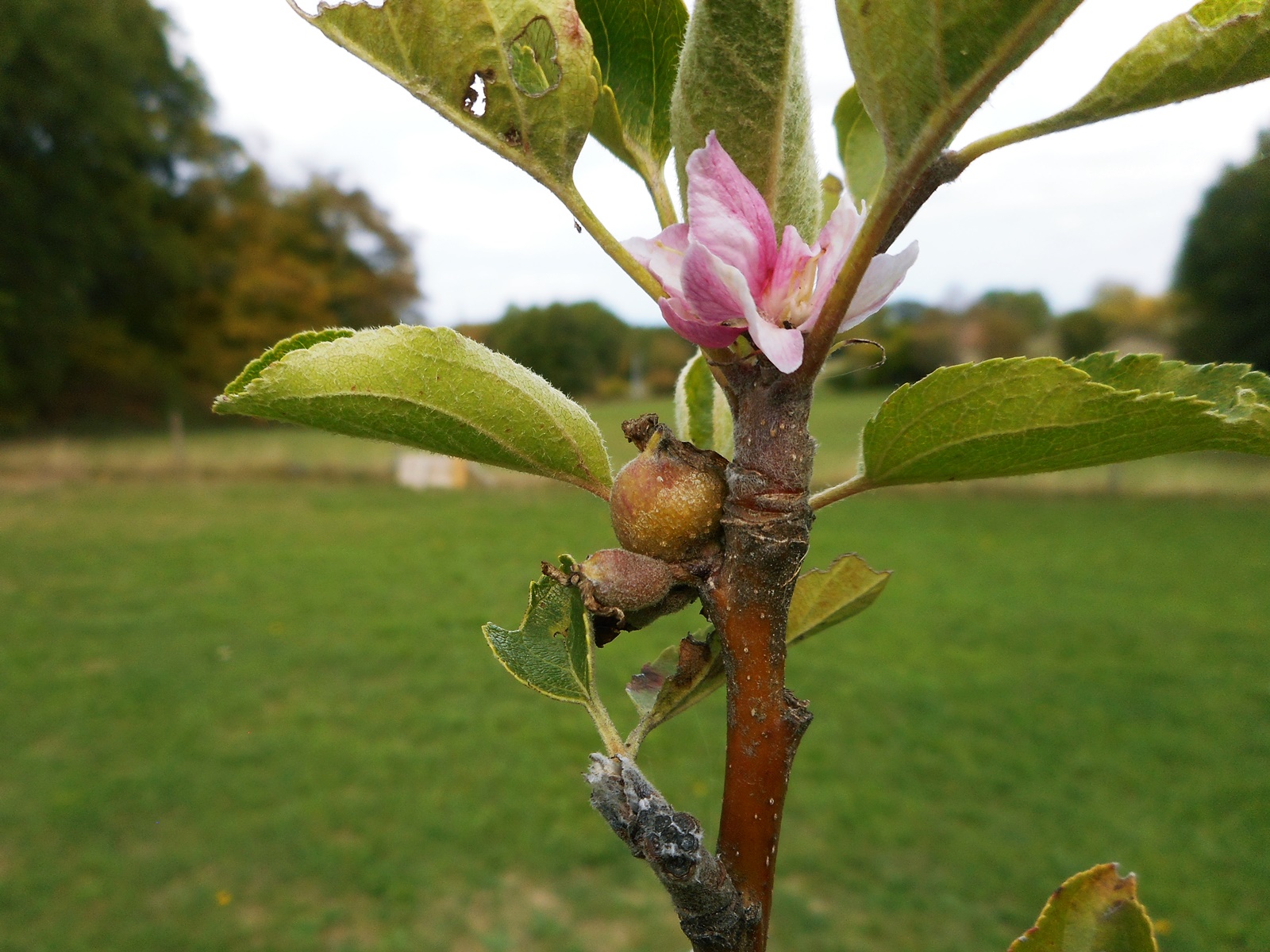
On my way back down to my caravan after checking my mailbox this morning I spotted a flash of colour on top of my little apple tree that my friends gave me as a birthday gift nearly two years ago and which I planted on my land just after I arrived here. When I went to investigate the cause I could hardly believe what I saw because this is what it was.

null

null

null

null

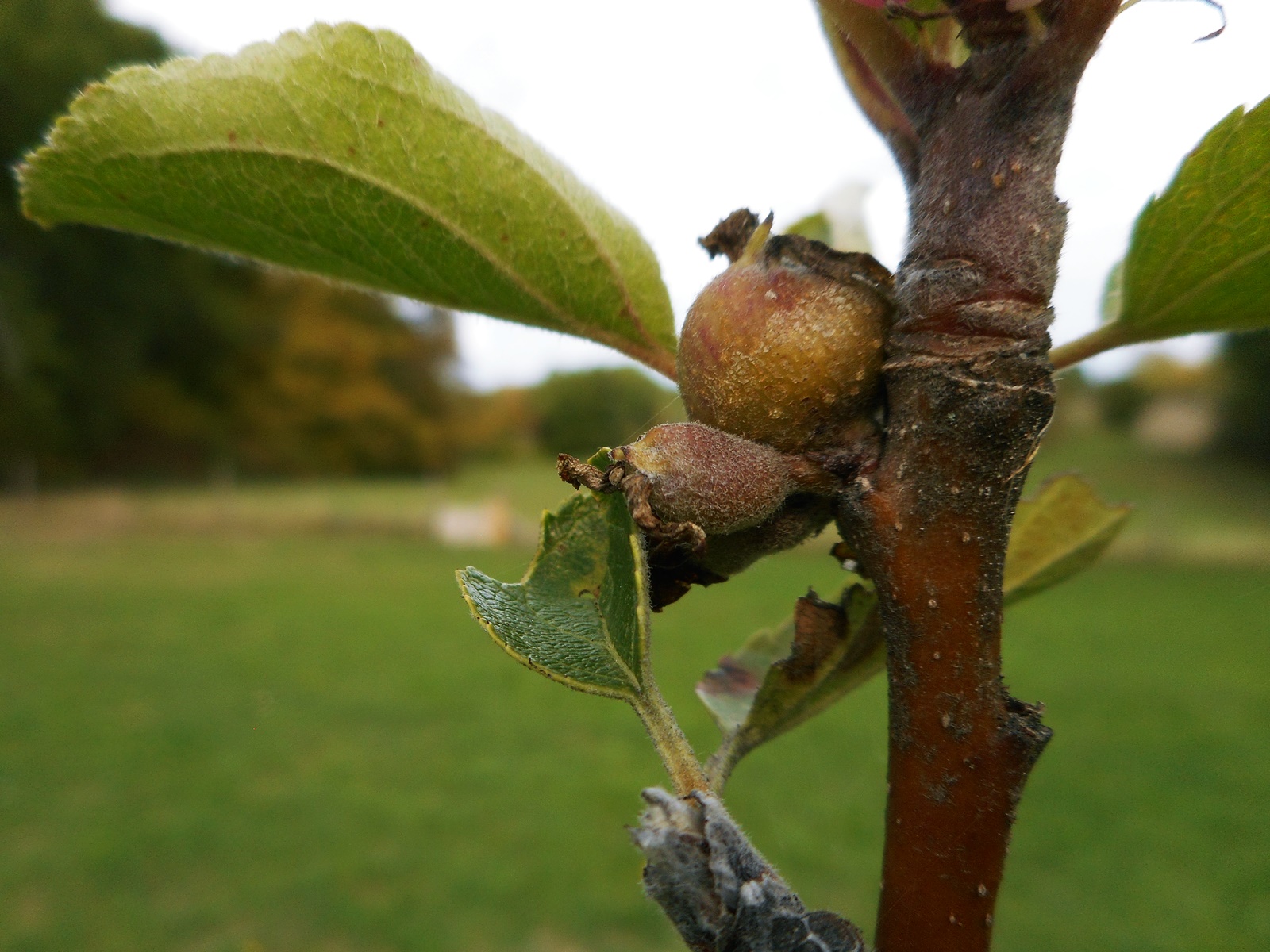
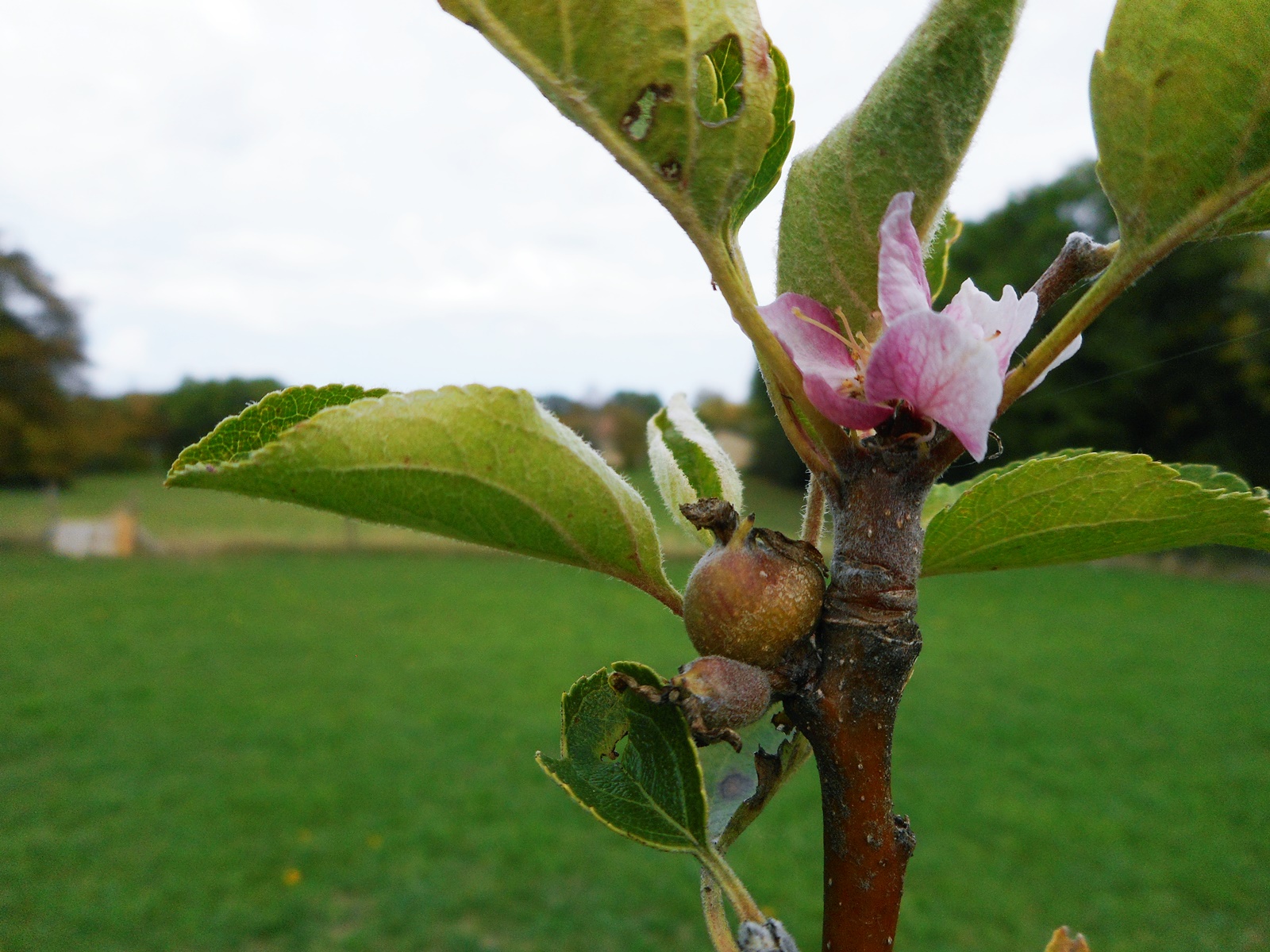
The colour was a single little piece of blossom and just below it were two tiny baby apples. I could hardly believe it because although we’ve been enjoying a balmy period with temperatures in the mid to upper 20s degrees C, relatively speaking, the summer is hardly over and spring is still a long way away.

My guess is that the poor little tree has become confused after the period right at the beginning of the summer when temperatures were up in the mid-40s and thinks that with the temperature dip in between, now it must be spring.

Sadly, I don’t give much chance that either the blossom or the baby apples will survive, but it’s still a welcome reminder that while around us we see confusion and conflict, Mother Nature still carries on regardless and tries her best to keep delivering her gifts no matter what. And long may she continue doing so.

My Savannah’s brakes

At long last, today I managed to get around to fixing my Savannah’s brakes. The problem was that, as happened once before, all of the hydraulic fluid in the system was lost, possibly by boiling, I don’t know, during the very hot period we had during the summer when temperatures were getting up to 45 degrees Celsius and beyond.

Things were made worse when I went to unscrew the bleed nipples to replace the lost fluid and both of them broke off. This turned out to be a blessing in disguise because when I contacted ICP in Italy after I couldn’t make contact with ULMs Les Noyers (the agent in France, they were tied up with organising their presence at Blois, France’s main ULM show), I found out that the DOT 4 fluid that I’d been using was expressly forbidden and that a mineral oil, a type of car automatic gearbox fluid had to be used instead.

In the event I obtained both the parts I needed and some of the fluid but then my life was taken over by another problem, namely building my new computer. After various setbacks, that was eventually completed several days ago and I’ve been using it with great success in the role that I intended for it, so I was very pleased about that. But today’s plan was to tackle the brake problem.

It doesn’t sound so bad. There’s a bleed nipple on each brake calliper and a small sealing screw on the top of each of the toe brake cylinders in the cockpit. All you need to do is crack the sealing screw, attach a pressure oil can full of fluid to the appropriate bleed nipple with rubber tube, crack the nipple and slowly pump fluid into the system from the bottom until it emerges from the sealing screw on top of the brake cylinder. So far so good.

But it isn’t quite that easy. Firstly, it has the potential to be very messy, made worse by the fact that the fluid is for some reason very slippery. So when you’re filling the oil can it’s easy (a) to overfill it and dribble some onto the can itself, the fluid container and the floor when you pour some back and (b) drop or tip the oil can over when you try to screw the top back onto it while trying to avoid doing exactly that.

The other thing is that if you’re a bit over-enthusiastic and pump a bit more pressure than the system can cope with at that precise moment, the rubber tube can detach from the bleed nipple spraying a jet of fluid all around, onto the side and underneath of the aircraft, the floor and your legs, the latter being a bit uncomfortable if you’re wearing shorts as I was today.

But I got the job done. I checked the brakes after one refill and they were still definitely spongey, especially the right one, so I did them again. This time the results were much better and I was able to do a longer test by taxying down Malbec’s runway and back up again. But I’m still not completely happy.

My Savannah’s brakes have never been that good. OK, but not THAT good. I can’t really tell if they’re now better with the new fluid than they were before, but I’m still not that impressed. And it looks as though the seals on the top of each toe brake cylinder through which the operating rods pass may both be slightly letting fluid by.

ICP told me that DOT 4 fluid might have attacked the system seals but I don’t think that that’s the reason. I think that it’s just down to system old age and probably both of the toe brake cylinders are really due for renewal. In fact, as the brakes are not performing that well, it would probably be worth taking a good look at the brake pads and more than that, with the amount of work involved in stripping the system and the importance of having good brakes, it would undoubtedly be worth overhauling the complete system.

So that’s my next aim. If I keep an eye on the amount of fluid seeping past the top seals, the Savannah will be safe to fly. However, I think I now need to get the parts list out again and drop another email to ULMs Les Noyers. As Del Boy would say, you know it makes sense, Rodders 😉

My new computer

I mentioned in an earlier post that I’ve decided to build a new, faster, more powerful computer. My old system, on which I’m typing this, is going on for 10 years old, which is becoming quite ancient in computer terms, and I’m finding that it isn’t now really up to the job of making videos in the quantity and manner that I wish to. So I decided to bite the bullet and shell out a considerable sum to build a new machine that would more than meet my needs, probably for as long as I’ll be computing!

Up to now I’ve favoured AMD processors, mainly for budgetary reasons, but in my opinion Intel have now jumped so far ahead in terms of performance that it would be foolish not to go for one of their processors even though they are more expensive. So I decided on an Intel Core i5-12600kf which was launched in quarter 4 of 2021 and although not cheap should more than do the job I want it to. Then, having made that choice, the next step was to choose a motherboard to mount it and all of the other peripherals that make up a working machine on and I chose a MSI Pro Z690-A which looked to be ideal.

I then had to source a suitable cabinet, power supply, memory, cooling system and all of the other stuff to make up the complete machine. This Intel processor is described as 12th generation and my first shock was to find that since I built my last computer everything has changed, so much so that I can’t use anything, nothing at all, from my old machine. So out kept coming my bank card as I had to keep sourcing new components, until at last I had everything that I needed to start the build.

I should add that this actually took several weeks because of some suppliers’ delivery times and also because some of the less scrutible ones were happy to bill me and then let me know after a delay of several days, sometimes over a week and only when I chased them, that they didn’t have the item(s) I needed in stock and that they needed several more weeks to complete the order. This practice seems to be very prevalent in France and I regard it as both appalling and unacceptable.

So then I could get down to building the machine and little did I know that that was when my real nightmares would begin. The first thing I found was that the reduced-price power supply that I’d sourced via Amazon Warehouse was completely dead and wouldn’t power up at all. I decided that in order to minimise the further delay I’d return it to Amazon and order a replacement so I could press on with the build before receiving the refund which I’m still waiting for.

The replacement when it arrived worked great so I could continue. But then there was yet another disaster, this one more more serious. After assembling the complete machine, it powered up but wouldn’t boot (ie the system wouldn’t start running). I knew that I’d done everything correctly and after carrying out detailed checks and diagnostics, it came down to it being either a memory or, more seriously, a motherboard problem.

The motherboard installation instructions say that a single stick of memory should be inserted in memory bay A2 (don’t worry what that means) and if two sticks are inserted, they should be in bays A2 and B2. Simple enough. However, to cut a long and very painful story short, it transpired that the system booted if a single stick was inserted, contrary to instructions, in bay B2 but if bay A2 was used at any time it would prevent the machine from running.

Advice I received on the MSI support forum said that this might happen if the processor had been mishandled when inserting it into its socket on the motherboard and some minute connection pins had been bent. However, I’m not that cack-handed and have been building computers for getting on for 20 years and I knew that that wasn’t the case, as confirmed by checking the socket visually with a bright light and a magnifying glass.

So the only conclusion I could come to is that the motherboard is showing a fault on memory bay A2, which is pretty fundamental. I sourced it through Amazon.de but I’ve already arranged for it to be returned, to Slovakia for goodness sake, which will cost an arm and a leg of which Amazon say they will only reimburse 10€, the difference (around 8€ I think) being deducted from the amount of my refund. Plus, of course, it has also meant that all the work I’ve done so far has been wasted as the complete machine has had to be torn back down.

In the meantime in order to continue with the build while I’m waiting for my refund from Amazon, I’ve had to source and pay for another replacement, but that still isn’t where the nightmare ends. Because the Euro has collapsed against the Dollar and I purchased my original motherboard several weeks ago, the replacement has cost me nearly 25% more than I originally paid. I’ve built quite a few computers, even for a short time supplying them through my old UK company to small businesses, but never, ever have I had an experience like this one.

They’re at it again

I went out of my caravan this morning with the intention of watering my two little cherry trees which have been suffering greatly from the continuing absence of rain in these parts. I’m not complaining, but we’re still getting endless days of clear blue skies, very light winds and afternoon temperatures of around 25-26 degrees but no rain. But this is what I found.

null

null

null

null

null

Both trees had been attacked by deer, the smaller completely stripped of leaves and the larger almost. I can hardly believe it, after all this time. I’m hoping that the damage won’t be terminal as the leaves on both trees were turning brown and beginning to drop off anyway, plus the small buds at the bases of the leaf stems where they join the trunk are still intact. But I’m no expert and I guess I’ll now just have to wait it out until the spring to see what transpires. I am disappointed though 🙁

Other projects

Now that I’m up-to-date on my house-build videos I can at last get back onto other projects that I’ve had to put on the back-burner. The first one is to do with 77ASY, my Savannah.

A few weeks ago, while I was sorting out the fuel problems on my X-Air, I decided that in the meantime while I was waiting for parts etc to arrive it was about time that I took my Savannah up to get some air under its wings. Unfortunately, after doing my pre-flight checks, when I started to taxy for take off I found that it had no brakes.

Luckily, despite being on a slight down-slope, after quickly killing its engine it rolled to a stop before any damage could be done, but it meant that it too was unflyable. This was the second time this had happened – the first was on a flight back to the UK when, after landing at Blois, I found that applying the brakes to exit the runway had no effect. Luckily there was plenty of runway left to exit at the far end after allowing the aircraft to slow down by itself, but it was a bit unnerving.

On both occasions, the problem was due to the brake fluid boiling out of the system in high temperatures and as I had done in the UK the last time when I had just replaced the fluid, I tried to do so again. But this time I was unlucky because the bleed nipples on both wheels were corroded in and snapped off when I tried to unscrew them.

I tried to contact Les Noyers, the Savannah agents, but as they were tied up preparing for Blois, Europe’s biggest ULM show in September, I couldn’t get a reply. So I tried again by contacting ICP in Italy, the builder of the Savannah.

I sent them a hand-drawn image showing what I needed and asked if they could supply the parts to me direct. The first thing they asked was, ‘What brake fluid had I used?’ I told them Dot 4 and they immediately said that this should absolutely NOT be used. Instead I was told that it’s essential to use a mineral oil based fluid and they gave me a couple of brand names.

They also said that this was clearly stated in the Savannah’s manual but when I looked I could find no mention of such a thing. I then wondered if there’s such thing as a maintenance manual, and sure enough I found one on line, but only in French, and in that it did indeed confirm, unsurprisingly, what the factory had told me. I wonder how many other Savannah owners have made the same mistake as me?

ICP suggest that Dot 4 can damage the brake system’s rubber seals and I’ve yet to find whether this will be so in my case. I’m hoping not because the aircraft did have brakes before but I won’t know until I refill the system with the correct fluid. Anyway, ICP referred me back to Les Noyers and after Blois I sent them the same image as I’d sent to ICP and they came back immediately with a price.

Below is a shot of the image with the old, broken parts in the top right-hand corner and the new parts I received from Les Noyers in the lower left-hand, for 40€ including delivery. All I now need to do is fit them and refill the Savannah’s brake system, which I was going to do today except I had to finish a couple of things off to do with the next project, which I’ll go on to describe below.

null

The next project is my computer that I’m typing this on, which is now getting a bit long in the tooth. I’ve never bought a ready-built computer with a manufacturer’s brand name on it but have instead always built my own to my own specification to do the jobs that I need to do. I think that my current machine dates from just after I arrived in France, so it’s around ten years old.

This is pretty old in computer terms. Nevertheless, it’s served me very well and could continue doing so except for certain in-built disadvantages that it has for the type of work I do, which are causing me more and more problems.

Take my blog for example. In itself it’s a pretty undemanding activity in computer processing terms but it involves activities that present two problems. Over time it’s grown ‘like Topsy’ and as a consequence, it comprises an ever-growing amount of data. Yes, this is all held on the remote server that hosts my blog web site, but quite a lot of it, principally the images, I like to keep on my own computer where I can readily access them.

The problem with this is that computers of a similar generation to mine are limited in the amount of data they can handle. This is because they use an old-fashioned disk storage system called MBR (Master Boot Record) which is limited to a maximum capacity of 2TB (terra-bytes). As a result, as in the case of my machine, although my main disk drive has a capacity of 3TB, one-third of this is unusable and is therefore totally wasted.

To get around this, modern computers use a disk storage format called GPT (GUID Partition Table) which allows the use of disks of any capacity. It is possible to convert MBR disks to GPT but the problem then is that the heart of the computer, its motherboard on which all of its components are mounted, has to be compatible with both formats, and mine isn’t because it’s too old.

So this means that to get the advantages deriving from the new GPT format, I really have to junk my existing computer and start again. This is hardly surprising given its age and I’ve had to do it several times in the past, and as my current machine is still pretty fast, I should as previously not have a huge problem finding a new owner for it.

And there’s also another benefit that I’ll derive from the upgrade. Every time I’ve upgraded my machine in the past, I’ve ended up with a much faster replacement. I’m hoping that the same will happen again, although you can never be sure until you’ve built and tested the new machine.

Why should this be especially important for me? It’s because I’m making more and more videos nowadays, which is a particularly demanding activity in terms of computing power. It’s not just the editing that requires processor power. It’s also what is called the ‘rendering’ of the final video, when the edited version is converted into the final video which can be viewed on a computer or uploaded to Youtube, for example. This is hugely demanding of processing and graphics power and sometimes requires many minutes, often over an hour or more for a longer video, on my existing machine.

After today, I’ve already ordered all the components and parts that I’ll need for my new machine and I’ll go through them all one by one to describe what I’m doing and why, starting with the beating heart of the machine, the CPU (central processing unit).

My current machine has an AMD FX-8350 processor, which was a good, upper-mid-range processor in its day. It was launched in 2012, has 8 processing cores, a clock speed of 4.0 GHz that can be increased by over-clocking to 4.2 GHz and an 8MB cache memory (the amount of data that it can take on board to process at any instant). It can support DDR 3 RAM (random access memory) which notionally had a maximum speed of 1066 MHz but which I think has since been upped to 1600 MHz. Mine is old so is running with 8GB of 1066 MHz.

I’m upgrading this time from the AMD to an Intel processor, a Core i5-1260KF. This was launched in Q4 2021, so it’s fairly new. It has 10 cores with a base frequency of 3.7 GHz, although this can be pushed up to 4.9 GHz by over-clocking. It has a 20MB cache and supports both DDR 5 and DDR 4 RAM. I’m going with 16 GB of DDR 4 with a speed of 3200 MHz, so this represents quite a big uplift from my existing machine’s specification.

null

To get the level of performance that I’ll need, I’m going to be overclocking the new machine. I tried this with my current machine but had a constant problem with overheating, especially here in France during the summer months. When a computer gets hot it just shuts down on you, which can be very annoying if you’ve been editing a video for an hour or so and haven’t saved the changes you’ve made.

To get around this with the new machine, I’m going for a solution which is mainly used on gaming computers, namely water cooling. My current machine uses a standard cooler with a fan that’s just strapped onto the top of the processor which it tries to cool by dragging air over it. As I said above, this works fine if the processor hasn’t been overclocked but can, even so, let you down on hot days, as it has a few times during this summer.

The cooler that I’ve gone for is a Thermaltake Toughliquid ARGB cooler which I chose because it’s especially recommended for the Intel CPU that I’m going with. I’ve never built a water-cooled computer before so I’ll be very interested to see how it goes. I might add that although it has a radiator, it’s not like a car with a radiator cap and is completely sealed!

null

Besides the CPU, the other key component of any computer is its motherboard. This is the unit on which all of the components are mounted and is crucial to the speed that the machine ultimately achieves. And more than this, every type, or range, of CPU has its own type of motherboard and although there are usually several manufacturers to choose from, it’s essential to choose a motherboard type that’s compatible with your CPU.

Motherboards vary greatly in price depending on the features they incorporate and the speed at which they operate. I’m not a ‘gamer’ so I don’t need a top-end motherboard, but I do need one that will take my Intel Core i5 CPU and DDR4 memory. I ended up going for a MSI PRO Z690-A, a mid-range motherboard with a reasonable specification and not-too-crippling a price.

null

I prefer motherboards that don’t have on-board graphics cards. This one has but I’ll not be using it as I’ll continue using the Nvidia GTX 1060 that I have in my current machine. I’ll probably upgrade later to a newer graphics card that’ll up the new machine’s speed even more, but in the meantime I’ll probably be able to enjoy the novelty of running two screens at the same time, for flight simulator for example.

Finally we come to the cabinet that will house all of the above items. Like motherboards, cabinets vary greatly in price depending on what you want out of them. Gamers like transparent glass windows to show off their machine’s innards with lots of coloured flashing lights to boot. I need none of that stuff – I just want my machine’s cabinet to be functional.

This time around I’ve had to look for a cabinet that is just that and is also able to accommodate a water cooling unit. The one I’ve chosen is a Fractal Design Core 2500. It’s plain black, which experience has shown me over the years can take the knocks and bangs that arise from normal use while still mostly retaining its original appearance.

I’ve also had to make sure that as well as accepting a water cooling unit, it will also accommodate the motherboard and peripherals I’ve chosen (disk drives and DVD unit) and has fans built in to provide everything with the maximum amount of cooling. Most ready-built PCs don’t nowadays incorporate a DVD drive but I’ll be transferring over the one that’s in my current machine as not only does much software still come on DVDs but I also have lots of writable and re-writable CDs and DVDs that can be used for data transfer and storage.

null

null

Other than the Intel CPU, which I’m still waiting for, I’ve received nearly all of the other components, including the water cooler, the motherboard and the memory. I’ve just ordered the cabinet and also a new 750 watt power supply, both of which should be delivered by the week-end.

And how much did all this cost, you may be asking. Just under 745€ is the answer. Not that much, but you have to pay to get what you want rather than what someone else has decided that you’ll get. And this figure is still some way below what I’d have paid if I’d searched to buy a machine of similar quality and specification. I’m now looking forward to the build 😉


New house-build – day 14, 31st August

Hooray, I’m up-to-date at last, because here’s the video that brings me up to the end of August, the month when the builders were all on holiday for the whole of the month. The video shows two events that occurred in August, the first on the 23rd was the laying down of the damp-proof course and the second and most important, the first delivery of blocks (‘briques’) in readiness for starting work on building the walls.

As the overhanging tree branches that might have hindered building work have now been removed, progress should start to speed up once work begins on the walls. It’s usual to continue non-stop until they’re finished, so who knows, the house might even be ready for Christmas!