
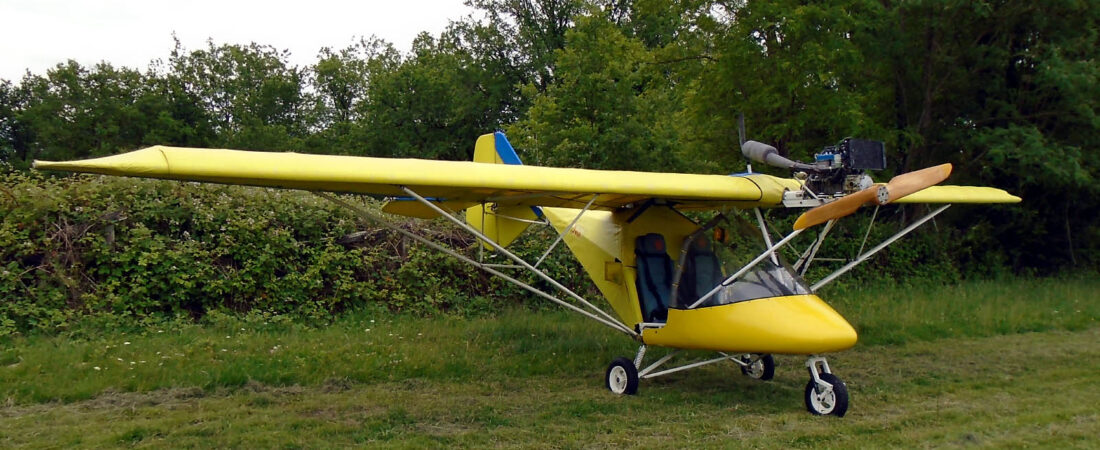


At long last, today I managed to get around to fixing my Savannah’s brakes. The problem was that, as happened once before, all of the hydraulic fluid in the system was lost, possibly by boiling, I don’t know, during the very hot period we had during the summer when temperatures were getting up to 45 degrees Celsius and beyond.
Things were made worse when I went to unscrew the bleed nipples to replace the lost fluid and both of them broke off. This turned out to be a blessing in disguise because when I contacted ICP in Italy after I couldn’t make contact with ULMs Les Noyers (the agent in France, they were tied up with organising their presence at Blois, France’s main ULM show), I found out that the DOT 4 fluid that I’d been using was expressly forbidden and that a mineral oil, a type of car automatic gearbox fluid had to be used instead.
In the event I obtained both the parts I needed and some of the fluid but then my life was taken over by another problem, namely building my new computer. After various setbacks, that was eventually completed several days ago and I’ve been using it with great success in the role that I intended for it, so I was very pleased about that. But today’s plan was to tackle the brake problem.
It doesn’t sound so bad. There’s a bleed nipple on each brake calliper and a small sealing screw on the top of each of the toe brake cylinders in the cockpit. All you need to do is crack the sealing screw, attach a pressure oil can full of fluid to the appropriate bleed nipple with rubber tube, crack the nipple and slowly pump fluid into the system from the bottom until it emerges from the sealing screw on top of the brake cylinder. So far so good.
But it isn’t quite that easy. Firstly, it has the potential to be very messy, made worse by the fact that the fluid is for some reason very slippery. So when you’re filling the oil can it’s easy (a) to overfill it and dribble some onto the can itself, the fluid container and the floor when you pour some back and (b) drop or tip the oil can over when you try to screw the top back onto it while trying to avoid doing exactly that.
The other thing is that if you’re a bit over-enthusiastic and pump a bit more pressure than the system can cope with at that precise moment, the rubber tube can detach from the bleed nipple spraying a jet of fluid all around, onto the side and underneath of the aircraft, the floor and your legs, the latter being a bit uncomfortable if you’re wearing shorts as I was today.
But I got the job done. I checked the brakes after one refill and they were still definitely spongey, especially the right one, so I did them again. This time the results were much better and I was able to do a longer test by taxying down Malbec’s runway and back up again. But I’m still not completely happy.
My Savannah’s brakes have never been that good. OK, but not THAT good. I can’t really tell if they’re now better with the new fluid than they were before, but I’m still not that impressed. And it looks as though the seals on the top of each toe brake cylinder through which the operating rods pass may both be slightly letting fluid by.
ICP told me that DOT 4 fluid might have attacked the system seals but I don’t think that that’s the reason. I think that it’s just down to system old age and probably both of the toe brake cylinders are really due for renewal. In fact, as the brakes are not performing that well, it would probably be worth taking a good look at the brake pads and more than that, with the amount of work involved in stripping the system and the importance of having good brakes, it would undoubtedly be worth overhauling the complete system.
So that’s my next aim. If I keep an eye on the amount of fluid seeping past the top seals, the Savannah will be safe to fly. However, I think I now need to get the parts list out again and drop another email to ULMs Les Noyers. As Del Boy would say, you know it makes sense, Rodders 😉
 English
 Nederlands
 Français
 Deutsch
 Italiano
 Latviešu valoda
 Português
 Español