Phew!!

I finished off the new Savannah instrument panel fabrication work today and it was with a big sigh of relief I can tell you. It was tricky enough cutting all of the large instrument holes yesterday and you’d think that it would be a piece of cake drilling all of the smaller ones today. But that wasn’t the case, especially after the first two that I drilled got ‘messy’, but luckily not so much as will be visible when all of the instruments etc are installed.

There were two main problems – the first was that several holes and cutouts had to be shaped by hand and when you’re filing away, there’s always the chance that you’ll make a mistake and mess the whole thing up. Luckily that didn’t happen. The other thing is that several of the gauges have securing screw holes around their perimeter and if you don’t drill those in exactly the right positions, the gauges in question end up crooked ie not vertical. Luckily that didn’t happen either.

So I was very pleased to end up with something that will be quite presentable when it’s all finished and installed in the aircraft. It’s not perfect, but something made by hand, especially if that hand is relatively unskilled or inexperienced, is never going to be as perfect as an item made on precision machinery.

I stipped the protective film off the shiny ‘front’ face of the panel and then rubbed it down with fine wet-and-dry paper so I could then give it a coat of special aluminium primer. Unfortunately, I’ve only managed to find it here in brushable form and as I’ve had it for two or three years, it’s thickened up a bit as well. My idea is to give it a good thick coat of primer and then rub the brush marks out before spraying it to get a smooth satin finish, so I’ll have to see how things work out.

Here’s a shot of the ‘finished’ panel at the end of this afternoon.

null

In fact, I’ve realised that I’ve forgotten to drill the holes for the two screws that will hold the new 12V aux socket in and also the holes for the circuit breakers for the radio and transponder, but that won’t cause any problems. I’ll be taking the panel over to Malbec tomorrow to see how it fits and I’m hoping that after all my careful measuring it’ll drop straight in. Watch this space!

New and old

As I had the new sheet of aluminium that arrived from Germany on Friday and it was too windy to fly today in the Weedhopper, after completing the main assembly work on my little microelectronic gizmo, I was a able to press on today with fabricating my Savannah’s new instrument panel. Here’s how far I got. That’s the new one on the bottom below.

null

I learnt the lessons well from my previous efforts and this time I took plenty of time to mark everything out and spot drill the centre of each hole that I had to drill. You can see that the main changes that I’ve made compared to the original layout are in the centre section where I’ve moved the right hand pair of large gauges (rev counter above, VSI below) a bit to the left to allow the section to accommodate four rather than just three smaller diameter instruments (slip ball and fuel pressure above and radio and transponder below). I think that the layout works pretty well and looks quite neat.

I was thinking about taking some time off tomorrow for a flight in the Weedhopper with Wim but finishing off the panel is my main priority otherwise I’ll never get away to the UK. So I’m going to press on and continue with this work instead tomorrow and will hopefully get the panel finished, bar unforeseen mishaps, all except the painting, which shouldn’t take any more than another day. Then I’ll be able to think about going flying, while the paint’s hardening, if the weather decides to play ball that is 😉

Moving forward again

The main thing that happened today was that the new sheet of aluminium for my instrument panel arrived. It’s got bent in one corner but that doesn’t matter because that will be cut off anyway, but at last I can get back to getting my Savannah ready to fly again.

I can’t see me getting much, if anything, done on it this week-end because tomorrow we’re going to a book fayre in support of the local British run dog rescue centre (Phoenix) and on Sunday I hope to be flying in the Weedhopper, but at least I’ll be able to take a running start into the coming week.

Even so, I somehow can’t see me making the third window that I identified for flying to the UK, starting on Saturday 25 May. I have to fabricate my new panel front, install all of the instruments including the new radio and transponder for which I have to create new wiring looms, fit it all in the Savannah and test it out on the ground and in the air to make sure everything works as it should.

And only then can I make an appointment to fly into La Rochelle in the Charente to get the complete avionics installation checked and tested by the approved body there for it to be signed-off so I can legally use it.

Somehow I can’t see me getting all that done in the time available so I’ll be ready to then take the aircraft on a long and demanding flight to the UK with total security, but I’ll just have to see what I can do. In the meantime I’ll have to check and see what bank holidays there will be in the UK and France in the following months which might make the basis for further flight windows (now checked – just the one in the UK, August Bank Holiday Monday 26 so not much flexibility there).

And also on a positive note, today I finished putting together the little microelectronic device for controlling my Savannah’s hour gauge. Here are a couple of shots that I took to show its front and back.

null

null

I now have to check again that I’ve soldered all of its components in the right places, that I’ve cut the copper strip on the back of the circuit board where I was actually supposed to and that there are no shorts across the cut gaps as a result of not quite completely cutting the copper, which is not difficult to do as it’s so narrow.

Only then will I be able to try putting 12 volts across its live and ground terminals and seeing whether it promptly shorts out, overheats and fries itself because I made a mistake when I figured out the circuit board layout, which I obviously hope that it will not do. Until I’ve finished the panel I won’t be able to actually test it but in the meantime I’ll be able to make a plastic enclosure for it out of old windscreen Lexan of which I have a goodly supply.

When it is all tested and working I’ll be able to pot it (enclose it) in neutral, non-acid silicone that I’ve already acquired, although I’ll leave the programming points of the Arduino microprocessor free so the unit can be reprogrammed in the future. I set it up to start the hour gauge recording when the engine reaches a figure of 3200 RPM and switches off when it falls to 1600 RPM but only actual use will show whether these figures are suitable. Exciting times are coming back… 😉

Started work!

At last, after so many miserable weeks of delay and disappointment due to stuff not being delivered on time. Only on the little microlectronic device rather than the instrument panel itself, but that’s much better than just wasting time doing nothing constructive at all.

I was originally going to head over to Malbec and install the new transponder cable on the Savannah but our latest postie is arriving much earlier than the old ones used to and before I could leave, she’d arrived and delivered the final package of electronic parts that I’d ordered including the copper strip board. So I decided that I’d get cracking on some electronic assembly work instead and leave the transponder cable to another day.

Here’s a shot that I took a short while ago of my ‘work bench’ in front of my computer screen on my computer work station.

null

I’ve soldered in the Arduino Pro Mini microcomputer plus a few more components and the LM1815N integrated circuit is in position ready to be soldered in also. I was a bit shaky to start off with but I’m getting better at handling the little components and the soldering as I slowly master the necessary techniques.

I was lucky because I already have a pair of magnifying goggles and a little 15 watt soldering iron that I haven’t used for ages. In fact it still has a UK plug on it. I was also amazed when I was searching for something yesterday in my atelier to come across two little tools that I didn’t know that I had for cutting the copper strip between adjacent holes on the circuit board.

That’s one of them in the photograph with what looks like a small drill bit in a little blue handle that you hold between your thumb and forefinger and spin in the hole on the board where you want to cut the copper strip. I just tipped them into a bag with lots of other ‘junk’ when I left the UK and they’ve been in my atelier ever since. I only now know what they are for after reading information on the internet about how to do this project, so what a coincidence and how useful!

I’m going to do a little bit more now although I’m not sure that I’ll be able to finish the whole job this evening. I’m finding it challenging because of the intense concentration needed to ensure that I position everything exactly where it should be according to the layout plan that I prepared earlier, but it’s very interesting and also very satisfying.

I just hope that it works when I’ve finished and that I won’t have made a mistake that will make it fry itself when I apply 12 volts to it! Oh well, got to get on… 😉

Do gremlins really exist?

No doubt about it. Three immediate examples from what I’m doing right now. I have already lost two possible windows for flying to the UK due to delays receiving items and materials for my Savannah’s new instrument panel. Actually getting my new radio and transponder delivered was the main problem that set me back by more than a week but once they arrived it should all have been a downhill run.

Has it been? Hardly. I have everything ready now to fit into the new panel. Only one problem. My order for the aluminium from which to make the panel never arrived and after I told the French supplier to get lost they gave me a refund with no argument. But as a result, a further two weeks lost and I’m now awaiting replacement material from Germany, which is en route.

As mentioned in my last posting, I want to incorporate a small microelectronic device to better regulate my Hobbs gauge that records engine hours. I have had nearly all of the components to hand to construct the device for several days except for what’s in a package ordered from a UK supplier. A follow-up order placed on that supplier has already arrived but my initial order seems to have gone missing. And naturally that’s the one that contains the circuit board without which I can do absolutely nothing.

Last one, which is just aggravating but not serious. I’m not happy with my panel labels and rather than buy another pre-printed sheet, it was cheaper actually to buy a proper little Brother electric label maker so I can make my own. As well as the white on black tape sample that it comes with (which is too wide for what I want) I ordered a narrower reel of white on black. I decided that the labels are not quite what I’m after so thought I’d go for black on white and ordered 1 reel of 3.5mm tape and a couple of 6mm, which I think is what I’ll be going with.

The 3.5mm, which was delivered today, is too narrow as I expected it would be and I wondered where the 6mm reels were that I ordered at the same time. Amazon tracking says that they were delivered yesterday. Huh? They weren’t, so they’ve obviously gone AWOL. In 5 minutes or less, Amazon have agreed to an instant refund so I’ll just reorder them but, as I say, aggravating.

Do gremlins ever go on holiday? I wish the one looking over my shoulder would give it a break for a while because at this rate I’ll even miss my third window for flying to the UK at the back-end of May and that I do not want to happen.

Time to tackle the tacho

Or to nobble the Hobbs. I’ll explain. Almost every aircraft, including most ultralights and ULMs, have a gauge or metre on their instrument panel for recording and displaying time. It’s widely referred to as a Hobbs gauge.

null

But as in many things to do with aviation, measuring time isn’t as simple as it might seem. The reason is that there are several ways in which time is significant, the most important ones being engine and airframe time and in particular the time schedules between maintenance tasks and overhauls and the ‘life’ left in components and the airframe itself.

The first one is ‘switch on to switch off’. This refers to when the master key switch is turned on to the time it’s turned off and the aircraft’s Hobbs meter that displays hours would be connected directly to the master switch in order to show it. But it’s clearly not a very relevant measure. Just because you’ve turned the power on it doesn’t mean that anything is being used, consumed or subject to wear.

If a pilot needs to switch the cabin light on to read his navigation notes there’s no reason why time should be removed from the life of the engine or airframe while he does so. Similarly, if an engineer is installing or testing the strobe light system and needs an hour or so of electrical power for that, it has no effect on engine life and there’s no reason therefore, why it should be logged.

The next time measurement is ‘engine on to engine off’.Clearly this is much more relevant to engine life and worthy of being recorded but even so, it may not represent the whole story as I’ll go on to discuss below.

Then there’s ‘brakes on to brakes off’ and ‘wheels up to wheels down’, both measures which are relevant to flight time and ‘cycles’. Most general aviation pilots use the former for logging their flight time as it covers the total period during which they have taken control of the aircraft.

Some argue that ‘engine on to engine off’ is more relevant as that’s the period for which they’re in charge as captain of the aircraft during which they are technically flying. My own view is that that overstates flying time as I disagree that sitting on the apron warming up the engine for ten minutes prior to the flight is actually ‘flying’ even though technically you do ‘have control’ of the aircraft.

For many commercial pilots, especially those flying large passenger jets, ‘wheels up to wheels down’ has to be recorded as a measure of airframe ‘flight cycles’ but it’s not something that’s particularly relevant for general aviation pilots and especially private pilots of light aircraft.

But let’s look again at ‘engine on to engine off’. There has been much discussion over the years about this measure of time that continues on the aviation forums to this day. There are many who argue that it should be strictly applied when considering maintenance schedules and engine life as engines incur ‘a high level of stress and wear’ when being started from cold just as they do when cruising at higher revs while in flight.

I personally disagree with this. Today’s engine oils are specifically engineered not to drain from bearing surfaces, pistons and cylinder walls as they did in the past. Modern lubrication technology sees to that. So to argue that engines incur a high level of stress at start-up is, I believe, over-stating the case somewhat.

And I think that’s it’s also wrong to equate the ten minutes or so that a modern engine ticks over at low revs while warming up with a similar period during flight at cruise engine revs. So what’s the answer?

It seems to me that what is necessary is some compromise means of measuring time that is based on engine use but takes account of when an engine is running slowly and not subject to the stresses involved in climbing or working at cruise revs and luckily there is already something in existence that provides an engineering based solution.

This is the so-called ‘tacho reading’ or tacho time. Tachos, short for tachometer, are time recorders that are built into an engine’s rev counter and are designed to take into account engine revs. Tacho time is similar to Hobbs time but instead of measuring actual hours that the engine is running it measures engine RPMs. This means that the tacho time cycles through the numbers more slowly at idle and low throttle settings, and faster at higher power settings.

Tacho time varies according to aircraft type and is calculated based on the average cruise RPM of the aircraft in question. So in many ways, this represents the ideal way to measure time when considering maintenance schedules and engine life and in most situations in general aviation it is used for precisely that purpose.

But there is only one problem. Tachos are found in all normal general aviation aircraft from light singles upwards but are not usually found in ultralight aircraft and ULMs like my Savannah which usually have to use much cruder methods of measurement, especially in the form that they come ‘straight from the factory’.

So what is my concern in all of this, you may ask? As hinted above, my Savannah does not have a tacho. In fact it has the worst of all worlds, a Hobbs gauge that’s linked to the master switch that has caught me out on more than one occasion when I’ve left it on and had hours ticking up even though the engine was not switched on.

And to make things even worse, I have been keeping a strict record of tacho v flying hours and have found that my Hobbs gauge is slightly over-reading, so I’m losing out all round as the only ‘log’ that came to me with the Savannah was an Excel spreadsheet that records only the Hobbs time.

This means that if I left things as they are, not only would I be carrying out servicing at unnecessarily frequent intervals but I’d also be losing out on the value of my aircraft when I eventually come to sell it through understating the hours left on its engine. This could be by as much as 15%, so not an insignificant figure.

So what might be the solution? My original aim was to modify the Hobbs gauge circuitry so that at the very most it only began recording when the engine was started. As mentioned previously, this can be accomplished quite simply by introducing a diode into the circuitry that only switches on when the alternator starts to generate a current.

Although more acceptable than what I have at present, I did not see this as being the optimum solution however, because the Savannah’s 912 engine has to warm up at idle revs for around ten minutes before each flight and as I said before, I do not think that this should be counted against logged time. I therefore raised a question on the microlight forum and was intrigued when Sean in the UK posted a reply.

Sean came at the problem from a different direction but essentially his objectives were similar to my own. He oversees a small fleet of Ikarus C42 microlights which are frequently hired by his club members for their own use. He has to charge by the hour but needs a form of time measurement that is not only realistic given the need to maintain the aircraft correctly in accordance with published maintenance schedules but is also fair to the members.

And he also has another concern. Because members wish to keep their hire charges to a minimum, there is a great incentive for them to minimise the time spent warming up the engine and to begin their detail as soon after starting the engine as possible. This would be good for them but ultimately terrible for the engines so Sean needed to find a way to deal with it effectively but in as fair a way as possible.

And he came up with a very elegant solution in the form of a small microprocessor controlled module that powers the Hobbs meter via a signal received from the rev counter. Ideally he would probably have liked to base his charges on tacho hours, but as microlights don’t come with tachos, his method apart from being very elegant, is clearly the next best thing.

null

The concept of Sean’s circuitry is relatively simple. Each aircraft’s Hobbs gauge is connected pemanently to its 12V positive electrical supply but its earth is connected and disconnected by the module. The module receives a signal from the aircraft’s rev counter and is programmed not to connect the Hobbs’s earth until a specified rev figure is attained, in his case 3200 RPM.

So after an aircraft’s engine has been started, its Hobbs gauge does not run while the engine is warming up at low revs and only starts to register when it starts to taxy. The Hobbs then continues running continuously thereafter until the engine is slowed to a specified low revs figure, in Sean’s case 500 RPM, so the members are happy as they are not charged while the engines are idling warming up and Sean’s happy because the engines are not being subjected to poor practices.

Originally I would have been content going for just the simple ‘diode in the charging circuit’ route so my Savannah’s Hobbs gauge only registered while its engine was running. However, I was so intrigued and impressed by Sean’s solution that I decided to take that route instead and over the past week or so have been busy solving the intellectual puzzle of how to convert Sean’s circuit diagram into an actual layout that I can create on copper strip circuit board.

null

I think that I’ve succeeded but will have to check and check again to avoid any mishaps before I begin actual soldering work. I’ve already begun receiving the components that I need, which are not expensive, including the little Arduino Pro Mini microprocessor that’s at the heart of the module. I amended Sean’s code for my Hobbs to start recording at 3200 RPM and to stop at 1600 and uploaded it into the processor today.

The trick will be to program the module with figures that emulate a GA aircraft’s tacho output. From my experience when I was a member of a Piper Cherokee group that charged for time using tacho hours, this was somewhere around 90% of flying time, so that will be my target. I’m now looking forward not only to completing the Savannah’s panel upgrade with its new avionics but also incorporating this neat little module into its Hobbs gauge cicuitry and I’ll let you know how I get on 😉

Waiting, waiting…

From my experience, you do a lot of that in France, most especially when you are waiting for something that you’ve ordered to be delivered.

I’m delighted to say that my soopa-doopa new radio and transponder arrived yesterday, so apart from having to send off a cheque for 98€ for the transponder antenna cable and wiring loom plugs that they included but forgot to add to the invoice when they initially provided me with payment details, that saga is thankfully over.

null

But even with all of the delay involved in actually getting hold of this kit, incredibly I still do not have a panel to put it in despite this notionally being, apart from the detailed fabrication work involved, the simplest thing to arrange. I initially acquired a sheet of pre-lacquered aluminium, not the easiest thing to locate in the form that I wanted it, but which was delivered just a few days after I’d ordered it.

Unfortunately my original fabrication efforts were not up to standard and after using the sheet for learning and experimental purposes, I decided that I’d order a sheet of plain aluminium as a replacement which one would expect to be much more readily available. And sure enough, it was easy enough to find an internet supplier who boasted of having the material in stock and claiming to be a leading supplier of all metal types.

That was way back on 16th April. I was immediately informed by email that the order was ‘in course of preparation’ so proceeded to wait in eager anticipation of my small sheet of standard aluminium arriving on my doorstep within a few days just as the other more elaborate pre-lacquered sheet had done. But this was not to be the case.

In the meantime various other items and components that I ordered on the internet arrived just as I expected them to but still no aluminium. So I contacted the supplier and said that if they were unable to supply this simple item would they please cancel my order and provide me with a refund so I could source it elsewhere.

I have already discovered that there are three types of internet supplier here in France. The most successful ones behave like Amazon – they take your money, communicate with you effectively and deliver your goods on the promised date. Others, however, are very pleased to take your money but don’t much like the inconvenience of actually having to supply you with the goods you’ve ordered, do so grudgingly after considerable delay and never communicate with you often even after you’ve contacted them several times.

And the last type, the worst of all, like to take your money, fail to provide any product or service at all and still want to hang onto it. I found this to my cost when I employed the services of BSP Auto in Paris to arrange a hire car for me, did not use their service and cancelled according to their terms and conditions and then had to spend weeks getting my money back from them, which I only did after legal threats.

My aluminium supplier falls into the second category, I find. After contacting them they said that they take 8 working days to turn round an order – this to cut a small sheet of material and despatch it – and if as I said in my message it was ‘urgent’ I should have said so when I placed the order.

I find such complacency astonishing. Nobody orders something they don’t need and once they have placed an order and paid for it, they expect it to be delivered in a timely way. In this respect every order is ‘urgent’ and any business that fails to recognise this does not deserve to succeed. They told me that my order would be shipped out ‘the next day’ for delivery today.

As I type this, it is already late afternoon and I have received no notification from any delivery company that my order is on the way. Naturally, I will never use this supplier again, but it’s already too late and I’m about to lose yet another week-end that I could have spent fabricating and assembling my panel.

I have important family reasons for wishing to fly back to the UK in the near future but to do so I need to have my Savannah in a fit and airworthy state. So far some of the suppliers I have chosen to assist me in achieving this have done exactly the opposite and I hope that they don’t end up costing me more dearly than just money.

New carb rubbers needed?

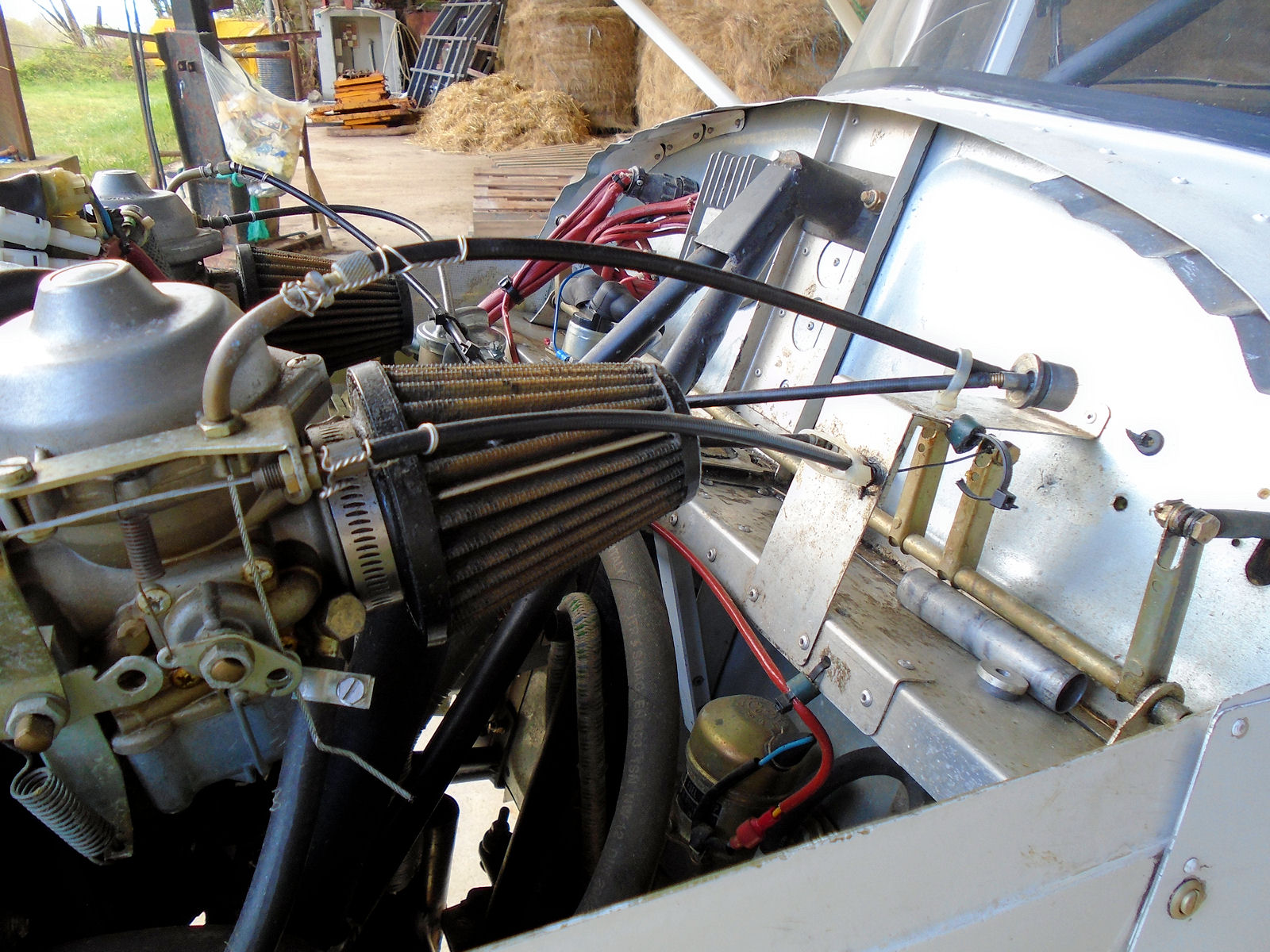
I’ll say so! The following picture says it all.

null

Replacing them both didn’t take too long to do – a couple of hours at most – but it was well worth doing. Both carb inlet rubbers seem to be exposed to the same sort of environment, at the back of the engine and above exhaust outlets. But for some reason, whereas the right hand rubber still looked almost new, the left hand one was completely shot. No wonder the engine was running rough. In fact it’s almost a wonder that it was running at all and am I glad that I switched it off so promptly when it began to shake.

I wonder if the last time there was a problem, it only affected the right hand rubber and someone just replaced that one, leaving the left hand one alone. If so, in my opinion it was a false economy because although these things are a bit pricey for what they are, it seems to me that they should be changed before they actually split, say every three years at most or every 300 hours, as Rotax recommend. That will be my policy in the future, although at my age who knows how many times I’ll get the chance to do so 😉

Although I won’t be using it, I took the panel that I’ve been working on to Malbec with me and put it into place to see how it will look.

null

I think that the layout works pretty well, but on this afternoon’s evidence, I think that I might need to move the central group of six gauges (two x 80mm, four x 57mm) slightly to the right to make sure that they clear the vertical panel supports. All I need now is for the new aluminium to arrive so I can get cracking on it.

Daddy, what’s a learning curve?

It’s what you climb up, my son, when you’re building a new Savannah instrument panel. Suffice to say that I won’t be using the panel that I’ve been working on – I can’t anyway because I drilled a large hole on the wrong side – but I’ve now learnt by my mistakes how to go about doing the next one and, hopefully, making a nice job of it.

I’ve already ordered another sheet, this time of plain aluminium instead of pre-lacquered, which I should receive in a few days time. The new sheet of 1.5mm aluminium will have a protective film on one bright side and I’ll decide when it arrives whether to leave it on or not before I start working on it.

Another thing that I’ve learned is that I must work from the front of the panel because both the drills and the cutters that I’ve been using give a clean cut on the entry face and any burring, if there is any, is left on the back where it can be removed without leaving any visible trace.

The next thing is that I’ve now managed to get clean, vertical cuts using my hole cutters. I’ve had to do several things to achieve this. Firstly, by just screwing my hole cutters onto the arber I’m using (the arber is the shaft on which the cutter is mounted that fits into the drill chuck) and not using the securing mechanism that it came with, the cutters are mounted much more securely and are rigid in use. It was mainly because the securing mechanism allowed them to wiggle a little from side to side that the holes they produced were coming out with slightly bevelled edges.

The other thing that caused the holes to be untidy was using a hand drill. I’ve now made up a temporary rig on my bench-mounted vertical drill that allows me to clamp the panel firmly in place for working on and the holes that result are vastly superior to what I was getting previously. In fact, the only holes that are critical are the three 80mm ones for the ASI, altimeter and VSI because all of those instruments are inserted from the back. I’m pretty certain now that if I take enough care I’ll be able to make good jobs of them using my bench rig.

All of the other holes in the panel are relatively much easier to cut and drill because the gauges and switches that go into them all have front bezels that will cover up any cosmetic discrepancies. The only other thing that I’ll have to do is make sure that I drill the holes accurately in their correct positions and I’ve learnt that the best way to do that is to centre-punch each one beforehand. This makes it much easier to line up the drill point before clamping the panel down on my rig.

So that should do it and I guess that taking my time so I don’t make any silly mistakes, I should get the panel finished with a couple of days of work. I received confirmation earlier this afternoon that my radio and transponder kit has all now been picked up by DHL so I’ll hopefully have that by the end of the week so with a bit of luck I could have the completed panel ready for refitting early next week.

As I then need to test everything and make sure that it all works as it should and get the transponder programmed and initialised (probably in La Rochelle), this will be too late for my first window to fly to the UK. I suspect that it may also be too late for my second window a week later but I’ll just have to do my best and see how things turn out.

Not a good day

Not entirely – it actually started off pretty well. I got an invoice this morning for my new radio and transponder that included a credit for the ATR833S radio that I returned a couple of weeks or so ago, so I did an immediate transfer of funds to the supplier’s bank account and now, although it hasn’t yet been confirmed, I assume that the kit is winging its way to me.

But from then on it all went downhill, as I’ll explain. Today was the day for starting on the new panel fabrication work, namely cutting it out and cutting the first few holes for the gauges. I don’t have all of the hole cutters that I need but at least I could do the 80mm and 57m diameter ones. Cutting the panel itself out of the 100cm x 25cm sheet that I ordered went well just using a jig saw with a fine blade but problems began when I started on the hole cutting.

Firstly, although I clamped the panel down, cutting the holes using a hand-held drill just isn’t good enough. It didn’t help that I omitted to centre-punch the centre of each gauge hole to make sure that the holes were exactly positioned and one of them is slightly out. Not by much but enough for me to notice. But in any case, the hole cutters always move sufficiently to make each hole oversize.

I’m also now thinking that it was a bad idea buying a pre-lacquered sheet. The reason is that the plastic film that protects the lacquered face melts when you are drilling and you end up with holes with messy edges. Until the job’s finished and I remove the plastic I won’t know how good or bad the holes actually are, but quite honestly, it’s not worth the extra expense and bother of working with a sheet of pre-painted aluminium.

Another consideration is that when you cut a hole, it ends up with bare metal inner edges. These won’t be seen if your holes are cut with enough precision for the gauges to fit tightly in them, but that’s not the case. So long as the extent to which they are oversize is not too great, if you then sprayed the panel yourself the edges would be covered making them far less noticeable but again, I’ll have to wait and see how the panel turns out in order to judge its appearance.

Here’s a shot of where I got to today.

null

All in all, I was very disappointed with today’s progress. I’ll press on now I’ve started but I have a sneaking suspicion that I’ll use this version as a learning tool and then buy another sheet of bare aluminium to see if I can do better. But it won’t be for a few days, because the other thing that happened is that I succeeded in burning out my old Black and Decker mains electric drill. And I’ve got a constant reminder because the smell was surprisingly intense and seems to have penetrated my clothes so I can’t get rid of it even hours afterwards.

I’ve ordered a modern, more powerful, replacement (the old one was only 500 watts) but as usual, it’ll be several days before it’s delivered. No point trying to buy it locally because of the time you lose trawling around the shops who always end up not having exactly what you want in stock even though they say they have, and then paying 20% more for it. Luckily, I’m expecting the Savannah’s new carb intake rubbers to arrive tomorrow, so the time waiting for the new drill won’t be wasted.

More Savannah instrument panel

Today I finished stripping out all of the surplus cabling that had been used for the old radio and intercom set up and identifying all of the connections that I’ll need for the new radio and transponder. As I suspected, although I didn’t come across any more bare connections, the wiring for the previous installation was shambolic and I look forward to making things much neater behind the panel before I’m finished.

One of the things that I found very bemusing was that the power cable feeding the radio had been wrapped around the main panel wiring loom in the form of a long coil. Now I’m no expert, but I think that that’s a no-no for any radio because the coil form has the potential to act as an antenna and introduce interference into the system, which is just what you don’t want. Anyway, I won’t be doing the same thing when I come to connect the new kit.

I also spent some time today thinking about the new panel’s layout and trying to come to a final design, which I think I now have done having had the old panel lying on my kitchen floor for several days and looking at it every time I walked past it. Unfortunately, I’ve had to come to the conclusion that the panel is just too small to incorporate a tablet to run my navigation software so that has had to be left off. The design I’ve finally come up with is as shown below.

null

The changes compared to the original layout are only slight and quite subtle in that I’ve changed very little on the right and left hand sides of the panel. The reason for not adding an extra gauge into the group on the right hand side is that the existing gauges are all 52mm in diameter and if I’d shifted the fuel pressure gauge over into that area it would have stood out like a sore thumb because it is a 57mm gauge and also has four fixing screws which the 52mm gauges don’t. I’ve not changed anything over on the left hand side, the pilot’s side, apart from swapping the 57mm rev counter for the new 80mm one because there isn’t really the potential on that side to do anything significant to gain space and certainly not enough for an extra gauge.

What I have done is change things in the centre of the panel. I’ve carefully measured the space available and I’m 99% certain that if I move the RPM and VSI gauges a little left of where they are in the current panel there will be enough space between them and the right hand vertical row of fixing holes to get in two columns of 57mm gauges. This means that I’ll be able to have a slip ball and the existing fuel pressure gauge on a top row and the new radio and transponder on the bottom.

There are a couple of advantages with this layout. First, by having the radio and transponder on the bottom row, the ‘D’ plugs of both units will be readily accessible. This will be especially useful for whoever programs and initialises the transponder for me because it will be possible to do the job and the subsequent testing ‘in situ’.

The other thing is that both the radio and the transponder require 3 amp in-line fuses and because there will be enough space vertically between the lower and upper rows of the 57mm gauges in the centre, I’ll be able to have 3 amp contact breakers in the panel as shown, above both the radio and the transponder. This will be much more convenient (and professional) than having in-line fuse holders that you’d have to reach up for behind the panel as was the case with the old radio that I’ve just removed.

I’ve ‘lost’ a week because I’ve not heard from my German supplier since last week-end, probably because he was at the show at Friedrichshafen all week that has just finished. I heard from him again today so I’m hoping that I’ll receive all the new kit by the end of this week. It’ll be too late for me to make my first window for flying to the UK (leaving 20th April) but I’m hoping that despite having to get everything fitted and installed and the transponder initialised and tested, I’ll make my next one leaving the following week-end. All I can do is press on and do my best 😉

More Sav panel and a piece of good fortune

I pressed on with stripping out the Savannah panel today and succeeded in getting everything removed save for one recalcitrant screw holding the small rev counter that I want to dispose of in the panel front. Everything else was out by the end of the afternoon and I lost just one gauge, an AVD temperature gauge with a plastic body that broke when a securing nut tightened up on one of its mounting bolts and wrenched the bolt out.

Unfortunately the gauge has now been discontinued and an initial search has revealed that the ones available on line all come complete with the temperature sensor at prices not far short of 200€. So that’s a big disappointment and I think that I’ll have to start by seeing if I can repair the gauge casing with Araldite or something similar, much as I don’t like the idea of doing that.

Here’s how the panel looked at the end of the day.

null

null

null

null

So what about the piece of good fortune? Well, I got the Savannah out of the hangar a few weeks ago for the first time since I last flew it in December in order to start it up and give the engine a run. I found that it took longer than usual to start and when it had done, it seemed to be running a bit rough. But the worst thing was that when I increased the engine revs from idle, it initially began to shake rather wildly until the revs had built up to a certain level.

It had never done that before, and in fact since fitting the new scimitar blade prop, the engine has been running very smoothly indeed. On that day, I left it out for a few hours in the warm sunshine in case the problem was due to its being in the cold, damp hangar over the winter.

I didn’t restart the engine that day but I did the other day before I began to strip out the panel and this time the problem seemed to be even worse. Even before the engine had a chance to warm up I turned it off because the shaking was so bad that the whole of the nose seemed to be shaking as well and I was concerned about doing damage to the engine mountings.

I need to get the panel work finished so in the meantime while I’m doing that, I posted on the microlight forum asking for ideas about what the problem might be and the suggestion that rang the most bells and seemed most plausible to me was perished carburettor inlet rubbers.

Before leaving home today I checked through 77ASY’s papers and could find no information about when the carb rubbers might last have been changed. My guess is that if they have been, it was at least 5 years ago and probably more, so even without checking them more closely, just for my own peace of mind, I ordered a new pair before leaving the house. And lucky I did because before I left Malbec this afternoon, I wiggled the left carbrettor and it almost fell of in my hand and probably would have done if I’d kept on wiggling it.

So how lucky to discover that before taking off for my flight to the UK. And with hindsight, how fortunate that my last flight back at the end of December went off without incident, because on that occasion I was carrying a precious cargo – Wim’s granddaughter Danni. It just goes to show and makes you think, doesn’t it 😐

Another day

And this is how it started at dawn this morning. I woke up early, couldn’t get back to sleep and got up. And I’m glad I did because otherwise I’d have missed these gorgeous images of the sun just beginning to peep over the horizon. This was the view over the fields and mist-filled valleys in front of my house.

null

null

null

But after I’d got today’s chores out of the way, the day’s main task was to make a start on stripping out the Savannah’s instrument panel ready for its planned upgrade. The first shot was taken after I’d disconnected the choke cable.

null

The next shot was taken as I’d just started to pull the panel front forward having removed all of it’s fixings, the choke cable and the two throttle actuation rods.

null

The next three shots were taken from left to right as I began to pull the panel front further out. I was already seeing signs of trouble that were not wholly unexpected after my previous experiences with the Savannah’s wiring. I’ll come back to them in a moment but I’m super glad that I’ll be able to bring all of the behind-panel wiring up to the standard that I’ll be satisfied with.

null

null

null

The next shot is of the left hand side of the panel after I’d removed the trim and mag switches and the master key switch.

null

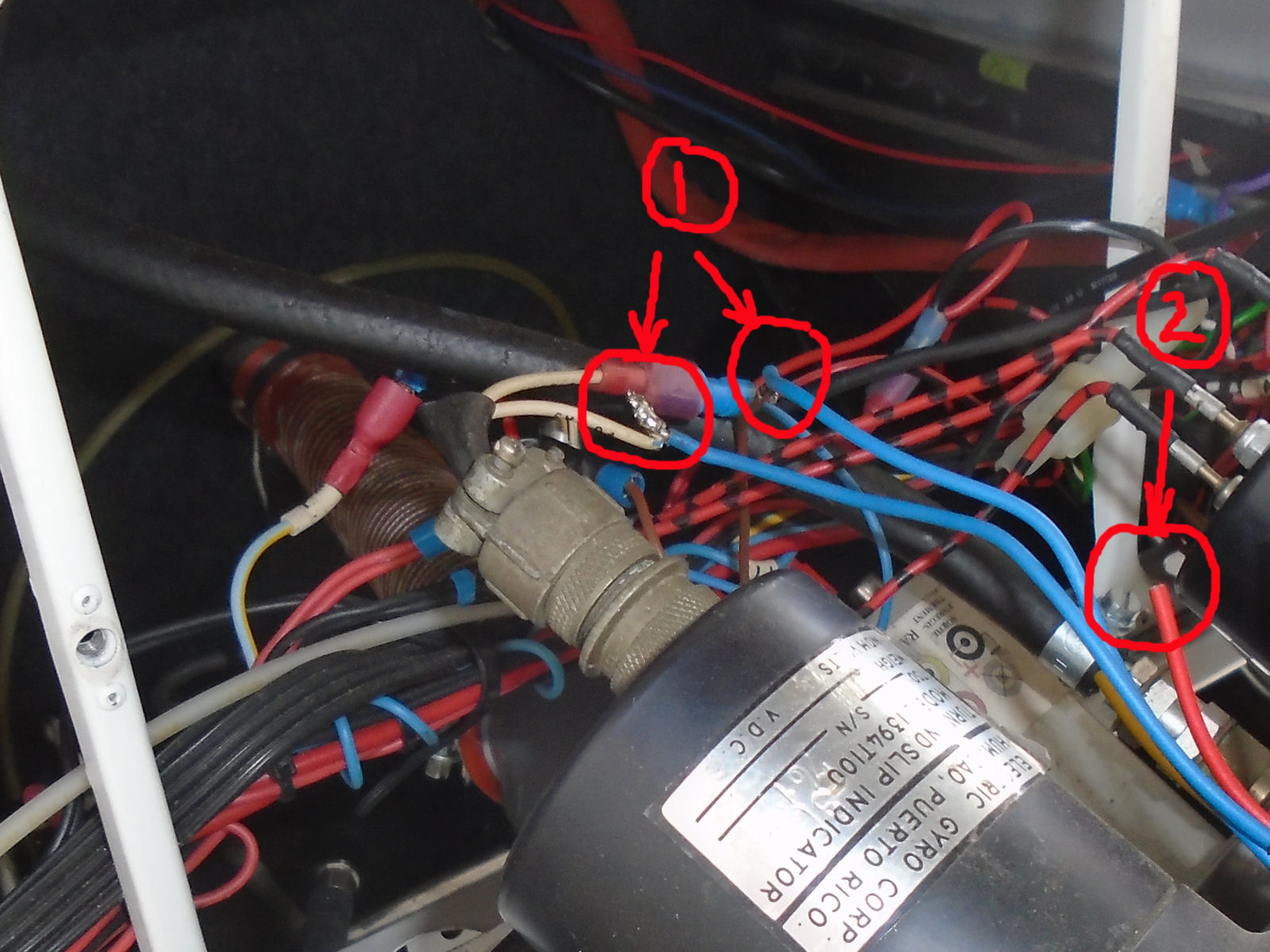
And here’s a shot showing the signs of trouble that I mentioned above.

null

At (1) you can see two bare connections of the 12V power supply cables for the electric turn indicator. As I found when I rewired the cabin overhead switch panel, whoever did the work was quite happy to make cable connections, in this case by soldering, and then just wrap them with insulating tape.

The trouble with that is clearly shown in the image. Over time the insulating tape’s adhesive dries out and the tape drops off, leaving the connections bare. If they had touched while live they would have shorted out with a real risk of causing a fire. Imagine that happening at 3000 feet over water or hostile terrain. It doesn’t bear thinking about.

But that’s not all. At (2) you can see some bare cut wire ends. These happen to be connected to the unused side of a 4-pole switch that has been used to power the electric turn indicator on and off. I don’t know if they are live or not but it doesn’t matter, you just don’t leave bare ends swinging in the wind like that.

Thank gooodness I’ll be able to deal with both of these issues, plus any others that I find during my panel upgrade. That’s as far as I got today because today’s efforts were mainly exploratory to find out what will be involved in removing the panel completely. Now I know I’ll be able hopefully to complete the job tomorrow when I will have all the items that I will need to hand.

Back in the barn

But only temporarily! The German supplier to whom I sent back the ATR833S radio has confirmed that it has arrived safely, but although advising that the new items that I wish to order are in stock and ready to be shipped out, hasn’t yet confirmed my revised order. So although I know that I should receive them in the next week or so, the delay is eating into the time available before my prospective April time windows for my flight to the UK.

I therefore have to get moving on the instrument panel redesign that I have planned for 77ASY. The sheet of lacquered aluminium that I ordered last week for the new panel front arrived today and knowing that this would be the case, I took the step over the week-end of moving the aircraft back up into the barn. The reason, as I found out when I did the screen replacement a couple of years or so ago (my, doesn’t time fly!), is that it will be much cleaner and brighter there to do the work.

It’s much too dark in the hangar, even with the doors open, and in any case, I don’t want to have the chore every day before starting work of having to open the doors, especially if it’s raining. Plus I can work in the barn relatively comfortably even if it is raining, just so long as it’s not also blowing a gale, unlike in the hangar where experience has shown that the bare earth floor soon becomes like a quagmire.

Here are some shots that I took of the Savannah in place in the barn together with the Weedhooper and ready for me to start work.

null

null

null

null

null

null

The first job is to strip out the existing panel, which I hope to be able to start doing tomorrow. As I’ve got to re-use the existing headset extension cables, I’ve decided to make up my own connection cables for both the radio and the transponder.

The latter is dead easy – just a power supply – but it will be much more complicated for the radio as unless I can get the information from Alphatec, I’ll have to work out the jack plug connections for myself. But in any case, if I bought the TQ radio connector cable (199€) I’d end up discarding most of it anyway. That or having another set of connectors away from the D-plug on the rear of the unit, which I want to avoid as it would just be a potential noise source.

As usual, I’ll record progress here in My Trike. I’m looking forward now to getting cracking, and there’ll be even more of an incentive when the new radio and transponder have arrived and I can hold them in my hot little hands 😉

Weird gremlins

You have to get used to things suddenly going awry here in France. The fact is, they’re not very good at running things here, things like systems, even just keeping things going that have been running OK for months if not years.

A case in point is our communications system – our fixed phones and internet. We have to accept that our internet only runs at the snail’s-pace speed of 2 MBs, the kind of speed that we kicked out of the UK 10 or more years ago. But what I personally cannot accept is that the telephone system just keeps dying without warning. And when it does, it takes the internet down with it of course.

It’s been doing it regularly for the past few evenings and it’s no good just re-booting the system and hoping that it will come back up again. It doesn’t, and only decides to when it wants to, often the next morning, and in the meantime you just have to accept being cut-off, except for your mobile.

And there’s no point thinking that technology will come to your rescue and that as you’re paying for a 4G connection on your mobile phone, you’ll be able to tether your PC to it and carry on surfing. Sorry, 4G down here also runs at a snail’s pace – slower actually than when your phone is connected via your home internet connection.

But just when you think that things couldn’t get any worse… they do. I’m desperate to sort out my Savannah radio and transponder issues as time is now running out for me to receive the kit and get it installed in advance of my possible time windows for flying to the UK. It didn’t help, of course, changing my plans and deciding to return the radio that I originally ordered and exchange it for a different unit because that lost me over a week when time was already tight. But the latest issue takes the biscuit.

I hung around all day yesterday waiting for an email from Germany telling me that the radio that I had returned had arrived back safely and that I could now amend my order and add a transponder to it. It didn’t come until nearly midnight but I decided that as time is now of the essence, I’d write a reply straight away, which I did. However, when I pressed the ‘Send’ button it transpired that my service provider, Free.fr, has now decided to classify all of my emails as spam and refused to send it.

I tried changing to one of my several other email addresses, but to no avail, my email resolutely remained in my ‘Out’ box. I tried rewriting it instead of just replying to the email that I’d received from the supplier, but still the same result. So well done Free.fr, at a moment when any kind of delay is critical for my plans to fly to the UK in a matter of a few weeks time, you’ve rendered me totally incommunicado.

But not quite. Fortunately I have the option of using a UK-based outgoing SMTP mail server for my micro-trike email address and I was able to get my message off this morning using that address rather than the personal one I’d used previously. Hopefully it won’t be confusing for the supplier when it drops into his ‘In’ box this morning and he’ll deal with it promptly.

But one thing repeatedly reveals itself whenever these kinds of issues arise, as they do frequently. If Mr Macron thinks that France has any kind of chance of grabbing business fom the City of London after Brexit, he’s kidding himself. The French communications system and infrastructure just don’t cut it and are years behind the UK, so the response has to be, ‘Not a Chance Monsieur!’

Savannah update

I mentioned in a previous post that I’d ordered a new f.u.n.k.e 8.33 kHz radio, and indeed I had. However, between ordering and receiving it I had a bit of a re-think.

As well as the radio, I also really need a Mode S transponder. More and more controlled airspace is being created the whole time and having to always fly around rather than through it, especially on longer flights such as when I fly to the UK, makes flight planning more difficult, flight times longer and flights themselves more arduous as a result.

I could just remove 77ASY’s panel and install the radio right now but that would leave the panel itself in an untidy mess with gaping holes in it and also needing to come out again and be completely revised at such time as I decided to fit a transponder. So it makes sense to bite the financial bullet and do the whole job just the once now, fit both the new radio and a transponder and do the panel design changes that will be required.

So what about the f.u.n.k.e radio? It’s based on a Dittel design and made under licence from TQ Systems who have since acquired Dittel (at least, that’s how I understand it). TQ and f.u.n.k.e each have a range of radios and transponders which are similar in design and functionality with the latter’s range being more expensive than the former’s and considerably more so in the case of the transponder. I had initially considered therefore buying the TQ transponder at some time in the future and on thinking about it decided that it really didn’t make sense to buy the f.u.n.k.e radio now if I was going to do that.

In fact I decided that it would make more sense to exchange the f.u.n.k.e radio immediately for the TQ version, and save a small amount of money by doing so, and to order the TQ transponder at the same time. So that’s what I’ve done. I contacted Fischer Flugzeugservice last week in the hope that I’d be able to make the order changes before the f.u.n.k.e radio had been shipped but was told that I was too late. I therefore had to wait for it to be delivered before immediately turning it around to send it back again without even opening the package.

It makes sense to have an avionics package installed with units from the same supplier. This is obviously true from the point of view of aesthetics as it’s much easier on the eye if the products match, but technically it also makes sense to fit products that you know are compatible as there’s nothing worse than trying to trace and eradicate cross-interference or compatability issues between avionics products such as radios and transponders.

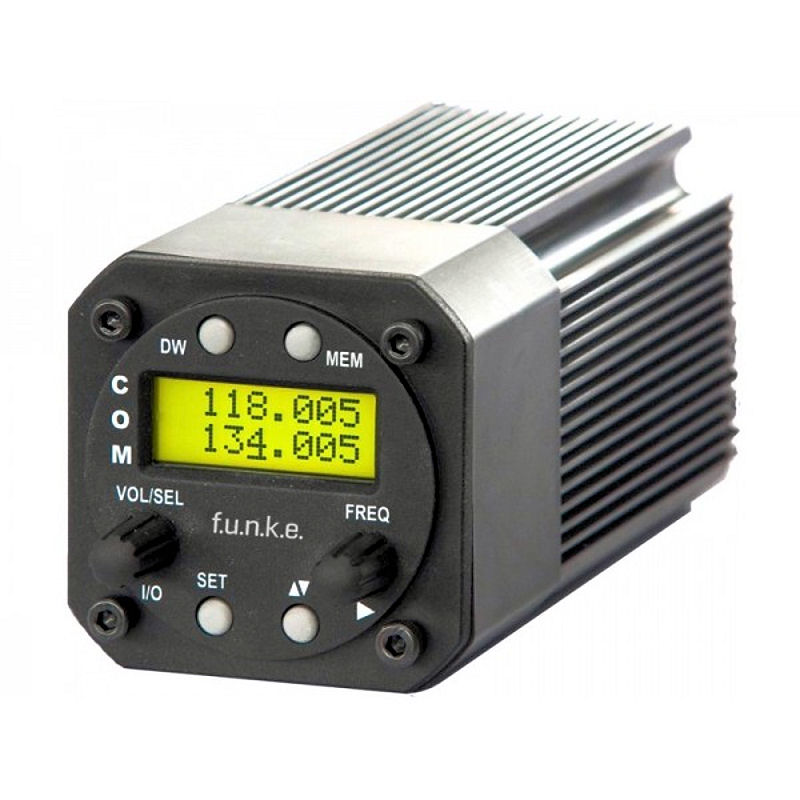
And as the following pictures show, the TQ products do match each other very well. First the TQ-KRT2 radio and then the TQ-KTX2 transponder.

null

null

So I’ve also had to think about the changes that I’ll have to make to 77ASY’s panel and here’s what I’ve come up with.

null

Here’s the panel as it looks currently by way of comparison.

null

As you can see, the old Icom radio (1) and Alphatec intercom (2) have been removed, together with the electric turn indicator (3), which is replaced by the ‘new’ 80mm revcounter that I recently came across on Le Bon Coin. The existing 57mm rev counter is also replaced by a slip ball and the fuel pressure gauge below it moved to be the top right in a revised bank of engine gauges on the right-hand side of the panel.

The space it was in is then filled with the new transponder and the space below that, which was previously occupied by the old intercom, with the new radio. The latter doesn’t have an ’emergency button’ facility as far as I’m aware, so the existing panel button (6) is also disposed of.

The redesign requires a certain amount of minor repositioning of gauges etc and as there would otherwise be several gaping holes remaining afterwards, I’ve also sourced a new sheet of aluminium from which to fabricate a completely new panel. As it is only 1.5mm thick, I’ve been able to source a sheet pre-lacquered on one side and I was very pleased to discover a supplier who could provide one with a satin ‘white aluminium’ finish that will look great without creating distracting reflections and the like.

I’ve also done another redesign in which I’ve shifted things around a bit more and created a space in the middle of the panel for my Asus 7″ tablet on which I run my MemoryMap navigation software. However, I need to do some more accurate measurements in order to confirm that the space is actually large enough so for the time being I’m just holding it on file as a possibilty. Clearly it would be a big advantage if I could get my tablet onto the panel as up to now it’s had to be held on a mount above the panel on the right-hand side, so not ideal by any means.

So I think that I’ve made the correct decision and I’m just waiting now for the f.u.n.k.e radio to arrive back with the supplier and for the replacement and the TQ transponder to be shipped out. I now have only one reservation, and it’s a major one. When I originally ordered the f.u.n.k.e radio, I would have had a choice between it and the TQ-KRT2. However, the supplier’s web site is now showing that the latter is out of stock and on a 2-3 week leadtime.

If this is so and I don’t receive it until the end of April, my plans to fly to the UK will be completely dusrupted as I’ll have missed the first two of my preferred windows. But there’s nothing I can do except wait and hope that things will turn out favourably 😕

Last goodbye

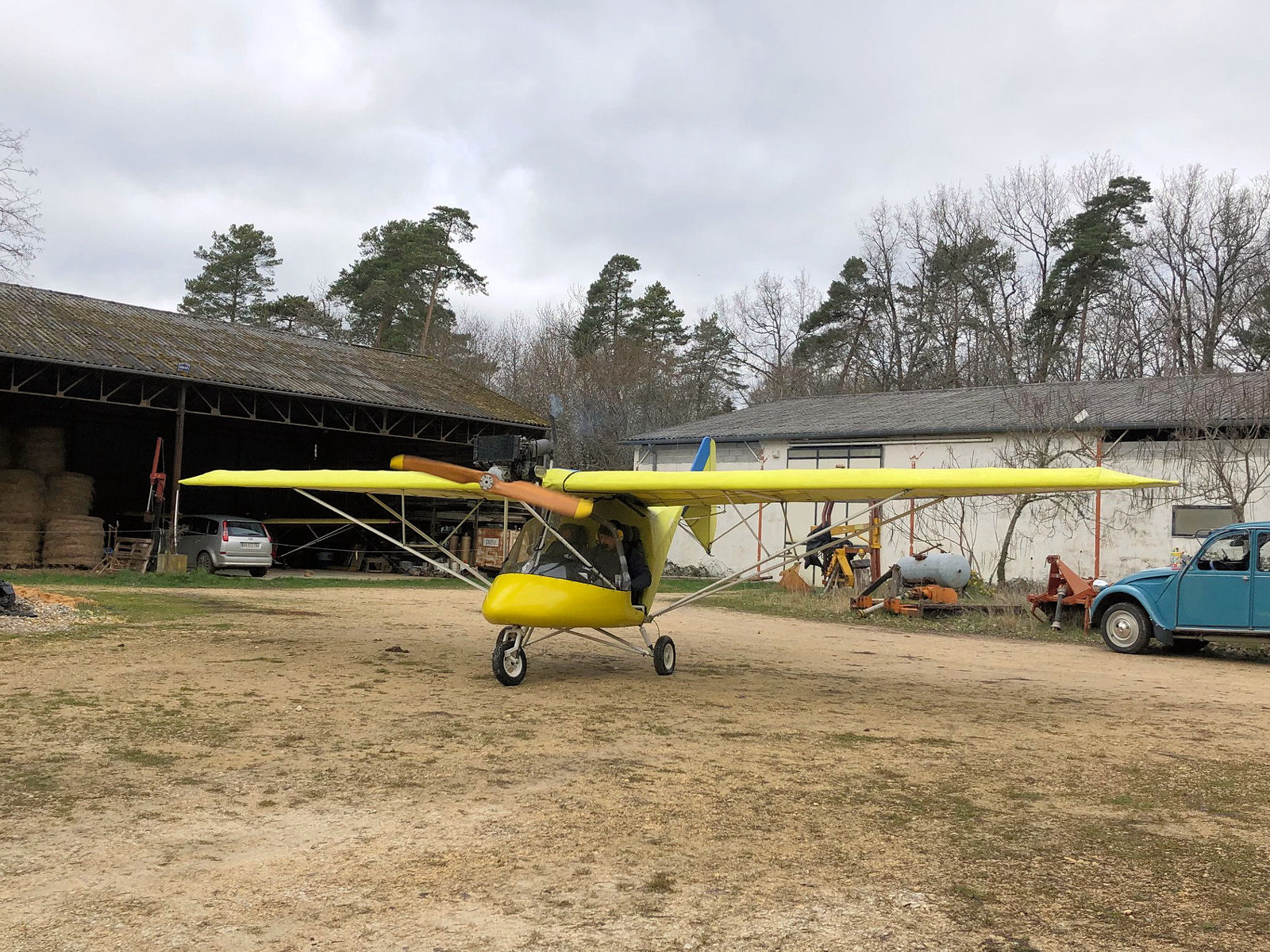
The final shots of my old X-Air 56NE as I was taxying to take off last Saturday 16 March on my way to fly it up to its new owner in St-Aubin in the Vendée. I’m grateful to my pal Victor who took them while standing by to close the entrance to the airfield after I’d left.

null

null

null

null

null

The next thing will be to pull 28AAD, my Weedhopper, out of the barn so I can give it a good clean and readvertise it on Le Bon Coin. I’m going to do that later today and I’ll probably have a flight in it later on as today and tomorrow are both forecast to be warm, with the temperature reaching 20 degrees Celsius, and with a fairly light northerly wind on both days.

If I can sell it fairly quickly now the season is about to start and get the Kia back I’ll at last have my life back on track after all the disruption of the last couple of years. Keeping my fingers crossed 😉

Oh, and dammit, I’ve just gone ahead and ordered a new F.U.N.K.E ATR833S radio and cable set. The best price that I managed to find on the net was from www.fischer-flugzeugservice.de and as they seem to have both the radio and the cable set in stock (most suppliers don’t seem to have the cable set for some reason) I hope to receive both items very soon. If so, I should then be able to go ahead and replace the 25kHz Icom that I currently have in 77ASY with the shiny new 8.33kHz F.U.N.K.E before my planned UK flight at end April/early May. That’d be nice 🙂

Some good fortune

I was scanning the ‘ULM’ ads on Le Bon Coin the other day as I frequently do, when I came across an ad for a Rotax 912 rev counter.

null

What was particularly interesting was that, as shown in the image above, not only was this an 80mm diameter one but that it was also labelled ‘ICP’ showing that it came from a Savannah. I missed one just like it a year or so ago and could have kicked myself, so seeing this one which the seller said has only had about 100 hours of use, I immediately got in touch and said that I’d like to have it. I sent my cheque off yesterday and am now awaiting its arrival in a few days time.

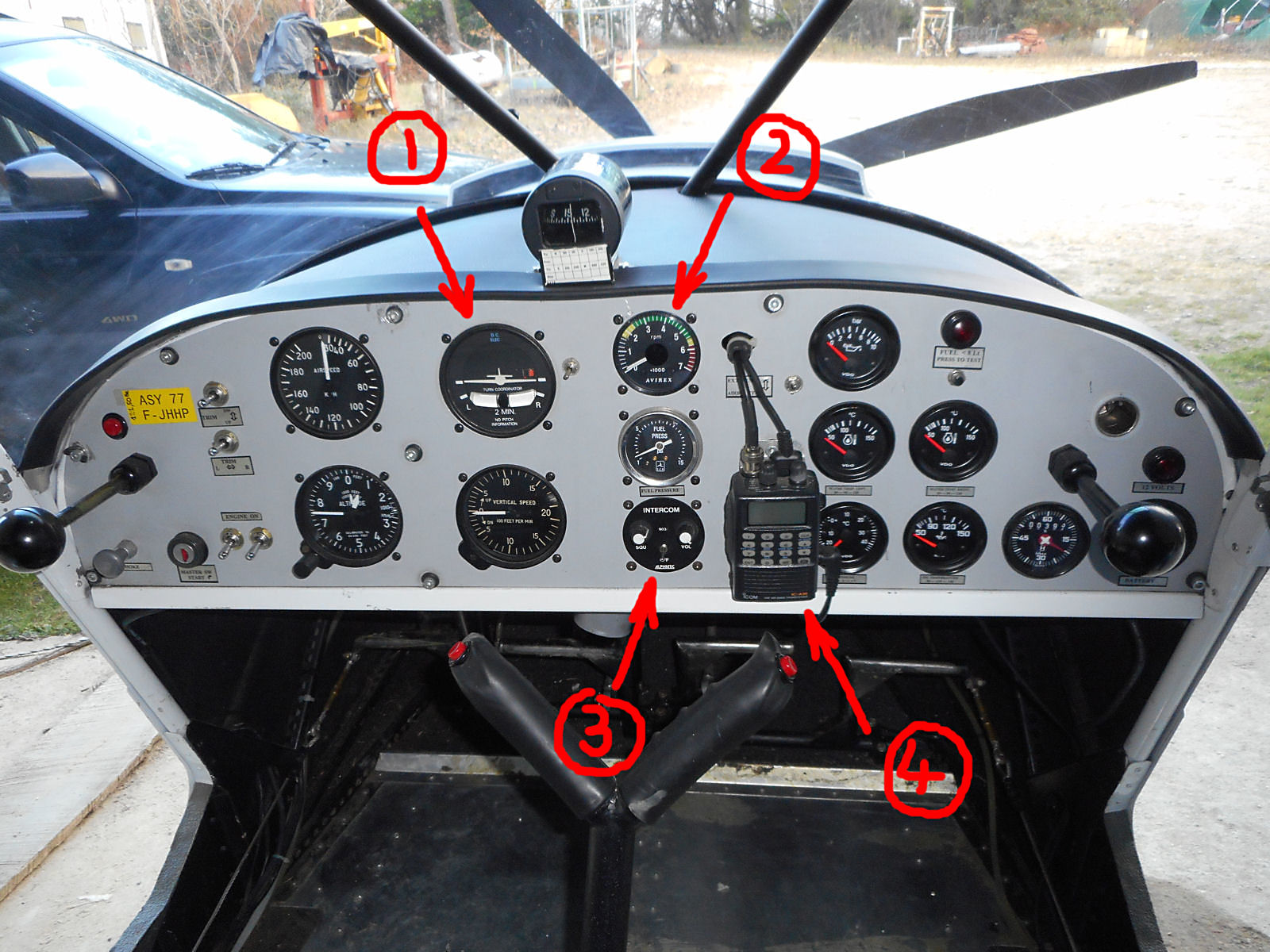
If you take a look at the picture below you can see why I’m so interested in having it.

null

My Savannah currently has an Icom handheld installed (4) interfacing with two headsets via an Alphatec intercom (3). Not only does the installation look very scruffy (on the whole I don’t think that French ULM pilots are as concerned with appearance as much as UK ones are) but when I visited the UK in 2016 I had complaints about the quality of my transmissions which was something that I was not in the least happy about.

Now couple that with the facts that the Alphatec intercom is obsolete and a bit laughable, actually, when you think how things are done in the UK, that there is a requirement to switch in France from the current 25kHz standard to the new 8.33kHz one by the end of next year and that the changeover has already occurred in the UK, which I intend to visit again shortly, and it becomes clear that I need to think seriously about how to make the change in my Savannah in the most effective and economic way possible.

If you take another look at the picture of 77ASY’s panel above, you can see that the 80mm hole that would normally be filled by the rev counter has an electric turn coordinator (1) installed in it instead. I’ve stated my views about this on several occasions, and to be clear, I think that in an ULM it is about as much use as a chocolate teapot.

It’s great for your image if you’re a budding Airbus pilot (I think a previous owner of my Savannah saw himself in that light from some of the other useless pieces of kit that I’ve removed) but it’s of no practical value if you fly your ULM as you should and remain legal ie in VMC. And it’s also heavy. The original 80mm rev counter has been replaced by a 57mm one (2) in another hole in the panel.

The more I think about it, although I know that’s it’s the more expensive option, I’d like to switch the Savannah radio fit from a handheld to a panel mount. Not only will this markedly improve the panel’s appearance but I expect that performance will also improve. And also panel mounts have useful additional features, like being able to have a second frequency set up ready for an easy and quick changeover.

After getting some useful feedback from pilots both in the UK and in Europe, the model I’ve decided on is the F.U.N.K.E ATR833S, a picture of which appears below.

null

Not only is this model very economically priced but it’s also very light and a simple ‘one hole fit’. So here’s my plan, which is simple, yet should be very effective and also gives me a path for further future developments.

The electric turn coordinator (1) comes out and is disposed of. They seem to sell for 100-200€ on Le Bon Coin, so say 120€ to be conservative. The current 57mm rev counter (2) is also removed and sold – that one should go for 50€ on Le Bon Coin, possibly a bit more. The Icom handheld (3) is removed together with the Alphatec intercom (4) – I already have one left over from when I revamped my old X-Air’s panel – and if I’m lucky I might get, say 80€ for the pair on Le Bon Coin as they can’t now be used for a new install in an ULM here in France.

This gives me the 80mm hole into which the original-type rev counter that I’ve just bought will fit, leaving two 57mm holes in the panel. One of those I’ll use for the new F.U.N.K.E that I’ll shortly be ordering and the other will take a spare slip ball that I have in my kit somewhere but can’t presently find, although they’re cheap enough to get hold of so it wouldn’t be the end of the world if I’ve lost it.

But now what of the future? Someone has drilled a ruddy great hole in the Savannah’s panel to take the Icom’s cables and that’ll be left when the above work has all been done. For now I’ll have to either leave it, or more likely cover it with a small aluminium panel, but it can’t be left like that forever.

What I’d then like to do is completely revamp the Savannah’s panel. In the general area in the middle of the panel where the hole in question is located, there’s enough room with a revised layout for another 57mm hole that will be perfect for a transponder. Not only will it make for safer flying but it will also make flights back to the UK shorter and more direct as there’d be no need to fly around Class D airspace, and that’s the route that I’d like to go down.

So what of cost? The radio and cable will be subject to the DGAC’s 20% refund for switching from a 25kHx radio to an 8.33kHx one and will therefore net out to just over 1000€ and the only other expenditure will be the 70€ on the rev counter that I’ve just found on Le Bon Coin. Adding up the above figures for the items that I hope then to be able to sell on, my total outlay (excluding a transponder, of course) will come out to 800-850€, a reasonable amount I think to swap from the Savannah’s scruffy 25kHz Icom set up to a cool 8.33kHz F.U.N.K.E one. And all of those plans come from finding an 80mm Savannah rev counter on Le Bon Coin 😉

Can you believe this?

Tonight was ‘Apero Night’ at my house and just before my friends arrived for drinks, snacks and the usual chat I was on my computer and knocked a full glass of red wine all over my computer keyboard. And I mean a full glass because there wasn’t even a mouthful of wine left in it afterwards. All I could do was rinse the keyboard under the tap, shake it out, leave it to dry and grab the keyboard and mouse off my ‘spare’ computer.

After they left I was using keyboard number 2 a few minutes ago when I turned around and tipped a nearly full tall glass of cider over it as well. I subjected it to the same process – rinse under the tap, shake out and dry as best as possible and I’m using it now to type this. Whether it will continue working I have no idea but for some reason, although I should be mad as heck, I can’t stop laughing.

Maybe I had a little too much to drink this evening after all and it’ll all look different in the morning. But there you are, no point crying over spilt milk, or red wine, or cider. What’s done is done. Better get back onto LeBonCoin to see if there are any bargains currently on offer 🙂

Amazing experience

It was last Saturday, 16 March. It happened at the end of my last flight in 56NE, my X-Air, which I delivered to its new owner in the Vendée on that day. It was also a bit scary really, although I can’t say that I felt scared at the time.

After having several weeks of fine, settled weather we’re now going through a very unsettled period of high winds and rain showers. My X-Air’s new owner naturally wanted to get his hands on it as soon as possible and if anything, was even more keen to have it in his hangar than I was to see it out of the barn at Malbec and receive the rest of the agreed purchase amount.

But it wasn’t that easy to find a weather window good enough for me to safely make the flight, and not only that, I wasn’t keen on doing it anyway while it was very cold in an open aircraft without any doors. I’m NOT a flexwing jockey who all seem to thrive on having their extremities frozen until they turn blue and are almost ready to drop off 😉

So after having looked at and rejected the weather forecasts over several days prior, it was with a certain amount of trepidation that I decided that Saturday might be a go-er and made the appropriate plans. One plus factor was that after having had winds from the north over quite some time, the direction in which I would be headed, on Saturday we could look forward to an airflow from the south. This meant that with a bit of luck I’d be able to make the flight in a single hop without having to land along the way to top up the tanks.

null

My destination was St Aubin-la-Plaine which is a small but very flat and open airfield with a grass runway on 11/29 of declared dimensions 1000×50 metres. The indications were that I’d take off in relatively modest south-easterly winds but that they would gain in strength as I proceeded further north. In fact the TAF for La Rochelle, some 39km to the south-west of my destination, gave a wind of 260/10 (260 degrees 18kmh) for about the time I’d be landing and although it also gave a gust warning, this was for much later at the end of the afternoon when I would be safely back on the ground.

The X-Air has a crosswind limit of 15mph, so the La Rochelle TAF (260 degrees, 16mph) would mean that there would be a crosswind component of less than that, so on that basis I decided to go. The numbers came out like this.

Distance 233km
IAS 90kmh
Estimated flight time 2 hours 29 minutes
Estimated GS 94kmh

I expected the winds to be light south-easterly at the outset moving to moderate to strong from the south-west at my destination, so I used wind numbers of 145/09(kmh) for my first planned leg (186km, 315°T) and 240/22(kmh) for my second leg (52kmm 318°T). The reason for the slight change in heading was to take me overhead the X-Air’s new owner’s club airfield where I could land should I need to take on fuel, but in the event it wasn’t necessary because the numbers came out quite a lot differently to how I’d expected them to be.

As I flew north, it became more and more evident that the southerly wind was quite a bit stronger than had been forecast. It wasn’t that easy for me to keep track bundled up in an open cabin with no doors because as soon as I picked up my chart it got blown around by the wind and one of the staples holding it together tore itself away. Even so, I knew that I was making much better progress than I’d anticipated but I was amazed when I saw St Aubin coming up on my nose in only around 2 hours after taking off.

But that was the good news. The bad news was that the wind over the airfield was not from 240° at all but was instead from 200°, an exact 90° crosswind and its speed was way above what had been forecast. I could see the windsock, which was standing out horizontal and rigid, and I estimated after landing that it was blowing at 25+ kmh, possibly as high as 30 kmh, but at that moment that wasn’t my main consideration. My first concern was how to get down and get down safely without bending either the aircraft or myself.

St Aubin’s circuit is always to the south, so the approach to runway 29 involved left-hand turns. As soon as I turned left downwind I felt the full force of the wind and found myself flying 56NE with its stick hard over to the right with some right rudder to maintain a course on the correct heading. But this wasn’t right, of course, because having lost sight of the field while I was on the downwind heading, when I turned tight left-hand to look for the runway, it was way over to my left and far too far away for me to regain a heading that would allow me an approach to land.

Luckily we’d agree that my friend on the ground would bring his hand-held Icom and when his voice came into my headset he asked if I could see his car, which I could. While I was struggling to bring the X-Air back around towards the airfield, on full power against the wind, he told me to keep watching as he drove it from his hangar to just beyond the middle on the right-hand side of the runway and turned it into wind. Then he told me to land following his car.

By now I’d been struggling to bring the X-Air into the wind and was overhead the runway at 90° to it and I therefore had to start to descend and do a complete 360° turn to position myself correctly for a landing in the way that he’d described ie into the wind across the runway running off into a clear area of flat, open grass. The struggle continued as I lined myself up to land and then, as if by magic, all the drama promptly ceased.

It did so when I was dead into the wind on a good final descent path to touch down just beyond the nearmost edge of the runway and the reason was that although the wind was still blowing as fiercely as before, it wasn’t gusting. This allowed me to set my approach up in the usual way with a steady approach speed and a well defined landing spot. All I had to do was make sure that I did hit the runway as the field in front of it was in crop and really muddy, so what a disaster that would have been if I’d touched down in it and ended up turning the poor old X-Air over!

But nothing like that happened. In fact I was very pleased with my landing and with the groundspeed at which I’d touched down, I could easily have pulled up within the width of the runway. But I didn’t. After slowing down, I added power, turned left with right aileron against the wind, taxied to the new owner’s hangar and switched off.

So that was it. An exciting end to my final flight in 56NE. She’s now gone to a new home and I know that her new owner will be a good one. All that was left for me was to get out, unpack and warm up.

My actual flight time was 2 hours 15 minutes, but that involved at least 8 or 9 minutes fighting against the wind over St Aubin getting the landing sorted out. That means that my actual average groundspeed over the whole flight was around 109kmh and the figure for the last leg was undoubtedly a bit higher. So who said that you can’t get anywhere fast in an X-Air?

Mind you, getting back home again the next day was a nightmare in comparison. I had to get up at 5.30am to catch a train leaving La Rochelle for Bordeaux at 7.44am. We made it just in time after driving through heavy rain under dark skies and it was a relief to finally be sitting on the train. We arrived at Bordeaux at around 1030 am, so not a very fast service that stopped at all the stations along the way. But that wasn’t the worst bit.

I enquired at the Information desk at Bordeaux which ‘voie’ was the next one for Périgueux, where we’d arranged for my friend Victor to pick me up. She told me which one and that the next Périguex train would be at 1630 pm that afternoon! Bloody Sunday service!!

I then spotted that there was a service leaving for Sarlat at 1111 am and asked if that was going to go direct. The lady smiled wanly and said that as it was Sunday it would terminate at Libourne in the Gironde where I would catch a SNCF bus for Bergerac which would be stopping at all of the stations in between. At Bergerac I’d change buses for one going to Sarlat, which would also be stopping at all of the stations along the way.

So after having taken just 2¼ hours to fly from Malbec to the Vendée, I eventually arrived home at 415pm, a total travelling time from La Rochelle of 9½ hours. Such are the pleasures of living and travelling by public transport in France… rural France anyway 🙂

Catch-up

I haven’t posted lately but I haven’t been idle. I put my X-Air up for sale last week on Le Bon Coin, the free French small ads web site, and had a very good response. The first person who came to view it on Saturday, from the Vendée on the west coast, decided to buy it and as we’re going through a spell of poor weather said that he’d like to take the wings off and trailer it back there.

I said that I couldn’t see the point of doing that because I’d be happy to fly it up to St Aubin where he has a place in a hangar, and if I couldn’t fly the likelihood would be that he wouldn’t be able to either. He saw the logic and we agreed that I’d do it as soon as there was a weather window – when he viewed it and loaded up his trailer with the ‘extras’ that I was throwing into the sale, it was pouring with rain.

I tried to have a go on Monday which was bright and sunny but the winds at Malbec were just too strong and too dangerous to risk a take-off, so I’m now looking at this coming Saturday as offering a possible opportunity. If so, the benefit would be that what would have been a flight of over three hours into a strong headwind with a fuel stop could become a single hop of around 2½ hours. We’ll have to wait and see.

Coincidentally, the route I’d be taking is almost the exact reverse of the route that Wim and I took to return home on the final day of our West Coast of France tour back in 2015 which, of course, I did in the X-Air.

This evening I’ve also just put the Weedhopper up for sale on Le Bon Coin and will now have to wait and see what sort of response I get. The ‘problem’ is that it only has MYRO’s old 503 engine on it, albeit with very low hours since a full overhaul, when most of the Weedhoppers here in France have 582s, so I’m keeping my fingers crossed.

Yeehaaaa!

At last the clouds are beginning to lift. I’m finally shaking off the dreadful chest infection that has gripped me since my Hurghada break, we are still enjoying an excellent high-pressure period with high temperatures (for the time of year, 20 degrees Celsius!) and I’ve begun to make real plans for my upcoming Spring flight to the UK.

null

I want to make the most of weekends and/or public holidays in France so I don’t have to bother about the low-level corridors that criss-cross France and I also want to include the UK bank holidays to give me the best opportunities of meeting up with my friends and family. So I’ve got two windows to aim for. The first is the week from Saturday 20 April to Sunday 28 April, which includes the UK bank holiday on Monday 22.

The second is more flexible as although I’d like it to include the UK bank holiday on 06 May, I don’t want to stay over for much more than a week. Wednesday 01 May and Wednesday 08 May are public holidays in France so I could fly up on 01 May and back on 08 May. However, that would make for a bit of a short stay in the UK but I would have the options of either flying up earlier on Sunday 28 April or back later on Saturday 11th May thereby extending it.

Knowing the vagaries of the weather, it makes sense to aim for the first window as if I miss it and the weather is poor for the second one, I might well miss the opportunity of flying over completely. But anyway, the dates have been agreed with everyone concerned and I can now start making firm plans.

One slight complicating factor is that the UK has now changed over to radios with 8.33kHz frequency spacing whereas we in France as yet haven’t and won’t have to for another year, if not longer if the delay in doing so is extended. This means that although it will technically be ‘illegal’, I’ll still be able to contact Farnborough Radar for my Channel crossing on their ‘old’ frequency (even though it’s now an 8.33 kHz channel and not a 25kHz one), which is of some comfort for safety reasons. However, I won’t be able to talk to Headcorn who now have a completely new radio frequency.

I will need to drop in there before flying on to my friend’s private field in Kent, to close my flightplan and clear UK customs. However, they have said today that so long as I liase with them beforehand, as I am well versed with their procedures I’ll be able to go in there non-radio. So that’s good.

It’s a great feeling to be planning something exciting again. And what a bonus it will be if by then I’ve been able to sell my X-Air and Weedhopper, both of which need to go to good homes, and also finally resolve my Kia problem. Then I’ll feel as though I’ve at last got control of my life back 🙂

Hurghada revisited

Well, my sunshine break in Egypt has been and gone and not without a few trials and tribulations. The start was hardly auspicious. I decided to take Victor’s advice and although my flight out of Toulouse was not until 1310 on 29 January, I thought it would be nice to take a nice easy drive down the day before and overnight in the Hotel F1 in Blagnac just outside the airport perimeter.

I’d run around the day before doing a few final tasks and so it was on Tuesday morning that I went out to clean the C-Max’s glass, plug in my phone etc and load my things into the boot. And what did I find? A flat left-hand front tyre, that’s what. Now France is not like the UK, especially rural France. You can’t just get your car down to the nearest Kwikfit where they will fit exactly the tyres that you want within an hour or so’s notice, do an oil change for you if you’re so minded and have you back on the road and away within a couple of hours.

Oh nooooo, in France it has to me muuuuuuch more complicated and difficult. Usually you have to find your tyres on the internet, then find someone who will fit them for you at a competitive price and either have them delivered to them or to your house. Either way, it’s a process that usually takes two or three days at least, not very helpful if you have a hotel booking at the other end of the country in a few hours and a plane to catch the next day.

Victor and I tried phoning around without much luck except for Promo Pneus in Montignac who said that they’d be able to help. Until I got there, that is, then they did the usual hand-wringing bit and said that if I’d leave the car with them they’d have the job sorted by the next day. Er, yeah…

Luckily the road to Sarlat from Montignac is south, so I decided that if I couldn’t get the job done there, I’d damn-well drive the whole way to Toulouse on my lightweight emergency wheel. But luckily I didn’t have to. At Norauto the desk agent took a look at my car, got confused when I told him that I needed two rear tyres (doh) and then said they’d be able to fit two new Michelins by 1700 that day.

I had to go for it, of course, because even so, I’d still have plenty of time to get to the Hotel F1. The price that they quoted made me whince, but the one thing the French are very good at is knowing when they’ve got you dangling on a hook with no choice. In fact, to their credit, they had the job done by 1500 and I had a nice easy drive to Toulouse in daylight the whole way. Sadly the tyres they fitted were not low-profile like the ones they removed, which means the rear ones will have to be the same when I have to fit them, but whatever. That’s hardly life-changing, is it?

null

The Hotel F1 belongs to a Spanish chain and is just about the cheapest of the cheap. After my Première Classe experience in Orléans, I thought that I owed it to myself to trawl the depths of the hotel market and reserved what F1 call a Tandem room with a double bed (yeah, I wondered too… they call a room with two singles a Side Car, so go figure, as they say). Neither of those rooms come with either a bathroom or even a toilet – you use shared facilities just along the corridor (take your own towel).

And know what? For the money I was very impressed. The room was cell-like and came with just a corner wash basin, a small side table and a couple of chairs. But it was warm, with a wall heater above the door and another under the window both of which could have been made to blow cold (Première Classe please note), clean and quiet and the bed was comfortable. What more do you need for a quick one-night stop-over?

null

null

The only thing I did wonder about was where do the guys who wake up in the middle of the night needing to pee relieve themselves? Do they go out to the toilet in the corridor or do they… oh no… I’ll leave that thought with you 😉

And so onwards the next day to Eco Parking P6 at Toulouse airport. I love Toulouse airport. It’s clean, well organised and a model of efficiency from the passenger’s point of view. The ‘navette’ runs every 10 minutes or so to whisk you from the parking to the main terminal and I really can’t see why anyone would choose more expensive parking, unless someone else is paying, of course.

null

The atmosphere is warm and welcoming and the seating is soft. It makes London Stansted look third-world in comparison and will continue to do so even when the latter’s ‘refurbishment’ has been completed. London Stansted lacks what Toulouse has in spades – it’s what’s called style.

null

null

null

null

And talking about style, or lack of it, let’s move on to Charleroi airport. My advice to anyone is, if at all possible, avoid it like the plague. It is disgusting, uncomfortable, lacking in facilities (unless all you want to eat during a long layover are over-priced sandwiches from Starbucks, hot dogs or waffles) dimly lit in shades of grey from gloomy to gloomier and cold as soon as they cut the heating, which they do despite the hundreds of people trying to sleep on hard metal seats, the floor and in fact anything they can lay their hands on, including packing cases, as there are only enough seats for less than a third of those who need them.

null

null

This airport should come with a health warning but I had no choice and was unfortunate enough to be subject to a 15 (yes fifteen!!!) hour layover after arriving from wonderfully civilised Toulouse before my Tui Fly flight the next day to Hurghada. Here are some shots that I took as people were preparing themselves to sleep on the floor. I couldn’t take more for fear of being intrusive.

null

null

Now you’d think that things couldn’t get much worse, right? Wrong. The young guy next to me seemed to be having no problem sleeping sprawled in his hard metal seat, but I wasn’t so lucky. Because seat space was at a premium, you just had to perch where you could and I was unfortunate enough to end up with someone one seat down from me but on the same bank who just wanted to constantly play with his cellphone and keep wriggling the whole time.

So just as you hoped to be dropping off, he’d do one of his wriggles which would wake you up again, but that wasn’t all. He also kept loudly coughing and clearing his throat, which was the last straw as far as I was concerned. So I moved one seat left, closer to the young guy who was peacefully sleeping and turned myself away in an attempt to avoid the germs that Mr Wriggle-Arse was projecting everywhere.

But then checkmate. That left two seats between me and him and before I could say ‘Flu Bug’ some weasel sat in the seat next to me that I’d just vacated, turned in my direction and sneezed all over me. I couldn’t believe it, but what could I do? And so it was, therefore with predictable inevitability that I found that shortly after arriving in Hurghada, I went down with the most vile streaming head cold that I can ever remember having in the whole of my life.

But all things must end, including the torture of the magnitude inflicted on passengers at Charleroi airport and so it was that eventually the lights began to come back on again and we were allowed to stumble bleary-eyed out of the transfer ‘lounge’ (I use that word in the loosest possible sense) into the less coercive atmosphere of the departure gates. And what did we find? Snow. The apron and aircraft were plastered with the stuff.

null

But nobody seemed to be too energised about getting rid of it, which you have to if you want to get arliners into the air. Now I’m no expert when it comes to de-icing aircraft, but I’d have thought that if you want to keep the airport moving and get flights away on time, you need to start de-icing ummmm… let’s just say, a bit before hand. But it appeared that nobody had thought of that (probably something to do with EU work time restrictions, this being Brussels).

So it was after a delay, during which the same couple of stupid passengers kept walking near the automatic doors subjecting all the rest of us to icy blasts from the wind outside on the apron, that we eventually boarded our aircraft and still no attempt had been made to start de-icing procedures. The captain came onto the intercom to say that we might be subject to a further delay of up to two hours and you could hear the mutiny in the passengers’ voices in response.

Either he decided not to risk it or he managed to bring our aircraft forward in the de-icing queue, but in any case, shortly afterwards they began spraying the wings, empannage and fuselage with the goop they use to remove the snow and not long after we were taxying for take off in a fairly heavy snowfall.

null

null

null

null

null

null

To the airline’s credit, the Tui Fly flight to Hurghada was as enjoyable as could be expected, but in common with all of the low-cost airlines, you had to buy your own refreshments. However, a chicken sandwich (Belgian style) and a beer went down well enough. This was an odd flight because Tui take in both Charm el-Cheikh (to use the French spelling) and Hurghada at the same time. The total time is shown as 6 hours 40, but that includes a landing at Charm el-Cheikh.

Charm el-Cheikh has been particularly badly hit by the terrorist events that have occurred in Egypt in recent years. Hurghada is on the west bank of the Red Sea but Charm el-Cheikh is on the Sinai peninsula on the east bank. One wonders if perhaps this makes it more accessible for terrorists from Palestine who can get in and back out into the rugged Sinai terrain. Escaping from Hurghada would be much more difficult as the only way out would be either north or south in Egypt itself where there would be little or no cover in which to hide.

It was already approaching dusk when we began our approach into Charm el-Cheikh, which should have been some three hours earlier. The approach and subsequent short hop to the other side of the Red Sea must be pure fun for the Tui pilots who do it all manually. After landing at Charm el-Cheikh, dropping off a contingent of passengers, taking on others for their return flight to Charleroi, and a quick refuel with the fire truck standing beside us the whole while with all of its emergency lights flashing, we were off.

You could almost sense the smile on the 737’s captain’s face. We never made it up to normal cruise speed because the distance wasn’t great enough and as I was in a right-hand window seat, I was treated to a superb view of the surroundings as we approached to join right base to land at Hurghada.

null

null

null

Then he added more flaps, dipped the nose down and pulled a hard bank to the right to line up with Hurghada’s runway. We had landed on a southerly heading at Charm el-Cheikh but by now the evening wind had moderated to more or less nothing and we landed on a northerly heading at Hurghada. It was a perfect short-field landing with a full Boeing 737 and the pilot should have been well satisfied as he plonked the main gear down onto the runway, dropped the nose and threw in reverse thrust. The experience was worth the whole flight to have participated in.

null

OK, so what about the hotel itself? Had there been any changes in the past 12 months? Yes, there had been, some good and some not so. The first things that I noticed were the impressive new vertical water features outside the main entrance, but I’ll start with my room itself. It was a couple of floors below the one I had last year and on the same side but was ‘the other way round’. The bathroom and bed were on the opposite side to last time but essentially little else was different.

The shower still leaked over the floor just like last time so if you sat on the loo after having taken a shower, your left foot was in a pool of water. The plumbing joints all looked as though they should leak but, miraculously, didn’t and it seems that Egyptian plumbers have a lot in common with Egyptian builders in that they don’t like to be held up too long by having to finish jobs off. I’ll come back to that later.

null

If anything the room decorations were more tatty than last time but so needn’t have been if someone had only taken the trouble. The basic idea was good. The sliding doors had a triple curtain arrangement – a blackout, a mesh and curtains that pulled across from side to side. The only trouble was that someone in the past had pulled the end of the mesh down and instead of replacing it properly, the hotel staff (I assume) had hung it onto anything that was available and just left it.

The result was a sad apology for window decor. Not only did it look awful but it also made it impossible to pull the curtains back leaving the mesh in place. As the doors this time opened onto a public area rather than a private balcony, this was OK for exhibitionists who want to walk around their room naked in public view, but not so good for others of a more, let’s say, modest disposition.

Before the end of my break the problem was solved when the end of the mesh fell down again completely and someone arranged for it to be replaced in a slightly more effective way – still not right and not pretty, but at least I could walk around my room after a shower without there being shrieks of dismay from the other side of the glass from any passing ladies.

null

My room seemed clean enough, but I did notice one thing. If I walked around on the all-tiled floor for very long with bare feet, after a shower say, the soles of my feet were quite dirty when I checked them afterwards. You could only come to one conclusion and although I didn’t give a toss about getting into bed with dirty feet, I did always make sure that I put on my socks and shoes as soon as I could after showering before my feet had a chance to pick up too much grime.

What else to say about my room? Just one thing. This time it came with a locked connecting door into the next room and it’s amazing how much noise can penetrate even a heavy wooden door compared to a solid wall. One of the things that I’ve particularly noticed over the past couple of visits is that small Arab boys spend a lot of their time crying, usually it appears, as a result of someone in their family circle having used the word, ‘No!’ (or its Arabic equivalent). Small Arab girls are completely different but I’ll come back to that later.

Now it just so happened that for the first few days of my break I happened to have one such small boy on the other side of that connecting door and it’s amazing just how long and hard he could howl for. It just so happened that by then I wasn’t feeling so well because of my ex-Belgian head cold but mercifully just before I was about to request a change of room, the family left. What blessed relief, if not from my cold!

What about small Arab girls, you ask? Ah, in comparison they are a delight. Just like little girls everywhere, they hop, skip and dance through their lives, occasionally dashing off to their parents to show or tell them something or ask them a question. Then off they twirl again back into that special little world that exists in their heads, talking to themselves, pirouetting and dancing their way through their lives fuelled just by their imaginations.

I’ll not quickly forget one tiny little charmer this time around. She was only five years old at most and she had followed her dad over to my table who had asked to take one of my spare chairs. He only needed the one but she then asked if she could take my other one. I smiled and said ,’Of course’, and as she pushed it away she looked at me demurely with her little brown eyes twinkling like lanterns and said, ‘Thank you’. Imagine a child from our country of that age who had never lived in an Arab country being able to say ‘Thank you’, in Arabic. Absolutely charming.

But it’s only later that things change for the girls and begin to go ‘wrong’, as far as we see them from our cultural standpoint. However, I’ll come back onto that a bit later and first a bit more about the hotel and its facilities. Last year after my chemo, all that I wanted to do was lie in the sun and get my strength back. I wanted to do the same again this year, but this time I had my eyes open a bit wider and was more aware of things going on around me.

null

The Riviera is, like most of the hotels along this part of the Red Sea coast, an aqua park resort. As such it’s self-contained and offers all sorts of activities and attractions, both internal and external. Pools, cascades, water slides, a spa, adventure excursions and more, in fact everything to amuse an average family for a couple of weeks.

Singletons like me are only allowed during the winter low season to fill otherwise vacant rooms and I don’t think that I’d get a look-in if I tried to book a room just for myself in high season. One thing that I noticed immediately is that there were more signs of ‘management’ – youngish blokes (exclusively, except for the ladies in guest relations, who were foreign) with shiny shoes dashing hither and thither, getting staff to pick things up and clear things away even before the guests had had a chance to put them down. And I soon found out why – outside in the ‘back’ it was clear that quite a significant investment had been made since last year.

null

null

The main swimming pools closest to the hotel were, unsurprisingly, still there, the difference being this time around that they were packed with Arab clients. Initially I thought that this was just something to with the Egyptian school holidays, and perhaps it was, but then I noticed something else. Last year there were a few ‘garden bungalows’ along the edge of the excellent and well-maintained gardens but this year their number had at least doubled and more were under construction almost as far down as the water’s edge.

null

I also made my way directly to the beach on my first morning and immediately found that this was where there had been major changes. Half of the old beach area with its sunbeds, parasols and screening had been dug up and replaced by a large new swimming pool complete with pool-side bar. I wasn’t complaining – far from it, it was a pleasure to be sunning oneself by the pool knocking back the odd all-inclusive Coke, beer or something a bit harder for many of the guests. And one thing struck me that made sense of something else I’d noticed a bit earlier.

null

Signs around the new pool said ‘Bikinis Only’ and it was obvious that they were effective, because whereas the pools closer to the hotel were teeming with Arab clientele (they were mayhem actually) with ladies in head scarves, pyjama suits, burkhinis and even full burkhas, here there were none of such garments to be seen. Instead there were exclusively European clients (mainly, like last year, Eastern European) lying around with suntanned bodies and brief swimsuits.

null

And how did this make sense of what I’d noticed earlier? Last year there was just the one main or general restaurant and as it was just one floor below my room, it was the one I first went too. To be honest, it was not an enjoyable experience at all. The guests were almost exclusively Arab and the noise was near deafening. It was also almost impossible to walk to or from your table without bumping into anyone, a problem made worse by the number of children running around, playing, shouting and fighting.

null

I did it for the evening meal on my first day and breakfast the following morning and did not want to repeat the experience. One of the reasons was the following. Without being disrespectful to the Arab community, it is well know that Type 2 Diabetes is spreading through their countries like an epidemic and it’s not difficult to see why. It was common to see people heading back to their tables with plates piled high – and I do mean high – with almost every food available on the buffet.

How many dishes does one person need, how many bread rolls, how many sweet and soggy pastries covered in sugar coating to finish off with? The answer is not as many as most people were taking. OK, we know that it was ‘all inclusive’ but surely that is not supposed to include an obesity induced heart attack, because that was the direction in which most of the patrons were heading?

null

null

And the results of this over-indulgence were plain to see. The young fathers seem to start off by trying to keep their ‘youthful’ shape even after their wives have lost theirs, possibly long ago, but certainly after a couple of kids. Huge bellies are to be seen hanging over the jeans and tracksuit tops and some, a few years later, are so huge that they can hardly even get up out of a chair, let alone walk.

And as for the sweet young girls with their twinkly brown eyes, they are first made to wear head scarves as they approach puberty and are then made to cover up completely. And once they attain it, they are ‘fed up’ until they begin to acquire often gargantuan shoulders, hips and thighs, so gargantuan in fact, that by the time they acquire their first child, and certainly by soon afterwards, they can be seen waddling along flat-footed with a ponderous, heavy gait.

What is the purpose of this, we ask? To protect their modesty, is the reply. What arrant nonsense. There are very few foreign sexual predators in their homelands and if they need any kind of ‘protection’ it can only be from their own menfolk. Surely this is the problem that needs to be addressed rather than wrapping the girls up in shapeless, ugly robes and in so doing trying to hide or disguise their femininity. I find such hypocrisy monstrous and I think most Westerners do too.

null

And it seems that the hotel management had recognised this, as for whatever reason they have now decided to segregate their markets. Last year there was just the one restaurant that I’ve referred to above, but that wasn’t the case this time around. This year there was a ‘Europeans Only’ restaurant at ground level called the ‘Bonappetit’.

The menu was more ‘European’ orientated than that of the main restaurant and the atmosphere was far calmer and less stressful. And the interesting thing was that whereas Europeans were entirely at liberty to continue using the main restaurant if they so desired (few did), Arab clientele were totally barred from entering the ‘Bonappetit’ – and a courteous hotel security guard on the door made sure that it stayed that way.

Let’s talk about the fabric of the hotel itself. Readers may be amused to hear that on this occasion I got stuck in one of the lifts. I got into the car at level 1 and pressed the button for level 3. The doors closed quite smoothly but on the way up the lift doors kept loudly striking some external obstructions in the lift shaft. This was disconcerting to say the least, the more so when I arrived at level 3 and the doors refused to open. And whatever key I pressed, the lift refused to go either up or down and neither was there any response when I pressed the alarm button.

I couldn’t see myself running out of sustenance or oxygen for a while so didn’t panic and after a while I picked up the emergency phone and waited for a voice to come on. I explained that I was stuck in a lift but from the response I do not think that this was an unusual event. The voice told me that they’d send someone so I hung up and waited.

All of a sudden the lift began to travel back downwards again, thumping the same obstructions as it went, until it reached the level from which I’d started whereupon the doors opened with a flourish. And then I made a fundamental mistake. Instead of cursing the damn thing, brushing myself down and taking to the stairs, I pushed the button for level 3 once again.

That was a foolish move, because it then did exactly the same thing again. This time I didn’t bother lifting the emergency receiver but instead waited until it eventually restarted and returned to level 1. As soon as the doors opened I leapt out blinking like an escaped fugitive into the lights of the foyer and scampered off to the stairs before I allowed myself to be trapped once more.

What about the general external fabric of the hotel itself? Take a look at these, just a few of the (somewhat major) building defects that caught my eye around and about the exterior of my room and make up your own mind.

null

null

null

null

null

The last one above is of the balustrade just outside my windows and is illustrative of how it was cracking up in several places. I’m assuming that the picture is of a repair and I dread to think what it must have looked like before the work was done. I also made sure that I didn’t put too much weight on it by leaning on it and peering over as you can’t be too careful and it certainly didn’t look very safe to me.

Can you see my point about the Egyptian artisan not wanting to waste too much time finishing his jobs off? I’m assuming that whoever did the work had access to a trowel but in my mind you’d have thought that even the most brainless idiot could have got a better finish using a garden rake.

The pictures also give a clue, I think as to why Egypt won’t be constructing a space shuttle any time in the foreseeable future.

null

To finish off, what about the general environs around the hotel itself? I hardly went out of the hotel at all last year and this year, although I had no intention of travelling farther afield, I thought that I’d at least stick my nose outside. I’d got a pretty good impression of what to expect because unlike last year, I’d travelled in the taxi from the airport in daylight and the moonscape-like character of the terrain had been laid bare.

Although everyone drives like maniacs sounding their horns the whole time to indicate when they are about to undertake or overtake the vehicle in front, none of the roads have been completed in the European sense and few are in any kind of condition for vehicles to drive on at the speeds that they do. I was amazed not to come across any breakdowns and you can only assume that drivers know which models to go for that can cope with these kinds of conditions.

It’s difficult to know whether the sides of the roads are used as depositories for old, damaged or unwanted building materials or if that’s just what they’ve become by default over the years, but building waste is everywhere. Then suddenly there’s a spanking modern Mercedes dealership standing by itself in the middle of nowhere with hardly more than a cart track leading up to it.

Every now and again on the route from the airport you come across a building ‘development’ of what looks like groups of unfinished small apartment buildings being constructed in the usual manner in concrete with wood props and shuttering and steel bristling out of the tops of the ceiling supports ready for the next floor to be added who knows when. But with absolutely no sign of any building activity. And often, sitting in the middle of the mayhem, like an oasis, a beautifully painted white domed building with trees all around it. The effect is mystifying.

null

The taxi driver had told me that the Hawaii Riviera was more or less ‘the end of the road’ on this part of the coast as there was little more beyond it in the northerly direction, and he was right as I’ll show in a moment. But to the south on the road leading into Hurghada there were several other hotels and resorts starting right next door to the Riviera with its sister hotel, Hawaii Le Jardin.

null

null

null

The contrast heading in the other direction could hardly be more striking with a couple of tawdry ‘shopping centres’, unfinished roads, unfinished buildings and yet more ‘hotels’ being thrown up.

null

null

null

null

null

The exception to all of this was yet another Hawaii sister hotel located right at the top end before civilisation as we know it ended, in the form of the Hawaii Cesar Palace Resort, a somewhat strange name for an Egyptian hotel, I thought.

null

Other than that there were just more unfinished roads and car parks the like of which I can never recall having seen in Spain, for example, during the period it was being transformed from being fishing villages to international tourist watering holes. And always yet more rubbish and waste.

null

null

null

To their credit, the owners of the Hawaii hotels had made certain that their facilities are unaffected by any of this as they have taken great care to ensure that everything outside has been painted, cleaned and made as tidy and possible, but as soon as you walk to the left or right beyond the limits of the buildings, the contrast is striking.

Eventually I found myself needing to plan my journey back to the airport and the day before I spoke to a young man sitting in the hotel foyer with a board labelled ‘Taxis’ in front of him. Last year I’d haggled a price of 20€ with a taxi driver in the middle of the night to get from the airport to the hotel and this time I’d ended up paying 25€, so I was quite expecting him to quote me a high price. I was amazed, therefore, when he said 15€.

He really wanted to be paid immediately in advance but I told him that I’d pay him the next day as I had no money on me and he seemed quite happy. In fact the next day I paid him 20€ and got him to look after my case and coat which saved me the bother of having to do so while hanging around waiting for the time to leave, during which Reception were happy for me to have a lunch even though I’d checked out, so I think that we were both happy with the arrangement.

null

Hurghada airport is strikingly new and modern and bristling with security. Along the way there, there are armed security posts and all vehicles are thoroughly checked before being allowed into the airport itself, including their undersides with mirrors.

The airport security staff seem somewhat intoxicated by the power they see themselves as having and although I didn’t have a problem like last year when I had a standoff with one and refused to throw the tiny nail scissors contained in a manicure set in my case into the bin, to his shock, I did have to shout at one who started grabbing at my belongings as in his opinion I wasn’t placing them quickly enough in the plastic trays provided for scanning.

null

null

While I was wandering around taking the above photographs in the terminal, a burly security guard ambled over and asked me what I was doing. ‘I’m killing time’, I replied. He seemed happy enough with that and ambled off again.

By this time my sunshine break was coming to an end and to be honest, by now I was glad it was. The streaming head cold that I’d had early on had taken a grip on my chest in the latter stages and without going into the somewhat gruesome details, I was constantly coughing and spluttering and couldn’t wait, really, to be home again.

But I still had two more air legs to go – EasyJet from Hurghada to London Stansted and Ryanair from Stansted to Toulouse. My booking agent fouled up on me and despite my having called them at great expense fron Hurghada, had failed to send me my Ryanair boarding pass. That meant that I had to pay the latter’s extortionate £20 charge for printing it off at the airport which further dampened my mood.

I’ve been back home now for a week and a half and have still not fully shaken off the bug that took a hold of me right at the beginning despite taking pills etc prescribed by my local doctor in here France. In that time we’ve enjoyed a week of the best winter flying weather, windless with blue skies, that I recall since being in France but once again I’ve been indoors peeping out at it through my windows.

So was my trip worth it? Despite all of the trials and tribulations, on balance I have to say ‘Yes’. With or without my cold, the blast of sunshine in early February was very welcome. Will I be going back again next year? The answer has to be ‘No’. I think I’ve seen enough of Hurghada to last me for a while, although the idea of a sunshine break in the early weeks of the year still remains very appealing. I think that next year, though, I’ll be looking for a new destination – just somewhere that doesn’t involve me passing through the ghastly airport of Charleroi.

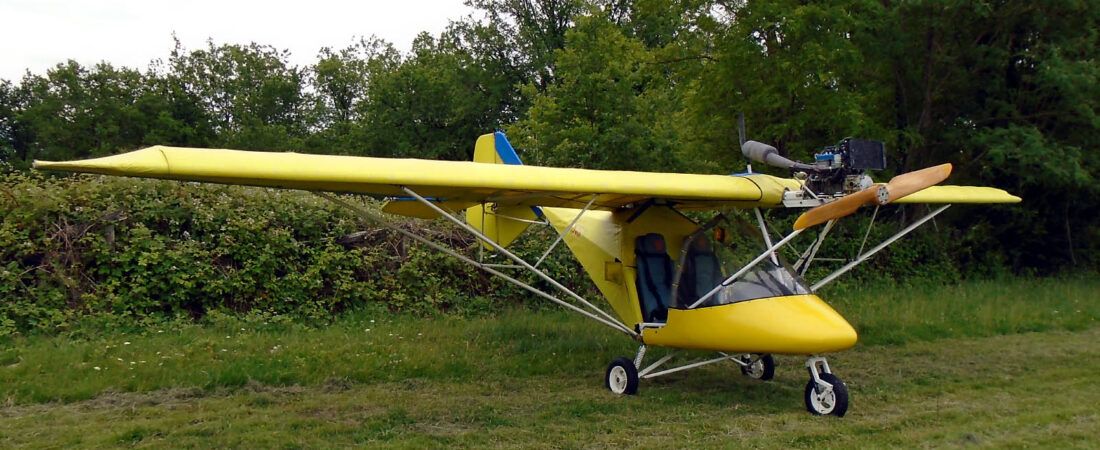
New wood splitter

Well, not really, but I’ll come back to that, although I was out splitting wood this afternoon. But first a little bit of history.

Shortly after I acquired my woodburner when I first came to France, I got hold of an hydraulically operated wood splitter. It’s more or less essential if you are burning serious quantities of wood because it costs a fortune to buy-in wood that has been pre-cut and pre-split ready for burning. I found mine on Le Bon Coin, the web site that everyone in France uses to buy and sell anything, as I have for many items that I’ve acquired since being here. It was a low-level model with a horizontal ram working at up to 5 tonnes pressure and was in as-new condition at what was a bargain price of only 125€.

I worked it pretty hard and it served me very well although towards the end of my ownership of it it began to play a few tricks, like allowing its ram to get stuck and not withdrawing it when I let the power off, often several times during a session, meaning that I spent almost as much time keeping the machine running as I did splitting wood.

The final straw eventually came when after its ram had become stuck the last time, a spreading oil patch appeared under the pump end of the ram, which caused me to decide that as it didn’t owe me anything given what I’d paid for it, the time had come to seek a replacement. I put it up on Le Bon Coin as ‘for spare parts or repair’ for only 25€, a price that was evidently much too low because the phone didn’t stop ringing until I removed the ad when it had been sold to the first person who saw it.

I’d already decided that acquiring another low-level model with a horizontal ram was a non-starter. I’d found that constantly bending down to pick up logs and operate the machine frequently became back-breaking and had decided that when the time came, I’d look for an upright one. This would also have the advantage that vertical machines work at higher pressures, meaning that I’d be able to split larger diameter logs, which tend to be a bit cheaper, with ease.

I came across two machines at the right price that would have met my needs perfectly over Christmas, but there has been another complication. Whereas a horizontal machine is small enough to fit in the back of my Ford C-Max, the same doesn’t apply for vertical ones, which are heavier and much longer even when laid flat. So if I had bought one of them, I’d have had to use a trailer to pick it up, and therein lies the problem.

Regular readers will recall that whereas my Kia Sportage, which is still in the garage, has a towbar fitted, the C-Max doesn’t because at the time I tried to fit one, I couldn’t get its rear bumper off. I’ll return to the problem and sort it out when the weather improves in the spring, but for now I don’t have a car to hitch my trailer to, and as the splitters in question were both some distance away from my home, I didn’t think that I could impose myself on my friends by asking to borrow one of their cars.

The problem will soon be resolved one way or another. The C-Max will have its towbar fitted in the near future, but in any case, the Kia has had its replacement engine installed which appears to be running well. So even if I can’t fit the C-Max’s towbar immediately on returning from the short holiday that I have planned for a few days time, at least the Kia should be available when I get back should I need to dash off to pick up a replacement wood splitter.

So how have I been managing in the meantime, you may be asking yourself? The answer is, without too much difficulty, as it happens, using an alternative splitting method, namely my trusty little hand-held axe. I usually only use my little axe for cutting kindling wood that I use to get my woodburner going when I first light it, but after I’d honed the blade on my bench grinder and found out how much more effective it had become, I thought I’d have a go at using it to split logs.

The logs I now buy in have all been pre-cut in lengths from 30 – 50 cm to go straight into my stove, but some of them are of diameters that I’ve found to be too large to burn effectively in it. That’s why I need a splitter, but I’ve been amazed at how many of them I’ve been able to split down using my little axe. OK, it won’t split large diameter logs of solid oak or even of ‘chataigne’ if they’re solid.

But I’ve found that many, if not most of them, aren’t. Closer inspection reveals that almost all of my logs, even the largest diameter ones, have acquired a split down their length while they’ve been drying, and if I can swing my little axe accurately enough to hit the split, many of them will fall into two pieces even just with one good stroke. And as soon as you’ve split them the once, they lose their strength and its an easy matter to reduce the log sizes down further.

Here are some shots from this afternoon that show what I’m talking about. They are of a fairly large diameter oak log that has a length-wise split which is quite clearly visible in the second image.

null

null

Here’s how it split down after a couple of strokes with my little axe.

null

null

But using my little axe hasn’t been without its problems. Initially I found that the surface of the concrete floor of my wood store was beginning to disintegrate as I split more and more logs. ‘How come,’ asked Victor, ‘If you’re using a chopping block?’ A reasonable question that any intelligent person might have asked, and the answer, of course, was that I wasn’t. I’ve now got a lovely one which is very effective at preserving my floor as shown in the above pictures.

I’ve also been a victim of my own stupidity. Yesterday I swung my little axe so far back over my head before bringing it down as hard as I could onto a recalcitrant log that I whacked myself on the back of my head. Blood was dripping down in no time, but even so in my pain and embarrassment I had to allow myself a wry smile. What if I’d managed to bash my skull in and had been found lifeless in the twilight with my blood on the back of the axe head and only my fingerprints on the handle?

Nobody would ever have believed that anyone could be so daft as to bash themself on the cranium and by now a man-hunt would probably have been launched throughout the Dordogne and beyond for the criminal responsible for the bloodthirsty act of despatching a harmless elderly English gentleman in the throes of his retirement. Who knows, I might even have made it onto the national television news 😉

Last video of 2018

Two flying days of 2018 really stand out for me, three if I include my last flight of the year which I shared with Dani, Wim and Sophie’s granddaughter who’s an aspiring pilot.

The ones that I’m talking about were a pair of glorious days in September, on the 15th when I did a flight by myself in the Savannah around my ‘usual’ local airfields and on the 16th when Wim and I flew our Weedhoppers together to a fly-in and barbecue at Ste-Foy-la-Grande in the Gironde, landing along the way at a small, recently opened private airfield at Campsegret.

I’ve already put up links to my flights on the 16th of September and in December with Dani, but to date I haven’t done a link to the flight I did to Ste Foy with Wim. That’s now remedied below.

The day was organised by Club ULM Evasion based at Ste Foy, a very friendly bunch of people, and we had a great afternoon there. Our flight was unusual in that it was the only time that I’ve known Wim’s usually impeccable dead-reckoning navigation to let him down, and for once I found the field at Campsegret before he did, as shown in the video. On our west coast tour in 2015 it was always the other way round!

This is my last 2018 video and I can’t wait for the new season to start so I can get cracking making some more. After my multi-cam experiments when I was borrowing Victor’s 2CV I’ve already got some ideas about what I want to do, so watch this space 😉

Old year, new year

So here we are, in 2019. Having made the decision to defer the big work on my house for 12 months, I’m now allowing myself to think ahead to the pleasures that 2019 has to offer. We’re now in a spell of bright but cold weather which is much preferable to dull and wet as far as I’m concerned, but I’m not that much fussed about getting airborne again for the moment. If I get a couple of hours in this month that’ll be fine by me and then I’ll be happy to wait until I get back from my dose of winter sun in Egypt.

Like I said before, I didn’t fly as much as I’d expected to last year, only just over 23 hours in total, which was a bit disappointing. This was mainly due to the time it took for me to start feeling well enough again once my chemo finished and when I pushed things and tried to do too much too soon, with the result that I banged the Savannah’s wingtip on the ground while taxying, I got the message and eased off.

But what I did do was great. Wim and I went to a fly-in together at Ste-Foy-la-Grande on September 16 in our Weedhoppers. I did a video but am re-editing it as I wasn’t happy with my initial finished product and will put the new version up later. However, I dropped into Ste-Foy the day before in 77ASY on what was a fantastic day for flying. I did a video of that too which says everything about why I fly, so that’s what I called it and I’ve linked it below.

The final highlight of the year for me was the flight I did on December 28 with Dani, Wim’s young granddaughter. It was a cold and murky winter’s day but it gave me a great deal of pleasure as she enjoyed it so much. I did a video of it too and have linked to it also below.

Now that I’ve mentally freed myself from the onus of preparing myself for the work on my house, I’m allowing myself to make tentative flying plans for the rest of the year. I’m determined this year to fly to see new and old English contacts here in France over in the Charente so not that far away in the Savannah and I’m looking forward very much to doing so. I would also like to make a couple of trips to the UK to see family and friends, which I’ve not been able to do for the last couple of years.

Prospects to savour, and I’ll bet that there’ll be many more pleasures to come that as yet I don’t have any inkling about. Bring it on, I say 😉

Hooray!

So here we all are approaching the end of another year and thinking, possibly, of what the new one will have in store. For myself, I’m not looking too far ahead, except for one thing maybe. I’ve decided to put off the work I have planned to renovate and restore my house. The main reason is that the last couple of years have been somewhat traumatic for me, wth my losing most of 2017 because of ill-health and much of 2018 recovering from the effects of the treatment.

I figure that if I go ahead with the work on my house, I’ll probably end up being totally occupied by it for most of 2019 with the effect that I’ll end up effectively losing another one. This will mean that my flying activities and other forms of enjoyment will most likely be curtailed and in particular, I might miss out yet again on being able to fly my Savannah back to the UK.

So with Brexit also hanging over us and with the potential for the £Sterling remaining unstable for at least the first half of the coming year, I’ve made the decision, and that’s that. I’ll continue making my house more comfortable and dealing with any matters requiring closer attention, such as its roof, but the main work that I’ve planned will be deferred until 2020.

So now what? My first thought was how best to get through the coming weeks of this winter. ‘Regular’ readers might recall that in February of this year following the end of my chemo treatment, I went off for a short all-inclusive break in the Red Sea resort of Hurghada in Egypt to get some sun in order to kick-start my recovery. And I throughly enjoyed it. After arriving at the hotel I just wanted to lie in the sun, read a few novels that I’d brought with me, eat, drink and enjoy the hospitality on offer.

So that’s what I did and very pleasurable it was too. I didn’t want to involve myself in any of the available ‘activities’ and wasn’t interested in going off on excursions so once there it cost me very little over and above the costs of the flights and the hotel as everything in the hotel, food, drinks, snacks, refreshments, were free. In fact I enjoyed it so much that I mentioned in a post after my return that I’d think about going again the following year, and that’s what I’ve decided to do, with some very pleasantly surprising results.

null

I’ve decided to go back to the same hotel in Hurghada, the 5* Hawaii Aqua Park Resort. Last time I booked the whole break with Thomas Cook France and in the post that I mentioned on my return, I said that cursory enquiries on the internet suggested that if I booked myself direct, I could make a saving of around 50€ on the total cost. I didn’t think that this was worth bothering with in view of the extra trouble and effort involved but when I checked a few days ago, I was surprised to find that right now, Thomas Cook has nothing comparable on offer.

So that left me with Hobson’s Choice and I began my search to see what I could put together myself. Last time I went for ‘7 nights’ travelling Turkish Airways in both directions, via Istanbul, so that was my starting point. However, the description was something of a misnomer because I arrived in the early hours of the next day after commencing travelling and left in the early hours of the last day, so I didn’t really enjoy a proper 7-night stay.

But anyway, when I checked Turkish Airlines, although I would still face the same problem of arriving and leaving Hurghada in the early hours, I found that they didn’t have flghts available that would allow me a ‘7-night’ stay. A bit less or a bit more, but not 7 nights, so the obvious solution seemed to me to add a couple of days to my planned stay to fit in with the flights that were on offer.

The next thing was to find a hotel. A few nights ago I came across an amazingly low offer for the dates that I was interested in at a different all-inclusive resort to last time and made a mental note to book it later. However, as the offer included free cancellation up to a day or two beforehand, I thought that it would be silly to miss it and went back the next day. It had gone and the cost had increased by almost 100€, so this was proof yet again that ‘he who hesitates…’

So time then to search and see what was on offer for my original hotel. It had several ‘garden’ apartments at ground level outside the main hotel overlooking the gardens and pools and LastMinute France had an excellent offer available for my dates. It would mean that I’d have to walk the short distance to the main hotel building for meals and refreshments but this didn’t seem to me to be too onerous and I tried to make the booking. About ten times, but every time the web site failed to take my payment due to a system error, so I gave up and began looking elsewhere

I found another web site, Destinia, which is Spanish I think, offering a better price than LastMinute for a room in the hotel’s main building and although it was slightly higher than the price the latter had quoted for a garden apartment, I decided to book it. This time everything went smoothly so that just left me with the task of booking my flights.

The world of cheap airline flights is murky and confusing and I’m not sure that it’s one that anyone understands. Instead we are all in the hands of ‘booking engines’ on web sites which do some mystifying things after they’ve finished searching for the most competitive flights for you, as I indeed found. I knew that I could book Turkish Airlines in any event but thought that it would be interesting to see what else I could find, and I’m glad that I did.

After trying all the usual ones, I came across a web site called Bravofly. When I typed in my planned dates, it came up with some very interesting results, both in terms of timings and prices. In particular, it found me a flight the next day after my planned date of travel that allowed me to arrive in Hurghada in the early afternoon as well as a return flight also leaving at a civilised hour mid-morning. This made me think about bringing my ‘leave-home’ date forward by a day, and sure enough it worked.

To cut a long story short, by leaving home on the Tuesday and taking a flight from Toulouse that afternoon, I could arrive in Hurghada in the early afternoon of the next day, the day my hotel booking commenced. So here’s what I’ve now got planned.

Tuesday – leave home for a mid-morning flight from Toulouse to Brussels by Ryanair. Layover, somewhat extended unfortunately, at Charleroi but so what, I’ll be on holiday!

Wednesday – flight from Charleroi to Hurghada by Tui Air

Friday week – flight from Hurghada to London Stansted by Easyjet. Layover, fairly brief, at Stansted.

Saturday – flight from London Stansted to Toulouse by Ryanair.

And now the best bits. Last time I had a ‘7-night’ break that really wasn’t because I arrived in the early hours of the day after commencing travelling and left in the early hours of the final day. This time I will be able to enjoy a full 9-night stay in the hotel and travel, with some minor inconveniences due to unavoidable lay-overs, at more civilised times.

But the very best bit is that last time my Thomas Cook booking cost just over 627€ including insurance whereas this time, by booking it myself and making a large saving on my flight costs, I will get a longer break for less – just 535€ including insurance. So I think that a little bit of web-surfing was well worth the effort and now I just can’t wait to go 😉

As a footnote, to amuse myself I checked with Bravofly to see if I could save even more money by driving to Brussels and flying from there direct to Hurghada and back. No. The simple return flight on one airline would actually have cost more than my present arrangement involving three different airlines and a leg via London Stansted. So, cheap flights, a murky world or what!

In conclusion, thanks to all those who have commented on My Trike and sent me messages during the past year. They were all greatly appreciated and I hope that we will be able to continue the journey together for a long time to come.

I’ll be making more posts here before I leave for my sunshine break but for now it’s ‘Joyeuse Année’ to all my French-speaking friends and ‘Happy New Year’ to my English-speaking ones. May you all receive what you want the most but may you and those you love especially enjoy a year of peace and good health.

Back in the air

After a few weeks’ break, with a precious cargo. But on a terribly murky day. I hadn’t flown for a while due to getting my house ready for the extended planned visit of my sister and brother-in-law so I was keen to get airborne in any case. So when Wim said that his 15-year-old granddaughter, who has ambitions of becoming a pilot, would be excited at the idea of a flight before leaving for home today after visiting with her family, I jumped at the idea of treating her to one.

But first I needed to make sure that 77ASY was all good and ready to go after standing hangar-bound for several weeks, so after repairing a hose that had split on my electric refuelling pump, I topped up the tanks and did a short local flight taking in Condat and Galinat on the afternoon of 26 December with the idea of taking the young lady on a longer flight the next day.

I didn’t take my camera with me so was only able to take few shots with my phone whose camera I’ve now decided is all but useless due to its abysmal quality. First a shot on the grass at Condat.

null

Two more parked at Galinat in the feeble winter sunshine.

null

null

Any idea of doing a flight the next day was dashed, however. We are currently in a high-pressure period with very little wind and as a consequence, we’re being dogged by banks of very low cloud and mist. The trouble is that the cloud cover is preventing the sun breaking through to raise the temperature to burn the mist off and as there is little or no wind to clear it away, some days are remaining cold and gloomy from dawn until dusk. And unfortunately, Thursday 27th was one of those days.

So it was fingers crossed that conditions would improve by yesterday as that was the last day my young passenger would be able to fly and luckily, although it was still far from an ideal day, we did manage to get up and away. Here’s the route that I’d had planned, taking in landings at Sarlat, Figeac-Livernon and Fumel, the latter being a first for me even though it’s only about half-an-hour’s flying time in the Savannah from Malbec.

null

We overflew Galinat but didn’t land there as I’d found two days before that the runway had been badly damaged by wild boar and didn’t want to take any risks, having a passenger on board. Flying conditions deteriorated quite dramatically the further south and east that we flew, with visibilty decreasing due to mist and the cloud base lowering to not much more than 2000ft. I shot a video of the flight that I’ll be processing and editing shortly and a screen shot from it taken as we were approaching Figeac shows what I’m talking about.

null

But we made it OK. It had brightened up quite nicely by the time we took off from Malbec and although there were a few bumps due to the broken low cloudbase, conditions were still pretty good by the time we got to Sarlat. Rather unsurprisingly, there was nobody around and I noticed when we taxied in and parked that the airfield had had a bit of a spruce-up with newly painted lines and new yellow markers for what is now the long-term grass parking area, as can be seen in the next shot.

null

We didn’t hang around for very long and as there was nobody else flying in the area, after taking off on runway 28, I did an immediate sharp right-hand turn to head off for Figeac. The further east we flew, the less broken the cloudbase became until we were eventually just below the base of continuous cover. And it became noticeably colder too. However, despite being considerably reduced, visibility remained quite safe to fly in and eventually Figeac hoved into view.

I called and approached normally but it was evident that yet again, there was nobody else flying in the area. After parking in front of the clubhouse and taking the following shot, I did find that there was a young chap in the aero club who was thinking about flying and planned to top up the tanks of the club’s Cessna 152, which he was doing when we eventually taxied out to take off. We didn’t hang around too long because it was actually pretty cold outside the aircraft!

null

Next stop Fumel. The route there took us back out of the murk and the sunshine began to break through the increasingly more broken cloudbase as we proceeded westwards. I also noticed that the radio traffic was growing in volume, from several aircraft operating at Belvès, which we were getting closer to by the minute the more we headed west.

By the time we were approaching Fumel, the sky was quite bright with broken patches of cloud so it wasn’t difficult spotting the airfield, which is on a plateau with only a single runway with no taxiway and access only at its northern end. It was again clear that nobody else was flying in the area but I still did the normal radio calls and an overhead join to approach and land left downwind for runway 35. Here are the final shots that I took there with my young passenger out stretching her legs before taking off on the final leg to return to Malbec.

null

null

null

Shortly after leaving Fumel, we passed overhead Belvès town and to the east of the airfield. We were well clear of the airfield zone and circuit but could clearly see the aircraft in the pattern and were surprised by how slowly they seemed to be flying!

The whole flight took just over two hours including engine starts, taxying, takeoffs and landings. It was definitely not the best day to fly but it was warm enough in the Savannah’s cabin with a bit of hot air coming in from the engine’s exhaust. It blew my cobwebs away anyway, and my passenger also said that she’d enjoyed every minute, so taken all round, it was well worthwhile 😉

All change… again

And quickly too! My sister and brother-in-law, bless them, arrived as scheduled for what was supposed to be a six week stay over Christmas and New Year. After weeks of non-stop work I’d managed to get everything ready for their arrival but nothing went to plan right from day one and finally, due to a medical emergency, it was decided that they should cut their visit short and return home again. So after arriving as planned on 1st December, I sadly waved them good-bye on Tuesday 11th.

So our immediate plans have unfortunately now been cancelled, which is deeply saddening as we hadn’t seen each other for two years on account of my own ill health last year. We’re hoping that we’ll be able to arrange something for the Spring, maybe with my flying over to the UK in the Savannah, but we’ll have to wait for now and see what transpires.

I’m hoping to be able to make the trip for more than just the one reason because Roger, a friend of Micro-Trike who is moving to the Charente this month, is planning to fly his Shadow over at that time and we’ve loosely pencilled in the possibility of doing the trip down together, from Headcorn at least as far as the Loire, possibly Saumur, before going our separate ways. It’s an exciting prospect if it should come off.

But that’s for the future. Between now and then are Christmas and New Year and I’m sitting here for the moment wondering what to do with myself 😐

The rainbow’s end

For weeks now I’ve been getting my place ready for my sister and brother-in-law’s impending visit from England. They’re arriving next weekend and will be staying with me for six weeks so I want to make everything as nice and comfortable for them during their stay as I can.

When they were here last time a couple of years ago the house was a bit cold so I decided this time around that I’d put up some new thermal curtains to keep the cold and draughts out. The trouble with that, though, was that I hadn’t touched the walls in the living room from when the previous people were in the house and they were in too much of a mess to leave as they were.

They had left behind a huge number of unfilled holes and those that weren’t empty still had plastic plugs in them. So that problem needed to be dealt with and at the same time, three walls that had been painted a ghastly orange-brown colour could at last be changed to white.

I’m now at last getting to the end of it. I’ve made good and painted everything up to the corner in which I have my computer, so today’s job was to shift it together with all of it’s associated ancillaries and junk and make things good ready for painting tomorrow. And I got it done while at the same time being treated to an awesome light show across the hills and valley to the east of my house.

It was a spectacular little rainbow. We had a chilly northerly wind and a few light showers today and it was during one of the latter that I noticed the rainbow and went out to take a few shots of it. I’ll let them speak for themselves.

null

null

null

At one time I noticed that a foot of a second rainbow had appeared facing in the opposite direction to the original one.

null

null

Later on while I was still working I glanced out of my window and saw that there was just the one rainbow again, but this time facing in the opposite direction. I guess that this was due to the movement of the sun but I didn’t have the time to drop everything and go out to take another photograph.

But in any case, it was a pleasant interlude in another otherwise boring day’s decorating. Luckily, not much more to do and I can’t wait now to get it all done and dusted 🙂