24 hours

What a difference a day makes! I nipped across to Galinat today to check on a couple of things and found that since my efforts of yesterday, someone had been all around with a tractor and a mower of truly agricultural proportions. It was a lovely job that made the place look a real picture, but in doing so they’d rendered most of the work I did yesterday, making little taxiways to and from 56NE’s parking spot, redundant. Never mind though, I did need the exercise 😐

The runway itself is now beautifully trimmed together with a lovely wide return taxi loop, which has been extended down the runway a bit further than before. But not only that, there is now an enormous mowed area across the top of the field from the top of the runway, across in front of 56NE to the hangar and beyond, making what I had done extremely puny in comparison. That’s mechanisation for you, and it will make for a great parking area for visiting aircraft as well as giving me plenty of space to park my car on 🙂

What I didn’t mention yesterday was that after cutting the grass all around 56NE, although there were no signs that the mouse had been back inside the cabin, before I left for home I set a couple of mouse traps, one inside the cabin and the other outside near a wheel. I didn’t check the one inside, but the outside one hadn’t been sprung, which I was quite pleased about. It would be nice if our face-to-face confrontation when I turned the concrete block over the other day was enough to discourage the mouse from ever returning to do its shenanigans on 56NE’s seats. But it would be even better if in the meantime he has met an attractive young lady mouse who wants to move closer to her mother and mouse girlfriends before starting a family, thus taking him away from the area for good. Here’s hoping anyway 😉

Two pleasant surprises today

As the picture I posted on Monday after landing back at Galinat showed, I really needed to do something about the long grass surrounding 56NE’s parking place. As well as being inconvenient and looking unsightly, I thought it could also help to encourage the mouse back as it brought its habitat right up to the aircraft! I couldn’t expect Christian to do it, and in any case, the grass overall is so long that he’s probably arranged for a local farmer to come and cut it to take it away for hay. No, what I ideally needed to do was fire up my ‘débroussailleuse’ (brush cutter) and get stuck in to get it down to a reasonable length myself.

There was only one problem with that idea, though. My débroussailleuse has been problematic almost ever since I bought it. Sure, I worked it hard for several weeks shortly after I got here, clearing long grass, weeds and undergrowth in my garden. I even took it across to Galinat in the early days and cleared an area around 56NE’s old parking place, but even then problems were beginning to show themselves. Starting it had become such a problem that on one occasion I managed to snap the starter cord, so then I had to dismantle the recoil starter and despite all the care I took, the spring popped out and unwound itself. After several attempts, I managed to get a new cord fitted and everything back in place, but it was a very trying episode.

And starting steadily became even worse, so much so that when I next got the machine out to try and use it, I couldn’t get it to go at all. I then put it back in my ‘atelier’ where it has stood against the wall for the best part of two years, and the weeds and undergrowth around my borders have got thicker and longer. So something had to eventually be done about it. The machine still looks brand new (apart from the cutting blade) so although I’ve been cursing it, I was reluctant to just take it to the ‘déchèterie’ and with the grass at Galinat in mind, decided to give it one more try.

The first thing I found was that the fuel tank had a split in it and was leaking fuel, but as that wouldn’t matter if I couldn’t get the ruddy thing to go, I thought that I’d jump that hurdle when I came to it. I gave it a few pulls yesterday but there didn’t seem to be a spark of life in it, so I removed the spark plug and cleaned and re-gapped it. The plug also still looked brand new, but after my experience of a few weeks ago when a new spark plug transformed my ‘motobineuse’ (rotavator) from a non-starter to a runner. I thought that I’d have nothing to lose by trying the same with this. I picked up a new one at Pôle Vert this lunch time and felt vaguely optimistic when I gapped it and put it in. And rightly so, because two or three pulls, and the machine roared into life.

So beware anyone buying Chinese built machinery (and who doesn’t from time to time – it’s hard not to nowadays). One of the ways that they get their prices down is by using components that in some cases are so cheap and nasty that in actual fact they don’t even work! That was obviously the case with my machine and I’m sure that the problems I’ve experienced with it can be traced right back to the nasty little spark plug that was fitted when the machine was manufactured. It was probably made on the table of a peasant’s back kitchen somewhere in the rural Chinese hinterland 😐

But at least I was back in business, despite the leaking fuel tank that I’d just have to live with for now. So early this afternoon, there I was smashing down the grass and weeds surrounding 56NE. The first thing I did was clear an area to park the car on because it’s very irritating getting out into knee-deep grass and having it standing above the door sills so when you close the doors, clumps of it are trapped in them. Then I cleared the area beneath the aircraft as much as I could do without moving it.

null

null

I then moved the aircraft and finished clearing the area beneath it as well as cutting back all the horrible brambles that used to keep catching my legs as I moved around it putting the covers on after a flight, and that alone will make today’s work worth it. I also cleared an area in front of it and a taxiway from the parking spot to join up with one that Christian had already cut leading to the top of the runway. I also joined it to a return loop that Christian had also cut and you can just about see what I mean from the next few shots. The first shows 56NE standing with a now-cleared area in front of it.

null

The next shot shows the taxiway I made from the parking place to join with the existing one heading towards the top of the runway and the following one shows the same looking back from the opposite direction.

null

null

The final shot was taken from the return loop that Christian had already cut showing the junction where I’ll turn right to head for my parking spot.

null

So if getting my débroussailleuse working was the first pleasant surprise of the day, what was the second? Well, it was to do with the damaged fuel tank. The split was probably caused by my planting my big hoof on the machine to hold it down during previous starting attempts and my initial thought was that as this was a low cost (relatively), Chinese machine, getting hold of a spare part would be impossible. But I could not have been more wrong!

So many different débroussailleuse brands use the same engine as mine, in fact there is a very healthy market for spare parts with several suppliers competing for your business. I managed to locate a complete new tank assembly for just over 25€ including delivery which came as my second pleasant surprise of the day. So allowing for the usual four or five days that French suppliers always need to get the goods that you’ve bought to you, pretty soon I’ll be back in business with a fully working weed smasher. The long grass, weeds and unwanted undergrowth in my borders are probably already quaking in their boots 😉

Dratted mouse

I did such a long post yesterday that I didn’t have time to mention what happened after flying back into Galinat from the cow field. When I left Galinat just over a month ago, although I took all of 56NE’s covers, I left behind the concrete blocks and ropes that I use for tying it down. The first block that I moved to allow me to push the aircraft into its parking spot was the one for the nose, and when I went to lift it, the rope just came away in my hand.

My first reaction was why on earth would anyone go to the length of cutting my rope and was thinking no more about it when I turned the block over to see if there were any ants under it. They tend to make very large and complex nests inside the blocks which you need to dispose of before you move them and make them all come running out as they can be quite aggressive! There were quite a few ants, but also looking up at me from a comfortable little nest consisting of a ball of chewed up green polypropylene fibres were two little brown eyes. It was a mouse and probably the little terror that had been chewing up my seats!

While I watched, it climbed up out of the block and legged it into the bushes, and that was the last I saw of it. I just hope that it wasn’t thinking, ‘Yippee, my nice house on wheels is back again!’ and that after I’d left, it hadn’t returned and climbed up into the cabin again. I placed a couple of large logs on the seats just in case, in an attempt to prevent it chewing them, but even if it doesn’t, after the work I did cleaning and repairing them, I can’t face the thought of the seats being soaked and stinking of mouse pee again. Having thought about it, now I’ve seen the little varmint in the flesh, I think that I’ll have to take one of the traps from my kitchen and place it in or near the aircraft. I don’t like the idea but I don’t think I have any choice 🙁

Perfect day and an idyllic flight

I checked the field before 8.00 am and there was no sign of the cows so I phoned Wim and told him that the day was a goer. By the time he arrived at around 9.00 am, I’d taken everything down to the field ready for the off except for the wings and 56NE’s fuselage, so we moved those down straight away, then opened up the wire that keeps the cows in and took everything inside.

It was a gorgeous morning, but not so hot as to make working uncomfortable, and 56NE’s reassembly went like clockwork. Both the owner of the field and the owner of the cows dropped in while we were working and were in excellent spirits, which is a good things because their being happy will make it easy to use the field again in the future if the need arises.

We finished the job off at about 12.30 pm and wouldn’t you know that having been off in far flung parts of the field the whole time up to then, the cows decided to come up to our end to see what was going on. Here’s a picture Wim took with 56NE ready to fly – the cows were standing just behind him.

null

Wim’s had cows on his own airfield for the last 16 years so he had no problem shooing them away, so while he kept them towards the other end of the field, I started up, taxied up towards Christian and Marie-Hélène’s house and took off. I immediately found that I didn’t have an airspeed indicator which I found later was due to my having fitted the pitot the wrong way round, but that didn’t matter and I was soon comfortably flying straight and level in the direction of Galinat.

I am sure that 56NE flies much sweeter with this set of wing covers – I don’t know why, but it never seemed to fly as well with the yellow and blue ones that I’ve had fitted up to now as it did when I first flew it up in Brittany when I originally went to see it. Now it does again, so I’m happy and I think that the work I’ve just done was worth it. Wim followed me over to Galinat in my car and by the time he arrived, I had 56NE parked up and tied down. Here’s a shot that I then took – I’ll have to see about getting the grass cut I think, as I doubt it has been since I flew 56NE out just over a month ago.

null

We then drove back to my place and Wim went home for a well-deserved lunch. I then sorted out the rest of the covers etc that I needed to transfer to Galinat and after buying some fuel and a few other things at Intermarché, I was able to look forward to heading back over there and getting back up in the air at last. The flying conditions turned out to be absolutely idyllic. It was about 6.40 pm by the time I got away so although it was still nearly 30 degrees Celsius, the main heat of the day had burnt away and the air conditions were perfect with hardly a bump to be felt. I took my camera and just enjoyed taking shots that took my fancy without worrying too much about where I was, so I’ve just included them below without captioning exactly where each one was taken.

I wanted to fly south towards Sarlat because on Saturday I’d visited someone who lives just to the east whose house is next door to a ruined chateau. The story is that like many others down here, it was destroyed by the Germans during WWII and the owner shot outside it because they had information that it was being used by the Resistance. The chateau has never been rebuilt since, and probably never will be, and it is quite spectacular as it stands above the surrounding land on the top of a low hill.

Having seen it from ground level, I wanted to see it from the air and I thought that today would be a perfect opportunity, if I could find it. The next two shots were taken while I was heading in what I hoped would be the right direction.

null

null

As luck would have it, shortly afterwards I spotted scenery that I recognised to the south of Sarlat and was able to turn onto a heading that took me in the direction of the chateau. The next two shots show the approach to it and the chateau and its location in a bit more detail as I flew a circuit around it.

null

null

I then turned onto more of a westerly heading, more or less in parallel with the River Dordogne, taking the the next few shots along the way. Notice the blue hot air balloon taking off in the middle distance in the second one, below.

null

null

null

My route than took me past Les Eyzies and Fleurac and I took the opportunity to do a pass over Wim and Sophie’s house, although I don’t think they saw me as they were probably enjoying their evening meal. I then flew on past Plazac and took the last picture below before turning onto a heading to head back to Galinat.

null

I couldn’t have asked for a better flight to get me reacquainted with 56NE after a break of just over a month. It flew beautifully with the replacement wing covers and looks much better for the change-over as well. After I’d landed back at Galinat and switched off, I could hardly believe how lovely an evening it still was, with the sun still giving off plenty of heat as it headed towards setting and the grass-hoppers all chirruping away. The edge was slightly taken off when I found that during the flight, a small section of cover next to the passenger seat had come off and disappeared, but hopefully that should be easy enough to replace. But it had been a splendid day taken all round and as I drove homewards at going on 9.00 pm, I noticed that my car temperature gauge was still showing around 25 degrees. Brilliant – makes living and flying down here absolute magic 😉

D-Day minus 1

That’s ‘D’ for ‘décollage’ (take off). Wim’s available tomorrow morning to give me a hand and it looks as though the cows either aren’t in the field or are in another part of it, so as the weather also looks as though it’ll be perfect, I gave M. Lajoie a ring this afternoon to make sure that a take off from his field would be OK. He said that it would be fine so long as there were no cows in the way – but to watch out for ‘la merde sur l’herbe’. I said that this was a problem with which ULMistes are well acquainted, and from sheep as well as cows, but he said, ‘Yes, but sheep’s are small and cows’ are much bigger!’

It was Victor’s birthday lunch today – thank you Victor for a really brilliant bash! – that started at about 10.30 am and went on until something like 4.30 pm and was a great opportunity to meet up with old and new friends. So apart from making the above phone call, I didn’t get anything else done, except while I was getting everything ready for tomorrow, I just gave the wing struts a bit of a wash down. Now the wings are back on the front grass, ready to be taken down the road to the field tomorrow, 56NE’s fuselage is ready to taxy down and my tools and other items are ready in the back of the car.

null

null

I told Wim that I’ll take a walk down to the field first thing to check on the cow situation and hopefully we’ll be able to make a start on getting 56NE back together by 9.00 am and ready to go by around 10.30 am. I hope that there are no hold-ups because the grass in all of the fields around here is thick and lush, except in the one I want to take off from, which is much thinner with the occasional higher clump dotted here and there. But who knows what will happen if I don’t get away tomorrow or soon after – I’d hate to have to make arrangements to shift 56NE by car and trailer, even just to Galinat 😐

Just about finished

Not quite, because I still have to clean and where necessary, touch up the wing struts, but we had a lovely afternoon that gave me the chance to totally complete all of the work I had planned on 56NE’s fuselage and engine. All I had to do today was replace a few corroded nuts and finish touching up various spots, mainly on the undercarriage and wheels, where the white paintwork had been chipped and here’s a shot I took at the end of the afternoon.

null

56NE could be ready to fly again in less than a day but that’s not going to happen because of yet more rain and unsettled weather being forecast for at least the next couple of days or so. It’s said that patience is a virtue but these weather patterns are now becoming very tedious for this time of the year. I’ve also decided to do something ASAP about the PTT button, which can’t be left as it is, Velcroed to the top of the left-hand stick, and I’ve ordered a pair of Binder connectors to fabricate a permanent arrangement. More about this when I’ve received them.

Spot of good fortune today

I had a little bit of luck today that I’ll come back to in a moment. I originally volunteered to help Victor with the preparatory work on the new airfield today but as he seemed to have no shortage of labour, I decided that my time would be better spent pressing on towards completion of the work on 56NE as I’ve now got the finishing line in sight. I’d hoped to get all of the work on the engine and fuselage knocked off today but I didn’t quite manage it, mainly because I had to spend a bit of time sorting out the fuselage rear cover.

X-Airs are fairly typical in that their fuselage cover is tied with cords to the fuselage frame behind the seats and to the rear of the pod underneath and the cover is then wrapped around the fuselage with an overlap at the top secured by Velcro. Now here’s a tip for anyone who isn’t too familiar with this arrangement. Because the fuselage section is very large at the cabin end and very small at the tail, if the cover is pulled too far forward eg by over-tensioning the securing cord, this drastically reduces the amount of overlap available along the top edge. And the smaller the overlap, the smaller the amount of Velcro holding the cover on. Even a difference of 1/2″-3/4″ of an inch can mean that there is practically no overlap on the Velcro at all, making for a very unsafe fastening.

Here’s an example of just how bad this can be. An X-Air that I went to view as a potential purchase in the UK after losing MYRO that had been inspected and approved for permit by a BMAA inspector, had so little overlap along the top of its fuselage cover that the owner had punched holes through the fabric either side of the join and inserted cable ties to keep the cover from flying open in flight. And the BMAA insists that the inspection regime must be maintained for the safety of pilots, to protect them from themselves. I ask you. I’m just glad that I’m out of it 😐

So what’s the answer? Here’s how to fit the fuselage cover. Wrap the cover around the fuselage and secure the full Velcro overlap BEFORE attaching the securing cord at the front end. I’ve now done it this way twice, with both MYRO and 56NE, and it works. You may wonder why I needed to do this with 56NE when it was apparently quite satisfactory before. Well, it wasn’t actually. The amount of Velcro overlap was only about 50%, which was less than I would have liked, and then to make things worse, as cord from natural material had been used to secure the cover’s front end (rather than something like polypropylene), it had shrunk when I’d washed the cover, thereby tightening and pulling the cover even further forward. So when I went to reattach it, there was hardly any overlap at all.

This was a good thing because it forced me to re-fit the cover, even though it cost me some time because of having to go off to Les Briconautes again to buy the cord that I needed. And that’s when I had my little bit of luck. I’d made a rough guesstimate of the length that I’d need, then added a bit on and bought 8 metres. After first fastening the cover with the full Velcro overlap, I then cut a 1 metre length to tie the bottom of the cover to the rear of the pod – and it took exactly that! Gulp… I then attached and tensioned both front sides of the cover to the fuselage frame behind the seats – and the amount of cord required was exactly the remainder of the 8 metres that I’d bought! I could hardly believe my luck, because if it’d been even a few centimetres short, it would have meant another time-consuming drive into Montignac to buy a little bit more 🙂

I was very happy with the finished job and 56NE must now be one of the few X-Airs with a proper, full Velcro fastening of its fuselage cover, as the following pics show.

null

null

It’s not rocket science but from the X-Airs I’ve seen, it’s a trick that’s missed by an amazingly large number of X-Air owners (and other types too).

And not only do you end up with a nice, safe top fastening but the Velcro strips that secure the side and top cover pieces behind and above the seats also end up where they should be – which is to the rear of the fuselage tubes to which the fuselage cover is tied, making for a better appearance, even for an older aircraft like 56NE.

null

The final job for today was completing 56NE’s clean up, by washing the pod, undercarriage, rear cover and tail assembly. It wasn’t a fantastic day for this today, with a high of only 18 degrees Celsius, but luckily the sun seemed to come out just when I needed it to, and afterwards the whole fuselage assembly was soon dry. Here’s a shot that I took at the end of the day.

null

I also fitted some new plugs, topped up the rad and gave the engine a quick fire up before covering 56NE up for the night. It started on the button after the usual hand prime so all’s well in that department. All I have to do now is a bit of white touch-up and then I can start thinking about getting it ready to fly again. It’s taken a bit longer than I originally anticipated and a possible problem is that the cows are now in the field where I want to take off from. I’ll have to jump that hurdle in a few days’ time 😉

Radio in and working

The previous owners of 56NE had an Icom radio fitted with a separate weird intercom system, all run from a separate heavy lead-acid battery installed on the floor behind the front of the panel. What they did about charging the battery I have no idea because it was not connected into the electrical system, but that’s another story. When I acquired 56NE, the radio wasn’t included, of course, so I just took out the battery and intercom and as the antenna also corroded and broke, just left it at that because we have little need for radio down here.

But that will change with our planned flight up the west coast, so one of the jobs on my current list was to fit my little hand-held radio. I’ve still got all of the kit that I used in MYRO and this time I also needed to install the power supply to top up the radio’s battery as I’ll not be able to rely on having a mains supply handy wherever we stop for the night to plug a charger in. So that was today’s job.

I received a new antenna from the UK a few days ago but couldn’t fit it immediately because it needed a smaller hole than what was already in the existing bracket. So having acquired a nice strip of aluminium from Les Briconautes yesterday, the first task was to remove and discard the old bracket and fabricate a new one. I was quite happy to do that because the old bracket was a bit thin and flimsy and not exactly a masterpiece of the first order. Here are a couple of shots of the new one, which is a big improvement, with the antenna mounted on it.

null

null

The old antenna cable had been run along the fuselage main tube, past the battery, overhead the cabin and down the front tube leading from the engine to under the panel. I didn’t much care for that because as it ran down to the panel, it was bunched up with all of the other cables from the engine and the electrical system. It seemed to me that although you could get away with it if you were lucky, if you weren’t, this could be a recipe for picking up feedback and interference that could ruin your radio transmissions and reception. I prefer to keep the antenna as far away from other ‘live’ electrical cables as possible and in MYRO I did this by running it down along the lower fuselage tubes, into the cabin under the floor and then popping up vertically under the panel close to where the radio was fitted. That way it was possible to totally avoid any other cables and I was rewarded by having a really clear radio signal in both directions.

This was helped by my not needing any connection to the aircraft’s electrical system whatsoever to power the radio on account of its battery life being far longer than any flight that I undertook and I even got away with it when I flew down from Stoke to the Dordogne because I was able to charge the radio’s battery when I stopped overnight at Wanafly. As mentioned above, this will not apply during our west coast trip and it could well be that the on-board power supply might also end up being a source of interference, but I’ll just have to wait and see.

So I ran the antenna cable in 56NE just as I did with MYRO and came up from under the floor just behind the panel. I mounted everything with Velcro as I did with MYRO so the equipment can be removed overnight if necessary or when 56NE is parked for longer at Galinat or elsewhere. It was tricky finding the ideal locations for everything and until I’ve flown and tried the system out, I’ll regard everything as ‘temporary’, especially the PTT button which is just a compromise for the time being. I have a suitable button to mount in the top of the stick but I need to get hold of a connector that will allow me to easily remove the cabling when the radio isn’t needed.

Here’s a shot showing the arrangement that I ended up with today, that will more than likely change once I’ve used the system in flight and found out how well, or otherwise, it performs.

null

I placed the power supply on the panel over on the passenger side. I haven’t made a ‘hard’ connection into 56NE’s electrical system but instead opted for using a DIN plug that I put into the panel specifically for the purpose, should the need arise. Now it has, and it’s always nice when a plan comes together and even better if the system works well with a nice clear incoming and outgoing signal 😉

Here, kitty kitty…

I need a moggie. No, not really, but I was seriously considering getting hold of a good mouser just a few hours ago, I can tell you. I’ve spent hours today cleaning up after my two uninvited guests and I won’t be surprised if I keep coming across little reminders of their stay for some time yet 🙁

The trouble is, when they come into your house while you’re away for several days, they are able to roam absolutely everywhere and you have absolutely no idea where they’ve been. That’s until you come across their little trails, of course. I suspected that they’d been on my desk and on the shelf above it because when I first returned home, I found a poly bag containing SD memory cards on the floor that had obviously been knocked off the shelf. And the proof came a few minutes ago when I sat down to type this, moved some paper on the corner of my desk and came across a little pile of poo.

But the worst thing is when they’ve been in your kitchen cupboards among your food and cooking utensils and on the worktops themselves, and that’s what I’ve been dealing with today. Because I’m nowhere near finishing my kitchen just yet, I’ve got a gap along the backs of the worktops. After the other day when I cornered a little blighter, that I subsequently caught and disposed of, and it dived into the gap and disappeared into the space behind the cabinets, I blocked that all up with rolled up paper. But for the time being at least, if a mouse gets into my kitchen, there’s no way that I can stop it getting into that space from below.

Although I’m now ‘mouse hardened’ and store all foodstuffs in plastic containers so mice can’t get at them, this still gave the little buggers the chance to have a field day because of the openings that I had to cut in the backs of the cupboards for services. Mice explore everywhere and as soon as they find a hole they go through it, even when there’s nothing on the other side that might interest them, such as food. They still seem to take great pleasure in climbing all over everything in the cupboard searching just in case, and leaving their unhygienic little mousie trail behind them as they go.

Until today, that is. I’ve had to empty and thoroughly clean and disinfect four cupboards (if you include the double below the sink as two) and their contents as well as the worktops themselves to be on the safe side. And that’s after I gave them all a clean when I returned home a few days ago, before the second mouse went back in and wreaked its revenge. But today I decided that it was time to do something about preventing the mice getting into my cupboards at all, even if they could still get behind them, so that hopefully this would be the last time that I’d have to do it.

I’ve used old 2 litre ice cream tubs for storage of items such as biscuits and cereals and I’ve noticed that they’ve proven to be absolutely mouse proof, even though some containing biscuits have been standing in the open the whole time on the worktop. So today I’ve cut up an old lid to make plastic blanking pieces to fit around the services that come through into the cupboards and blank off the holes. It took quite a while to do because the holes needed to be carefully cut out to leave no gap for a mouse to get through afterwards, but in the end I was pretty certain that what I’ve done will be effective.

The holes that needed blocking included the main water stop-cock, the sink outlet, the hot and cold water supplies and the outlet for the washing machine/dishwasher and after carefully cutting them out, I secured the plastic blanking pieces to the cabinet backs with gaffer tape. Here’s the one on the water stop-cock to show what I mean.

null

So that hopefully will be the last time that I’ll have to clean out my cupboards after a mouse invasion. However, the little blighters are a fact of life down here and they seem to be very enterprising, not to mention nosey. The three mousetraps that I put out when I was going after mouse number two last week have been down ever since and have remained empty, so it looks as though I only had the two and was lucky to get ’em before they made themselves even more at home and began breeding (phew!). But I guess only time will tell whether what I’ve done will be effective at repelling future mouse invaders – or at least keeping them out of my ruddy cupboards 😐

Back home again

I left late afternoon on 23rd April to head south to the Aude to give my lovely friend Val a hand moving house. I didn’t get anything done on 56NE before I left because it was raining more or less the whole time, so there was no point hanging around any longer. To be honest, I was glad to get away because I needed a change of scenery after what feels like a long winter and I was looking forward to having Val’s company even though I knew we had some hard work ahead of us to get everything done that we needed to, in the time available.

Whenever I’ve been to Val’s place, it always seems to have been raining and as we planned to be moving the furniture out of her house on the Monday, I hoped that things would be different this time. Whenever I’ve been involved in a house move, my own or anyone else’s, it has always rained and I hoped that we’d get away with it this time. However, my hopes were to be dashed (and some!) as I’ll explain later. Here’s a pic I took of Val’s house from in front of the café opposite after we’d been able to sit outside for a drink and a snack during one of the brighter, dry breaks between the showers and the torrential rainstorms 😉

null

Val had booked a van for Monday 27th and our main job before then was to fill all the cardboard boxes that she’d managed to beg, borrow and steal, with all her things. By working like the clappers, we managed to get that done by the end of Saturday, which allowed us to go out for a leisurely Chinese meal at a new restaurant in Limoux on Saturday night and have Sunday off. After the meal, we decided to head to the square in Limoux for coffee and a couple of drinks and didn’t think too much about the odd flash of lightening that lit up the sky as we drove due to the proximity of the Pyrenées. However, once we were ensconced outside le Brasserie de Commerce, to say that the heavens opened is an understatement.

The rain started coming down in stair rods and bouncing back up off the stones in the square. The noise was incredible and the water poured down off the facade of the cloisters that we were seated under in sheets, although we remained sheltered and dry. However, the air became so chilled that we had to go indoors where, of course, we had to buy another drink (or two) before the rain eventually eased enough for us to make a dash back to the car.

Sunday dawned dry although a little bit overcast, so we decided to go off for a drive into le Pays du Sault, a mountainous area to the south of Limoux in the direction of Perpignan. While heading for les Gorges de Galamus we had a fantastic view of Mont Bugarach with its peak shrouded in cloud and I pulled up to take the next two pics of what was an incredibly impressive scene.

null

null

What the shots cannot show is that the cloud was coming in from the right, curling over the peak of the mountain and then swirling on the other side in a full 360 degrees rotation. It occurred to me that anyone in a light aircraft entering such a weather system would find it a nightmare, and probably fatal, scenario, and even more so with what we found a few moments later when we climbed higher into the mist, as I’ll mention in a moment.

After taking the above pics we started up again and made our way through the tiny village of Bugarach, and as we left the village behind us and continued to slowly climb, I stopped the car again and took the next two shots looking back towards the village that we had not long ago left.

null

null

We then continued our drive climbing slowly upwards into the mist whereupon I was struck by what appeared to me to be a weird weather phenomenon. Lower down on the flat land around the village of Bugarach the air was fairly calm with little wind to speak of. However, as we climbed higher, the wind became stronger and stronger, bending the tops of the trees and blowing clumps of mist past us at high speed. No wonder the cloud was swirling over the top of Mont Bugarach with winds like these, and pity any poor aviator who entered such a system, whether by poor judgement or accident, because I doubt that they’d ever have come out of it alive! A lesson well learnt 😐

After a few minutes we came to les Gorges de Galamus, one of the most impressive bits of natural scenery in the whole region. The road running through the gorge is about a kilometre in length, hugging the cliff face and passing through the mountain itself where it was impossible to build a road externally. It is for small vehicles only (eg NO camping cars) and almost completely single track but with the occasional passing place or emergency area. Val told me that in the summer when there are lots of tourists around, a man has to stand at each end with a radio and they only allow traffic to flow in one direction at a time, but during our visit, we had to take ‘pot luck’ as there was very little other traffic, mainly on account of the weather I would guess.

After exiting the gorge, we pulled up onto a small area at the side of the road where I was able to take the final two pictures that capture some of the character of the gorge’s wild and rugged scenery.

null

null

We then headed for home via the small town if Quillan, a place much favoured for second and holiday homes by British ex-pats. We found our way to Le Palace, a brasserie next to the river which was once an art-deco cinema and is still painted in its original pastel colours, where we enjoyed some liquid refreshment and a large plate of ‘frites’. Delicious 😉

Later on we returned to Quillan for an evening meal at le Café de la Gare, which to say the least, was an enjoyable but bizarre experience. We were greeted on arrival by a Peter Griffin look-alike but without the glasses who led us to our places, which was not difficult as there was only one other couple seated having a meal.

The chairs and tables were a totally disparate mix but didn’t look too bad for all that and the decor was probably best described as ‘eclectic’. Seated in the middle of the counter off to one side of us was a large green frog that was not far short of a metre high and in the rear of the room was a large fish tank that looked as though it hadn’t been cleaned out for many a long month, so much so that from where we were, it was impossible to see if there were actually any fish in it. There were all sorts of artifacts hanging on the walls, ranging from two huge ornate mirrors to ancient photographs of (probably) long deceased family members and weird monochrome prints. And behind us, in front of the main window, there was a table covered with containers and pots containing the most exquisite orchids you could ever wish to see.

And that wasn’t all. While we were waiting, I noticed that there was a ventilation fan high up in the back wall but the only problem was that it couldn’t be used, because it was half covered by the suspended ceiling that had been installed some time later. I said to Val that I imagined that it had happened when the ‘new’ ceiling and modernised lighting had been fitted, probably from the look of it at some time just after WWII 🙂

‘Peter’ arrived to take our order and it was then that we noticed, somewhat disconcertingly, that he had some rather grubby fabric dressings on the index finger and thumb of his left hand, probably as a result of a slight misjudgement with a sharp knife earlier in the day. Val and I looked at each other but decided to risk it. ‘Peter’s’ equally large wife than arrived on the scene and as the kitchen looked hardly big enough to swing a cat in, they did much of the preparation in an open area towards the back of the room and to one side of the fish tank. We decided that it was best not to think about it and to let them get on with it and it was lucky that we did.

‘Peter’ himself delivered the dishes to our table and was by now sweating like a pig, which explained why he had a napkin kind of arrangement around his neck that he occasionally used to mop his face and brow. But what can we say? The food was beautifully cooked and absolutely delicious. But still our experiences were not yet over! We had earlier noticed an ironing board standing over to one side of the room but hadn’t given it much more thought until Madame sat herself behind it and started ironing a pile of table napkins while meantime chatting to us and the few other people who had by now joined us in the restaurant. So truly a ‘restaurant familial’ and an experience not to be missed. It could only be in la belle France!

Monday, the day of the move, arrived with cold, blustery wind and rain. And then it got worse. It may have stopped raining while we were driving but at each end it pelted down while we were either loading or unloading. Unloading was at a beautiful old chateau near Castelnaudray that Val sold a year or so before to John and Chris, a British couple who had taken up permanent residence there. The chateau has several ‘dépendances’ or annexes one of which will eventually be turned into an art gallery. For now Chris is just using a part of it and they kindly offered to allow Val to store her belongings in the other part until such time as she has completed the sale on her new house.

We made three trips there during the day and although it was raining so hard during the first one that we had to put a wooden board over the van’s rear doors to provide us with some protection, Chris was kind enough to be on hand each time to give us a hand to get the stuff off and indoors under cover. This was a real godsend. Eventually the job was done, but not before the van hire company had kindly agreed for us to keep the van overnight at no extra charge as they didn’t have a customer for it the next day. Finally we found ourselves sitting in John and Chris’s nice warm kitchen, chatting and enjoying their hospitality while we downed a glass or two of Blanquette de Limoux, and we couldn’t have asked for a more perfect end to the days’ work.

Val left early the next morning to return the van and I left after a quick breakfast to head back to Plazac. I returned to find a house and garden that had been battered by a thunderstorm which had cut the electricity for about six hours, according to a timer that I had running, but that hadn’t been soaked half as badly as Limoux had. But shortly after I found when I opened a couple of cupboard doors that an unwelcome guest had taken up residence while I’d been gone in the form of a mouse who’d found nothing suitable to eat but had made quite a mess while searching.

So on Wednesday I reluctantly put a trap out while going outside to cut the grass, which had grown pretty long in the meantime. When I returned, or shortly after, the trap did its dastardly work and I found it with a small, lifeless brown body in its jaw. I don’t like taking life, even that of a little mouse who was, after all, just following its instinct and foraging for food, but from my experience the last time, I felt that I didn’t have any choice because of the messy trail it leaves behind while doing so. But then things got worse.

All was quiet and calm yesterday but earlier on today I spotted a little brown form scuttling across the worktop when I entered my kitchen. Then when I opened the cupboards that I’d already cleaned out the day before, I found yet more mess strewn around inside. So there were two of them. After I’d spotted it on my worktop, the second mouse had popped into the gap I’d left between the worktop and wall and disappeared so I then spent several minutes blocking it off with pieces of paper, after which I placed three traps on the floor. But later on I entered the kitchen again and there was the mouse once more on the worktop. This time it couldn’t disappear down the same gap so when it hid behind the washing up liquid, I thought I had it cornered.

But no! This time it managed to squeeze into an even smaller gap and disappear behind the cabinets. So I got busy again with the rolled up paper and blocked off every bit of gap that I thought it might be able to use, and when I went off earlier for a meal with Victor, left the three traps primed on ‘hair trigger’ setting. And when I came back, the poor little creature had met its end in one of them. I’m not happy about that because I don’t think the world is any better for having lost two little mice. I believe in ‘live and let live’ but I just wish the little blighters would do more of their living outside of my house where they can do all the foraging they want to, to their hearts’ content. If they keep a good look-out for the local moggies, that is 😉

Pressing on

Another bright sunny day today so it was a good time to tackle 56NE’s up-front bits, namely the front of the main tube, the engine frame and the engine itself. There are one or two rusty bolts that ideally I’d have liked to replace – the ones holding the exhaust manifold on, for example, but I’m afraid that that wasn’t going to happen on this occasion. What I did want to do, though, was degrease and clean everything up, touch in any little chips in the white coating and paint on the tube and engine frame together with any little bits of corrosion that were beginning to show themselves, and also decorrode and repaint the radiator brackets that were actually looking pretty awful.

I managed to get all of those things done and 56NE’s front end ended-up looking a bit cleaner and tidier as a result, as the following pictures show.

null

null

null

I was happy with how it turned out, anyway. What was disappointing, though, was that my new radio antenna again failed to show up. This is annoying because I’m heading down south for a few days from tomorrow to give my friend Val a hand with her house move and if it doesn’t arrive before I leave, I’ll have all of the hassle of having to pick it up from the local post office in Plazac. No big problem but just a nuisance. I’ll have to see what tomorrow brings but what is fairly certain is that the weather’s about to change. I’d like to get a bit more done before I head off but I’ll have to see what the weather gods have in store. From the look of the sky this evening and the cloud that’s building, rain is in the offing so it’s probably just as well that I am going off for a while as I think my work here would have come to stop in any event.

A long day’s work

We’ve had a stonker of a day today with blue skies, continuous wall-to-wall sunshine and a high of 26 degrees Celsius. One of the things that you don’t have to worry about on a day like today is getting things soaking wet because before you know it, they’re back to being bone dry again. So what better day to get stuck into giving 56NE the thorough clean that it’s overdue for.

I don’t think that 56NE’s former owners ever did more than the bare minimum when it came to keeping it looking presentable for the summer tourists in Brittany. Even when I bought it, the inside of the pod was covered in a film of grime and areas that you couldn’t see, like under the rear fuselage covers, were a grimetastic disaster. And since then not only have I flown it for two more seasons without doing as much myself in the cleaning stakes as I really should have, it’s also been parked out in the open under covers which also encourage more grime to be deposited as the air blows through them.

Now I know that 56NE is not in the first flush of youth, but there’s no reason why an older aircraft should be a dirty one. If an aircraft looks dirty and down-at-heel, that’s the way it flies and it’s amazing how by just giving it a bit of spit and polish, it seems to become more sprightly and altogether more lively. My plan for today, therefore, was to start on 56NE’s deep cleaning process, including the inside of the rear fuselage, covers and tubes, and the interior of the cabin. And because of the weather, I needed to have no fear about softening the grime with a weak detergent solution and hosing it away, including in the cabin even.

It all went very well. At different times I used a sponge, a brush and even the floor mop to reach areas that I couldn’t get to by hand – the bottom of the inside of the fuselage cover and up in the nose of the pod, for example. Then I used the hosepipe with a small high pressure spray to wash the grime away, just taking care not to spray up behind the instrument panel or onto the battery terminals, and tilting the aircraft afterwards to pour the water out of it. It’ll never come up like a new aircraft – that would need a miracle of sorts – but I was very happy with the results, as the following pictures show. Take it from me, the fabric, tubes and everything else in the internal areas shown in the first two were all beyond filthy.

null

null

null

It’s definitely the cleanest that 56NE has ever been since I’ve owned it and I haven’t even started on the outside yet. The cleaning and rinsing water that I periodically had to keep throwing away was as black as ink, so I must have shifted quite a lot of dirt, grease and muck. Once I’ve finished the cleaning, I’ll be able to go on and touch up the places where the white coating has been abraded or chipped off. I’ll have to use paint, of course, but someone has already been very busy in the past with the paint pot, not always as neatly as one might have hoped, so there’s no point losing any sleep over that. After all this, I’m hoping that when Wim and I leave for our west coast trip that 56NE will be a credit to its owner – just have to wait and see 😉

Useful day

Victor dropped in for a coffee this morning, which was a nice surprise, and we were able to sit out in the sun for an hour or so while we chin-wagged and scoffed a few biscuits. It’s a hard life I know, but someone’s got to do it 🙂

While he was here, he was able to help me with a little job that needed two people to do safely. Someone had forced one of the battens into one of the wing covers that I’ve just fitted and put a couple of nicks into the batten pocket. Luckily it was close to the wing root and therefore easily accessible but it was impossible for one person to both insert the batten and also ease its tip across the nicks. It only took the pair of us a couple of minutes, but at least I can now cross that job off the list.

After he’d gone, I got on with fitting the new shock absorbers. It didn’t take long, an hour or so, and they didn’t look too bad at the end, as the following pictures show.

null

null

The top shot is of the side that was damaged, so as you can see, no permanent damage was done. After I’d got the second one off, I found out part of the reason why 56NE’s wheels were canted in a bit. As the following pic shows, the top rubber bush was totally shot.

null

So although I was a bit miffed at the time that the damage to 56NE’s undercarriage occurred, it looks as though it actually did me a bit of a favour. I would otherwise never have got around to replacing the shock absorbers, but based on the evidence they were in pretty poor shape and probably well overdue for the knackers yard.

I’m now waiting for my new radio antenna to arrive from England so while I’m waiting, I think I might go ahead and give 56NE the thorough clean that it needs. I started by giving the fabric in the cockpit and the seats a bit of a scrub and was amazed by how black the water became. The seats have obviously not been cleaned for ages and I have to admit that it showed. Here’s a pic that I took of them afterwards while they were still drying, which also shows the patching that I had to do to repair the holes in them made by the wretched rodent.

null

They’re far from perfect but replacing them or their covers even, would take too much work for what is, after all, quite an old aircraft. The seat covers are well stained with this and that but there’s still a lot of grease and dirt on them which just might come off if I give them another good scrub. That’s maybe a good first job for tomorrow as we’re expecting a good ‘washing’ day – warm, dry and sunny. So it’ll be sleeves up and get scrubbing – must remember to put my rubber gloves on so I don’t get wrinkly, sore hands 😉

Shock horror!

Well, not quite, but I couldn’t resist the headline. The new shock absorbers arrived yesterday but I couldn’t fit them because I had to cut the grass as rain was forecast for today. It duly arrived, but mainly during the night, but as it’s still a bit cool with a few spits of rain in the air, I shall fit them tomorrow when the weather’s forecast to be back to being warm and dry again.

But I have had a chance to compare them to the old ones, and here’s the surprise. The new ones are much closer in style to the old ones than to the ones fitted on my friends’ UK built X-Air as you can see by comparing the following pic to the one in my last post.

null

The new ones are slightly longer than the old, which will help to deal with the slight canting in of 56NE’s main wheels, but have the same number of spring coils (13 compared to the 8 of the UK version). Why should this be? I don’t know for sure, but think that this is probably one of the several modifications that were made when the X-Air received its approval under the UK’s microlight ‘Section S’ regime. It’s also understandable. The more coils there are in a given length, the smaller the gaps are between them and the less travel they allow when the shock absorber and its spring are compressed. And the more travel you have, the more accommodating the suspension is to ‘hard’ landings, as I recently found to my cost.

As I mentioned in my last post, when I contacted Fournales Suspension SA during last week, they confirmed that the travel on the X-Air suspension should be 58mm, and although I can see that from the picture I posted of them this would probably be achievable by the UK spec shocks, I doubt that either the old or the ‘original equipment’ new ones that I have just received from Randkar would be compressible to such an extent. Is this important? I think it is, at the fringes at least.

Usually, as I’ve found up to now, you can make the odd ‘hard’ landing without any problems, but with runways being what they are in this part of the world, there is always the opportunity, especially when landing on a piste that you’re not familiar with, that you might end up with one that’s a tad harder than usual. If that happens, whereas you would probably get away with just a red face with ‘UK spec’ shocks fitted, the chance is that you could end up with a broken suspension leg, as I did, with the lower travel ‘French spec’ shocks. The solution? Obvious – if in doubt, go around – don’t ever take the chance of dumping it down hard if you can possibly avoid it.

On a more positive note, it looks as though the latest X-Air shocks, which are made by Endurance in India (not surprising really, as that’s where the X-Air is made), are of a slightly improved design. The ones that are currently fitted to 56NE, which I now think after all were original equipment, have a shorter cylinder than the new ones with an exposed rod or leg that’s visible in the above pic (chrome plated). In the new ones, the leg is fully enclosed, an improvement that by keeping out dirt and contamination will probably lead to the units having a longer life. Hopefully, not that that will concern me too much, as I can’t see me fitting a new set during the rest of my flying career. I only hope that by voicing such a comment that I don’t provoke the gods and end up doing another hard landing next week 😐

Making progress

We have a dull, cool morning today, with a little bit of drizzle, which is why I’m indoors typing this. But for most of the week, we’ve enjoyed temperatures as high as 27 and 28 degrees Celsius, which has allowed me to get on with the work I want to do on 56NE.

The incident of a week or so ago which involved some minor damage to 56NE’s undercarriage caused me to take a closer look at its shock absorbers, not the least because the one on the side affected got slightly bent. It wasn’t enough to prevent 56NE being flown (after all, I landed back at Galinat OK after the incident and safely took off again and landed down the road at the field near my house) but it was definitely enough to make me examine them much more closely than I had up to then.

Ever since I first acquired 56NE, I’ve noticed that the main undercarriage wheels were slightly canted in at the top, but more so than I’ve seen on any other X-Air. I’ve also noticed that the coils of the springs that enclose the shock absorber bodies were much closer together than on other X-Airs, and you can see what I mean in the following image.

null

On the left is one of the shock absorbers on my friends Ken and Peter’s X-Air and on the right is one that is on 56NE. The difference in coil spacing is very evident and as it is not a trivial matter or one that should be overlooked, I decided that all was not quite right. It was suggested that all I needed to do was find a shop selling shock absorbers and buy another pair of a similar pattern. However, I decided to look into things in a bit more detail and although it took me most of a glorious day earlier this week with an outside temperature of over 28 degrees Celsius, it was lucky that I did.

Randkar, the X-Air distributor based at Frossay in the Loire, publishes a detailed parts guide, but this does not include much by way of individual part specifications and nothing by way of details on the shock absorbers themselves. However, during my on line researches I contacted a French company called Fournales Suspension SA which offers an alternative design shock absorber for the X-Air and in their reply they confirmed that the distance between the upper and lower fixings is 280mm, the upper fixing is for a bolt of 10mm diameter, the lower fixing is a fork and that the compression travel is 58mm.

I knew all of this apart from the compression travel, which is a key figure and is, of course, affected by the gaps between the outer spring coils. There was no way that with the tiny gaps between the coils on 56NE’s springs, that a compression travel of this magnitude would ever be possible and as well as partially explaining why my last hard landing had resulted in undercarriage damage (ie because there was insufficient travel for the shock absorber to actually absorb the shock of the landing) it also suggested to me that the shock absorbers fitted to 56NE were probably not standard equipment.

So it then became clear that I should really replace them. I was slightly taken aback by the price quoted by Randkar of over 300€ for a new pair (the Fournales price was 1080€ with a production delay of 10 days!), so I thought that I’d look to see if any suitable alternatives might be available.

I had to start off by estimating the force that might normally be needed to compress 56NE’s shock absorbers. There is no published figure that I know of but as the maximum all-up weight of the aircraft is 450 kg, in order to allow for a heavy-ish one wheel crosswind landing, I estimated that 200 kg would be a reasonable figure. If that’s in the ballpark, that would put the shocks on 56NE some way outside of anything that I’ve come across fitted to a heavy motorbike, let alone a scooter, and in my searches I also hadn’t come across anything else of the right pattern and dimensions on any other kind of vehicle. Of course, that’s not to say that there isn’t something out there.

I then sent a hand-drawn picture of what I was looking for together with the numbers to a couple of specialist French shock absorber companies and they replied by return saying that they could not supply. I also sent the same information off to Hogan Shocks in the UK, a world-class manufacturer of motorbike shock absorbers, who can supply a made-to-measure pair for only 210€, and this is what they told me after I’d also sent them a photograph of what was currently fitted. They said that what I had was a not very expensive shock absorber combined with a very powerful spring and that it was therefore something slightly out of the ordinary. They regretted that they couldn’t supply anything of a similar specification and suggested that I should be very careful about anything else that anyone offered to replace it.

At that point, I decided that enough was enough and that, as I said to Victor, the safety of my aircraft was worth more to me than 300€. So I decided to immediately place an order on Randkar to obtain a pair of original replacements with delivery ASAP as 56NE was, and still is, standing outside in my garden propped up on one wheel and a jack. I knew that Randkar had the items in stock and off went an email to them requesting urgent supply with payment by bankers card and despatch that same day. But now for a little game of ‘spot the difference’.

While all of the above was going on, I’d also had to do something about getting a replacement radio antenna for 56NE. I’d checked and found that although the one on MYRO was an excellent one, having been MOD surplus equipment, removing it was a bit too involved. So I needed to source another new one. Despite searching on the internet, I couldn’t find anything suitable in France and I refuse in this day and age to start looking in Yellow Pages and phoning around on the off-chance. Those days are long gone in my book and the sooner French suppliers realise it, the sooner they’ll start to get their economy moving again. So as usual, I turned to a supplier in the UK, Corby Radio. I sent them a message, got a reply by return and after a further brief exchange gave them an order, paid for it and had it despatched all on the same day. And all for the princely sum of £31.

So what about my 300€ order for a pair of shock absorbers placed on Randkar? I know from experience that any order placed on P & M in the UK is received, processed and despatched the same day, usually for next-day delivery, if the parts are in stock. So surely Randkar would do likewise? Not a hope! Not having had a reply from them after sending a previous email, I followed up with a telephone call and was asked by them to send an email. So then I painfully went through the process of telling them that I wanted a pair of shocks that I knew were in stock and that I wanted to pay for them and have them despatched that same day. Not possible, I was told, and that if I wanted such a thing I’d have to pay a surcharge, probably of 30-40€!

What is it about French companies? Unfortunately, I think that they will never, ever learn and until they do, France will sadly remain mired in the economic mess that it currently finds itself in. I used to care but as I am now finding that this attitude towards customers and customer service is pretty uniform, I’m now just becoming impatient and beginning to think that really it’s their own fault and they reap what they sow. It took them until the next afternoon (over 24 hours) before a very nice young lady phoned me to expedite the order and take my bank card details. Imagine if I hadn’t been home 😐

Work started

I want to get the jobs I have planned on 56NE done as soon as possible so I know that it’s ready for our planned trip up the west coast, and also because I want to miss as little of the good flying weather to come as possible. Yesterday was the ideal day to get cracking as we had a high of 24 degrees Celsius with no wind to speak of and with the prospect of 28 degrees as the week progresses, it should be a good few days to get everything done.

The only downside, as I’ve found so many times in the past, is the ruddy insects. I don’t know if it’s something to do with living in a rural area where there are lots of animals, but as soon as you venture onto the grass when the sun comes out, you are instantly plagued by swarms of small flies. They are a total nuisance as they aim all the time for your eyes, ears and mouth and once they have homed-in on you they are very persistent and never give up. I’ve swallowed loads of the little blighters in the time that I’ve lived here.

It got so bad yesterday that I needed to do something and it occurred to me that I should see if the mosquito repellent that was left over from last year would have any effect. I was encouraged as I sprayed it on when I saw that although it had pictures of mosquitos on it, it was actually labelled ‘Insect Repellent’. And I was even more delighted when I found that it actually seemed to work! At last I wasn’t having to constantly swat the damn things away from my eyes and mouth and could concentrate on the job in hand, which yesterday was to swap the wing covers over.

It isn’t too difficult a job but just takes time as you have to be careful not to do any damage to them in the process. The first one went like clockwork but for some reason, although I did the second in exactly the same way, one of the cables that has to be fed through inside the wing managed first to entwine itself around the trailing edge tube and then around the cross member tube, requiring the wing framework to be withdrawn from the cover after its having been carefully inserted on both occasions.

I also replaced a couple of the original bolts that secure the aileron brackets and tensioning cables, after the thread on one stripped, with much better old ones that I’d kept when I refurbished MYRO back in 2009, so that was handy. I eventually finished off in the early evening and was pleased to have got the job over and done with. Here are a couple of shots of the wings with the replacement all-yellow covers on and the yellow and blue ones that I’d taken off ready to be rolled up and stored in my grenier.

null

null

So now I’m all ready to get going on the hull jobs. As well as giving it a thorough clean, which will do wonders for it, as 56NE’s radio antenna broke some time ago, I also want to fit MYRO’s, which is nearly new and is going to waste at present. Although I don’t need radio at all for local flying, we will need it for our west coast trip so I want to get my kit in, working and ready. As I type this, the day’s already warming up with a clear blue sky and no wind to speak of. So I’d better think about getting myself organised – and getting my insect repellent spray out again.

Quick hop

56NE has been standing out under covers at Galinat since August 2013 and to say that it is in need of a really good clean is an understatement. I’d also like to renew a few nuts and bolts on it and give it a thorough general check-over before our planned flight up the west coast of France in early June. It also came with a complete set of spare wings when I bought it and I stupidly originally fitted the wrong set of covers, so with the list of jobs steadily growing and especially as I’d now like to change the wing covers over, it made sense to get it back to my house where the work can be done more easily.

I got permission from the owner of the field just down the road where I took off from in August 2013 to fly it back in there and as there’s a guy who rents it and is about to put cows on it, there was some urgency for me to get it ferried over ASAP. The weather hasn’t played ball recently because although it’s been dry and bright, the winds have been a bit too high for comfort. However, it looked as though things would improve today so long as I made the flight early in the morning, so as Wim also planned to come over to help me dismantle 56NE, we agreed to fly into the field together at 9.15 am.

For once everything went as planned. As I approached the field, I could see Wim below me turning onto his downwind leg, so I peeled off to give him some time to land and followed him in a few minutes later. The landing was quite ‘interesting’ as the field is below a small hill with trees and a power line on its top. You have to get your speed right down (70 kmh for 56NE), just skim the top of the hill and then push your nose down a bit to hit the right spot on the field. This, of course, adds a bit more airspeed, which is why it’s important to get your speed down as low as you can as you crest the hill, because although the field is pretty long, especially by Dordogne standards, it soon gets used up if you come in too fast and the trees and house at the end of it would loom up pretty fast.

I’d attached my new little sportcam to 56NE before taking off and shot a video of the whole flight, including the takeoff and landing, which you can view by clicking on the following image. In the video, as I taxi back up the field before parking you can see what I mean about the hill with its trees and power line (also visible with part of one of its twin water towers in the image below).

Field at Le Bousquet

Wim and I then set to to get the wings off 56NE and walk them one after the other the few hundred yards up the road to my house. After we’d done that, Wim walked ahead while I taxied 56NE up the road to my front garden – imagine doing that in the UK, you’d be hung, drawn and quartered if anyone saw you, let alone if a galant law-enforcer actually caught you doing it! So two hours after landing, 56NE was back on my front lawn where it started out from nearly two years ago.

null

null

null

I didn’t have time to start doing any work on it today, so later on I just got it covered up for the night.

null

So it was a good day’s work. We had a high of 24 degrees Celsius today with wall-to-wall sunshine and it looks as though we can expect more of the same going into next week. So it will be a good time to be airborne but in general things can only get better as from now as the year proceeds, so the sooner I can get the jobs I have in mind finished, the sooner I can get back in the air and enjoying the summer’s flying.

Early night tonight

Because I’m slightly knackered. I bought a Honda ‘motobineuse’ (rotavator) just after I arrived here but apart from using it to dig out an old plastic tarpaulin half-full of sand that the previous occupier of my house had thoughtfully left buried in my front grass, it’s stood idle for the rest of the time. I originally bought it to use to level out the humps in my front grass that were like waves in the sea as a result of the aforesaid resident once having a vegetable patch in the most prominent place imaginable, right in the front of the front grass, but despite said waves being a pain in the backside every time I’ve mowed the lawn since, I’ve never got around to doing the work.

But now I’ve bought myself a ride-on mower the work has had to be done because it’s got a 38″ cut which is wide enough to span across the dips in the waves, meaning that only the tops would be mowed and the grass in the dips in between would never be cut. That’s unless I went over them again by hand, and why would I want to do that? My garden will never be level in the neat and tidy way that British gardeners like to think about their lawns but I can get it level enough for the ride-on to do a good enough job, which will save me an awful lot of work over time.

I started the job on Friday by skimming the top off a hump in the grass that I’d artistically disguised by standing a bird bath on it and using the soil removed to fill up an adjacent hollow. This is easily said but I found that the effort involved was quite considerable and after I’d finished work, it was pure luxury to stagger indoors and stand under a glorious hot shower to ease my aching muscles.

Based on previous experience, I suspected that I might find anything under the hump as I think that the previous occupier principally saw the grassy areas surrounding my house as his own private landfill, but fortunately I only found a few old half-burnt logs, broken bricks and other similar detritus that anyone else would have disposed of by taking it to the dump. After getting the areas as level as I could by hand, without a roller unfortunately, I finished off by scattering a goodly quantity of ‘gazon de regarnissage’ (grass seed to regenerate an existing worn lawn) over them, and this is how they looked.

null

null

I’ve said on various occasions that you’ve only got to poke a stick into the ground around here and the next thing you’re pulling out umpteen lumps of rock. Just in case anyone thought that this was me exaggerating a little, here’s a shot of what I extracted just by skimming a few inches off the top of the hump in my front grass.

null

I wanted to continue the job on Saturday but I couldn’t because the ruddy rotavator wouldn’t start. There was no spark but another (wrong) spark plug worked OK, so all had to do was buy a replacement. Easy in the UK, almost impossible after mid-day on Saturday in rural France. I went back to the local Pôle Vert gardening shop in Thenon where I’d previously been unsuccessful in buying a new belt for the ride-on mower thinking that buying a spark plug would be much easier. Just give them the reference, they look up the equivalent from the range that they sell and Bob’s your uncle. Nope, that was an impossibility as the workshop computer was switched off, so once more they were ‘désolé’ at being unable to supply such a complex spare part.

That meant, of course, that Saturday was effectively wasted and Monday too, because being Easter, absolutely nowhere was open for business. So after a frustrating wait, I managed to get hold of a spark plug today, which allowed me to finish off the job and level out the ‘ocean waves’, and here’s how it looked at the end of it.

null

null

To say that I’m pleased to have finished it is an understatement as now I’ll be able to sell on the rotavator, which has been taking up space in my wood store that can be more usefully used by my new ride-on mower. I had an interesting conversation at the end of the day with the old boy who owns the field opposite my house. He recently cut down a clump of trees that were on the corner of the field opposite my neighbour, Benjamin’s, house, and has been moving the logs back to his house where they will be stored for a couple of years until they’re seasoned and ready to burn. He’s 78 years old and told me that even when you’re retired in France, you still need to work a little bit to make ends meet 😉

He told me that he and his family were always ‘paysans’ working on the land and my guess is that he still lives in the family home just up the road in Le Bos de Plazac. He said that things were very difficult during the war because his father was taken away for the whole of the six years and even though he was only a young child, he had to help his mother to work on their land to feed the family, and even up until relatively recently with the introduction of mechanisation, the work was very labour intensive. He says that he’s paying for it now with rheumatism and arthritis in his joints and he has to take it a bit easy moving his logs around. Apparently, as well as the ones opposite my house, he’s got quite a lot more scattered here and there in the surrounding countryside that he cut down in past years on bits of land that he still owns.

We talked about how his cutting the trees down had opened up the view over towards the other side of the Vézère valley and how I’d decided not to take off from his field in 56NE a couple of years before for safety reasons, because it was a bit too short as a ‘piste’. He said that that hadn’t worried them too much during the War because not only had they dropped parachutists there, but from time to time British aircraft, presumably Lysanders, had landed there too. What a fascinating old boy and what an interesting end to the day.

April fool

With our planned flight up the west coast in mind, I recently ordered a new little pop-up tent on Ebay. And it arrived from Germany yesterday, on a date that could hardly have been more appropriate, as it turned out, as I’ll explain below.

Now, I’m of a generation when boy-scouts still wore shorts and tried to do a good deed every day and tents had stout metal poles and guy ropes that could stand up against a force 10 gale, so all this stuff about tents popping up and being put away in 5 seconds is all new to me. So after the lady who delivered it in its one metre square cardboard box had gone, I couldn’t wait to get it out on my kitchen floor. As it turned out, that was my first mistake, but I’ll come back to why after I’ve shown you the next two pictures of the tent itself in and out of its fabric carry-bag.

null

null

It looks quite innocent, lying there on the floor, doesn’t it? Yes, I thought so too, but appearances can be deceptive as I soon found out. I knew that in principle, all you had to do was release the elastic strap that was stretched around the body of the tent and it would then very helpfully open up and self-erect. So that’s what I did, inadvisedly as it turned out. As soon as I released the strap the tent took on a life of its own and jumped up like a snake coming out of a giant jack-in-the-box, increasing its volume by many multiples.

I had visions of those cartoons you see when someone pulls the pin on an inflatable life-raft before getting out of the sinking ship but fortunately, even though the force of it all was enough to throw me backwards against my fridge door, once the tent had sprung into shape there was still room enough for both it and me in my kitchen. As it started off standing on its end, after a bit of a struggle, I managed to wrestle it over and round and got it aligned across the room, at which time I was able to take the next shot.

null

Prior to all of this excitement, I’d been sure that I would be able to watch how the tent unfolded as a guide to refolding it and getting it back in its bag. No chance! The whole thing had happened with such amazing alacrity that the main action was all over in the blink of an eye, but I still harboured a faint hope that it couldn’t be that difficult and certainly not for someone with an intellect as keen and sharp as my own. So after poking my nose inside and assessing it for size, I launched into the job of getting it down and repacked.

There was no obvious place to start, so I started by gathering the fibreglass rings that give it its structure all together on top and trying to wrestle them into some sort of circular shape. I thought I was doing pretty well until the ones on the bottom somehow flew out sideways making the structure flip back up again in a kind of weird distorted shape, knocking my glasses askew and making me look like Captain Mainwaring on Dad’s Army after being slapped in the face by a wet kipper. However, after readjusting them and undeterred by the experience, I gave it another go. This time I refused to give in and using all my manly strength and giving no quarter, I coiled the springs into a circular shape. Voilà!

But no, I knew immediately that I had failed. The circle of springs and fabric lying on my kitchen floor was of a diameter at least twice that of the carry-bag that was supposed to contain it, so back to the drawing board. Or, more correctly, the internet. And it seemed that I was not alone in being unable to fathom the complexities of re-folding the humble pop-up tent. As soon as I googled the term, up popped dozens of links explaining how it should be done, including a myriad of Youtube videos. What would we do without it eh?

I started by watching an instructional video of a young Chinese chap doing the necessary but I have to admit that the ‘Hahs!’ and grunts of his companion behind the lens put me off a bit and when I came to emulate the former’s deft moves in my kitchen the lesson had apparently not sunk in and I failed hopelessly to achieve the desired results. Shamefacedly, I returned to my computer screen and this time ended up watching a lightly built but slightly unkempt young lady who clearly enjoyed camping and put me to shame by expertly flicking her wrists and getting her pop-up tent into a neat round coil in a brace of shakes while smiling the whole time at the camera.

So what could I do? This time I could not be beaten and returned to the task with new determination. I grabbed the framework as she’d instructed and gave it a twist and a heave, but without success. I tried again, and all of a sudden, as if knowing that it was beaten, the tent meekly collapsed itself into a neat round heap on the floor. All well and good, but I had no idea what I’d done differently that time compared to before! So back I went to the computer, got the young lady fired up again on my computer screen and this time paid a bit more attention to her exact moves.

I cracked it after that. Now I’m an expert in re-packing pop-up tents. Pretty soon I might even make my own Youtube video to show how it’s done. Just keep watching this space 😉

Tractor driver

My, let’s say, somewhat strained relationship with lawnmowers continues. I don’t have enough grass to justify spending a lot of money on a ride-on mower, what is called a ‘tondeuse tracteur’ over here, and in any case, I’d have had to be mad to do so given the number of mowers that have been destroyed under my stewardship by rocks that they’ve come across nestling in the grass. But that doesn’t mean that I haven’t envied those lucky souls who glide seemingly effortlessly around their estates leaving a swathe of beautifully manicured greensward in their wake.

But spring is upon us (well almost, if it would only warm up a bit) and the grass is getting high again, so the time has come to wheel the trusty lawnmower out and give it a dust down ready for action. I can’t say that I’m relishing the prospect, although it cannot be denied that I need the exercise after a winter of almost total idleness, so now that the supply of hidden rocks seems to be almost at an end, I found myself once again idly perusing the small ads for a bargain-price ‘tondeuse tracteur’.

Experience has told me that there’s no such thing as far as a French seller is concerned. They leave their machines out in all weathers until they are a mass of rust and when the engine eventually packs up, they still think that there’s someone mug enough out there to take it off their hands for two or three hundred euros. So my expectations were hardly high – that was until I came across a machine being sold by a fellow British ex-pat. And that’s why I found myself driving down into the Lot-et-Garonne in the rain on Sunday to take a look.

The seller only wanted 195€ for it, or something like £140, so so long as it started, ran, cut the grass OK and looked as though it might continue doing so for a couple of years or so, it was hardly an extravagant purchase. Well, it seemed to tick all of those boxes so then it was time to see about getting it home. I’d taken my trailer with me but unfortunately it was just too small to accommodate the beast. The seller had a larger one, so I suggested that if he loaned it to me, I could drive home with the mower and then return to pick up my trailer either later that day or in the morning.

Now I don’t know if it was because he was a Geordie and I am a Southerner and he thought that I might never return with his more expensive trailer, but he didn’t like the idea and suggested instead that for an extra 5€, he would follow me home with the ‘tondeuse tracteur’ on his trailer. This seemed far too good an offer to turn down but I tried to explain to him that I hardly lived ‘just up the road’ from his house. He wouldn’t have it though, so off we went – on a journey that took the best part of two hours! I knew he’d be a bit miffed at the end of it, but nobody could say that I hadn’t tried to dissuade him, so I parted with another 20€ and after unloading the machine, off he went again with his wife, who’d ‘come along for the ride’ in the passenger seat of their Renault.

All I could do on Sunday was park it up outside and cover it up to keep the rain off it. However, on Monday there was enough of a gap in the showers to fire it up and give it a spin. I’m glad to say that it worked fine and when I looked behind I was more than pleased to see that I was leaving a neatly cut 38″ wide swathe behind me as I drove. Here are some pics that I took of it parked outside the back of my house.

null

null

null

And so it came to yesterday evening. My neighbour Benjamin was out with the engine of his push-mower roaring away as he cut his grass, working up a good sweat as he did so. So that gave me the opportunity to fire up the little red beast and go driving past him into my garden, waving regally as the Duke of Edinburgh does as he glides past the crowds in the royal coach during Ascot Week. Benjamin looked suitably impressed, but pride comes before a fall.

I wanted to pick up mowing where I’d left off on Monday, but as I dropped the blades, I noticed that now there was no grass shooting out from the side of the blade housing. On stopping and checking, I found that for some reason, the blade driving belt had jumped right out of its pulley wheels, so I dutifully fed it back in and tried again. So then it snapped. The machine was then put back under wraps and I’ve spent part of today looking for a replacement part. Local suppliers can’t be bothered to check their stock unless you give them chapter and verse on the machine, its maker and year of manufacture and the actual reference number of the original belt. I’m not sure what world they live in – the machine is second-hand and at least 15 years old so I guess that as usual, they think that if they don’t bother, you’ll buy a new mower off them. Fat chance.

As usual, the internet seems to have come to the rescue and I’ve located what I think will be a suitable replacement of the right length and dimensions for under 25€ including delivery. The only problem is that, as usual, it’ll probably take 3 or 4 days to arrive (it’s only got to get to my place from Agen, less than 2 hours drive away), so I may have to wait until after the Easter week-end to see if it works. If it does, as I think it will, I’ll then be able to join the ranks of the idle land-owners who mow their lawns while sitting down and smoking a large cigar 😉

The next adventure

My friend Wim usually goes off on some sort of adventure every year – last year he rowed the length of the River Rhine from Strasbourg to Rotterdam in a boat that he’d designed and built himself over the previous winter – but up until quite recently, he hadn’t planned anything for this year. So when I told him that I was thinking about doing a low and slow flight up the whole of the west coast of France over four days or so in late May/early June, he said that he’d like to do it too.

I’ve been working on the plans on and off for several weeks because as I found when I planned my flight down from Stoke to the Dordogne in MYRO, you have to think quite carefully about each leg of the route and where you will need to land along the way. This is because not only do you need to find airfields at the right time and distance from your take off points but you also need to think about whether you’ll be able to pick up fuel at each one if you need to, to supplement what you’ll be carrying with you both in your tanks and in jerrycans. And for a flight spread over several days, because you’ll need to plan for overnight stops, you’ll also need to know whether there’ll be a bed at the ones you’ll need to stop over at or whether you’ll be allowed to put up a tent for the night.

To complicate things a little bit further, we’ll be taking both of our aircraft and as Wim’s Weedhopper is quite a bit slower than 56NE and has a different fuel consumption, I’ve also had to plan a route with landing fields that work for both aircraft. At the time of writing, I’ve managed to do that, but at this stage with several weeks still to go before the flight, I can make no allowances for wind direction and speed, which together can make a considerable difference to the actual times needed to fly each leg compared to the estimates on which the overall plan is based.

Although quite a bit of planning is therefore required, it’s not rocket science. The starting point, of course, is to find the basic route and to a great extent for aircraft like ours, this is dictated by the availability of suitable landing fields as explained above. Here’s a pic showing what I’ve come up with so far for our west coast trip, a total round-trip distance of just over 1500km.

null

It’s essential when planning a trip like this to contact all of the owners or managers of the airfields at which you wish to land well in advance in order to seek permission, and it’s even more important if you are seeking their assistance in obtaining fuel and/or if you want them to allow you to camp overnight. At the time of writing we haven’t yet done this, so for the time being I’ve made it so that airfield names are omitted and specific waypoints are not readily identifiable from the above image, although from the information available on each one from FFPLUM (the French ULM/microlight organisation) and other sources, I do not anticipate any problems on those scores. Indeed, Wim, who has tasked himself with making the contacts, has just confirmed that the proprietor of the field where we want to make our first overnight stop and who was difficult to make contact with, has just given his permission and offered us any help that we might need.

After working out the basic route, you then need to get into the planning of the actual flight in much more detail. Because it’s very tedious to keep recalculating distances, times and fuel usage every time you make a change to the planned route, I use Excel spreadsheets. I’ve got one that I created myself to make all of the usual detailed flight planning calculations using airspeed, track, wind speed and direction etc. But before you can do that, you need to do some preliminary ‘rough’ calculations to see how long and how far you can fly between alternative available waypoints on the fuel that you have on board, so I’ve created another spreadsheet to do this. I’ve also included calculations in this spreadsheet for where and how much fuel will need to be purchased en-route dependent on fuel on board and time flown, with margins built-in for safety, of course, and I’ll go on to give more details of both of my spreadsheets in a future posting.

Isn’t life frustrating at times

A short while ago my car’s brakes started to grind a little bit so I knew that they needed renewing. It’s difficult to see the Kia’s brake pads clearly without taking the wheels off so I thought that I might as well go ahead and order new pads for both the front and the back.

Only after they’d arrived did I give the discs more than a cursory once-over and after looking at and feeling them, I thought that I might as well do a proper job and replace those as well, because the rear ones especially appeared quite worn. The new ones took two or three days to come from Germany so yesterday I was all ready to go.

I started with the fronts because they were the most accessible the way that I’d parked the car and from the instructions in my workshop manual, they seemed to be the easier to do as well. It was surprisingly easy, actually, and when I removed the pads I was slightly annoyed to find that they were only half worn. I was even more annoyed when I got the discs off to find that they were a lot less worn than I’d originally thought and that really both pads and discs could have been left for a good few thousand kilometres more 😐

Is wasn’t the same story with the rears, though. The pads were indeed worn right down to the metal so this was where the grinding noise had been coming from. I’d tackled the most worn rear disc first, but when I got it off (and it was a bit of a pig to get off, actually) as for the fronts, I was surprised to see that it wasn’t as badly worn as I’d originally thought and still had a few thousand kilometres in it. But having bought new ones it would have been silly not to fit them, so I went ahead only to find that the ones I had received were too small in diameter!

I then had no choice but to fit just the new rear pads to keep the car on the road, but as the rear discs were not too badly worn, that was OK and the driving I’ve done since then has proven the brakes to be fine. And then I had to contact the supplier. And all credit to them, as they have accepted responsibility for the mishap but after supplying them with full details of my car, they have since confirmed that they can only accept the wrong items back for refund and cannot supply me with the correct ones!

So how frustrating! I’ve replaced the front brake discs and pads when I didn’t really need to and will be throwing away a full set with at least half of its life left in it. I did need to replace the rear pads but have had to team them up with worn discs that may or may not need replacing, but which I have no choice but to retain, at least for the time being. And looking at the big picture, I could have got to exactly where I am now just by buying and fitting a new set of rear brake pads and saving a wad of cash.

Ain’t life grand, it truly is 😕

Shots from yesterday

I went on yesterday’s walk mainly because I needed the exercise, but as it was such a fine spring day, it also gave me a good opportunity to compare the performance of the Fuji and Sony compact cameras that I took with me. So after all the ‘technical’ stuff contained in the last post, as I was quite pleased with quite a few of the pictures that I took, this post is all just about them. All of the shots in this post were taken using the Sony DSC-W800.

null

null

null

null

null

null

null

null

null

null

null

null

null

null

At the moment, the Sony has it over the Fujipix JX560 as really the only time that the Fuji outperforms the Sony is when using flash indoors. However, this is not something that I need to do very often so the big test will come when I try the Sony out in the air. If it performs as I hope it will, I’ll probably get rid of the Fuji as I always find to my cost that when you hang onto tech items for too long, they become obsolete and worth next to nothing. But anyway, that decision’s for a little bit later.

More camera stuff

When I was younger (much younger!) I used to have a Mamiya C33 TLR camera and a friend and I used to do wedding photography in our spare time. Without wanting to appear immodest, we were very good at it and it became a nice little earner until our paths separated when I got a new main job and moved away.

Time and people move on and although I still have a couple of Pentax 35mm SLR film cameras, a MX and ME Super, and an assortment of lenses and other accessories for them, I can’t remember the last time that I used either. But it’s years, for sure, because I neither need nor want to do that kind of photography any more. Nowadays I want to have a very compact, lightweight, automatic digital camera that I can just point and shoot if I want to, which I do most of the time, one-handed while hanging out of the side of an ULM, and still get good quality images. And for not a lot of money either, so definitely a case of wanting to have your photographic cake and eat it too.

My first foray into digital photography was with a small brick of a camera that Justin, my younger stepson who visited me a week or so ago, passed onto me when he upgraded. Although I’d moved on myself by then, it was still working fine when I left to come to France and I gave it away on Freecycle to a local young lady who told me that she’d just had her camera pinched and couldn’t afford a new one, so hopefully it went to a good home. The replacement that I’d acquired was a new little Pentax Optio, which served me very well for a few years, including my early microlighting days, and most of the early pics here on My Trike were shot using it.

It was a good little workhorse and with the kind of use I gave it, it has the scars to show for it in the form of lots of bumps, scratches and dents. But it’s still going strong to this day, although with a sensor resolution of only 7 megapixels, it now finds itself some way back on the digital camera grid. It was for this reason that I moved on just over a year ago to a Panasonic Lumix DMC-SZ3 that, with its 16.1 megapixel sensor, 10x optical and 20x digital zoom and high level of automatic image stabilisation seemed to meet all of my needs.

And it did, for about a year, until it began to show black blobs on the images it produced. These it transpired, were due to the camera’s having a very poorly designed lens bellows system that sucks in dust whenever the camera is activated. This then settles onto the CCD image sensor and as I found when I tried, it’s then difficult to remove without damaging the camera due to its very cheap and nasty plastic design. Shame on Panasonic I say, whose customer service department left me in the lurch when I reported the fault to them.

And so it was that a few weeks ago I found myself on Ebay (contrary to the view held by several of my friends and members of my close family, I don’t spend all of my time on Ebay … just part of it) and came across a used Fujipix JX660 being advertised for not a lot of money. To cut a long story short, I made an offer on it that was accepted, but when it arrived it turned out to be the JX560, an older model. When I pointed this out to the seller, they immediately offered me a partial refund, so I was even more pleased as the camera worked perfectly, and with its 16 megapixel sensor, produced images that were pretty good. I have to say, though, that I thought the colours were somewhat lacking in intensity and mentioned when I posted some aerial shots taken with it quite recently on My Trike that villages and scenery looked a bit drab, even for the time of year.

Then things took a turn. Not long after I’d received the Fujipix, the Leclerc supermarket at Trélissac ran a limited special offer on a Sony compact digital, the DSC-W800, for only 69€ (£50 at today’s exchange rate). This has a 20 megapixel sensor and was, and still is, being sold by other retailers for around 90-100€, so although I already had the Fuji, it seemed to me to be a no-brainer to let it go by, and I bought one.

I tried to run some tests to compare it against the Fuji but was initially disappointed as although the Sony has a 20 megapixel sensor compared to the Fuji’s 16, shots that I took around my house and garden seemed to show that the latter’s images had less colour intensity but were crisper when magnified. I’d got to the point where I was thinking that I’d allow the Leclerc promotion to finish and then resell the Sony for what I’d paid for it, when the thought occurred to me that I might not actually be giving it a fair test. The shots that I’d been taking were definitely not the kind of shots that I’d bought it for, so what if I was condemning it for not being able to do what I didn’t want it to do without bothering to find out whether it was any good for the kind of shots that I did want to take?

This afternoon was bright but with enough cloud to give varying light conditions and as I needed the exercise, I decided to take a walk with both cameras in my pockets and see how shots compared that were taken with each one and were to all intents identical. Quite often, because I have a very old copy of Photoshop, I do a certain amount of post-processing of shots before posting them on My Trike, editing things like colour intensity, contrast and sharpness. However, all of the shots that follow except for the ones that I’ve blown up sections of for comparison purposes, are totally unedited and just as they came from the respective cameras. And this is what I found.

Initially, I set both cameras to ‘full auto’, meaning that they selected all of the settings judged on the scene being shot ie close-up, landscape etc. I generally always reduce the sizes of images when posting them on My Trike as I think that dimensions of 1600×1200 pixels are large enough to show the level of detail that I think is suitable but do not make visitors wait too long before all of the images in a posting are viewable. The full dimensions of the images produced by the Fuji are 4608×3440 pixels and of those produced by the Sony 5152×3864 pixels, so although the Sony images include a bit more picture around the edges than those of the Fuji, the Sony is already theoretically at a bit of an advantage over the Fuji for sharpness when they are reduced in size.

Up first is a just a general shot of the hillside, grass, trees, sky and cloud.

null

null

The first thing to note is that the colours in the Fuji shot are much ‘colder’ than those in the Sony. From what I recall of the view, I think that the Fuji colours are too ‘cold’ and the Sony ones too ‘warm’, but this begs the question, ‘which are preferable?’ given that I do not want to colour-correct every single shot that I post on My Trike. Based on the aerial Fuji shots that I posted previously that I thought were ‘a bit drab’, I think that I have to go with the Sony. My Trike is not intended to be an ‘art’ medium and I think that the ‘warmer’ Sony colours, especially the sky as will be seen later, are more appropriate for it. Also, taking the tree foliage as an example, the Sony image looks to contain a greater range of shades of each colour.

But what of the quality of the pictures themselves? For this you have to take a sample of each one and blow it up, which I’ve done and then showed the results for each one side-by-side.

null

The result is quite interesting, because although the Sony has a 20 megapixel sensor and the Fuji only a 16 megapixel one, in this test the Fuji appears to come out ahead. The greater warmth of the Sony colours still influence but looking at the brown leaves on the tree trunk, for example. they appear sharper in the Fuji image than in the Sony. There is no obvious reason why this should be so and in my view, it can only be down to how the electronics have set each camera up based on the ‘judgement’ they have made of the scene. It has to be said, however, that the Sony side of the image has been blown up slightly more than the Fuji side.

Next up, a back-lit shot of some mossy logs.

null

null

My first impression is that I far and away prefer the Sony image because its colours are more vibrant and also because technically, it’s pulling much more detail out of the shadows. But what about the underlying quality when each image is blown up?

null

This is, again, quite a tricky one to call. The colours and shadow detail of the Sony are ahead of the Fuji but if you look closely at the grain detail in the log, it looks as though the Fuji has it once again for shear resolution. But why should this be and how relevant is it? In my opinion, it’s down to how the engineers have tuned each camera’s electronics for taking fully automatic pictures, which is all about compromises. In theory, this should not matter and the Sony with its higher sensor resolution should always beat the Fuji. But it appears that somehow, the Fuji engineers have done a better job. The question is, does this matter? For me, the answer is, ‘I don’t know’. For the pictures I take from 56NE, I usually don’t have the camera set up on ‘fully auto’. I usually set it up for ‘landscapes’ and then allow the camera’s electronics to do their work because I’ve found in the past that this can make a bit of a difference. So what about these two models?

When comparing several of the shots that I took in ‘landscape’ mode, the sky in the Fuji image was completely washed out to almost white while the Sony sky still retained all of its colour and cloud detail. To keep an even playing field, however, I’ve shown two below where this hasn’t happened and the lighting conditions are virtually identical in both.

null

null

It’s immediately obvious that because the Fuji is over-emphasising the shadow, detail is lost in both the trunk of the tree in the foreground and also in the wall texture of the building in the distance. And it’s also apparent that the Sony is doing a far better job of showing the detail of the trees with pink blossom beyond the far edge of the lake and also the shades of colour on the hillside in the far distance. So is it time to make a final judgement? Not quite, but I think we can see the direction in which it’s going. To finish off, I took a picture of a distant scene with back-lighting and a little bit of zoom and this is what I got.

null

null

It’s pretty obvious that the Sony has it by a mile, both for colour and also image quality as shown by the detail its image contains in the far distance. But just in case anyone thinks that I’ve unfairly blown the Fuji up a bit more than the Sony, take a look at this.

null

When small sections are snipped out of each image, it is clear that the Sony walks it. When the tiny buildings are viewed close up, they still contain much of their detail in the Sony pic but don’t in the Fuji and also, although not much of the far distance is visible in the above pic, once again the Sony has it for detail, colour and shade gradation. So that does just about confirm it. I took quite a few more shots including panoramas. The Fuji loses out there because being an older model, it only has a manual system that stitches three shots together to make a single very wide angle image, whereas the Sony uses current ‘movie’ technology. This means that some solid lines ended up being discontinuous in the Fuji pics while the Sony ones always came out perfect.

So what are my conclusions? On the face of it, when used in ‘fully automatic’ mode, the Fuji beats the Sony even though the latter has a sensor with more megapixels, and not only did this include outdoor shots but also ones taken indoors with flash. However, in ‘landscape’ and ‘panorama’ modes, which are the ones that I will mostly be using, the Sony beats the Fuji. But I still have to try the Sony out in the air in 56NE. I can hardly wait 😉

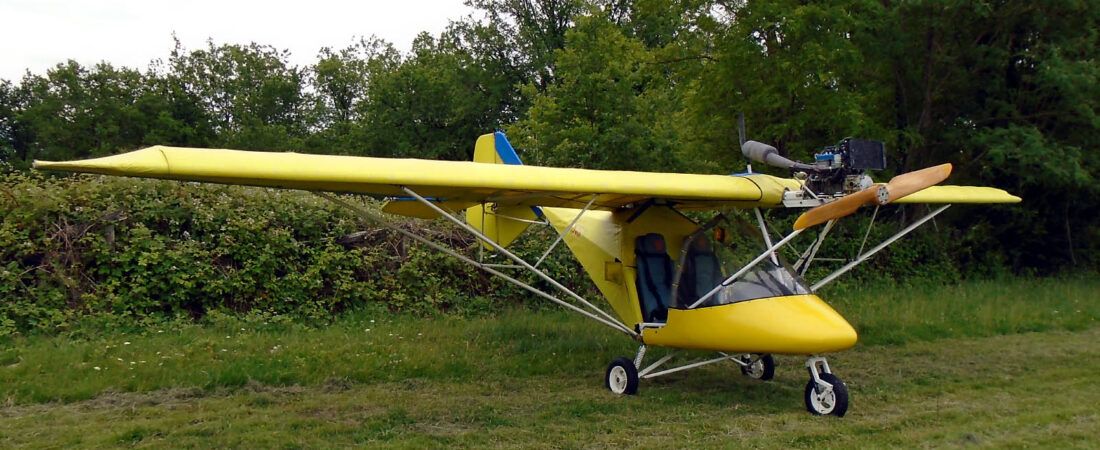
Practical economics

My retirement pension is paid monthly on the same day, directly into my bank account, in euros. So for the past couple of months I, together with all retirees and other people resident in the EU and receiving income from the UK, have been enjoying a bit of a windfall. In the early days of the euro, the exchange rate was a little over 1.40€ to the pound as I recall, but over the years sterling fell back, it standing at 1.20 by the time I bought my house here at the beginning of 2012.

I got a little bit more than that, though, because when you transfer a ‘signicant’ amount of cash, you can get a commercial rate from the specialist foreign exchange firms, just as the rate that applies to my monthly pension payment is always a bit better than you’d get from a high street bank or currency exchange. This is not because my pension is so high, I might add, but because the total amount of sterling being transferred to recipients in France and being converted into euros, allows the company handling the transfer to command a considerably higher commercial rate.

At the time of writing, the pound has been enjoying a six or seven year high against the euro with the rate standing at over 1.38. It recently rose as high as 1.42 but seems to have settled at around 1.38-1.39, which I, and I’m sure many others on a fixed income in Europe, find quite acceptable, thank you, compared to six or seven months ago. And the best bit is that because of the uncertainty involved in the position of Greece within the Eurozone and the quantitative easing measures taken by the ECB (European Central Bank) that are planned to last for a couple of years or so in order to boost the zone’s flagging economy, this situation could continue for some time to come.

This unfortunately is not good news for British exporters, but as their sales to Europe will have dropped anyway due to the parlous state of the Eurozone economy, it’s about time that they pulled their socks up, broadened their horizons and looked further afield to the world as a whole with its massive potential, rather than just trying to sell piecemeal to their next-door neighbours who are on the rocks anyway.

When I first came to France, I mentioned at the time that it was almost always more economical and quicker to source various items from the UK rather than buying them locally. For some things, that still applies despite the change in exchange rate, but it increasingly doesn’t include things that I need for my car. Part of the reason is that I sold my old Vauxhall/Opel Astra and bought my Kia Sportage. But that doesn’t entirely explain it, because I found when I needed them that it was cheaper to buy a steering pump and accessory drive belt from the UK rather than from a French supplier. However, when I searched for new front and rear brake pads, I soon found that sourcing from the UK was out of the question.

But, as usual, because the stupid French suppliers still refuse to recognise the internet and what it could do for their sales, they won’t be getting the business either. Instead, on this occasion it was quicker and cheaper to source the items from Germany. And not only the brake pads. When I checked the discs, which I should have done right at the beginning, I found that all four were shot too and they’re also coming from a (different) German supplier. When will the French get their heads out of the sand and recognise that the world is changing around them – whether they like it or not.

So yesterday, when I went out to fit my new brake pads, I couldn’t. It turned into a lovely afternoon and I couldn’t allow myself to waste it, so I decided that I’d try to get rid of some of the old wood that’s been standing in two heaps and blighting the corners of my garden for many months now. I hoped that I might be able to burn half of it at least, but I did better than that. By dint of a lot of effort and hard work, I not only got rid of all of it, but also managed to burn all of the dead leaves that had been blown into piles in various nooks and crannies by the wind. I was very tired by the end of it, much of which was due to the level of unfitness that I’ve attained over the winter, but it was well worth it and I feel that I deserved the couple of beers that I treated myself to afterwards 😉

A local drive

The short video that I made to test my new little sports cam and put a link to in my last post was taken from a longer one that I shot last Sunday while on a short drive around my local area.

I went down the hill towards Plazac and then turned left to Le Moustier. From there I drove across the bridge over the river Vézère and turned left to go past La Roque St Christophe which is probably the biggest troglodyte ‘city’ in the area. Then I continued on through Peyzac le Moustier to St Léon sur Vézère, one of the prettiest local communes, from where I drove back up the hill and home again.

I’ve edited the video down to eight minutes and put it into the Videos section but you can see it directly by clicking on the following image.

St Léon sur Vézère

Although dry, it wasn’t the nicest day possible as it was rather dull, but the video didn’t come out too badly for all that. So far, I’m delighted with the way the little sports cam is performing and am looking forward very much to using it for the first time mounted on 56NE.

GoPro? Oh no!

I love taking pictures while I’m flying, especially when the vis is for miles and the air is lovely and smooth. It’s nice to be able to look back on them and remember the details of each flight, but they also provide the opportunity to share the pleasures of flying with others who may not have the opportunity to get airborne. And as well as taking still images, I also enjoy shooting videos, but the difference is that whereas you can hold a still camera in your hand when flying alone, a camcorder has to be secured on a mount of some kind.

For my early videos that I shot back in the UK in MYRO, I used the Canon camcorder that I then had attached to a bar mount on a tube above and behind my head inside the cabin. However, I wasn’t at all happy with the position because it showed too much of the inside of the cabin and not enough of the outside, so I then switched to a suction mount stuck on top of the panel. This worked pretty well but I was concerned that the vibration would shake the mount off during flight causing the camcorder to fall and get damaged, so I then switched to a new lighter-weight Canon model.

This worked fairly well and all of my more recent flying videos to date have been shot using that arrangement. It was far from ideal, however, because shooting through the windscreen plastic was always a compromise as inevitably it led to image degradation due to scratches on the screen, reflections and things like that. And although things improved in one way when I moved on to 56NE, my X-Air, because I was able to mount the camcorder outside thus eliminating the problems caused by shooting through the screen, I had no choice but to mount it on an extended bracket which caused vibration and camera-shake that I’ve never been able to eliminate.

But in the meantime, the market has moved on. People don’t use heavy camcorders any more for shooting these kinds of videos – they use specially designed, very light-weight sports cams. These can be mounted almost anywhere because they are so small – on a rider’s or skier’s helmet, on the bonnet or roof of a car, on the handle-bars of a bike or, as in the case of an ULM, even on the wing, nose or tail of an aircraft. And the best known of all of them is the GoPro Hero.

But I could never justify spending the several hundreds of pounds required to buy a GoPro, not even a used one as new models came out, because with each new model the new price went up and the old models still held their value. So I’d more or less given up going the sport cam route – until now that is. Many years ago, Japan had the reputation for being able to copy any product and sell its version at a considerably lower price, but that mantle has now been passed on to China.

So just a few weeks ago I was browsing Ebay, as you do, and came across a low-cost Chinese copy of the venerable basic GoPro sports camcorder. It was a fixed-lens, no zoom design with just a USB connection but it was advertised as being capable of shooting in 1080 full HD mode and came with a huge range of accessories allowing it to be mounted almost anywhere and on almost any surface. And the best part was that it only cost £29 including delivery to France! What the heck, at this price there was nothing really to lose, so I ordered one, and when it arrived a week or so ago, I was actually quite impressed by both its appearance and quality and by the range of accessories that it came with. Here’s a shot that shows what I’m talking about.

null

I couldn’t wait to try it out and grabbed the only spare Micro-SD card that I had once I’d charged up the battery. But I was to be disappointed, because right from the start, although the basic image quality was pretty good, the videos that I shot in and around my garden were peppered with errors. These mainly included coloured flashes across one or more frames and sound going out of sync and even worse, when I did a long recording of a drive over to Galinat, several seconds were cut off the ending of the video while in the meantime the sound kept playing.

But it was my own fault. The little leaflet that the unit came with stated quite clearly that a ‘speed 10’ card must be used, and I’d been using a ‘speed 4’. Luckily, I decided to persist and after ordering a new card from Ebay and being sent the wrong one, I eventually bit the bullet and bought a new 32 GB ‘speed 10’ card from Leclerc on Saturday, paying more than 2/3 of what I’d paid for the complete camcorder kit, including delivery from China, for the privilege. Initial results indicated that this had solved the problem but I needed to shoot a video of 30 minutes or more to be happy that it had actually done so, and a short drive yesterday provided the opportunity.

I’d shot my test videos in the car by mounting the little sport cam on a suction mount on top of the dash, as I’d done with my Canon camcorder for my off-road videos. It worked fine, but as the sport cam is so small and light, I thought that on this occasion, I’d stick the mount higher up, directly on the windscreen itself. Here’s a shot of the basic arrangement that I used.

null

It worked a treat and I’m very pleased with the results. Due to the lightness of the sports cam, 61gm including its battery and only 77gm including the plastic clip that it’s mounted inside in the above pic, vibration is zero and as a result the image quality was surprisingly high, even though I shot it in 720 HD mode rather than the full 1080. I’ve put the video that I shot up in the Videos section but it can be viewed directly by clicking on the following image, which itself was a screen grab taken from the original wmv.

Sports Cam Test

So up to this point, I’m mightily impressed. I use Corel Videostudio Pro editing software and at the end create a wmv file which is of pretty high quality. However, I host my videos myself on the My Trike web site rather than using apps like Youtube and the WordPress plugin that I use requires that I convert the wmv file to a flv. This is much smaller and inevitably leads to a loss of image quality and although I minimise this by using a good converter and settings that over the years I know will give possibly the highest quality flv file possible, the difference is clearly visible. So far, I’m delighted with the results that my new cheap little sport cam is giving. There’s a bit of ‘fish-eye’ towards the edges of the screen, but I don’t think it’s enough to get too fussed over and I just can’t wait to try it out on a flight in 56NE 🙂

Quick, late flight

I had to take some rubbish to the ‘déchèterie’ at Rouffignac today – two old pieces of carpet that the previous resident had left behind half buried in the ground. I should have got rid of them ages ago really, but I only got around to digging out the largest piece earlier this week. I hadn’t bargained for the fact that they would be resurfacing the roads from Plazac to Rouffignac today so by the time I’d discovered that they were blocked, reversed my car and trailer and found my way there and back by incredibly circuitous alternative routes to the south and north, a job that should have taken an hour or so at most took at least twice that.

Then I had to pick up a few things at Intermarché by which time it was late afternoon, but on the way home I realised that despite the vis being somewhat poor, the weather was bright and warm with little or no wind. So after I’d unloaded my shopping, as the days are now getting longer, I quickly threw a short local flight together to make up for the disappointment of yesterday and headed over to Galinat. I decided to head north-west via Les Versannes to La Douze, a commune that sits on the main road from Périgueux to Le Bugue, and then return to Galinat via the overhead of the chateau where we hope to establish the new airfield, taking a couple of photographs along the way. You can see how poor the vis was from the first shot below with the sun behind showing Rouffignac in the distance, and it was much worse looking (and flying) towards the sun, of course.

null

The next few shots are of La Douze, which I was surprised to find I hadn’t taken any shots of before. This is an unflattering time of the year with drab colours and little or no foliage on the trees, so I’ll have to make sure I return later in the year when it should look much more attractive.

null

null

null

Finally, the only shot that turned out to be usable of the two that I took of the chateau in whose field we hope to establish the new airfield. The second picture was taken closer and showed more detail but unfortunately had too much vibration in it.

null

The field in question is the one to the left of the chateau going towards the white building in the top left hand corner of the picture. It could never be described as ‘over long’ but at around 275 metres with an up or down-slope depending on whether you’re landing or taking off, it should be adequate for any but the most slippery of ULMs.

So that was it, just a short flight of 35 minutes, but it made up for yesterday and with rain of varying intensity forecast for tomorrow and the next several days, it’ll just have to do until the weather picks up again. That’ll probably be around the middle of next week – that’s if the forecasts can be believed.

Eventful day

Wim and I had selected today as being the day for a trial landing on the field at the chateau that we would like to turn back into an airfield. We checked a couple of days ago and although the surface of the field was a bit bumpy and pot-holed due to having had horses grazing on it over the winter, it was much dryer compared to when we all got bogged down on it in Victor’s Mehari, although still a bit on the soft side.

Wim went in before me and landed safely and the owners and their dog were gathered around his aircraft when I approached, so after a fly-over to make sure that they knew I was there, I elected to land more to the left of the track he’d used to make sure that there was absolutely no chance of colliding with anyone or anything. It was a mistake because the surface was softer over there and my landing was very poor anyway, as I came in a bit too high and hard. My right main wheel immediately dug into the soft ground and to cut a long story short, the momentum of the aircraft was sufficient to snap the stub axle completely off.

If this had happened in England, all hell would have been let loose, with the need for a repair scheme, approved parts, multiple inspections and goodness knows what, resulting in the aircraft being grounded for probably about a month. But this is not England, it’s France. A close inspection revealed that there was no other damage to the aircraft other than to the landing leg itself. The trailing arm bracket was a bit bent but that only needed a couple of light bangs with a hammer to straighten again. The X-Air’s landing leg is made from a standard aluminium aerofoil section that Wim happened to have a length of in his workshop and as a result, we had the old one off in five or ten minutes to use as a pattern and had a replacement made within an hour or so. Then it was back to the field after a cup of tea to fit it and 56NE was ready to go in less than three hours of the event occurring. Marvellous.

One unfortunate outcome of all this was that having promised the chateau owner’s son a flight in 56NE so he could see the local area from the air for the first time, it wasn’t possible to do it in the time available and he leaves for England tomorrow for about three weeks. But although the weather was quite warm and not too bumpy, it could have been better, so I’m sure we’ll be able to find a better day when he returns. I’m pleased to say that my take off and return to Galinat were without incident and as I didn’t fly direct and did a few circuits of the area, I was able to take a few shots with my ‘new’ (to me) Fujipix to see how it performed.

The first shot is of St Léon sur Vézère which looks quite grim with dull colours and bare trees in this picture but is a lovely spot for a meal at L’Auberge du Pont in the summer.

null

The next shot is of the Chateau de Peuch, which is situated to the south of Plazac on the back road that winds up the hill to Fleurac.

null

It was owned by a Dutch industrialist who died a few years ago and his widow eventually decided to sell it. I heard that it has recently gone for €3.5 million, to a young British couple with small children, but have not had this confirmed. Apparently they also managed to acquire the houses close by the property as well, so it’s alright for some!

The final shot is of the privately owned chateau that is half-way down the hill between my house and Thonac. It has large and slightly formidable automatic metal gates and a stone tower next to it, visible in the photograph, that is on a similar angle to the Leaning Tower of Pisa.

null

So as the heading says, quite an eventful day taken all round. Fortunately, no real harm was done to person or plane so as I said to the owner of the field where it all happened this evening, it’s all just part of life’s rich tapestry 😉

Excellent spring flight

My younger stepson, Justin, was working in Paris last week and will also be this, so had to stay over in France for the week-end. After a bit of uncertainty as to whether he should come down to Plazac or not on account of my house’s blocked waste pipe problems, in the event he did and arrived by train at Brive early on Saturday afternoon.

It was great to have him here because he was working in Princeton, New Jersey for 10 years or so where he and his wife, Sharon, had their two children, returning to live in Edinburgh only quite recently, and I hadn’t seen him for quite some time. He couldn’t have chosen a better week-end because the weather both days was balmy and more than spring-like with temperatures of around 19/20 degrees Celsius and we were able to sit outside catching up with a few beers and even enjoying an al-fresco lunch yesterday.

He could only stay for one night but with his train back to Paris leaving from Brive at 6.00 pm, we had time to get in a flight over the local area yesterday afternoon. Wim flew into Galinat for it and we flew part of it together, and although we didn’t follow it exactly, this is what my planned route looked like.

null

As well as having the chance to see what the Dordogne is like from the air, Justin was also able to see all of the places that I’d shown him by car in the limited time that we’d had on Saturday, including the restaurant in Les Eyzies where we had dined on Saturday evening with Wim and Sophie. Wim and I were also able to overfly the site of the proposed airfield that Victor and we want to re-establish after its having been closed for the past 20 years or so, although not too low as we hadn’t told the owner that we would be doing so.

The weather was beautiful, not too cold and with the air totally calm, so it was a flight that Justin will probably remember for some time to come. I also enjoyed having the opportunity to show him the area where I am now making my new life and I’m greatly looking forward to the first time when he is able to come back again together with all of his young family.