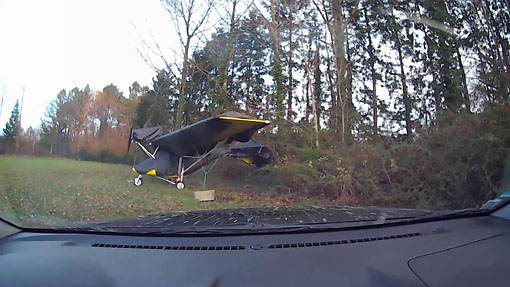
And about time too!

It looks as though the long spell of bad weather that we’ve been experiencing for the past several weeks is at last approaching its end. A bit more rain is expected up to the coming Friday but as from Saturday it looks as though our weather will start to get back on track. As well as then having at least a week without rain to look forward to, or at most just a few odd spots every now and again, temperatures next week should also start climbing up to highs of around 16 or 17 degrees Celsius, which will be nice.

This is great news, because it will mean that as well as being able to get some flying in in ASY, I should also be able to get the covers off 56NE and make sure that it’s tidy and in good shape to be advertised for sale. It was still looking OK when I last checked after the work I did last year in preparation for our west coast tour, despite the awful weather it had been standing out in under its covers over the winter. So hopefully I won’t need to do much to it before placing an ad on Le Bon Coin and I’ll be able to find a buyer for it without too much delay as the weather improves. I mean, owning a gaggle of ULMs is fun, but it isn’t what I intended!

I’d also like to think that I’ll be able to move ASY over to the barn at Malbec so it is under shelter out of the weather. However, I’ll have to wait and see as that will depend on whether Philippe manages to finish repairing his hangar roof or not.

Better? Better!

Well, a bit anyway. When Wim dropped in this morning with the dogs for our regular Saturday morning coffee and chin-wag, rainy squalls were still passing through. Shortly after he arrived, the sun came out and although we had the occasional light shower after that and the sun kept disappearing from time to time behind angry looking grey clouds, the weather improved a bit. It still remained rather windy, though.

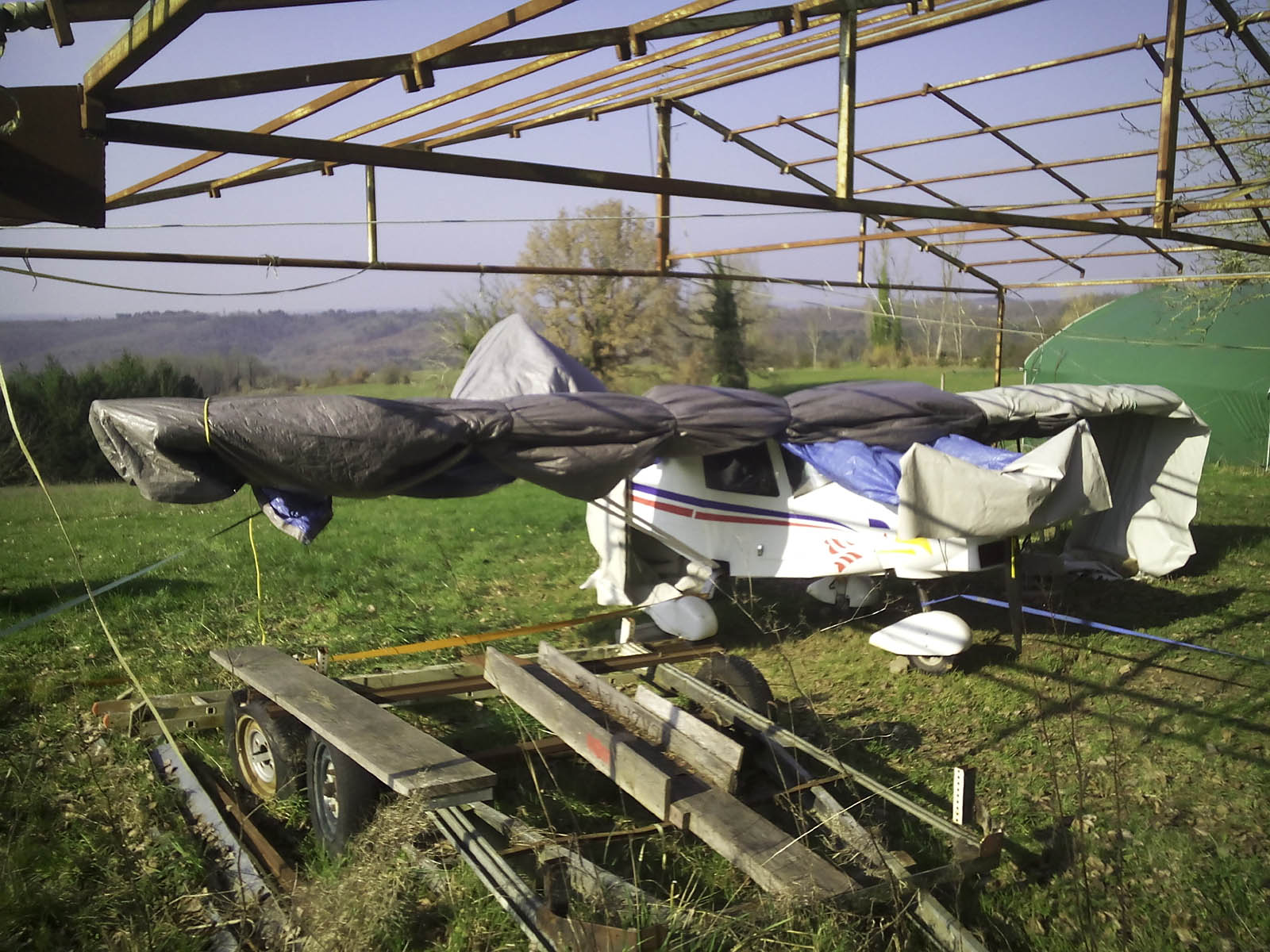
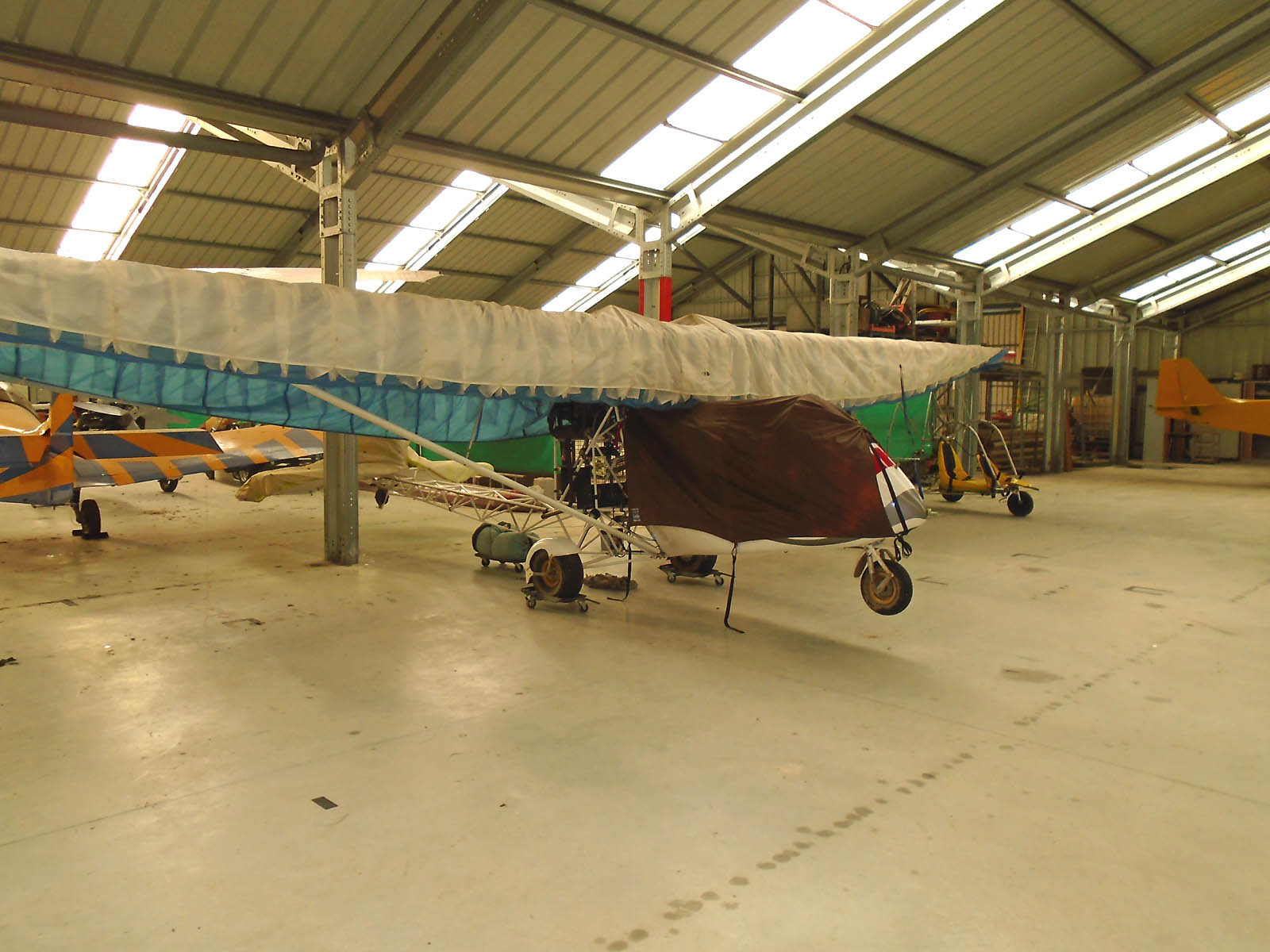
So I took the opportunity to nip across to Galinat with the aim of replacing the two of Régis’s heavy old covers that I’d used on the Savannah’s left wing and rear fuselage with the lighter ones that I bought yesterday and generally seeing if I could improve the job I’d done of wrapping the aircraft up against the weather. In fact, it was still too windy to do much more than replace the heavy covers and try to rearrange the others a bit because if I’d tried to take any more off, they and I would probably have ended up being blown across the airfield.

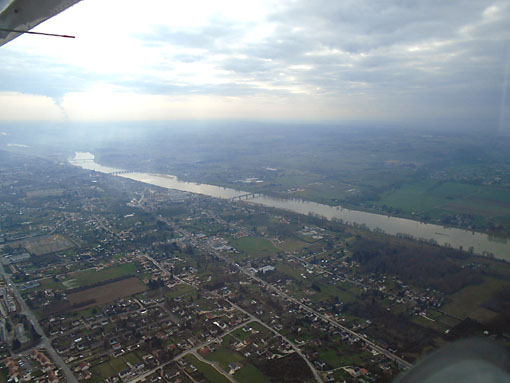
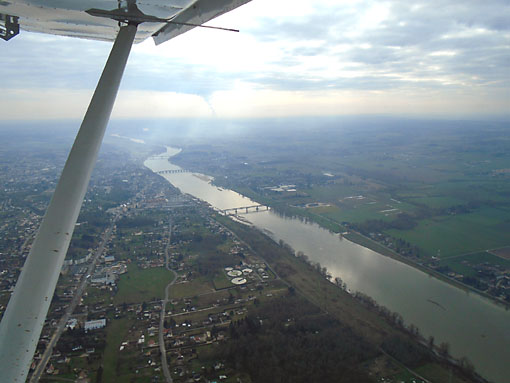
But the end result, although not ideal, was definitely an improvement, as the following pictures show.

null

null

null

Anyway, that will have to be it, I think, until the weather begins to pick up and I can prepare ASY for a move to Malbec. Much as I’d like to be able to get a flight or two in if there’s the odd break in the weather, as I mentioned before, taking off and replacing the covers would be just too much of a fag.

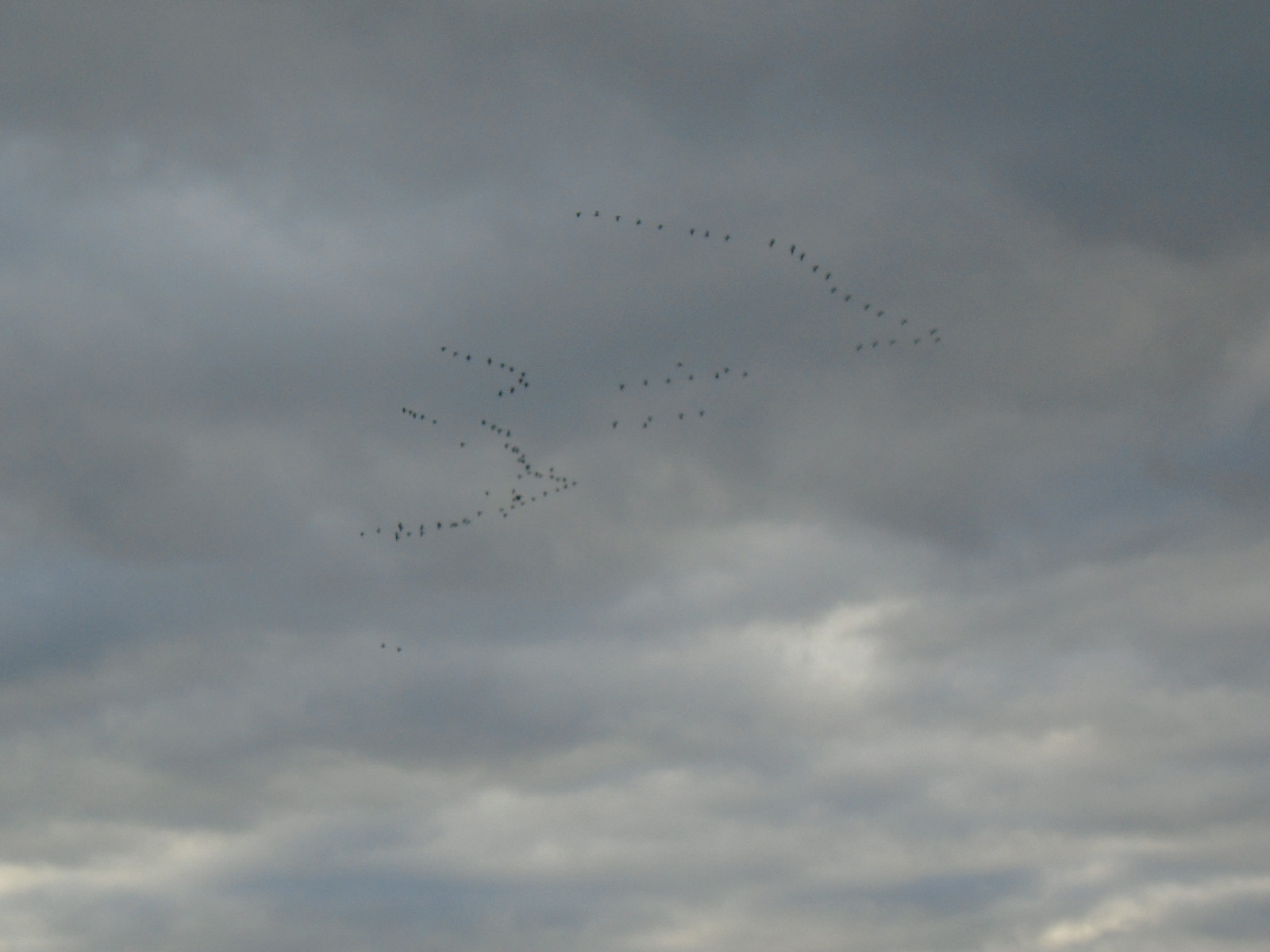
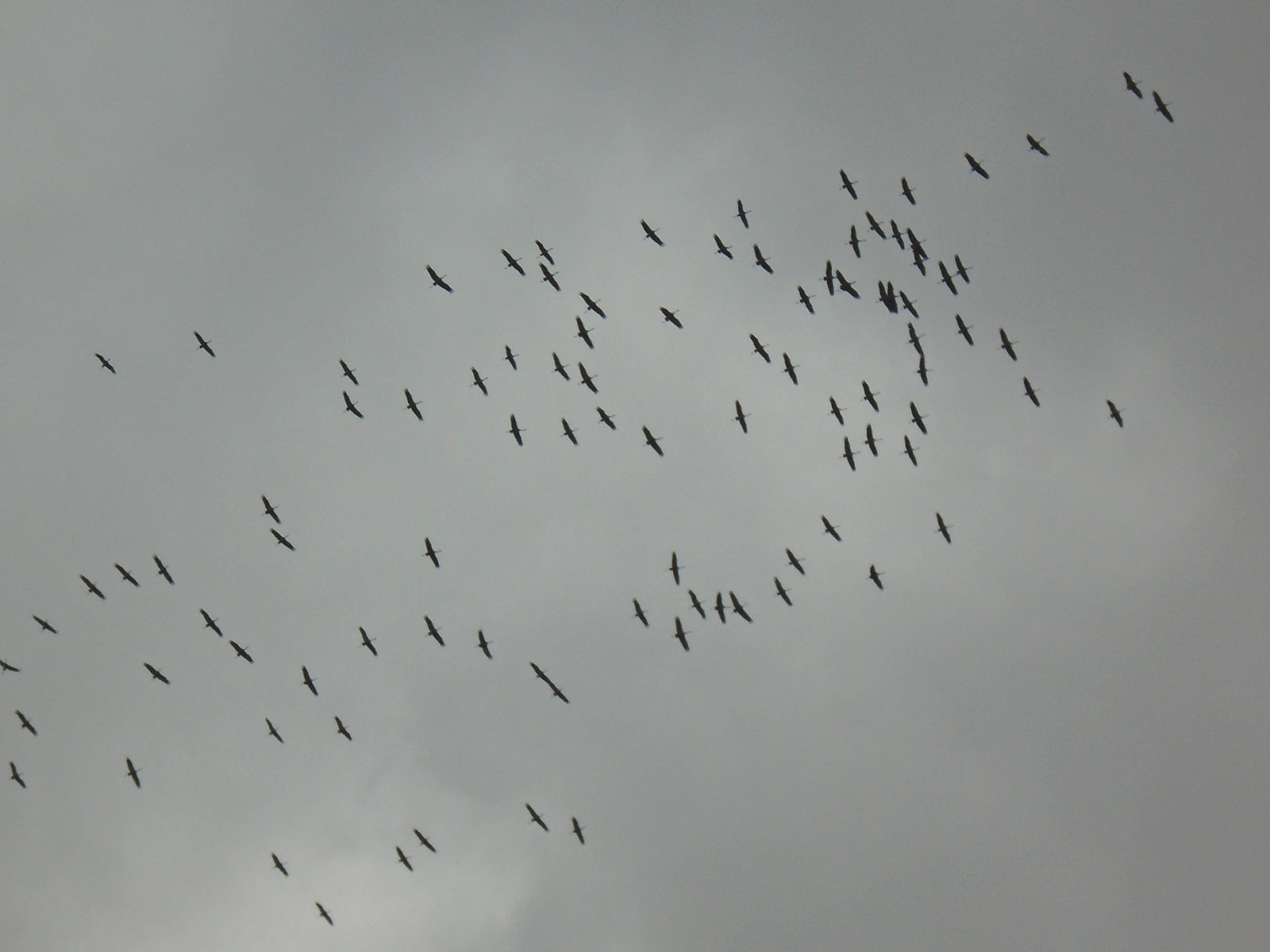
And then as I was driving up the hill to get off the airfield, I heard that familiar sound – it was a large flight of cranes making their annual trip north. Every year at this time, these courageous birds instinctively decide when winter is over and begin their heroic flight from their winter nesting grounds in North Africa and southern Spain to their summer homes in northern Europe. Its a spectacular sight and a privilege to see hundred upon hundred of these birds calling non-stop as they plough unerringly northwards, especially when faced with a cruel head-wind as is the case this year.

I jumped out of the car and grabbed my camera and there were two groups almost overhead Galinat. As I watched, they sensed that there was ridge-lift caused by the deflection of the northerly wind by the hillside and their echelons began to break up as they merged and came together into two groups. They then began to wheel and circle with wings outstretched and hardly moving as they began to ascend in the updrafts, carried southwards as they climbed.

The first group was more successful than the second and resumed their flight north having gained at least 500 feet, I would say, without being blown back too far south. The second group were not so lucky, and when I got back into the car after taking a few pictures, they were still calling and trying to climb having been blown back at least a coupe of kilometres or so.

Here are some of the shots that I took of them. It’s a pity that the sky was so grey.

null

null

null

Are they right and is winter really over? They are rarely if ever wrong, so maybe there’s some hope that the weather actually will begin to pick up some time soon. One local weather forecast shows that we should be heading into warmer, sunnier, more settled weather as from next week-end. I just hope it’s right!

Still raining

One of the things about running a blog like My Trike is that you can look back at old posts and compare now to then. I did that yesterday and this is definitely the worst February/March that we’ve had since I’ve been here, starting from 2013. We’ve inevitably had a bit of wind and rain every year at about this time but this is the first year that we’ve had such strong winds and rain together, going on for so long.

I remember my old Vauxhall Astra estate getting bogged down on Galinat’s apron in 2014 but just like the other years, that period of bad weather was soon over and things quickly began to pick up going into March. OK, it must happen some time this year too, but unlike in previous ones, there are no signs that it’s going to happen any time soon. In fact we’re forecast to keep getting more of the same for a while yet.

I dropped into Galinat less than an hour ago on my way back from Montignac and was pleased to see that with the wind having dropped a little bit for now, ASY’s covers were still in place and only the small area of fuselage that I mentioned in my last post, to the rear of the passenger door, is being directly rained on. For now, but then that’s better than having driving wind forcing it in under the covers so everything is permanently soaked the whole time.

I picked up another two light-weight 5 x 3 metre weather-proof covers from les Briconautes while I was in Montignac so with a bit of luck I’ll be able to take the two of Regis’s big old ones off and make a better job of wrapping ASY up tomorrow. If there’s a long enough break in the rain, that is.

Not pretty

I nipped across to Galinat to check on ASY earlier on. I’m glad to say that despite the biting north-westerly wind still persisting, the covers hadn’t moved much since I secured them yesterday. We had rain overnight but have had nothing to speak of today. But there’s more to come tomorrow and Saturday, so I just hope that everything stays as it is until that’s gone through.

If the aircraft’s then got to stay where it is for much longer, I’ll probably get some more lightweight tarps from les Briconautes and do a better job of wrapping it up than I have at present. At least it’ll then be more protected, although apart from looking awful and not very pretty (to say the least), it shouldn’t come to any harm as it is now.

Once again, I also checked on 56NE and once again, its covers had hardly moved. But no point making similar ones for ASY if it’ll be moving into the barn at Malbec before too long.

Double whammy

Double nightmare. The weather forecast for the coming few days is pretty awful, if not horrendous. We’ve had cutting north-westerly winds all day with continuous gusts of between 30 – 40 mph together with regular squalls of driving rain. And it appears that we can expect more of the same non-stop for the next 4 or 5 days. Yes, pretty much non-stop.

I went to check on the Savannah today and found that the cover I’d put over the nose and engine cowling had blown up but was able to pull it back down again and secure it with another bungee. The same had happened with the cover that I’d put over the rear of the fuselage but although I was able to pull that down too and secure it with another bungee, it was impossible to cover up the rear of the fuselage behind the passenger door which is now pretty much exposed.

The wind is driving into the temporary covers that I put over the Savannah from its right rear quarter and not only is there no shelter at all from that direction but there’s nothing I can do about it except wait and hope that everything holds until the winds begin to abate. That will probably not be until Sunday, although the rain will persist even after they’ve dropped.

If I’d known that the weather was going to be quite this bad, would I have left the Savannah up north in its hangar for another couple of weeks? Yes, I think I probably would have. Ironically, the covers that I made for 56NE, which are fitted, have hardly budged an inch in the wind and rain 😐

Savannah – update 3

Wim had been waiting patiently for about an hour for me to arrive on Friday as I was running something over an hour late compared to my flight plan. Not only had the strobe light incident and the enforced comfort break delayed me but I’d also achieved a lower than anticipated groundspeed. Partly this was due to the fact that I’d limited my revs in the cruise to 4250 rpm as I had no feel for what fuel consumption I might get and there were limited options to land and top up the tanks on the route that I’d chosen.

Those revs only resulted in an airspeed of around 140 kmh compared to the 150 kmh that I’d used in my flight planning, and on top of that, the indications were that there was more of a headwind element than had been forecast. However, being a pilot himself, Wim appreciated why I had to fly in a conservative manner and luckily he had been able to sit in my car and listen to a CD – the same one the whole time, unfortunately, as he told me that he had no idea how to turn it off 😀

We decided that as Regis had recently sold his Zen 701, the best idea would be to move ASY to where his aircraft had been parked, the more so because some heavy weights and tie-downs had been left there which we could use for the Savannah. There were also some covers, but I told Wim that I was reluctant to use them for fear of their scratching ASY’s paintwork in the wind, so we just tied the Savannah down and went off for what was for me a very welcome cup of tea at Wim and Sophie’s place.

However, as soon as I saw how wet the weather forecast was for the coming week, I knew that I had to reconsider my decision about using the covers, and with rain forecast for later in the day and also for several more days in the coming week, I loaded my own lightweight covers together with a bag of bungees in the back of my car on Saturday and arrived at Galinat late morning to apply them. My main problem with Regis’s old covers were that they were very heavy and if placed on the wings, they could easily damage the light tubular air vents that are mounted on the Savannah’s fuel filler caps. I thought that my lighter covers would prevent that.

Unfortunately, shortly after I arrived at the airfield, the rain arrived early and like it or not, I had to put the covers on while it began falling more and more heavily. In the end, I was pretty much soaked and my clothes covered in muddy marks from the dirt that was already on the old covers that I was reusing. But it was lucky that I had decided to do the job, because when I opened the cabin door and looked inside just as I was starting, I noticed a small but steady drip of water through the seal of the cabin top window and onto the left hand leather seat back below, which stopped as soon as I put a cover over the top.

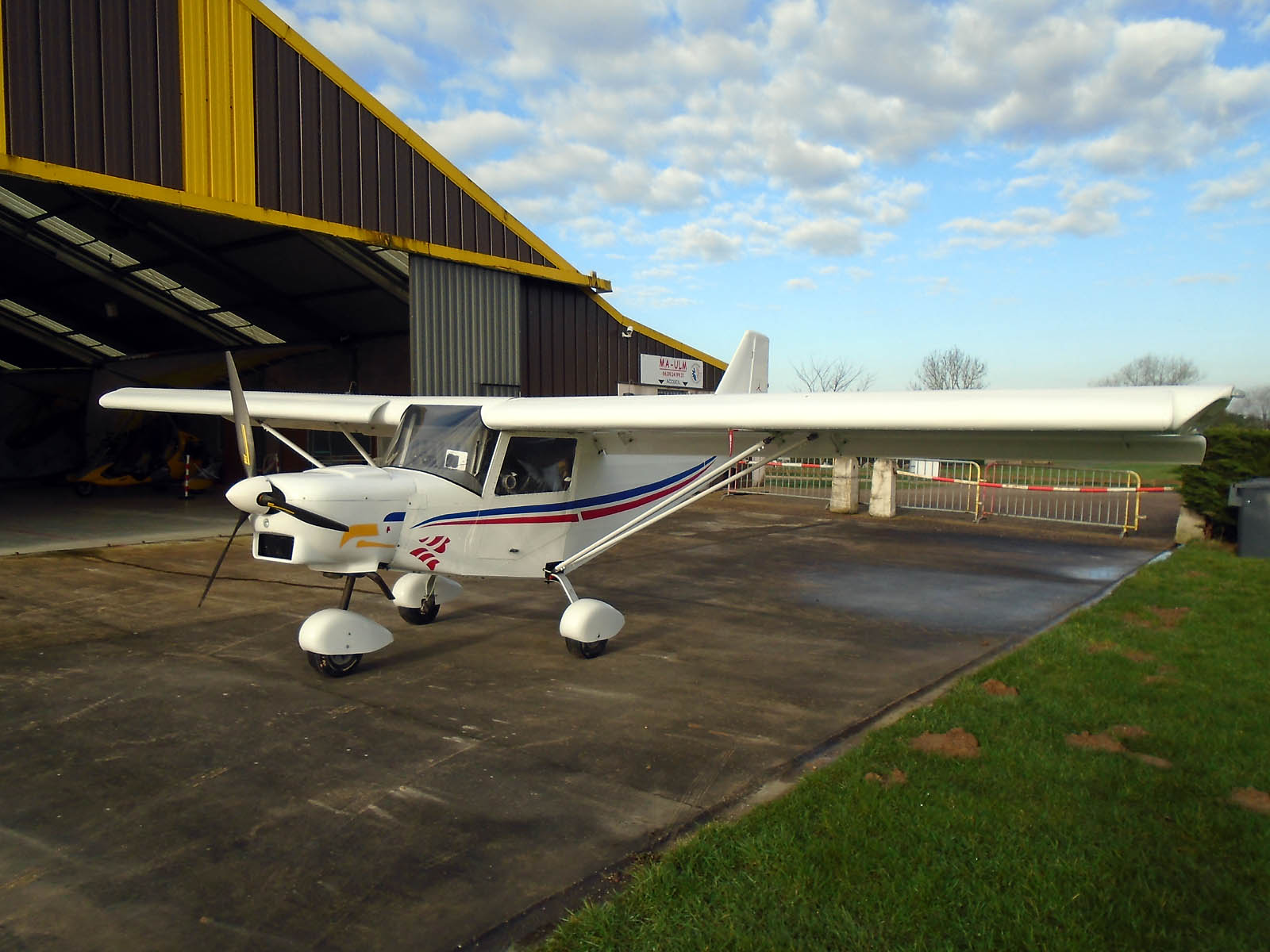
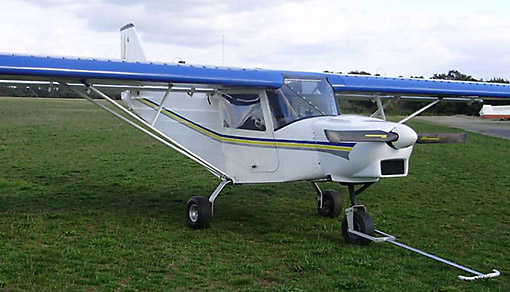
When I think how the Savannah had been kept safely for many years in a nice warm hangar, it was sad to see how it looked at the end of the job. Sure, it must have been more protected than if it were just parked in the open, but it looked a bit of a sorry sight to behold. Here are some shots, the first taken just after I arrived at Galinat when ASY was still uncovered, and the later ones with the covers on and the rain still lightly falling.

null

ICP Savannah at Galinat

ICP Savannah at Galinat

null

null

null

null

null

null

null

OK, it’s only a temporary arrangement until ASY can be moved over into the barn at Malbec and it must be better for it to be covered in the meantime rather than just be left out in the open. Nevertheless, it almost feels as though I’ve desecrated it somehow, by making it look so awfully scruffy 🙁

I went over to Galinat to check on things this afternoon on my way back from the supermarket. Apart from the fact that the wind had blown the cover off that I’d placed on the empennage, things didn’t look quite so bad in the sunshine as the following pictures show that were taken before I left after I’d secured the tail cover more firmly.

null

null

null

null

I’ll have to decide what happens now, of course. I’ll know soon how long Philippe will have to keep his Citius in the barn at Malbec while he repairs his hangar roof. If it’s only going to be a few more days, much as I’d like to be flying ASY when I get the chance whenever there’s a weather window, I think I’ll just leave things as they are because, quite honestly, as I know only too well from experience, removing and replacing covers is a real pain. However, if things are going to drag on for a longer period, I’ll have to look at the options again to decide which direction to take.

Savannah – update 2

So after an exciting and very pleasurable day’s circuit flying at la Ferté the day before – 55 minutes in the morning and 45 minutes in the afternoon – the day finally dawned to make the flight down to la Dordogne. Despite the forecast that the morning would be cold early on but would warm up by 10.00 am, the temperature nevertheless stayed stubbornly below freezing with a heavy frost and ice on the hangar apron.

The main result was that the layer of ground-hugging mist that hung over the land as far as the eye could see, refused to budge even after the sky adopted a sunnier, bluer hue with thinning clouds. However, I knew that the further south I flew the better the conditions would become and as the visibility otherwise appeared pretty good, I decided that the time had come to take off.

The Savannah had had its tanks topped up the previous evening and both Robert and I had given it a thorough inspection, so there was no need for further delay. And then the only event that marred the day occurred while I was moving the aircraft. Due to an error of judgement on my part, the right wing tip lightly skimmed against an obstacle. Luckily this resulted in no damage to the wing tip itself, save for a little bit of paint scuffing, but it broke the strobe light, dammit!

This was upsetting but was not a disaster as after a roll of gaffer tape had been produced, the light fitting was taped over to make it OK for the flight and in no time I was taxying out to runway 22. After checking the T’s and P’s and mag drops, I lined up and applied full power. ASY accelerated down the runway, but things felt different to the day before. Today the acceleration was much slower and after travelling what seemed like a couple of hundred metres, perhaps more, down the runway, I decided to abort the take off.

Just before I closed the throttle, however, I noticed that the engine revs were where they should be, so I concluded that the engine itself wasn’t the problem. The difference was just down to the extra weight on board, full tanks compared to half tanks the day before, and the state of the runway.

Previously I’d been using 04 whereas today I was on 22 and I then remembered that Robert had warned me about the state of the surface at that end. So as I turned off the runway and began to taxi back to the holding point, I waved Robert away as he began to approach the aircraft as I taxied to investigate what he thought was a potential problem.

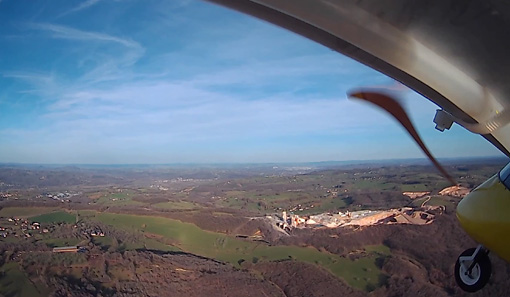
I told him over the radio that I didn’t think that anything was wrong and that I was going to give it another go, which is what I did. And this time I kept well to the left of the centreline and got away, albeit with a bit more of a take off roll than previously. As I climbed away, I bade ‘Au revoir’ to the guys on the ground and then began to turn my attention to the flight. The mist, as I’d expected, wasn’t a problem once I was airborne and the vis was actually pretty good, despite there being no defined horizon at that time, as the next picture that I took shortly after getting to about 2000 feet shows.
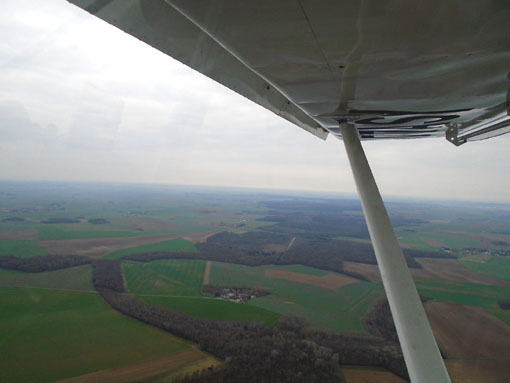
null

My first waypoint, Provins and then a shallow turn to the right.
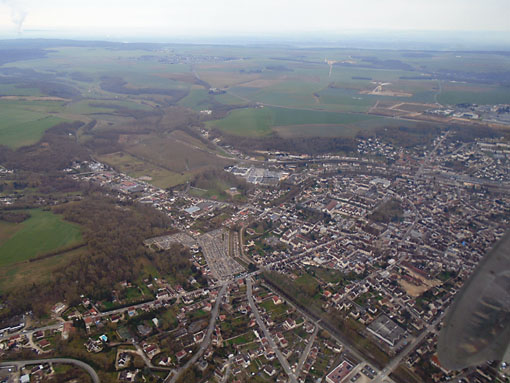
null

And a short while later, a spectacular view of a canal and system of lakes bounded by the towns of Vimpelles, Bazoches-lès-Bray and Châtenay sur Seine, a few tens of kilometres to the north of the Loire.
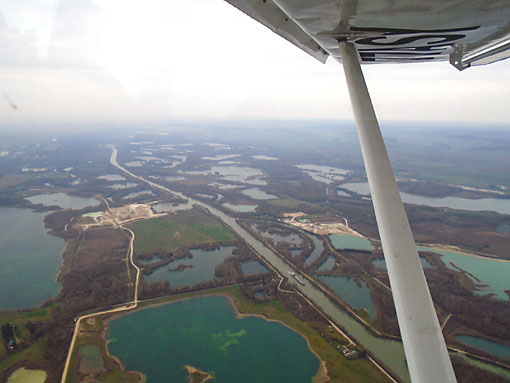
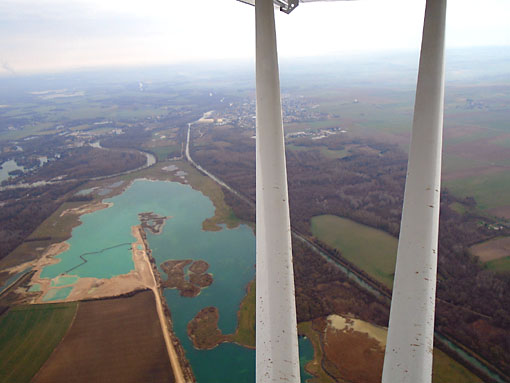
null

null

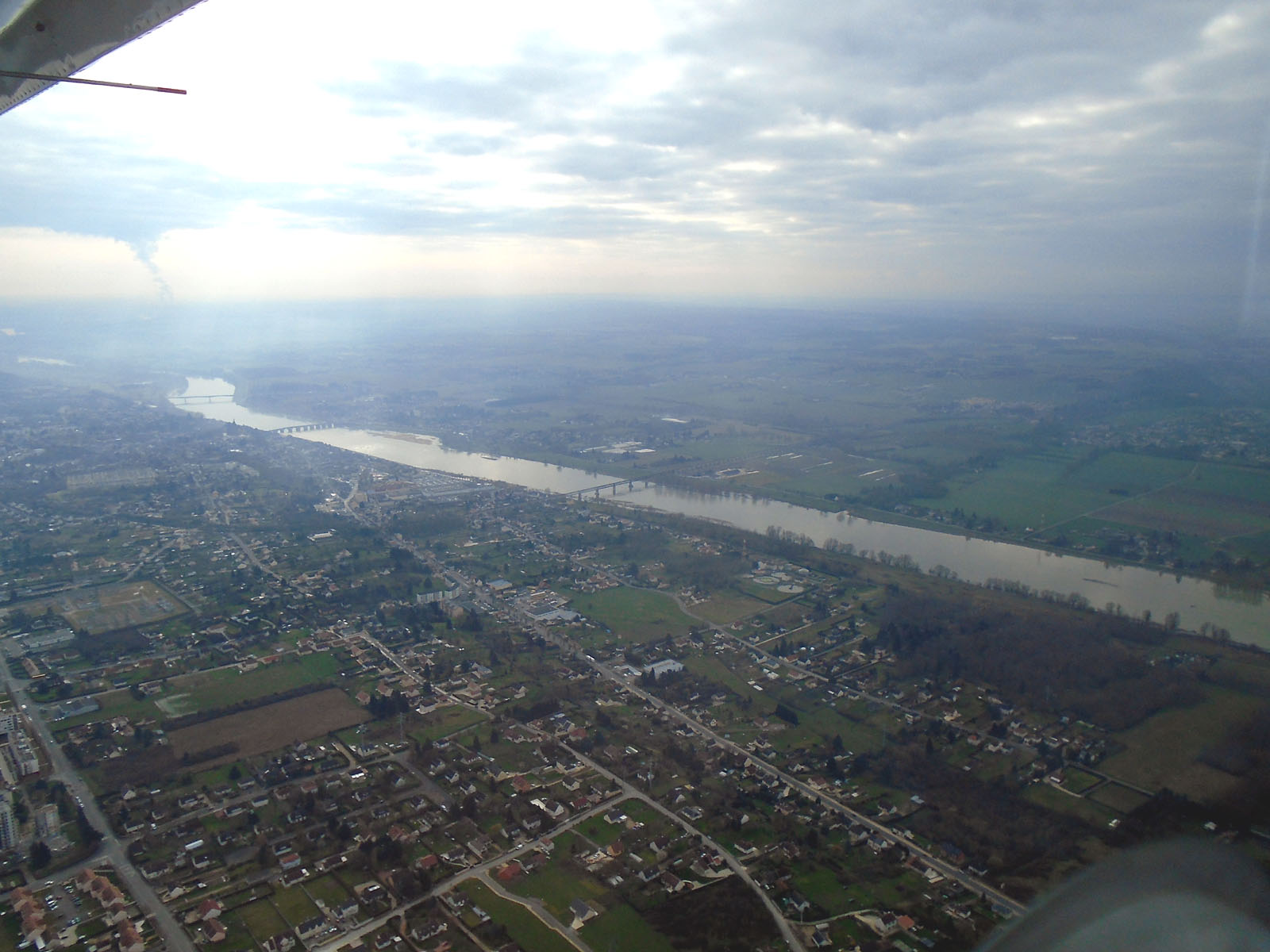
Now approaching the town of Gien on the northern bank of the river Loire, with it’s distinctive northern road and roundabout layout that’s also clearly visible on Google Earth.
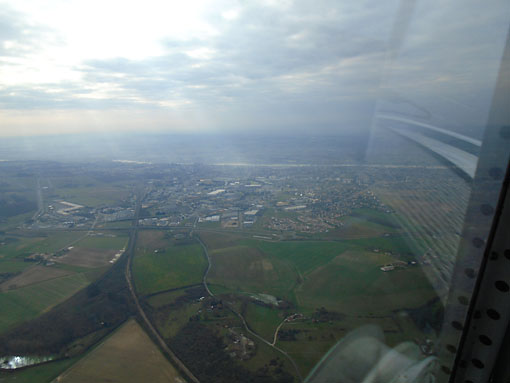
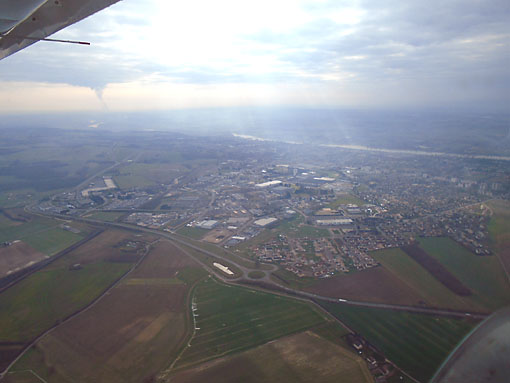
null

null

A shot taken at the time on the other side of the aircraft of one of the many power stations dotting the landscape in this part of France belching out their clouds of steam into the atmosphere.
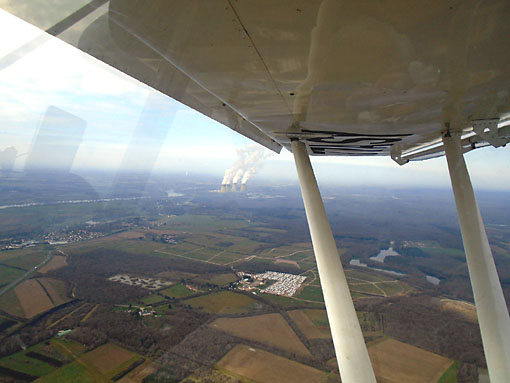
null

Now a couple more shots passing overhead Gien and the Loire itself.
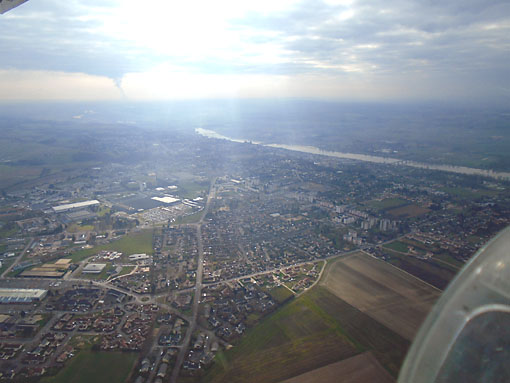
null

null

null

It was about this time that I began to experience, let’s just say, some discomfort in the nether regions. I’d had my usual ‘hotel’ kind of breakfast of cornflakes, croissant, orange juice and coffee but that had been some time ago, and although I’d drunk another small coffee since then, I’d taken the opportunity to pee a couple of times before taking to the air.

There is a tube that brings heat from the engine into the Savannah’s cabin but it’s not that efficient and it was not exactly what you could warm in there, so I guess that the principal factor was the cold. But what was more important was the effect that it was beginning to have. I saw the aerodrome at Aubigny pass under my right wing and toyed with the idea of landing there before deciding to continue on. I still had a good couple of hours flying to do but I thought that I’d be able to make it while still avoiding any unfortunate personal accidents.

But it was not to be. Within half an hour the need to pee had become extremely urgent, to the point that I knew that if I wasn’t able to do something about it pretty soon, the matter would be taken out of my hands, so to speak! And then a vision passed before my eyes. As I gritted my teeth, I looked below and saw, as revealed on my GPS, the aerodrome at Issoudun passing almost vertically below me. So I took an instant decision!

There was a total absence of movement on the aerodrome because, as I found out afterwards, the aero club there is for ‘planeurs’ (gliders) and they obviously wouldn’t be flying on such a day in such weather. So I cut the gas, shoved the nose down and hurtled earthwards like an express lift. Issoudun has a multiplicity of long grass runways and I didn’t care that I’d be landing downwind on the main one as there was plenty of length to stop in. I put 20 degrees of flap on and I have to admit, slightly exceeded the flap speed limit in my haste to get down, but landed safely, taxied up to the hangar, cut the engine, jumped out and raced across to the corner of the building.

The relief was absolute bliss. I peed twice before taking off again to resume my journey south and here’s a shot I took of ASY in front of Issoudun’s cafe/bar and hangar before climbing back in and restarting the engine. Important Memo – for my next long flight, come prepared with a large, wide necked plastic bottle 🙂
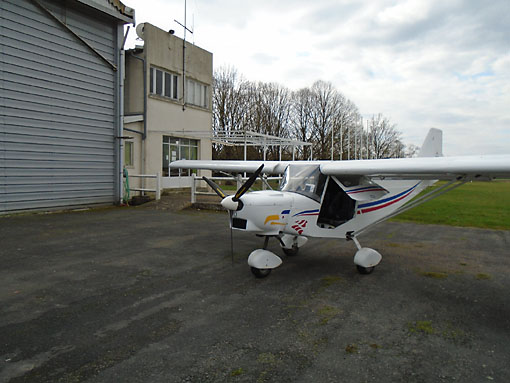
ICP Savannah MXP 740 at Issoudun

I back-tracked on Issoudun’s main runway and took off into wind, which had me heading in the ‘wrong’ direction after take off. So I then just put ASY into a steep climbing right-hand turn, much as I’d experienced with the owner of the Savannah I flew in in the Mourbihan the day after I’d first seen ASY, and was soon back at altitude and on track.

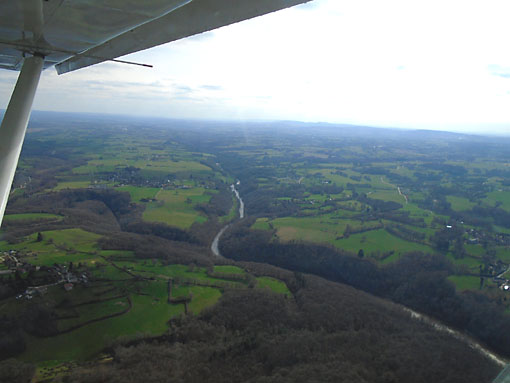
I’d already left Argenton some way behind me and just off to my right after taking off from Issoudun was Chateuroux, with its large airport, soon followed by Vierzon, all places with names well-known by drivers heading south on the the main A20 autoroute, known as ‘l’Occitane’. But my mode of travel was much more rapid than theirs. It had taken me almost 8 hours a day or so before to get from Plazac to la Ferté Gaucher and now I would be making the return journey in under 4. And the next large city that I’d be passing abeam was Limoges. Here are a couple of shots of the countryside in between.
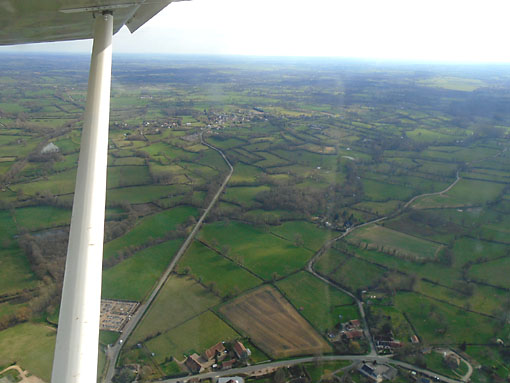
null

null

As I already knew following my flight south nearly 4 years ago in MYRO, the ground rises up ahead of Limoges and as I’d been flying mostly at 2000-2500 feet, I had to climb up to nearly 3000 to maintain good terrain clearance. Here’s a shot that I took out of my left window.
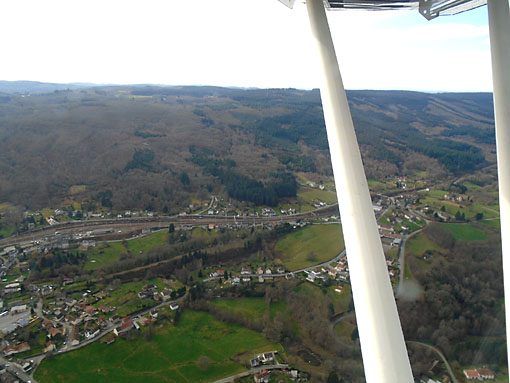
null

And here’s a shot that I took at the same time in the opposite direction, showing high ground and houses on about the same level as I was at.
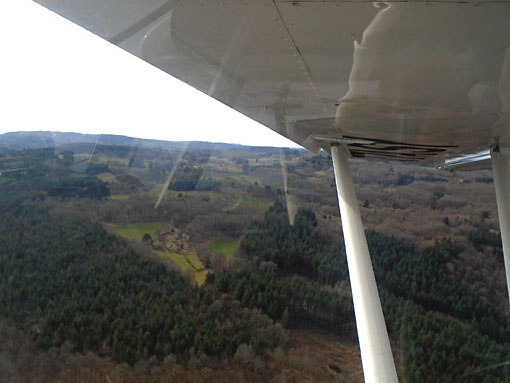
null

Just afterwards I passed east abeam the city of Limoges, which is visible in the distance in the next shot.
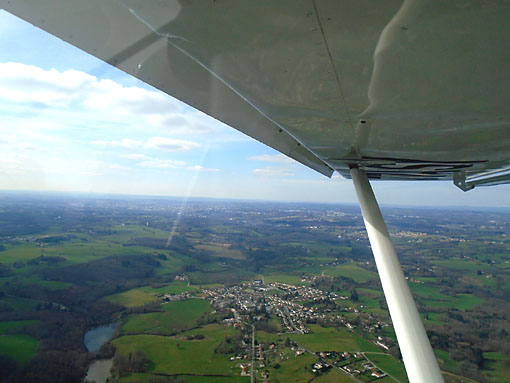
null

Apart from a brief period of severe turbulence that caused me little discomfort as ASY is a responsive and comfortable aircraft, the rest of the flight was fairly uneventful. Here’s a shot of the typical Limousin/Aquitaine countryside that I passed over.
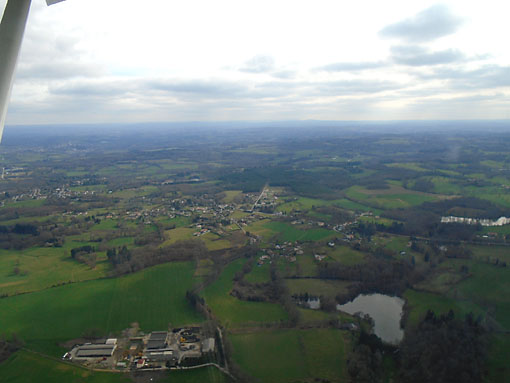
null

Eventually the familiar and welcome sight of Montignac hove into view and shortly after I was preparing myself for a landing at Galinat. By setting up a long final from just south-east of Thonac, I was able to get my speed down enough to apply 20 degrees of flap, which I knew would give me ample opportunity to pull up on Galinat’s upward sloping runway. The plan worked a treat and I had to apply power, as usual, to taxy up to the top end where Wim had been patiently awaiting my arrival.

It was very satisfying to taxy ASY round to Regis’s aircraft’s old parking place, and even more so to go off for a most welcome cup of tea with Wim and Sophie after we’d tied ASY down and made everything secure. A great flight of dead on 4 hours, excluding the comfort-break midway 😉

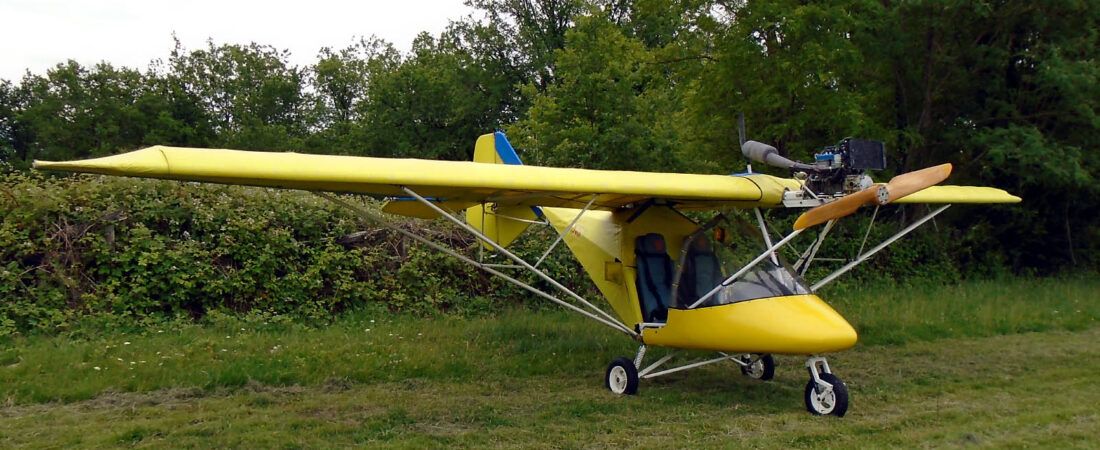
Savannah – update 1

After picking me up at the little railway station at Coulommiers on Wednesday evening (24 February) Robert had dropped me off at the hotel le Grand Terre on the airfield at around 7.30 pm and given me the code to the ULM school door so I could let myself in. So after having breakfasted in the hotel, I did so on Thursday morning. Before leaving home, I’d made a temporary plastic bracket to mount my tablet on up on the top of the Savannah’s panel and it only took me a few minutes to fix it in position using the velcro strips that I’d applied to it.

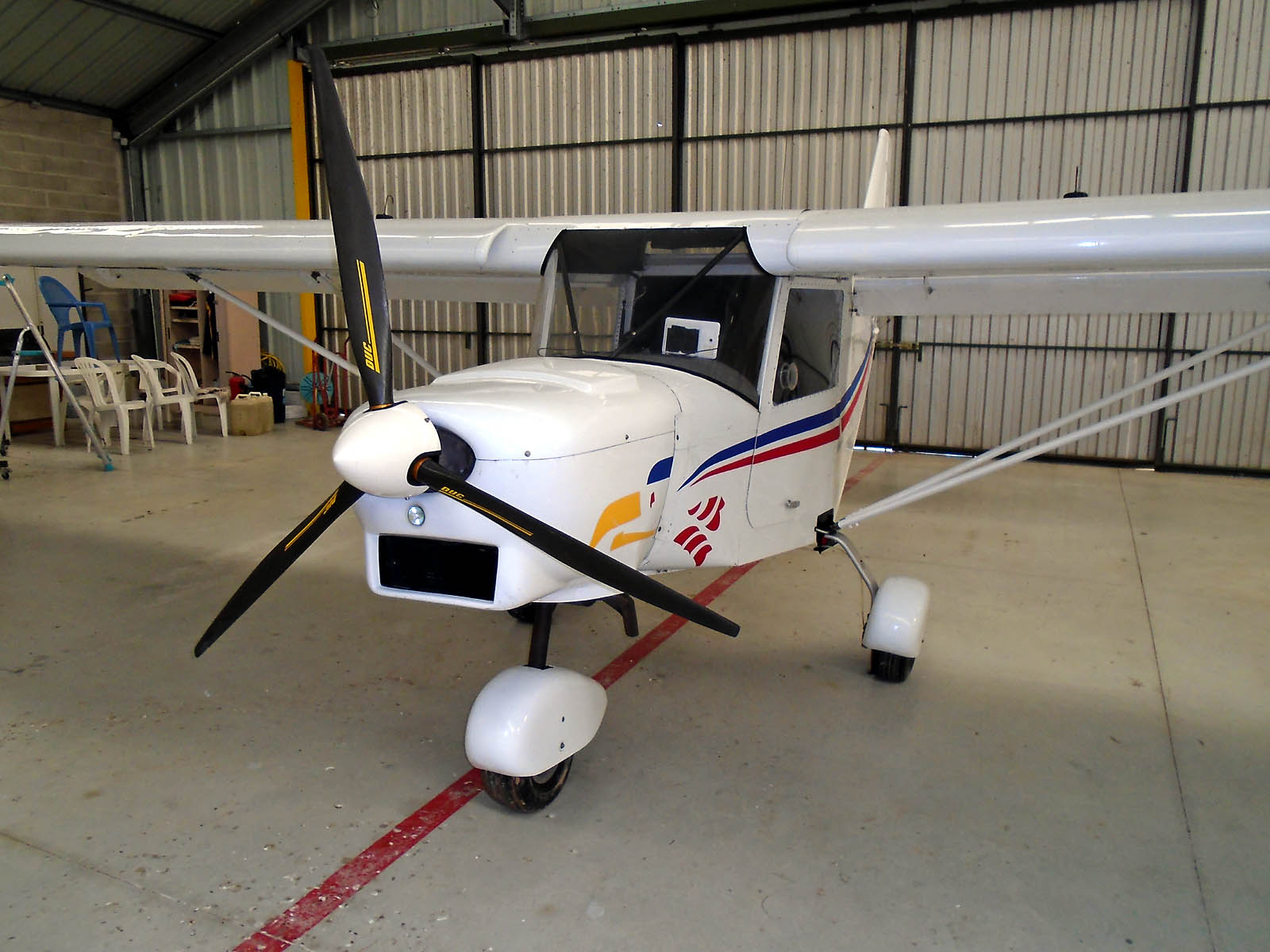
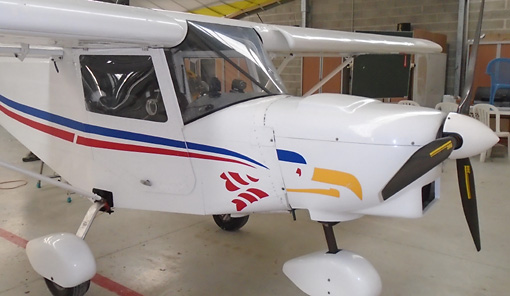
So then I decided to take a tour of the hangar and take a few photographs as I went, something that I’d not got a chance to do when I originally came to la Ferté to view the Savannah. First a few shots of ASY standing in the hangar after I’d fitted the bracket and attached my tablet to it. As expected, the tablet was sitting a bit high in the windscreen but that was something that I would be able to address when the aircraft was down at Galinat, as it wasn’t high enough to obscure my vision by too much.

ICP Savannah MXP 740 at la Ferté Gaucher

ICP Savannah MXP 740 at la Ferté Gaucher

ICP Savannah MXP 740 at la Ferté Gaucher

ICP Savannah MXP 740 at la Ferté Gaucher

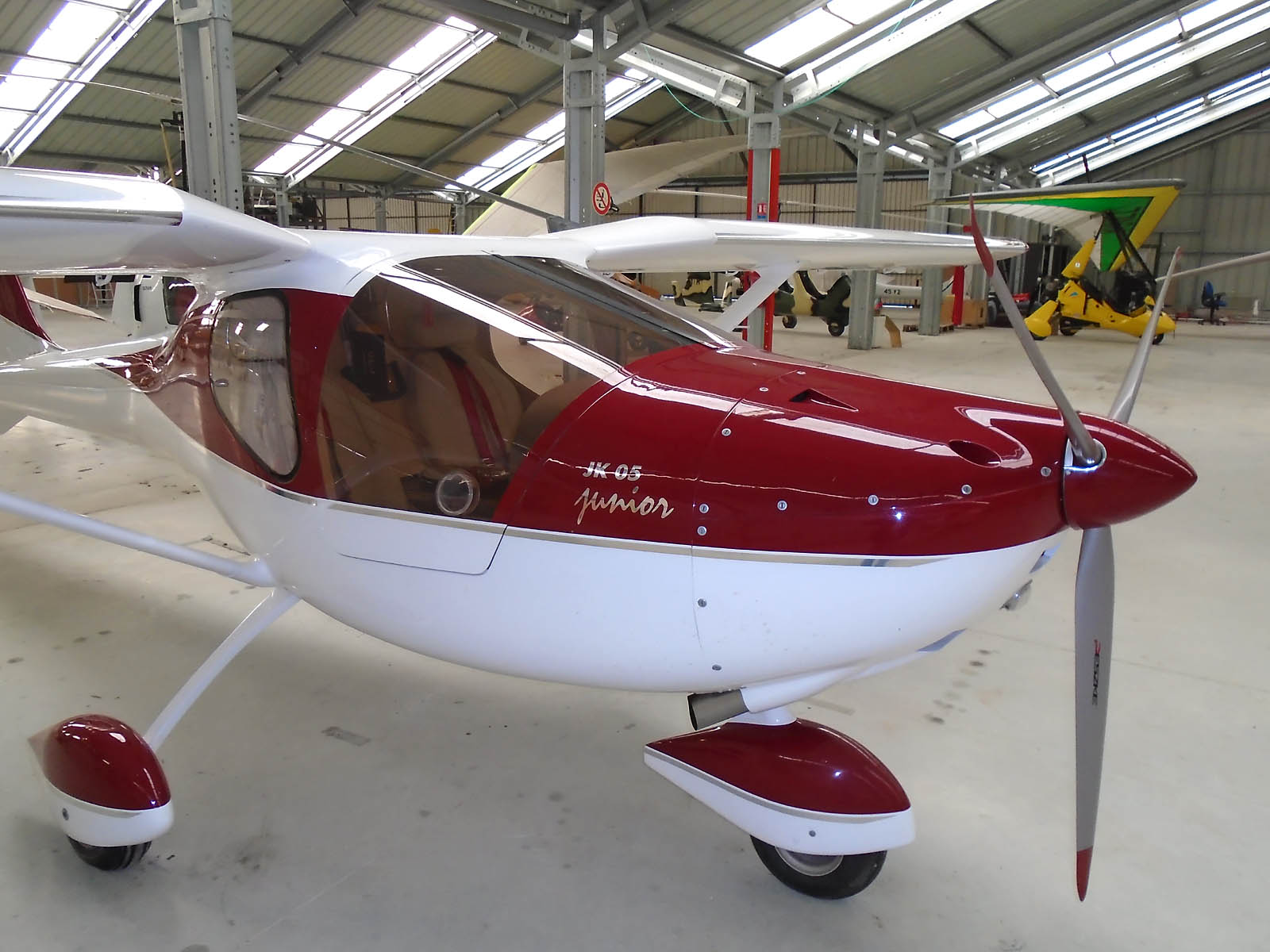
Next door to ASY was a beautiful Ekolot JK-05L Junior. I met its owner next day, a very unassuming gentlemen, but if you want one, allow around 56,000€ before tax! It’s an incredibly slick, modern Polish ULM that you can buy either in kit form or as a complete ready-to-fly aircraft. However, my guess is that they don’t sell too many kits to the sort of pilot who can afford that kind of outlay 🙂

null

Now some shots more or less taken at random around the hangar.

null

null

null

null

null

null

null

null

Tucked away over in a fenced-off corner of the hangar I was quite surprised to come across the next aircraft.

null

However, just a few moments later, I found myself back in much more familiar ULM territory.

null

null

null

null

null

null

And then back to the Ekolot. I took a shot of its interior through a cabin window which shows that it is kitted out inside with a walnut panel fascia, making it look a bit like a top-of-the range Jaguar. Not to my taste, but perhaps a bit more familiar to the people who buy this kind of aircraft.

null

null

And then I found myself back up at the ULM school end of the hangar where an assortment of various flexwings were parked, together with ASY.

null

null

ICP Savannah MXP 740 at la Ferté Gaucher

I’d thoroughly enjoyed my stroll around the hangar by which time the weather had undergone the forecast dramatic improvement compared to previous days. So I then opened up the hangar doors and pushed ASY outside into the open air in readiness for my planned morning’s circuit-bashing. I also wanted to go and check the condition of the runway, which was extemely soft and wet, and here are a few shots that I took of the Savannah outside on the hangar apron.

ICP Savannah MXP 740 at la Ferté Gaucher

ICP Savannah MXP 740 at la Ferté Gaucher

ICP Savannah MXP 740 at la Ferté Gaucher

ICP Savannah MXP 740 at la Ferté Gaucher

Shortly afterwards Robert arrived and after the more or less mandatory cup of coffee, it was time for me to get started. Robert isn’t a multi-axes instructor and as I’d said that I’d already had a chance to fly a Savannah, he was happy to let me go straight off and watch my progress from next to the hangars. He said that after I’d done my first circuit and landing, he could see that I wasn’t going to have a problem, and so it was that I was left to myself to bang out an incredibly enjoyable 55 minutes of hacking ASY around the la Ferté circuit.

Wowzer!!

I laid my hands on the Savannah for the first time this morning and my goodness, what an aircraft! It leaps off the ground like a scalded cat and cimbs like a lift – in fact it feels more like sitting back in a rollercoaster during its initial steep climb phase!

People were very impressed by how my old vintage Tripacer used to climb back in the day because it had a 160hp Lycoming engine in a very light, fabric covered airframe. But this is something altogether different. If you take off with half (20 degrees) flap, you’d have to move incredibly smartly, or start climbing almost vertically, to get them off before reaching the flap limit speed of 96 kmh and I didn’t even bother trying it today.

And then before you know it, you’re at 140-150 kmh in the climb and still going up fast and within moments you’re having to drag the throttle back to 4000 rpm or less, just to keep at around 140 kmh in the circuit.

Then the big problem is slowing down for landing. I only got to try out the flaps twice today and then I had to make a concerted effort to get the speed low enough on the approach to put them on, and I’ll leave it until I get back to Galinat before I practise the technique in earnest.

So my verdict? I’m blown away and I’m looking forward to tomorrow’s flight from la Ferte to Galinat with great pleasure and anticipation 😀

My bags are packed…

D’you remember that old Peter Paul and Mary song? Well, I’m now ready to go, not to leave tomorrow on a jet plane but on the 1311 hrs intercity train from Brive to Paris Austerlitz. I booked the rail ticket today as well as a room for two nights at the Logis le Grand Terre on la Ferté Gaucher aerodrome. Now it’s all dependent on the weather.

The forecast has played ball all week showing that Thursday will be suitable for local flying around la Ferté and Friday for the flight down to Galinat, so it would be bad luck indeed if things changed right at the last minute after I’ve lashed out good money. But that’s how things are where flying is concerned – it doesn’t matter how much you’ve paid out, if the weather doesn’t cooperate, you don’t go.

I’ve planned two routes, the one I prefer taking me to the east of Chateauroux and the other to the west. The deciding factor is whether the relevant low-level corridors are active, and the information isn’t published until the day before. But in any event, I’ve now decided not to drop into Wanafly. The flight will only be either just under or just over 3 hours depending on which route I take, so it’s hardly worth it, especially as I know from my weather-gazing that it’s been wet in the Limoges area and their runway may be unserviceable. Best just to leave things be.

Wim’s on standby to drive with me to Brive and to bring my car back again and Robert at la Ferté has very kindly offered to meet me at Coulommiers station and drop me off at the hotel. So now there’s nothing that I can do except wait and keep my eye glued to the fickle weather.

Shhh, don’t tell a soul…

It looks as though the Jetstream might retreat northwards later on this week, to torment microlight pilots in the UK probably. But if it does, a small weather window may open up which will allow me to pick up the Savannah.

I’ve made tentative plans, therefore, to travel north by train from Brive to Paris on Wednesday and thence onwards to le Ferté, where I’ll overnight at the small hotel on the airfield. I’ll then spend Thursday flying locally to familiarise myself with the aircraft and see a bit of the local scenery, possibly including Disneyland Paris, which is not that far away to the west on the eastern outskirts of the city.

After overnighting on the airfield again, I’ll depart for the Dordogne on Friday morning, possibly dropping into Wanafly on the way depending on how firm (or soft) their runway is. But it’s not essential, as with the winds the way they are, the whole flight will only be just over 3 hours long.

I’ve exchanged messages today with Robert in la Ferté Gaucher and he agrees that it looks to be on, with only one unknown factor, which is the possibilty of there being early morning mist, even fog, at la Ferté on Friday. So now all that I can do is wait and see how the weather develops…

Marmalade

A week or so ago, I bought a few loose Clementines from Intermarché. At least I thought they were Clementines, and so did the girl on the check-out, but they actually weren’t. Either by accident or design, and I have my suspicions, someone had put what looked like Clementines in the Clementine section without changing the label.

In fact they were so alike, that they could easily be mistaken for them, even on quite close examination. But actually they were marmalade oranges, as I found out to my cost when I began to peel one, noticed that it was much lighter in colour than the Clementines I’d bought up to then, and tasted the fruit. It nearly took the top of my head off, it was so bitter!

I was tempted just to throw them away, but I didn’t because deep down I had a hankering to use them to make some marmalade and having downloaded a recipe from the internet, I added a kilo of preserving sugar to my shopping list a couple of days ago, together with a few more oranges. Unfortunately, when I got home, I found that I’d disposed of all of the jars that I’d diligently saved over several months last year to use for damson jam, and that left me with a bit of a dilemma as I had all of the ingredients for marmalade, but no jars to put it in!

I ended up buying half a dozen preserving jars that cost me considerably more than if I’d just bought several jars of marmalade off-the-shelf, but as I saw it, that wasn’t the point. Anyway, to heck with it! And yesterday evening, I put the recipe to the test, with the result shown in the following picture.

null

The marmalade that came out tastes FANTASTIC! I’m not saying that it’s the best I’ve ever tasted, but it’s lovely and thick with thick-cut peel, the way I like it, and must be very close to it.

I’ve just checked the label on a jar of marmalade that I bought in the UK, as follows:
– Glucose-fructose syrup
– Orange
– Sugar
– Acid (citric acid)
– Colour (plain caramel)
– Gelling agent (pectins)
– Acidity regulator (sodium citrates)
– Caramelised sugar

If I’d labelled mine and listed the ingredients, they’d show sugar, oranges and a dash of lemon juice. Oh yes, and a little bit of time and elbow grease. I know which I prefer 😉

Stop press! First pictures

We’ve had a cold day here today so I’m glad that I’d planned to stay in and work all day on my house plans with the wood burner roaring away pumping out heat. And as a result, I was able to get ‘phase 1’ of my plans finished and have produced pictures of the results.

By ‘phase 1’ I mean just the downstairs extension, excluding the work I have in mind for up in my ‘grenier’ and doing the plans for that will be my next step. In reality, I could live with just the downstairs extension, which provides an extra bedroom/office on the ground floor, a utility room and a fair sized dining room, but I still intend to go ahead with the upstairs work as well.

First off, a couple of shots to show how my ‘model’ of my house stands up against the real thing.

null

null

The first photograph was taken right back in January 2012 and the lighting reflects that. Just the once therefore, I’ve modified the colours in the second shot to make them a bit more similar and although it’s somewhat ‘idealised’, showing none of the imperfections that are present in the real thing, I think that my model has turned out to be a fairly good representation of my house as it currently is.

The next shot shows my house as currently-is viewed from the kitchen end (north-east) with the big old lime tree that stands outside my kitchen door and overhangs the roof still in place.

null

The lime tree will have to be removed and the ground re-contoured in order to allow the extension to be built and the next pic is of the proposed extension taken from approximately the same view-point.

null

Next a view of the front of the house from approximately the same direction but standing further back to see how it will fit into my garden.

null

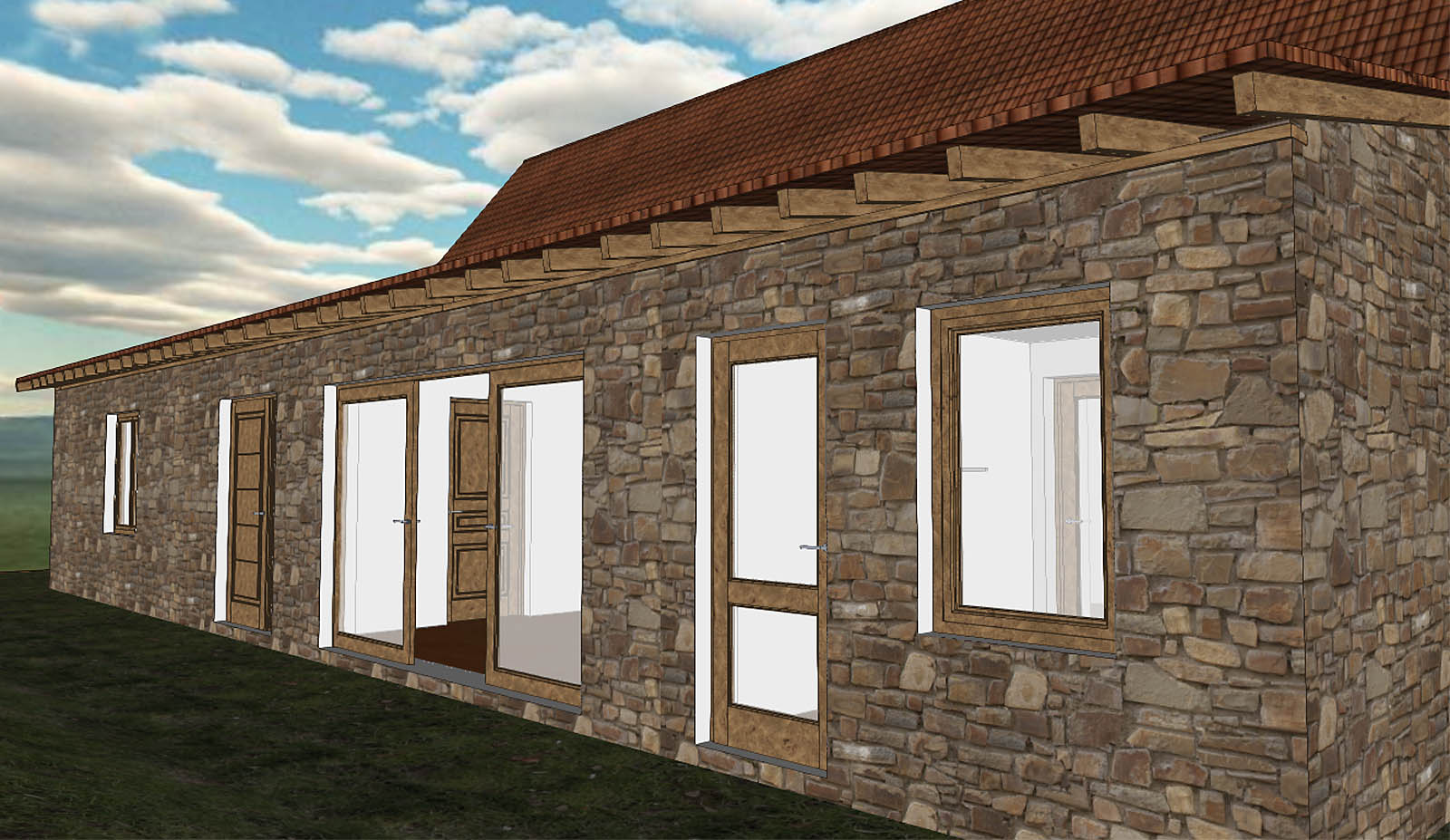
Now a view of the back of the house. I hope to install new hardwood framed double-glazed windows and doors throughout. The following shot of the rear shows the new sliding doors that I hope to install leading out ultimately onto an area of decking.

null

Now a shot of the front again, but taken this time from the other side of the garden. From left to right, the extension will contain a bedroom/office, an entrance hall, a dining room and at the far end, a utility room. The windows shown on the dining room are not strictly correct as although they depict sliding windows, I’d like to have four leaves, two of which will slide, so half of the window can be completely opened up to the garden during warm periods.

null

Now a few general shots of the extended property taken from various angles and different elevations.

null

null

null

null

And to finish off, a couple of shots taken from each end of the extension giving an impression of how it will appear from closer-up at ground level.

null

null

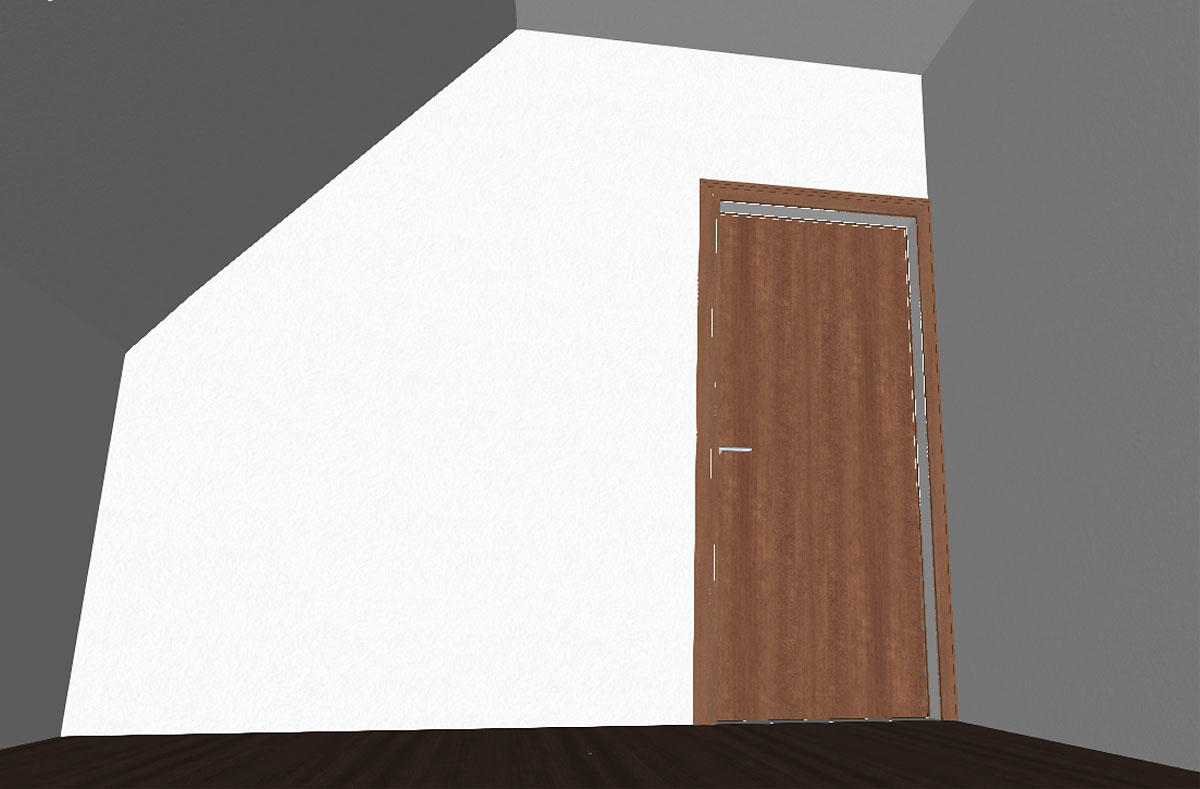
Next time, I’ll show some pictures taken while ‘walking through’ the interior of the extended property.

Wheels are already beginning to grind slowly into motion as the men will be coming in at the end of the month to take down the lime tree and a few others that I want removed and will be back in early March to do the ‘terrassement’ of the land in front of the house ready for digging out the foundations for the extension. But there’s lots still to do before work can begin, the main task being completion of my plans and drawings for submission for planning consent. So that’s what I must now go on to do, post-haste!

Ticking over

Another bright, dry day yesterday so with more rain forecast, I took the opportunity to clear away the pine that I’ve had stacked and drying out for the last year or so. I started by sorting out the lengths that would fit into my wood saw and then cut, split and stacked them inside at the back of my wood store where they can stay until next winter when they should be ready to use. I was quite surprised by how much lighter they’d already become compared to when they were originally stacked, obviously a sign of their drying out.

That only accounted for half of the wood, though. The rest comprised large chunks of trunk of too large a diameter to fit into my wood saw, so I had various choices. I tried attacking it with my old chain saw, but that’s pretty useless now and ‘wouldn’t cut butter’ as my Dad used to say. I thought about going off to buy a new one to do the job, but changed my mind as the expenditure can’t be justified just now as I don’t need the wood at this moment, which I got for free anyway.

Another possibility will be to sell the wood saw that I currently have and buy another with a larger diameter blade. That will be my preferred option, I think, as I doubt that I’ll have much, if any, use for 3/400€ worth of new Stihl chainsaw once my unwanted trees have been cut down, of which more in a moment, but I’ll always have a need to cut burning wood all the while that I have a poele a bois.

In the end I just ended up moving the large diameter logs to a spot next to my new tool store and re-covered it with the heavy plastic sheet that’s been over it for the last few months. Then I called it a day and went off for an ‘apero’ with Wim and Sophie, always one of the highlights of my week 😉

I’ve now heard from the firm who are going to take down my big old ’tilleuil’ that stands in front of my house and the other scrappy smaller trees that are around the side in front of my wood store. They have said that they’ll be along at the end of the month to do the initial felling and clearing, returning in March to clear up and do the ‘terrassement’ for my proposed extension. Having finalised my design, I’m still working on my plans which I should have completed ‘in draft’ later today, so things are moving slowly but still ticking over. I can’t wait for them to start speeding up, though.

There are still absolutely no prospects of my picking up the Savannah for several more weeks. This spate of weather, rain day after day after day, is almost unprecedented, even for this time of year, and usually you get a short series of a few calm, clear days before it reverts back to rainy conditions. But this year it just isn’t happening.

As usual, it seems to be the Jetstream that’s responsible and the charts that I’ve been monitoring show it as being way, way further south over France, Spain and even North Africa than it ever usually is.

It’s the northern end of my route, where I’ll be starting from, that’s the main problem. The current forecast is for Coulommiers, which is adjacent to la Ferté Gaucher, to get rain and occasional high winds EVERY DAY from now until the beginning of March, which is very depressing for me and probably even more so for the people living there 🙁

‘To-Do’ list

Today has been the first full day without any rain that I can remember for some time. The sky was clear overnight and it dawned bright and clear this morning, but cold, and the temperature never rose above 8 or 9 degrees Celsius all day. It felt warmer in a sheltered position in the direct sunlight, though.

When I checked my ‘To-Do’ list this morning, I was shocked at just how long it had grown, so I started off by doing the easiest thing first, which was to go up to Rouffignac to send some letters off. Among them was one to the company that’s quoted me for taking out the big old lime tree in front of my house enclosing their signed ‘devis’ (two of). I confirmed to them later by email that they had been sent off, which they acknowledged, so I’ve at last taken the first step towards the work I have planned on my house.

The next thing that I’d decided to tackle while I had the chance was to cut and split the rest of the wood that I had delivered last year so it’s ready for burning. It’s been standing out under a cover for three or four months and the cover has blown off a couple of times in the recent winds, so I knew that it wouldn’t be completely dry. I was surprised just how wet the top layers were, though, so I think that condensation must also have been happening as the temperature has fluctuated.

I needed to get the wood inside for a couple of reasons – firstly, my dry stocks are beginning to run a bit low so I needed to get the wet stuff into my wood store so it will have time to dry, and secondly, it and another pile of pine that I’ve had outside seasoning for over a year were right next to a row of tatty small trees that I’ve asked the company taking down my lime tree to also take out at the same time. As both lots of wood needed to be moved anyway, the best idea was to shift the wood that M. Dumas supplied last autumn inside so it could be used, thus clearing the space it had been occupying and leaving me needing just to find a space to shift the pine to.

Here’s how much wood I now have in my wood store.

null

It’s difficult to estimate exactly, but I think that at the current rate of usage, I may just have enough to see me through to the spring. It’ll be a close-run thing, though, so I hope that I make it with all of the disruption that I foresee when the work starts to take down the lime tree and ‘terrasse’ my front garden to the levels and contours that I’m going to need for my planned extension. Once again I’m keeping my fingers crossed 😉

Horrendous winds

We had a forecast for today of winds with strong gusts but the real thing is far worse than was predicted. MYRO’s old wings had been propped against the back wall of my house under a cover for over 3 years and had hardly ever moved. The cover was ripped to shreds by the wind a week or so ago and today they were blown over, so I’ve had to move them, not before time I admit, to somewhere more sheltered.

But what is more worrying is that the winds are now blowing straight onto 56NE’s nose and will continue to do so for several more days at least, if the current forecasts are anything to go by. When I checked yesterday, the winds had been from the west and nothing much had moved, but today they are in a sector from west to north and are potentially much more damaging. So I went over to Galinat earlier on this afternoon to check things out again.

I was very relieved on breasting the hill approaching the airfield to see that 56NE was still standing where it should with all of its covers still in place and when I investigated closer, to find that indeed, nothing much had moved. Régis has now sold his aircraft and it was taken away by road two days ago. He had been using some very large and heavy commercial vehicle batteries to tether it down which I noticed yesterday had been left behind. There was still one there today which I moved and tied on top of the blocks under 56NE’s wing on the windward side and this should ensure that there’s no chance of it lifting in these winds.

I also moved the aircraft a small distance away from the large pool of water that’s now formed just behind the main wheels below the rear of the fuselage and tightened all of the ties securing the covers to allow them to move as little as possible in the wind. And that’s about all that I can do and hopefully it’ll be enough to see 56NE through this horrendous period of weather.

And things didn’t stop after I’d got home. Before I left, I noticed the cover over 28AAD, the Weedhopper that I’m repairing on my back lawn, was being blown up into huge billows by the wind and when I checked, I noticed that a little tearing was beginning to develop at some strain points. All I need is for that cover to rip and the Weedhopper fuselage would be open to the elements, so when I got back I took some rope out of the car and trussed it up like a turkey. That hopefully should prevent that problem occurring.

For goodness sake, when will this wild weather come to an end? Surely it can’t go on for that much longer?

Wild weather

Following yesterday’s request for help, a team of us were over at Malbec airfield this morning to help Philippe out with his Citius. The violent southerly winds of a couple of days ago had blown straight onto the corner of his new hangar that he only put up early last autumn and by getting under the front corner, had succeeded in peeling the plastic roof covers and the insulation sandwiched between them completely back like the lid on a sardine can.

This left the aircraft completely exposed and also allowed debris from the insulation to fall all over it and when we arrived, it looked in a very sorry state. Luckily, nothing solid had dropped onto it so the mess was nothing that a bit of time and cleaning effort wouldn’t put right, but the aircraft’s wheels had become bogged down in the mud in the by-now open hangar and also once extricated, it needed to be carefully pulled across the also boggy airfield to shelter in the barn in which I’ll eventually be keeping my Savannah.

Having a small team of helpers would not only make the job easier but would also ensure that no unnecessary strains would be put on parts of the aircraft not designed to take them and also that there would be enough eyes looking out to ensure that no damage would be done by hitting any hard objects encountered along the way. And so it was, and within half-an-hour or so the job was done.

I then went over to Galinat to see how 56NE had fared and was pleasantly surprised to find that apart from the pitot plug having been blow out and left swinging by its cord from a jury strut, nothing else had moved and all of its covers were still in place. So after replacing the pitot plug, readjusting the covers and pulling the tie-down ropes tight again, I was able to leave with a feeling of relief.

On the way, I’d noticed that not only had the River Vézère burst its banks at Thonac, but one of the little tributaries running into it down the hill from Plazac had done likewise and had not only flooded the adjacent fields but also some of the gardens of the houses on the fringe of the village. This is the wettest that I think it’s been since I’ve lived here, so I stopped on the way back to take a few shots of the river and the flooded fields.

null

null

null

null

null

In the next shot, the framework that can be seen sticking out of the water in the foreground is where the canoes for hire are stored during the tourist season. It’s normally on the bank some way back from the river edge, and the area behind it under half a meter or so of water is where they usually park their cars, in front of the row of trees.

null

This is a shot of the ‘lavage’, which most small villages still have. It’s where the village housewives used to come and do their washing in the river and although not used in the modern era, villages still keep them as a hark back to the traditional days. Today it was not beside the river but in it, and to quite a depth too.

null

The next shot is of the field behind the ‘lavage’, which is used for car parking on days when festivals and events are held.

null

The next two shots are of the garden of a house which is located some way back from the main river but close enough to the little tributary flowing into it to be flooded just like the field.

null

null

The final shot is of the fields on the other side of the road, showing just how extensive the flooding was.

null

I put together a short video of the flooding which can be viewed by clicking on the following image.

Thonac Floods

I was lucky that even with everything else that was going on today, I managed to find time to do some work on the planning for my proposed house developments. In particular, I was able to add the foundations to the model that I’ve built of my house and also do a few quick experiments placing it on the terrain that surrounds it. The idea is to make the terrain contours as close to the real thing as possible and even my ‘quick and dirty’ attempts haven’t turned out too badly, as can be judged by the following images.

null

null

null

I’ll leave this topic there for now, though, as I’ll be going into much more detail tomorrow in the hope of getting the basic model of my house completed.

Nearly there

The weather has been raging on several occasions today with windy squalls and lashing rain, but I’ve been indoors all day continuing the work on my house plans. And today was very fruitful as I managed to sort out the roof, finish ‘building’ the end walls right up to roof level and also add the final architectural details in the form of the bedroom windows and the door into the grenier.

That means that I’ve almost achieved my initial objective of completing the model of my house as it is now, from which I’ll be able to create all the initial drawings and plans that I’m going to need. Here are some final shots taken at the end of the day.

null

null

null

null

All that’s left now is to add the foundations, or what I imagine the foundations to be as I’ve no idea what they are actually like, and I’m sure that no other living person does either, and then place the house on terrain that’s modelled to look as closely as possible to how it actually does at present.

And with a bit of luck I’ll manage to do those things tomorrow, although after a call from Wim, the first job will be to move Philippe’s Citius from his new hangar, which has been damaged by the strong winds, into an adjacent barn. Should be a nice start to the day in the wind, rain and mud 😉

Very tricky bit

The weather’s been awful day today because we’ve been catching the fringes of the violent storms that have been lashing the southern parts of the UK. It’s been worse in northern France so it’s lucky that the Savannah’s being stored in the secure hangar at la Ferté Gaucher until things begin to improve and I can go up to collect it. But for now I’m still concentrating on my house plans and have been working all day on the roof.

And it’s been very tricky. Because the rafters in the lower part of the front roof elevation will be modified, I’ve had to include them in my model, and if those have to be shown in the plans, it would look a bit stupid if all the rest weren’t as well. So I’ve been painstakingly adding all of them to my model, and because my house is not a regular shape, as I mentioned in the previous post, I’ve had to put them all in manually one-by-one.

It’s taken all day to finish the job, including the ‘kick-outs’ at the bottom on both the front and back of the roof, but the results look pretty authentic, as the following two pictures show.

null

null

I’ve experimented a couple of times with putting the roof covering (tiles) on and have identified a couple of snags. These are again due to the fact that the software expects roof coverings to be applied to regularly shaped areas, not sloping trapeziums, and I’m going to have to identify some kind of work-round. I’ve got a couple of ideas how to do it so I’ll have to try them out tomorrow. But now it’s time for bed.

Work goes on

We had a fairly pleasant day today with bright spells and showers, but the weather’s expected to become more unsettled during the coming week. So no chance that I’ll be able to collect the Savannah, then, meaning that I’ll have no distractions and will be able to concentrate on what is really my main priority, namely the improvement work that I have planned for my house.

I’m still slogging away on the modelling work that I need to do before I can create the necessary plans and drawings and making only slow, but steady, progress. The main reason is that software such as Edificus, which is what I’m using, works on the basic assumption that buildings will be square and that any shapes created during the planning process will be regular. And that’s far from the case with my house.

For a start it’s footprint is more of a trapezium with the wall at its northern end being 0.7 metres shorter than the one at the other. The southern wall is more or less at 90 degrees to the front but the northern wall is at an angle, as I found when I installed the base units in my kitchen. This means that the back wall is also shorter than the front and internal walls and partitions are also at irregular angles.

So I had to start out by taking a large number of external and internal measurements, many of which were quite difficult to get at, and then try to emulate them as closely as possible in my model. I’ve managed to do so pretty well on the whole, but fortunately I’ve succeeded in matching the most important ones quite closely.

I’ve now been working on the roof for several days and keep finding more out about the software as I use it, often having to take a couple of steps back to correct work that I’ve already done. I’ve been discovering a lot about ‘building levels’ this week end, which are highly relevant because these allow you to create and print out plans for the different parts of the building.

If by mistake you include elements from one level in another, the plans that you then create can be a nonsense, and if you need to move items from one level to another (eg from ground floor to roof level), I’ve found no simple way of doing it without then needing several more minutes (often very many for more complex items) to get all of the revised heights back to where they should be, with walls of the correct heights, beam ends at the junctions where they should be, and so on.

So it’s challenging, but a process that I’m getting more control over, in my ham-fisted way, as I proceed. Here are the latest shots of the roof structure, which is quite complex, and the interior.

null

null

null

null

I hope that within another one or two days I’ll have the model of my house in its current state finished, with the building sitting as it does in a model of its terrain. And then I’ll be able to go on to work on the improvements that I have in mind. I’ll be very glad to finally get to that point after all the time it’s taken so far.

Highly frustrating!

The weather here in the Dordogne has taken a turn for the better, at least for the time being, and if I wanted to, I could even go for a flight today as it’s clear, bright and fairly warm with a max temperature of around 15 degrees Celsius forecast for later this afternoon. However, the runway at Galinat is still likely to be a bit soft and I’m still very busy working on the plans for my house, so I don’t think that I’ll bother.

But the same can’t be said for northern France, which is still locked into a highly unsettled weather pattern with very high winds forecast, building over the next couple of days and going into next week. After that it’s expected to get back to just raining every day, so the prospects for my flying the Savannah down look exceedingly remote for most of the rest of February! I find that unbelievable and very frustrating, to say the least.

In the meantime, I’ve been dedicating my time to working on the plans for the work I want to do on my house. I’ve now got up to the roof level and progress has been quite slow and painstaking as I’ve discovered on close inspection that it’s actually quite a complex design. And I want my model to be as accurate as possible as not only will I be creating plans from it for my building work, but they’ll also probably be the only ones in existence as I’m pretty sure that when the house was constructed, the builders would have made nothing more than simple sketches.

As I’m working as my own surveyor and architect, I’ve had to keep going up into my grenier to look again at various details and take more measurements while I’ve been creating my model and every now and again, I’ve been pleasantly surprised when I’ve cross-checked dimensions from my model with the real thing just how closely they tally. So touch wood, things can’t be going that badly.

Here are some shots at where I am today with modelling the roof structure, which needn’t be exact but has to be fairly right as some major work will be done on it, removing the tile covering, installing insulation and then replacing the tiles again with new ones on the front elevation. Also, the front ‘kick-out’ will be modified to extend over my proposed new single-storey extension, as I’ll explain in another post.

null

null

It’s taken me two or three days already to get the roof modelling somewhere near right, and I’ve also been working on other interior details. Here are a couple of shots comparing the model of my staircase up to my two bedrooms with the real thing.

null

null

The detail has to be more or less right as otherwise the floor plan would look silly, and once again, it took me a few hours to get it to the stage that it’s at, as the ‘curved staircase’ model provided in the software just didn’t work out and I had to model each stair tread and riser from scratch. But I think that in the end it’ll be worth all the time and effort – at least I hope so 😉

Disappointing news

Up until last night I was still trying to keep a faint hope alive that I’d be able to fly the Savannah down from la Ferté Gaucher to Galinat this coming Friday but this morning I’ve finally had to admit that it isn’t on. When I last flew 56NE a few days ago, the runway at Galinat was too soft other than to do one take off and landing and with the rain that we’ve had since then, including another good soaking last night, it’s probably border-line flyable at best and more likely too soft to be absolutely safe.

Also, when I last spoke with Mandy at Wanafly, where I want to land for a break on the way down, she said that their runway, which they’re not using at the moment, is really too boggy to use, so it would be a bit unfair to force myself on them, especially if by doing so I marked up their runway for when they do want to start using it for training flights.

Couple that with the uncertainty of getting more than a one-day weather window to make the flight on account of forecast high, gusting winds and more rain, and ultimately common sense must prevail, even though I feel like a kid who knows that he’s getting a nice present for Christmas but has to wait until the big day before getting his hands on it! But on the up-side as Robert at la Ferté said this morning, at least there the aircraft is in a nice warm, dry hangar and as I couldn’t fly it if it was down here anyway because of continuing unsettled weather, that’s surely the best place for it to be.

But even so, even so… 🙁

So now what? Well, partly it’s a good thing because now I can concentrate on my house improvement work, which is really what I should be doing anyway. And I’m glad to say that things seem to be coming on a treat. I’m still heavily involved in the work to create an initial model of my house, because I think that if I can do that and produce some meaningful drawings and plans, then it won’t be that big a step to go on and create an extended model incorporating the extension and changes that I want to make, together with the associated drawings and plans.

I think that I’m making pretty good progress and slowly but surely I’m becoming more adept at using the Edificius software, which I’m very impressed with. Here are some more 3D shots showing where I’ve got up to so far. First, a couple of exterior shots.

null

null

Now a shot taken low-down near the floor of my bedroom – low-down because I haven’t yet found out how to totally control the viewing height 🙂

null

Now a couple of shots from inside my living room.

null

null

Finally, to finish off, a shot taken from my kitchen looking back towards the living room.

null

Unfortunately, when my hard-drive crashed, I lost all the original pictures that I took when viewing the house when it was empty back in January 2012, so I have nothing to compare them against. However, although a few details are not yet quite correct, the model (and pictures) are uncannily realistic. They are somewhat idealised compared to the real thing and also ‘feel’ a bit smaller than the rooms that they represent. But the main thing is that from the experiments that I’ve done so far, the model produces excellent looking plans, which is ultimately the point of the whole exercise after all 😉

House improvements

I’ve mentioned in some previous posts that the time has now come for me to get stuck into the improvements that are needed to my house. I could continue living here as it is and just finish off the kitchen, re-do the bathroom and decorate right through but there’s only one problem with that. I’ve got an extended family and, yes, even a few friends, and with only one spare bedroom, it makes it hard for them to come and visit me. It also became clear over Christmas and New Year that as my sister has to spend most of her time in a wheelchair, it would be really nice to have a bedroom on the ground floor where she and my brother-in-law could sleep while they’re here.

I worked up several different ideas to use the space up in my ‘grenier’ and add a ground-floor extension to give me what I want and eventually came to a final concept that works and is also economically feasible. I wanted to get cracking as soon as possible but then found on looking further into the French planning system that it’s unlikely, even if everything runs smoothly, that I’ll be able to start moving before the autumn. And also at pain of a heavy fine if I do anything in advance of receiving planning consent.

This was a bit disappointing as I have a very large, very old and very dirty lime tree right outside my backdoor that will interfere with my extension plans and will have to go – hooray, as it really is filthy to live under! My plan was to get rid of it as soon as possible, before the spring when it will start growing again. I’d already received a quote from a local firm to do the job and also the groundwork for the proposed extension, but now that they can’t move on the latter, I had them back in again on Friday to give me a revised quote for taking out the lime and a few other smaller trees at the northern end of my house and clearing away what could be laughingly described as a ‘flower bed’ at the other end.

In the meantime, as my proposed extension will add less than 170 sq metres of space, I don’t need an architect to draw up the plans and drawings that I will need to submit for planning (and in any case, an architect isn’t needed for any work on a single house on a single plot of land), so rather than do them myself by hand, which I could do, I’ve been teaching myself Architect’s CAD.

I looked at several systems that are available on the internet and after trying a few out, ended up installing a system called Edificius. This is aimed at professional users and is a very interesting concept. Instead of purchasing a licence to use it on a machine (or machines in a company), you get the whole bang-shoot for free along with lots of video tutorials, free technical backup and access to a free forum. You then start using it to create your projects and only pay when you want to print anything. This is great for me, because I have the full system to laboriously work my way through in order to create the plans and drawings that I will need and not some kind of time-limited trial or cut-down version that may or may not do what I want. And at the end, I’ll only have a fairly limited number of drawings etc to print off and assuming that I will be successful, it won’t have cost me anything except for my time and effort to get to that point.

I’ll maybe go into the system in a bit more detail at some other time, but for now all I’ll say is that modern so-called BIM systems are incredibly clever. As well as allowing people more experienced than me to create new designs or modifications to existing ones in double-quick time, they also let you put the end result onto terrain in its surroundings and also give you a full list of the products and materials that you’ll need for the job together with a cost breakdown. Fantastic!

My house was created almost 50 years ago when I’m pretty sure that nobody cared very much what anyone was building in rural France. I think that it was put together from two farm outbuildings that I’m pretty sure must have existed for years, if not generations previously, and I highly doubt that if any formal plans ever existed that they now exist any more. So my idea was that if I could create a model of my existing house the benefits would be twofold. Firstly, I could then go on to extend it and add the improvements that I’m seeking and in the process produce the drawings and plans that I’ll need to do so and secondly, the model would give me what will probably be the only plans of my house that will exist.

I’m nowhere near it yet, but I’m slowly but surely getting up to speed with the software and grinding out the model bit by bit. I’m not saying it’s easy, because it isn’t as Edificius is very complex and capable software that I’ll probably never become fully conversant with. Here are some shots from various angles of the stage I’ve reached with the 3-D model with accurate light and shadows at various times of day.

null

null

null

null

I’ve managed to overcome lots of little challenges along the way with several things needing to be done over and over again to get them right. The software has also delivered up a few quirky surprises that have slowed me down, but I’m pretty sure that I’ll get to where I want to before too long 😉

Forward planning

I’ve been thinking how I will need to go about picking up the Savannah. First I need to get a weather window, not just for the flight down from la Ferté to Galinat but also for some familiarisation with the Savannah beforehand. When I looked a few days ago to see what the Jetsteam was doing, as that will have the main influence over the weather, it appeared that there would be a 3-day good weather window from Thursday 4th February through to Saturday 6th, giving me a day to get up there, a day for familiarisation and a day to fly back.

However, based on current forecasts, if I stick to the same schedule, that seems to have narrowed to a 2-day window from Thursday 4th to Friday 5th. This would allow me a day for travelling and then just one day to get some familiarisation in before leaving that same day for the Dordogne. Now I don’t want to appear over-confident or to underestimate the scale of what’s involved, but that doesn’t concern me too much. The familiarisation part doesn’t worry me after getting my hands on the Savannah in Bretagne a few days ago as it was a stable, easy machine to fly. I’ve also got experience of flying flapped aircraft from my time in Group ‘A’ aircraft – Cessna 150, Cessna 172 and, of course, the Cherokee 180 that I was a part-owner of in years gone by. What would concern me more would be being able to get away from la Ferté in good time for the flight down, which would really need to be before mid-day based on the timings I have at present.

The other possibility would be to bring all of my plans forward by 24 hours, travel up to la Ferté on Wednesday 3rd February and fly back south on the Friday. This would really be my preferred option if it can be fitted in by the persons involved at la Ferté.

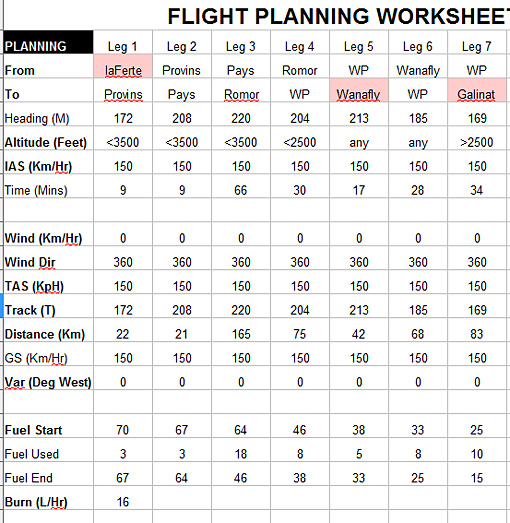
Here are the flight plan details are far as they can go for now. First, I’d like to break the flight down into two legs – the first from la Ferté to Dave and Amanda Lord’s Wanafly ULM school based to the north of Limoges and then on from there to Galinat.

null

null

Wanafly would be a good place and time to stop off for a break and would also give me a chance to see Dave and Amanda again after dropping into them initially when I flew down from the UK to the Dordogne in MYRO back in 2012. Just how convenient a break-point in the flight it would be can be seen from the following timings, which are incomplete of course, as at this stage I can’t enter any wind details.

Laferte to Galinat

I’m having to keep my powder dry for the time being until I can hear what Robert at la Ferté can organise in terms of availability of his 3-axis instructor colleague and until I know all I can do is wait for now. However, I don’t want to hang on for more than a day or so before hearing from him.

The logistics of the flight have been just one of the problems that I’m having to deal with. Just getting up to la Ferté is another, and here’s what I’ll have to do to travel there from PLazac.

1. To Brive la Gaillarde in my car with a friend. Friend to drive my car back.
2. From Brive la Gaillarde to Paris Austerlitz by inter-city train.
3. Cross from Paris Austerlitz to Paris Est by Metro.
4. From Paris Est to Coulommiers by local train.
5. From Coulommiers to la Ferté Gaucher by local bus (laid on by train company who have cut the local train service).
6. From la Ferté Gaucher centre to the aerodrome by taxi.

Such are the problems of getting across France by public transport!

As I write this, I’ve had it confirmed that Friday 5th is OK so long as I take charge of the Savannah the day before, which suits me fine. In the meantime, I’m waiting to hear if the ‘multi-axes’ instructor will be available on the Thursday. If not, after flying the other Savannah last week, I’d have no qualms about just doing a few circuits alone and then flying off the next day. So waiting now for confirmation of the final details and then I’ll just be in the hands of the weather 😐

Final edit just before going off to bed – it appears that the weather window is beginning to close. As of now it looks as though next Thursday 4 February will be the only day that will be flyable next week. And not only that, but it appears that we will then be in for quite a long period, a week or more, of unsettled wet weather. So it looks as though it could be some time before I get my hands on my Savannah 🙁

First flight of the year

The weather’s been pretty mediocre since my sister and brother-in-law left for home and I’ve been waiting a while for an opportunity to get some air under 56NE’s wings. So when Sunday turned out to be a lovely bright day with light winds I was sorely tempted, but as I hadn’t got any fuel ready and was doing something else anyway, I gave it a miss, knowing that the forecast for Monday was just as good.

And so it turned out – better if anything – and I loaded the flight I had planned into my Asus tablet and set off for Galinat after lunch. Here’s a shot showing the route I’d planned on taking – north-east to Terrasson, turning north-west overhead the ULM airfield there, then on a westerly dog-leg (into the sun, unfortunately) turning eventually to head back to Galinat overhead Milhac, the airfield with the tiny runway that Wim and I dropped into last year.

null

It was the first time that I’d got 56NE’s covers off since the winter and I was pleasantly surprised by how well it’d fared. One seat, the passenger’s luckily, was still a bit damp after the storm of a week or so ago, but overall it was still in very good shape, clean and free of rust marks. I refuelled (as best I could as I found that I’d forgotten my funnel), gave the screen a bit of a clean and after a good all-round check, was ready to go with the temperature around 17 degrees Celsius.

The flight went well and as I’d wrapped up well, I actually felt quite warm. It got a bit cooler towards the end, though, when the sun disappeared below a curtain of high cloud, so I was glad that I’d put on my gloves and my little woolly hat! I used my new sports cam for the first time, having decided to at the last minute, grabbing it as I walked out of the door. As I hadn’t charged the battery fully since the last time that I’d used it, it only lasted for 45 minutes and so didn’t record the whole flight, which was just on an hour. Even so, the resulting video didn’t turn out too badly after editing it down, and it can be viewed by clicking on the following image.

Flight 25 Jan 2106

Read all about it!

So here I am, the new year just begun and me with the best start to a new year ever. And the reason is that I’ve just bought myself a fabulous new aircraft, a brilliant STOL ICP Savannah ULM.

As I mentioned in my last post, I went off on a two-day road trip on 20th and 21st January to view two Savannahs that I’d found for sale on Le Bon Coin. The first one, the more expensive of the two, was based at l’aerodrome la Ferté Gaucher near Coulommiers to the east of Paris and the second at l’aerodrome Ploermel to the west of Rennes in Bretagne. It meant that I drove over a 1000 miles in the two days and ended up sleeping in the car overnight, but it was well worth it.

The first one was a factory built Classic model whereas the second had been built from a kit. It also turned out that although the latter was advertised as a VG (Vortex Generator) model, it had started out life as a Classic and been subsequently modified. As a factory-supplied kit is used in the conversion, this is not a problem in itself so long as the aircraft is immaculate and the work has been done well. But to my mind it made the former intrinsically more valuable than the latter, and the latter was also not immaculate and nor had the work been done that well.

Here are the details about the Classic model that I viewed first (information for the second Savannah, the VG, shown in brackets for comparison). It was built at the Savannah factory in Italy in 2001 (VG, 2002 kit built) and has a 100 HP Rotax 912 ULS engine (VG, 80 HP 912 UL). It has a Duc 3-blade ground adjustable prop (VG, 2-blade) and will cruise at around 90 kts (100 mph, 160 kmh, VG 85 kts, 95 mph, 150 kmh).

The difference in cruising speed is not that important to me as it will only be significant when I fly back to England in it, which I’ll be able to do in only around 6 hours. It has been impossible to contemplate such a flight in my X-Air, 56NE, although the tour of the west coast that I did last year with Wim demonstrated that long distances are possible in first generation ULMs just so long as you are patient and have the time.

It has only 355 airframe and engine hours on it (VG, 1650) with under 20 of those since 2013, and whereas the differences in the airframe conditions of the two aircraft were quite strikingly obvious, as I’ll go on to explain, it also showed in the relative conditions of the engines. The Classic’s engine appeared well looked after, clean and relatively shiny with more or less everything that could be, wire locked.

The VG, on the other hand, was and looked well used. Its seller said that it had been mechanically overhauled at 1600 hours, but this only included the gearbox and some peripherals and didn’t include any engine internals, which meant that its engine was at the end of its official Rotax life. The Classic has some 1200 hours to go before reaching that limit and should continue to at least double that, so will have plenty more than enough life in it for the rest of the time I’ll be flying, I’d think.

In fact, it’s well know that 912 engines run happily to 3000 hours and beyond, but that depends on how they’ve been used and maintained and the condition of the VG’s engine didn’t promote confidence in that department. What was also nice to find was that the Classic’s engine had water-heated carburettor manifolds, which are extras, to prevent carb icing, whereas the VG’s did not.

So what about the interiors? It’s a fact of life that renovating a tatty or well-used aircraft interior can work out to be pretty expensive, and the Classic scored here again. Both aircraft had the standard Savannah panel, but the Classic’s was the bright, clean, original white whereas the VG’s was a scruffy, hand painted matt black with areas worn away from heavy use. A no-brainer, then. The Classic’s also had all holes filled, whereas the VG’s had a vacant one covered up by a stick-on digital timer, which I couldn’t have lived with.

Again, this in itself wasn’t important as to get the full use out of the aircraft, I’ll need to fit a transponder that will need a hole somewhere on the panel. The obvious place is where the VG’s hole is, which is filled by the usual French Alphatec intercom in the Classic. To my mind this is an anachronism because nowadays an intercom is built into the radio interface or, as in the case of my own, into the headsets themselves if no radio is being used. I took the intercom that was in 56NE when I bought it out and threw it away!

As an added bonus, the Classic was also being sold with a Garmin GPS (that looks as though it needs a new battery), a legal (which my Vertex is not) Icom A3E radio and two brand new-looking headsets.

And finally, for the interiors, we come to the seats and belts, and yet again the Classic scored very heavily over the VG. It has gorgeous black leather upholstery that’s in used but perfect condition and matching black full-harness belts. The VG, on the other hand, had cloth trimmed seats that were not only dirty and stained in places but also somewhat tatty, and to top it all, only had lap belts, which would be illegal in the UK.

Now moving on to the exteriors. There’s not much to say about the Classic other than it appeared to be in almost perfect condition, with no dings or dents, not even any hangar rash that you generally find on aircraft of its age. This was probably because it’s spent most of its life parked in a corner as a hangar queen and hasn’t had to be moved much, either to be flown or to allow access to other aircraft. There may have been some slight hailstone damage on the upper surfaces of the wings, but I couldn’t see clearly as I’m a bit of a short-house, and if there was, I don’t think that it amounted to much.

But the same couldn’t be said of the VG. What was immediately noticeable (to me anyhow) was a large vertical crease near the port wingtip. Although the owner flew the aircraft with some vigour during our test flight, my own judgement is that the damage really needed to be repaired. There was also a dent in the leading edge of the starboard stabiliser and no paintwork under the plastic vortex generator elements where it been ground away for them to be stuck on, so these things coupled with several areas where paintwork had been worn off, ripples in the inner top surface of the port wing and several noticeable cracks in the screen that had, admittedly, been drilled to prevent them running further, meant that the overall impression of the VG was somewhat underwhelming to say the least.

So that’s about it, I think. It explains why I decided to go for the Classic rather than the VG, even though the difference in the asking prices amounted to 5,500€. This is not an insignificant amount and could be greater still as the VG owner was fairly realistic and knew that he’d have to drop his price somewhat. But in my mind, there were too many question marks over his aircraft that represented too high a level of risk (not to mention work) for my stomach, so in the event I still decided to go for the former.

I’ve made a short video about it that can be viewed by clicking on the following image.

My fabulous new Savannah

There are still some things to be sorted out, not the least of which will be getting up to la Ferté Gaucher by public transport, spending some time with an instructor that will be laid on for me by the seller, and ultimately flying the aircraft home to Galinat. I’ll also have to find some temporary cover for it at this end as it’s condition is too good for it to be left out in the open. But those things are not for now and I’ll write about them in due course.

Really, really big update!

In early December, I was idly scanning the listings of ULMs for sale on Le Bon Coin when I came across a beautiful ICP Savannah. It was all white with snazzy coloured graphics and guaranteed to catch the eye of any aircraft lover. But the big thing about it was that its price was a snip, and not only that but the seller also said that it could be negotiable further at the time of sale.

I did nothing about it at the time except keep a copy of the small ad, which I showed to my sister and brother-in-law over the Christmas holiday. I told them that with one flyable aircraft already and a second under repair under covers in my back garden, to acquire yet another could be seen as an extravagance to say the least. But I did say that the one on sale was totally different to the other two, being not just capable of flying low and slow over the Dordogne countryside but also of zipping at high speed back to England in only around 6 hours.

Instead of agreeing with me, they did the reverse and encouraged me in my foolishness, saying that you only get one life and that I should pull the stops out and go for it. So I did. I contacted the seller, who told me that the aircraft had been sold, but that he would keep my contact details just in case the buyer pulled out. So this gave me some relief, as at least I could say that I’d given it a go but had been thwarted by events.

But my relief was not to last long, as I somehow suspected that it wouldn’t, because in less than a couple of weeks, the advertisement came up again on Le Bon Coin. It appeared that the prospective buyer couldn’t raise the necessary finance so the Savannah was up for sale once more. This time I had no excuse and phoned the seller, suggesting that I’d like to view the aircraft the following Wednesday, January 20th.

But then blow me down if on checking Le Bon Coin out again on the Monday, another Savannah had appeared for sale, this time a VG (Vortex Generator) model up in Bretagne. The first Savannah was located at la Ferté Gaucher near Coulommiers out to the east of Paris, so I phoned the second seller and said that I’d like to see his aircraft on Thursday 21st, the day after the first one. This would enable me to do a 3-legged, triangular round trip of something over a thousand miles over the two days with a night-stop in a hotel somewhere in between the two aircraft’s locations. It was all agreed, so I set off from home for la Ferté Gaucher last Wednesday morning with 6 1/2 hours driving ahead of me – in thick fog.

Nevertheless, despite the fog and freezing temperatures in northern France, I arrived at the airfield at la Ferté Gaucher just before 3.00 pm, the time that I said that I would, and was warmly greeted by Robert, the owner of the ULM school there who was handling the sale of the Savannah. After the usual cup of coffee and initial chat, we went into the hangar to view the aircraft. It was everything that I expected it to be but there was only one snag. Robert apologised profusely and said that due to its having stood for a very long period and the cold weather, he’d been unable to start the engine as the battery was flat and wouldn’t charge despite having been connected to a charger for several hours.

There was nothing that could be done, therefore, apart from my giving the aircraft a close inspection. If the engine wouldn’t start, there was no possibility of my having a test flight, and in any case, although the sun had broken through by that time, there was still a very low cloud base due to the earlier fog. By this time it was becoming pressing for me to get going and head off for Bretagne, so Robert said that he’d wait until Friday morning to hear what my intentions were before offering the aircraft to two other potential buyers who were waiting in the wings.

I agreed with that proposal and after we’d bade each other farewell, jumped into the Kia and headed off west. Having driven for over 6 1/2 hours already and with a 5 1/2 hour drive ahead of me to where the second Savannah was, I thought that I’d drive for about 3 hours or so and then find a hotel for the night. This would make it easy to meet the seller of the second aircraft the next day at 1.00 pm, the time I’d suggested for the second viewing.

But my plans were to be thwarted. Night fell as I drove and I began to look out for a hotel either on or close to the road that I was driving on at around about the 3 hour limit. But no luck! There just wasn’t one to be found without making a large detour into one of the large towns, like Rennes, which I wasn’t really keen on doing. I’d come prepared for such an eventuality by bringing with me a sleeping bag and pillow off my bed at home, so in the end I decided that I was so tired that to continue driving would be dangerous and pulled into a rest area where I’d spend the night in the car.

And despite freezing overnight temperatures and having chosen not the best area to stop at, as I was a bit too close to the main road that remained pretty busy all night, I managed to get 4 or 5 hours sleep. The worst bit was washing and cleaning my teeth with cold water in the freezing cold the next morning and I was glad to jump back into the car afterwards and switch on the heated driving seat!

And to cap it all, within less than 20 kms after starting to drive again, I came across the perfect little low-cost hotel right at the side of the road. Wouldn’t you just know it 😐

I met Michel, the second seller at the appointed time at the airfield where his Savannah was hangared and once more after the almost-compulsory cup of coffee, we went outside to view it. This aircraft was a year younger than the first but with many more hours on it, and it showed. It was also up at a considerably lower price, but the closer I looked at it, the more it became clear that it would cost much more than the price difference to get it up to anything like the condition of the former.

Michel suggested a test flight as the cloud base had lifted since earlier in the morning, so off we went. This Savannah had the Rotax 912 UL 80 hp engine but it lifted off very smartly. Michel demonstrated it very effectively with some often quite extreme manoeuvres before giving me the chance to fly it. He also asked if I’d like to do a landing but I said that I was still very tired and that I’d give it a miss on this occasion. Better safe than sorry.

As the Savannah is the Number 1 STOL ULM, I asked Michel if he would demonstrate its short field performance. He did so by doing a touch-and-go, taking off again in less than 50 metres, turning sharp left in the climb to no more than 50 metres to one side of the runway and side-slipping back on again to land also in about 50 metres. It flew like a motor-bike and I was totally gob-smacked 😯

After taking a look at the aircraft’s papers, it was time to leave and start heading back south again. Michel knew that I’d seen another Savannah the day before and I told him that I’d think about things and let him know what my decision was about his aircraft. Actually I already knew that I wouldn’t be going for it. Here’s a short video that I’ve made that I think gives some indications as to why, which you can see by clicking on the following pic.

Not the one

As I left, I stopped and phoned Robert, the first seller, to tell him that I would be going ahead with the purchase of his Savannah and on Friday I gave Michel the news that I wouldn’t be proceeding with his. I’m not going to say any more about the new one just yet as I’ll be going into full details with pics etc in my next post. But suffice to say that this is a really big moment for me and that I’m very, very excited about my intended new aircraft 😀

Big update

I haven’t posted anything on My Trike since my family left for home on 6th January because quite honestly, I’ve been too busy with lots of things. It’s amazing how, when you’re retired, the days are just not long enough for all of the things that you have to do!

First off, something slightly trivial but which needed to be sorted. I have a little Chinese-made sports cam (a Go-Pro copy) that I used very successfully during the tour up the west coast that Wim and I did back in June of last year. Soon after we got home I went to use it again and found that it wouldn’t work and the problem seemed to be to do with the battery. So I bought some more from China together with a separate charger and was very disappointed when the cam wouldn’t work with these either.

I thought that somehow it had got damaged during charging, as I’d used a mains USB charger that came with something else, or that maybe I or the charger had knackered the batteries. In the end I decided to bite the bullet and buy a replacement, and this time I went for the full HD version with wi-fi that can be remotely controlled from a smartphone, thinking that it would be handy to be able to turn it off and on from inside the aircraft.

The new model turned up before Christmas but I was unable to do anything with it because of my visitors so it was only after they’d left that I was able to turn my attention to it. First, here’s a shot of both models together.

null

To my delight, when I fired the new one up and did a few recordings with it I found that the results were of significantly higher quality than I’d got with the old model. However, there was a downside. When I came to edit the clips into a full movie, I found that although my editing software (Corel VideoStudio Pro X8) recognised them, it refused to render the completed movie and just kept stopping after looking as though it had done around 30% or so.

So it was up to me to find a solution, which I was fortunately able to do, by searching for and finding some suitable video conversion software. It took a few days because although there’s lots out there, some of it gives really shocking levels of quality that I just couldn’t tolerate. After all my efforts, I’m now getting superb results as can be viewed by linking to the move that comes up later in this post.

One of the things that this episode brought home to me is how much I miss all of the stuff that was on the crappy Seagate hard drive that let me down before Christmas. I didn’t just lose all of my original images and videos but also all of my editing and processing tools that I’d built up over the years, many of which I can’t find now and have to find replacements for.

The footnote to the sports cam story is that I eventually found what the problem is with the old model, which is that one of the battery contacts has come loose. I’ve found that if I press it in hard with the blade of a small screwdriver back towards the cam’s motherboard, everything works fine. That’s until it somehow works a bit loose again. I’m hoping that I’ll be able to carefully take the cam apart and resolder the contact and if I’m successful I’ll then have two cams that I’ll be able to set up on the aircraft to take different views. That’ll be great editing fun, so watch this space 😉

The next main task has been my house project, not just planning what form it should take but also researching the French building and planning rules and regulations. I’ll come back to the project concept in a moment, but first a few key comments on the latter. I’ve had a debate with friends about whether I’ll be officially required to hire an architect, which I don’t want to do, not just for financial reasons but because I believe that I’m quite capable of producing the necessary working drawings that’ll be needed for the contractors. After much time and effort, I’ve now managed to have confirmed that (a) a single house on a building plot is the exception to the new planning rules which in part stipulated that an architect must be used and (b) any development that involves less than 170 sq metres is exempt anyway.

This is good news and I’ve been pressing forward with my ideas, and here’s a picture of my final idea for my scheme.

null

Having thought more deeply about the whole thing, I now recognise (without being told 😉 ) that my earlier ideas were merely expensive vanity projects. This now gives me everything that I’m looking for, as I’ll explain in another post, and is likely to come out quite a lot less expensive. However, there is a downside to my researches. Not employing an architect doesn’t mean that I won’t have to submit a highly detailed dossier with my plans that I’ll also go into in a later post. And I’ve also found that due to the timescales and delays that are inbuilt in the ‘new’ French planning system that amount to months actually, there’s little doubt that I’ll be able to put a shovel into the ground much before the autumn of this year.

But this doesn’t mean that I won’t be able to get rid of the huge, lovely, old but incredibly messy lime tree that stands in front of my house, because there’s no planning consent needed for that in France. So I’m about to contact the contractor who has already submitted a ‘devis’ for doing so plus the ground work for my extension to get him to submit another for removing the tree and doing a little bit more work that I have in mind.

I’ve also been applying myself to creating the plans for my building job. I’ve identified some suitable Architect’s CAD software and have been teaching myself how to use it. As I’ve got to submit detailed current plans (that I think no-one has ever done before) I thought that I’d start with that because once I’ve mastered that, I can go on to add my proposed extension and the changes I have in my mind upstairs for my ‘grenier’. Here’s the stage that I’ve got to so far.

null

null

It’s taken a few days just to get this far because as well as learning how to use the software, I’ve also had to create all of the windows and doors used so they match the real ones by editing the default objects included in the software. But anyway, I’m quite happy with the process thus far.

To end this post, we had a huge storm back on 11th January with very strong winds from the north, so strong that on this occasion I was quite worried about 56NE because that’s the direction from which it has no shelter or protection. I went across to Galinat on 13th January to check how things were and to my relief found that although the winds had lifted the aircraft slightly (the concrete blocks under the wings had moved slightly inwards) and the covers had moved a little bit, there was no real damage. The seats were wet, the pitot cover had been blown off (but was still hanging suspended on its tether) and the two wing cover end flaps, that I never finished properly but should have, had been blown loose. But fortunately that was all, despite the wind having been ‘like a tornado’ as a local resident, who dropped by while I was getting everything back into shape, told me.

Click on the picture below to see the movie that I made of my visit.

After the storm

I also have some additional, much more important, developments to write about. However, I’ll cover those in my next post.

A short local tour

We went for a drive yesterday without expecting too much because as is typical on most French holidays in the winter months, the majority of small local cafés and restaurants would be sure to be closed. And indeed they were.

We drove via St Cyprien to the small medieval hilltop town of Belvès where there was hardly a soul to be seen outdoors. It was the first time I’d been there (although I snapped it from the air a while ago) and I found it rather disappointing.

null

null

null

We then decided to head back via Sarlat and on the way passed by the Château de Beynac perched high up on its clifftop overlooking a wide bend in the River Dordogne.

null

As things were so quiet, we then headed back home for a cup of coffee and a last slice of Christmas cake, which we consumed in front of my wood burner. A perfect end to the afternoon 😉

Back to Brantôme

My guests enjoyed their visit to Brantôme on Christmas Eve, so much so that we decided to go back there again. I didn’t mind as it gave me the opportunity to take some photographs of what is an incredibly photogenic place with a proper camera, and once again we were lucky to enjoy yet more lovely weather.

Here are the best of the shots that I took.

null

null

null

null

null

null

null

null

null

null

null

null

null

null

null

There were a good few more visitors around compared to when we went last time but even though most of the restaurants were closed, we still managed to get a table pretty quickly at Chez Domi for an omelette and frites. It seemed as though every other person was British, which is not to my liking as I enjoy the total French experience, but my guests didn’t mind and had a most enjoyable day out.

As this is my first post of 2016, I’d like to take this opportunity of wishing everyone a Happy, Safe and Prosperous New Year.