My new computer

I mentioned in an earlier post that I’ve decided to build a new, faster, more powerful computer. My old system, on which I’m typing this, is going on for 10 years old, which is becoming quite ancient in computer terms, and I’m finding that it isn’t now really up to the job of making videos in the quantity and manner that I wish to. So I decided to bite the bullet and shell out a considerable sum to build a new machine that would more than meet my needs, probably for as long as I’ll be computing!

Up to now I’ve favoured AMD processors, mainly for budgetary reasons, but in my opinion Intel have now jumped so far ahead in terms of performance that it would be foolish not to go for one of their processors even though they are more expensive. So I decided on an Intel Core i5-12600kf which was launched in quarter 4 of 2021 and although not cheap should more than do the job I want it to. Then, having made that choice, the next step was to choose a motherboard to mount it and all of the other peripherals that make up a working machine on and I chose a MSI Pro Z690-A which looked to be ideal.

I then had to source a suitable cabinet, power supply, memory, cooling system and all of the other stuff to make up the complete machine. This Intel processor is described as 12th generation and my first shock was to find that since I built my last computer everything has changed, so much so that I can’t use anything, nothing at all, from my old machine. So out kept coming my bank card as I had to keep sourcing new components, until at last I had everything that I needed to start the build.

I should add that this actually took several weeks because of some suppliers’ delivery times and also because some of the less scrutible ones were happy to bill me and then let me know after a delay of several days, sometimes over a week and only when I chased them, that they didn’t have the item(s) I needed in stock and that they needed several more weeks to complete the order. This practice seems to be very prevalent in France and I regard it as both appalling and unacceptable.

So then I could get down to building the machine and little did I know that that was when my real nightmares would begin. The first thing I found was that the reduced-price power supply that I’d sourced via Amazon Warehouse was completely dead and wouldn’t power up at all. I decided that in order to minimise the further delay I’d return it to Amazon and order a replacement so I could press on with the build before receiving the refund which I’m still waiting for.

The replacement when it arrived worked great so I could continue. But then there was yet another disaster, this one more more serious. After assembling the complete machine, it powered up but wouldn’t boot (ie the system wouldn’t start running). I knew that I’d done everything correctly and after carrying out detailed checks and diagnostics, it came down to it being either a memory or, more seriously, a motherboard problem.

The motherboard installation instructions say that a single stick of memory should be inserted in memory bay A2 (don’t worry what that means) and if two sticks are inserted, they should be in bays A2 and B2. Simple enough. However, to cut a long and very painful story short, it transpired that the system booted if a single stick was inserted, contrary to instructions, in bay B2 but if bay A2 was used at any time it would prevent the machine from running.

Advice I received on the MSI support forum said that this might happen if the processor had been mishandled when inserting it into its socket on the motherboard and some minute connection pins had been bent. However, I’m not that cack-handed and have been building computers for getting on for 20 years and I knew that that wasn’t the case, as confirmed by checking the socket visually with a bright light and a magnifying glass.

So the only conclusion I could come to is that the motherboard is showing a fault on memory bay A2, which is pretty fundamental. I sourced it through Amazon.de but I’ve already arranged for it to be returned, to Slovakia for goodness sake, which will cost an arm and a leg of which Amazon say they will only reimburse 10€, the difference (around 8€ I think) being deducted from the amount of my refund. Plus, of course, it has also meant that all the work I’ve done so far has been wasted as the complete machine has had to be torn back down.

In the meantime in order to continue with the build while I’m waiting for my refund from Amazon, I’ve had to source and pay for another replacement, but that still isn’t where the nightmare ends. Because the Euro has collapsed against the Dollar and I purchased my original motherboard several weeks ago, the replacement has cost me nearly 25% more than I originally paid. I’ve built quite a few computers, even for a short time supplying them through my old UK company to small businesses, but never, ever have I had an experience like this one.

They’re at it again

I went out of my caravan this morning with the intention of watering my two little cherry trees which have been suffering greatly from the continuing absence of rain in these parts. I’m not complaining, but we’re still getting endless days of clear blue skies, very light winds and afternoon temperatures of around 25-26 degrees but no rain. But this is what I found.

null

null

null

null

null

Both trees had been attacked by deer, the smaller completely stripped of leaves and the larger almost. I can hardly believe it, after all this time. I’m hoping that the damage won’t be terminal as the leaves on both trees were turning brown and beginning to drop off anyway, plus the small buds at the bases of the leaf stems where they join the trunk are still intact. But I’m no expert and I guess I’ll now just have to wait it out until the spring to see what transpires. I am disappointed though 🙁

Other projects

Now that I’m up-to-date on my house-build videos I can at last get back onto other projects that I’ve had to put on the back-burner. The first one is to do with 77ASY, my Savannah.

A few weeks ago, while I was sorting out the fuel problems on my X-Air, I decided that in the meantime while I was waiting for parts etc to arrive it was about time that I took my Savannah up to get some air under its wings. Unfortunately, after doing my pre-flight checks, when I started to taxy for take off I found that it had no brakes.

Luckily, despite being on a slight down-slope, after quickly killing its engine it rolled to a stop before any damage could be done, but it meant that it too was unflyable. This was the second time this had happened – the first was on a flight back to the UK when, after landing at Blois, I found that applying the brakes to exit the runway had no effect. Luckily there was plenty of runway left to exit at the far end after allowing the aircraft to slow down by itself, but it was a bit unnerving.

On both occasions, the problem was due to the brake fluid boiling out of the system in high temperatures and as I had done in the UK the last time when I had just replaced the fluid, I tried to do so again. But this time I was unlucky because the bleed nipples on both wheels were corroded in and snapped off when I tried to unscrew them.

I tried to contact Les Noyers, the Savannah agents, but as they were tied up preparing for Blois, Europe’s biggest ULM show in September, I couldn’t get a reply. So I tried again by contacting ICP in Italy, the builder of the Savannah.

I sent them a hand-drawn image showing what I needed and asked if they could supply the parts to me direct. The first thing they asked was, ‘What brake fluid had I used?’ I told them Dot 4 and they immediately said that this should absolutely NOT be used. Instead I was told that it’s essential to use a mineral oil based fluid and they gave me a couple of brand names.

They also said that this was clearly stated in the Savannah’s manual but when I looked I could find no mention of such a thing. I then wondered if there’s such thing as a maintenance manual, and sure enough I found one on line, but only in French, and in that it did indeed confirm, unsurprisingly, what the factory had told me. I wonder how many other Savannah owners have made the same mistake as me?

ICP suggest that Dot 4 can damage the brake system’s rubber seals and I’ve yet to find whether this will be so in my case. I’m hoping not because the aircraft did have brakes before but I won’t know until I refill the system with the correct fluid. Anyway, ICP referred me back to Les Noyers and after Blois I sent them the same image as I’d sent to ICP and they came back immediately with a price.

Below is a shot of the image with the old, broken parts in the top right-hand corner and the new parts I received from Les Noyers in the lower left-hand, for 40€ including delivery. All I now need to do is fit them and refill the Savannah’s brake system, which I was going to do today except I had to finish a couple of things off to do with the next project, which I’ll go on to describe below.

null

The next project is my computer that I’m typing this on, which is now getting a bit long in the tooth. I’ve never bought a ready-built computer with a manufacturer’s brand name on it but have instead always built my own to my own specification to do the jobs that I need to do. I think that my current machine dates from just after I arrived in France, so it’s around ten years old.

This is pretty old in computer terms. Nevertheless, it’s served me very well and could continue doing so except for certain in-built disadvantages that it has for the type of work I do, which are causing me more and more problems.

Take my blog for example. In itself it’s a pretty undemanding activity in computer processing terms but it involves activities that present two problems. Over time it’s grown ‘like Topsy’ and as a consequence, it comprises an ever-growing amount of data. Yes, this is all held on the remote server that hosts my blog web site, but quite a lot of it, principally the images, I like to keep on my own computer where I can readily access them.

The problem with this is that computers of a similar generation to mine are limited in the amount of data they can handle. This is because they use an old-fashioned disk storage system called MBR (Master Boot Record) which is limited to a maximum capacity of 2TB (terra-bytes). As a result, as in the case of my machine, although my main disk drive has a capacity of 3TB, one-third of this is unusable and is therefore totally wasted.

To get around this, modern computers use a disk storage format called GPT (GUID Partition Table) which allows the use of disks of any capacity. It is possible to convert MBR disks to GPT but the problem then is that the heart of the computer, its motherboard on which all of its components are mounted, has to be compatible with both formats, and mine isn’t because it’s too old.

So this means that to get the advantages deriving from the new GPT format, I really have to junk my existing computer and start again. This is hardly surprising given its age and I’ve had to do it several times in the past, and as my current machine is still pretty fast, I should as previously not have a huge problem finding a new owner for it.

And there’s also another benefit that I’ll derive from the upgrade. Every time I’ve upgraded my machine in the past, I’ve ended up with a much faster replacement. I’m hoping that the same will happen again, although you can never be sure until you’ve built and tested the new machine.

Why should this be especially important for me? It’s because I’m making more and more videos nowadays, which is a particularly demanding activity in terms of computing power. It’s not just the editing that requires processor power. It’s also what is called the ‘rendering’ of the final video, when the edited version is converted into the final video which can be viewed on a computer or uploaded to Youtube, for example. This is hugely demanding of processing and graphics power and sometimes requires many minutes, often over an hour or more for a longer video, on my existing machine.

After today, I’ve already ordered all the components and parts that I’ll need for my new machine and I’ll go through them all one by one to describe what I’m doing and why, starting with the beating heart of the machine, the CPU (central processing unit).

My current machine has an AMD FX-8350 processor, which was a good, upper-mid-range processor in its day. It was launched in 2012, has 8 processing cores, a clock speed of 4.0 GHz that can be increased by over-clocking to 4.2 GHz and an 8MB cache memory (the amount of data that it can take on board to process at any instant). It can support DDR 3 RAM (random access memory) which notionally had a maximum speed of 1066 MHz but which I think has since been upped to 1600 MHz. Mine is old so is running with 8GB of 1066 MHz.

I’m upgrading this time from the AMD to an Intel processor, a Core i5-1260KF. This was launched in Q4 2021, so it’s fairly new. It has 10 cores with a base frequency of 3.7 GHz, although this can be pushed up to 4.9 GHz by over-clocking. It has a 20MB cache and supports both DDR 5 and DDR 4 RAM. I’m going with 16 GB of DDR 4 with a speed of 3200 MHz, so this represents quite a big uplift from my existing machine’s specification.

null

To get the level of performance that I’ll need, I’m going to be overclocking the new machine. I tried this with my current machine but had a constant problem with overheating, especially here in France during the summer months. When a computer gets hot it just shuts down on you, which can be very annoying if you’ve been editing a video for an hour or so and haven’t saved the changes you’ve made.

To get around this with the new machine, I’m going for a solution which is mainly used on gaming computers, namely water cooling. My current machine uses a standard cooler with a fan that’s just strapped onto the top of the processor which it tries to cool by dragging air over it. As I said above, this works fine if the processor hasn’t been overclocked but can, even so, let you down on hot days, as it has a few times during this summer.

The cooler that I’ve gone for is a Thermaltake Toughliquid ARGB cooler which I chose because it’s especially recommended for the Intel CPU that I’m going with. I’ve never built a water-cooled computer before so I’ll be very interested to see how it goes. I might add that although it has a radiator, it’s not like a car with a radiator cap and is completely sealed!

null

Besides the CPU, the other key component of any computer is its motherboard. This is the unit on which all of the components are mounted and is crucial to the speed that the machine ultimately achieves. And more than this, every type, or range, of CPU has its own type of motherboard and although there are usually several manufacturers to choose from, it’s essential to choose a motherboard type that’s compatible with your CPU.

Motherboards vary greatly in price depending on the features they incorporate and the speed at which they operate. I’m not a ‘gamer’ so I don’t need a top-end motherboard, but I do need one that will take my Intel Core i5 CPU and DDR4 memory. I ended up going for a MSI PRO Z690-A, a mid-range motherboard with a reasonable specification and not-too-crippling a price.

null

I prefer motherboards that don’t have on-board graphics cards. This one has but I’ll not be using it as I’ll continue using the Nvidia GTX 1060 that I have in my current machine. I’ll probably upgrade later to a newer graphics card that’ll up the new machine’s speed even more, but in the meantime I’ll probably be able to enjoy the novelty of running two screens at the same time, for flight simulator for example.

Finally we come to the cabinet that will house all of the above items. Like motherboards, cabinets vary greatly in price depending on what you want out of them. Gamers like transparent glass windows to show off their machine’s innards with lots of coloured flashing lights to boot. I need none of that stuff – I just want my machine’s cabinet to be functional.

This time around I’ve had to look for a cabinet that is just that and is also able to accommodate a water cooling unit. The one I’ve chosen is a Fractal Design Core 2500. It’s plain black, which experience has shown me over the years can take the knocks and bangs that arise from normal use while still mostly retaining its original appearance.

I’ve also had to make sure that as well as accepting a water cooling unit, it will also accommodate the motherboard and peripherals I’ve chosen (disk drives and DVD unit) and has fans built in to provide everything with the maximum amount of cooling. Most ready-built PCs don’t nowadays incorporate a DVD drive but I’ll be transferring over the one that’s in my current machine as not only does much software still come on DVDs but I also have lots of writable and re-writable CDs and DVDs that can be used for data transfer and storage.

null

null

Other than the Intel CPU, which I’m still waiting for, I’ve received nearly all of the other components, including the water cooler, the motherboard and the memory. I’ve just ordered the cabinet and also a new 750 watt power supply, both of which should be delivered by the week-end.

And how much did all this cost, you may be asking. Just under 745€ is the answer. Not that much, but you have to pay to get what you want rather than what someone else has decided that you’ll get. And this figure is still some way below what I’d have paid if I’d searched to buy a machine of similar quality and specification. I’m now looking forward to the build 😉

New house-build – day 14, 31st August

Hooray, I’m up-to-date at last, because here’s the video that brings me up to the end of August, the month when the builders were all on holiday for the whole of the month. The video shows two events that occurred in August, the first on the 23rd was the laying down of the damp-proof course and the second and most important, the first delivery of blocks (‘briques’) in readiness for starting work on building the walls.

As the overhanging tree branches that might have hindered building work have now been removed, progress should start to speed up once work begins on the walls. It’s usual to continue non-stop until they’re finished, so who knows, the house might even be ready for Christmas!

New house-build, day 13

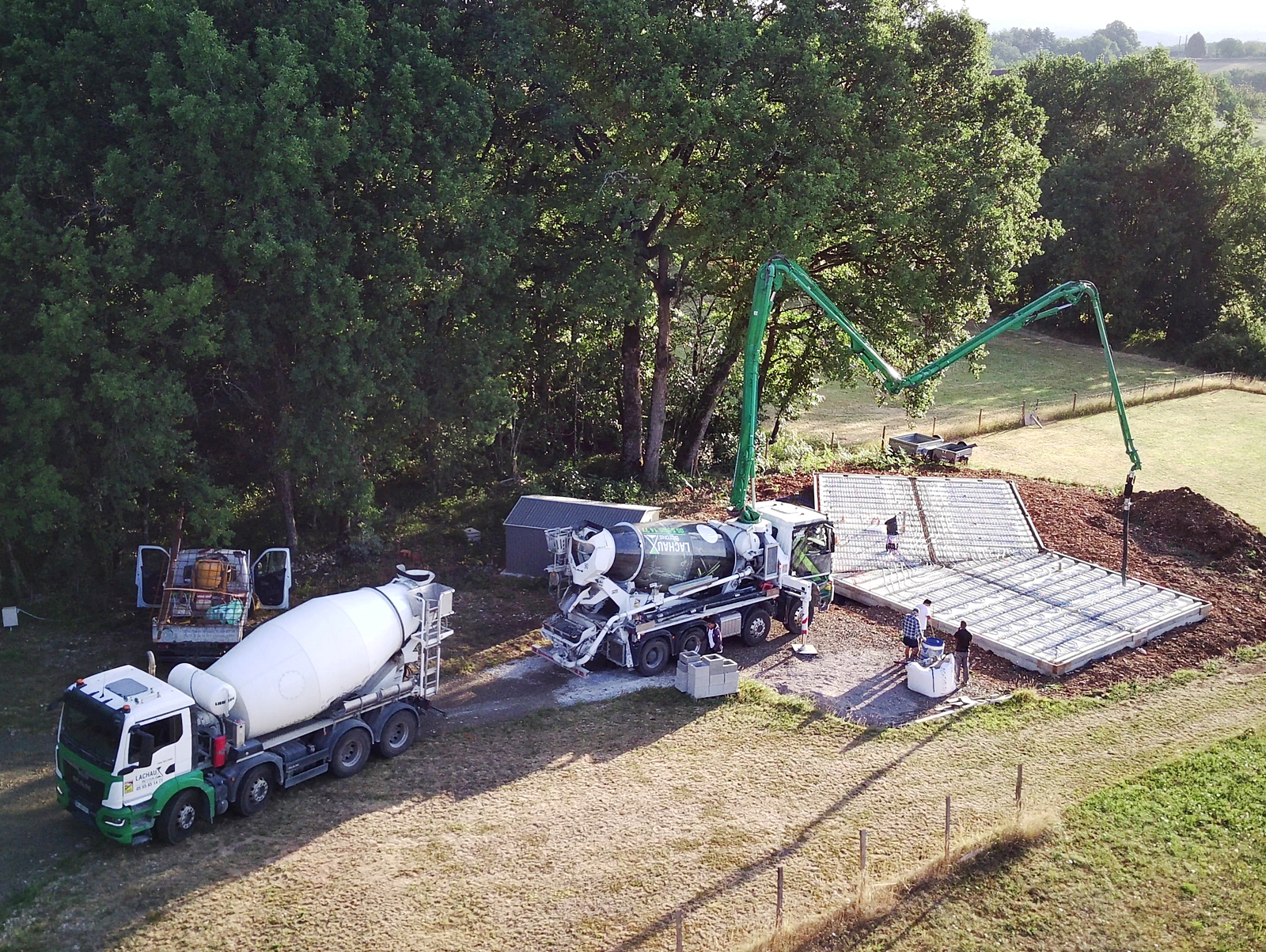
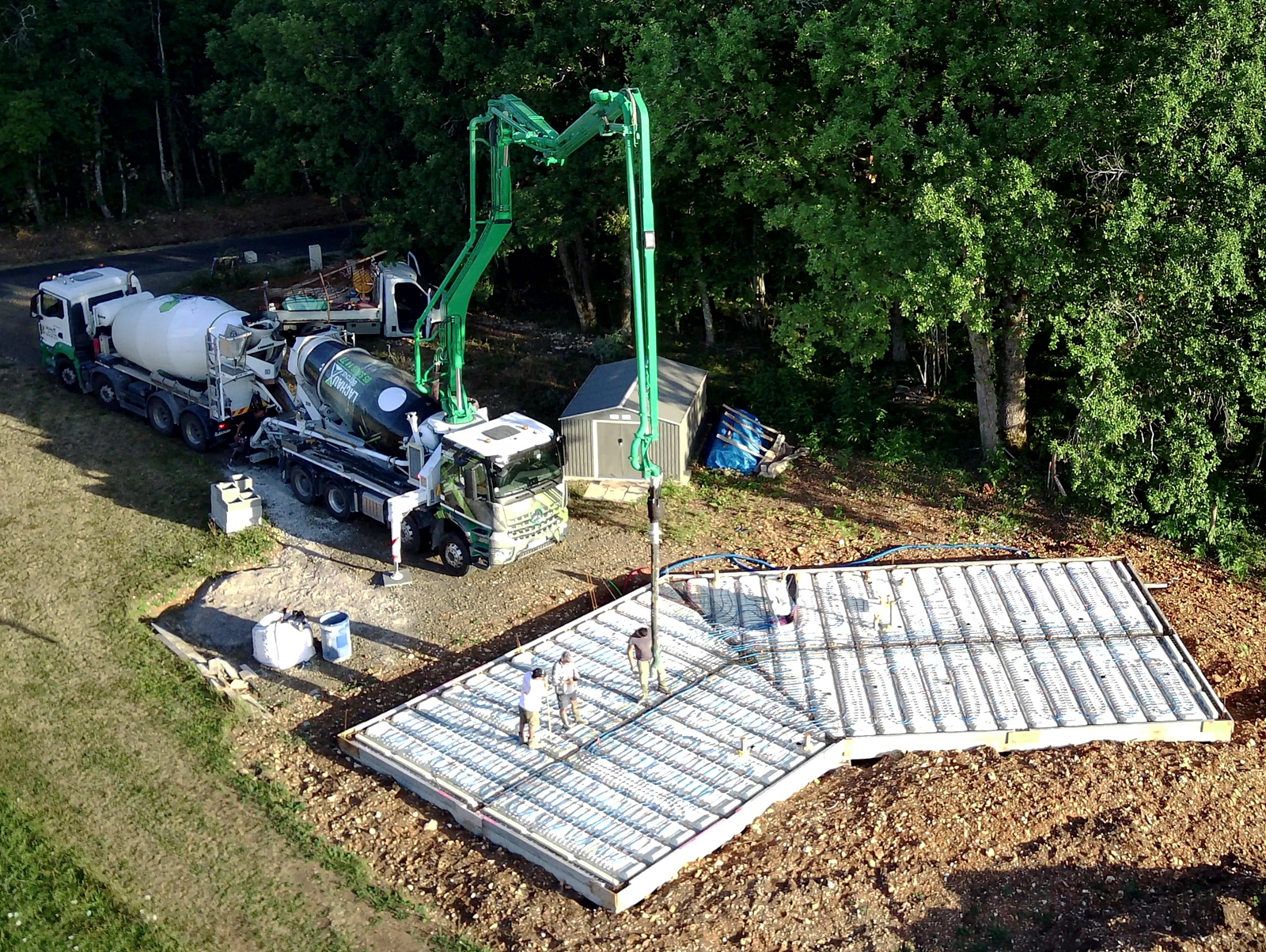
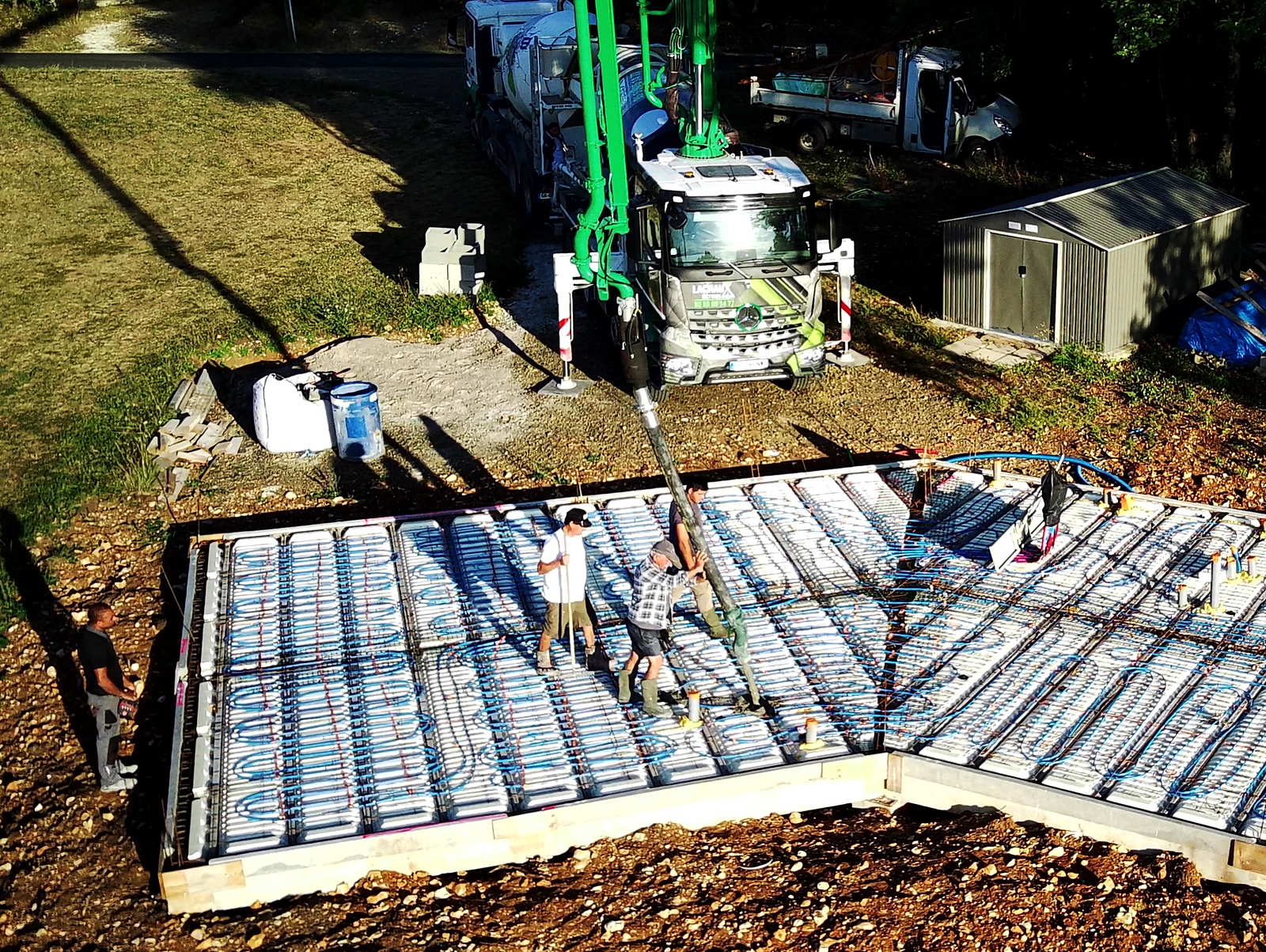
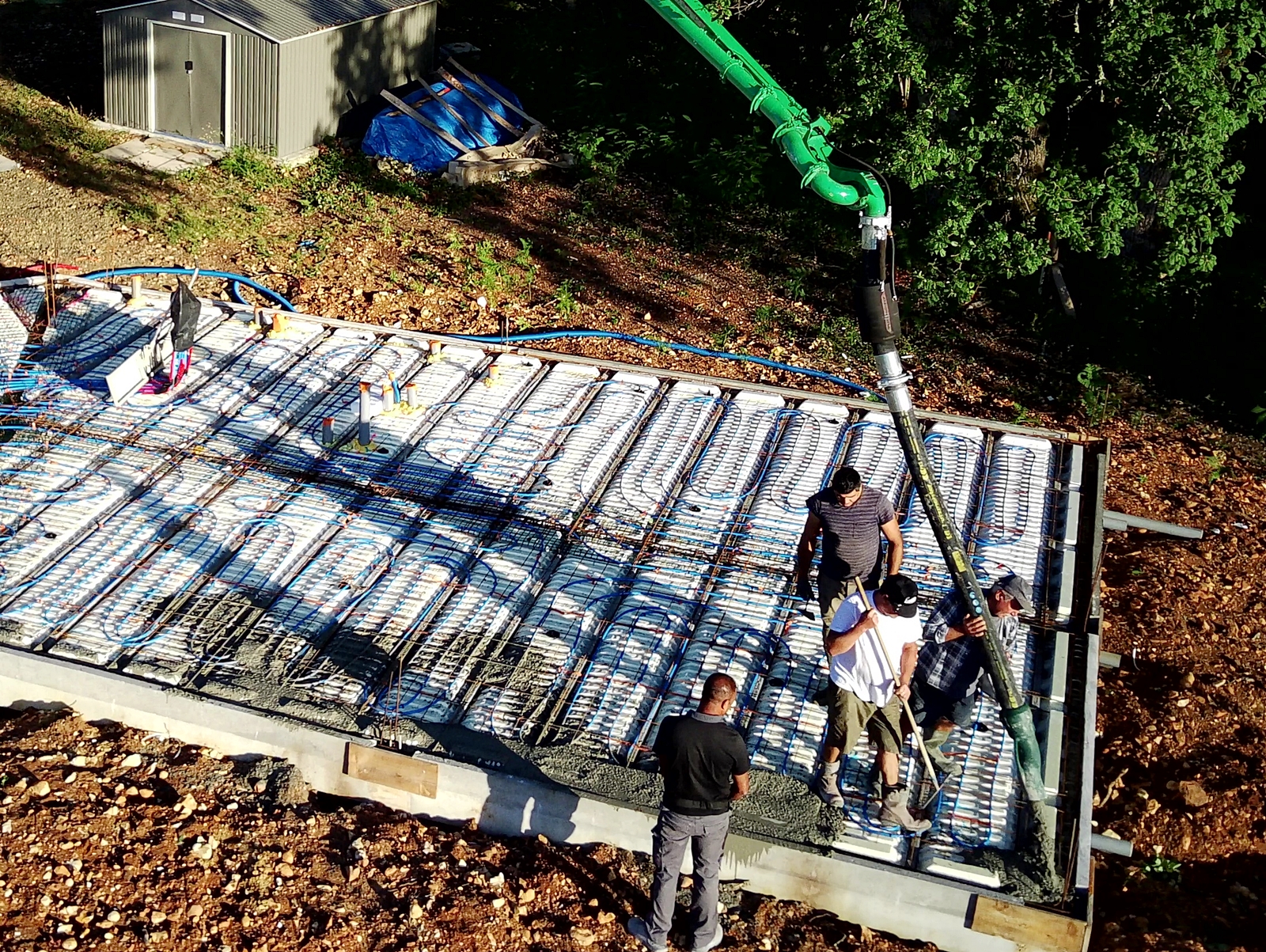
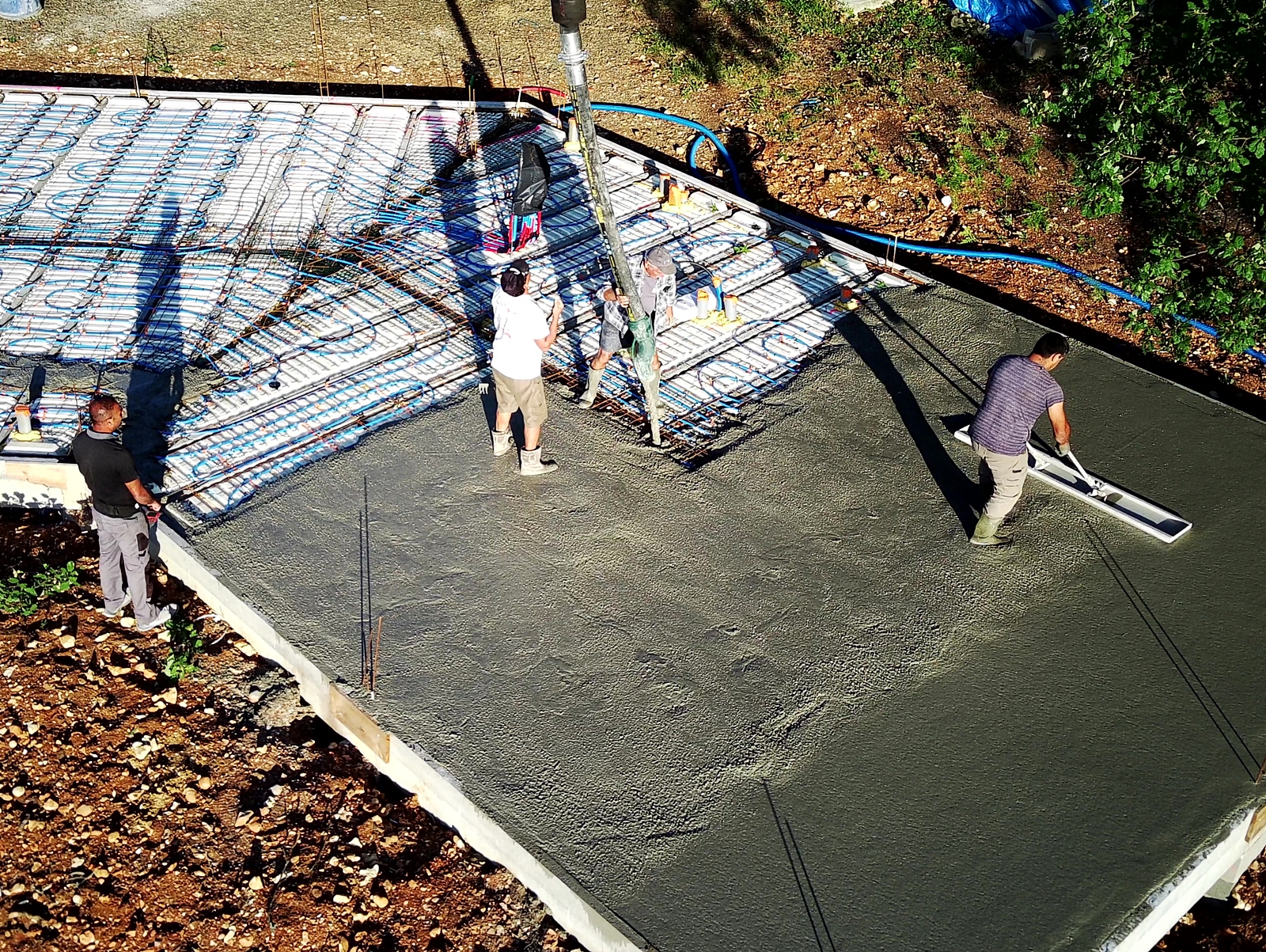
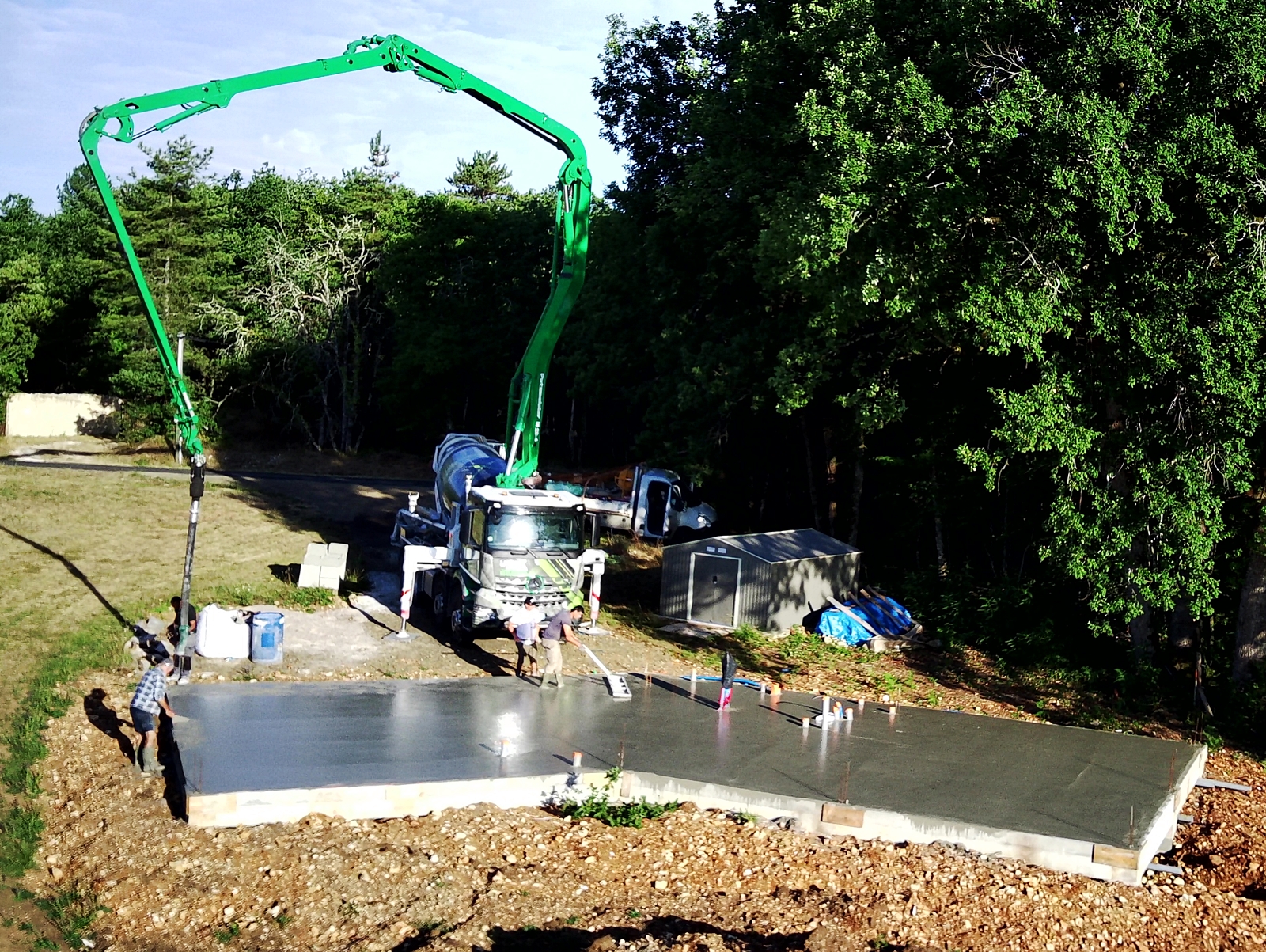
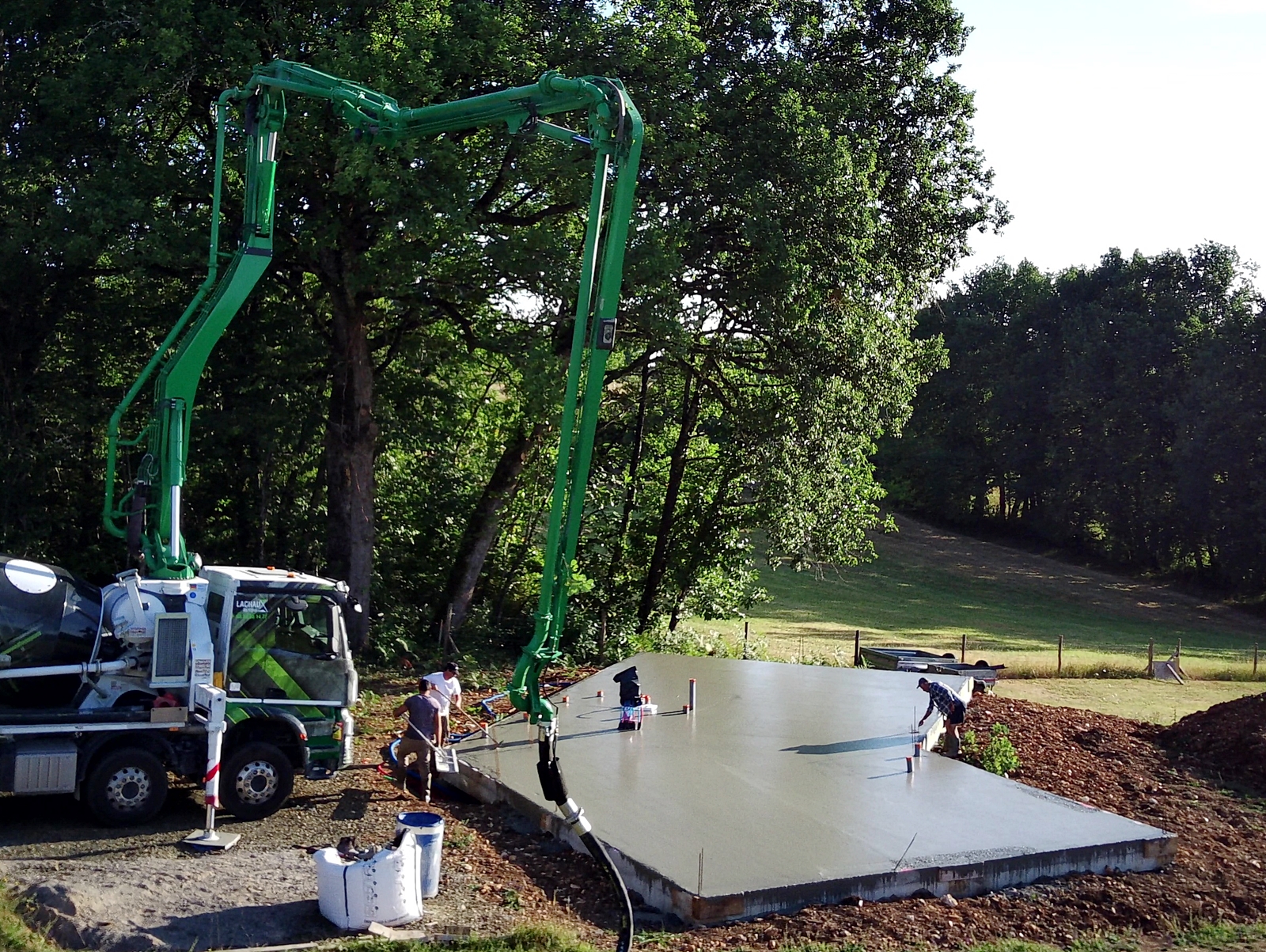
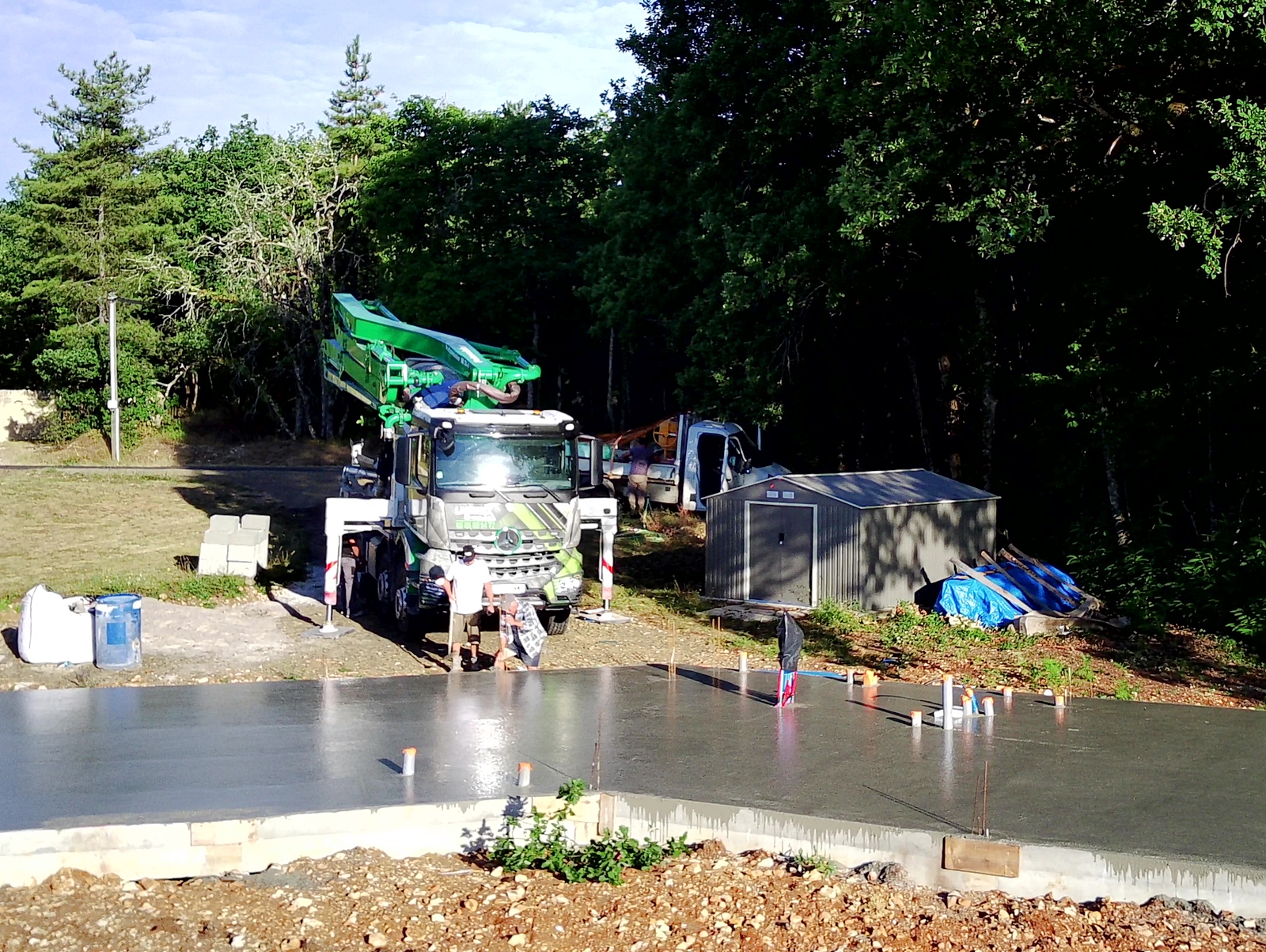
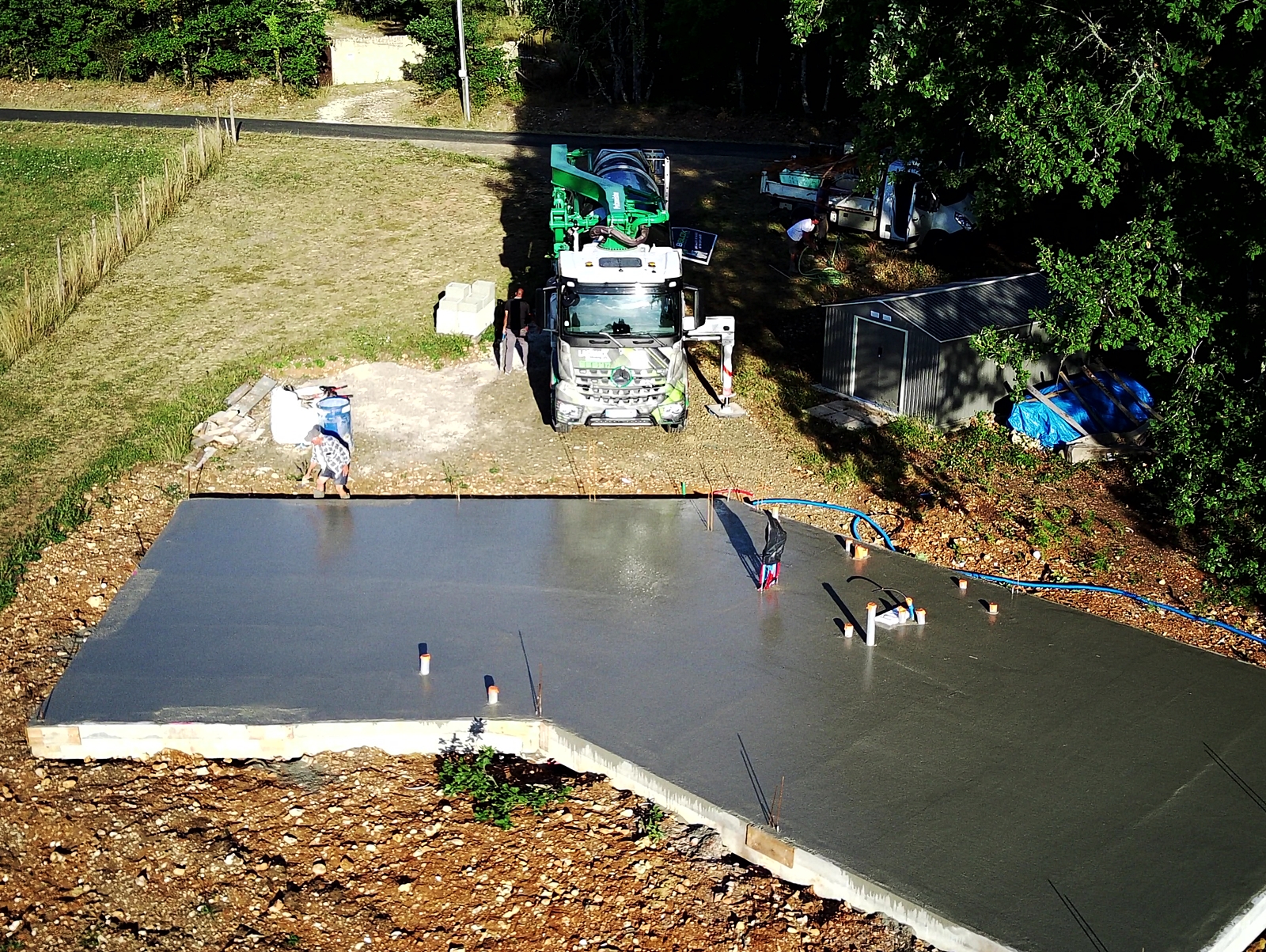
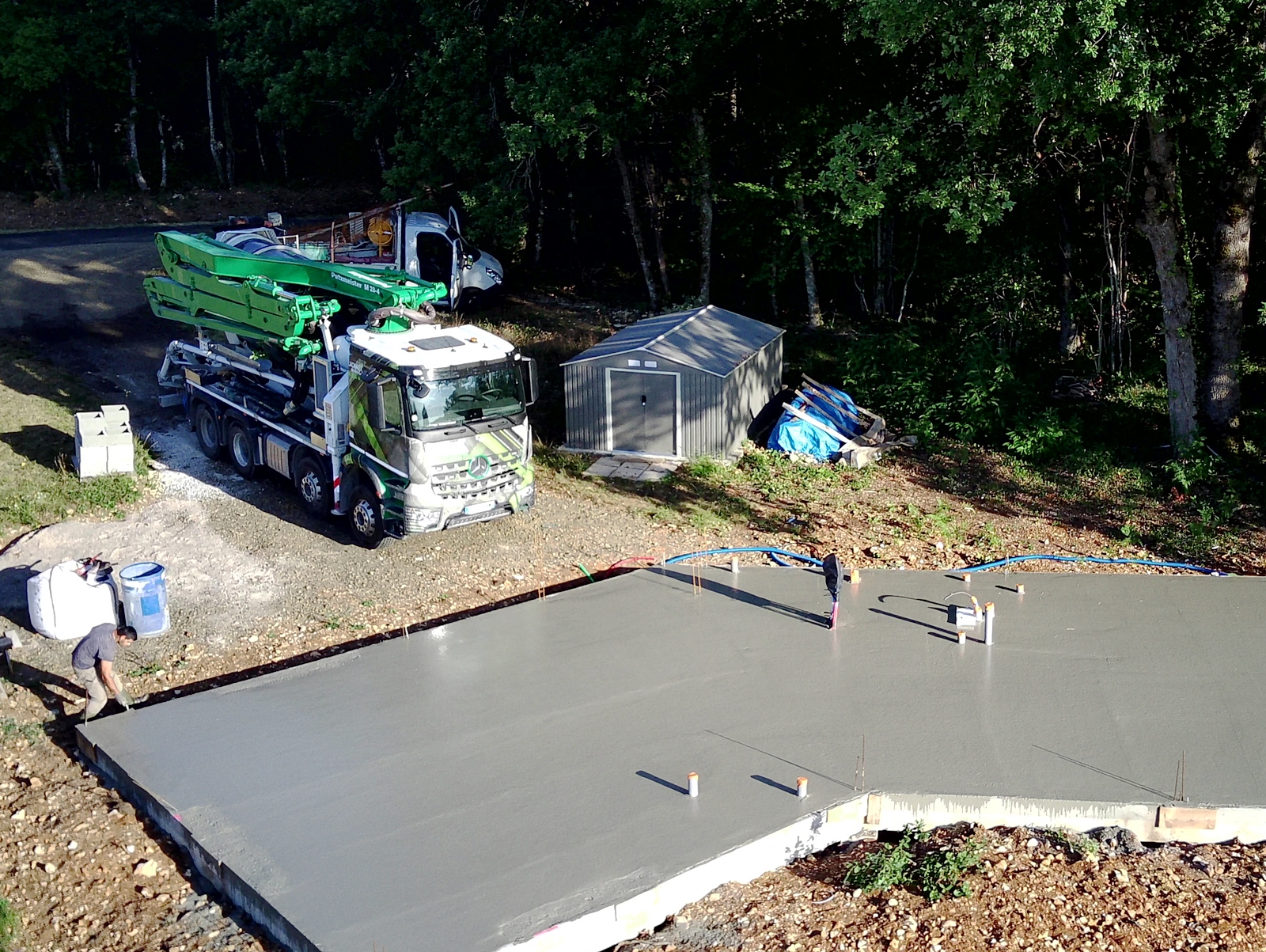
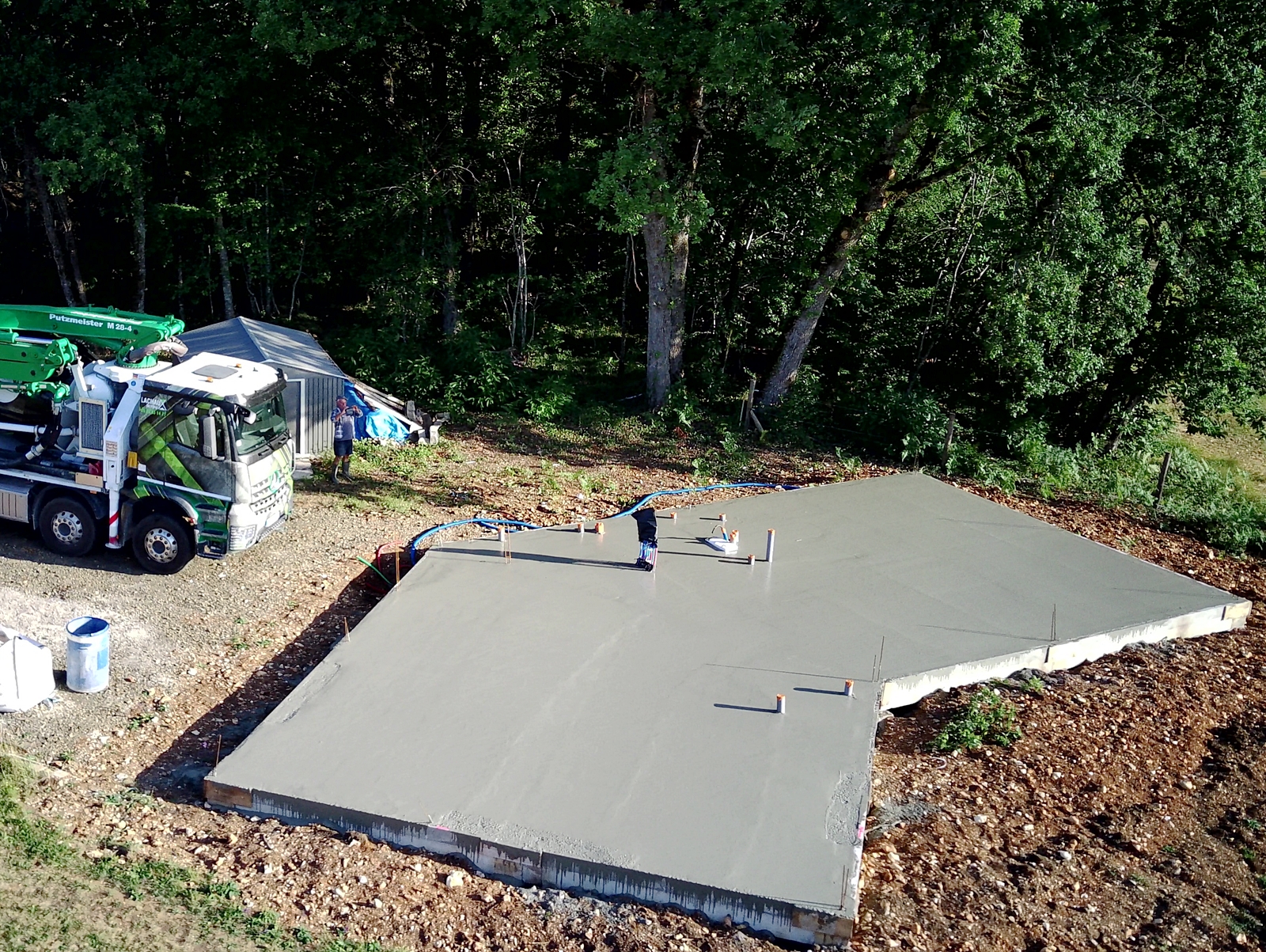
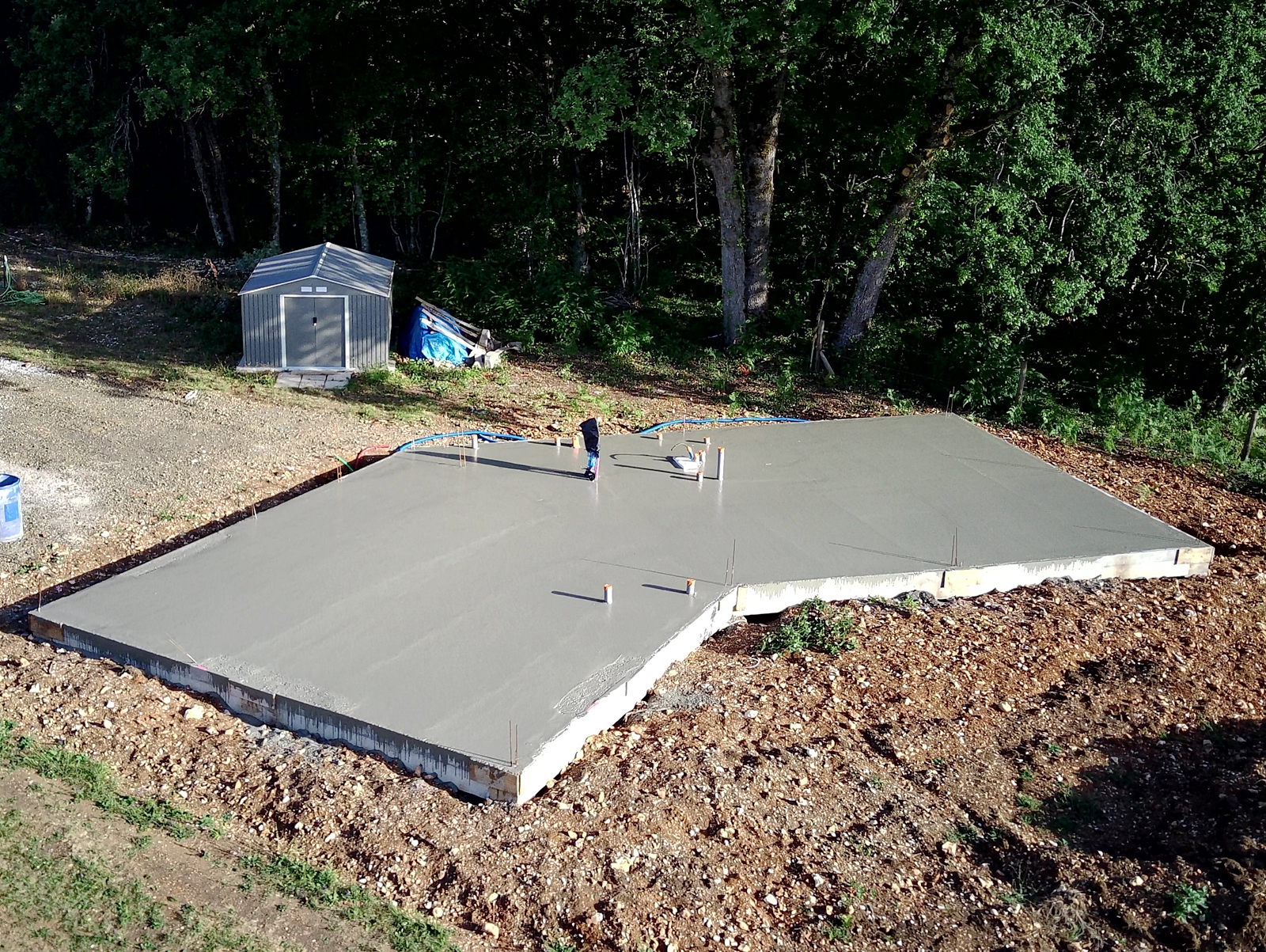
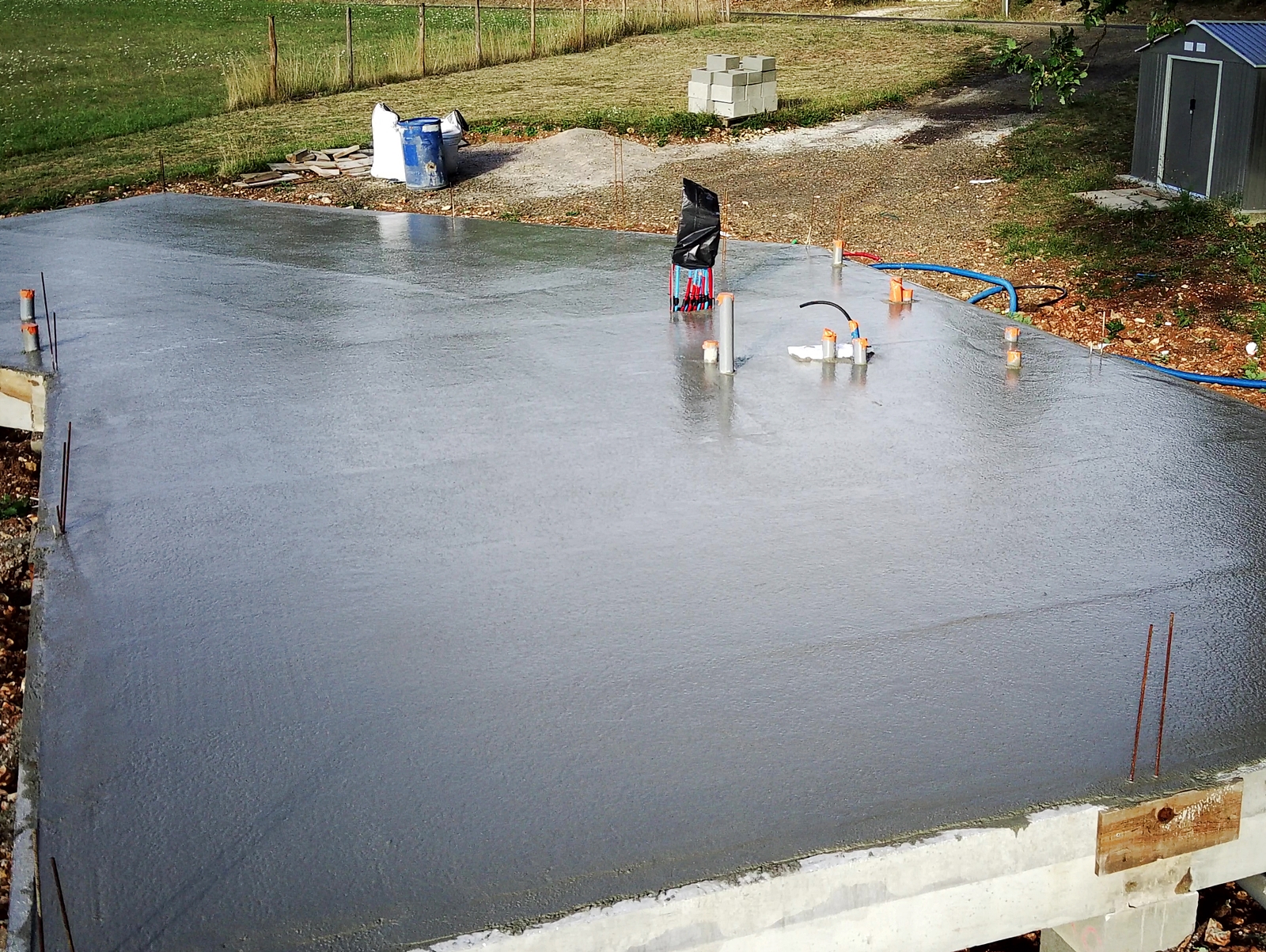
Here’s the video from 28th July when the great leap forward happened, namely the laying of the concrete floor slab. It was done on one of the hottest days of the year and having started at around 7.30 am, it didn’t take much more than an hour to get finished.

It was important that it was done before August when almost everyone in France, including my builder, would be on holiday for the whole of the month. This would give the concrete plenty of time to cure and gain strength to allow a start on building the house’s walls on their return in September.

New house-build, day 12, 26th July 2022

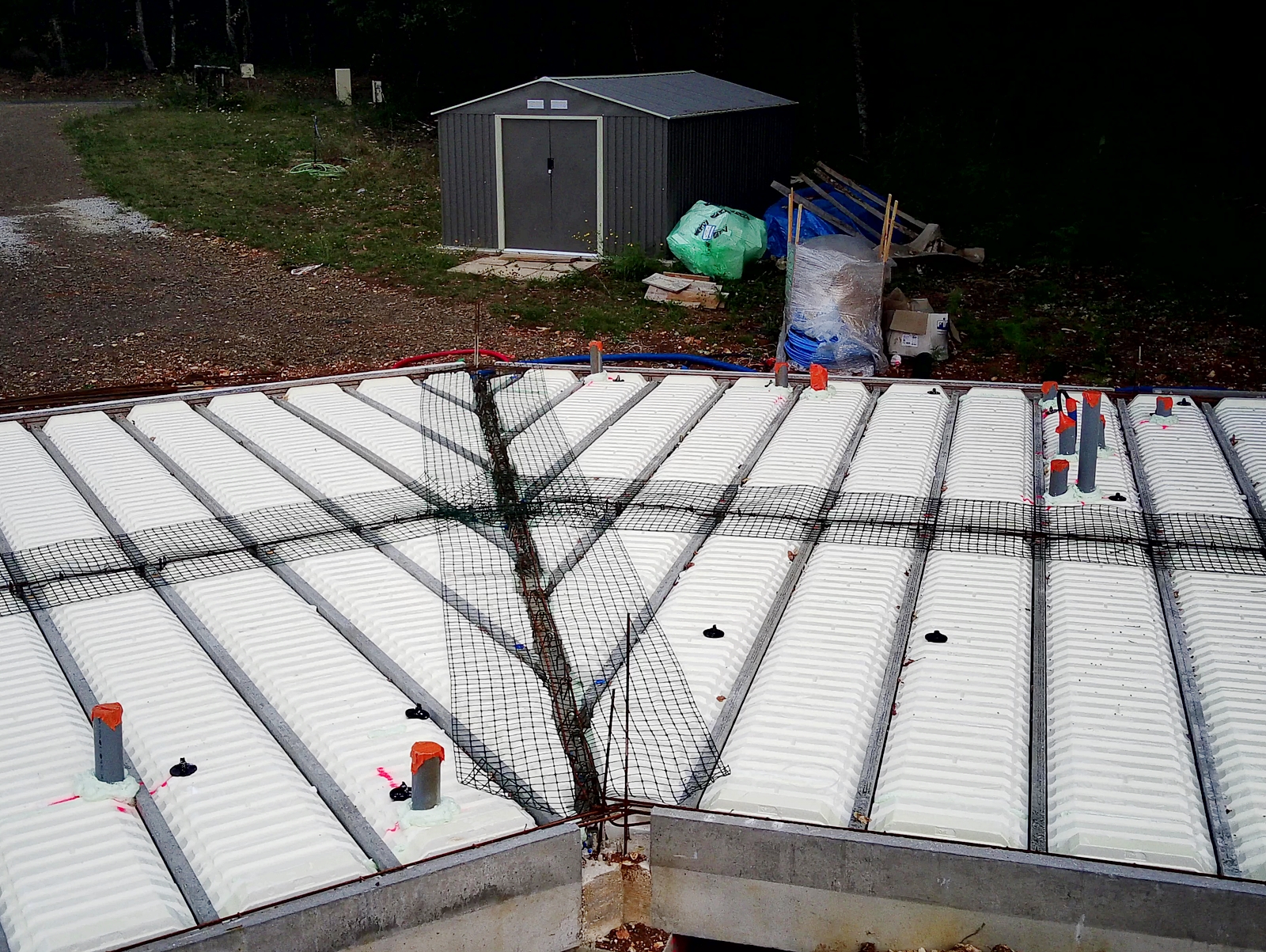
Here’s the video from day 12 of my new house-build project when sheets of reinforcing steel mesh were laid in advance of the concrete floor slab being poured. It was the day after the pipes for the heat pump had been put in place and only took two workmen under two hours to do.

Afterwards a spent some time tidying up their work a bit by adding more wire ties to the joints between the sheets to ensure that their edges wouldn’t be higher than the surface of the concrete when it’s laid and cutting off the ends of some long cable ties as well as trimming some excess plastic mesh so they also wouldn’t protrude.

New house-build, day 11 video

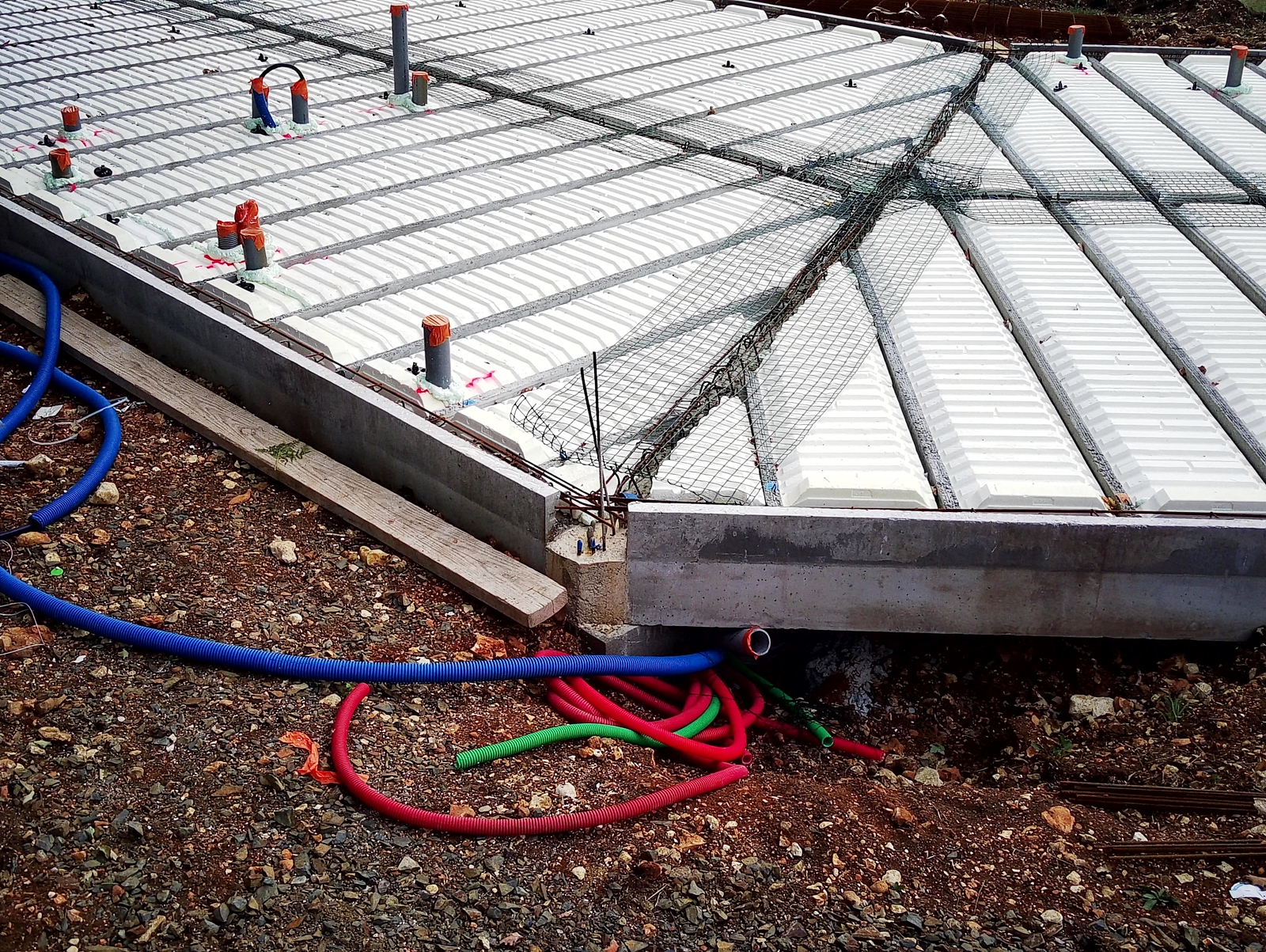
Here’s the video from 25th July when the young workman came to install the underfloor pipework for the heat pump. He made a good job at the start but not so good a job of the area under the bedrooms and bathroom where he finished. I think that he’d been told that he could only stay on my job up to a certain time by which he had to leave. As a result I spent an hour tidying up his work in readiness for the next stage.

Sheets of reinforcing steel will now be laid on top of the heat pump pipes and then the project will be ready for a big leap forward when the concrete floor slab is laid. I was very happy when this eventually happened (see upcoming video) as up until then the polystyrene ‘hourdis’ had been exposed to UV rays from very hot sunshine over a period of several weeks that I had been worried might damage them.

Timberrrr!

Now that the first load of blocks has been delivered and is ready for use, I’m hoping that my house-builder will start work on the walls in the very near future. However, as I’ve been mentioning for some time, branches from a nearby oak tree were hanging over the northern end of the house and the situation had been made worse by the weight of their leaves bringing them down even lower, making it impossible to build the walls in that area any higher than just a few feet.

My concern was that this would give the builder yet another excuse to delay the construction until the branches in question had been removed and although it had been my desire to find an ‘élageur grimpeur’, a tree pruning expert who ascends into the tree on a rope to cut off the offending branches, while the builder was off site, this had been impossible due to the national French tradition of everyone stopping working and going on holiday throughout the month of August.

I was lucky enough to make contact with such an expert on Monday who came to see the job yesterday and said that they could come on site this afternoon to do the necessary work. I was very impressed by both how well they did the job and also how well they cleared up afterwards and here are some shots that I took after they’d started and had actually already begun to descend below the heady height that they went up to in the first tree to cut off the highest branches.

null

null

null

I was delighted with the results as although a couple of blocks got broken when one particularly large branch swung as it fell down, there are now no low hanging branches whatsoever over the floor area of the house as these shots taken from below and one side show.

null

null

The view from the front also gives a good indication of how much space has been created over the area in which the walls will be built, space that will also be amply high over the building’s roof as well.

null

And one of the good things was that although branches had to be removed from two trees, we got away with removing one fewer than I’d originally allowed for. This was a good thing because as the tree man said, if we’d taken another large branch out of the tree’s canopy it might not have withstood the shock, but as things have been left, it should recover with no long term effects. I’d hate to have been responsible for the death of a mighty oak tree that has stood, albeit crookedly leaning to one side, for generations, but hopefully now that won’t be the case 😉

New house-build day 10, 19th July

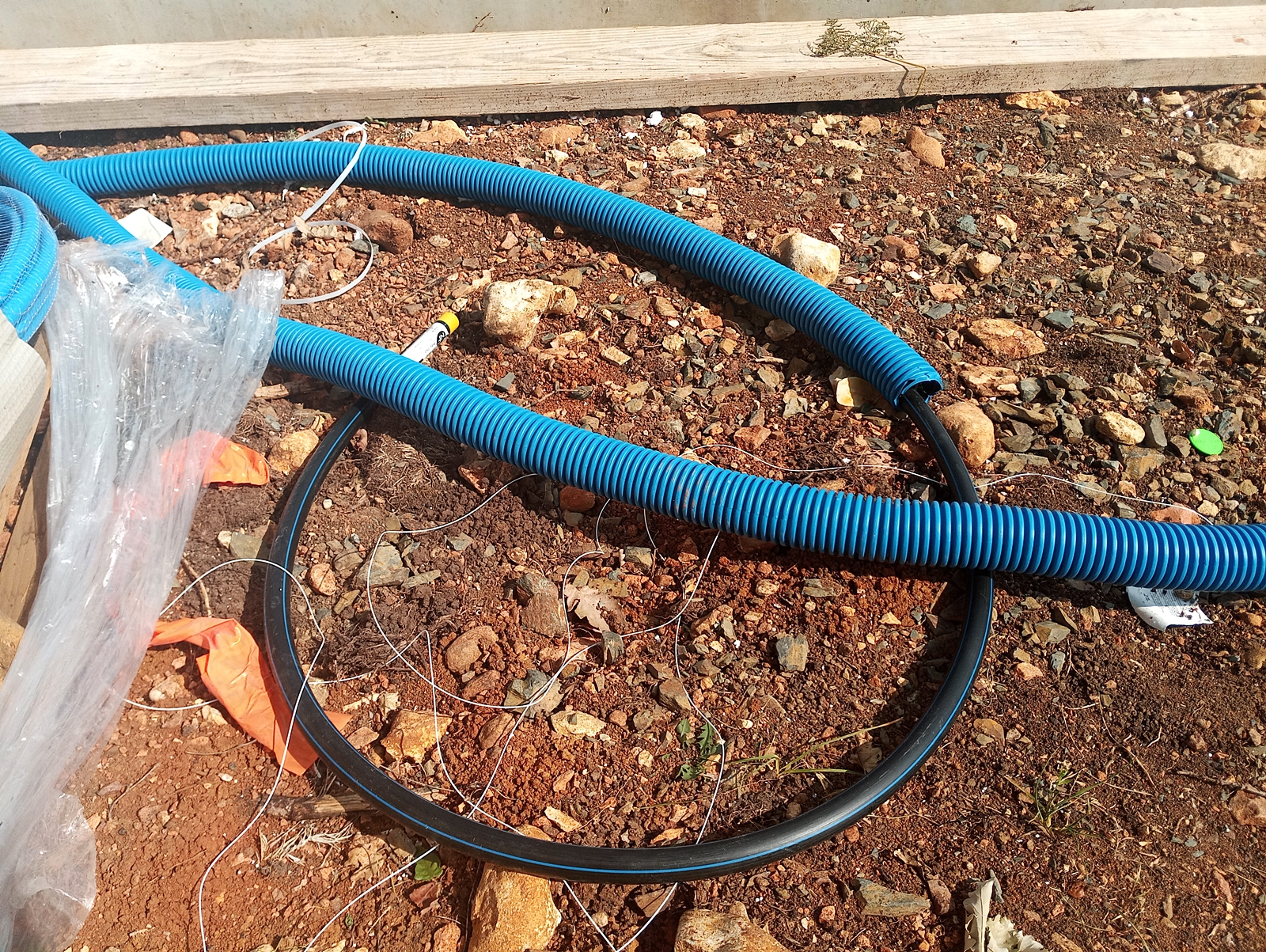
Now that August, the holiday shut-down month has been and gone, I’m trying hard to catch up with my house-build videos. This one is from day 10 back in mid-July, when two workmen installed the services in the form of the plastic tubes that will carry the incoming water and electricity and the larger diameter pipes for the outgoing waste water.

Progress has continued at a slow pace as mentioned in a recent post but there’s hope that things will pick up in September, I’ll just have to wait and see.

Interesting news

I received an interesting email from my housebuilder yesterday that they’d circulated to all of their clients. In summary, it said the following.

The number of clients entrusting them with their projects is growing ever larger for which they thank them.

Despite the increases in material and labour costs, they will completely fulfil their role as builder in maintaining the prices set out in their contracts.

The Covid pandemic, delays in material supplies, difficulties in recruitment and above all, the number of projects they have in hand have all had an impact on their work schedules and at the present time, building works are taking roughly 8 months to complete from the commencement of site work.

By being able to make plans encompassing all of their projects they can juggle the mix of resources so as to be able to ultimately deliver a house according to plan and the agreed time period.

They understand that the waiting times are difficult to live with and they are doing everything possible to bring things on as fast as they can.

They will also ensure that they keep everyone informed of the situation regarding their projects.

As for me, I’m very relieved to see that they will be maintaining the price agreed in my contract as although the inflation rate here in France is, and will remain much lower than that in the UK during the course of my building work, I have a budget for work that I will be carrying out myself once the builders have finished and for buying new furniture and household goods. Although this will now inevitably be more stretched than I’d originally envisaged, hopefully their statement means that things won’t be as bad as they might have been.

Their statement about building times implies that my house should be completed by November of this year and if so, I’ll be happy with that. I’ll need to immediately install my new kitchen and the bedroom floors and November, possibly with the heat pump gently providing background warmth, won’t be a bad time for doing that.

And it’d be nice to be able to get my Christmas decorations out at last! They’ve remained in their packaging every since I came from the UK ten years ago so it will be a very fitting way to celebrate moving into my new home 🙂

Hooray, at last

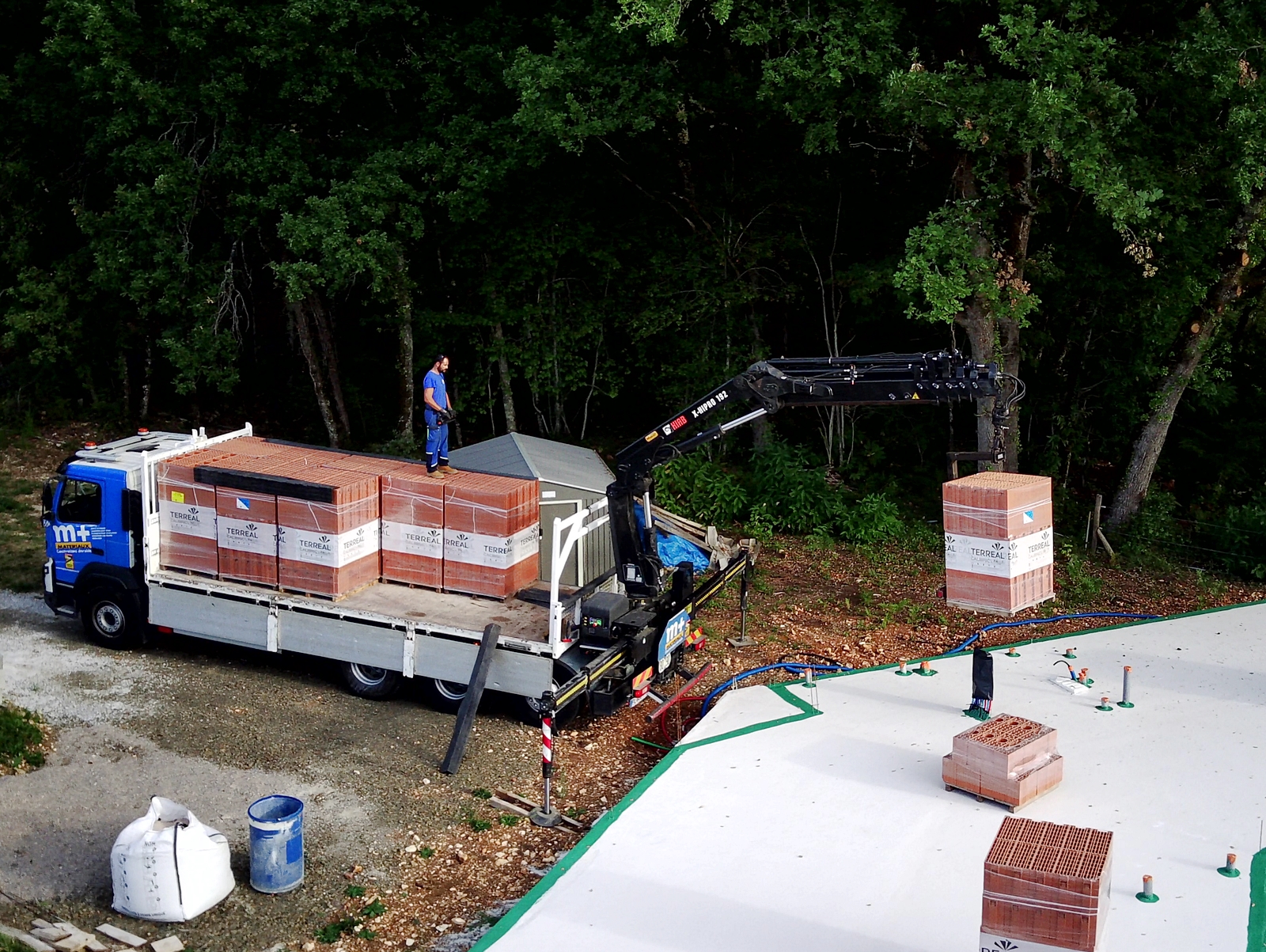
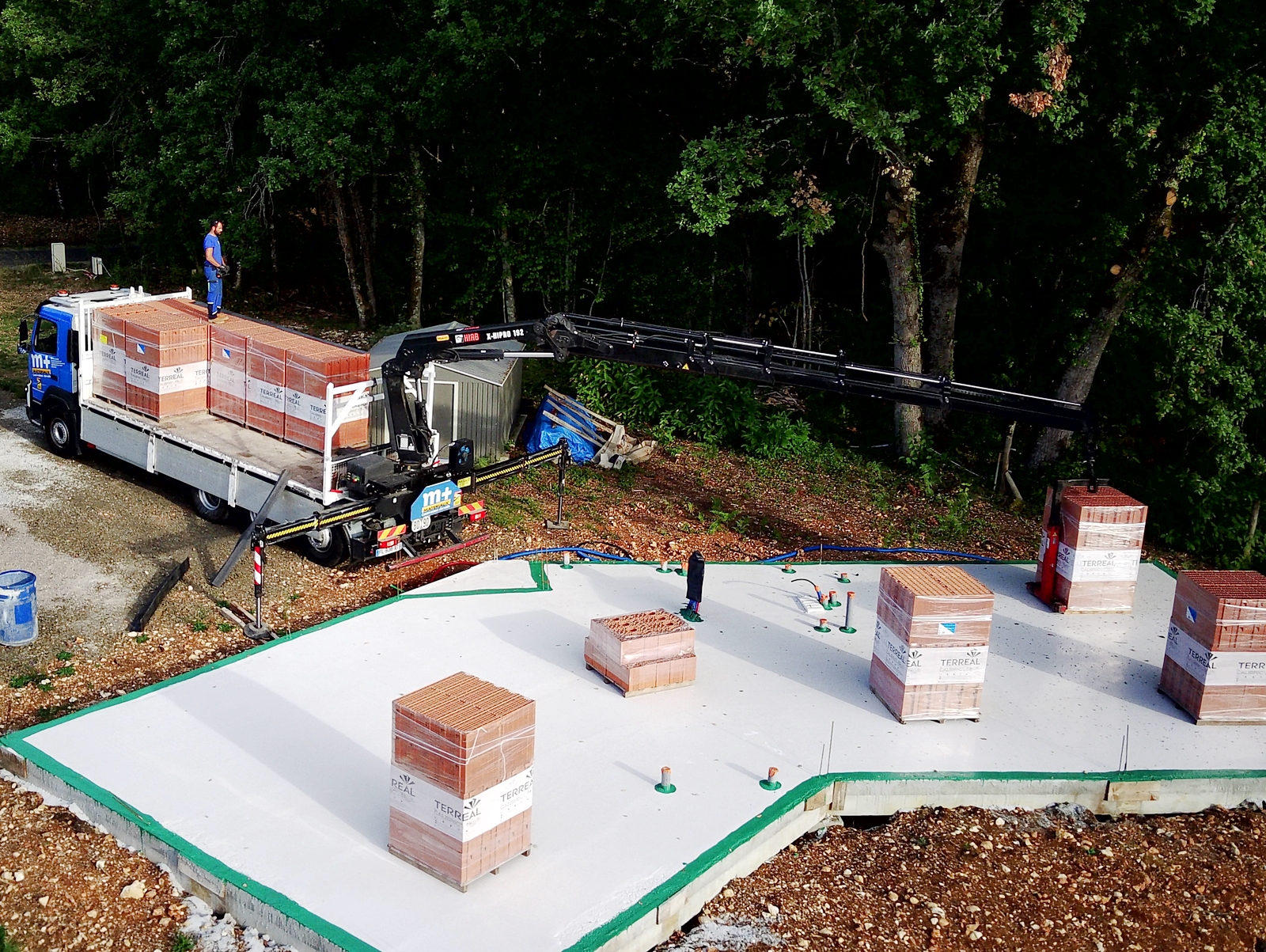
At around about 8.30 am this morning I thought that I heard a ‘mechanical’ sound coming from the top of my land and sure enough, to my pleasant surprise there was a smart blue delivery truck with its driver just about to start unloading materials that will be needed in the next phase of my house-build project.

null

null

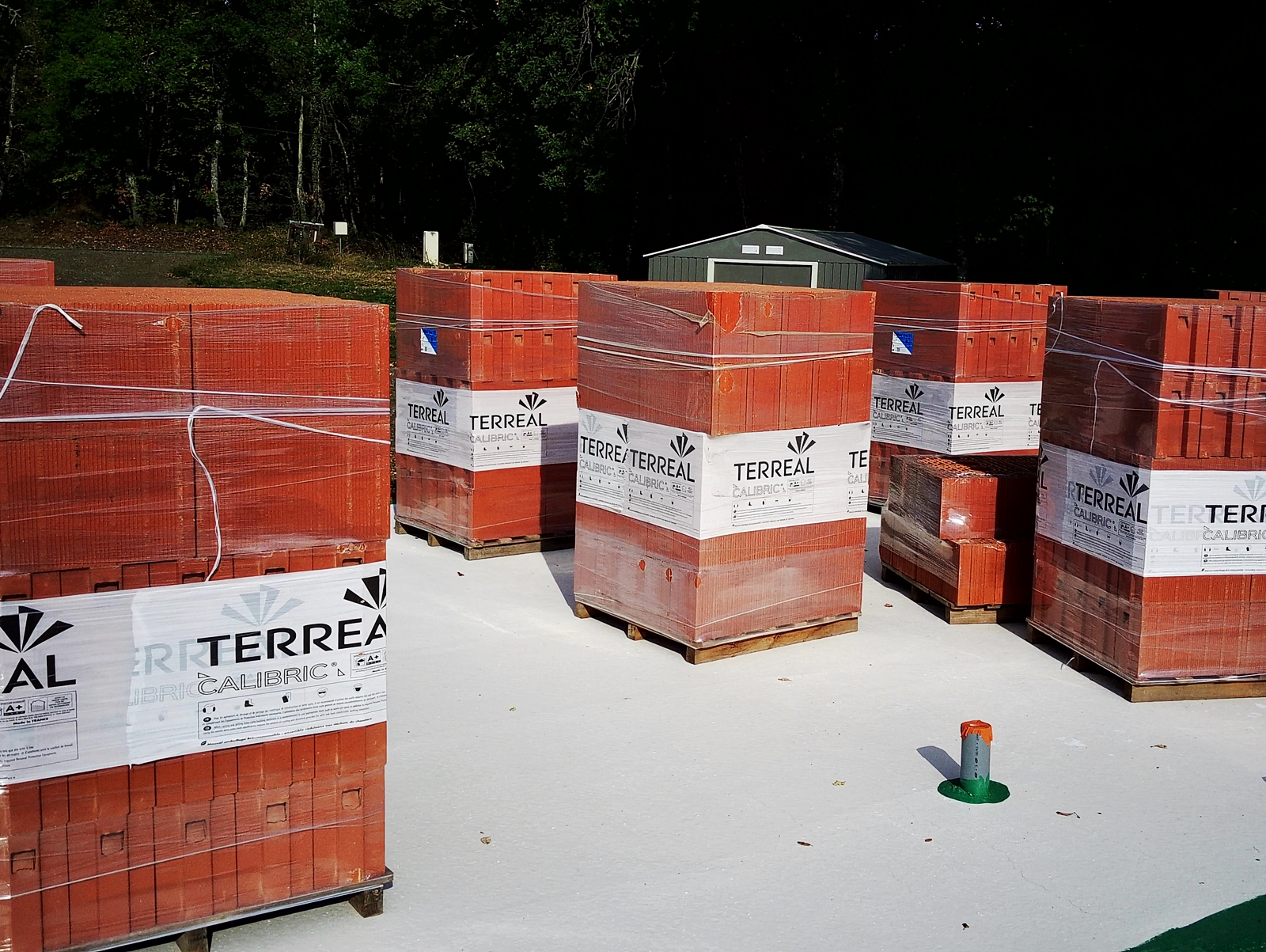
The truck was heavily loaded with terra-cotta building blocks, which are used in most of the constructions down here, and first off was a small pallet of small blocks with holes in them that when stacked up will form some kind of flue. As my new house won’t have a flue I’ll be interested to see what they will be used for – some sort of conduit for electrical cables perhaps?

null

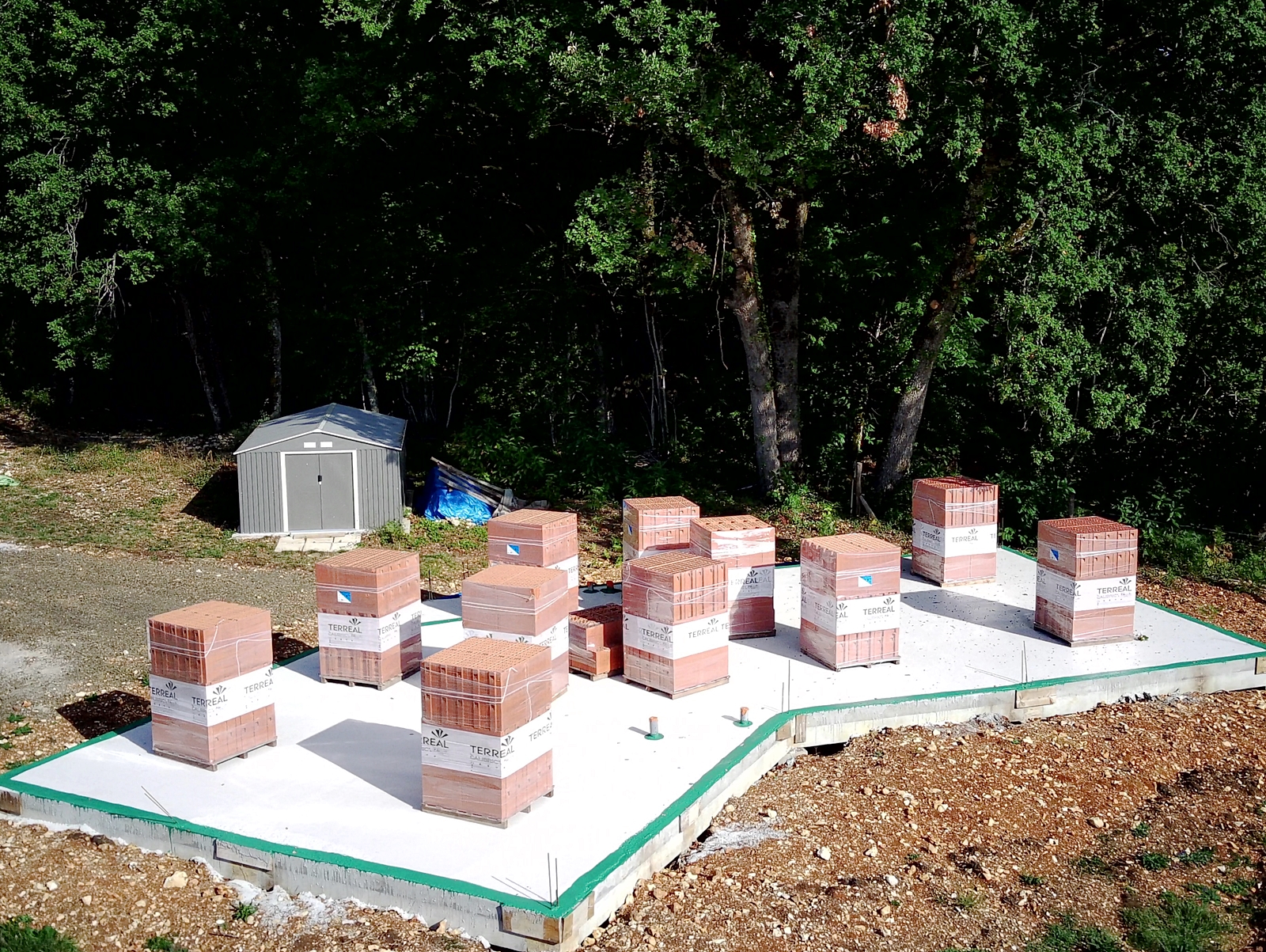
Over the next hour or so all of the blocks were unloaded using a very powerful Hiab hoist with an amazingly long arm that was fitted on the tail of the truck. To give an idea of what I’m talking about, each pallet weighed 1000 kgs (I think) and the hoist arm was extended to great lengths, as shown in some of the following images, until the full weight of the blocks was distributed over the complete floor area of the house and the blocks themselves will be conveniently placed for when the mason(s) come to set them in place to build the walls.

null

null

null

null

null

With its delivery completed, the truck departed after just over an hour leaving the blocks ready for use. I guess that the next delivery will be of the special sealant that will be used to join them together to construct the walls.

null

null

So what great news this was! A delivery of material that is really meaningful in terms of the build as a whole – you can’t get more meaningful than the stuff that the walls will be made out of. And hopefully this signals that the project is ready for a big leap forward, because once the builders start on the blockwork they don’t normally stop until the walls are all up. I’m keeping my fingers crossed that that will be so in my build 😉
And finally…

Well, I got the flight in today, early this evening actually, in 24ZN, my X-air, that I’d had planned for weeks, before all of the problems arose with its fuel system and starter motor. Things went pretty well but the old girl still decided to play a trick on me to test my nerves half-way round, to the north of Périgueux, in the form of a few seconds of rev drops even though the fuel pressure and the engine temperatures were fine at the time. The route I flew is shown in the image below.

null

Having tested the system pretty thoroughly by doing extended high rev engine runs and although as a result I didn’t anticipate that there would be any more problems with the fuel system, I thought that it would be prudent to do an extended climbing turn up to my initial route height of 1500 feet after taking off from Malbec and then to depart from the overhead. This would have given me the opportunity to land back should there have been any problems, but there weren’t.

Nevertheless, I decided to take a few shortcuts by cutting the corners a bit, especially after the few seconds during which the engine ran slightly rough and the revs played tricks. However, it was for only a few seconds, the revs recovered and the flight was otherwise uneventful for the whole 1 hour 20 minutes that it took to complete.

The next shot is of the airfield of Périguex Bassillac where I don’t think there was any activity. The same could not be said for Figeac in the Lot and Egletons in the Corrèze where there was plenty of the usual undisciplined radio chatter, much of it from radios with lots of buzzing and interference that was a real pain in the ears.

null

The next shot shows the city of Périguex viewed from the north, not that very much detail can be seen in the photograph.

null

I think that the following shot is of Saint Astier, but I don’t know for sure. If it is, it’s where I went to buy one of my ‘tonnelles’.

null

I then turned left a couple of times to scoot in a south-easterly direction back to Malbec. The vis had been very poor up to that point as I was flying mainly into the sun and the X-air’s screen is rather old with quite a few abrasions and scratches, which don’t help of course. Even so, it was still quite hazy and the vis didn’t improve very much. The next shot is of the turn onto final at Malbec.

null

The following shot was taken half-way down the final approach.

null

This final image was taken passing the chateau just before the landing.

null

Taken all round, I was very happy with 24ZN’s overall performance but I have to say that this kind of ‘low and slow’ flying doesn’t appeal to me very much nowadays. So I think my X-air’s days are numbered. I achieved what I wanted to, which was to save it from a sorry fate in the UK and now I think that it’s time to give it a good clean and tidy up and move it on to a new owner who will be able to give it the love that I’m not able to.

It’s still a very flyable aircraft and as I’ve mentioned many times previously on My Trike, it’s a mug’s game, for me anyway, having two aircraft. As recent experience has shown yet again, two aircraft just means two headaches and two sets of problems and with my house-build and all, I really don’t need any of that right now 🙁

Half -way there

This morning I stripped 24ZN’s starter motor and thoroughly cleaned its internals including its brushes and commutators. There was some play in its outer bearing but it must have been like that for some time, including the many months when it was starting the engine without any problem because it must have taken years to get as worn as that.

What was noticeable, however, was the lack of bearing lubrication at both ends of the shaft. It’s easy to lubricate the bearing where the brushes are because its fully accessible, but not the outer end where the pinion is that meshes with the flywheel to start the engine, because that’s fully sealed. All I could do for that was lubricate the pinion mechanism itself and pack grease on the inside and outside of the bearing in the hope that some would find its way inside it.

Then it was time to refit the starter motor and go for an engine start and the result was the quickest start up that I’ve ever experienced with this engine. It also ticked over and ran beautifully with good fuel pressure at both low and high revs, so after running the engine at take off power for about a minute with no diminution in fuel pressure, it was time to go for an actual take off.

I stopped and restarted the engine before doing so and for once the engine restarted when warm without any hesitation, so hopefully the starter maintenance will have improved that aspect as well. When I took off the first time I made sure to turn right towards the open land on that side as soon as possible after take off, but it wasn’t necessary because the fuel pressure reading remained stable. So I then landed, turned around and did another, again without any problem whatsoever, so now I’m regarding the X-air as fixed and flyable again, which I hope to do tomorrow.

Then I turned my attention to 77ASY, my Savannah, which currently doesn’t have any brakes. This time, however, I wasn’t so lucky because the bleed nipples on both of the brake calipers were firmly corroded in. Attempts at removing them merely resulted in their snapping off, so there will now be no choice but to replace them, probably not a bad thing under the circumstances. But not to worry, at least in the meantime I’ll have the X-air to fly while I’m waiting for the parts to arrive 😉

One of those days

My plan was to start the day by going to Malbec, installing the new battery that I received yesterday in 24ZN, my X-air, starting its engine to check whether its fuel system problems have now been resolved and possibly even doing a take off and landing. But it wasn’t to happen, right from the word ‘go’.

My caravan’s electrical and water supplies have been in place with only a few minor problems for over a year and I expect things to stay that way. However, quite by chance I was checking the cable and hose pipe which run just outside my fence (so I don’t damage them with my mower) on the north side of my land when I found that one of the cable reels that I’d put inside a plastic bag to protect it from the elements had been exposed.

So it seemed to be a simple matter just to replace the plastic bag but what was on the face of it a quick and easy task turned into a job that took a couple of hours, because in the process of relocating the cable drum the connection was lost. The problem was that I didn’t know where the problem was so I ended up doing an end-to-end check from the main box next to the road down to the caravan before I could satisfy myself that I’d identified the problem and that it wouldn’t happen again, because the last thing I want right now is to lose power when I’m not there, for example, to my fridge and freezer.

So, so much for nipping over to Malbec first thing to sort the X-air out and I didn’t manage to get there in fact until after lunch, by which time the temperature was climbing towards the mid-30s degrees Celsius. But I was confident that the new battery would solve all of my problems, so it was worth struggling in the heat to pull out the Savannah, then the X-air and to remove all of the latter’s covers.

So what happened? It was a fiddly job fitting the new battery, but I knew that it would be, and eventually I was ready to go for an engine start. The engine cranked as usual and then… just as with the old battery, the engine began to turn over more and more slowly until there wasn’t enough power left for it to turn over any more. So what’s going on?

I suspect that the old battery wasn’t the problem – in fact I charged both the old and the new batteries up beforehand and when I checked their voltages, I found that the old battery was showing just over 13 volts, and the new one just under. I heard a weird noise coming from the starter motor when I’d been trying to start the engine previously which I’d put down to the battery not having enough power to spin it properly, but I think I was wrong.

I think that there’s a problem with the starter itself which is most likely dead shorting the battery while it’s spinning and thus causing the battery to discharge so quickly. I’ve removed the starter and disassembled it but won’t be able to do any more with it until at least tomorrow. However, my thinking is that it’s time to put the X-air on the back burner until I’ve sorted out the Savannah’s brakes and I’ve just left the X-air’s new battery on charge overnight for now and will decide what to do in the morning.

There was then nothing more that I could do, so after achieving practically nothing, I ended up just covering the X-air up again, pushing it into the back of the barn and replacing the Savannah in front of it. I think that I probably spent more time moving the aircraft around and uncovering and re-covering the X-air than I did actually doing any productive work, not that what I did achieve could in any way be described as ‘productive’.

So what a frustrating day, but unfortunately it was not yet over. When I returned from Malbec firstly I was incredibly thirsty because I hadn’t taken anything to drink with me and secondly the inside of the caravan was very hot. While I was waiting for the ice cubes that I’d put into a long glass of fruit-flavoured drink to melt I opened the caravan’s windows, and lo and behold, one of the supports on the main window at the rear snapped off, meaning that the window could not be held open.

Luckily, I still have some spare parts left over from when I did previous work on the window supports, but after all of the trials and tribulations that I’d been faced with during the day, this was just about the last thing that I needed. But anyway, out had to come the tool box once again and the window had to be fixed there and then as otherwise it would mess up the beginning of the day tomorrow. Since then, so far there haven’t been any more disasters, but I’m keeping my fingers crossed and may have an early night so nothing else can go wrong through my touching it… 🙁

Surprise surprise!

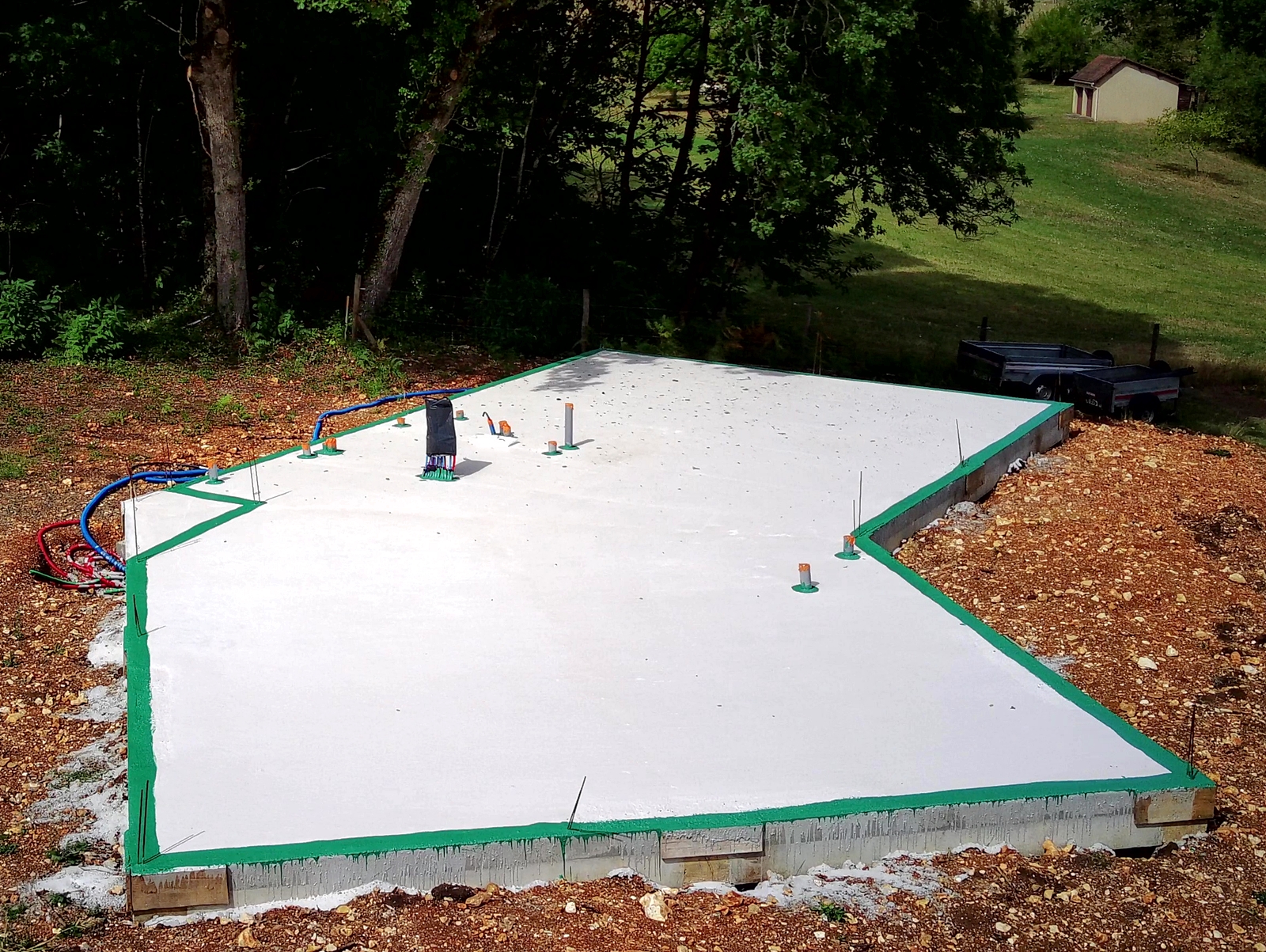
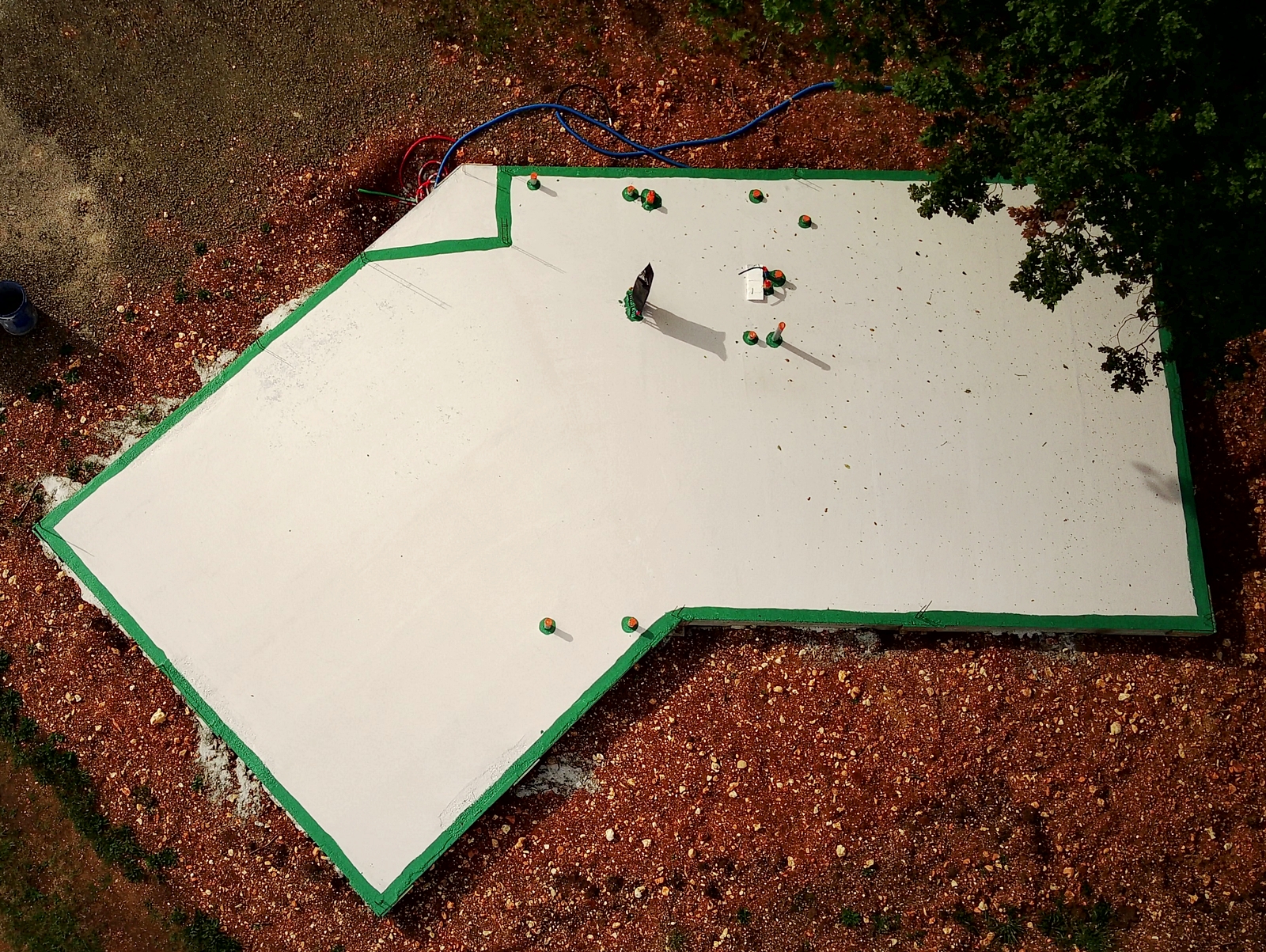
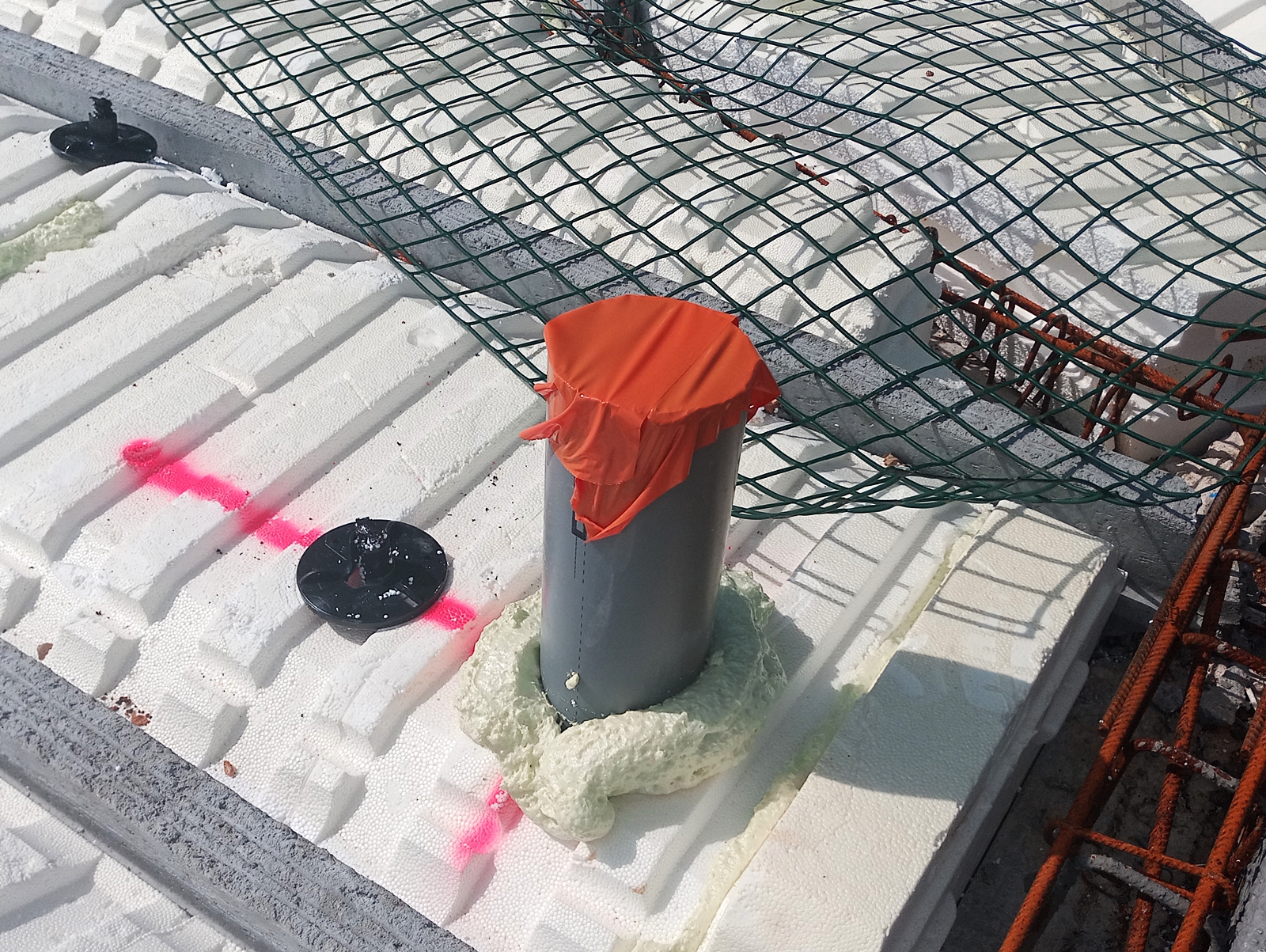
Totally out of the blue this afternoon, I suddenly noticed that something was going on ‘up top’ on my house-build. When I went to investigate, I found that a young guy was going around the recently laid concrete floor slab with a large brush and a bucket of thick green sealer of some sort. For some reason he was painting a line the thickness of the walls all around the outline of the house and when he had done that he then sealed around where each plastic pipe or tube had been brought up through the surface of the slab from the ‘vide sanitaire’ below.

null

null

null

null

null

null

I don’t have the faintest idea what the purpose of this was. Clearly the green goo, which has since cured, is some kind of special sealant and could even be a type of DPC (damp proof course) that I’ve never encountered before. This is a strong possibility as I understand that the blocks that are used to construct the walls are not bonded by cement mortar in the ‘normal’ way but rather by a special adhesive that is applied (squirted) out of a gun and as this green sealant has been applied direct to the floor slab it will be beneath the first layer of blocks which is where a traditional DPC would have been.

But whatever, the builders know what they are doing and this construction method suits this environment. The house will also come with a fully insured 10 year guarantee, which will be reassuring, so I’ll be very interested to see where things go from here. I asked the young chap who didn’t turn up in a van with the builder’s name on it but rather in one of an independent contractor, whether this meant that work would be resuming next week. He didn’t know for sure but he thought that it will more likely be in early September, after the August holiday break.

On another topic, I ordered a replacement battery for 24ZN, my X-air, over the week-end, which was due to arrive today by Chronopost between 11.10 am and 12.10 pm. It hadn’t arrived by the latter time and I was standing up at the road waiting for the delivery when I saw a white van draw up 100 metres away at the entrance to the little lane that leads down to Labattut (I live a bit further on at Labattut Basse). My phone rang and when I answered it the line cut immediately.

When I tried to phone back the number would not allow incoming calls but I knew that it was my delivery because my call was answered by Chronopost. The driver made no attempt to contact me again or to look for my house but having arrived late, merely turned around and drove off. There is no way to contact Chronopost other than by chatbot or a premium rate number so I’m very, very annoyed.

I used to have this problem a lot when I was at Plazac because my house there was even more difficult to find than my present location and as the deliveries come from Brive and this is about the farthest limit of the delivery area, the drivers used any old excuse to high-tail it back to their depot as quickly as possible. If my battery gets sent back to Clermont Ferrand where it came from the merde really will hit the ventilateur, I can tell you 😐

Double trouble

I’ve been trying for what seems like weeks now, because it actually is, to resolve the problem with 24ZN’s, my X-air’s, fuel system. Readers might recall that a few weeks ago I took off to make a flight to the north around Périgueux and was dismayed that shortly after take off its engine coughed, spluttered and threatened to cut out before I was able to make it back to Malbec.

The problem was due to fuel starvation caused by low fuel pressure and since then I’ve taken several measures that I think should have solved it. I’ve not been able to confirm this, however, because although I’ve done several long high power engine runs since then, I’ve only managed one take off and landing which was before I’d completed all of the changes that I wanted to and that was not long enough to confirm that all is as it should be.

With an issue like this, you always hope that you’ll find a ‘smoking gun’, a single problem or fault that explains everything. That was the case when I had to deal with a similar issue before I flew 24ZN to France from the UK when I found that someone had fitted fuel tubing of too small a diameter to feed two carburettors at full power, but as I’d replaced most of the old tubing at that time, overhauled the fuel pump and thoroughly cleaned the carbs, I didn’t think that that would happen again this time.

And so it has proven, or at least I think so until I can do a proper test, but until then I’ll go through and explain the steps that I’ve taken. The first thing I found was a length of ‘new’ in 2019 tubing that demonstrated a large amount of cracking that I thought might have been able to allow air to enter the system, causing the drop in fuel pressure. However, after replacing it I cut it open and found that the cracking did not go right through, so in fact it was still fuel and airtight.

Later I found a second length of ‘new’ tubing and the same applied to that, but it convinced me that although I’d only replaced the ‘bad’ tubing three years ago, I should go ahead and replace all of the tubing in the system while at the same time replacing both of the in-line filters that I also only replaced three years ago, even though the aircraft had been very little flown in between. In doing so, I came across a couple of factors that undoubtedly contributed to the low fuel pressure problem.

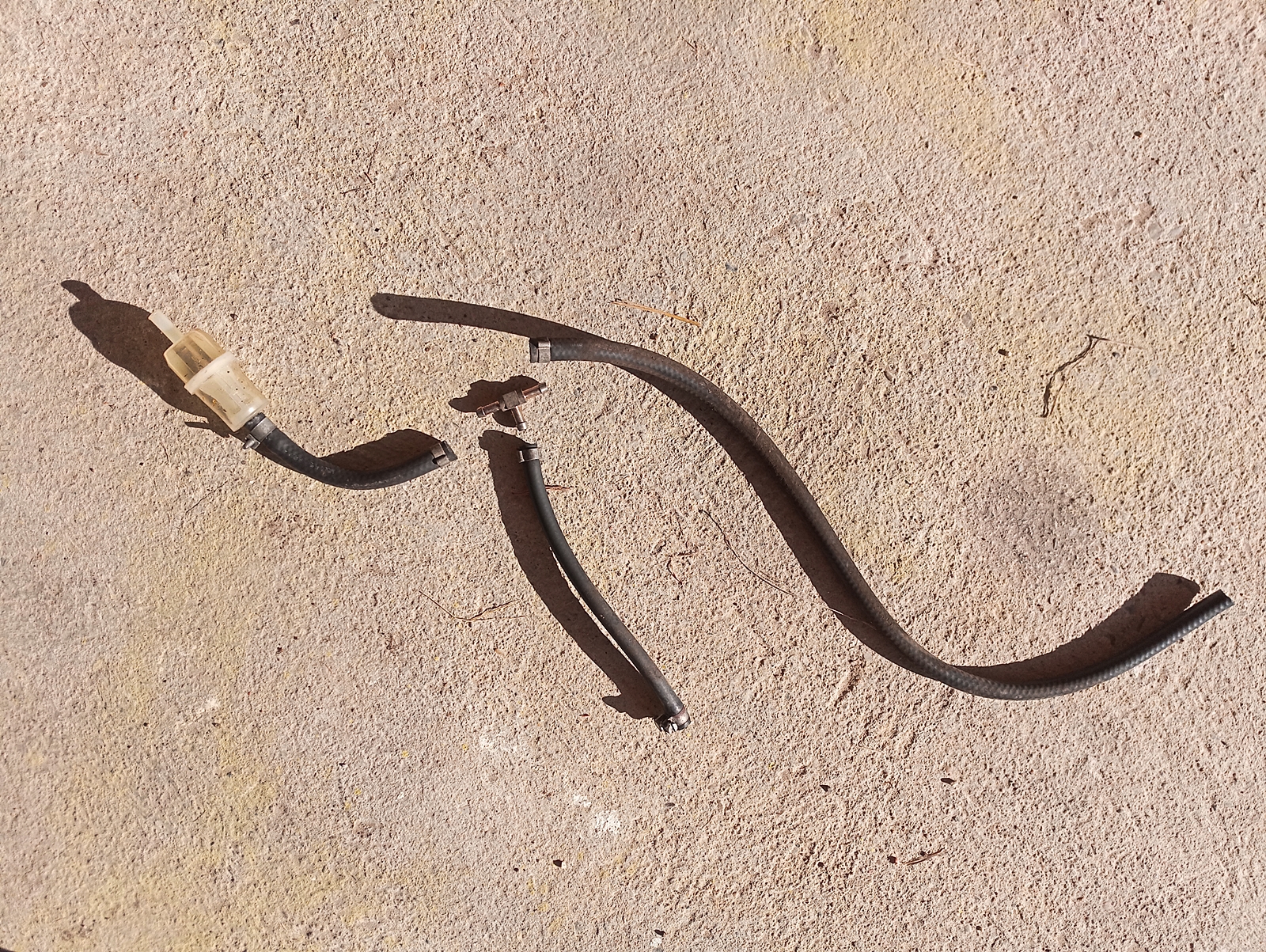
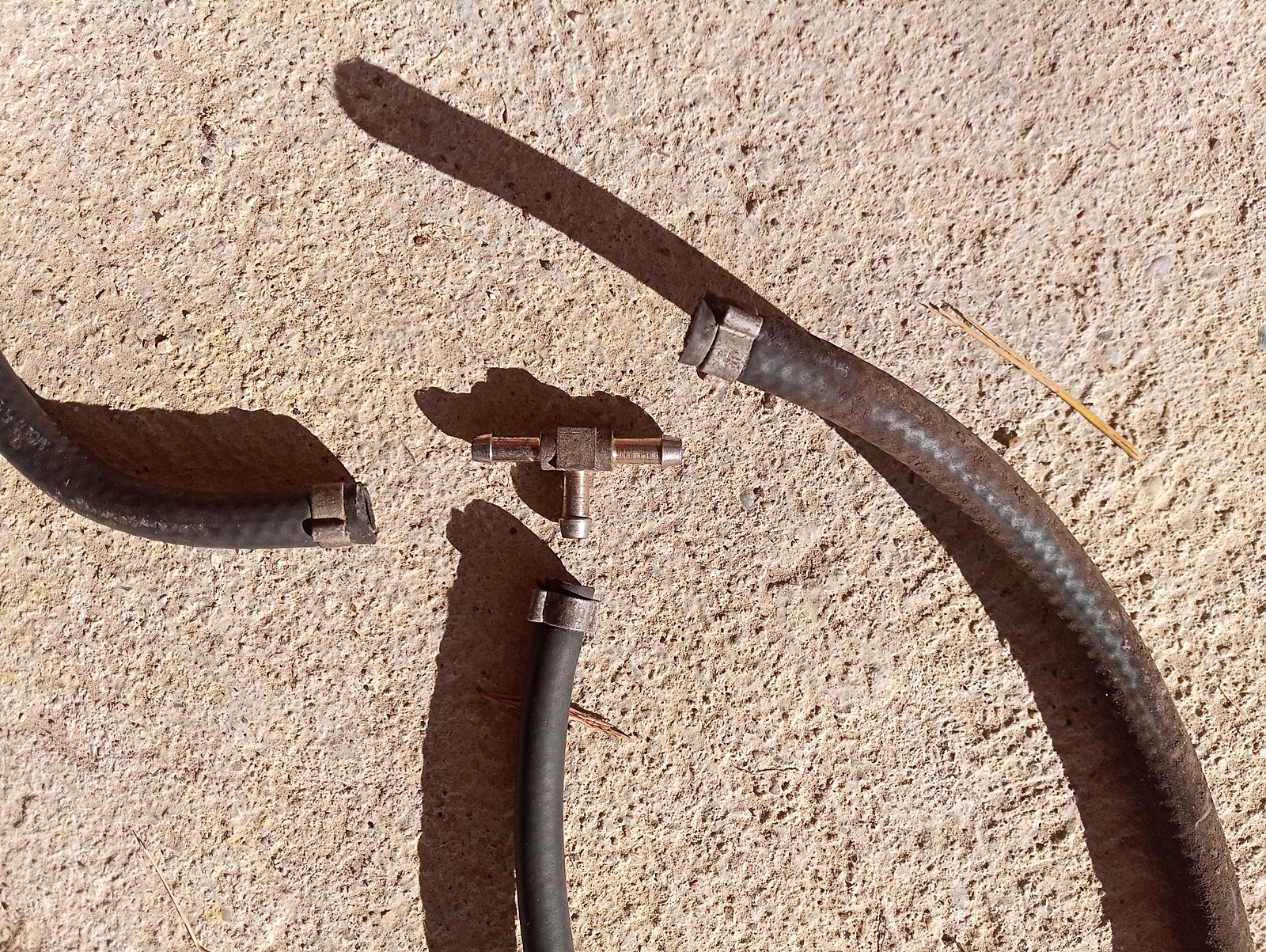
The outlet from the fuel tanks connects to the first in-line fuel filter, a large plastic one, which in turn connects to a ‘T’ piece connecting the filter to the electric fuel pump and the hand primer bulb. I didn’t touch that ‘T’ piece in the UK while preparing 24ZN for its flight over and when I examined it I found that (a) the tubing connected to it was all very old and (b) the clips securing the tubing to the ‘T’ were also all old style crimp type.

null

null

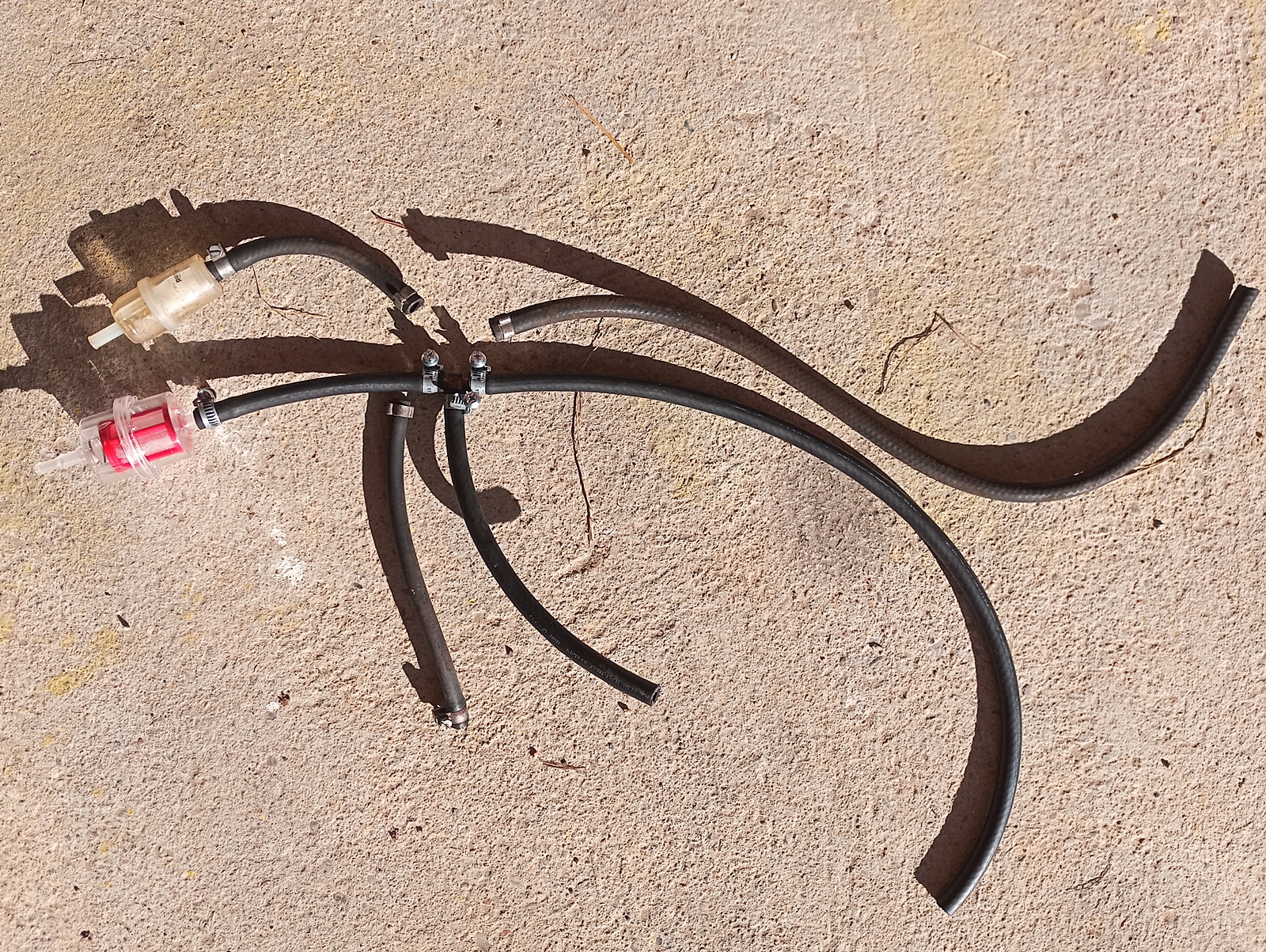
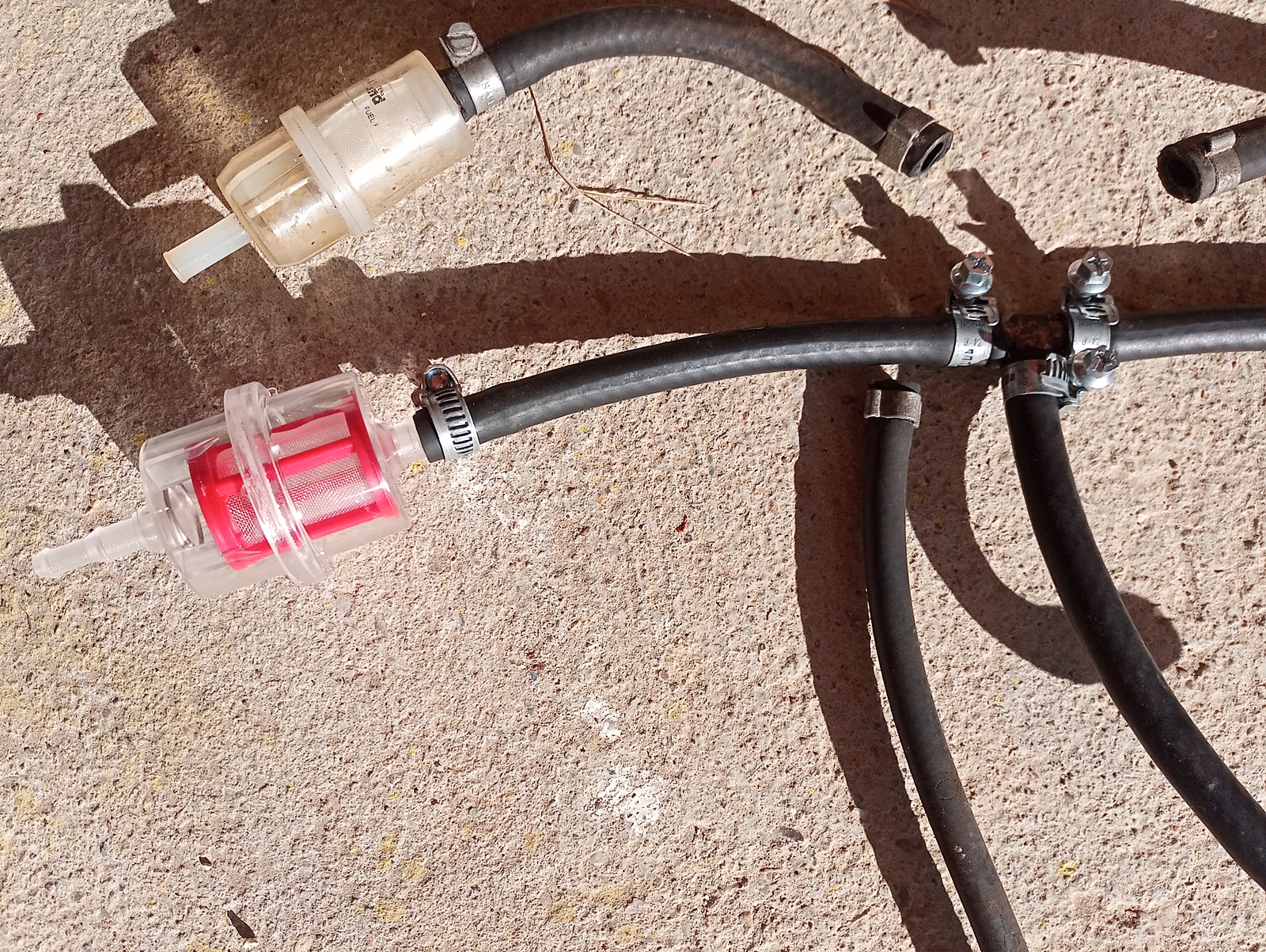
This indicated to me that most likely that ‘T’ piece and the tubing had been in place since 24ZN was built some 20 years ago and further examination revealed that it was wet with fuel, meaning that one or more of the joints were leaking. So here was the first candidate contributing to the reduced fuel pressure problem. I’d already bought the tubing to replace all of the old stuff , although this still left the length from the tank outlet to the filter to be replaced as soon as possible, when the fuel in the tanks has been reduced to a low enough level, and here are the results.

null

null

I then went on to the hand primer bulb. When I pumped that I found that it was no longer effective in pressurising the system and in fact it was blowing bubbles back into the fuel filter, indicating that its internal non-return valve was no longer working, probably because it had been damaged by alcohol in the fuel. As I hadn’t replaced that while in the UK, because at that time it was still effective, I thought that both it and the length of tubing connected to its outlet should be renewed.

I then turned my attention to the electric fuel pump. This pressurises the system as it should, but I found that as well as allowing fuel to pass through it when static to feed the engine, its seals also allow fuel to blow backwards towards the tanks. This shouldn’t be a problem however, since as long as the pump can pressurise the system in an emergency, it’s otherwise only used to prime the engine before starting. I did replace the tubing running from its outlet, however, and this brings me to the next issue I found.

The outlets from both the electric pump and the manual primer bulb connect to a second ‘T’ piece which in turn connects to the fuel shut-off valve and the main fuel line. Lo and behold, when I checked this ‘T’ piece, although I’d checked it previously when in the UK, it was also leaking fuel. However, as I already had new tubing and hose clips ready to replace the old kit, this wasn’t a problem and with the new parts in place, that issue too was resolved.

So hopefully, the two leaking ‘T’ pieces that I found will turn out to be the source of the engine’s fuel problems this time around. The engine runs that I’ve since done seem to indicate as much but more testing is necessary before putting the problem to bed. But unfortunately this hasn’t so far been possible because it appears that the new battery that I fitted to 24ZN back in 2019 has given up the ghost.

Starting has been a constant problem and the battery has been losing cranking power surprisingly quickly. Things came to a head today when after having charged the battery overnight, not only couldn’t I get the engine to start, but after only a short while cranking it, the battery’s power collapsed to a level that wouldn’t even turn the engine over. So that’s it until I can get a new battery delivered.

But no problem, I thought. I topped F-JHHP’s tanks up only just the other evening, so while the weather was on the cool side and still calm, why not pull it out and do the flight in that instead? As my Savannah has rather sadly been relegated to the back of the barn while I’ve been trying to resolve 24ZN’s problems, it has become very dusty as I was unable to make the new covers for it that I’d bought the fabric for, before leaving my old house. But after tipping it onto its tail and cleaning its horizontal surfaces with a soft broom, it was ready to be checked and got ready to go. I even returned to the caravan and picked up my Go-Pros that I also mounted ready for the flight.

Eventually it was time to start the engine, which it did after a few turns even though the Savannah’s battery is considerably older than the one in 24ZN. But then, horror of horrors, the aircraft began to roll forward and when I hit the brakes, they had no effect. Luckily I’d started on the flattish area in front of the barn and although I killed the mags immediately and F-JHHP continued to roll unchecked on what was now a slight down-slope, there was enough room to swing around to the right and come to a halt before anything untoward happened.

So the extremely hot weather that we had while the Savannah was in the barn has turned out yet again to be totally unforgiving and has resulted in its brake fluid being expelled from the hydraulic brake system. This happened after extremely hot weather once before, when I flew back to the UK and only found that I had no brakes when I landed at Blois and found that I couldn’t slow down to take the first runway exit. Luckily the runway was long enough to allow me to be slow enough to exit at the far end and coast up to the fuel pump by turning the engine off as I approached it.

I ended up replacing the brake fluid at Headcorn in the UK and had to devise a system using a hand-pressurised oil can to do the job. I never thought that some six years or so later I’d be repeating the process and I’ll have to dig out the oil can and tubing, which I still have and came across again in my storage just the other day.

So there you have it – double trouble, two ULMs and once again, neither of them flyable. It looks as though I’ve got a busy week ahead of me because as well as these two problems, I also have to arrange for an ‘élagage-grimpeur’ (a climbing tree pruner) to come in and remove the branches overhanging the floor slab of my house and deal with a UK family problem. Isn’t retirement wonderful. So restful…

My new house-build, day 8

At the time of posting this it’s pretty quiet for most businesses in France that are not involved in tourism because they’re shut down for the whole of August while everyone goes off on holiday. This includes my builder so it’s a good time to do a bit of catch-up before they get back in September and, hopefully, resume work on my house.

Day 8 was actually on June 7th and although no work as such was done, it was nevertheless a big day because some important deliveries were made of materials that will be required, and for which I’d already paid I might add, for subsequent work on the house’s foundations. The following video tells the story of the morning.

The deliveries took little more than an hour but after the trucks had left, everything that would be required for the builder to complete the house’s foundations was on site ready for when they return. I also need to take the opportunity to get an expert in (what is called an ‘élagueur grimpeur’) who can climb up the large oak tree that’s closest to the north side of the house and remove the low overhanging branches that will impede construction of the walls on that side so there is no excuse for any delay in resuming the building work.

Phew!

While the Brits at home have been complaining about a heatwave, drought and hosepipe bans with temperatures of 30 degrees Celsius, we over here have been having to endure something far more extreme. Since just before the end of July, with only one or two exceptions, we’ve had daytime temperatures of on average 40 degrees, sometimes a degree or so lower, sometimes slightly higher.

It’s been exceptional, record breaking and I haven’t experienced anything like it in the ten years since I came here. The water levels of the Dordogne and the Vézère are at all-time lows and the locals are saying that the tourists, who are again here in their droves as usual, are having to be issued with boots if they want to go canoeing on them. It must be a terrible summer for the good people who are providing services like that – their earnings will be way, way down this year after two bad years with Covid.

There have been massive wildfires in the south-west of France – the Landes and the Gironde – and they were got under control and extinguished a couple of weeks ago. Since then new fires have flared up in the Gironde destroying thousands more hectares and threatening homes and livelihoods.

Apart from yesterday when I was working on my X-Air 24ZN, I’ve been helping my friend Wim put together a shower in his and Sophie’s new little house that they’ll be moving into in a few weeks time. We’ve been starting fairly early in the morning, but even indoors it’s impossible to work much beyond 2.00 pm because of the heat. I now understand why most of France shuts down for August and the Spanish and Italians, who are far more used to temperatures such as these, take siestas in the afternoon and resume business in the early evening.

Life in my caravan has been barely tolerable. If I had kept it at the top of my land I doubt that I’d have been able to stay in it because it’s been pretty hard going down at the bottom where it’s perceptibly cooler. If I stay indoors, I have to run a floor-mounted fan from about 10.00 or 11.00 am and as the outside temperature rises the air it shifts become warmer and warmer. Without, it however, by later afternoon it would be become intolerable in there.

If I’m in or around the caravan, for most of the time I wear the bare minimum, which, if I’m not expecting visitors, is nothing, as I can’t see the point if it’s that hot. Several people I’ve spoken to, most of whom are Dutch admittedly, agree and say that they do the same. So far, I’ve still not had the chance to nip over to the camp site at Rouffignac, Camping Coteau de l’Herme, run my Manja, Victor’s daughter, and her husband Aschwin. It’s a superb naturist venue and at least if I went over there in the heat of the afternoon I’d be able to take a dip in their swimming pool!

One of my joys is that I’ve been able to take showers outside my caravan using the hosepipe that connects my water supply. However, that’s been impossible by the end of each afternoon as by that time the water has become scalding hot. It has also meant that I’ve had no cold water by then in the caravan as the water coming out of the cold taps is at the same temperature. If I’m quick, I can have a quick sloosh using the water in the pipe that’s been in the shade, but I do mean that I have to be quick – maybe 30 seconds or so, certainly less than a minute before the hot water starts coming through! But it’s bliss having a cooling outdoor shower at around 8.00 pm every evening.

Earlier in the year I acquired a small freezer that I managed to make space for in my caravan. I didn’t have it last year and it has transformed my life, especially during this very hot period, by allowing me to make ice cubes, have ice cream and store a small amount of frozen food and bread. And it’s been an absolute boon being able to freeze small pieces of meat, which I was totally unable to do last year. Small things can make such a difference and it’s possible that without it, I wouldn’t have been able to stay in the caravan while it’s been so hot.

It hasn’t even been cooling down that much in the evenings and overnight. Every evening I spray the interior of my caravan against mossies and other biting insects and take a walk around my land while it does its work. While I’m walking I can feel the heat rising around me from the ground. When I go to bed I have to set my floor-mounted fan on timer. When I first started, I found that I was waking up almost as soon as the timer switched the fan off because it was still so hot so now I set it the maximum period of 3 hours because at least then I get that much unbroken sleep before I awaken and have to reset it.

I’ve also been very concerned about the two little cherry trees that I put in just before the start of the hot weather. I pierced the ground around their bases and have been regularly pouring water onto their roots and so far it looks as though it’s working as although their leaves shrivel a bit during the heat of the day, they seem to recover by the next morning after they’ve been watered. As for walking into my tool store during the day, it’s like walking into an oven. The other day I touched the cement mixer that’s in there and it was too hot to keep my hand on it.

On the odd couple of days when it’s been slightly cooler, we’ve seen temperatures being forecast in the low to mid-30 degrees and saying thank goodness for that. It just shows you how your perceptions change – before now, a few days at 35 degrees Celsius was regarded as a heatwave down here. But no matter how you look at it, this year isn’t and will not be the new norm no matter what the climate cranks try to say. It’s just an event in the cycle of solar cyclical events – it isn’t, and won’t be, the end of the world as we know it.

But it looks as though this hot period will soon be coming to an end. Depending on how you look at it, fortunately or unfortunately, the weather looks as though it’ll be getting back to some kind of normality by this week-end with much cooler weather forecast going into the coming week. And rather untypically, for here, the transition won’t be marked by massive, violent thunderstorms, as usually happens.

There may be some light rain and my goodness, we can do with that, but not it would appear the extreme kind of weather that we usually get when things begin to cool down after a hot period. I have to say, I hope that that is the case as I need to finish the work on the X-Air’s fuel system (of which more later) and I’d definitely like to get some flying in when the air becomes cooler and calmer 😉

Second thoughts

I’ve now got the new fuel filters and tubing that I hope will solve 24ZN’s fuel starvation problem and hope to be fitting them over this week-end if it doesn’t get too hot. It looks as though it might do though, with the temperature climbing again to over 40 degrees Celsius during this coming week.

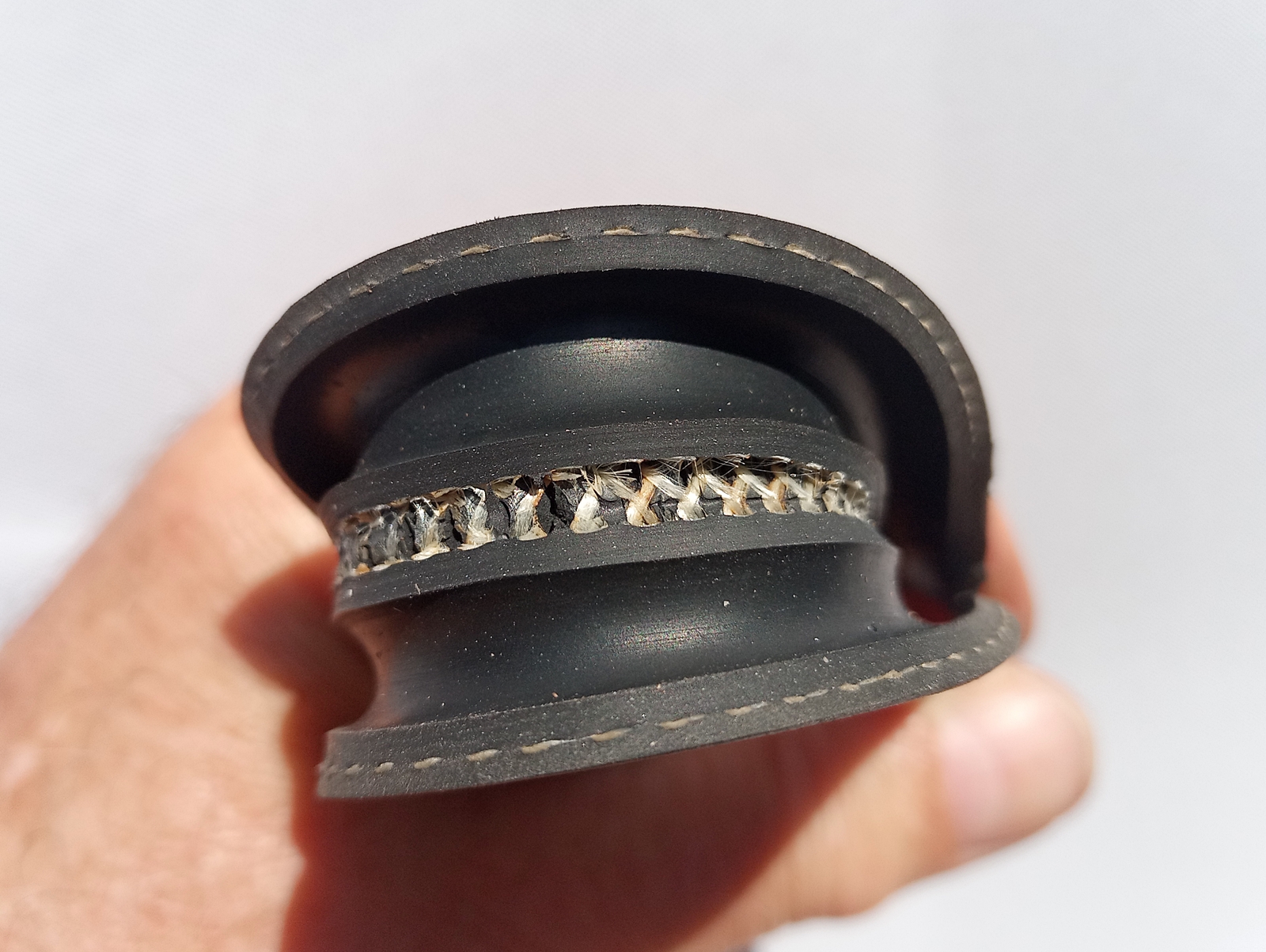
But before I do I decided to take a closer look at the cracked length of tubing that I removed that I thought was allowing air to enter the system and the image below shows what I found.

null

The cracking is to the back of what is visible and the image shows clearly from the discolouration that it penetrated to the fabric band that runs length-wise down the centre of the tubing. However, the cut shows that the cracking did not penetrate any further than that, indicating that although compromised, the tubing was still intact and fuel and air-tight in the damaged area.

So this apparently obvious reason for the X-Air’s fuel starvation problem does not appear to be valid, indicating that I’ll have to look elsewhere for the solution. My guess is that it was down to either vapour lock or a semi-blockage of a fuel filter as the engine runs as it should when fuel is delivered at the correct pressure meaning that both the pump and the carbs are doing their jobs.

It’ll be impossible to prove the vapour lock theory but I’m looking forward to checking on the condition of the filters and their contents as soon as I’ve replaced them.

X-Air engine power loss – follow up

Here’s the follow-up to my ‘loss of power after take off’ video, two days after the event itself.

It was already very hot this morning – pushing 30 degrees C – when I started work. First I removed and re-gapped the plugs. The Rotax manual is very confusing as far as the NGK BR8ES plugs that are used in my X-Air’s engine. On one page it implies that they should be set to a tiny gap – 16-20 thou” – and on the next 24-28 thou”. I’ve always had mine gapped to 25 thou” and have had no problems up to now with this engine or the 582 blue top that I had in my previous X-Air, so I re-gapped them to 24 thou”.

Then I went to start the engine. For the first time I had problems getting it running with choke but just got it started without, I guess because of the high ambient temperature. My X-Air engine has a grey top and suffers from the universal 582 grey top problem of not starting when warm. Nobody knows why and it seems that all (or nearly all) grey top owners are plagued by it. More of that later.

When it got going it showed an initial fuel pressure of 0.2 bar at 2000 RPM that Rotax suggests should be the warm-up revs. I disagree, I think the figure should be 2500-3000. At 3000 rpm the fuel pressure rose to 0.3 bar, mid-way between Rotax’s minimum and maximum figures of 0.2 and 0.4 bar. I kept the revs at around 2800 rpm until the engine was up to temperature at which time I intended to run it up to full power for around 60 seconds a couple of times.

A mag check at 4000 rpm was perfect – I’d fitted a new stator in 2019 when I was preparing the X-Air to fly it over to France. At that figure I began to notice bubbles rising in the fuel filter and initially thought that this must be the reason for the previous fuel starvation problem. However, although the stream momentarily became worse, after a while it became minimal again before stopping entirely during my high power trials.

The first time I ran the engine up to what was a maximum static figure of around 6200 rpm, the fuel pressure initially rose to a high of 0.4 bar but then fell back a bit without dropping, I think, below 0.3 bar. While those revs were maintained, it slowly increased again to between 0.3 and 0.4 bar.

The next time that I ran the engine up the fuel pressure rose to 0.4 bar and hardly dropped below that figure and even when I reduced the revs slowly to around 2800 rpm, it stayed just north of 0.3 bar. I wonder if this indicated that there might have been some kind of blockage as a result of fuel evaporation in the Mikuni fuel pump?

At this point I was quite confident that the engine could maintain take off and climb revs for a safe period of time and decided to go for a take off and return for a normal landing (at Malbec we have to take off down the slope and land up it and there’s no go-around on landing). When I did so I watched the fuel pressure gauge very carefully. Initially it held 0.4 bar but then began to fall back during the climb out, passing what I regard as normal at 0.3 bar right down until it reached what Rotax says is the minimum for the engine of 0.2 bar. I was ready at that point to switch on the electric fuel pump but the engine was running normally and then the fuel pressure began to recover to around 0.3 bar which allowed me to make a normal landing.

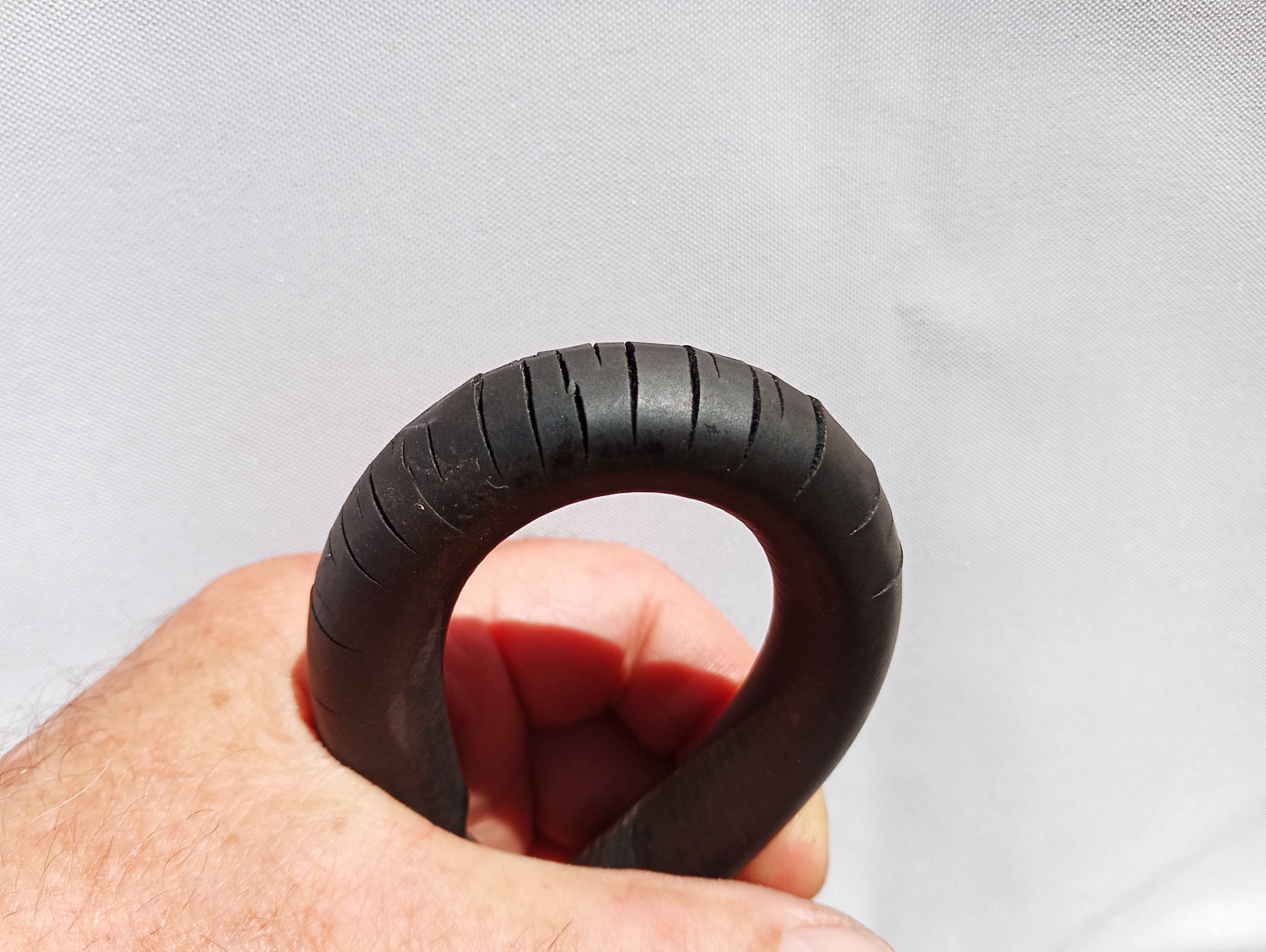
After landing I did an inspection of the fuel system and found that there was a small amount of muck visible in the fuel filter. More ominously, on closer inspection I found that one of the fuel lines from the pump to the rear carb was externally cracked on a bend (see image below). This was especially alarming because this was a piece that I’d replaced with brand new tubing in only 2019 and I think that this amount of degradation is unexpected and unacceptable in such a short time in what was supposed to be good quality tubing.

null

This piece of tubing could not be responsible for the bubbles that I saw rising earlier in the fuel filter, though, as it was on the wrong side of the pump. I think that the bubbles were more likely to be trapped fuel vapour and this could have been a contributory factor in my opinion to the previous fuel starvation problem that led to the power loss. I also think that the tubing, even in its present state, did not contribute to the previous power loss as it wasn’t leaking.

I still think that there’s more to it on account of the fluctuating fuel pressure. It can’t be right for the pressure to be showing 0.4 bar at full power during take off and climb out, falling to 0.2 bar and then recovering almost to the earlier high figure. Something has to be causing that and the most likely culprits in my view are the fuel filter and the pump.

I refurbed the pump in 2019 and the aircraft has not flown many hours since then, mainly because of Covid. It could be that the pump’s internals have been damaged eg by an excess of alcohol in the fuel or the pump had become slightly blocked as a result of fuel evaporation. I’ll be removing and stripping the pump to see if there are any causes for concern but will not be looking to replace it, unless there are, at this stage.

The filter is a different kettle of fish. That I will be replacing in any case as it does contain some visible muck and may for all I know be partially blocked by the dreaded alcohol/water sludge growth as the aicraft has been standing since the end of last year and would therefore be a good candidate for it. My bet is that this is at the heart of the problem, but only time will tell when it’s been replaced.

By the way, I couldn’t run the engine after I’d replaced the bad fuel tubing. I tried to but as I mentioned previously, it wouldn’t start in what had become the quite intense heat. Eventually cranking the engine flattened the battery which also happened the night before. I’m very disappointed about this because the battery was brand new in 2019 when I was preparing the X-Air to be flown to France. Unfortunately though, mainly because of Covid, it has been standing without being charged much for excessively long periods and I think that that has almost killed it 🙁

Good news and bad news

Which do you want first? OK, here’s the bad news.

I forgot to mention that yesterday I lost half of the crop of plums on my little plum tree that I planted earlier this year. A bird obviously recognized that the plums represented a source of moisture and pecked one so badly that it was detached from the tree and fell to the ground and two more to the point that they were badly damaged. I have what I think is a Jay that seems to spend most of its time tramping around on the roof of my caravan wearing hob-nailed boots and I think it was the culprit.

I tasted the two damaged ones before throwing them away and although they were far from ripe, it was clear that they would have ended up quite full and tasty. As it is now, I have just three left and I hope that the ruddy bird will leave them alone so I get to find out how they end up.

Now the good news.

A short time ago I was asked by Enedis to send in the reading from my electricity meter, which I did a few days ago. Today I received my bill from EDF, which as I’ve now got an air fryer as well as a fridge and a freezer and have been running my electric fan almost non-stop, I expected to be in three figures. But no! It consisted of a 49€ refund that I’ll receive in the form of a cheque within the next two weeks.

Quelle Surprise! With the energy crisis, inflation and God only knows what else that’s going on, I can hardly believe it. I have consumed electricity, of course, but for some reason that I can’t decipher the ‘bill’ includes a large refund. Oh well, mustn’t look a gift-horse in the mouth. I’ll just accept my refund graciously and carry on 😉

Not quite to plan

The following video tells the whole story.

As I hadn’t flown it for a while, I prepared my X-Air 24ZN yesterday evening ready for the flight I had planned for today, including running the engine up until it was hot. I did the same again this morning as per normal procedure and taxied down to Malbec’s runway to take off. Within a few seconds the engine suffered a large power loss, much as it had done in the UK while I was getting the aircraft ready to bring to France. But since then I’ve overhauled its fuel system including refurbing its fuel pump, replacing most of its fuel line and ensuring that there were no fuel or air leaks and its engine has run faultlessly as a result since that time.

But this was not the time to wonder what was going wrong as the gauge was showing ample fuel pressure and there was little that could immediately be done to rectify the problem. The aim was to keep flying the aircraft and what was evident was that despite the power loss, it was still able to climb, albeit very slowly. There’s no safe emergency landing area straight ahead out of Malbec but there are some suitable areas to the right which become more viable the higher you get, so as I was too low to turn back, I continued climbing with that in mind.

Eventually I decided that I was high enough to make the turn back and despite the engine still running rather erratically, managed to do so for a perfect precautionary landing. The problem was obviously fuel related. When I arrived this morning, despite having run the engine the night before, its fuel filter was half full of what looked like old, dark brown coloured fuel and I wish that I’d taken more notice because after I’d landed, it contained fresh, clean new fuel.

Afterwards I removed, checked and re-gapped the plugs and the engine ran smoothly. I chocked the wheels of the aircraft and ran the engine up to full power for nearly a minute and it didn’t miss a beat, so the problem may have cured itself if it was due to either some kind of blockage or a vapour lock. However, I’ll run a few more checks before having another try later this coming week, possibly on Tuesday morning which looks as though it could be much the way things were this morning.

Yes, tomorrow

What with the problems to do with my new house-build and this and that, I’ve hardly been doing any flying. At the very least this is economically ridiculous as it makes no sense to keep two aircraft in a hangar (barn actually) that are fully insured and not use them, but it’s also highly frustrating.

One of the problems, at this time of the year especially, is the weather because although it’s great for the holidaymakers and tourists who are now flooding into the area to have long, hot sunny days, it plays havoc for we pilots. As soon as the air significantly begins to warm up, thermals are created which can at the very least make flying bumpy and uncomfortable, but in more extreme cases, such as when landing on Malbec’s very short runway, make things quite dangerous.

The solution is to go flying early in the morning before the land has had a chance to warm up and for the wind to pick up, or in the evening when the land has had a chance to cool down and the wind to drop. I’m not so much of a fan of flying later so for me the choice is to go in the morning. However, I like to be here if the builders are going to be on site and that has disrupted my flying routine.

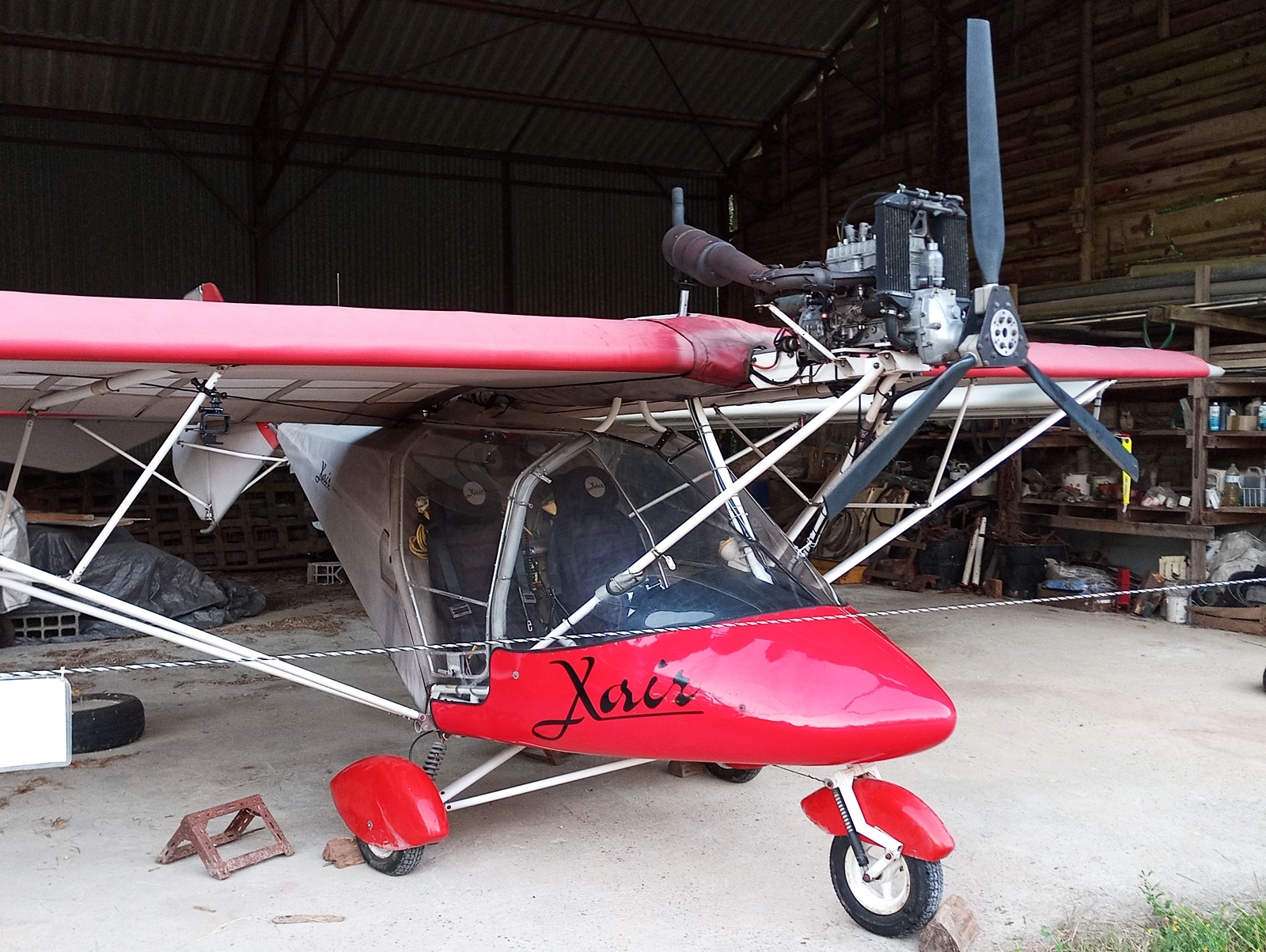
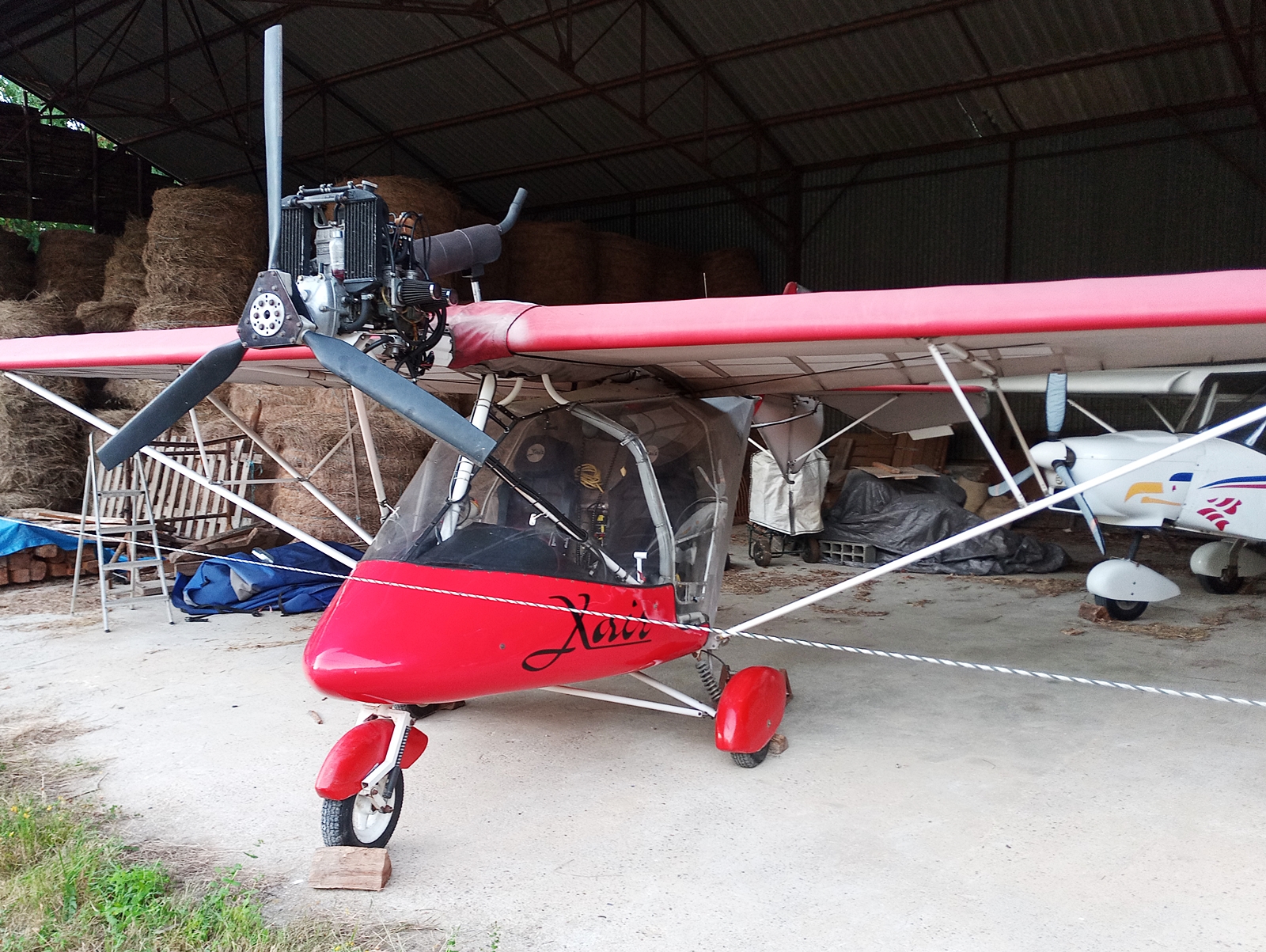
But now that there will be no further building activity until September, I can start to think seriously again about flying. I last flew in my Savannah so next time it’ll be the turn of my X-Air. I’ve been checking the weather and it looks as though the wind will be almost calm first thing tomorrow morning, so in order to avoid unnecessary haste and pressure, I thought I’d go and switch the aircraft around in the hangar, take 24ZN’s covers off and run its engine so it’ll be ready to go straight away. Here are a couple of shots after I’d put it back in the front of the barn.

null

null

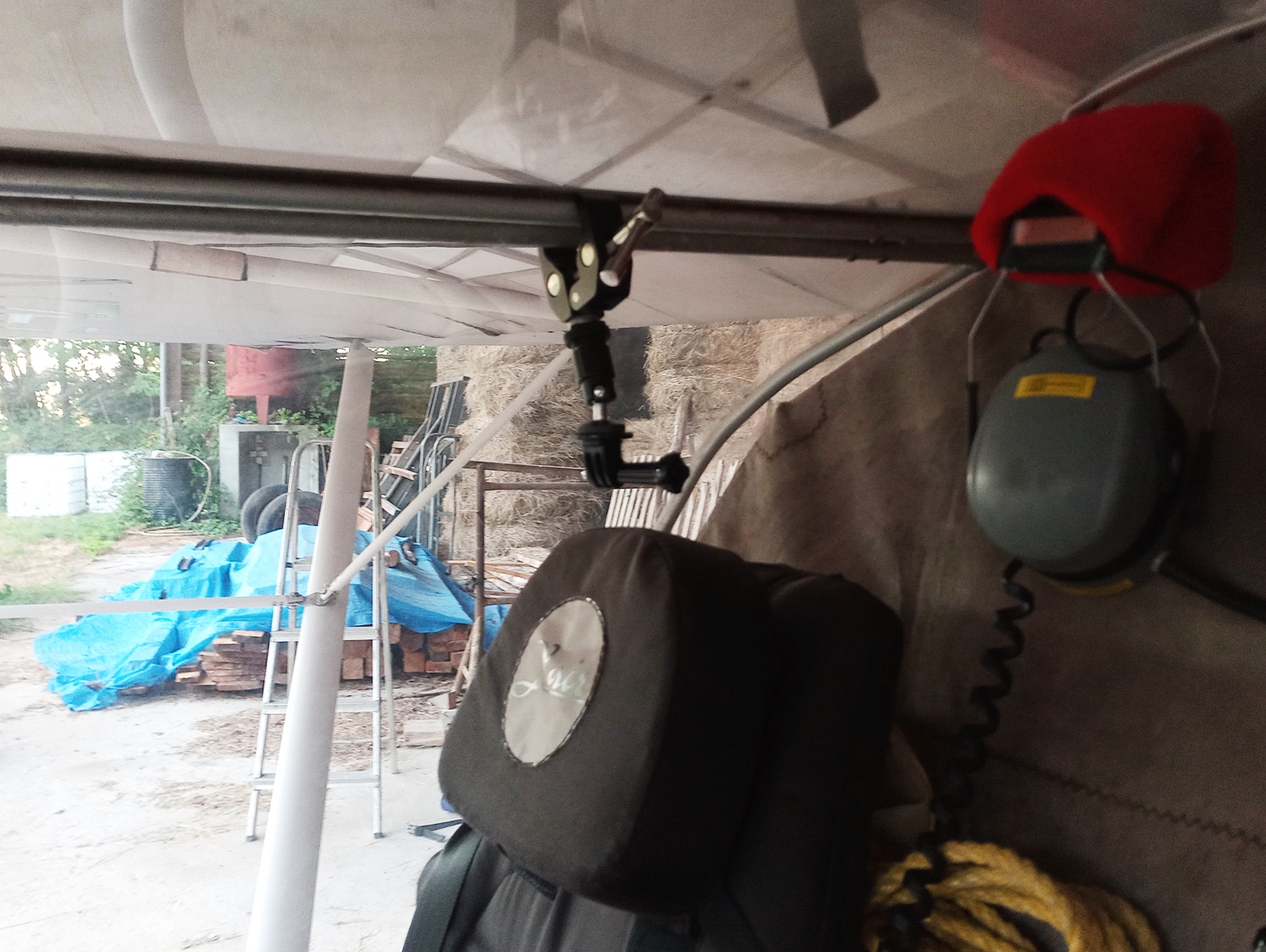
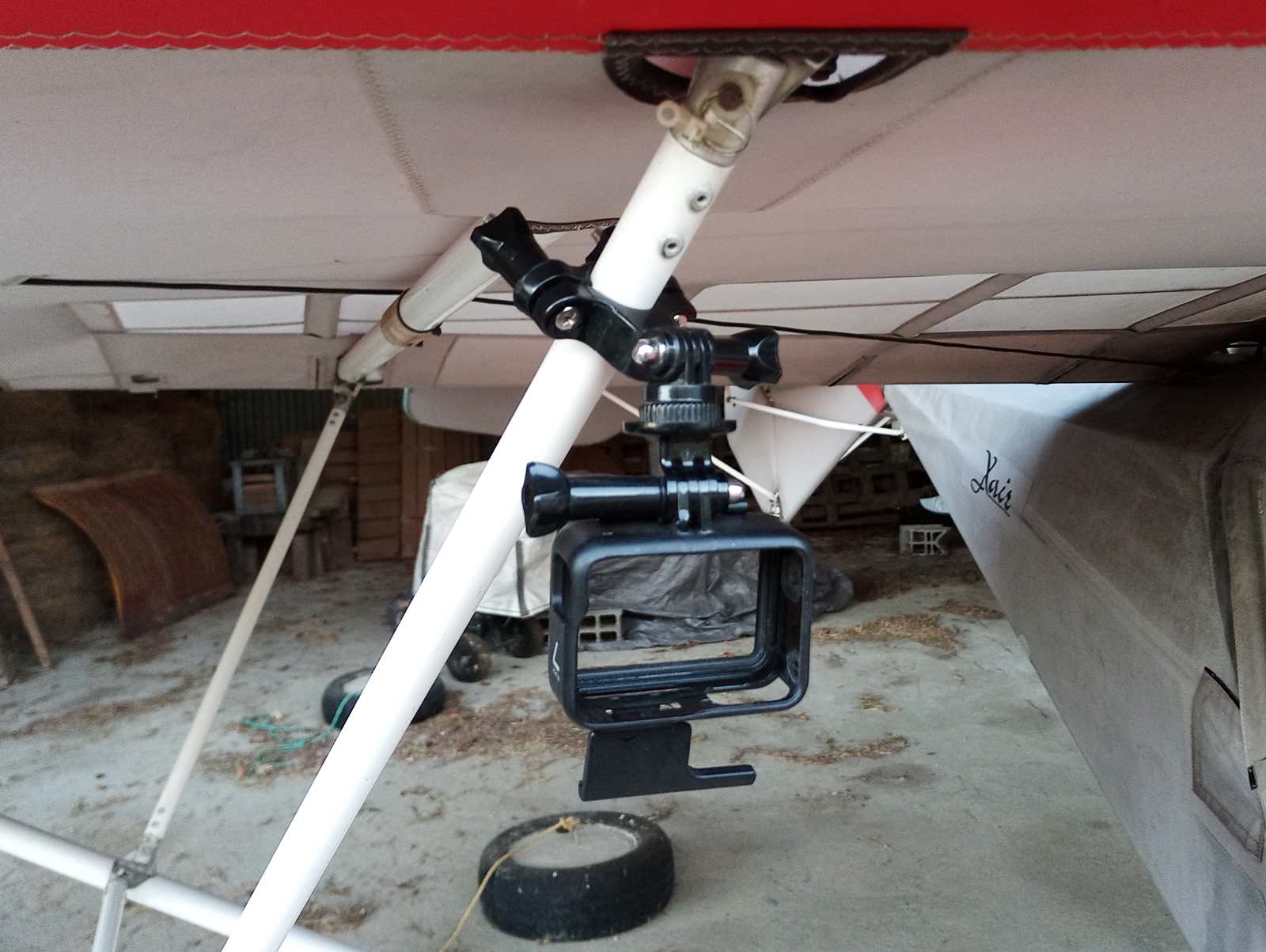
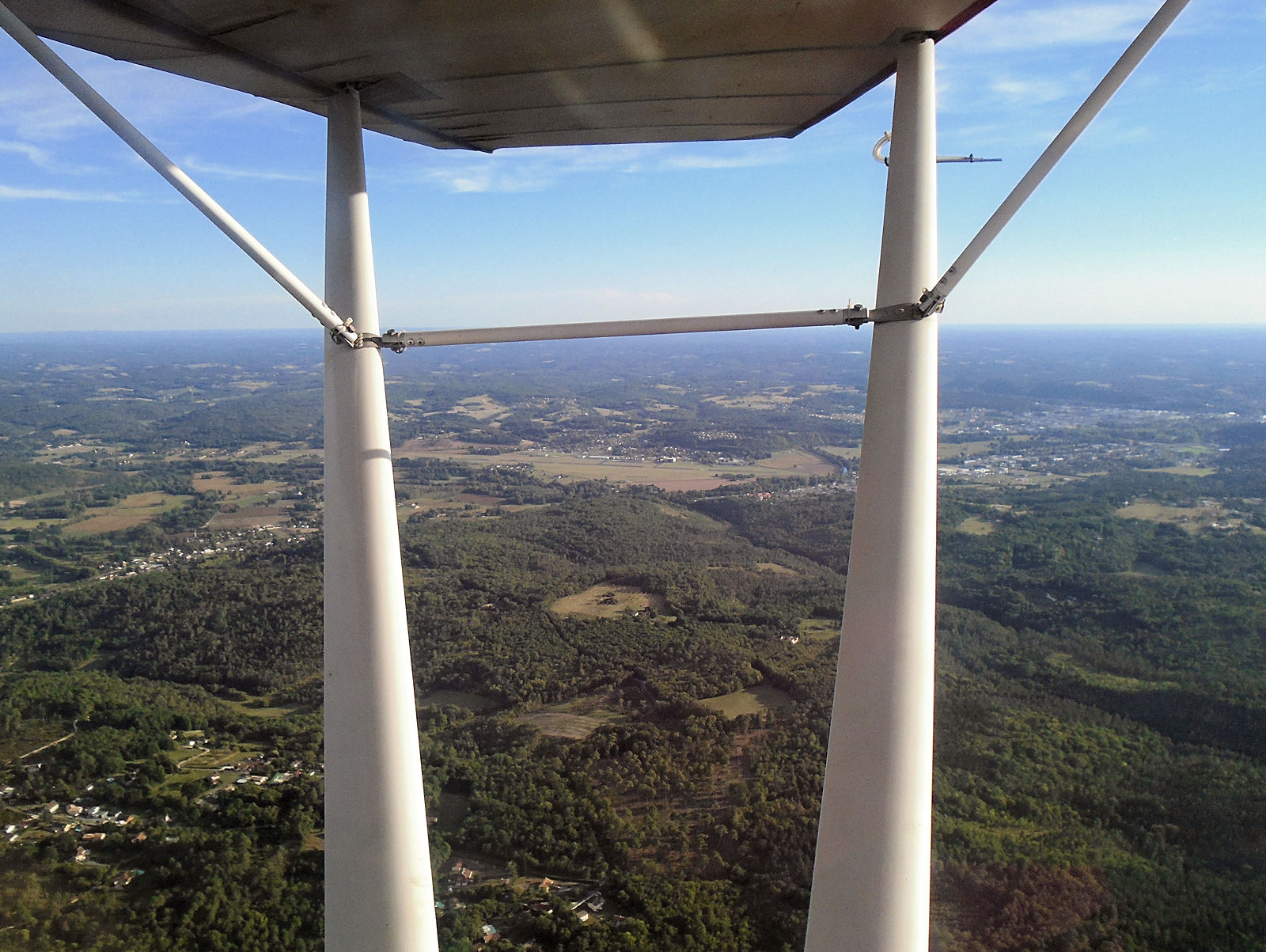
And for the first time I got two GoPro’s mounted in sensible positions. I’ve not done that before with either of my X-Airs but I thought that it was time to dip into my collection of mounting brackets and see what I could do. The result, perfect! First inside the cabin.

null

Now under the starboard wing.

null

So not only am I now looking forward to an enjoyable flight tomorrow but I’ll also hopefully end up with a decent video too, as a record. Fingers crossed 😉
Giant step

Given the progress that has been made over the past few days, I suspected that there might be some more action today and when I looked out of my caravan door at 7.30 am, sure enough there was small team of three workmen waiting to start work. When I went up to have a word with them, just as I thought, they were waiting to get going laying my house’s floor slab.

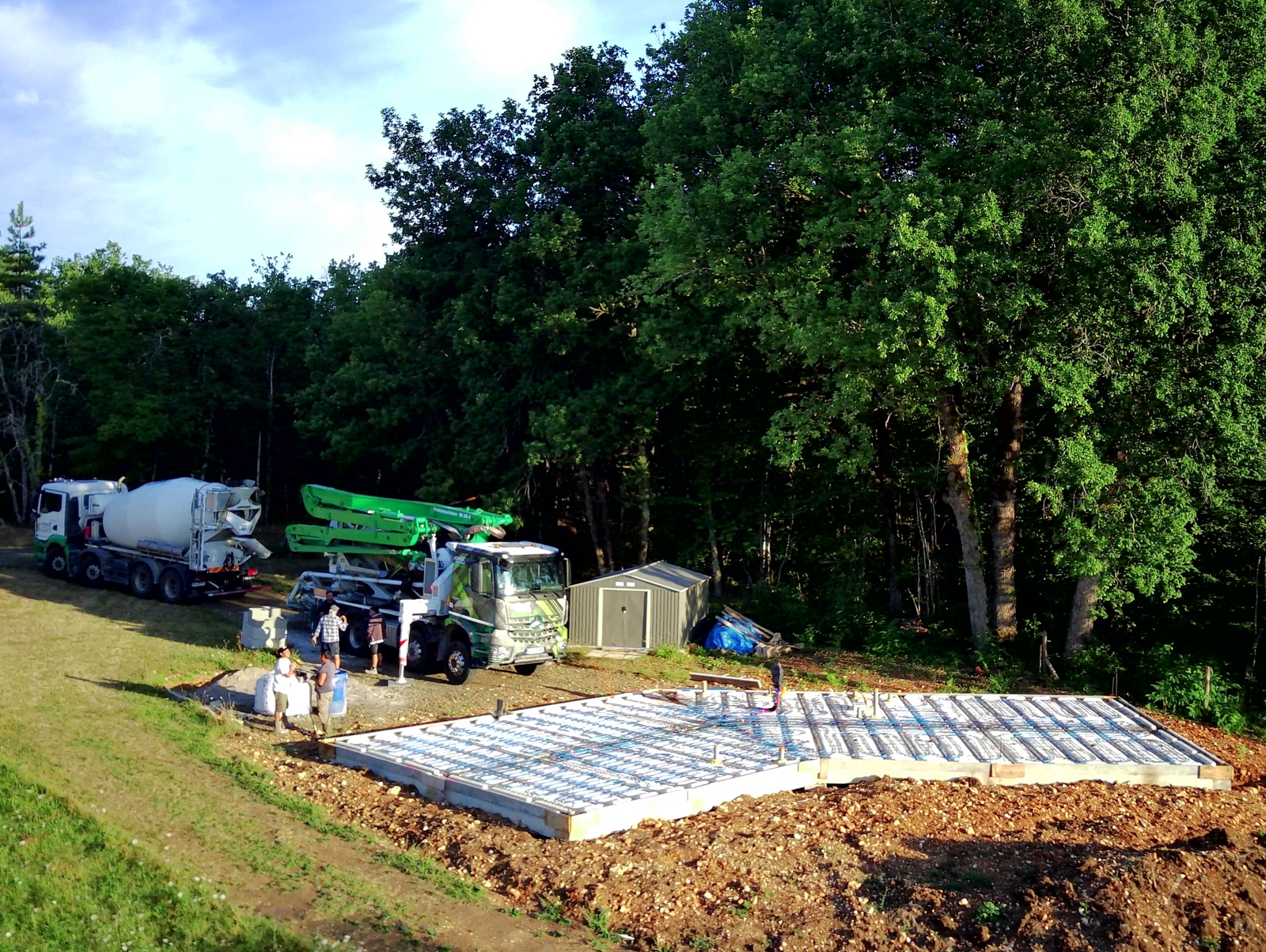
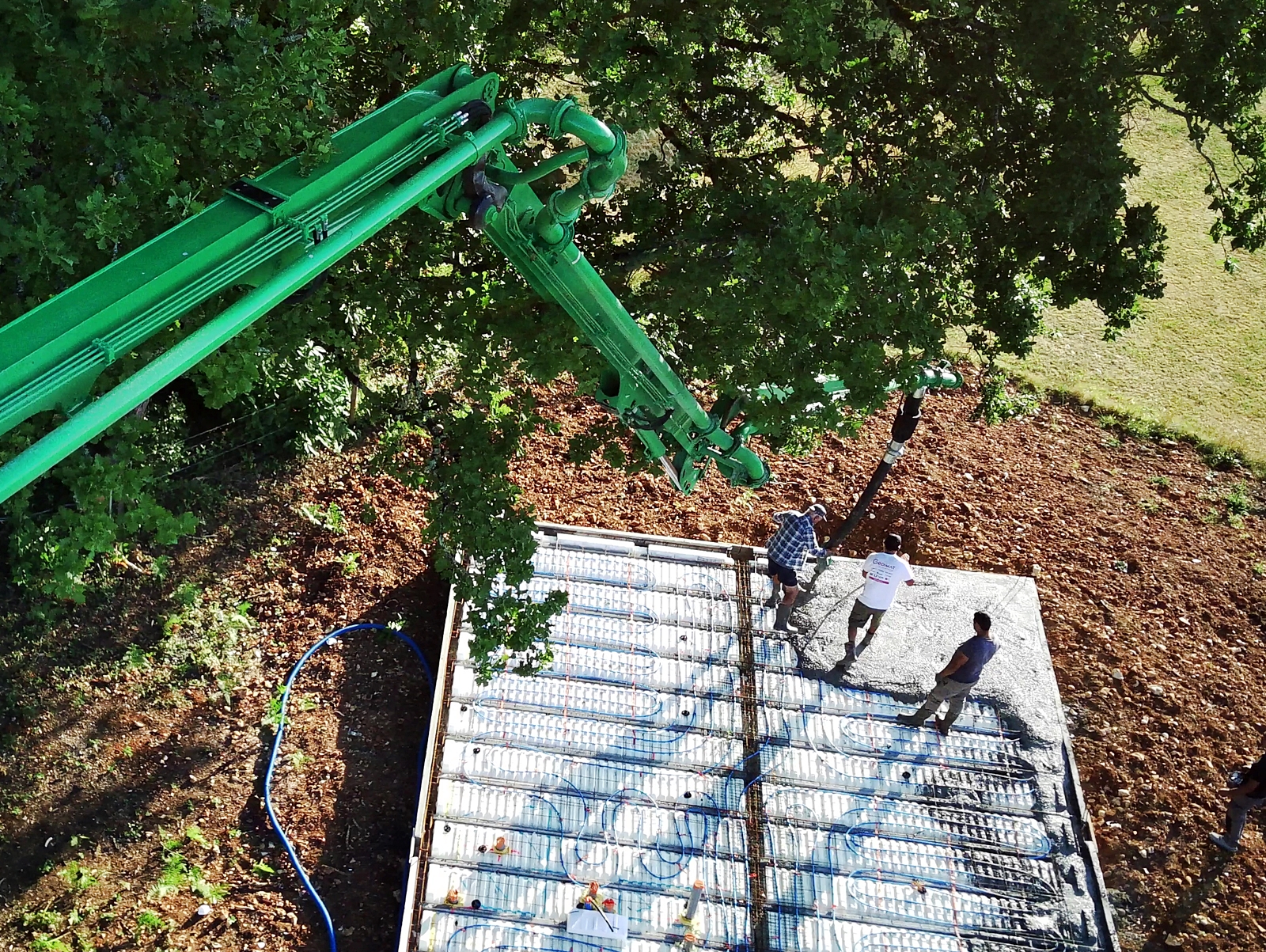
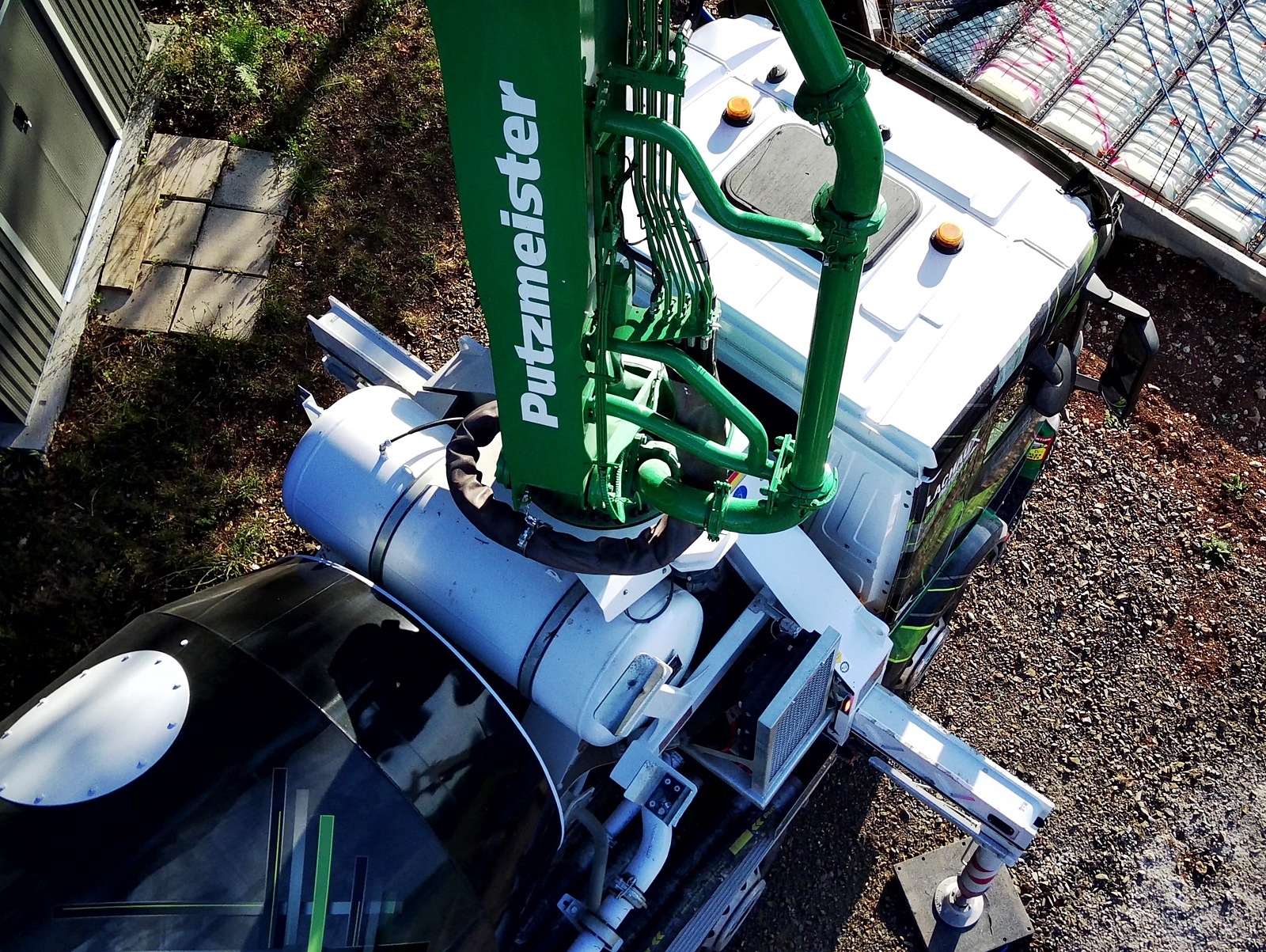
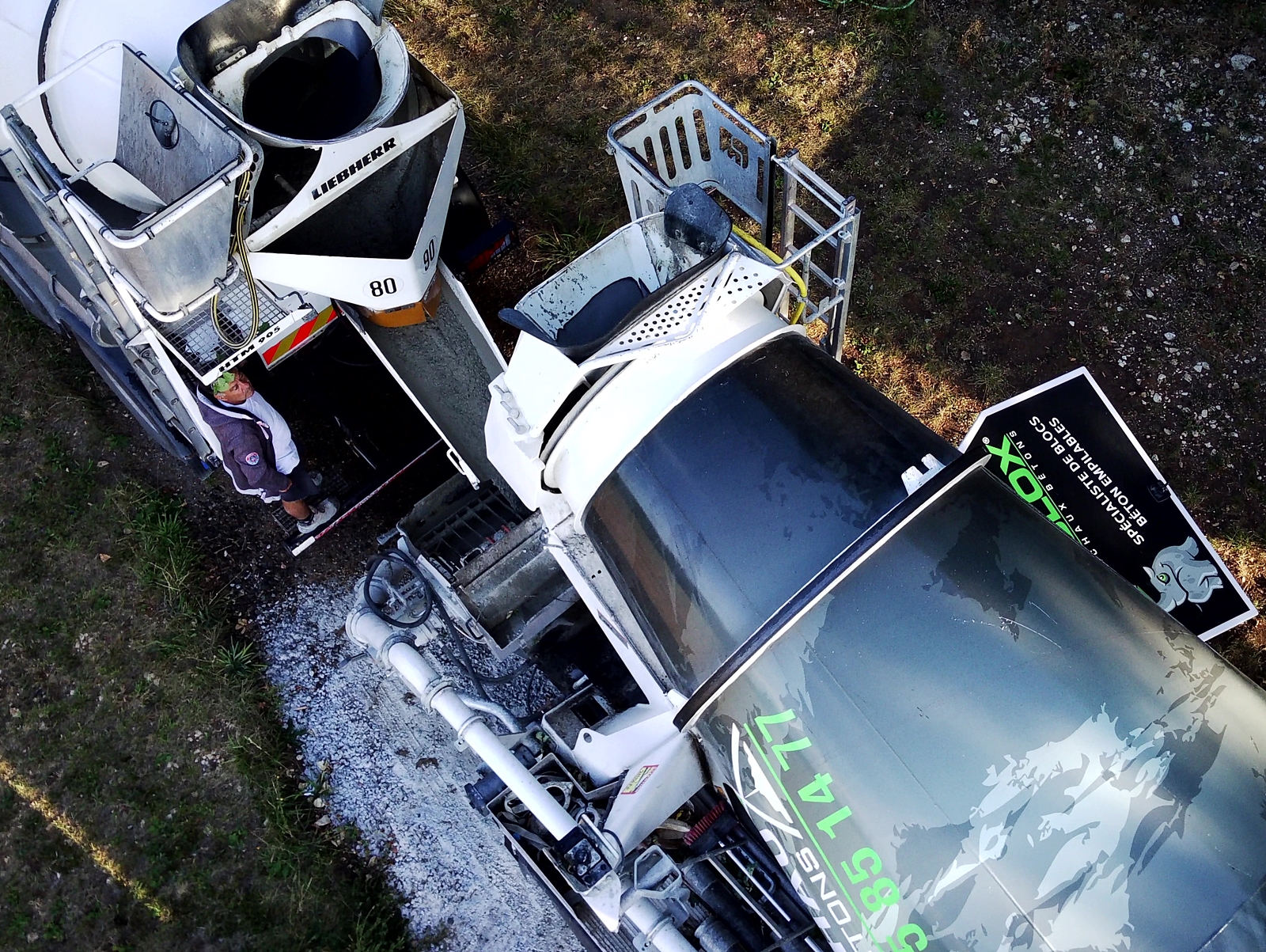
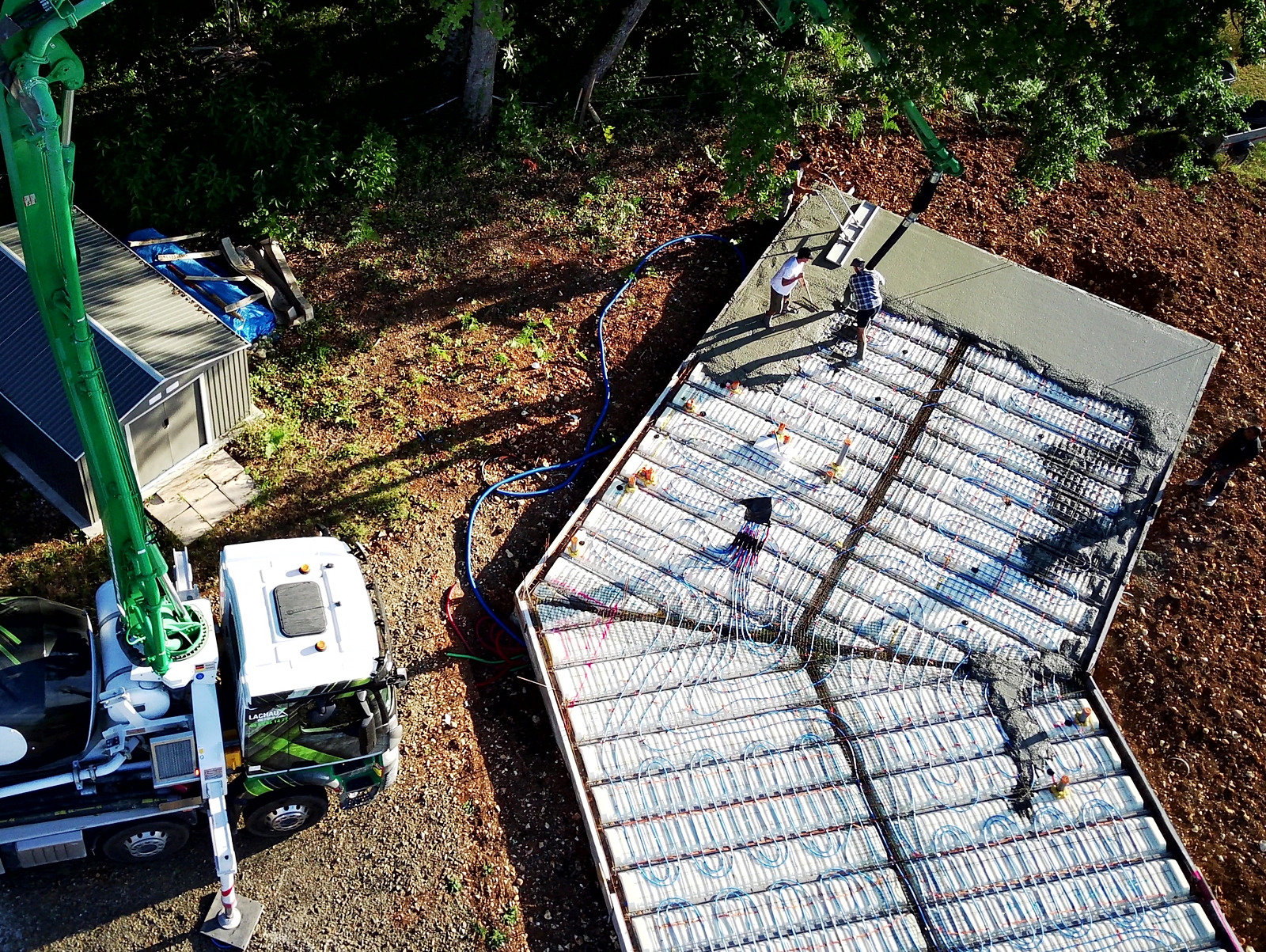
A few minutes later, just as before when they’d concreted the foundations all those weeks ago, two large ready-mixed concrete trucks drew up, one with a pump attached and the other with the concrete mix that was going to be poured. It didn’t take them long for the team to get into position and for the trucks to get ready to start pumping the concrete.

null

null

null

null

They started in the farthest corner of the house in what will one day be bedroom 1 and as soon as they started swinging the pump boom around there was a bit of a problem with leaves and twigs being broken off from the oak tree overhead and falling into the fresh concrete. Luckily they saw what was happening and took care to remove the bits and pieces before smoothing the surface over, which I was very pleased to see.

Before the builders return to start putting up the walls, which won’t be until after the summer break, once the concrete has hardened enough I’ll have to get an expert in to cut the branches off as otherwise with the weight of leaves on them there won’t be enough height for the house’s walls, let alone its roof.

null

null

Here are a couple of interesting shots of the two ready-mixed concrete trucks in action.

null

null

With the team of three all working together to pump, spread and smooth out the fresh concrete surface, it was surprising yet again to see how quickly the work progressed. Pretty soon they were working over on the other half of the house and the whole job was finished in under an hour. Amazing!

null

null

null

null

null

I noticed that when the whole slab had been laid, the ‘boss man’ who’s always in charge of the work, went around and marked on the surface where the entrances will be – the three bay windows in the living room and the front door. You can see in the next shot where he roughed up the otherwise smooth surface where each one will be positioned and I’ll be interested to see later on why this was.

null

null

This is him taking a shot of the finished job with his own camera, presumably as a record to take back to the company.

null

And here are a couple of shots of the finished floor slab that I took after all of the workmen had left.

null

null

That’ll now be it for a while, until the beginning of September at least, because of the August shut-down that happens across the whole of France. The foreman told me that he’d be going off to Portugal for his holiday and I wished him well. Before he left he asked me if I’d give the slab a light hosing from time to time after 1.00 pm as if it gets too hot while it’s curing it could start to crack.

I asked him if any retardant had been added to the concrete mix and he said that some had been but that it should still be hosed down to keep it cool, and I said that of course I would. 30 degrees Celsius has been forecast for today, cooler than recently, but I’ll still make sure that the concrete gets a good watering after its surface has had a chance to harden a bit 😉

Been and gone – again

There were noises up on my housebuilding site at around 8.00 am and when I looked out I could see that two workmen were working putting the metal reinforcing mesh in place on top of the ‘hourdis’ in readiness for the floor slab of my house being laid. There wasn’t much to see as all they were doing was laying areas of mesh flat next to each other to cover the whole floor area and finishing up with trimming the last ones to fit into the odd shaped areas that remained as a result of the house’s ‘V’ shape.

They also filled in the gaps between the edge beams so when the concrete is poured onto the floor area it won’t just pour out of the spaces that are present and secured the areas of mesh to each other by applying a few twists of thin wire. They didn’t take very long – they were gone again not long after 9.30 am – and here are some shots that I took after they’d left.

null

null

They also marked out what will be door and bay-window openings in red paint and in the next shot you can see where the front door will be.

null

null

null

It’s lucky that I spent the time I did yesterday evening clipping down the lengths of piping that had been left loose because it wouldn’t have been done today. OK, the weight of the mesh and eventually the concrete will hold the tubing in place but I prefer knowing that the job has been done properly and everything is secured.

The next shot shows the area under bedroom one where I had to place a large number of clips as hardly any were securing the tubing before I did so.

null

Here’s a closer shot of the cut-back where the porch and front door will be.

null

The final three shots show corner details and how wooden blocks have been used to make corner shuttering, so when the concrete floor slab is poured it will be retained and prevented from pouring out from along the sides and corners of the building.

null

null

null

So I’m glad that I took time yesterday evening to properly clip the tubing down as it also gave me an opportunity while I was marching around on the ‘hourdis’ to pick up and dispose of what remained of the leaves and twigs that had dropped down from the oak tree above and fallen onto the floor area and into many little nooks and crannies.

Today I also did a little bit more tidying up. Some heavy plastic cable ties had been used to secure the mesh to the underlying reinforcing bars and had been left long and sticking up above what will be the floor level, so I trimmed those off as well. It should now be all-systems-go for laying the floor slab – whenever that will be… 😐

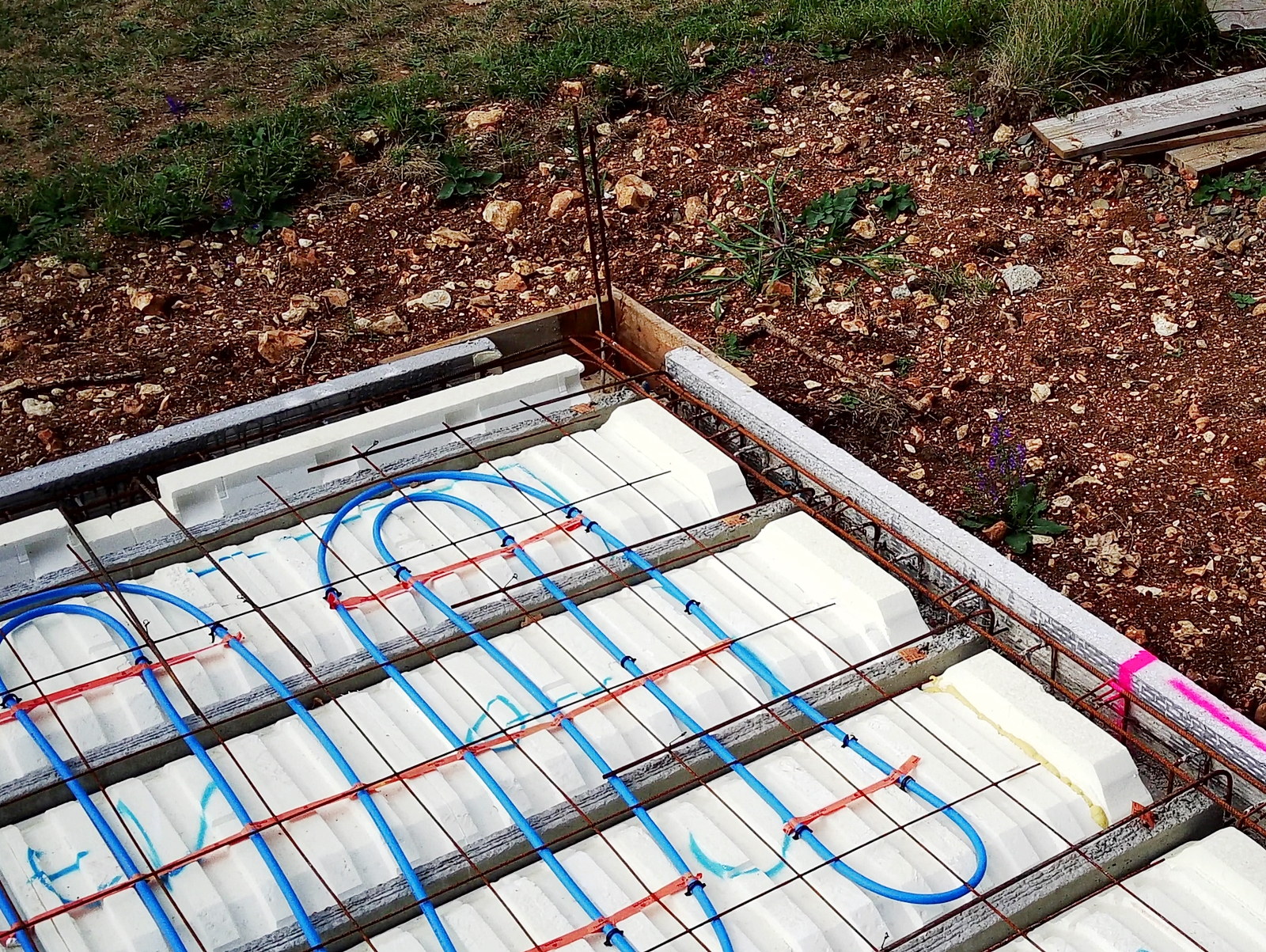
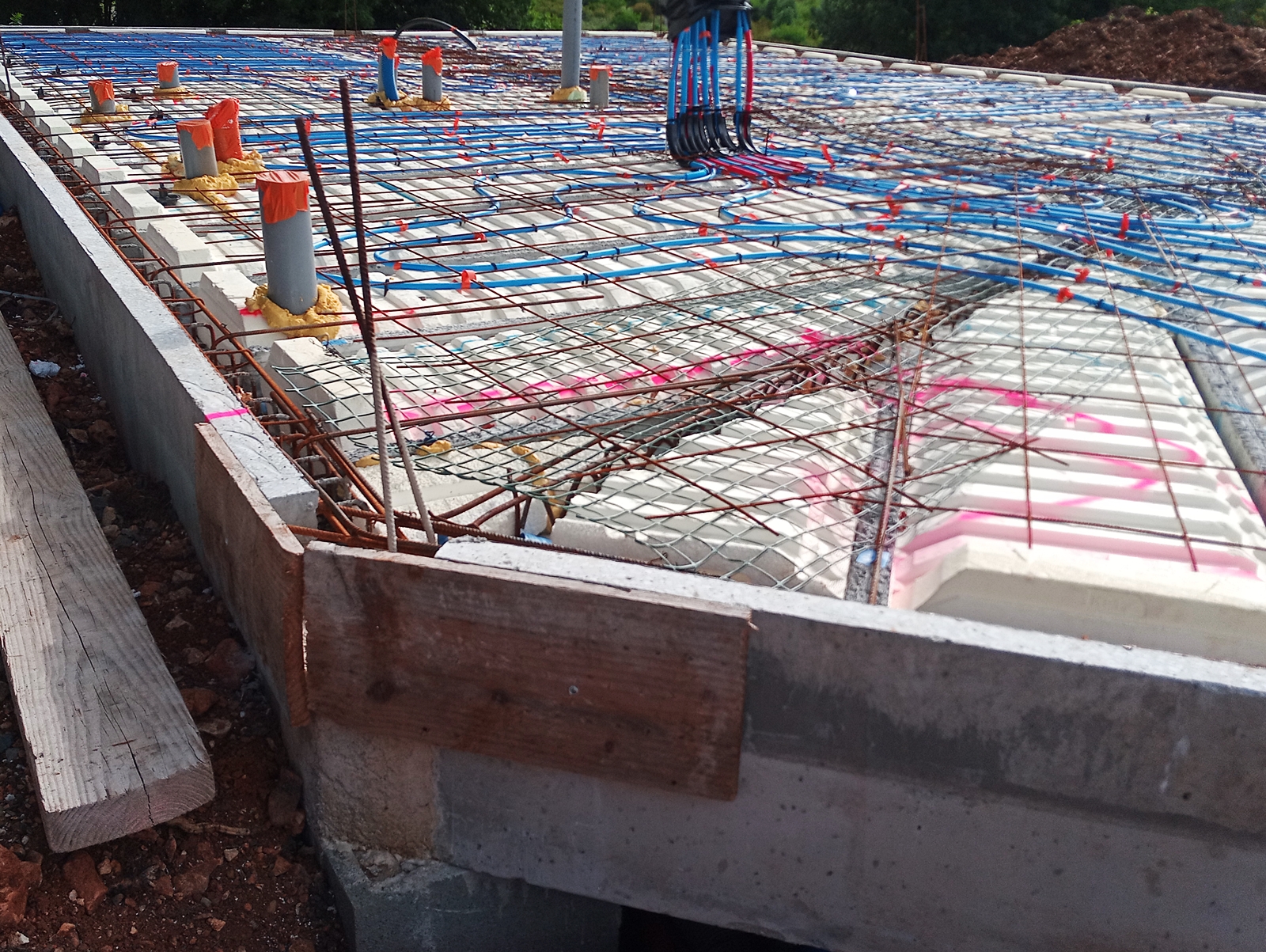
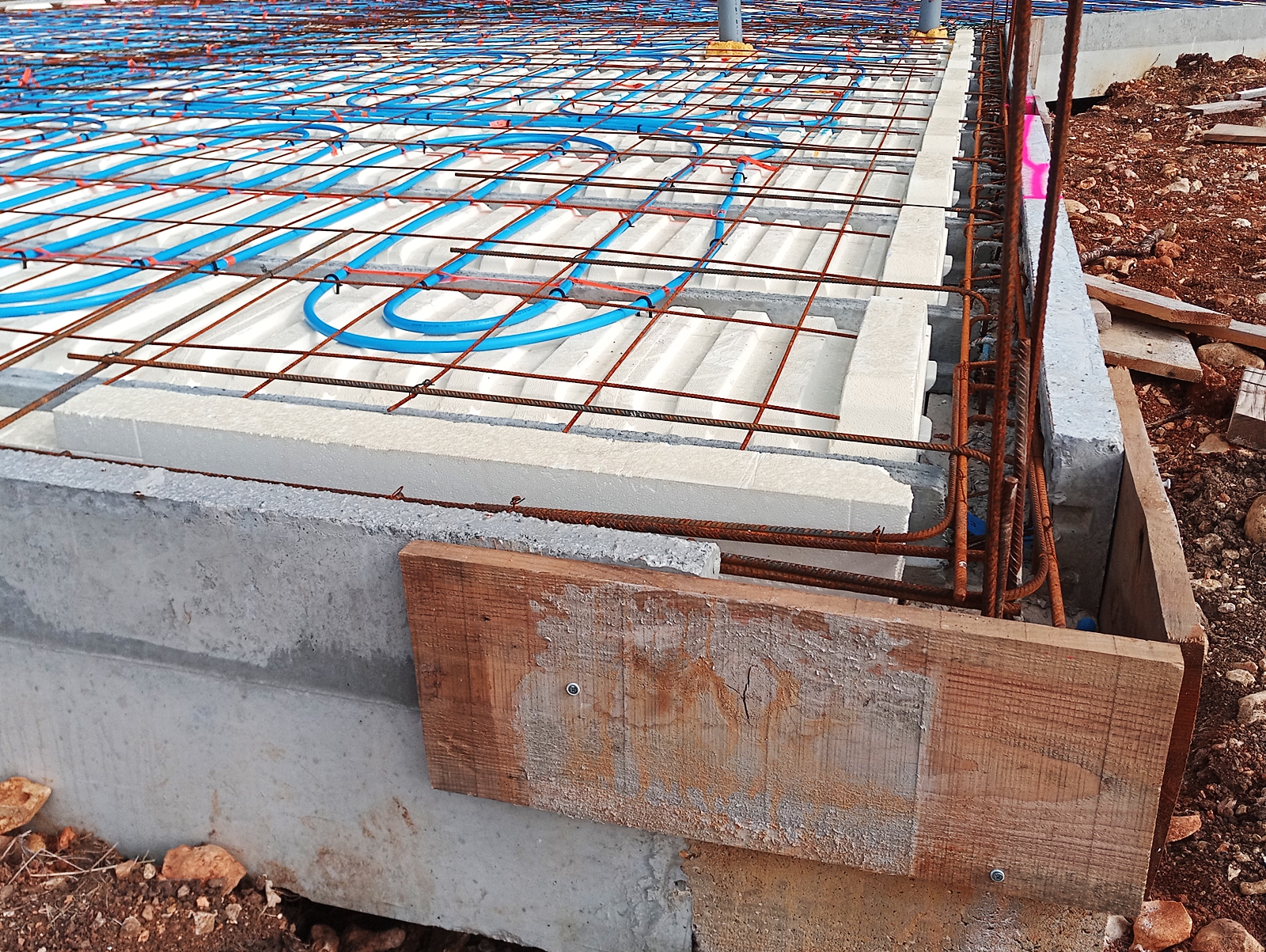
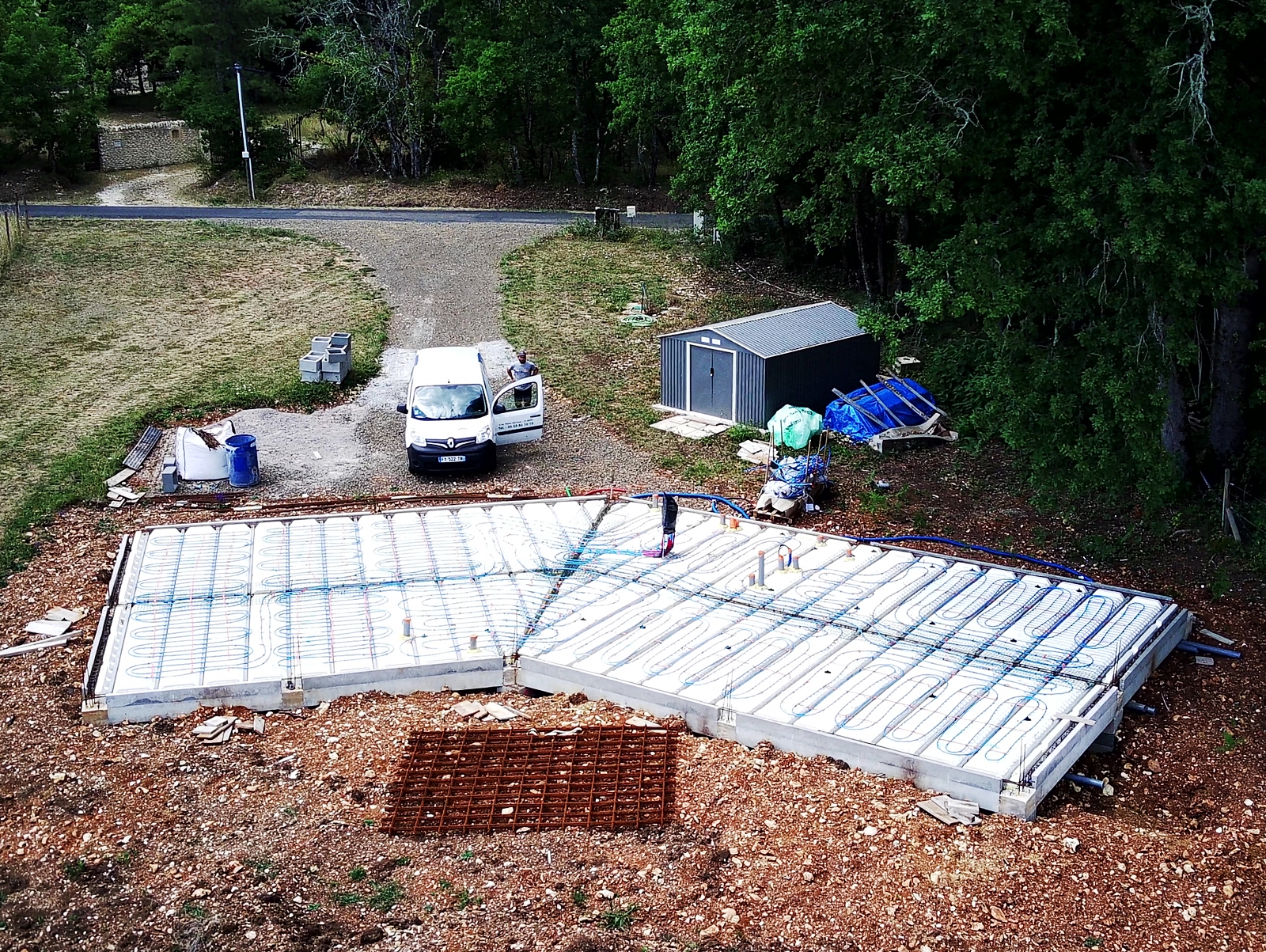
Pompe à chaleur time

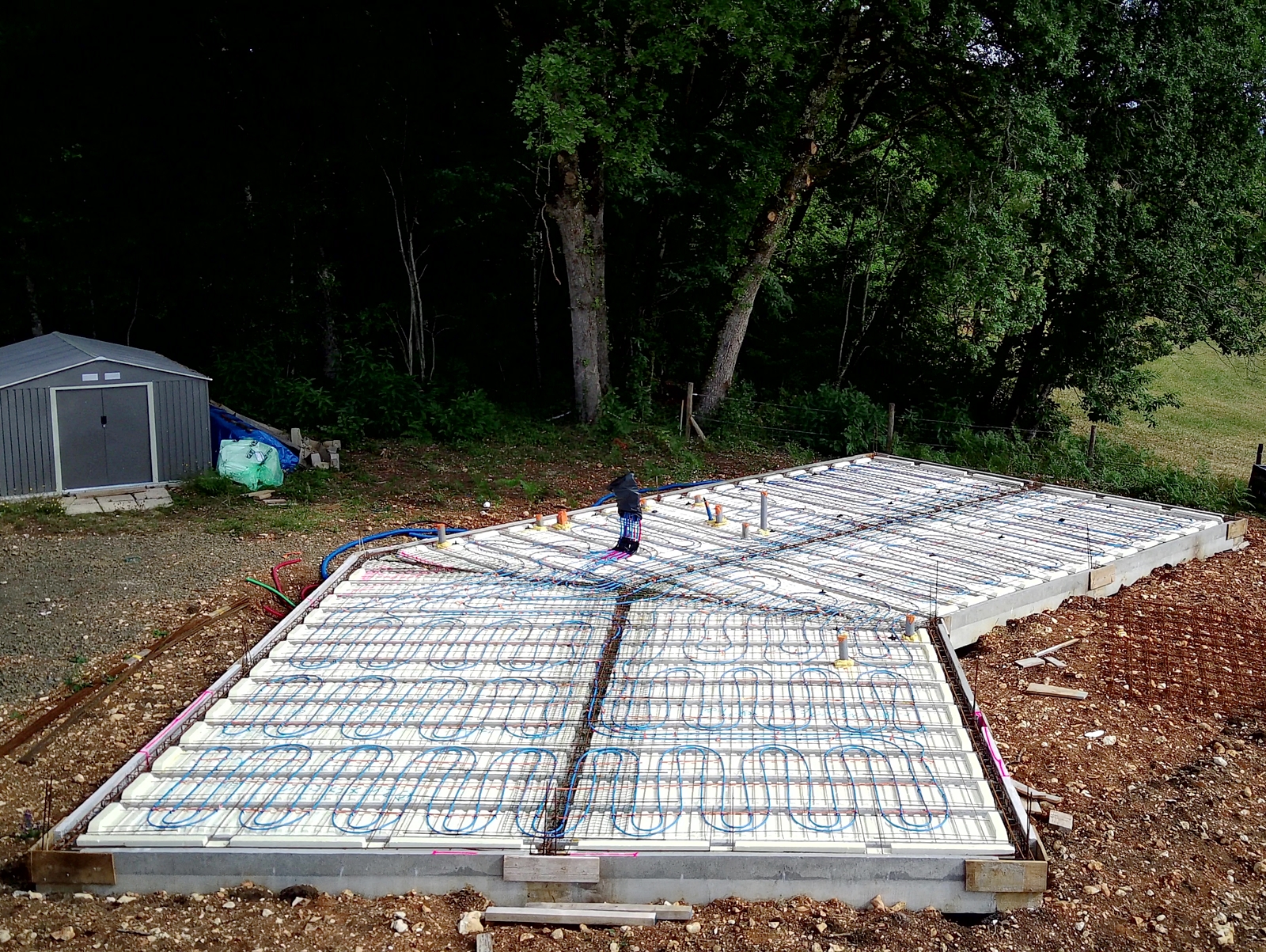
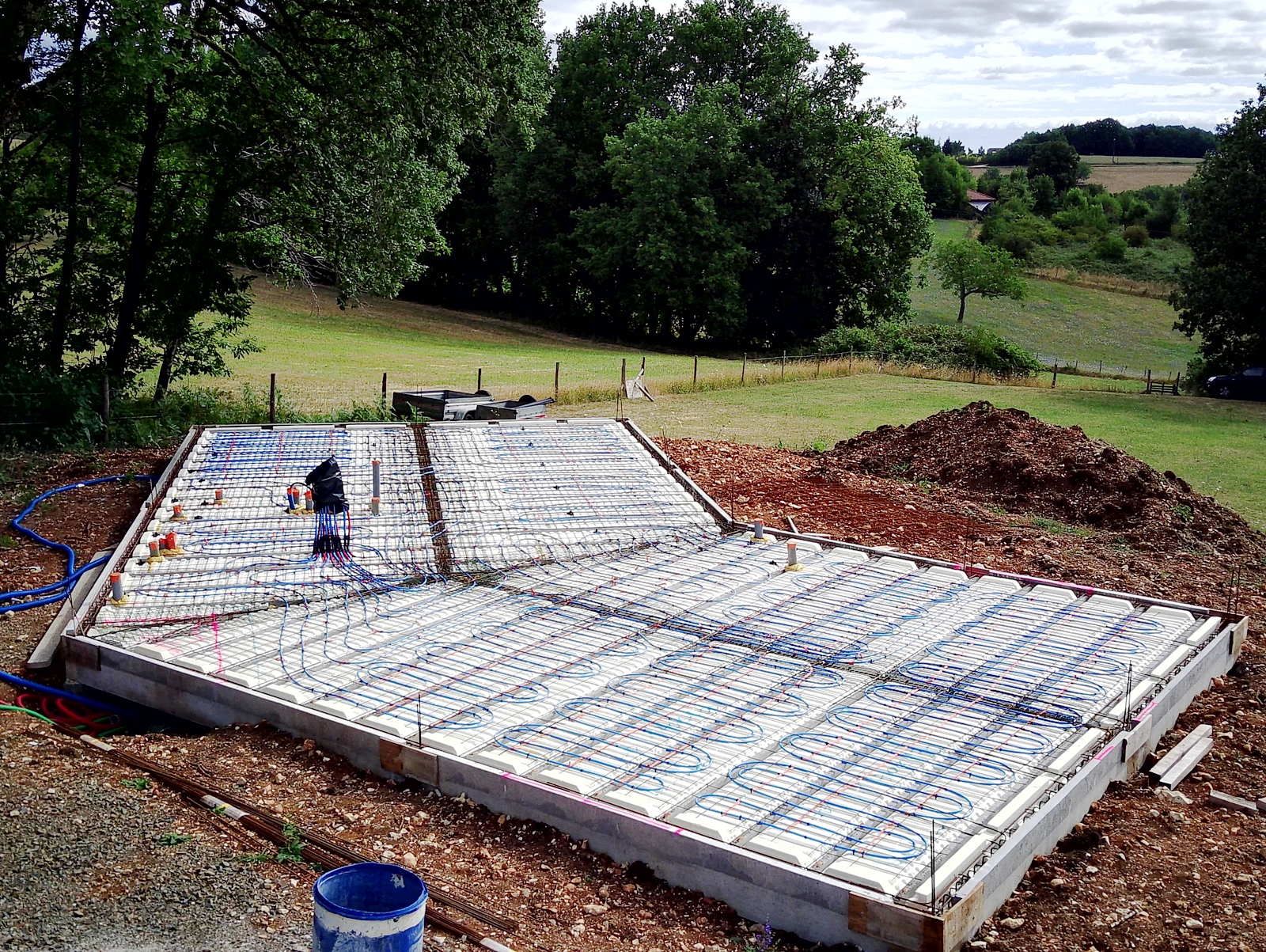
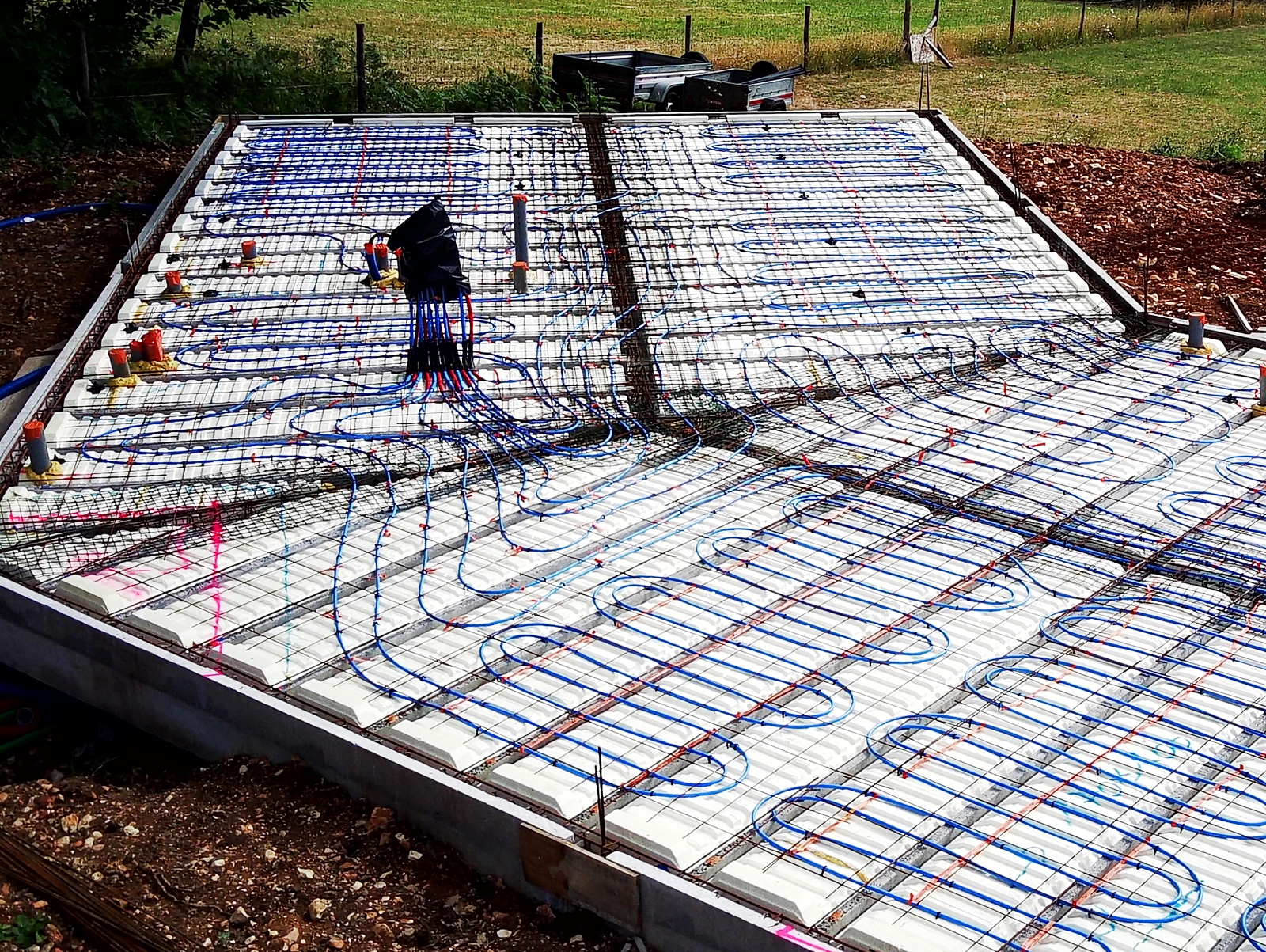
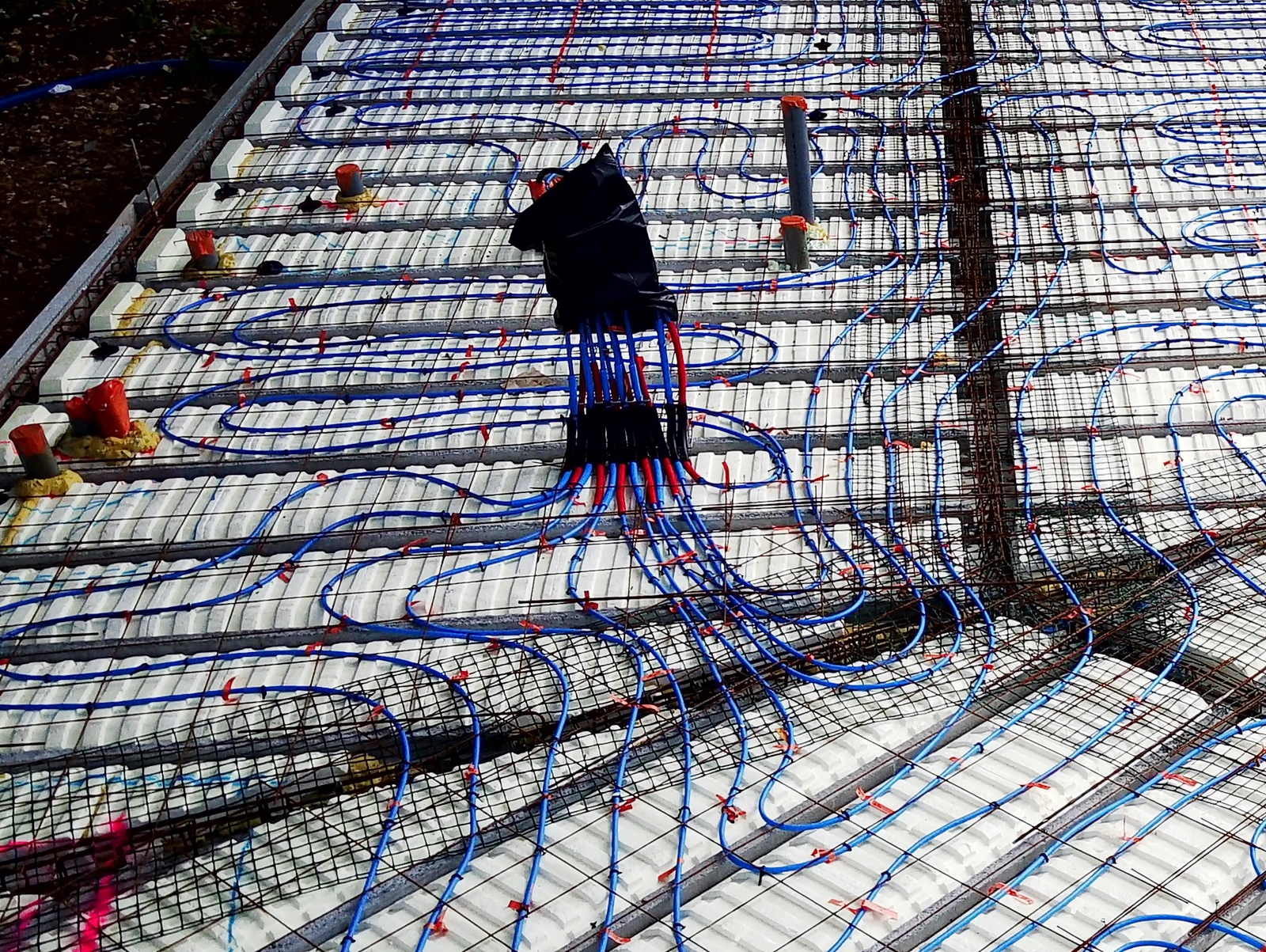
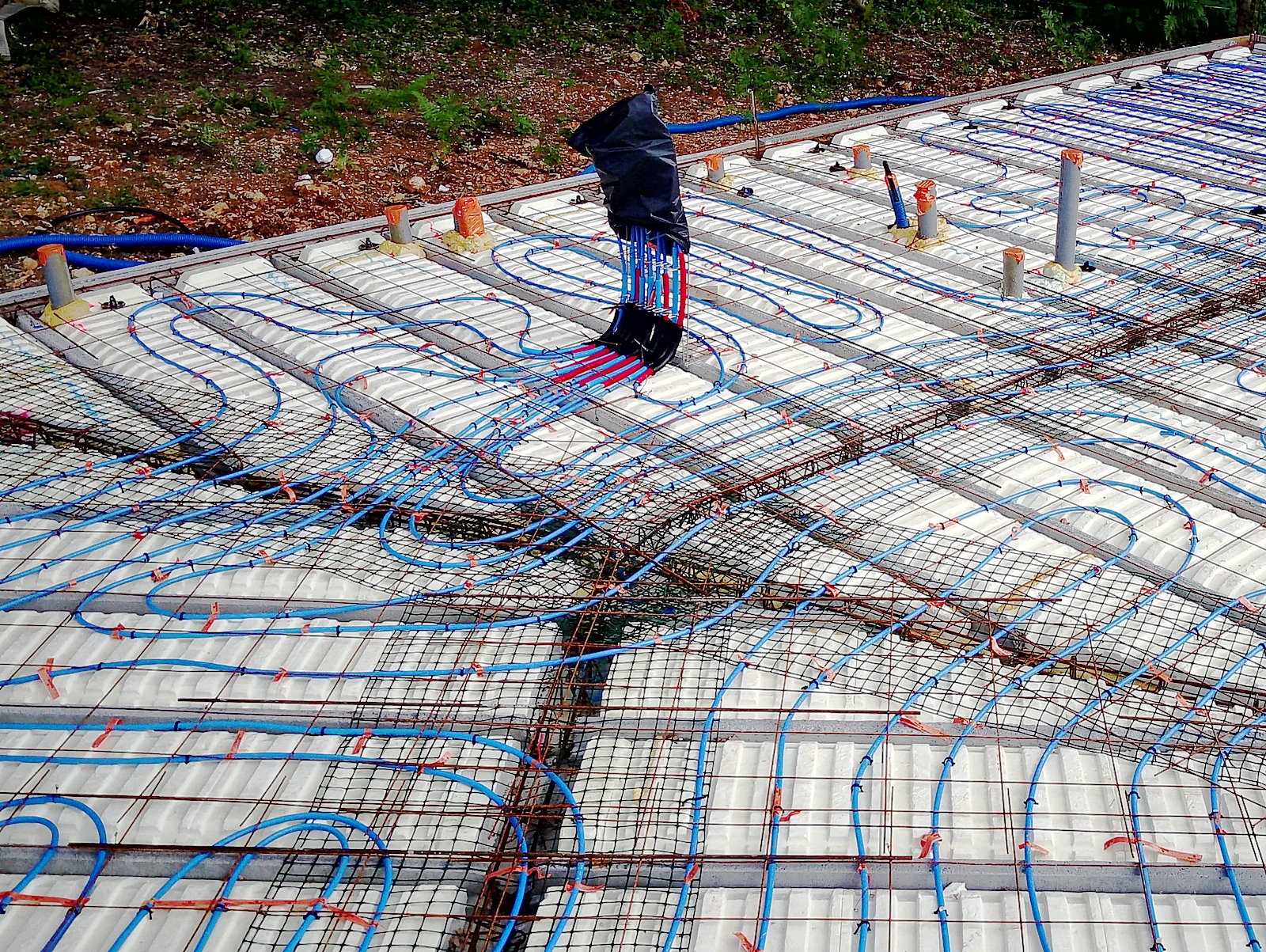
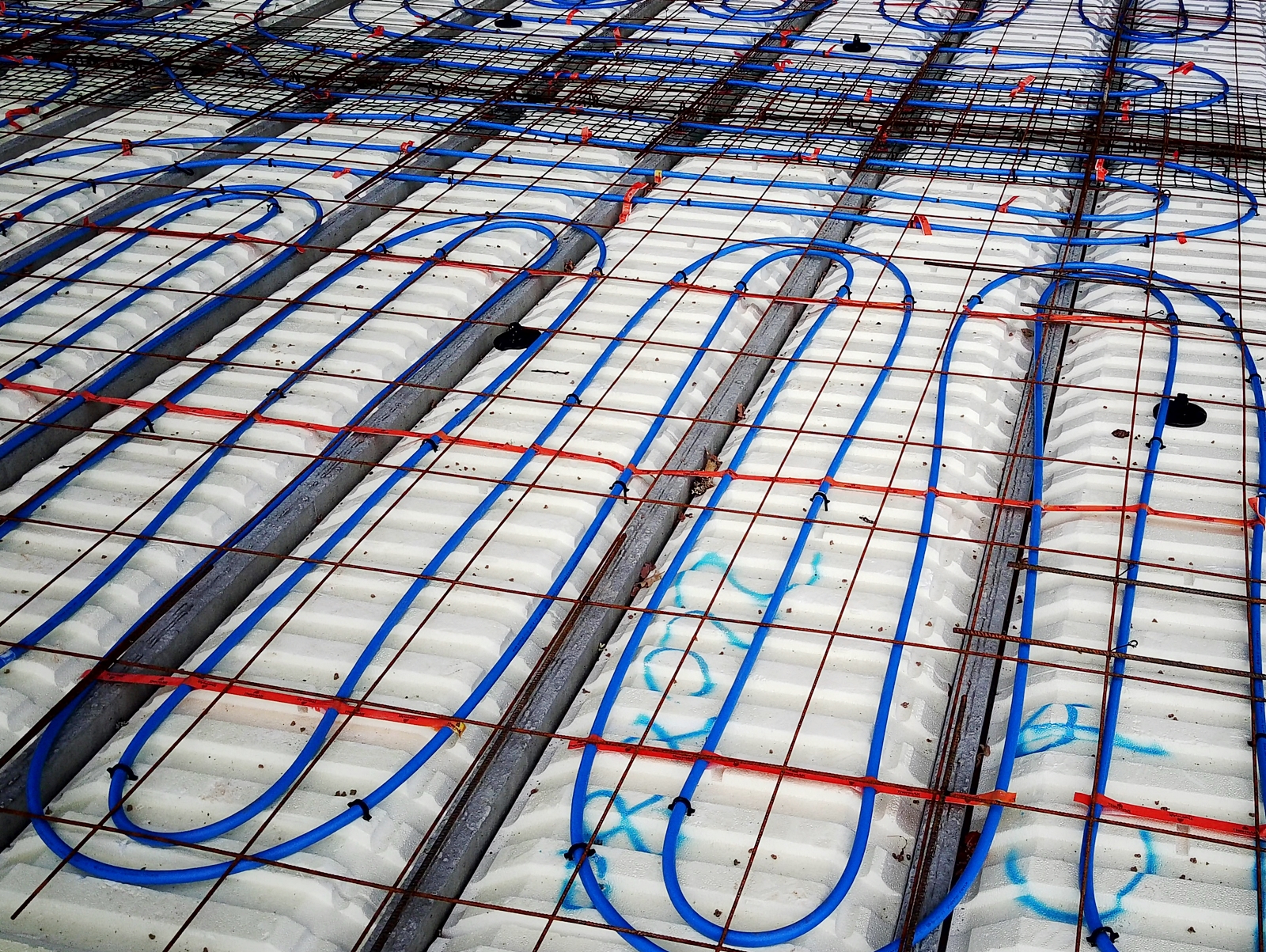
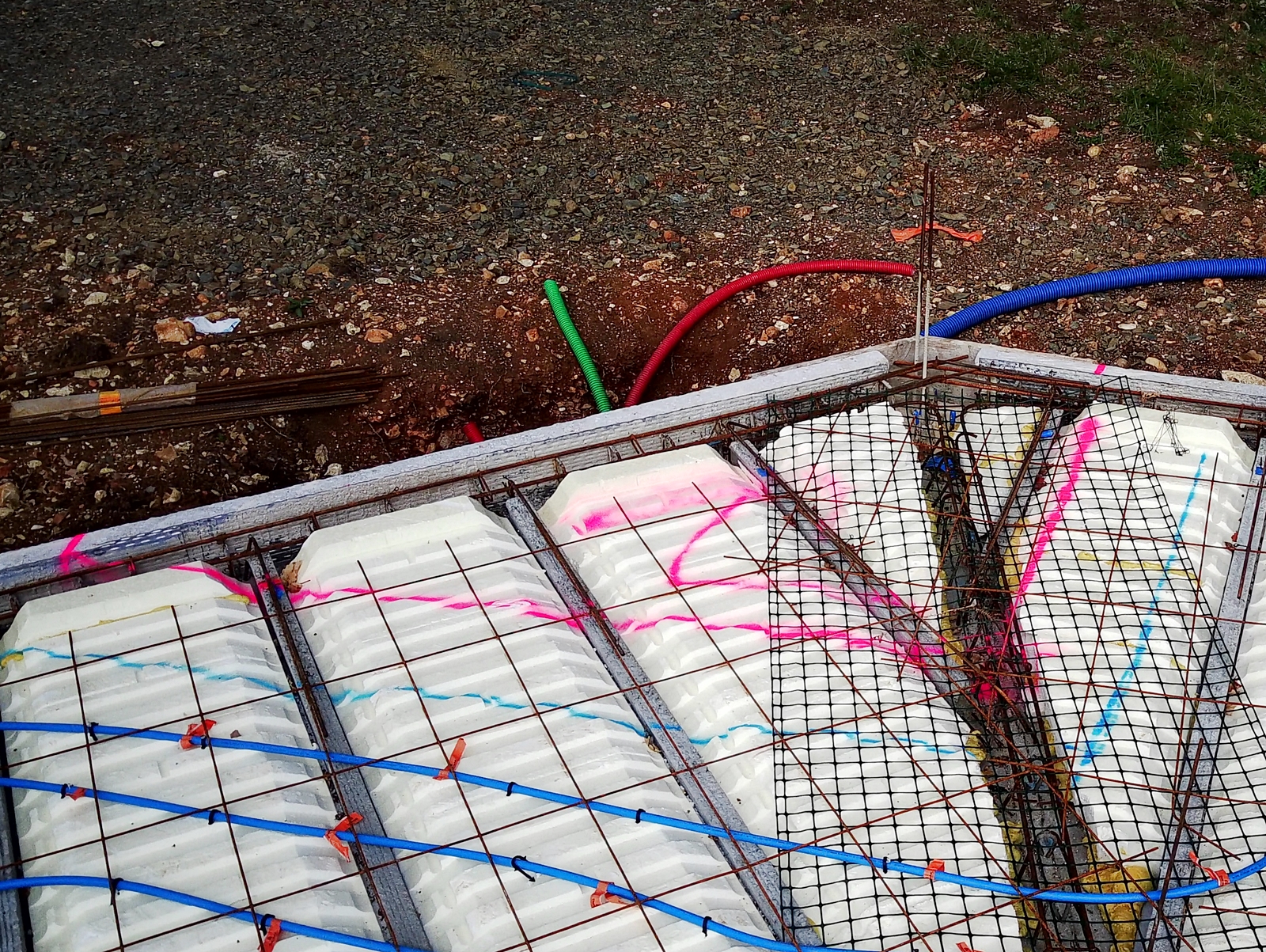
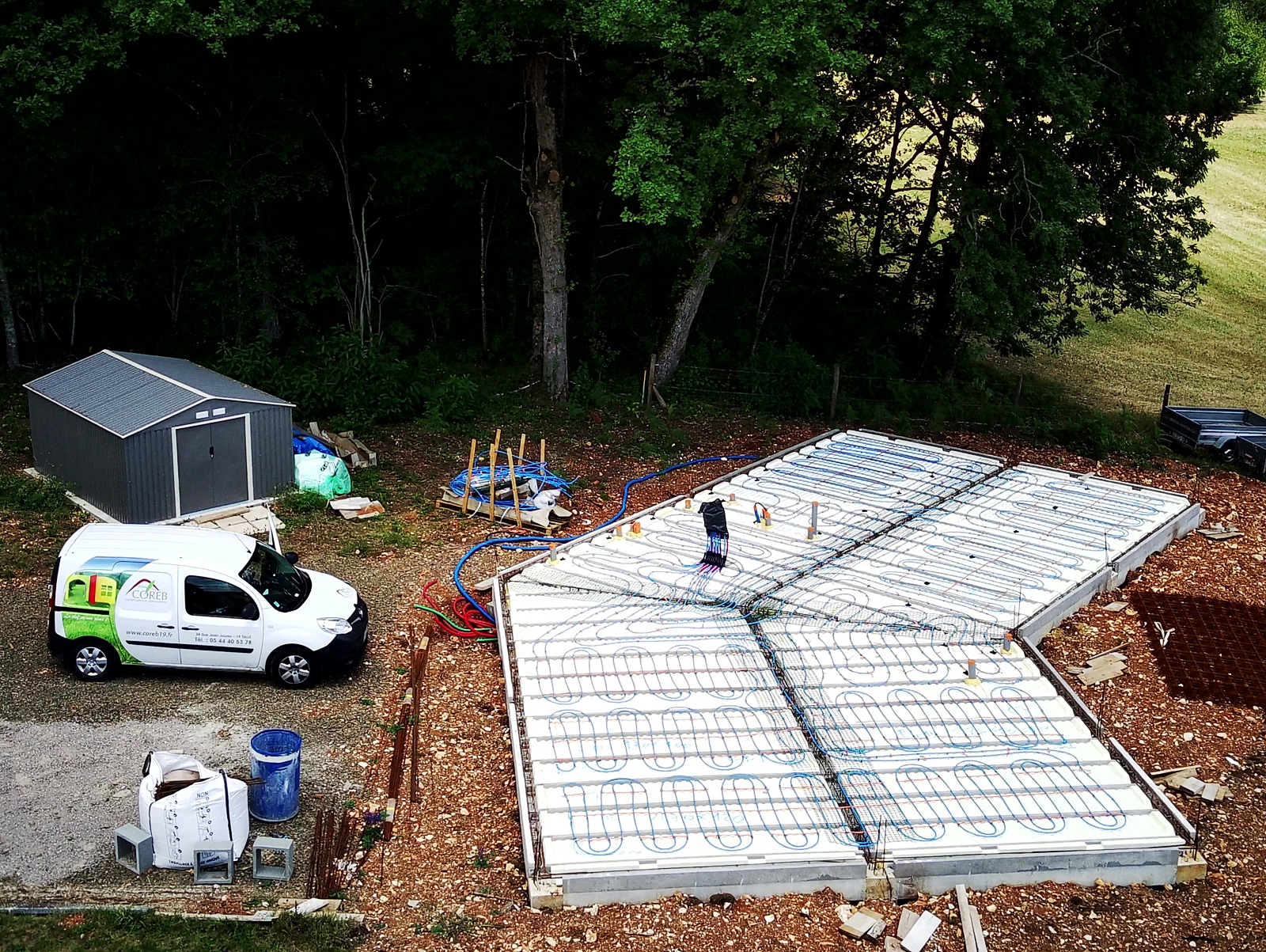
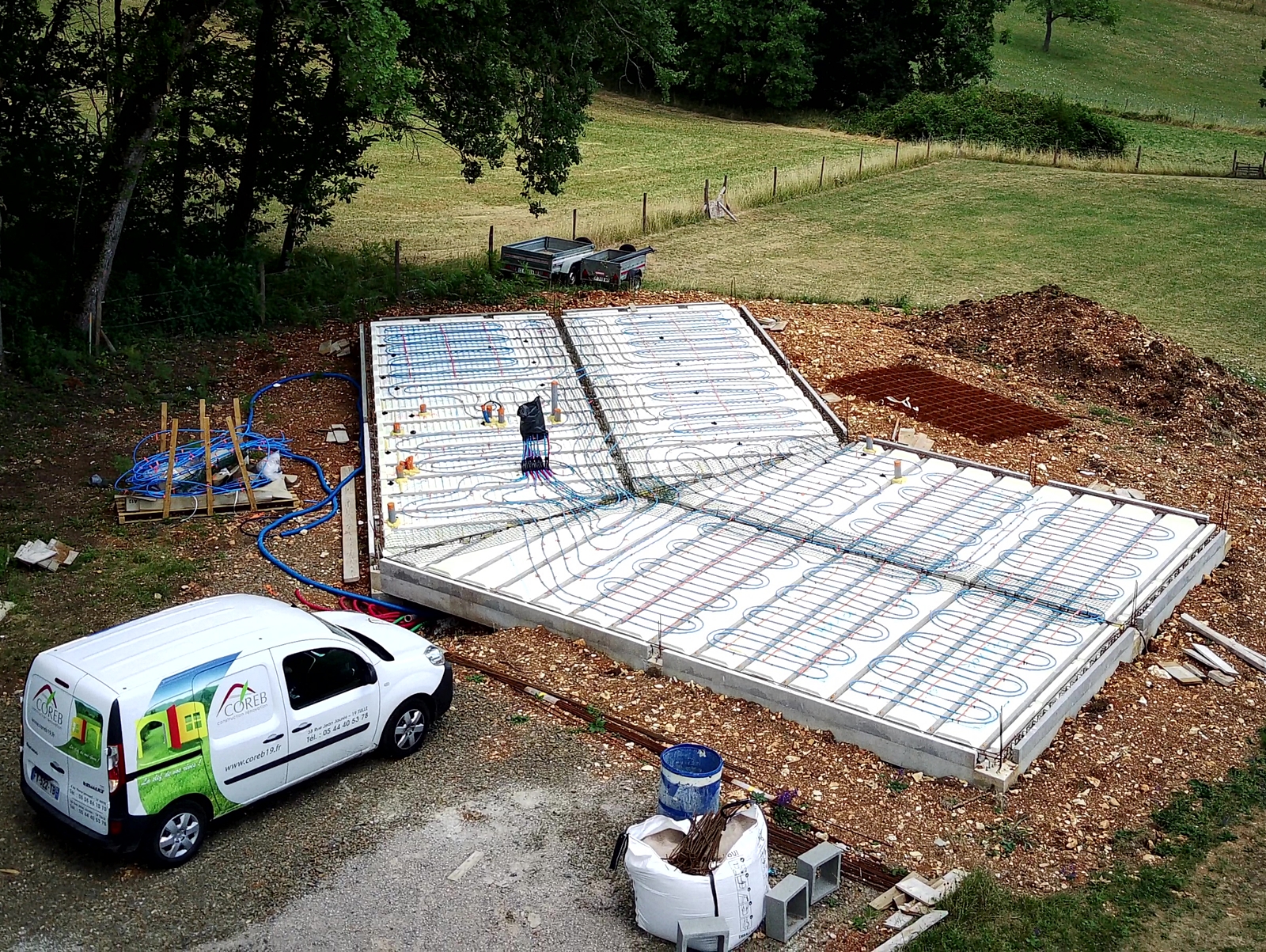
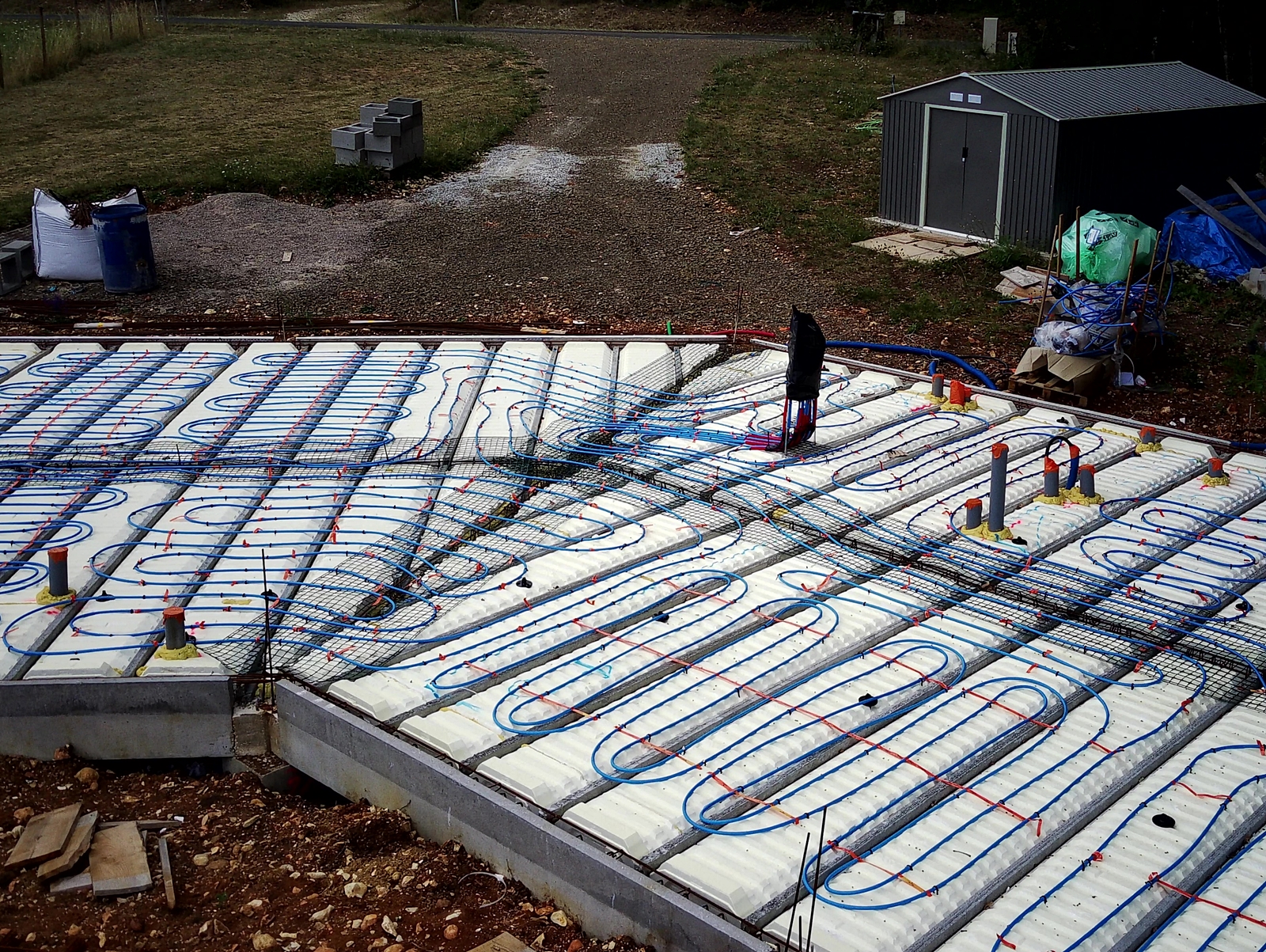
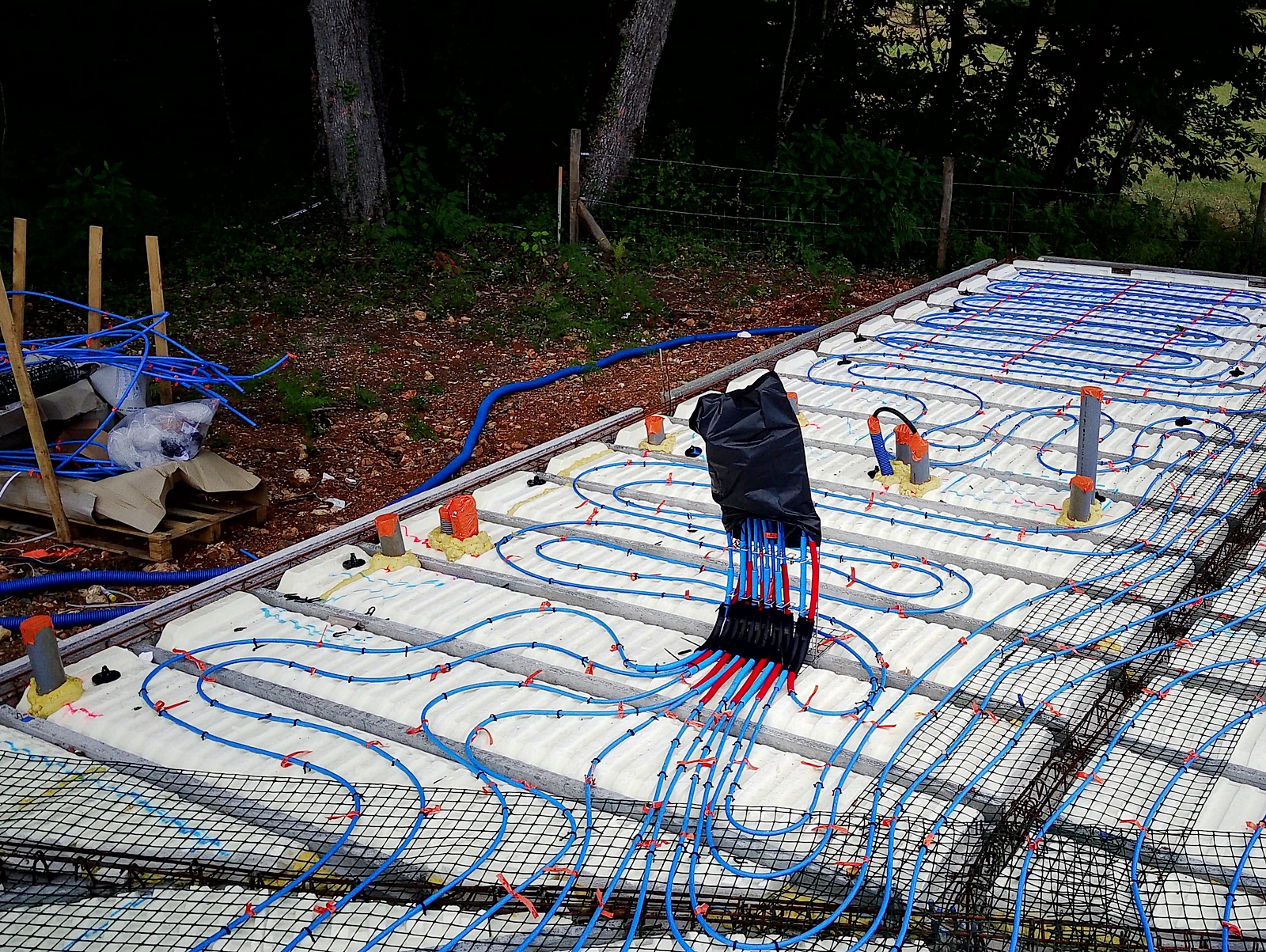
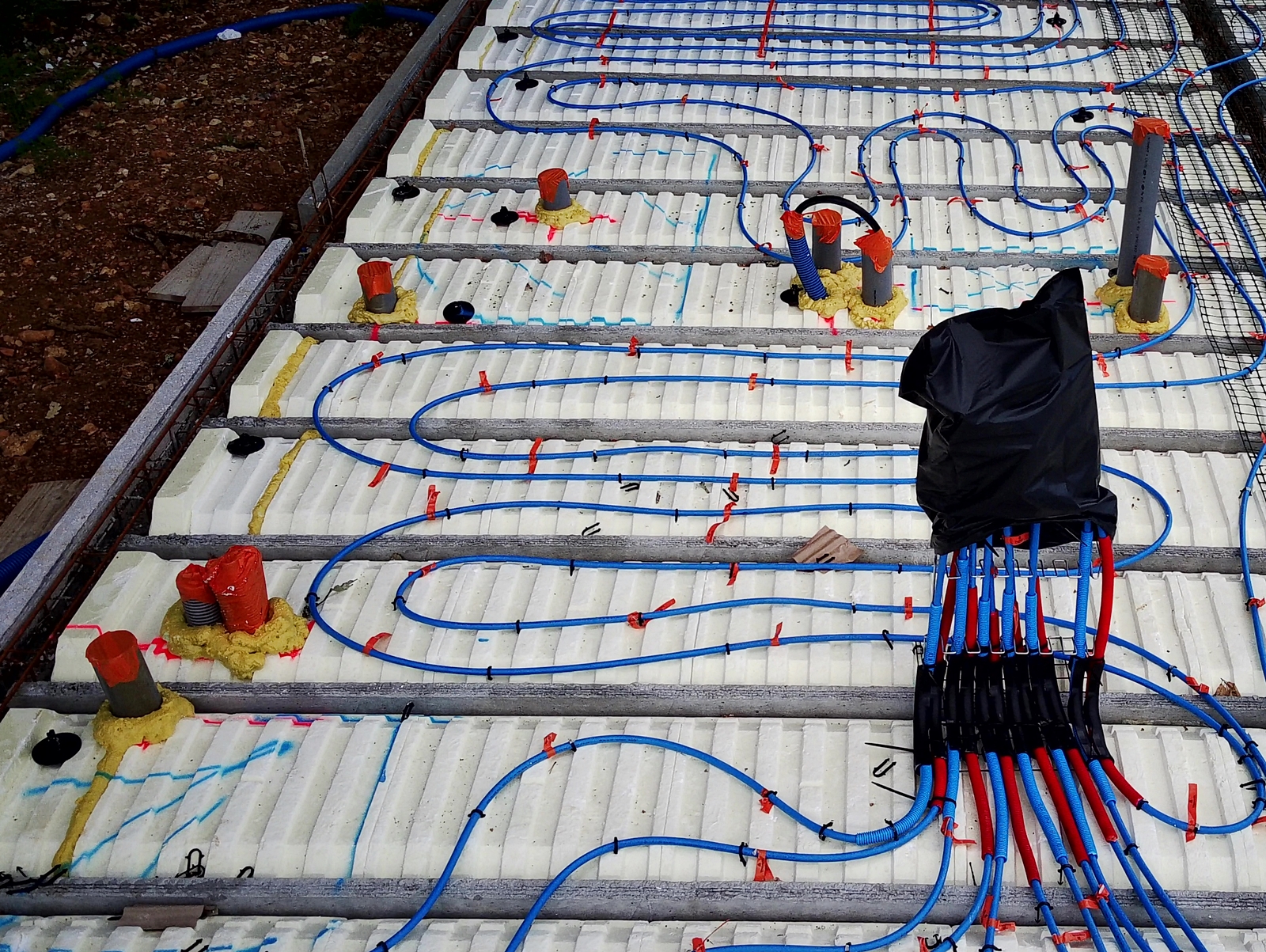
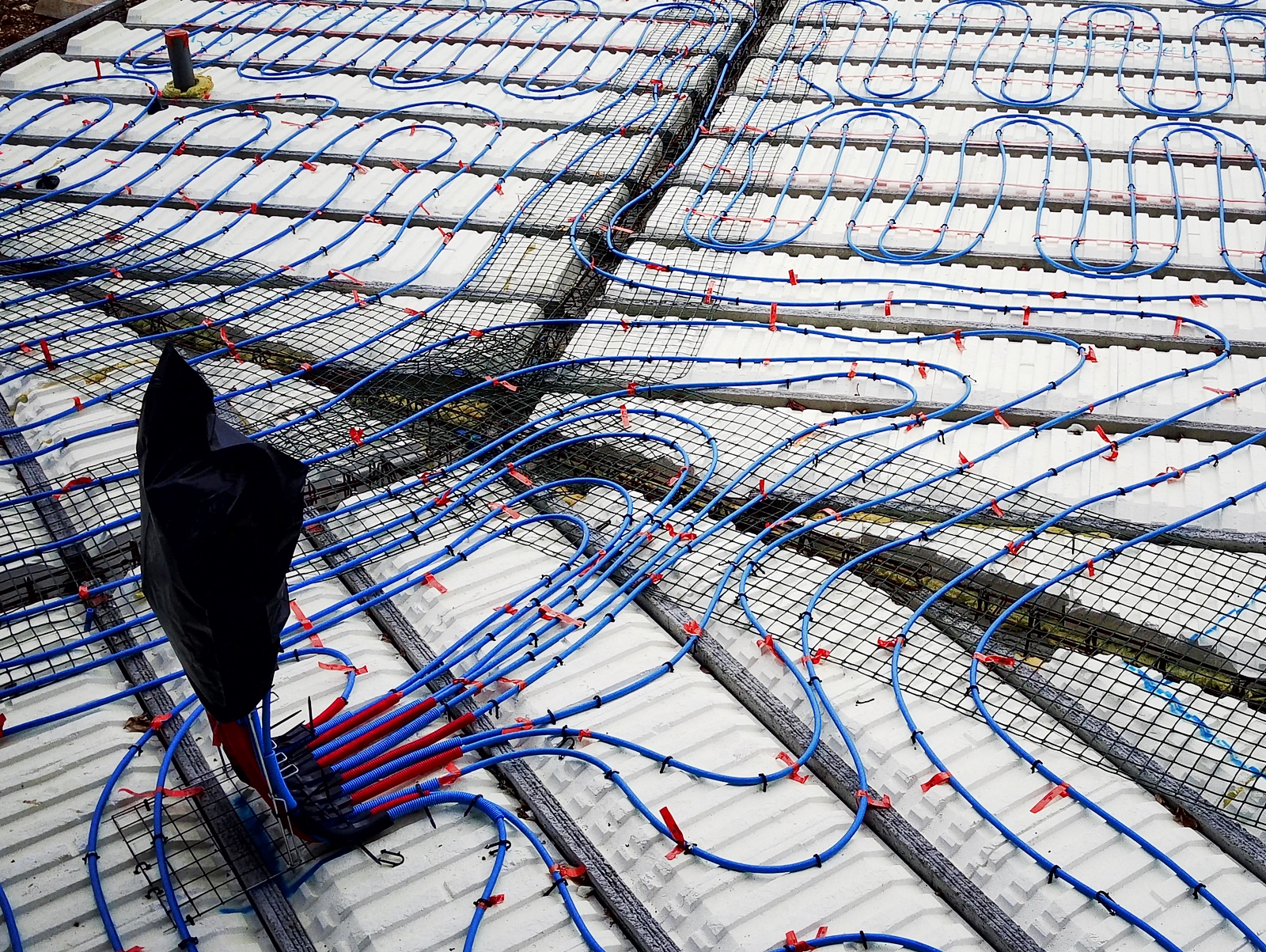
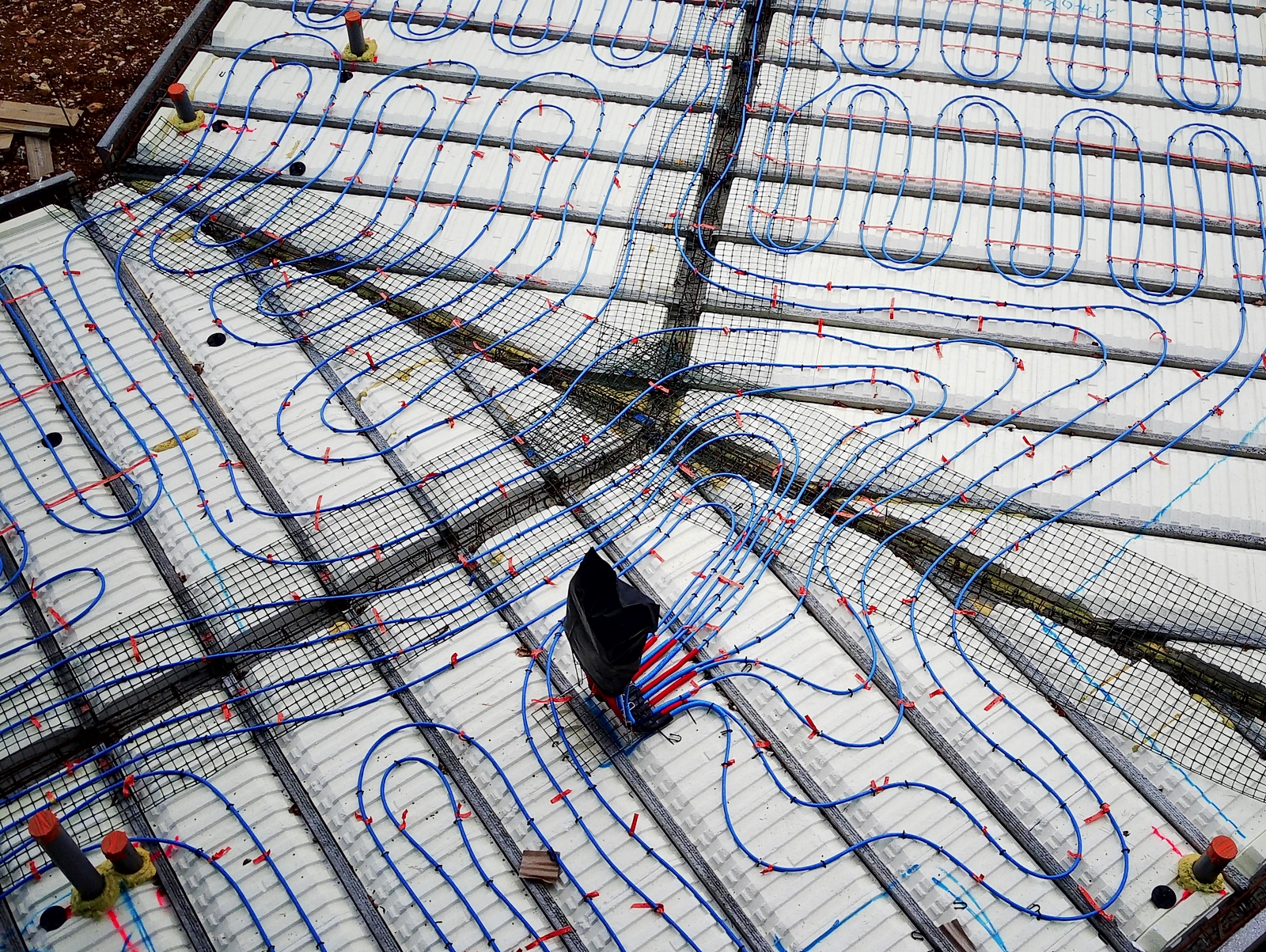
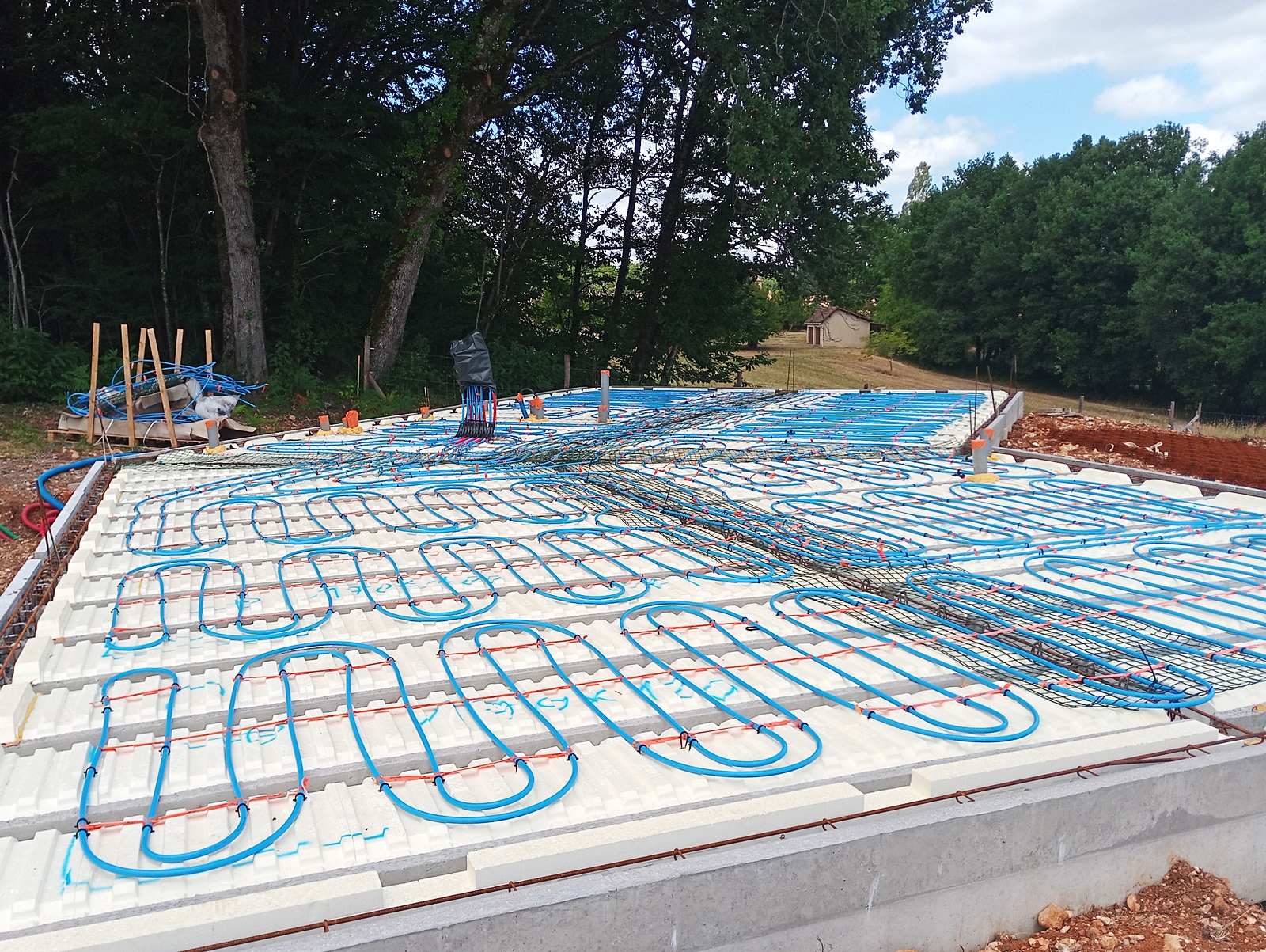
OK, not quite but heading in that direction. All of the heat pumps that I’ve seen being installed in these parts supply underfloor heating, although when I come to think of it, a new one that Victor and Madeleine recently installed blows hot air into the spaces to be warmed. But anyway, mine will supply underfloor heating via plastic pipes embedded in the concrete floor slab and before the concrete can be poured these must obviously be put in place.

There was no sign of life on my house-building site first thing this morning but out of the blue, just before midday, I noticed a solitary figure on site making some measurements. It turned out that it was a single young workman who had come to do exactly that and I left him to it to allow him to get finished as quickly as possible. I shot some video with one of my drones just as he’d done so and was clearing up to go and I was amazed at how much he achieved in the relatively short time that he was here.

Here are some general shots to start off with.

null

null

null

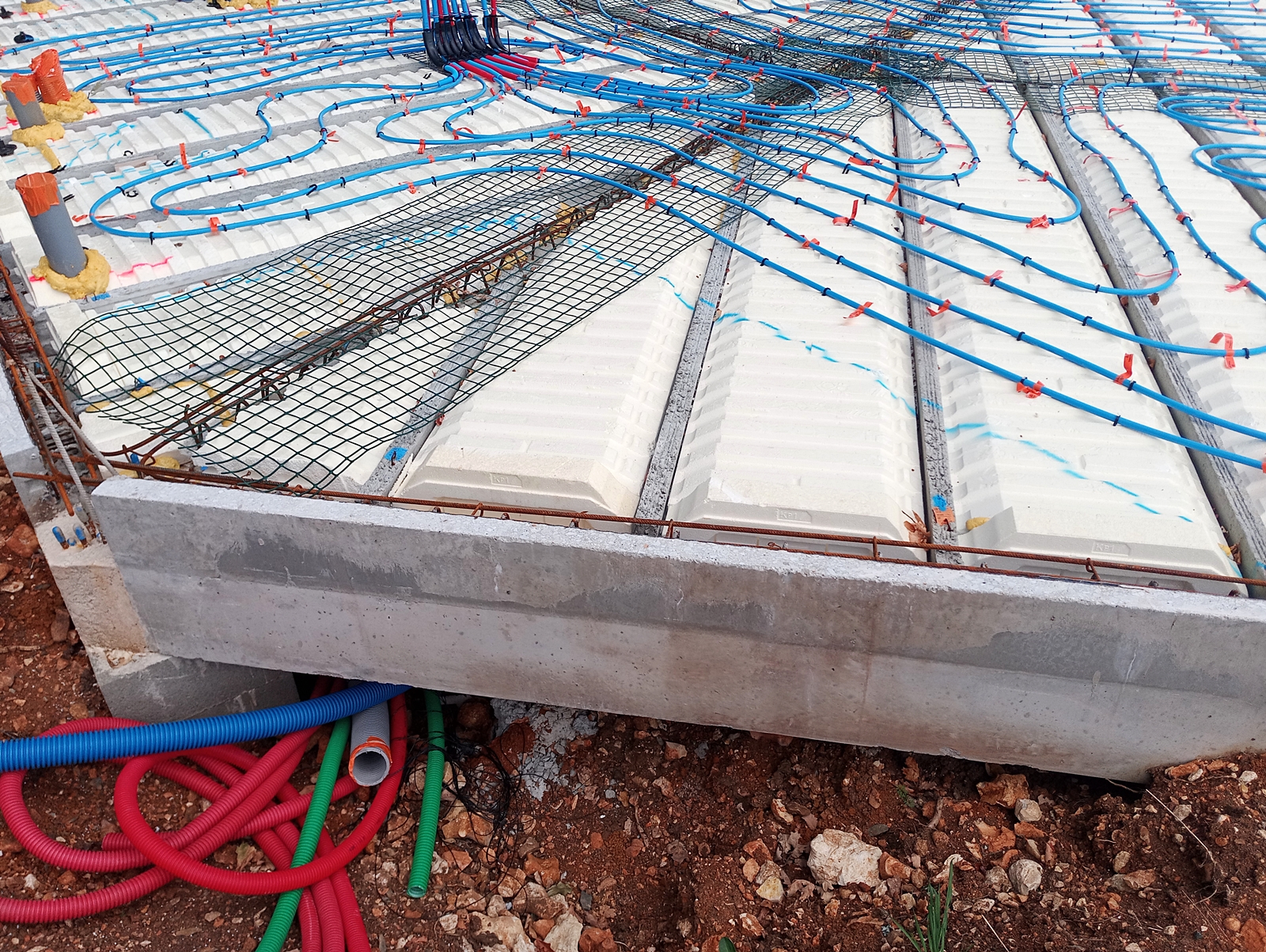
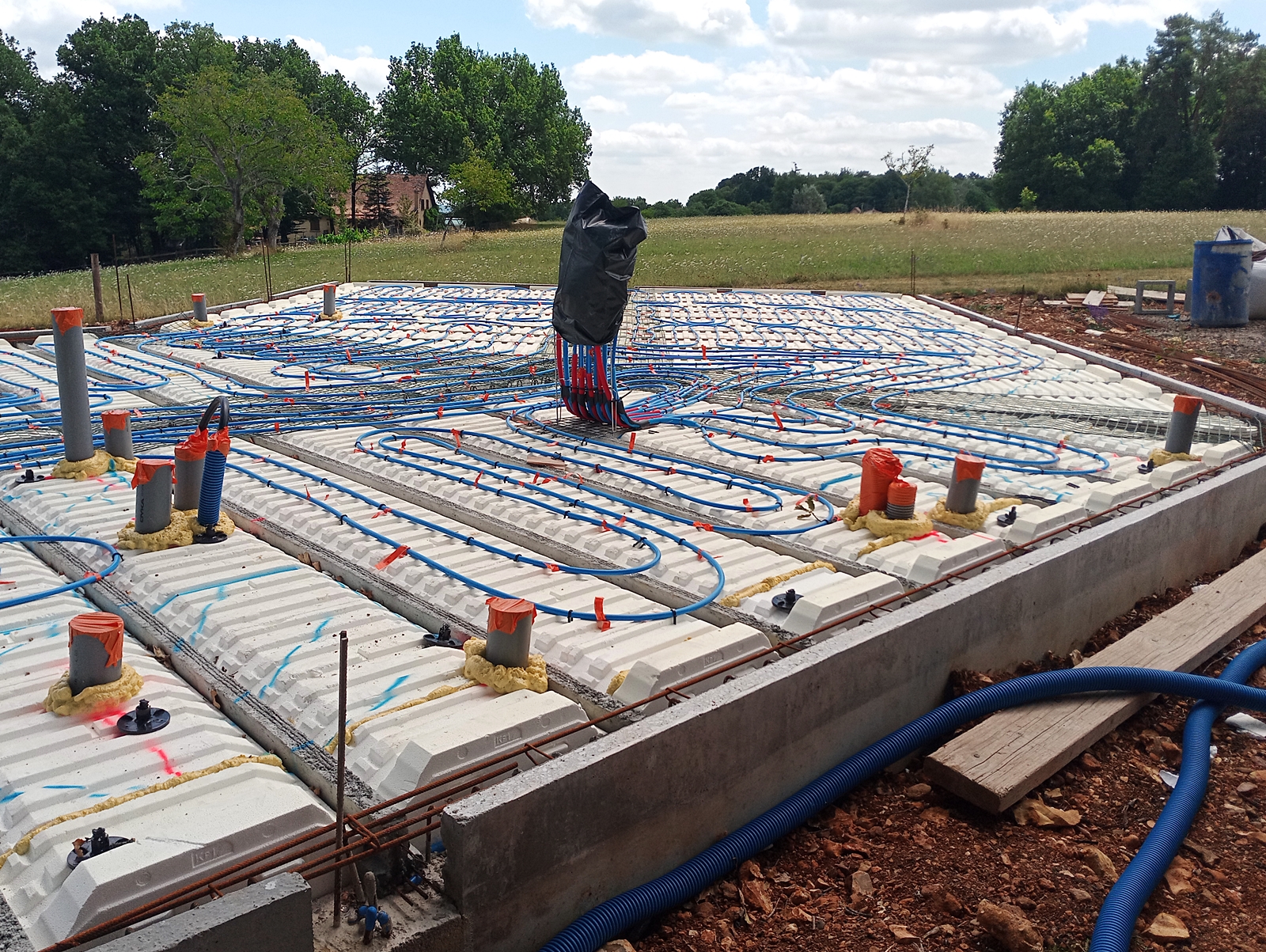
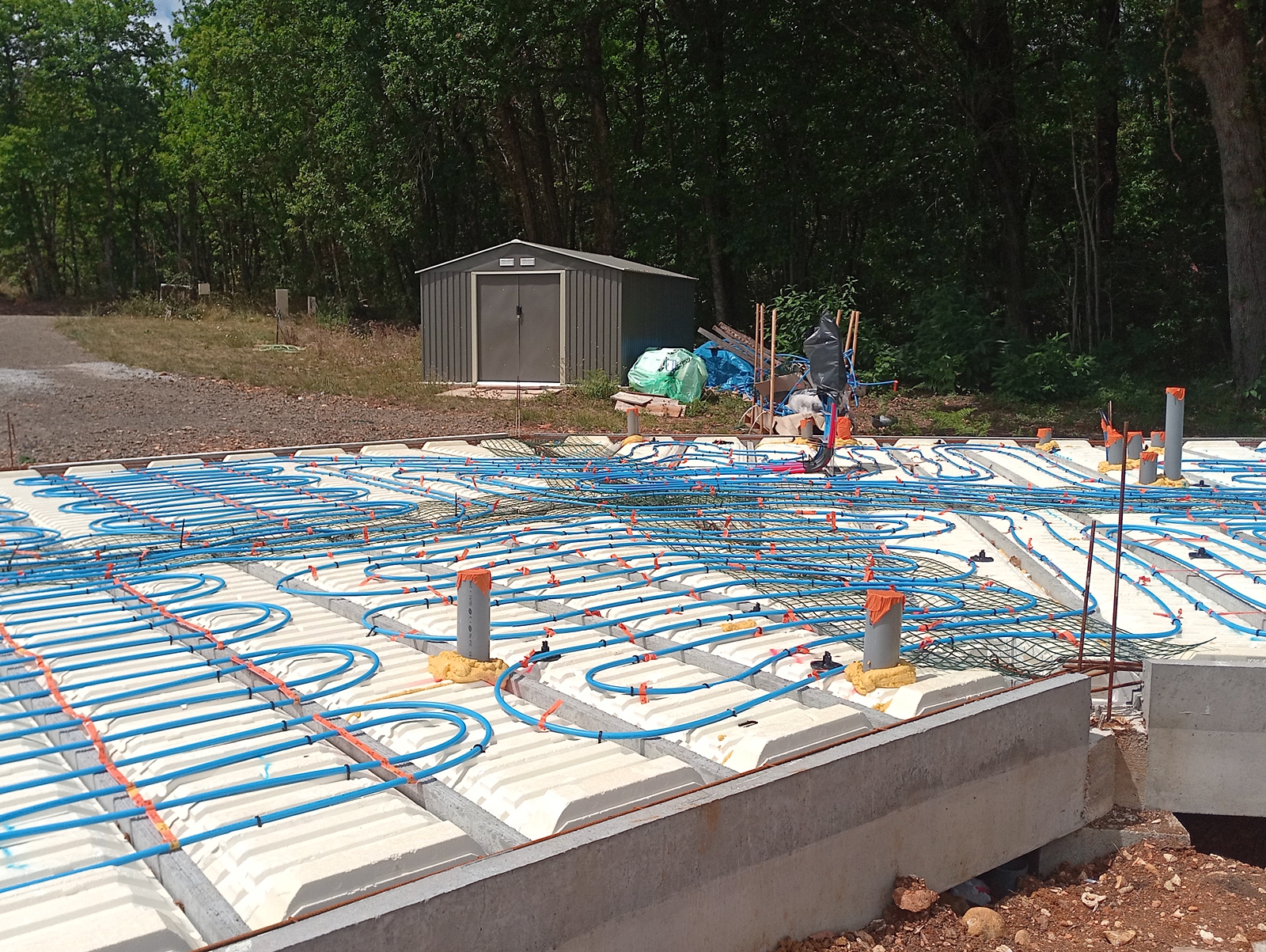
The way the system works is this. The heat pump has a hot supply and a cool return but it wouldn’t be acceptable just to connect these to a single continuous pipe that runs into the floorspace, all around the house and back out again. The heat loss between the entry and the exit would be so great that the rooms nearest the supply would get hot but the ones closer to the exit would become cooler and cooler until the last few in the loop probably wouldn’t heat up at all.

To get around this several loops of piping are laid in the house, each one warming up a different section of the building. Each one has a beginning, connected to the heat pump’s supply, and an end, connected to the pump’s return and all of these are connected to the pump via what is called a manifold, another name for a valve with many connections. This manifold is mounted on a wall in a convenient location, in my case in what will be the cloak cupboard in the entrance foyer, and it can be seen standing upright, but covered for protection, in the next few images.

null

null

null

null

In the above shots the manifold is mounted on a wire frame, a placeholder if you like. I don’t know if it will stay in position after the house is finished, but if it does I hope that it will not be visible, although I’d prefer it to be removed. You can see in the next couple of shots how tubing goes from the manifold to all parts of the house and back again with the hot ‘supplies’ marked in red and the cooler ‘returns’ in blue.

null

null

The exception to this is the area near where the front door will be and the reason for this is because it will be outside in the porch area, which is why it has been marked off.

null

Finally, a couple more general shots to finish off and show how the whole of the house’s floor area has been covered.

null

null

The piping has been laid directly over the polystyrene ‘hourdis’, the plastic bridges between the floor beams that will support the concrete floor slab. It’s been held in place by plastic staples and before he left, the technician carefully conducted pressure tests on each section to ensure that there won’t be any leaks. Reinforcing steel mesh will be laid over the top of it before the concrete is poured and the builder is obviously confident following the checks that there won’t be any problems with leaks or anything else once the concrete has been laid.

I noticed that the technician has only laid the underfloor heating pipes and has not put the main supply and return in between the manifold and where the heat pump will be (outside on the corner of bedroom two). Presumably he’s left those for the heat pump people to do and they will take responsibility for installing and testing them when the time comes.

Footnote

I just came back to say that I now think I’m beginning to get the picture. When I went up to see how things were going at the end of the afternoon the young guy was finishing clearing up and he was taking lots of photos with his phone showing what he’d done. Then he finished completely and left. When I went up again at the beginning of the evening I noticed something.

There was a large heap of the clips that are used to hold down the tubing on the ‘hourdis’ left over and some more in the rubbish bin and when I looked more closely at the whole job it was obvious that at the end where he’d started, the living room end, the tubing loops were all evenly laid out and neatly clipped down, but at the other end of the building, the bedroom end where he’d finished, the same could definitely not be said. The loops were fairly evenly spaced but half of them were hardly clipped down at all and those that were only had only around half of the number of clips that they really needed to hold them securely in place.

The conclusion was obvious. He’d been instructed that he was only permitted to spend a certain number of hours on the job and no more and as time wore on he realised that he would have to skimp the last part. Consequently he’d finished off doing the minimum necessary before skipping off when the time limit was up.

Now I begin to understand why so few workers are being allocated to my job and why, when they have turned up, they leave again so quickly. Luckily on this occasion I was able to spend an hour or so collecting together all of the unused clips and then going over the floor area pinning down the areas of tubing that needed to be made more secure.

This is the first time that I’ve been disappointed by the work done by the builder but now that I know this, in future I’ll keep an even closer eye than I have been on what’s going on.

Video – housebuild day 7

This video was actually shot quite a way back on 25th May. After a further delay of three weeks since the last time, the builder sent an excavator with driver whose job it was to begin back-filling the hole in which the house’s foundations had been built. The aim was to build up the level of the land around the house’s structure while leaving the space beneath it empty. This space is called a ‘vide sanitaire’ and is useful for insulation purposes and to provide future access if necessary to the services – water and electricity – running under the house.

Due to the amount of material that will be needed to raise the ground level at the rear of the house to the level of the house itself, it is clear that there is insufficient earth and that more will have to be brought in towards the end of the project to complete the job.

House construction day 10 – images

These are the images from yesterday. Two workmen were on site by 7.30 am and when I went to greet them they’d already been working for well over an hour. I said that they must have got up very early that morning and they replied that yes, they had, because of the heat. They started by marking the ‘houdris’ (the polystyrene bridges between the floor beams that will eventually support the concrete floor slab) with red paint everywhere that a pipe or tube would emerge from underneath.

These pipes and tubes will carry the services – plastic tubing (‘gaine’) that will contain the incoming electricity cables, the incoming water pipes and the larger outgoing plastic pipes that will carry waste water into the waste treatment system (‘système d’assainissement’). Then they lifted each affected ‘houdris’ and made cut-outs before inserting the appropriate service or tube upwards through the floor from the space beneath (the ‘vide sanitaire’) which they’d entered into through a gap left for the purpose in the front of the house near where the front door will be (see later).

In a similar way the large diameter plastic pipes that will eventually carry waste water out to the ‘système d’assainissement’ exited the ‘vide sanitaire’ through spaces left for them below the northern end of the house below where bedrooms one and two will be (also see later). However, there was one difference for these pipes. Whereas the incoming water pipe and ‘gaine’ containing the electricity cable can be treated quite casually, even being allowed to rest on the earth below the ‘vide sanitaire’, the same is not true for the outgoing pipes containing the waste water.

The reason is that these must be carefully mounted with a slight downward fall so the waste water flows down and out of the building and in order to achieve that the pipes have to be suspended on cables or, as in this case, chains. The chains are, in turn attached to special suspension points which are also mounted into the ‘houdris’, so it becomes clear that quite a lot of experience and skill is required in order to do the job of installing the services properly, especially bearing in mind that they would soon be encased permanently in concrete.

The next five shots show the two workmen working after they’d cut out the ‘houdris’ to accept the various services and had then replaced them with the pipes and tubes in their correct positions sticking upwards through the floor.

null

null

null

null

null

The next shot shows the finished floor base with plastic mesh covering the main beam joints and the open pipe and tube ends temporarily sealed with orange plastic tape to prevent accidental ingress of concrete when the floor slab is eventually poured. You can also see a few of the black hanging points from which the chains supporting the large bore plastic pipes feeding the waste water system are suspended beneath the floor.

null

The next shot shows the gap left in the front of the house below where the front door will be to allow the electricity and water services to enter the under-floor space.

null

Here’s the open (but plugged) external end of the water pipe that will eventually run outside underground to connect the house to the mains.

null

The next shot shows what will be one of the waste water outlets in the kitchen. There will be two – one where the sink will be and the other to take the water from the dishwasher. This will be highly advantageous as it will save having to join the two waste systems up behind the fitted kitchen units as is usually the case. Note how the base of the piping is sealed with plastic foam that will rigidly hold it in position when the concrete floor slab is poured.

null

The next shot shows the piping that will feed the waste water system where it exits the house. The closest one is from the kitchen (the two outlets mentioned above have been joined under the floor), the next two are from the basin and WC in the bathroom and the furthest two are from the bathroom shower and the separate WC. Older systems meant that you had to separate ‘grey’ and ‘black’ water but newer systems like the one I’m having (‘toutes eaux’ meaning all waters) allow for all of the waste water from whatever source to feed into the single treatment chamber.

null

This final shot from the day’s work shows the waste water outlet pipe coming from the kitchen and also just visible is one of the securing chains from which it is suspended.

null

In my previous post I mentioned that about mid-morning the whole area was blanketed by thick smoke that was carried by the wind from the wild-fires in the Gironde and even further afield. The next few shots show exactly what I was talking about.

null

null

null

The smoke also returned once briefly during the afternoon but then dispersed and hasn’t returned since. The extreme heat has been the source of some major disasters both here in France, in the UK and further afield. Thankfully although there have been some serious losses of land and property the number of lives lost seems to have been quite small and hopefully things will stay that way. In comparison, my constructional problems pale into insignificance.

Ca marche!

After a break of several weeks, about five actually, I was awoken this morning at 7.30 am by sounds up on my house-building site. When I ambled up to investigate, two workers had been busy for over half-an-hour removing sections of the plastic ‘hourdis’ (the bridging between the beams that will support the concrete floor) in order to put the various services in place (water, electricity cables, waste outlet pipes) in advance of the concrete slab being laid.

I saw 42 degrees Celsius on my car temperature gauge yesterday but it will be cooler today, 36 degrees by the end of the afternoon, and even cooler tomorrow, so I asked if the concrete will be laid tomorrow when it will be more suitable. From what I could gather, it appears not. It looks as though the services will be installed and also all the under-floor pipework for the heat pump and the workman I spoke to said he wasn’t sure when the concrete is scheduled for.

This makes much more sense than the picture that I was originally given last week by ‘the office’. I always thought as I said at the time that it would make more sense to have the services in before laying the concrete and I didn’t think that there’d be two layers, one on the ‘hourdis’ and then another to cover the heat pump tubing. But anyway, all should become clearer as the day unfolds!

It’s now just after 10.00 am and all of a sudden we’ve been subjected to something rather weird. The whole area has become blanketed with what at first appears to be fog, except it’s not. The smell gives it away. It’s smoke. Being rather concerned I launched one of my drones to take some shots of the work that’s being done ‘up top’ but also to get up higher to see if I could see what’s going on.

I’m glad to say that there don’t seem to be any fires in the vicinity and the conclusion I’ve come to is that we’ve been enveloped by smoke carried by the wind from the fires that are currently raging in the south and west. At least I hope that that’s the case, anyway. If I’m right it gives an indication of the disaster that’s occurring in those parts 🙁

Good news at last?

After a period of rising tension between myself and my housebuilder and a series of unanswered emails (my main gripe – French friends say that poor communication by builders is ‘normal’) I at last received an update this morning.

I have updated the house’s ‘technical plan’ for its services since the builder’s initial stab at it and arrived at what will be the final version a couple of weeks ago. I’ve now got all the positions sorted for where I want plugs, switches, outside taps and exterior lights to be and shown where I want all the ceiling lights to be sited as I’m having LED spots throughout the house. This will be an extra but better to have them installed during construction rather than later.

I sent the plan over a while ago together with requests for some other information and in the meantime received a deathly silence. So I sent them again… and then again, the last time with the comment that if I did not receive an answer I would escalate the situation.

As a French neighbour who recently moved into their new house told me, the builders are not used to someone being there. She said that on several occasions her husband received assurances from their builder that such-and-such would be done ‘next week’ but when they managed to get onto site a couple of weeks or so later, nothing would have been done. My builder is probably squirming because I’m there, on site, the whole time, so they can’t get away with making hollow assurances that you can’t find out about until it’s too late.

But anyway, the message I received this morning assured me that the concrete floor slab would be laid for my house, thus covering and protecting the plastic ‘houdris’ between the floor beams that will support the slab until it has cured, in the second half of next week. It also said that then they will continue on to install the incoming services and outgoing waste pipes followed by the additional slab for the heating pipes for the heat pump, but I noted that the message didn’t specify when exactly the latter would be… 😐

But I was happy with that. They’ve not let me down yet when they’ve told me when they’ll be doing something – it’s just that they’re reluctant to do so. I mainly want to get the base slab down so the plastics are protected from the blazing sun that we’re enduring this year – 41 degrees C today and for the coming few days also.

The plastics are also getting covered in vegetable debris, twigs and leaves from the overhanging trees, and once the slab is down I’ll be able to get a specialist in to cut and remove the branches in question, which are hanging very low with the weight of their leaves, before building proper commences. The message said that the services would be installed after the slab has gone down, which will mean drilling the floor in several locations, probably while the concrete is still ‘green’ and not fully cured.

This will mean having to miss the reinforcing metal that it will contain when drilling, but I guess they think that that will be simpler than having to secure the services vertically in place where they rise up through the floor and accurately holding them in situ while concrete is being poured around them with little possibility of replacing them if they were moved during the process, depending on where they were sited in the building.

If the slab is down and the services in by the end of this month that will be OK by me, as I presume that they’ll then all go off on holiday for the month of August. If so, that’ll give me time to get the tree work done and will also ensure that the slab is well cured before they get back and resume work.

So some good news at last. On another front, I’m rather concerned for the welfare of my new little cherry trees in the light of the extreme temperatures that we’re getting just now. They are in desperate need of water but when I tip water on the ground around their bases, it just runs off because the ground is so dry and hard.

I’ve ordered a garden fork but it won’t be here for a few more days, so what I did was grab a short length of straight reinforcing rod from ‘up top’ on the building site and puncture the ground around the base of each tree, making sure not to go too deep so as not to damage their roots. I then slowly poured a watering can-full of water (11 litres) on the ground around each one and watched it sink in. I could see that it was doing so because the water level in each small hole rose to the surface and then fell again as it was absorbed by the soil and compost that I’d placed around the roots.

I’d estimate that only 1 litre at most was lost of the 11 litres poured around each tree, so hopefully this will do the trick for the time being. I’ll also keep repeating the process until this exceptionally hot spell is over and maybe I’ll try pouring a few litres around my own roots while I’m at it 😉