Slowly coming together

Everything went according to plan yesterday – with one excellent addition. When I picked up the pod, I was talking with Richard who I got it from and it turned out that he also had a brand new AX3 nose strut that he had bought for his aircraft that the pod came from, but hadn’t used. That was great news because I was going to have to buy a new one myself for MYRO, so we did a deal and I came away with that as well! Richard also still has the main gear and the pedal assembly and the latter is handy to know because I don’t know yet whether MYRO’s has been distorted.

Then I went straight up to Sandy in Bedfordshire to get the other bits. Apart from taking the ‘short-cut’ slip off the A1 before the Sandy roundabout, which brings you out in the wrong place, so I couldn’t find Bedford Microlights initially, everything went pretty smoothly. The parts were on the wing rack just inside the hangar door where I’d been told they would be, so it was just a matter of getting them loaded up onto the roof of my Astra Estate. Many thanks to young Lewis who gave me a hand to do so. I was especially grateful because in the process, after the long spell of dry weather we’ve been having, while we were loading the stuff up it began to rain and we both got soaked.

The stuff I picked up comprised two wing leading edge tubes, two trailing edge tubes complete with ailerons attached and a set of wing struts. I need just a trailing edge tube and aileron from them so I’m really pleased about that and the other items I’ll be taking down and dropping off shortly to go ‘into stock’ where I’m hoping to obtain the other bits I need from.

So things are now beginning to come slowly together. I now need to start thinking about a Repair Scheme which I will have to put up for approval to the BMAA Tech Office and get a ‘letter of no objection’ for from P & M. I can’t see how there will be any problem with that because I will be using all approved parts from a similar aircraft which will be individually inspected before being fitted, so it will just be a matter of conforming to procedures I think. I don’t mind that because in the final event, I’ll be up there at a several thousand feet in MYRO once it’s been repaired, so I want to know that I can trust it just as much as I did before the accident. I’m sure that will happen.

So now it’s Game On!

More good news

And don’t I need it, just. I recently had a small knee op and wasn’t able to do much that involved lifting or excessive movement last week-end, so I couldn’t wait to get back down to MYRO today. The job was to get MYRO’s engine off, ready to take for shock-load checking, with the advantage that I’d then be able to see whether the fuselage main tube had been damaged in the accident.

The engine came off very easily after I’d tagged all the wires ready for when I reconnect them and the fantastic news is that the main tube looks perfectly OK. This means that it’s ‘game on’ and MYRO can be repaired. I made a phone call late this afternoon and tomorrow I plan to pick up some of the tubes I will need together with a pod. This really is great as I’m now beginning to see some movement out of the terrible disaster that befell me last month. If all goes well, I’ll be nipping across to Mitcham, near Croydon, tomorrow morning and then up to Bedford Microlights at Sandy in the afternoon where some long tubes that I have to pick up have been stored for the last few months.

So it’s fingers crossed and hoping that from now on it’ll be plain sailing and that I don’t find any nasties along the way once I get stuck into the repair work. Who knows, it might even be possible to get it all done in a few weeks, before all the Summer weather has gone. Mind you, if today’s high winds are anything to go by, we shouldn’t hold our breath for too long waiting for it to just to start 😕

Lowest point?

So here we are on the last day of May, which has been a terrible month for me with MYRO. But every cloud has a silver lining and even at this early stage there is already a gleam of hope. I received so many messages of support, some from friends that I didn’t even know I had, that I just knew I couldn’t give up and in the middle of what was my darkest hour I then received an amazingly kind and generous offer of assistance to help me get MYRO back flying again. I can’t give any more information at the moment but this alone has transformed my feeling of despair into one of optimism. I just know that I can and will get MYRO back into the air.

But that will be for the coming weeks. I’ve now got stuff to do and organise but at least I can now look forward and not back and I have a very kind individual to thank for that. Take my word for it, there are some very kind and thoughtful people in this world who are prepared to go out of their way to help someone they’ve never even met, and for that I am indeed extremely grateful. Now the only way is up.

Back flying again

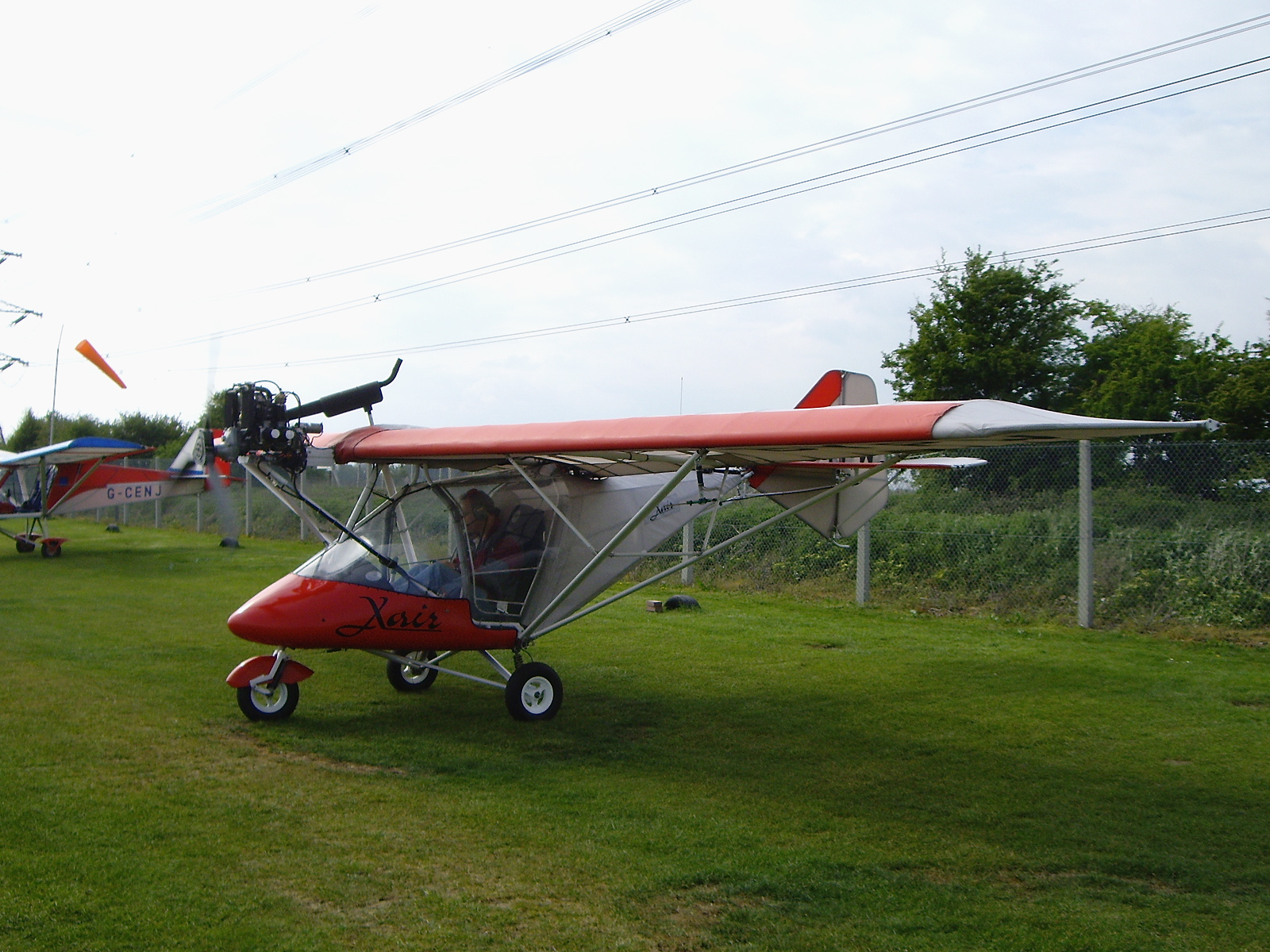
But not in MYRO unfortunately. Ken and Peter decided to move the X’air from Linton to Stoke at the same time as I did MYRO but with the high winds we’ve been experiencing lately with gusts on some days recently of 60 mph and more, we needed a weather window to do the move before the end of the month. Today there was a slight lull between Atlantic weather systems and we decided at short notice to do it today with winds forecast at about 8 mph from the south with minimal gusting. So we met up and drove down to Linton and got Papa Hotel (PH) ready for the flight.

While we did so it was pretty obvious that in fact the wind, while from the south, was considerably stronger than had been forecast. Ordinarily this would not have bothered me too much as it was still inside what had been my comfort zone but this, of course, was my first flight since my accident in MYRO. I would like to have had an hour or so since with Rosie in MZEL, her AX3, not because I needed the ‘training’ but just to know in myself that my self-belief and confidence, such important factors in flying, had not been dented by my recent experiences. It’s one thing to think that you can handle a gusting 15 mph cross wind – it’s another thing entirely when you are on final at 250 feet being buffeted around by the wind to know that you are up to the job of getting yourself and the aircraft safely onto the ground. But it hadn’t been possible because of the winds.

So I took off alone from runway 11 at Linton with, I have to confess, feelings of both excitement and some trepidation. There were a few wind buffets on the climb-out but I felt happy enough dealing with them, albeit a little ‘rusty’ with not having flown for 18 days since MYRO’s accident. I turned left onto heading and got hit by a few more gusts and bumps and apart from a couple of initial jumps in my stomach early on, I soon found that I felt quite in control of things. I passed Leeds Castle looking gorgeous in the sunshine and as I approached the downs ridge at the M20 then the fun really began – lots of thermic bumps and lift which required quite a lot of effort to keep PH flying straight and level and in control. But maybe it wasn’t a bad thing to have happened, because after a while I felt that I’d never been away from it and could easily cope with what was being chucked at me. Possibly it was something that I actually needed just at that time.

The vis was cracking and I could almost see Stoke as soon as I took off so as I got closer and closer, I gave them a call on the radio. As expected for a week-day afternoon under those conditions, there was no reply which was unfortunate because I’d like to have known at that point which runway was in use. As it was I had to keep making radio calls and join overhead to find out for myself, and it turned out to be runway 24. With a stonking 15 mph cross wind. So there I was, dropped right in the deep end. Time to find what kind of stuff I was made of but under those conditions, no time to think about that sort of thing. What was needed was a good circuit at the right height and speed with a good final and a nicely controlled cross-wind landing. So that’s what I did.

Now I’m not saying that I didn’t experience a feeling of relief when all the wheels touched down and I stood on the toe brakes to bring PH down to taxi speed – I did. But what was more important to me was that I’d demonstrated to myself that I could do what I thought I could do, and that reinforcement of belief in oneself and one’s abilities is what is most important when coming back from any kind of adversity. PH had to be moved from Linton but I still have Ken to thank for giving me the opportunity to do it. The flight did wonders for my morale and confidence and it gave me a tremendous boost at just the time I needed it. I don’t know how much flying I’m going to get in over the coming few months, ironically what should be the best months of the whole flying season, but we’ll see. But what I do know is thanks to this flight in PH I’ve now got the foundations set firmly in place for whatever opportunities do arise and I am grateful to my friends Ken and Peter for setting me off on that road today.

So now what

It’s no good, it’s happened and the clock can’t be turned back. This is a major setback but if I can, I won’t allow it to stop me. Now I need to find the best way forward.

I spoke to someone last night who’s well known in the microlight world and he told me about one AX3 that he’s familiar with that was damaged and fixed thirty or forty times while it was being worked as a school aircraft at Popham. At one time apparently it even had non-matching wings – there are two types, earlier and later, which I didn’t know – and it’s still going strong. He said if MYRO was only damaged enough that I could open the door and climb out it’s probably repairable, which was encouraging. So I’ve already arranged with my inspector to take a look at MYRO tomorrow morning before I take the wings off and take it away from Linton, as he wanted to see it ‘as is’ to get some idea of where the forces involved went. I’ve also already made some initial contacts to source the bits I will need if I do go ahead with a repair and in fact, if ‘what you see is what you get’ only about half a dozen tubes, the front forks, the prop and the pod might need replacing. It also seems that as the prop was a composite one that shatters very easily and as the engine was ticking over despite the prop strike it’s unlikely to have been badly damaged. I understand that 95% of shock load inspected engines are found to be perfect according to engine shops both in the UK and the USA so I have high hopes for that. Also, a shock load check-over doesn’t apparently cost that much according to my informant.

Anyway, all will be much clearer tomorrow, and in the meantime I’ve been trying to get in touch with Rosie, my old instructor to get an hour or so’s circuits and landings in in her AX3 before I allow the chance for it to start getting at me. Apparently she’s flying a gyro at Popham today so that’s out for a couple of days which is a pity as the weather is perfect today. But if the news is not too bad tomorrow, at least I’ll then be able to make some plans.

Thanks to everyone who has messaged me here and elsewhere. All of your kind comments and words of encouragement are truly appreciated and have been a great help to me. It’s great that there are friends out there who I didn’t even know about and it’ll be a long time before I forget the support and encouragement that I’ve received.

Absolutely devastated

Following a landing accident yesterday afternoon at Linton I’m afraid to say that it looks as though MYRO has been destroyed. I took off in fairly good conditions with a modest breeze from the ESE but nothing to cause any alarm and the flying conditions were better than I’ve enjoyed on many occasions recently. It was sunny with broken cloud and as things warmed up there was the occasional thermic bump but nothing much to write home about. I headed down to Eastbourne and had one of the most enjoyable flights for some time.

The flight lasted around 1 hour 40 minutes and when I got back to Linton I joined downwind to land on runway 11. With the wind blowing from the ESE there was a bit of a cross-wind but again, nothing like as much as there has been on some occasions recently on that runway. After settling down, the approach was going well and MYRO was steady right until I’d cleared the threshold and closed the throttle to land. The next thing I knew just before I touched down was that MYRO was suddenly being blown strongly to the left, off the line of the runway and into an area of rough grass and scrub that adjoins the runway. Obviously although I was practically at touch down speed, I had no choice but to open the throttle and attempt a go around because if MYRO had gone into the rough I think there is no doubt that it would have immediately flipped over onto its back.

I thought for a moment that I’d succeeded in getting MYRO back into the air but unfortunately it wasn’t to be. I’m not sure if it was the same or another gust, but unfortunately MYRO’s airspeed had decayed to such an extent that there just wasn’t sufficient control authority to counter the continuing wind from the right and at a height of about ten feet or so, the wind caught and lifted the right wing. From that moment on there was nothing I could do except wait for the impact which became even more inevitable when the left wing tip struck the rising ground some way off to the left of the runway where the wind had taken me. The nose wheel took the main impact and folded up sideways under the pod and then the nose hit the ground shattering all three prop blades although amazingly when MYRO came to rest, the engine was still running and I had to switch it off.

The damage to MYRO’s nose was quite extensive but fortunately the design of the tubular structure did its job and as it collapsed it absorbed the impact and left me virtually totally unharmed except for a slightly sore shin where the panel hit it. I was incredibly lucky with hindsight, although I didn’t think so at the time, because I was able to open the door, extricate myself and climb out.

I made a phone call and a couple of the guys at Linton came down in case I needed a hand. In fact I was able to pull MYRO back to its usual parking spot on its main wheels but it was nice to know they were there just in case. I’ve just got back this morning from viewing the damage and to say that I’m devastated is a total understatement. I put so much of myself into rescuing MYRO and the hundreds of hours that were needed in getting it flyable again that the loss feels incredibly personal. MYRO is insured so I’ll be passing the news across to them tomorrow morning and then it will be in their hands. I know that I was lucky that I was able to walk away without a scratch after seeing the state that MYRO’s in but I feel that I’ve lost an old friend that I’ll never be able to replace no matter what happens though and that is pain enough at the moment.

There is in fact a footnote to all this. Just up the road from the airfield at Linton, there is a weather station that is part of the Wunderground network. This pic shows just how close it is.

Loose Weather Station

Wundergound weather stations all keep a weather history log for every day that they are active and this morning I chanced to check on the Loose weather station, the name of this one, to see if I could find any explanation for what happened yesterday. This is what the history log looks like.

null

I didn’t take an exact note of the time the accident happened but I recorded that the flight ended at 15.10 hrs in my log book. When I checked the wind speed that was recorded by the weather station at around that time, I was astonished to see the following.

null

The record shows that at almost exactly that time, there was a freak gust of something like 15mph from a direction that would make it almost exactly 90 degrees to runway 11. OK, 15mph is about the cross-wind limit for an AX3 but if it comes in the form of a gust just as you are about to touch down at slow speed with the throttle closed, could this explain what happened? Or is it just a coincidence? I suppose it’s something I’ll never know.

Chalk and Cheese

That’s the difference comparing this long 4-day week-end with the last one just a week ago – for microlight flying anyway. Last week-end I managed to fly all four days – this week-end, none. The reason? Yes, you’ve guessed it, the old enemy – high winds 🙁

With high pressure sitting over Scandinavia and with lows over northern France and out to the south-west of the UK, we’ve been on the receiving end of some very nasty, strong, cold north-easterly winds. We’ve had lovely clear blue skies but with winds that you wouldn’t believe – day after day. They started to pick up on Thursday and for the last four days we’ve had continuous day-time winds of not less than 15-20 mph with gusts as high as 40 mph. And today seems worse than the previous three. Those wind speeds are way above the safe limits for microlight flying so MYRO has spent the whole of this long week-end tied down at Linton. I went down yesterday to do a little bit of tidying up work in advance of the move over to Stoke but I couldn’t do everything I wanted to because the gusts were too strong to even think about removing the wing covers, that were being billowed out by the continuous force of the wind. In fact it wasn’t much fun working outside on the airfield in it at all.

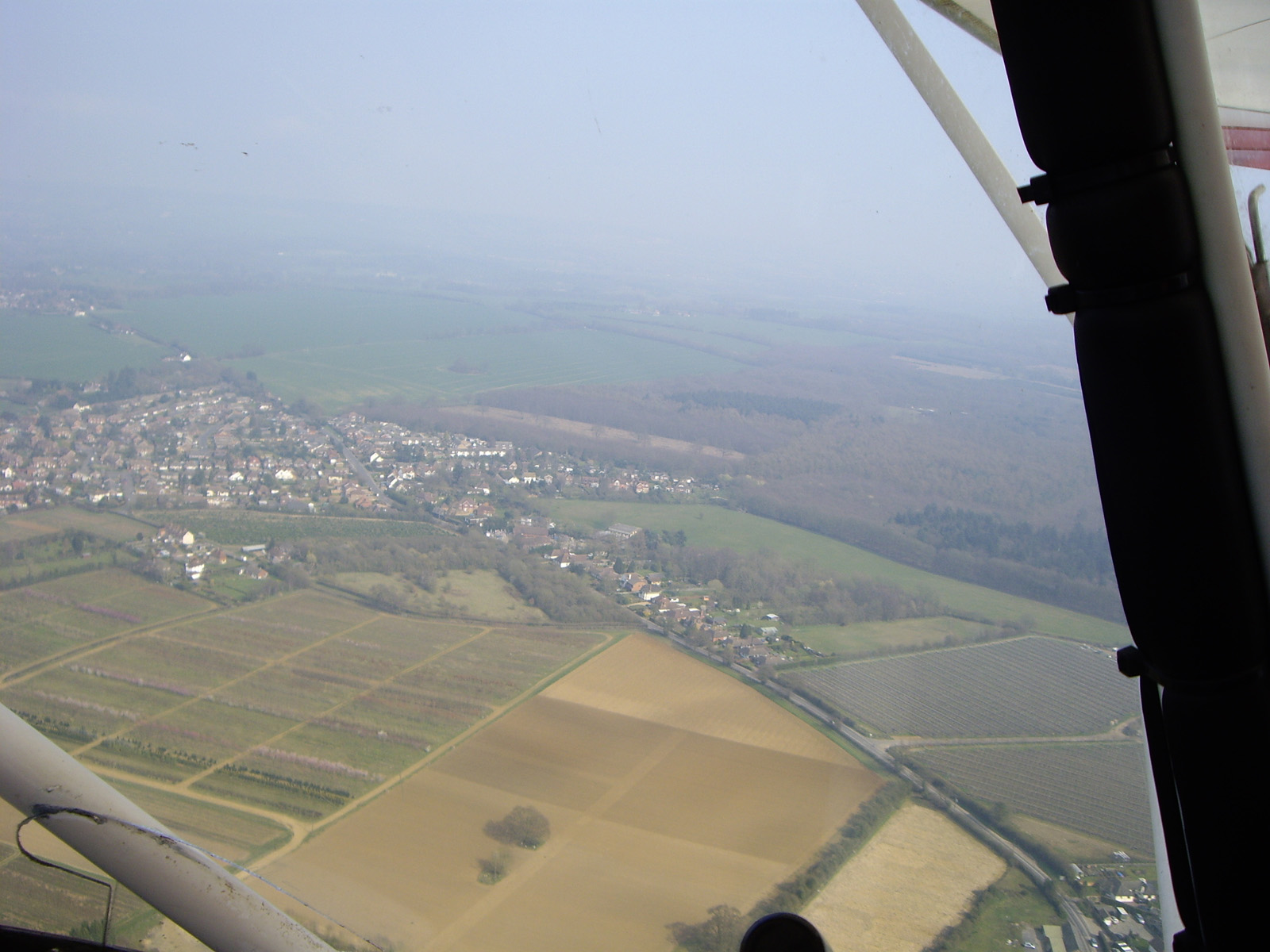
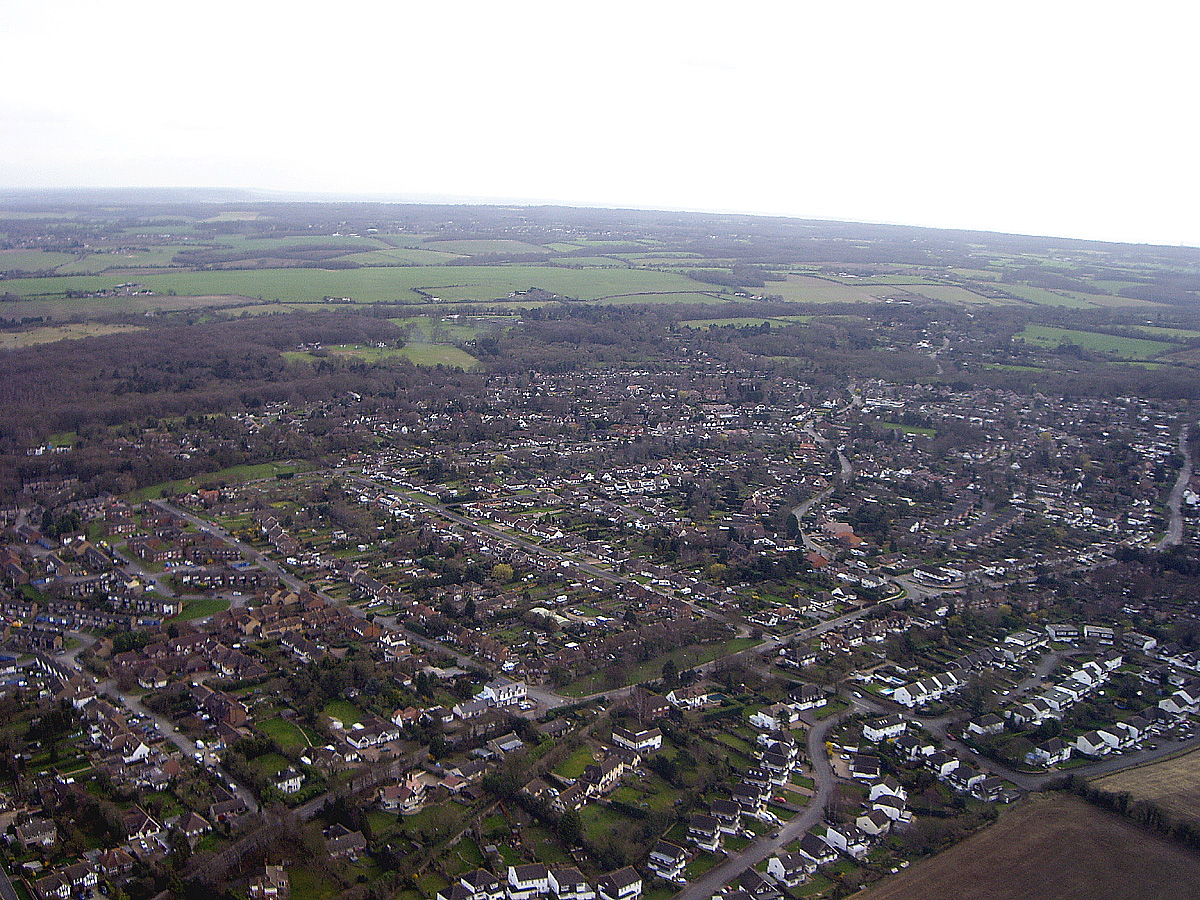
But having said that, I did manage to get some flying in over this week-end after all 😉 The annual Microlight Trade Fair and Fly-In was being held at Popham (near Basingstoke) on Saturday and Sunday. Usually hundreds of microlights fly there every year and many camp over for the two days. Well, that didn’t happen this year because of the high winds but quite a few of the more robust pilots did make the trip. We flew in as well – but not in a microlight though. Instead Ken, Peter and I flew over from Biggin Hill with Tom in his retractable gear Piper Arrow 200. It was a lot of fun – and the first time that I’d been in a Piper Cherokee since I flew G-KATS, a Cherokee 140, back to Biggin Hill from Le Touquet in 1984 – 27 years ago! Here are a couple of pics I took – the first is as we climbed out of Biggin and the second is as we flew over Epsom racecourse heading for Popham.

null

null

Popham was a bit disappointing – I went two years ago but not last year when I was told it was hit very hard by the recession. It was similar this year, and what with the high winds as well, visitor numbers were again well down. It was a great shame because if events like this don’t get support, they will of course, die away. Part of the reason though is because of the way in which the UK microlight market is subjected to extreme over-control and restriction which means that fewer and fewer new models are being introduced. This compares to the myriads of new ones with innovative technical ideas also, in France, for example, where there are none of the ridiculous controls that we have over here. So typically British don’t you think – make sure you introduce as many laws, rules and restrictions as possible to keep the ruddy plebs down and under tight control…. 😡

The highlight of the day for me came when I was offered the front right-hand seat for the return journey and was able to fly Papa Romeo most of the way back to Biggin. It was great to be back doing it and I’m so grateful to Tom for handing the controls over to me. It soon came back and I was feeling pretty comfortable after a few minutes. It was a brilliant feeling to be back flying a Group A after all those years and I just wish I could afford to continue doing it (not that I’d now give up flying microlights, of course, even if I could …) 😕

I’ve just got myself another Canon camcorder off Ebay. I decided that much as I love my present one, it isn’t ideal for the kind of use I’m putting it to. It’s a Canon model MVX450 that uses MiniDV tapes. The recording quality is very good but it’s a bit heavy to mount on MYRO’s panel with the suction mount I use and also I think it’s also not the best type of camcorder for me because of the amount of vibration it’s subjected to in MYRO. So I’ve gone for a solid-state Canon – the FS19 that has a 5 hour internal flash memory store and can also record directly onto SD or SDHC memory cards. It also only weighs 225 grams compared to about 400 grams for my current model once you put a tape in. I’m told that the quality of the output of these solid state models has leaped dramatically in the last couple of years or so and the material I’ve seen on YouTube etc seems to support this. I can’t wait now to get my hands on it and give it a go!

Well, as I type this it’s Monday afternoon, the sky is clear and blue but the wind is still blowing a hooley. So the Bank Holiday is finished in microlighting terms after really hardly getting started, but there have been compensations. After finishing at Biggin on Saturday, the four of us went off for something to eat. After a few Millers and a half-rack of ribs I think I’d probably have been over-weight to fly MYRO but it was a great way to finish a boys’ day out 😉

Little X’air niggle

I’m pretty certain that the X’air’s airspeed indicator is under-reading. You notice it at all speed ranges – the aircraft unsticks when taking off at what looks to be a very low speed (indicated 40 mph, possibly a bit less) even with two on board and with 50 litres or so of fuel, when you lower the nose after take off, it takes some time to get an indicated 50mph for the initial climb and when climbing at an indicated 45mph, at what should be the best climb speed, you get get a climb rate of quite a bit less than 500 ft/min. But the time you really notice it is on landing when with 50mph showing, as you approach the runway, it’s obvious that you’re doing quite a bit more than that.

The pitot tube has been snapped off several times (the most recent was when the inspector backed onto it …. ahem :shock:) and the tube now fitted is a bit smaller in diameter than the original. I asked about this on the BMAA forum today but the news from those who know about these things is that pitot diameter is not critical and that if under-reading is happening, it’s more likely to be due to an air leak in the system. Or, I suppose, a faulty gauge although we hope that this isn’t the case of course. So it looks as though we need to track the reason down. I’ll start though by cleaning up and filing the end of the tube into a streamlined profile because apparently that can make a bit of a difference, and I’m pretty sure it’s just been left as a blunt end from when it was cut using a plumber’s cutting tool. If that doesn’t work, though, we’ll need to look at other parts of the system. It’s a pity we can’t fly the X’air alongside MYRO and compare airspeeds but unfortunately I can’t be flying both aircraft at the same time 😉

Four flying days of Easter – Day 4

Today was another almost cloud-free day but conditions were a bit different from the previous three days, being a bit cooler with a brisker wind from the north-west. I got a phone call early on from Ken saying that both he and Peter wanted to get some time in the X’air today, so that became the plan. Peter wanted to talk about training and adding the ‘M’ rating to his PPL the same as I did, so we decided to nip up to Stoke to see if Chris was available to do that. When we took off we could see that it was again quite hazy but conditions were well within the VMC limits and a GPS was not necessary as I now know the local area like the proverbial back of my hand. We flew up to Stoke via the western side of Rochester which gave us fine views of the castle and cathedral and although we took off from runway 29 at Linton, we found that Stoke were using runway 06 rather than 24. We joined overhead and the landing went well until the roll after the touchdown when I had the most incredible experience that I need to share with anyone who flies X’airs in case anything like it happens to them.

We were taxiing quite quickly because with other traffic in the circuit, we wanted to clear the active as quickly as possible. I was wearing quite light trainers today and at this point my right toe became caught under the right toe brake. The results were rather alarming to say the least. If I pushed on the right rudder pedal my toe became more trapped and I almost lost steering control. First we swung alarmingly to the right towards the highish bank that separates the taxiway and runway from the salt marshes. Then as I yanked my toe out from under the brake and effectively had no right rudder for a few moments until I adjusted my foot position again, we swung to the left straight towards all the hangars. Fortunately I then brought things back under control. But not before Karen spotted what had happened, so my landing exploits will be all around Stoke before you know it. Will I ever be able to hold my head up high again I ask myself 😯

Peter and I had a mug of tea and a bacon sandwich and we were able to have a few minutes with Chris as we’d hoped, which gave Peter some food for thought. Then we took off again to return to Linton. By the time we got back, the wind had picked up so it wasn’t possible to take off immediately with Ken. We waited for a time, until shortly after 4.00pm, before the wind dropped a bit and we decided to go. The haze which had got thicker while Peter and I were returning from Stoke had reduced a bit by then and in fact the flying conditions were not too bad. We decided to do a circuit around Maidstone which is something I seem to have done a few times lately and all went pretty smoothly. We landed back on runway 29 and the landing was pretty busy due to the cross-wind, which we seem to keep getting just lately, but nothing that I couldn’t cope with.

As we put the X’air to bed, our 4 flying days came to an end. I was very pleased that I managed to get four out of four because I know that many others in other parts of the country were not so lucky. We were very fortunate ourselves in the South-East to get four consecutive days that were all flyable and I regard myself as very lucky to have got a total of 5 hours 40 minutes in during them. In three days time we will have the same all over again. I wonder if I will be just as lucky again? 😉

Four flying days of Easter – Day 3

The weather has been excellent for most things today – sunny with almost clear blue skies. But not for flying unfortunately, because of the amount of haze that has been hanging around all day. When I checked the aviation weather reports for the ‘local’ airfields (Southend, Manston, Lydd) this morning, all of them were showing visibilities of less than 5000 metres in haze with no significant change expected. I actually headed off for Linton but when I saw the view (or lack of it) from Wrotham Hill, I turned round and came back home again, so I almost started typing this when I got back saying that the day had turned out to be a total washout. But luckily I didn’t 😉

Later in the afternoon, although there was still a fair bit of haze around, it was obvious that the weather was different from yesterday – slightly fresher with a bit more wind. So I decided to give it another go. When I arrived at Linton it was clear that the vis was not fantastic, but was safely flyable, so I got MYRO ready and went off. For some reason my little GPS would not power up properly so I decided to stick to local flying, and having done a counter-clockwise circuit of Maidstone yesterday, I decided to do a clockwise one today. In fact in an hour I managed to get in some flying over the local stretches of the Medway and the locks at Teston and Yalding and also a slow orbit of Leeds Castle, so it was actually a very enjoyable flight.

So all very good – and 3 out of 3 so far, for the four flying days of Easter. Ken wants to go flying in the X’air tomorrow so with a bit of luck it’ll be possible to make it 4 out of 4. That’ll really be a result 🙂

Four flying days of Easter – Day 2

Completely different kettle of fish compared to Day 1! I hadn’t heard from Ken by late morning whether the X’air’s permit had arrived so I decided to get a flight in in MYRO. With the forecast weather being a bit unpredictable it made sense to stick to a local bimble, so I decided to do a circuit of Maidstone in an anti-clockwise direction and in fact ended up going as far south as Paddock Wood. While I was flying, the sky, which had started off this morning totally clear, began to look more and more evil and there began to be more and more updraughts, signalling the development of Cbs (cumulo-nimbus) storm clouds. My timing was just right, because as I turned final to land on runway 11, my screen started to be hit by huge dollops of rain. So I got MYRO back to its parking spot as soon as I could after landing, emptied all my kit out and began to put its covers on with the accompaniment of growling thunder in the background. But I was too late – as I was covering the wings, down came the rain. I was pretty soaked in quite a short time and with just the wings partially covered, I retreated to the car where I sat for about twenty minutes until the storm shower had passed. Then I leathered the uncovered bits of MYRO off and finished putting its covers on before leaving for home feeling a bit damp

By the way, while I was typing this, Ken came round a bit earlier with the X’air’s permit paperwork. It did arrive this morning after all, so the X’air can now start to be flown. That’s the best news of the day – possibly Peter will want to fly tomorrow but Ken wants to anyway on Monday. So let’s hope the weather holds up through to Day 4! 😆

Four flying days of Easter – Day 1

Outstanding! Absolutely fantastic! As I drove down Wrotham Hill heading for Linton I could see quite a large area before me all covered with thick haze, so I wasn’t feeling too optimistic. Flyable, OK, but with the edge taken off because of the haze, a bit like last week-end. And my feeling wasn’t helped when I arrived at the petrol station at Linton to find it closed. I couldn’t believe it, and not knowing where the next closest one was, I decided that I had no choice but to head towards Maidstone…. where there was a parade in the town centre at exactly the same time and the traffic was almost grid-locked as a result. I ended up the other side of Maidstone heading out on the Chatham road and by the time I’d filled my jerry cans and got back to Linton…. where the petrol station was now open again, I’d lost over half an hour.

But all of this was forgotten when we took off. Originally Ken was going to come with me but Peter came instead because up to now, he’s never flown in a microlight before. As MYRO climbed out from Linton I knew immediately that it was going to be a fantastic flight. The sky was totally clear with practically no cloud yet the air was almost perfectly smooth. Usually you get thermic ups and downs in such conditions, but there was almost nothing of that at all. And by the time we took off, the haze had almost cleared as well.

We headed off on a south-easterly heading, towards Lydd and made the coast just a bit north of the Lydd zone. Then we descended to low level over the sea and flew up to Dymchurch after which we climbed and turned left to head for Ashford and the return to Linton. Everything went like clockwork. I got a bit concerned about fuel as the flight progressed and with good reason as it turned out. By the time we joined overhead, where we were almost run down by a stupid GA jockey who was flying where he shouldn’t have been (ie overhead an active airfield, Linton) at a height he shouldn’t have been at (ie 1500 ft), and landed we ended up with only about 7 or 8 minutes more fuel left in the tank, much too close for comfort.

So a great flight but I really do need to get my second tank mod sorted to give me more range and a greater margin of safety. But that’s for another day – what’s left of today is for musing over and appreciating the enjoyment that we were lucky to have had today 🙂

Flying this Easter week-end

For once it looks as though the weather is going to hold and we can expect three or four days of lovely flying weather. Given last week’s experience, I’m not so sure what the vis is going to turn out like though. In past years, whenever we’ve had a particularly cold, wet Winter, we’ve always suffered with haze whenever the sun has come out when it has begun to turn warmer. Whether it’s due to the water in the ground that has become saturated re-emerging into the atmosphere, or just to the coldness of the ground causing condensation in the layer of air that’s in contact with it or even some other reason that I haven’t thought of, the haze has tended to hang around for weeks taking the edge off the pleasure of flying. We’ll have to wait and see what the next few days dish up for us.

As for what we’ll be flying – on Monday I especially pre-faxed the X’air permit paperwork to the BMAA to ensure that there would be no glitches so we’d have the permit back by today. But sure enough, we found that for some inexplicable reason, our inspector had forgotten to include a passenger in his weight and balance calculations! In my conversations with Deddington, I understood that nevertheless, they had reworked the numbers themselves and that all was OK. Then I thought they said they’d issue the permit anyway as all the numbers checked out. However, true to form, when I checked, the paperwork was still being held in a queue and this morning I was told that the weight and balance paperwork still had to be signed by the inspector! I queried this and very kindly, Jo who does the permits called me up a little while later and said that the permit would be coming out by First Class Post this evening.

So now we’re sweating on the Post Office getting it to Ken by Saturday, the problem being that tomorrow is, of course, the Good Friday Bank Holiday, and if it doesn’t arrive in time, it will not be delivered until Tuesday, losing us the whole of this extended four day week-end! We originally wanted to fly all four days, giving Ken and Peter a chance to experience their aircraft for the first time (albeit with me as P1) and now we’re waiting on tenterhooks to see if that will be possible. If not, it would have to be the following week-end, which is also a four-dayer with the royal wedding and the Spring Bank Holiday on the Monday and also Popham for one of the days for us, but looking that far ahead, who knows what the weather will be like. It would be just our luck for it to be abysmal, losing us another week-end 😯

So I’m planning to fly MYRO anyway tomorrow and Ken says he’d like to come along too. As the wind’s forecast to be from the south-east, I’m planning a flight to the south coast, to Dymchurch, one that I started but had to curtail because of poor weather a few weeks ago. So let’s see how things actually turn out 😉

Whitstable video

I’ve made a video from last week-ends camcorder footage. No proper sound because I’ve still got to resolve my sound problem which I now think is down to a fault in the camcorder’s mic socket.

The video is in the Video Gallery or you can click on the pic below to see it.

null

It was a brilliant flight, despite the haze. Can’t wait until the next one 😉

Cracking week-end, brilliant finish

After enjoying the satisfaction of getting the X’air through the permit procedure yesterday, it was almost too much to ask that I’d get a great day’s flying in today as well. But I did!

I really enjoyed dropping into Stoke yesterday and I’m so glad that I’m moving MYRO up there in a few weeks time. The absence of camaraderie really detracts from Linton as a place to fly from and I got fed up with constantly being the only one flying there week after week and month after month. But camaraderie is something that Stoke has in spades, along with a bit of banter, some leg pulling, in fact all the things that go together to make up a lively club. One of the things I enjoyed yesterday was bumping into Tony H-S and his wife Rosemary. We’ve been exchanging messages for months now on our blogs and the microlight forums but the first time we met was two Tuesdays ago at the first Stoke club meeting that I went along to. It was good to see Tony and Rosemary again at Stoke and I look forward very much to the opportunity to get better acquainted in the future.

But what about today? Well, high pressure is in charge of our weather just now so we had another settled day with sunshine, clear skies and not too much wind. So I decided to top up MYRO’s tanks, take the spare fuel with me in a jerry can and head off up to Whitstable. My plan was then to drop down to low level for a bit heading west along the shoreline, then to climb over the Swale estuary to the northern side of the Isle of Sheppey. Then I wanted to repeat the low level flight I did last week down towards Sheerness before climbing again to cross over the Medway estuary to the Isle of Grain and a landing at Stoke. Then, after the mandatory chin-wag, mug of tea and slice of cake, to head back to Linton via the west side of Rochester.

The flight went perfectly as planned. The vis on the return legs was rather poor because of the sun combining with a low-level haze layer but it wasn’t that bad and anyway, my little GPS makes it easy to maintain a course with very little effort. I landed back at Linton just as John was getting his AX3 ready for a local flight and in the time it took me to put MYRO to bed, he was up and down. I finished off with a few cups of tea from a flask that I’d taken with me, a ham and pickle sandwich, a packet of crisps and a crunchy Braeburn apple before heading off home. A perfect end to a great microlight-flying week-end, I think 😉

I took the camcorder with me but was unable to use the connection lead because of the sound fault that’s bugging me that I think is due to the mic socket in my camcorder. The recording is pretty good and includes my landing on runway 06 at Stoke, so I’ll see if I can put something together to include here on My Trike. So watch this space 😀

At last! X’air back in the air

After nearly 3 years. Today was the big day. I got involved in getting PW sorted for re-permitting over 2 months ago. It’s been a long haul, but it whizzed through inspection except for a couple of minors 2 weeks ago and today after getting the exhaust back on after a little bit of welding it was signed off by the Inspector for its check flight. I had already got the same check pilot who flew MYRO for me standing by on a phone call’s notice and after taking the main wheel spats off PW temporarily because we found they were binding a bit on the new (apparently slightly larger) tyres, I found myself taxying out for its ferry flight over to Stoke.

Brilliant feeling when I took off and began to climb away. As this was not only PW’s first flight since July 2008 it was also the first flight since the engine was completely overhauled, so I did a climb up to cruise height while keeping close to the field just in case. But everything was going like clockwork, so off I went. The X’air is obviously from the same family as the AX3 except it’s a bit bigger and heavier so it’s not quite as lively in the air. It’s still a stick and rudder type aircraft that needs you to fly it all the time though, but not to the extent of the AX3.

The old Icom A3/Comunica comms set up that’s installed wasn’t performing that well so I had to join overhead to find out which runway was in use as I’d forgotten to ask before I took off. Typically, as this was my first flight in the X’air and my first landing in it, it had to be runway 24 that I’ve never landed on before. Chris had a student up in his Quantum so I slotted in in front of him in the circuit. Compared to landing on 06, the electricity pylons are a bit closer to you on the final approach to 24 and next time I’ll make sure I do a bit more of a dog-leg instead of landing straight in. But I’m glad to say the landing was pretty good, if not a greaser, even though I say it myself. The crowd at Stoke love to pull your leg though and said they thought I was trying to park the X’air in the hangars, which are all lined up pretty close, but not that close, to the side of the runway, directly on landing. But I just remained totally aloof from their remarks about my display of supreme piloting skill. I got off the runway pretty smartly and held while Chris did a touch and go, taxied to the small parking area and handed PW over to Martyn the check pilot. I took the attached pic to record the occasion after he’d started her up and just before he taxied off.

null

Martyn came back after 30 minutes and said he was very pleased with her so that was PW signed off for permit. 8 or 9 week-ends of hard work but it’s days like today that make it all worth it. I took off and headed back to Linton and found that the vis, that was not that good going up to Stoke, was now a lot worse and it wasn’t helped by also having to head towards the sun. Mind you, it might have helped if we’d thought to give the screen a bit of a clean before leaving for Stoke in the first place. But now I know the local features and landmarks I found Linton without too much trouble. Ken had driven over to Stoke and we’d met up after I’d landed and he’d watched me take off for the return journey. Peter though was still waiting for me back at Linton. I ended up a bit too high on final – compared to the AX3, the X’air does tend to float a bit more and lose height a bit less readily I think. Unless you give it a bootful of sideslip, that is, which is what I did. If anything, the X’air slips better than the AX3 and I think you can lose height quite a bit quicker. So I did manage to get in very nicely in the end and stop with a bit of brake in about a half of the runway.

So a great day all round. Mission accomplished. The X’air will be permitted and flyable in good time for next week-end, so I’m happy and relieved at the final outcome 🙂

Fabulous flight!

The weather wasn’t quite CAVOK but was almost, with a bit of a breeze coming in from the north-east. So nothing else for it – today was the day to do the low-level Isle of Sheppey flight. And wasn’t I glad that I did! Here’s a pic of the flight I’d planned, which I followed more or less to the letter.

null

My idea was to take off from Linton and head up past Faversham to the Isle of Sheppey. Then I planned to descend more or less to sea level and fly westwards all the way along the island’s northern shoreline, keeping 500 feet away from any people, boats etc, all the way to Sheerness. Then I’d climb back up to 1500 feet or so to cross the River Medway estuary over to the Isle of Grain for a landing at Stoke. After a spot of light refreshment, I’d than take off again and return to Linton via the northern and western sides of Rochester.

And that’s exactly what I did, and in some excellent flying conditions; not perfect because of the gusting north-easterly breeze, but still very good indeed. I didn’t take my camcorder because it definitely has a sound fault that I need to get fixed and although I took my small stills camera, the vis wasn’t quite up to it, despite the fact that the flight itself was so memorable. I tanked MYRO up beforehand and then strapped a jerry can with the fuel I had left over onto the seat next to me. The whole flight would have been marginal on the single tank and there’s nothing more useless when flying than the fuel you left behind you back on the ground. And with a stop planned at Stoke where it could be added to the tank, the extra fuel would give me the additional margin and reserve that I needed.

And so I took off on runway 11, yet again the only aircraft flying in such gorgeous conditions at Linton, what’s been the story the whole of the time I’ve been there. I climbed out on a north-easterly heading up to 1300 feet or so but with the lift I kept encountering, I eventually got as high as 1800 feet on the leg taking me up to the Isle of Sheppey. I passed overhead Leeds Castle which is now looking a bit more Spring-like but whose moat has a nasty stagnant look to it from the air. There were a few wind buffets that tipped the wings a bit and were a bit disconcerting after last week-end’s rather scary experience but I settled down and relaxed after not too long. After all, you can’t let one negative experience ruin your enjoyment, can you.

I began to slowly descend as I crossed the Swale heading across to the Isle of Sheppey and by the time I got to the island’s northern coast was at about 1000 feet. So I then turned left and began my descent towards the sea, for the part of the route taking me up to Sheerness. In fact I only went down to a minimum of 50 feet, unlike when I went to Hastings and my GPS track after the flight indicated a height in places of -3 feet! And mostly I kept to about 100 feet, mainly because of the rather gusty breeze coming off the sea. But this still kept me below caravans lined up along the cliff-tops and the Coastguard radar scanner looking out at ships in the Thames Estuary. Just like last time, lots of small kids out with their Mums and Dads gave me friendly waves as I flew past, and even quite a few bigger ones too 😉

As I approached the northern tip of Sheerness I opened the throttle and began my climb to 1500 feet to cross over the Medway Estuary to the Isle of Grain. With Thames Port on my left I’d already switched to the Stoke radio frequency expecting to hear lots of chatter, but instead – nothing. Well, not quite nothing but not far off. I thought I might have programmed the wrong frequency into my radio but just as I prepared myself to join and land non-radio, I heard another aircraft. So then I just called up and landed on runway 06 – an interesting approach with the funny gusting cross wind and bits of lift and sink on final, but safely down and with nobody else behind me, I did a fast taxi with the nose wheel up off the ground up to the far end of the runway. So that was the first part of the flight – one hour and five minutes of glorious microlight fun 🙂

Shortly after I’d shut down, sorted MYRO out and was heading for the little cafe, Chris the Instructor and Examiner who I did my GST with last year landed in his Quantum with a student. It turned out that it had been very busy earlier this morning but now everyone had gone, leaving just him and me with MYRO as the only active aircraft on the field at that time! I booked in and then ordered a nice cup of tea and a buttered scone which I consumed sitting outside in the warm sun. What a lovely way to break up a flight. Shortly afterwards, Chris began briefing for an air-experience so I decided I might as well get myself ready and head off back to Linton. I signed out to save coming back to the clubhouse and then went off to add the fuel in the jerry can to MYRO’s tank. Then I carried out a quick (but thorough) inspection, got in and was off.

One final surprise was that as I was heading west away from Stoke, Chris came up on my left hand side with his air-experience flight. After a cheery wave, he headed up and away and I continued off on my way to Linton. That’s the first time for very many years that I’ve had company from another aircraft in the air and I’d forgotten what good fun it is flying with someone else close by. A short while later I skirted round the Rochester airfield zone and not long after that I was over Teston Bridge with the lock a few hundred yards upstream of it. Then it was time to spot Linton, which I easily did, and join for a landing back on runway 11. That went off safely and after I’d tied, covered and put MYRO to bed I sat down in the shade under a wing and enjoyed the flask of tea and snack that I’d taken with me. A great way to end a fabulous flight 🙂

Just to finish off, I won’t spoil the memory of a great afternoon’s flying by giving any more details at the moment, but one of the reasons why I dropped in at Stoke is because I’m now a member there. In fact, my time at Linton is coming to an end and I will be moving MYRO over to Stoke as from June 1st, if not slightly before. I can’t wait. It’s a very friendly airfield and club, much more active than Linton and with far fewer ‘restrictions’ than apply at Linton which take away much of the pleasure and fun of flying there. I’ll tell more later, but for now I’ll just think of today’s flight as one especially to look back on with pleasure. What microlight flying is all about, I reckon.

Weird wind

This post is all about today’s flight, but first a few words about yesterday. I got hold of the fuses that are needed for the X-Air and also the various sockets and plugs that we need before deciding what will be the best to fit. The previous owners had a GPS that was connected by a cable that just hangs down below the panel but it isn’t compatible with the GPS that Ken has. So we have decided just to remove it and as the X-Air approved wiring has an ‘aux’ socket, we will fit either a car cigar lighter socket or a DIN socket instead in one of the holes left by the voltmeter that we removed previously. We decided to leave it for now though, until the X-Air has been signed off from its permit inspection, hopefully next week-end. Unfortunately, the exhaust wasn’t back from its re-welding so after refitting the newly re-painted main wheels and spats, that was all we could do on it this week-end.

So now on to today. The weather forecast looked very good – broken cloud, sunny spells and winds from the south-west at about 12 mph with the occasional mild gust. So I planned a flight down to Bexhill during which I’d descend to sea level and fly all the way along the seafront from Bexhill to Hastings before turning left to return to Linton. The cloud turned out to be roughly 4/8 broken cumulus with around a 2500ft cloud base and the wind roughly as expected. However, as I flew south the conditions began to change, and alarmingly so. The cloud cover changed to 5/8, say, and although the wind continued from the south-west it began to produce some of the most powerful gusts that I have ever experienced in a microlight aircraft. At one stage, a gust was so severe that it lifted the right wing and I had the aileron hard over onto the stop with the wing still lifting. Even though I was able to put in a boot-full of right rudder to help counteract it, it wasn’t a very nice feeling at all and at the time, because there had been little or no warning, with no signs of the gusts building beforehand, I even wondered if it was due to something having gone wrong with the aircraft or its controls. Not very nice at all flying with full right aileron and having to control the bank with rudder which, fortunately, the AX3 has in plenty. And to top it all, there were also some areas of fairly extreme lift under the patches of low cumulus, even under some of the small, quite innocuous looking bits, that had MYRO shooting up at 1000ft/minute or quite possibly more, every now and again.

The powerful gusting happened a couple more times, but not as severely as the first, so I thought it a good time to curtail the flight and head back north away from the coast. Although I still kept experiencing some quite extreme lift as I dodged under the patches of low cumulus, I didn’t have anything like the same problems as before with the wing lifting in the gusts. This may have been because with the wind coming from the left and with me in the left seat, MYRO was inherently a bit more stable. I got back to Linton with no further major incident and joined overhead to land on runway 29. It was very clear from the approach that the wind had picked up considerably from when I’d taken off, which it hadn’t been forecast to do, and there was quite a strong left cross-wind needing quite a lot of crabbing on final. But anyway, I increased my approach speed to cope and had the knowledge that if necessary, I could land on the long main runway if I needed to, but I landed safely anyway on the shorter winter runway.

I had the camcorder running during the flight and made a nice recording of the landing. Unfortunately, despite renewing the Lithium batteries in my headset, there is still a problem with the sound so unfortunately that’s something I need to investigate further. If I can put together a half-decent ‘silent’ movie later on, I’ll include it on the Video Gallery.

Today was a real learning experience. I don’t know where today’s weird winds came from but I saw for the first time just how disconcerting strong, gusting cross-winds can be when you’re flying a small light aircraft and it’s an experience that I’ll not forget in a hurry 😯

An up and a down

I’d planned a return to the Isle of Sheppey today to do the same as I did last week-end at Hastings – fly around the island at sea level. However, while I was getting prepared Clive took off from Linton in his Quantum and as we watched him receding into the distance to the north, we saw him turn around. He joined overhead and landed back not much more than ten minutes after leaving reporting that the vis was not too good.

I decided that I’d have a look for myself and sure enough, there was quite a bit of haze but it was well within the VMC limits. That makes it legal but it doesn’t make it fun. I flew north-eastwards on track and when I got about half way to Faversham the cloud approaching the North Kent coast became thicker making it cooler below trapping even more mist and haze. It was doubtful even so that the vis would have fallen below the VMC limit (1500 metres vis while remaining clear of cloud and in sight of the surface for an aircraft like MYRO flying under 140kts airspeed below 3000ft altitude) but it was pretty obvious that the reducing vis would not be a lot of fun. So time to turn back, and anyway, what’s the point of flying around burning up fuel when it’s not fun and there’s very little to see.

Here are a few shots I took shortly after taking off.

null

null

null

So I turned round and headed back to where the murk and haze was not too bad doing a circuit round Leeds Castle on the way followed by a bit of local flying nearer to Linton. It was strange because further south, in the area where I’d taken off, the sun was still brightly shining – it just shows what can happen when the air pressure is quite high, the air is moist, the ground is cold and there’s a layer of lowish cloud. A perfect recipe for high pressure fog, which is what we had today.

Just to finish, here are a few more shots I took heading north east before I turned round (the vis did actually get quite a bit worse than this…)

null

null

null

So instead of a flight round the Isle of Sheppey it was an up and a down in 45 minutes. Good to be back up again but not fun enough to stay there. Let’s hope things are a bit better next week 😐

X-Air almost there

We made good progress on the X-Air today. The new water temperature gauge is a VEDO unit. On their data sheet which I managed to locate this week it specifically says not to use PTFE joint sealant tape on the sensor thread because of the possibility of preventing earthing. We had used it and although I doubt the amount we used would have that result, we still removed it. Then we removed the centre access plate on the main panel and got access to the wiring again. After tracing the wires we were interested in we removed the ‘illegal’ voltmeter without too many problems. One of its connections came adrift in the process but I doubt that it had been responsible for any of the issues we’d experienced. Then we started up and watched the temperature gauge only to see no movement on it still. A quick check of the fuse in its circuit that was also shared with the voltmeter revealed that it had blown – I think caused by the old water temperature gauge which I’d checked during the week at home and found to be totally inoperative. So we switched the fuse over from the currently un-utilised GPS circuit and lo and behold the new gauge started to work perfectly.

That meant we were very close to completing all our work at last. All we then had to do was have the new tyres and tubes that Ken had purchased during the week fitted on the main wheels and a small residual crack that remained in the exhaust after a weld repair a few months ago rectified and the X-Air would at last be ready to be signed off for its check flight and eventual permit. We ended up by removing the exhaust for welding and both of the main wheels for Ken to take away to a tyre fitter’s for the new tyres to be fitted. That will also give us a chance to clean the insides of the hubs and lubricate the brake mechanisms which I always knew we should have done anyway so when everything we removed is refitted, hopefully next week-end, the X-Air will be just about ready to go. While chatting over a cup of tea Peter said we’d been working on it for about six weeks. I’m sure he’s right but it doesn’t seem that long. Even so, I’ll be glad now when we’ve finished 😉

Hastings Video

I had the camcorder running during my Hastings flight last week-end but because of a faulty lead, the sound was unusable and also the focus kept going in and out. However, I persevered and managed to salvage something out of it. The footage is not that good, but it’s an almost watchable record of the flight, at least 😉

It’s in the Video Gallery or you can click on the pic below to see it.

null

Footnote added later – I don’t think that the sound problem was caused by the ‘faulty lead’. I have since found that the Lithium batteries in my headset needed replacing and as the sound picked up by the camcorder with the cable plugged in is through the headset mic which was ‘dying’ because of the batteries, that was the source of the problem. Anyway, I’ve replaced them now and I’ll find out for sure next time I fly.

Pics from Sunday

Sunday’s flight was so enjoyable that although the camcorder footage is unusable, I just had to grab some images off it to show what it was like. I’m sure that in the fullness of time I’ll have some much better pics showing more or less the same scenes because this is a flight I can’t wait to repeat in the Summer. And maybe I’ll even be able to extend it past Rye to Camber and further east when I’ve got the second tank working to give me more range. But for now, poor as they are, these pics will just have to do.

First, I mentioned how poor the vis was. The first two pics show the vis on the way out just after I’d taken off and just after I’d turned and climbed to return to Linton over Rye.

null

null

The next shot shows the view looking towards Hastings Pier as I began my descent abeam St Leonards On Sea

null

This one shows the fire damaged pier just before I banked right so as to maintain my 500ft separation from it – damaged as it is, it is still legally a structure.

null

The next shows houses on the clifftops at Fairlight.

null

This pic shows a glimpse as I approached the headland of the long shingle beach that extends past Winchelsea right up to Rye in the far distance.

null

And finally, a view along the beach up towards Rye.

null

A few momentoes of a flight I’ll not forget for a long time to come.

High points, low points

Best way to describe the week-end really. Peter and I got cracking on the X-Air on Saturday morning with a view to getting it totally ready for permit inspection the next day. During the week I’d bought a new fuel pressure gauge and new water temperature gauge and sensor which we thought would totally solve the gauge problems and ultimately save us time. The X-Air HADS (Homebuilt Approved Data Sheets) show that BOTH gauges are required for permit so my initial assumption that they would not be an inspection show-stopper couldn’t have been more wrong. To cut a long story short, the fuel pressure gauge worked fine but the new temperature gauge still refused to give a reading. Further investigation seemed to point to some kind of short or wiring fault involving a voltmeter that the previous owner had fitted so as the end of the day was approaching, we could go no further with it.

When the X-Air was inspected the next day it sailed through as I’d hoped save for the gauges and an advisory on the main tyres which are showing signs of standing and age. So we agreed with the inspector that we’d kill both birds with one stone by fixing the gauge problem and fitting two new main tyres and tubes. We’ll do that next week-end and as he’s got to come back the week after to inspect several other aircraft on the field, he’ll then also be able to sign the X-Air off for its check flight. I was very happy because I’d worked into the early hours organizing all of the X-Air’s paperwork and getting its Log Books up to date and in order (having had to do the same for MYRO, I knew what was expected 😉 ) and the inspector said he was very pleased with everything we’d done. I call that a result 🙂

On the downside, he and I agreed that as the voltmeter is not shown in the HADS and does not have any Mod paperwork, it either has to be removed or go through as a mod with a BMAA fee of £50. I said to Ken that I could see no practical reason to have it (if your battery is low, the engine won’t start!) especially as there’s an approved, working ammeter fitted. He agreed, so as part of solving the water temperature gauge problem, the voltmeter will be coming out. All in all, apart from the water gauge problem, I think the inspection went very well.

And so onto Sunday. Yet again, Saturday was a brilliant flying day – CAVOK (absolutely no cloud) and perfect visibility. Only problem of course, was that because of working on the X-Air, I couldn’t fly. Yet again, on Sunday the weather stood on its head – more grey cloud, a lot of mist (more like light fog actually) and, as it turned out, rather turbulent winds aloft. A strange mixture. But not having flown for 3 weeks, I wanted to give it a go. I’d planned a flight down to Hastings on the south coast and when the cloud began to break after the X-Air’s inspection had been completed, I decided to give it a go.

As soon as I took off, I realised that the vis was still very limited because of the mist – not dangerously so or under the VMC limits but to a point where a few years ago I’d have decided to return to the field. But with modern GPS’s you don’t need to rely on map reading using visual ground features so I decided to carry on, and I’m glad I did. Despite the limited vis, the sun was out at Hastings and lots of people were out and about on the promenade and on the beaches. And on Sunday I decided to do something different. The Law is that while flying, you must keep at least 500 feet away from any person, vehicle, vessel or structure, but that doesn’t mean you have to fly at a minimum height of 500 feet. The distance can also be horizontal meaning that if you wish, you can fly right down to ground level so long as you maintain a minimum horizontal separation of 500 feet. Or down to sea level….

And that’s what I did. For the first time since I had my Tri-Pacer aircraft back in the late 1970’s, I descended to 50 feet or so over the sea and ‘skimmed’ the water at 50 or 60 miles per hour. It’s great fun and very exciting. I started at the western (St Leonards) end of Hastings and flew along the length of the promenade past the now very badly fire-damaged pier. Lots of people seemed to enjoy the sight and many of them gave me a hearty wave as I flew past. When I got to the cliffs at Fairlight Cove I had to look up to see the cliff tops and I flew below the radar scanner that was lazily turning at the Coastguard station (it’s for ships in the Channel anyway, not aircraft…) and as I rounded the bend, ahead of me was the long shingle beach that stretched all the way up past Winchelsea to Rye. As I flew along, the occasional flock of seagulls were startled by MYRO’s passage and flew up from the surface of the sea in front of me in a cloud of flapping wings but none ever came too close to MYRO’s spinning prop. There were quite a few families with small children out on the beach enjoying the sunshine and as I flew past several Dads (and Mums too) pointed MYRO out to their children and I got lots of friendly waves as I flew by.

I then had to climb again as I reached the end of the sea leg and turned back inland over Rye to return to Linton. The return legs passed very quickly because of the southerly tail wind I was experiencing and the approach and landing were satisfactory, if not as smooth as I’d have liked. By the time I came in to land there was a very fresh, gusty 90 degree cross wind which made for a very challenging landing. I have to say that actually it wasn’t one for the less experienced or faint-hearted pilots amongst us and my landing was a bit harder, probably unavoidably so, than I’m accustomed to doing. But it wasn’t that hard and all was well.

On the downside, again, I’d been running the camcorder over Hastings but yet again the recording left much to be desired. Although I’d thought I’d set the focus to ‘fixed’, it kept going rapidly in and out making it almost impossible to watch the footage. Also for some reason much of the sound was lost as the recording level was automatically set to much too high a level, something that has never happened before. Yet again, more things to to be resolved before I start recording in earnest now the weather is at last beginning to pick up.

But all in all, a great day and a flying experience I’d never have missed for anything 😉

Same old song

Yes, because I was all fired up to get a flight in today, the weather did it again. After the forecast said that today would be similar to yesterday ie bright, bit of cloud but sky mainly clear, the weather had the last word and did completely the opposite. More again of that dismal low grey cloud and no chance at all of getting up because of the low cloud base. How come the Met people can get it so wrong and in such a short timespan? In fact, I went down to Linton anticipating the promised sunny spells later in the afternoon, but after I decided to give up, I actually left for home in light drizzle 🙁

The only bit of good news today is that Tim, the BMAA Inspector who did MYRO for me will be free next Sunday, so the X-Air can be inspected then. To be on the safe side, because the Fuel Pressure and Water Temperature gauges are shown as being mandatory in the X-Air TADS/HADS and must therefore be in and working when the inspection is carried out, today I ordered new gauges and a new water temperature sender. So they will all have to be fitted by next Saturday and Ken will also be bringing all the paperwork round to me tomorrow so I can check that all the Mandatory Mods have been done and all the paperwork is in order. So a bit of work to do, but well worth it if the X-Air zips through as I hope it will 😉

Yessss!

We met up at Linton today to get cracking on finding out why the X-Air had no electrics. I took my little Robin electrical multimeter which has proven invaluable in the past in tracking down electrical problems and was keeping my fingers crossed that it wouldn’t let me down this time either. Ken and Peter had the X-Air pulled out ready when I arrived and had replaced all the blade type fuses so we got straight down to it.

Whenever I have an electrical problem in an installation I don’t know I like to start by checking that the circuits are connected correctly and that there is continuity in them. Otherwise, if you find a break and just reconnect the power you run the risk of having a short on your hands with all sorts of nasty consequences, especially in an aircraft. Everything checked out top-side so it was time to get our heads under the panel and check all the wiring out down there. Easier said than done because it’s very cramped under there and part of the time you have to lie on your back, but I was used to that having had to do the same in MYRO, which is even more cramped for space. Fortunately everything more or less checked out compared to the official wiring diagram with one change being that the starter button isn’t fused as shown in the diagram, but that wasn’t important.

But still no power. Not quite true actually because there is a miniature switch labelled ‘Intercom’ with an LED that lit up green when you switched it on, showing that power was getting down under the panel. But the main ‘red – live’ lead wasn’t! Time to investigate, so back up top again.

My initial thought was that the wiring had been cut and modified but I discounted that as there were no obvious tell-tale signs. The wiring diagram showed the main red lead connecting straight to the +ve battery terminal but, surprise surprise, there was only one such lead apart from the heavy cable connecting to the ‘heavy’ side of the starter solenoid and that was the one running down to the intercom switch. My conclusion therefore was that that had been specially run to power up the radio system, so I had to look elsewhere to see where the system harness should be deriving its power from. And I didn’t have to look too far.

The starting point was the main plug and socket mounted on the side of the engine. I already knew that there was continuity – but no power – to the right through the loom running down under the panel, so the place to look was to the left of the plug and socket. I traced along the red line from the socket which logically should have been live but wasn’t and when I traced it around to the other side of the engine I found it connected to – an engine earth point. Problem solved!

It was an easy mistake to make. When Peter had been reconnecting the electrics after refitting the engine after its overhaul in the dim light at the back of the hangar, he had found a wire with a bolt-type connector on it which he had assumed should go to earth. In fact it should have been connected to the live side of the starter solenoid which was just close by and as soon as I made this change, the system came alive. It was some relief I can tell you, because we had spent quite a lot of time by then finding nothing wrong but could still not explain why there was no power and I was beginning to run out of ideas.

So basically that was that. We re-cable tied the wiring under the main panel and refitted the front access panel, tidied everything else up and re-cable tied the wiring top-side so it couldn’t move around and chafe. Then we were ready to run the engine. Fate smiled upon us at last because it started and ran beautifully and sounded as sweet as a nut. I thought afterwards that we hadn’t checked the plugs but decided that as it was running fine, we could do that some other time. After letting it run for a few minutes (it needs to be ground run-in for an hour or so as it’s just had a major overhaul) we gave the aircraft a taxi. It felt just right, nicely balanced and with very good toe brakes on the pilot’s side. After going up and back along the main taxiway we went back up again and taxied onto the winter runway so I could check that we were getting full take off revs, which we were. We stopped and checked the coolant level a couple of times, which was fine, and found one problem in that the water temperature gauge wasn’t registering. All the others with the exception of the fuel pressure gauge were working fine though, and that was suffering with the same problem that I found with the old gauge that I got for MYRO, that had been in use in MYME but hadn’t been run for some time. It seems that they then get stuck up internally with goo from the fuel, and this seems to have happened with the X-Air’s one which moves a small amount but doesn’t register the true fuel pressure.

So that just leaves a new fuel pressure gauge to be purchased and possibly a new water temperature gauge too, although with that we can’t presently discount if maybe the sensor is the problem rather than the gauge. I have an old Westach water temperature gauge in front of me that we might be able to use to test the existing sensor but it may be better at the end of the day just to buy a new gauge as, frankly, the existing one does look a bit old fashioned, and if that doesn’t work, then go for a new sensor as well.

But in any event, I doubt that either is a show-stopper when it comes to permit inspection, so really the X-Air is now ready for its inspection and weighing. I think it will zip through with no problems so it’s now very close to having its first permit since 2008. I think today was a job well done, even though it took a while, as along the way we all learnt a bit about the aircraft that we wouldn’t have known otherwise. And that’s always worthwhile and a Good Thing 🙂

March off on a roll

We spent yesterday working on the X-Air so no flying. We made good progress and got everything set to go my mid/late afternoon. Topped up the rads, connected the battery and poured in some fuel. Peter climbed aboard and flicked the master switch – nothing. Dead as a dodo. Well, not quite dead because the starter solenoid direct connections were live, so we know the battery has plenty of charge. It’s just that nothing was getting through to where it mattered 🙁

We have a wiring diagram but we’ll need my meter, which was at home yesterday, to find out what’s going on. Hopefully it shouldn’t take too long but experience tells you that if you fiddle around ‘blind’ you can spend ages and still not get to the bottom of it. So there was nothing to do but pack up and leave it, to have another go next week-end.

So that left today for flying. Not a great day for it by any means – far from it actually. Still thick grey cloud, poor vis and a chill north-easterly wind that was quite strong and gusting. But who knows what the weather might do in the days and weeks to come (someone suggested more snow is forecast for this week) so you have to take your chances when you can if you want to get the time in. I’d planned a flight heading up to and round the Isle of Sheppey, so that’s what I did. I took off and landed back on runway 11. As expected, it was pretty turbulent up there but not so much as to be unsafe. My flight plan took in the whole of the eastern, northern and western perimeters of the Isle of Sheppey but the first leg heading straight into the wind which was forecast to take 38 minutes actually took a bit more. With the single tank, I’m not too keen to go lower on fuel than planned in the early stage of a flight so I decided to cut across the north-eastern corner of the Isle of Sheppey and the north-western one too, staying to the east of Sheerness rather than keeping to the sea side and flying right round it.

In fact I didn’t miss much by doing that because the conditions were so poor – dull, murky and rather uninspiring on account of the weather as you can see from the following pic of Sheerness. It’s looking west across the Medway estuary towards the Isle of Grain. Stoke is just beyond the power station chimney over on the other side.

Sheerness, Isle of Sheppey

No clicking for an enlarged version, I’m afraid, because the quality made it impossible.

I ran the camcorder and managed to get an hours-worth of tape but it’s so awfully murky that I doubt I’ll get a good enough video to put into the gallery. I’ll probably leave that until later in the year. As expected, the landing back on runway 11 at Linton was ‘challenging’ to say the least. You should only be prepared to take on a strong, blustery cross-wind landing if you have the confidence to do so and you must also be careful not to be over-confident. I was quite happy with the final approach although it involved quite a bit of stick-stirring, engine power-ups to maintain a good airspeed and counter sink and a combination of crabbing and left wing down to deal with the cross wind. Strangely enough, although I was working hard all the way down, when it came to the flare, it almost seemed to go calm. Anyway, all went well so I can now look forward to next time.

So that’s March off on a roll – all we need now is for the weather to start to look upon us a bit more kindly 😉

As a bit of a footnote to my comments on camcorder image quality, you learn something new all the time. Previously when I’ve set the camcorder on ‘auto’ I’ve had problems with the auto focus system alternately focusing on the ground (infinity) and the screen right up in front of the lens, the latter especially if there have been bits of mud deposited there during take off. So on this occasion I found out how to manually set the focus on a fixed setting which according to the manual was at infinity, to favour the ground. In fact it turns out that the setting lever works in exactly the opposite direction shown in the manual, meaning that in fact I’d set the lens to ‘close up’. This would, of course, account for much of the poor image quality.

While I was checking this in the Canon manual, I also found out that I can adjust the exposure over quite a large range too, so it appears that I could have improved today’s pictures by quite a lot if I’d known this information before. At least I do now, which will hopefully give me more chance of getting better results in the future – no matter what the weather 😕

Yesterday, ah yesterday…

Today, as far as the weather is concerned, it’s business as usual. First thing this morning it was grey and damp with a bone-chilling north-easterly wind and now the drizzle that was falling has turned into tiny hail stones. But yesterday was different. Yesterday we saw the sky for what seemed like the first time for ages and so I went flying.

We’d spent Saturday working in the hangar on the X-Air. When I arrived it was dull but dry but as the morning wore on it began to rain…. and rain…. and rain. We had a successful day, though. During the week I’d bought some new fuel hose and some plastic fuel filters and although it took a few hours removing the old, now non-compliant transparent hose and getting the new stuff on, eventually I got the whole of the fuel system finished. With coolant in the radiators the engine would now have run, but we couldn’t do that, of course, because with the incessant rain, we couldn’t get the aircraft out of the hangar for starters 🙁

I also got caught out when I went to depart for home. When I arrived, the entrance to the field was muddy but still drivable but when I left, due to the amount of rain we’d had, it bore a distinct resemblance to a paddy field. Unfortunately, I tried to get out through the gate without fully opening it and the path I had to take as a result took me into the softest area, where I promptly got stuck. Fortunately Bob was behind me in his 4 x 4 with a tow rope and was able to pull me out backwards, so when I arrived back at the field yesterday I made sure I took particular care to stay on the firmer area. I managed to do just that and avoided any further mishaps 😯

Because of the weather, I’d almost given up on the idea of flying yesterday but decided I’d give it a shot when I saw how the weather was actually turning out. There was a rather gusty north-westerly wind which would not have favoured flex-wings but which was still perfectly within MYRO’s limits, so in keeping with my policy of flying towards any incoming weather, I quickly put together a flight in a westerly direction, taking in Meopham, Longfield, Hartley (where I used to live), Swanley, Sevenoaks and Tonbridge.

I set up the camcorder but had a weird experience with it. Initially it started and ran properly but when I restarted it to record the flight, it seemed to stop. I assumed that I had forgotten to charge the battery last time but when I checked later on, it had recorded most of the flight, but without sound. Weird because firstly, I thought I’d switched it off and secondly, it had stopped with several minutes of tape unused, when I definitely had not pressed the stop button again. I can’t explain it at all 😕

The flight itself went according to plan. The first place I recognised on the ground was Meopham but although I tried to get my camera out, the wind was just too gusty to take any pictures. I did manage to get some shots when I got to Longfield Hill, though, the village just before Longfield itself.

null

Then New Barn, out of the other side of the cabin window.

null

null

I’m afraid that none of the pics I got yesterday were of very high quality, the problem being that I was having to take them with my left hand by aiming without looking while still firmly clutching the stick in my right hand to keep things on an even keel. I’m surprised they are as good as they are, actually.

Then Hartley Bottom came up on my left hand side.

null

Next up was Longfield and I had a good view of the new Academy they are in the process of completing to replace the original Axton Chase senior school.

null

Then I took a couple more shots showing the centre of Longfield.
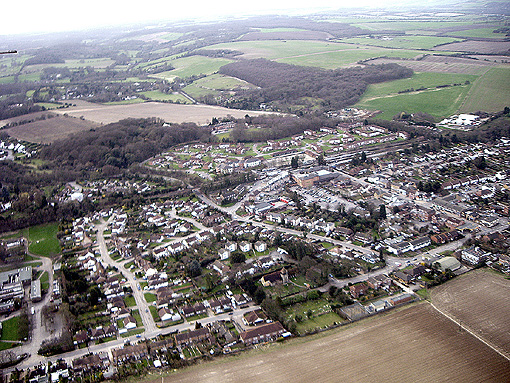
null

null

In the second one, above, you can see the Ash Road winding up the hill under the railway bridge towards Hartley, so I turned to follow it and took a few more shots over Hartley itself.

null

null

null

I then turned back on course for Swanley but put my camera away at this point because of the gustiness of the conditions. I was sorry that I had, actually, because I flew over Horton Kirby which features a very fine railway viaduct. Another time, perhaps.

The whole of the rest of the flight went as planned taking in Sevenoaks and Tonbridge, but with the gusty wind and conditions becoming duller, it wasn’t worth taking any more shots. I got back to the field and landed safely in a bit of a naughty cross-wind ending a flight of just 1 hour 20 minutes.

Time to have a quick cuppa and a chat, then I decided to see February out with one final flight even though the weather was obviously beginning to break up. This became really clear when after taking off, I could see some very heavy showers up towards the north-west. I decided to stay up for as long as I could and thought I’d do some general handling practise with a few steep turns and stuff thrown in. I realised that this was the first time I’d done this kind of thing since my GST last year and it was very satisfying to see how even in yesterday’s windy conditions I found I could easily take steep turns and the like in my stride with little or no change in altitude. You must never be too blase, but you don’t realise how your skills are improving the whole time the more flying hours you clock up. Mind you, I had those skills tested a bit when I decided to land after 40 minutes or so. With drizzle on my screen and with the showers almost up to the field, I decided it was a good time to land. I’d forgotten how in such conditions, squally winds tend to precede such incoming weather, and so it proved on landing. The gusty cross-wind turned out to be very tricky indeed and I found my approach speed varied quite a bit, possibly as a result of wind sheer I would think. As a result, my landing was safe but not the prettiest one I’ve ever done – Bob said the right wing suddenly lifted quite a bit before I brought it back down again just before touchdown – but as they say, any landing you can walk away from is a good one. And if you can re-use the aircraft afterwards, outstanding 😉

So today it’s good-bye to February. I managed to get 3 hours 45 minutes flying in but like many others I’m sure, I won’t be sorry to see it go. Surely the weather must begin to pick up a bit soon, mustn’t it?

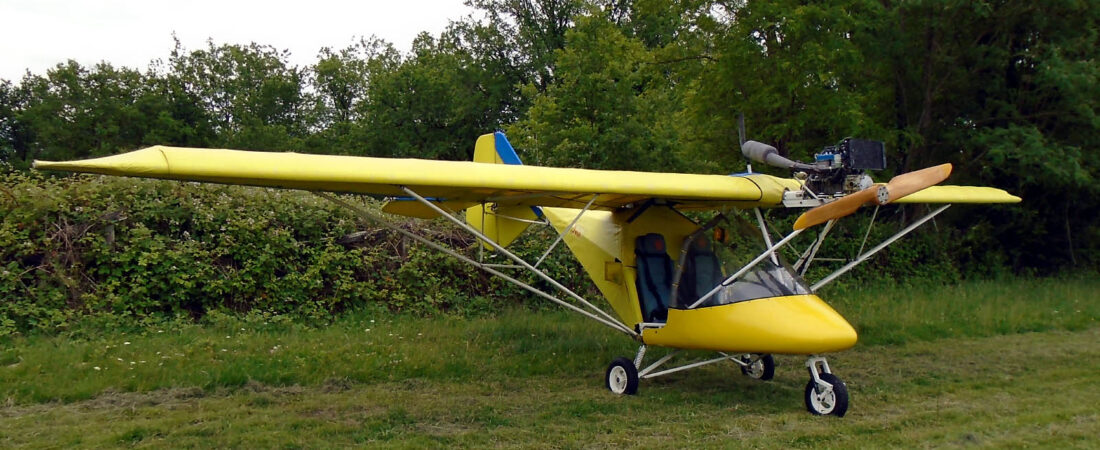
Not a total waste of time

No, not by any means. Yesterday was totally unflyable with continuous low cloud, rain and drizzle, the sort of weather that we’re getting so fed up with now. The field which had been drying up a few days ago was again under squelchy mud and waterlogged so it’ll probably be a few days even when the rain eventually does stop before it’ll be usable again. But that doesn’t mean that the day was wasted – far from it 😉

Instead we got cracking on the X-Air. I gave the carbs a good clean up before Christmas and yesterday I refitted them, along with all new hose clips to replace the ‘orrible tiddly little jubilee clips that someone had previously fitted to the engine coolant hoses that were now all stripping their threads. A little clip like that is just as important as a large one because if it lets coolant escape you’re soon in trouble with the prospect of a forced landing. Peter replaced the pitot tube that had got broken in the hangar and once I’ve sorted out the trim tab cable connections we’ll be well along the way to having it ready for its weighing and permit inspection. I’m going to order up some fuel hose and a new fuel filter to replace the items that are currently fitted as much of the hose is becoming a bit hard. Also, some other sections are of the transparent type which is not now officially approved. The glass fuel filter that’s fitted is the type which I think has been found to give some problems with blocking due to algae growth in the fuel on account of the alcohol that’s now being added. Better to have a ‘cheap and cheerful’ throw-away plastic type that can be replaced every few hours than one that has to be regularly inspected and cleaned, I think.

So we made some good progress – the X-Air is looking pretty complete now. Who knows, with a little bit of luck we might even be able to run it up next week-end. That would be nice 🙂