Still a bit to do

This new screen is going to be a bit trickier to place in position than I thought. I wish Victor was around to help, but he’s not and won’t be for some time as he’s still laid up after his accident.

Today I cleaned off all (well nearly all) of the nasty sealant that someone had previously applied around the bottom of the old screen and tried placing the new one in position. As I found when doing MYRO’s screens, it was like wrestling with a boa constrictor because as soon as I got it anywhere near in position and relaxed my grip or pressure, it popped out at the other end because of the tension that was being applied.

It was also made more difficult because I found that I can’t reuse the rubber edging strip that was fitted to the bottom edge of the old screen, because (a) I’d cut it when breaking the sealant joint and (b) it was impossible to get all of the old sealant off it anyway. This means that I’ll have to order a new one which is bound to delay the job.

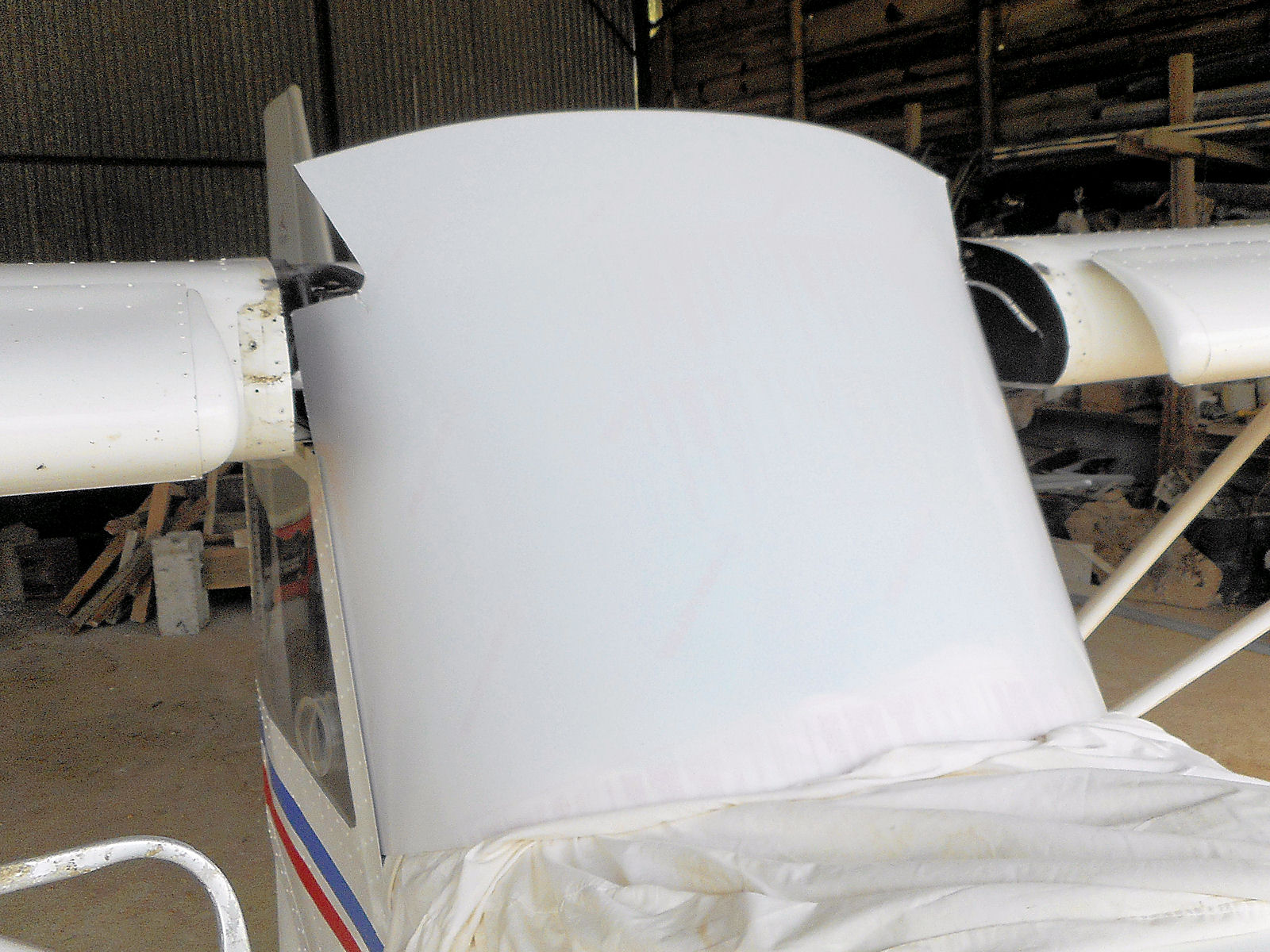
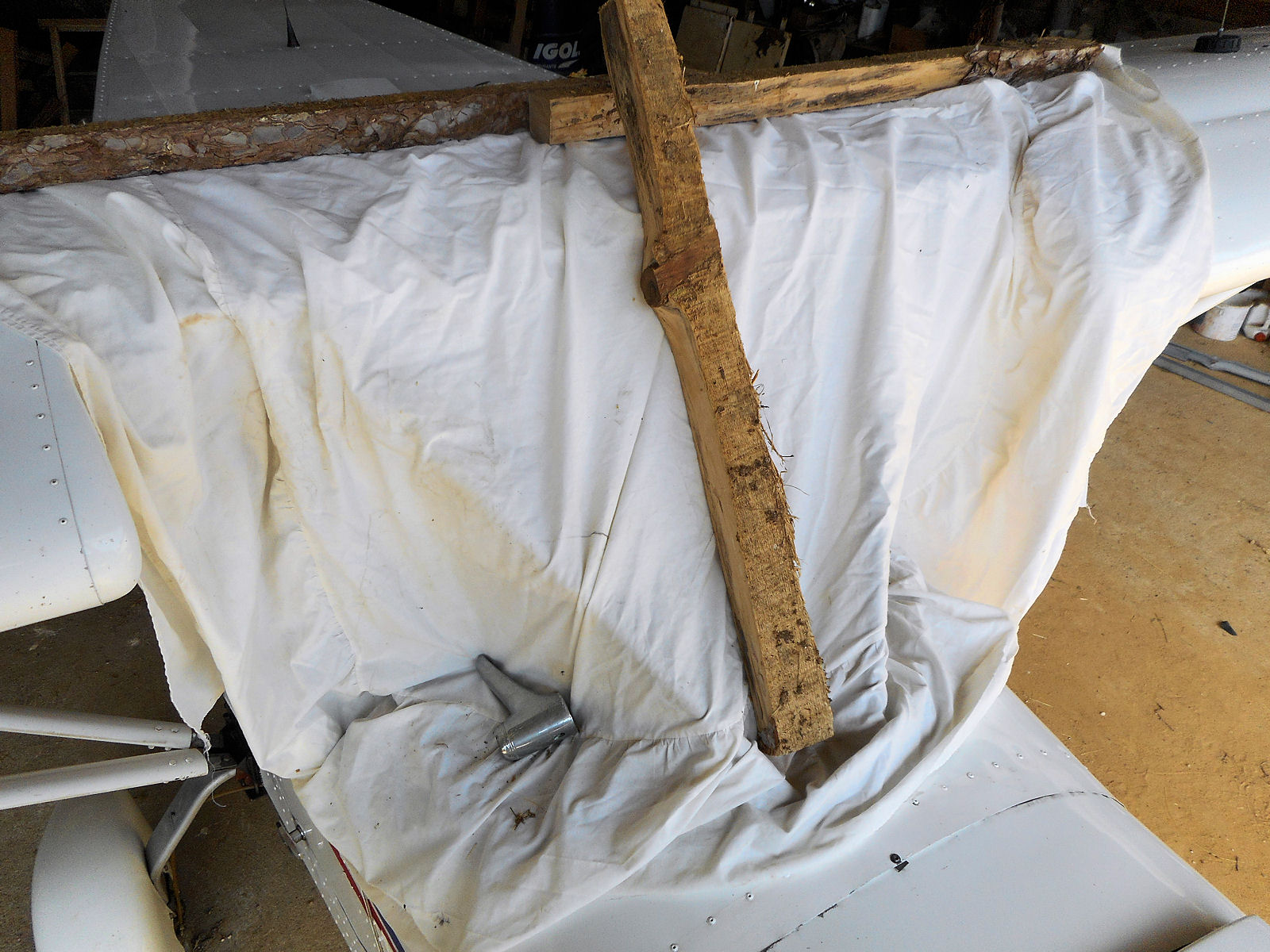
In the end just to see how it fits, I managed to get the screen more or less in position by placing its bottom edge on a cloth sheet so as not to damage 77ASY’s paintwork and carefully gripping the sides under the closed doors. Here’s how it looked.

null

null

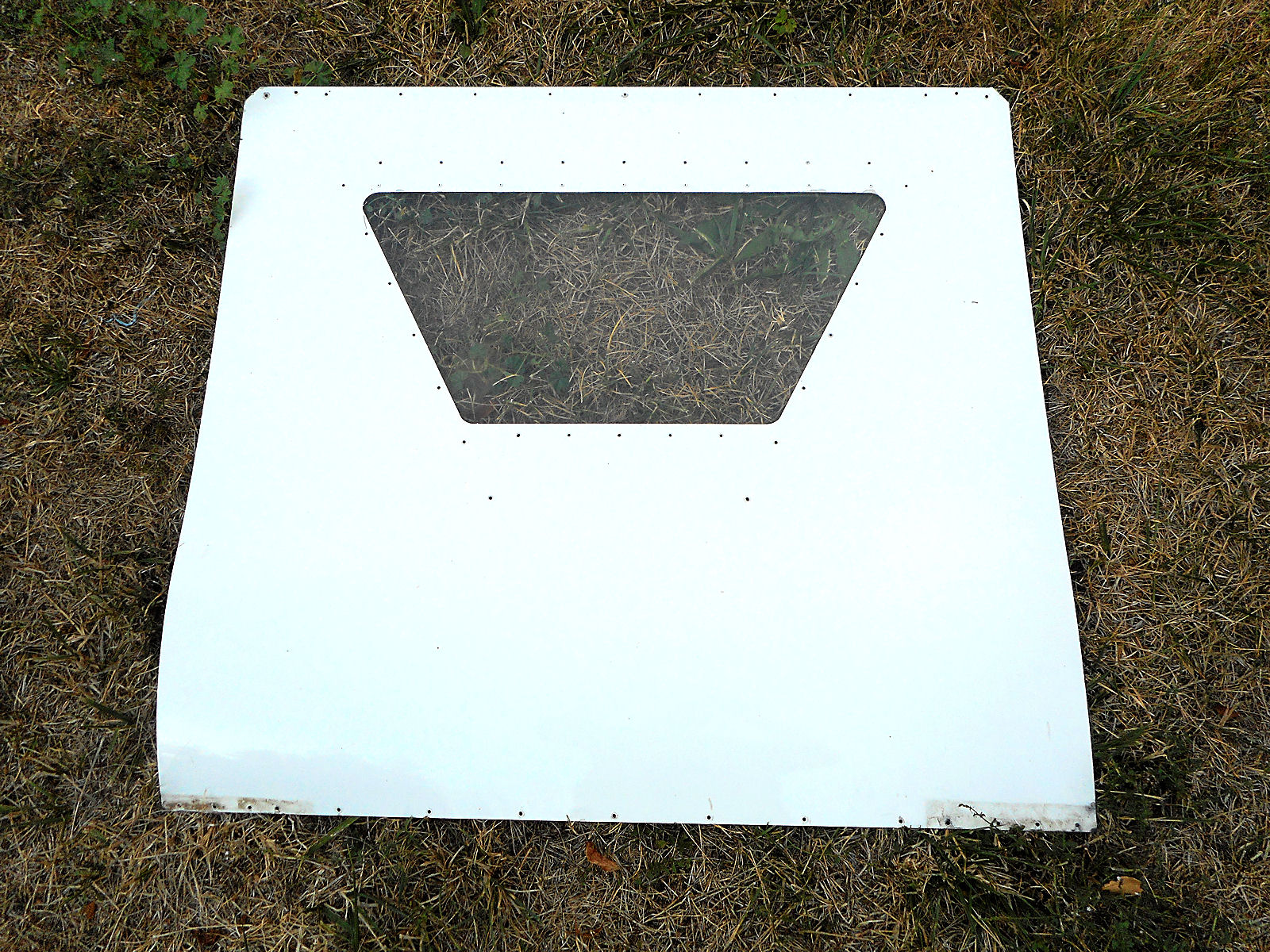
And that’s how I had to leave it today, with a large inverted cardboard box over the open cabin top to keep insects, dirt and bird mess out. I then brought the cabin top home with me so I can see about replacing its polycarbonate window and fixing several patches, mainly around the window opening, where paint had been lost.

null

I’m also finding the more I climb over 77ASY that its white paint has been amazingly forgiving and more and more ‘dodgy’ painted areas that I hadn’t noticed before are coming to light. I’ll therefore have to turn my attention to them in the future, but the priority for now is to get the new screen in and the aircraft fully back together and airworthy.

Hooray for that!

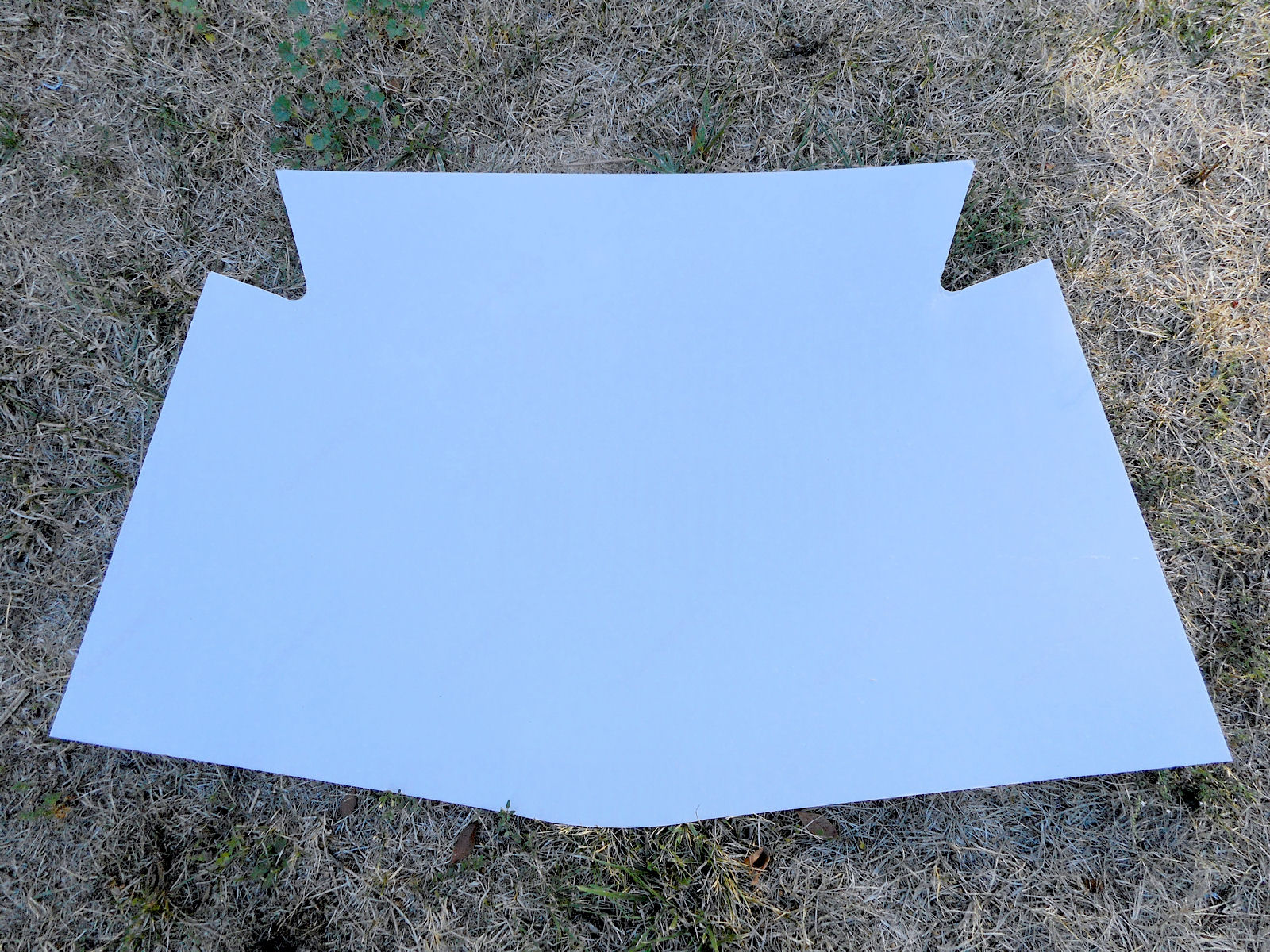
It’s yet another scorcher today, around 34° Celsius again, and I’ve been working indoors cutting the new screen for the Savannah. However, even though it’s quite light work, I’m still running with perspiration. But at least the job’s now done.

null

I’m the first to admit that it’s not my finest piece of work ever, but luckily the small slips that I’ve made will be invisible when it’s mounted in the aircraft as they’ll be covered by trim and fairings. I’m just pleased that it’s done, though, and that I can now start to think ahead, towards getting 77ASY back together and back in the air.

The forecast is for another week or ten days at least of weather like we’re now getting, amazing for this time of the year I think. I just hope that it holds up for when I’m back flying again 😉

Savannah screen repair – continued

Wow, another 34 degree day – this summer really has turned out to be a long, hot, dry sizzler! It’s certainly the hottest that I can remember in the 4 years that I’ve been here.

I went to Malbec to continue work on 77ASY’s screen but there’s no point going too early when it’s ‘cooler’ as then the sun shines straight into the barn and I’d be working in direct sunlight. So not so cool after all. It’s best to start work at about 11.15 am because by then the sun has risen beyond the roof of the barn and although it’s then hotter outside, I’ve got shade to work in.

To give readers some idea of how ‘tropical’ it is here at the moment, when I’d finished work I went to rinse my hands under the hosepipe. Besides the water that came out being really hot, I was surprised when the flow started and a little brown snake about a foot long shot out with it! I think it was as surprised as I was as it went slithering off into the grass after hitting my hand and then the ground!

By the time I’d got started, it didn’t take long to drill out all of the rivets that secured the cabin top panel.

null

It came out pretty easily but anyone doing this job should make sure that they don’t drill out all of the rivets unless, like me, they’ll be replacing the top cabin glass as well, because one, or maybe two rows of rivets just hold that in and are not part of the panel fixing arrangements.

That just left the windscreen itself.

null

All that was needed was to drill out the rivets along the screen’s top edge and by then the Savannah cabin was beginning to look a bit bare.

null

null

null

After cleaning out all of the rivet holes ready for when I come to fit the new screen, I then placed the top panel back on top of the cabin, just to keep out as much dirt and muck as I could.

null

null

Then all I could do was place a cover over the front of the cabin in an attempt to dissuade any insects and birds from making it their home in the time that it takes for me to make up the new windscreen.

null

Here’s a shot of the old screen on my patio table (ha ha, it’s transparent, can hardly see it – doh!)

null

Tomorrow I’ll unroll the new Makrolon that I received the other day, place it on a flat surface- probably my bed so as not to scratch it – place the old one on top and draw round it. Then I’ll cut the new one out with large scissors and hopefully, Voilà! – my new screen will be ready to fit.

77ASY screen repair

Yesterday I got my decks at home clear by painting a large, thick strip of silicone roof sealant across the joint on my wood store roof that’s begun letting in water again. The job looked to be a good’un so I hope that it will see me through the coming winter and maybe a few more as well before I have to do anything more extensive on the roof to solve the leaking problem.

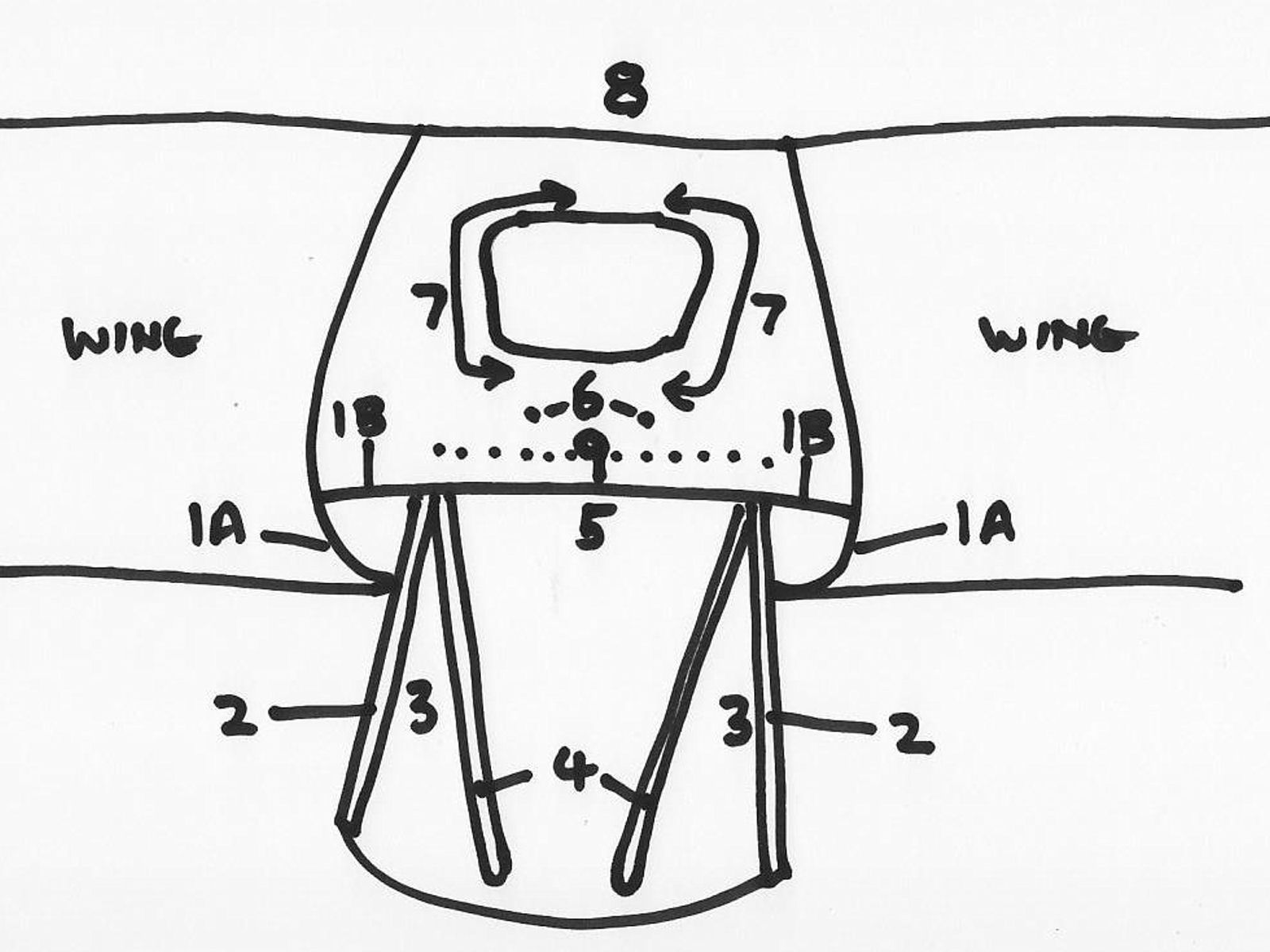
So today was the day to embark on the repair of the Savannah’s windscreen. Before I got going this morning I quite expected that I’d be able to get the job done in not much more than a day but pretty soon it became clear that that was not going to be the case, as the following diagram shows.

null

I started off by drilling out the 3mm pop rivets holding the wing leading edge trims on each side at 1A and 1B, a total of something like 16 or so. The vertical rear sides of the screen are covered by wrap-around aluminium capping strips that go up the complete height of the screen and are covered by the door leading edges when closed. The pop rivets holding those also go through the screen itself and so had then to be drilled out at positions 2 (externally) and 3 (internally.

When I removed the wing leading edge trims previously it was obvious that the rivets at the tops of the strips on both sides had been installed with the wings off and to drill them out I had to borrow an angle drive to get into the narrow gap between the wing roots and fuselage, an exercise that was very tricky indeed. But I succeeded, so thanks Victor for the loan of your angle drive.

Then the rivets securing the front of the screen to the two internal tubes at positions 4 had to be drilled out, but although the front edge of the screen is merely sealed and not secured at all, the screen itself couldn’t be budged until all of the rivets securing all along its visible top edge to the cabin top plate between the wings had been drilled out (5).

That’s when things began to get a bit more involved because even with those rivets removed, the screen would still not budge, except at the sides. The reason for this became clear by carefully lifting up the front edge of the top plate which revealed a further line of rivets securing the whole top edge of the screen to a transverse fuselage tube under the plate at 9.

So this meant that the top plate itself would need to be removed, involving the drilling out of umpteen rivets at 6 (just 2) 7 (all around the cabin top glass) and 8 (along the rear edge of the top plate. I didn’t count how many, but there were a lot of them, so as the temperature was already over 30 degrees by that time, I thought it was a good time to stop work and continue working tomorrow morning when it’s cooler.

The job’s not too difficult, just tedious, and you have to be careful so as not to cause any damage. I’ve already slipped once when drilling out a rivet on a bit of an angle, so I don’t want too many more episodes like that. The up-side is that by removing the whole top plate, I’ll be able to replace the cabin top light as I have plenty of polycarbonate and the existing one has some fuel marks on it and is also leaking a bit when it rains. But there’s a bit more work to do before all that’s finished 😕

From the Corrèze to the Auvergne

I did a post a while back about a flight I did on 24th July that took in three French départements, the Corrèze, the Auvergne and the Lot. I managed to get a video of the leg from Égletons (Corrèze) to Aurillac (Auvergne) that I’ve now edited and put up onto Youtube.

I need to sort out a better mounting bracket for the little sportscam video recorder, though, as the one I’m using vibrates like anything at certain engine revs because it’s too long. Not an easy one as it has to be where it’s mounted at the top of the wing strut to position the camera below the wing slat. I need to think about it a bit more 😕

Gutted!

The annual Blois ULM-fest is being held this week-end Saturday 27th and Sunday 28th August. Having not long returned from my flight to the UK and back, I didn’t fancy another flight of several hours duration so instead decided that on Sunday I’d drop into Mandy and Dave Lord’s Wanafly Cheese and Chilli fly-in where I’d also be able to meet Phil Quantrill who flies a ‘pendulaire’ out of Nantilles in the Charente, Russ, a UK-based member of microlightforum.com and possibly another French-based member, Clive from Luçon, also in the Charente.

So yesterday I went over to Malbec armed with 30 odd litres of fuel to top up 77ASY’s tanks with the idea of returning today to give it a good wash and clean-up to remove the flies and other muck collected during the UK trip.

I topped up the right hand tank with no problem and had started to do the same with the left hand tank with my little electric pump when its hose detached from the pump body. Before I could stop the pump quite a large volume of fuel had flooded out over the wing, possibly as much as two litres. I was very annoyed when, filling up my tanks at Abbeville on my return journey last week, some kind of air or vapour bubble in the right hand caused some fuel to spill onto the wing when I started up the fuel pump.

I’d had to immediately jump off the chair that I’d been using to get up to wing height in an attempt to mop it off as quickly as possible but yesterday’s mishap was on a different scale entirely, for not only did the spilled fuel flood over the wing surface but some also splashed down over the aircraft’s windscreen. The effect was almost immediate and devastating, as the following picture that I shot afterwards shows.

ICP Savannah damaged windshield

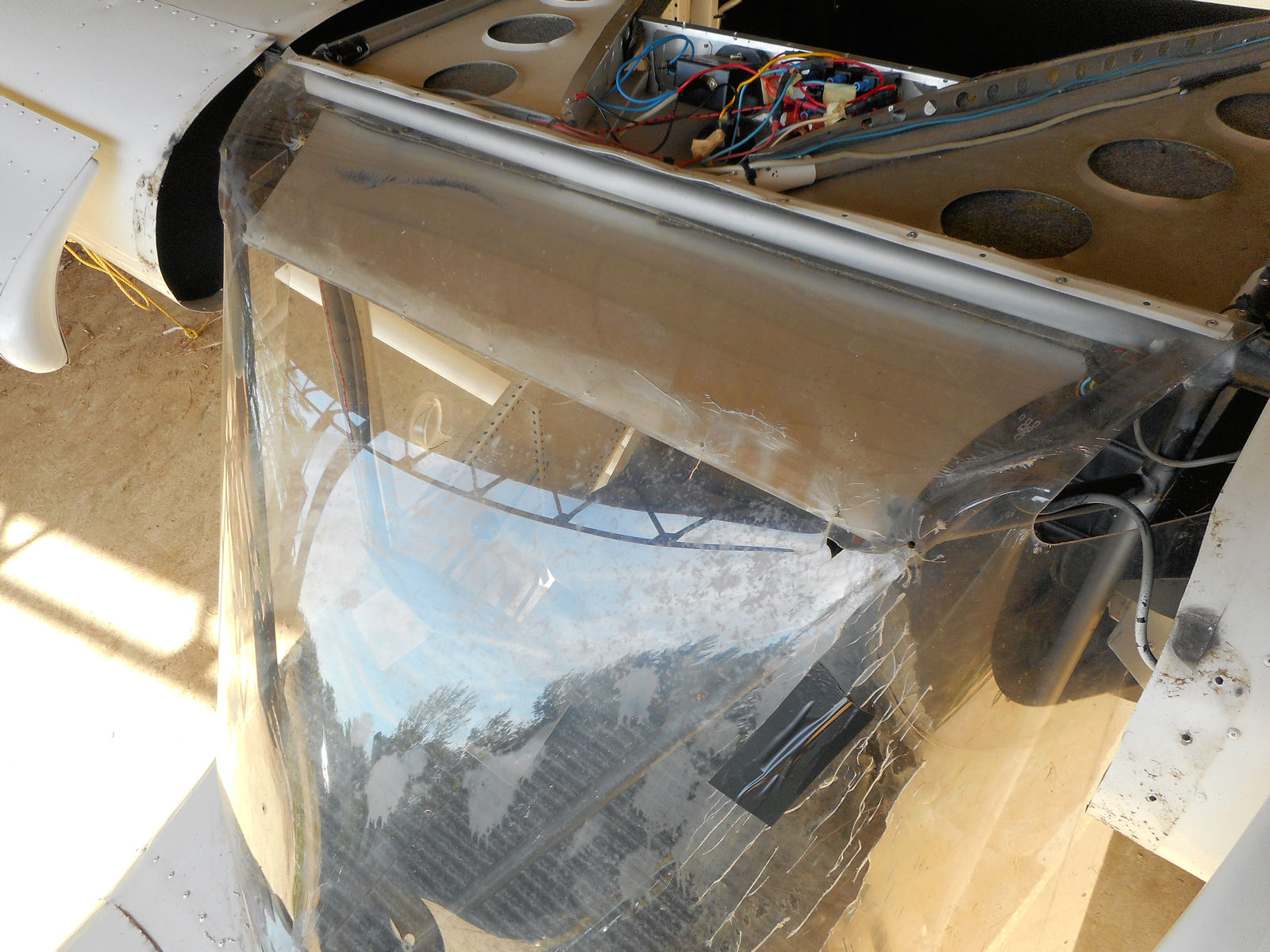
I’m really gutted for several reasons. I’ve now had fuel spilled over both wings within a week, something which can be quite harmful for the paintwork and I just hope that the effects will not be damaging in the longer term as I don’t fancy having to have the Savannah’s wings repainted any time soon. And I’ll now also have to source some suitable polycarbonate sheeting and make up a new windscreen, not a particularly difficult job in itself and one that I’d been thinking about doing in the longer term as some tiny splits were beginning to appear around some of its fixing holes, but at a time of my own choosing and convenience.

But what I’m really annoyed about is that yet again I’ll not be able to go up to Mandy and Dave’s place at Wanafly, which is only an hour’s flight in each direction and which I’ve not been able to revisit for one reason and another in the 4 years since I dropped in there in MYRO on my way down to France over the Easter week end of 2012.

I’d only spoken to Dave a few hours before and told him how much I was looking forward to dropping in and a few hours later I was saying to Mandy that I wouldn’t be able to come after all. And that’s what’s really gutted me 😐

France-UK-France statistics

Statistics can be interesting and here are a few to be going on with.

By starting with filled tanks, flying a good distance and topping up the tanks again after competing several good length legs where volumes were accurately verifiable, I was able to very accurately calculate 77ASY’s fuel consumption. This was 14.7 litres per hour chock to chock (ie engine on to engine off).

The actual distances flown on this trip were outbound Malbec – Bowerswain Farm, 982 km and inbound Bowerswain Farm – Malbec, 1012 km, giving a total distance flown of 1994 km.

Now some cost figures based on actual expenditure including taxes. I’d like to have bought cheaper mogas to top up my tanks along the way but that’s not always possible. At Saumur only 100LL is available (but at quite a bit less per litre than Abbeville charge for UL91) while at Abbeville you can choose between 100LL and UL91. I bought 100LL on the way up but UL91 on the way back after finding out that UL91 has been endorsed by Rotax for the 912ULS. I started with 70 litres of 98 mogas in the tanks which had cost around 96.60€ and paid out the following for fuel along the way.

Saumur 38 litres/61.90€, Abbeville 43 litres/87.64€, Dorset 48 litres/59.42€ (conversion £=1.16€), Abbeville 60 litres/104.80€, Saumur 44 litres/73.92€

I estimate that after switching off at Malbec on my return I have 37 litres remaining worth 62.02€ at the Saumur price.

Now the calculations.

Total distance flown 1994 km, total fuel consumed 266 litres, fuel used 13.3 litres/100km. I think that this compares favourably with other forms of transport eg a large car, especially as by flying direct the distance by air is very considerably less than the distance by road plus the time spent travelling is greatly reduced and the hassles of ferries and/or Channel tunnel are avoided.

The net cost of the fuel used was 422.26€ but that doesn’t tell the whole story because there were landing and other fees – 2 x landing fees at Abbeville @ 4€ each, 1 x landing fee at Headcorn @ 10£ (11.60€) 1 x landing fee at Rochester @ £13 (15.08€) and 1 x overnight parking at Rochester @ £7 (8.12€).

However, against this can be offset the fuel duty drawback that I’ll be receiving on the 48 litres of mogas purchased in Dorset (£27.82/32.27€), giving a total cost for the whole trip, excluding any meals and accommodation of course, of 432.79€.

So well under £200 each way at the height of the holiday season – I think that that’s very reasonable, especially as if we’d each been prepared to carry modest baggage (there’s a small compartment with a capacity of 25 kg behind the passengers’ heads in the Savannah) two people could have been travelling for that cost.

But please don’t ask what the total weight would be fully loaded 😉

That’s it!

Heading home in the haze

Wednesday 17th August

Leg 1 – Rochester to Abbeville

I couldn’t wait to get out of the dratted Rochester Holiday Inn after my dismal stay there. Having made my preparations, or most of them because I found after I’d taken off that I’d omitted entering the flight leg headings into my knee-board and entered the times instead in the wrong column, leaving the time column blank, I struggled out of the hotel and back over to F-JHHP with my case and flight bag.

Memo to self: never EVER take such a large case again, filled with clothes that you’ll never wear while away, even if it can take your lap top, still fit in the aircraft and you expect to be transported everywhere by car when on the ground.

As I had no need to pick up any fuel, I soon had the Savannah untied, packed and ready to go, so was in the air taking off from runway 02 at 8.25 am, after I’d again filed my international flight plan using my mobile phone. As soon as I turned onto heading I was struck by how much the visibility had deteriorated since I’d flown in the previous evening and in fact it was almost unflyable.

The coast, which you can usually see from Rochester, was totally invisible behind a blanket of haze as a result of a filthy inversion extending up to 2000 feet or more, topped off with a thin layer of dirty broken cloud. In fact, visibility was so poor that I decided that it wasn’t worth taking any pictures and thought it better to concentrate on flying the aircraft on the correct heading instead.

Above the inversion layer there was no horizon to mention but the top of the layer itself served as a visual reference and flying using the GPS was therefore quite safe. I could see that there was no further cloud above the layer, all the way to France by the look of it, so I thought that I’d give the Channel crossing a go and see how it worked out. If it didn’t, I could always turn around and return to Rochester, or more likely Headcorn, as it was closer and I needed to think about my fuel reserves.

I returned by the same route that I’d come by and soon I saw Folkestone slip under the wing through a gap in the cloud layer that topped the haze. So then all I had to be concerned about was getting to France without anything silly happening.

Flying at only 4500 feet rather than the 5500 feet plus that I usually prefer, to the left and right there was no horizon and nothing but blue where the sky met the sea in an undefined blue void. But I wasn’t heading in either of those directions, and ahead I could see what looked like sea fog over the French coast. This made my heart sink a bit, until as I got a bit closer I could see that this was actually lowish cloud over the well-defined coastline at Cap Gris Nez.

This was good news because it meant that there was clear air below the cloud level that I’d be able to get into and from my experience, the cloud level in northern France invariably rises the further inland you get, away from the effects of the coast. So I began my descent at what I judged to be the right time and coasted in at around 2500 feet or so above Cap Gris Nez before continuing on towards Boulogne.

Here’s a shot that I took of Boulogne harbour as I passed by. I should add that because of the poor visibility, almost every photograph in this posting has been edited to enhance detail and colour, except for ones that have been left untouched and unedited at various points to show just how poor visibility was at the time.

null

I didn’t bother taking any more shots before making my approach to Abbeville and joining downwind for runway 02. There was no other airborne traffic but a bit more activity down on the apron, where I bumped into a couple from Luxemburg at the refuelling point with a Savannah ‘S’. They asked me where I’d come from, and when I told them ‘England’, a look of surprise came over their faces. They told me that they’d taken one look at the visibility over the Channel and decided that that was one they’d give a miss. In fact, they said that their plans had been to head south to the Loire but in the light of the current weather and the forecast for the coming days, they’d decided to return direct to Luxemburg.

I’d already filled in the Abbeville movement sheet and after I’d topped the F-JHHP’s tanks up, went back to the bureau to settle up for the fuel and landing fee. I was quite surprised to find that I’d taken 60 litres on board, which meant that after landing, there had been only 10 litres remaining in the tanks.

This was cutting it much too fine and was the result of only having had enough time to put in 48 litres before setting off from Dorset, which was not quite enough to fill the tanks. I knew that but had judged that I’d had enough on board to fly to Rochester and then onward to Abbeville, which proved to be the case but with hardly any reserve for safety. If I’d had to turn back over the Channel, I’d have needed to make the decision to do so early on to make it back to Headcorn. Another solemn lesson learned.

I also made another mistake at Abbeville. I bumped into an English couple returning in a Vans from Switzerland to Popham and because they’d faxed ahead (as the English always do being sticklers for formality) there were three Douaniers present checking their papers. I ask you, they were leaving France, not entering! I happened to mention that I was British too and when asked, said that I hadn’t faxed ahead because I hadn’t had enough time.

If the Douaniers hadn’t HAD to be present because of the Brits being desperate to conform, nobody would have cared but as they were there, they said that they HAD to check my papers too. So I HAD to dig out my passport and the papers for 77ASY/F-JHHP and they HAD to fill out their forms that nobody was really interested in, this being France. And I ended up losing nearly an hour.

What is it about the Brits?

Flight time Rochester – Abbeville 1 hour 40 minutes.

Leg 2 – Abbeville to Saumur

The man in the office at Abbeville said that he’d close my flight plan for me so I was then able to take off and continue heading south into the haze. Here’s a shot that I took of Vieux-Rouen-sur-Bresle just south of the airfield.

null

The next shot is an unedited one showing the visibility while approaching Vernon on the river Seine.

null

The next shot is of Vernon itself (remember, this one has been photographically enhanced).

null

This shot is of the river Seine at Vernon looking towards the south.

null

This picture is of Breuilpont, which is located some 15 kms south of Vernon.

null

Next, Saint-Remy-sur-Avre.

null

About another 7 kms further on, Laons.

null

Remember the old NATO airfield, Senonches, that was pictured on the way up? Just past the airfield heading south is the town of Senonches itself, which gave its name to it.

null

The area to the south of Senonches is covered by dense forest. Sorry about the hand reflection 🙂

null

Here’s Fontaine-Simon a bit further on south.

null

On the way north, I shot a photo of the distinctive road pattern at Nogent-le-Rotrou. That only showed a small area in the north of the town and now here’s a picture of the main part, to the south.

null

Next up, the small commune of Dollon.

null

Abeam Le Mans, the visibility began to deteriorate further, as shown below in this shot, which has incidentally been enhanced just a little.

null

A bit further on, I came once again to the ‘Émetteur Le Mans-Mayet’ and as I’d kept to its south on the way north, this time I skirted round it to its north. Previously it had been clearly visible in bright sunlight but this time it was shrouded in the haze. I’ve since found out that this mast, which transmits TV and FM radio is, at 342 metres, taller than the Eiffel Tower and is, indeed, one of the tallest structures in France.

null

Saumur was only 65 kms further ahead and it wasn’t worth taking any more photographs in the haze before landing there. From the windsock, I initially decided to land on runway 28 left hand but while I watched, it swung around. I responded by flying along the runway heading and then turning to join downwind for runway 10 right – not that it really mattered because there was no other traffic and when I signed the movements sheet later, I found that mine was the only aircraft that had taken off or landed there for the whole day up to then.

Flight time Abbeville – Saumur 3 hours exactly.

Leg 3: Saumur to Malbec

After topping up my tanks for the second time at Saumur (with 100LL, no ticket available on either occasion), in view of the weather conditions, I was in a hurry to get away again. I took the next shot of the city while climbing out from runway 10.

null

Almost immediately, visibility began to deteriorate even further from the poor level that it had already been at.

null

As the flight progressed, it became steadily worse making it essential just to follow the GPS line and stay on heading. This was not always easy there being no exterior features to fly towards and I found that if I allowed my attention to lapse for much more than I few moments I would be off course by as much as 20 degrees.

null

By the time this wind farm, which I’d photographed from altitude on the way north, came up I estimate that the visibilty was down to 5 kms or possibly even a bit less. However, with good sight of the surface directly below and around the aircraft and the whole of the world surrounding it being wide open fields in which to land if necessary, I viewed that it was quite safe to continue onwards.

null

The visibility had slightly improved by the time I came to Nontron in the Périgord, but not by much as the following (enhanced) shot shows.

null

But shortly afterwards the weak rays of the sun broke through a gap in the clouds, as if to welcome me home again.

null

Things had improved markedly by the time Périgueux Bassillac airport came up on my right hand side and when I could spot Fleurac and the runway at Malbec in the distance, I knew that I’d almost arrived. Just the landing on Malbec’s 160 metre runway now to contend with – but no problem in the unusually calm conditions and no hint of the ‘bucking bronco’ ride that we often have to deal with because of the valley and trees just before the threshold.

In fact I pulled off a greaser and possibly the best landing of the whole tour, even though I say it myself. Nothing to do now except taxi up to the top of the runway and switch off.

ICP Savannah MXP 740 at Fleurac

It was good to be back! Now it was time to unpack, put 77ASY back in the barn and head home for a very welcome long, cold beer. And that’s just what I did 😉

Flight time Saumur – Malbec 2 hours 15 minutes.

Total flight time for the day, Rochester – Malbec 6 hours 55 minutes.

Total flight time over two days Bowerswain Farm (Dorset) – Malbec (Dordogne) 8 hours 50 minutes.

Total distance flown Bowerswain Farm – Malbec 1016 kms.

Dash back to Rochester

Tuesday 16th August

Having only arrived in Dorset a few days before on 12th August and spent a couple of days chilling out with my sister and brother-in-law, I was looking forward to spending a pleasant week in Dorset. I’d then planned a relaxed flight to Rochester in Kent on the following Friday, an enjoyable meal that evening, probably a Chinese, with my son and step-son and their partners before staying overnight at the latter’s home and departing for France the next day.

But all that changed in an instant. The weather dictates everything to do with matters involving flying light aircraft and so it was that on the Tuesday morning I consulted the weather forecast for the next few days as usual and felt the smile disappear from my face. The weather gods had decided to entirely overturn my plans.

Every on line forecast that I consulted agreed that bad weather was due to sweep into southern England and northern France within the next couple of days and that ominously, it could last for a week or more. This had serious implications for me, because if I ignored the warnings and just decided to hang on in England, I could well end up being stuck there for an indefinite period.

And not only that. Bowerswain Farm had been sold and its current owner had already moved out and I had no idea when the new one would be moving in, so for all I knew F-JHHP would be standing out in bad weather for an indefinite period with absolutely no form of surveillance or security. This didn’t appeal to me at all. And then there was the question of what would be happening back in France – there were also things there that I had to deal with.

So I had to make an instant decision – and I decided that there was nothing for it but to hastily repack my cases, refuel the Savannah and make a dash for Rochester that afternoon. Any thoughts of a pleasant evening meal went out of the window – it was impossible to arrange anything at such short notice and anyway, I’d need to spend most of the evening finalising the necessary plans and arrangements for my hasty flight back to France the following morning.

But I had to move smartly if I wanted to get to Rochester airport before it closed at 5.30 pm. Michael, my brother-in-law, luckily had a clean jerry can that had only contained water but it had to be scrupulously dried out as it still contained a few drops. While he was doing that I finalised the flight plan that I’d pre-prepared before leaving home in France for the flight up to Rochester.

Then we loaded a small pair of steps into the back of his car so I could get up to refuel the Savannah and it was off to Morrisons for the first 24 litres of premium fuel. We were just getting ready to start pouring it into 77ASY’s right tank when the Bowerswain Farm gardener, who was looking after the now empty house, appeared on the scene. He managed to produce a taller pair of steps and a large, clean filter funnel (without the filter) which made the refuelling job much quicker, so we were soon off to pick up the next 24 litres before having a bite of lunch and returning.

All went smoothly and my sister and brother-in-law were at Bowerswain Farm to watch me take off at 1.55 pm. Its runway is a bit bumpy but I soon left the ground taking off in an easterly direction using no more than half of its 200 metres even with a slight tail-wind. Then it was time to settle down for the flight to Rochester, which was pretty uneventful.

Stoney Cross came and went and this time I didn’t bother calling up Solent Radar as they’d had problems hearing my radio on the trip down and hadn’t seemed that interested so long as I remained clear of their controlled airspace. The next waypoint was Beaulieu, an old now-abandoned airfield.

null

Then the Esso Fawley oil refinery came up on my left hand side.

null

And the next waypoint was Fawley power station just a bit further on.

null

After that Cowes harbour on the Isle of Wight was visible out of the right hand window.

null

Next the aerodrome at Lee-on-Solent where a glider was visible wheeling over the town before losing height and turning onto final for a landing.

null

And then the main attraction, Portsmouth. Despite the rather poor visibilty, I managed to get some very good shots after a little bit of editing.

null

null

null

And finally, the ‘money’ shot featuring the harbour and the Spinnaker Tower that I’d missed on the way down.

null

Then, not to be forgotten, the ‘other’, less glamorous Portsmouth.

null

Now one for all Pompey supporters – Fratton Park football ground.

null

Then a bit further on, a couple of shots of beautiful Arundel with its impressive castle, the home of the (apparently) now reconciled Duke and Dutchess of Norfolk who had been living separately in the East and West wings after a marital spat in 2011. What a mine of useful information this blog is!

null

null

Next up, Burgess Hill. God bless it and all of those poor souls who (have to) live there. I’d hate it!

null

null

And what do we have here? The Bluebell Railway, I do believe.

null

Shortly after, Tunbridge Wells popped up and it was time to give Rochester a call as it was fast approaching their closing time and I wanted to get there and deal with the formalities of landing and parking fees before the staff left so I wouldn’t be held up in the morning. The runway in use was 02 and as I was approaching on a heading of 040 degrees I suggested that I might make a straight in approach, just calling long final.

The very pleasant young lady working the radio in the tower agreed and it was no sooner said than done and 77ASY was landed and parked up on the main apron. I didn’t need to take on any fuel so it didn’t take long to complete the formalities and tie the Savannah down using some weighted tyres that were next to the east side fence. Here are the shots that I took before heading off over to the Holiday Inn hotel next to the airfield.

null

null

null

null

ICP Savannah MXP 740 at Rochester, UK

ICP Savannah MXP 740 at Rochester, UK

ICP Savannah MXP 740 at Rochester, UK

So that was it, quite an enjoyable flight for all of the earlier hassles. I wish I could say the same about my brief (I’m glad to say) overnight stay at the Holiday Inn, which I found grossly over-priced with pedestrian food. The pork cutlet that I had for dinner was large but sickly and the bathroom door in my room had had its hook pulled off leaving gaping holes in the now-bare woodwork. And the space on the working area was so small that the welcome tray had to be hidden in a cupboard and when I eventually found it and wanted to make myself a cup of tea, I had to put it on the floor. Ghastly!

Flight time Bowerswain Farm – Rochester 1 hour 55 minutes (compared to 2 hours 5 minutes for the shorter distance from Headcorn when I flew down).

Over the sea to England

Friday 12th August

Leg 1 – Saumur to Abbeville

I’d slept well my first night in the hotel but my second was a far more restless affair. Whether this was because of my flight the next day to the UK or not I don’t know, but in any case I was up early finalising my flight planning and fuel calculations using the latest wind data and filling out my knee board with headings and timings for the various legs of the flight. I also checked one final time that the international flight plan that I’d need to file at Abbeville was correct so I knew that I’d be able to get away for the water crossing without any hitch.

Then it was time for breakfast. For me it was a fairly meagre affair as I love to have a bowl of cereal with milk, a glass of fruit juice and several cups of tea but as I’d be flying for well over 2 hours from Saumur to Abbeville in one hop, I wanted to avoid the mid-air crisis that inevitably happens if you take on too much fluid beforehand. And there was no cereal anyway, which I found very disappointing for an international 4-star hotel, but that’s another story.

No such problem for Linda though. She enjoyed a more hearty meal and even had the foresight to make a sandwich to take with her on her drive back to Normandie, but we were both ready in good time to settle up with the hotel and get away for my planned take off time of 10.00 am.

But that didn’t take into account what invariably occurs when you want to get away quickly, which is that someone shows up and engages you in conversation. In this case it was the manager at Saumur airfield who started off just wanting to know my details for the airfield log and in case anyone wanted to send me a bill for landing and parking (unlikely) but it soon extended itself to other ULM and more social matters, as usually happens.

As I’d refuelled 77ASY immediately on arrival two days before, I only needed to untie it, load my baggage, give it a walk-round check and get away, so this delay was slightly inconvenient. However, it’s my philosophy that you should never be rude or cut someone short, especially if you’re coming back that way, as you never know when you might need their help which is bound to be less readily forthcoming if you didn’t make a good impression previously.

But there was still time enough for me to more or less make my planned departure deadline and in fact I got away at 10.05 am with weather and visibility both good but with just a hint of scattered, broken low level cloud.

null

The indications from up ahead were, however, that cloud would become more of an issue as the flight progressed, as indeed proved to be the case.

null

Within a few minutes of taking off, the signs were that the cloud was becoming a bit more dense and less broken but this in itself didn’t pose too much of a problem as above it the air was completely clear with no ceiling whatsoever.

null

Initially the cloud was 1/8 broken allowing for good sight of the ground below.

null

But gradually it became 4/8 broken.

null

This progressed to 6/8 cover.

null

And eventually the cloud layer became 8/8 unbroken allowing no sight of the ground at all.

null

This meant that for a time I was flying ‘VFR on top’ and just maintaining course by following the line on my GPS, which is what I’d been doing all along anyway as it’s a waste of time trying to navigate by eye using ground features on long flights. And in any case, I could see the boundary of the cloud layer some way ahead which meant that I’d soon be back in sight of the surface.

null

And so it proved as the cloud returned to being scattered, allowing sight of the ground once more.

null

Shortly afterwards I crossed the cloud boundary which once again allowed a good view of the surface passing below.

null

And all of this was before I’d even reached the tall TV mast (Émetteur Le Mans-Mayet) to the south-east of Le Mans, which was only just about 65 kms and half an hour from take off at Saumur.

null

On long flights it’s difficult keeping track of the names of the places that you pass over, the more so because I use charts and a GPS that omit place names to avoid unnecessary clutter. However, it’s almost always possible to load your track into Google Earth afterwards and find the places that correspond to photographs that you took at the time, and here are a few.

Two shots of La Ferté Bernard

null

null

The distinctive road pattern of Nogent-le-Rotrou

null

A fantastic mosaic of fields baked dry by the sun with a tiny tractor kicking up a plume of dust behind it.

null

Some shots of the now-closed and almost completely dismantled former NATO airfield of Senonches near La Franconnière, just about mid-way between Saumur and my destination of Abbeville. The airfield’s heyday was in the Cold War days of the 1950’s and 60’s when it housed ‘Flying Boxcar’ troop carrying aircraft and probably had a role as a rapid staging point for troops coming into Europe in the event of Eastern European hostilities.

But those days are now long gone, and although the main runway and the outlines of the taxiways and parking places are still to be seen, all of the hangars and buildings have disappeared and what remains of the airfield is now used as a giant solar panel farm.

null

null

From then on, although the cloud below remained broken, it became more dense and up ahead a new layer of low-level cloud began to reveal itself.

null

So when I approached and flew over the town of Vernon on the banks of the river Seine in Normandie, the town could only just be seen below the layer of broken cloud.

null

null

null

From then on the cloud layer passing below became thicker and thicker until once again I found myself flying ‘VFR on top’ with no ceiling and nothing but bright blue sky above me but with no sight of the ground whatsoever, not even through any passing holes or gaps. And this lasted for the whole of the last 1/3 of the flight right up until I reached Abbeville.

But before then, I had another problem to contend with. I’d been flying at an altitude of somewhere around 3000 feet but ahead of me was a dog-leg between Rouen and Beauvais followed by an area of controlled airspace that I needed to get under at 2400 feet in order to avoid infringing it. It’s highlighted in the image below.

null

There was no possibility that I’d be able to do that without descending into the cloud layer which would have been extremely dangerous and which I had no intention of doing. I therefore had two choices – I could either call up Beauvais and ask for clearance to fly through their airspace at 3000 feet without a transponder, or I could simply change my course using my GPS and route around it. I decided on the latter for reasons of time and simplicity and because doing so would only add a few minutes to my total flight time anyway. The route I took is shown as the purple diversion with arrows, also in the above image, eventually intersecting my planned routing to Abbeville a few kilometres beyond the airspace’s northern boundary.

Strictly speaking, ‘VFR on top’ isn’t really legal because the rules for visual flight stipulate that pilots must remain clear of cloud and in sight of the surface, and VFROT clearly fails to meet the second condition. However, there’s nothing really ‘wrong’ or ‘unsafe’ about doing it, just so long as you are careful to ensure that another layer of cloud isn’t descending from above you until you are trapped in the jaws of it and the one you are flying above or that something nasty isn’t hiding below the one you are flying over, like snow-covered rising ground or some other kind of obstacle, that can appear in front of you after being hidden from sight so you collide with it and end up ruining your whole day.

The other problem that can arise is that you arrive over your destination without there being a hole to descend through, which is precisely what happened to me on this occasion a few kilometres short of Abbeville.

When that happens, it’s worth having a ‘Plan B’, which I did have. I knew that by filling up my tanks at Saumur, I had enough fuel on board when overhead Abbeville to continue on over the Channel to Headcorn if I had to, so there was no need to panic (not that I’m that kind of a person anyway). The problem with that was that even though I’d filed a GAR form for my re-entry into the UK, I still needed to file my international flight plan for my crossing of the international border between France and Britain, which is a legal requirement.

But there are ways and means. If I called up the relevant air traffic service on the radio, I could give them the details and they could file an airborne flight plan for me, so that’s what I decided to do next. To start with, even though I was in France, I dialled up Farnborough Radar and gave them a call, two actually, but although I could hear them, they not unsurprisingly, couldn’t hear me.

After the second attempt, I was just about to call Lille when I spotted the hint of a hole in the cloud with a glimpse of the ground below, so I made an instant decision. I closed 77ASY’s throttle, threw the left wing down and put the aircraft into a spiral dive aiming for the hole. The main things that you MUST do in such circumstances are to ensure that by the time you reach the cloud you have the wings level and that you have not too quick a rate of descent as almost inevitably you will end up clipping the edge of the cloud and flying into zero visibility for a short while. If you don’t, there’s a very real danger, as I know only too well from my IMC rating training from many years ago, that you will lose control and may not be able to regain it even after popping out of the bottom of the cloud, before hitting the ground.

The other thing that you need to watch is your airspeed. 77ASY’s Vne (maximum allowable airspeed) is 190 kmh, so I had to make sure that I kept well within that limit.

The transition from above to below the cloud only lasted a few seconds but it’s always a relief when you pop out of the bottom of the layer and can see the ground still some way below you. On this occasion, it was even more marked because above the cloud the sky was blue, the cloud was a brilliant white and the sunshine was dazzling, whereas below it was gloomy and a world plunged in shadow. And not only that but I was also heading in totally the wrong direction after making the turning descent.

It was then a relatively simple matter to get things back into some kind of shape before calling up Abbeville for a landing. As there was no other traffic, I even just called a long final for a straight in approach to runway 10 and not long after that, 77ASY was parked and I was standing serenely on the apron ready to prepare the aircraft and myself for my hop over the Channel to Headcorn.

And I was pleased to see that I only took on just over 40 litres of fuel, meaning that I still had the best part of 30 litres in the tanks, or more than enough to complete the flight to Headcorn if I’d had to. So my judgement (and calculations) had been correct and my ‘Plan B’ would have been viable if I’d had to implement it.

Here are some shots taken at Abbeville.

ICP Savannah MXP 740 at Abbeville

null

ICP Savannah MXP 740 at Abbeville

null

Flight time Saumur – Abbeville 2 hours 55 minutes.

Leg 2 – Abbeville to Headcorn

While I was at Abbeville, the cloud cover began to break up a bit but it was evident that it would remain a factor during my continuing flight north up to the Channel coast. I dealt with all the formalities, including using the toilet, refuelling 77ASY and paying for the fuel and my landing fee quite quickly and smoothly before then proceeding to don my life jacket for the flight over the water.

It was precisely then that a keen young Dutch chap decided to engage me in conversation and tell me about his hopes to start learning to fly, which was somewhat inconvenient at the time to say the least! When I was ready I filed my flight plan on the EuroFPL.eu web site using my mobile phone, started up F-JHHP as it’d now become, taxied out and took off for England.

To the north of Abbeville, the low-level cloud persisted but was much more broken than to the south and the conditions were much brighter. Here are a few shots that I took as I tracked north.

null

null

null

Here’s a shot of the village (or commune) of Vron taken through the cloud.

null

The view from above of the Nord Pas de Calais countryside was magnificent.

null

This shot shows the commune of Nampont with it’s very nice looking golf course.

null

Approaching Boulogne, the cloud layer below once again became thicker.

null

Here’s a shot of St Léonard, one of Boulogne’s south-western suburbs.

null

At the height that I was flying, somewhere around 4500 feet, the English coast and the white cliffs of Dover could be clearly seen in the far distance.

null

Below, the town of Boulogne was, however, almost totally obscured by the cloud cover.

null

Here’s a shot that I took coasting out at Cap Gris Nez with Calais visible in the distance.

null

This is a shot of Dover taken from roughly mid-Channel.

null

Here’s Folkestone taken just before I coasted in to the west of the town.

null

And finally, a shot taken on the ground at Headcorn after I’d paid my landing fee just before I went off for a welcome cup of tea and a snack in the airfield cafe. Lovely!

null

Headcorn was very busy and the approach very active. This was not only because of local traffic returning and other aircraft doing circuits, but the controller also wanted to clear the circuit while I was approaching to allow a Catalina to land.

The Catalina is a very historic aircraft having been heavily deployed as a submarine hunter during WWII. There are very few still flying and one, together with a beautiful De-Havilland Dove, was parked at Headcorn by the time I’d landed. And I forgot to take a picture of either!

Flying time Abbeville – Headcorn 1 hour 40 minutes.

Leg 3 – Headcorn to Bowerswain Farm

So after a brief stop at Headcorn to stretch my legs and take on a bit of food and drink, it was time to embark on the final leg of my flight, to Bowerswain Farm, a short 200 metre grass strip in a lovely setting on a beautiful privately owned property in Dorset. I’d never landed there before but it held no fear for me after my experiences flying into and out of the short grass trips of the Dordogne. What was more of a challenge was getting there.

By now the westerly wind had picked up, meaning that my flying time at the end of an already long day, would be longer than I’d planned for and also I’d be flying into the sun with quite a strong haze affecting visibility.

It was slightly weird to be flying in southern England again after a break of 4½ years and I’ve put together a string of pictures to document the flight, which took me south-west from Headcorn past Crowborough, Burgess Hill, Chichester and Portsmouth, around the Solent Collaborative Airspace Trial area (which in the UK means that it will inevitably be grabbed at the end of the ‘trial’ and made into controlled airspace) via Beaulieu and Stoney Cross to my final destination.

As usual, comments and captions refer to the images that follow them. First a patchwork of tiny fields in Kent – great for keeping a few horses and ponies in, but not much good for anything else, I’d have thought.

null

A couple of shots of the reservoir called Bewl Water near Wadhurst. I used to fly past it a lot in MYRO when it was based at Linton.

null

null

Sparrows Green, Wadhurst.

null

Jarvis Brook, Crowborough.

null

English housing packed in together side-by-side and on top of each other. I prefer rural France 😉

null

The A23 southbound near Hurstpierpoint.

null

Steyning.

null

Chichester.

null

Chichester Marina.

null

Bosham Hoe.

null

West Itchenor.

null

Hayling Island.

null

Two shots of Portsmouth. Pity about cutting the Spinnaker in the second one, but there was a second chance on the return journey.

null

null

And finally, at my destination, Bowerswain Farm.

ICP Savannah MXP 740 at Bowerswain Farm, Dorset, England

ICP Savannah MXP 740 at Bowerswain Farm, Dorset, England

If I’d had any worries about finding it, a small grass strip in a sea of green, they were soon dispelled when I spotted the freshly mown runway in the distance and an orange windsock. So yet again my trusty GPS running MemoryMap hadn’t let me down. But it had been a long day and it was nice to land knowing that I’d finally arrived. As I was preparing to tie F-JHHP down, the property’s owner and his wife arrived after walking their dogs over the fields and after greeting each other and a brief exchange of conversation, we decided that the best thing to do would be tuck the aircraft behind the wall of the swimming pool where it couldn’t be seen from the road.

And there F-JHHP stayed until I returned to refuel it and take off for home several days later. But what a flight it had been, one I’d not have missed for anything. And how gratifying too, as being able to fly back to the UK was one of the reasons why I’d decided to buy a Savannah. Decision totally vindicated!

Flying time Headcorn – Bowerswain Farm 2 hours 5 minutes.

Total flying time for the day from Saumur – Bowerswain Farm 6 hours 40 minutes

Total flying time over two days from Malbec (Dordogne) – Bowerswain Farm (Dorset) 9 hours 15 minutes

At Saumur

Wednesday 10th and Thursday 11th August

My friend Linda, who had driven down from Normandie, and I just had Wednesday evening and Thursday together in Saumur before I planned to leave for England on Friday so we planned to make the most of the time. Wednesday remained mainly dull and a bit chilly for me after the warm weather we living there had been enjoying in the Dordogne and I was glad that I’d decided at the last minute to pack a warm top. Luckily it brightened up after a dull start on Thursday so we were able to make the most of the sights around the city, especially including the chateau.

Almost all of the city including the chateau is built from a lovely creamy white local stone called ‘tuffeau’ which gives it a very bright and airy appearance. What is very noticeable, though, is that because the stone is quite soft, the older buildings have become very eroded by the weather on their north-facing sides with the others remaining relatively pristine. And because the stone is soft, it has also attracted the unwelcome attention of idiots at street level who couldn’t resist carving their initials, even on some of the quite historical buildings.

Here are some of the shots that I took in and around the city on the Wednesday evening before we found a nice little restaurant for dinner. First, a shot of our hotel on the north bank of the river Loire.

null

Some views of the city and chateau from our hotel.

null

null

null

Crossing the bridge over the Loire from the north to the south bank.

null

Now some random shots of the city that I took while we were just walking around sight-seeing.

null

null

null

null

null

null

null

And here’s the last shot that I took looking back at the chateau as we were strolling back to our hotel.

null

The weather on Thursday didn’t look too promising to start with and it looked as though we were in for another dull day, as the next few shots show. However, the sun broke through later in the morning after which time it became quite hot and we were grateful to be able to sit in the open air under a sunshade for our lunch. I took the next few shots at the start of the day.

A short way down this street is the house where Coco Chanel was born.

null

null

null

The sun was just beginning to break through as we approached Place St. Pierre.

null

Here are a couple of shots of the church of Saint-Pierre and it’s mighty old organ.

null

null

Now Place St Pierre itself, which seems to be the tourist hub of the city and the most desirable place to have lunch. But you have to be early because places are soon snapped up as even during this ‘quiet’ August the city is full of visitors, the majority of whom seeming to be British.

null

null

null

null

null

After a very pleasant lunch, we began our hike up to the entrance of the chateau. Unfortunately Saumur, like most of the historic cities of France in my experience, is ill-prepared to cope with visitors, like my sister, with any kind of disability, and even if they could get up to the chateau by road, they’d never be able to climb the enormous flight of steps to get in.

null

null

null

null

Now the last climb up to the chateau’s main entrance.

null

null

The chateau of Saumur has had a rather chequered history having been destroyed and rebuilt several times, once by Henry II of England in the late 12th century. It was last used by Napoleon as a prison and before being acquired by the community of Saumur at the beginning of the 20th century ‘for the then price of a horse’, it had not been occupied as a residence for many years and had fallen into ruin.

And without being uncharitable, I’m afraid it shows. Most great houses, even former great ones, are full of furniture and artifacts left behind from previous residents, but there is none of that at the chateau of Saumur. In fact it is largely empty and it appears that the executors have scoured France (and beyond) in an effort to find items to put on show within its walls.

From our experience, these mainly consist of a succession of large, bare rooms, a couple with tapestries hung on their walls but the majority having glass cases around their perimeters containing chinaware and ceramics. So if visiting, don’t expect the children to be entertained for very long!

Here are some views looking back over the river from the chateau’s ramparts.

null

null

null

Now something that the kids present did seem to like though, the chateau’s well and looking down it into its black depths!

null

null

And now some shots of the interior taken as we walked around.

null

null

null

null

null

null

null

null

null

Finally we came to ‘la salle souterraine’, or underground room. This had had to be excavated during an earlier stage of the chateau’s restoration and my guess is that at one time, it was some kind of dungeon. Whatever it was, now there’s no evidence and it must have left the executors scratching their heads to decide what to do with it. They ended up creating some kind of weird historical science-fiction-like exhibit that has absolutely nothing to do with either the chateau and/or its history.

null

As the shot above shows, the lighting is subdued and there are models of strange early twentieth century scientist-type figures with scientific ‘instruments’ standing around a heap of something or other with purple lights hanging from the ceiling over it, the whole scene accompanied by weird electronic music.

Sorry, but a very big ‘NO’ in my book and a complete failure. Why not put in some kind of cellar or workshop accompanied by the sounds of metal bashing, chains clanking, dogs growling and stuff like that. It seems that those responsible for the chateau of Saumur are somewhat lacking in the imagination exhibited by the people responsible for showing off old buildings here in the Dordogne who make the experience far more interesting and entertaining!

And then back outside into the sunlight, thank goodness.

null

null

So that was it for Thursday afternoon. In the evening we found a marvellous restaurant, La Bourse, where we sat outside and treated ourselves to a delicious (and amazingly large) helping of ‘Moules-Frites’ washed down with a very passable white wine. Superb! Then it was time to stroll back to our hotel for gin and tonics on the terrace with the chateau lit up in blue, white and red over on the other side of the river.

A great way to end the evening. Afterwards I checked the latest weather and entered the wind figures into my spreadsheet before filing my GAR form ready for my entry into the UK. Then it was off to bed and a good night’s sleep before the next day’s flight north to Abbeville and over the Channel to the UK.

Malbec to Saumur

Wednesday 10th August

The big day had finally arrived – the first day of my flight back to the UK in my Savannah – and I was up early completing my flight planning by adding the latest wind data into my spreadsheet. My route can be found HERE and I was slightly dismayed to find that the northerly wind was stronger than had been forecast earlier in the week. This meant that my flight times for each leg would be longer and that if the wind direction persisted, the flight I’d planned for my second day would be very tiring.

But that was for later and after checking and rechecking my lists, I was at Malbec ready to take off just after 10.00 am. It was sunny with a clear blue sky with the temperature already in the high 20 degrees so the prospects for the flight looked good despite the wind forecast.

Wim, who’d been flying earlier on, then turned up to see me off and after loading my case and flight bag into the aircraft and starting up my sportscam video recorder, I was airborne at 10.15 am.

I quickly turned right onto my heading and was soon at 2900 feet, my planned height, and was pleasantly surprised by how smooth it was, especially as the day was warming up quite quickly. A few minutes after taking off, I was flying east abeam Périgueux Basillac airport.

null

Here’s a shot of my panel that I took shortly afterwards.

null

I carried on taking photographs as I headed north but unfortunately I have no idea of exactly where each was shot.

null

As I flew on, though, I could see from the murky clouds ahead that the pleasant weather was unlikely to continue, which proved to be the case.

null

null

I knew that I’d entered the Loire wine region when I saw a small commune passing under my wing with what looked like a small chemical works on its fringe, which I guessed to be the storage facility of the local wine cooperative.

null

null

Then I entered the murky zone that I’d been able to see from further south and although the flying conditions continued to be not too bad, although the cloud was slightly broken, I’d more or less seen the last of the sunshine for a while.

But after not too long, I could see the dark smudge of Saumur approaching and it was time to stick rigidly to the course line on my GPS to ensure that I’d be able to easily spot the airfield.

null

null

With the city and the river Loire in view though, it was easy to find the airfield and although there was obviously no other traffic in the circuit, I decided to execute a proper overhead join. Here’s a shot I took of the city and its chateau as I was approaching the overhead of the airfield.

null

The circuit was easy enough but as I descended on final, I knew that the landing was going to be tricky. The reason was that the windsock was showing a 90 degree gusting crosswind of something like 25-30 kmh (15 – 20 mph). However, that was for only a part of the time. For the rest, it was swinging through an arc of the best part of 90 degrees, meaning that it was alternating in moments from being a headwind to a tailwind.

The result was that while I was flaring and about to land, a sudden headwind gust sent me about 10 metres higher again, so as there was plenty of runway ahead, I added a bit of power and tried again.

The same thing happened two or three times and when I actually did touch down, it was with a bump that I’d rather have been a bit less. But it was well within limits, although with hindsight I wish I’d approached a bit faster and plonked the Savannah down more positively with a bit more speed. Flying is a constant learning process.

Here are a few shots that I took of the tower at Saumur and 77ASY (F-JHHP) parked up along with a British registered V-tailed Bonanza and what I think was a lovely old Cessna 170 in polished aluminium.

ICP Savannah MXP 740 at Saumur

null

ICP Savannah MXP 740 at Saumur

null

null

null

null

null

After I’d tied 77ASY down and secured it, I took my baggage with me over to the tower and aero club to see what the procedure might be regarding landing and parking. The door was wide open but there was not a soul around despite the building having a cafe area with a fully stocked bar and other stuff. Such is France!

I then waited for a while for my friend Linda to arrive, during which I chatted with a very pleasant French couple who’d turned up in the beautifully restored red Renault Caravelle sports car shown in the shot above.

They’d come for a 2.00 pm flight to view the Loire and its chateaux and not unexpectedly, as this is France, the pilot turned up at 1.59 pm after his lunch. But before they took off, Linda arrived and we packed my stuff into her car and set off to head for our hotel in the city on the bank of the river Loire.

And so ended my first day’s flying of my return by ULM to England. Malbec – Saumur 2 hours 35 minutes. Now was the time to look forward to our first evening in the city.

A good day

And after the last couple of days, I needed one! Things didn’t go exactly as planned yesterday. I got some new ink cartridges at Leclerc in the morning but after I’d got them home and loaded the first one into the printer, I realised that they were the wrong ones. So it was back to Leclerc to pick up the correct ones, and half a day lost. Then I could get the printing and copying underway that I needed for my planning dossier.

Some new Windows 7 software also arrived yesterday and although the time for the ‘free’ Windows 10 upgrade finished on 29th July, as I like Windows 10 so much, I thought that I’d chance my arm and see if I could sneek an upgrade through for my spare computer that I just fitted with a new 2 TB hard drive. So I also got that going in the spare bedroom.

And I also received the LiPo batteries from China that I need for another power pack, so I loaded those into the pack – and broke the +ve connection as they were a bit too big for the case. So while everything else was going on, I also got my soldering iron out and repaired that before loading the batteries and starting them charging. Except it turned out that one was faulty, so I had to file a dispute with the Chinese supplier as well.

But by the end of the day, I’d finished getting all the planning material together (or so I thought) to present to the Plazac Mairie today, I’d got the power pack working after taking a battery out of another pack that I don’t like as much as the new one and I’d left the Windows 10 upgrade download running overnight. But what a day!

This morning, despite a few hiccups, the upgrade download completed and lo and behold, I got Windows 10 installed on my spare computer for free! So there are still ways and means 😉

I then zipped down to the Mairie to drop in my planning dossier and the charming lady Mayor then told me that (a) I had to provide four(!!!) copies of the 20 odd page planning application form (I’d only done one) and not four, but five(!!!) copies of the accompanying 33 page dossier. This was impossible, as at the very end of yesterday’s printing work, my printer had signalled that yet again the yellow cartridge was empty, and when any of the colours runs out, the printer in effect becomes a brick.

There was no chance of going back to Leclerc today, for reasons that I’ll come onto in a moment, and I asked the Maire whether she could run off the necessary extra copies that I’d pay for. She whipped out her little calculator and after agreeing a price, she was off and running at the copier and at the end of it all, I came away 17€ lighter but with my planning papers duly filed at last!

Then it was time for the highlight of the day, which was lunch at the Auberge du Coq in Fleurac to celebrate Madeleine’s birthday with a group of old friends. And to cap it all, Victor had been released from his hospital bed, just for the lunch, mind, and was there in his wheelchair (luckily, it’s only a temporary thing). So what a great time we had, with Madeleine and Victor, Dyanne and Olivier, Sophie and Wim, Julie and Richard, Sophie and Philippe, Christine and Gerard, Richard’s mother-in-law and me, of course. And how good it was seeing Victor there.

So all the pressure was off me this afternoon, and I was able to take my time sorting out a few things that I’ll be needing to take with me, and for the flight tomorrow. And it felt like it, too. I’ve got a couple of shirts to iron and I’ve packed a few items, although I’ll do my main packing tomorrow. And then I’ll be all set to fly off tomorrow to meet up with my lovely friend Linda for two days in Saumur. And I can hardly wait 😉

One of those days

I really have to get all of my planning stuff for the work I want to do on my house finished and put to bed and that means finalising the planning document to take into account the changes resulting from the proposed new ‘système d’assainissement’ and getting four copies plus the multi-page planning application into the Plazac Mairie before I leave on Wednesday. I thought that I’d have plenty of time to make the changes and run off the four copies today, but I didn’t reckon with Sod’s Law.

The first thing I found is that when my stupid little Epson SX438W printer is asked to make 4 copies, it prints all of the copies off at the same speed ie snail’s pace, rather than taking it’s time scanning and printing the first copy and then printing subsequent copies quickly from memory. That was frustrating enough, but I was resigned to letting things just take their course and twiddling my thumbs while it did its agonisingly slow job.

But then it ran out of yellow ink and when I checked my stocks, I found that I’d already used the last one. So that was it. It means that I’ll have to make a special trip to Leclerc tomorrow morning and pay through the nose for some new cartridges and as I’ll then have to resume when I get back from where I had to leave off today, it probably means that I’ll be working right up to the last minute to get the job done.

The other frustrating thing is that I have a Canon MP530 printer sitting up on my shelf that I haven’t been able to use since I came to France. In the few weeks between moving it from the UK before I moved permanently to France and switching it on when I got here, it developed a ‘cartridge’ fault. The tragedy is that when working, it’s a superb machine that punches out excellent prints and copies at high speed, which is why I’ve hung onto it.

I tried it out again after the Epson let me down, but to no avail, except that I managed to get ink all over my hands and bits of it. Just in case, I ordered a new print head from China as they are now much less expensive than they were and it’ll be a nice surprise if it’s here by the time I get back and the printer starts working again. But after the day I’ve had today, I won’t be holding my breath 😐

Totally prepared

We’ve enjoyed another lovely day again today and I’d already decided that I’d use today to get 77ASY all set to go for next week’s flights to Saumur and the UK. So after doing a little bit of shopping this morning, I bought 35€ worth of 98 octane fuel to top up its tanks and a few other bits and pieces that I’d need to complete the task.

But first a little bit of background information. In France, ULMs are registered by département and it wasn’t that long ago that if you bought a used ULM in one département and took it to another, you’d have to re-register it. But that’s stopped now, so my X-Air has its original registration 56NE (56: Morbihan, Bretagne) and my Savannah 77ASY (77: Seine et Marne, Île-de-France).

During my planning for the flight to the UK, I came across the useful information that although OK for use in France, these registrations are not ICAO (International Civil Aviation Organisation) compliant, presumably because they do not contain a country designation, and it would therefore be illegal to take the Savannah to the UK with just its original registration displayed.

Now it just so happens that when you register your aircraft’s radio here in France, whether it’s a fixed or portable set up, you are allocated a ‘F’ registration that then stays with the aircraft for the whole of its life. I don’t know whether this is intended to be an ICAO compliant registration, but common sense tells you that as no other aircraft will have that same registration, it certainly has the possibility to function as such, as it contains the country designation and is also traceable directly to a unique aircraft and indirectly to an owner/pilot.

In any case, I can’t see anyone raising any kind of question if this ‘registration’ is applied to the aircraft’s fuselage in the required manner, even if the original ‘départementale’ registration is left on the wing in the usual way for France. So that’s one of the jobs that I decided to do today, as well as topping up the tanks, checking the oil and water, giving the aircraft a general clean (even though it was only used for an hour to go to Cavarc and back after the last time) and polishing the screen and side windows with Plexus polycarbonate plastic polish.

I finished late on in the afternoon and here are a couple of shots of the finished registration on the Savannah’s fuselage.

null

null

I’d left it far too late to get hold of some proper self-adhesive registrations letters so I had to do the job myself using ‘Pattex Power Tape’ with extra-strong adhesive that I’d picked up earlier from Bricojem in Rouffignac.

It was tricky getting any kind of half-decent job because although I was using large, sharp scissors in an attempt to get clean, square cuts, even after just a couple of cuts, the blades became gummed up with glue and then just ripped at the tape giving a nasty jagged edge. So the final results are hardly appropriate for gracing the flanks of the Savannah, but they don’t look that bad. And at least they should get me into the UK and not barred from entry at Headcorn for not having an ICAO compliant registration displayed on my aircraft 😉

Things can change quickly

So there I was planning my next flight taking in Montauban and Fumel and now it’ll have to wait for a few weeks. The reason is that there’s something much more exciting in the pipeline because for once events have collided to give a positive result.

I recently made plans to meet a friend in Saumur in the Loire for a couple of days and as the local airfield is only a couple of kilometres outside the town, I thought I’d fly there. And then an idea came to me.

I haven’t seen a dentist since I’ve been in France and I’ve now got a little bit of dental wear-and-tear, nothing serious, to be seen to. I couldn’t get in to see the dentist here that everyone recommended until late in August so booked an appointment at another local one. Unfortunately, I’m not happy with the work that he’s done so want to sort something else out before things go too far.

It then occurred to me that Saumur is over a third of the way back to the UK and that instead of heading back to Malbec, I could quite easily continue on to the south of England. And by seeing my old dentist, the potential saving in dental fees compared to what the dentist here in France has quoted for what should not really be a lot of work could more than pay for the flight!

And not only that. As it would give me a chance to meet up with family members, some of whom I’ve not seen for many months, taken all round it would be a win-win situation, so I’ve been planning hard for the past few days to see if I could make it happen.

And I can. I’ve now planned a flight to Saumur on 10th August. It’s a relatively short hop in 77ASY really, taking just over 2 hours, so I can leave Malbec at about 10.00 am and arrive at Saumur at around midday, where my friend can pick me up, having driven down from Normandy.

After a couple of days, she’ll head back there and I’ve then planned a flight north to the UK on 12th August via Abbeville, where I’ll land, take on fuel and file my flight plan. The Abbeville leg will take just under 3 hours and then it’ll be just a short hop of just under 1½ hours to Headcorn, where I’ll book in and close my flight plan. From there I’ll then have a final leg of another 1½ hours to land at a private strip in Dorset, close to my sister and brother-in-law’s home.

So in all it’ll take me 6 – 6½ hours, subject to winds, to get from Saumur to Dorset at a very reasonable cost of less than 150€ for fuel, plus landing fees, and I don’t think that you can argue too much with that!

Here’s how my first leg from Malbec to Saumur looks, flight time subject to winds just over 2 hours.

null

Here’s the next leg from Saumur to Abbeville.

null

And here’s the final in-bound leg from Abbeville to Dorset via Headcorn.

null

It’s always nice to have a bit of flexibility built into any flight plan, and I’ve managed to achieve that with this plan. As my dental appointment is for 15th August, it isn’t essential for me to arrive in the UK until August 13th or even 14th at a pinch. This gives me a three day window more or less, in case the weather doesn’t play ball, which surely should be enough, even for the UK in August for goodness sake!

Now for the return flight. I initially considered flying back to Malbec directly from Dorset but as I want to meet up with other family members in Kent, I decided that instead I’ll fly to Rochester, where I’ll land and park 77ASY overnight. I’ve planned that flight for 19th August and once again it’ll be just a short hop of about 90 minutes. It’ll also have the advantage of giving me a shorter and less tiring flight of only around 6 hours the next day back to Malbec.

Here’s how the Rochester leg looks and also the first leg of the flight on 20th August back to Malbec via Abbeville, where again I’ll take on fuel.

null

From Abbeville I’ve then planned to return the way I came, via Saumur, where I’ll take on more fuel. If I can get away from Rochester by 08.00 am on the Saturday, that should mean that I’ll arrive back at Malbec at around 05.00 pm local time, giving me plenty of time should there be any delay for any reason en route.

So that’s it then, all the planning done except for adding the wind numbers into the spreadsheets. I’m really looking forward to it because it’ll be great fun and also because it’s one of the reasons why I acquired the Savannah. I just hope that the weather gods play ball when the time comes!

My next flight

I may get a chance to do another short local flight or two beforehand, but after Sunday’s success, I’ve already planned my next longer excursion in 77ASY. Here’s a shot of my planned route.

null

My plan will be to drop back into Figeac but this time as my first leg from Malbec rather than the final one on the way back. That should again take about 35 minutes depending on the wind direction. From Figeac I’ll then head off on a south-westerly heading to Montauban with a flight time for the leg of around 40 minutes. Montauban, like Aurillac, is a commercial airport but more active, I think, so that should be interesting. From there I’ll head north-west to Fumel, flight time 25 – 30 minutes, and from there almost due north back to Malbec, flight time about the same.

The whole route is a bit less than Sunday’s at 268 km and the total flight time should therefore also be a bit less at around 2 hours 20 minutes allowing for take offs, landings and taxying.

It won’t be this week end, though, as Sunday is Cavarc’s open day, which unfortunately poor old Victor is going to miss this year, lying flat on his back in hospital at Belvès. So the rest of us will all be thinking of him 🙁

Just back to say that I’m also now planning to meet up with a friend in Saumur (Loire) on 10th August, which is exciting in itself but even more so because there’s an airfield very close to the west of the town, meaning that I’ll be able to fly there. The total distance each way is just under 270 km, so about the same as my foray last Sunday and the flight I’ve described above, but with no stops in between. No problem as it would only take about 2 hours from Malbec.

So something to look forward to for two reasons 😉

Today’s flight

Was everything that I’d hoped it would be. There were a couple of minor disappointments, which I’ll come onto later, but on the whole it lived up fully to my expectations for it.

Not that it looked that way when I initially turned up at Malbec, because here’s the view that greeted me.

null

The airfield was enveloped in thick mist, which was actually the base of a low layer of cloud that I’d climbed up into on my way to the airfield. I’d checked the Égletons web cam and over there they were CAVOK, but there was no way that I could take off in the conditions that prevailed at Malbec at that moment.

So I set to to fix up my video recording arrangement and once that was done, all I could do was sit it out until the mist burnt off. My plan was to connect my little sportscam video recorder to one of the power packs that I now have to give me a much longer extended recording period that theoretically today would include the whole of the flight. I tested the arrangement out a few days ago and the sportscam recorded for 5½ hours, so as today’s flight was only planned to last for between 2 and 3 hours, there should have been ample time to record everything even if I forgot to switch it off after landing at each destination airfield.

But these little devices are determined to defy me and not do what I want them to. What actually happened was that the sportscam switched itself off almost immediately at Malbec, so I got nothing of the flight between Malbec and Égletons. However, it stayed on after I’d switched it back on again at Égletons and I got the whole flight from there to Aurillac, so that was one good thing.

However, it let me down again for the legs between Aurillac and Figeac and Figeac and Malbec, of which again I got absolutely nothing. I obviously need to find out why because the system clearly has the potential to do what I want it to. All I have to do is find out why sometimes it switches itself off again as soon as I start it up.

But at least I have the whole flight between Égletons and Aurillac on disk, which I’ll edit over the next few days and put up in the videos section.

Here are a couple of shots of the sportscam mounted under the wing with one of the new mounts that I recently bought (the original was too flimsy and snapped a while back) and the power pack strapped to the strut next to it with its power cable disconnected.

null

null

Part 1 – Malbec (Dordogne) to Égletons (Corrèze)

I took the next shot while I was still climbing out of Malbec on my north-easterly heading for Égletons. It shows a bit of the low cloud cover that had affected Malbec that I was leaving behind me, as it was burning off and breaking up.

null

The next shot is of my panel as I was on track just north-east of Montignac.

null

Here’s a shot that I took as I flew past the airfield at Condat that I’ve flown into a couple of times lately.

null

Now a shot of the old, closed Brive la Roche airport. It’ll be a wonder if stays intact for much longer, as close as it is to the city. In the UK it would already have been dug up for housing or industrial use.

null

As I continued into the Corrèze, the ground gradually began to rise up towards me. I also noticed that there were several large, deep clefts in the ground, one of which can be seen coming up in the next pic.

null

This is a shot I took of it as I flew past.

null

Nevertheless, despite beginning to rise up, the ground was on the whole a bit flatter than what I’d left behind in the Dordogne. However, as I approached the higher ground with its associated light cumulus cloud cover, the rising air was becoming noticeably more turbulent.

null

I had no problem spotting Égletons and as there was little or no wind, I elected to join downwind for runway 07. The landing went without incident and it was only as I was taxying to the runway exit, that an aircraft flew over me, going around in the opposite direction.

The couple shown in the next shot were aboard it and after they’d landed I apologised to them, as for some reason I’d not heard their calls and they, mine. This is something I’ll have to investigate as I also had radio problems at Aurillac, so I think I’m going to have to look closely at 77ASY’s aerial and power supply in the first instance to see if I can find anything.

The final two shots in this section are of the aero club building (far right in the next shot) and hangars at Égletons.

ICP Savannah MXP 740 at Égletons

null

Flight time Malbec to Égletons, 55 minutes.

Part 2 – Égletons (Corrèze) to Aurillac (Auvergne)

After a brief stop and short conversation with a group of aero club members outside one of the hangars, I took off from Égletons on runway 25 and climbed right to set course for Aurillac overhead the field. It’s gratifying that the Savannah climbs so effortlessly and soon gets you to the height that you want to be at without wasting any time at all.

As I headed south, the cloud cover over what is actually fairly high ground was playing all sorts of tricks and occasionally the level of turbulence was quite severe. But I refused to allow that to stop me taking pictures as the terrain I was flying over was unmissable.

null

null

As I flew on south, the deep clefts in the ground that I’d noticed further north became more and more pronounced until they were so large that they were filled with large expanses of water.

What you can see in the next shot is a single track railway line emerging from a tunnel in one hill, passing over an amazing elevated viaduct and then entering another on its other side.

null

null

I don’t know whether these were parts of a large winding river or lakes, but the landscape was both impressive and beautiful and I found it very reminiscent of the Swiss and Italian lakes.

null

null

null

null

null

Soon the long black ribbon of Aurillac’s tarmac runway hove into view and although there was not supposed to be an ATS (airfield traffic service) at that time of the day on a Sunday, I called up and was surprised to get a reply. The controller complained about the quality of my radio, understandably so as I could hear music from a public radio transmitter breaking through even into my headset.

Nevertheless, we made ourselves understood and I joined overhead to land on runway 33. Aurillac is open to commercial airlines and I wasn’t surprised to find when I taxied to the apron that a Hop ATR turboprop was parked and coned off there, probably ready for Monday’s flight to Paris. But then my ‘problems’ started.

Despite the official airfield card showing parking on the grass to the left of the terminal building, and there being a light aircraft tied down there, the controller didn’t like it when I taxied on there and told me to shut down my engine. He then came out onto the tower balcony and shouted down to me that taxying on the grass was prohibited, so to please him I moved 77ASY by hand.

After taking a few shots of the airfield, I requested permission to start up and taxy but he said, although I didn’t understand at the time, that I needed to move the aircraft manually. However, as he wasn’t supposed to be on duty, and didn’t respond to any further calls, including my request to enter the active runway and backtrack for take off, I just started up and taxied across the grass anyway without incident.

Naughty! There’ll probably be a letter in the post next week. In hind-sight, I should have moved 77ASY off the grass and onto the taxiway manually and then proceeded, but too late now to cry over spilt milk!

Here are the shots that I took at Aurillac. As I say, despite being a local commercial hub, the airport was otherwise totally dead, except for a flying school Savannah S that landed and taxied to the hangars while I was there.

null

null

null

Flight time Égletons to Aurillac, 40 minutes.

Part 3 – Aurillac (Auvergne) to Figeac (Lot)

The controller at Aurillac wasn’t responding to any radio calls by the time I wanted to take off as according to the officially published times, he wasn’t actually supposed to be on duty at all. But as the airport was so dead, I had no problem with announcing my intentions at every stage, taxying to the holding point and back-tracking runway 33 for take off.

In fact, because the runway is so long, eventually I couldn’t be bothered taxying any further and called that I was going to line up half-way down for a short take off. After doing that, I had reached my planned altitude, corresponding to the circuit height at Aurillac, well before the upwind end of the runway, so I then just turned on course and called up to say I was leaving the zone.

This leg of the flight represented a descent from the higher ground of the Auvergne to the lower ground of the Lot and the change in the terrain’s appearance reflected that. But it was still stunning to look at for all that. Here’s shot taken out of the left side of the aircraft shortly after I’d turned on course.

null

Here are some shots looking out of the other side of the aircraft. I think that it’s amazing how quickly the transition from quite mountainous to relatively flat terrain happens.

null

null

null

By now the rising thermals were making 77ASY behave a bit like a bucking bronco, so as the land I was passing over became flatter and relatively more featureless, I stopped taking photographs. Eventually Figeac’s hard runway came into view and I called up to join left downwind for runway 29.

I could see a few aircraft that were parked on the aprons and outside the hangars but no other signs of life, and so proved to be the case when I landed, taxied up to the apron and parked. No, actually there were a couple of guys having a conversation over the fence outside the ULM club, but they paid no attention to me and eventually went their separate ways.

I was amazed that there was no one around on such a lovely day, but that seems to be the way of things at the moment. Maybe the conditions at that time of day were just too turbulent for most people. I ended up taking a few photographs of the place, taking a swig from the flask of cold drink that I’d taken with me and heading off back to runway 29 for the final leg of my flight back to Malbec.

These are the shots that I took at Figeac while I was there.

ICP Savannah MXP 740 at Figeac

null

null

ICP Savannah MXP 740 at Figeac

null

Flying time from Aurillac to Figeac 35 minutes.

Part 4 – Figeac (Lot) to Malbec (Dordogne)

I more or less took off and flew straight out from Figeac to be on track for my final leg back to Malbec. There was no need to climb to any great altitude so I stayed at around 1800 feet at which level the turbulence from rising thermals had become quite uncomfortable.

This meant that taking photographs was the least of my priorities, but it didn’t matter as soon after the terrain that I was passing over began to transform itself into the typical Dordogne scenery that I’m now so accustomed to.

null

null

I knew that I was getting close to home when the village of Payrac passed under my port wing.

null

And then the great Dordogne river itself, which gives its name to this magnificent region of France.

null

I’d nearly reached journey’s end when I could see the airfield of Sarlat-Domme in the distance off to my left, confirmed when I flew abeam the town of Sarlat itself.

null

Then it was time to prepare for my landing back at Malbec. I spotted the airfield in good time and set myself up, as I like to do, for a comfortable long final. My efforts were rewarded with a text-book short field landing as I plonked 77ASY down and still had to apply power to reach the top of the runway.

So I’d finally reached journey’s end and successfully completed my flight covering four French Départements (Dordogne, Corrèze, Auvergne and the Lot) in a day. And what an amazing experience it had been.

Flying time Figeac to Malbec, 40 minutes.

Total flying time 2 hours 55 minutes.

Wim and I did a tour of the west coast last year but we don’t have anything similar planned for this year and we’re unlikely to now that the performances of our aircraft are so different. So I decided that instead I’d do a few longer one or two-day tours by myself, this being the first. And now I can’t wait for the next one 😉

My next flight

Victor’s unfortunately laid up in hospital after a very nasty accident, so much sympathy and good wishes to him for a full recovery over the next few weeks. But as a result, he won’t be around tomorrow to have fun with, or for some time actually, sadly for both of us. Wim just got back from a few days away and he’ll be tied up tomorrow with domestic issues, so he won’t be around to fly with either.

So I’ve planned a super flight that I’ll do just by myself tomorrow, that will take me out of the Dordogne into the Corrèze, then into the Auvergne and finally into the Lot before returning to Malbec. Here’s a shot of the route.

null

The whole route is around 288 km, so too long for Wim in his Weedhopper and if he’d wanted to fly tomorrow, I’d have restricted it to just something like out to Figeac in the Lot and back again. But as it’ll just be me in the Savannah, I’ll do the whole route in a flight time that should be just over 2 hours, or say 2½ including allowances for landings and take offs.

77ASY is all ready to go with full tanks and a clean windscreen, so with a bit of luck I should be able to get away by around 9.00 am. That means that if I don’t hang around too much, I could be back before the worst of the thermals begin to bubble up. All I’ll take with me is a cold drink. I can hardly wait 🙂

Me 1, Weeds 0

That’s the current score but the game’s not over by any means. To say that we’ve had an absolute stonker of a day today is an understatement. A high of 36° had been forecast but in fact we got 37/38° and even as I write (8.30 pm local) my little portable thermometer is saying that it’s still around 28°. We have a forecast high of 39° for tomorrow so goodness knows what we’ll actually get.

I thought that I’d get out into the garden earlyish on before it got too hot to slash down some weeds and cut the grass. I sorted out the front, which still looks very tatty, but the increasing heat eventually beat me out the back.

Regular readers may remember that the ground that Fabien had left bare after his ‘terrassement’ of a few weeks ago had become overrun with weeds, to the point that I couldn’t rake off the stones and roots that had been left behind and level the surface. I decided that desperate measures were in order as the weeds had grown so high and thick that simple manual removal was out of the question and that I’d have to use weedkiller.

So 10 days ago I went over the whole area with glyphosate spray and afterwards I took pictures so I could track progress. Here’s where things are now. The pictures are in pairs, the first of which shows the original state and the second the current.

First, looking towards the corner of the back garden.

null

null

Looking towards the house from the main entrance at ground level.

null

null

A similar view but from up on what will one day again be the front lawn.

null

null

Looking direct at the house from the front.

null

null

The view from the northern front corner of the house.

null

null

A similar view but looking along the front at the slope that Fabien made after the big old lime tree had been taken out.

null

null

So the weedkiller has done its job. There are still a few hardy weeds still bravely standing but the ones that I’ve given a tug to come easily out of the ground and will therefore not be difficult to collect and dispose of. Then while it’s so hot, I’ll just leave the ground bare before chucking some grass seed down in the autumn, although eventually I’ll have to kill the whole lawn off and start again because the ‘grass’ that’s there is of such poor quality.

But at least phase 1 of the game seems to have been settled in my favour 😉

By the way, the first set of shots were taken with my old Sony compact and the second with my new Nikon S3700. It’s a beautiful, lightweight little camera and in my opinion, the set of shots that it produced are sharper and with more natural colors than the Sony pictures. So I’m very pleased and can’t wait to give it a go in the air.

Just a little local flight

Wim and I planned just a short flight today, taking in a couple of local aerodromes. Take off was planned for around 9.00 am so we could get back before it started to become very hot and bumpy, as a cloudless sky and a high of around 30° Celsius had been forecast for later in the day. We thought we’d drop into Sarlat-Domme and pick up a cup of coffee and then fly onto Condat, the airfield with a large tarmac runway that’s a bit like landing on an aircraft carrier.

Here’s a shot of my intended route.

flight_16 july 2016

Wim didn’t land at Malbec this morning, and instead I waited for him to overfly the airfield before taking off and following him south to Sarlat, inevitably overtaking him en route. Here are a few shots that I took at Sarlat-Domme including some more unusual ones of the fronts of the airfield buildings that we don’t usually see.

null

null

null

null

null

I bumped into the owner of the Beechcraft Kingair that’s based there who tried to help me a few weeks ago when my GPS fell off onto the Savannah’s cabin floor just as I was taking off and we said our ‘Hellos’ and shook each other’s hand. I think he also owns the Air Chateau business at Sarlat that does parachuting and various other activities as the picture above shows.

After taking off and turning on track for Condat, I took the next two pics as I flew past the town of Sarlat bathed in the scorching mid-summer sunlight.

null

null

Roland, the owner of Condat, was there when I landed and we were in conversation when Wim touched down almost 10 minutes later. When he found that we were in no hurry to leave, he called a retired English friend of his to drop in and meet us, who turned out to be Bernard, a retired RN sub-mariner.

Wim had to depart because of other business but I stayed on for another 45 minutes or so and had to turn down the offer of a cold beer from Roland’s in-hangar fridge. But eventually I too had to leave before it became too turbulent. Even so, it was pretty bumpy on the way back to Malbec and the approach equally so, but I landed OK and clocked up a total flying time of 75 minutes.

Just as I was finishing wrapping up 77ASY for the day, Victor turned up and we retired to his place for a quick bite. And I also got that cold beer that I’d been looking forward to since Condat 😉

Nikon S3700

I mentioned in my last post that as my little Sony digital DSC-W800, that I’ve only had for a year or so but which has received the usual battering in that time, is not now delivering very high quality shots, I might look around for a new camera.

Well, I was idly perusing the French Ebay site yesterday evening, as you do, when I came across a brand new Nikon Coolpix S3700 at a very good price, no bids and only 40 minutes to go. So I decided how much I was prepared to go to and made a bid before the ad expired.

Turned out I was the only bidder and therefore got it at its starting price, which was much lower than it’s currently being sold at on the French internet discount photo-store web sites. Here’s a stock shot of the camera.

null

It’s had very good reviews on all of the camera comparison web sites that I’ve seen and has been the best-buy low cost digital on almost all of them, so although it only has nominally the same number of pixels as my current Sony (20.1 MP), I’m looking very much to getting my hands on it. It didn’t cost me a great deal so I won’t be much out of pocket in any event, but I’m quietly optimistic 😉

Magnifique!

We had another magnificent day today – temperature around 30° Celsius and hardly any wind to speak of. It seems that summer’s arrived at last so maybe now we’ll be able to start getting a few longer flights in.

I went over to Malbec in the afternoon with the idea of taking 56NE’s covers off and seeing what needs to be done to get it ready for sale. I was delighted to find when I moved the tie-down block under its right wing that the little Blue-Tits’ nest that had contained 3 almost fledged babies when I disturbed it a week or so ago was empty, so evidently they survived the experience and eventually flew out.

I fitted the new rev counter that I bought a few weeks ago and wasn’t very happy with the connections, that seemed to be a bit loose. However, when I started the engine it seemed to work fine, so I decided that I’d clean the screen and come back later for a flight to see if everything was otherwise OK. I thought that conditions would probably be about right after around 7.00 pm, and I wasn’t disappointed.

They were absolutely magnificent! I’d prepared just a short flight landing at Galinat and then flying out overhead Condat, the airfield that Wim and I visited a week or so ago, Terrasson and the ULM airfield to its east and then back via the north of Condat and Wim’s airfield at Plazac before landing back at Malbec. I got one of the most pleasant evening’s flights that I’ve ever had.

I was immediately struck by how basic 56NE now feels compared 77ASY, but it’s hardly surprising because it is. The take off went well and I was immediately struck on climb-out by how exposed you feel without doors on, so now I understand why some passengers that I’ve carried have said how insecure they feel! But more to the point, I immediately found that even though the engine revs were normal, the new rev counter wouldn’t read above 4000 rpm.

What a nuisance! If it’s faulty, which seems likely, I anticipate that there might be a problem returning it as I’ve had it for a couple of months or so, but I’ll have to wait and see. I also noticed that the airspeed indicator seemed to be considerably under-reading, but that seemed to sort itself out after a few minutes and I guess that was one of the results of the aircraft having stood for so long. And finally, one of the EGT readings also dropped off to zero, an intermittent fault that I’ve noticed previously which I think is probably also down to a poor connection. So a few jobs to deal with then, before 56NE can go up for sale.

Here are a couple of shots that I took of 56NE ready to go at Malbec.

null

null

But despite all these little niggles, the flight itself was fantastic. It was inconvenient not having a properly working RPM gauge but I practiced a couple of approaches at altitude and was satisfied that things would be fine so long as I just monitored my airspeed and the approach angle to my selected touch-down point. This proved to be so when I landed at Galinat, which was a perfectly good landing, if not a greaser.

I only landed long enough to taxi to the top of the runway, switch the engine off and record my flight time. I noticed that there was a visiting flex-wing parked nose-in and covered up for the evening in 56NE’s old parking place. I then switched on again and took off, heading in the direction of my house, which I flew overhead (too close for a photograph, unfortunately) before heading for the airfield at Condat.

Here are a couple of shots that I took as I flew by. I described it as being a bit like an aircraft carrier deck after landing there last time, and the pictures show what I meant, as did another more so, that I took on the way back (see later).

null

null

Here’s a shot of what Condat is more famous for, though – it’s large paper mill which I guess must be one of the largest employers in the area.

null

Now a couple of shots that I took while approaching Terrasson from the west. The conditions were lovely but the quality of the shots leaves a bit to be desired, for some reason. I’m thinking that another new camera may be in the offing.

null

null

Now a shot of the ULM airfield to the east of the town.

null

My route back to Malbec took me past Condat again, but this time to the north of the airfield. I took another shot which very clearly shows how it sits on the top of and very close to the edge of the escarpment with an incredibly steep slope on its eastern side down to the plain and the houses below. I’m not sure I’d like to have a house down there, though, seeing how the shadow was beginning to creep over them.

null

And a final shot that I took from overhead le Bos de Plazac looking towards my house, which is in the small group in the distance. The hay has nearly all been cut now and any left on the ground for more than the few hours is drying out incredibly quickly (thanks Tim!) due to the temperatures we’re now experiencing.

null

I had a peach of a landing back at Malbec despite the rev counter problem, and I can only say that my practice landings and touch-and-goes in 77ASY at several local airfields have proven to be a godsend. Having taken the opportunity to go back to first principles, I’m much happier now landing at Malbec and I’m going to make sure that Victor does exactly the same when he returns to Fleurac and gets the Rans S12 into the air. Nice landings on short strips are 99% confidence 😉

More old rubbish

Someone quite close to me who shall be nameless, but she knows who she is so she’d better watch her step 😉 was poking fun at me yesterday about boys and their toys and how I wax lyrical in My Trike about my trailers. Well, the smaller one came into its own today, brushing off the way I’ve sadly neglected it for the last year or so to the point that when Fabian and I had to move it when he was putting the stone down around my house, we found that I’d left it to stand with one of its tyres completely flat.

While it’s been standing there for well over 12 months I’ve been gradually adding more and more rubbish to it until the time came, several weeks ago actually, when a trip to the ‘déchetterie’ was unavoidable. Today was that day.

Just about everyone in France, rural France anyway, has a trailer (or two). One of the reasons, possibly the main one, is that there’s no rubbish collection service here. In the UK everyone moans about how the weekly collection has now slipped to being either fortnightly or longer, but here there’s no collection service at all. You have to take your small items yourself to the ‘poubelles’, which for us are only a few hundred metres down the road, but if you live in a sparsely populated area, can be a couple of kilometres or more from your house. And the larger items you have to take yourself to your local ‘déchetterie’, or waste recycling centre.

So that’s when a decent trailer really comes into its own, and if you also need to regularly pick up firewood, or sand, cement and other materials from the builders’ merchants if you’re working on your house or garden a lot, you can see that having a decent trailer is an absolute must. Regular readers will know that I’ve got two – a smaller two-wheeled one that can carry up to around 450kg and a larger four-wheeled one that can carry about twice as much and can also easily transport one of my ULMs with its wings off.

Today it was the turn of the smaller one and after lunch I trundled off with it to Rouffignac to dispose of its contents. There seems to be a difference in attitude between the waste operatives here and those in the UK. The latter appear to be almost overjoyed to see you, at least at my old local recycling centre, and their life is all about living and breathing domestic waste – quite literally on occasions from the pongs that used to rise up from time to time where I used to take my rubbish.

But here it’s different. When you drive up they cast their eyes over it and lazily pull a few bits aside to see what’s underneath and give the definite impression that they’re thinking, ‘Hmmm…. load of old rubbish this, don’t want that here’ and then make you think that they’re doing you a favour taking it off your hands.

That’s what happened again today. I was going to tip the whole lot off the trailer into the general waste bin but I was caught before I’d managed to. After the cursory inspection I was told that I had to put the few bits of dead briar on the top into the ‘green’ bin and the couple of soggy old cardboard boxes into the bin next to that. Next he found a few bits of wire mesh that I’d dug out of the ground and still had lumps of concrete attached to it and ‘my lord and master’ pointed behind him to the metal bin where I had to deposit it.

To his credit, the chap then began to give me a hand to unload the rest into the general waste bin – until the ants that had made a home in it began to get him. That was enough. He airily waved his hand and directed me to take the trailer out of the yard and around the back to deposit the remaining lumps of rock, broken concrete and sandy earth in the ‘beton’ bay, so that’s what I did.

So another job done. On the way back, I bought myself a raffia Panama sun hat in Rouffignac, so on balance, a successful day all round 🙂

Short but sweet

Now that the weather is a bit more stable, Wim and I decided that we’d do another small tour today landing at a couple of local airfields, Condat and LF2454 Terrasson. Here’s a shot of the route I planned for myself – Wim’s was to be a bit shorter as he needed to fly direct back to Plazac from Terrasson due to other commitments.

null

Condat is a long tarmac strip perched on the top of a hill like an aircraft carrier. It had been closed but was reopened to ‘avions’ and ULMs back in 2011. Like Malbec, it’s classed as an ‘altiport’ with landings always uphill and take offs in the opposite direction, whatever the wind direction.

Terrasson is a short grass strip to the east of the town close to the river Vézère and is a very active sports and activities club as well as being a ‘base ULM’.

Wim originally wanted us to do the flight yesterday as both airfields would have been active and full of other pilots but I couldn’t make it, which unfortunately meant that just as for last week, both airfields would probably be deserted when we landed.

Here’s a shot of 77ASY ready to go at Malbec before Wim arrived at 9.15 or so.

ICP Savannah MXP 740 at Fleurac

And here’s a shot of Wim getting ready to set off again in the Red Baron.

null

I took another shot of my house as I flew close by. I’m now resigned to the fact that because the Savannah has an enclosed cabin, I’m never going to get as good quality photographs from it as I did from the X-Air as they will always be taken through perspex.

null

Wim had landed several times previously at Condat but it was a first for me. The runway looked huge in comparison to others that we’ve been to and both of us only needed the first few dozens of metres to land and pull up in. Here’s a shot of me standing in front of the airfield’s clubhouse which was really impressive for a private airfield out here in the sticks. I reckon that somewhere like Headcorn even, back in the UK would give their right arm to have such facilities.

null

Here are a couple of shots of the clubhouse itself which show what I mean.

null

null

Then things happened that caused our plans to go completely awry. Wim had taken off to head over to Terrasson and I was about to follow him when a white van drew up. It would have been rude of me not to have acknowledged the driver so I switched off and got out to have a word or two. I was really glad I did because it turned out to be Roland, the airfield’s owner.

To cut a long story short, we chatted away for half an hour or so and I was given a tour of the hangar. It turned out that Roland and his wife had come to clear up after the revelries of yesterday and from the wine and nibbles that had been left over, it appears that there’d been quite a party. What a shame that we’d missed it!

Roland said that it was really inadvisable to fly into Terrasson as even as recently as Saturday, it had a lot of standing water on it after recent storms. I said that in that case, I’d just fly over there and if Wim was still on the ground, do a runway pass without landing, as that way he’d know what my intentions were. Then I’d just carry on with the flight that I’d planned for myself, as after Terrasson Wim had planned to route directly back to Plazac anyway.

But just as I was about to taxi to the runway, Roland attracted my attention and pointed skyward, and there was Wim returning. He landed back at Condat and we all then continued with our conversation for another half hour or so. But Wim eventually had to leave, so we both then bade our farewells to Roland, promising to return for the beers (alcohol free) that he’d kindly offered us, with Wim taking off first and me following.

My next landing was to be back at Malbec, but I planned to take a slightly circuitous route, taking in Terrasson as planned, but without landing there as Wim confirmed that it was very wet, Thenon and the small airfield at Milhac that Wim and visited several months ago. I wanted to do a practise approach there but without landing, before returning to Malbec.

Here are some shots that I took of Terrasson, the first while approaching at fairly low level from the west after having dropped in over the hill and the others from the other side of the old town after I’d turned to head back west again for Thenon.

null

null

null

null

Here’s a shot of La Bachellerie that I passed over while heading for Thenon.

null

And here are a couple of shots of Thenon itself.

null

null

I got my practise approach in at Milhac before climbing away and turning south to head back to Malbec. It didn’t take long to get there and after setting up for a long final approach, I landed there without incident. Here’s a final shot of 77ASY on the hard-standing outside the barn before I ticked it up for the night.

ICP Savannah MXP 740 at Fleurac

So yet again, a very enjoyable and eventful flight, as always seems to happen when Wim and I go flying together. I didn’t get back home until lunch time although the total flying time was only 55 minutes – the rest of the time was spent socialising! So as the heading says, short, sweet and very enjoyable 😉

Not the end

Not the beginning of the end. And, sadly, not even the end of the beginning… but progress nevertheless.

I bought a new wide, forged steel rake while my visitors were with me a few weeks ago but apart from raking over the area of the bank that was opened up for access to my front lawn and was filled in again afterwards, I’ve done very little more to rake and level my front garden. It now looks a bit of an awful sight because although I’ve been running the mower over the bits of lawn that were left relatively unscathed, very little grass has grown back on the bits that were left bare after the ‘terrassement’.

That has left plenty of scope, therefore, for weeds to take over, which they have done – prolifically! So as I’m going to have to put some grass seed down, I’ll need to apply lots of weed killer first, and before doing that, I’ll have to do the raking and levelling. I did make a bit of a start on the main area last week end, but didn’t get as much done as I’d have liked, to be honest. It was back-breaking work due to the dryness of the ground and when the sun came out, the working conditions were horrendous.

However, last night we were subjected to the most violent electric storm that I can remember since coming here accompanied by an absolute deluge. It was so torrential that some rain managed to get under the tiles and come through the roof and water poured through my back door while the hailstones rattled against the windows hard enough to break the glass. But that’s another story.

What it did mean though, was that this morning the earth was wetter than it has been for some time, so after Wim had departed after our regular Saturday morning coffee and chin-wag, I resolved to get cracking doing more raking and and also have a go at levelling with my new garden roller, the weight of which I increased by adding sand to the drum.

I was surprised how quickly the earth began to dry out even after last night’s incredible soaking and pretty soon the work, that started off being pretty easy, soon began to get a lot heavier. I don’t expect to get the job done with just a single rake-over and levelling – on the contrary, it’ll probably take two or three at least because of the number of stones that are thrown up each time. But I do want to get the basic shape right so I can apply weed killer and then let the earth stand to consolidate and compact itself.

I had to stop by around 4.30 pm because it became just too hot to work in the sun that kept emerging from what had started off as a cool, cloudy sky. I had worked on the area of the garden on the north side where my wood and garden tool stores are, and here are a couple of shots of the results.

null

null

Still much to do, but not bad. I’m surprised how consistent the levels are that Fabian achieved with his enormous Cat excavator and how they blend very successfully from the front to the side of the house. It’ll be a long job to get the whole garden clear of weeds and ready for seeding and I may end up having to rotavate the bits that were left untouched because the quality of the grass on them is just so poor. But that’s for the future – probably next year when the extension has been completed 😉

Useful day

Got a few useful things done today. First off, as Victor wasn’t able to before leaving on holiday for two weeks, I took my ride-on over to Malbec and mowed the runway and parking areas. It took just under two hours and the temperature was up at 34° Celsius by the time the job was done, so although I’d taken a flask of cold drink with me, I was glad to get finished. But it looked superb at the end of it.

Only one disconcerting little incident. I thought that I’d move 56NE to mow the whole area that it’s parked on rather than leave long grass under the wings and fuselage. When I removed the two hollow concrete tie-down blocks under the right wing I saw something moving and at first I thought it was mice, which were the bane of my life at Galinat.

However, when I looked more closely I could see that it was a little nest containing three baby Blue Tits. The parents had used the hole in the top of the block through which I’d passed the tie-down rope as an access to the inside and from the timing, I think that these must have been their second clutch.

I had seen no sign of the adult birds but I was mortified that I’d disturbed them and as none of the babies appeared to have been injured when I moved the block, I took great care to replace it straight away without doing any more mowing and ensuring that none of the three little ones were squashed. I hope that the parents returned when I went away – I’ll not know for sure until I can check in several days time when the babies should all have flown.

I forgot to take my mobile phone with me today and as I didn’t have my camera with me either, I couldn’t take any pictures of the lovely little brood.

After I got home I had a quick light lunch and got cracking on cutting my own grass while I had the mower handy. By the time I’d finished, I think the temperature had probably soared to over 35° Celsius – it felt like it anyway!

But my day still wasn’t over. I gave Sophie a hand to upgrade her PC to Windows 10 yesterday and although we couldn’t do it for now, I found meanwhile that the ‘Free Upgrade’ offer expires on 29th July. I’m still using Windows 7 64 Bit Pro, which I’m quite happy with, but all the information now suggests that so long as you switch off all of the ‘Spybot’ features in Windows 10, it’s the best and fastest MS PC operating system so far.

So I thought that I’d bite the bullet and upgrade, which I started late this afternoon and finished a short time ago. It took a while because the internet is so slow down here, but so far, so good and everything looks and runs just as it did before. Except it does appear to be faster.

So as I said in the heading, taken all round, a pretty useful day 😉

Another fantastic morning’s flying!

Today was exactly the kind of day we should be getting at this time of year. Over last week-end, Wim and I had planned to fly back to Le Thou in the Charente Maritime where we’d had such a good time last year at their evening’s celebration of la Fête de St Jean le Baptiste, as Saturday was the day for it again this year. The weather beat us unfortunately, and sadly we had to give it a miss. We’d also wanted to combine it with a visit to the Ribérac ‘wings and wheels’ open day on the way back on Sunday, but that also went by the board.

We’d been watching the weather forecasts however, and knew that things would be changing for the better this week, so as a kind of compromise, we’d put together a plan for today to drop into several more local airfields that Wim already knew but that I’d never been to. Here’s a shot of my intended route. Wim’s was a bit shorter as he’d be in the Red Baron and I’d be in the Savannah, but we planned to end up at the same places at about the same times.

null

After leaving Malbec, our first landing would be at Base ULM LF2438, Meygnaud Valeuil, one of the airfields I’d looked out for during my recent flight up to Brantôme, just to the south of the town. Then we’d head off west to an airfield called Argentine, which is open for ULMs but is mainly used by club aircraft that are based there.

From there Wim would head off direct to Ribérac while I, with my greater airspeed, would fly south-west to spot a large airfield that’s shown on the chart but has always intrigued me, as it has no name. After doing so, I’d then also join Wim at Ribérac.

From Ribérac, Wim would then head straight back to his own airfield at Plazac while I would return to Malbec with a bit of a diversion to spot another ULM airfield, LF2465 Le Pas de l’Aze.

It all went really smoothly and just as planned. Wim came into Malbec at 9.00am and the morning was perfect – no wind whatsoever and the day just beginning to warm up. And as I found when I took off, dead smooth, hands-off flying conditions with no thermals whatsoever.

Although Wim took off before me, I just beat him into Valeuil and cleared the runway just as he was on final. We taxied over to a parking place and shortly afterwards were greeted by André, who it turned out Wim knew from about 15 years ago, and the charming Ina, an English lady who joined us a bit later. Here’s a shot of Wim and André standing together next to the Red Baron.

null

After a conversation of about half-an-hour we had to decline their kind offer of a cup of coffee as we were worried about thermals beginning to bubble up, as by that time the morning was growing much hotter. They said that in that we case we should come back especially another time and on that note we bade our good-byes and Wim took off for Argentine, followed by me a few minutes later.

Once again, I arrived before Wim, however, and although I’d looked at Argentine on Google Earth, found it not that easy to spot, despite its long runway. The reason was that the ground is very bare, dry and rocky and the runway hardly stands out at all, and it also didn’t help that the colours of the windsock were rather faded. However, I joined downwind and had cleared the runway and parked before Wim arrived.

The airfield is where the Aeroclub Rochebeaucourt is based and we parked next to their hangar. There was nobody around, however, and a peek through the gap in the hangar doors seemed to indicate that despite appearances from the outside, inside it was a little bit more run-down. In fact the whole airfield unfortunately seemed to reflect that kind of image, although maybe I was being influenced too much by the arid, rather desolate state of the apron and runway which were really just the result of a poor area of ground unsuitable for much else being put to good use as an airfield.

Here’s a shot of our two aircraft outside the club hangar with Wim programming his GPS for his next leg to Ribérac.

ICP Savannah MXP 740 at Argentine

Once again, Wim took off before me and headed almost due south while I headed off in a south-westerly direction to find the airfield with no name. Here’s a shot I took of my panel when I was just over half-way there, as can be seen from my GPS.

null

And here are shots taken out of each side of the aircraft at about the same time, the first looking north and the second, south.

null

null

I managed to find the elusive airfield without too much trouble – hard to miss it really because of the length of its runway.

null

It turned out to be not an airfield at all really, just a ‘piste privée’ with a very long runway. Obviously the owner doesn’t want to encourage any visitors, which is why he hasn’t given it a name and added it to the FFPLUM file.

Then on to Ribérac. Although Wim had left Argentine before me and I’d made quite a detour to find the airfield with no name, I saw him on short final at Ribérac just as I was joining overhead. After landing, I taxied up and parked next to him and here’s a shot that I took of the two aircraft on the Ribérac apron, a bit later actually, just as Wim was about to depart.

null

Although I’d heard a few aircraft making radio calls at Belvès, which we landed at the other day, and Chalais to the north-west of Ribérac, which I’ve not yet been to, it turned out that Ribérac itself, which has a thriving aero-club, was as dead as a door nail. Here’s a shot that I took of the immaculate, but locked up, control tower followed by one of yours-truly slouching, as usual, outside the aero-club office.

null

null

Then it was time to head for home. Wim went off first and we both took off in the opposite direction to the one that we’d landed in as there was hardly any wind. I went off to find LF2465, which I did without too much difficulty as shown below.

null

Then I had to climb to over 2500 ft to avoid infringing danger area R251 that is active only on week days, after which I continued towards Malbec descending all the way as I went. I’d programmed my GPS for a long final to give me plenty of time to set myself up to land and found that on days like today, it’s a piece of cake spotting the vivid green of the hangar roofs.

By now, a few thermals and bumps were making themselves felt, but I didn’t let those worry me and just concentrated on holding my landing speed all the way down and keeping my eyes on the arrows that mark the threshold. The landing was fine, not my best of the day but quite satisfactory nevertheless. And so our morning’s flying came to an end – 2 hours 5 minutes and three new airfields in the log book. A pretty good morning’s work I’d say!

Malbec LF2467 web site

The new airfield at Malbec that Victor has been working tirelessly to bring to fruition for the past year or so, was eventually granted its official LF number last week.

So I decided that I’d build a new web site for it and after working solidly for four or five days, I emerged blinking into the sunlight, figuratively speaking, yesterday after completing the task. Shown below is a shot of its front page.

Malbec 2467 web site

Thanks to Philippe for painstakingly checking my French and converting it where necessary into something more elegant. I’m really quite proud of the result and you can log onto the web site itself by clicking on the above image.

Stunning day’s flying

After planning it carefully beforehand, yesterday was the perfect day for my tour of local airfields familiarization flight in the Savannah. I wanted to do it for two reasons. Firstly, since flying 77ASY down from la Ferté Gaucher in February I’d only managed two flights in it, one of just over 10 minutes ferrying it over from Galinat to Malbec and the other of just over an hour to Brantôme and back, and secondly, because my landing back at Malbec after the Brantôme flight had left something to be desired, I wanted to get a few landings in before landing back again in order to thoroughly familiarize myself with the Savannah’s handling in that phase.

Wim said that he’d like to come along too in the Weedhopper and because he didn’t want to trek all the way down to Castillonnès and back again, I revamped the route to take in Belvès first. That way, when I then went off to Castillonnès, Wim could go straight to Sarlat to await my arrival. Here’s the route that I flew, therefore.

null

Wim flew into Malbec at about 9.00am and as the morning’s light mist cleared, there were already indications that it would be a glorious day. After we’d sorted ourselves out, he took off first and I followed a few minutes later, but whereas Wim was going to route direct to Belvès, I intended to fly a dog-leg overhead Le Bugue. The flying conditions were fantastic – smooth and hands-off easily possible when trimmed. I wasted some time getting my main GPS working as I’d not noticed that it hadn’t locked on before taking off and had to revert to my phone instead, but it then began to play ball and I was able to settle down, relax and enjoy the flight.

As I approached Belvès I could see that Wim had already landed there and was waiting on the taxiway so although there was no sign of anyone or any other aircraft moving either on the ground or in the air, I called up for a landing on runway 11. Having carefully checked the numbers in the manual, I set 77ASY up with 20 degrees of flap and an approach speed of 80 kmh, which seemed incredibly slow after the X-Air. However, I reasoned that if things were stable and safe at 500 feet on final, they would be also at 50 feet making for a gentle flare. And so it proved to be. I touched down just after the visual markers that I’d selected so powered up for a touch-and-go and went round again.

This time I hit them on the button so braked and taxied around to where Wim was parked. After a brief conversation, I started up and taxied the length of the runway to take off for Castillonnès and as Wim took off shorter, he’d left by the time I was airborne. The flight down to Castillonnès was as smooth and enjoyable as the shorter hop over to Belvès from Malbec and after only 20 minutes I was joining for a landing on runway 15.

I used similar landing settings and the results were just as good, which boosted my confidence considerably. I’d intended to do a touch-and-go but pulled up instead and taxied back to the holding point for an immediate take off without stopping my engine as once again, the airfield was deserted. I then took off again and flew a single circuit and touch-and-go before setting up a heading for Sarlat.

The flight took just over 30 minutes and already a few thermals were beginning to form as the sun heated up the landscape. As Wim would have been waiting for some time, I did a full-stop and taxied round to where he was parked, in front of the old ULM club hangar. Here are some shots of our two aircraft parked there on the grass.

ICP Savannah MXP 740 at Sarlat-Domme

ICP Savannah MXP 740 at Sarlat-Domme

ICP Savannah MXP 740 at Sarlat-Domme

ICP Savannah MXP 740 at Sarlat-Domme

Wim mentioned that before I’d arrived, he’d had a conversation with the owner of an Avid Flyer who’d then taken off and left the airfield zone. While we spoke, the Avid returned and after it’d taxied round to where we were, its owner Juan and the pair of us all chatted for a while as ULM owners do! Wim then left for Galinat and after talking with Juan for a bit longer, I thought that as the airfield was by that time again deserted, I’d do a touch-and-go or two and join him there.

However, it was not to be, but fortunately not because of anything serious. When I took off, my GPS, which was only mounted on Velcro, fell off because it had been heated up by the sun. This meant that I had to make an immediate landing in order to secure it again. I managed to by using some string that I hold my camera round my neck with, but I ended up losing about half an hour with the result that by the time I got to Galinat, Wim had already left as I could see from his wheel marks.

By now it was already just past mid-day and the thermals were becoming quite severe making the flight a bit less comfortable than earlier on. However, otherwise everything went smoothly and I landed at Galinat using the same flap and airspeed settings as before. Annoyingly, although my landing was perfectly OK, it was slightly harder than at any of the other airfields thus far, which is rather ironic as Galinat is the airfield that I have the most experience of.

Here are a couple of shots of 77ASY parked with 56NE’s old parking place behind it.

ICP Savannah MXP 740 at Galinat

ICP Savannah MXP 740 at Galinat

Then it was time to take off and head for a final landing back to Malbec. The grass on Galinat’s runway was very long and it took a longer-than-normal take off roll to drag the Savannah out of it and into the air. However, its power is such that as soon as it’s airborne even just a few inches, it picks up almost instantly to climbing speed and then ascends like the proverbial lift!

It was then time for the landing back at Malbec. Funnily enough, despite the shortness of Malbec’s runway, I felt confident that so long as I maintained the approach speed that I’d been practising with 20 degrees of flaps, I’d nail it. And I’m glad to say that I did! The deep dip and trees in front of Malbec’s runway are usually rather off-putting but this time I found that by concentrating on airspeed and keeping my eyes on my selected visual markers I hardly noticed them. That made the runway appear just like any other and before I knew it, I was gently flaring and touching down exactly where I’d aimed for, just beyond the threshold hump.

I didn’t know until I taxied up to the hangars that Wim had landed at his own airfield and come over to Malbec by car and was with Victor as I approached and landed, so it was good to shut 77ASY down and share our day’s experiences. I was very happy with the day’s results and stayed on a bit of a high as the evening progressed and Victor and I went off for dinner at les Eyzies.

Even if the Magret de Canard was at my expense 😉