



Since my caravan was connected to its own water supply I’ve noticed that the water has a bit of a nasty smell and it also seems to taste a bit off. I didn’t notice the problem while I was collecting water from my neighbour’s outside tap and if I draw water straight from my own tap it seems to be OK. The obvious conclusion therefore, is that it’s something to do with either the hosepipe that I’ve used to connect the caravan to my tap or the pipework inside the caravan itself.
I doubt that the caravan pipework is to blame because it uses standard domestic plastic tubing that is widely used these days and will also be used in my new house when the time comes, so the finger of suspicion points at the hosepipe I’ve used. It’s my original garden hose from Plazac, which I’ve had now for at least a couple of years.
Brico Marché at Le Bugue is my new ‘Brico’ port of call as it’s far closer than Brico Depot at Trellissac and carries a much wider range of stock than either Bricojem at Rouffignac (I went there this evening to buy a metre of earth cable and they were out of stock…) or Les Briconautes at Montignac, which I think is just a bit further away anyway. I was in there the other day and I thought I’d take a look at what hosepipes they had on offer and I’m glad that I did.
Brico Depot only had the usual coloured plastic pipe in various diametres whereas I was interested to see that as well as all of those, Brico Marché also had some reinforced transparent hosepipes which were marked as being ‘Phthalate Free’. This got me thinking. Phthalates are used as plasticizers and also in hundreds of other products, like shampoos and cosmetics. They have not been identified as being ‘bad’ for you but they are not ‘good’ either, especially for older people among which they have found to be responsible for causing early deaths.
So I thought that it wouldn’t be a bad idea to swap my old hosepipe for a new ‘phthalate free’ transparent one and I did it today, having had to make a return journey to Le Bugue because I found that my current fittings weren’t compatible. So here’s what my caravan water supply now looks like (sorry for my phone camera deciding to play silly out-of-focus games today).
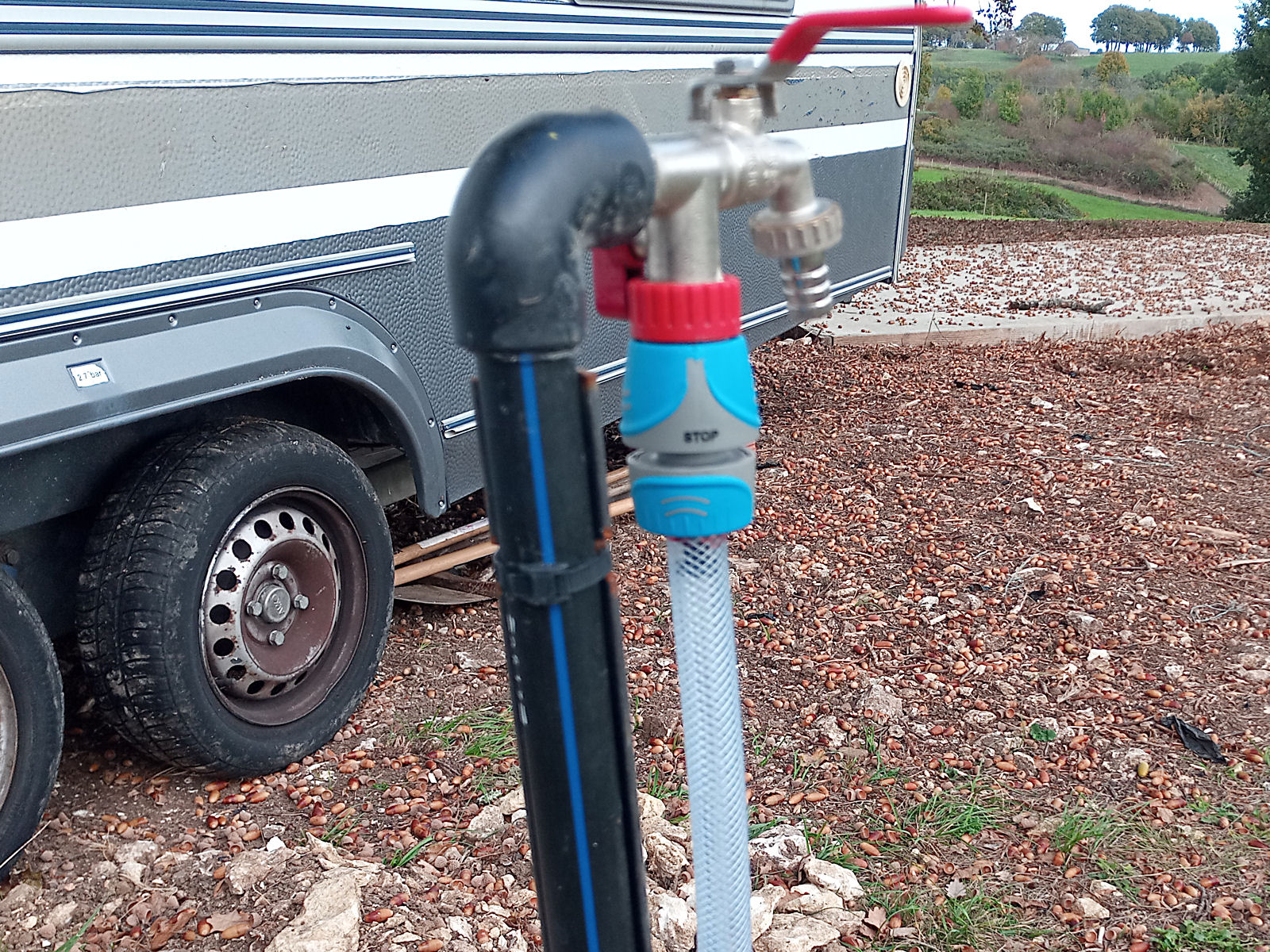
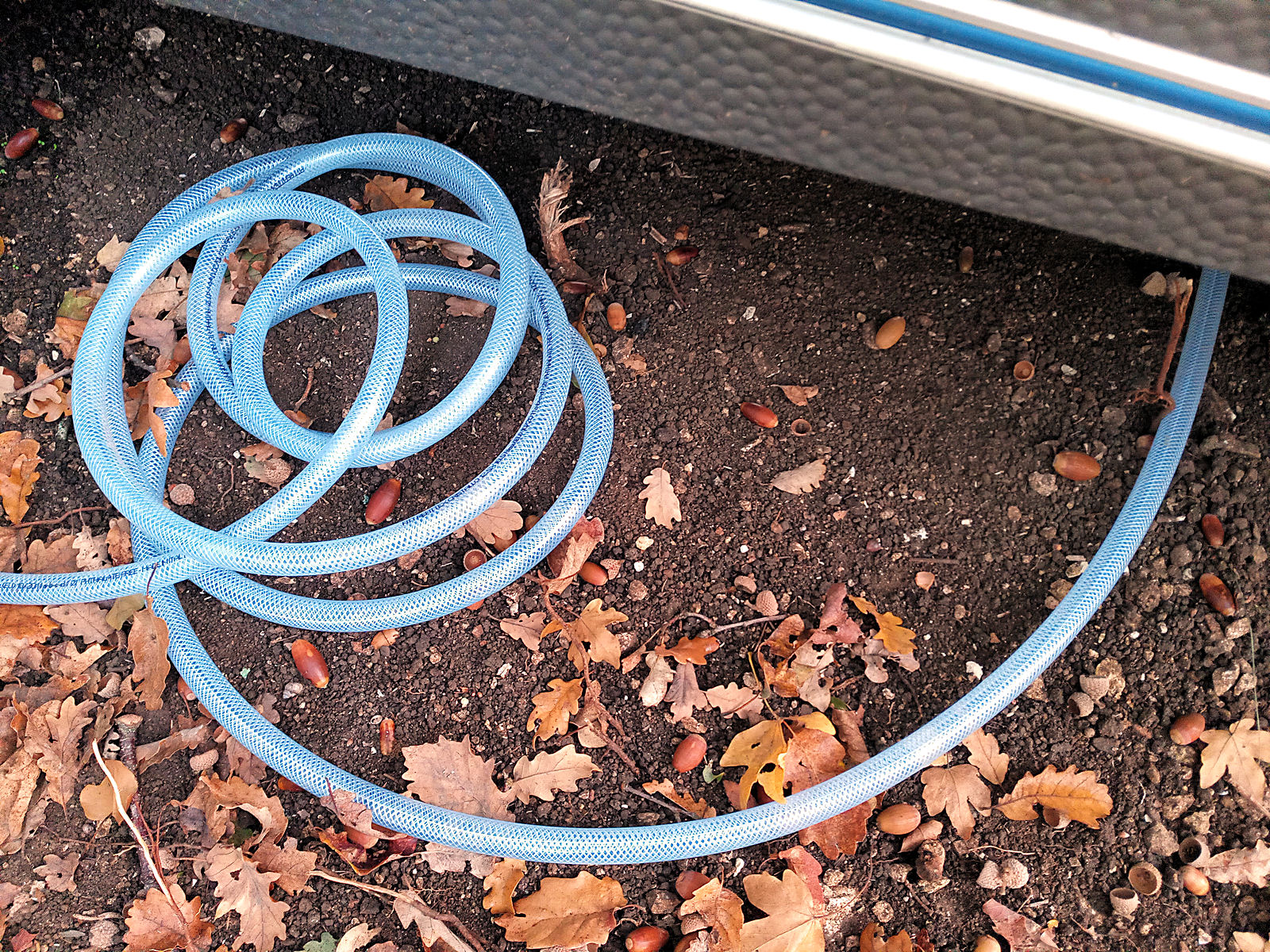
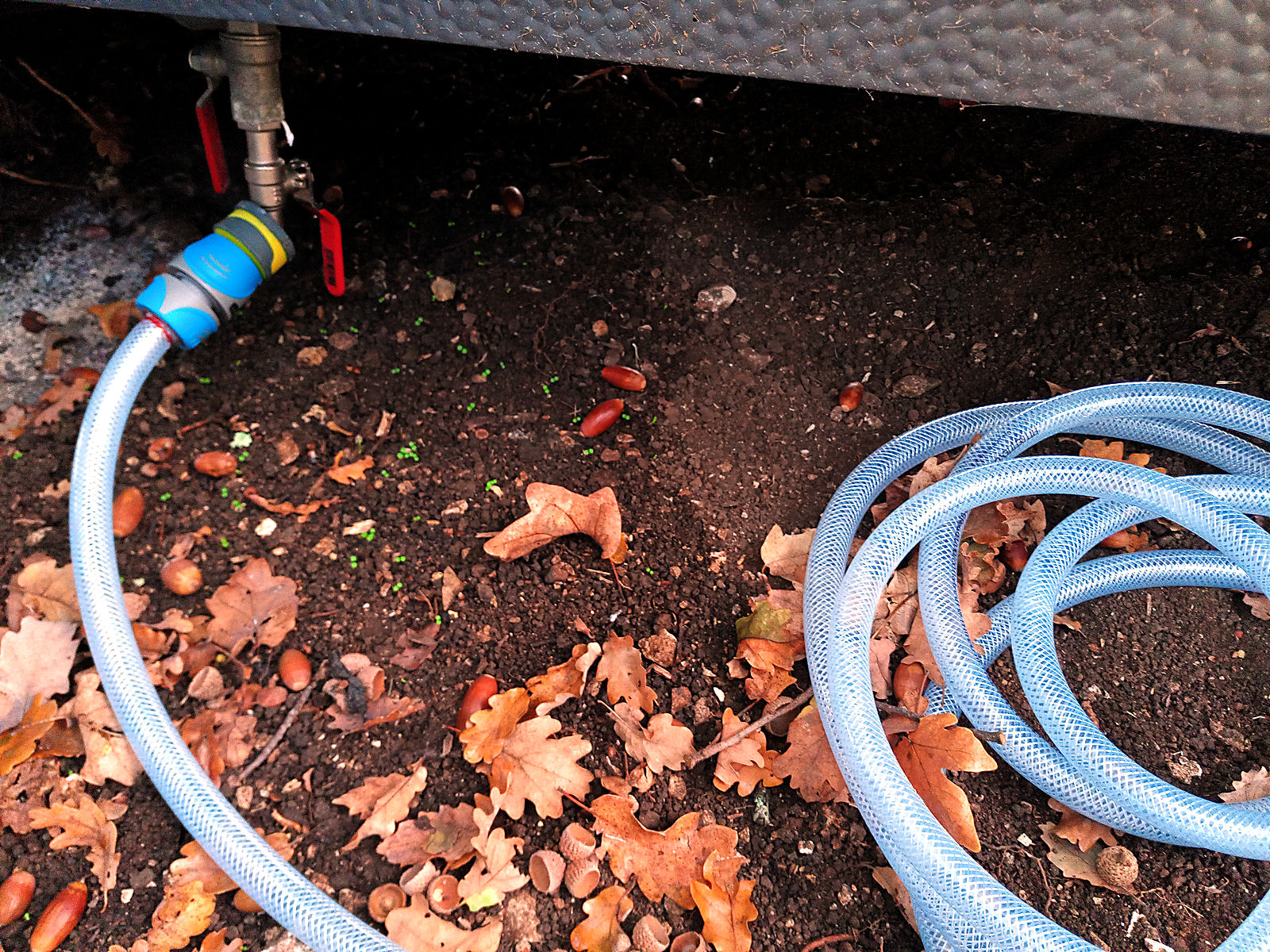
And what’s my conclusion? The water does now seem to have lost its odour and bad taste, but as phthalates are odourless and tasteless, it may not be because of the different type of plastic that I’m now using. It’s more likely that as my old hosepipe has been standing open to the air with ‘old’ water in it, internally it has taken on some of the characteristics of stagnant water and needs some kind of clean-through to be suitable for carrying drinking water again. However, I won’t bother doing that now I have my new hosepipe as the old one will in future only be used in its normal role as a garden hose.
But anyway, I count that as a win… it’s nice to be able to make a lovely, fresh tasting pot of tea again that doesn’t smell and taste as though it’s been made from water that someone’s washed their feet in!
The other project that I was working on today was the box housing the components for my temporary electricity supply. I still have no news on when Enedis will be turning up to connect me up but I decided that I wanted to be all ready in advance of the event so there will be no delay and it will be a simple matter of plugging my caravan into the box as soon as it’s made live.
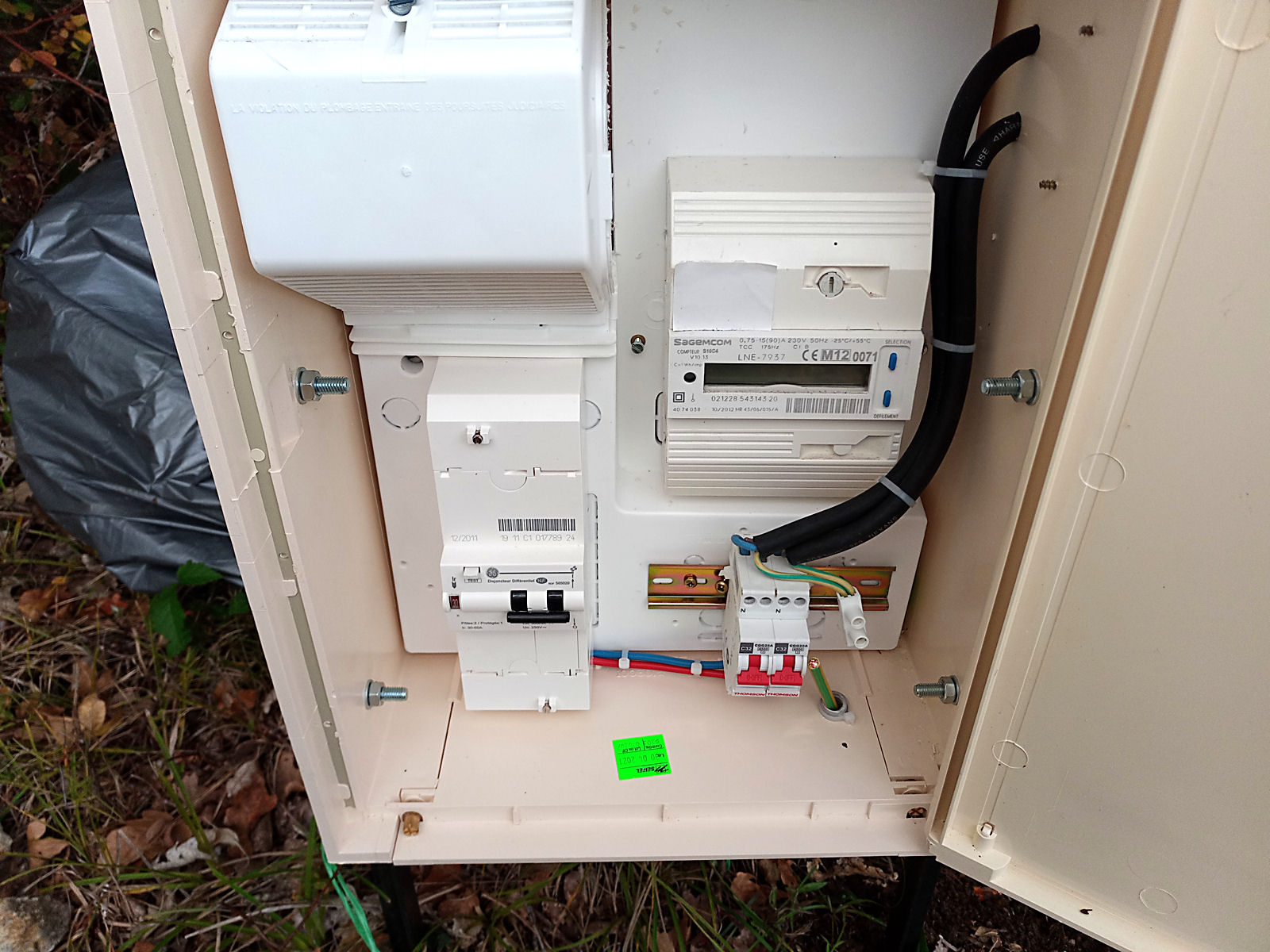
In order to do that, I needed to mount a couple of waterproof sockets onto the outside of the box (other people have put a single socket inside but I didn’t want to do that) connected via a couple of circuit breakers as I want one for myself and a spare for eg the building contractors or, indeed, just washing my car say, and I don’t want whatever happens with the second one to affect the supply to my caravan. And the last thing that you must do here in France is provide an approved earth for the system in the form of a metre metal rod banged into the ground.
Here’s a shot of the inside of the box after I’d made the two connections (line and neutral) to the main system earth-leak detector (‘disjoncteur’) on the left to the two circuit breakers for my two sockets on the right. The black cables on the right hand wall of the box are the two separate supplies to the external sockets.
Here’s a shot of the two external sockets. As can be seen in the image, I’ve also waterproofed the joint between the box and the housing in which the sockets are mounted.
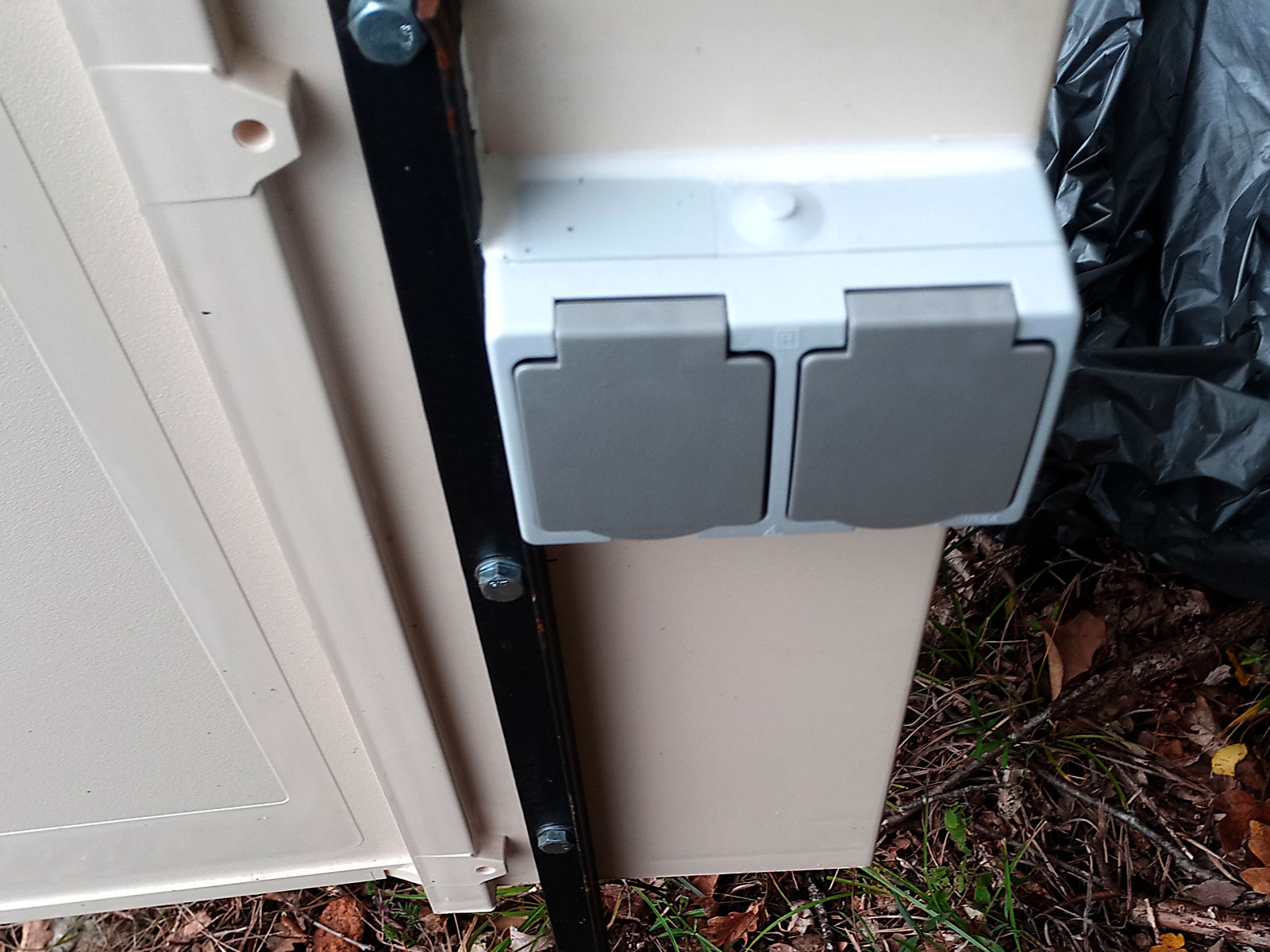
The two external sockets are of the usual French design.
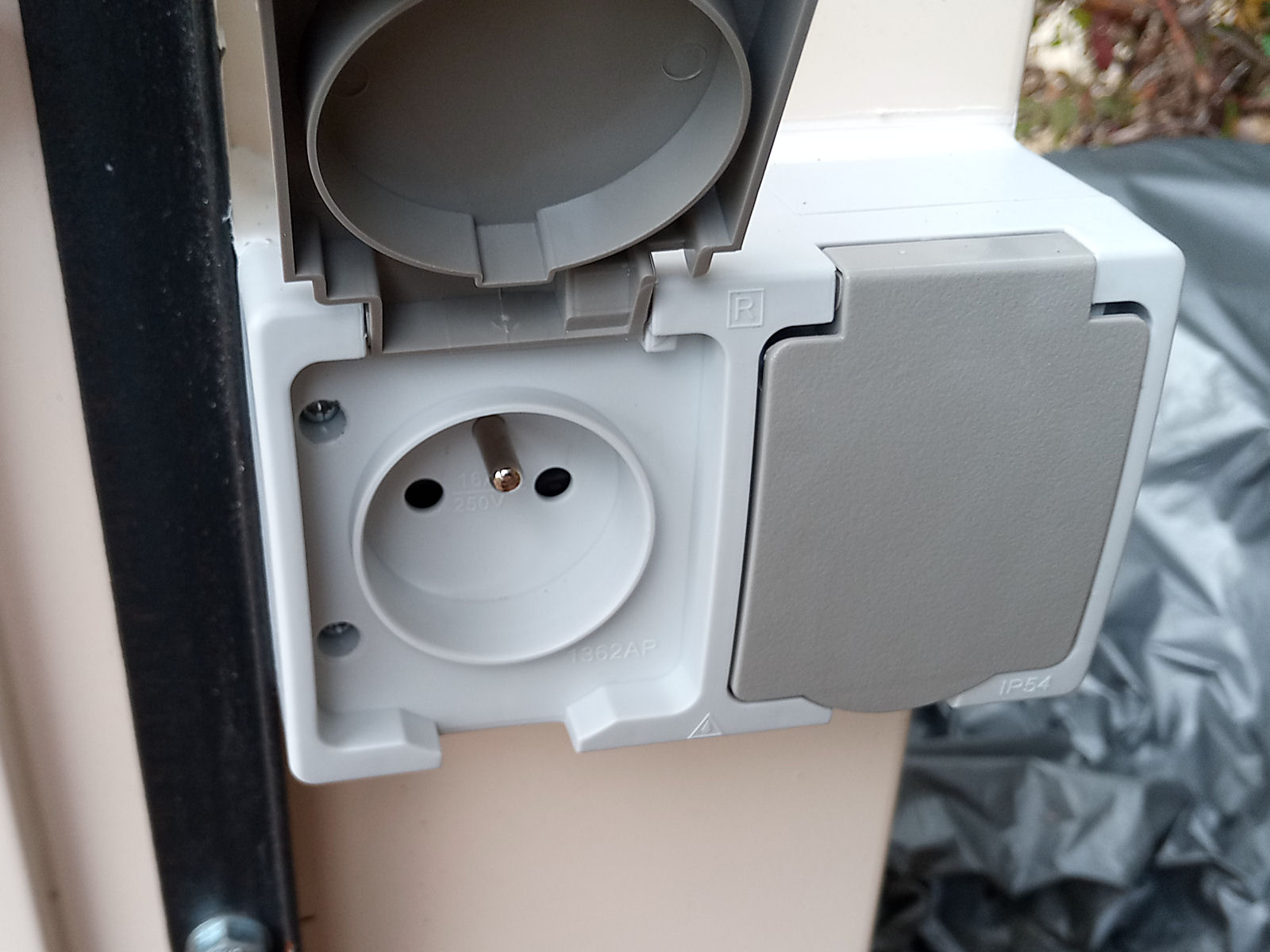
The two sockets have a common earth and the connection to the system earth is by a simple connector in the bottom of the box.
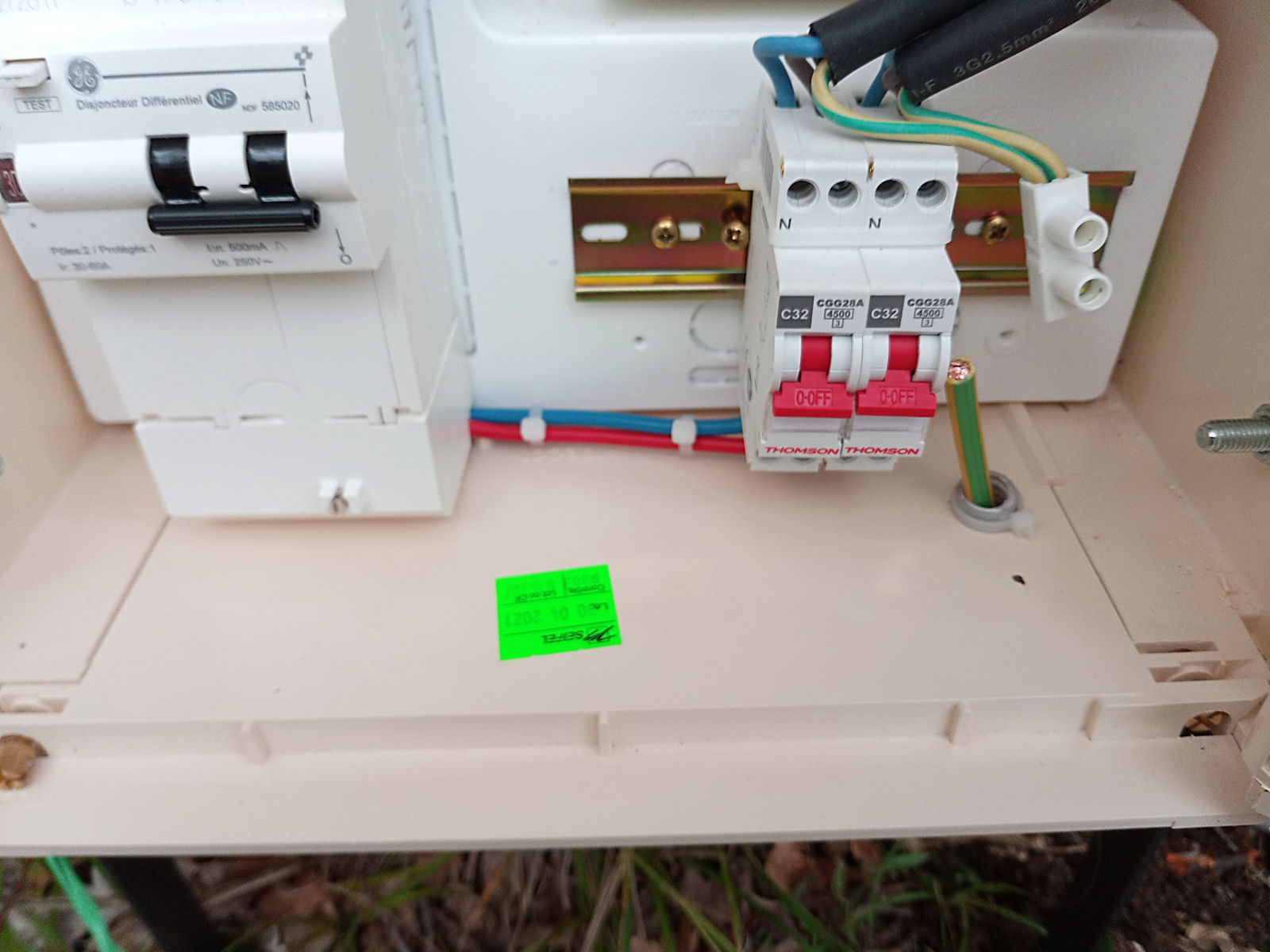
It’s a simple matter to make a connection to the heavy system earth cable which I’ve passed through the bottom of the box contained in a concertina plastic tube known here is a ‘gaine’. But it’s then that the problems start. The other end of the system earth cable has to be connected to the earth rod, in my case a heavy copper one of nearly 1.5 cm diameter, driven a metre into the ground. Here’s a shot of what I’m talking about.
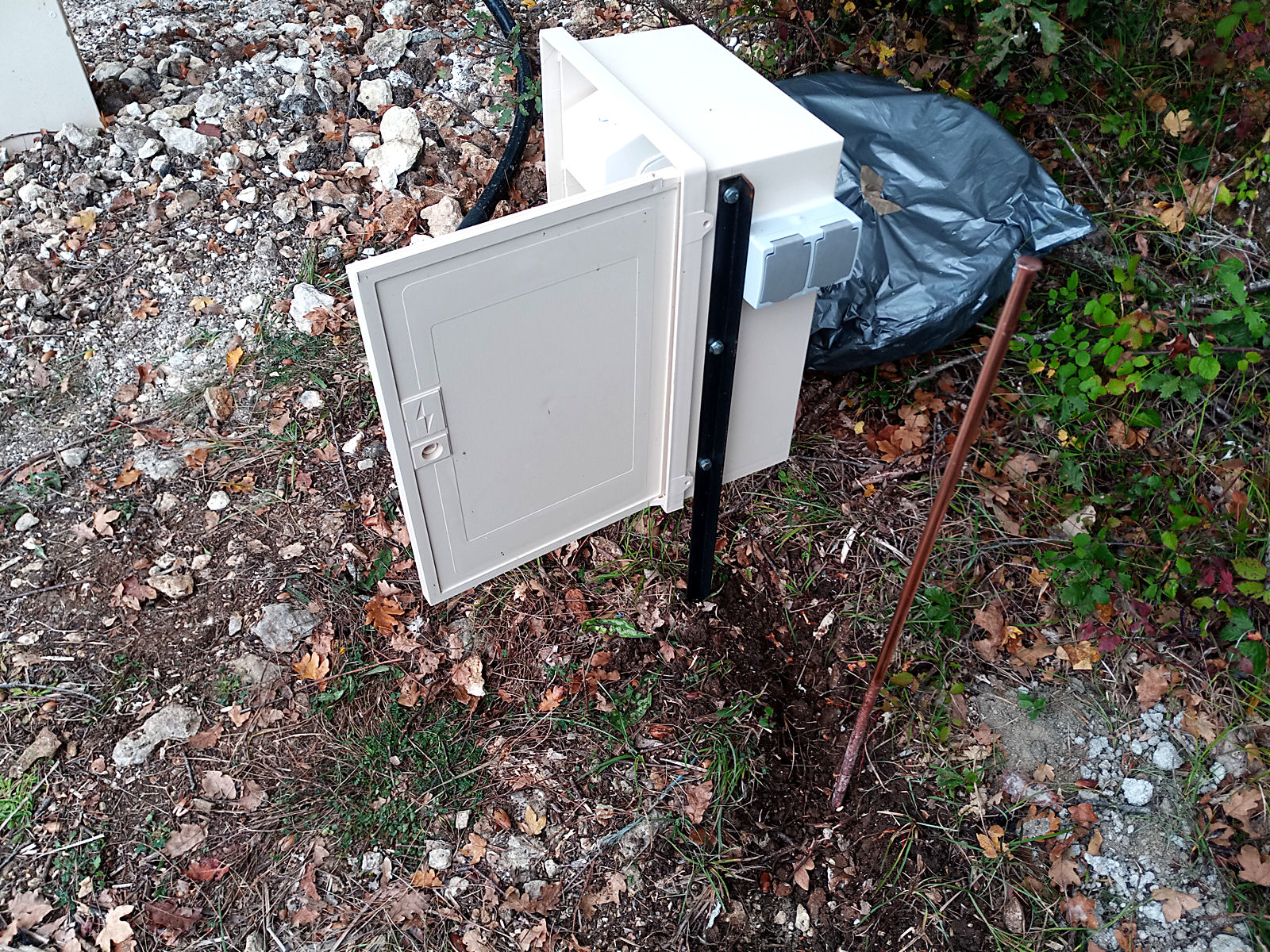
Seems simple enough, so what’s the problem? The problem is that the ground here is so rocky that the rod won’t go down any deeper than 40 cm, which is not enough for an approved earth. How can you get round that? You either have to use a more robust method of banging the rod into the ground (I’ve been using a club hammer and I’ll probably have to get my huge sledge hammer out of storage) or you can use multiple earths. The problem with that is it’s a bit hit-and miss. I could, for example, cut my meter rod in two and bang each half 50 cm into the ground and then link both as a single earth for the system.
The trouble is that you then have to start taking some careful resistance measurements to ensure that the arrangement works properly and, more importantly, safely. I think that I’ll go the sledge hammer route first and see how I do with that before starting to get in more deeply 😉
 English
 Nederlands
 Français
 Deutsch
 Italiano
 Latviešu valoda
 Português
 Español