



Right at the start of my house-build project, just after work began on the foundations, it rained. It bucketed down. When they were putting up the walls, it not only rained but snowed as well and when they put the roof on, it poured down. When the window sills and door thresholds were installed it rained and when the windows and doors were fitted, the weather was so appalling that afterwards, because the roof still wasn’t finished, the house ended up half-flooded inside.
The team who were laying the floor-levelling screed turned up to continue their work this morning, augmented by an additional member who would help speed up the process. And then this lot also showed up out of the blue.

I knew they’d be along some time, I expected next week, but they were a team of four who’d come to apply the ‘Crépi’ to the house’s exterior walls. And guess what, after a week or more of lovely, warm weather that would have been perfect in which to do the job, today it rained.
But they persisted and got the end gables and the whole back of the house done and as I type this, they are still working away giving the walls the rough finish that I asked for. Luckily, for now at least, although it’s windy, it isn’t raining and I just hope that it holds off for long enough so the walls can dry enough for their surfaces not to be damaged if it starts up again.
They started by adding metal corner profiles to all of the window and door edges and masking up all around to protect every surface except the walls.
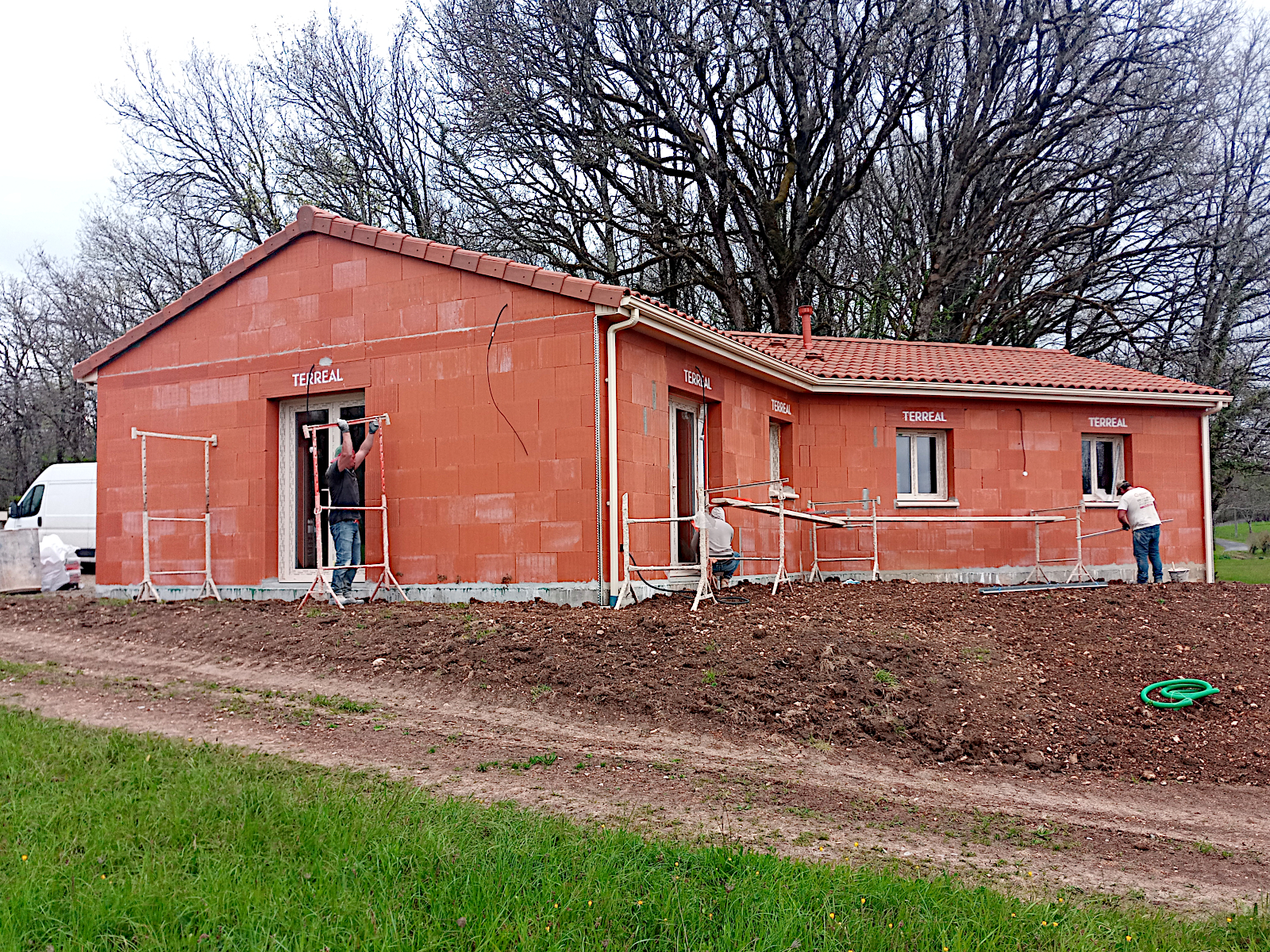
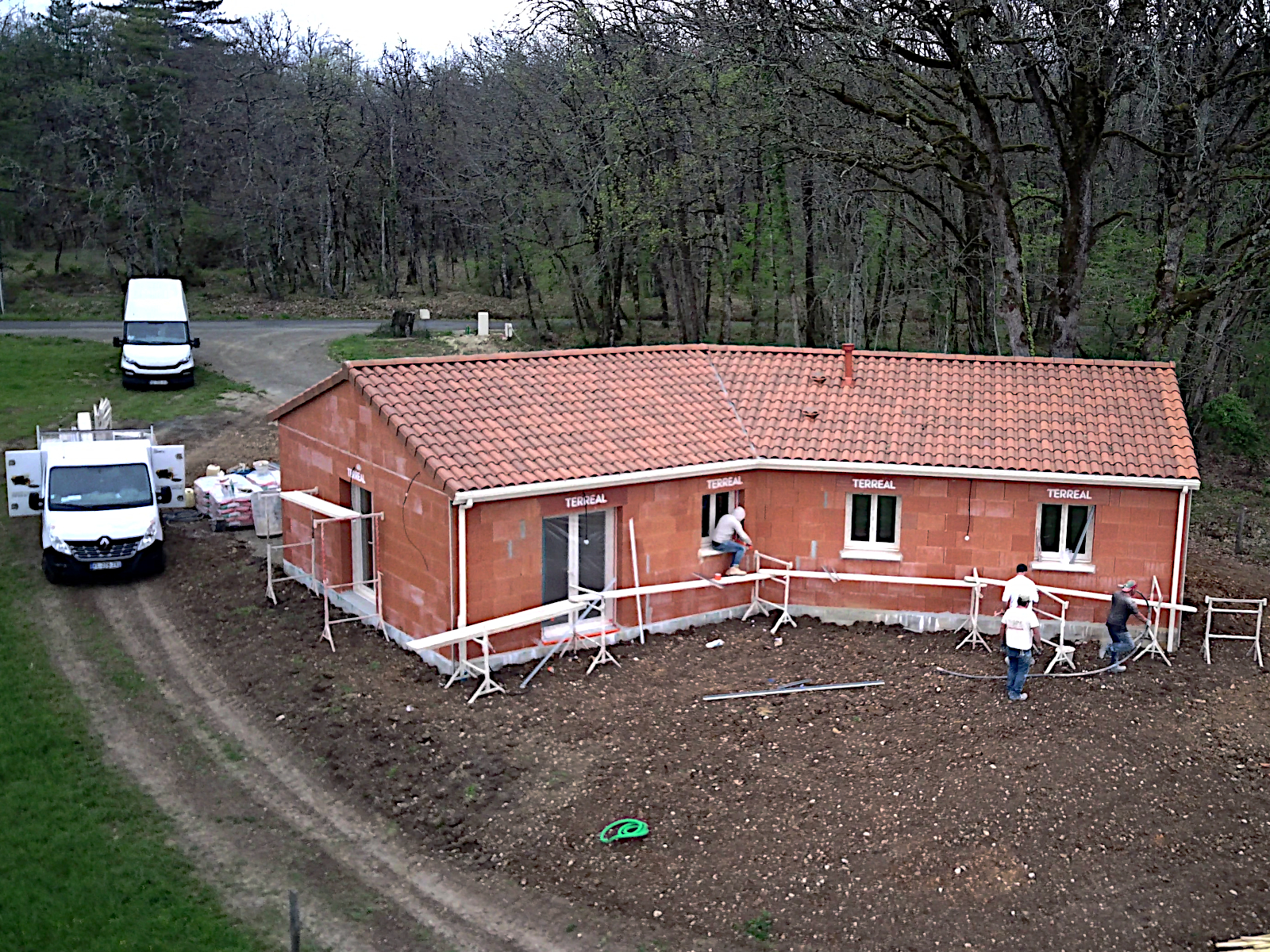


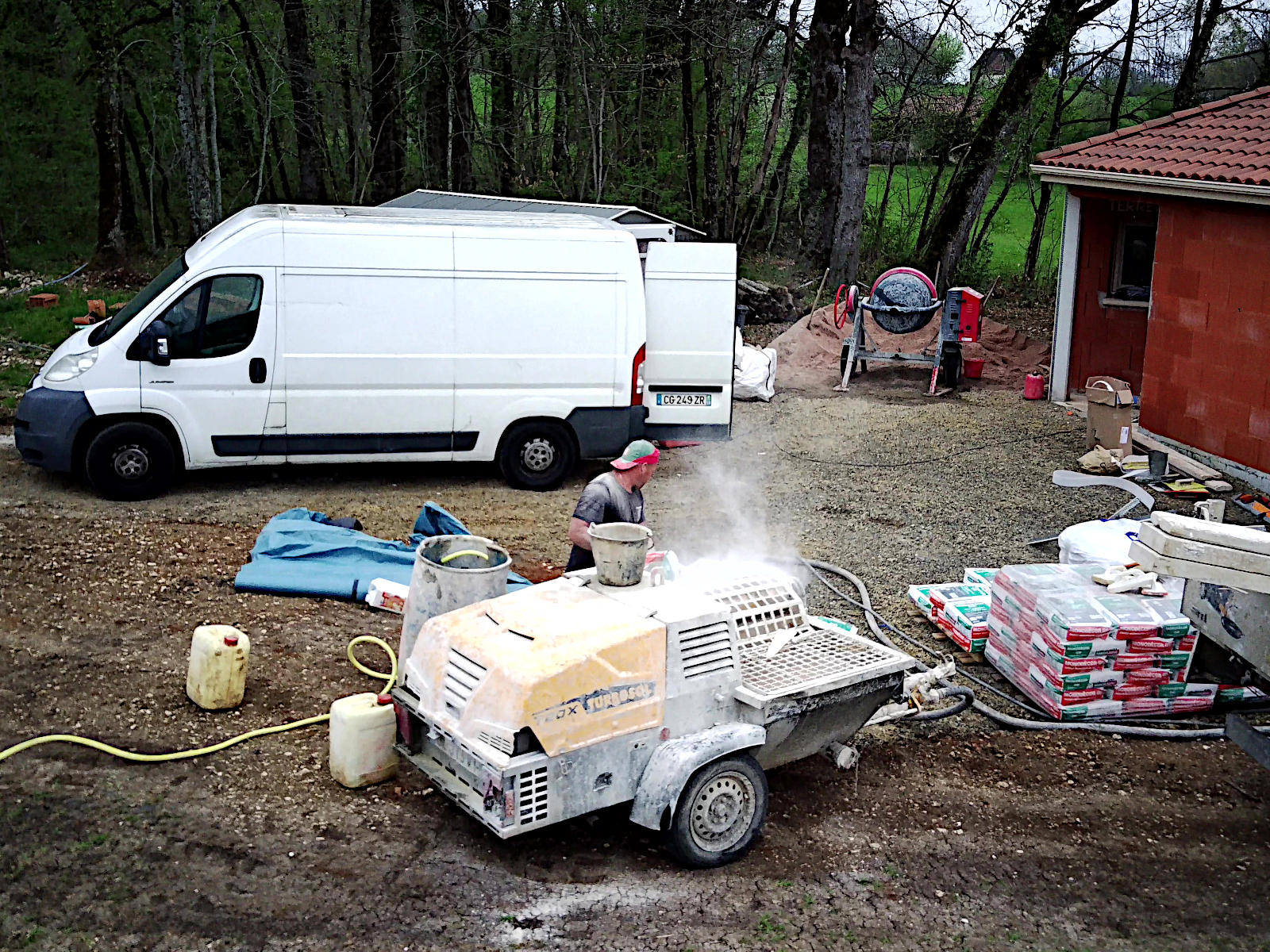
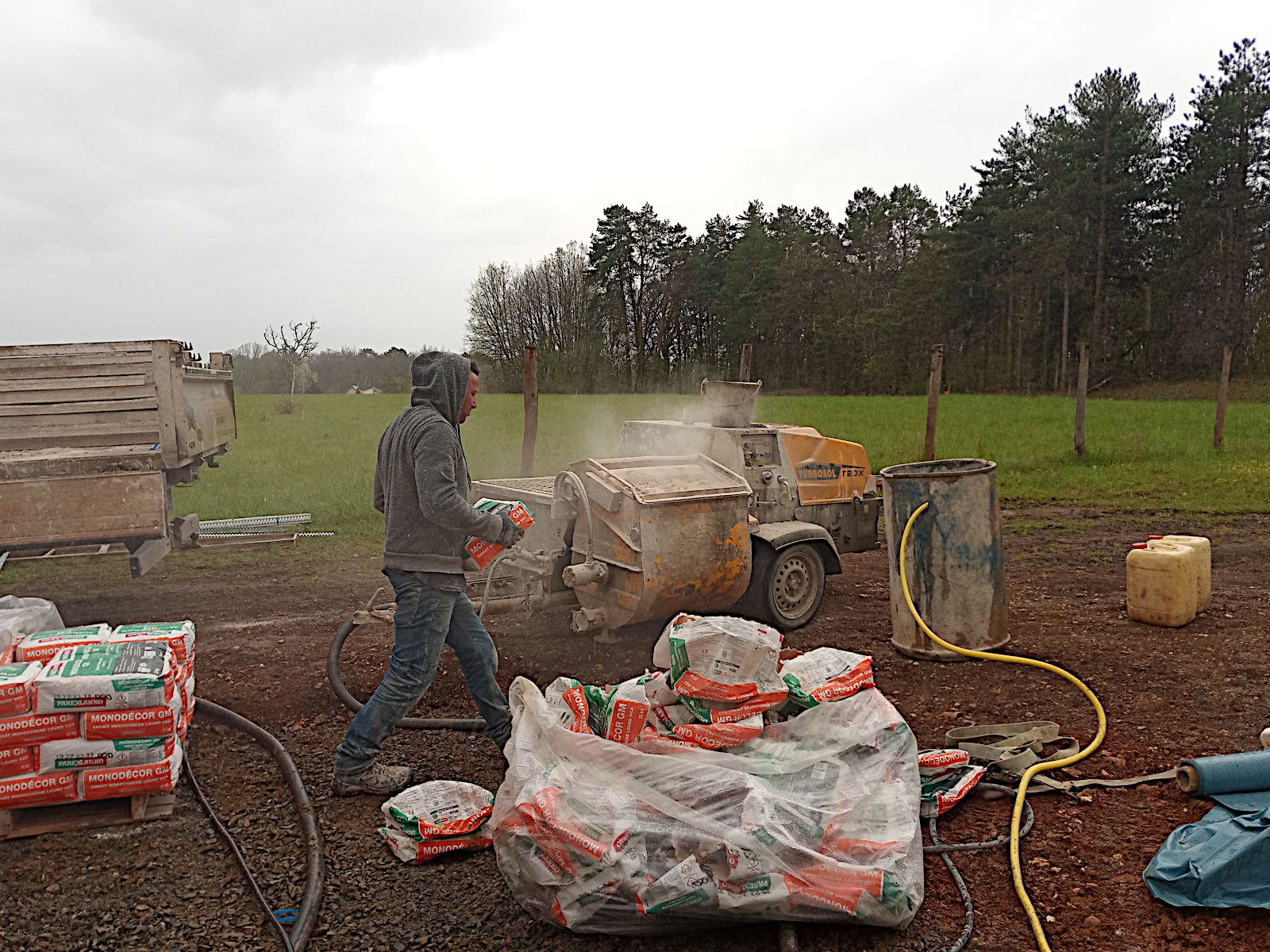
This was the scene in the front of the house with the ‘screed crew’ busy using their cement mixer just before the ‘Crépi team’ fired up their machine to get going on the walls.
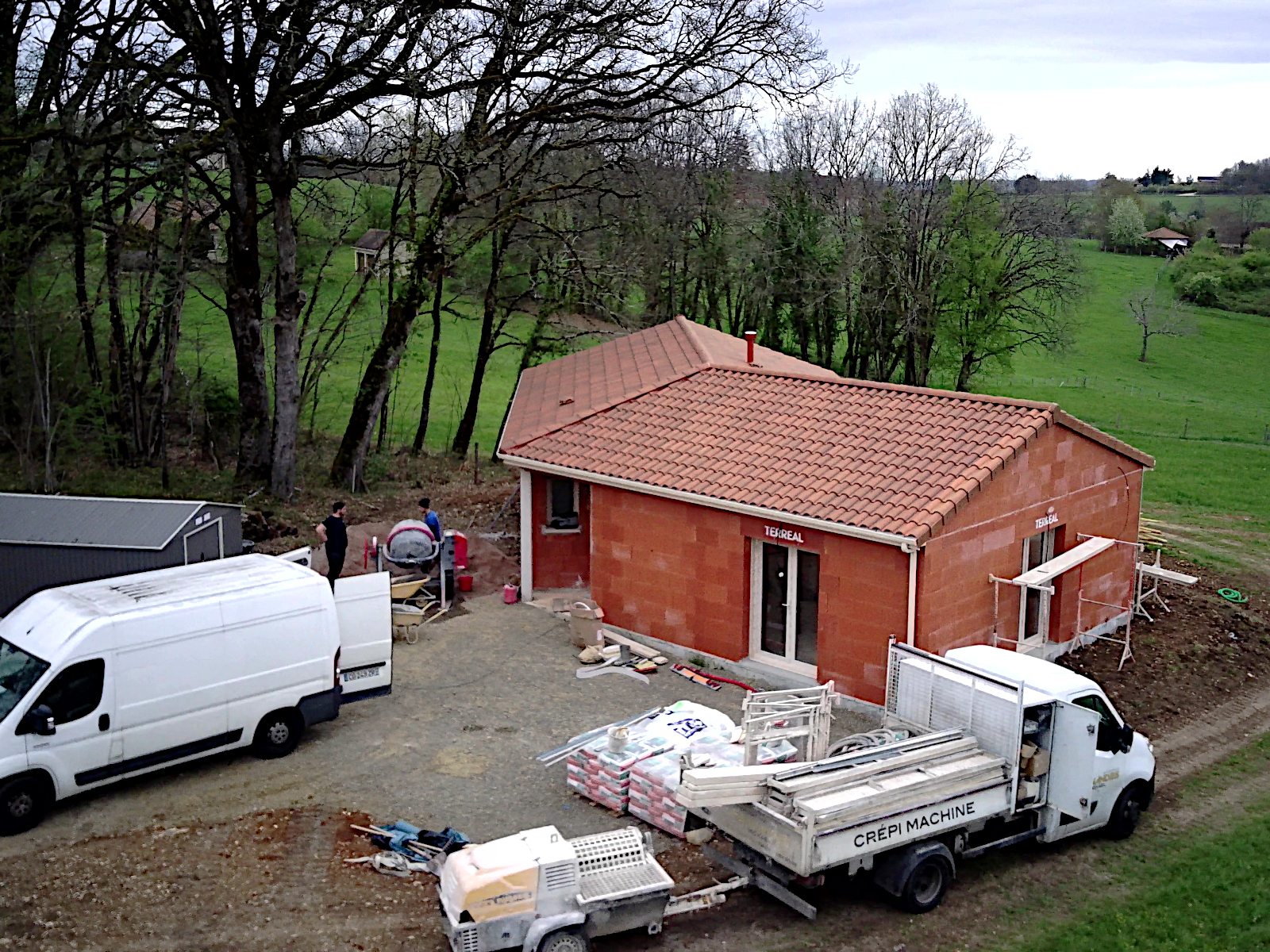

The ‘Crépi’ mix is poured straight out of the bag into the mixing hopper of the machine where it is mixed to the right consistency with water. Then the mixing hopper is tipped up through 180 degrees so the mix pours into the machine’s pump hopper from where it is pumped down a tube to a nozzle that is used to spray the mix onto the wall. While one batch is being pumped a further one can be mixed and added to the pump hopper before it empties thus making it a continuous process.
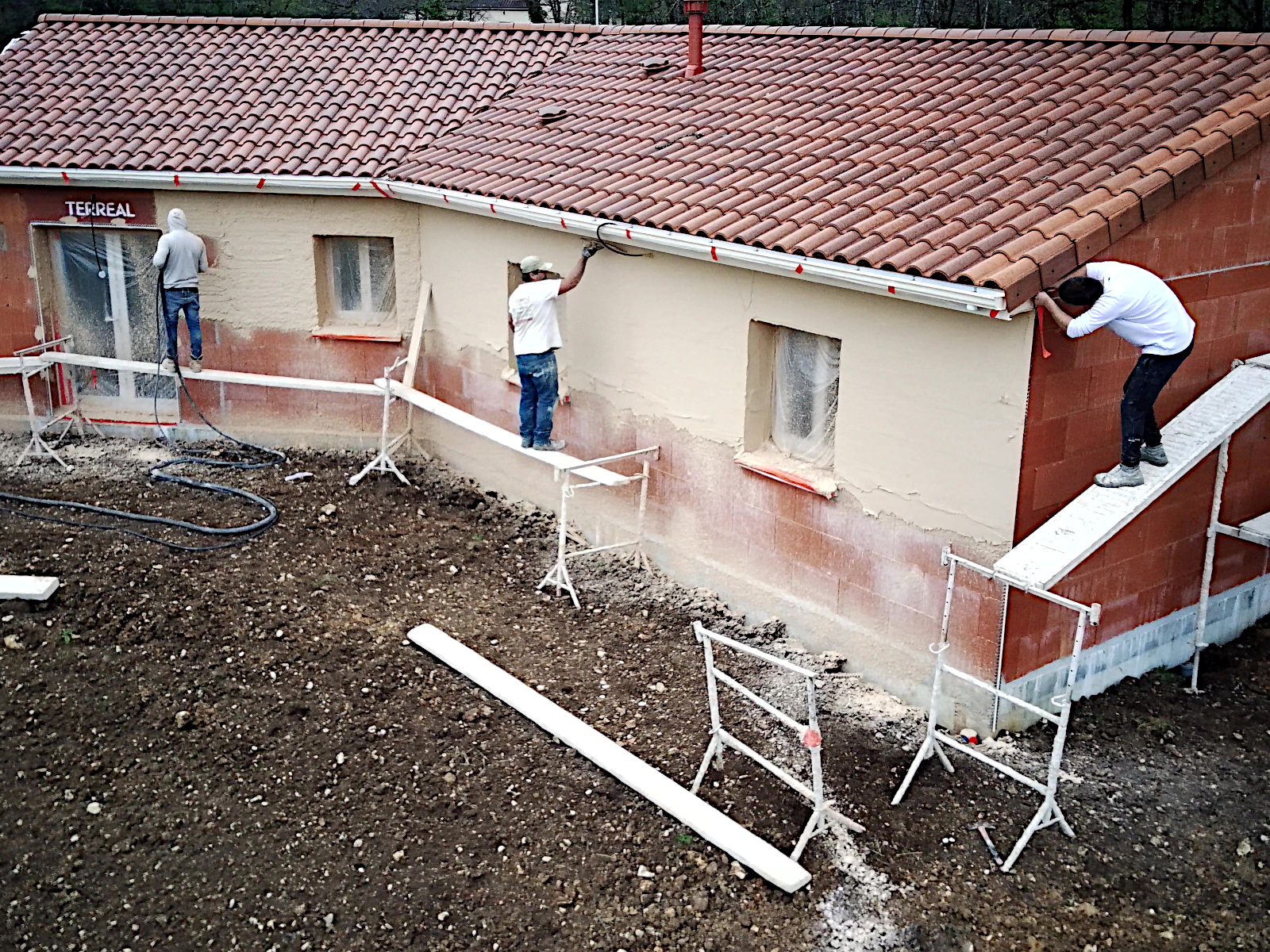
Here’s what it looks like as it’s applied to the walls. The nozzle operator sprays the mix onto the wall to the required thickness and as he moves on, a second worker follows screeding it down flat with a long straight edge.


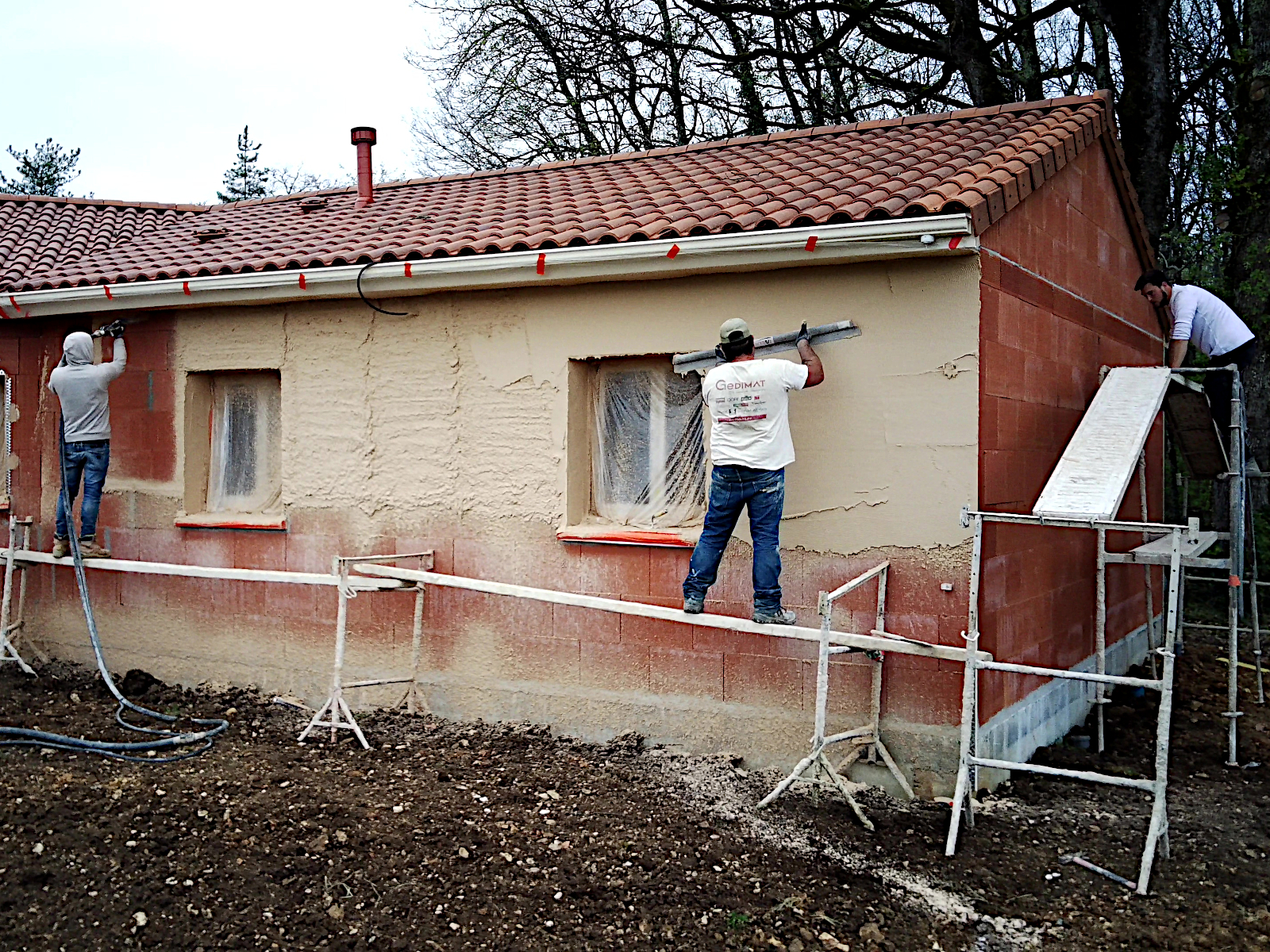
Here’s a shot of the mixer man who was also responsible for moving the tube at the other end near the wall from time to time as the nozzle operator moved along.
While two men were working on the wall, the last member of the team was busy masking up the areas that would be covered next.
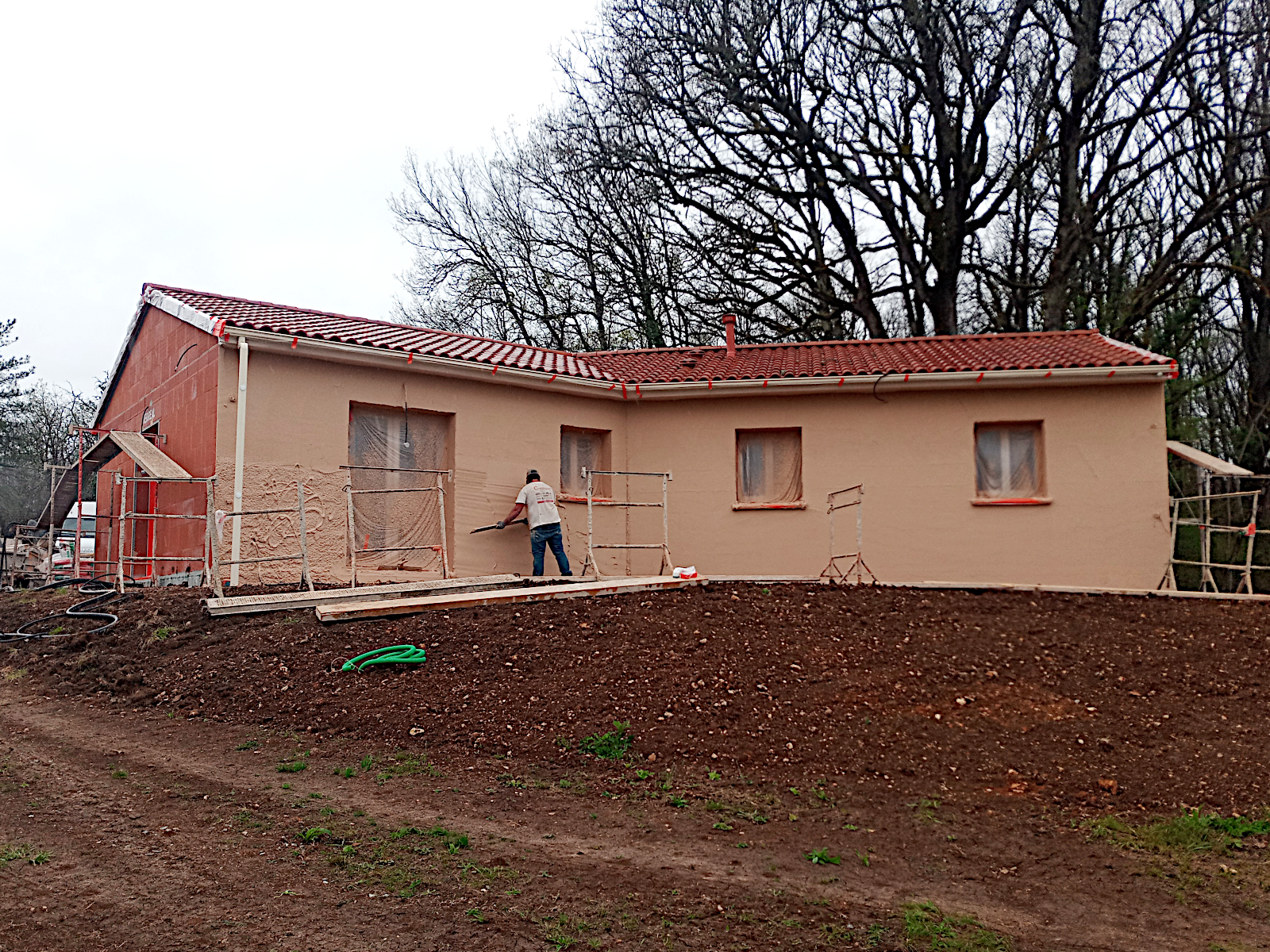
In the next shot, the whole of the back of the house had been coated and while one of the men screeded and then trowelled it off, the nozzle operator got ready to move onto the southern end of the house.
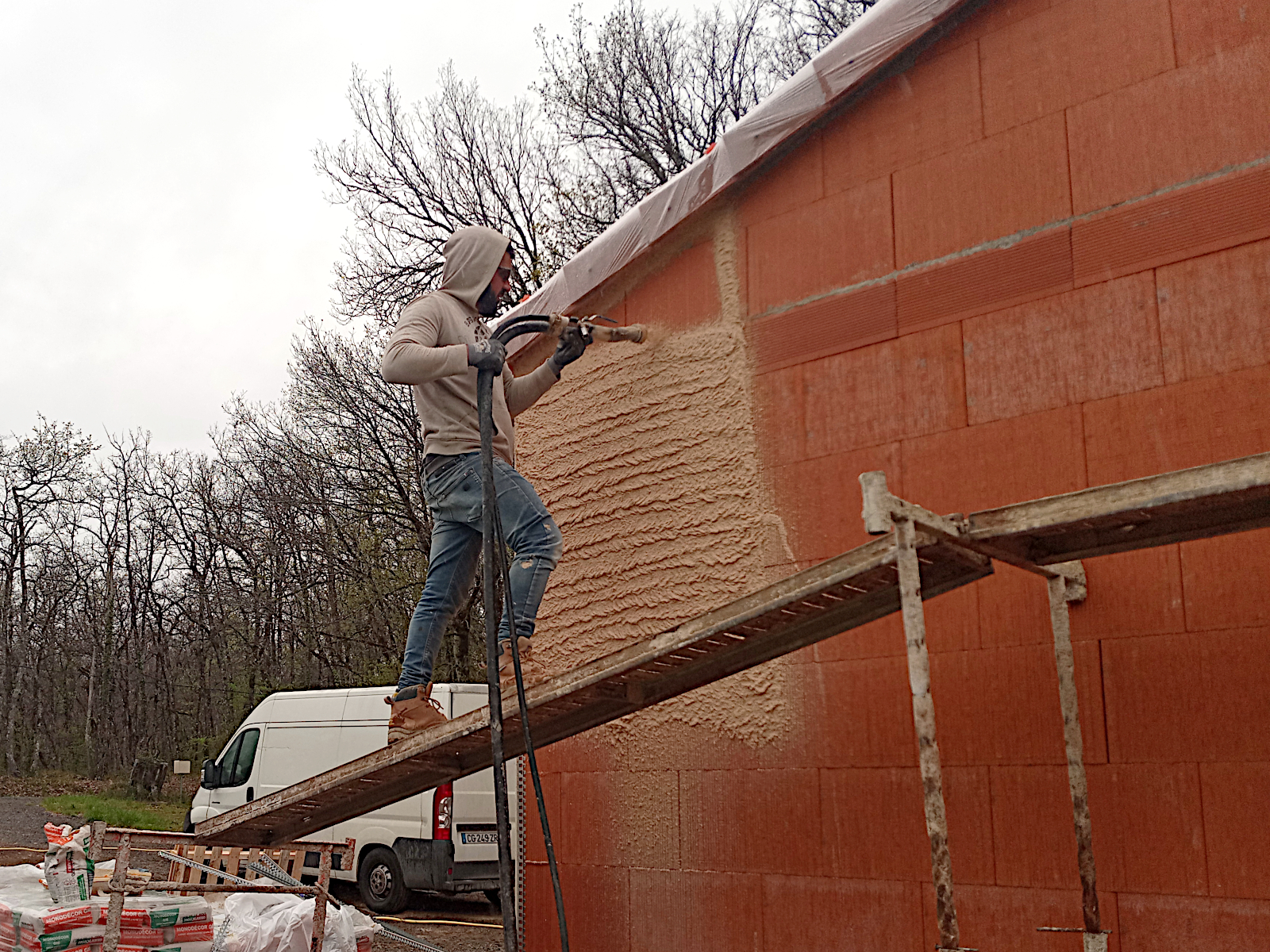
In the next shot he was clearing the gun ready to start and in the following one he was applying the ‘Crépi’ in earnest.

The task now on the back of the house was all about getting the surface right. It was to take a lot of time and was not helped by the weather which became showery and quite windy.

Here’s another shot of the mixer man.
The same two then repeated what they’d done on the back of the house on the southern gable and then on the gable on the bedroom end.

In the meantime, the screed crew were moving ahead at a brisk pace as they had one man mixing non-stop and the second running the screed mix in to be laid by the third. When I popped my head in at around 11.00 am they’d already finished the corridor, were working on the kitchen floor and were already running in mortar for the living room.


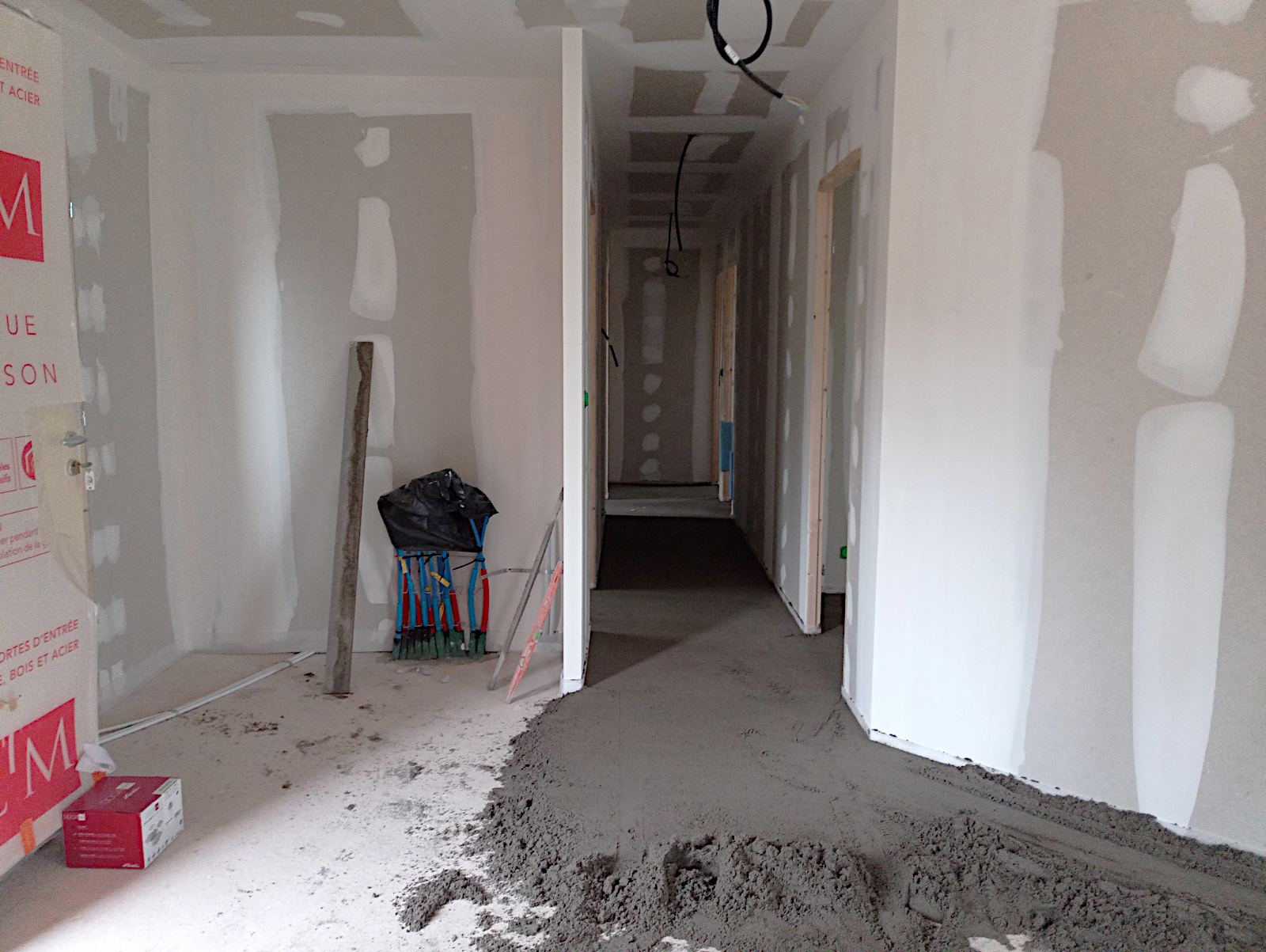
This meant that whereas I thought they’d be coming back tomorrow, they were able to finish the job around mid-afternoon before I’d finished typing this post. This meant, unfortunately, that I didn’t want to go inside the house to take a look in case there was some kind of accident and the screed they’d laid got damaged in some way. Also, when I went to look, the whole of the front of the house was sealed and masked up ready for tomorrow.

So the ‘Crépi’ team will be back tomorrow to finish off the front of the house. I’ve been very impressed by their work as they’ve spent as long, if not longer, finishing the wall surfaces as they did applying the ‘Crépi’ and I think it shows in the results.


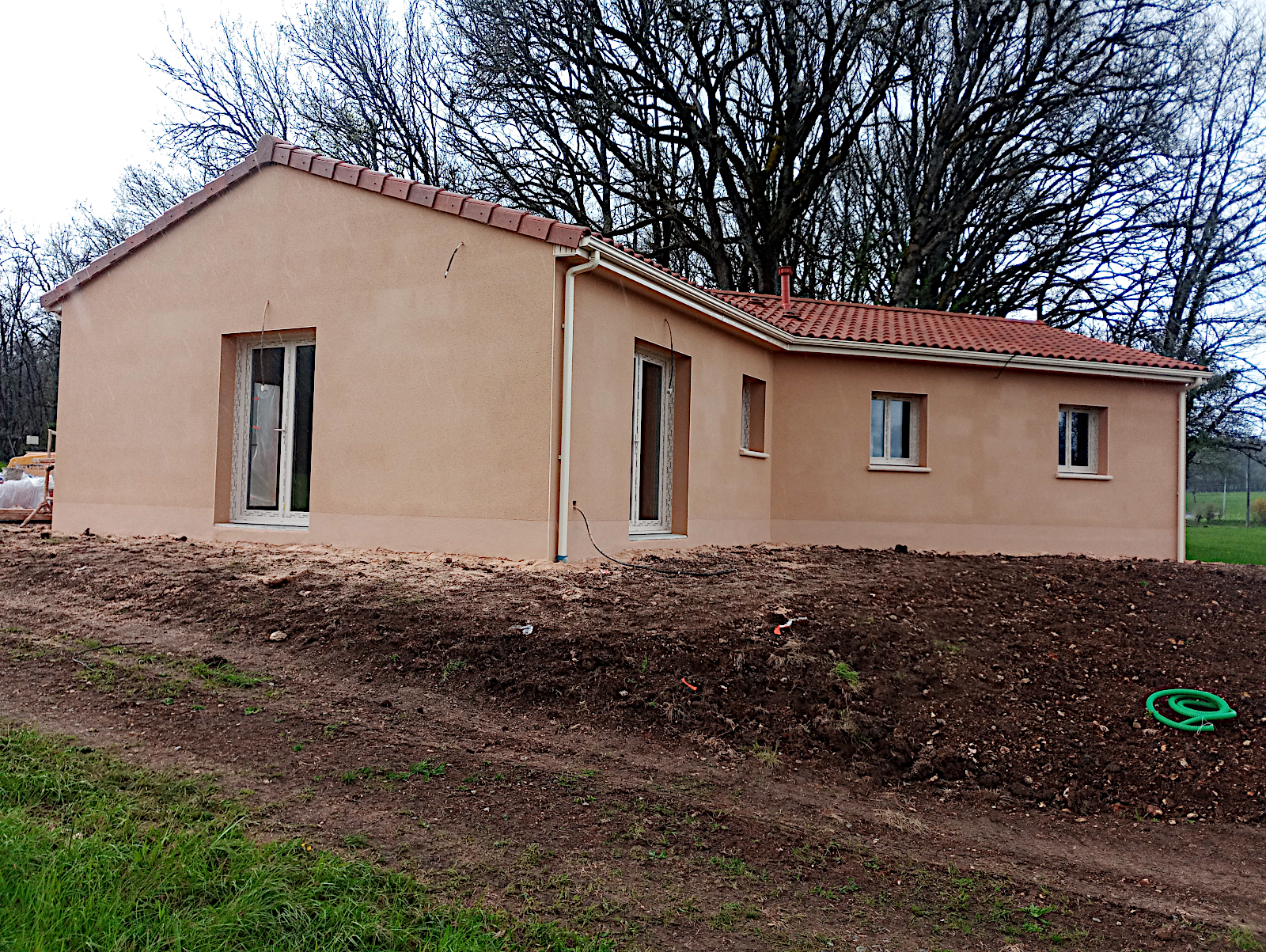
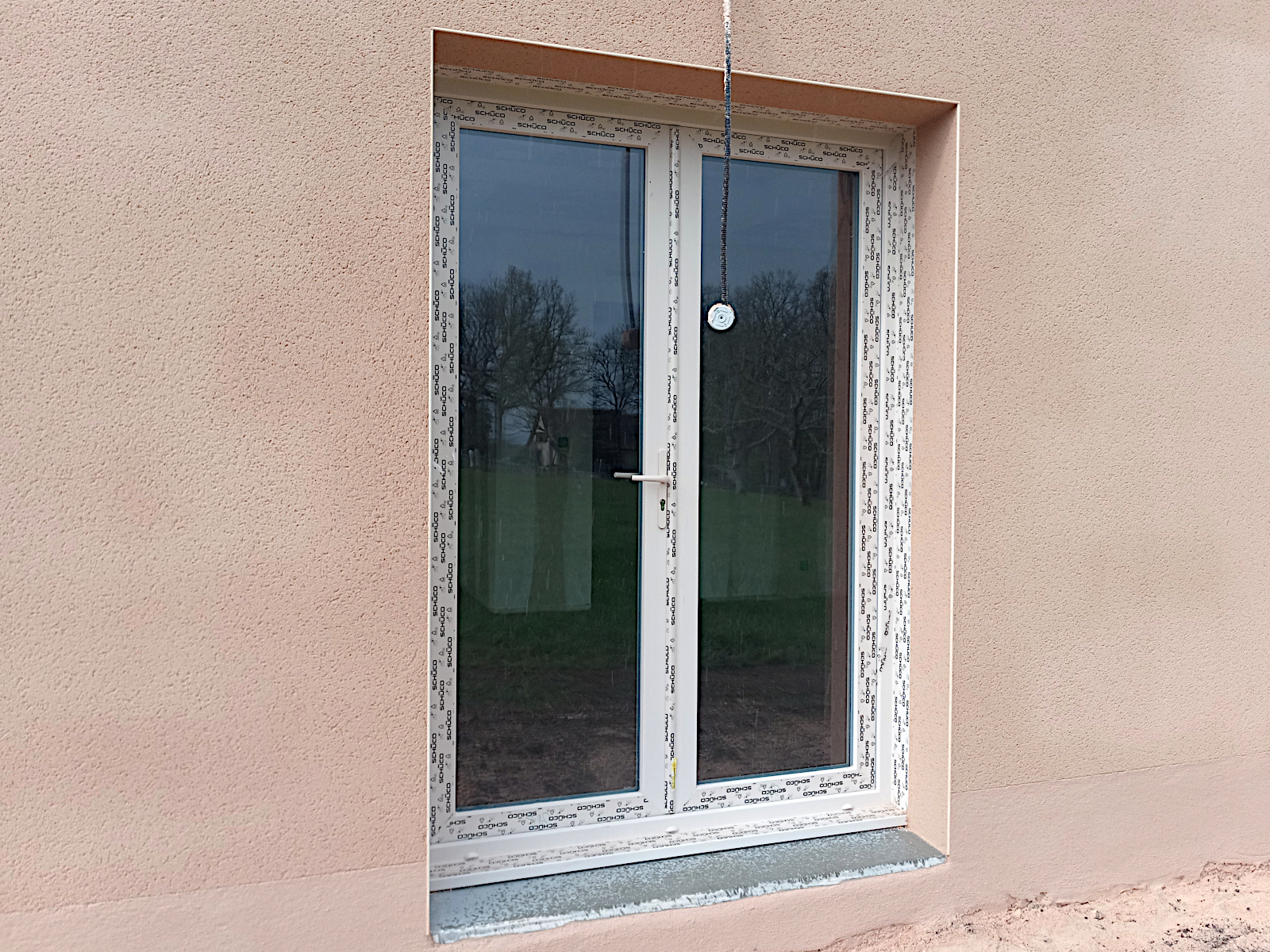
Notice the smooth band with a sharp edge that they’ve applied all along the bottom of the walls.
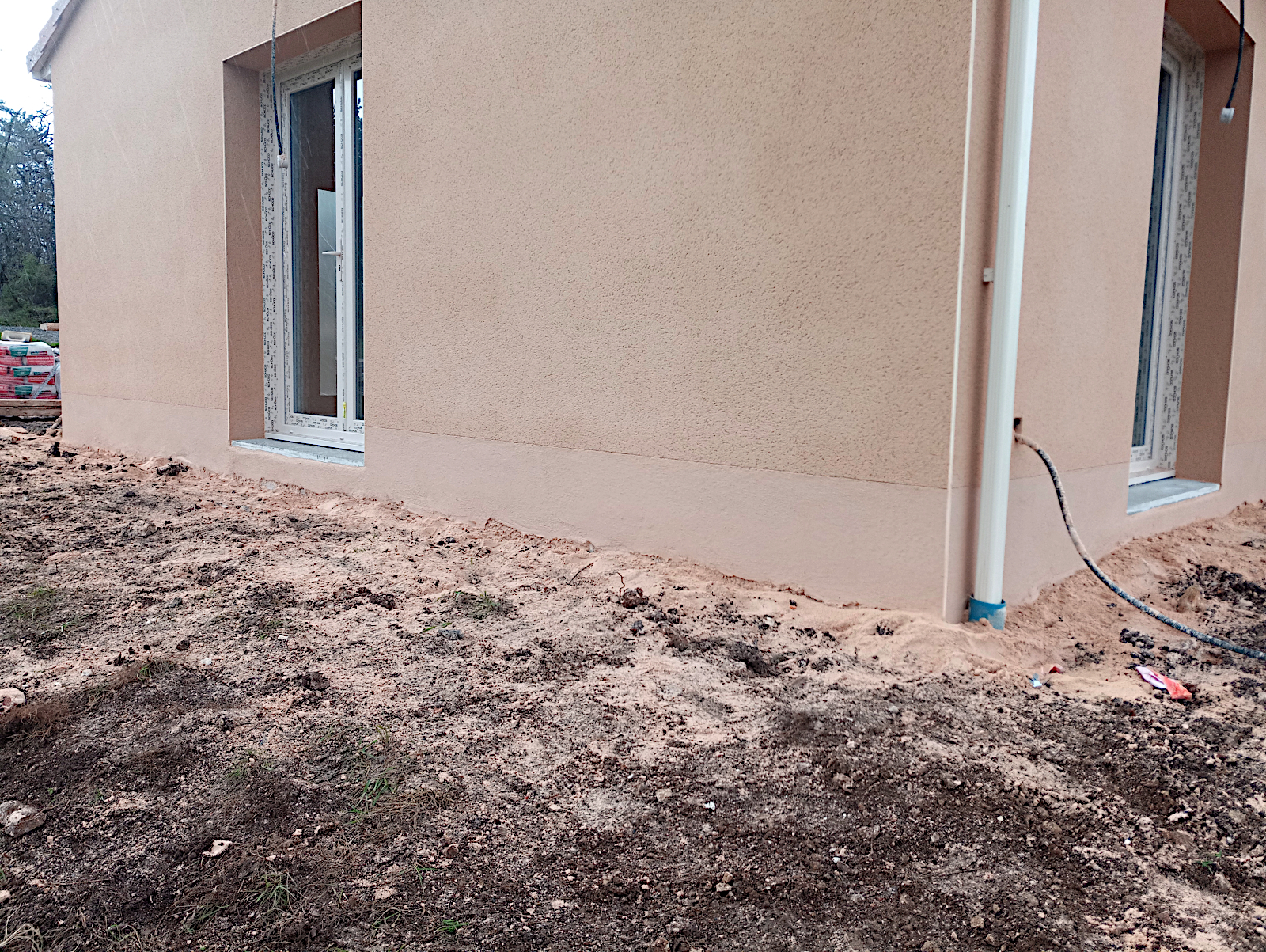
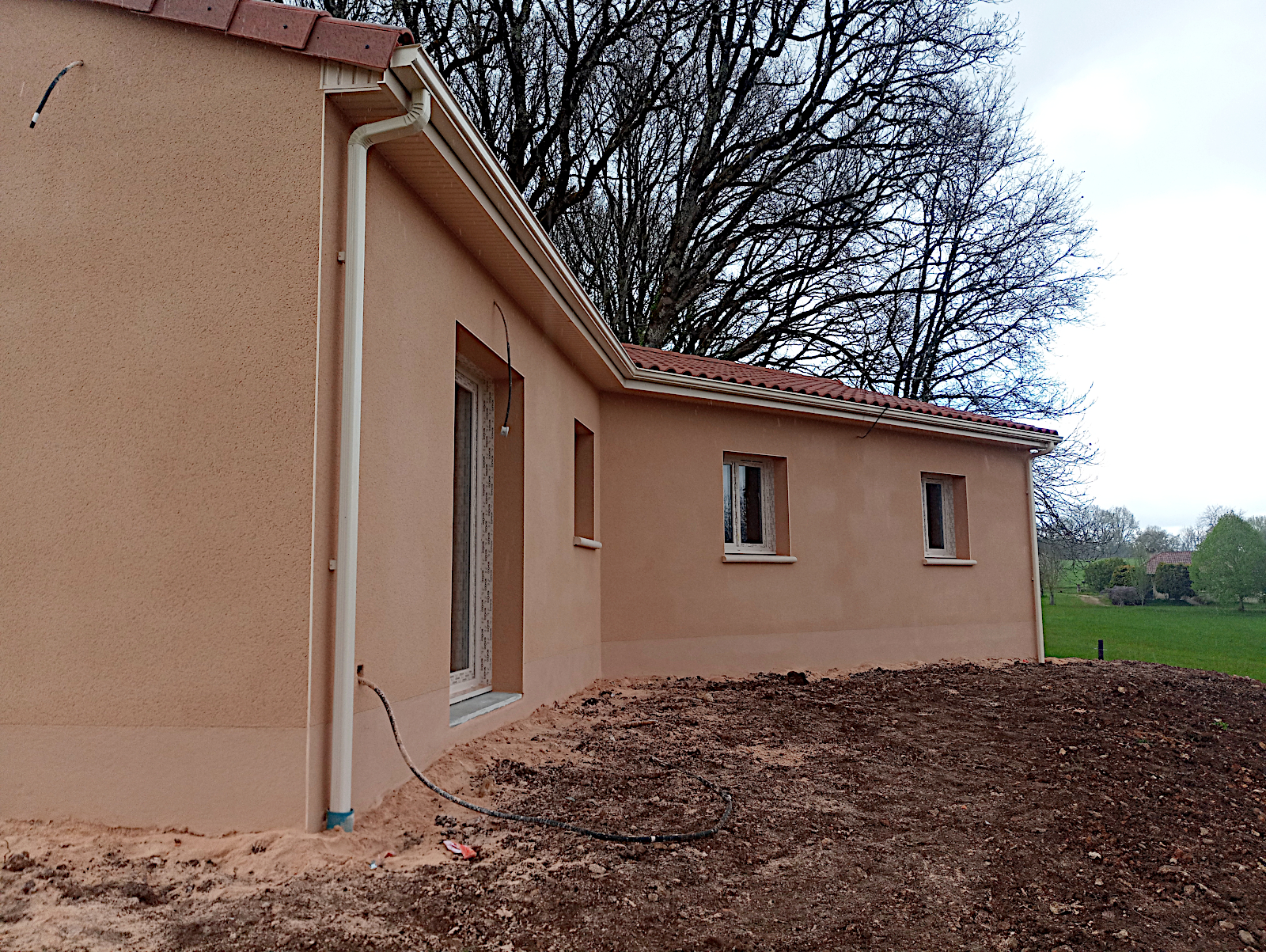
I like that 😉
 English
 Nederlands
 Français
 Deutsch
 Italiano
 Latviešu valoda
 Português
 Español
Hi Sean, good to hear from you again. Yes, I can’t wait now for it to be over. Two years in the caravan is more than enough for anyone. I’ve learnt a lot myself from the build. Although I designed the basic house the builder did a lot (all?) of the technical heavy lifting. If I was a few years younger I’d do another with what I’ve learned from this one but I guess it won’t happen now 🙂
Sorry to have taken so long to reply Les. I’ve been so busy I’ve been missing comments on my blog. Yes, I’m sure you’re right. It doesn’t need painting as it comes in a huge range of colours but the only thing I notice here in France is that over the years the colour has washed out on lots of older buildings and you can even see the colour of the underlying blocks beginning to seep through. If it happens to mine it probably won’t be my problem though 🙂
It has been very interesting following this build Roger. Nearly there!
Glad to see things moving at a pace now. The ‘Crepe looks like what we have just had done on our rendering, they call it K Rend it’s supposed to last and not need painting. More expensive than normal morter rendering.