


No, not because it’s probably going to start raining before I’ve finished it, which it probably will do, or because I’m having big problems with my new ‘anti-sanglier’ fence. On the contrary, things are proceeding quite smoothly although there is one thing. I’ve not really managed to fathom how the wire tensioners are supposed to function and although I’ve invented my own method that seems to work, there’s always the danger that it won’t in the long term, the wires will loosen and the fence will start to sag. And that I do not want!
I thought that I might get some ideas from looking at other fences in the area but putting it delicately, I don’t think that I’d be able to learn very much from them as to a one, they all look as though they’ve been thrown up, maybe without any tensioners at all. So I’ll just have to see how my method works in the longer term.
I got all the bottom tensioners fitted but only managed to get three wires into position today, the upper and lower in the far corner and the lower in the longer segment of fencing along the bottom end of my land. Here’s a shot of the far corner which now shows how high the fence will be and how much I’ll need to trim off the tops of the posts to bring them down to a suitable height.
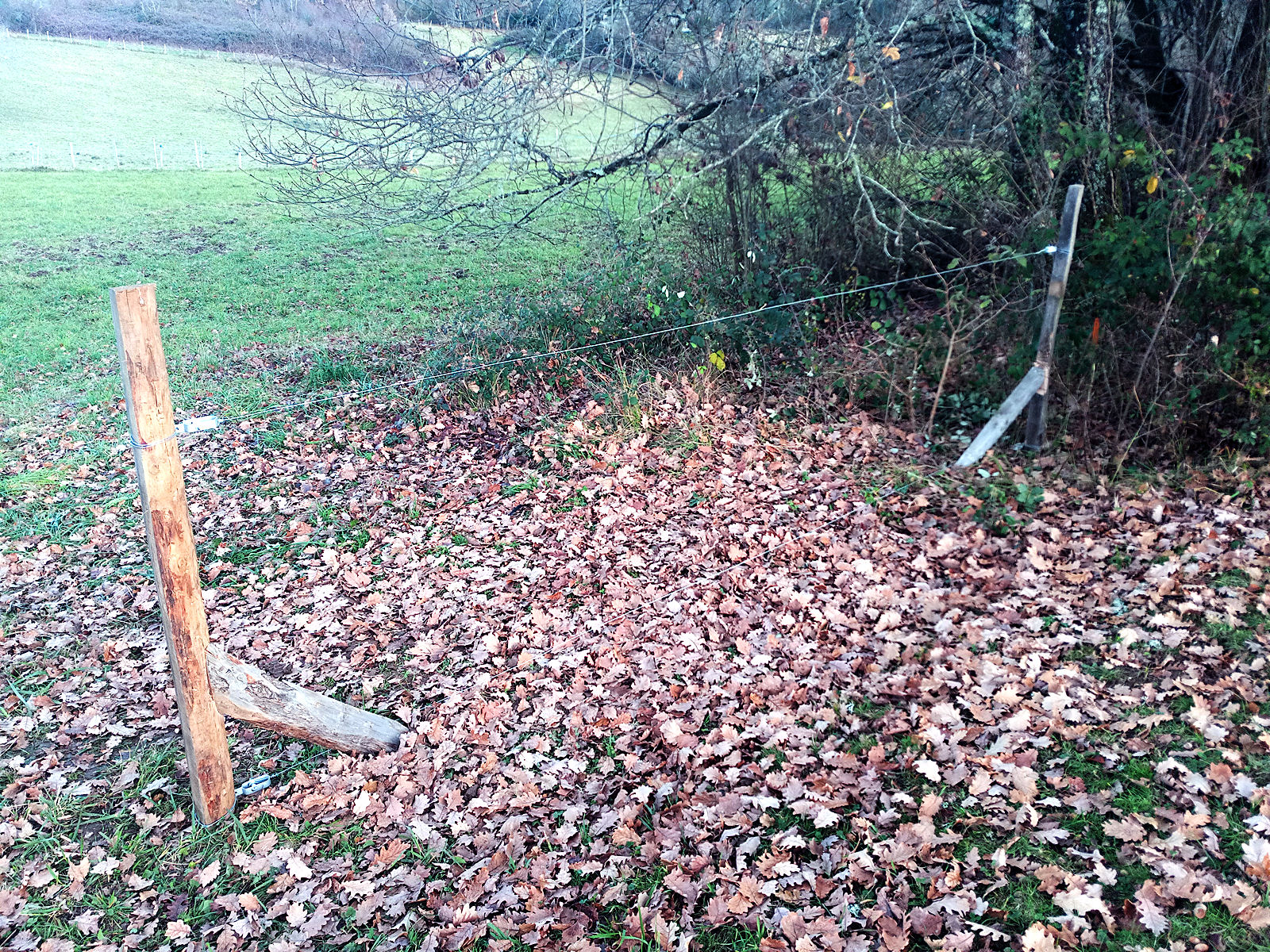
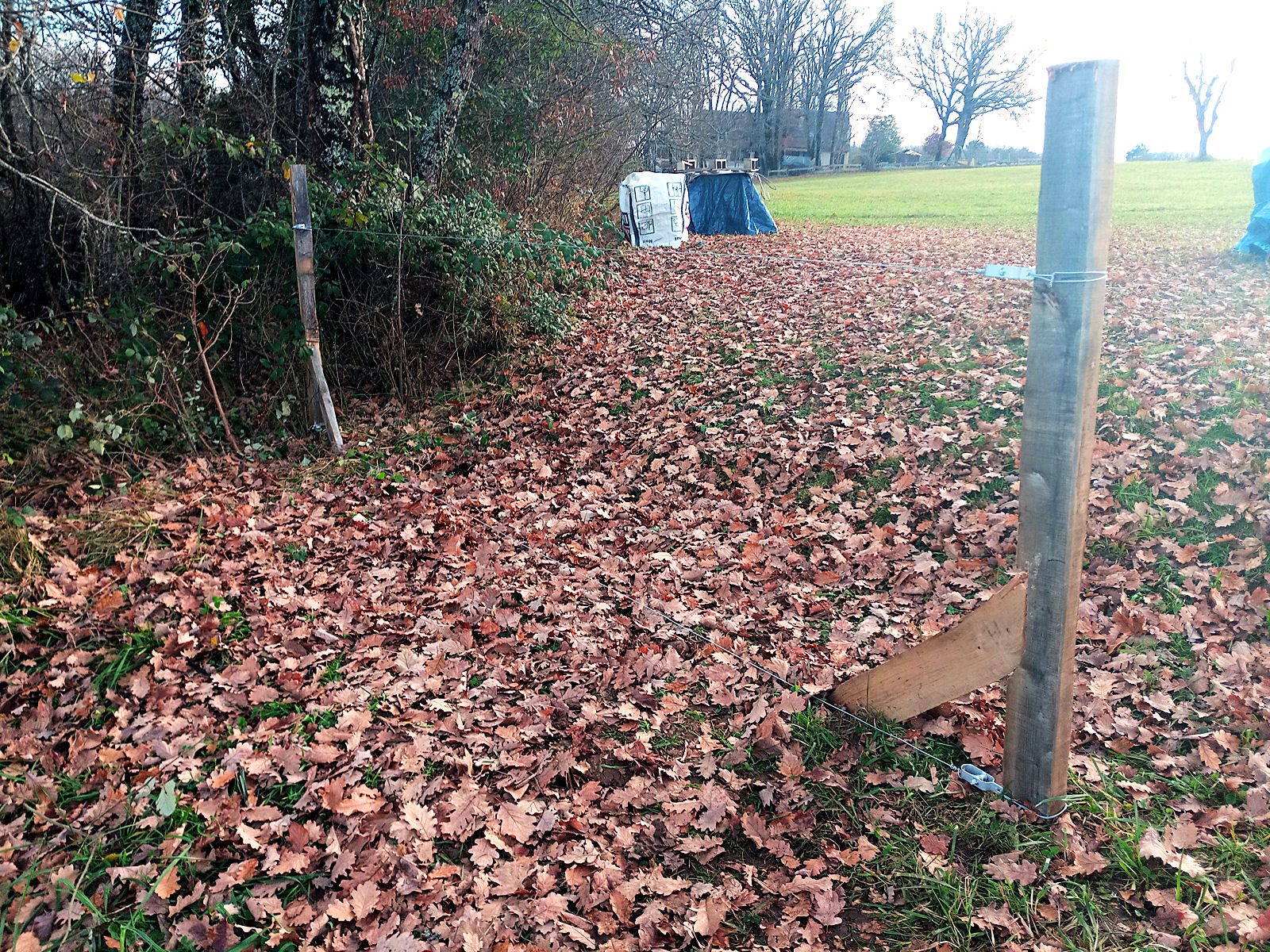
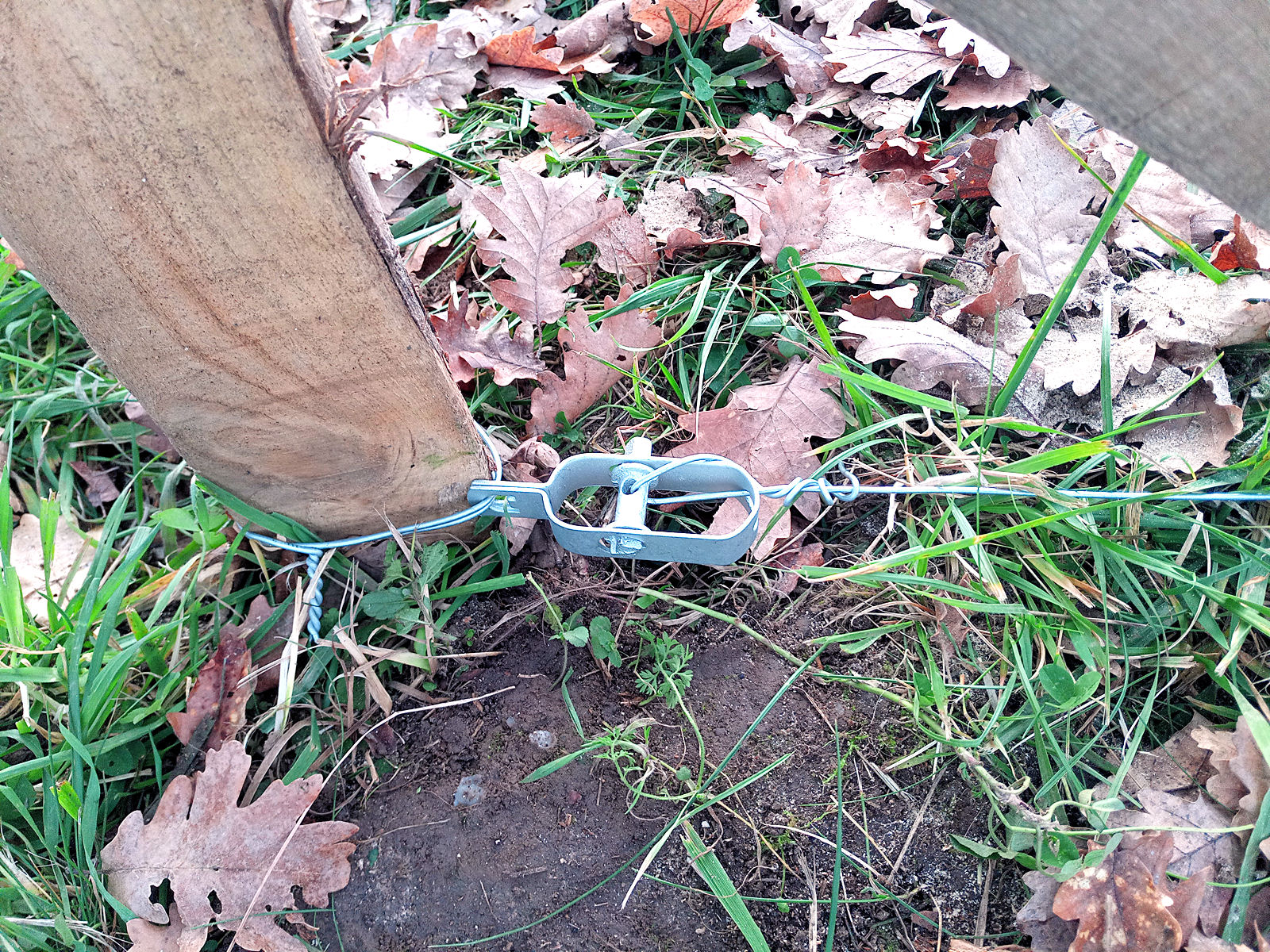
Here are some shots showing what I mean about the tensioners, the first showing a ‘tensioned’ end.
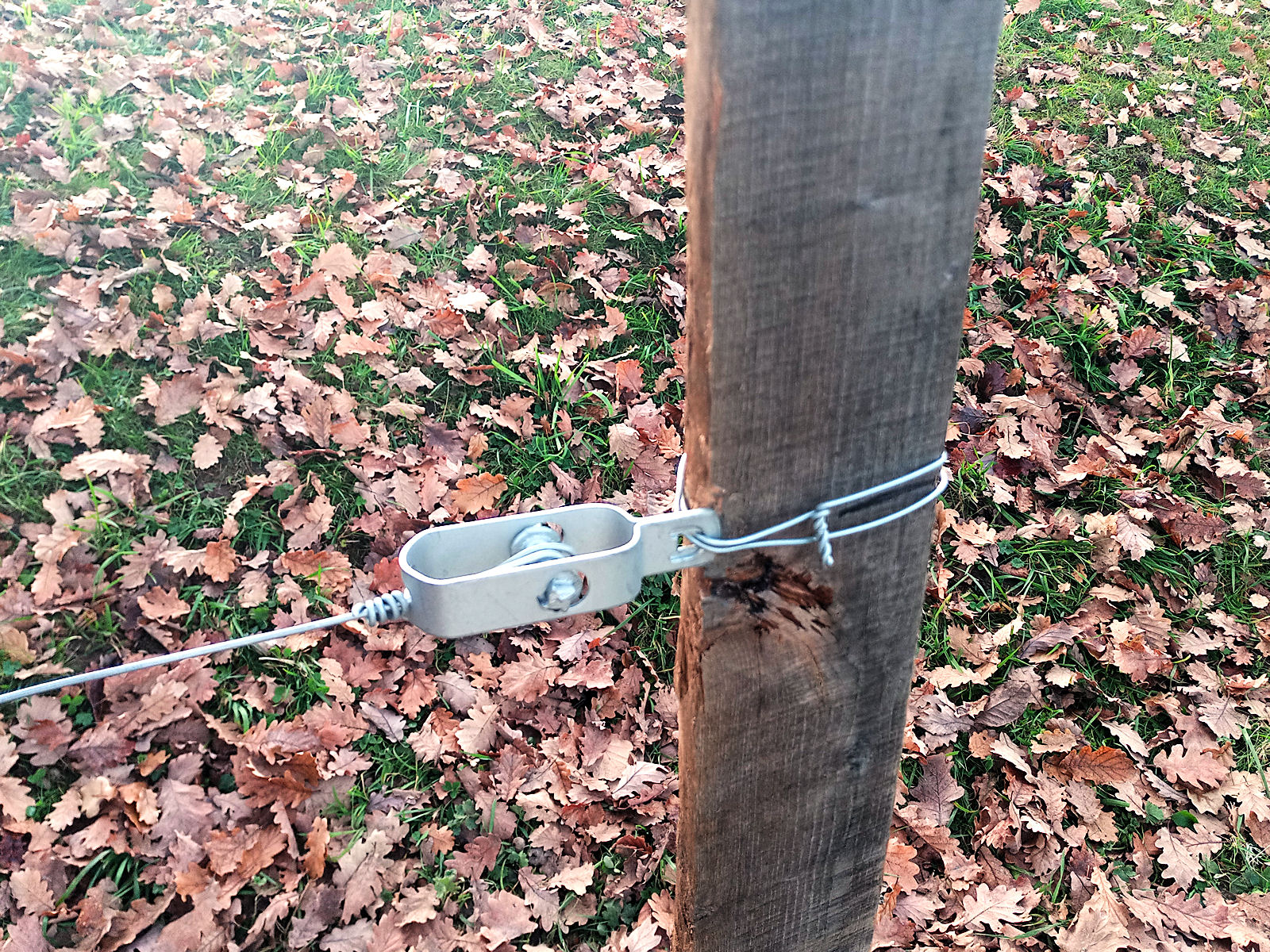
Obviously, I don’t need to tension both ends and here’s a shot of a ‘starting’ or ‘untensioned’ end.
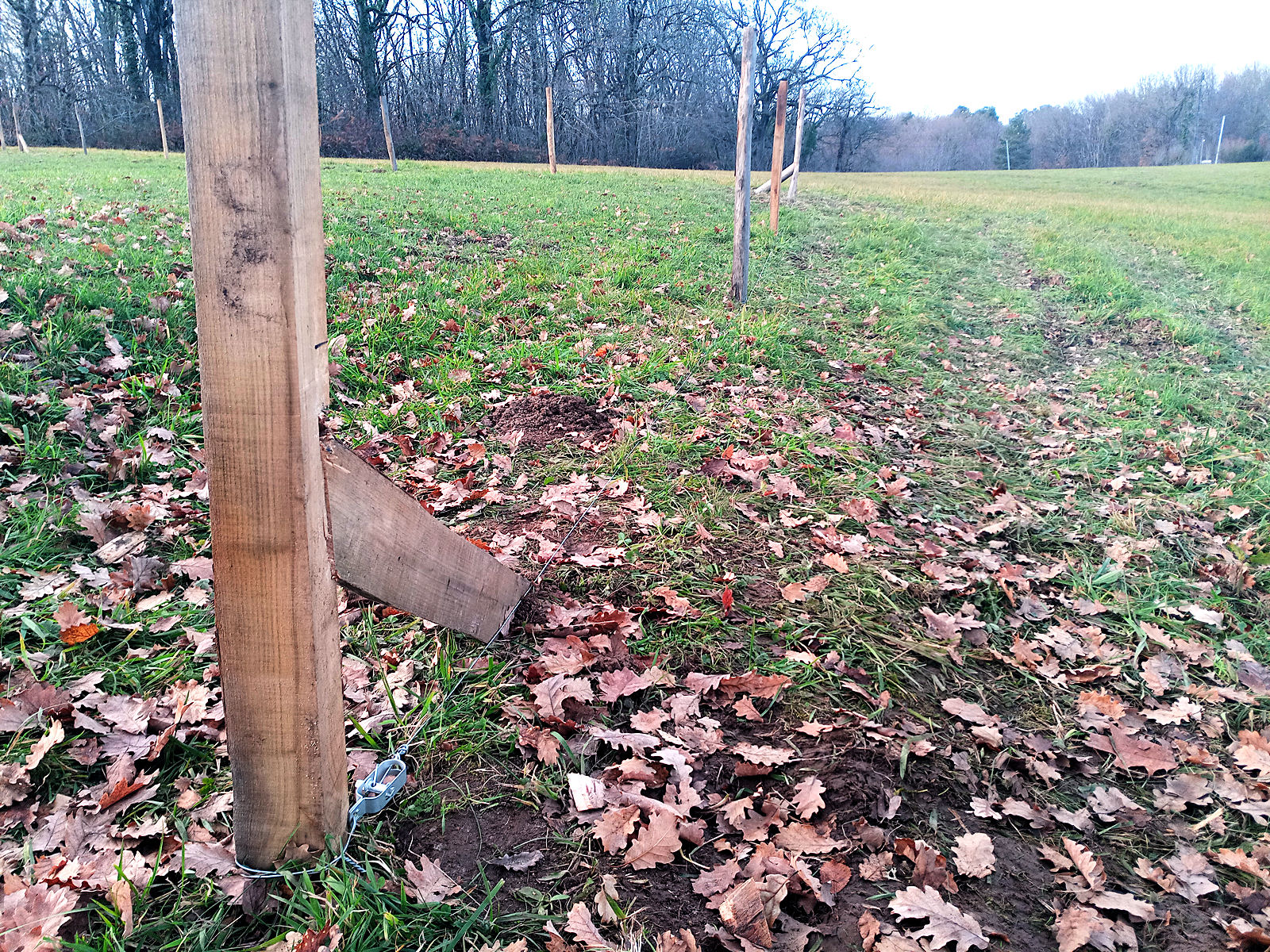
The next shot shows the longer segment of fencing between the proposed gate and the corner for which I fitted the lower wire as my last job of the day.
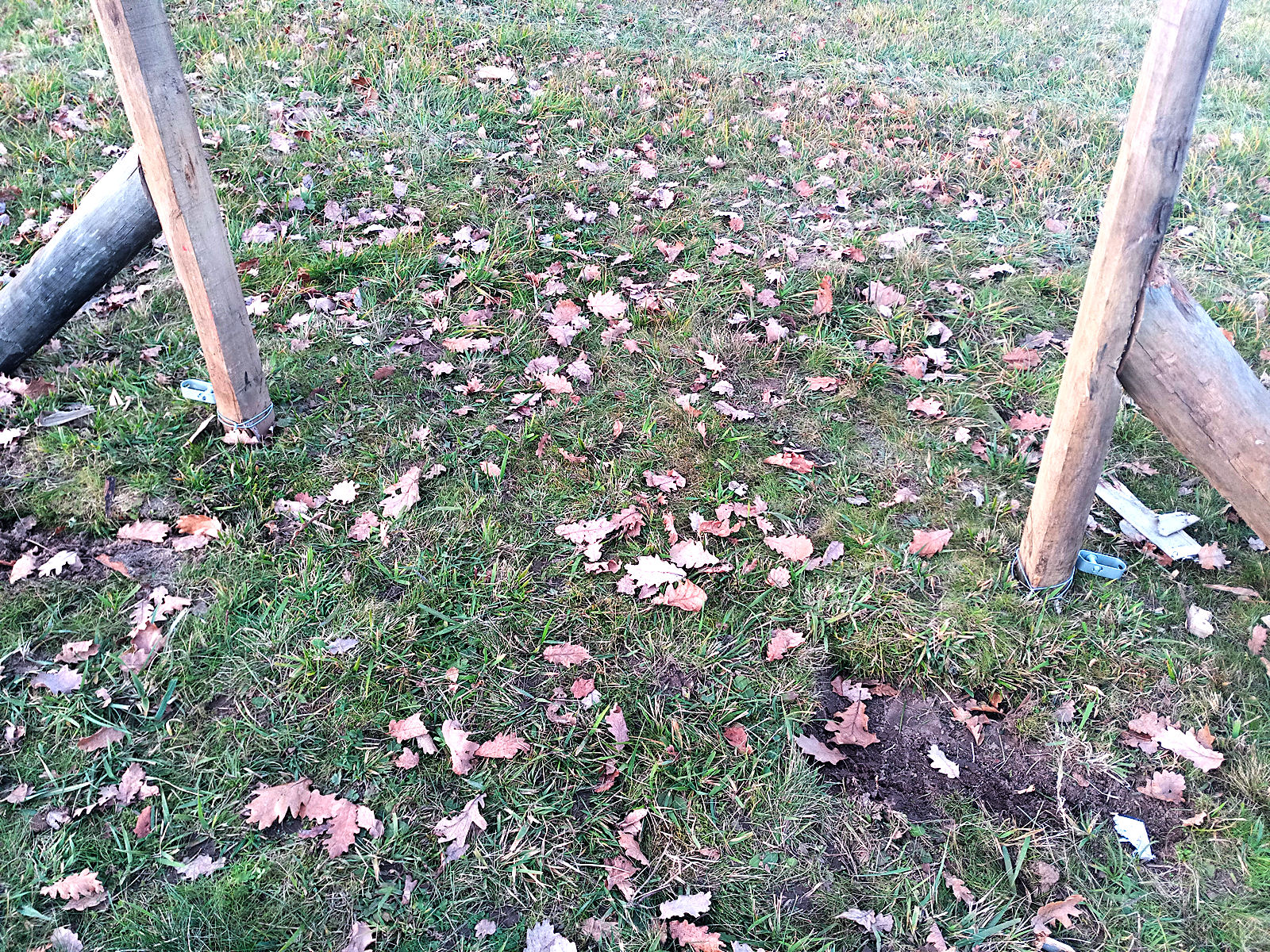
Here are the two tensioners ready for wires either side of the proposed gate in the longest east-west section of the fencing.
Now that I’ve done a few wires, work should proceed far more quickly for the remaining ones. One thing I have discovered is that using just a coil of wire is tricky because as the wire falls off it, it comes off with twists in it. What’s really needed is some kind of cable drum from which the wire can be rolled off smoothly without twists. The pros probably use something like that but I guess I’ll have to keep muddling on the way that I am 😉
 English
 Nederlands
 Français
 Deutsch
 Italiano
 Latviešu valoda
 Português
 Español