
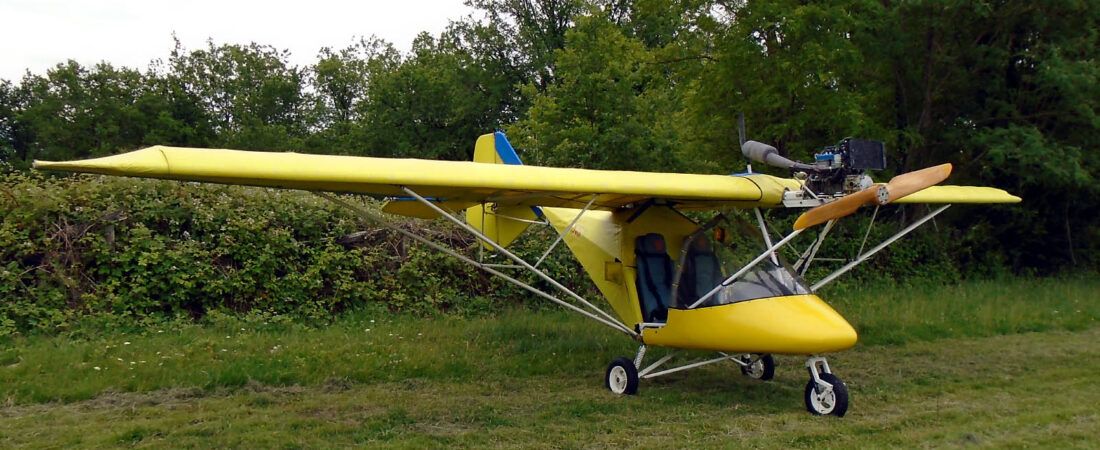


The previous owners of 56NE had an Icom radio fitted with a separate weird intercom system, all run from a separate heavy lead-acid battery installed on the floor behind the front of the panel. What they did about charging the battery I have no idea because it was not connected into the electrical system, but that’s another story. When I acquired 56NE, the radio wasn’t included, of course, so I just took out the battery and intercom and as the antenna also corroded and broke, just left it at that because we have little need for radio down here.
But that will change with our planned flight up the west coast, so one of the jobs on my current list was to fit my little hand-held radio. I’ve still got all of the kit that I used in MYRO and this time I also needed to install the power supply to top up the radio’s battery as I’ll not be able to rely on having a mains supply handy wherever we stop for the night to plug a charger in. So that was today’s job.
I received a new antenna from the UK a few days ago but couldn’t fit it immediately because it needed a smaller hole than what was already in the existing bracket. So having acquired a nice strip of aluminium from Les Briconautes yesterday, the first task was to remove and discard the old bracket and fabricate a new one. I was quite happy to do that because the old bracket was a bit thin and flimsy and not exactly a masterpiece of the first order. Here are a couple of shots of the new one, which is a big improvement, with the antenna mounted on it.


The old antenna cable had been run along the fuselage main tube, past the battery, overhead the cabin and down the front tube leading from the engine to under the panel. I didn’t much care for that because as it ran down to the panel, it was bunched up with all of the other cables from the engine and the electrical system. It seemed to me that although you could get away with it if you were lucky, if you weren’t, this could be a recipe for picking up feedback and interference that could ruin your radio transmissions and reception. I prefer to keep the antenna as far away from other ‘live’ electrical cables as possible and in MYRO I did this by running it down along the lower fuselage tubes, into the cabin under the floor and then popping up vertically under the panel close to where the radio was fitted. That way it was possible to totally avoid any other cables and I was rewarded by having a really clear radio signal in both directions.
This was helped by my not needing any connection to the aircraft’s electrical system whatsoever to power the radio on account of its battery life being far longer than any flight that I undertook and I even got away with it when I flew down from Stoke to the Dordogne because I was able to charge the radio’s battery when I stopped overnight at Wanafly. As mentioned above, this will not apply during our west coast trip and it could well be that the on-board power supply might also end up being a source of interference, but I’ll just have to wait and see.
So I ran the antenna cable in 56NE just as I did with MYRO and came up from under the floor just behind the panel. I mounted everything with Velcro as I did with MYRO so the equipment can be removed overnight if necessary or when 56NE is parked for longer at Galinat or elsewhere. It was tricky finding the ideal locations for everything and until I’ve flown and tried the system out, I’ll regard everything as ‘temporary’, especially the PTT button which is just a compromise for the time being. I have a suitable button to mount in the top of the stick but I need to get hold of a connector that will allow me to easily remove the cabling when the radio isn’t needed.
Here’s a shot showing the arrangement that I ended up with today, that will more than likely change once I’ve used the system in flight and found out how well, or otherwise, it performs.

I placed the power supply on the panel over on the passenger side. I haven’t made a ‘hard’ connection into 56NE’s electrical system but instead opted for using a DIN plug that I put into the panel specifically for the purpose, should the need arise. Now it has, and it’s always nice when a plan comes together and even better if the system works well with a nice clear incoming and outgoing signal 😉
 English
 Nederlands
 Français
 Deutsch
 Italiano
 Latviešu valoda
 Português
 Español