
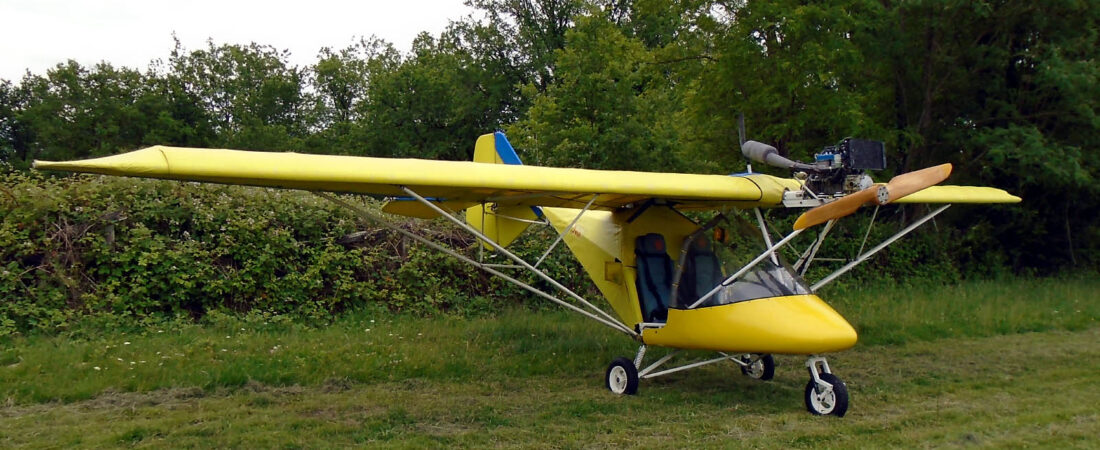


We were treated to the most lovely winter’s day today that was almost spring-like with a high temperature of 17 degrees Celsius (63 degrees Fahrenheit). It would have been a perfect flying day, but unfortunately my aircraft’s insurance has expired and it’ll take me a day or so to renew it as I’m going to use a different company from last year. So I busied myself doing almost nothing at all, really, except that I split a bit more wood for my wood burner. The reason is that experiments have shown that if I split my logs down more than I have been doing for the last couple of days, even though the wood has not been dried, so long as I can get the stove up to a good working temperature, I can still get a fair bit of heat out of it. This is good because I didn’t manage to for the last two nights when I was still using quite large logs, and I don’t have a lot of choice over the wood that I now have available, none of which has had much time to dry out.
While I was in the garden I took a look at the two pine trees that are in my neighbours Benjamin and Aurelie’s garden, and this is what I saw.

The white furry balls are nests of caterpillars of the ‘Processionnaire du pin’, the Pine Processionary moth. I counted a total of 7 of them on the two trees, which is a cause for some concern as I’ll explain later. Here are a couple more shots showing two different pairs of nests in the two trees.


The moth itself is a fairly nondescript drab greyish brown and as it’s only quite small, it usually goes relatively unnoticed. It only lives for one night but in that short time, it can be responsible for quite a bit of mischief. In the short time that it has available in the summer, it lays its eggs in the branches of pine trees and shortly after they turn into caterpillars that initially make a small nest to live in, followed by much larger ones, as shown in the above pic, in which to spend the winter. Nests like the ones shown can contain colonies of several hundreds of the creatures, and the webs themselves are so dense as to be virtually impenetrable. They therefore provide a safe place for the caterpillars to live in and by virtue of their construction, are often several degrees warmer than their surroundings during the winter period. Here’s a close-up shot of one of the nests that shows what I mean.

The caterpillars are nocturnal and exit the nests at night to eat the pine needles just outside them and can cause quite a bit of damage to them over the winter period. They then return to their nests before morning arrives to wait out the daylight before repeating the process the next night. So far, so good because as far as the rest of us are concerned, humans and other animals remain relatively unaffected while this is going on. However, things change in the spring time, when at any time from February until May, the caterpillars descend to ground level in search of soft soil in which to pupate. They do so by forming long nose-to-tail processions, hence their name, the nose of each caterpillar in contact with the tail of the one in front as they move across the ground in search of a suitable patch of soft soil. It’s tempting for humans, and children especially, to get closer to take a look but doing so can have very nasty consequences.
The caterpillars are coloured orange-brown with bluish-grey bands and at each segment along their length, they have small bunches of hairs growing from them. These hairs can be expelled by the caterpillar as a form of defence if they feel threatened and contain a highly allergenic protein which in humans can cause reactive symptoms ranging from mild itching to anaphylactic shock. Therefore all contact with sensitive skin regions needs to be avoided, and in particular the eyes, nose and mouth, and for children and animals especially, who can be attracted by the spectacle and the colours. Many animals, dogs especially, have died as a result if ingesting the hairs into their mouths and noses and those that have survived have only done so either with the loss of their tongues through necrosis or by having a vet remove it to prevent death, so the outcome of a relatively simple act can be quite gruesome. As a result, many people who have pets in southern France and Spain, where the climate is favourable for the moth, take the problem quite serioulsy and either make sure that they do not have pine trees on their land or have them removed if they were already there.
So this is why the presence of the nests is a cause for some concern. Last year, there was only one nest in the two trees in my neighbours’ garden and as I was worried about Toddie and they had two cats in any case, Benjamin cut off the branch with the nest and carefully burnt it. This year I don’t have Toddie to worry about, but it is worrying that the number of nests has increased from one to seven. I’ll have to watch out if the weather stays as warm as it is now because that means there will be an awful lot of caterpillars processing around and after Wim told me what happened to him when he was affected by them when he first came to the Dordogne 20 years ago, I certainly do not want to share the experience!
And by the way, although the warmer climate down here in south-west France does favour the moth and its caterpillars, don’t think that if you are sitting reading this back in the UK you will be immune. A year or so ago I read a news report that several nests and colonies of caterpillars were found and destroyed in one of the southern counties of England, so watch out, they’re on the move northwards 😉
 English
 Nederlands
 Français
 Deutsch
 Italiano
 Latviešu valoda
 Português
 Español