
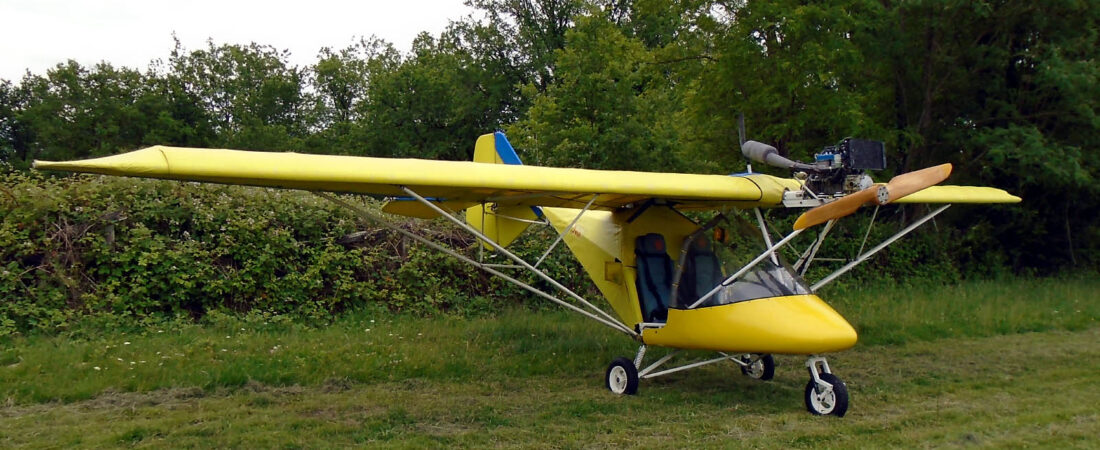


228AAD, my French Weedhopper that is. I think so. I did the little bit of panel rewiring yesterday evening and got up early this morning and patched the old mounting holes in MYRO’s old panel top. So apart from missing some instruments that can go in later, the panel is now ready to be mounted in 28AAD. That can’t happen, though, until the new screen plastic has arrived and I’ve made up the new screen.
I should be able to use MYRO’s old one as a pattern but I can’t drop it into place to try it out until I’ve connected the panel front and top sections together. I can then prop it up to get the screen in and that I can’t do for now for the most annoying of reasons.
The other day I came across the studs for connecting the panel top and front, that I’d carefully kept together in a small glass jar. I put the jar somewhere safe and now I can’t find it anywhere, so for the time being I’m stymied. If I can’t find them I’ll have to connect the panel using some other arrangement, but the connecting studs were just so easy and convenient to use.
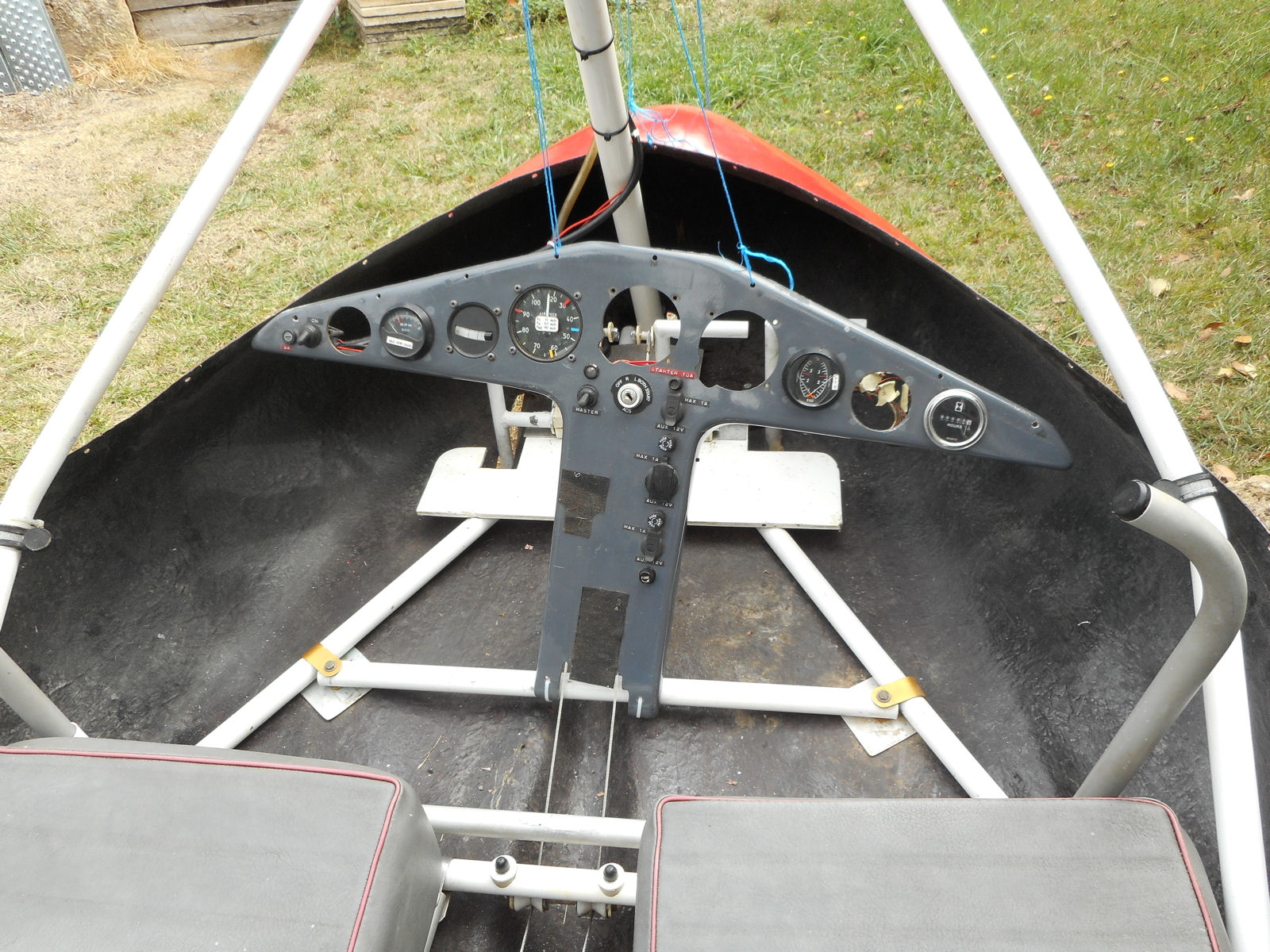
But anyhow, I’ve made a great leap forward today as the following shots show. I did the same as before when I was reassembling MYRO back in August 2009. First I dropped the panel lower section into place supported by string from the main tube. Before the panel was complete, but as explained above, that isn’t possible for now.
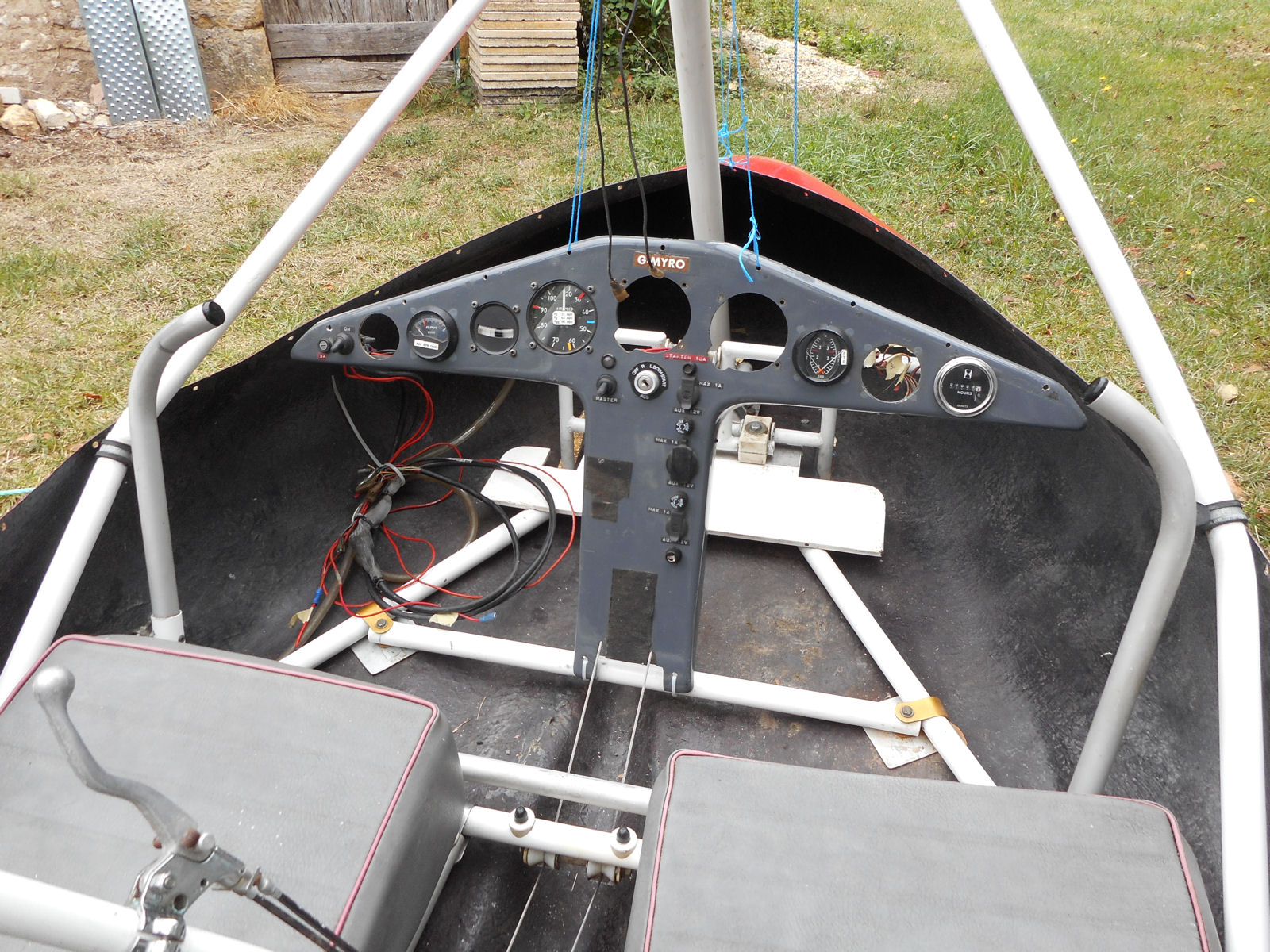
That left the cables all hanging on the pod floor and I then fed them up the front tube, which immediately made things look a bit more organised.
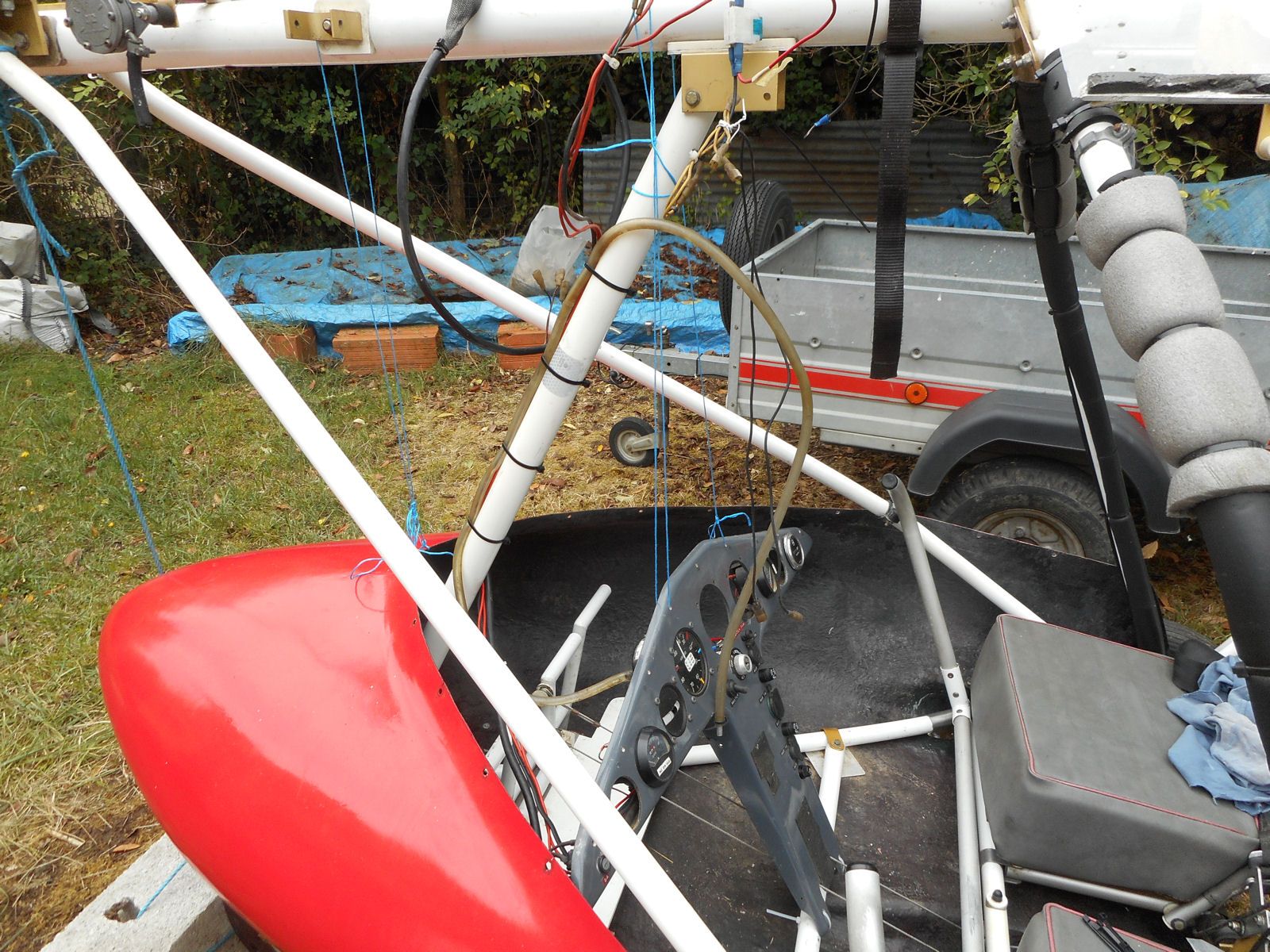
But that still left all of the cables unconnected, so then I had to identify them one by one and connect them up.
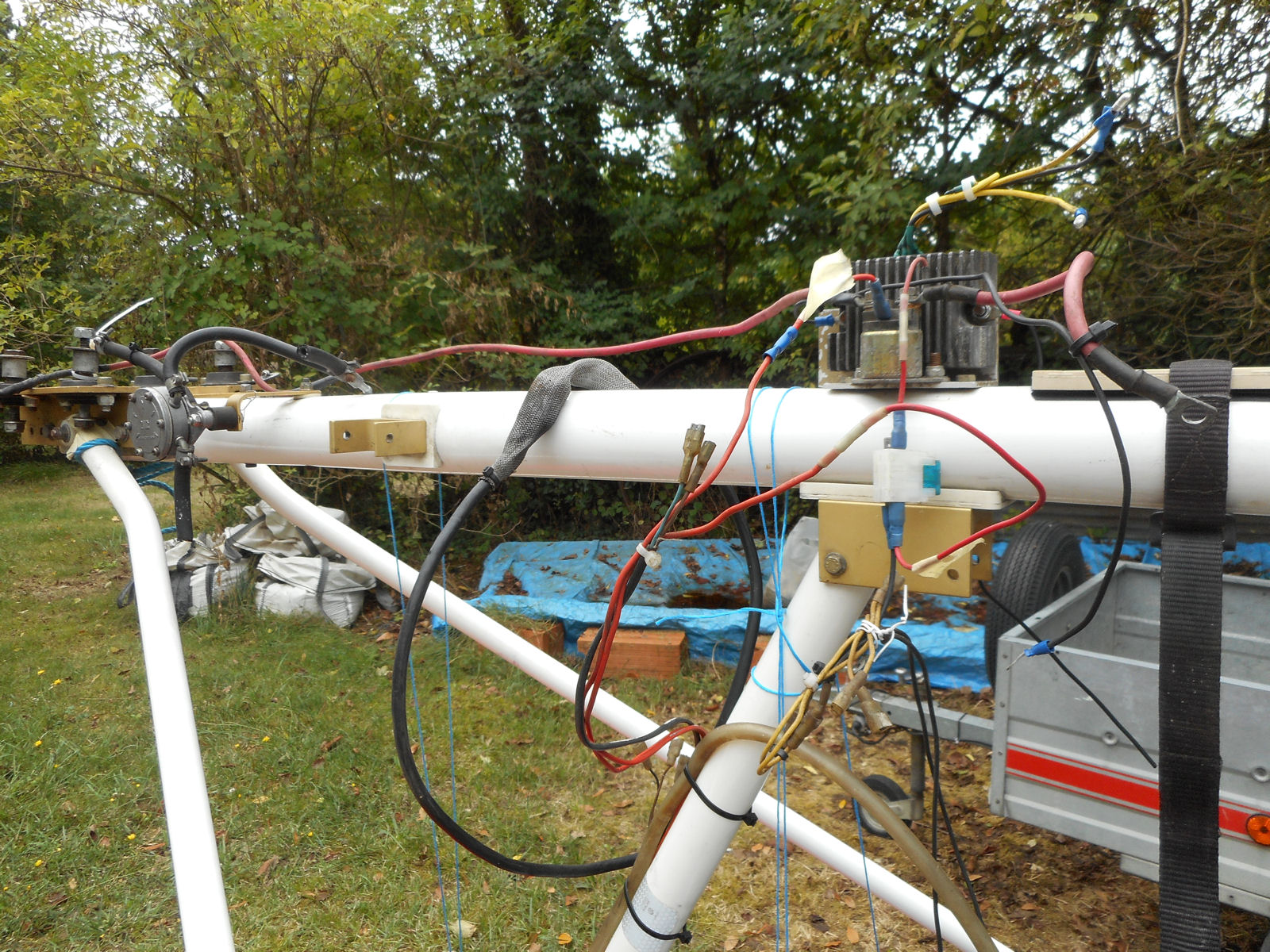
These were the cables at the engine end.
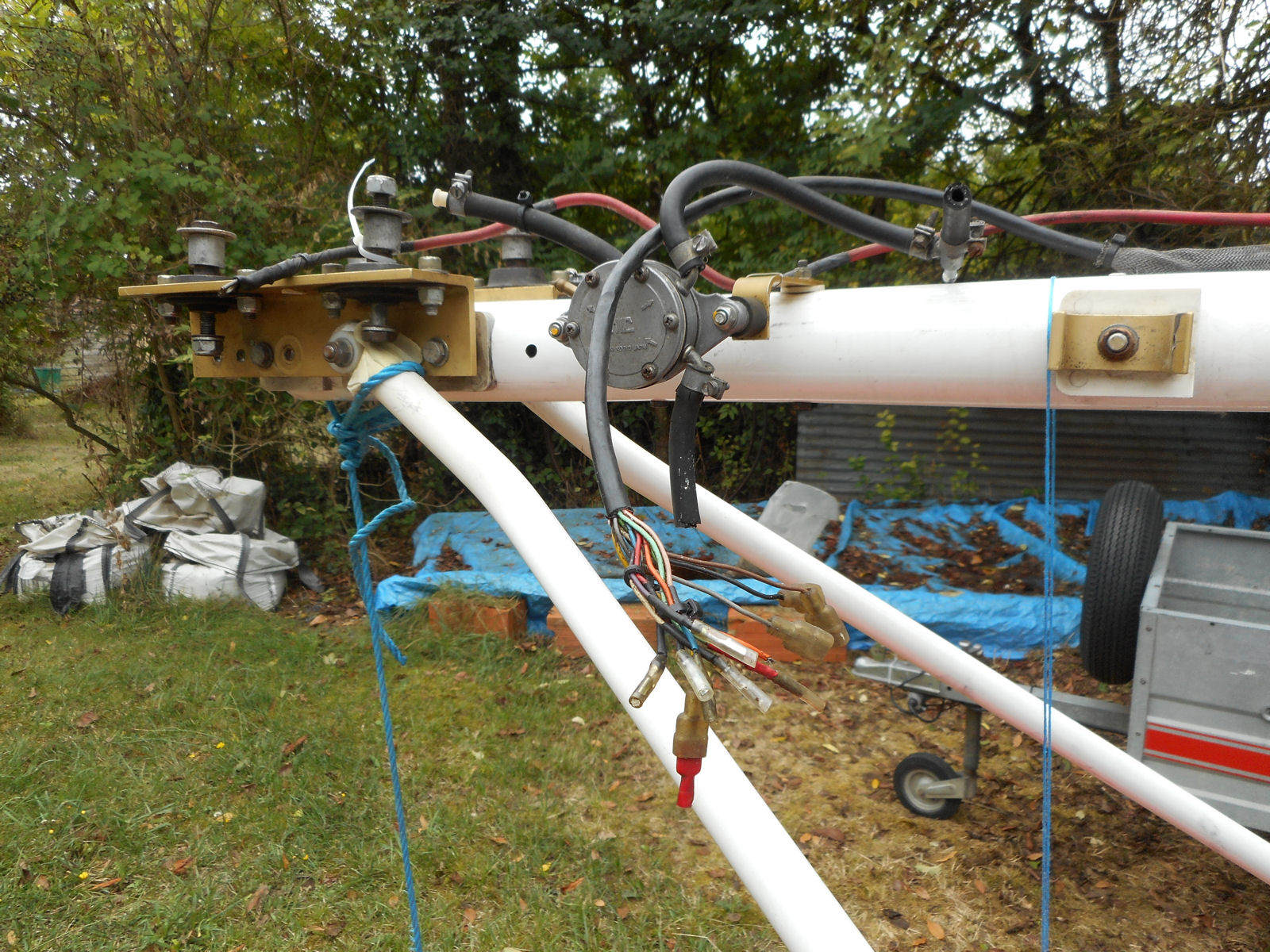
It didn’t take a lot to identify them as they consisted of the rev counter cable, the two ignition earthing cables, the connectors for the EGT and CHT gauges (a couple of which have been damaged, but not too seriously) and (as I recall) an earth lead to connect on a tag on the engine.
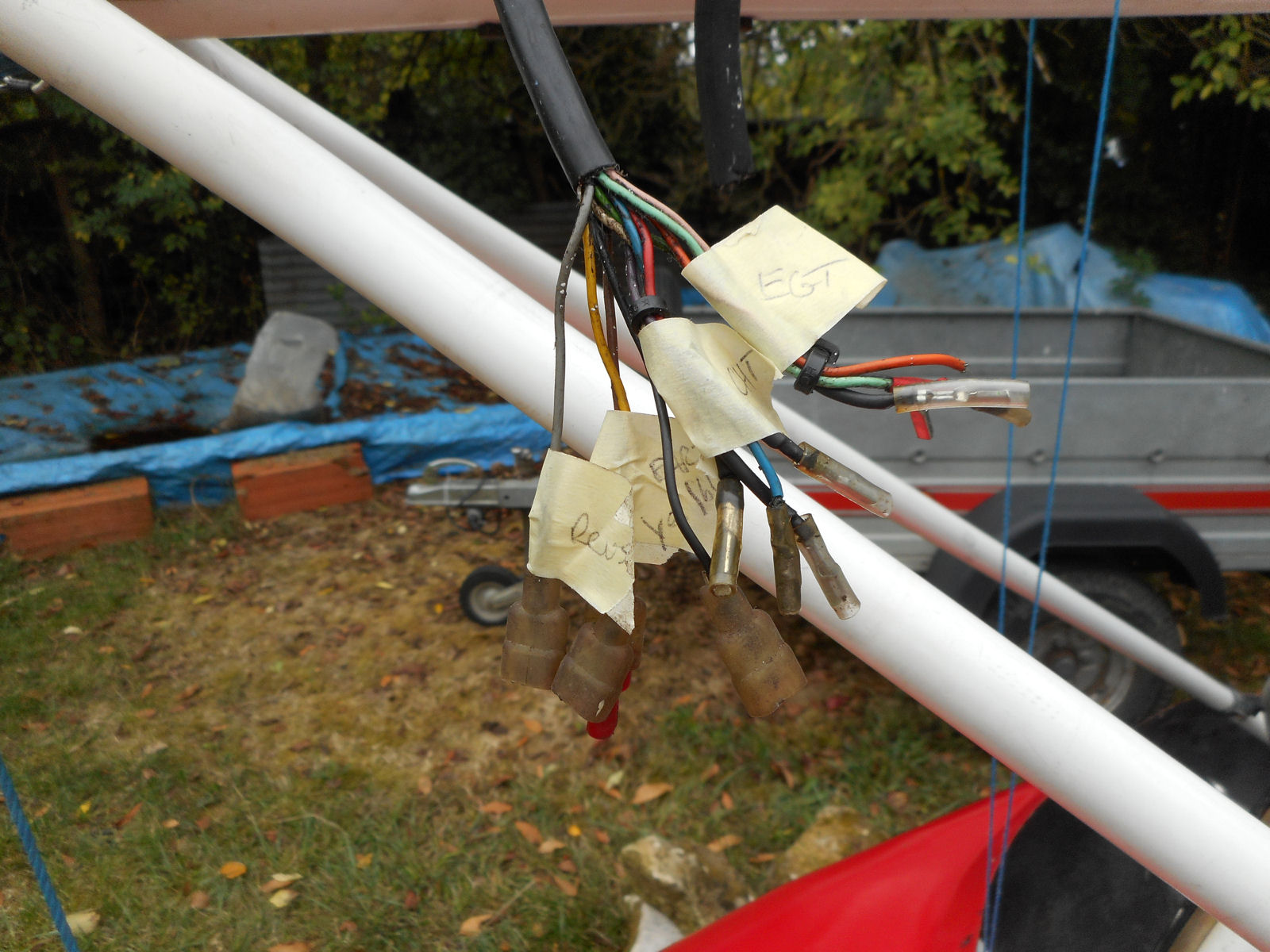
Here’s a shot of them all marked up and ready to be connected when the engine goes on.
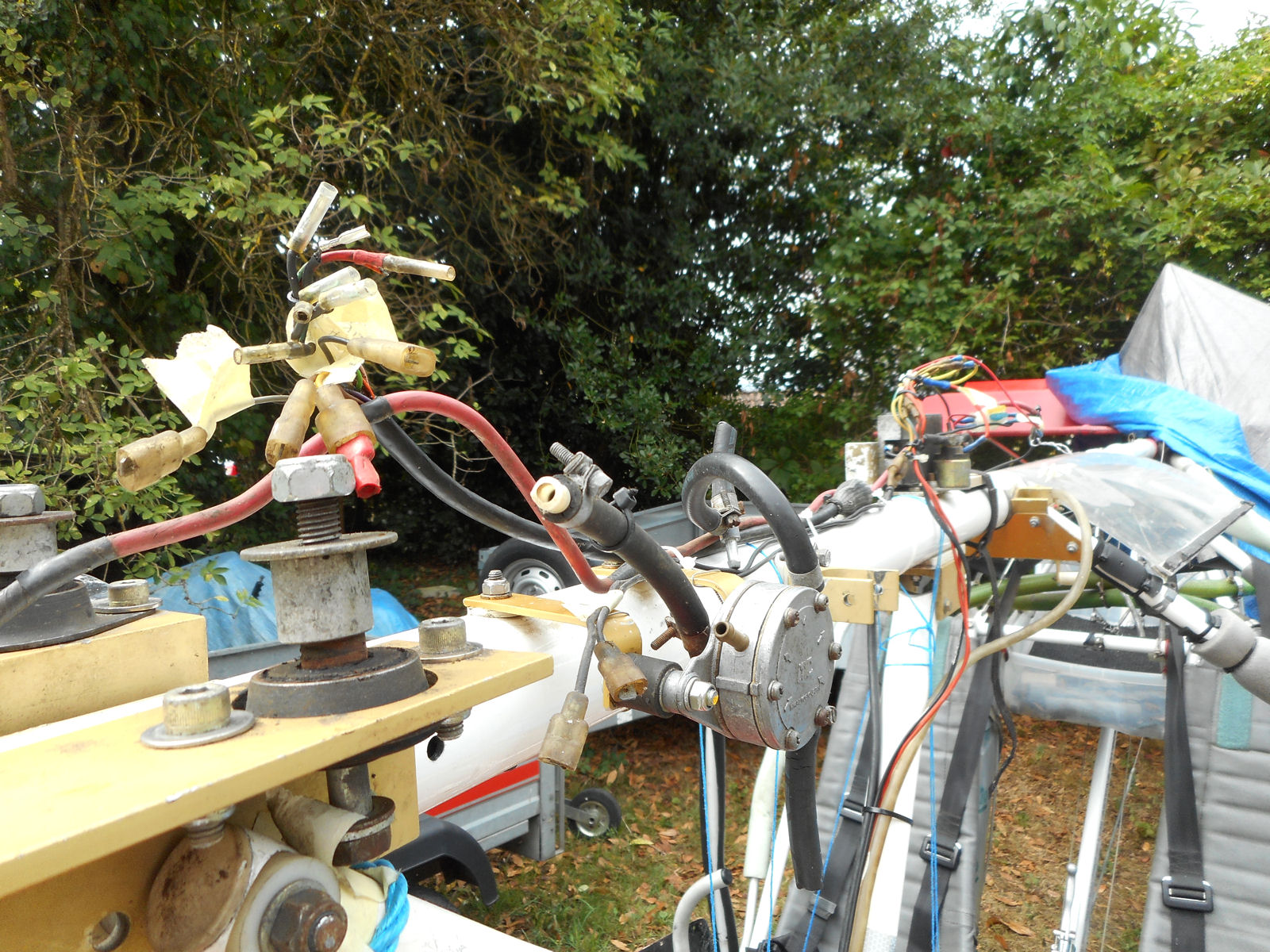
Now it was time to sort out the connections at the voltage regulator end.
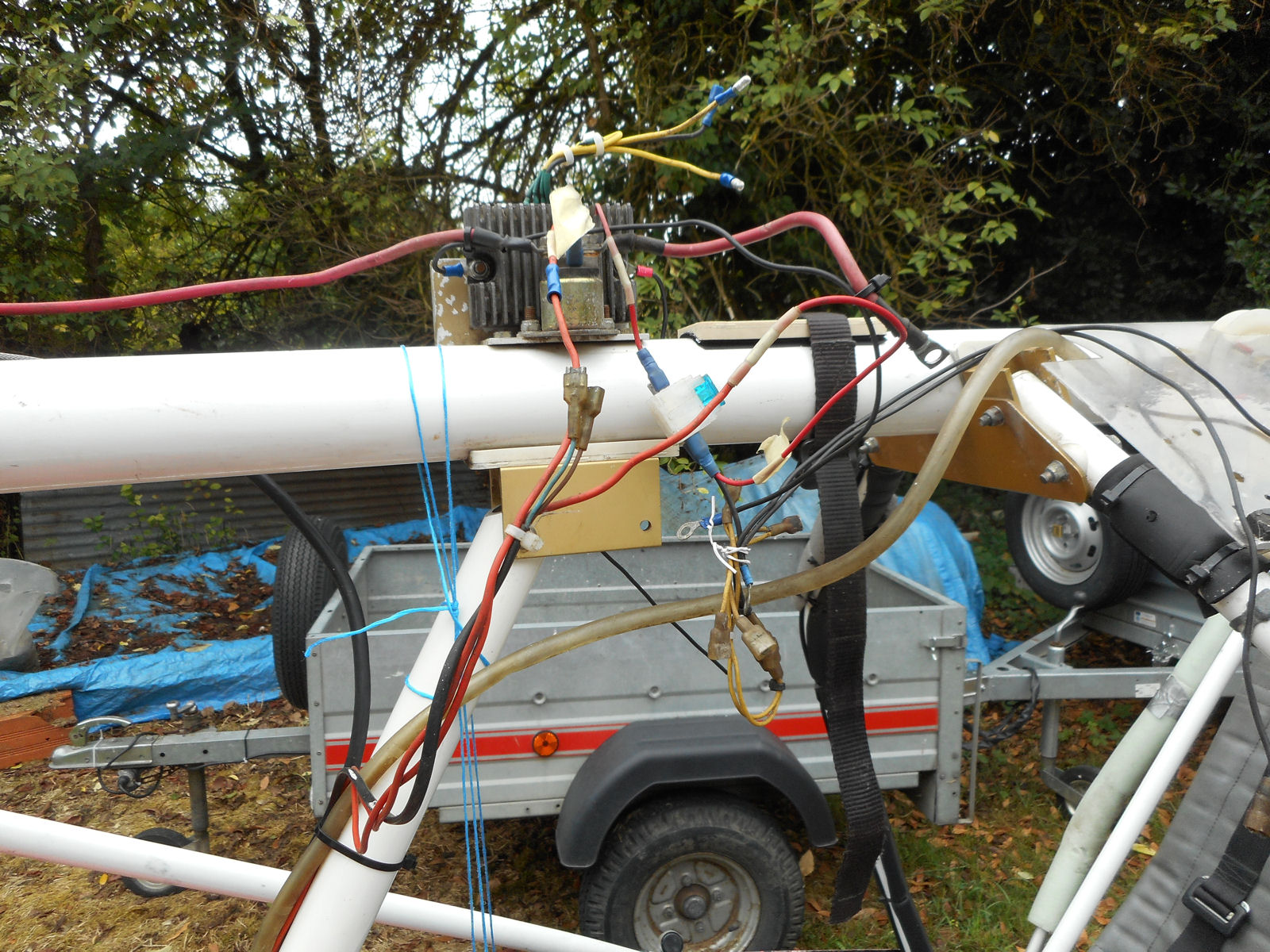
These were a little bit more tricky but some of them had been identified and tagged and unless I’ve made a cock-up (which is possible, of course) I think that I’ve sorted them all out correctly.
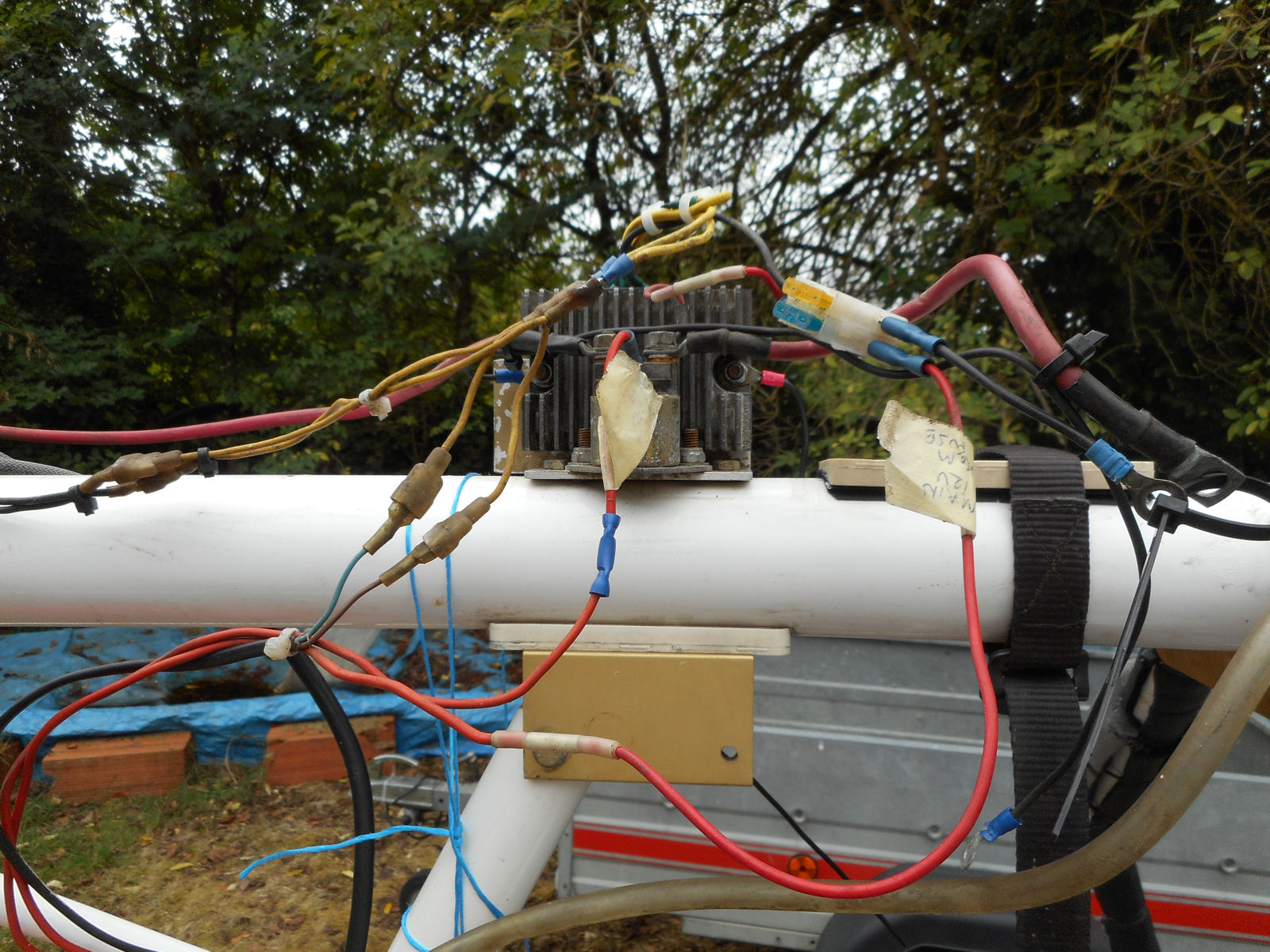
Here’s another shot of them cable tied together to tidy them all up.
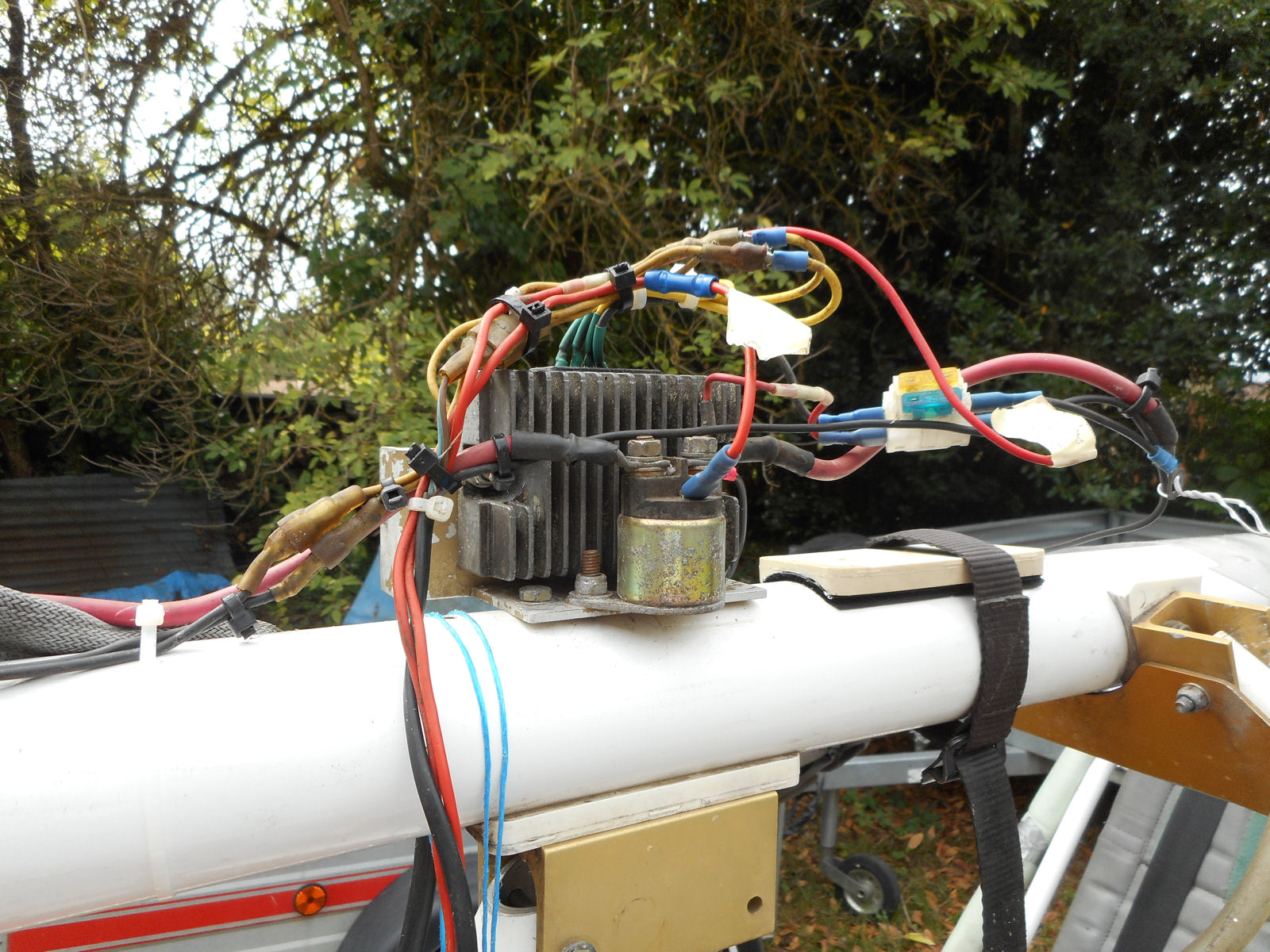
Another shot from higher up that also shows the little battery platform that I’ve mounted on the main tube behind the voltage regulator exactly as MYRO’s was.
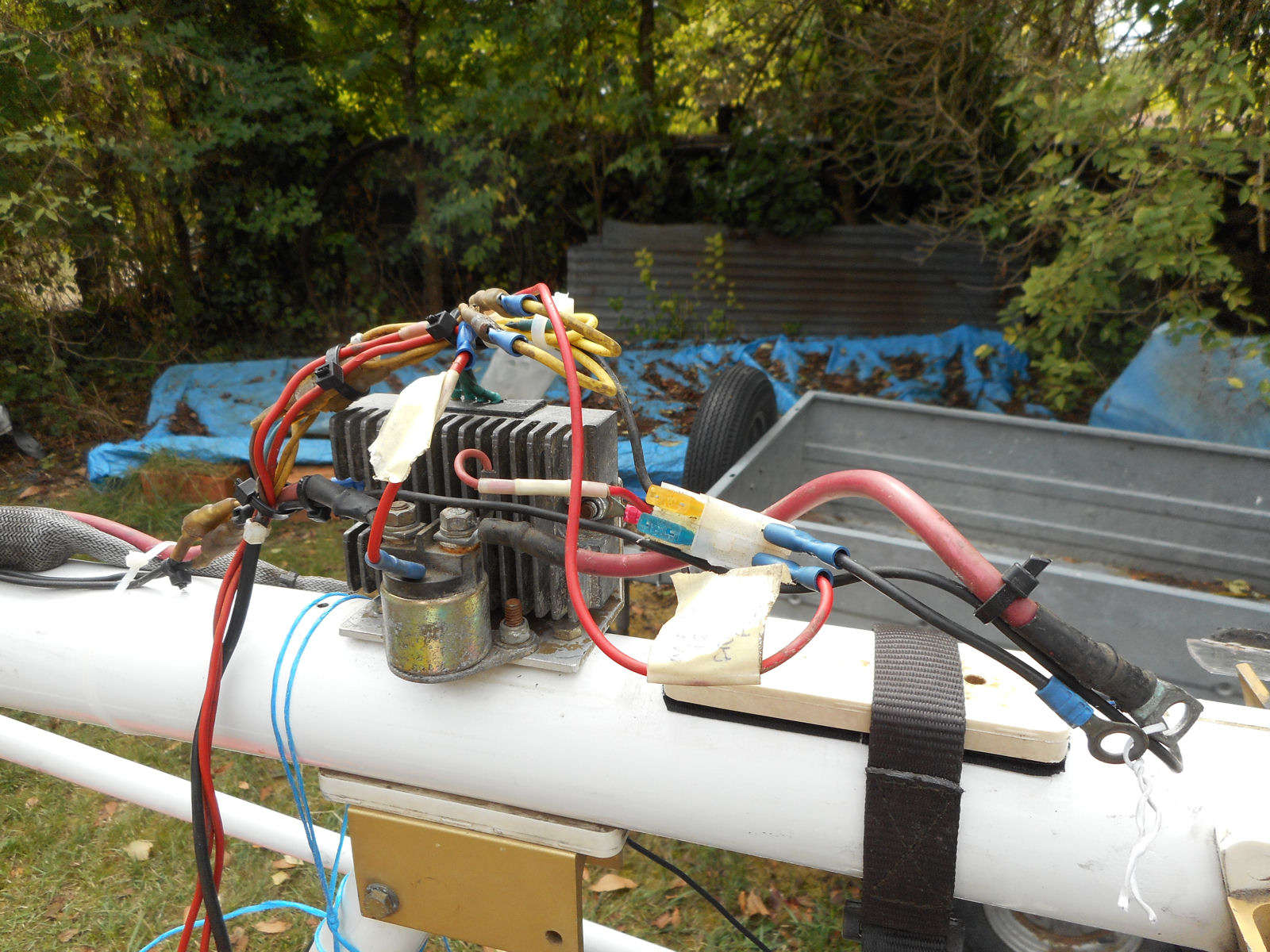
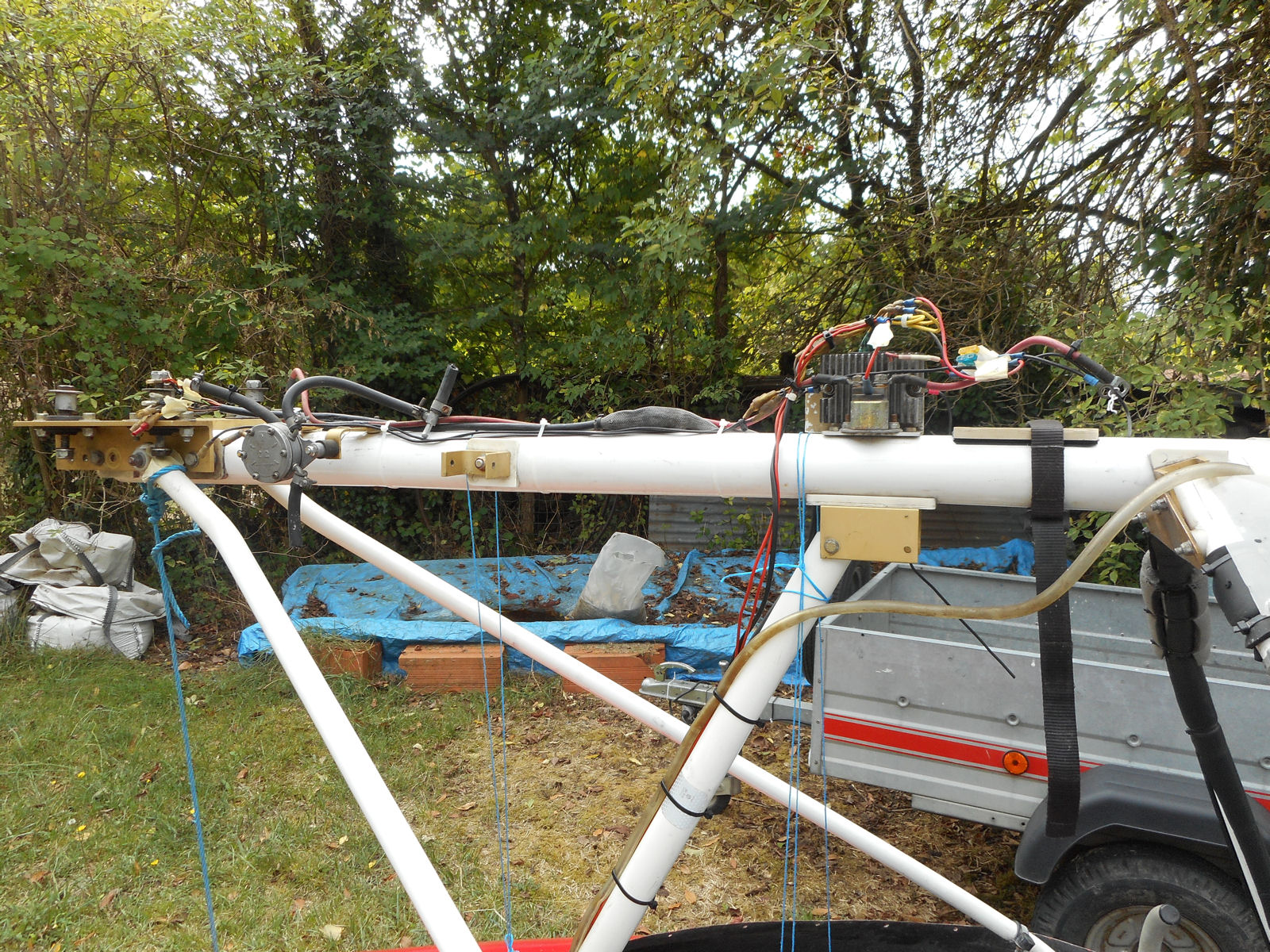
And a shot showing all of the wiring in place on the main tube. The ties are only temporary just so I could get everything sorted, which I think I have done, and quicker than I expected to, really.
A final shot of the panel front with all of the cables now out of sight.
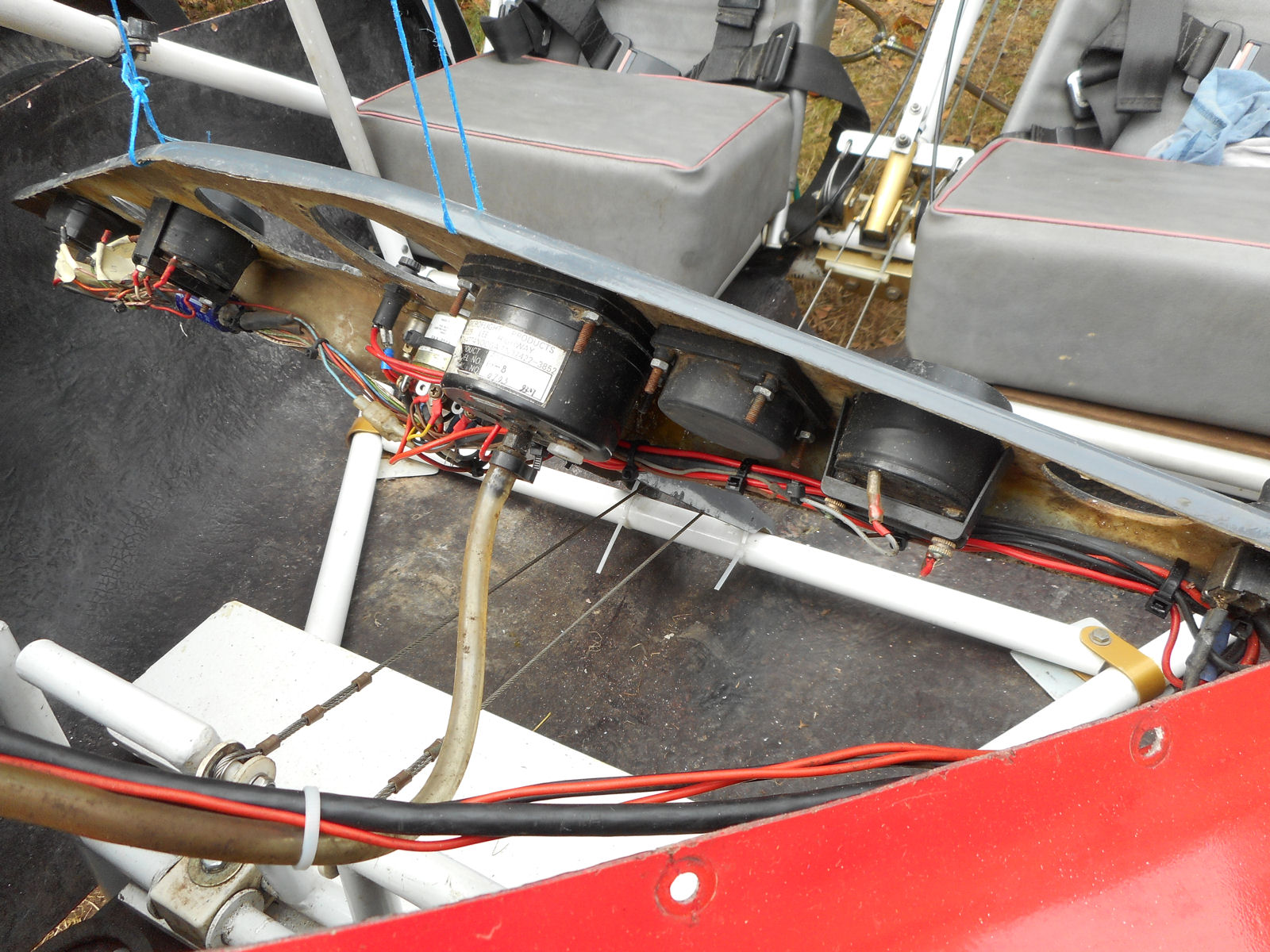
And to finish, a shot of the panel rear showing how nice and tidy it is. Some instruments are missing but the only additional connection should be the rubber tube for the fuel pressure gauge.
So theoretically, if the engine was dropped on, the battery fitted and the connections all made, the panel should work and the engine should run. In reality, there’s still a bit to do before that can happen, but it’s nice to think that it’s so close, though 😉
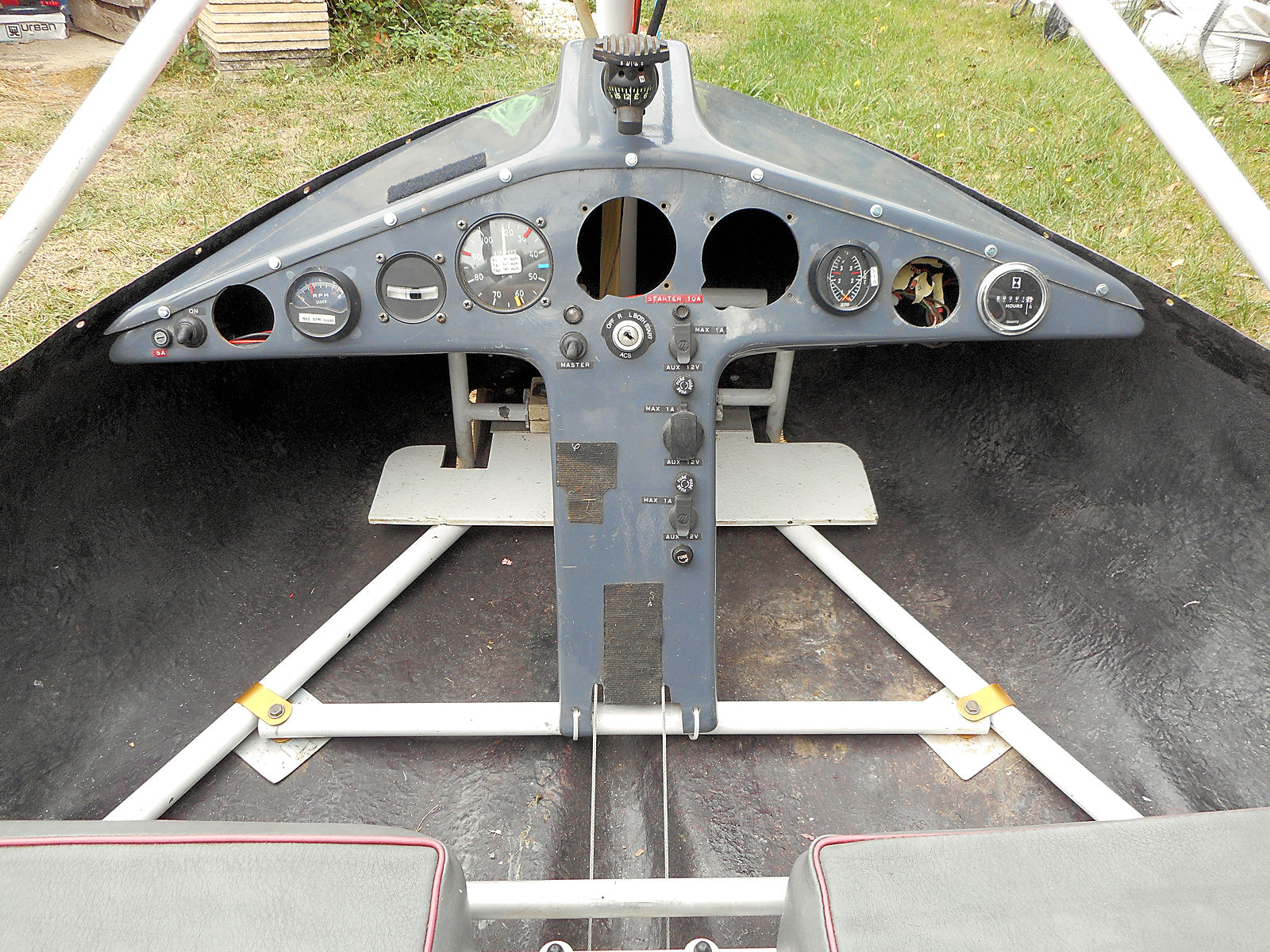
Back at the end of the day to say that I had one last search for the panel connecting studs and couldn’t find them, so decided to do what I’ve done on 56NE and use small screws and nuts instead. That allowed me to offer the whole panel into the pod and I’m glad (and relieved) to say that it will fit nicely.
But that wasn’t all. I then dug MYRO’s old battery out that has been connected to a trickle charger for the four years since the accident. I doubt that it will still be in good enough condition to remain permanently on 28AAD but I thought it would be a good idea to test the panel wiring as far as I can without the engine being connected.
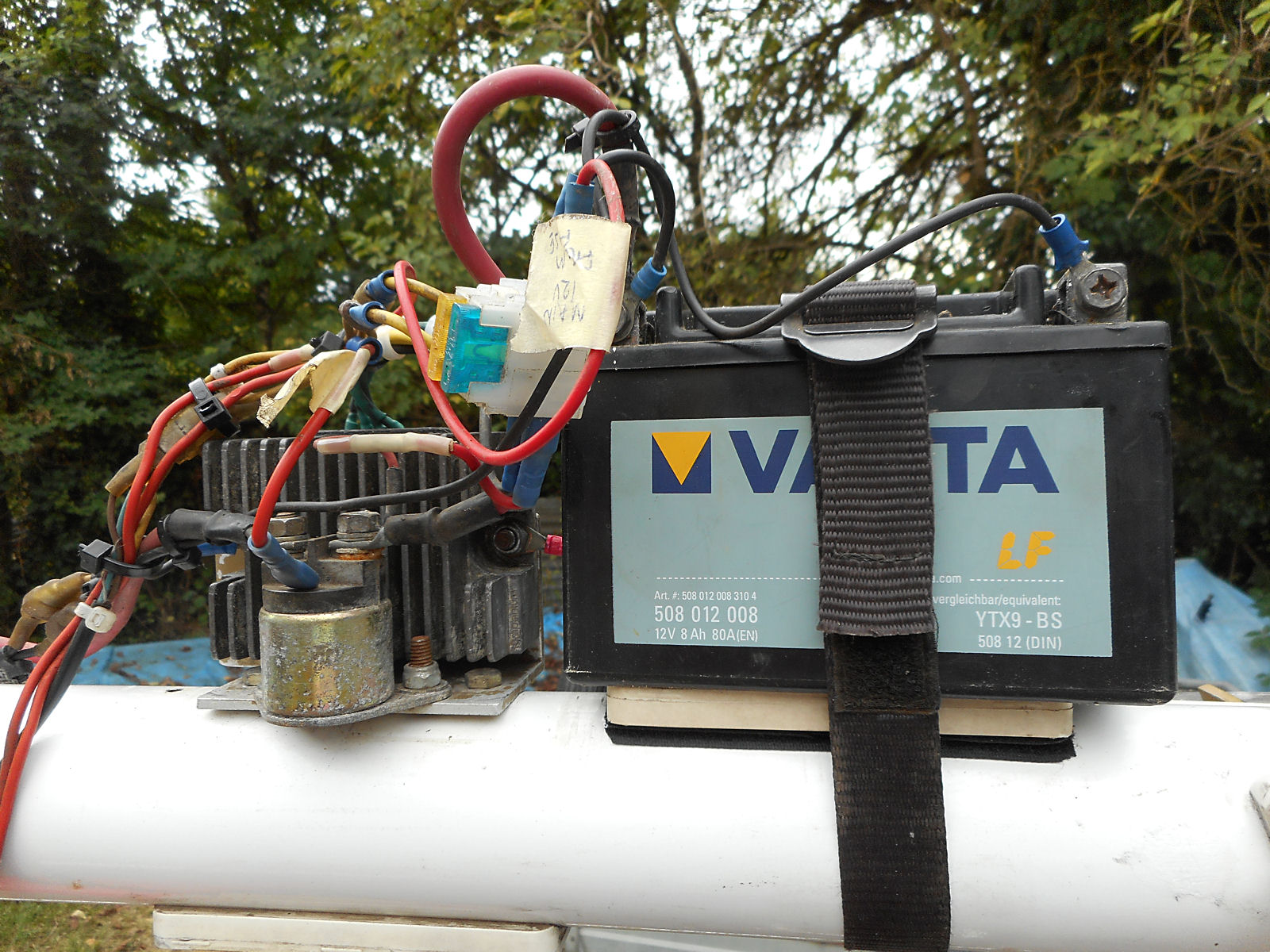
I’m pleased to be able to say that not only did the panel power up when the Master switch was turned on, but the Aux switch also worked exactly as planned and the electrical sockets became live when it was switched on. Can’t ask for better than that 🙂
 English
 Nederlands
 Français
 Deutsch
 Italiano
 Latviešu valoda
 Português
 Español